About a dozen kilometres past the town of Balestrand, I noticed a sign suggesting a place to take a break. Since I wasn’t driving fast, I easily managed to pull off the road into a widening that resembled a spacious parking area with a green space in the middle. However, apart from that, there was nothing else and, of course, no one else was there either. Nonetheless, I got out of the car and, as this place was almost on the fjord’s edge, I took a walk to look around since I had noticed some interesting details.
To start with, I passed by what seemed to be a storage area for timber, which certainly wasn’t something that would catch my eye. But, as it turned out, I had stopped in a very good spot because from the concrete platform by the water, there was a nice view of the small island Kvamsøy. So, I had, quite by chance, stopped here and, as it turned out, it made sense.
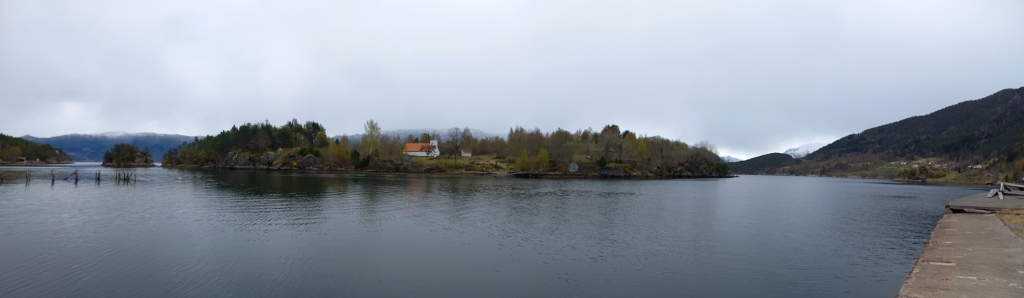 View at the islet of Kvamsøy
Later, I read that this place is considered exceptionally beautiful and that the widening which serves as a parking area for cars and campers was created with serious intent, rather than being a random extension that happens to be part of a timber storage area. Some details indeed looked very picturesque.
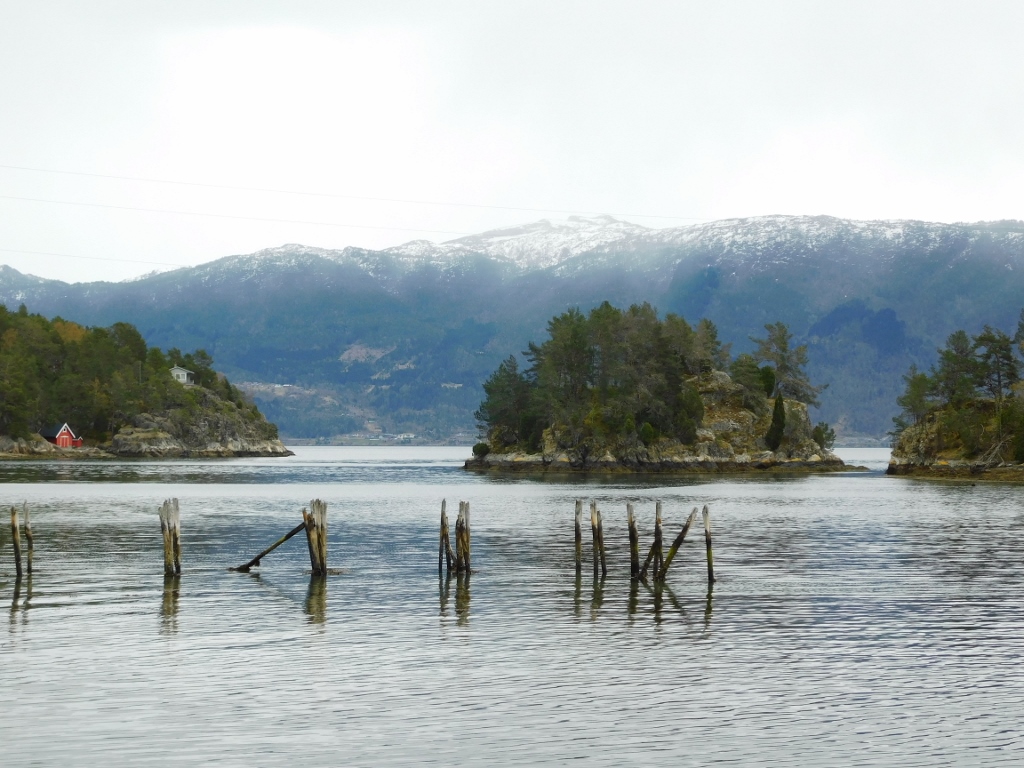 View at parts of Sognefjord and Kvamsøy islet
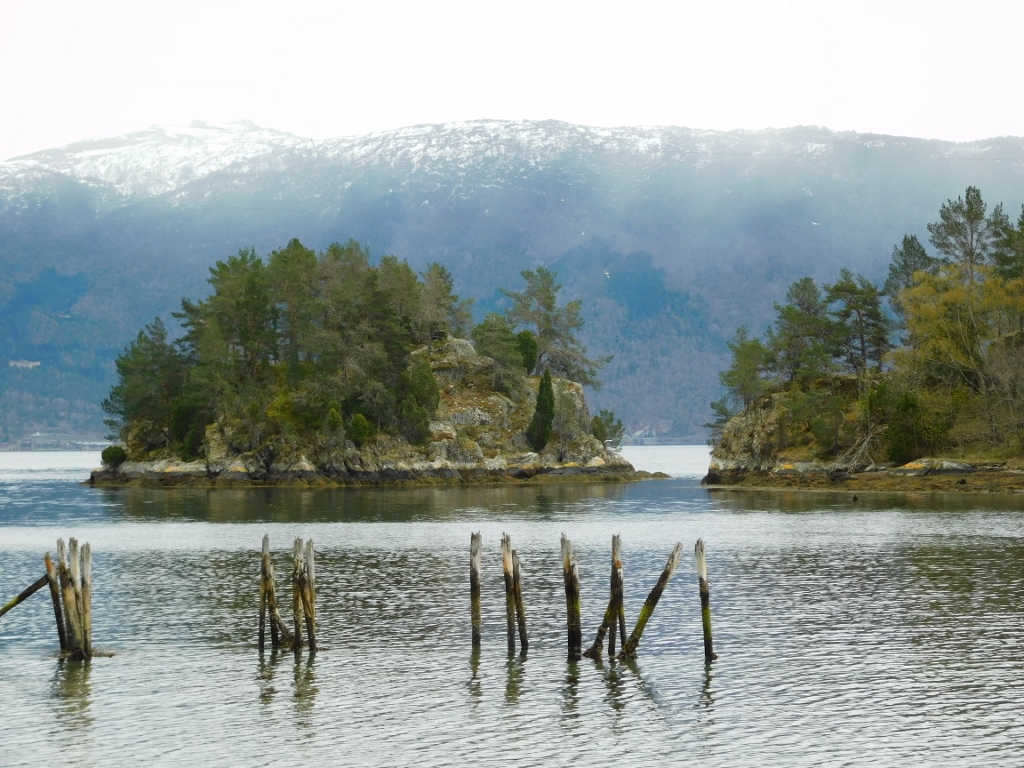 View at parts of Sognefjord and Kvamsøy islet
On the island, I also saw and photographed a small church, while later I read that the island is considered the smallest island in the world that has its own church. The Kvamsøy Church was built at the end of the 13th century and is one of the oldest stone churches in the Sogn og Fjordane region that I was passing through.
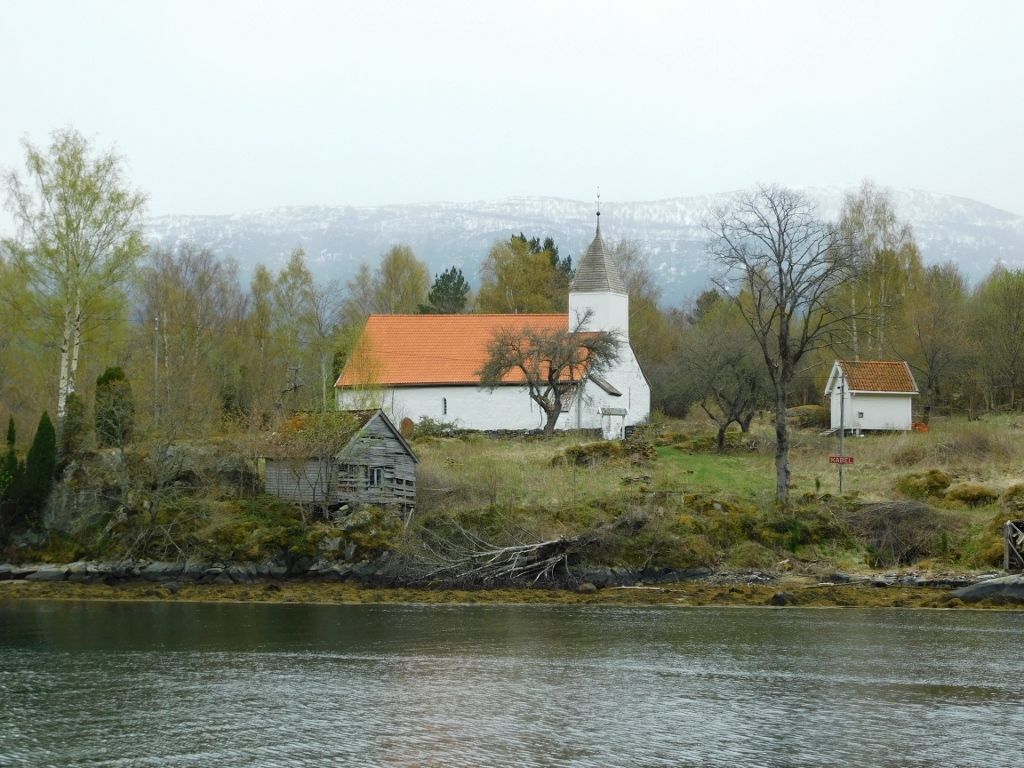 Kvamsøy Church
In addition to this, Kvamsøy is also considered one of the best natural harbours within the Sognefjord, while it also has some historical significance related to a 12th-century king who landed here with his fleet. It’s possible that this occurred right at the spot I photographed, which certainly looks idyllic.
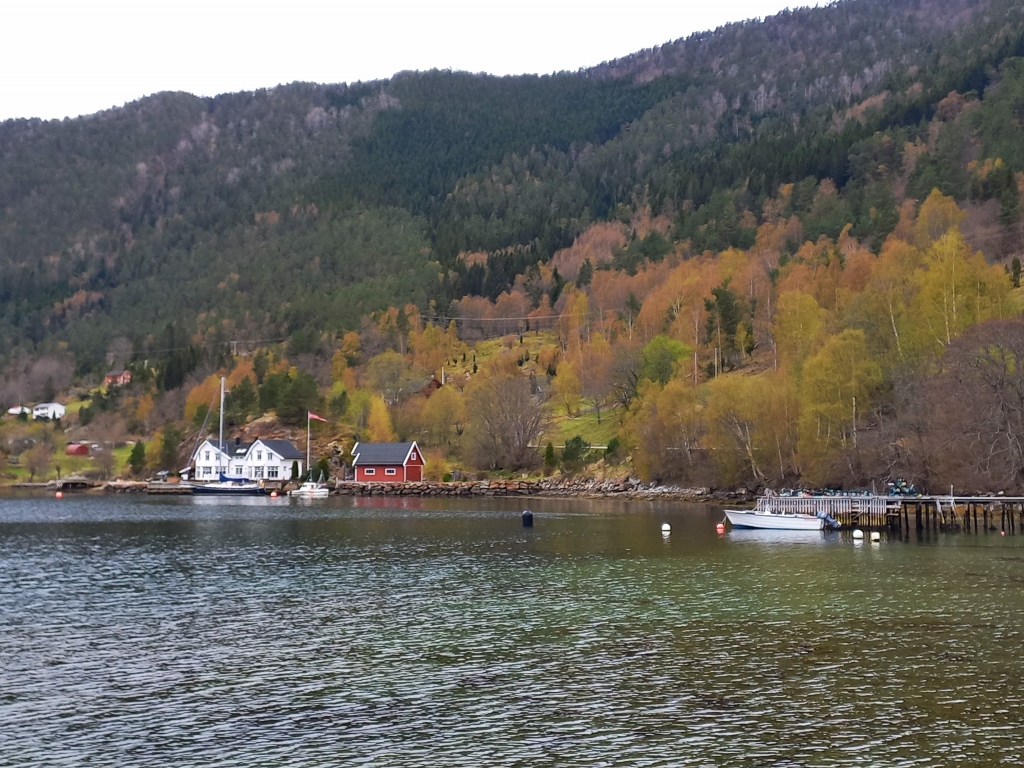 Sognefjord coast opposite Kvamsøy
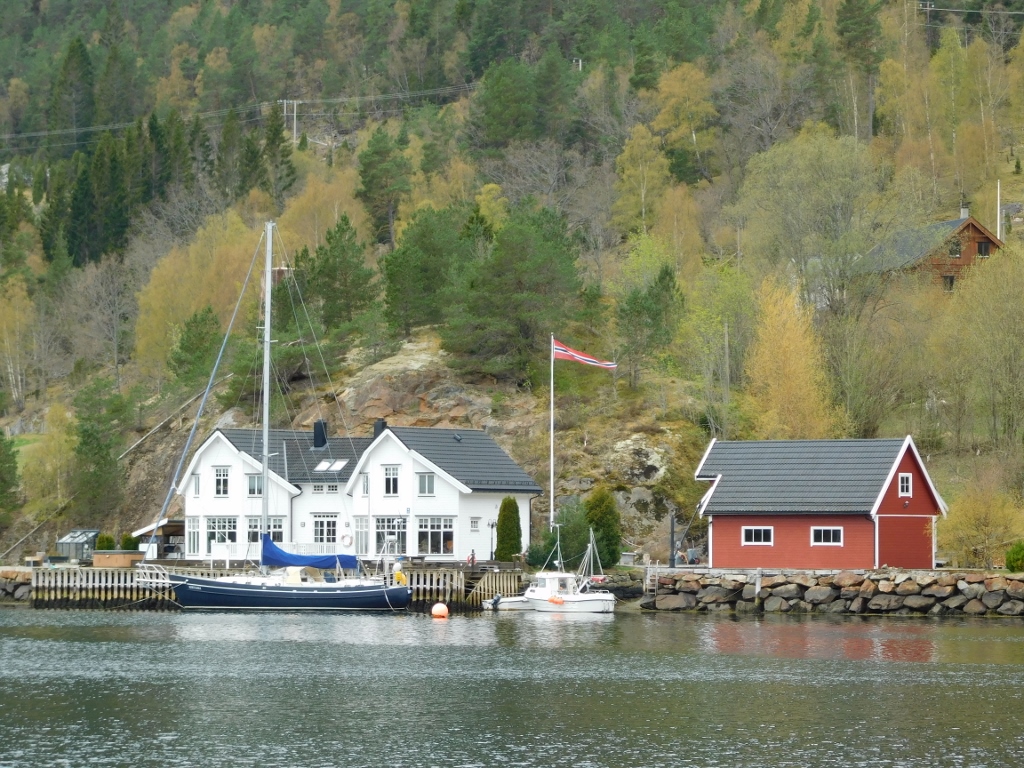 Sognefjord coast opposite Kvamsøy
I continued driving and soon passed by the church in the village of Sæle (Sæle Church) from 1903. This church was built to replace the one from the island of Kvamsøy.
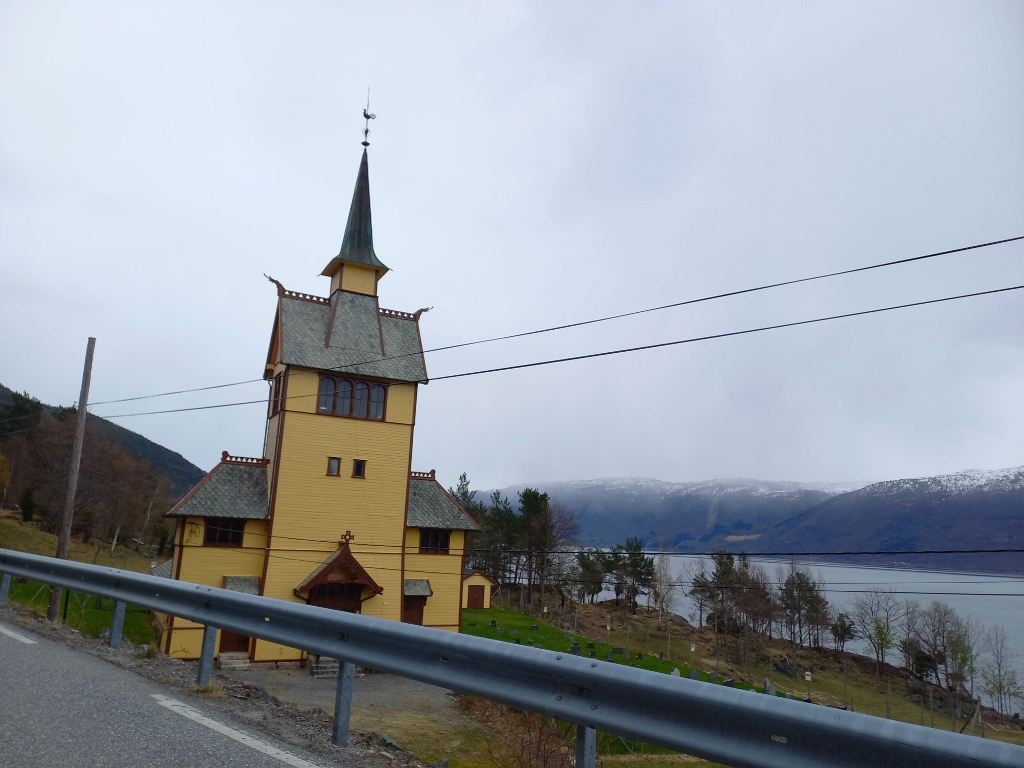 New church by the Sognefjord
During another brief stop by the road, I was also able to see and photograph the impressive Sognefjord and its southern shore.
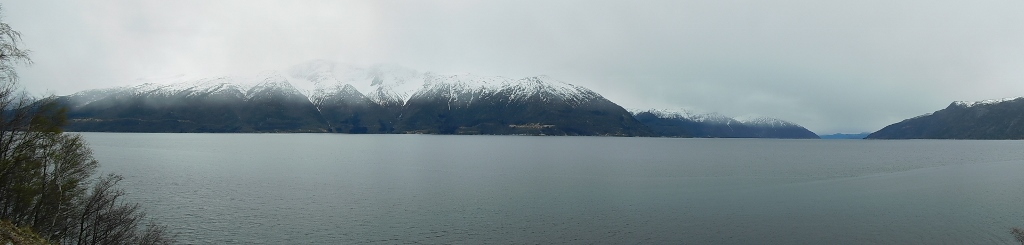 Sognefjord
As for the road in this area, although it followed the fjord's coastline, it was often lined with trees. There are many photographs online that show these landscapes covered in beautiful green vegetation, usually taken on sunny days with vibrant colours. The situation was quite different during my visit in April 2024. At that time, Norway was still experiencing early spring, while the deciduous trees were just beginning to get their new leaves. On the other hand, in terms of the weather, this was the worst day of the week I spent in the north of Europe, so I think I was quite fortunate.
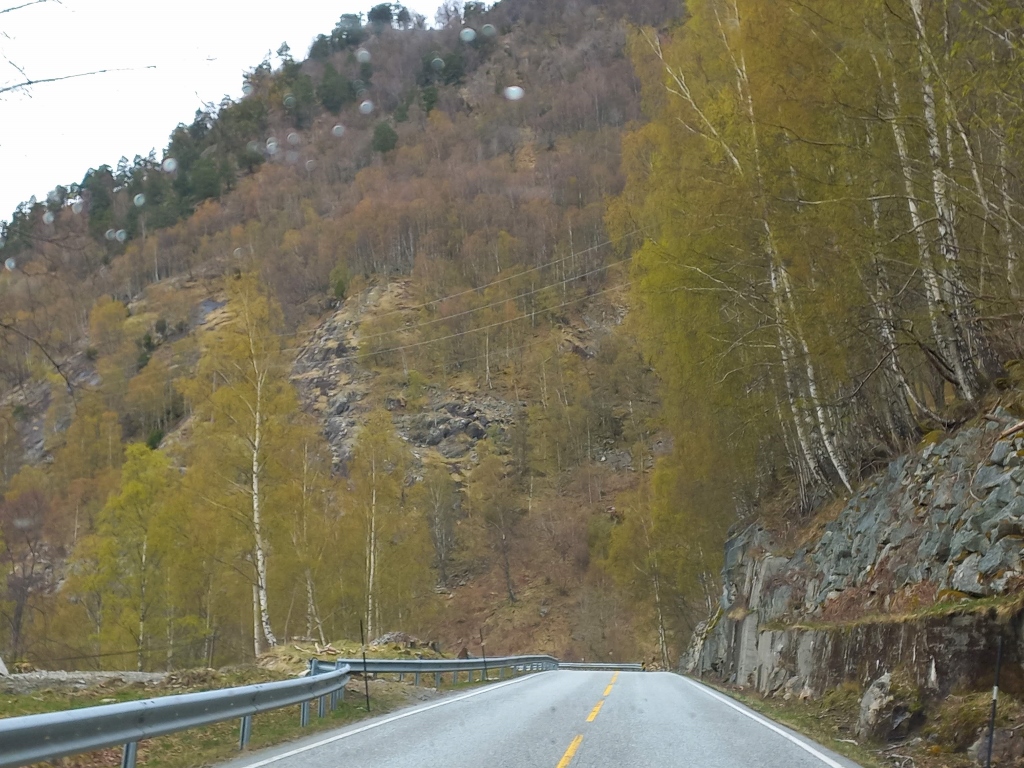 Sognefjord’s north coast in early spring
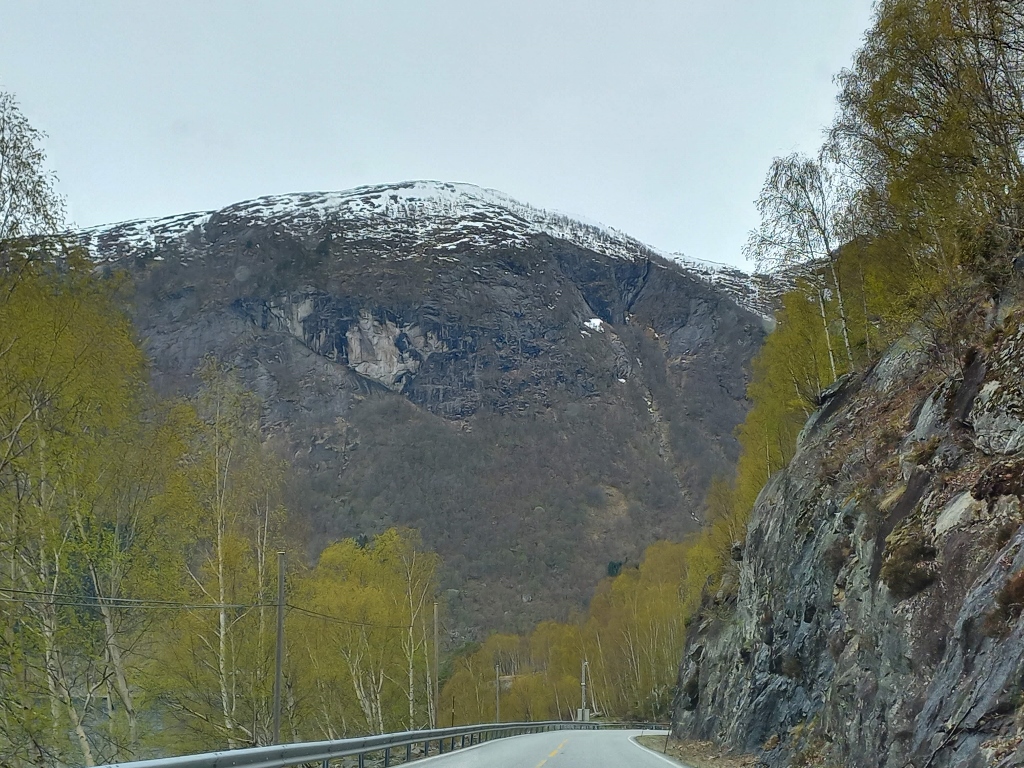 Sognefjord’s north coast in early spring
Occasionally, drops of rain fell, but it wasn't anything dramatic. At one point, the road began to wind around a narrow branch of the main fjord that extends into the land like a finger (though only about 3 km in length).
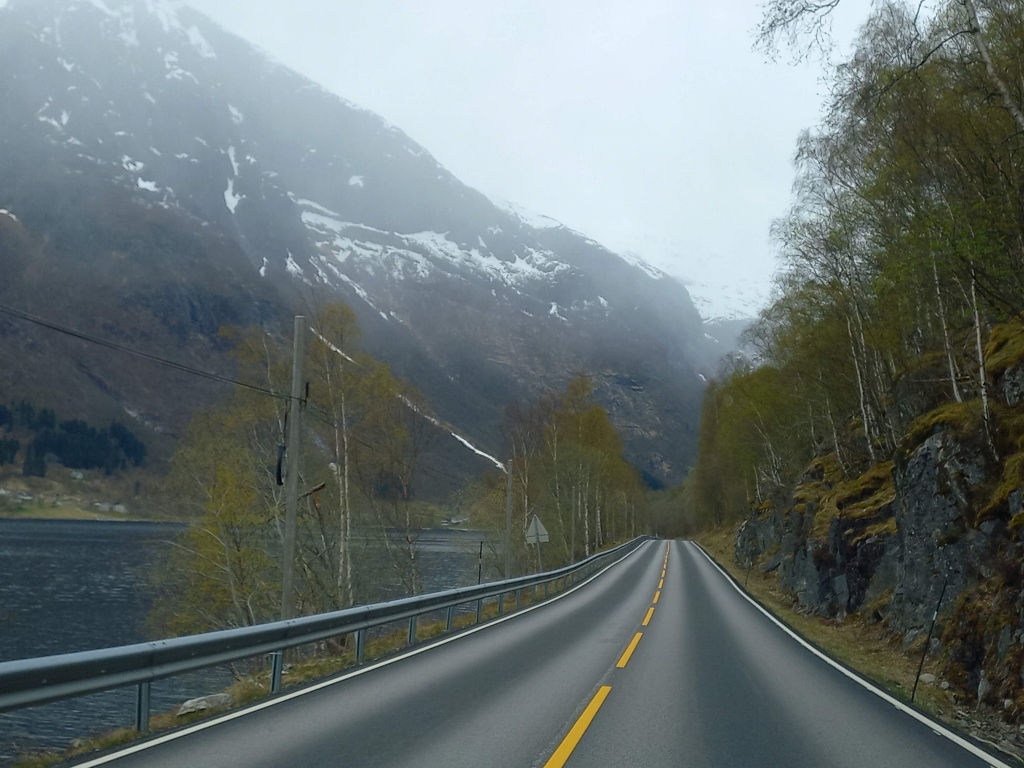 Sognefjord’s north coast in early spring
The road again followed the coastline at the end of that branch, creating a large curve, but the view was interesting once more.
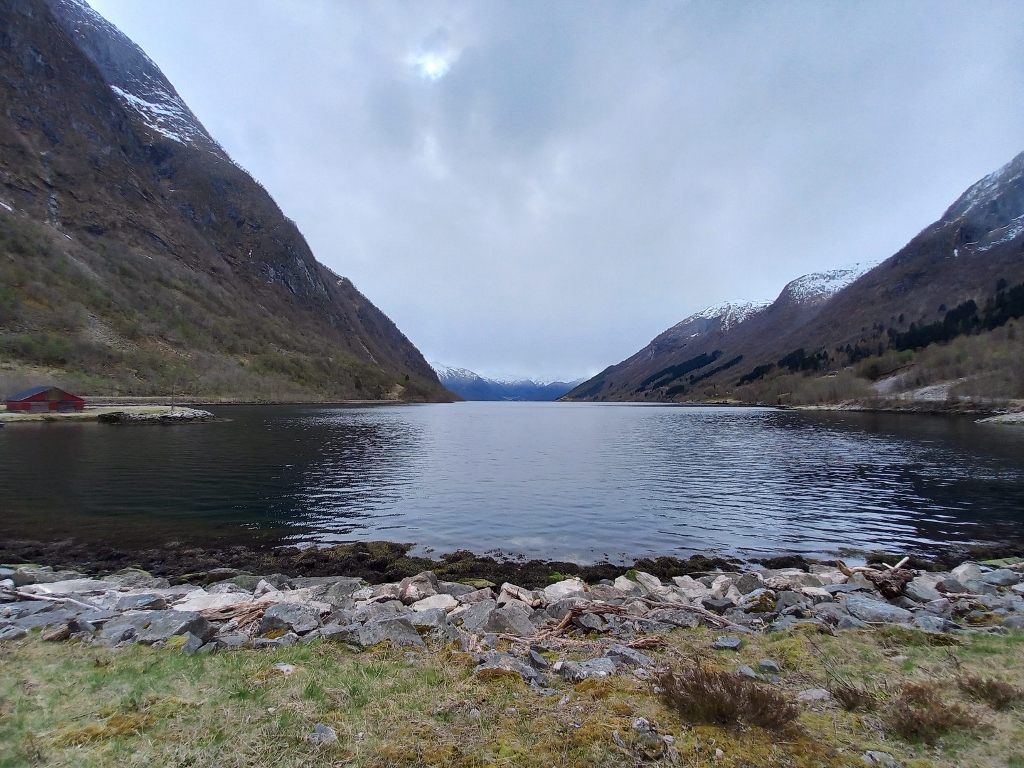 Sognefjord’s north coast in early spring
On the other side of the road in this area, there were some houses and even though the clouds had significantly lowered, the fresh green colour of the young grass and some of those houses brought colour to this beautiful region.
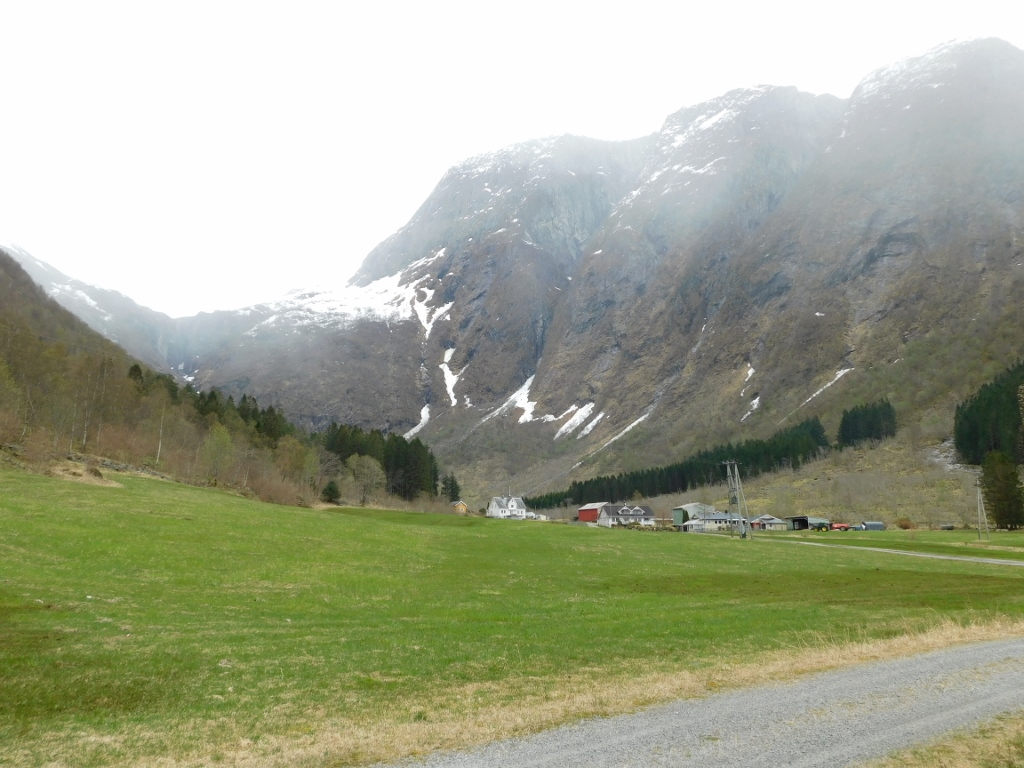 Human presence on the north coast of Sognefjord
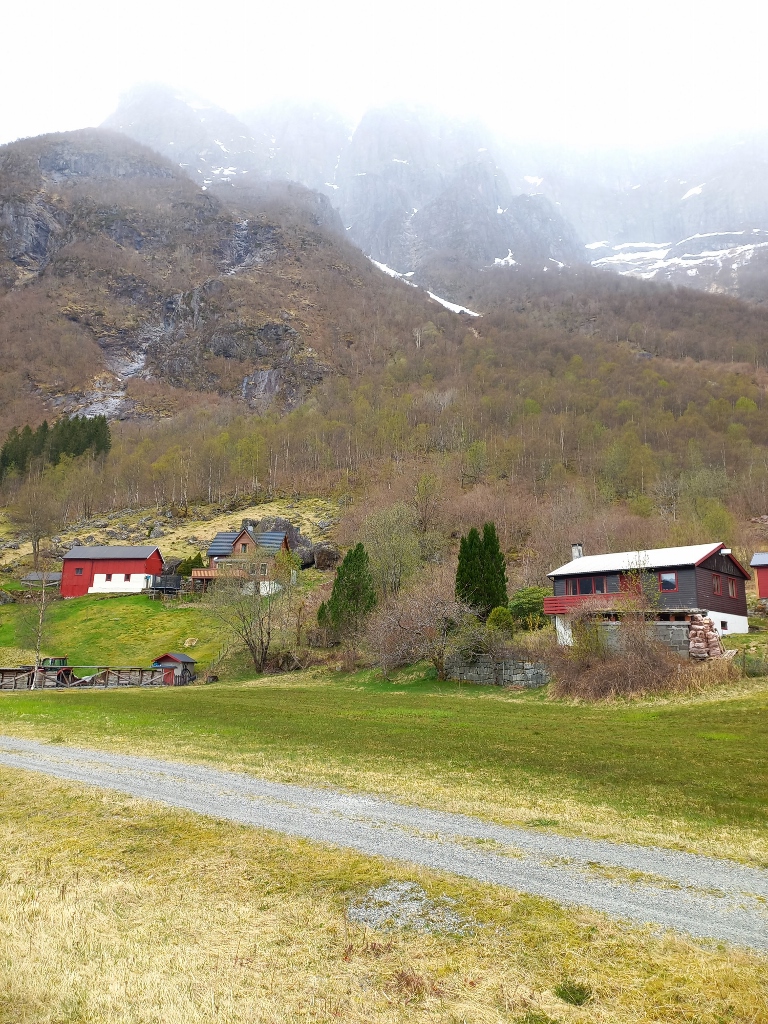 Human presence on the north coast of Sognefjord
Several hundred metres past this curve, the road leads to the Høyanger Tunnel. It was just one of the many tunnels I drove through that day, but what a tunnel this was – 7,543 m long. When it opened in 1982, it was the longest tunnel in Norway, though it has since lost that title. Besides its length, I was fascinated by the fact that during my drive through the tunnel, I only saw 4-5 cars (in both directions).
After exiting the tunnel, just a couple of kilometres farther, you pass through the town of Høyanger, which the tunnel is named after.
Now, I had less than 50 km to go to the next ferry that would take me across to the southern side of the Sognefjord. Along the way, I stopped at a few places where it was convenient and seemed interesting.
For example, at the Nordeide ferry dock. The ferries operating from this dock were not suitable for my plans, but I stopped there anyway because there was a large parking area and everything was practically right next to the main road. When I got out of the car, I could peacefully take more photos of the details related to the Sognefjord.
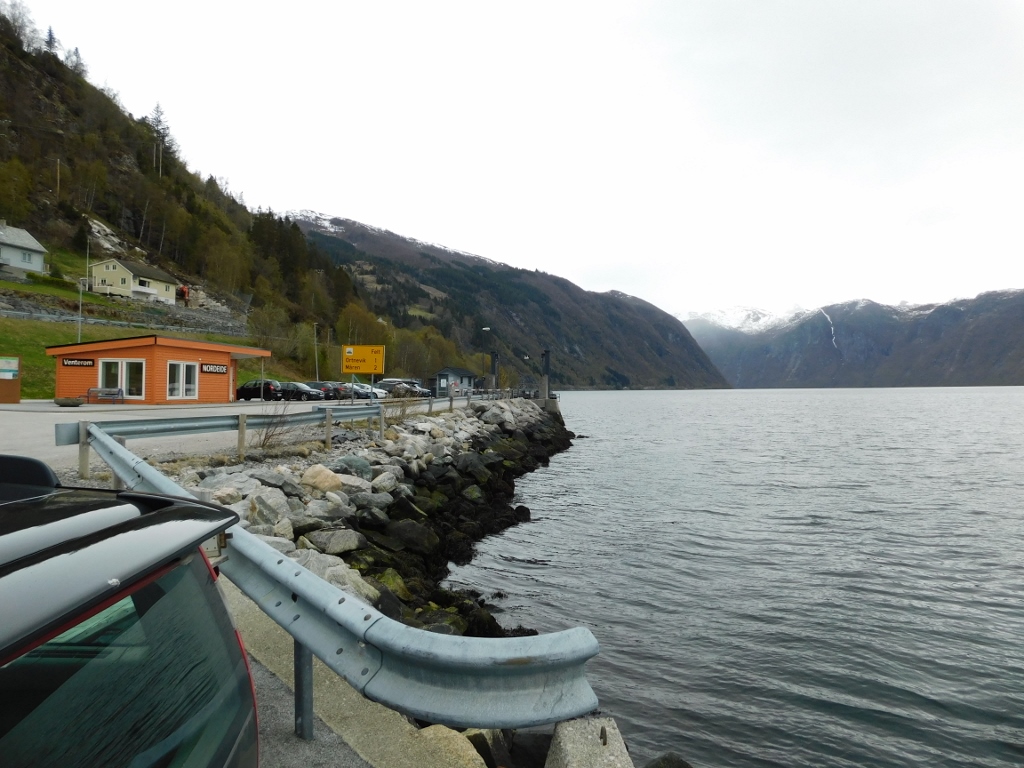 Nordeide ferry dock
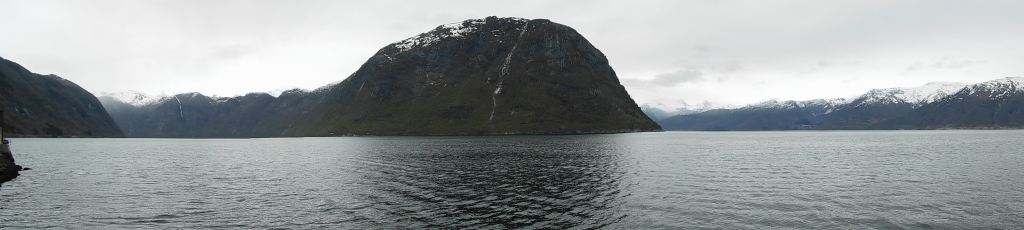 Sognefjord
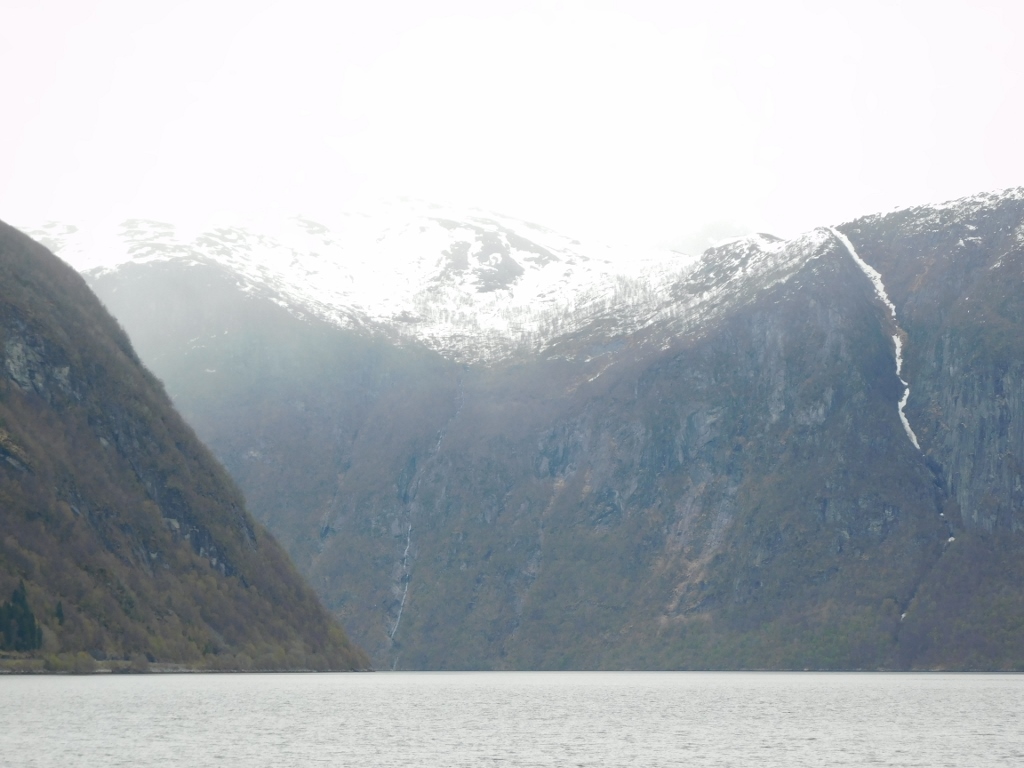 Sognefjord
Or when the road started to climb a bit after the town of Vadheim, which is located at the end of a smaller fjord that is a branch of the larger Sognefjord.
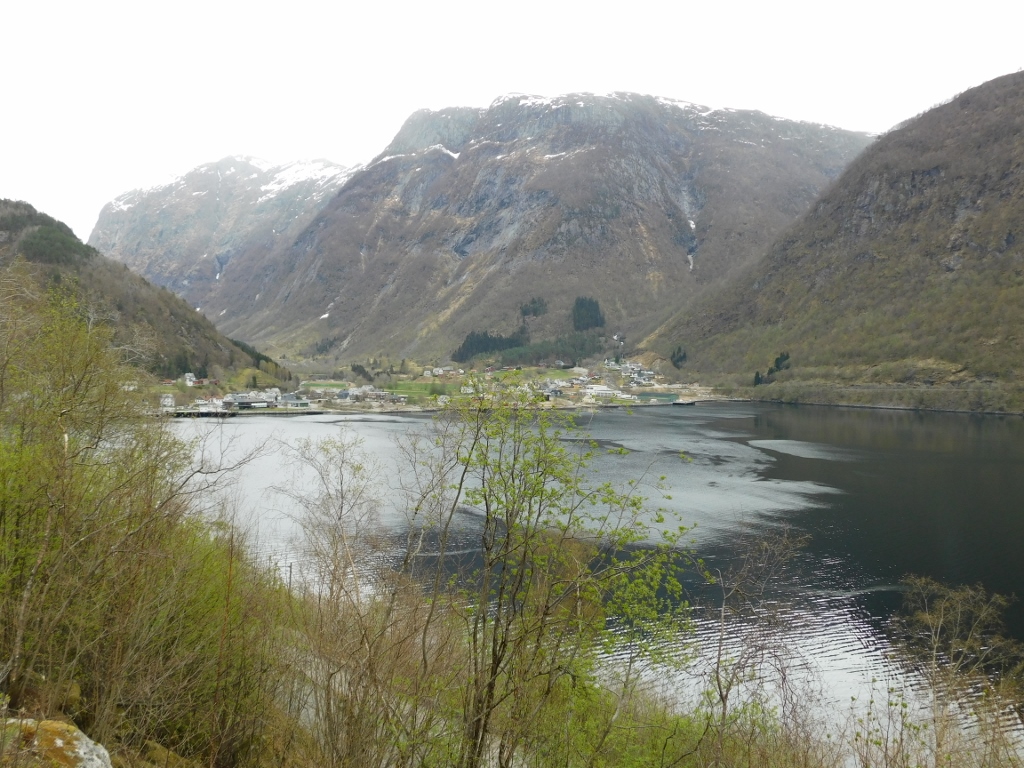 Vadheim
Since it was occasionally drizzling by now, I didn’t linger much along the way and drove straight to the Lavik ferry dock. I had to wait a bit, but soon both my car and I were comfortably settled on the ferry. Once again, I was able to walk around the ferry and find good spots from which to photograph the surroundings.
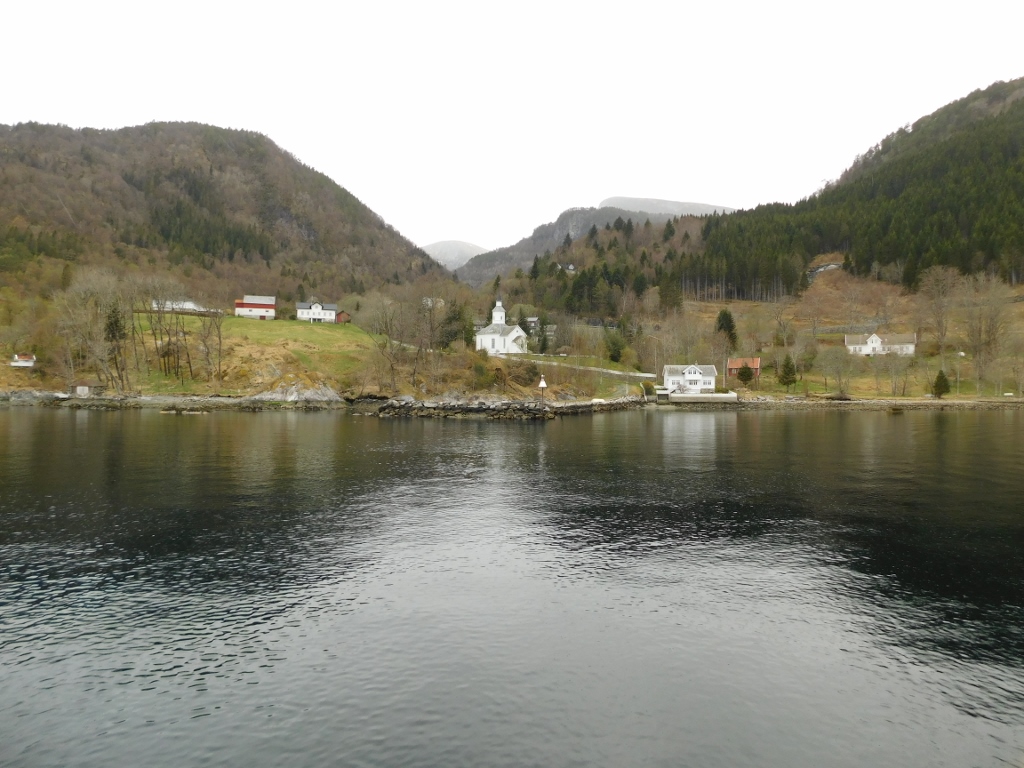 Leaving the north shore of the Sognefjord
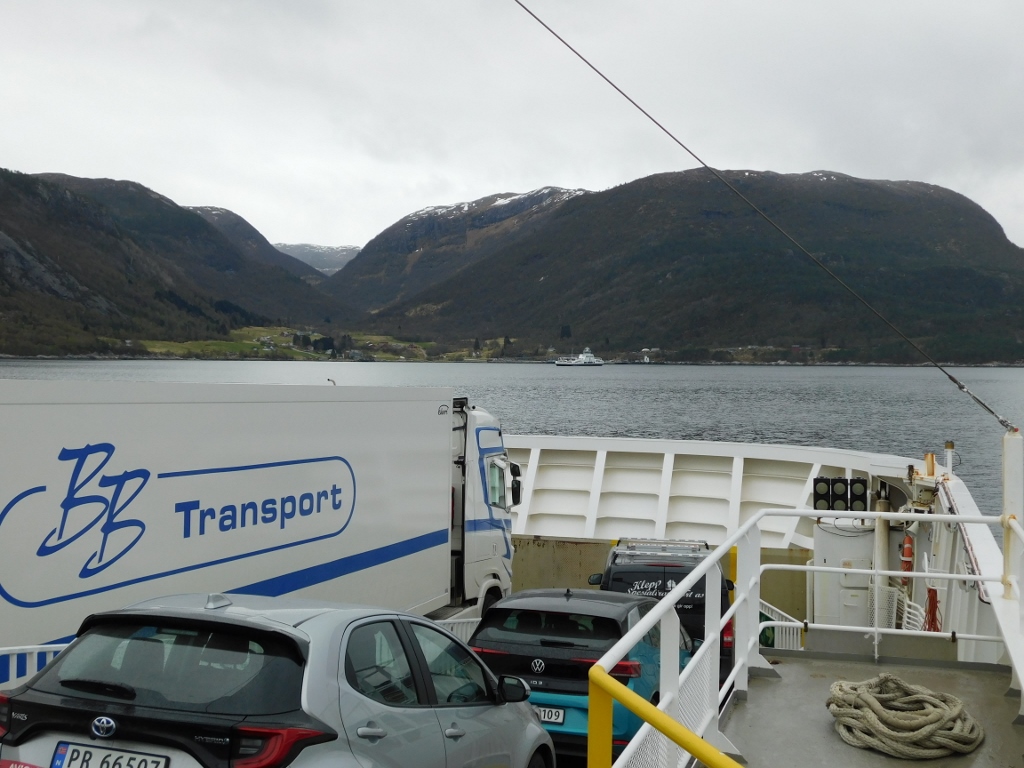 Crossing the Sognefjord by ferry
 South shore of the Sognefjord
Here's what a snippet of that experience looked like, captured on video.
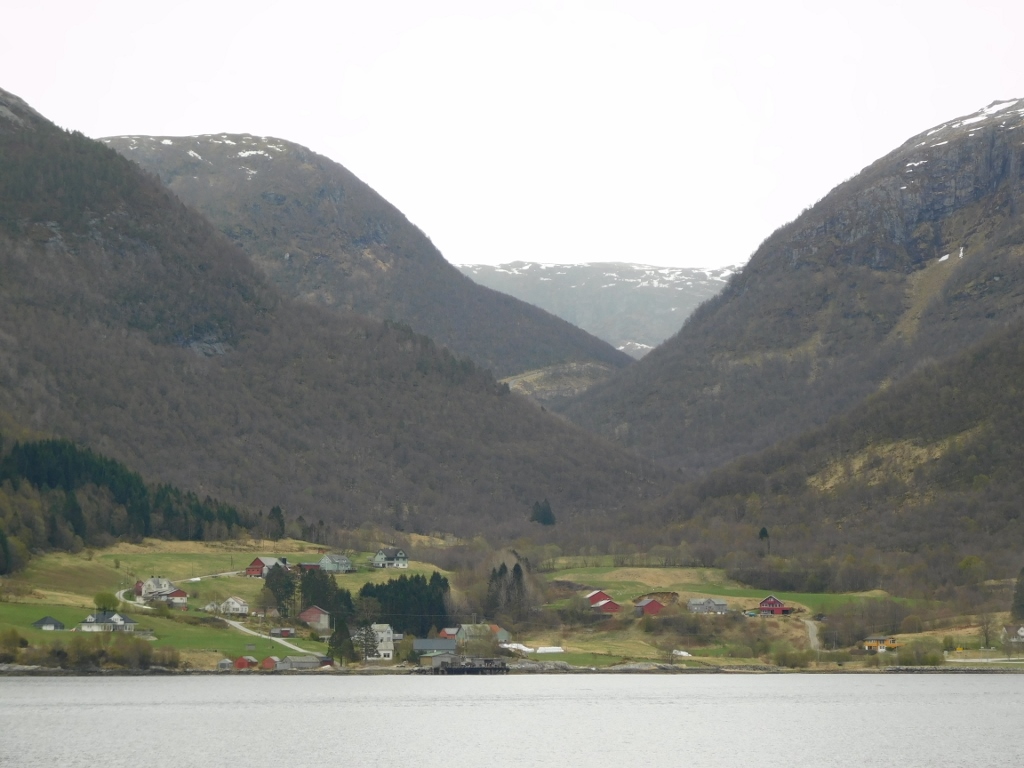
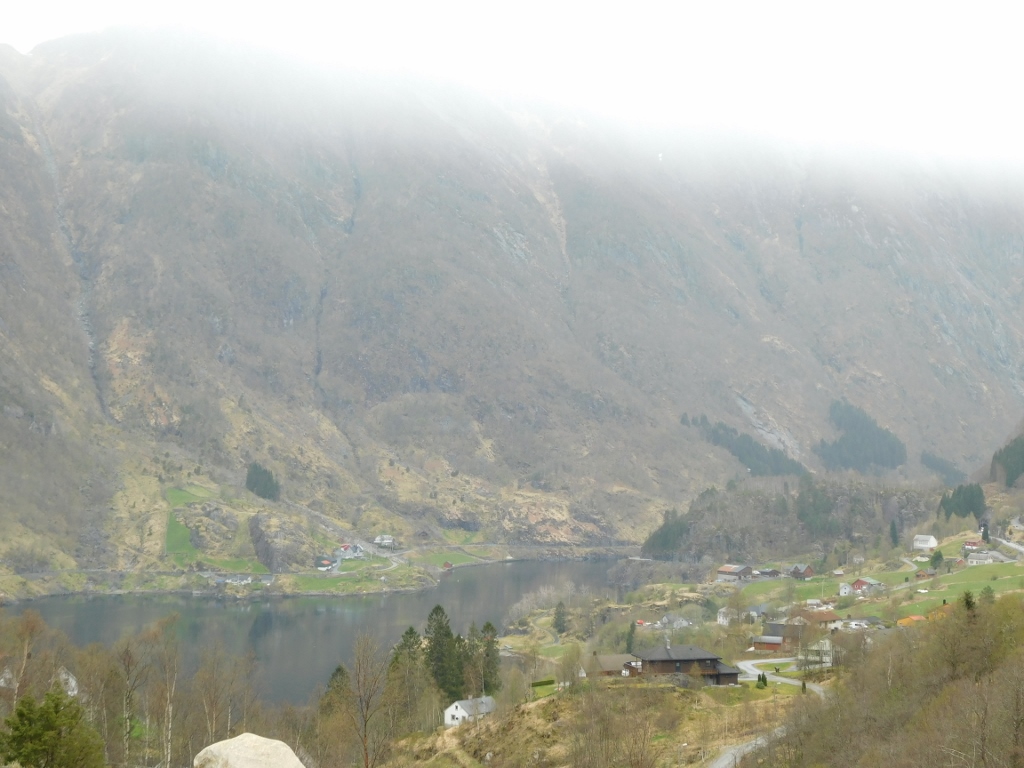
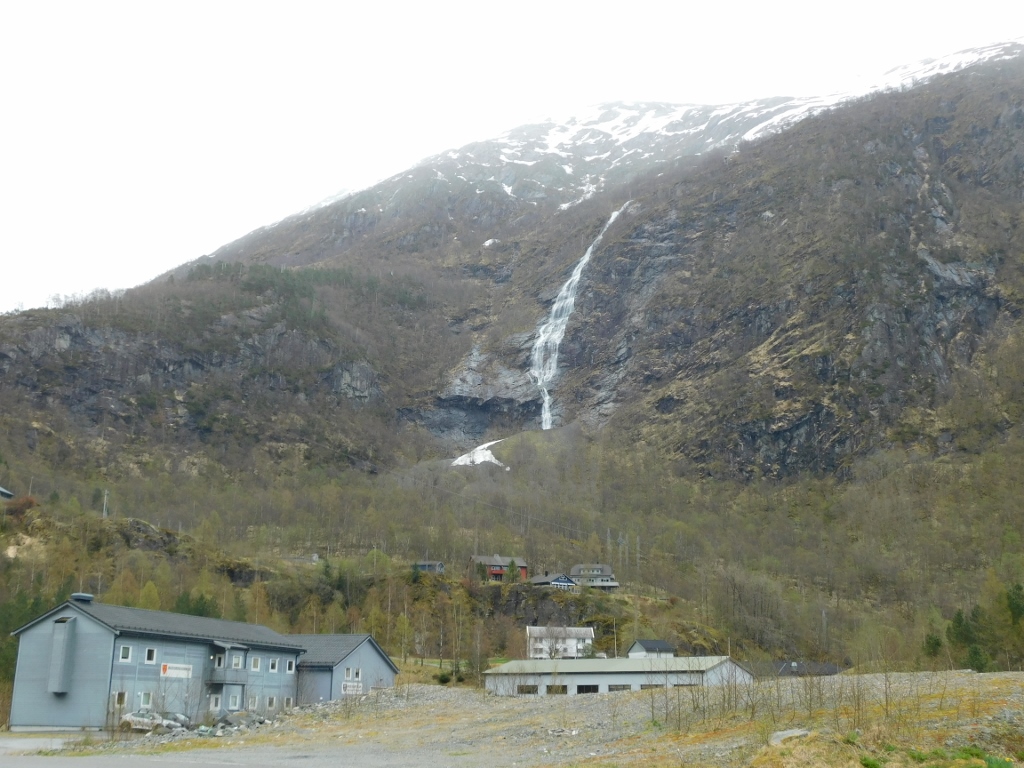
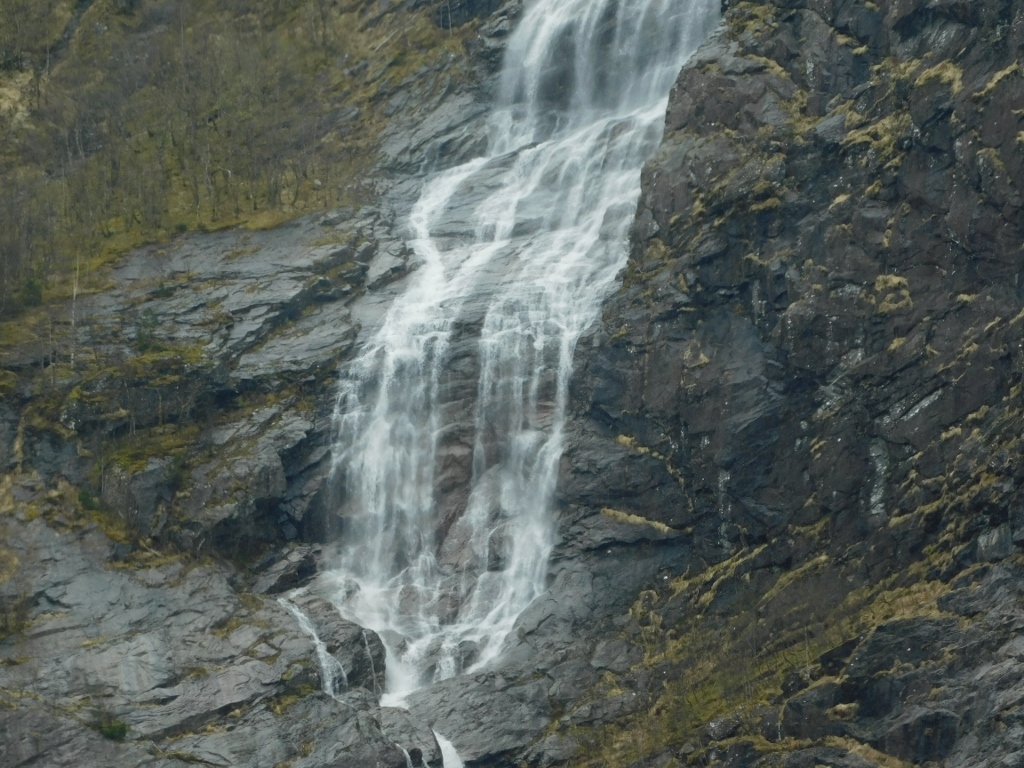
When I disembarked on the southern shore of the Sognefjord, I continued southwards since my final destination for the day was the city of Bergen. The road occasionally climbed up the mountains, providing views of some places and bays from above. As this is a very mountainous region, there were also waterfalls created by the melting snow.
 On the road to Bergen
 On the road to Bergen
 On the road to Bergen
It had already rained earlier while I was driving along the northern shore of the Sognefjord and even while crossing it by ferry. Now, however, it was occasionally quite heavy and at higher elevations, it had turned into sleet.
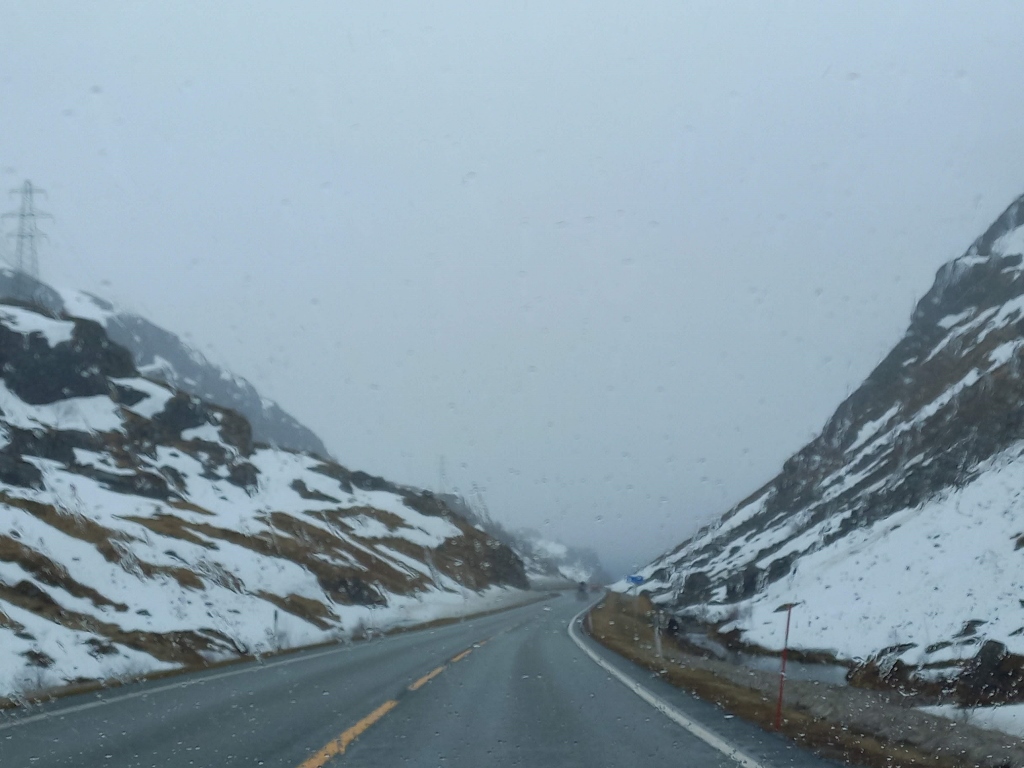 On the road to Bergen
Occasionally, the rain did stop and it made sense then to pull over, get out of the car and capture some details of the area I was travelling through.
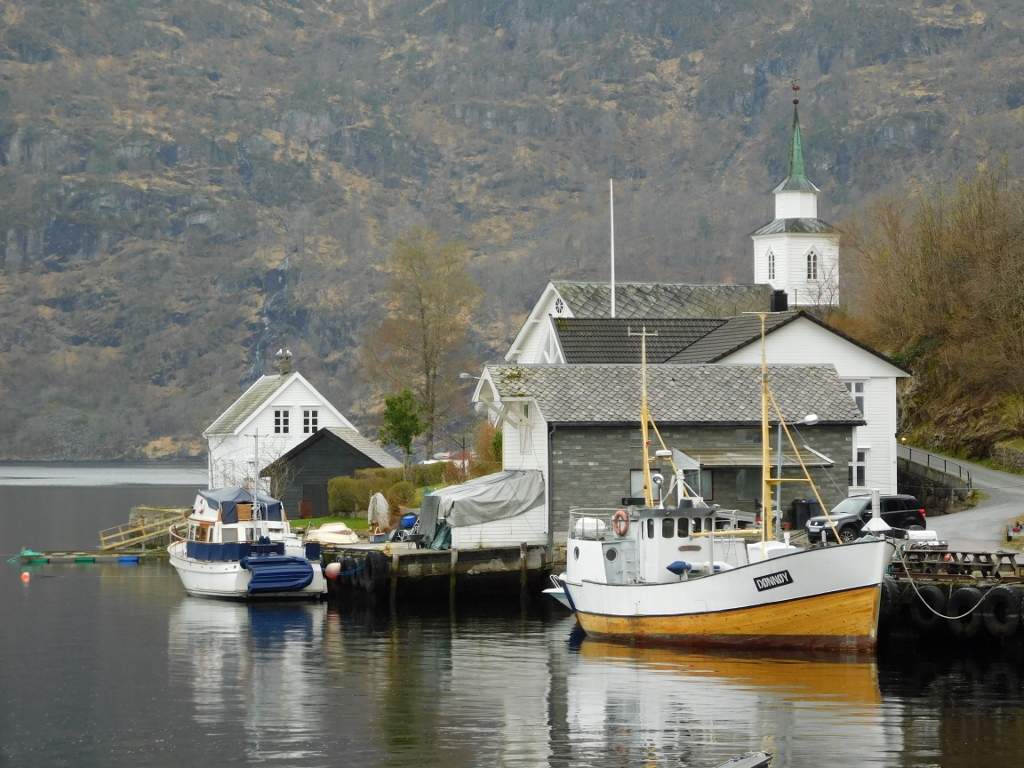 On the road to Bergen
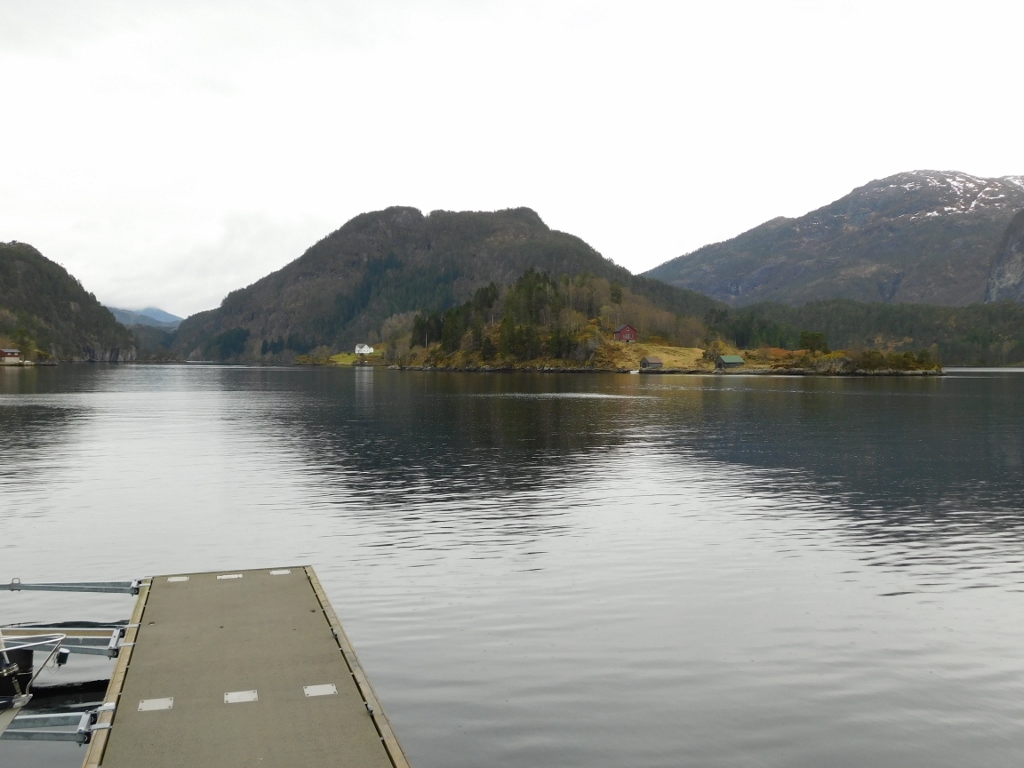 On the road to Bergen
And then, near the town of Ostereidet, I finally came across a roadside restaurant where I could enjoy a nice coffee and take a pleasant rest.
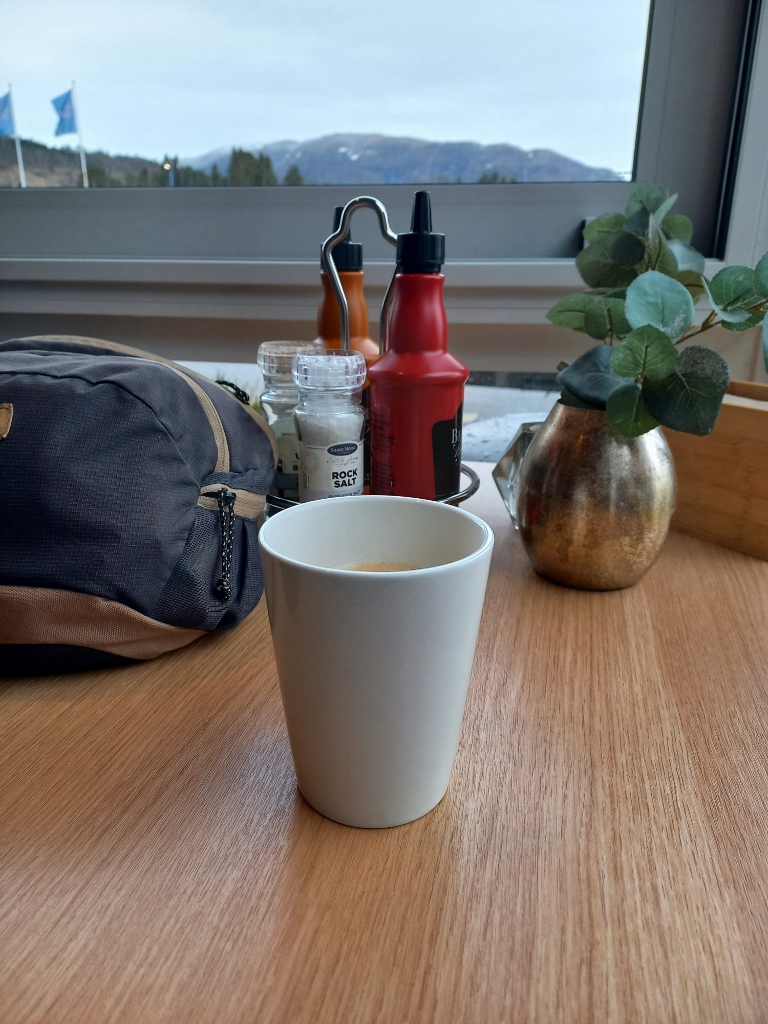 On the road to Bergen
After this break, I took a short walk around the area near the restaurant, took a few photographs and then returned to the car in order to continue on to Bergen.
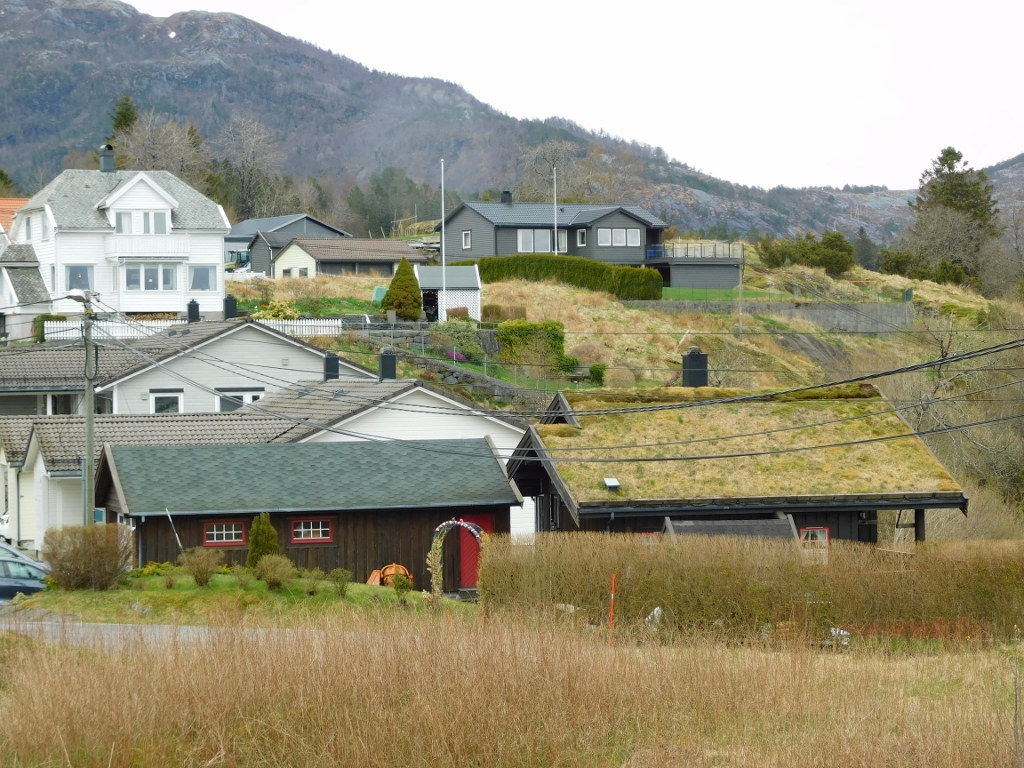 On the road to Bergen
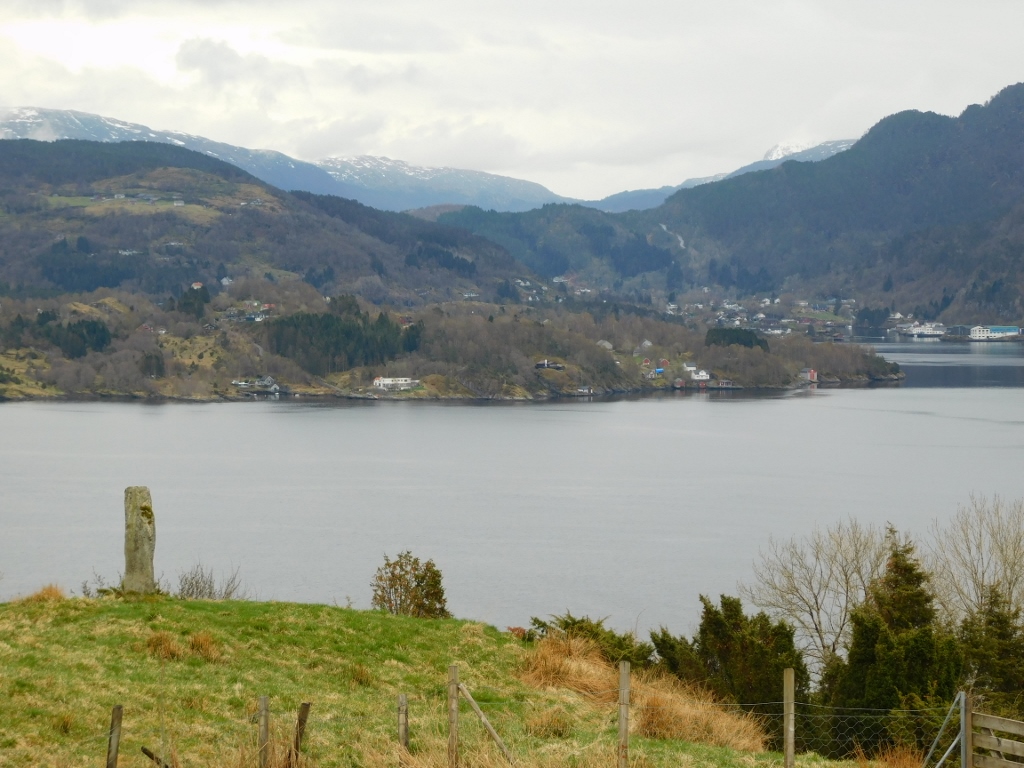 On the road to Bergen
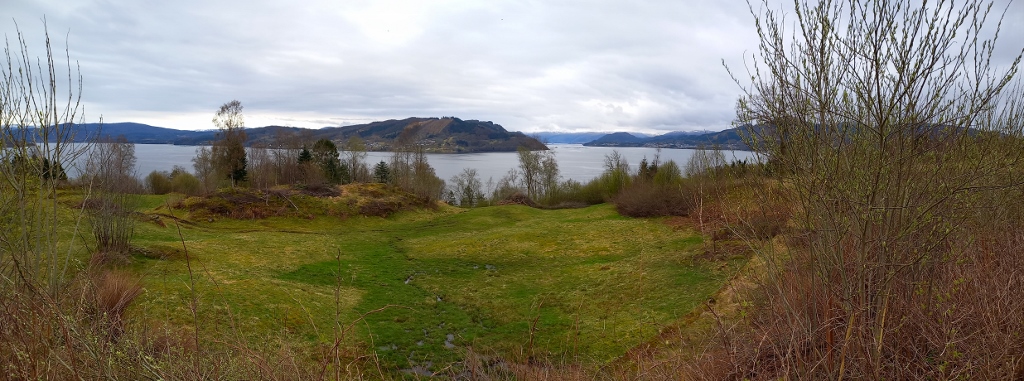 On the road to Bergen
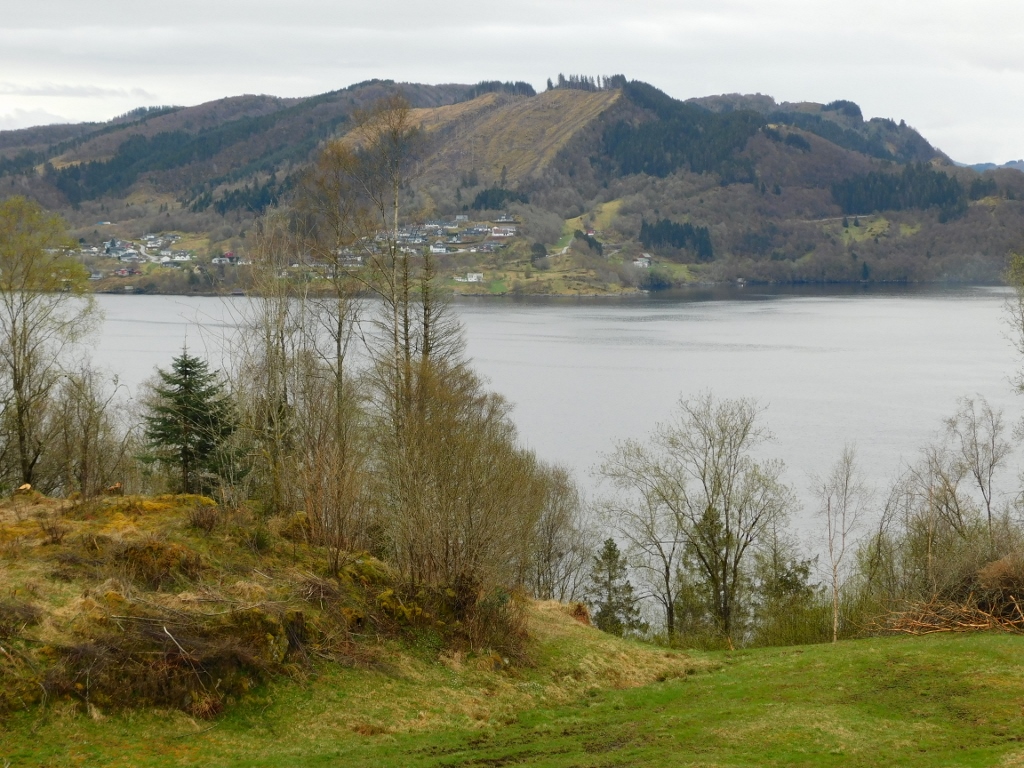 On the road to Bergen
In this part of Norway, there is an incredible abundance of islands, islets, fjords and lakes. However, up until about 20 kilometres before Bergen, the road manages to stay on land and winds its way across it. Then, you reach the obstacle in the shape of Salhusfjorden, where a ferry line used to be necessary. However, in 1994, the Nordhordland Bridge was opened and that simplified everything.
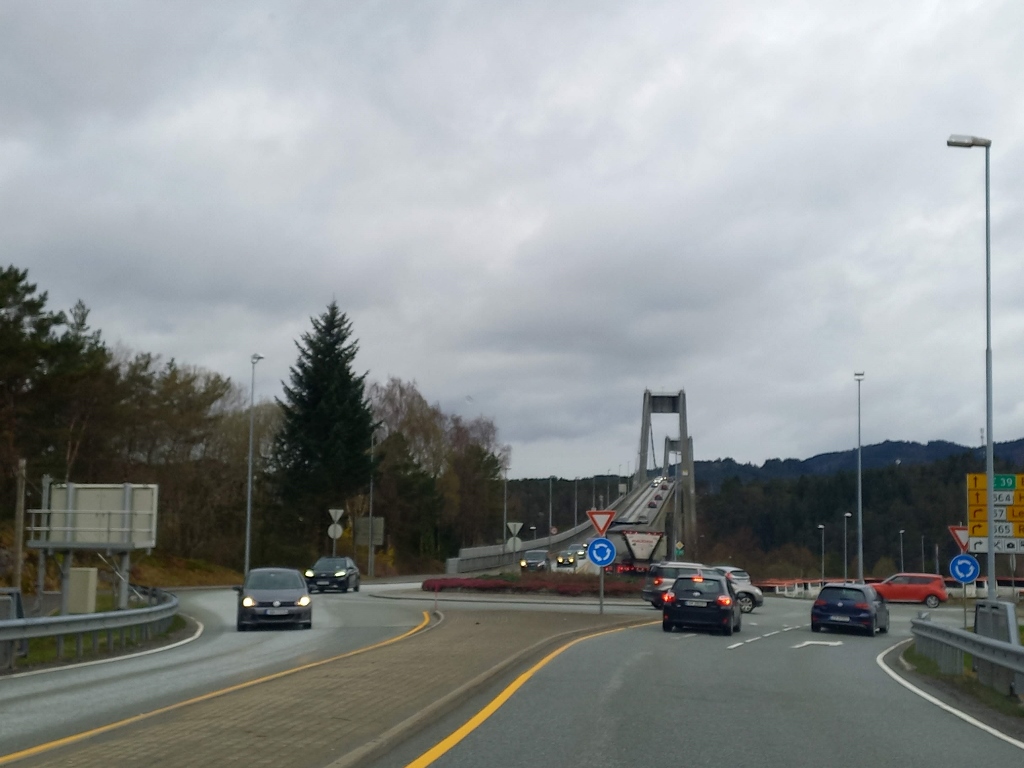 Nordhordland Bridge
It is the second-longest bridge in Norway and it constitutes a combination of a cable-stayed bridge and a pontoon bridge. It measures 1,614 m in length, it is 99 m high and its longest span is 172 m.
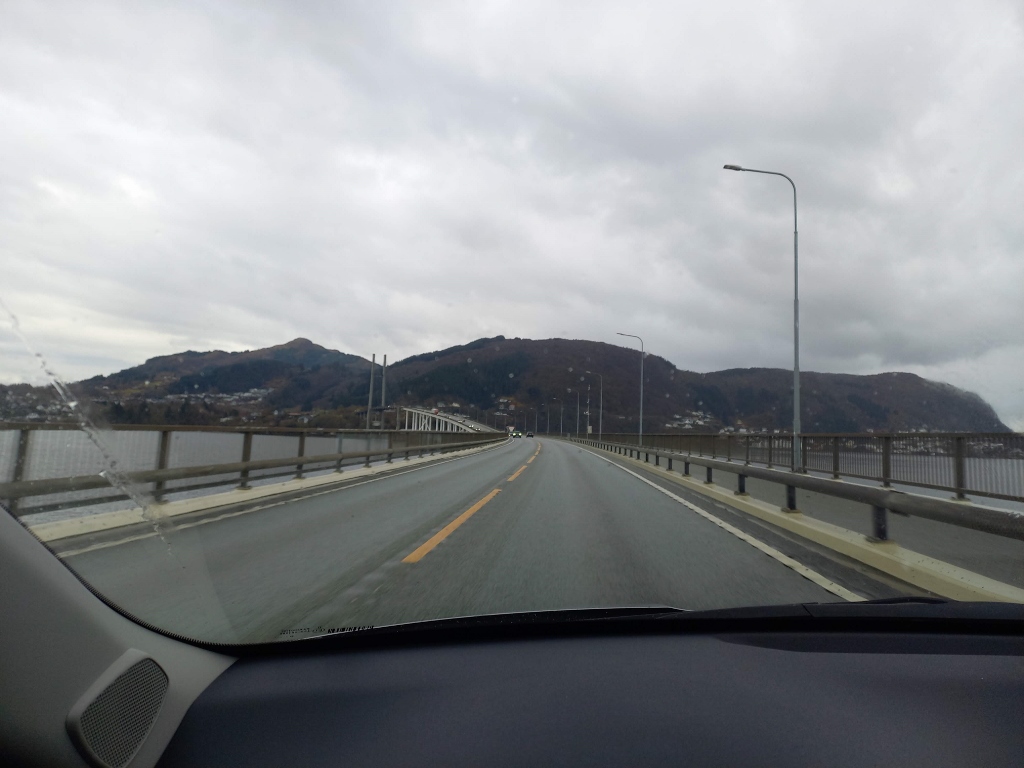 Nordhordland Bridge
As for Bergen, I had reserved a room at a good hotel in the city centre, but the problem was that they didn’t have parking for hotel guests. I still thought it was a better option than choosing a hotel on the outskirts of the city that might offer parking, since this would complicate my stay in the city. It is nice to be in the centre of Bergen, especially when you’re only here for a day and a half.
So, following the hotel's advice, I drove to a nearby public parking area, left my car there and then walked to the hotel, which was only some hundred metres away.
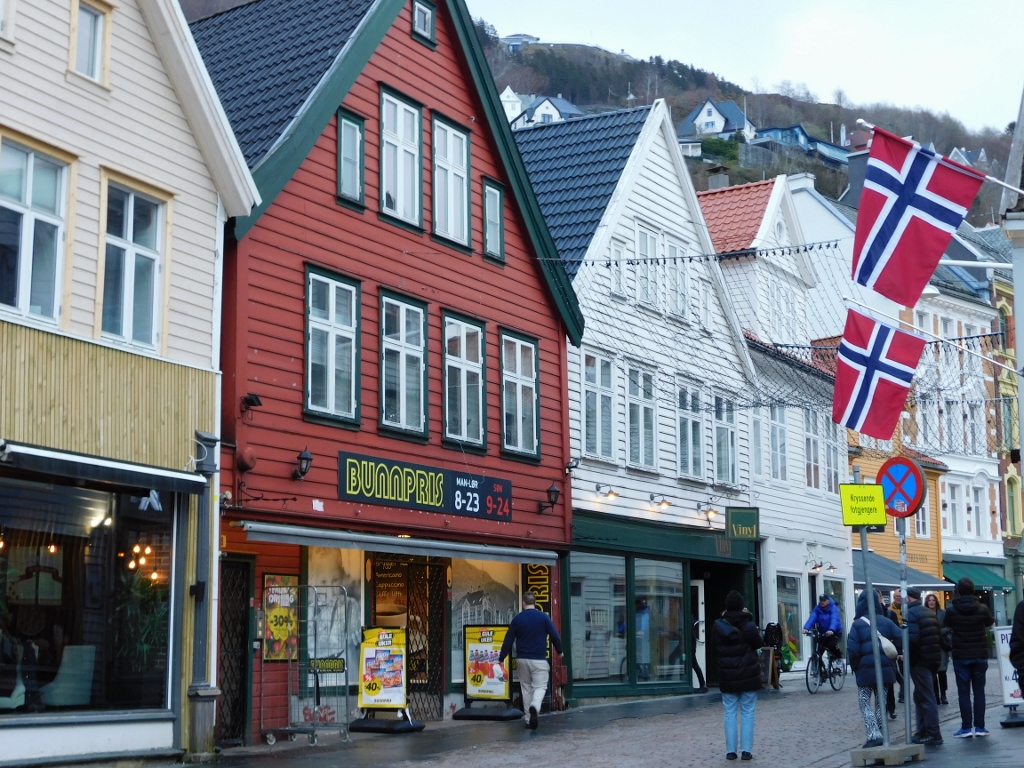
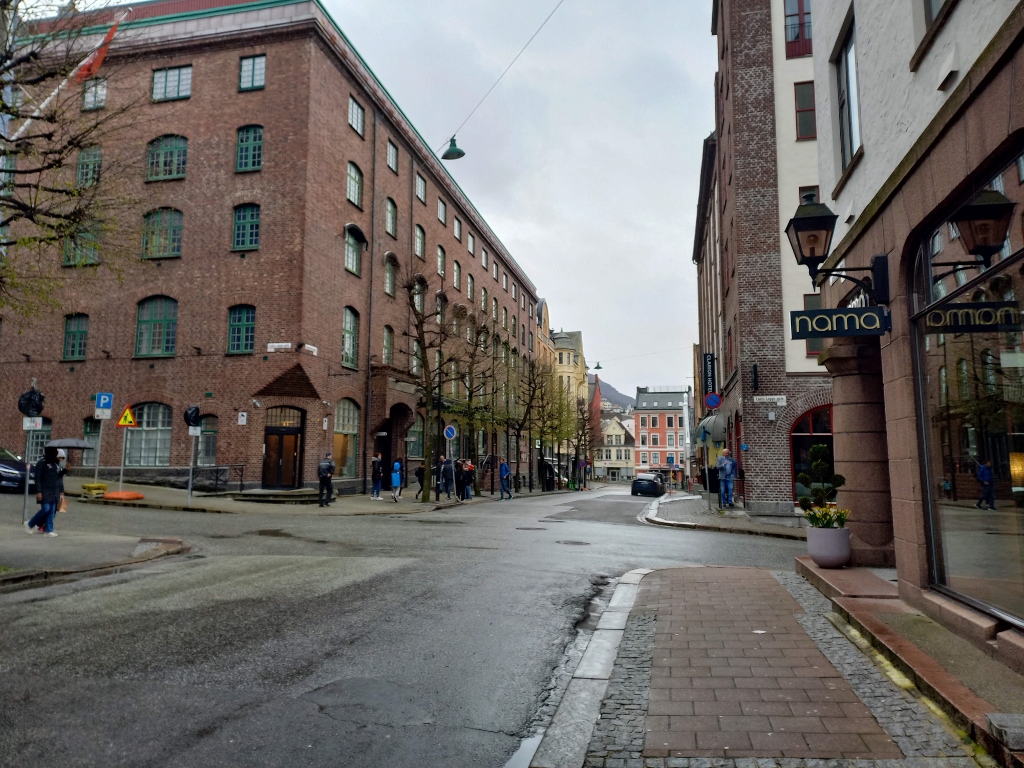 Bergen, a detail
Once at the hotel, I quickly completed all the formalities, left my things in the room and headed out relatively fast. I knew I would have daylight for at least a few more hours, but it was already around 7 PM, so I wanted to take a stroll around Bergen and go out for dinner.
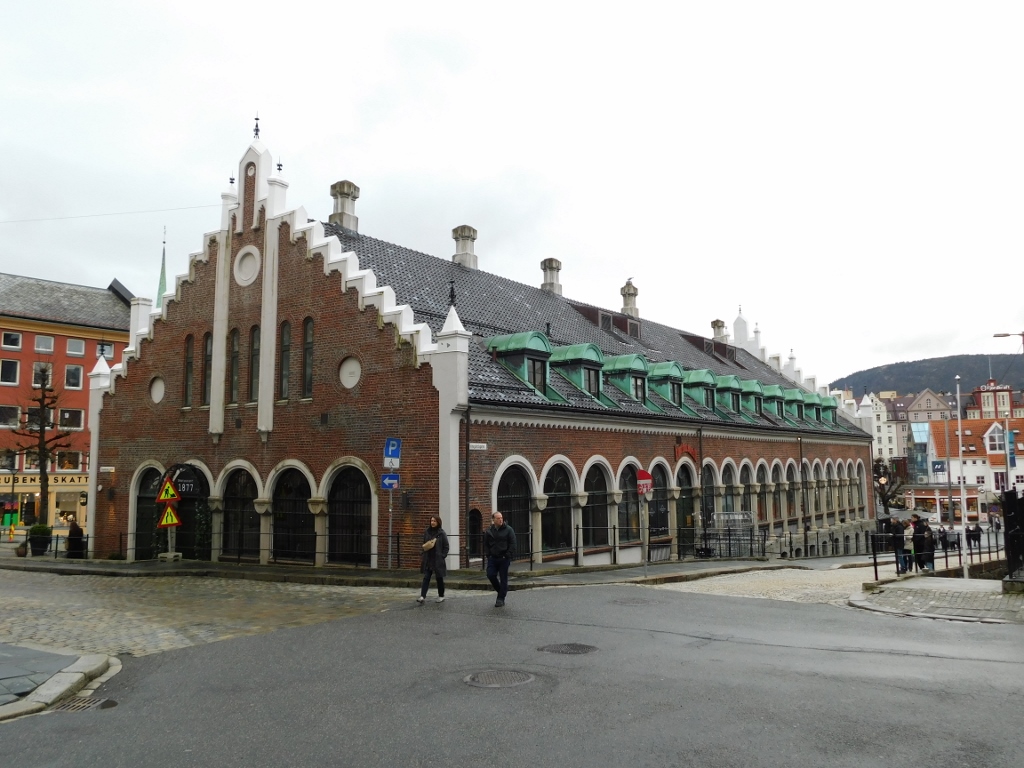 Bergen, a detail
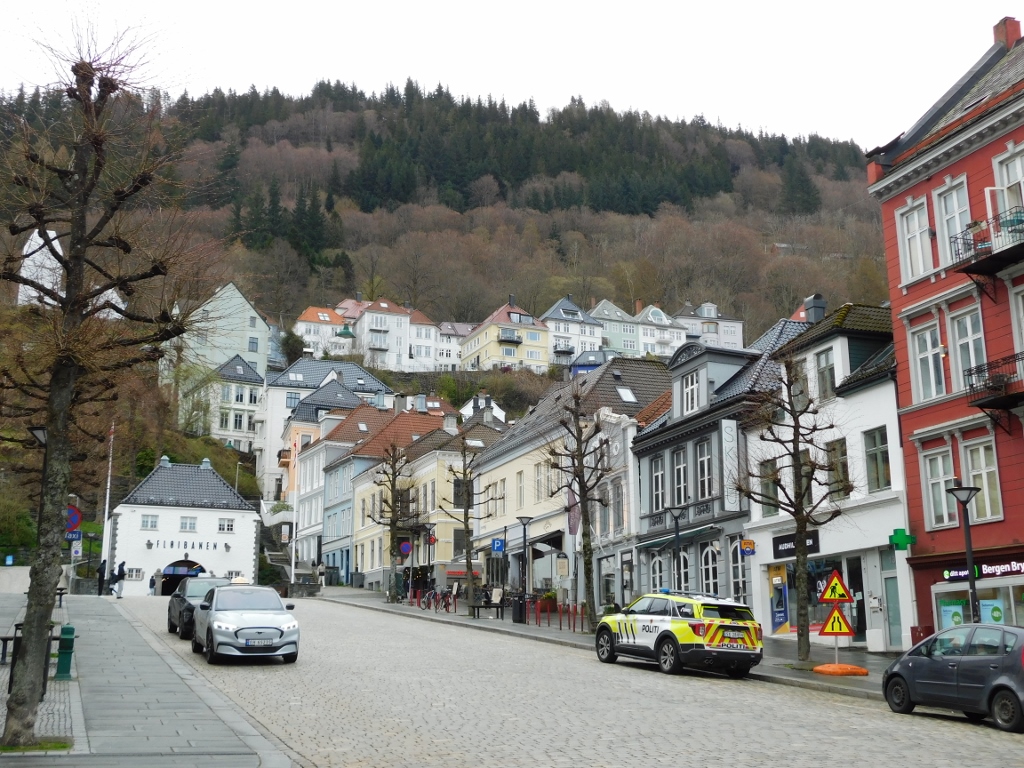 Bergen, a detail
Bergen is a city on the western coast of Norway, sometimes referred to as the "wooden city" due to its old wooden houses. It is the second-largest city in the country, right after Oslo, and it was even the capital of Norway until 1299, when the honour was transferred to Oslo.
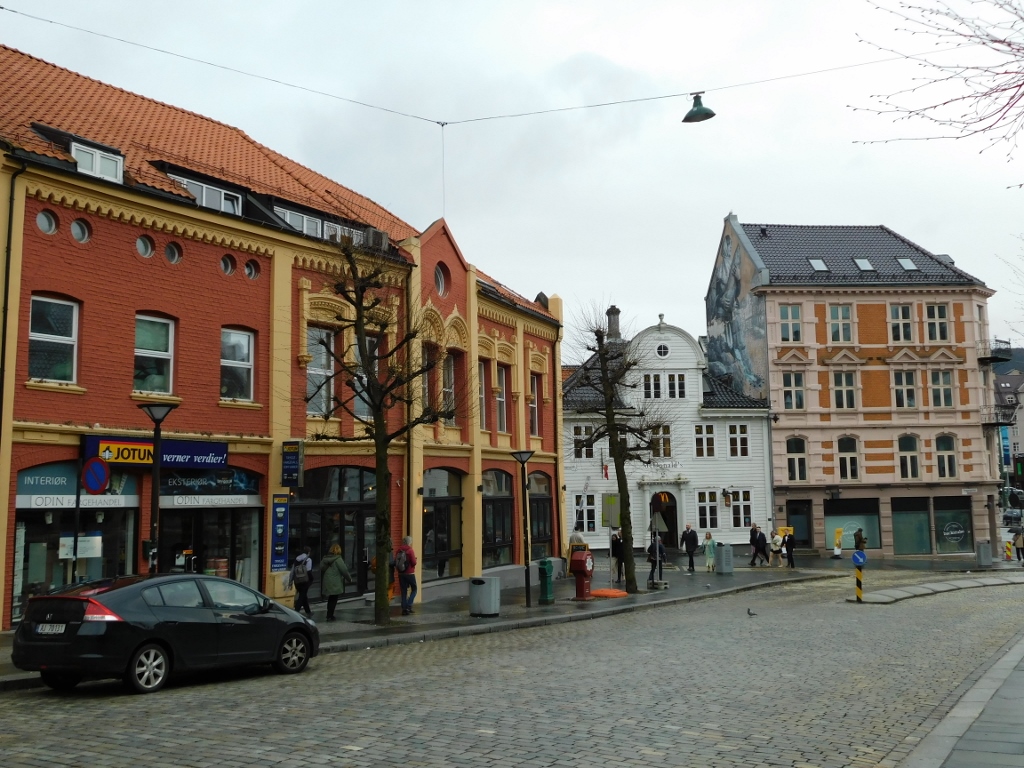 Bergen, a detail
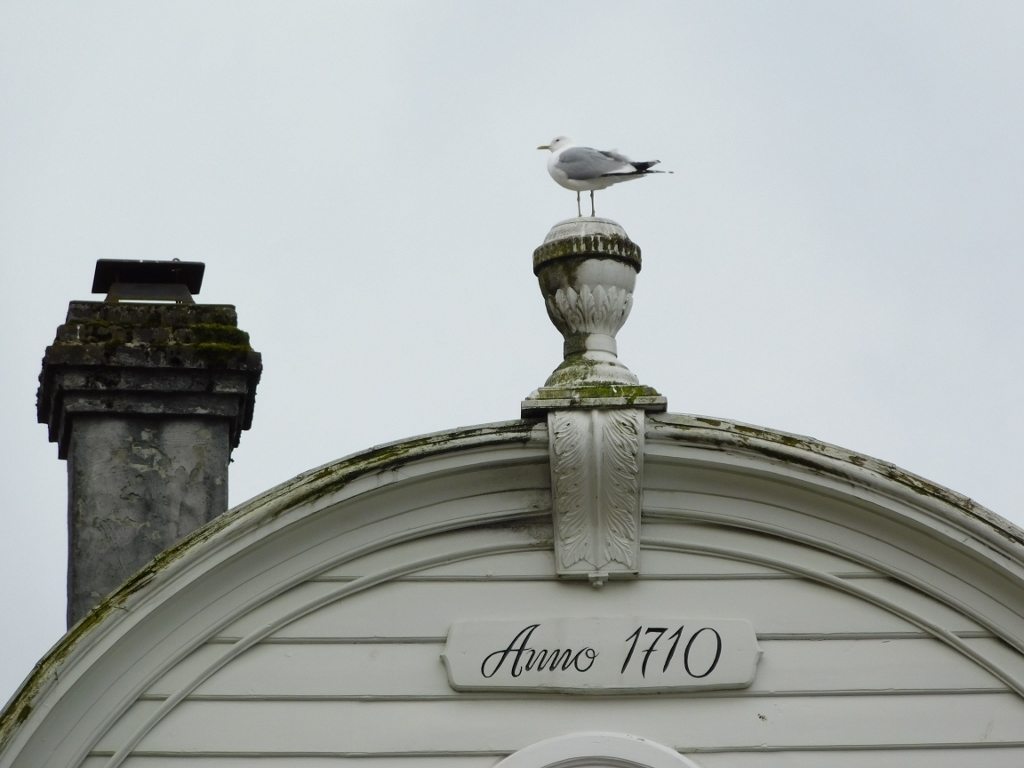 Bergen, a detail
During the Middle Ages, from the 13th to the 17th century, there was a trading alliance known as the Hanseatic League, or Hansa, which first established and then maintained a trade monopoly over the Baltic and North Seas. The Hanseatic League was founded in 1358 by several German cities and eventually expanded to include around 200 cities and settlements. They had a trading post, or Kontor, in Bergen, with their first office established as early as in 1360. The Hanseatic League primarily traded in timber, tar, leather, furs, grains, beeswax and honey, but their trade also included textiles and metal ores. Regarding the Bergen Kontor, one of the main exporting products from here was dried fish that could survive for several years in that form and still remain edible.
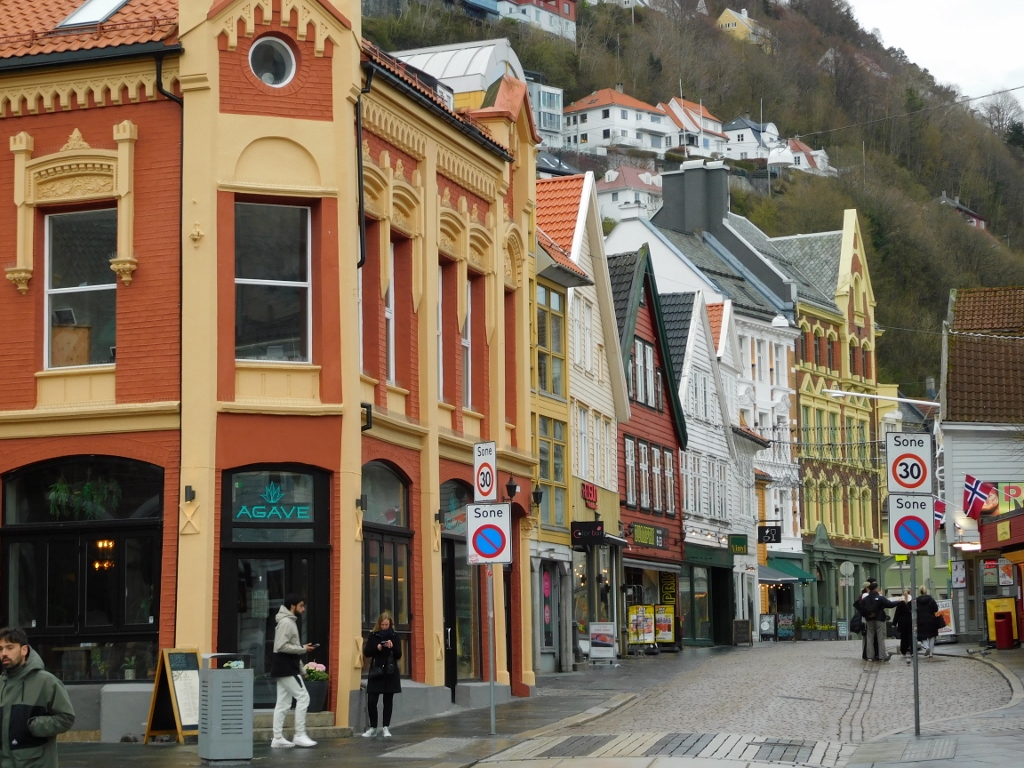 Bergen, a detail
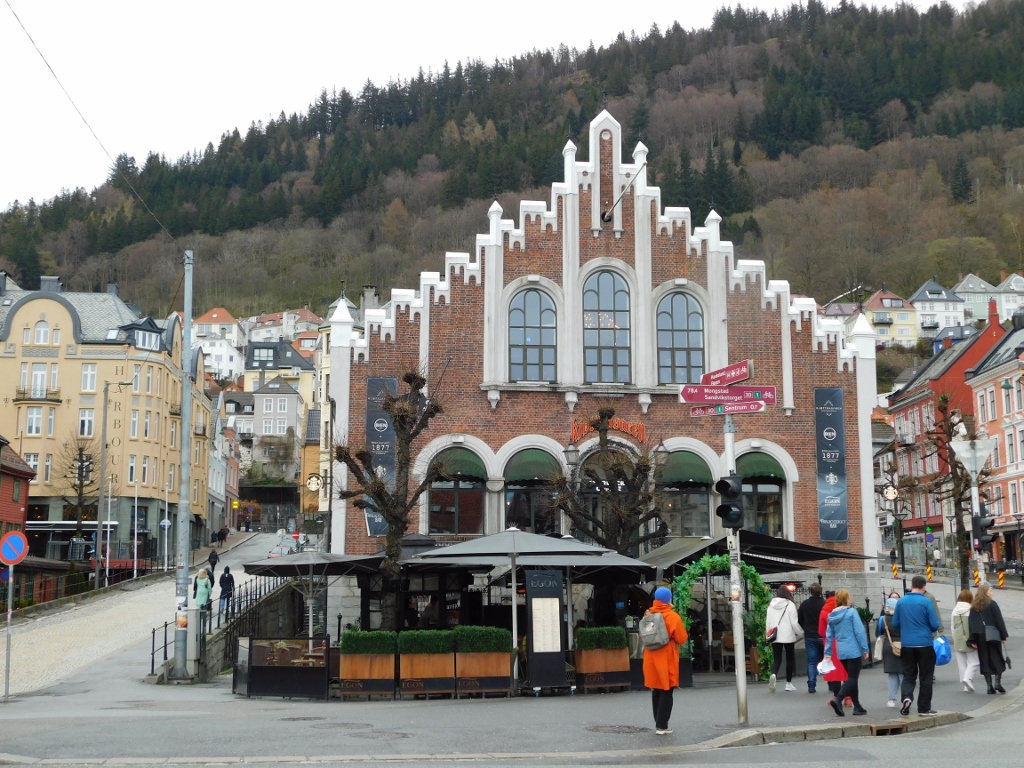 Bergen, a detail
The Bergen Kontor operated until 1754, while its central part was located in large wooden commercial buildings. This area is called Bryggen and it is situated on the eastern side of Vågen Bay, which includes the harbour. Of the entire Bergen Kontor, only its buildings, known as Bryggen, have survived to this day.
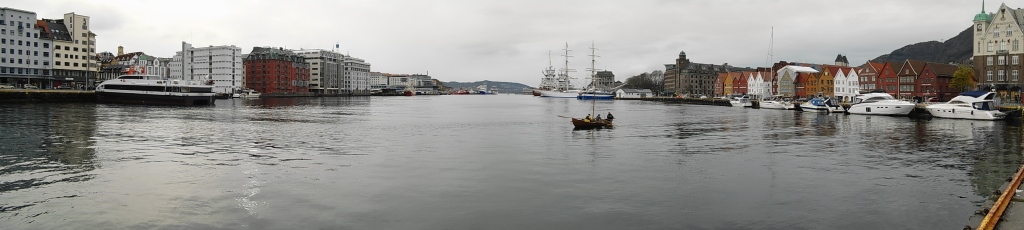 Bergen, a detail
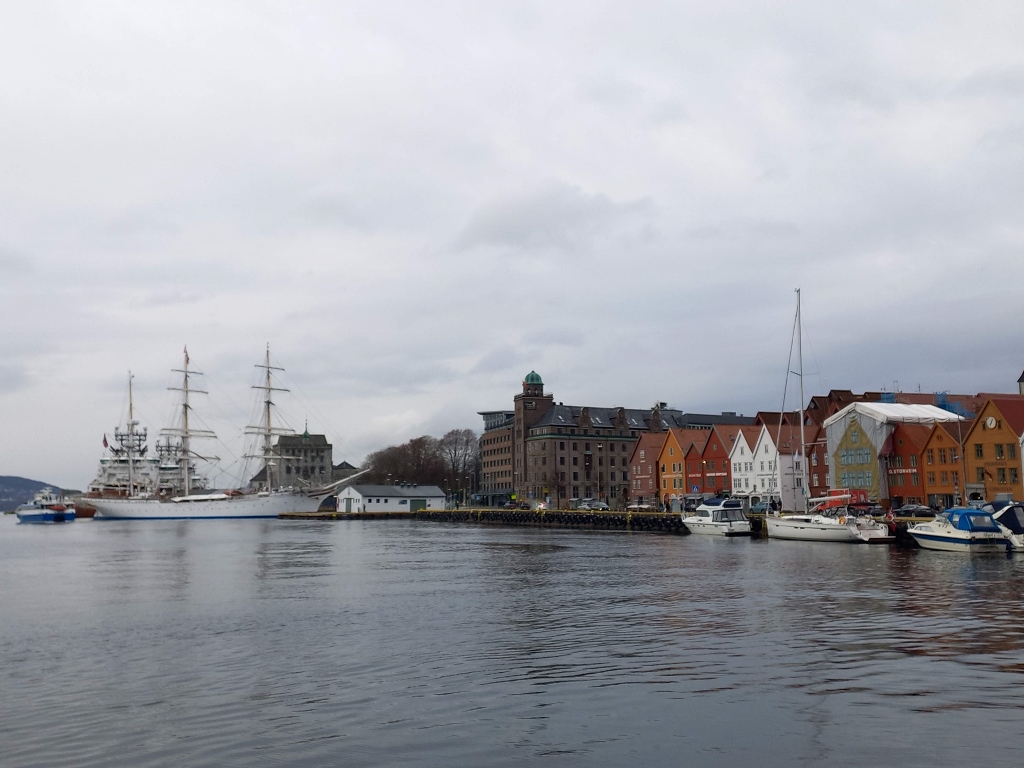 Bergen, a detail
Due to its historical significance, Bryggen is listed as a UNESCO World Heritage Site. Additionally, one of only two museums in the world dedicated to the history of the Hanseatic League is located here in Bergen.
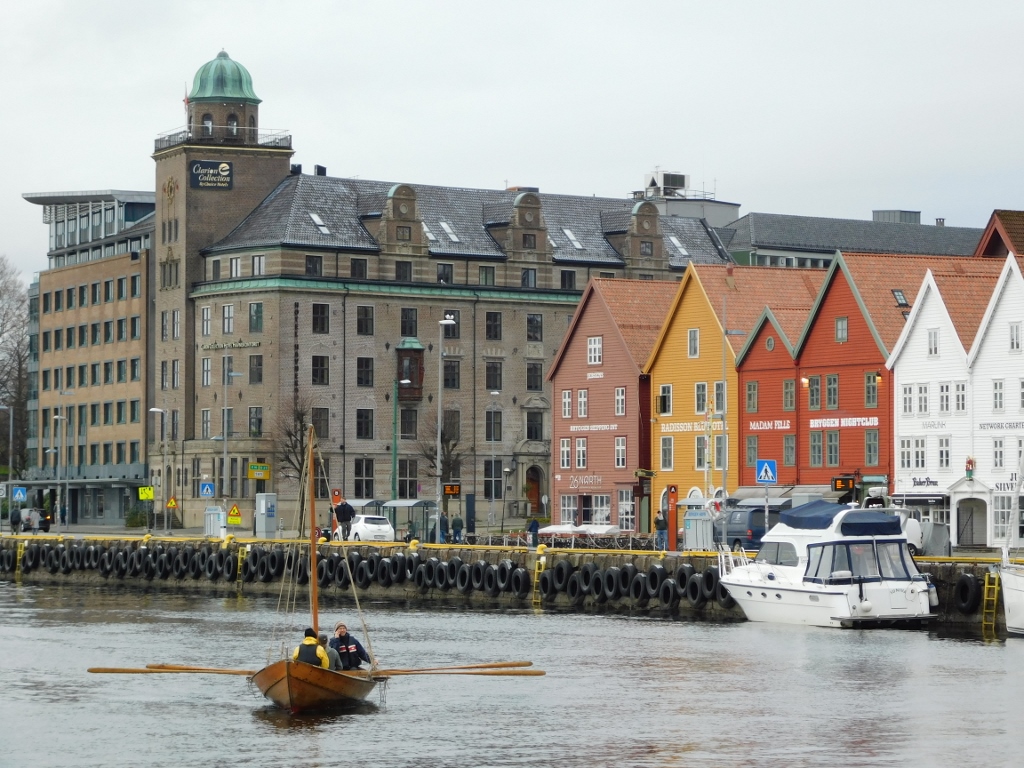 Bergen, a detail
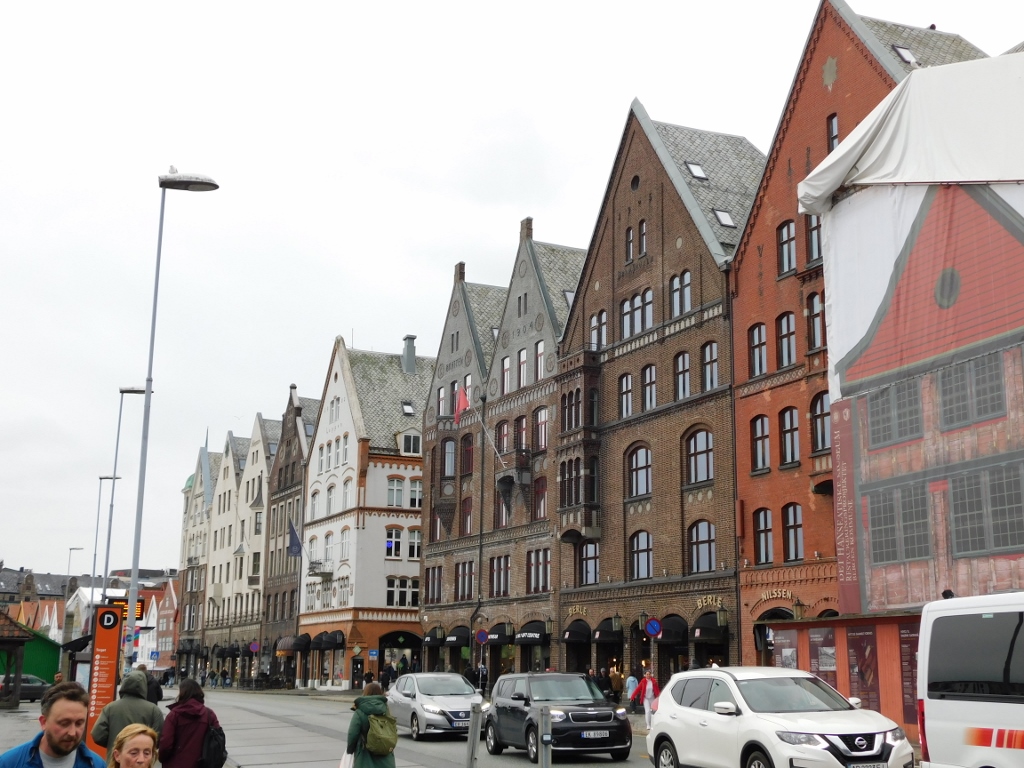 Bergen, a detail
Since I planned to spend the entire next day in Bergen, my idea was to explore Bryggen more thoroughly then. For now, I was just leisurely strolling aimlessly around the city centre. My impressions were very positive.
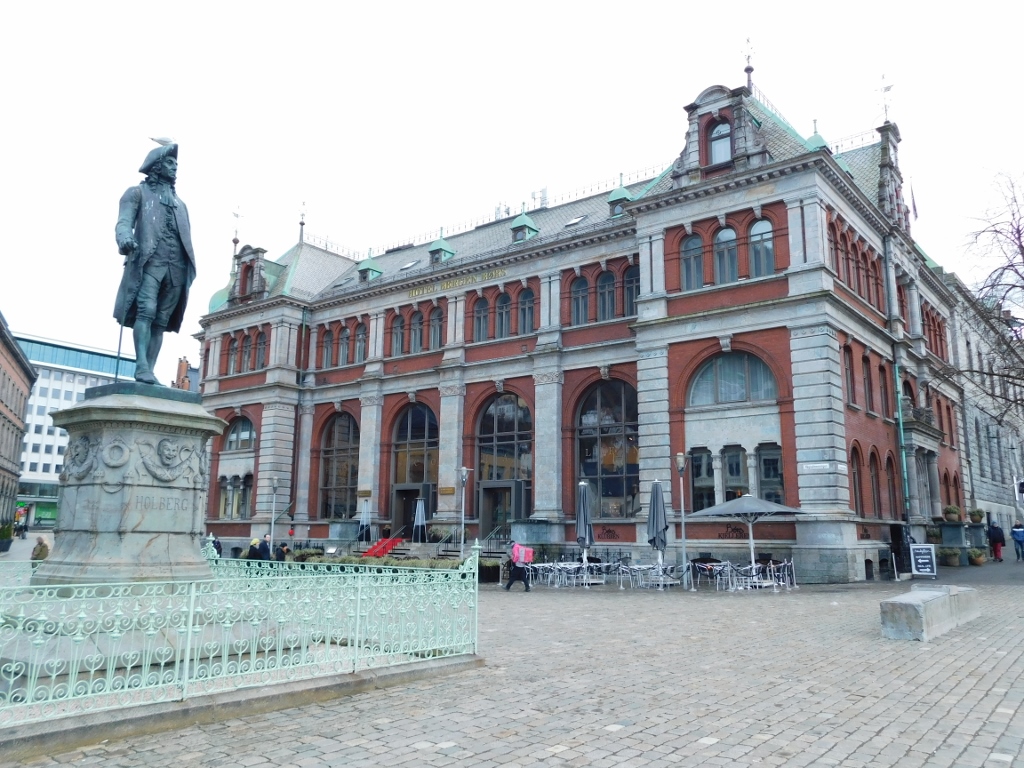 Bergen, a detail
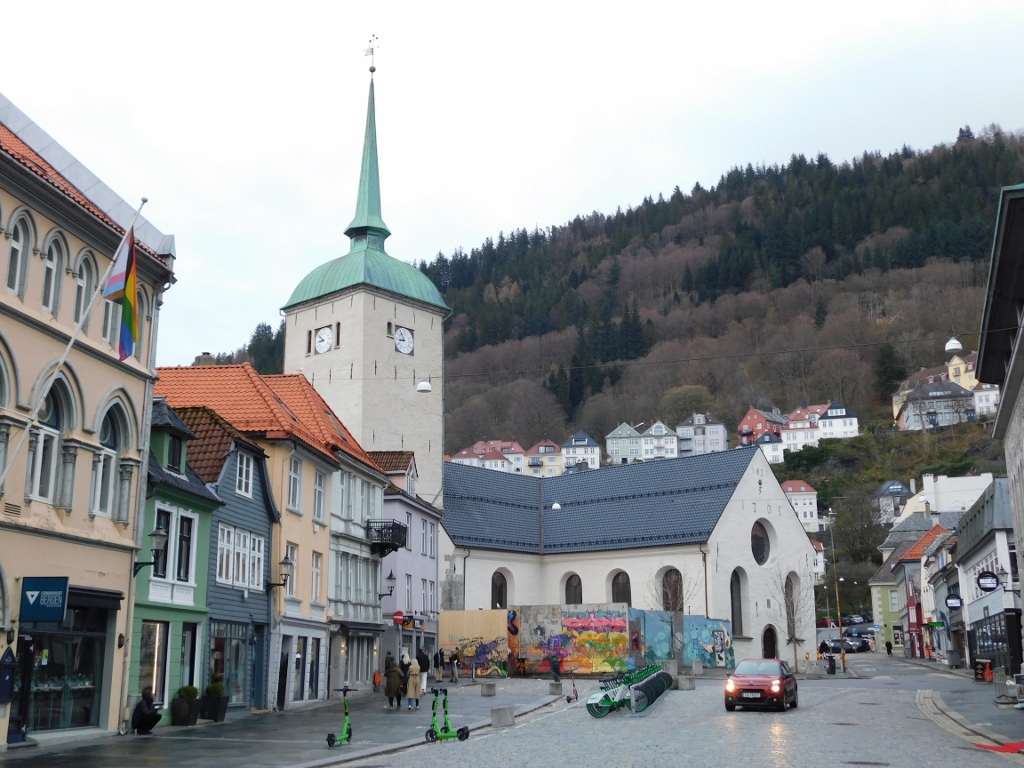 Bergen, a detail
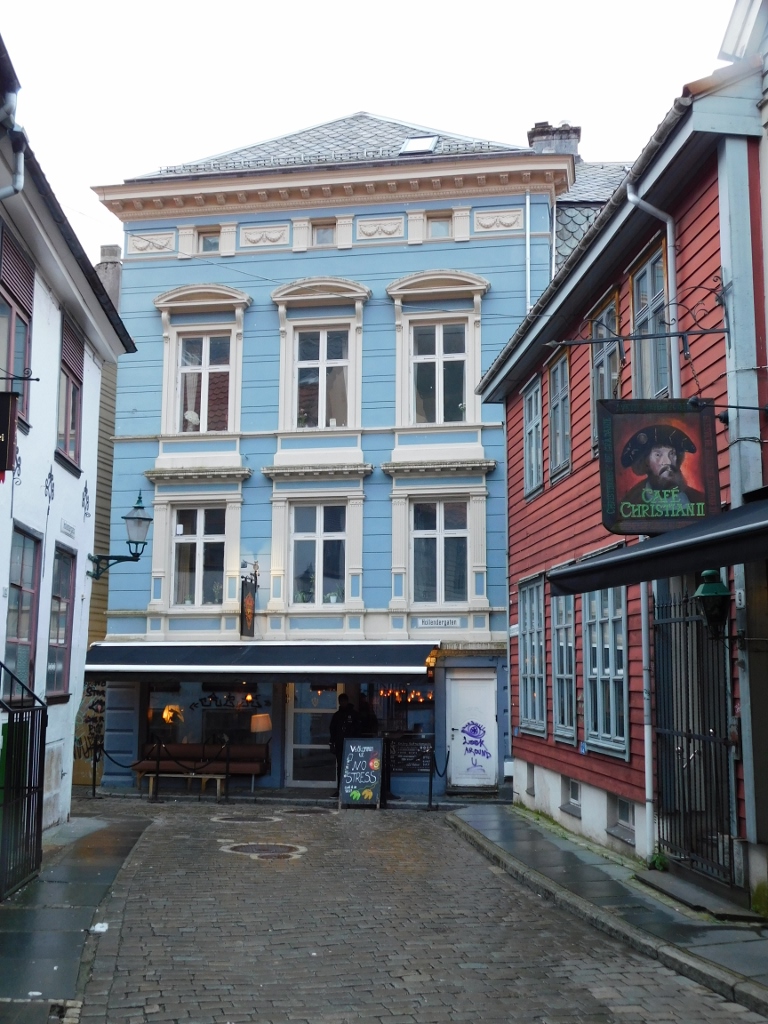 Bergen, a detail
 Bergen, a detail
But by now, I was quite hungry because the day had been long, I had driven a lot and the food I had in the car as a "first aid" wasn’t quite enough to meet my daily needs. So, I decided to go to a restaurant right by the harbour, in the part of the city known as the Fish Market (Fisketorget). There are several fish shops linked to restaurants here and some of them have an indescribably fantastic selection of fish and seafood, all displayed in refrigerated cases. Here’s a photo and a video of it:
 Fish and seafood offer at a restaurant in Bergen
I opted for much simpler fare, though it wasn’t bad at all, and most importantly, I ended up feeling quite comfortably full.
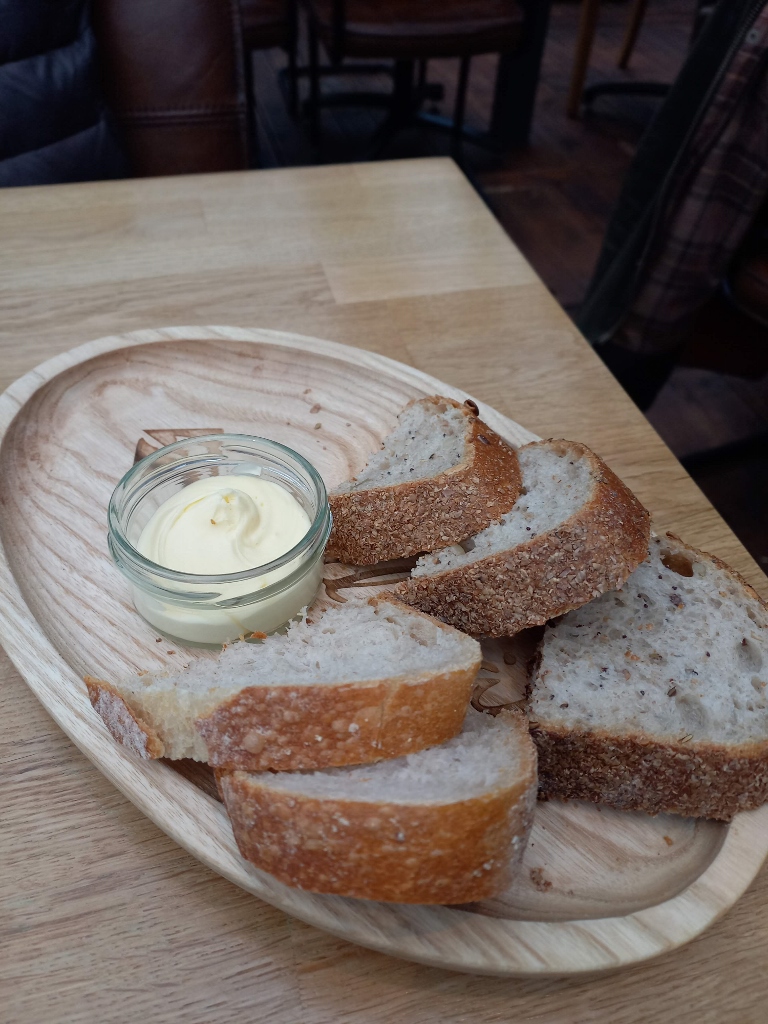 Part of the dinner in Bergen
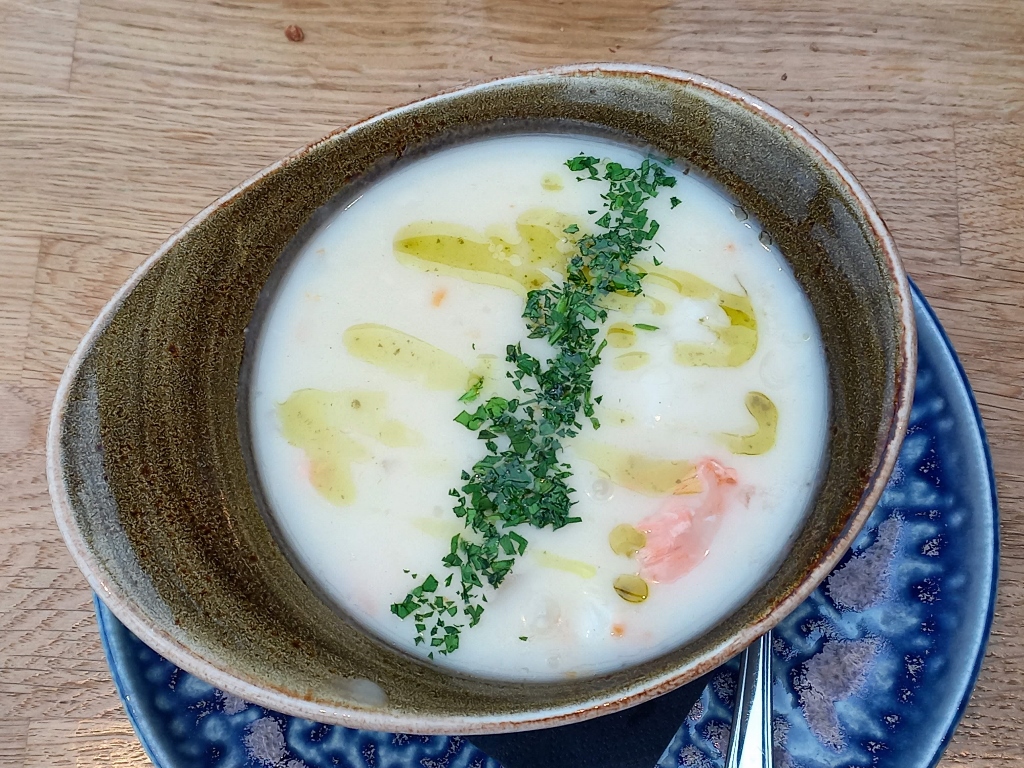 Part of the dinner in Bergen
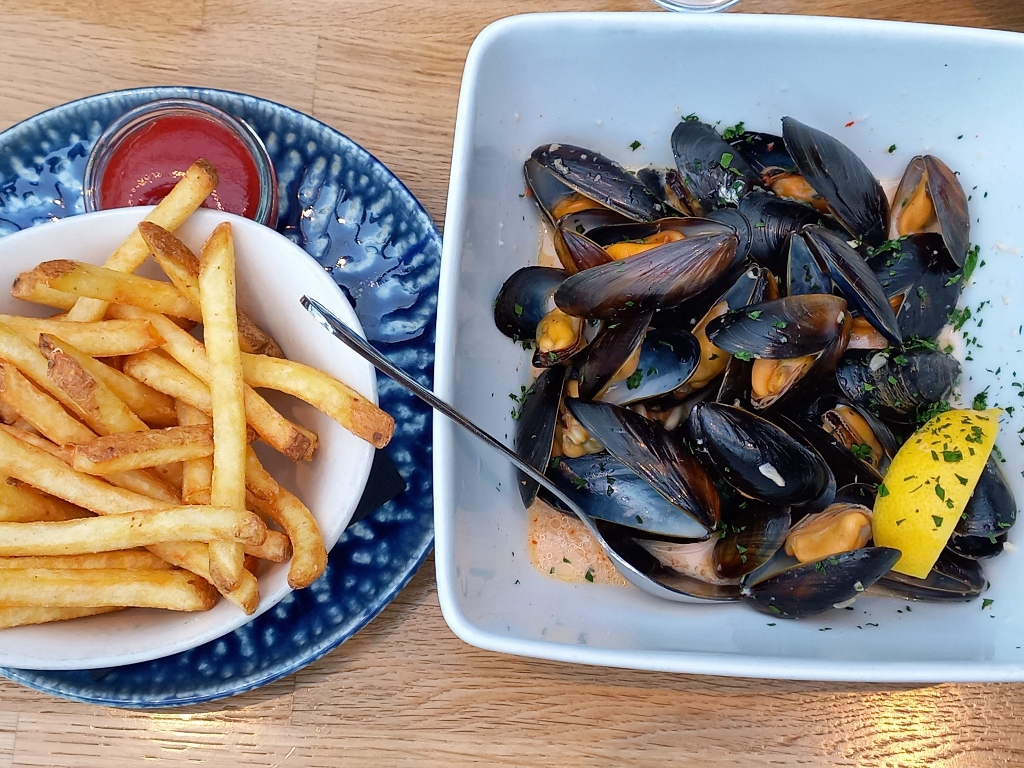 Part of the dinner in Bergen
I have to admit that I still don’t dare to experiment with shellfish in my culinary adventures. Instead, when I got back home, I decided to try making the famous Norwegian fish soup, Fiskesuppe. It turned out quite well, while I even made a special plate myself in an attempt to get as close to the original as possible.
NORWEGIAN FISH SOUP
- 350 g of fish fillet (white fish and salmon)
- 150 g of shrimps (or half a dozen)
- 1 clove of garlic
- 1 large carrot
- 2 smaller potatoes
- 150 g of leek (the white part)
- 1 l of fish stock
- 250 ml of milk
- 200 ml crème fraîche
- 2 tbsp butter
- 3 tbsp flour
- seasoning from the recipe (according to your taste)
Cut the fish into cubes and the vegetables into thin sticks (this is mandatory) and set aside.
Melt butter in a pot, then add the chopped garlic. As soon as it starts to colour, add flour, stirring to avoid burning, and then pour in clear fish stock (broth) and mix well in order to prevent any lumps of flour.
Add the milk and vegetables, and cook for about 10-15 minutes. Then add the fish and cook for another 5 minutes. Season with salt and ground white pepper.
Take a few tablespoons of the soup and mix with the crème fraîche in order to create a smooth mixture. Return the mixture to the pot, then add the shrimps and cook for just 1-2 minutes.
Finally, sprinkle the soup with chopped chives, but you can also use dill.
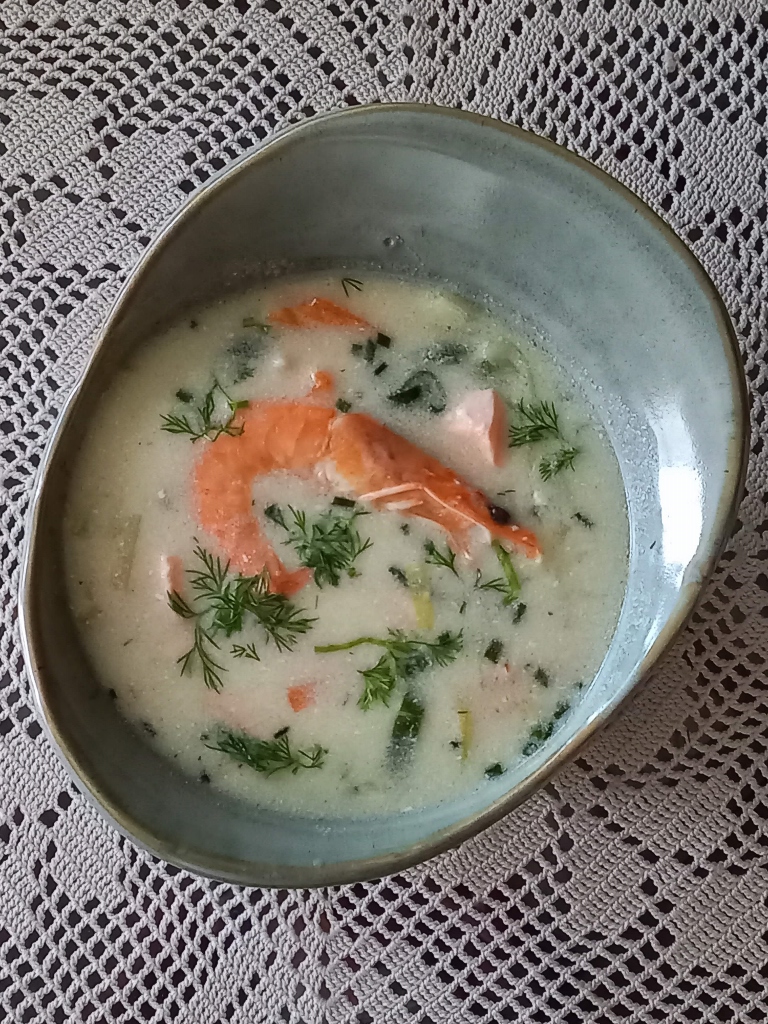 Norwegian fish soup done in my way
By the way, while sitting in the restaurant waiting for my dinner, I took the opportunity to book an excursion for the next day. My plan was to leave the car parked for two nights and the day in between, which I would spend as a “pedestrian.”
Very satisfied with the entire day and the experience, I retired to my room early and fell asleep quickly.