The Vouraikos Gorge, through which I hiked in late September 2023, is part of the Chelmos – Vouraikos National Park and the Chelmos – Vouraikos UNESCO Global Geopark. The river flows from Mount Chelmos (also called Aroania) and travels about 50 km north towards the Gulf of Corinth. In its final stretch, the river cuts through limestone rocks, creating over millions of years a stunning gorge. In the late 19th century, a narrow-gauge railway was built through this gorge.
The railway still operates today, primarily for tourism purposes. The 22 km-long line connects the towns of Kalavryta in the interior with Diakopto on the northern coast of the Peloponnese, and the journey takes just over an hour. This distance can also be covered on foot, which is exactly what I did on this day.
During my stay in this part of the Peloponnese, the train was not running because heavy rains in the previous days had caused landslides and disruptions to the railway. However, this did not mean I couldn’t walk the trail that essentially follows the railway line.
My initial plan was to take the train from Diakopto to Kalavryta, but since the train wasn’t running, while I got lucky, some British tourists kindly drove me up, so I was able to start my descent from the Kalavryta train station toward the coast. The first part of this experience was described in the previous sequel of my travel story through the Peloponnese in 2023, and now follows the continuation.
At some point, I came across another bridge, where there was a clear sign stating that pedestrians were not allowed to cross. As I explained in the previous sequel, the sign both did and did not mean what it seemed. On the one hand, there is no other (safe) way to cross the river, but on the other, I believe the sign was more about the situation when a train is approaching – at that point, it is definitely not allowed to cross the bridge while the train is on it.
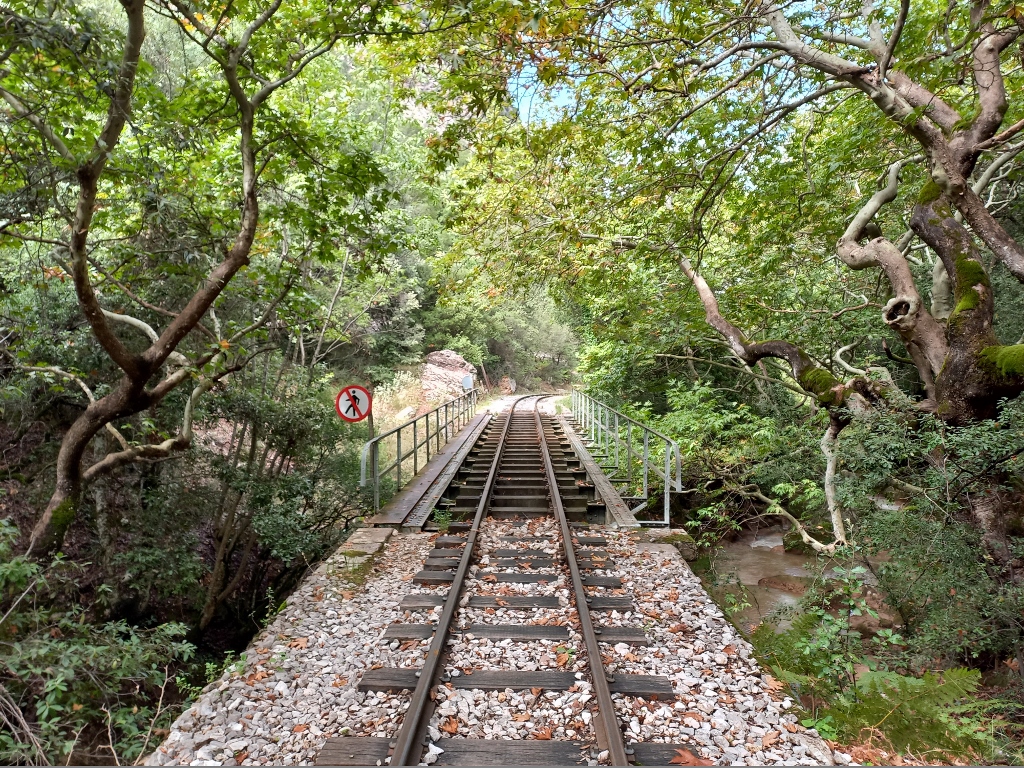 Kalavryta - Diakopto railway track
As you get closer to the bridge, you can see that metal plates have been placed along the fence on one side, making it quite possible to walk on them.
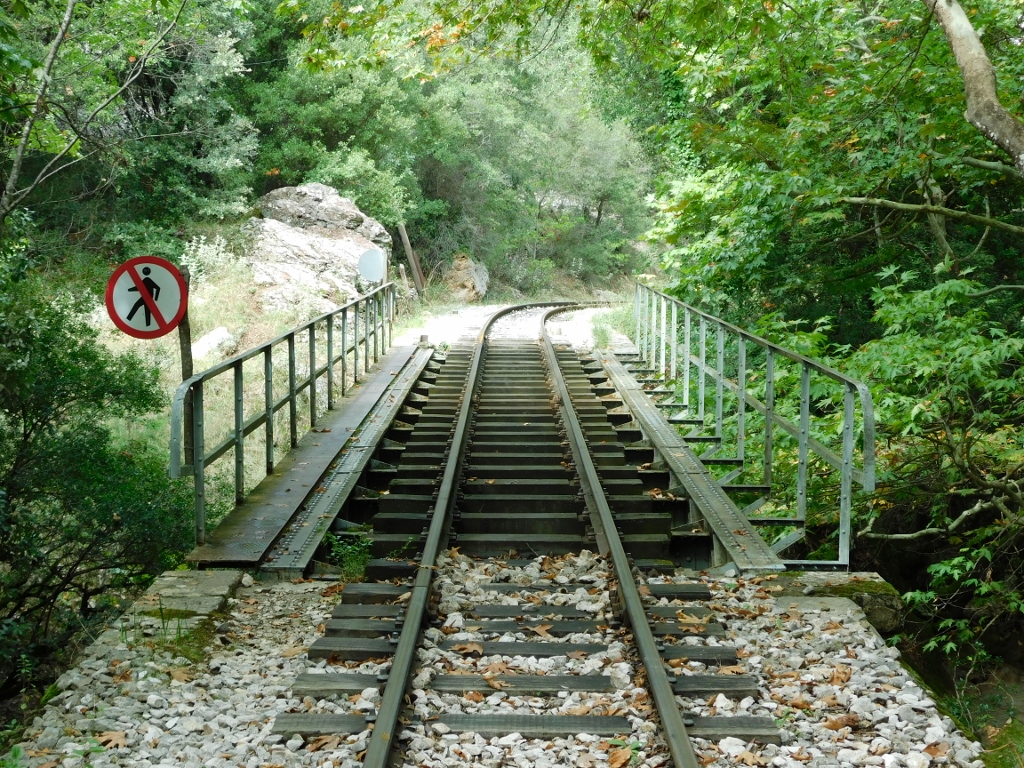 Kalavryta - Diakopto railway track
In this area, I also spotted a multitude of lovely Greek cyclamens (Cyclamen graecum).
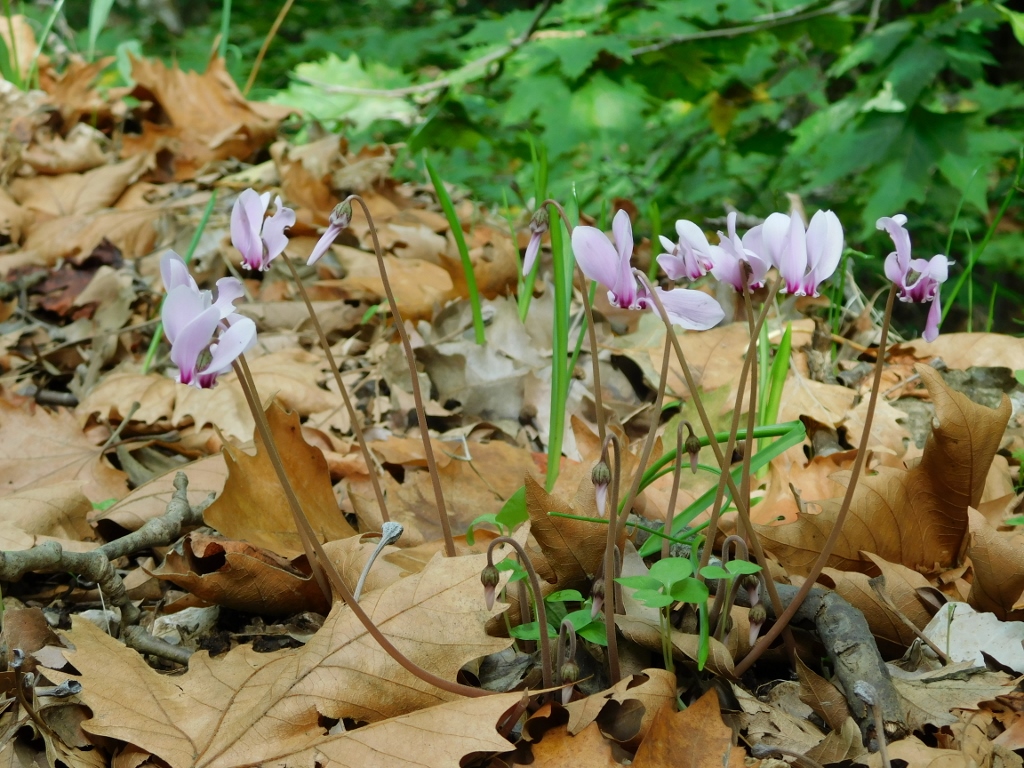 Greek cyclamens
But, after taking pictures of the flowers, it was important to keep moving and I soon came across yet another of the many tunnels built to allow the railway to pass through.
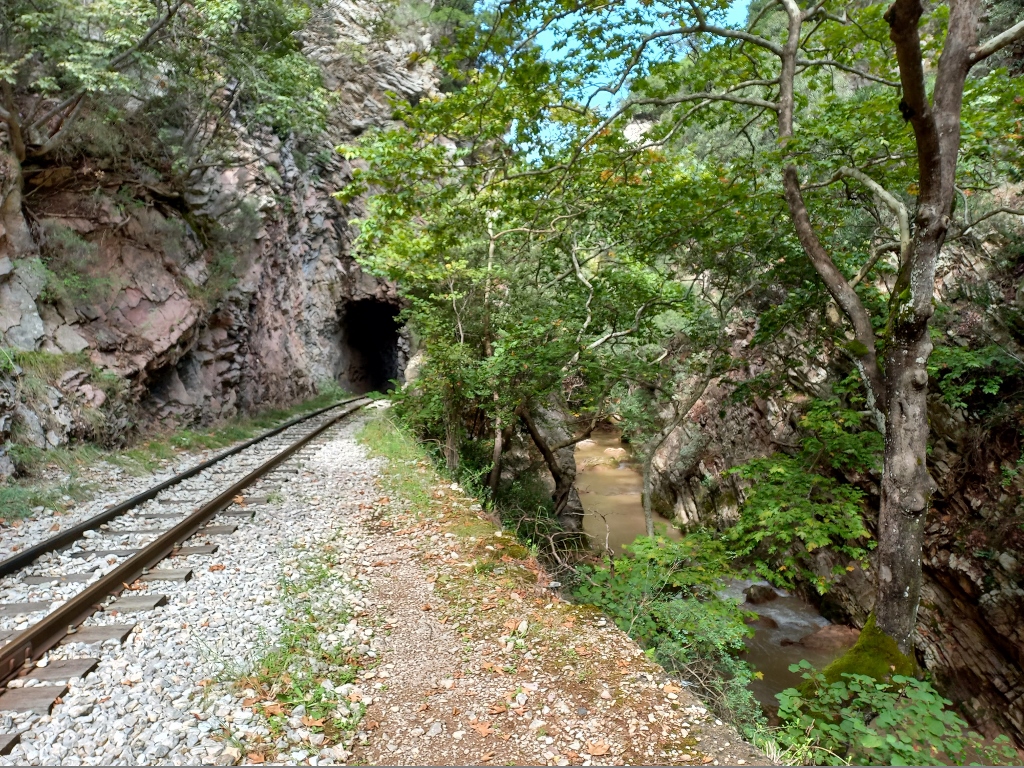 Kalavryta - Diakopto railway track
Although the tunnel in the photo above looks quite dark, which might make it seem long, when I got closer and took a shot from another angle, it became clear that it was actually a nice, short tunnel that, in my case (as a pedestrian), only added to the picturesque nature of the experience.
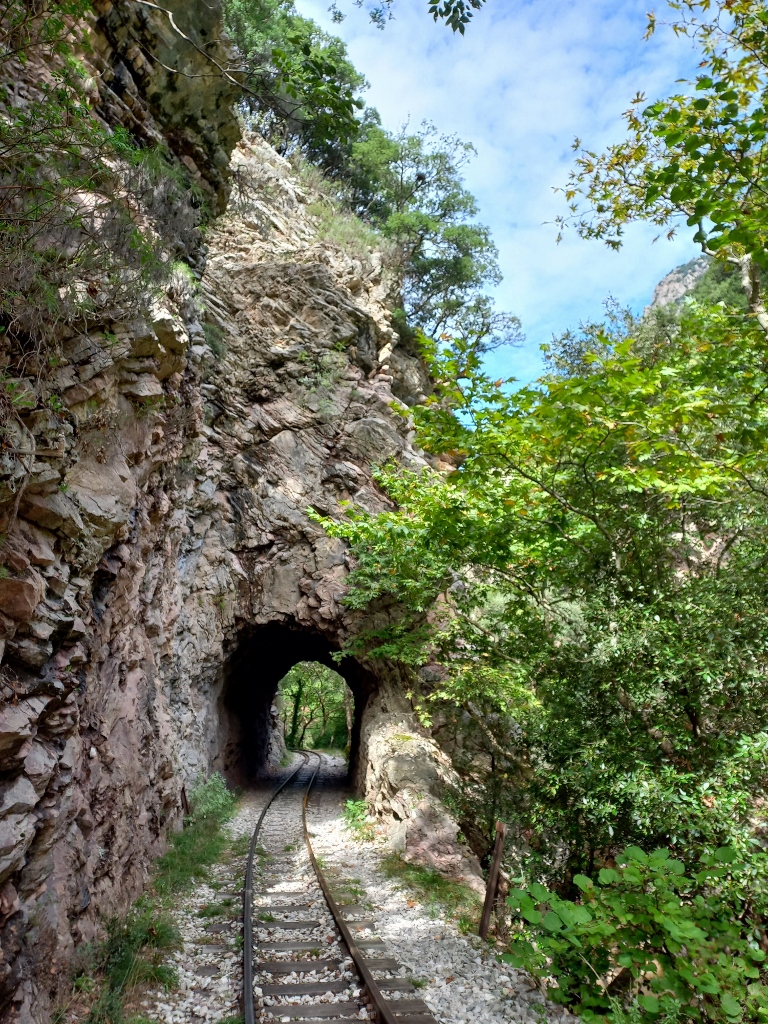 Kalavryta - Diakopto railway track
In addition to the tunnels, in this narrow part of the gorge there are also numerous overhangs that were created for the passage of the train.
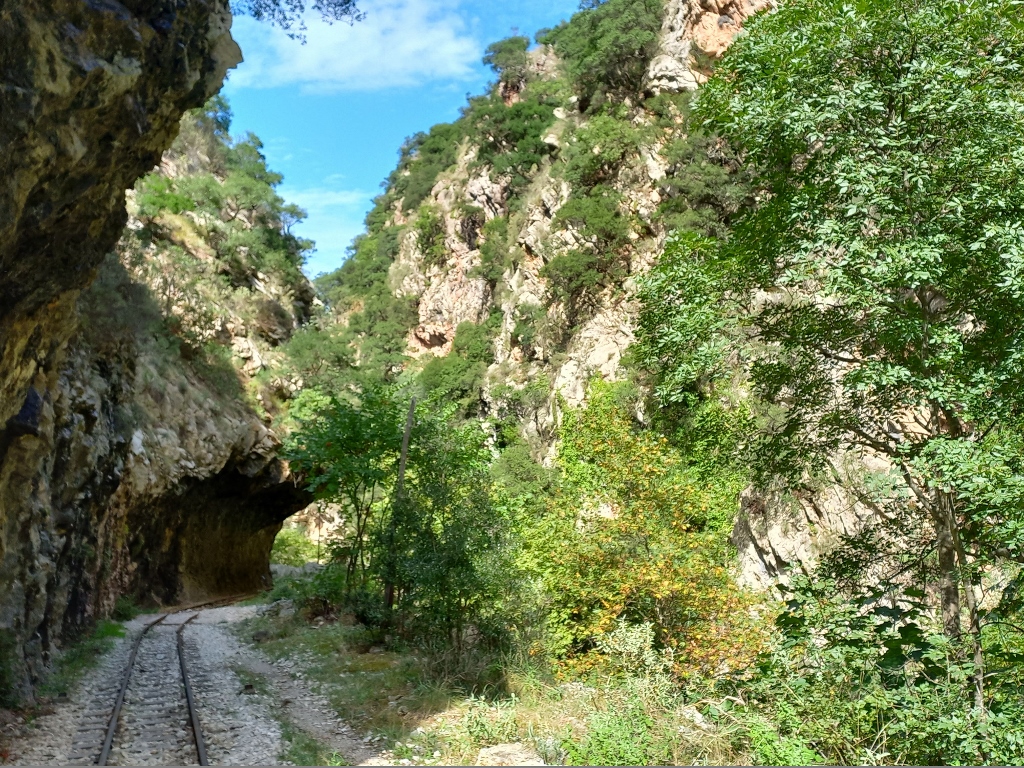 Kalavryta - Diakopto railway track
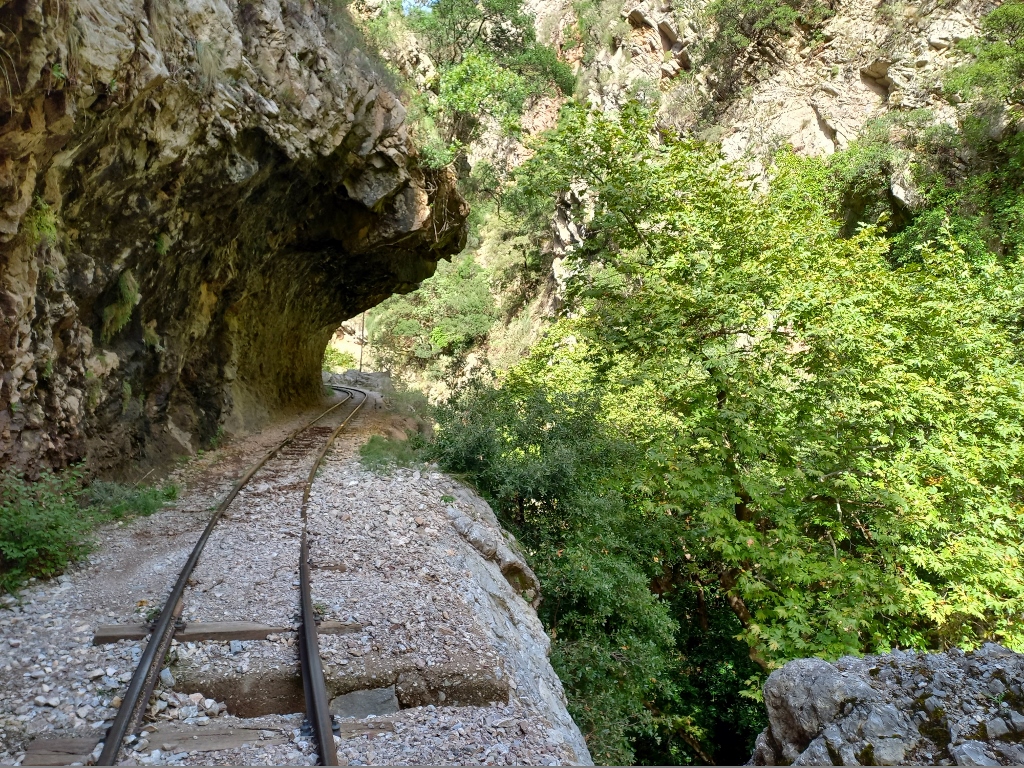 Kalavryta - Diakopto railway track
Here, I noticed a few exceptionally beautiful yellow autumn crocuses (Sternbergia lutea), so I had to stop again to take their photo.
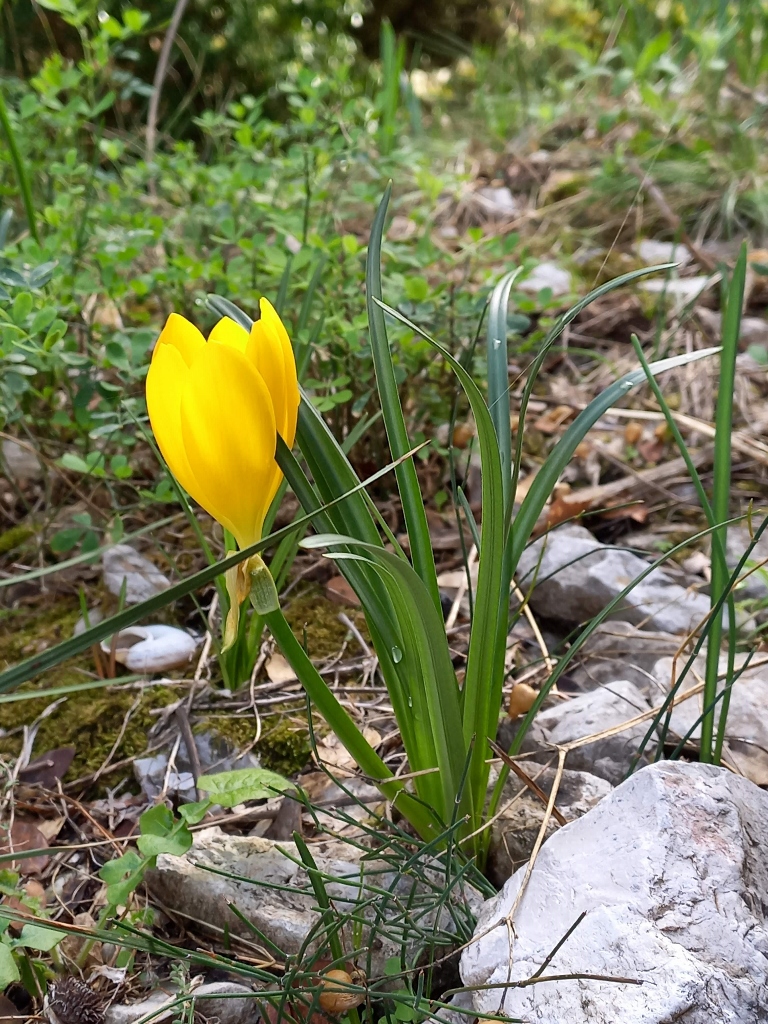 Yellow autumn crocus
I also often turned around to see how the landscapes I had already passed looked from the spot I was at. Everything was incredibly impressive and beautiful, and I was truly thrilled.
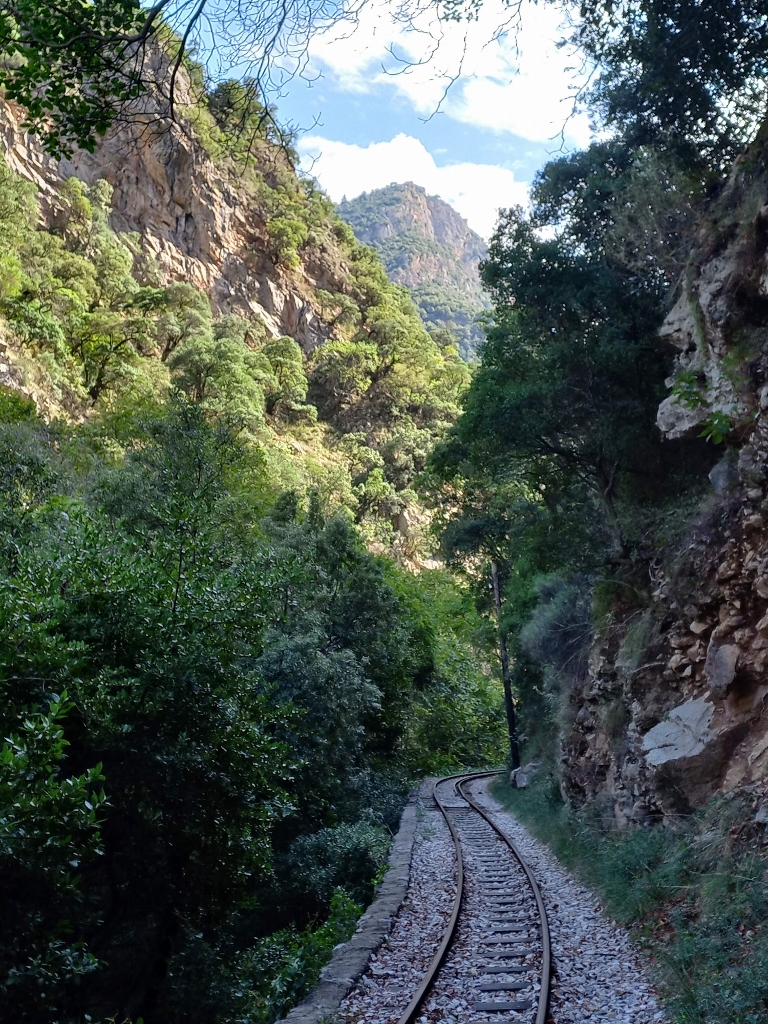 Kalavryta - Diakopto railway track
By the way, according to an ancient Greek legend, Heracles was in love with Voura and it was he who, with his sword, created this passage in the form of a gorge to meet his beloved by the sea. This is how the river got its name, Vuraikos.
The railway line in some parts comes close to the river level, while in other areas, it is high enough above it that bridges had to be built. Some of the bridges are made of stone, while others are metal. In this section of the trail, there are even a couple of bridges that are almost connected into one.
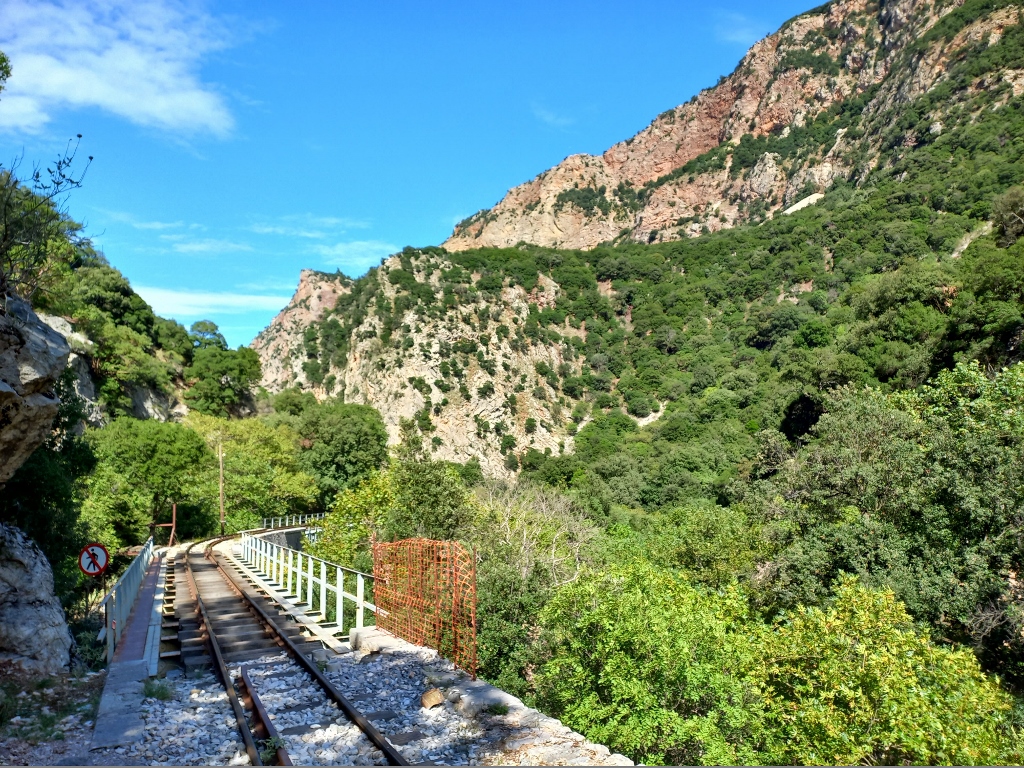 Kalavryta - Diakopto railway track
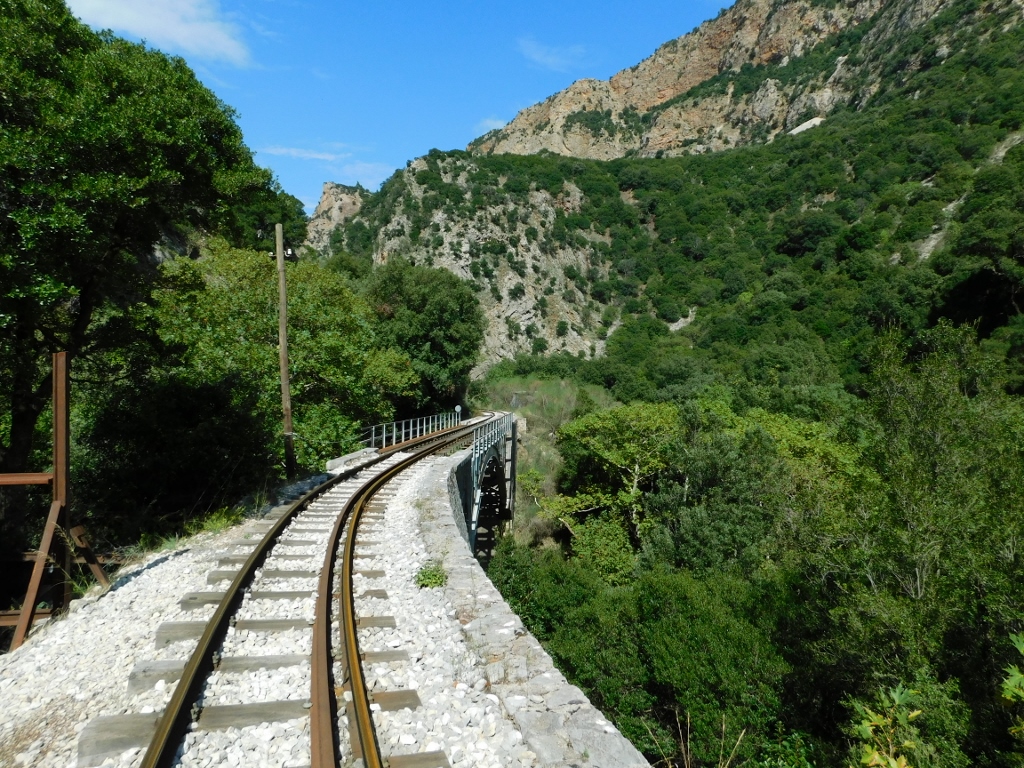 Kalavryta - Diakopto railway track
Here, too, after crossing the second bridge, I had to turn around and see what everything looked like from that side.
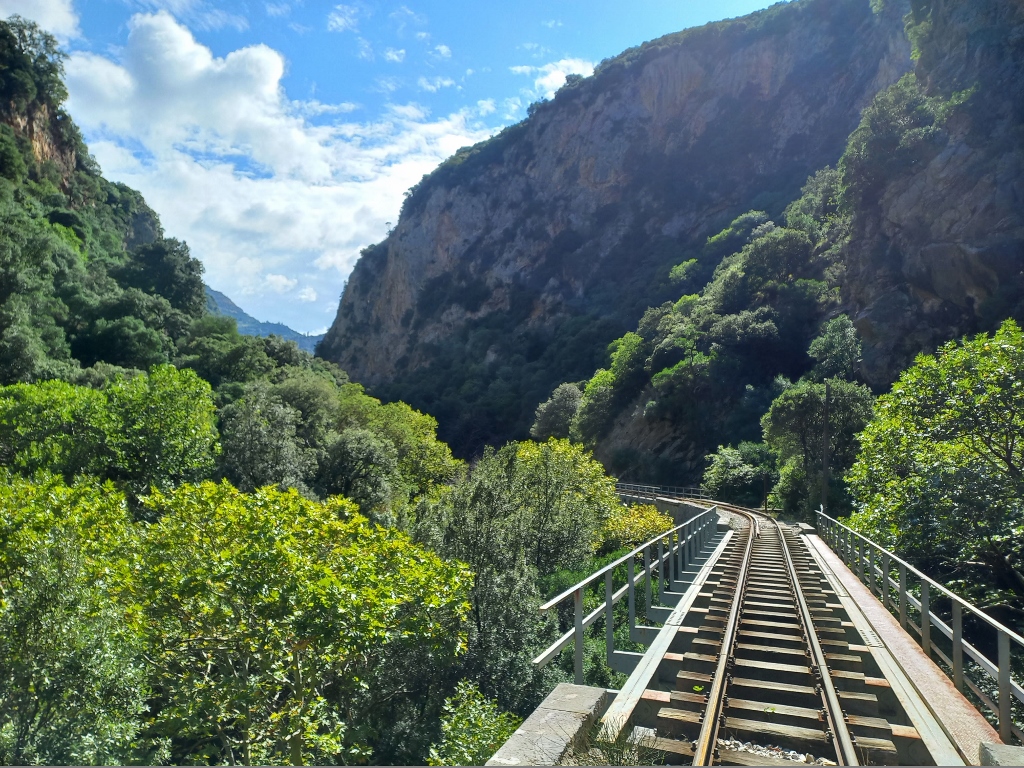 Kalavryta - Diakopto railway track
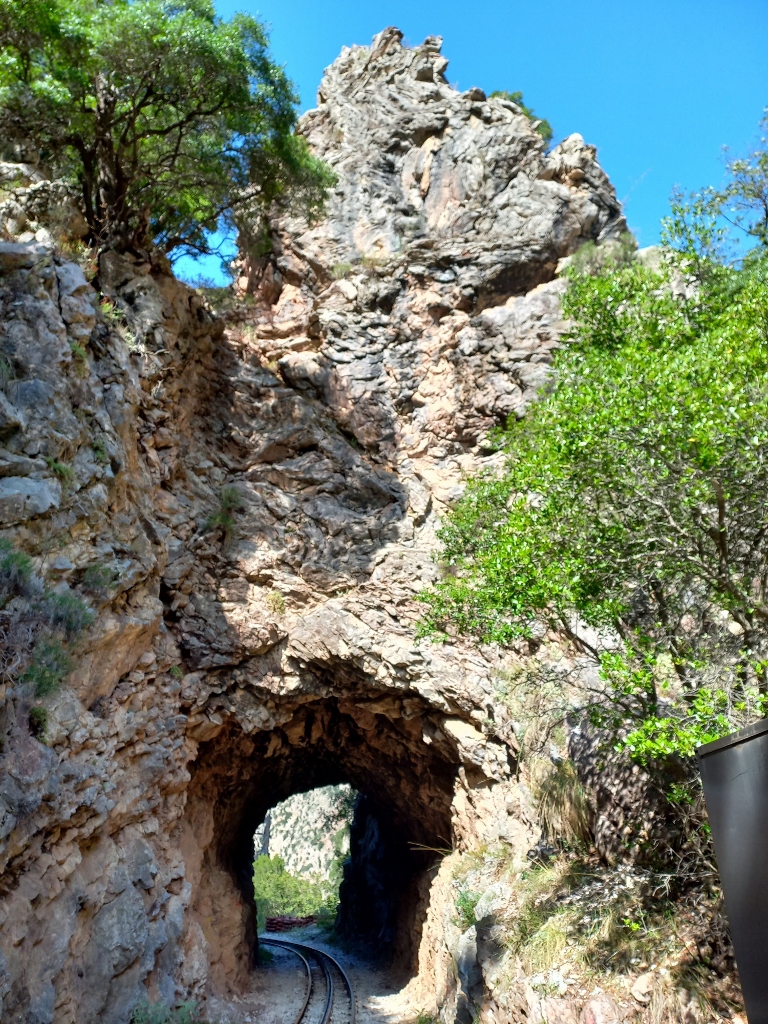
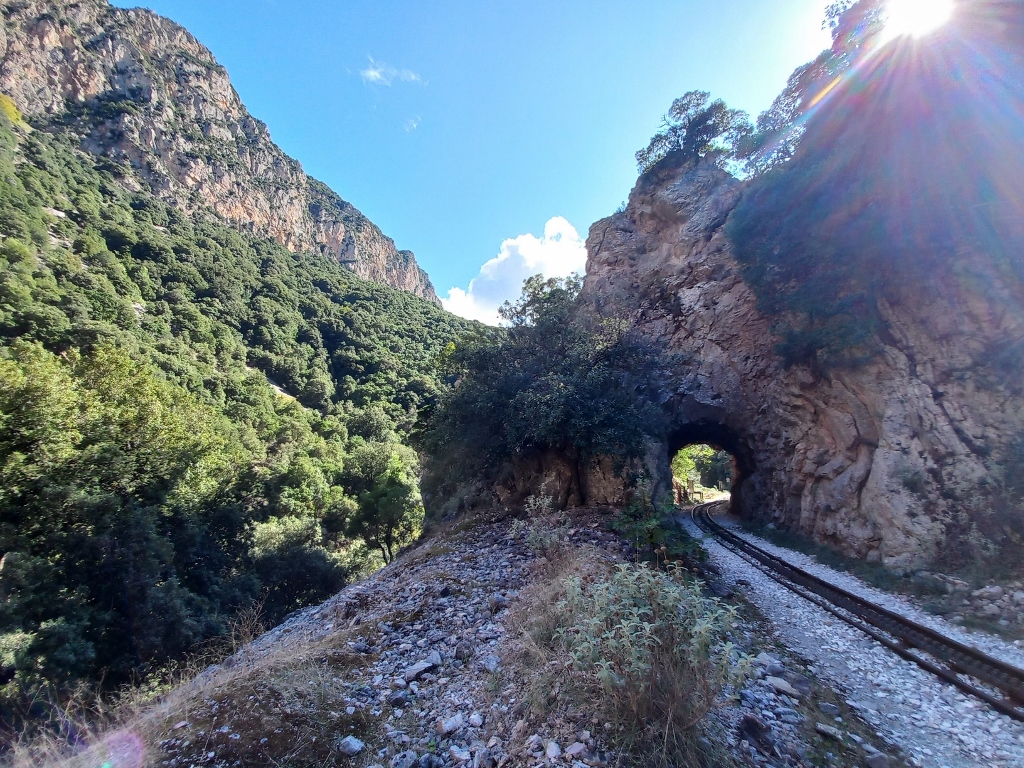
And then, soon enough, I came across another tunnel.
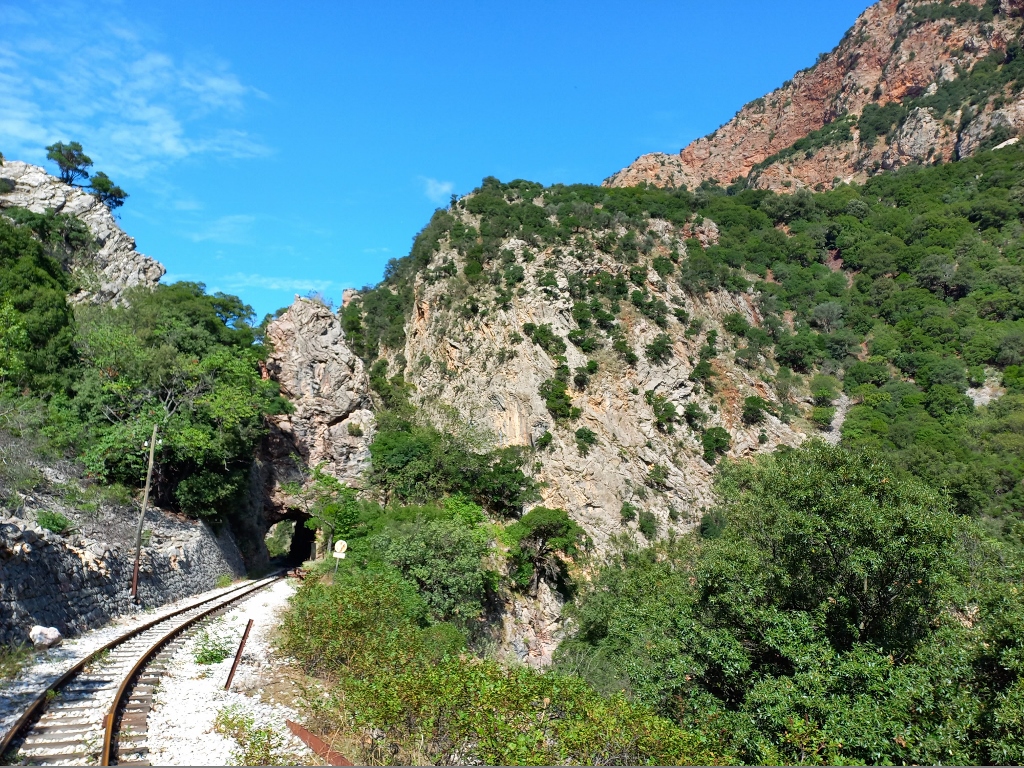 Kalavryta - Diakopto railway track
 Kalavryta - Diakopto railway track
 Kalavryta - Diakopto railway track
I took a photo of the tunnel from the "other side" as well and I must admit that it was neither difficult nor tiring for me to photograph all these details. I was completely thrilled by the experience and the beauty of the landscapes I was walking through. As I’ve mentioned in a few of my previous travel stories, photography is my way of expressing admiration and gratitude for the experience I’m exposed to.
On the other hand, this multitude of photos might even inspire someone to visit the Peloponnese and walk along this trail.
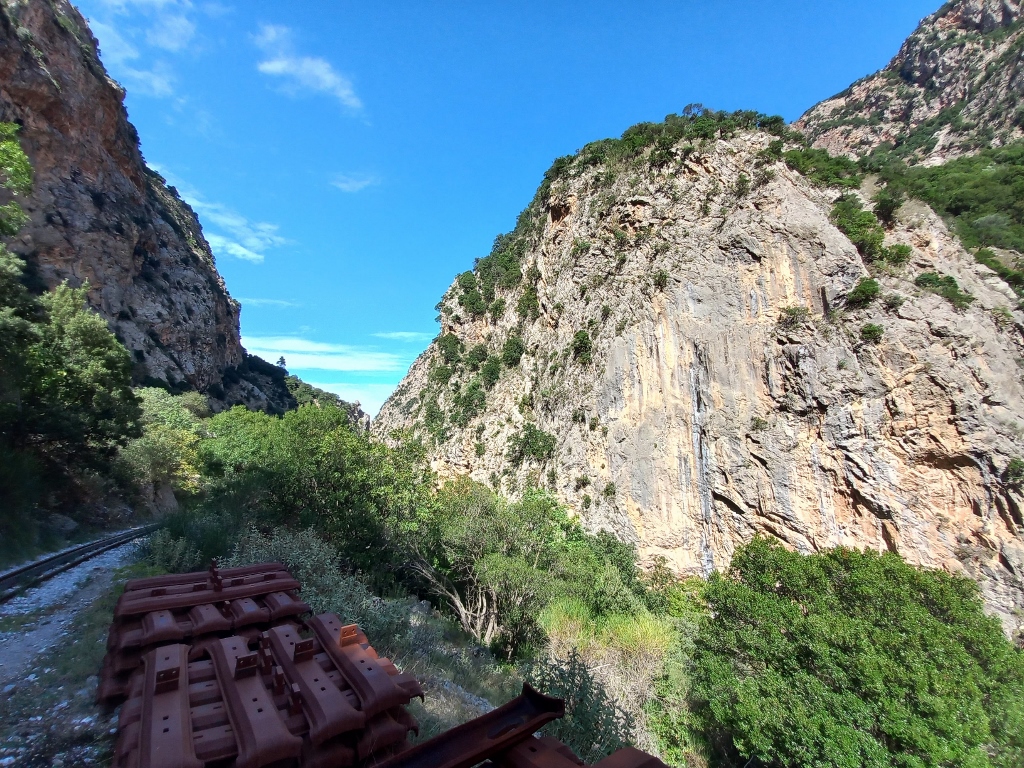
From this tunnel, the rack railway section began again, which meant that the slope was steep enough that a regular train couldn't pass through here, but this mechanism was required to allow the train to move like a funicular. Among other things, this is also why the train takes over an hour to travel the 22 km. In a few places, I also noticed newly arranged sleepers, which were probably brought here in order to replace the old, worn-out ones at some point.
 Kalavryta - Diakopto railway track
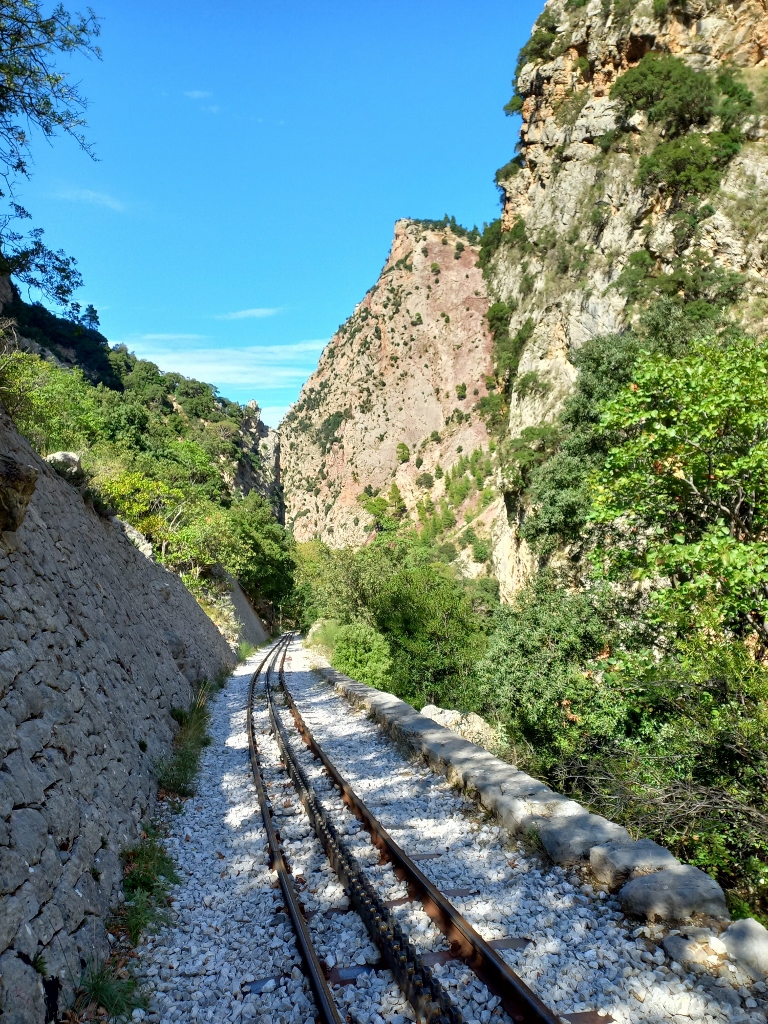 Kalavryta - Diakopto railway track
As it can be seen from the next photos, the railway in this section descends quite close to the river and here there are also more trees growing near the riverbed where there is space.
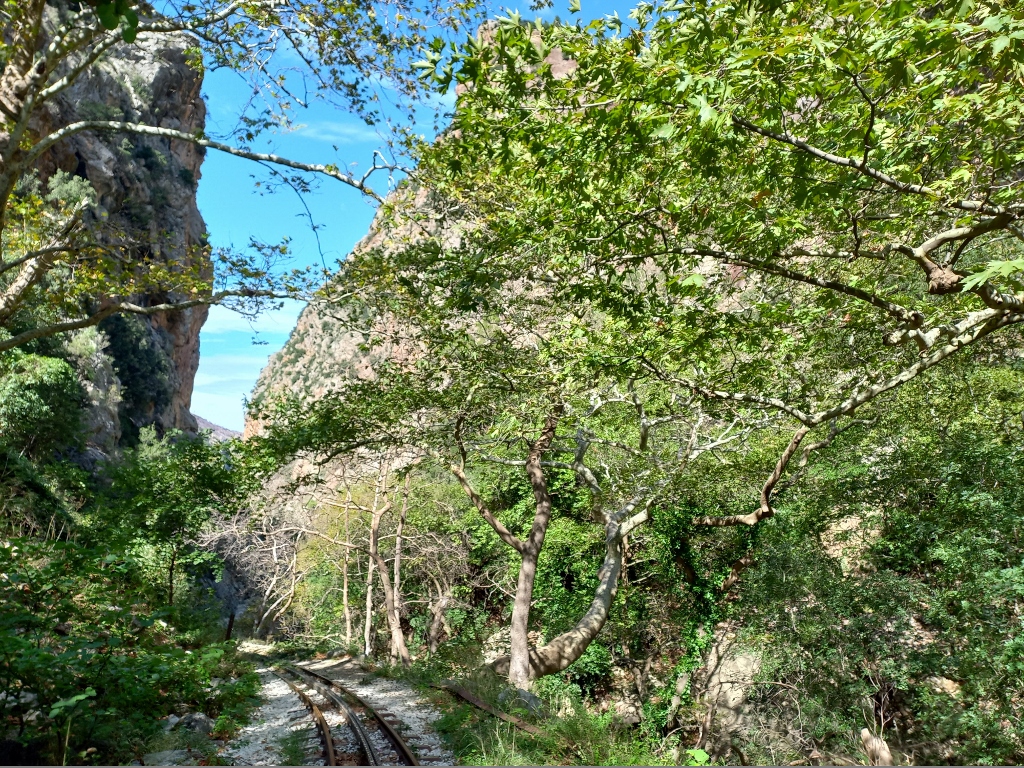 Kalavryta - Diakopto railway track
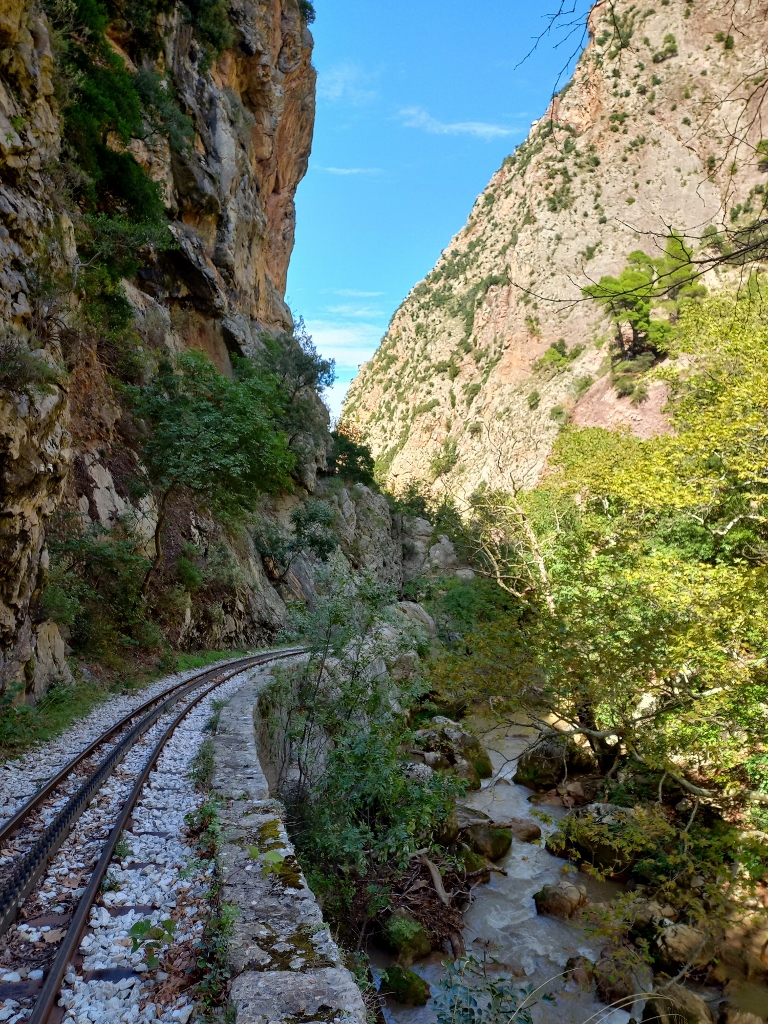 Kalavryta - Diakopto railway track
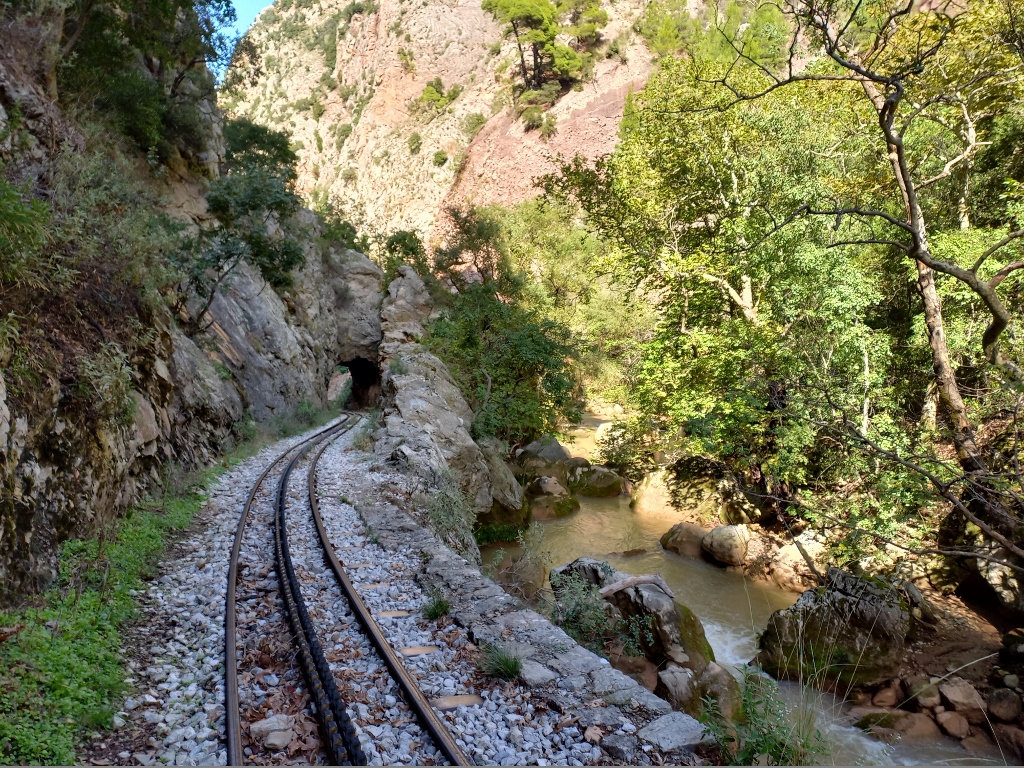 Kalavryta - Diakopto railway track
When I reached a section where the railway, a tunnel and the river were visible, I was inspired to take a selfie.
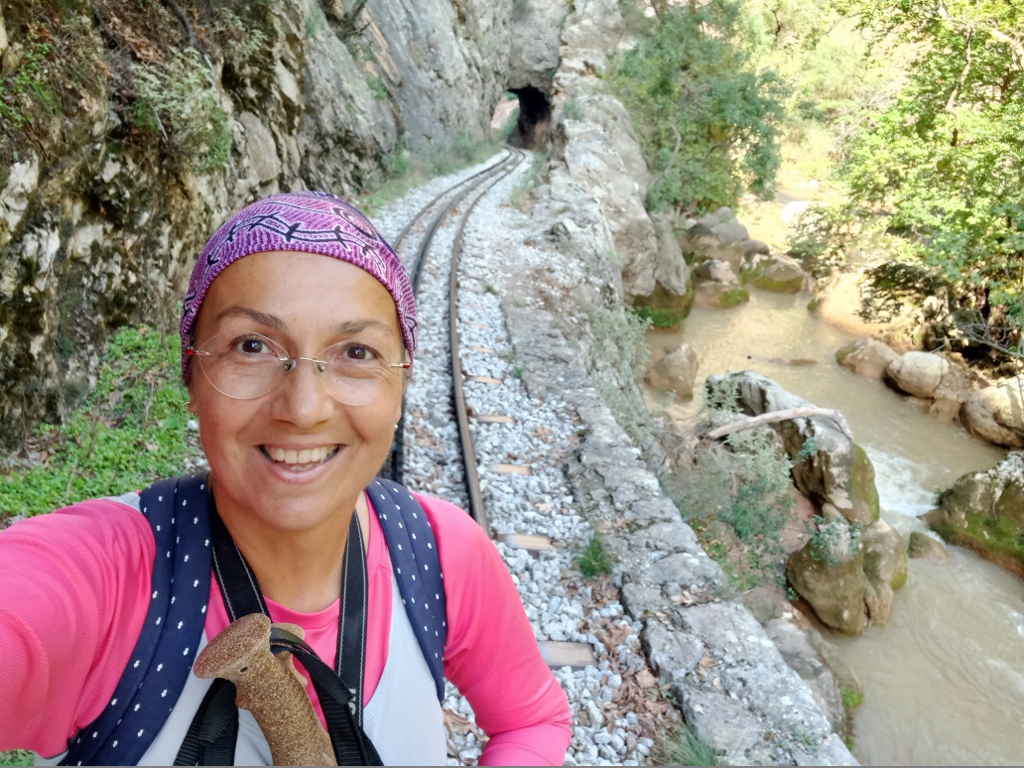 Enjoying myself in the Vouraikos Gorge
A few minutes later, I came across another bridge, but before it, there were some rocks where I could place my camera and take a "professional selfie," as I like to call these "self-portraits."
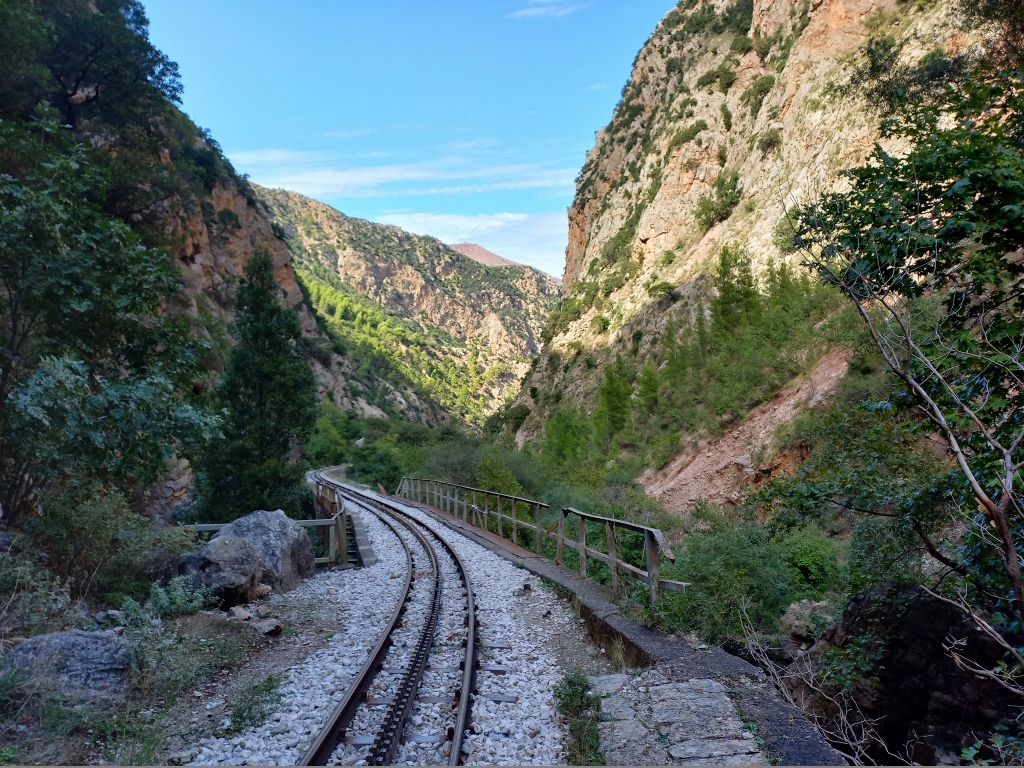 Kalavryta - Diakopto railway track
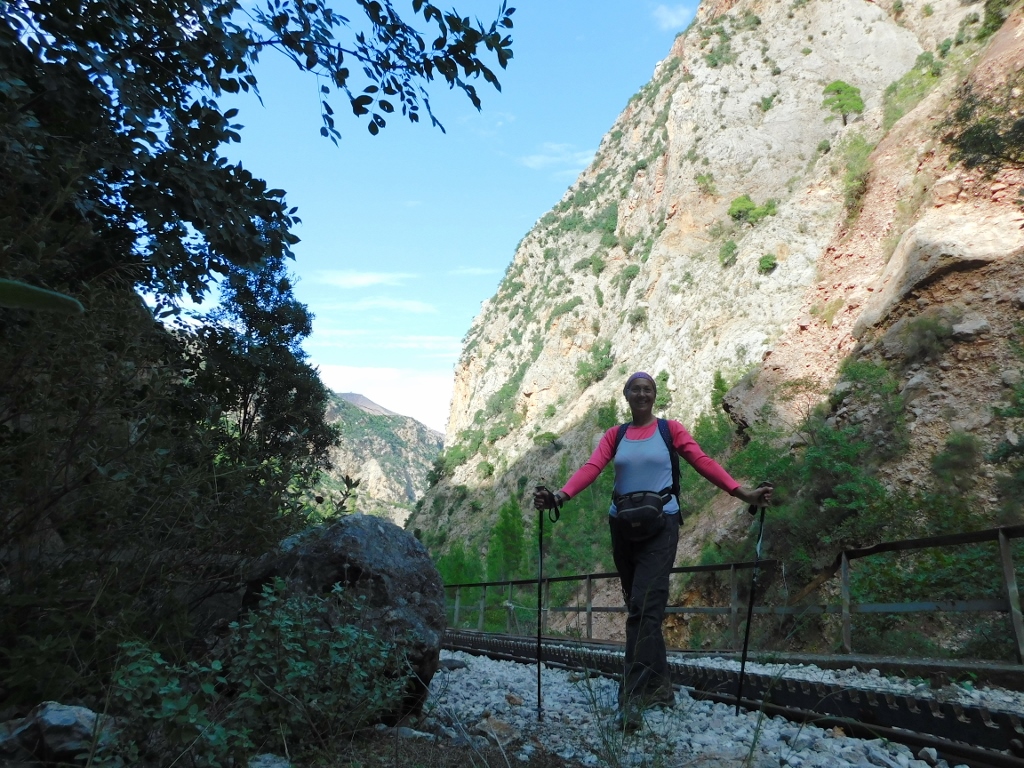 Hiking through the Vouraikos Gorge
Here, I made a proper break to eat some cookies I had brought with me and, of course, I kept drinking water often along the way.
Then I reached a spot where I could take a panoramic shot of the railway. It definitely doesn't have the curve it might seem to have, but I still find the picture quite charming.
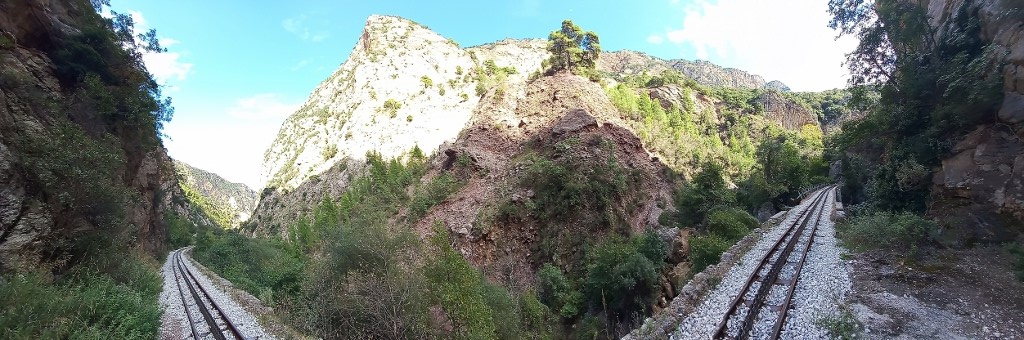 Kalavryta - Diakopto railway track
From the same spot, I took a shot of the section of the railway I had already passed, as well as the part of the track that lay ahead of me. The landscapes were truly breathtaking.
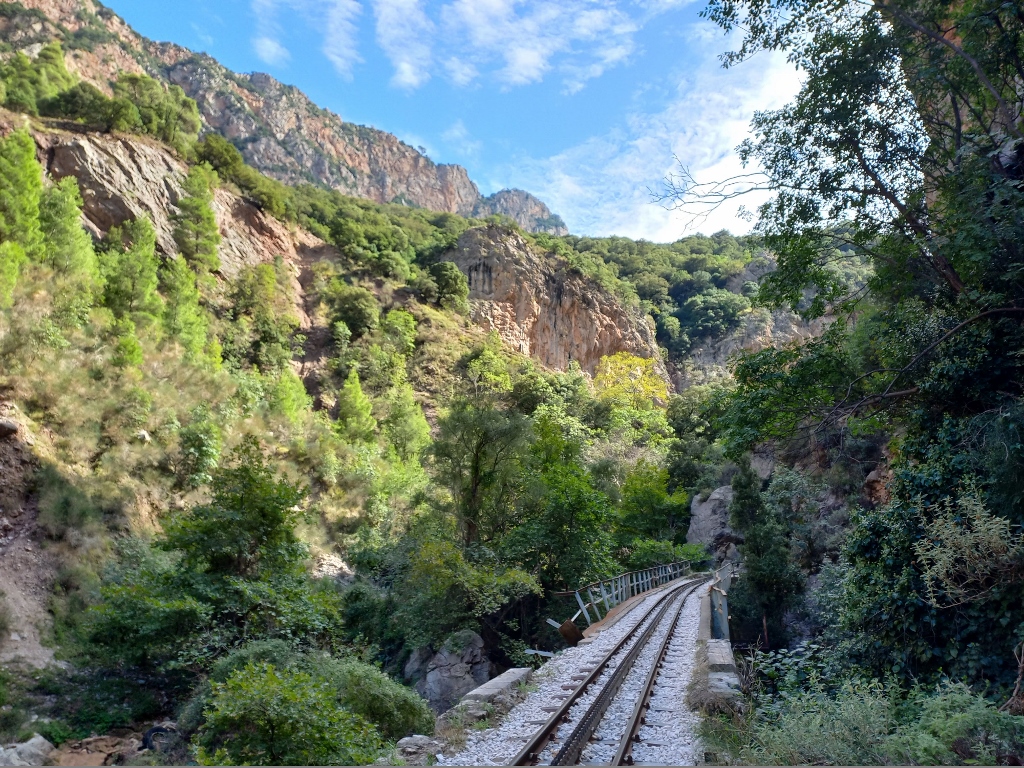 Kalavryta - Diakopto railway track
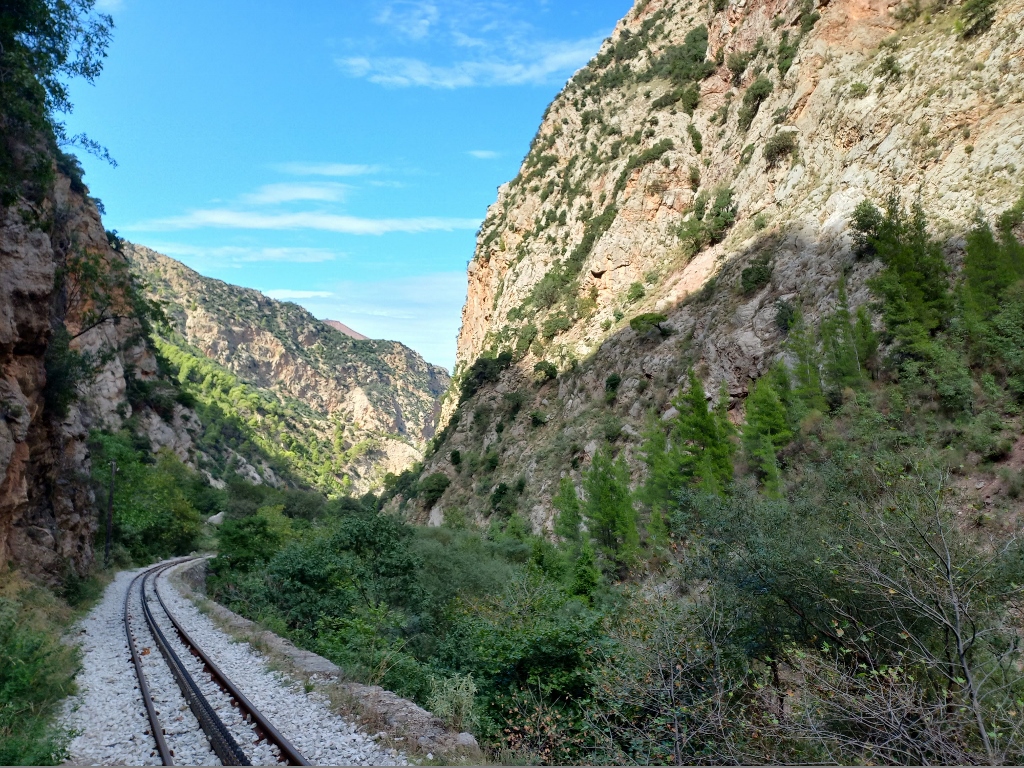 Kalavryta - Diakopto railway track
I proceeded a bit further and then looked back again – everything was similar, yet a little different, still beautiful and inspiring.
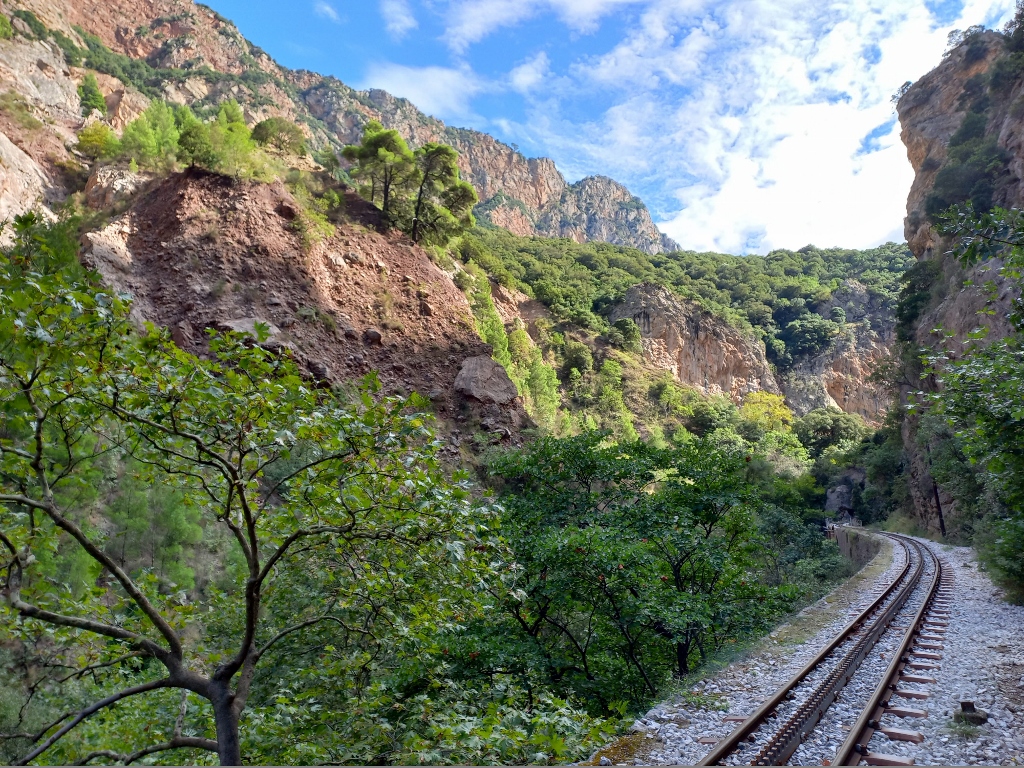 Kalavryta - Diakopto railway track
I continued on and soon came across another bridge, this time quite long, but I also encountered another landslide that covered the tracks. It was quite clear why the trains weren't running here during this period.
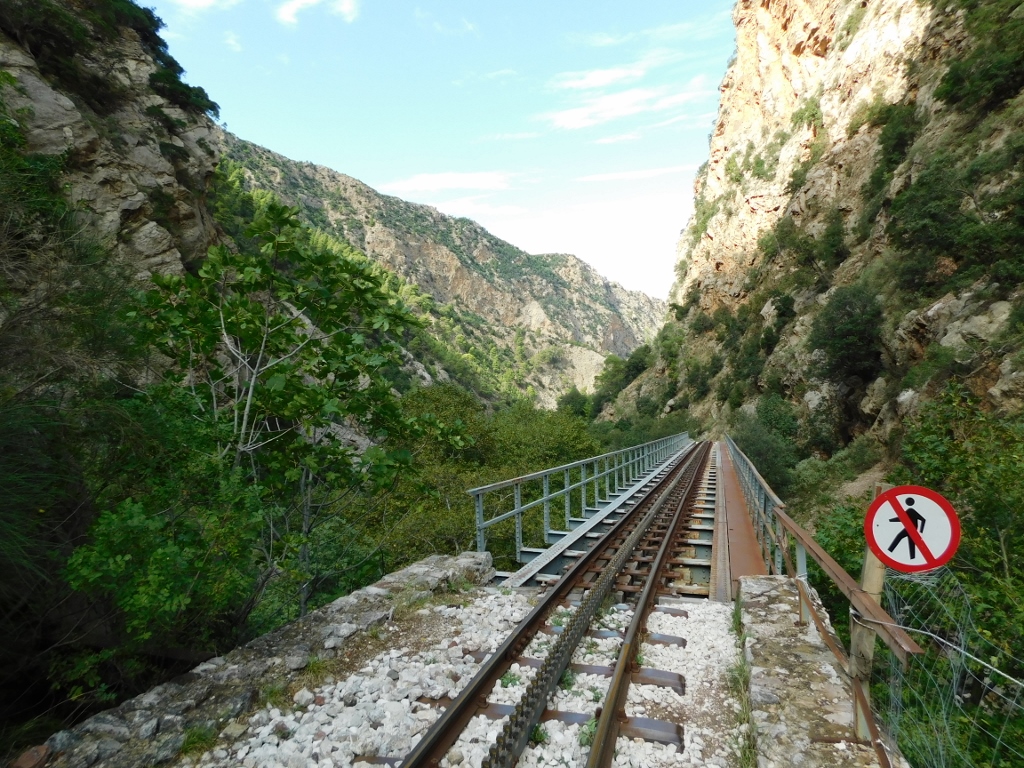 Kalavryta - Diakopto railway track
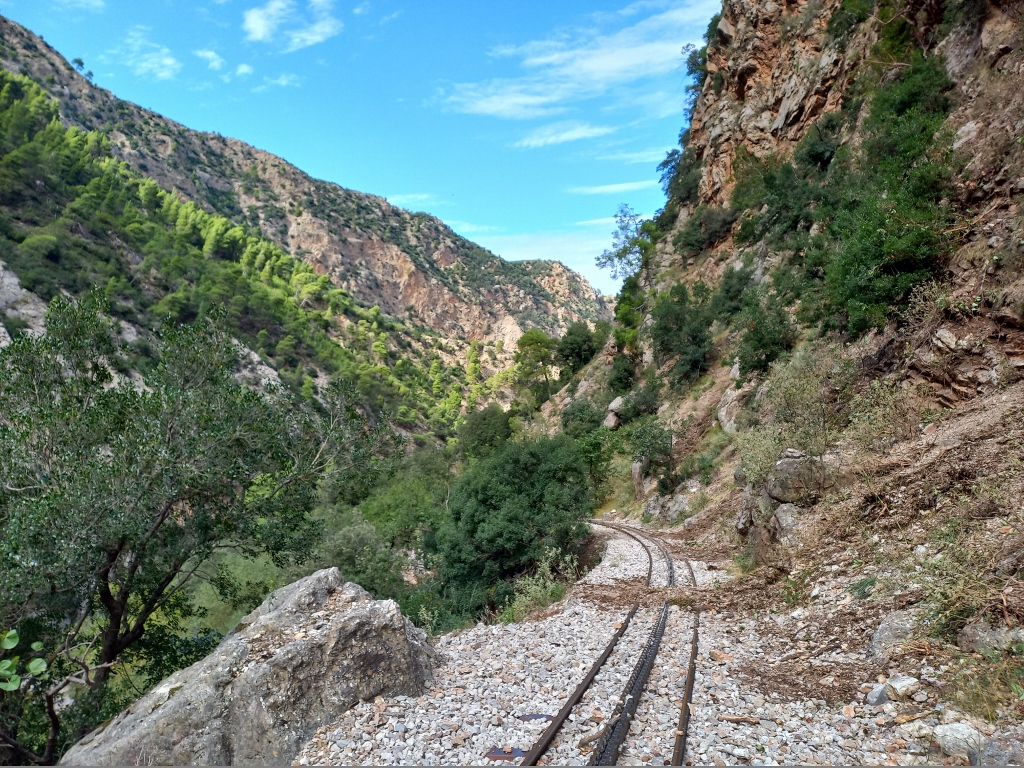 Kalavryta - Diakopto railway track
I also came across another tunnel and, just after it, I could see a second one. When I reached a point somewhere near the middle, I took another panoramic photo.
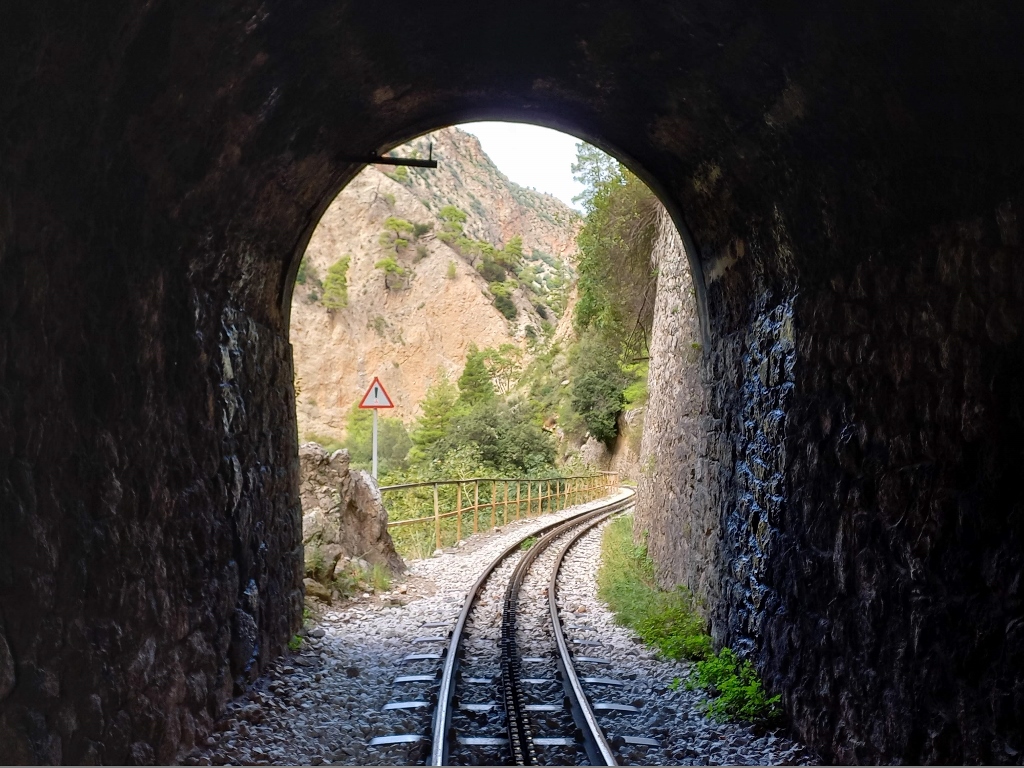 Kalavryta - Diakopto railway track
 Kalavryta - Diakopto railway track
Soon, I came across a newer tunnel, relatively long and dark, but it has side openings that provide some natural light. Just to be safe, I used the flashlight on my phone, but inside, it was dark and uninteresting, so I didn’t take any photos there. I only have a picture of the tunnel entrance.
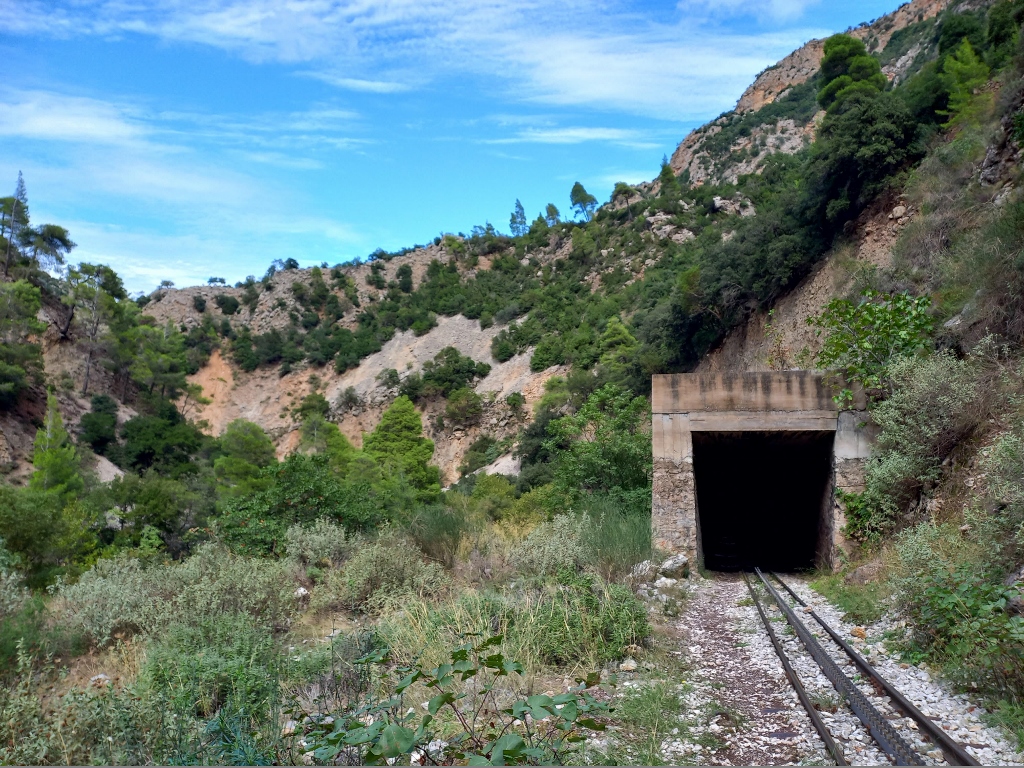 Kalavryta - Diakopto railway track
After that, I came across another bridge, this one spanning a narrow and high little canyon that was carved by the Vuraikos River at this spot.
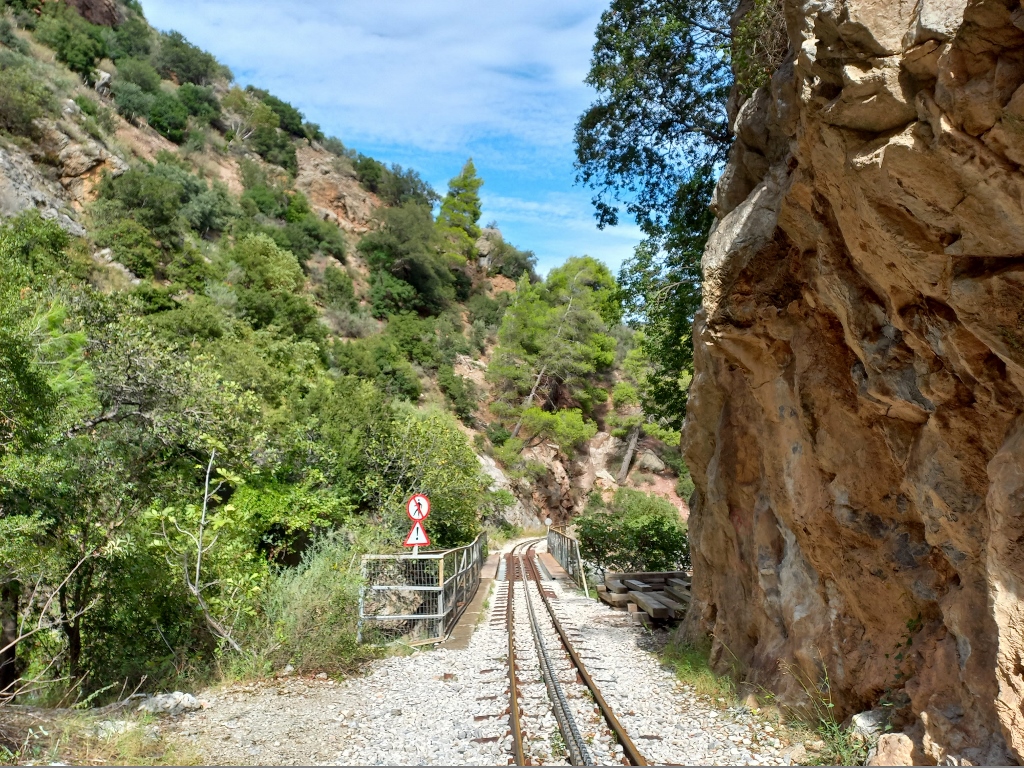 Kalavryta - Diakopto railway track
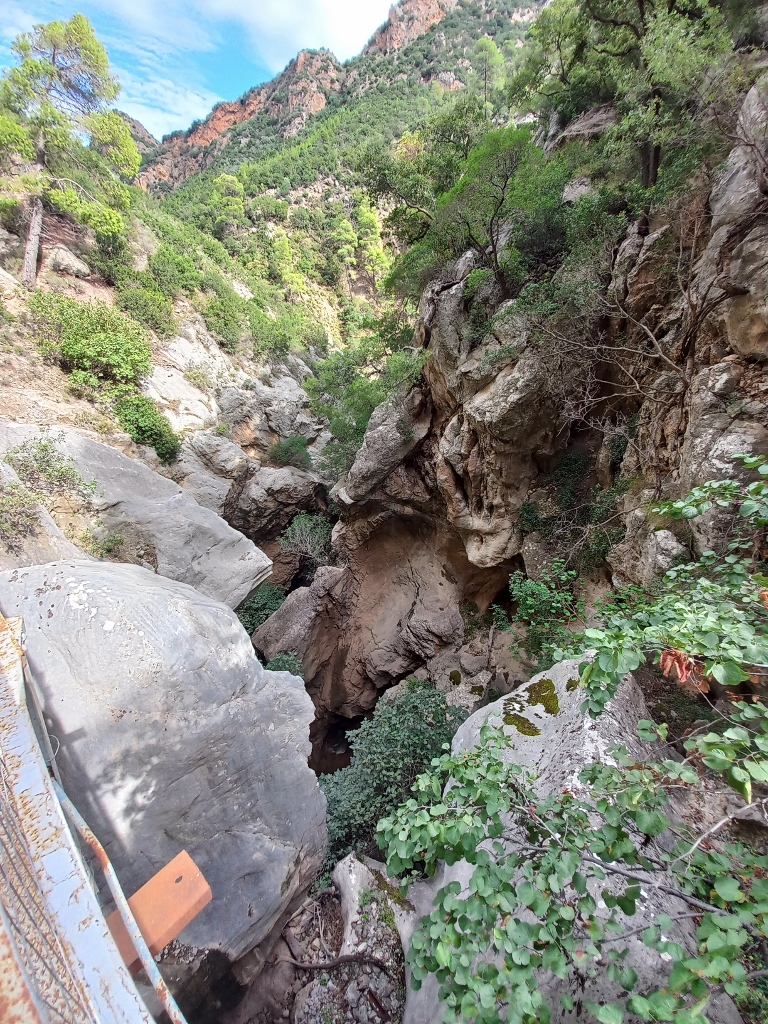 Kalavryta - Diakopto railway track
In the section of the railway before this small canyon, there are several tunnels and they are usually further reinforced with masonry. However, right after the bridge, there is a tunnel that, at least from the direction of Kalavryta, has simply been carved through the rock.
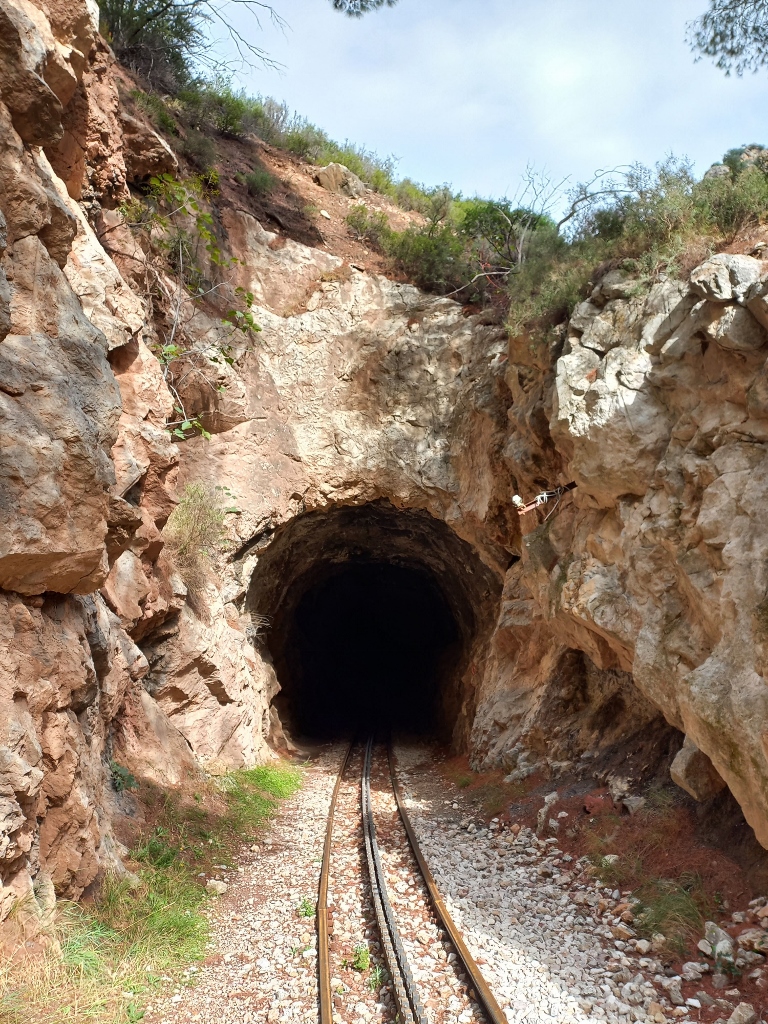 Kalavryta - Diakopto railway track
It is somewhat longer and includes a curve, so it must be passed through carefully.
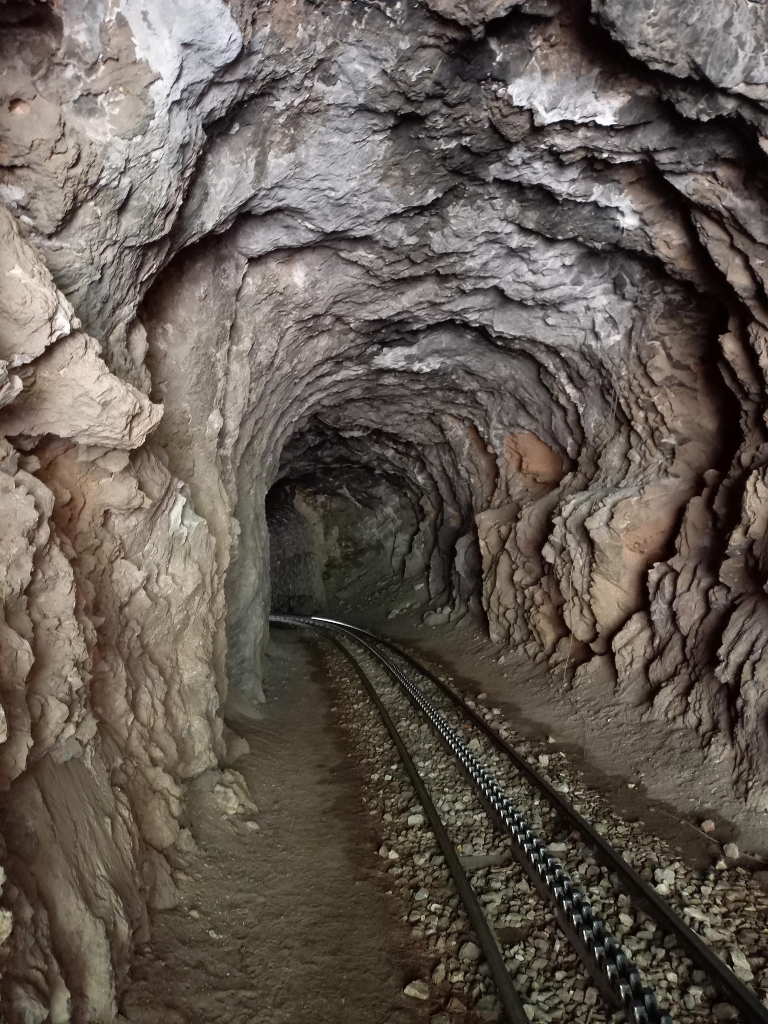 Kalavryta - Diakopto railway track
Although at first glance it seems like absolute darkness reigns inside the tunnel, the situation is actually a bit different once you step inside and your eyes adjust to the semi-darkness. Then you realise that the light illuminating the tunnel from one side is coming from the outside, and I turned around again to see what everything looked like in the opposite direction, from which I had just come.
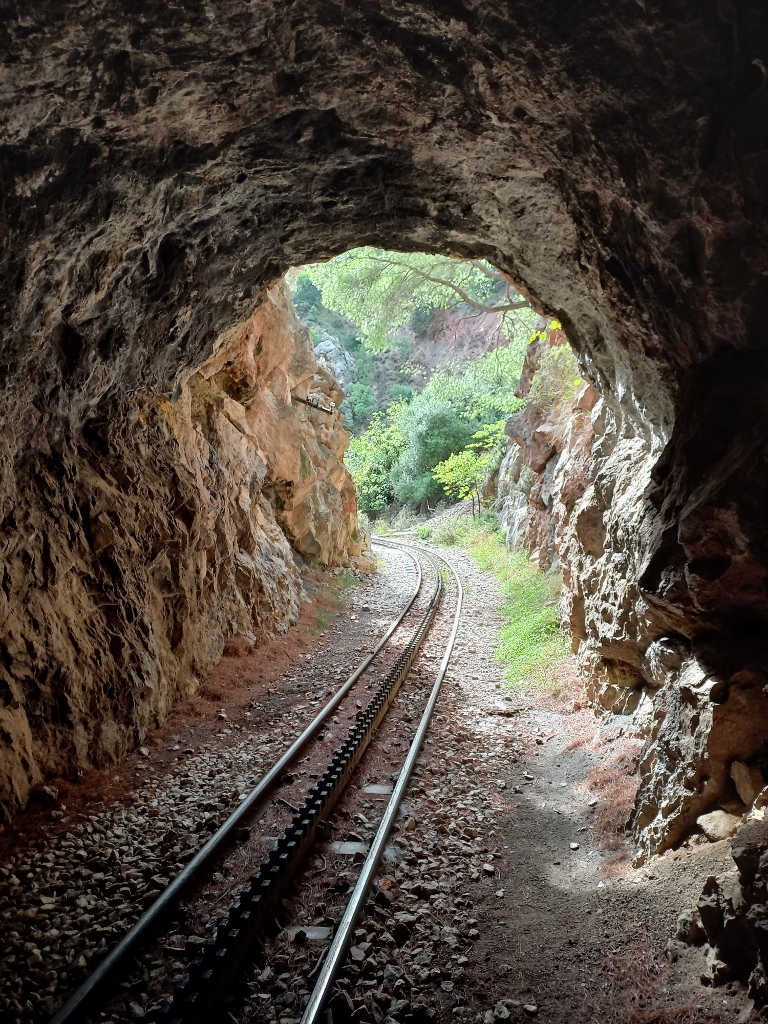 Kalavryta - Diakopto railway track
In the second part, the tunnel is reinforced with stone to give it strength, while with each step, the scenes and details around me were incredibly beautiful, so I took pictures as I went.
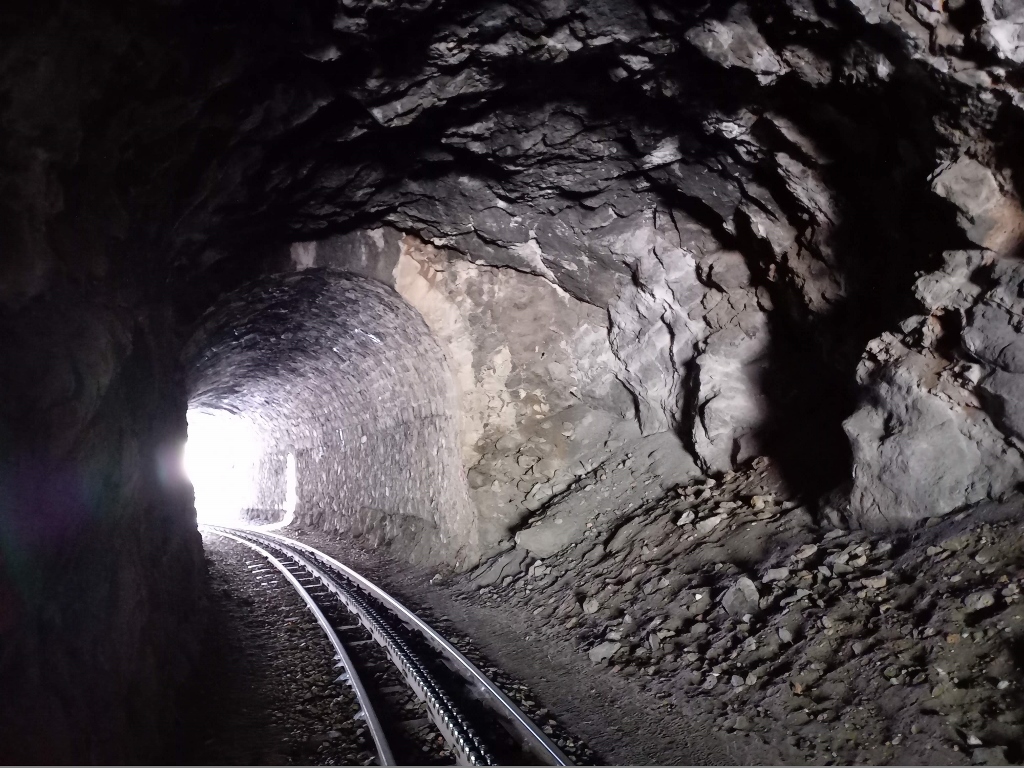 Kalavryta - Diakopto railway track
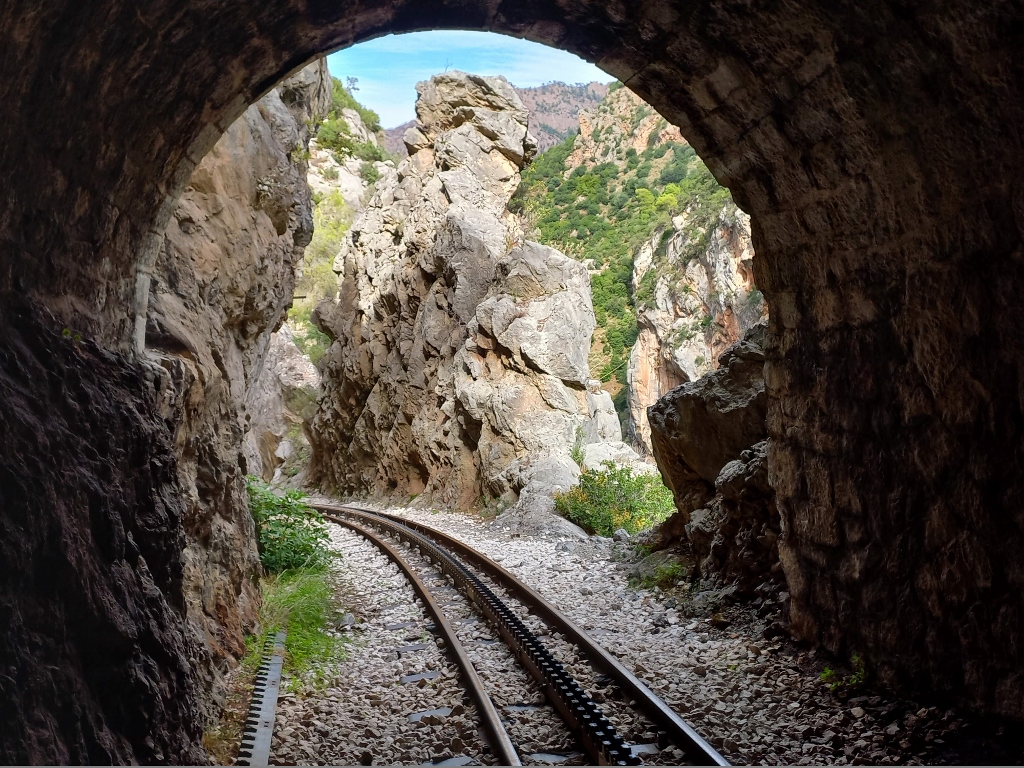 Kalavryta - Diakopto railway track
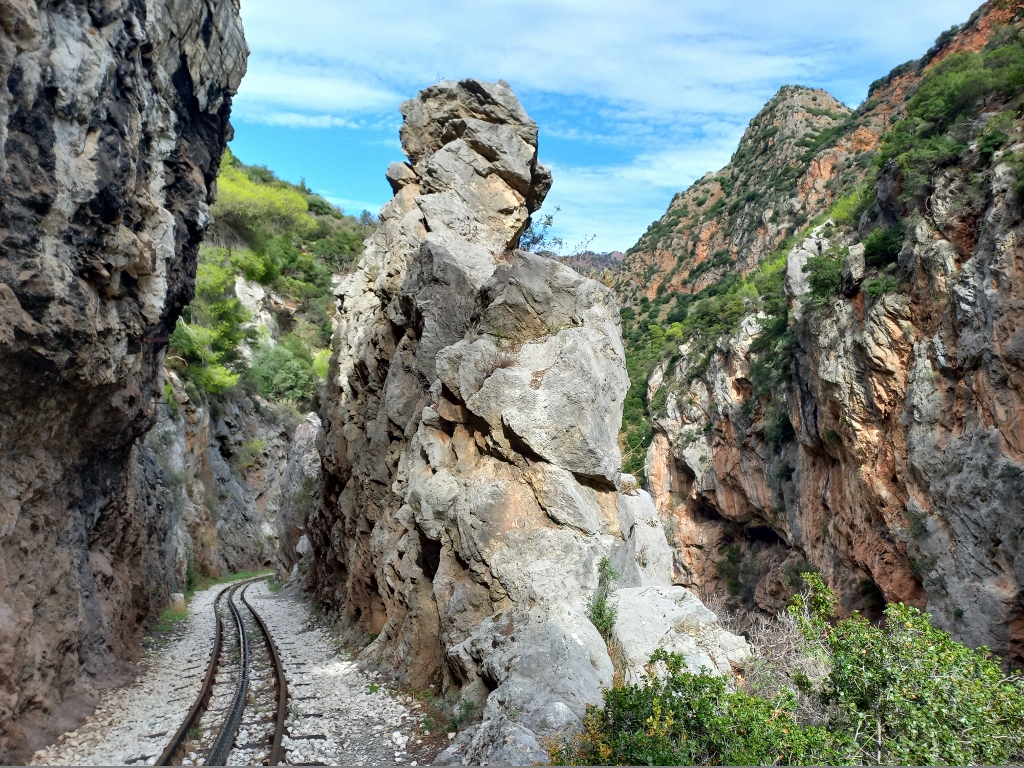 Kalavryta - Diakopto railway track
Here, the gorge is quite narrow and deep, so the railway winds a lot, while the tunnels follow one after the other almost immediately. Right after I left the tunnel I have just mentioned, a new one appeared in front of me.
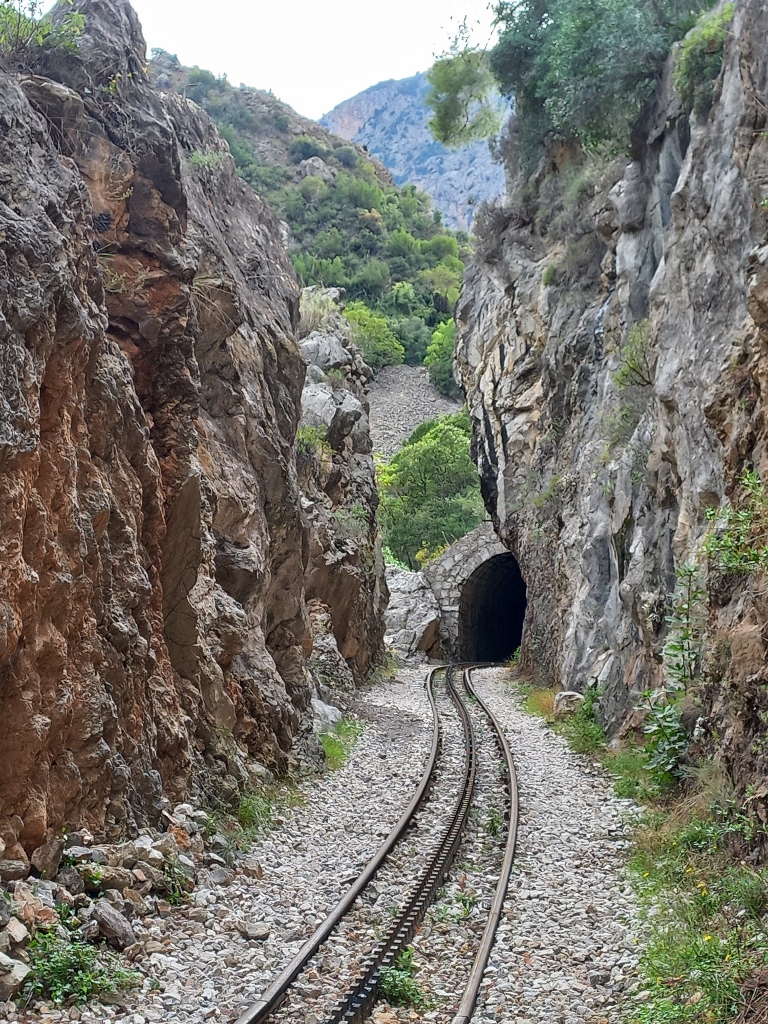 Kalavryta - Diakopto railway track
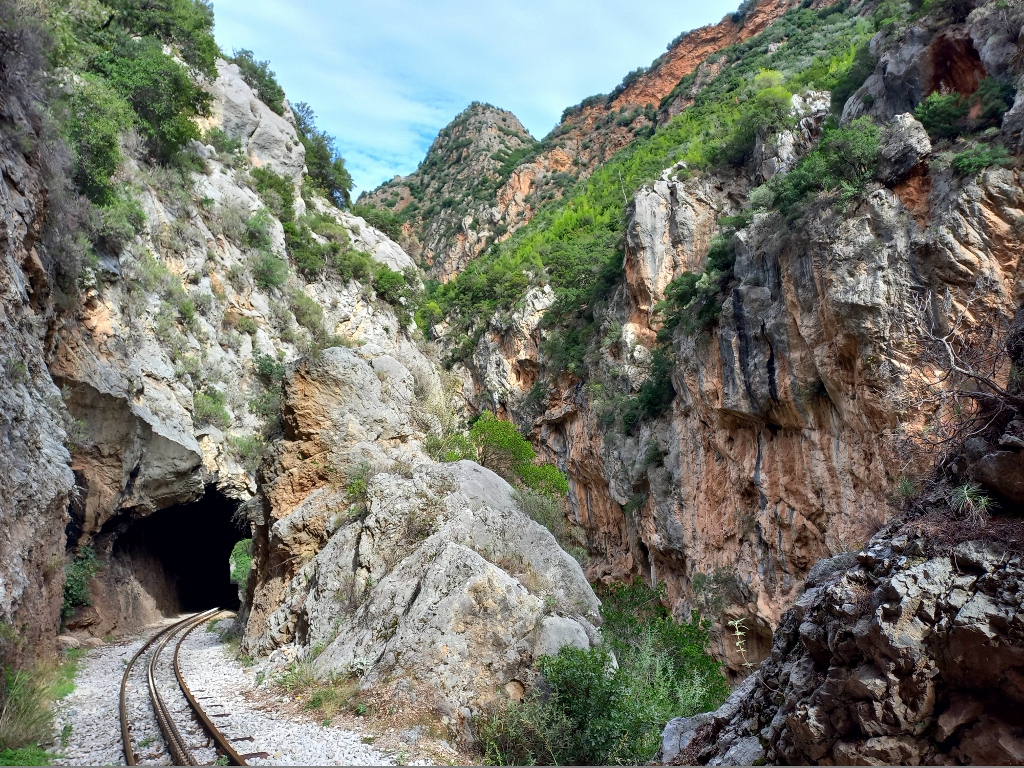 Kalavryta - Diakopto railway track
In addition to these details related to the railway itself, it's important to mention that I had no mobile phone signal here. I assume the reason for this is the narrow, high gorge. I thought to myself that I should be even more cautious while walking because if I got injured, I wouldn't be able to call anyone. Not to mention, there was absolutely no one else here but me. I comforted myself with the thought that the receptionist at the hotel in Diakopto knew where I was, but I still figured it would be better to walk carefully, so I continued on in this manner.
Now, a very interesting series of tunnels and semi-tunnels followed and one of them even had a couple of flanking openings.
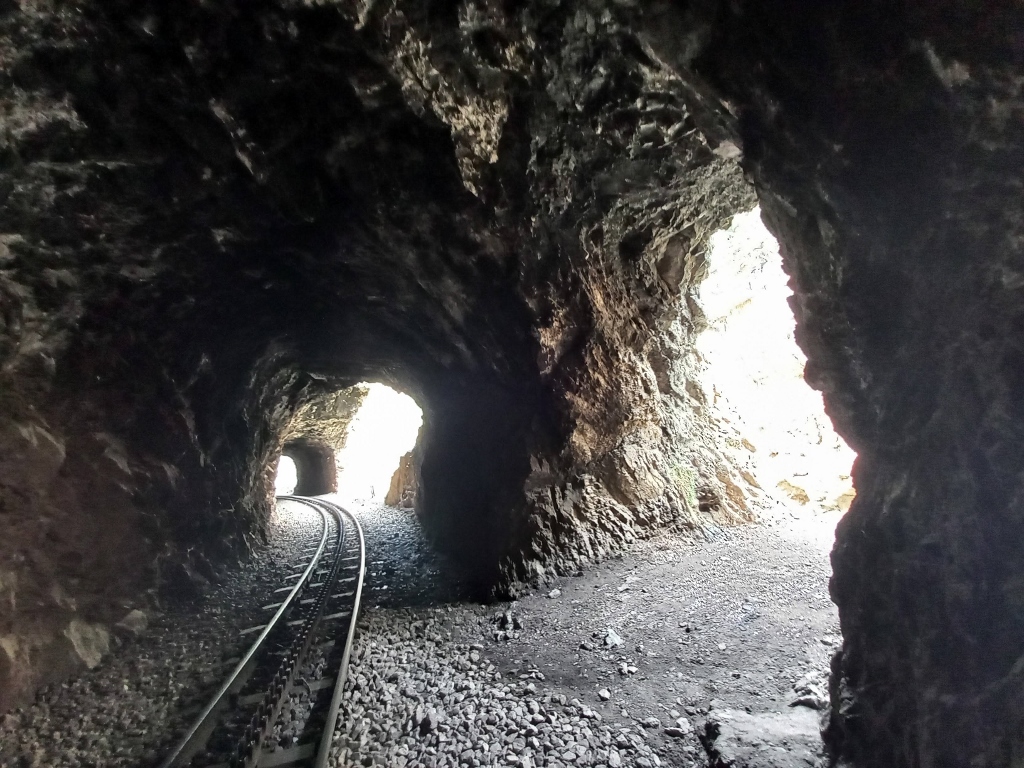 Kalavryta - Diakopto railway track
Of course, I had to peek through one of these large flanking openings and from there, I could see the cliffs on the eastern side of the gorge.
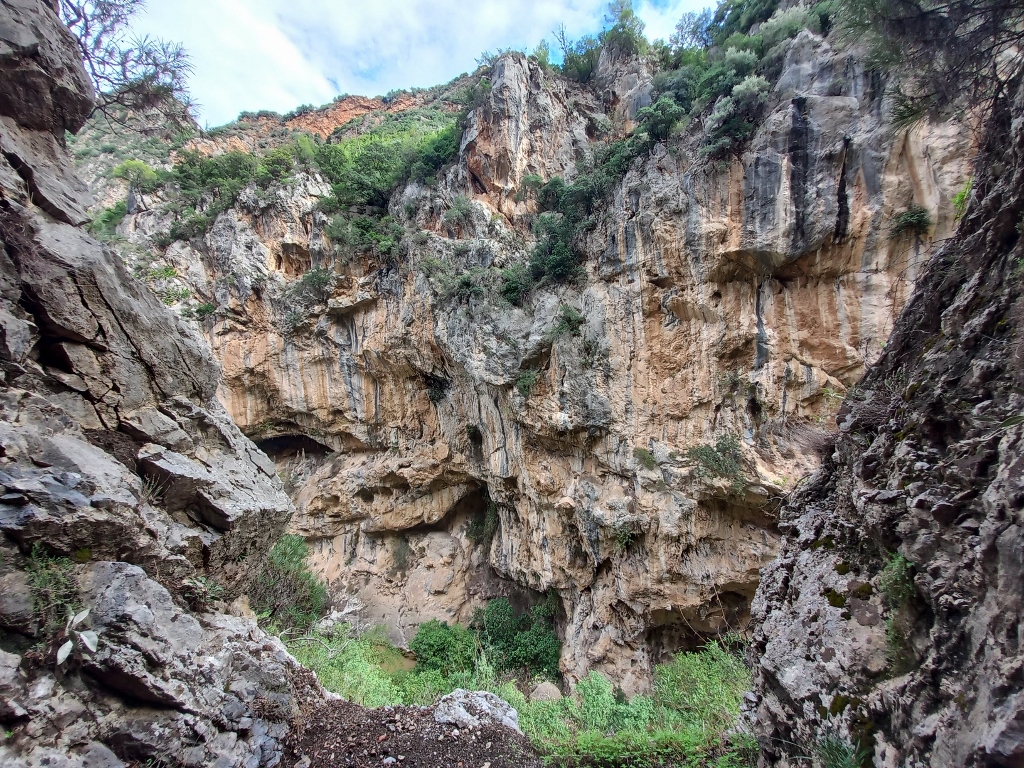 Kalavryta - Diakopto railway track
In continuation, the track again has got, what I would call, a passage rather than a tunnel, which then leads to an impressive section topped by an overhang.
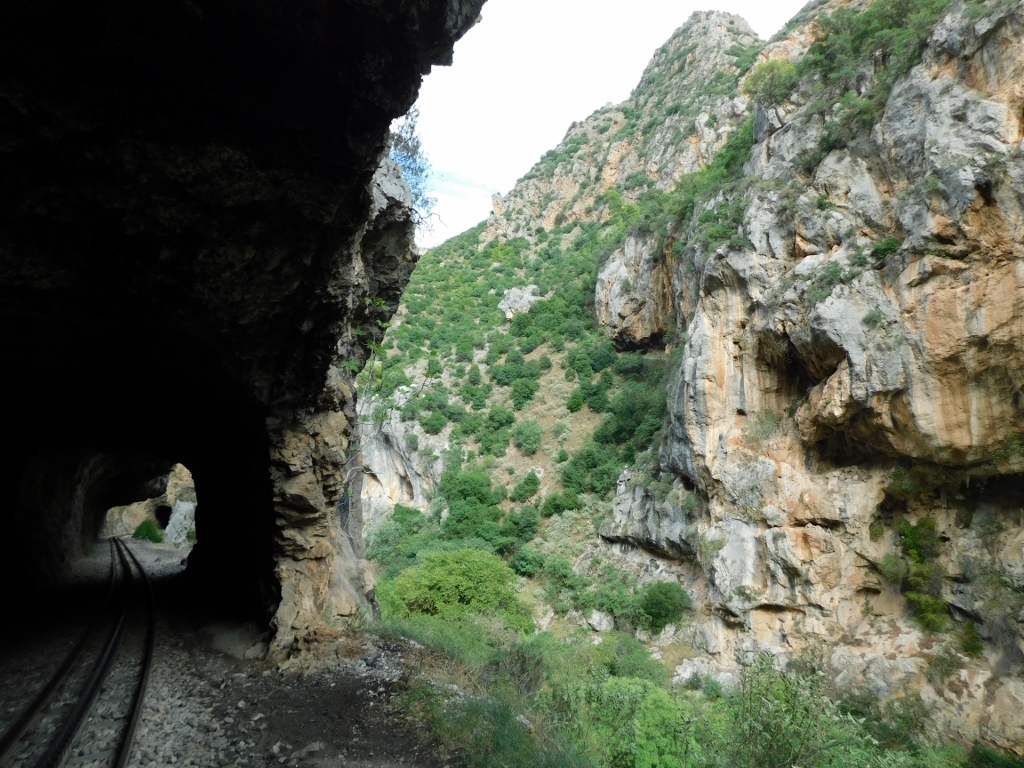 Kalavryta - Diakopto railway track
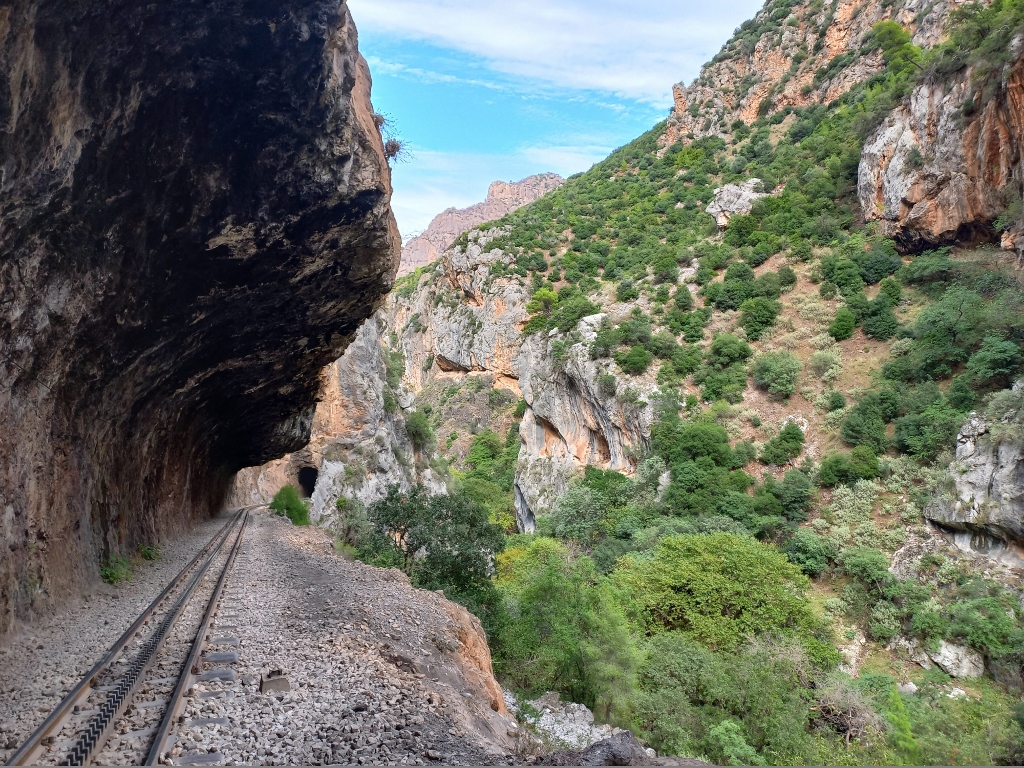 Kalavryta - Diakopto railway track
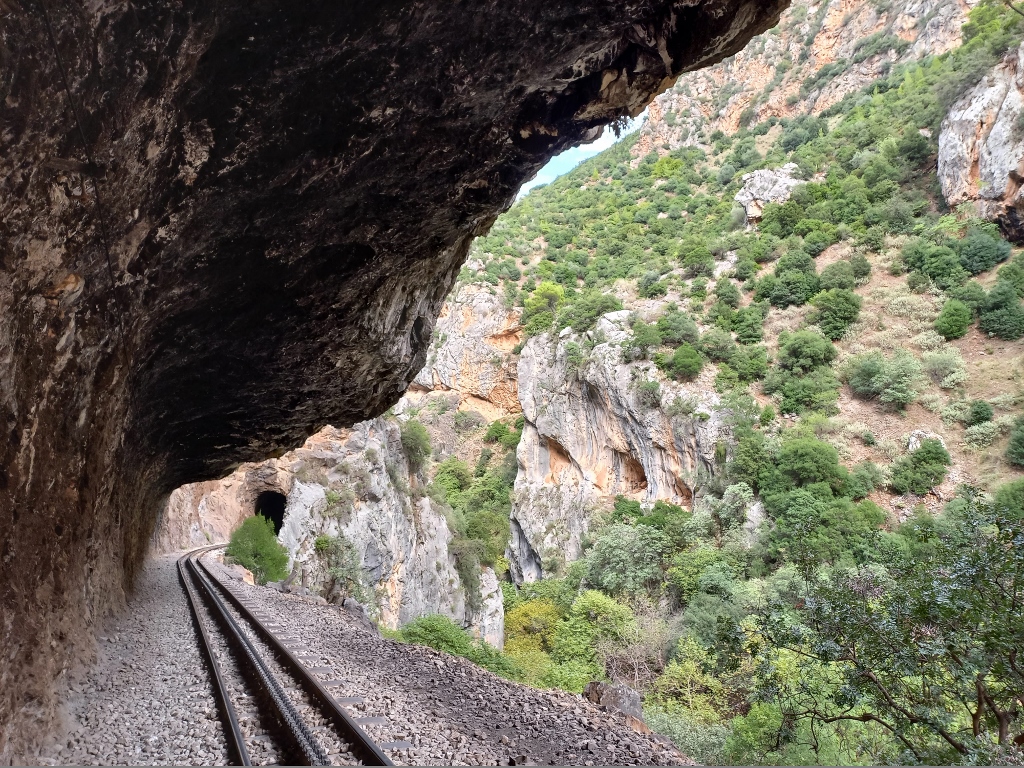 Kalavryta - Diakopto railway track
Here, too, I had to turn around and take a shot of the sections of the track I had already passed. The view on both sides was absolutely impressive.
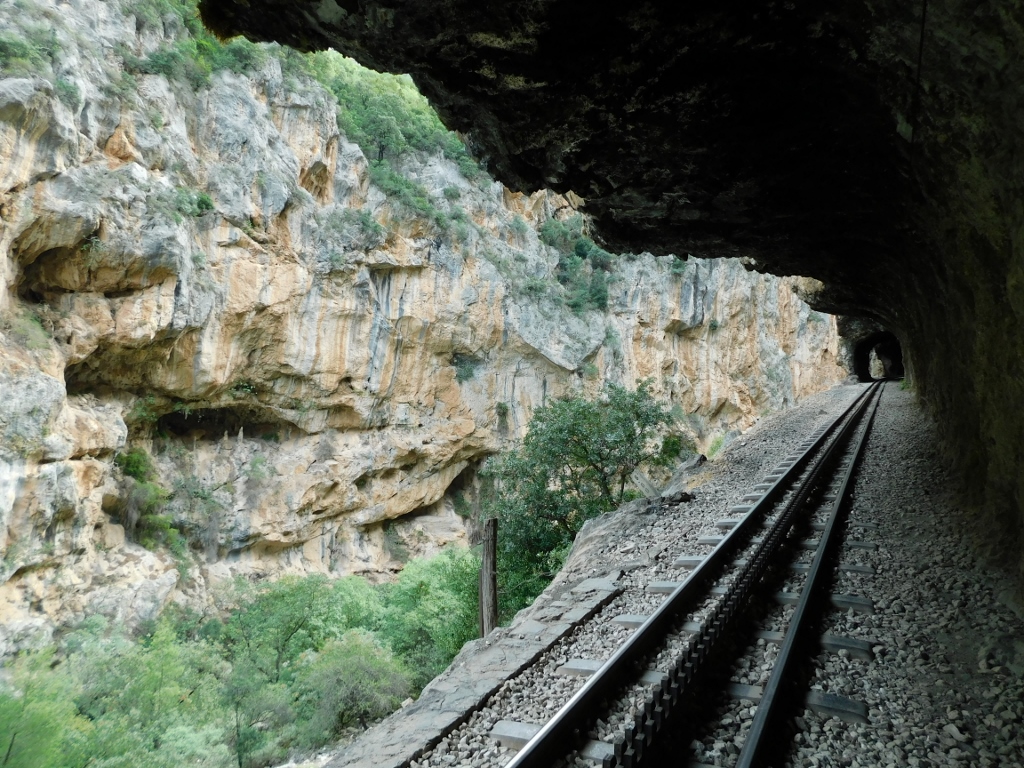 Kalavryta - Diakopto railway track
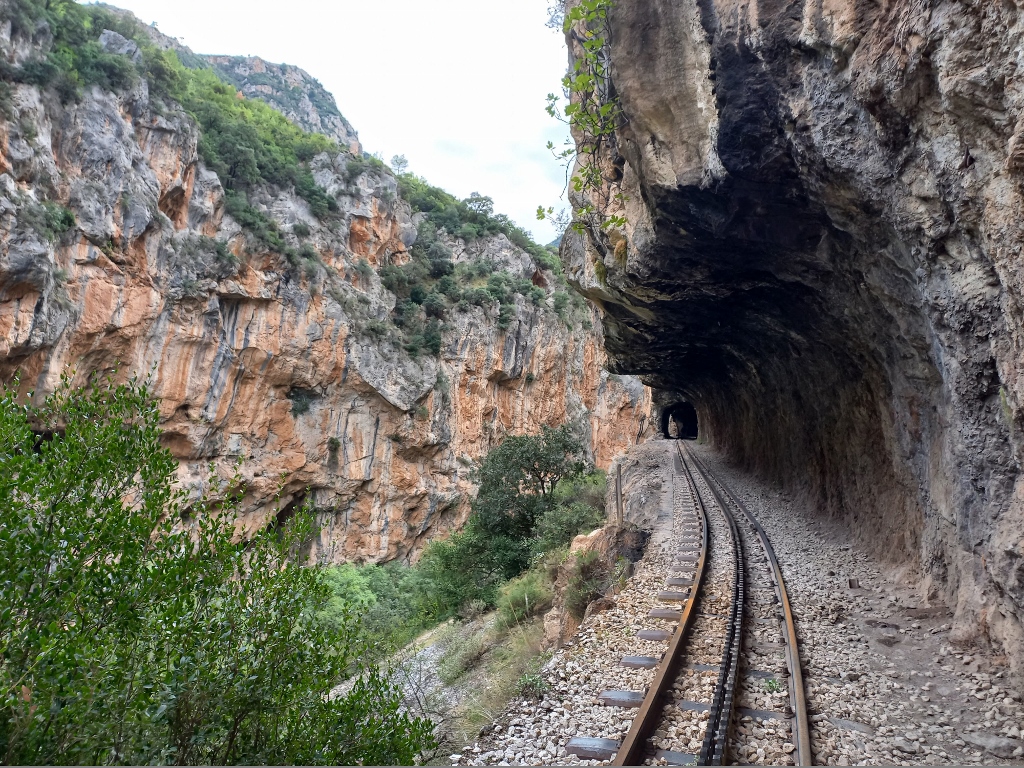 Kalavryta - Diakopto railway track
Then came another shorter tunnel and after that, the situation with the tunnels and passages started to "calm down," although the incline and the need for the rack railway still remained.
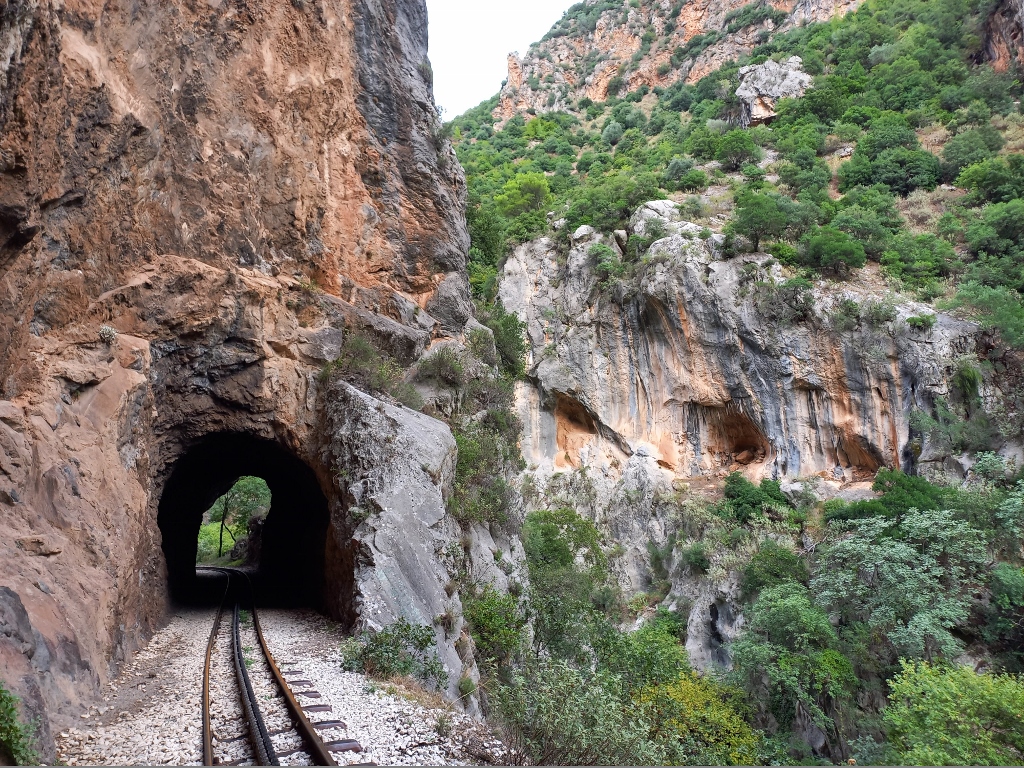 Kalavryta - Diakopto railway track
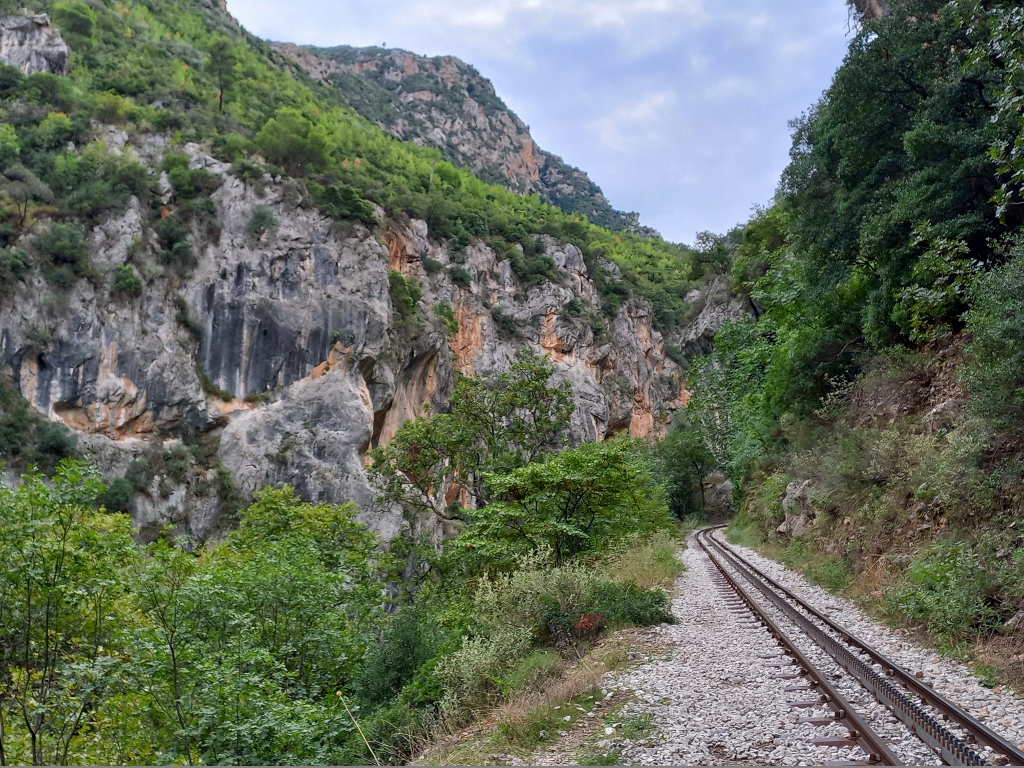 Kalavryta - Diakopto railway track
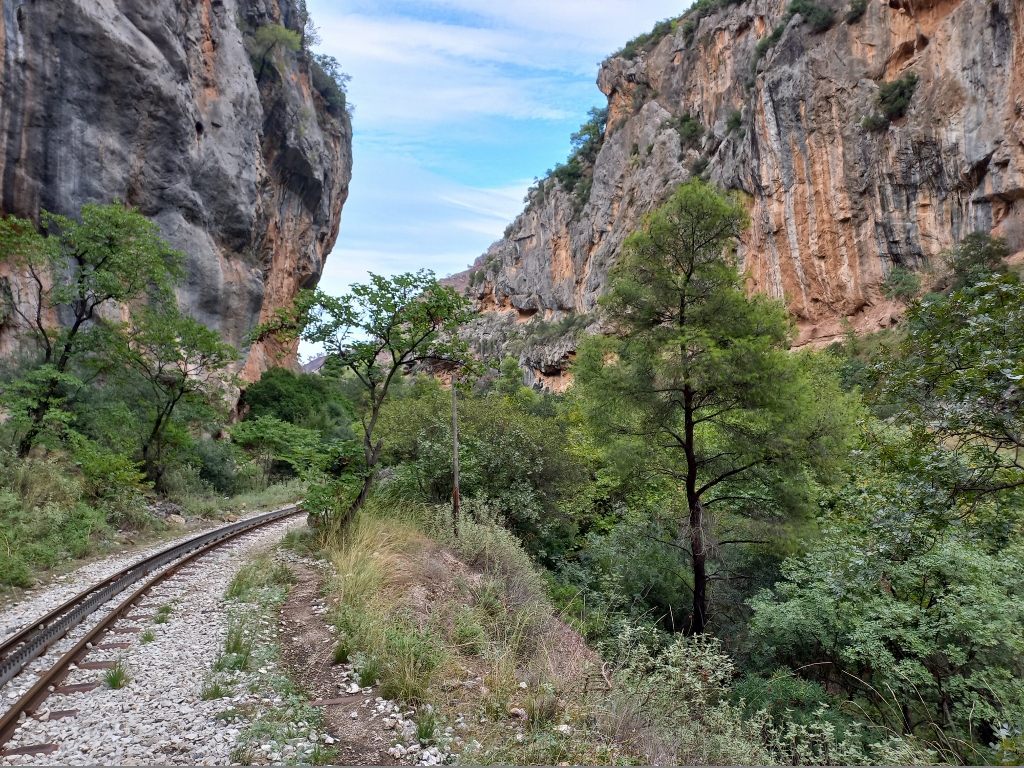 Kalavryta - Diakopto railway track
Very soon, the track started to go straight and level, while the most impressive parts of the gorge slowly faded behind me.
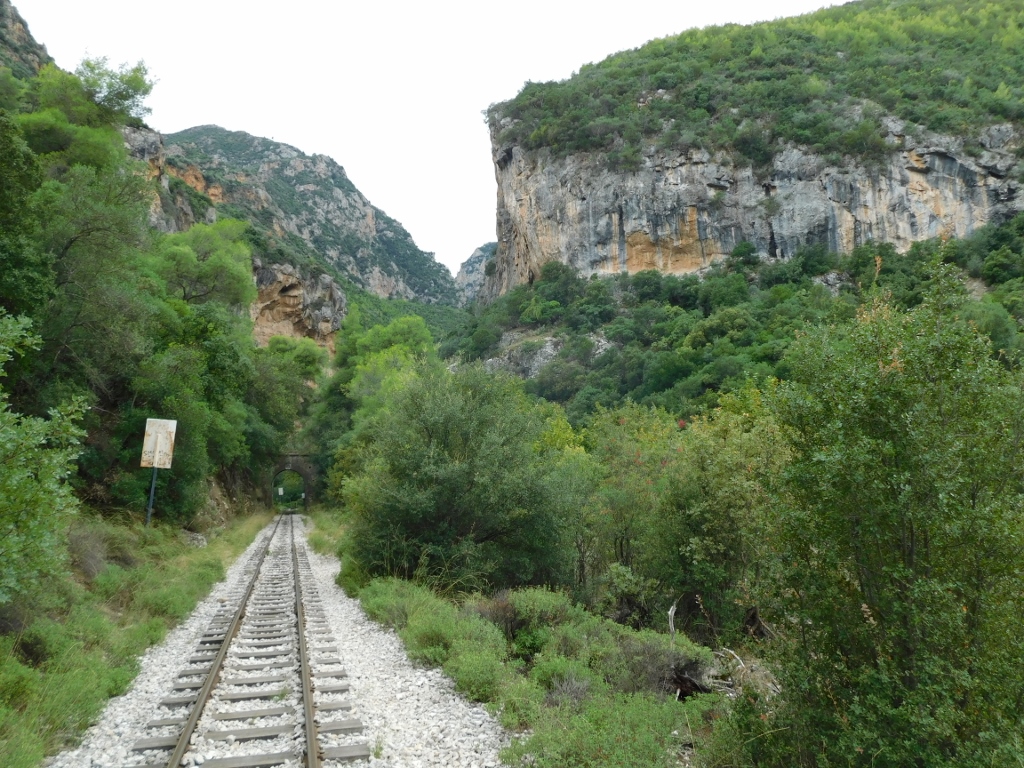 Kalavryta - Diakopto railway track
In front of me, in the distance, I also saw the flanking elevated sides of the gorge widening, so it became clear to me that I was gradually approaching my goal.
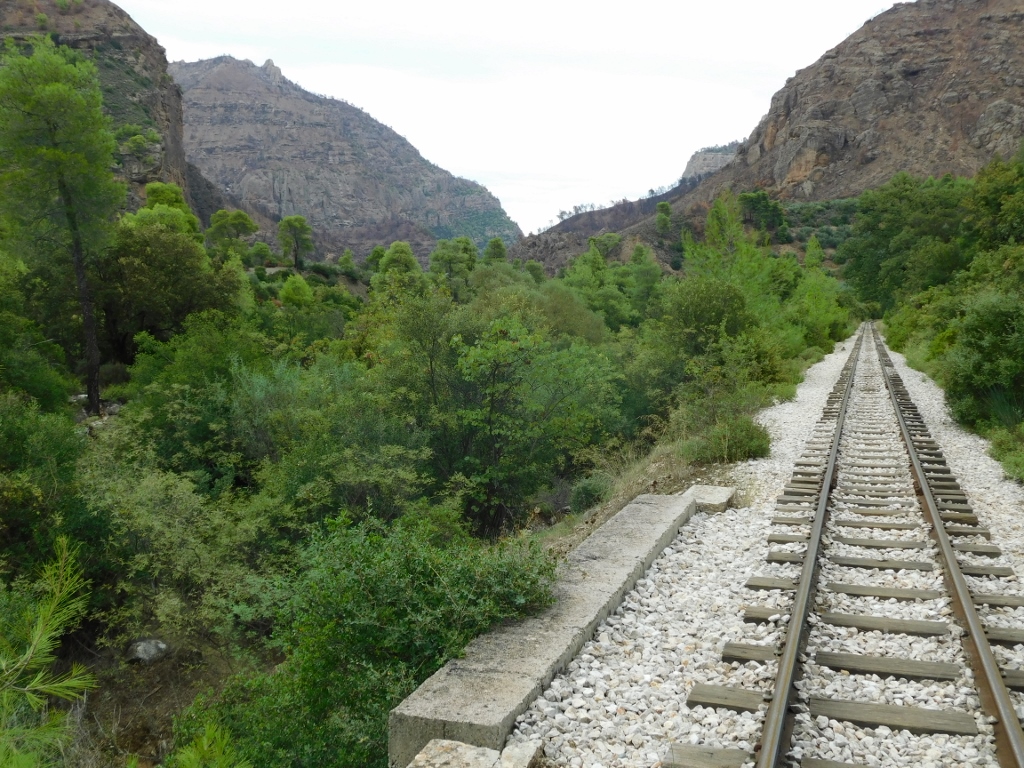 Kalavryta - Diakopto railway track
Soon, a wide valley appeared in the middle of the gorge and there was the local train station Microchelidou, with olive trees growing on both sides of the track. This area can also be reached by a dirt road, while Diakopto is about 6 km away from here.
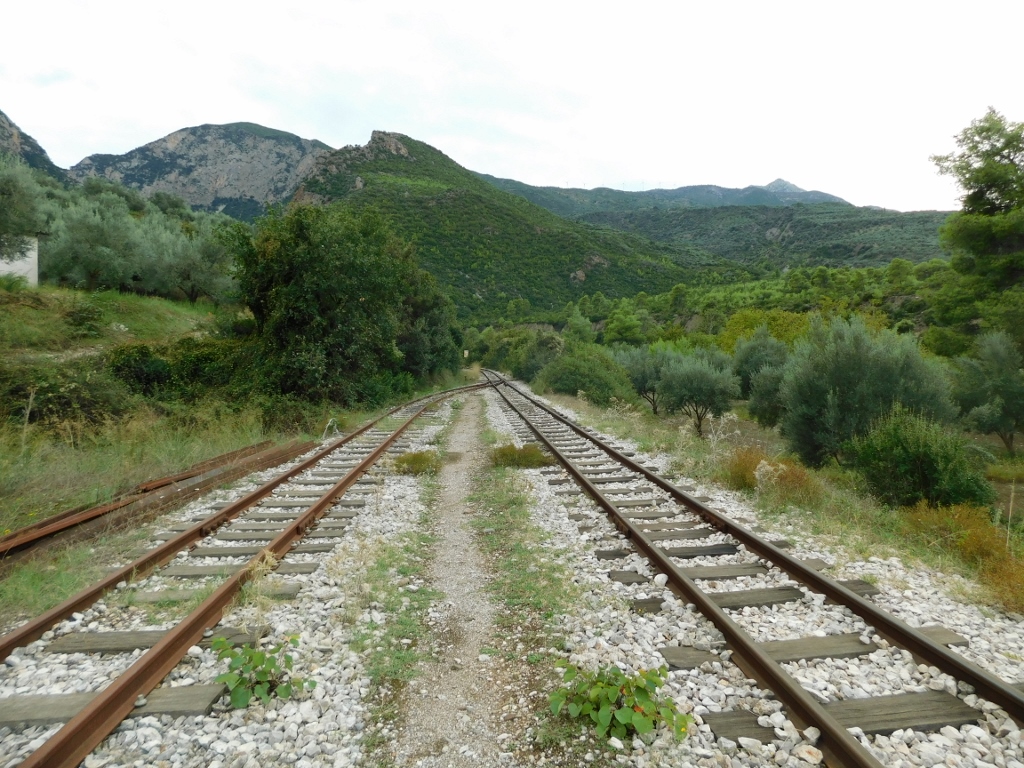 Kalavryta - Diakopto railway track
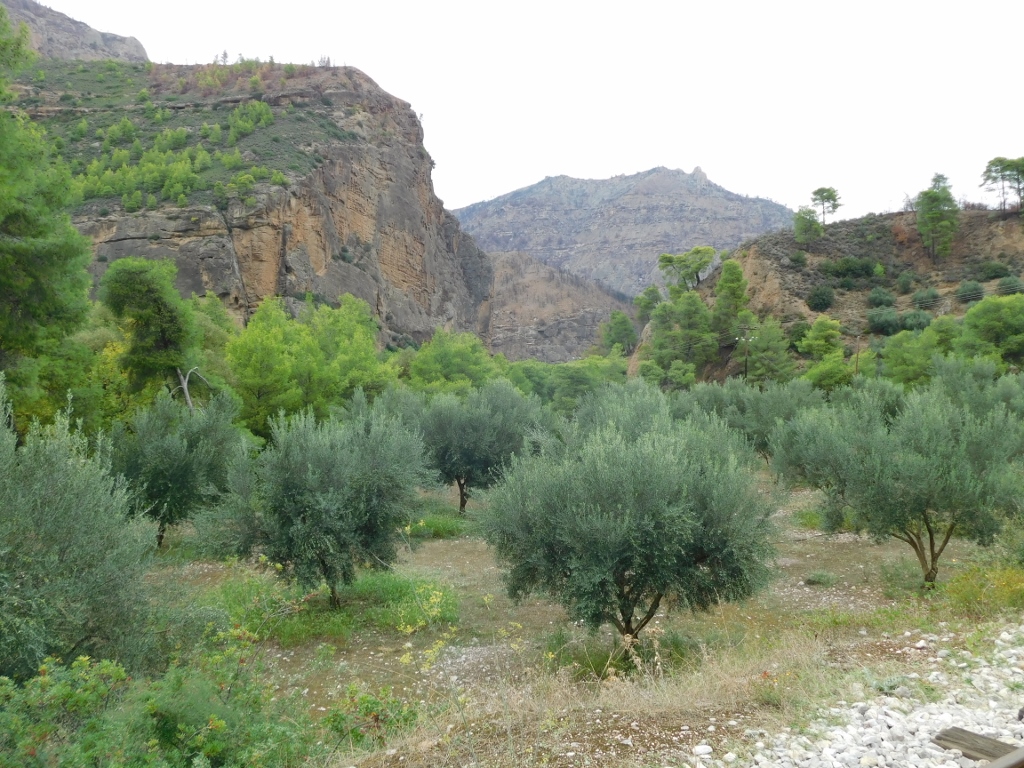 Surroundings of the railway at the Microchelidou station
Although I had already noticed from a distance that the elevations at the end of the gorge were bare, it wasn't until I got closer that I understood what had happened – there had clearly been a fire and now, on those heights, I could see not only rocks but also burned trees.
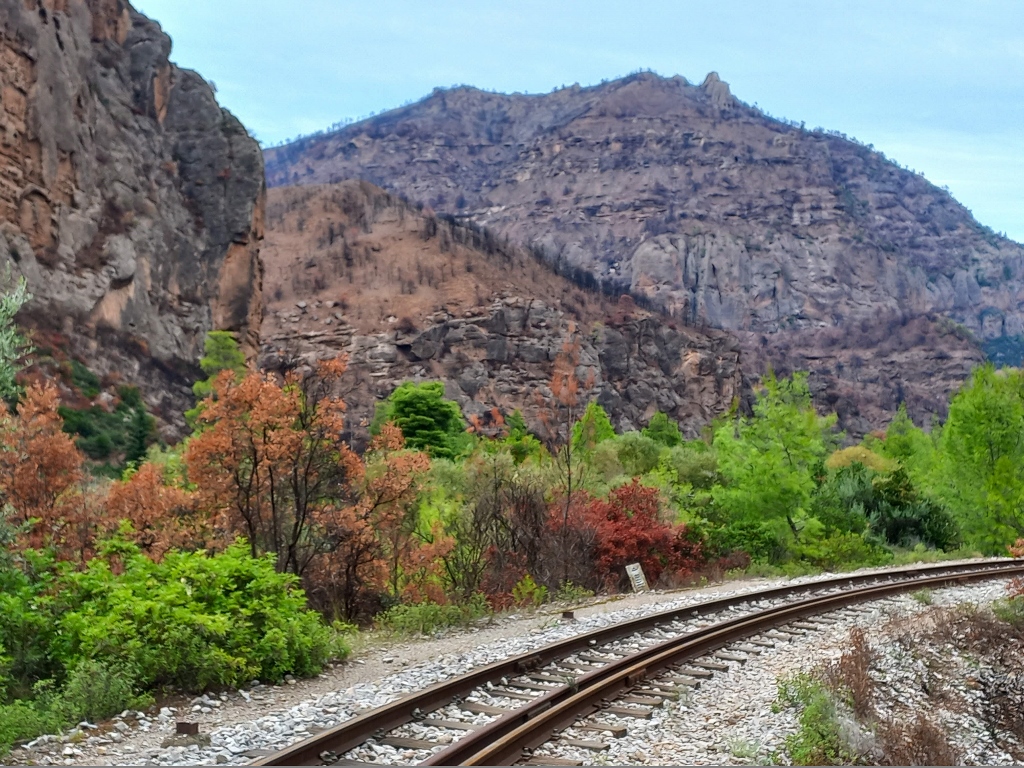 Kalavryta - Diakopto railway track
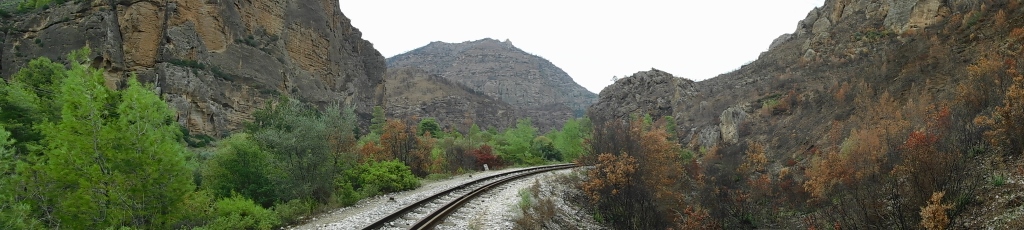 Kalavryta - Diakopto railway track
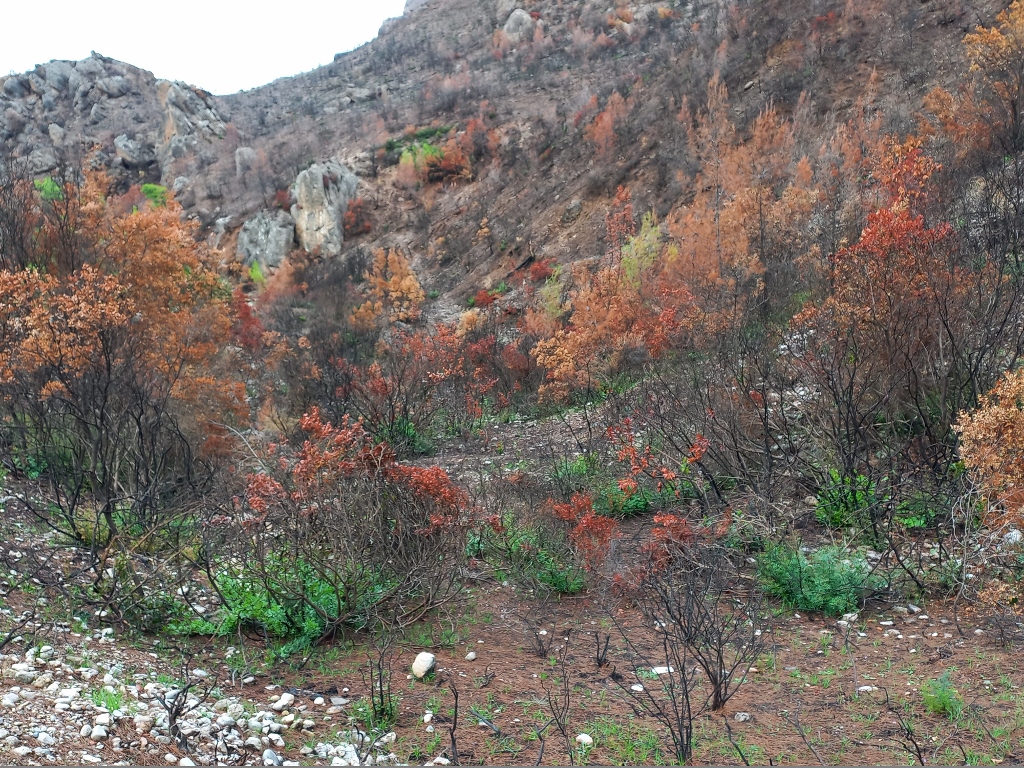 Surroundings of the Kalavryta - Diakopto railway track
After the wide valley, the Vuraikos Gorge narrows again before finally reaching the sea.
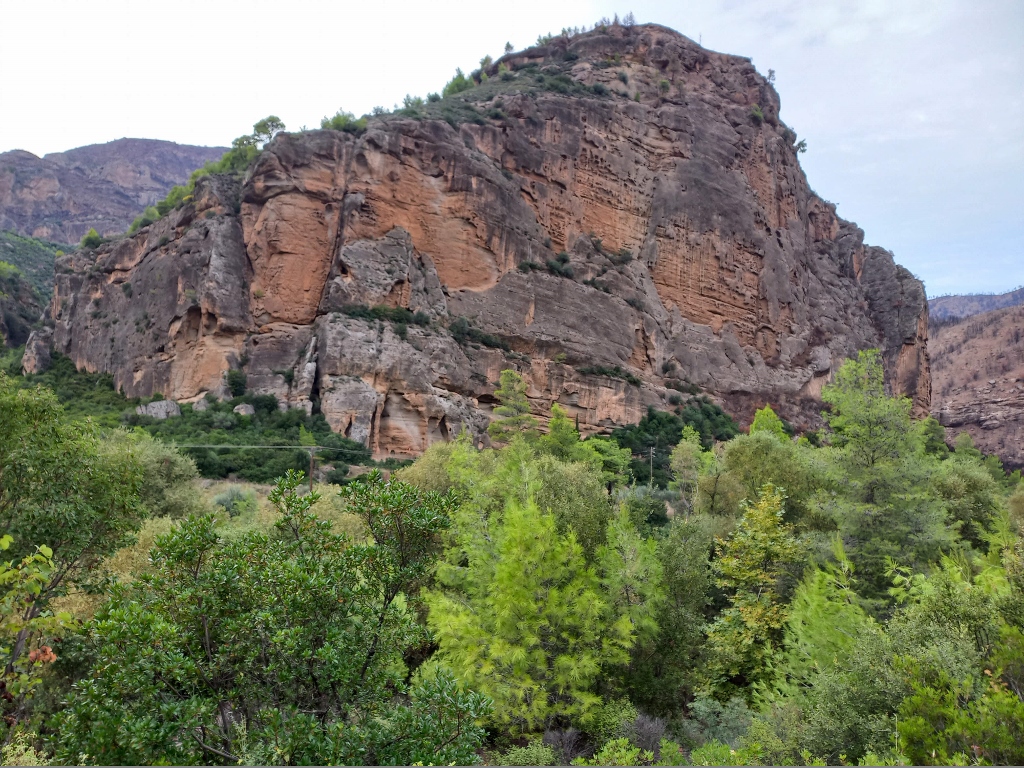 Surroundings of the Kalavryta - Diakopto railway track
However, what was most striking here were the consequences of the heavy rains that had fallen in the previous days. There were numerous landslides that covered the railway tracks to varying degrees. I thought that the fire from a year or two earlier had likely contributed to this situation, because now most of the trees were dead and could no longer absorb enough water from the soil. Their roots were no longer strong enough to hold the earth and rocks in place, preventing them from sliding.
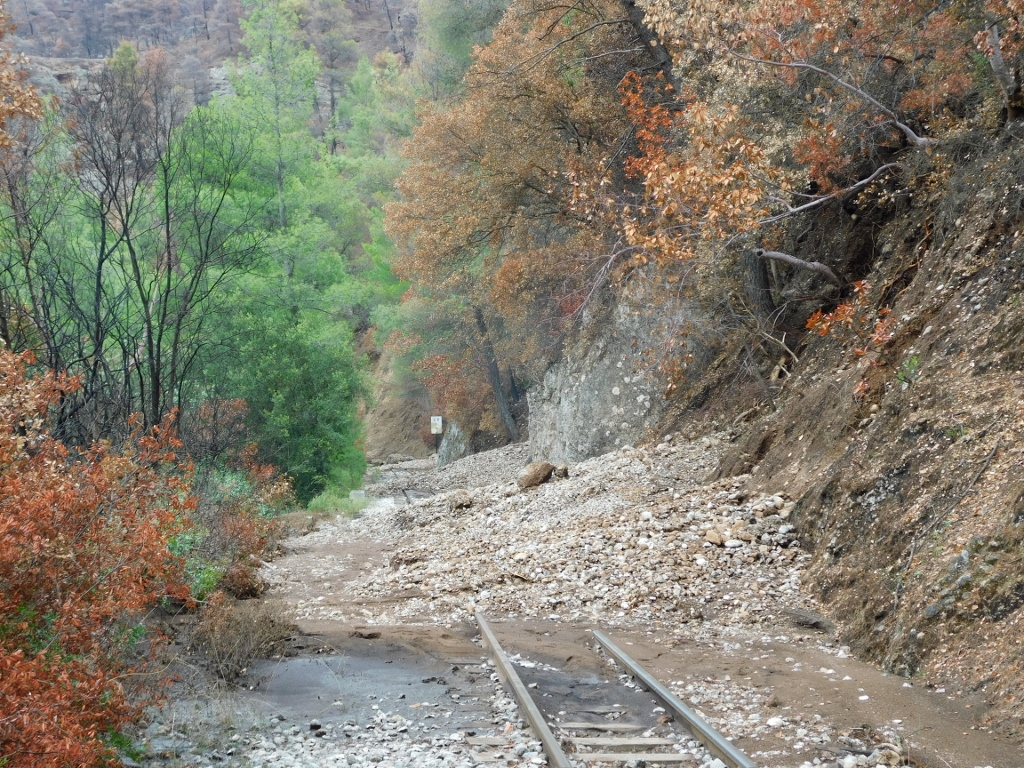 Kalavryta - Diakopto railway track
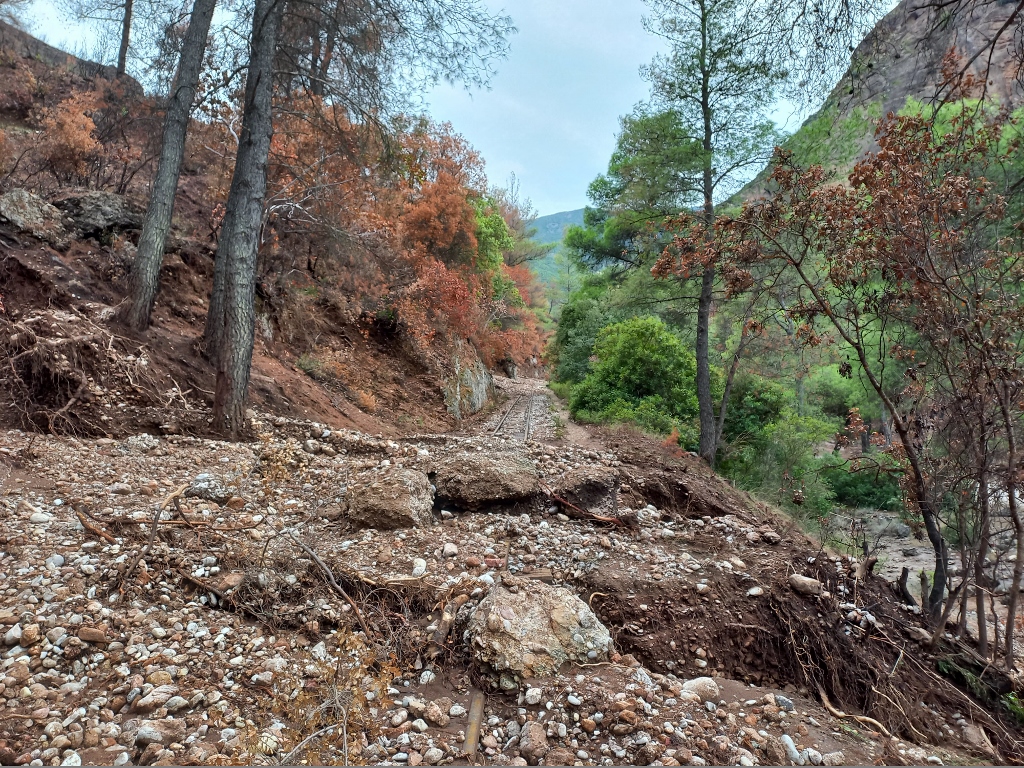 Kalavryta - Diakopto railway track
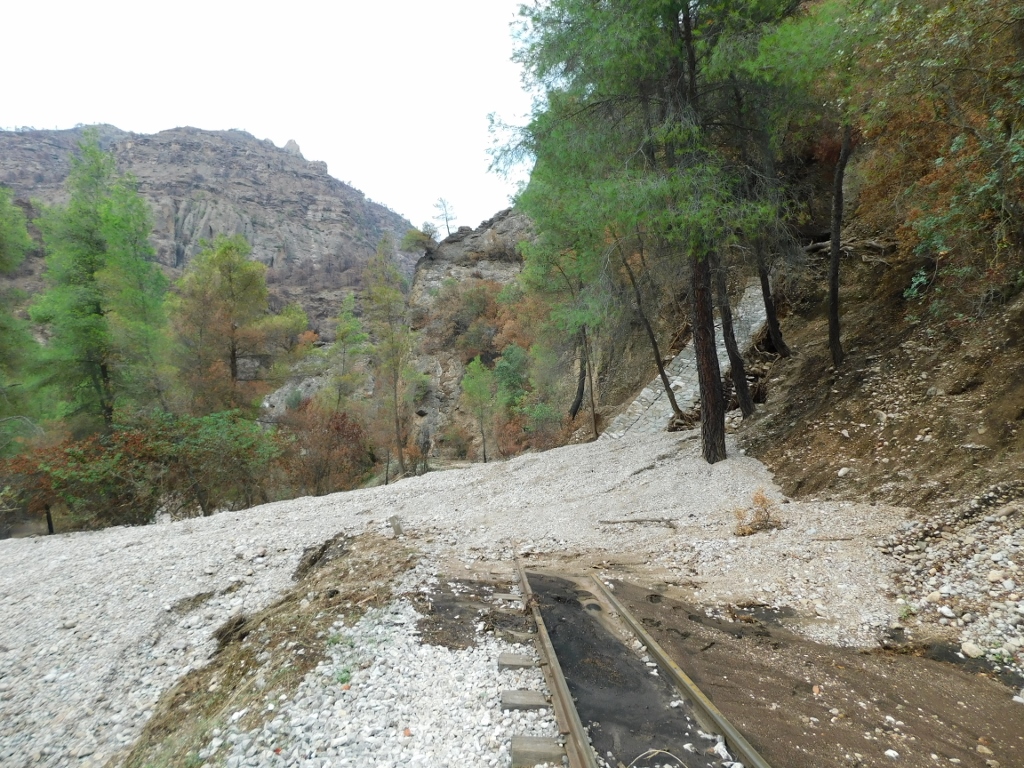 Kalavryta - Diakopto railway track
In the next picture, a small amount of rocks covering the tracks can be seen, but what makes it especially interesting is how a large rocky part of the mountain appears to have been sliced as if a hot knife passed through butter, allowing the railway to be laid there.
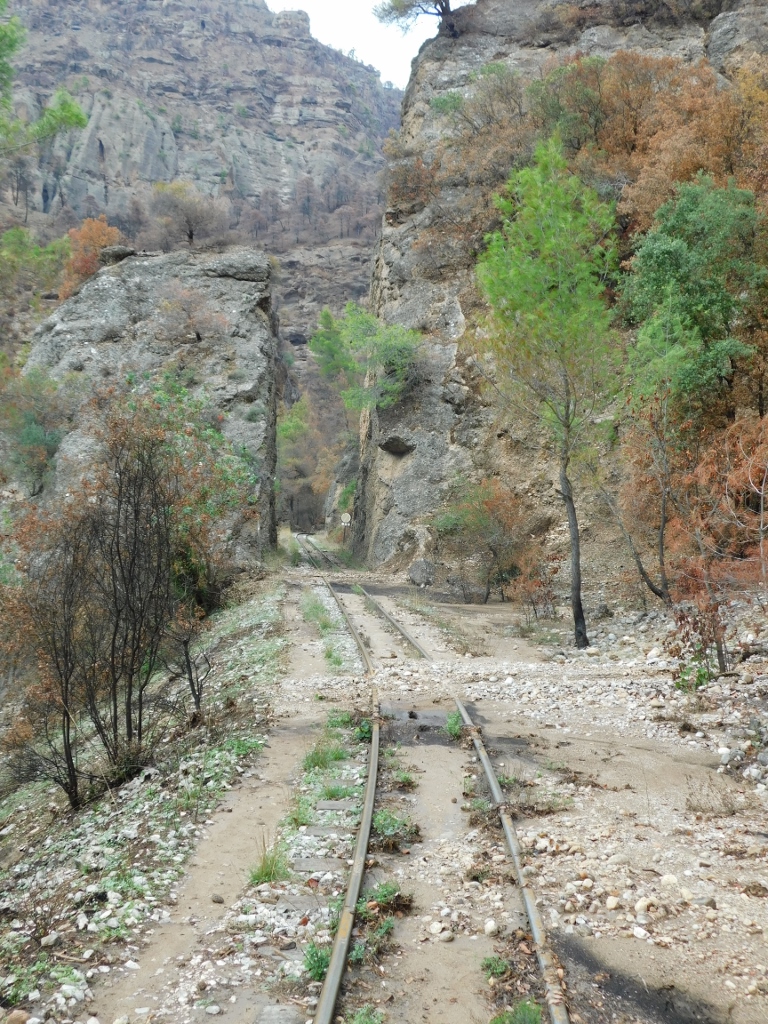 Kalavryta - Diakopto railway track
I had encountered landslides of rocks and soil over the tracks in the upper section as well, but here, about 3 km from Diakopto, the situation was particularly complex. I thought about how much time it would take to clear all the debris, stabilise and reinforce the slopes, and get the railway operational again. Perhaps because I don't have a background in construction, but still, to me, it seemed like a task that would take at least a few months.
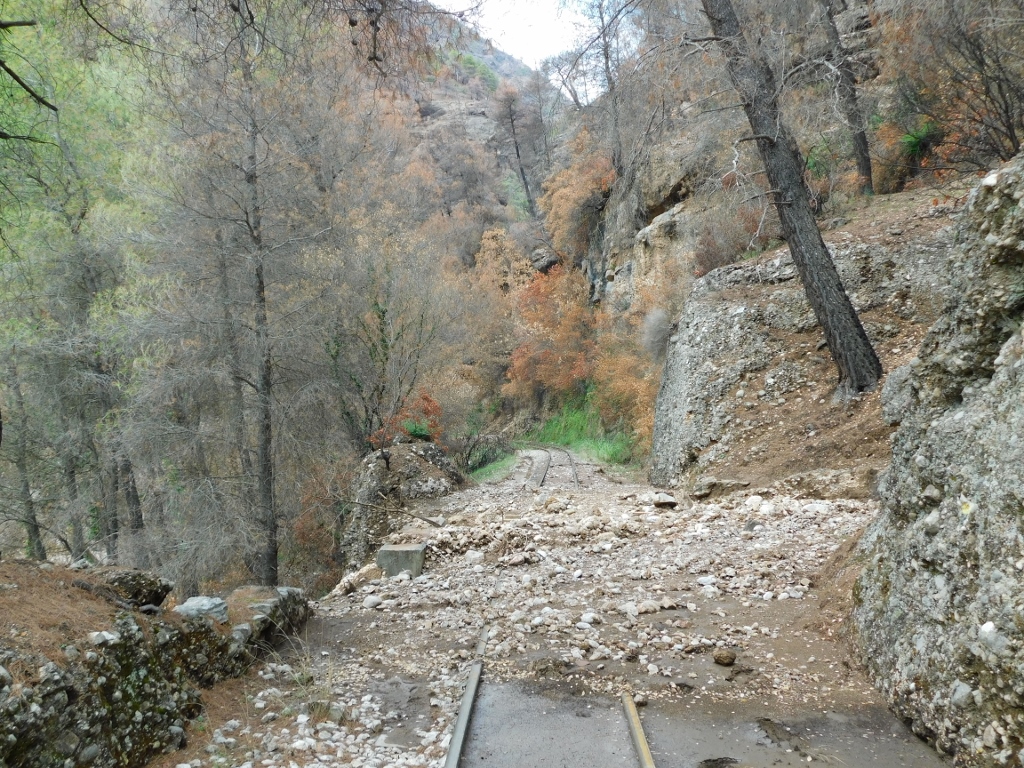 Kalavryta - Diakopto railway track
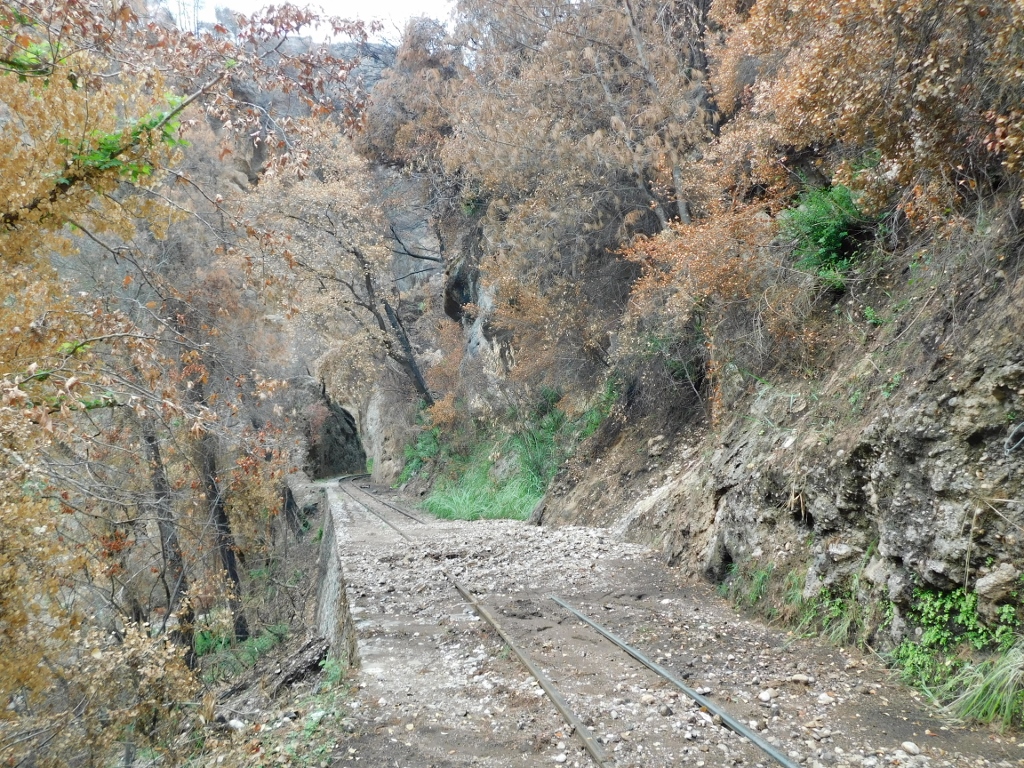 Kalavryta - Diakopto railway track
Although, despite the landslides and the burnt trees, I still enjoyed the overall experience and the entire adventure, I was now feeling quite tired, so I was eager to reach Diakopto and the hotel where I was staying. Luckily, there were occasional stretches with more space around the tracks, allowing me to walk faster.
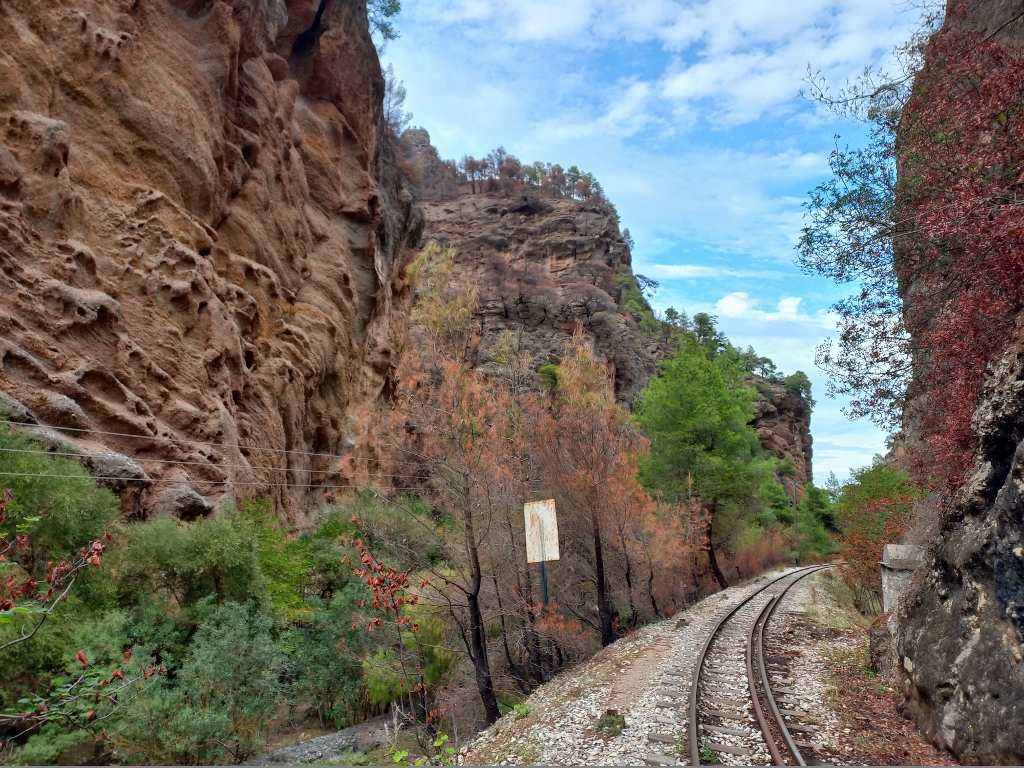 Kalavryta - Diakopto railway track
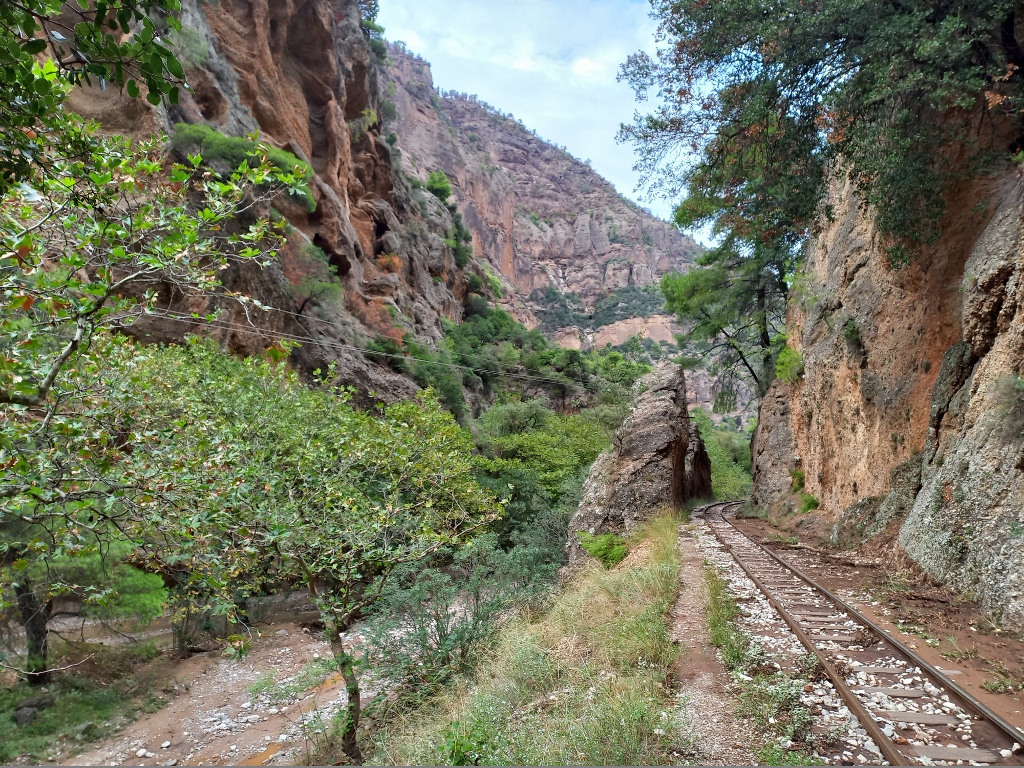 Kalavryta - Diakopto railway track
In the photo below, on the left side, next to the river, there is normally a good dirt road. This time, however, it was covered in mud and it was clear that in the past few days, the river had overflowed its banks wherever there was space for it to do so.
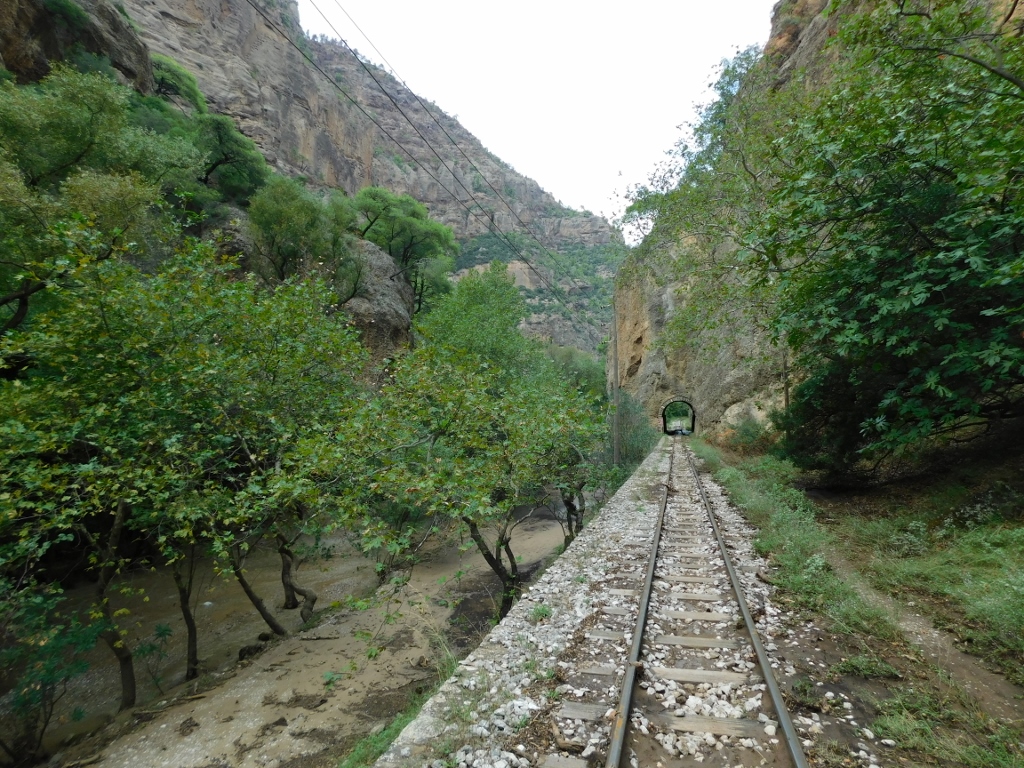 Kalavryta - Diakopto railway track
And then I came across a large landslide. Being careful not to step into the mud, I reached it and quickly crossed over, continuing on my way.
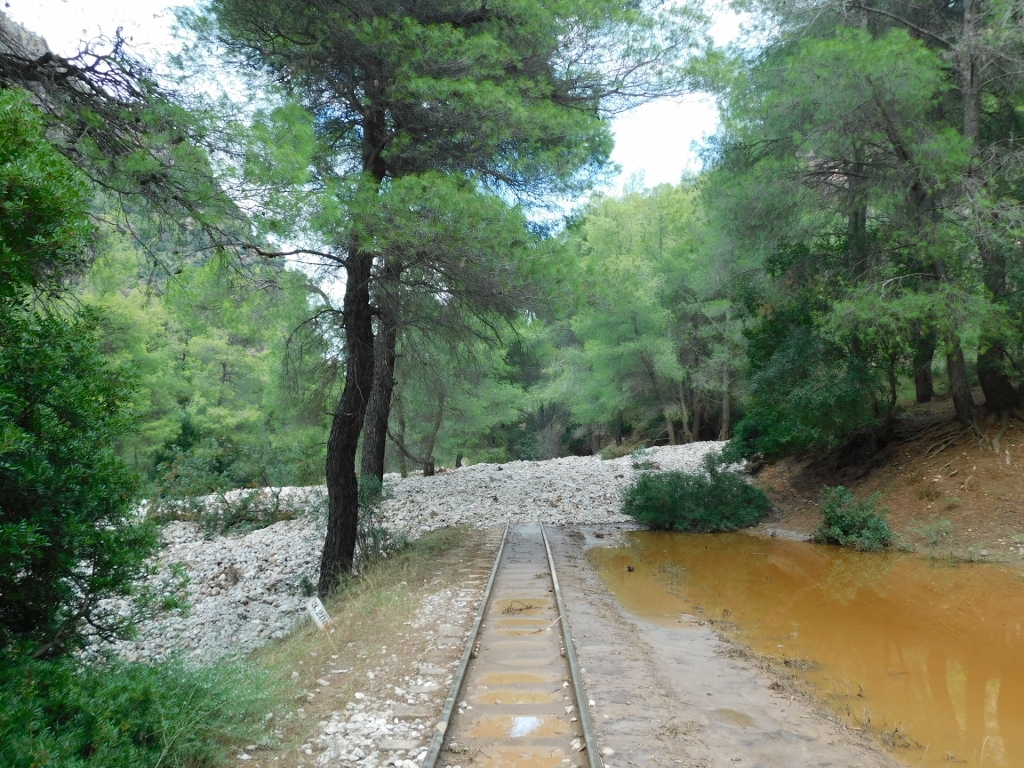 Kalavryta - Diakopto railway track
Just a hundred metres further, where the tracks curved, the gorge and the valley at its bottom widened a bit, and I knew that Diakopto was now very close.
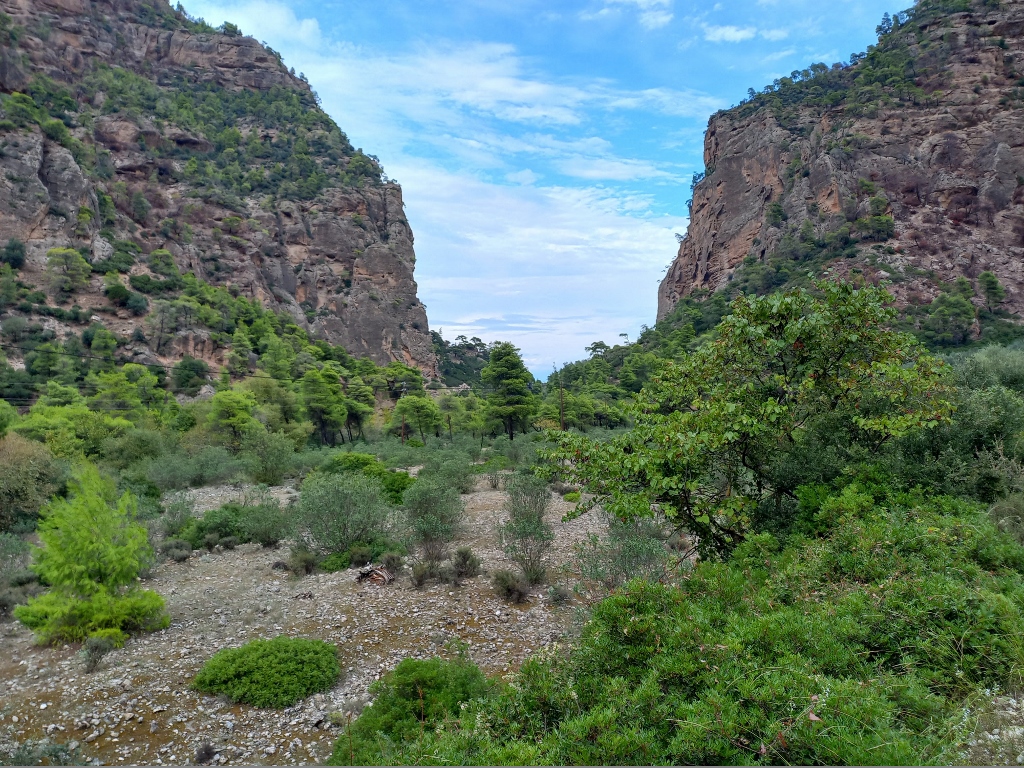 Kalavryta - Diakopto railway track
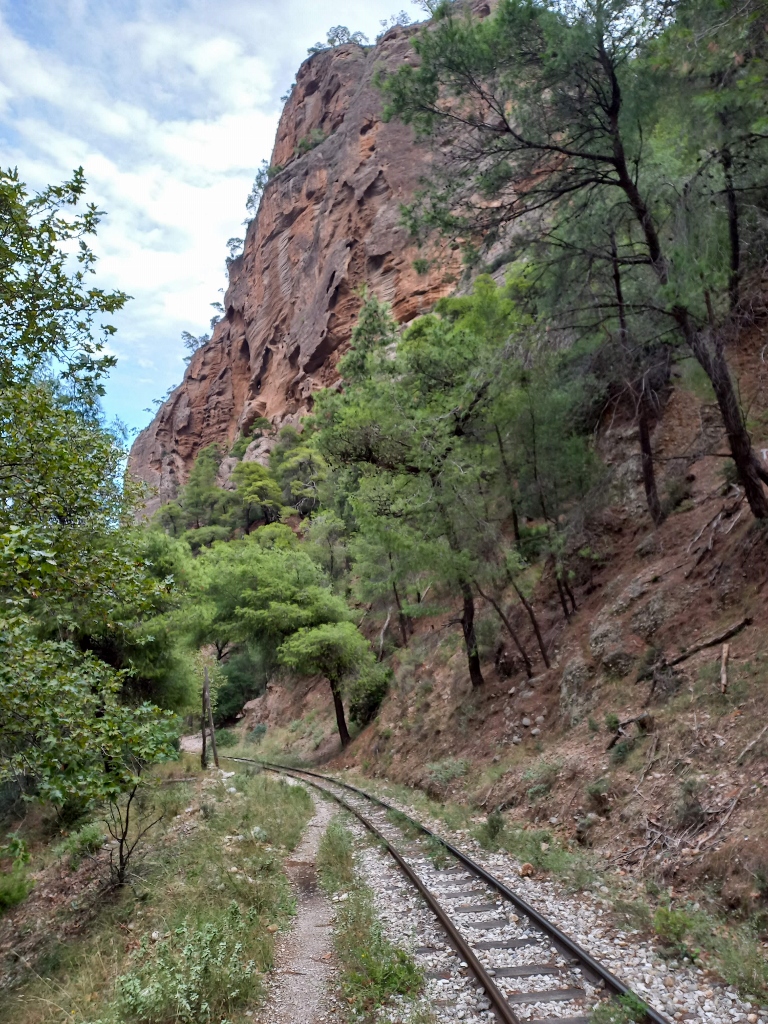 Kalavryta - Diakopto railway track
And then, as if nature wanted to remind everybody that it is the master, almost at the very exit from the gorge, I encountered the largest landslide – actually a full-fledged landslide with a huge amount of rocks and earth. For a moment, I hesitated, questioning whether all of it was stable enough, whether it had had enough time to settle (considering it had only happened a day or two earlier) and whether it was safe to walk on. I also considered my options – whether it would be better to go back to the Microchelidou railway station and try to reach civilisation via the dirt roads, or even descend to the river and check the situation there. In the end, I decided to go straight over the pile of earth and rocks. I have to admit, it wasn’t pleasant at all and I felt considerable stress. With maximum concentration, carefully observing possible ways to walk over, where the trees seemed stable, and watching where I stepped, I climbed over it and, as quickly as I could, crossed those hundred metres or so to finally make it safely down to the other side.
Maybe it wasn't as dangerous as I had imagined it could be, but I was really relieved once I passed that part. On the other hand, I was so stressed that I completely forgot to take photos of it. Of course, I wouldn't have taken any pictures while I was on that pile of rocks and earth, but not even right before or right after did it occur to me to pull out my phone or camera from the pouch around my waist.
It wasn't until I had moved a bit farther away that I remembered it wouldn't hurt to capture it after all. I was too lazy to go back, but my camera and its zoom lens came in handy for that.
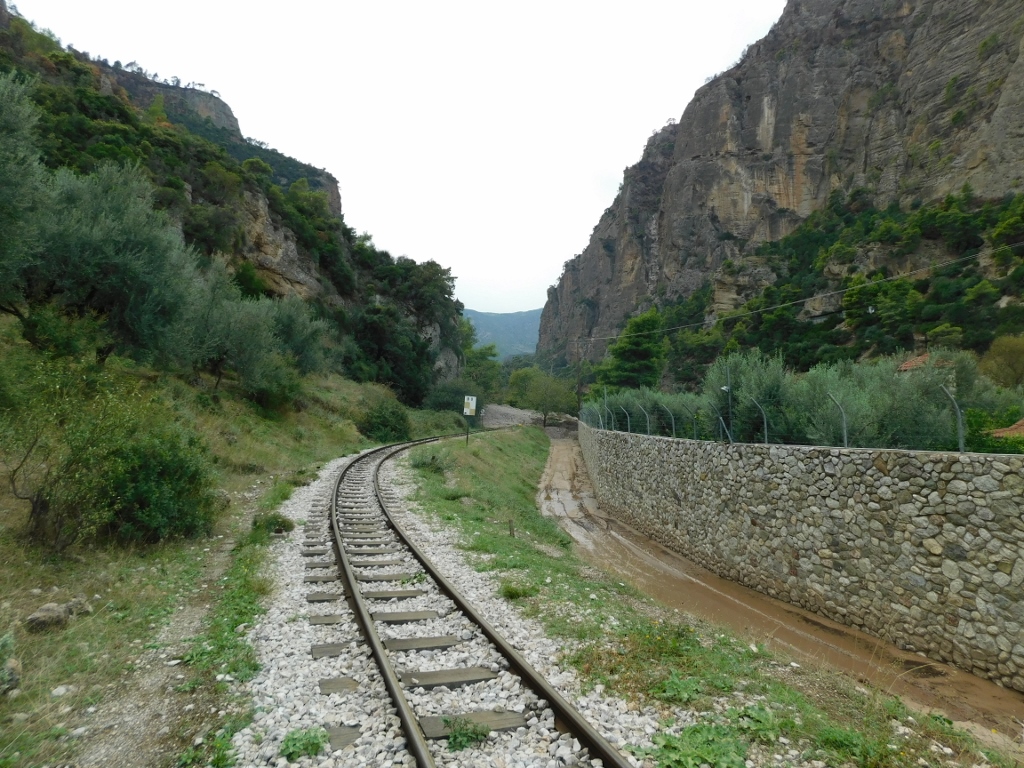 Kalavryta - Diakopto railway track
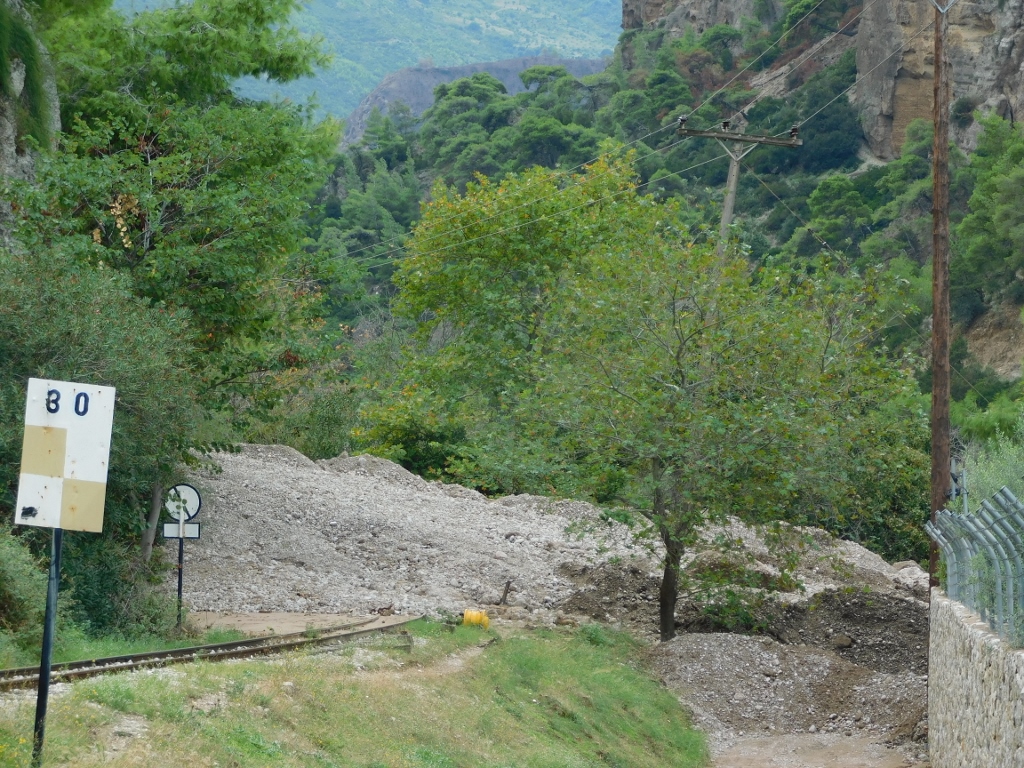 Rocks and soil over the Kalavryta - Diakopto railway track
Soon, I reached the streets of Diakopto and now I had about 1.5 km left to the hotel. It seemed like the hardest part. Perhaps because it was relatively boring.
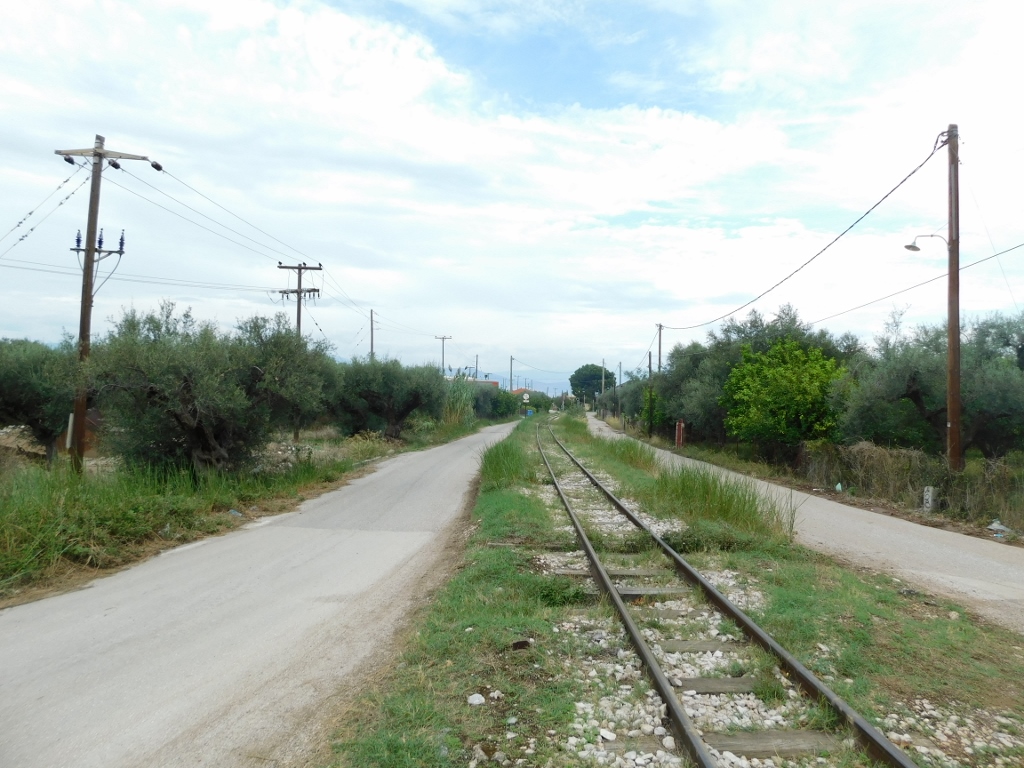 Entering Diakopto
When I arrived at the hotel, I first sat down to rest and have something refreshing to drink, then went to my room to take a shower and change. After that, I went for an early dinner and it was a lovely experience.
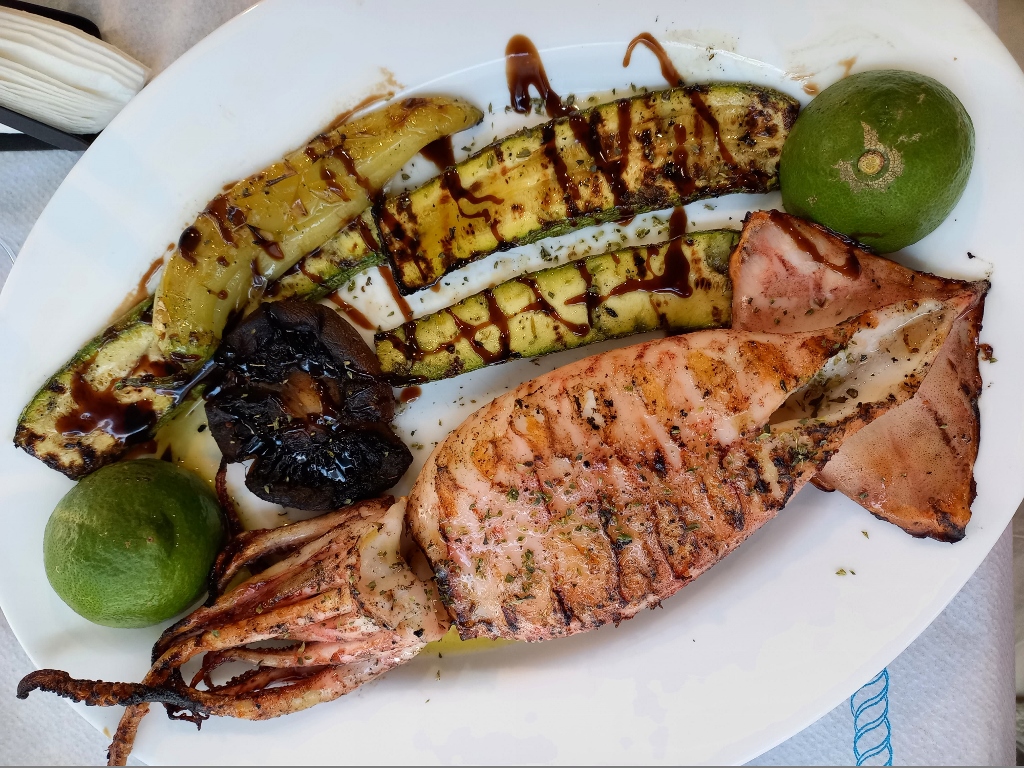 Early dinner in Diakopto
While I was sitting there, a cat came over to me and partially lay down across my feet. It must have sensed the fatigue that had built up. I'm grateful to the cat.
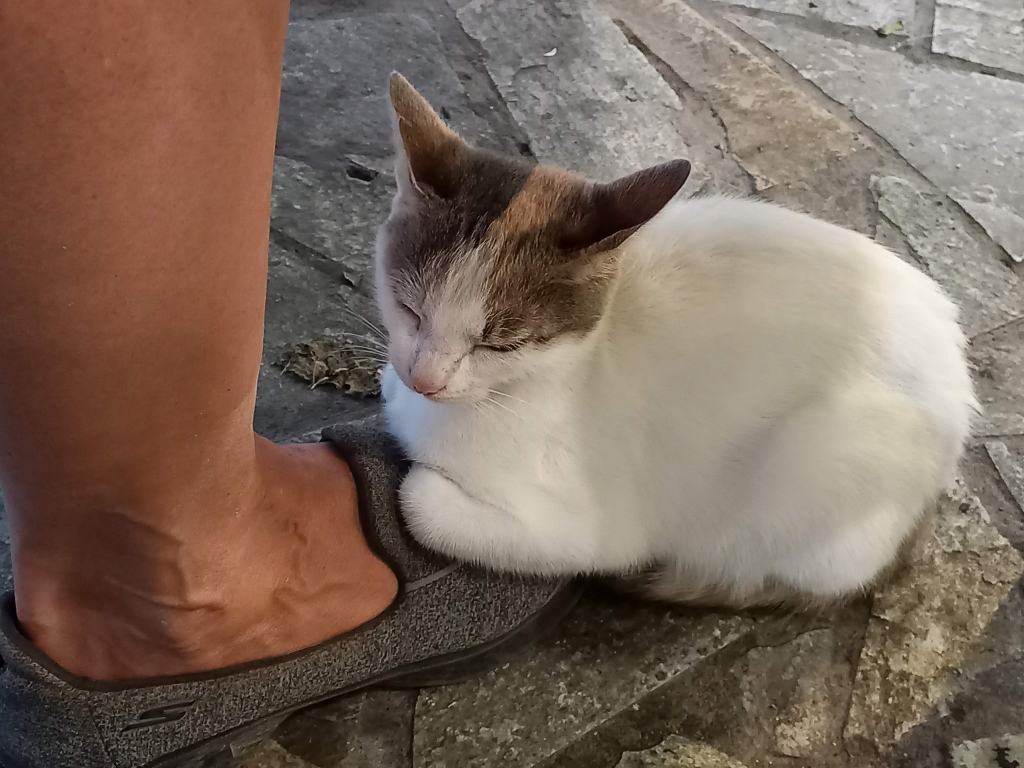 Getting the fatigue out of my feet
The pedometer on my phone isn't an exact science, but I can report that I set my personal record that day (since I’ve had this app on my phone) – 34,572 steps, which is almost 25 km. Not bad at all.
However, much more important than this was my exhilaration over what I had accomplished, despite the fatigue. Here’s a little reminder in the form of a video showing some parts of the gorge.
A little later, I also took a shot of the Moon slowly rising in the sky. Very satisfied with what I had accomplished on this day, and also filled with wonderful emotions and brimming with inspiring visual impressions, I was able to retire early for bed. I certainly needed some rest.
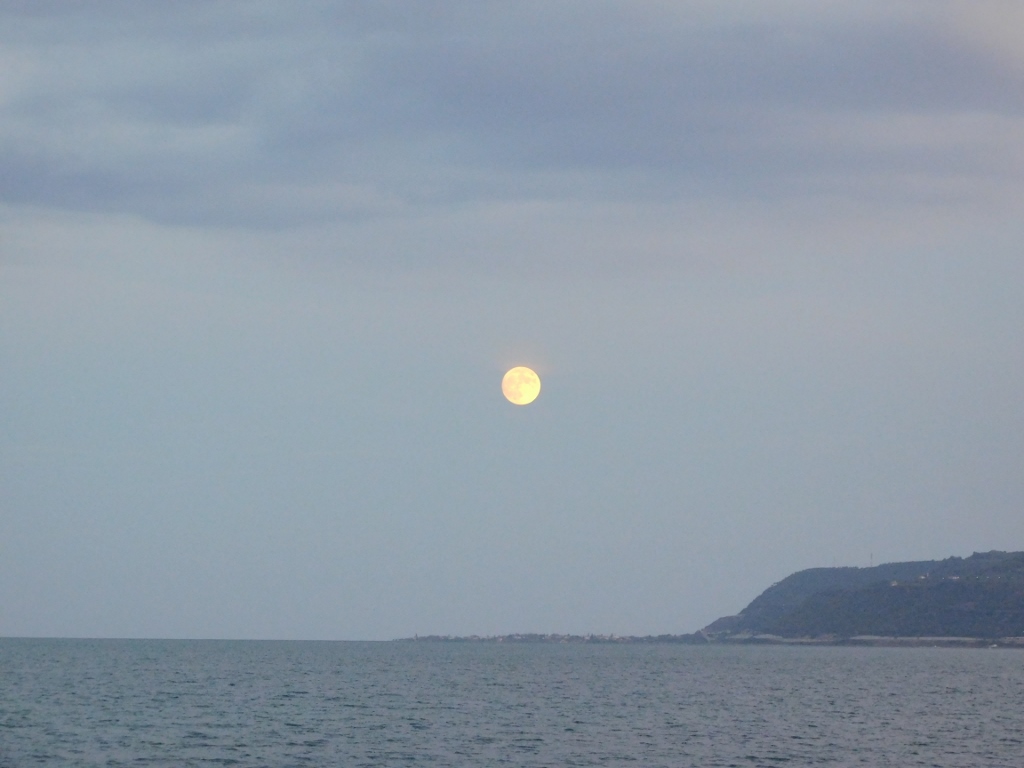 Moon over the Gulf of Corinth