For a number of years, I have been thinking about visiting Norway. I must admit that I have one specific trip in mind for this country, but that will still have to wait. For now, I have decided that my first visit to Norway will last a week, with the idea of spending that time exploring the capital city and then various parts of the southern regions of the country. Here is the map showing where I ended up travelling:
To start with, I took a late flight from Belgrade to Oslo and then I arrived at Oslo's Central Station by express train. From there, I walked to the flat where I had rented a room.
Norway is known as one of the most expensive countries in Europe, so I decided to "save" a bit by booking just a room within a flat. However, I must admit that the hosts won me over with the location of their dwelling – just a dozen-minute walk from the city's main train station. On the other hand, both the hosts and the flat were great, so I was more than happy with my choice.
Oslo is considered a very safe city, so there was no reason to worry about walking alone on the streets around midnight. After all, they were mostly empty and although I was eager to get to bed, I stopped at a few spots to photograph Oslo at night. I figured I wouldn’t have another chance to see the city in that light, which turned out to be a completely accurate assumption.
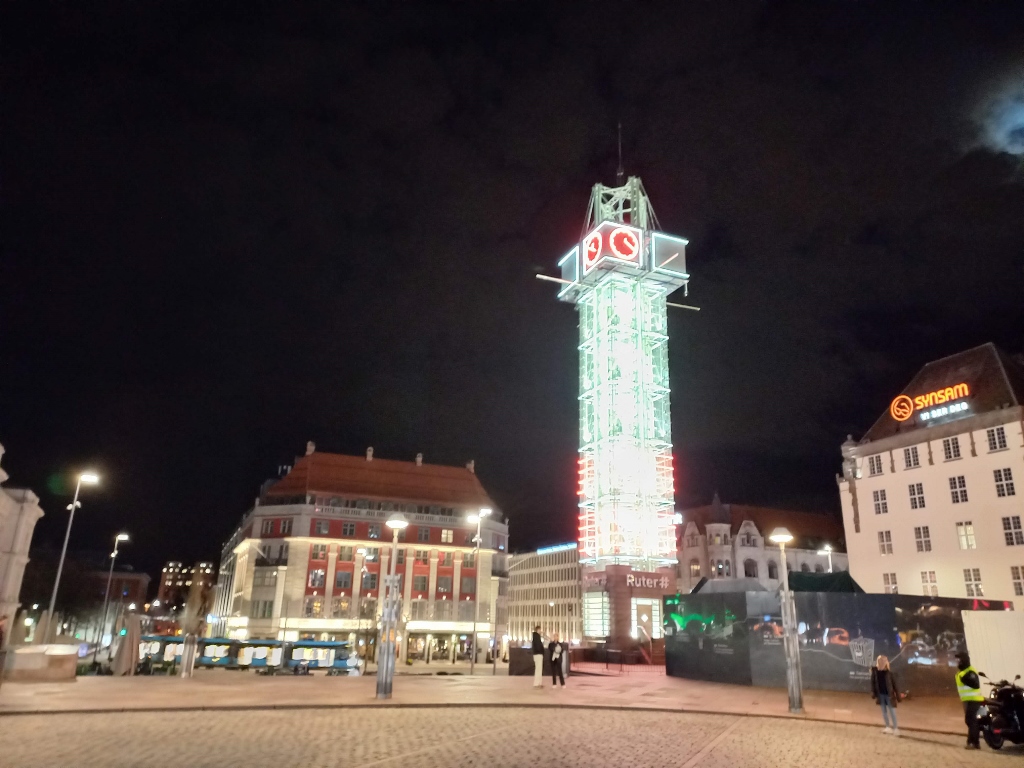 Oslo at night
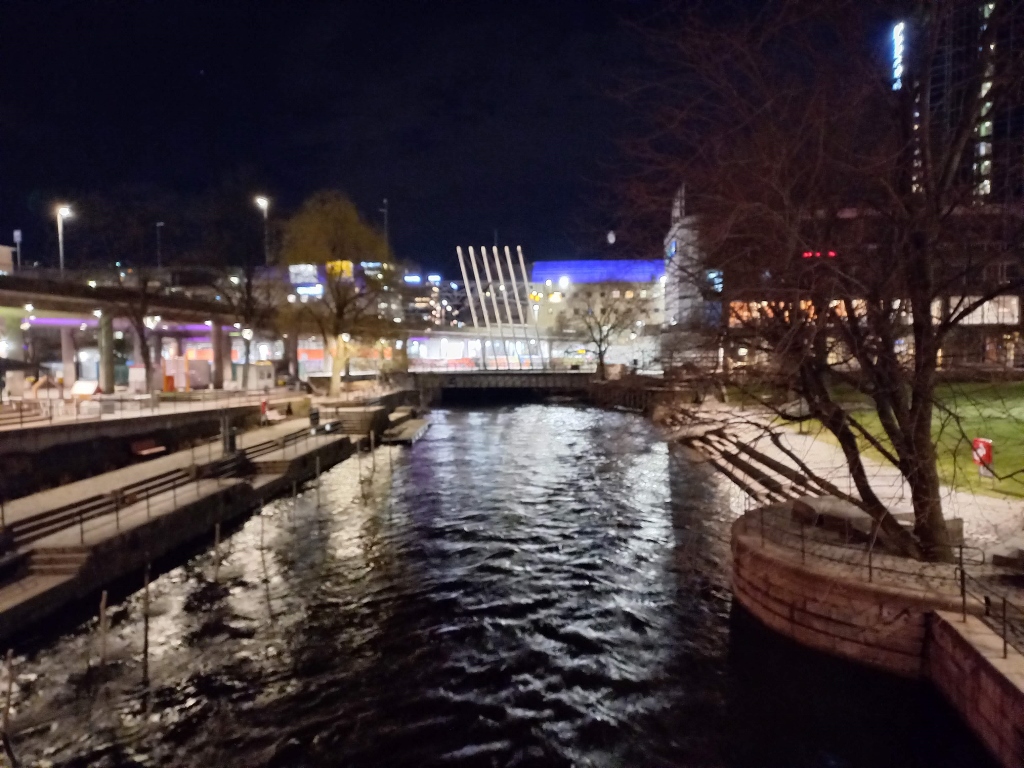 Oslo at night
The next day, after a good night's sleep, I first had a pleasant chat with one of the hosts who was working from home that day. Then I made coffee and went through my morning "rituals" before getting ready and heading out for a walk around Oslo and its surroundings.
I had already made a plan back at home about what I wanted to see and visit during this week, so it was time to get started. To begin with, I familiarised myself with the city. I first returned to the river I had crossed the previous evening and that flows through Oslo. The river is called the Akerselva.
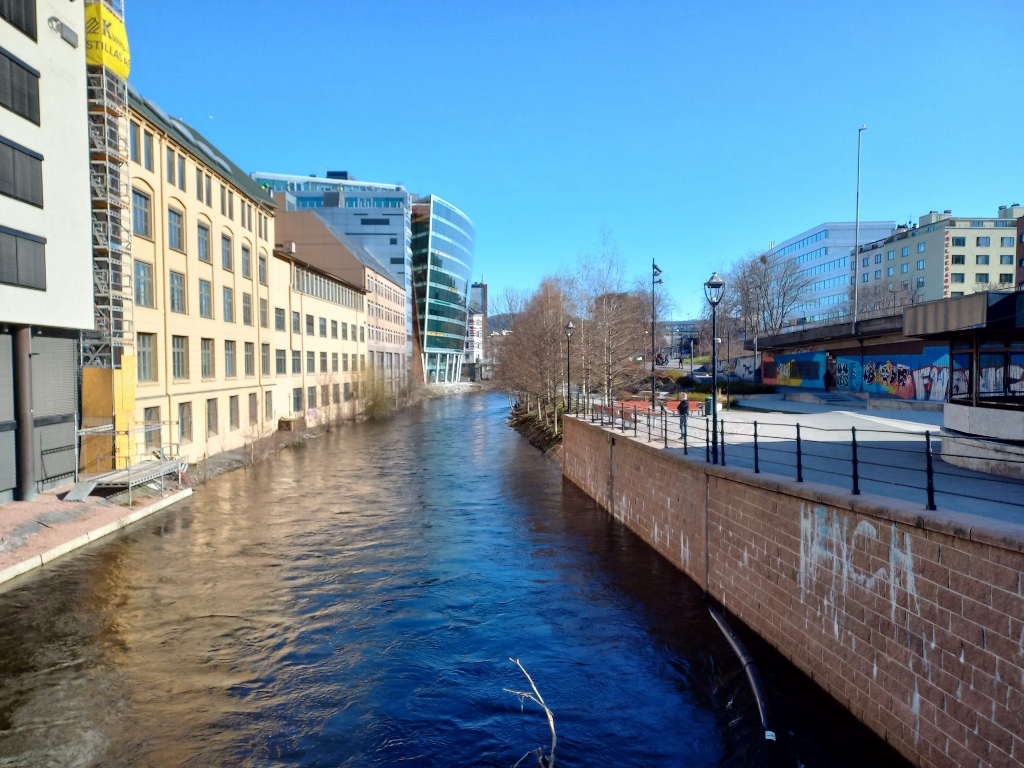 The Akerselva
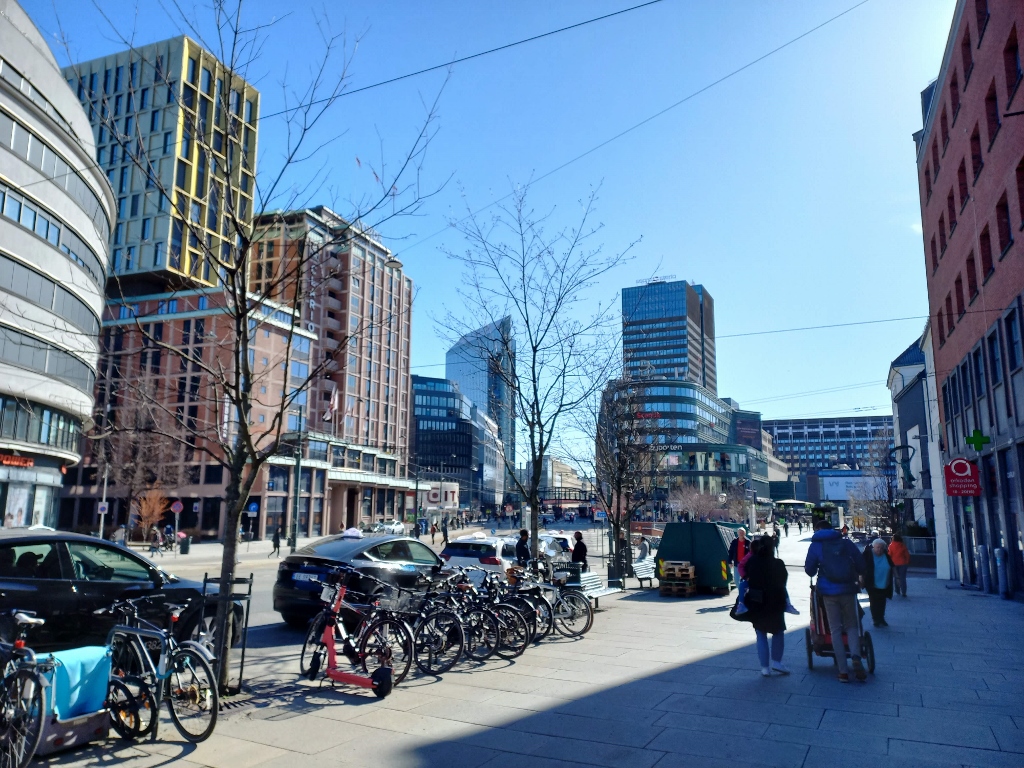
Here, I also passed through a very modern part of Oslo near the train station.
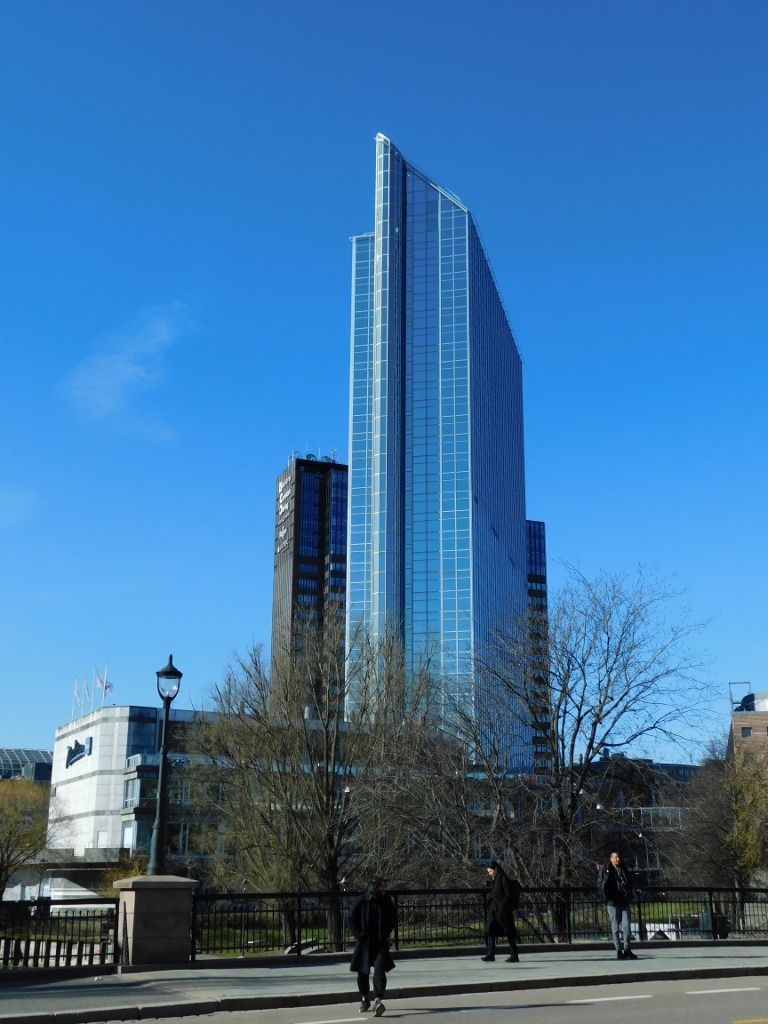 Oslo, a detail
 Oslo, a detail
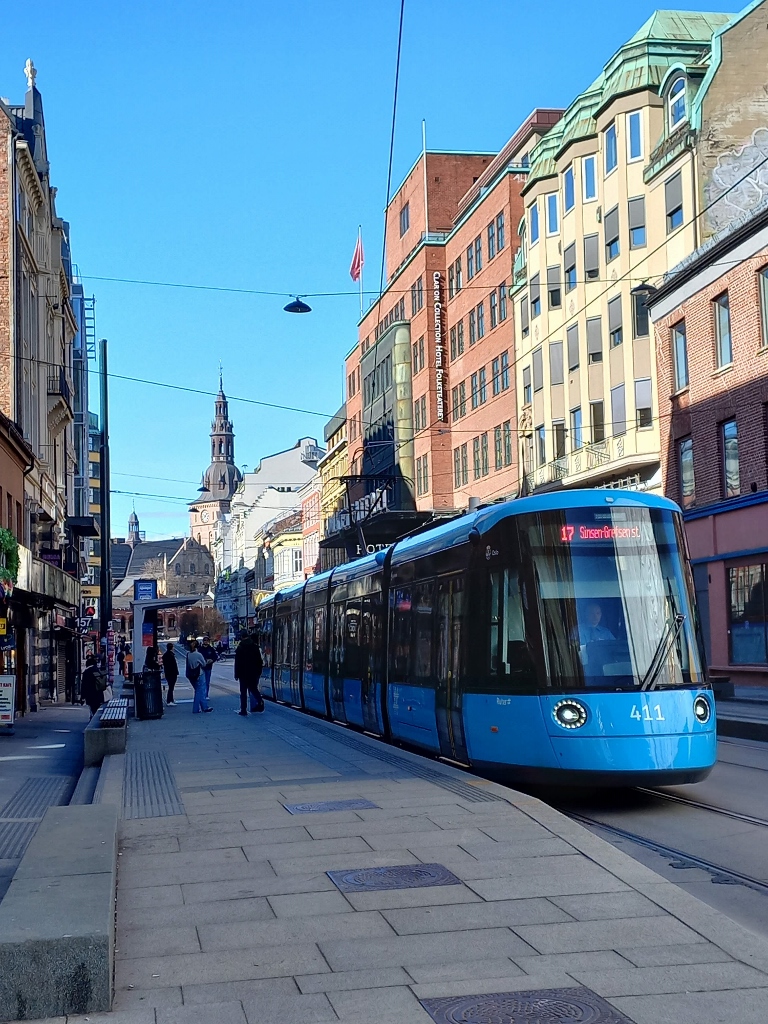
Although numerous bicycles may be seen in Oslo, the situation isn’t quite like in Denmark and Copenhagen. In addition, the city also has a very well-developed public transportation system.
 Oslo, a detail
I wasn’t exactly wandering aimlessly here, as I was actually a woman on a mission with a specific task to complete. As I’ve mentioned before, I really enjoy coming up with a task for myself in a foreign city that isn’t just typical tourist sightseeing. It makes me feel more like I’m a local. That was the case in Oslo as well.
I had a situation similar to the one I had in Bern (see: https://www.svudapodji.com/en/fgs-6/). Several years ago, I had bought some Norwegian kroner in Belgrade, apparently with the idea and hope that I would one day travel to Norway. Time passed, I didn’t travel to Norway, while those banknotes were withdrawn from circulation, so they could no longer be used for payments. The only thing to do now was to exchange them for new banknotes at the central bank of Norway (Norges Bank). So, my task for that morning was first to go to the bank to take care of that and then continue on.
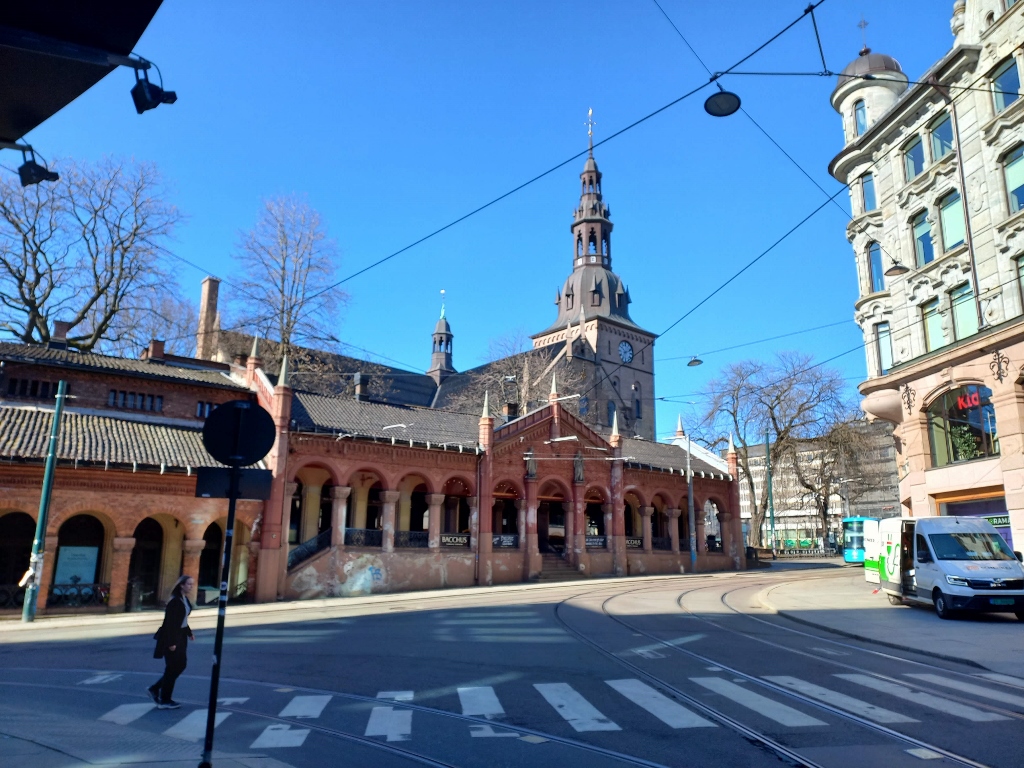
However, my path took me past the cathedral, so I thought it would be better to visit it right away rather than try to fit it into my schedule for the next day. That’s what I did.
 Oslo Cathedral
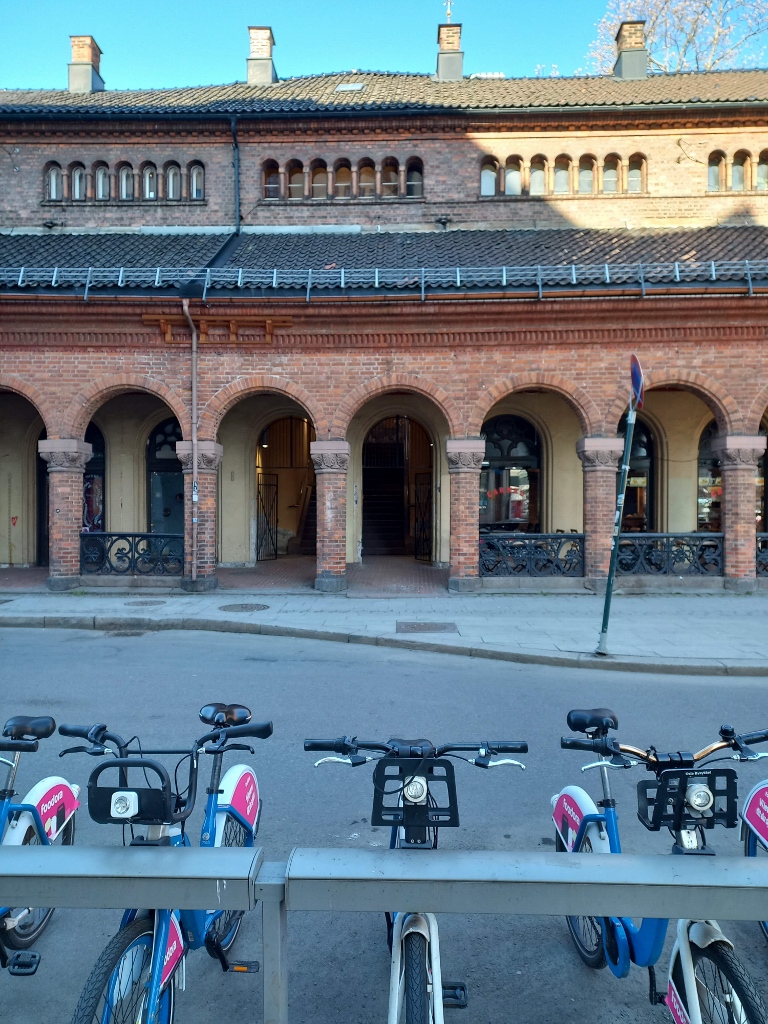
To start with, I approached the church from the "back." Since this part of Oslo has a gentle slope, the church was built on a flattened area, so the back part of the churchyard is one floor higher than the street running alongside it. Between 1841 and 1895, along the streets surrounding the churchyard on three sides, a building with arcades was constructed, as seen in the previous photo. At the back of this building, behind the arcades, there is a staircase leading up to the rear part of the churchyard. This building is called Basarene or Oslo Bazaars.
 Basarene in the street behind the Cathedral
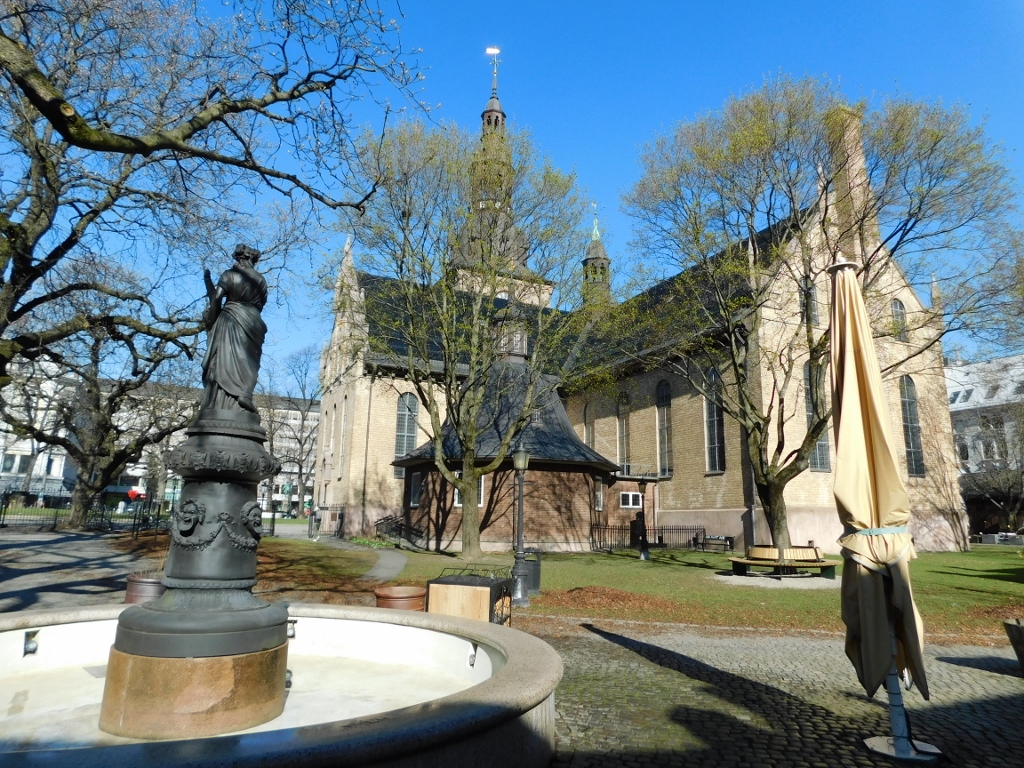 Churchyard and the Cathedral
Oslo Cathedral (Domkirken) was built in the second half of the 17th century and was originally dedicated to Our Saviour. It was extensively restored in the 19th century and again in 1950, so little remains of the original structure.
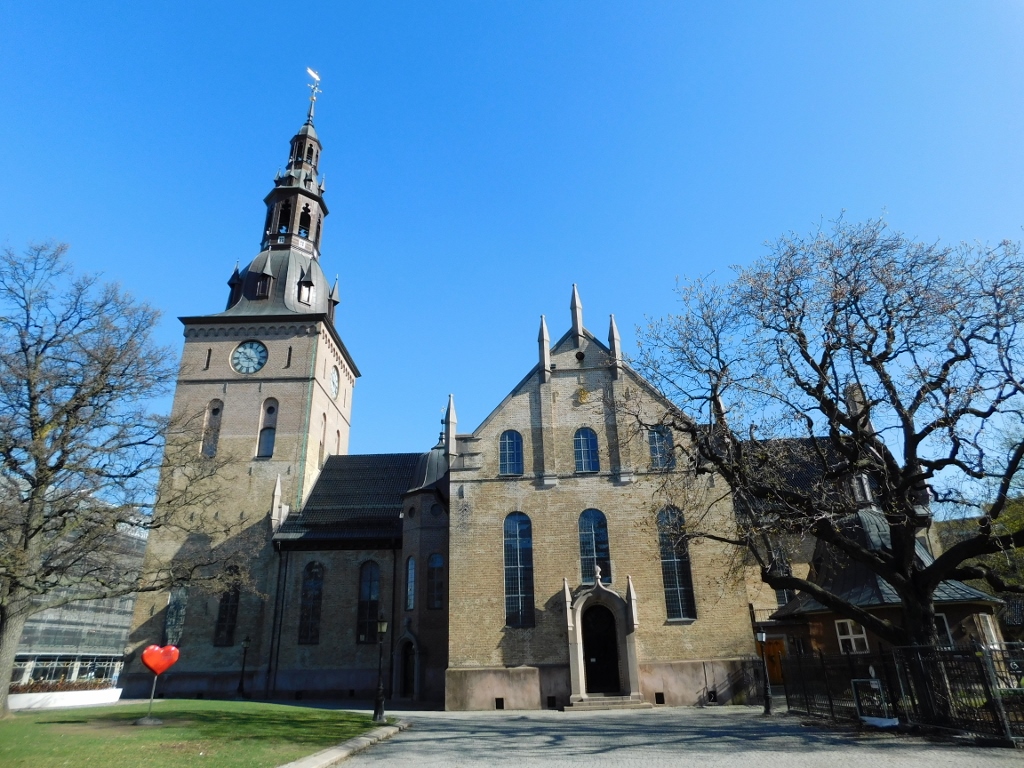 Oslo Cathedral
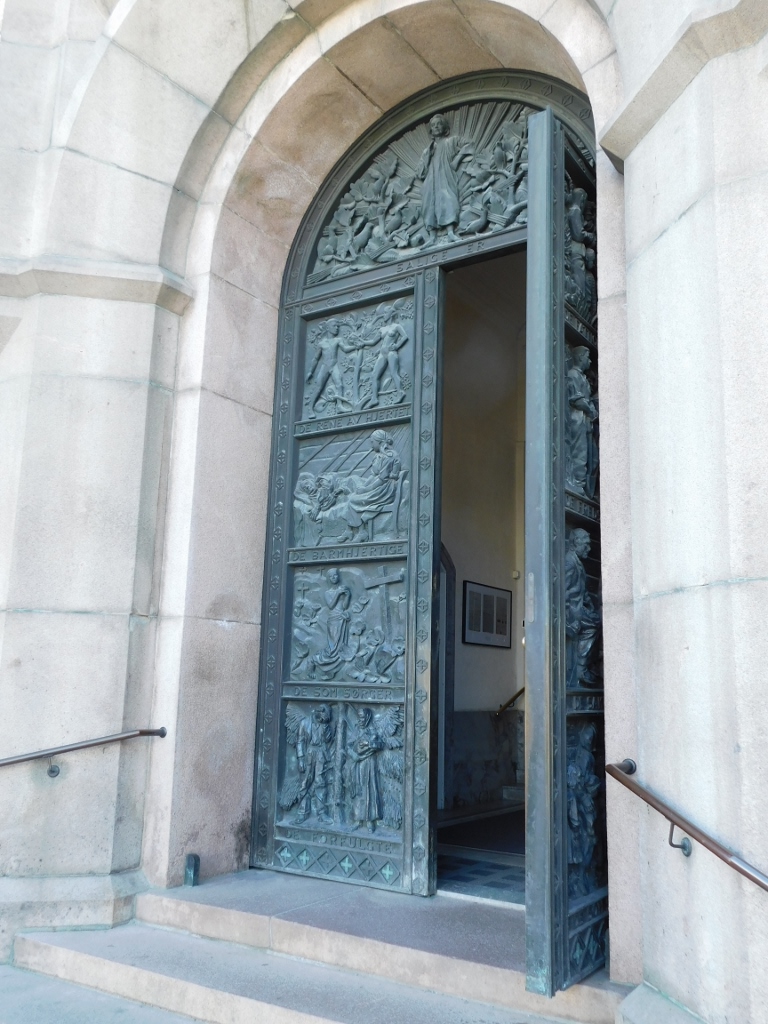 Oslo Cathedral, a detail
The cathedral is very beautiful and I found its ground plan particularly interesting. Excluding the area beneath the bell tower that you pass through to enter the church, the cathedral has a floor plan in the shape of a Greek cross (equal length of the arms), which is what caught my attention. Typically, the transept is shorter than the nave of the church, but that is not the case here.
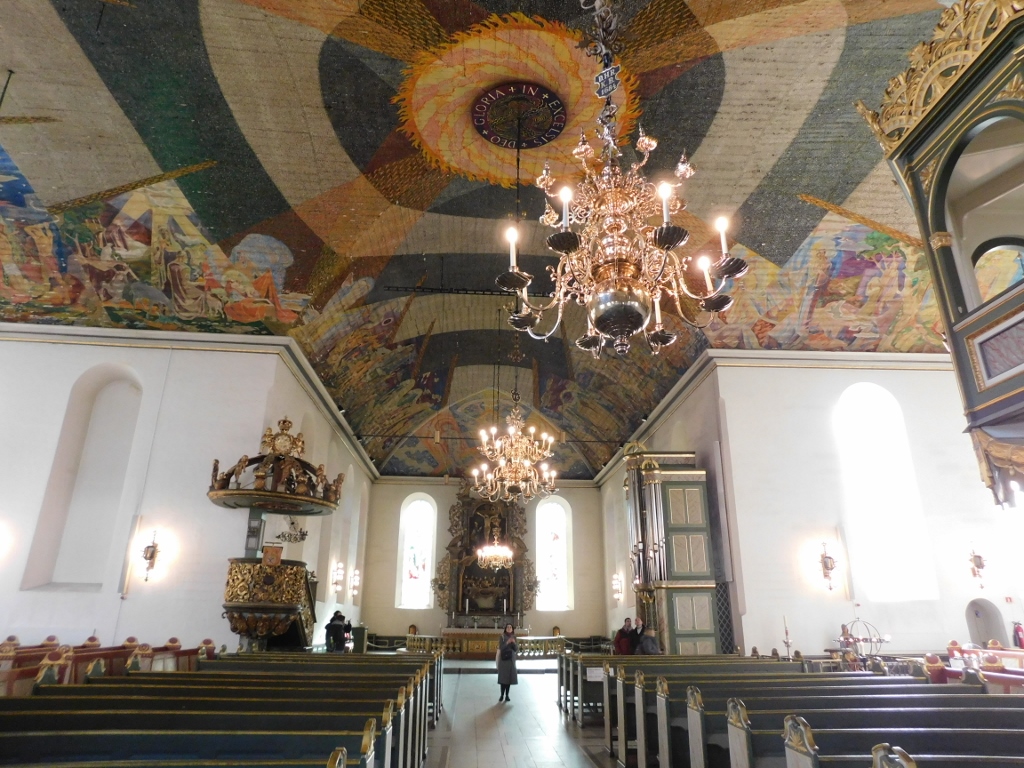 Oslo Cathedral, a detail
The ceiling is covered with frescoes that were created between 1936 and 1950.
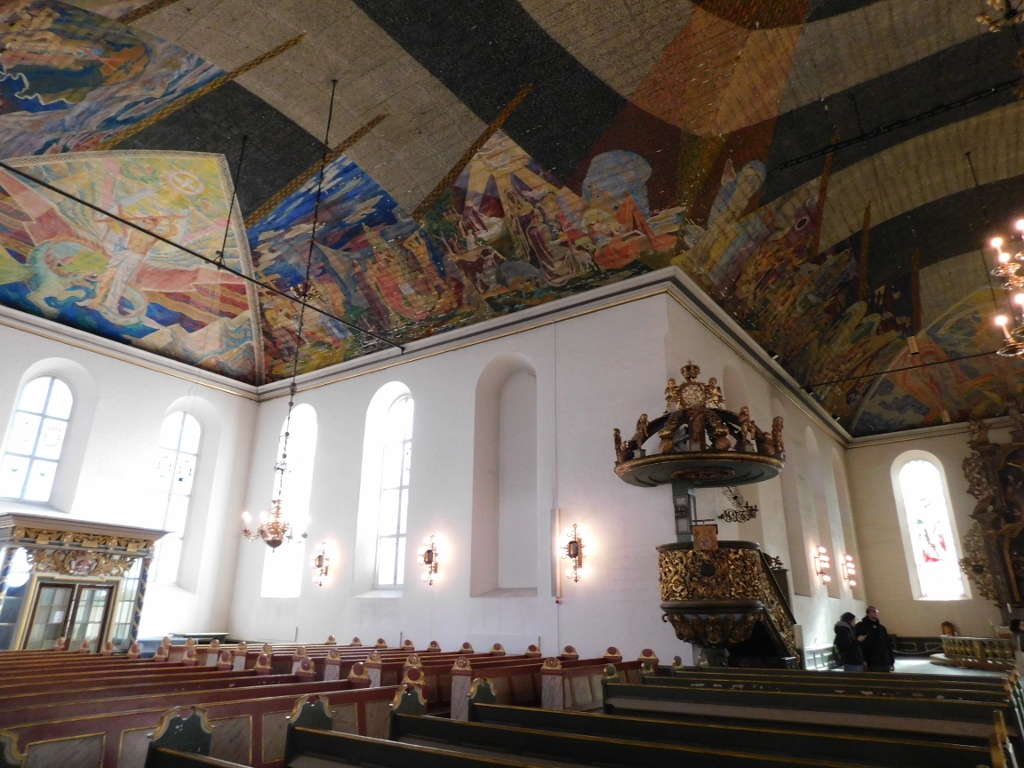 Oslo Cathedral, a detail
The only elements that have survived from the original edifice are the pulpit and the altar. Both were carved in the 17th century.
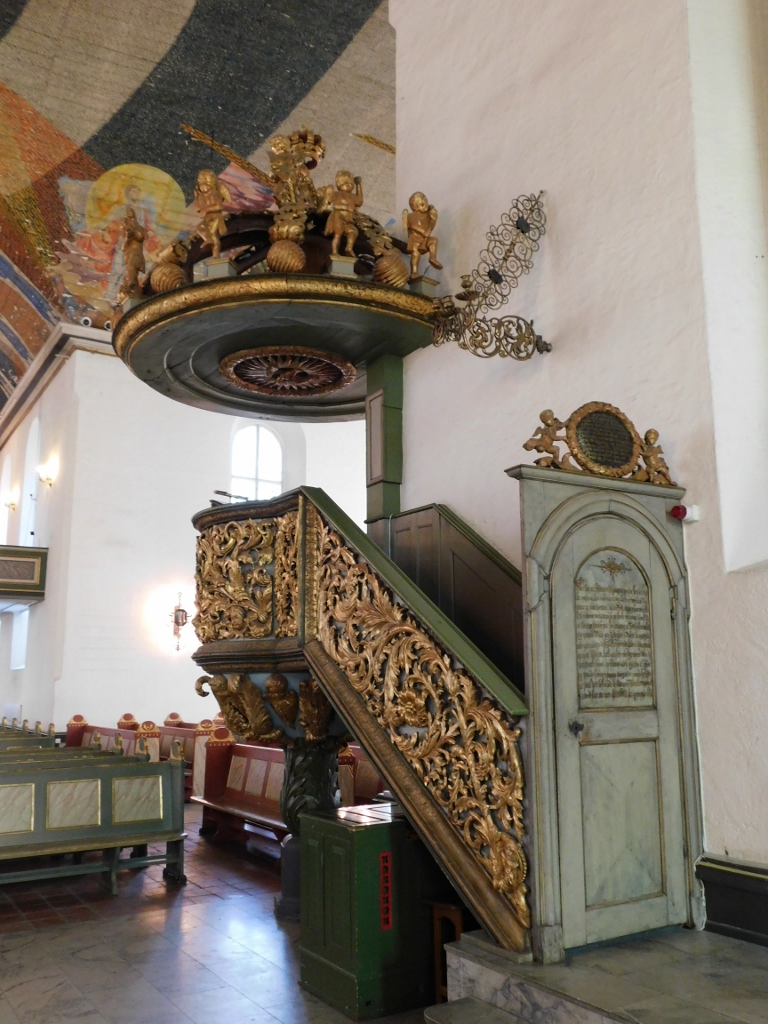 Oslo Cathedral, a detail
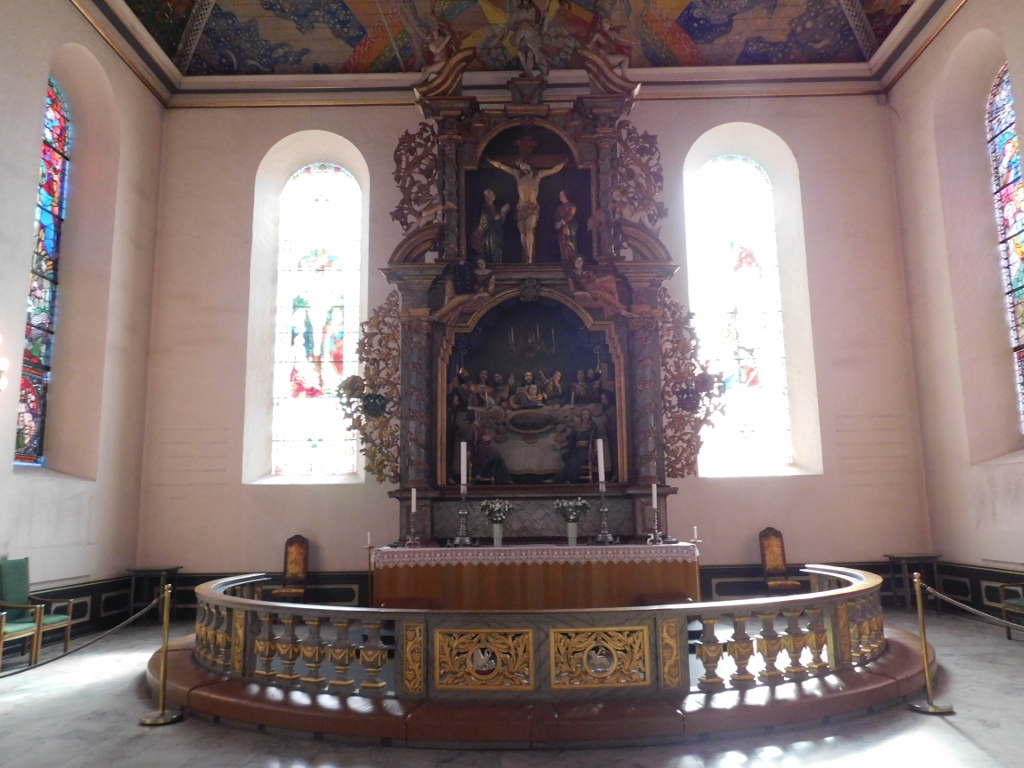 Oslo Cathedral, a detail
The organ, located above the entrance to the nave of the church, dates back to the 18th century.
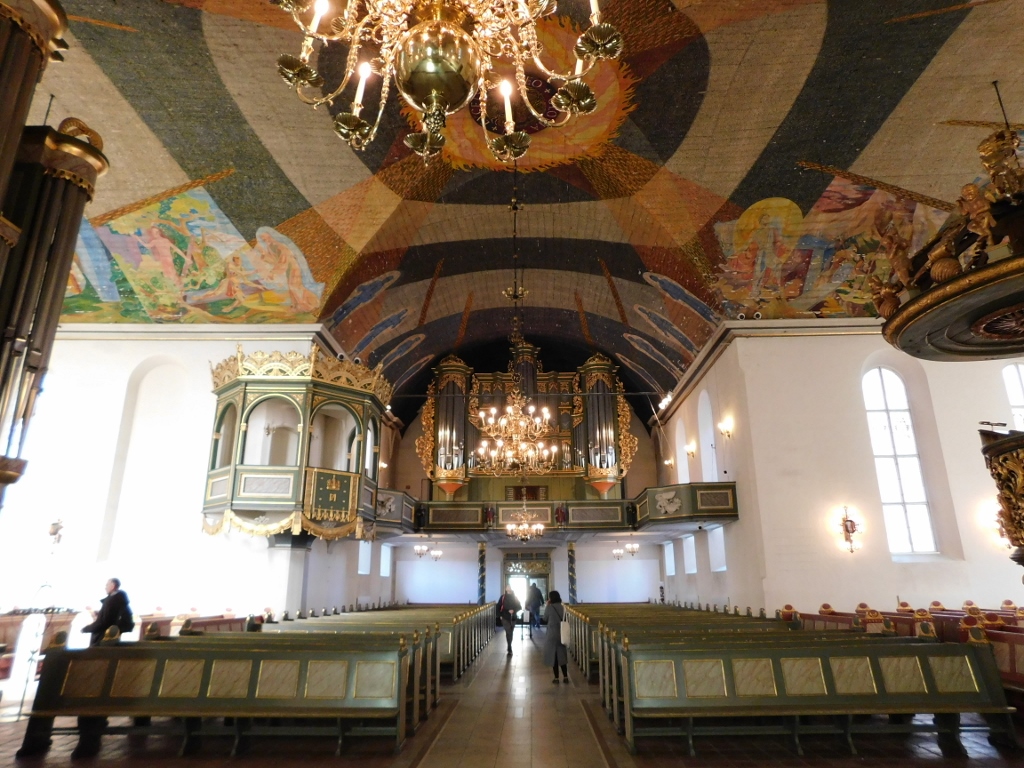 Oslo Cathedral, a detail
I didn’t stay here for long and then continued my walk towards the bank, while also getting to know some basic directions within the city. To start with, in front of the cathedral, there is the main square, known as Stortorvet.
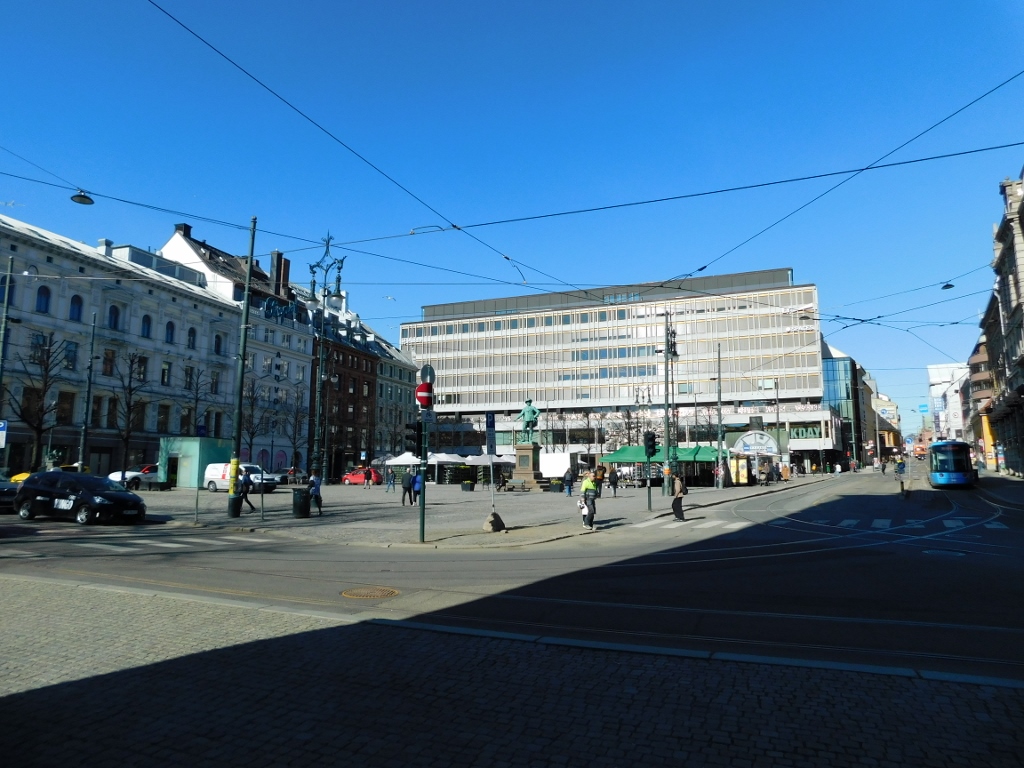 Stortorvet
A little further along, I stopped again to glance back at the cathedral first and also to look down Karl Johans gt., which is a pedestrian street in this area and one of the main commercial streets in the city.
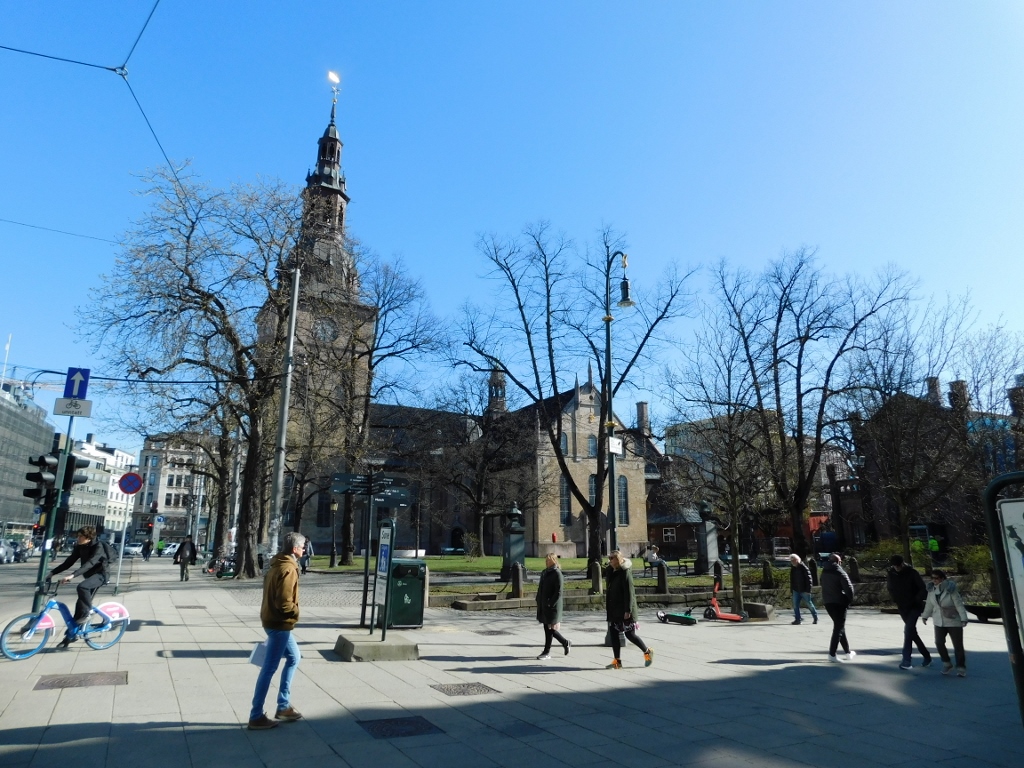 Oslo Cathedral
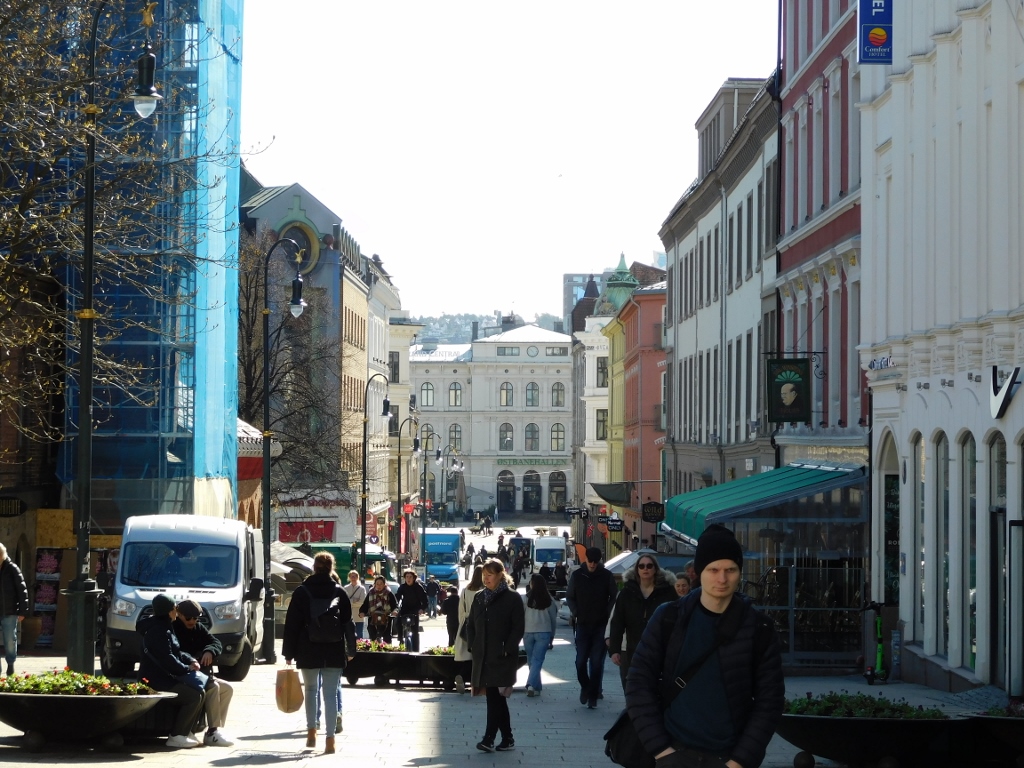 Karl Johans gt.
The street leading south from the cathedral is lined with beautiful buildings and I also began to notice the many cast sculptures I frequently encountered. In the end, my conclusion was that nowhere else had I seen more sculptures on city streets than in Oslo.
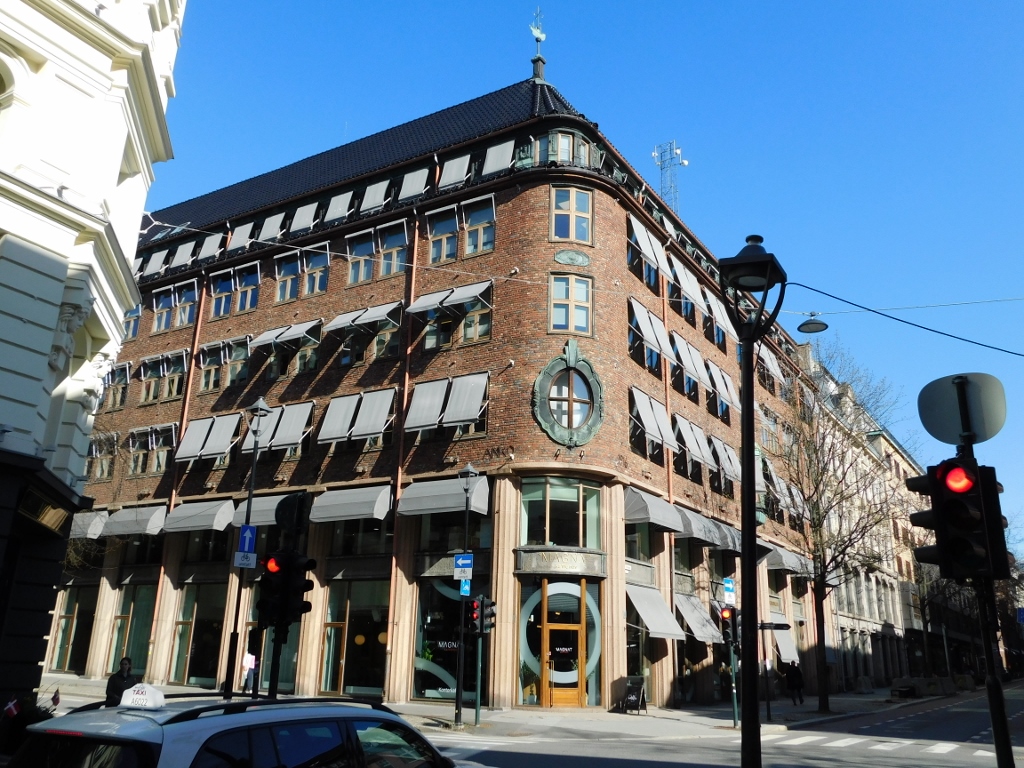 Oslo, a detail
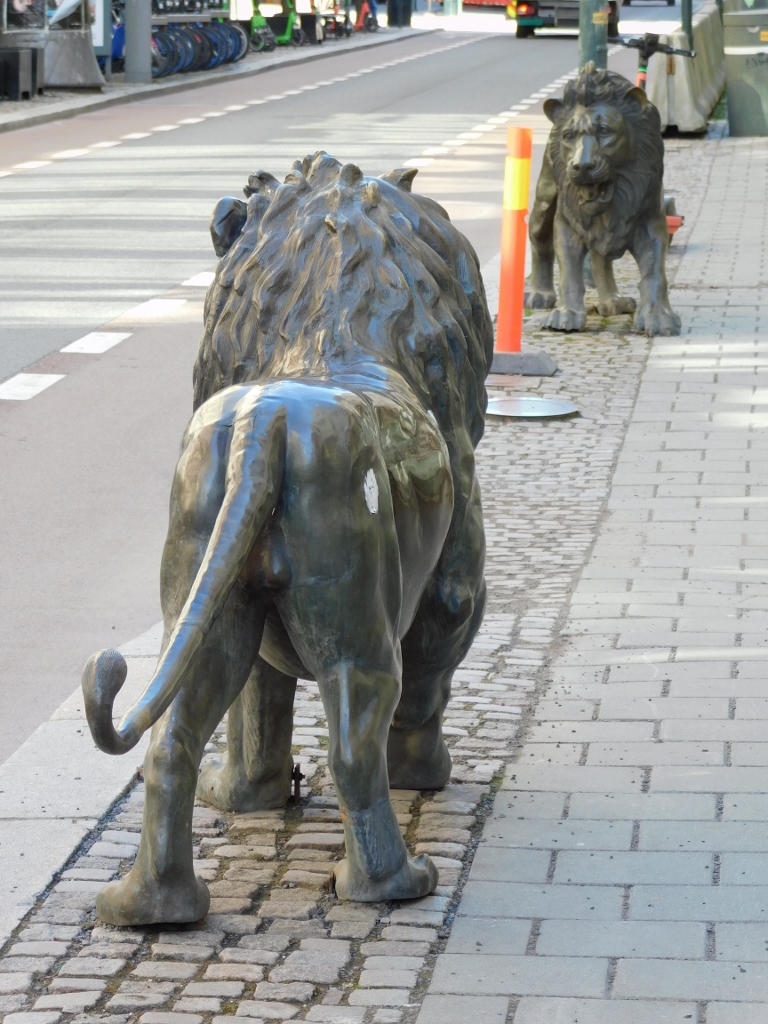 Oslo, a detail
Soon, I arrived at Norges Bank and quickly took care of what I needed to do. With the now usable banknotes, I happily exited onto the street and went to a bus stop, as my next destination was a bit far from the centre and required public transportation. I had already purchased a bus ticket from a store chain that sells them, using a credit card, so I was fully prepared. The bus arrived shortly and I boarded.
This entire time, from the moment I left the flat until I got on the bus, everything seemed to be going smoothly and effortlessly, including my orientation. I wondered if I might have lived here in a past life, making Oslo feel so familiar, or if it was just my travel experience and ability to adapt to new environments. Additionally, I had recently mastered using a geographic map on my phone when I don’t have internet access, while I’ve always been good with maps, so perhaps that was the secret.
Be as it may, I found a nice spot on the bus from where I could watch the parts of the city we were passing through. I was also intrigued when a group of children, apparently from a kindergarten, boarded at one of the stops accompanied with a couple of teachers. Since the seats were already occupied and there didn’t seem to be enough anyway, the teachers told the children to sit on the floor in a section where there was more space. I was surprised but just observed the whole situation. Norway is a very clean country, but the floors of their buses are as dirty as public transportation floors anywhere else. I think it's more about what is considered acceptable in the given society.
Along the way, I took a picture of a marina from the bus, as the sun was shining and I was near the sea. Specifically, Oslo is located at the end of the Oslofjord, which is a deep and narrow bay leading to the Skagerrak strait and further out to the North Sea.
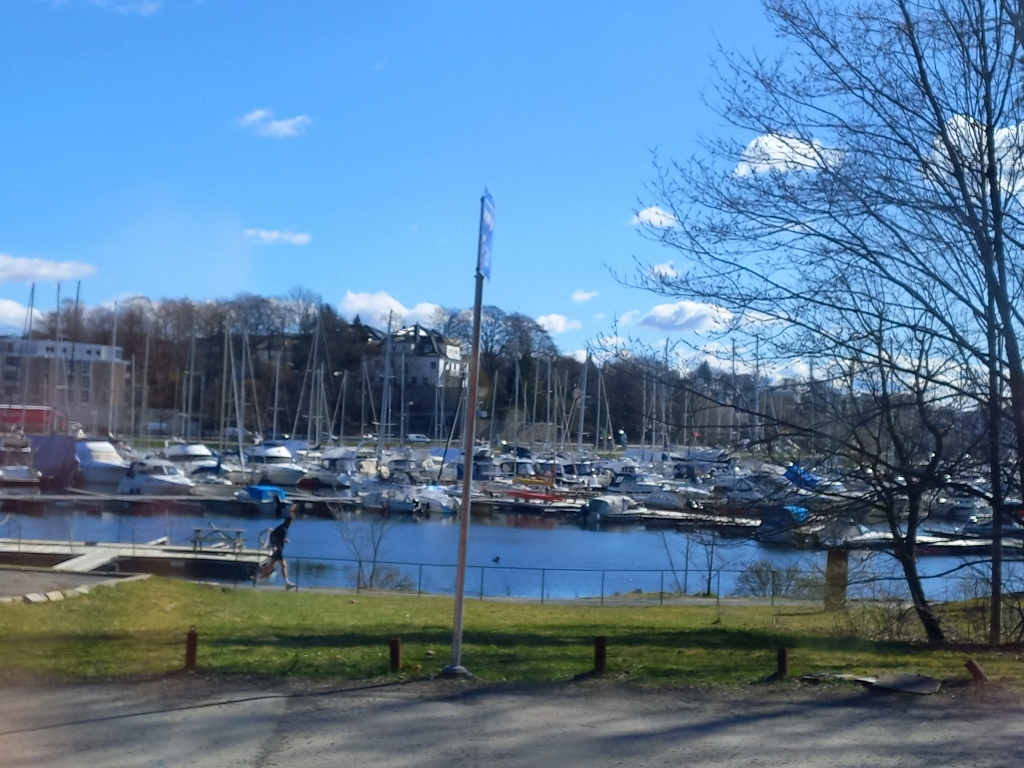 Oslo, a detail
After about a 20-minute ride, I got off at the Bygdøy Peninsula, in front of the Norwegian Museum of Cultural History (Norsk Folkemuseum). The museum is considered one of the best in the city, especially for those interested in this type of exhibits, which I am.
Although there are several indoor sections of the museum where exhibits are displayed, the core of the museum is its "collection" in the open air. This collection consists of buildings, primarily houses and outbuildings from agricultural farms, but also other types of structures – totalling 160 historical buildings on display.
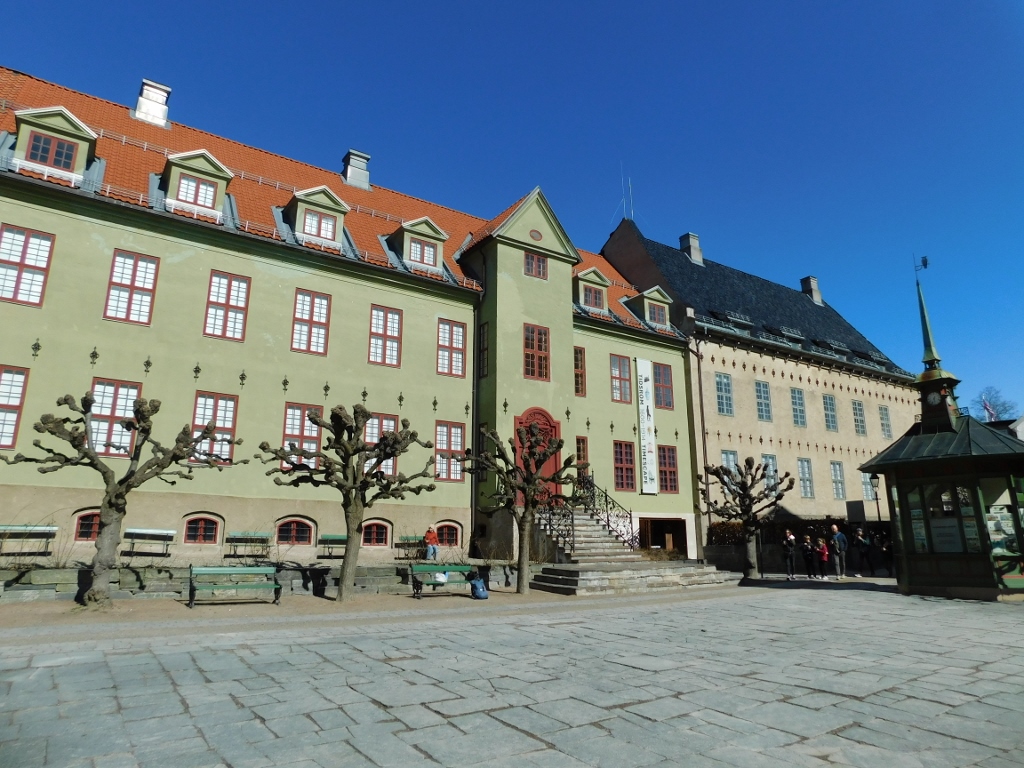 The Norwegian Museum of Cultural History, a detail
First, you arrive at The Square, an area of the museum where visits start. There, I saw that I could tour one of the buildings as part of an organised tour that began at 1 p.m. (the building on the left in the previous photo), which gave me enough time to explore the open-air sections of the museum. However, I first stopped by another city house on The Square, which had a well-designed exhibition detailing the traditional life of the Sámi peoples, also known as Laplanders, who are most numerous in Norway. The Sámi traditionally inhabit the far north of Europe, including parts of Norway, Sweden, Finland and Russia. (In Sweden and Finland, they live in the province and district of Lapland, hence the alternative name.)
When I say they "traditionally inhabit" the north of Europe, I mean that while they used to live only in traditional areas, it is now believed that there are more Sámi people, for example, in Oslo than in the north of Norway.
The Sámi are not a single nation, not only because they live in different countries, but also because they practice different religions (Protestantism and Orthodoxy) and speak different languages, though all belong to the same language group. Nevertheless, they have significant commonalities and therefore represent an indigenous native community. Regarding their traditional clothing, there are certain differences, but also numerous similarities in patterns and colours.
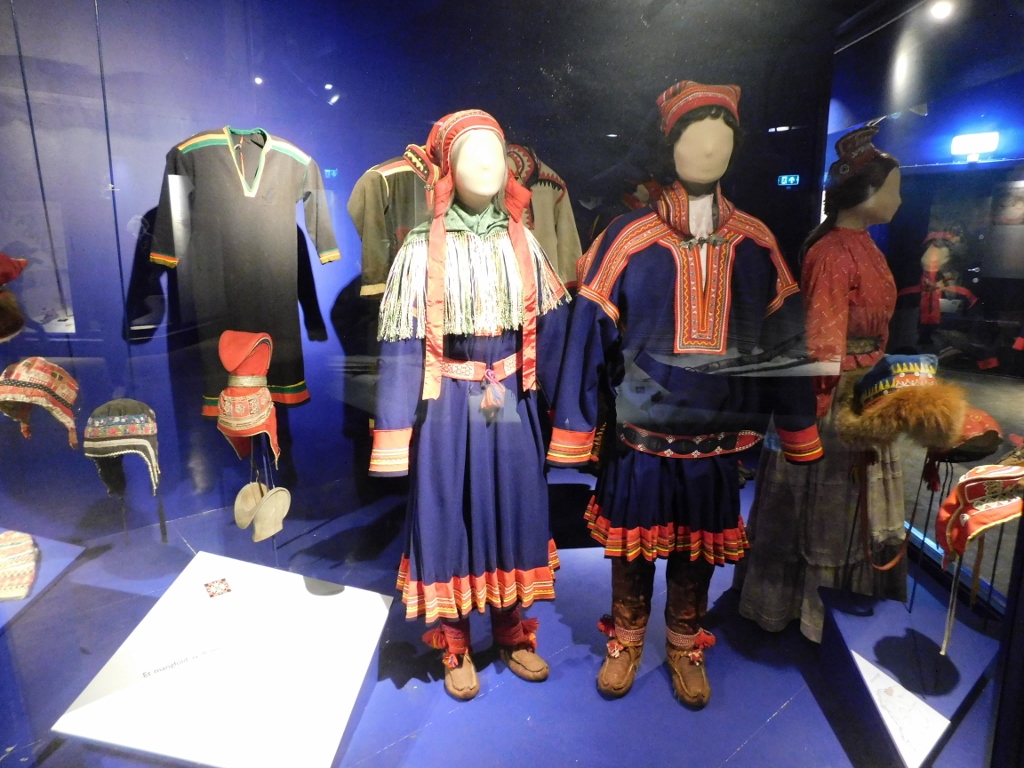 The Norwegian Museum of Cultural History, a detail
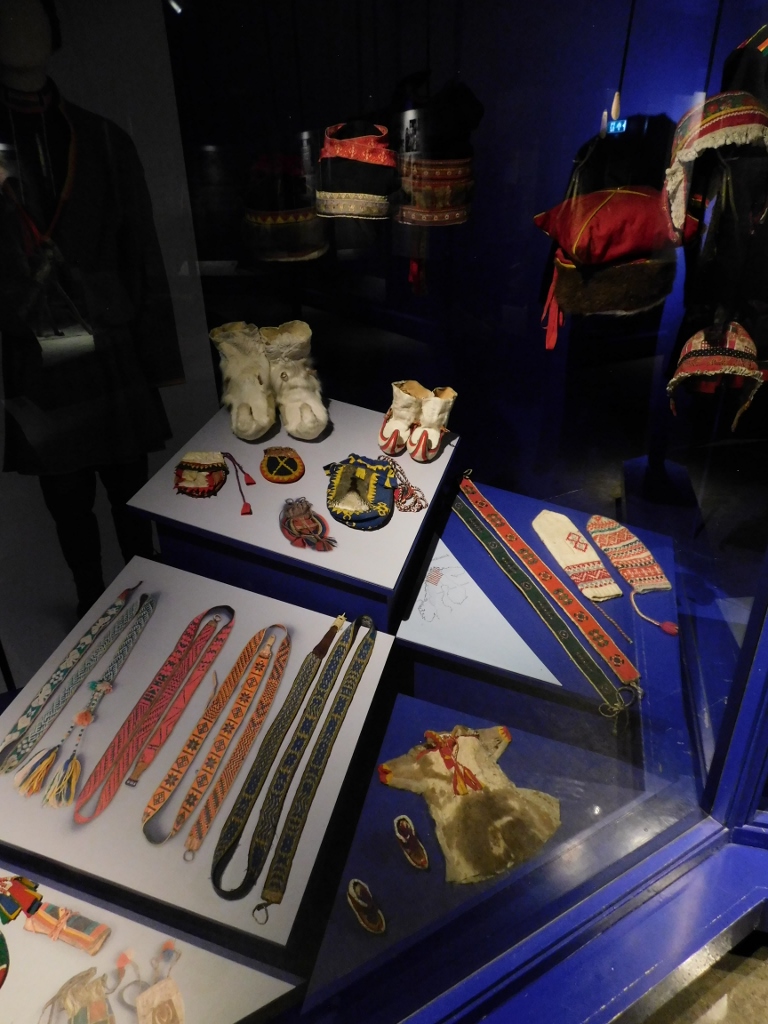 The Norwegian Museum of Cultural History, a detail
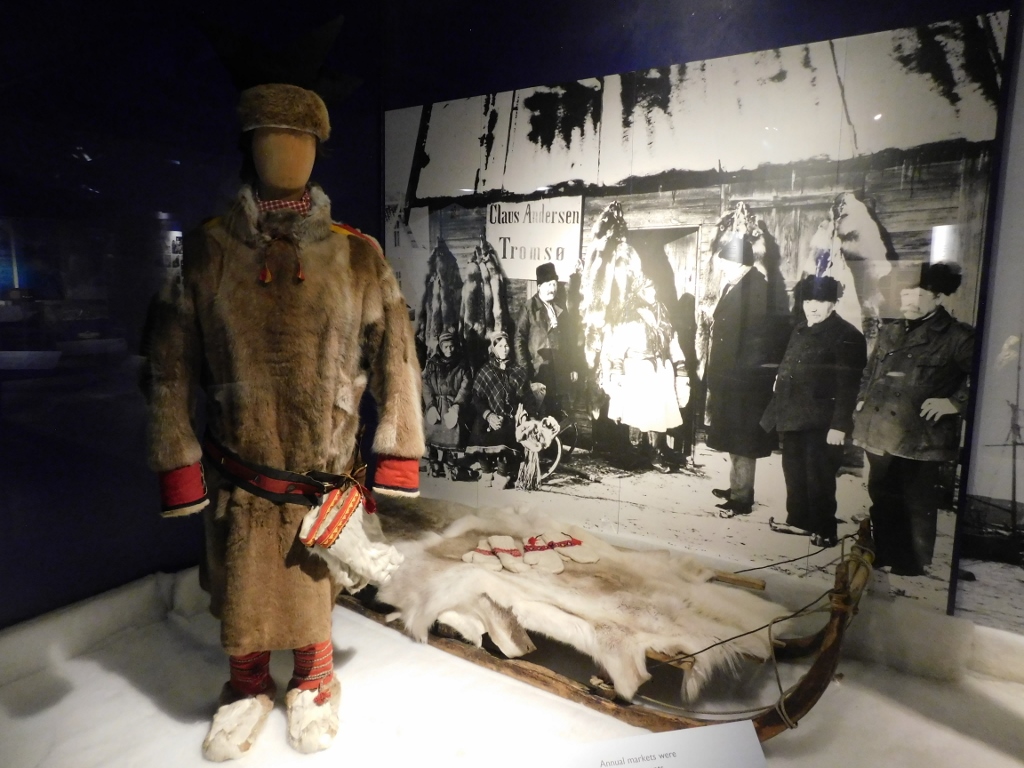
Of course, because of the icy northern climate, the Sámi have developed a way of life closely tied to reindeer. For starters, reindeer fur is exceptionally good at keeping warm, considering that winter temperatures can drop to as low as -50°C.
 The Norwegian Museum of Cultural History, a detail
The Sámi managed to live and survive in these conditions not only because they knew how to keep warm, but also because they traded reindeer hides and fur, as well as meat and fish, with people from southern territories or exchanged their goods for flour, sugar, cloth and kitchen utensils.
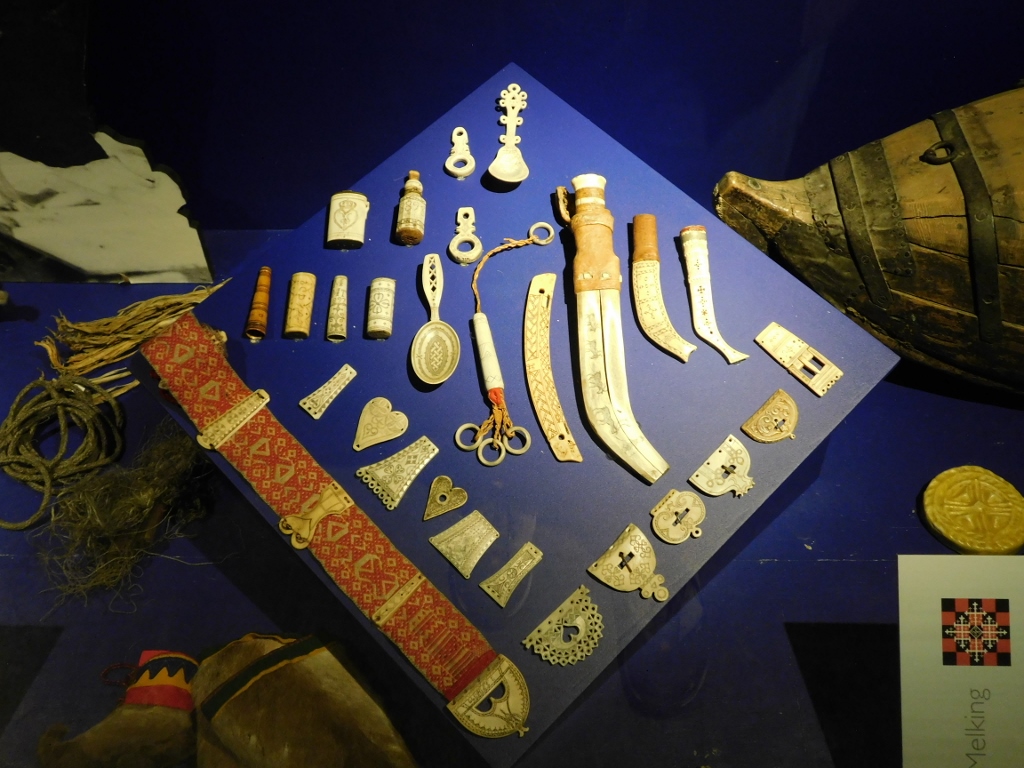
In addition to reindeer fur, they used all other parts of the animal – meat for food, hides for clothing and footwear, tendons for ropes and thread, and bones and antlers for useful tools and decorative items.
 The Norwegian Museum of Cultural History, a detail
Also, the Sámi milked reindeer, as their milk is highly nutritious. They even made cheese, butter and fermented dairy products with herbs, which they then sold. However, this required a lot of work, so over time, this practice was abandoned and trade shifted almost entirely to meat.
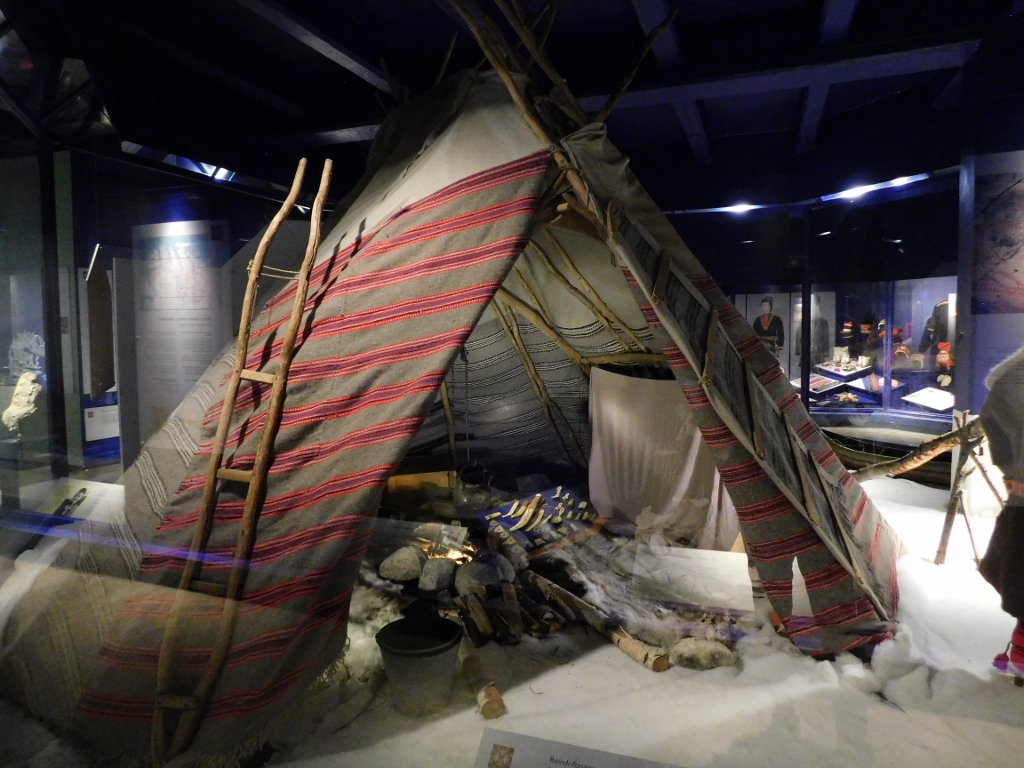
Some Sámi people traditionally lived in tents (goahti), which resemble Native American teepees. However, circumstances, especially after World War II, have changed significantly, leading to changes in their lifestyle as well.
 The Norwegian Museum of Cultural History, a detail
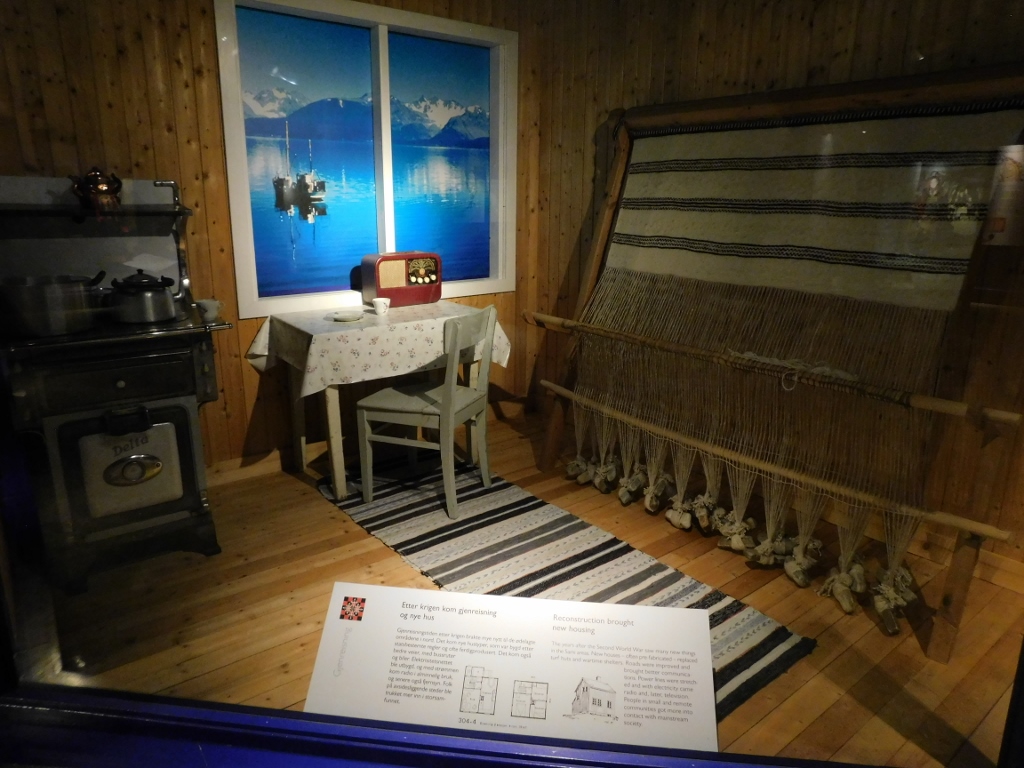 The Norwegian Museum of Cultural History, a detail
After finishing the visit to the exhibition on the Sámi people and their traditional way of life, I went outside to explore this somewhat atypical museum. First, I came across some larger houses that seemed a bit more urban. However, one of the most interesting exhibits was a wooden church, as one of my goals for this trip was to visit several such churches.
To start with, I passed by the main house from the Karterud farm dating back to the 18th century. It is said that the first potatoes in Norway were planted on this farm.
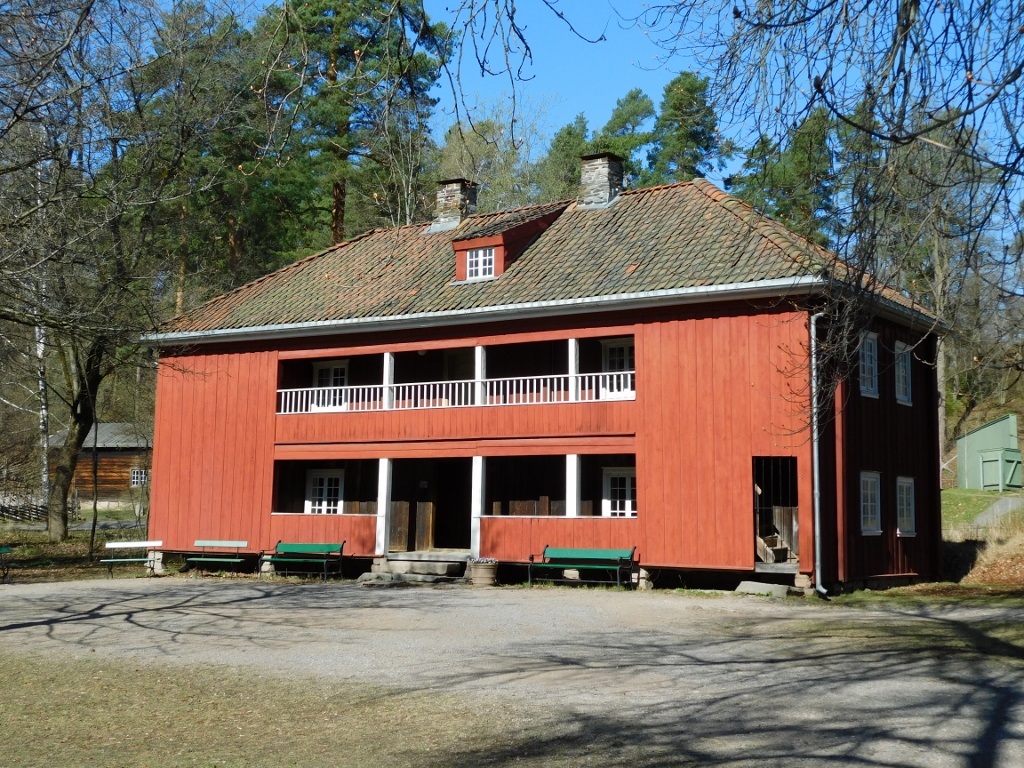 Main building from the Karterud farm
Nearby is the Parsonage from Leikanger, built in 1752, which comes with a (French) garden. Traditionally, priests were provided with a house and estate to ensure a regular income. Since the clergy had direct contact with the population, they also passed on to their congregations some European influences, such as gardening, by example.
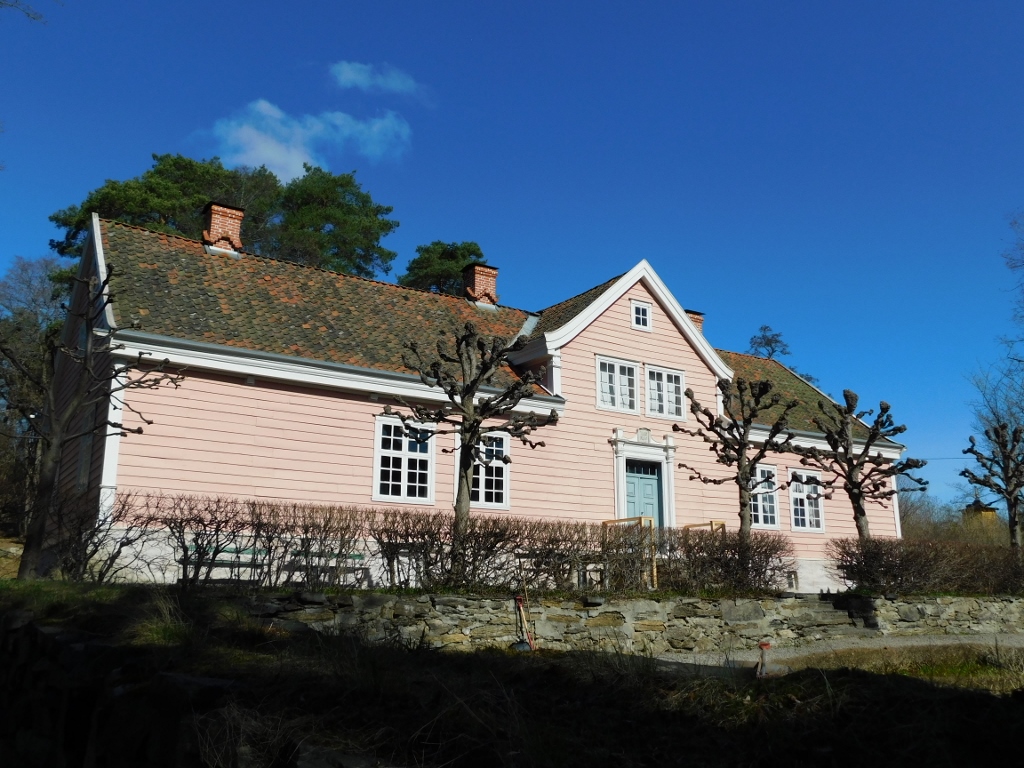 Parsonage
There is the Christian Meeting House from the latter half of the 19th century nearby as well. It was used not only for gatherings of local residents, but also served as a school and church. However, since 1860, schools in Norway have been required to be housed in separate buildings.
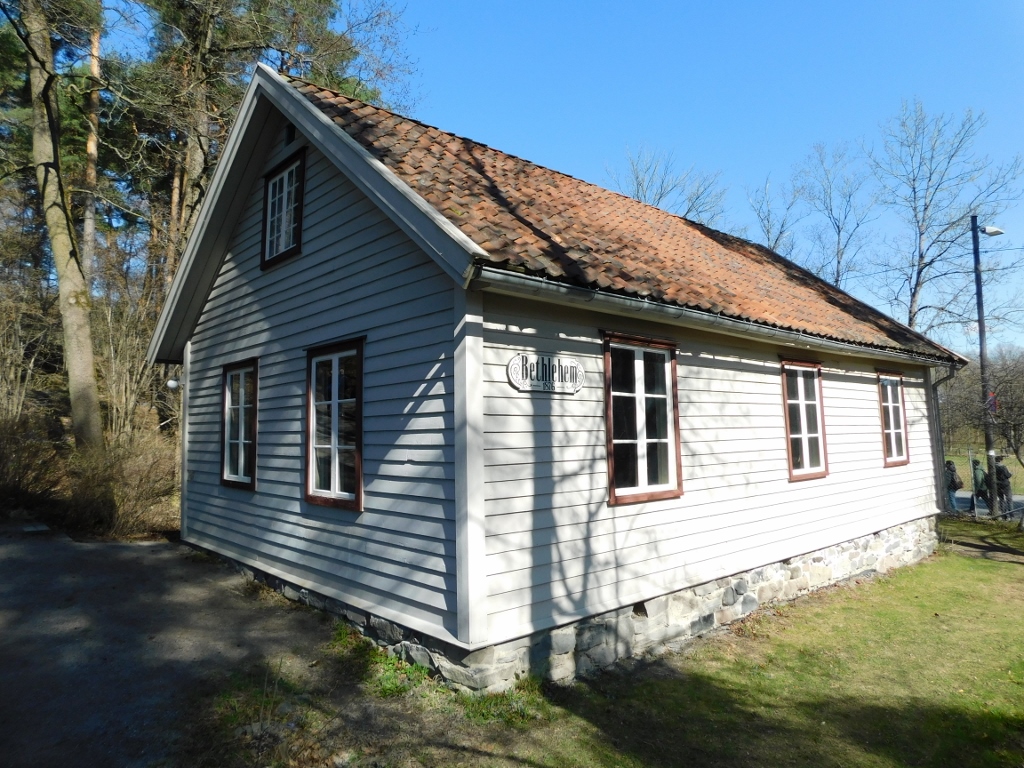 Christian Meeting House
Needless to say, I won’t detail each of the nearly 200 exhibits in the museum, but at the start of my visit, I was particularly interested in certain exhibits. In this part of the museum, what intrigued me the most was a wooden church – the Stave Church from Gol.
Let me explain what this is. It is one of the now rare ancient wooden churches known as Stavkirke or Stavkyrke. These are essentially stave churches (stave being the name for wooden load-bearing columns). These churches were built during the Middle Ages across Northern Europe, with some dating back to around 800 years ago, but they are now mostly found in Norway. This was one of the most important things I wanted to see in this country, so it made sense to start with one that is easily accessible, which is this one at the Norwegian Museum of Cultural History.
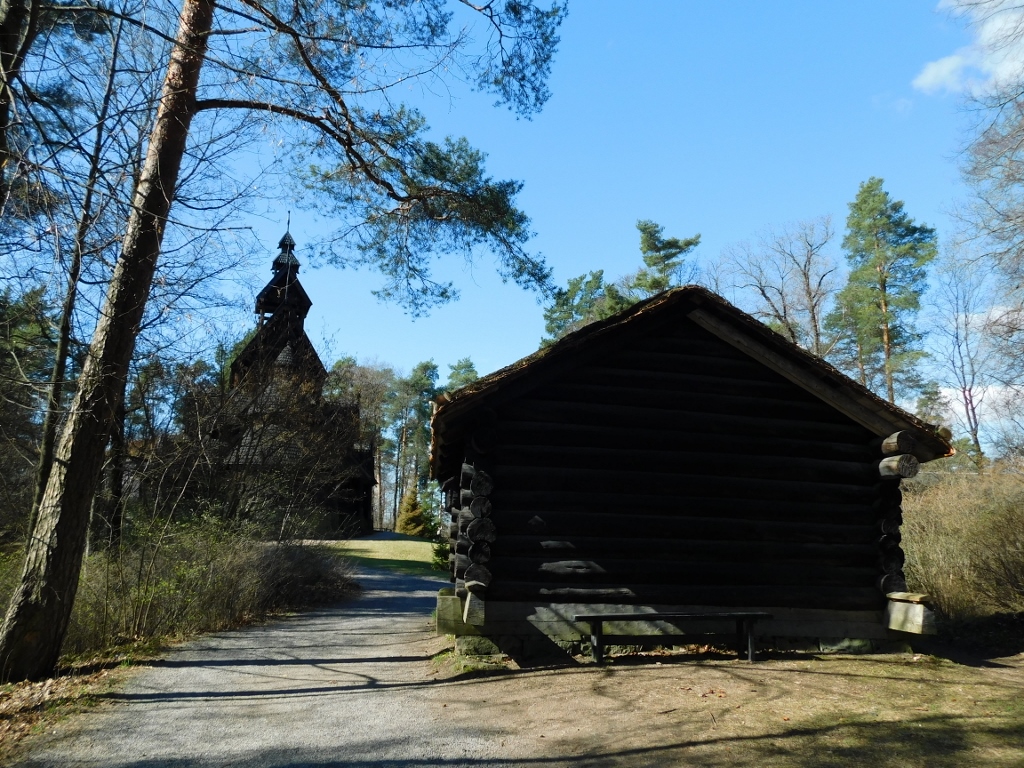 The Stave Church from Gol can be seen to the left
The stave church from Gol was built around 1200 and was to be replaced by a new church around 1880. Fortunately, the Society for the Preservation of Norwegian Ancient Monuments purchased the church and donated it to the king, who then funded its relocation to the Bygdøy Peninsula in 1884. Naturally, the church needed to be restored, but the restoration was carried out according to what was presumed to have been its original appearance. Missing parts were modelled after the Borgund Stave Church.
This part of the museum also houses King Oscar II’s Collection. At that time, King Oscar II was both the King of Sweden (1872-1907) and the King of Norway (1872-1905). He took an interest not only in the church, but also financed the relocation of four other structures, as the idea was to demonstrate his genuine interest in Norway. Interestingly, this collection is considered the world’s first open-air museum.
One of these structures is the Summer Cabin from Støylsemne, from the 15th century, which was used in one of the summer mountain pasture farms in southern Norway. Another is the Storehouse from Rolstad, from the 14th century, which was actually used as a sleeping area.
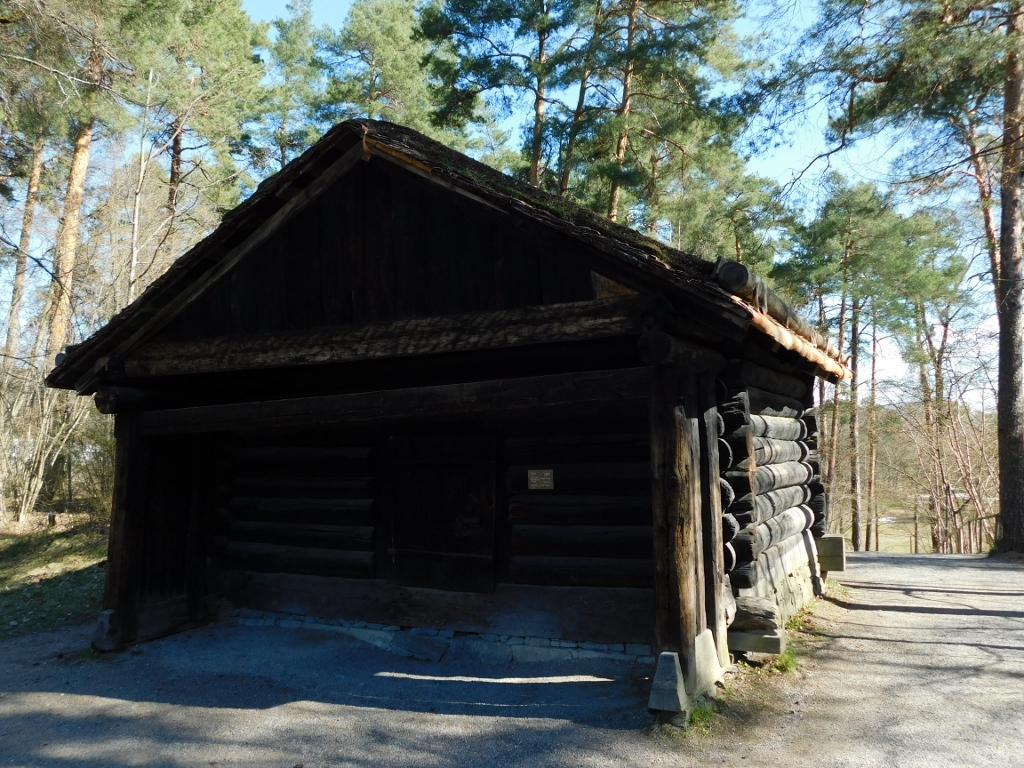 Summer cabin from Støylsemne
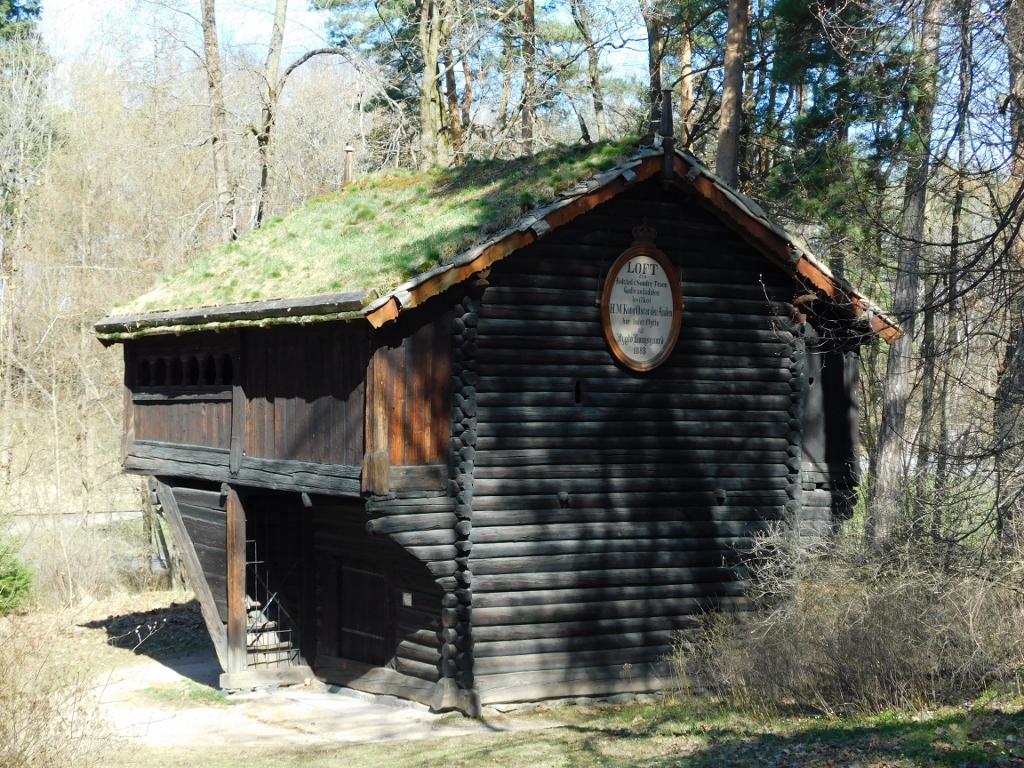 Storehouse from Rolstad
But, in my opinion, the most beautiful structures are the Stave Church from Gol and the Storehouse from Berdal.
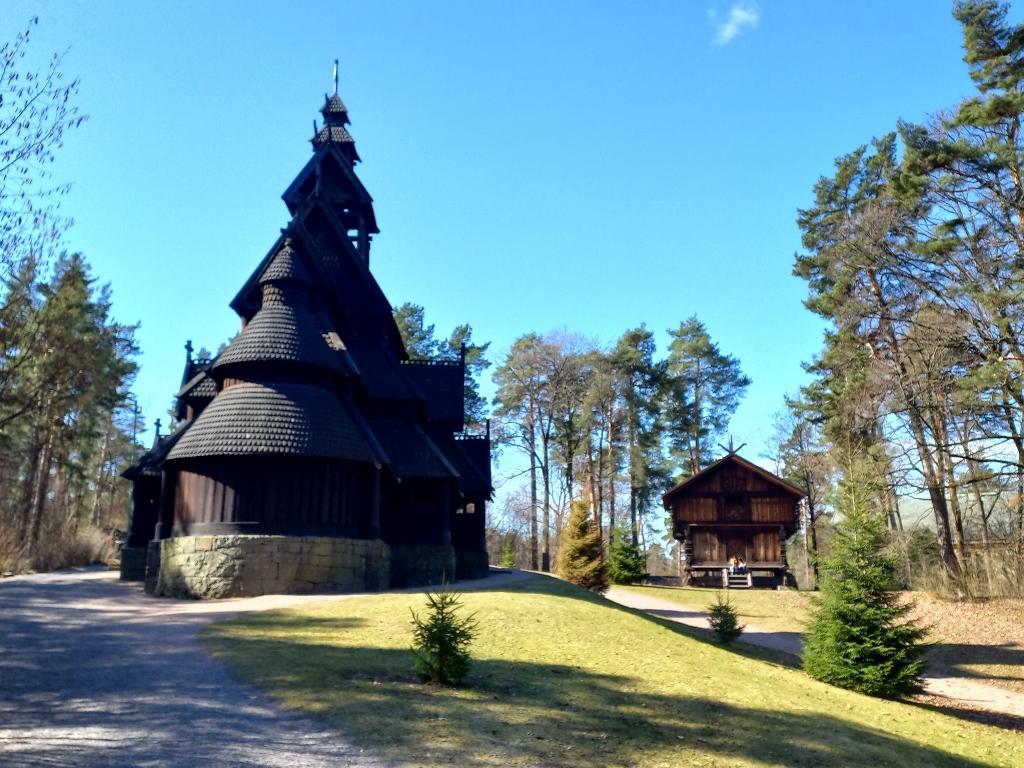 Stave Church from Gol and Storehouse from Berdal
First, I photographed the Storehouse from Berdal, where the king displayed items from the royal collection.
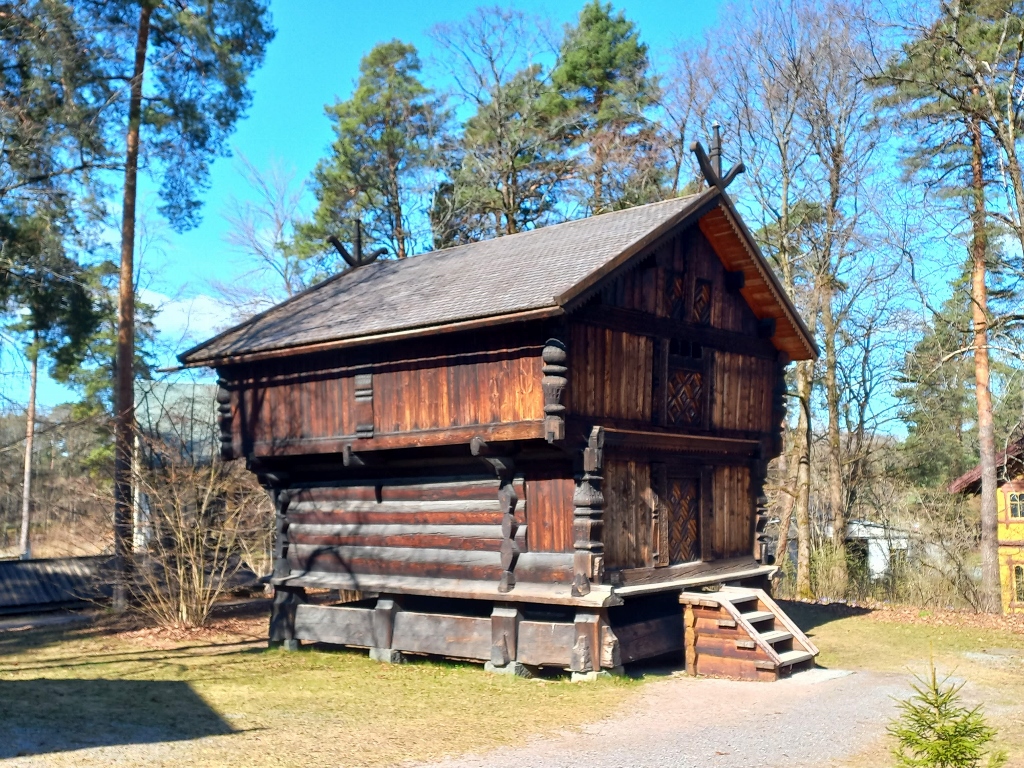 Storehouse from Berdal
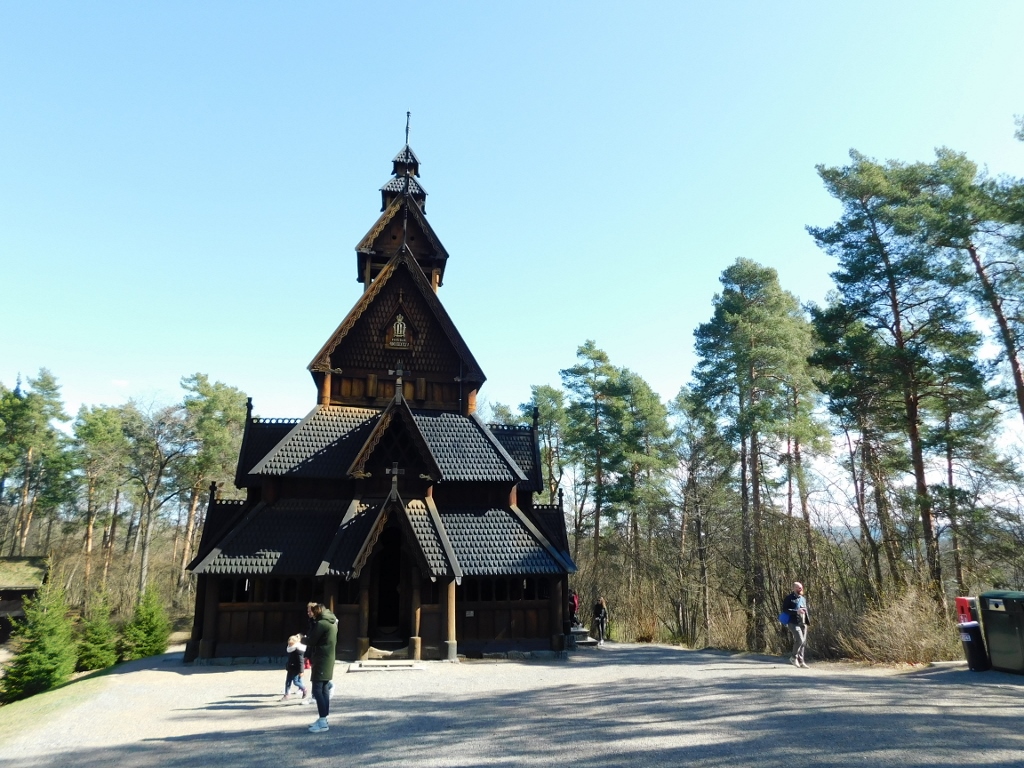
Then, of course, I took some time to walk around the church and also peeped inside.
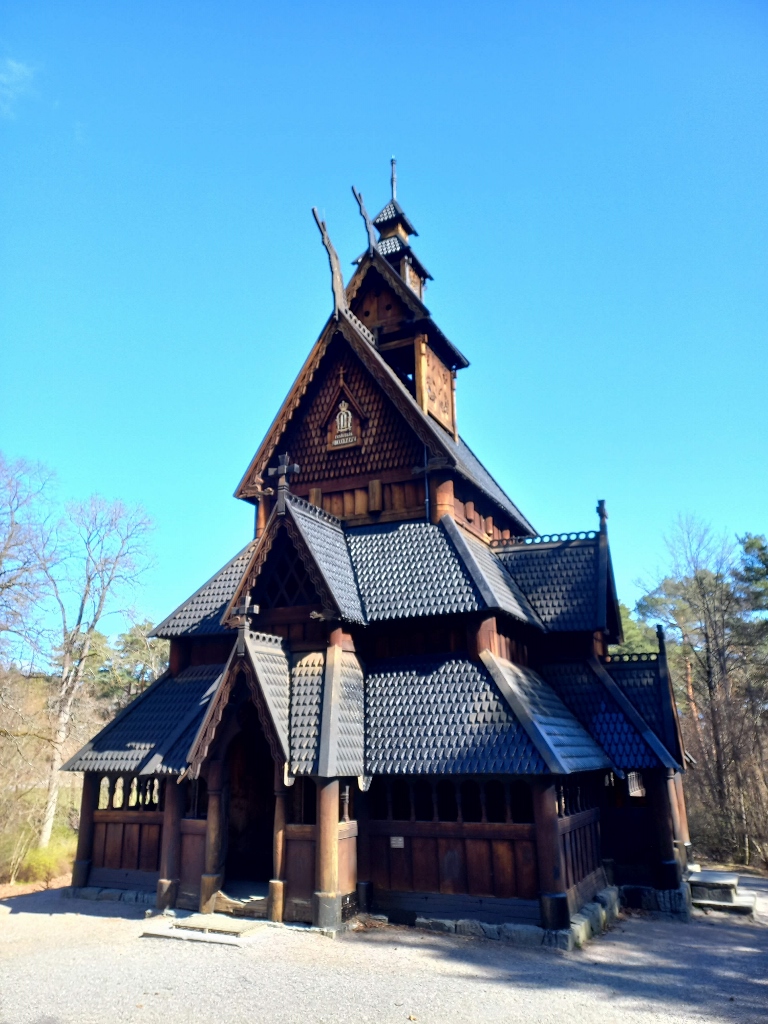 Stave Church from Gol
As I’ve mentioned earlier, this wooden church was built around 1200 in the town of Gol, which is located about 220 km northwest of Oslo. Approximately 150 years ago, it was relocated to its current location.
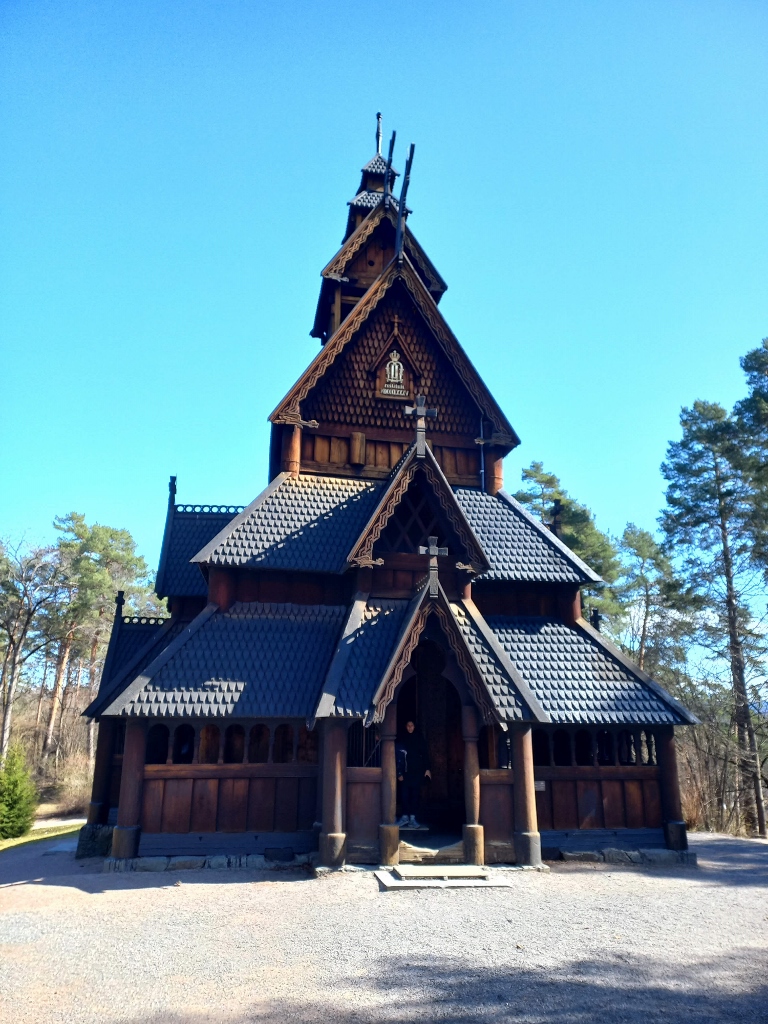 Stave Church from Gol
The portal on the west side (the main entrance to the church) is original, while the southern portal (the lateral side of the church) is a replica from 1884.
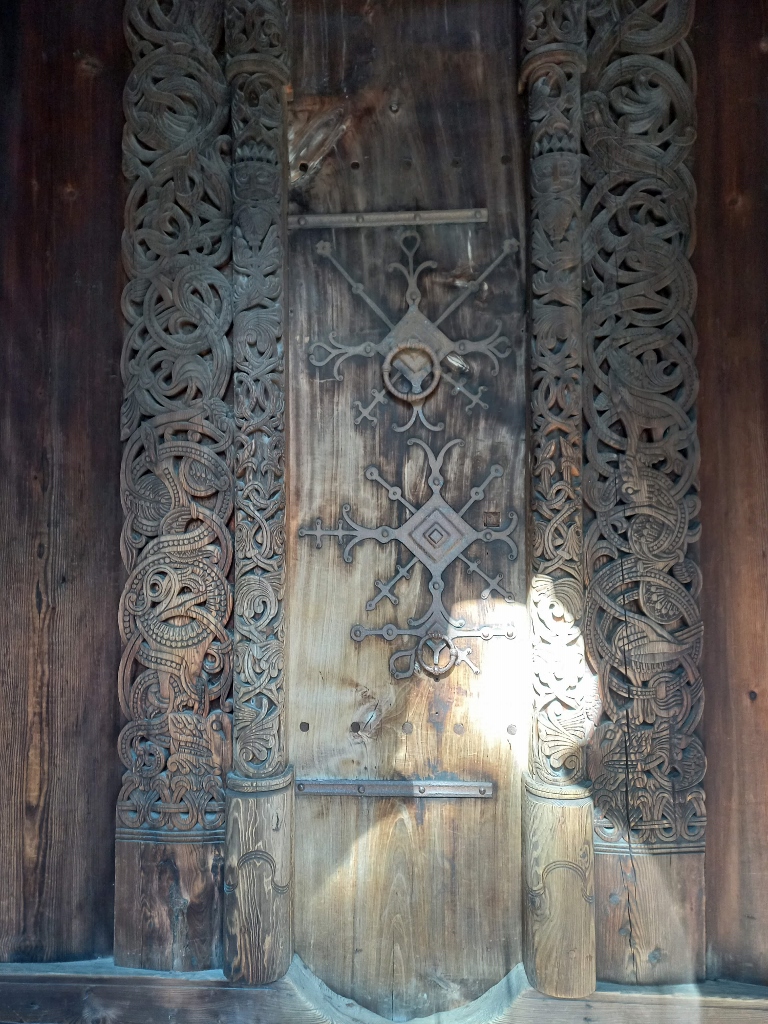 Stave Church from Gol, south portal
I only peeked into the church. Why? I’m not sure. Perhaps I was so enchanted that I thought I might "dirty" it by entering. It’s also possible that entry wasn’t physically possible and it was only open for viewing from the entrance. Honestly, I don’t remember.
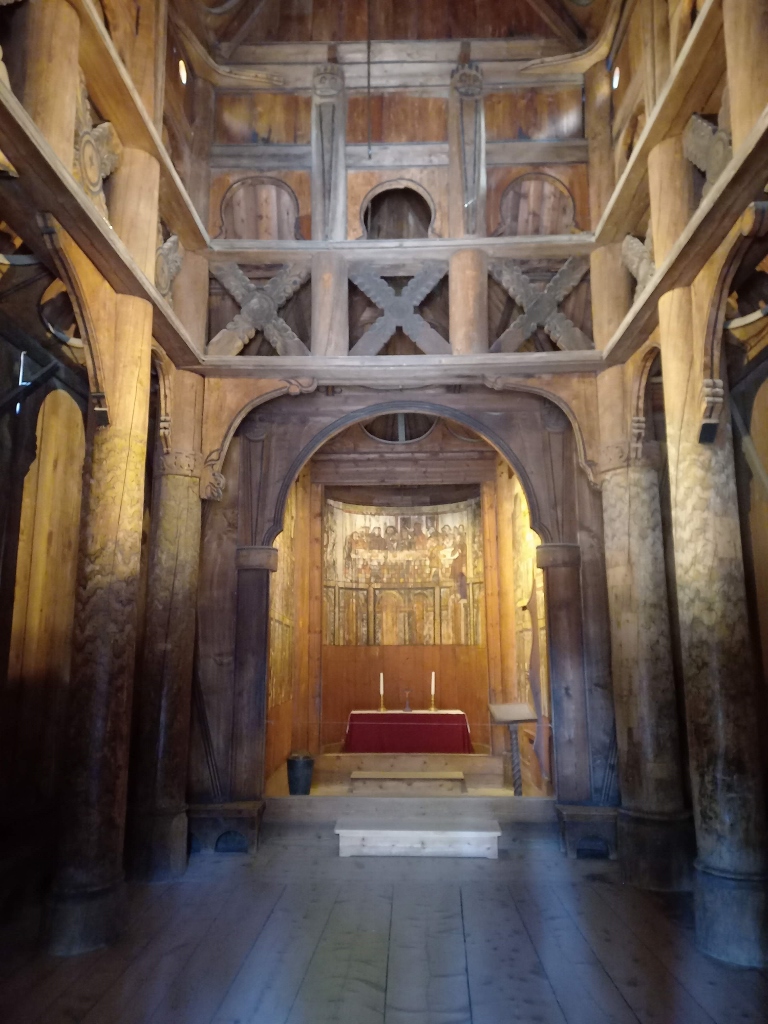 Stave Church from Gol, the interior
It is presumed that during the time when the church was Catholic, it was decorated with images of saints. However, after the Reformation in 1537 and the transition to Protestantism, the details from the Catholic period were gradually removed and replaced. Nonetheless, the paintings preserved in the altar area, created in 1652, have survived. The church had insufficient lighting, so the photograph is blurry, but the figures can still be discerned.
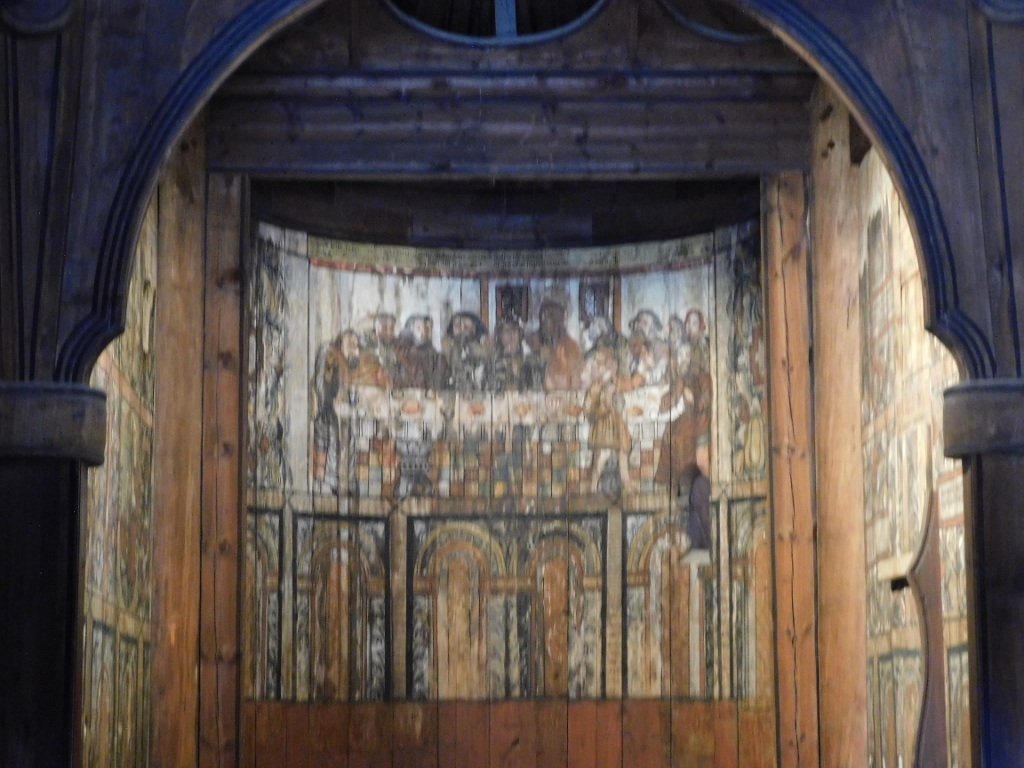 Stave Church from Gol, the interior
 Stave Church from Gol
The King Oscar II’s Collection also includes the Farmhouse from Hove, built in 1738, which is seen on the left in the following photograph. It was used for guests, making it larger and more luxurious than the other buildings on the farm.
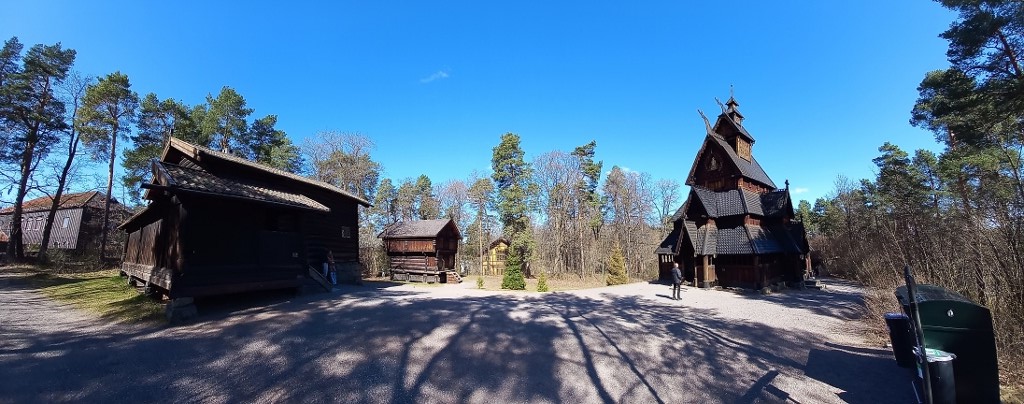 King Oscar II’s Collection
Now I was ready to continue exploring the other historic buildings from rural Norway that can be seen at the Norwegian Museum of Cultural History.