After visiting Eggenberg Castle, I took a city bus back to the centre of Graz.
There, I first went to a pastry shop that I had seen crowded every time I passed by it the previous day. This time the situation was a bit better, so I sat down to have a piece of cake and get some rest.
That also brings me to one of my favourite Austrian desserts, which is buchteln. Although they are made and eaten throughout Central Europe, in one excellent international cookbook I use, they are listed under Austria, so that’s how I think of them as well. It is sweet, baked dough filled with jam. Is there anything about that someone wouldn’t like?
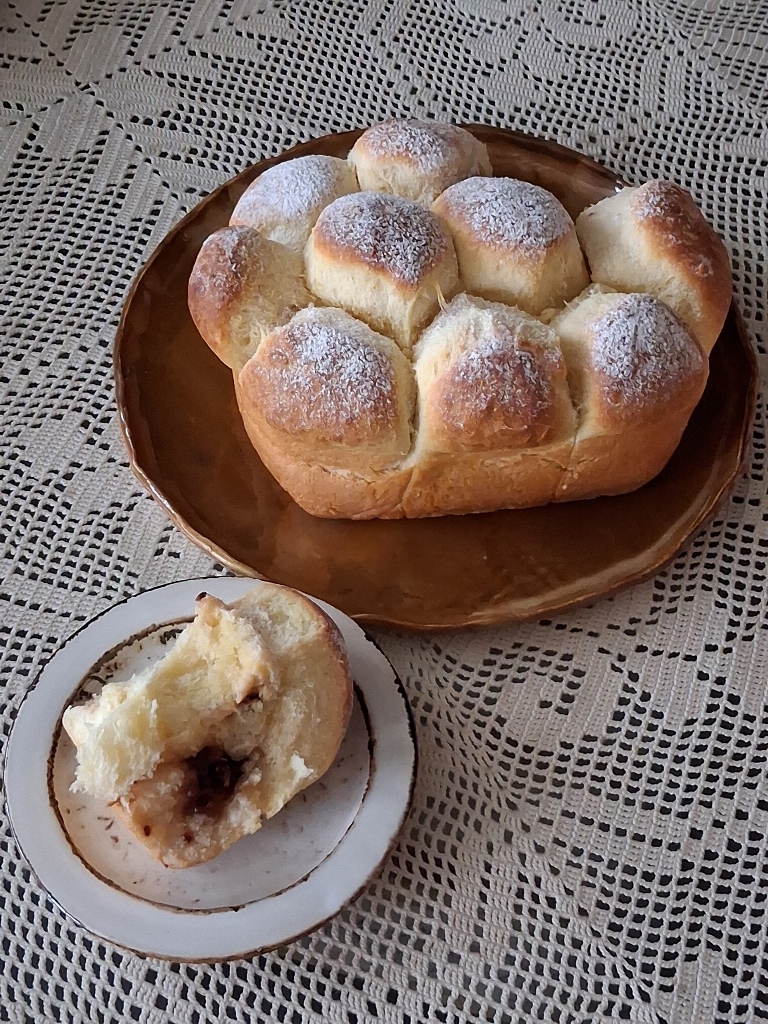 Buchteln, baked and served in dishes I have made myself
BUCHTELN
- 500 g all-purpose flour
- 30 g fresh yeast
- 50 g sugar
- 250 ml lukewarm milk
- 40 g butter
- 2 eggs
- a pinch of salt
- grated zest of 1 lemon
- jam of your choice
- 75 g butter
Put part of the measured sugar and the yeast into the milk to dissolve, then add a spoonful of the already measured flour and mix everything well. Leave it in a warm place for about 15 minutes. Then add the remaining sugar and the melted 40 g of butter to this mixture. Pour everything into the bowl with the flour, add the eggs, a pinch of salt, and the grated lemon zest, then knead well. Since the dough is soft, it should be beaten with a wooden spoon until bubbles appear, then left to rest for about 15–20 minutes.
Divide the dough into balls weighing about 50 g. They can be used as they are, without filling, but I prefer them much more with jam. So, take 50 g of dough, flatten it into a circle in your palm, put a teaspoon of jam in the centre, then gather the edges and form a ball. Dip each ball into melted butter (the 75 g), then arrange them in a baking tray. The balls should be placed close to each other, as they need to stick together while rising and baking, so they can be pulled apart later.
Bake at 185°C for about half an hour, until they get a nice colour. Sprinkle with powdered sugar.
But let me get back to my tour of Graz.
After that “sweet” break, I went to visit the Kunsthaus Graz museum. It is a museum of contemporary art, so I saw various modern installations there, as well as some photographs and artworks from America. I don’t understand contemporary art very well and I often need additional explanations to possibly grasp what the artists wanted to convey. Sometimes it makes sense to me and sometimes no amount of explanation can evoke emotions or create a sense of enjoyment while observing a given piece. But that’s my “problem.” Supporters of contemporary art should definitely visit this museum as well.
When I stepped back outside, raindrops were falling, but that wasn’t a reason not to sit outside (under an umbrella) and have a coffee. After all, I was on vacation, so I enjoyed organising my time with a mix of sightseeing and rest.
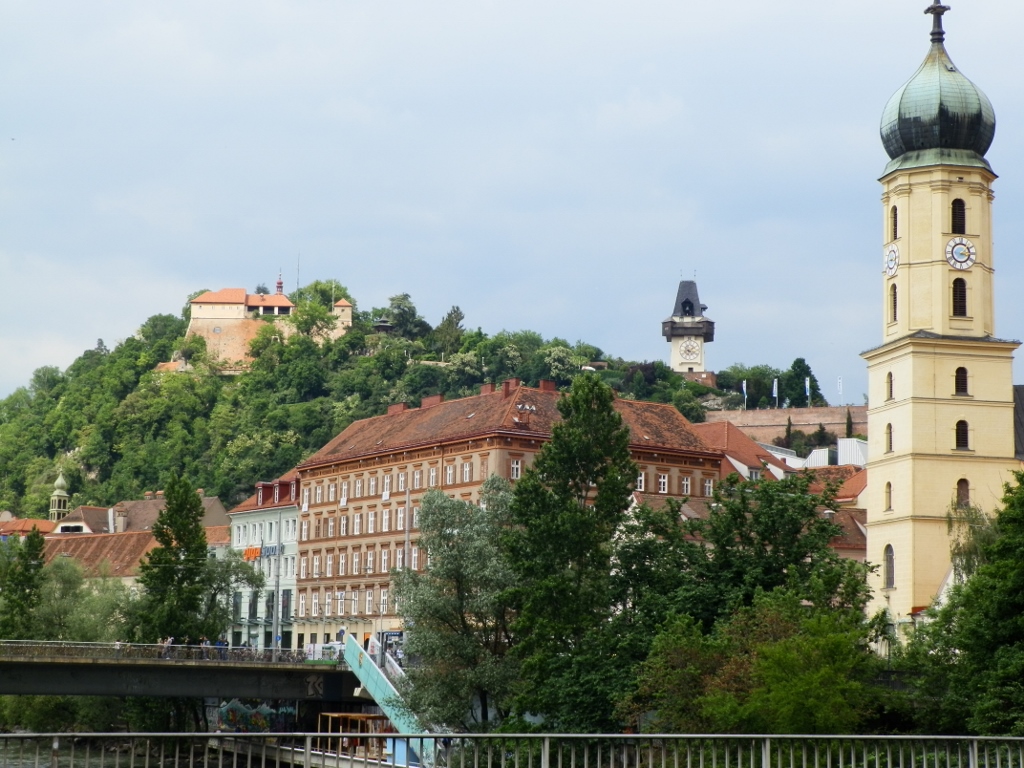 Graz, a detail
After coffee, I went to the Natural History Museum, which is also part of the Universalmuseum Joanneum mentioned in the previous part of these stories. At the time, I said that the museum includes facilities across as many as 12 locations within the province of Styria and besides Eggenberg Castle, the museum also includes the local natural history museum.
I really liked this museum and it also gave me some ideas specifically related to the geological exhibition. Namely, for a long time during my travels I have been collecting sand. Over time, the number of samples grew and a few years ago, inspired by what I saw in Graz, I donated my private collection to the Natural History Museum in Belgrade. I hope it will one day see the light of day and that visitors will be able to see the incredible diversity that exists in something as simple as sand.
In any case, after visiting the Natural History Museum in Graz, I went to the New Gallery, which is also part of the Universalmuseum Joanneum. There, I once again observed works of contemporary art and when I came out, I realised that I was both tired and hungry.
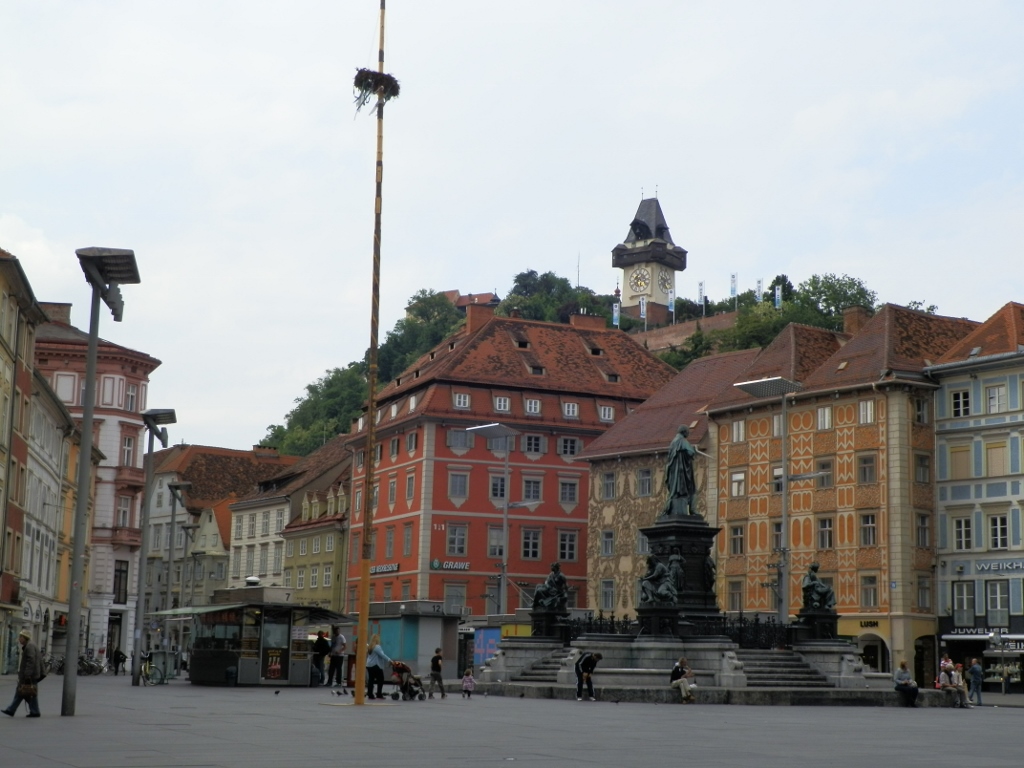 Graz, a detail
Still, I was very glad that I had used my time well and visited some nice museums. That was especially good because admission to all those museums was free that day.
Then I went to the main square and ate a sausage with cheese at one of the fast food stands. I don’t know why, but I associate German-speaking countries with sausages. Probably because after two and a half years of learning German a long, long time ago, the only thing that stayed in my head was “Brot, Wurst und Bier,” which means “bread, sausage and beer.” I suppose that, on some primal level, it’s important for me to have food and drink.
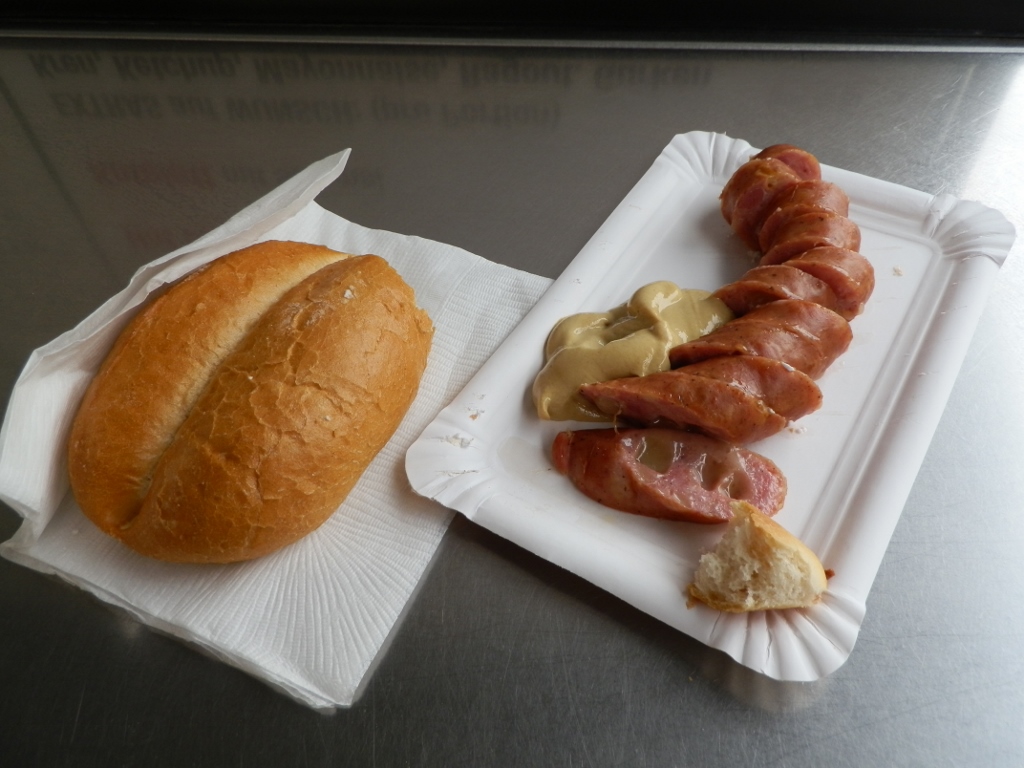 Quick and light meal in Graz
Since I had bought a 24-hour public transport ticket that day and since I was a bit tired, I easily took a tram back to the hotel and went to my room for an afternoon rest. I have to admit, it felt really good.
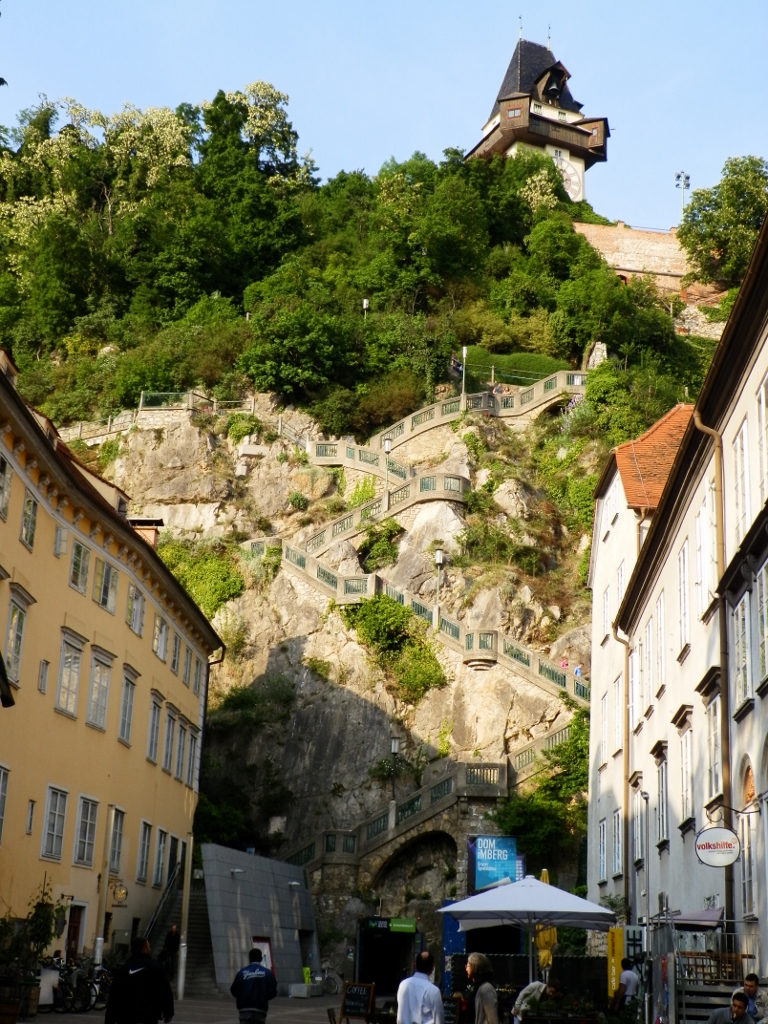
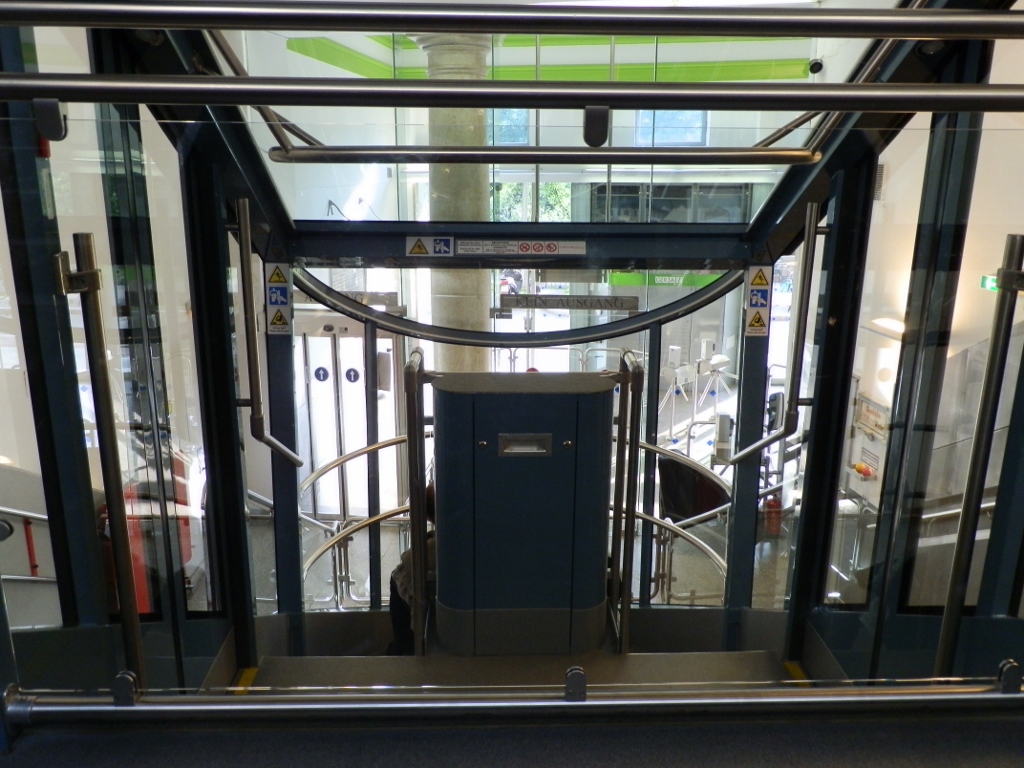
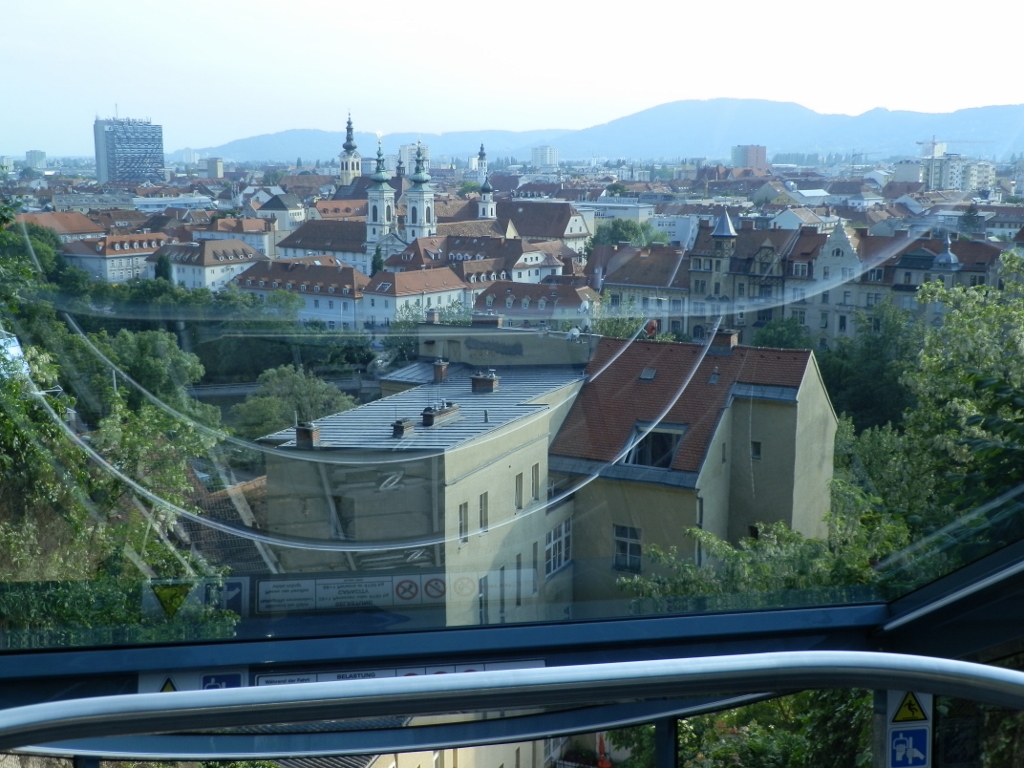
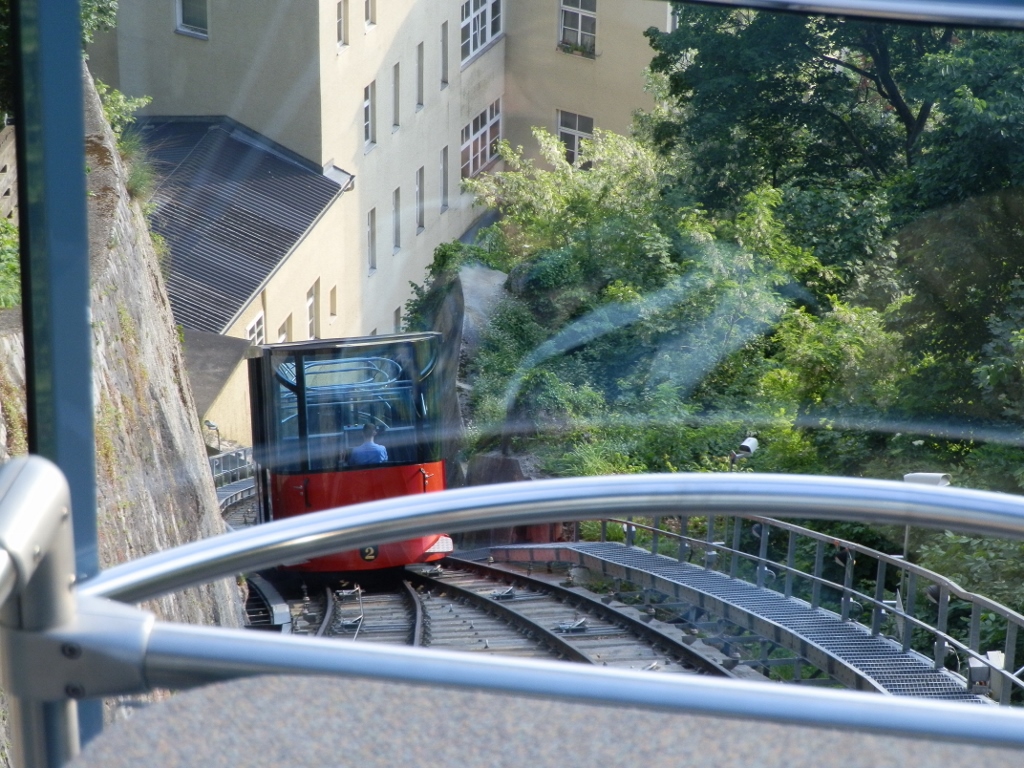
However, I didn’t stay in the room for too long. At some point, I got moving again, got on a tram and returned to the city centre. I first went for an easy stroll and then made use of my daily public transport ticket by taking the funicular up to the fortress hill above the city – Schlossberg.
 Graz, a detail
 Graz, a detail
 Graz, a detail
 Graz, a detail
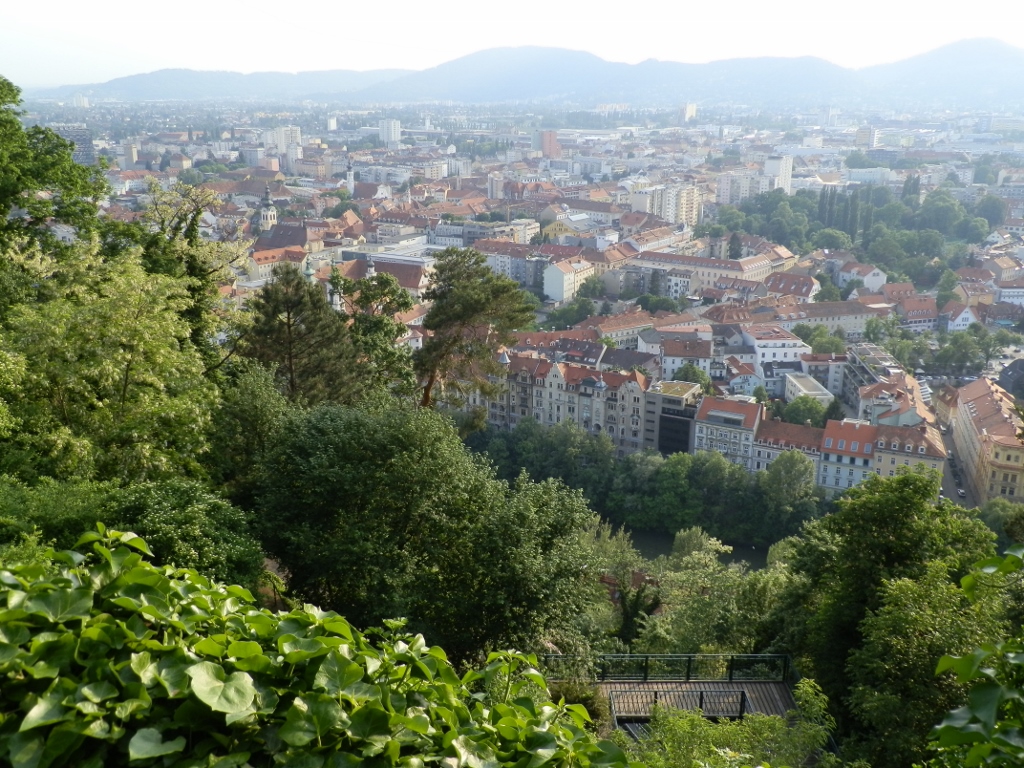
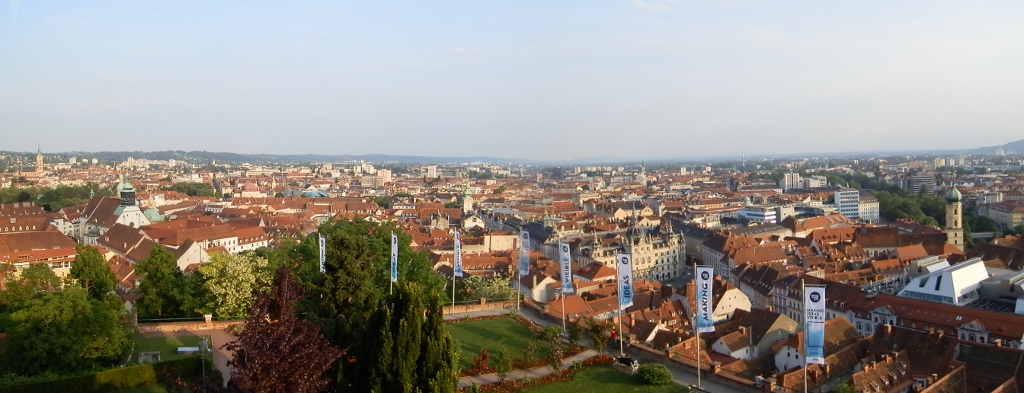
To begin with, the view of the city from the top of the hill was extraordinary.
 Graz
Graz
Nearby, I also came across a sign stating that this place is located 123 m above the elevation of the main square and 475 m above the level of the Adriatic Sea. I don’t know if this information is important to anyone at all, but I still found it interesting to see the sign and learn these details.
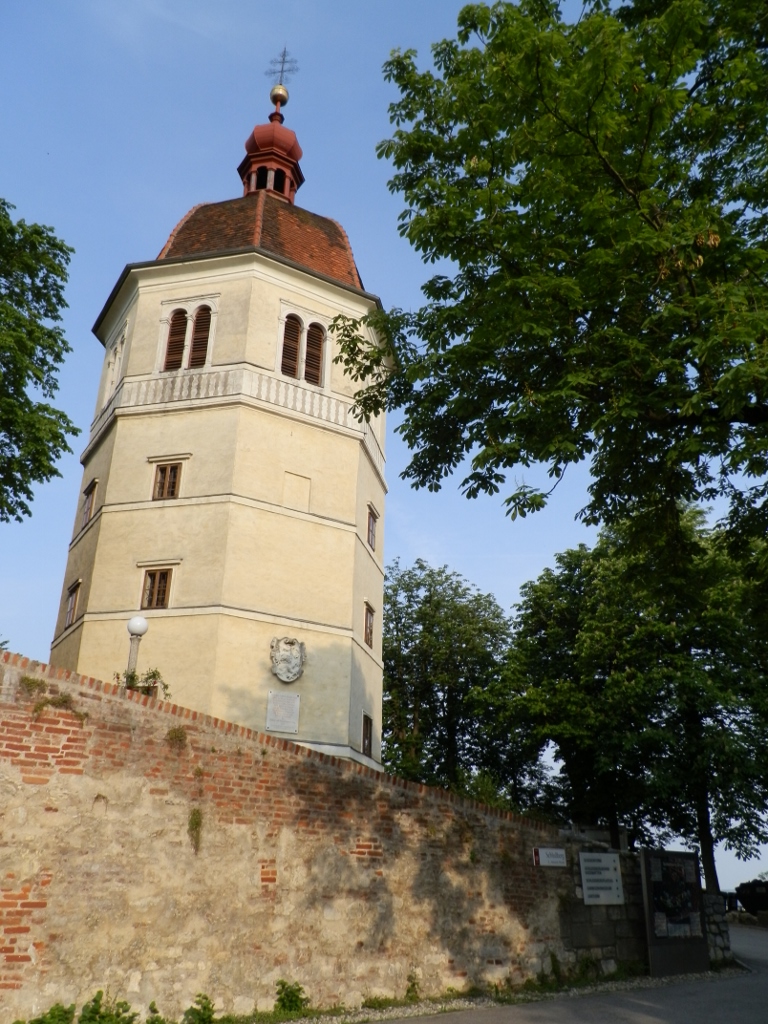
Here, I first encountered an octagonal bell tower, 34 m high, built in 1588. It houses the third-largest bell in Styria, with a diameter of nearly 2 m and a weight of 4,632 kg!!! The bell rings three times a day, at 7 a.m., at noon, and at 7 p.m., but I wasn’t near the tower at those times.
 Graz, a detail
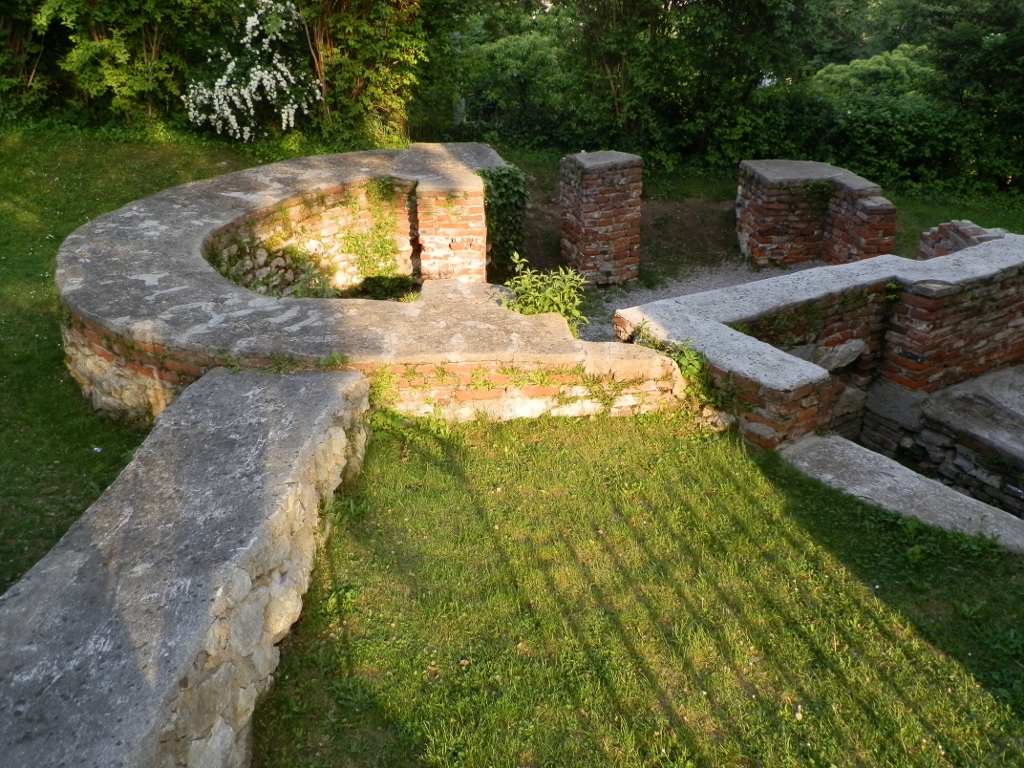
Right next to the bell tower are the remains of the former St. Thomas Church, which is believed to have been built in the 11th century. At the beginning of the 19th century, the church’s copper roof was plundered and over time the entire church fell into ruin, so that in the end almost nothing remains of it.
 Graz, a detail
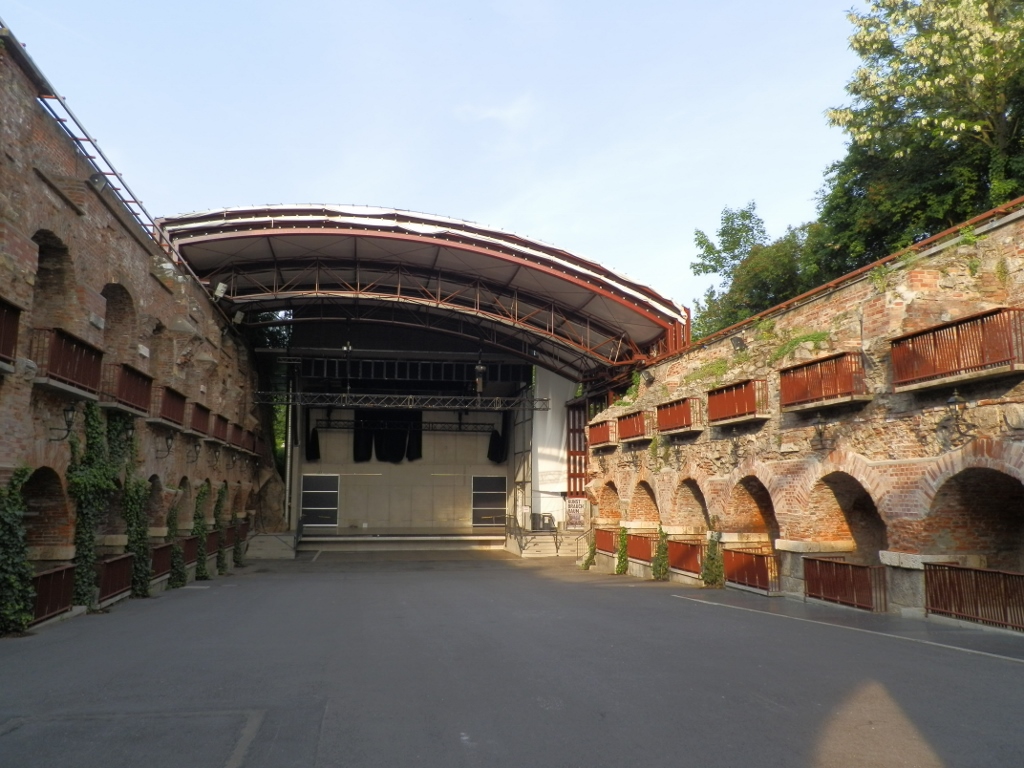
In the immediate vicinity of the bell tower is the Schlossberg Stage, which is now used as an open-air venue for various performances, concerts, and cultural events. However, the full name, which includes the word “Kazamat,” makes it clear that this was once a military storage facility.
 Graz, a detail
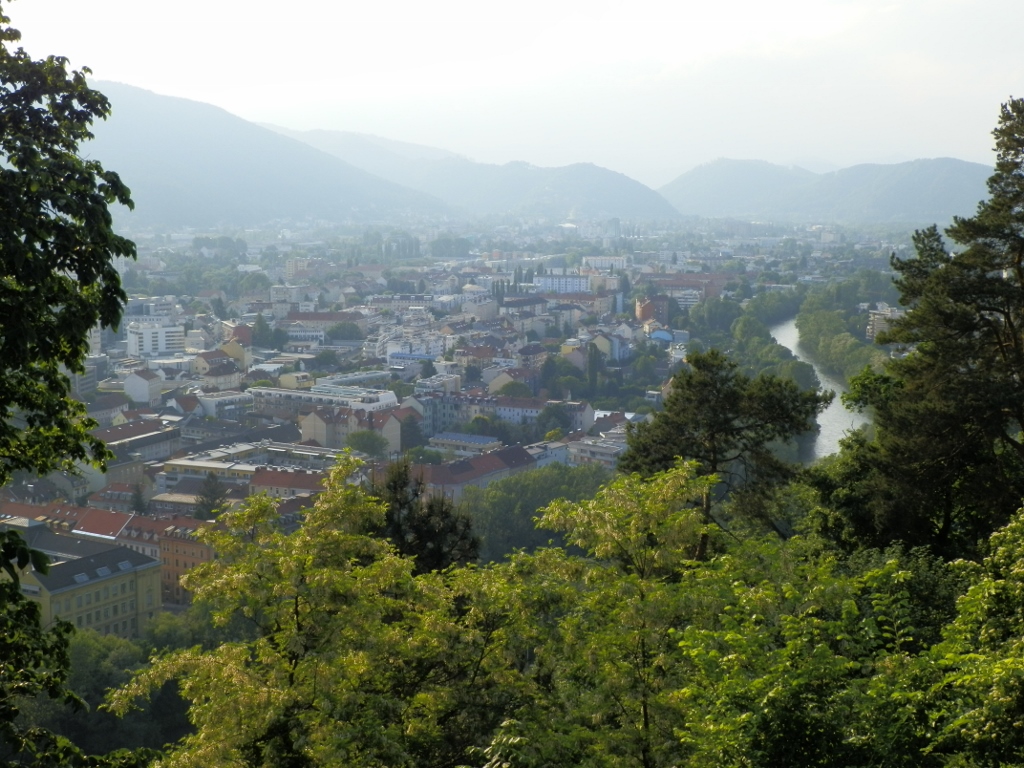
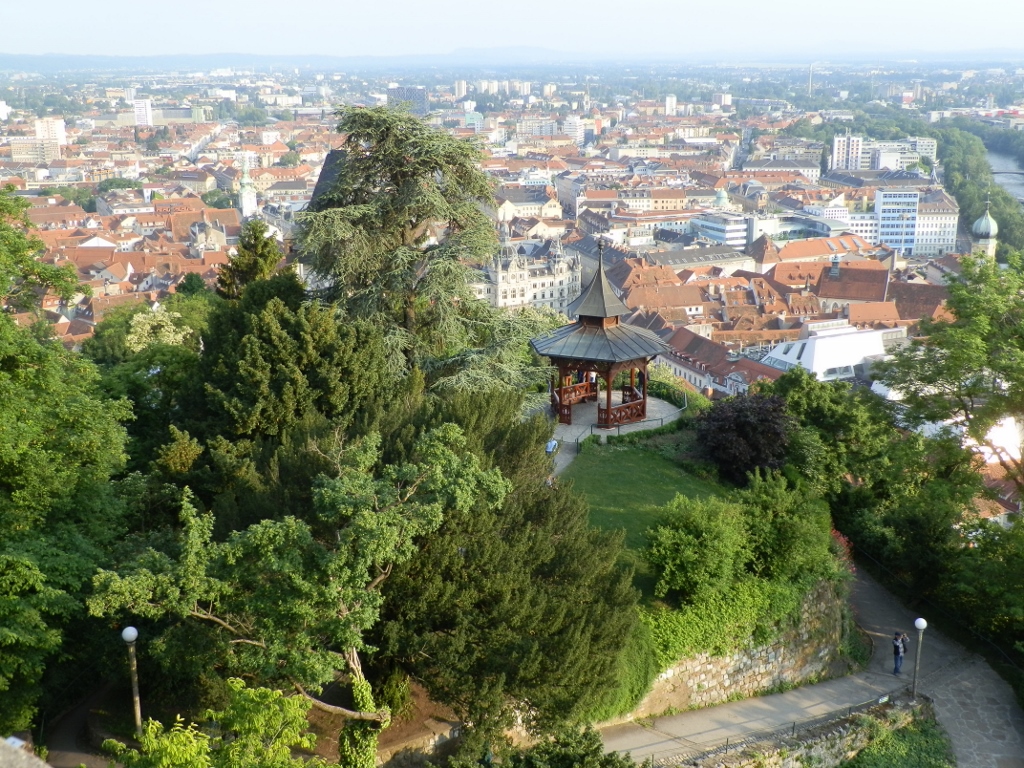
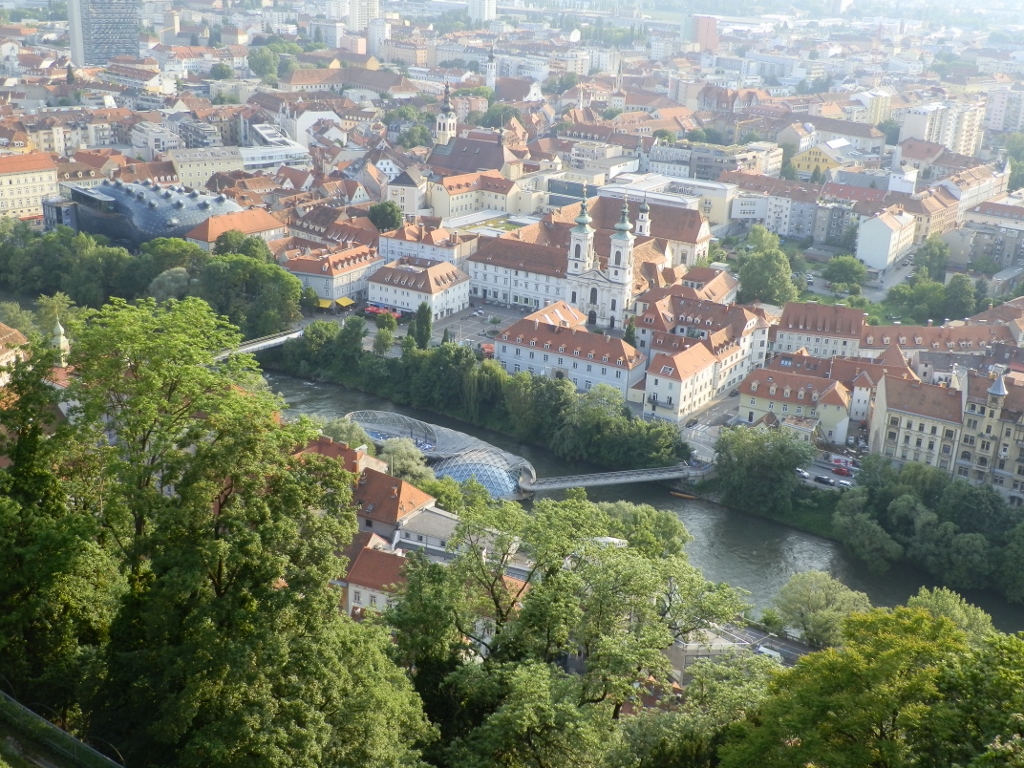
Then I started walking along the top of Schlossberg (literally “castle hill”), enjoying along the way the wonderful view it offers over Graz.
 Graz, a detail
 Graz, a detail
 Graz, a detail
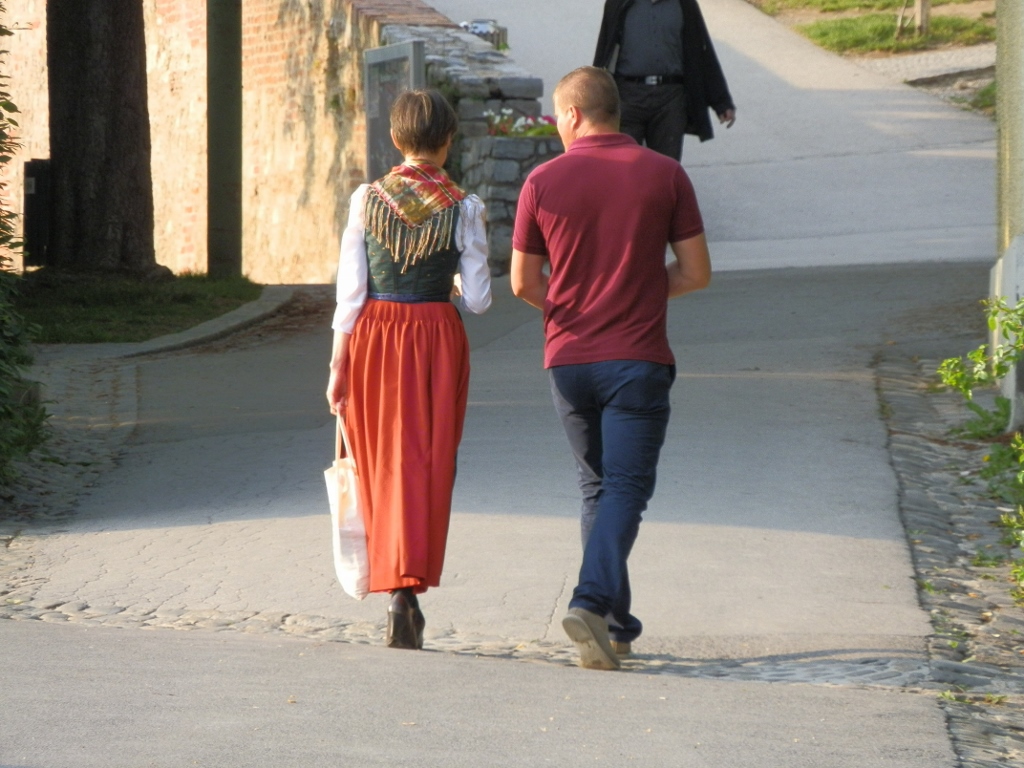
Besides offering that wonderful view of the city, the top of the hill also features remains of an old castle with parts of medieval fortifications. The hill is full of walking paths and green areas, perfect for relaxation and recreation, making it quite popular with both locals and visitors.
 Graz, a detail
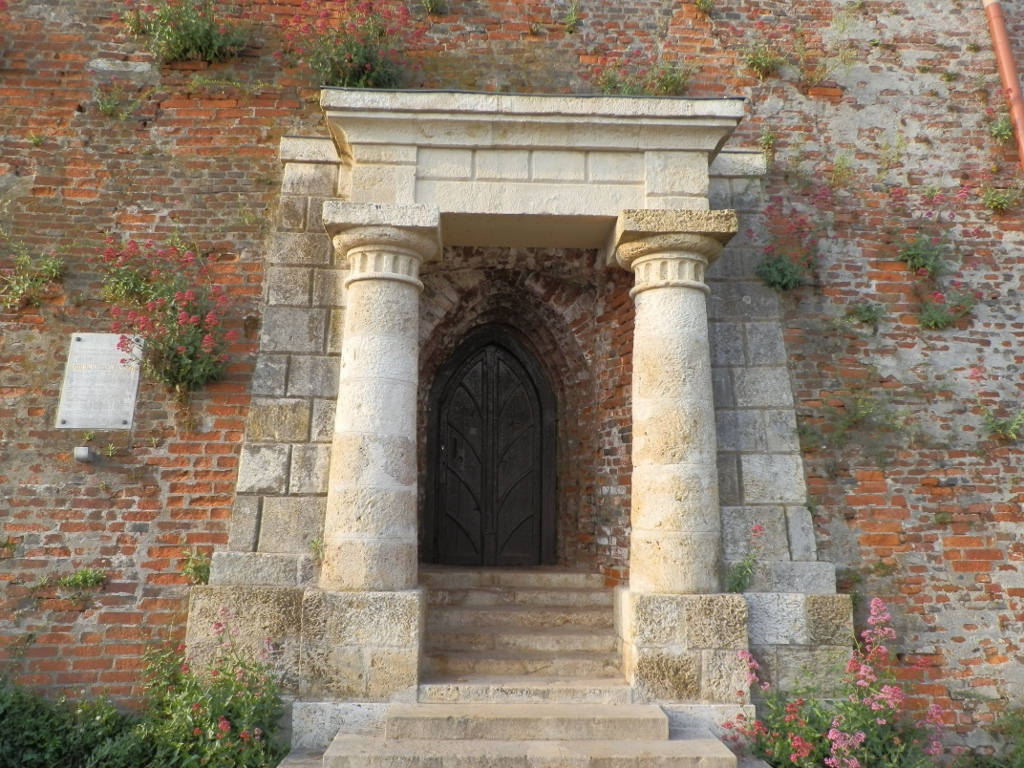
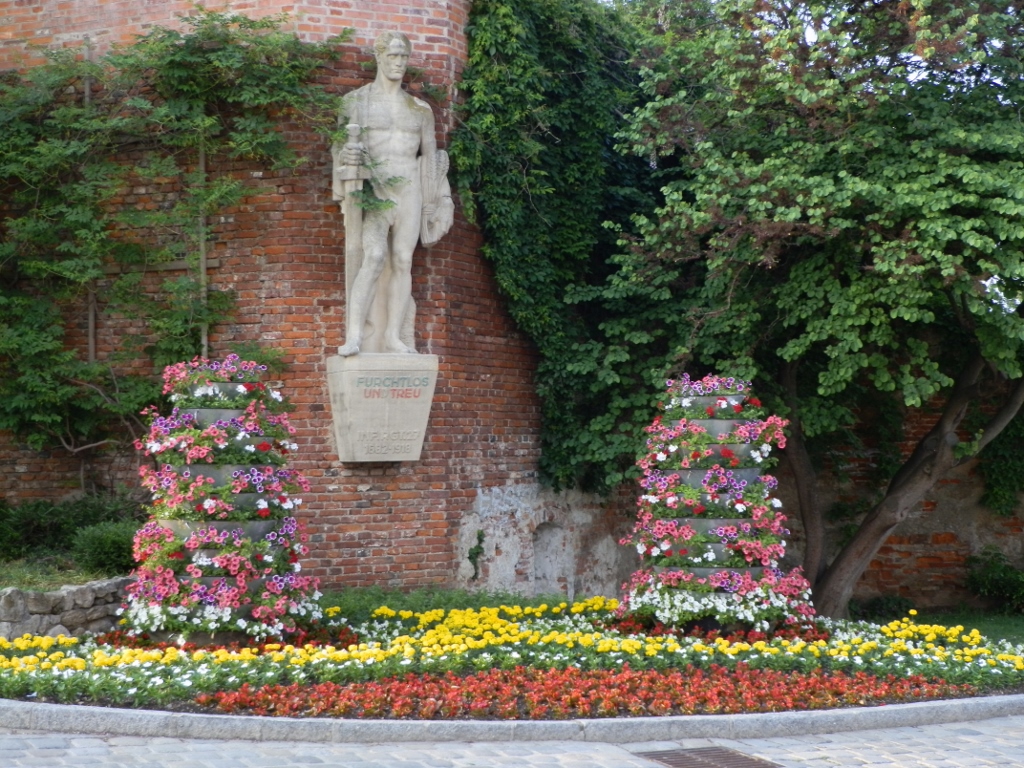
It’s important to mention that there used to be a castle here, which is where the hill gets its name, but over time the castle developed into a large fortress. This fortress dates back to the Middle Ages and was used to defend the city against attacks. Its stone walls, bastions, and moats are well preserved, so you can see what military architecture looked like back then. Inside the fortress, there used to be barracks, warehouses and artillery platforms, while today parts of the space have been converted into museum and cultural facilities.
I found it interesting to take a casual walk there and capture some picturesque details.
 Graz, a detail
 Graz, a detail
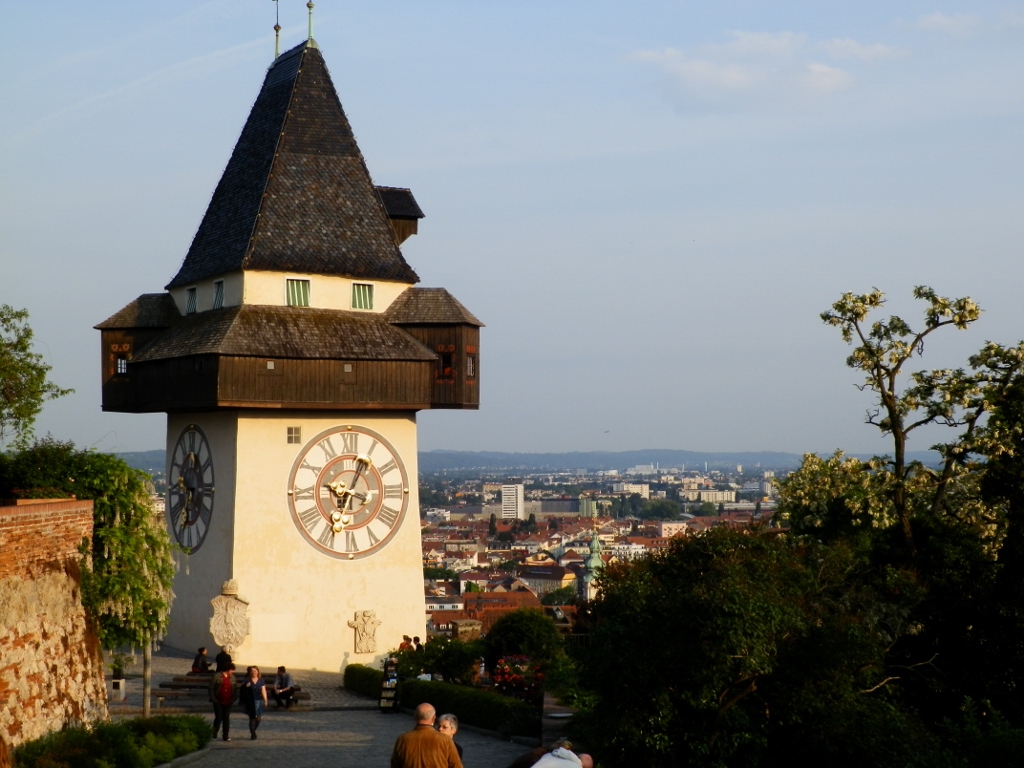
But, one of the most famous landmarks on Schlossberg, which is also a symbol of the city of Graz, is the clock tower.
 Graz, a detail
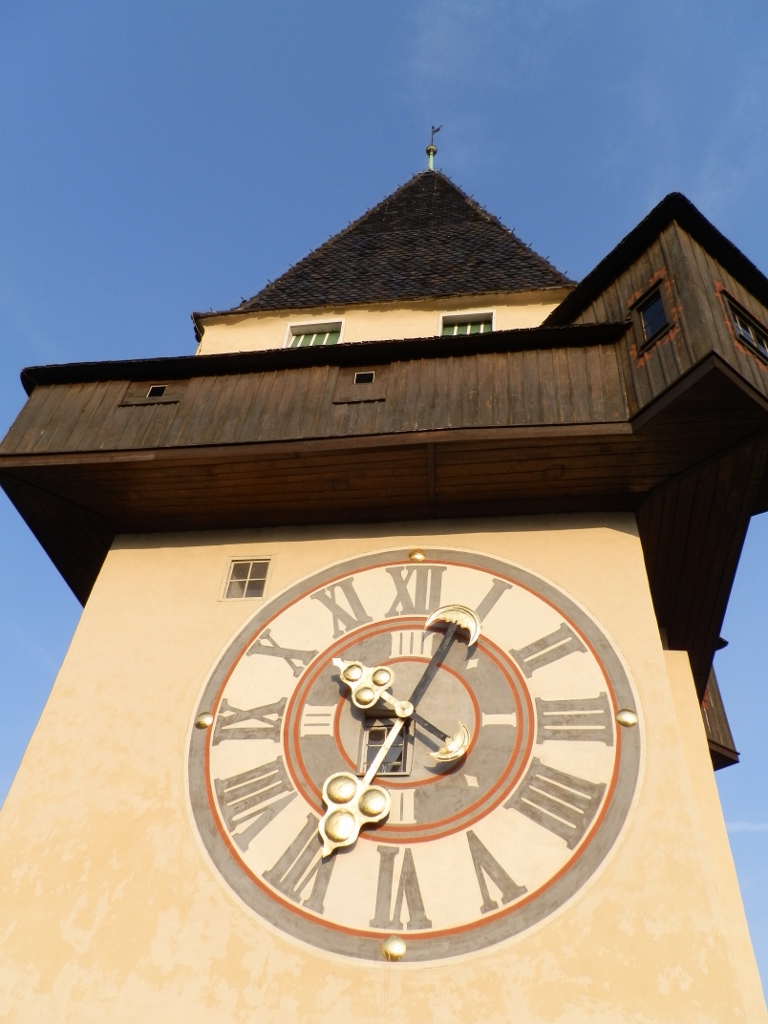
The first tower on this site was built as early as the 13th century as part of the medieval fortress that protected the city. The clock tower largely took its current form in the 16th century, when the tower was renovated and a large public clock was added. As I’ve mentioned earlier, the peculiarity of this clock is that the large hand shows the hours, while the smaller hand shows the minutes – opposite to most clocks. The reason for this is that originally there was only an hour hand, while the minute hand was added later. The tower itself is about 28 m high and has a wooden gallery at the top, which was added in 1560. When the fortress on Schlossberg was demolished after the Napoleonic Wars in 1809, the citizens of Graz bought the clock tower to save it from destruction. The clock on the tower still works today and its mechanism is maintained and occasionally adjusted to keep accurate time.
 Graz, a detail
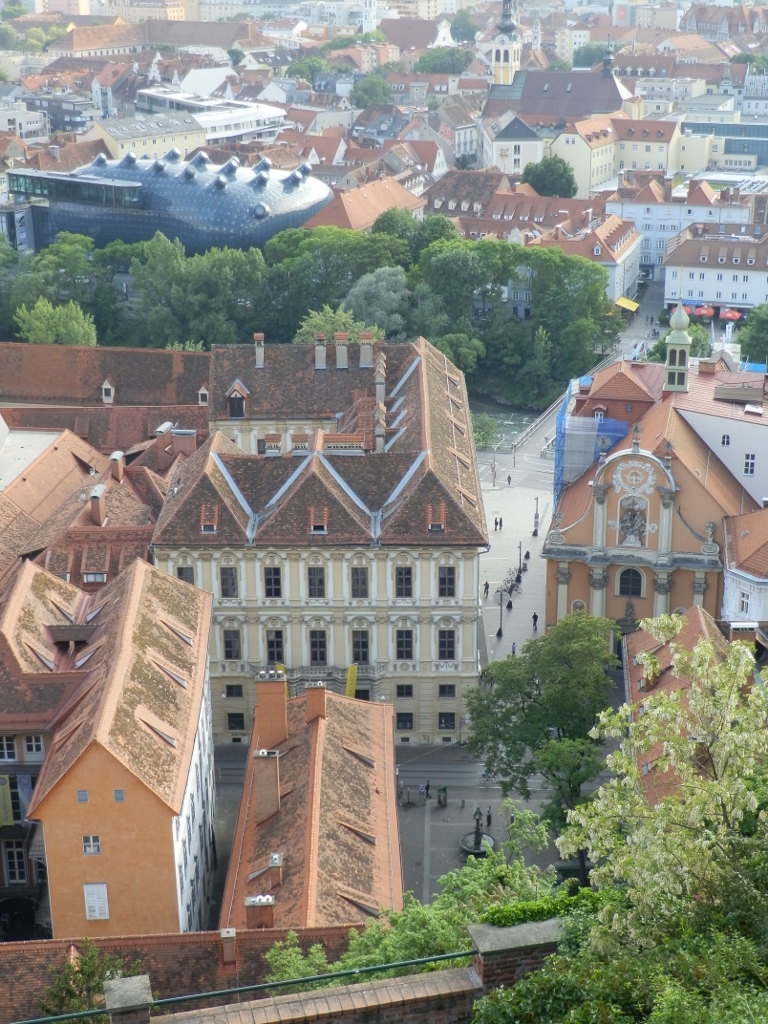
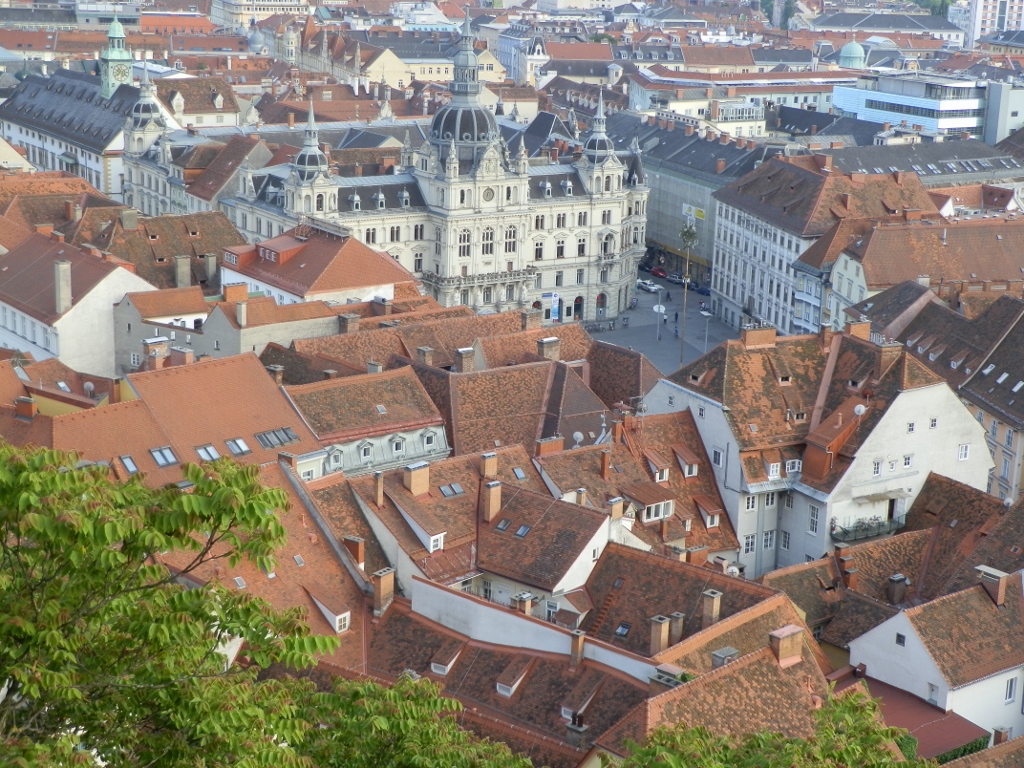
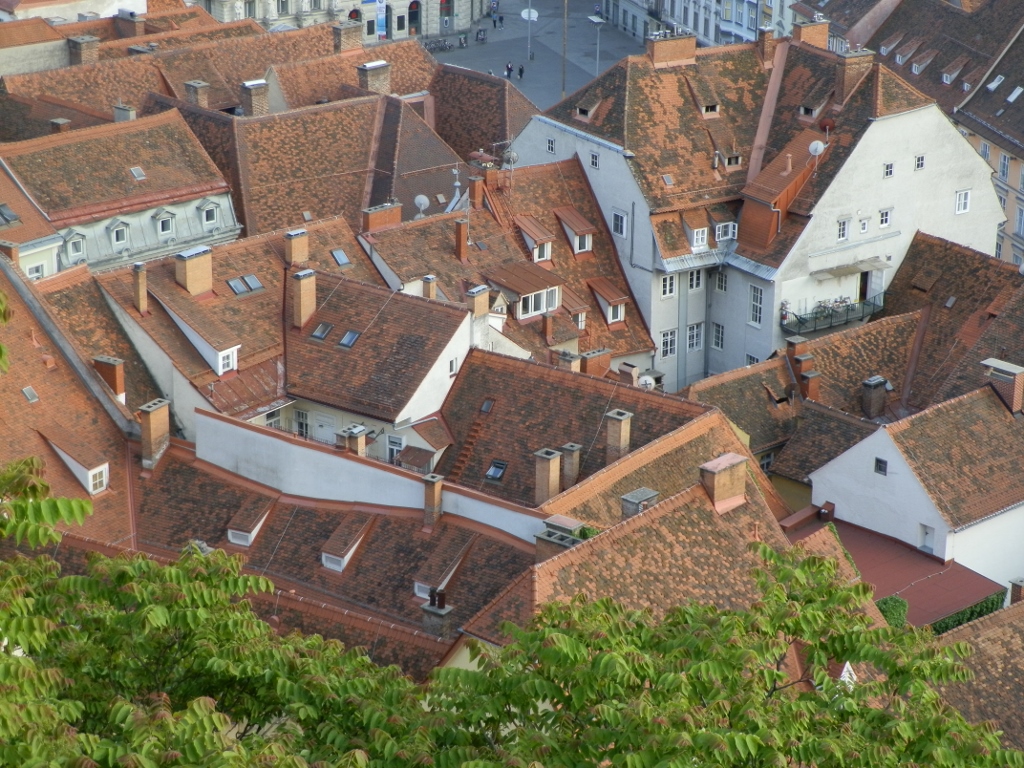
From the plateau near the clock tower, there is also a wonderful view of the city, especially its central part. I enjoyed that view as well, photographing various details along the way.
 Graz
Graz
 Graz, a detail
 Graz, a detail
 Graz, a detail
Among other routes, you can descend from Schlossberg to the city (and of course also climb up) through a tunnel.
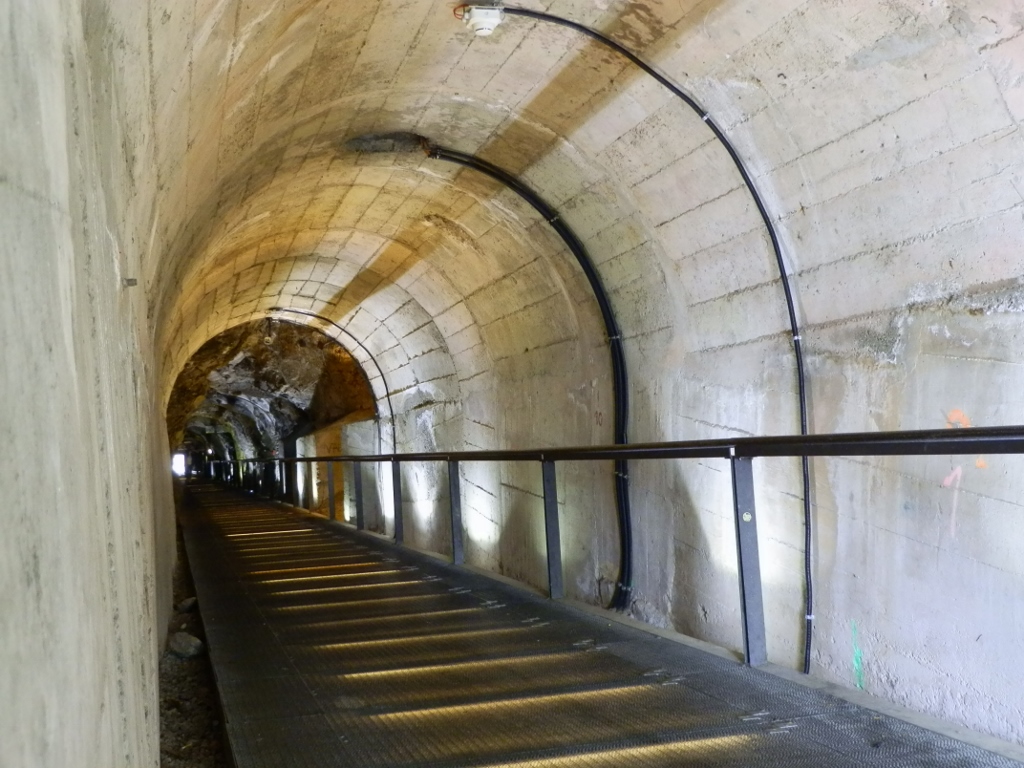 Graz, a detail
Soon enough I found myself at Karmeliterplatz, from where I once again looked up at Schlossberg and its clock tower.
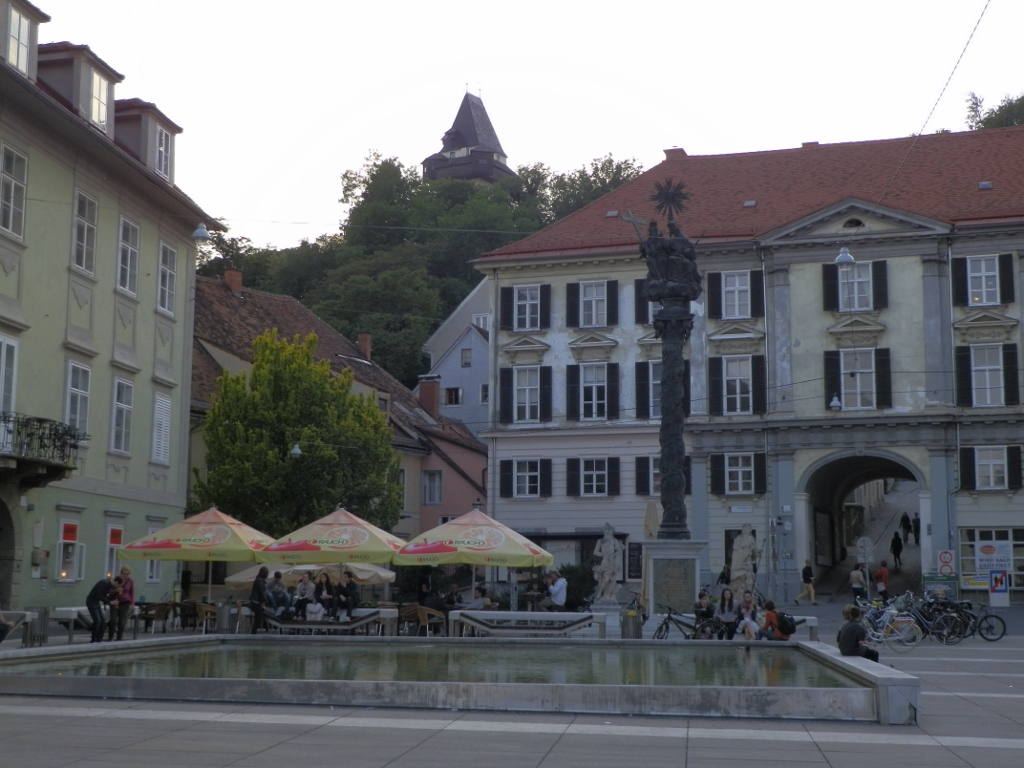 Graz, a detail
After descending to the city centre, that is, the Old Town, I continued to walk around and since the day was already drawing to a close, I stopped at a pub to make sure I was well hydrated. Later, I took the tram back to the hotel and again retreated to my room earlier than usual.
I didn’t have any specific plans for the next day; my intention was simply to walk around the city at a relaxed pace and take photographs.
After a very leisurely wake-up, I first went down to the area with the reception because that was the only place with Wi-Fi, and I wanted to check my mail. Then I went to the train station and bought a ticket to Vienna valid for two days, planning to stay the first night somewhere roughly halfway and only continue to Vienna the following day.
Having taken care of all this, and after making a few purchases along the way, I stopped by my hotel room to drop things off, then headed back to the city centre.
There, I first visited the Church of the Merciful Brothers. It is a Baroque church built in the 17th century as part of a hospital complex, a function that has persisted to this day and reflects the fact that it is dedicated to mercy and the care of the sick.
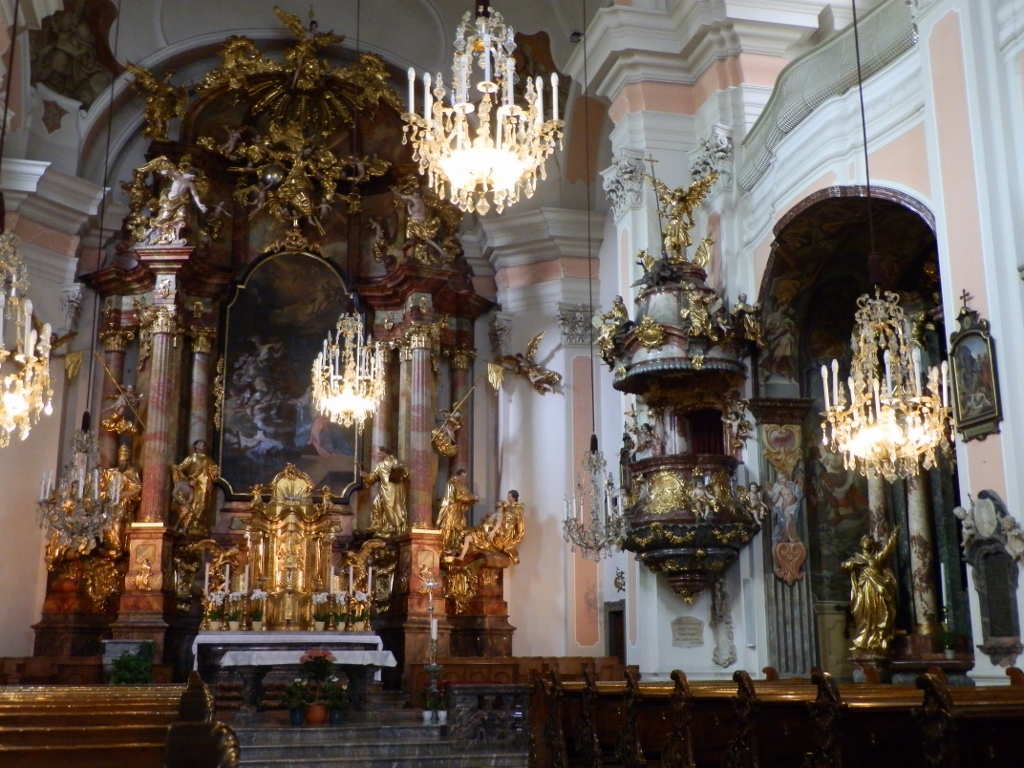 Graz, a detail
While strolling leisurely through this part of the city, I came to a square where I photographed the façade of a beautiful and elegant 17th-century church called the Church of Mary, Help of Christians, or Mariahilferkirche. It is dedicated to the Virgin Mary as one who helps the faithful. The name is connected to the Catholic belief that people can turn to Mary for help and protection in difficult times.
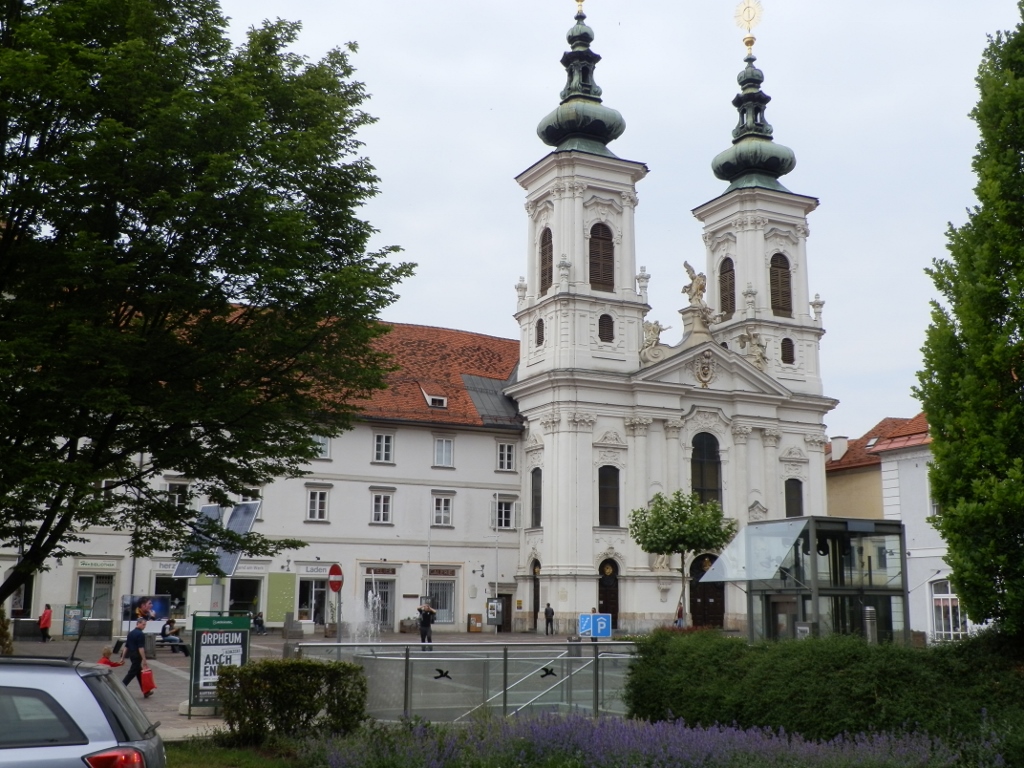 Graz, a detail
Not far from there is the Kunsthaus Graz, the contemporary art museum I mentioned earlier and visited the previous day. This time, however, I photographed it more carefully and in the following pictures you can clearly see just how modern its design is.
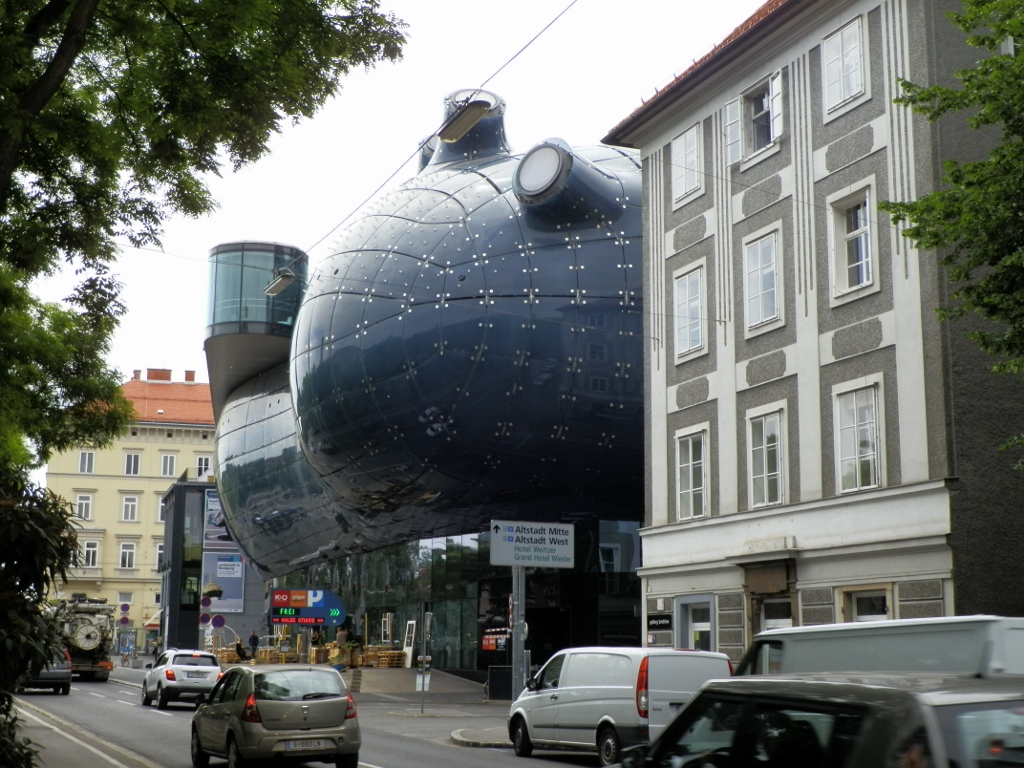 Graz, a detail
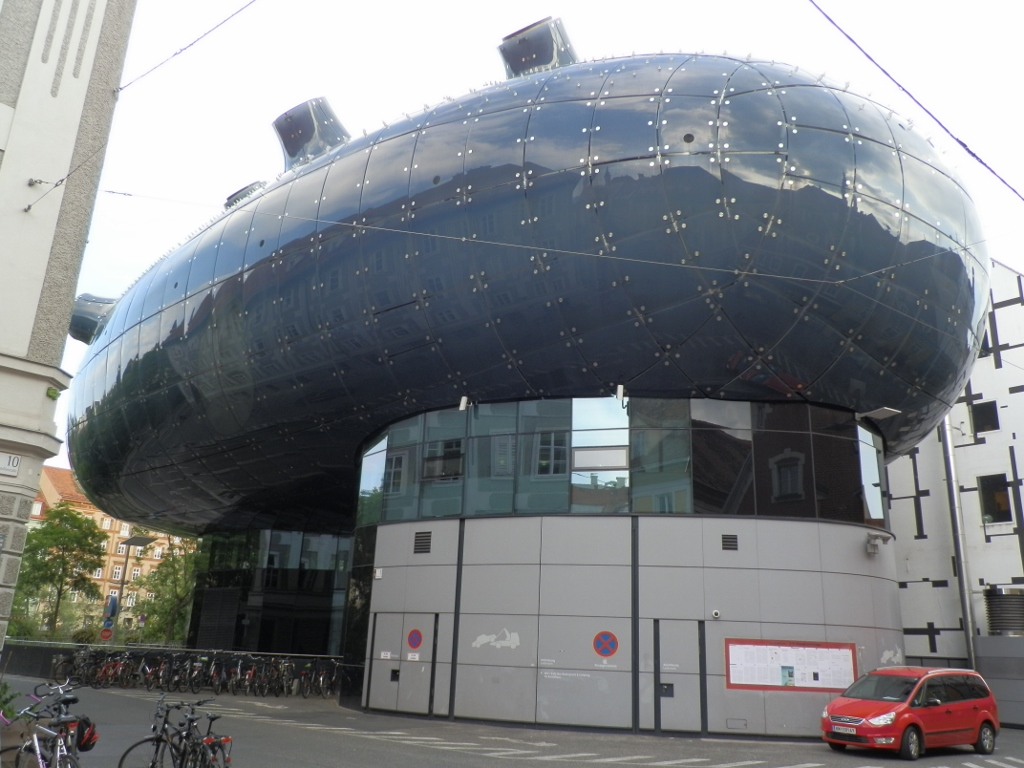 Graz, a detail
After this, I crossed the Mur River and arrived at the Old Town in Graz.
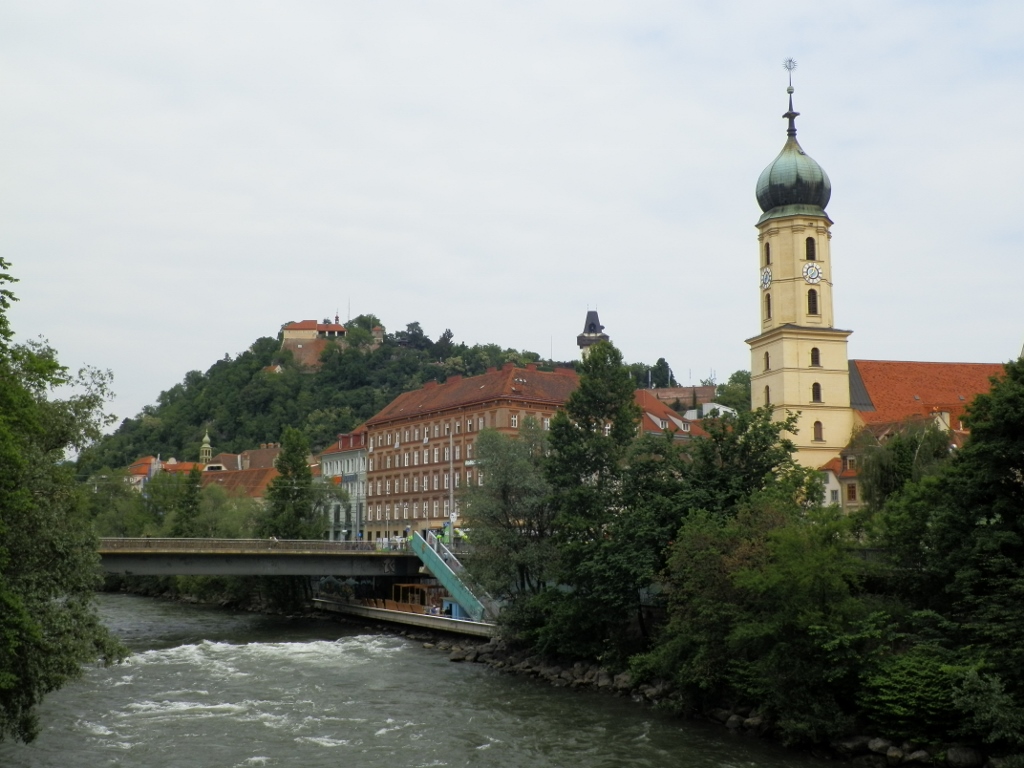 Graz, a detail
Although I had already visited a few museums within the Joanneum Quarter or Joanneumsviertel the previous day, I now went back to that contemporary museum complex to photograph some details.
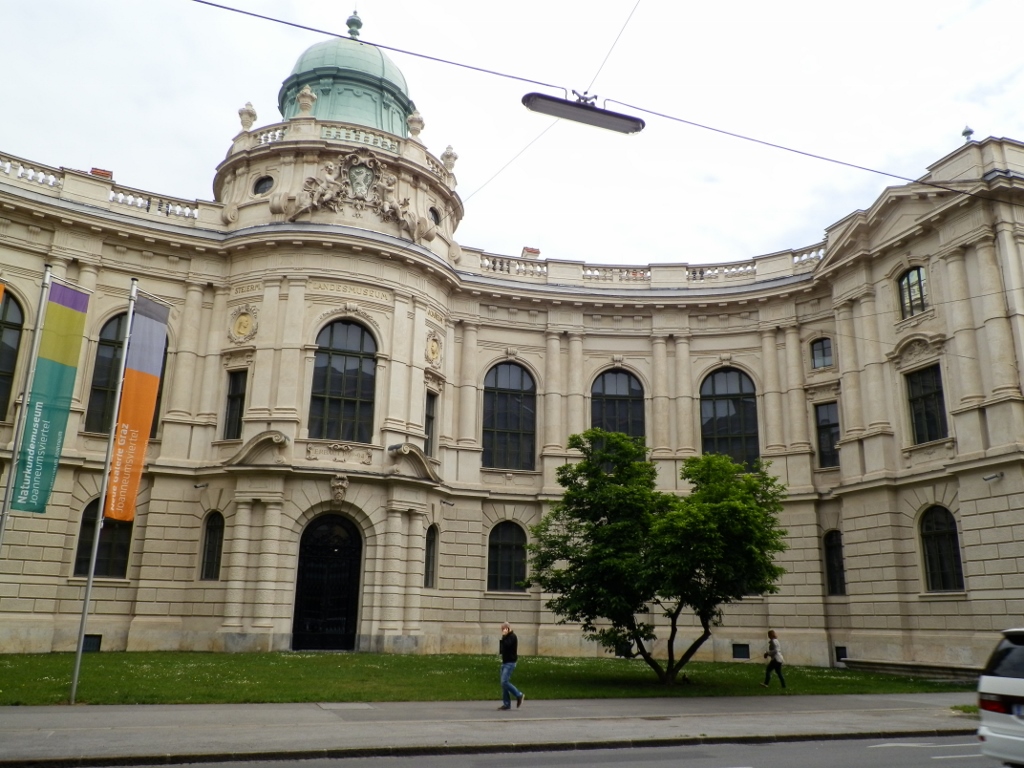 Graz, a detail
As the name suggests, this refers to several buildings within the same block. It includes a couple of museums and a library, all part of the Universalmuseum Joanneum, which I mentioned earlier. By the way, the name “Joanneum” comes from Emperor Joseph II, who founded this museum in 1811. As for this “quarter,” it encompasses both historical buildings, like the one seen in the previous photograph, and contemporary architectural elements, which can be seen in the next photograph.
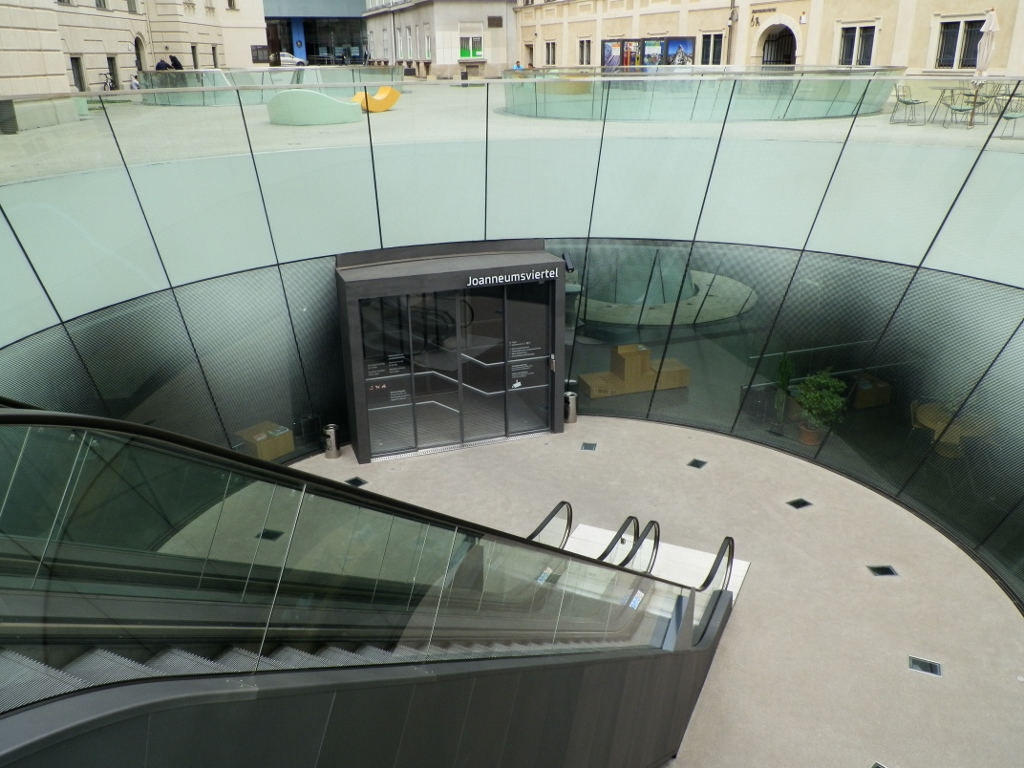 Graz, a detail
About a ten-minute walk further, I arrived at the Graz Opera House.
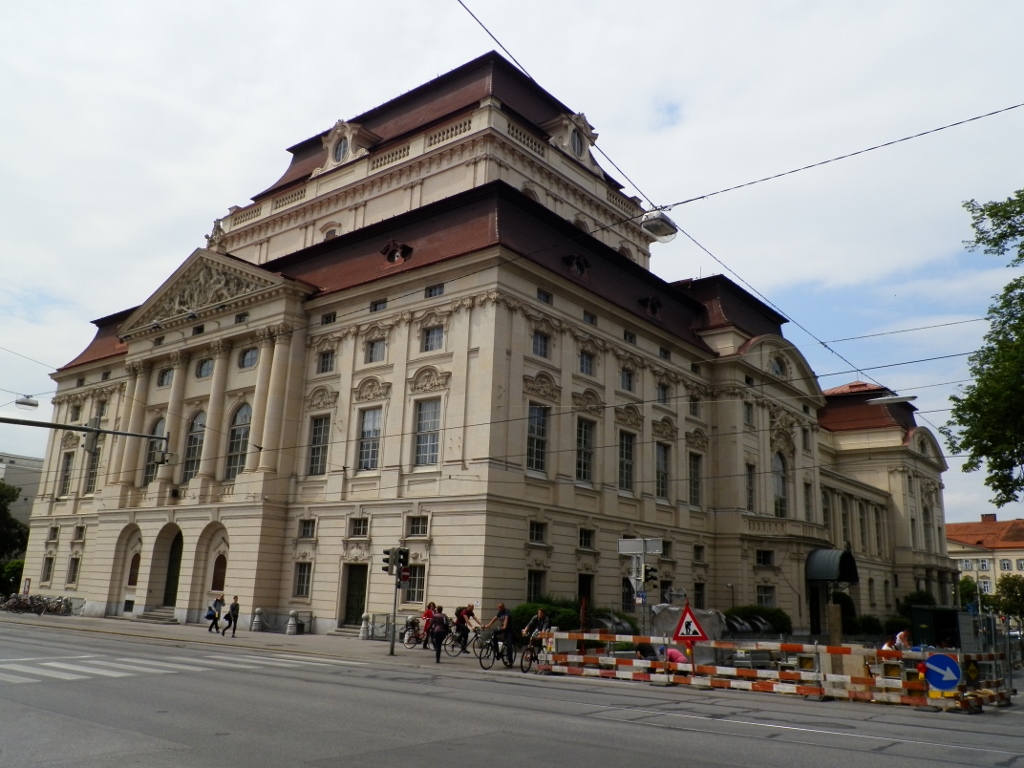 Graz, a detail
The opera house was built in 1899 in an eclectic style, which means it is a kind of “architectural mix” – different styles are combined here, so the rich Baroque decoration is paired with elements of Renaissance and classical architecture.
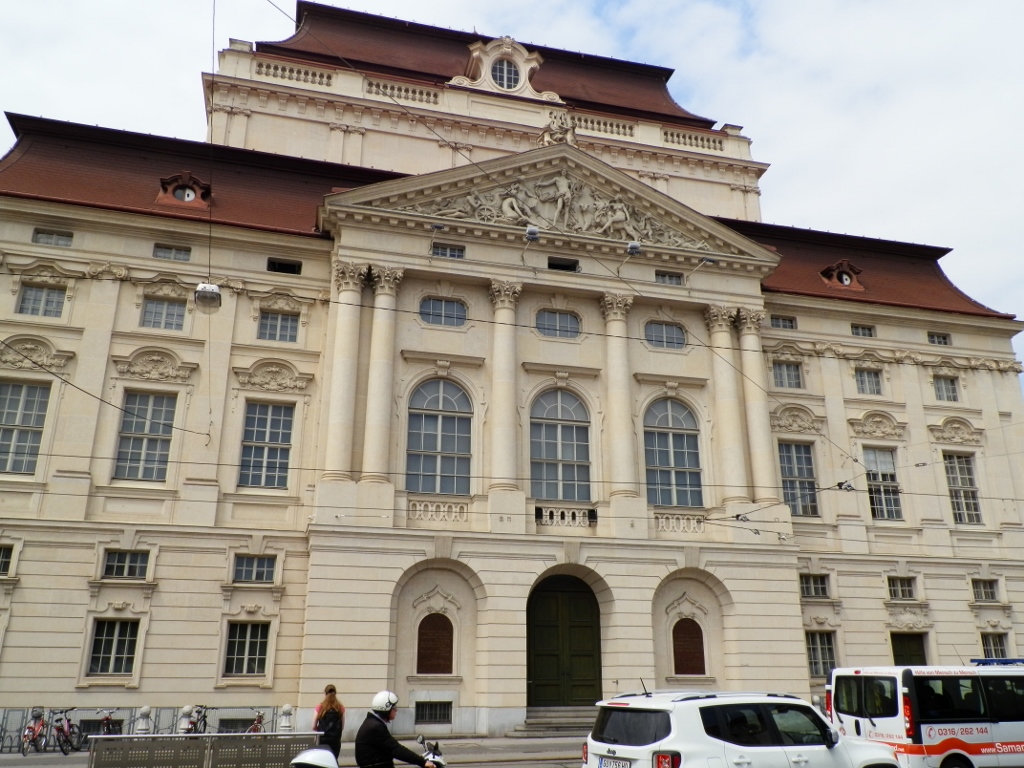 Graz, a detail
Here, one can watch and listen to performances of both classical and contemporary opera, as well as ballets and concerts. From what I’ve read, the interior of the building is extremely impressive, with its lavish chandeliers, frescoes, and decorative details. I didn’t see the inside, but I did walk around the building.
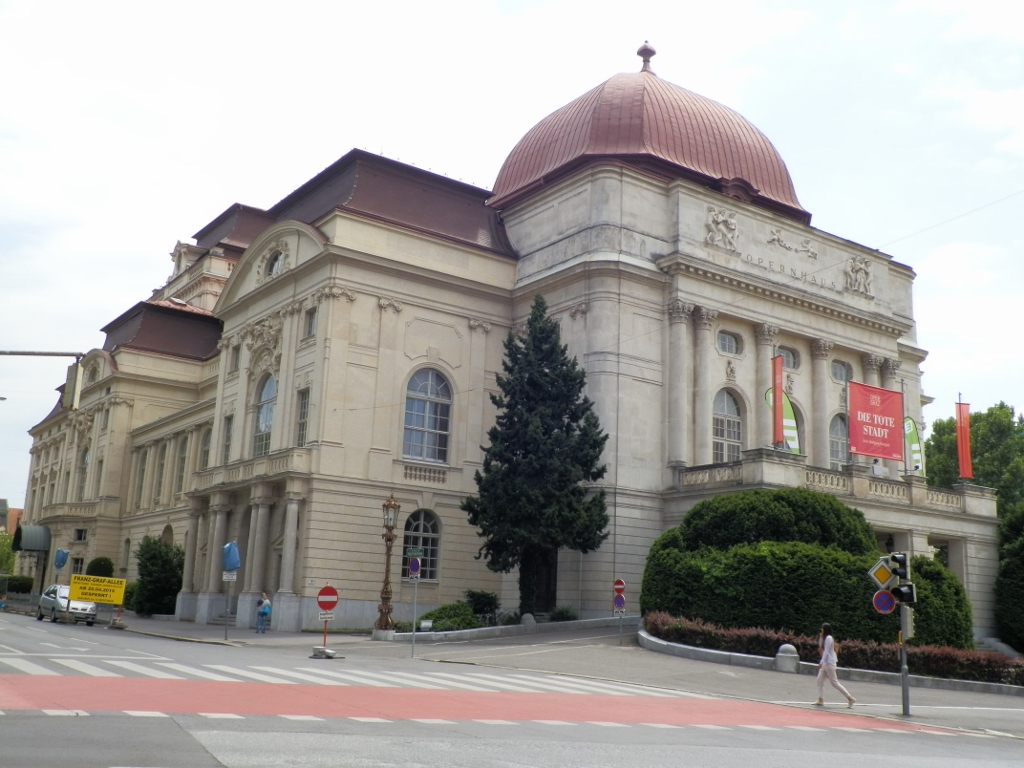 Graz, a detail
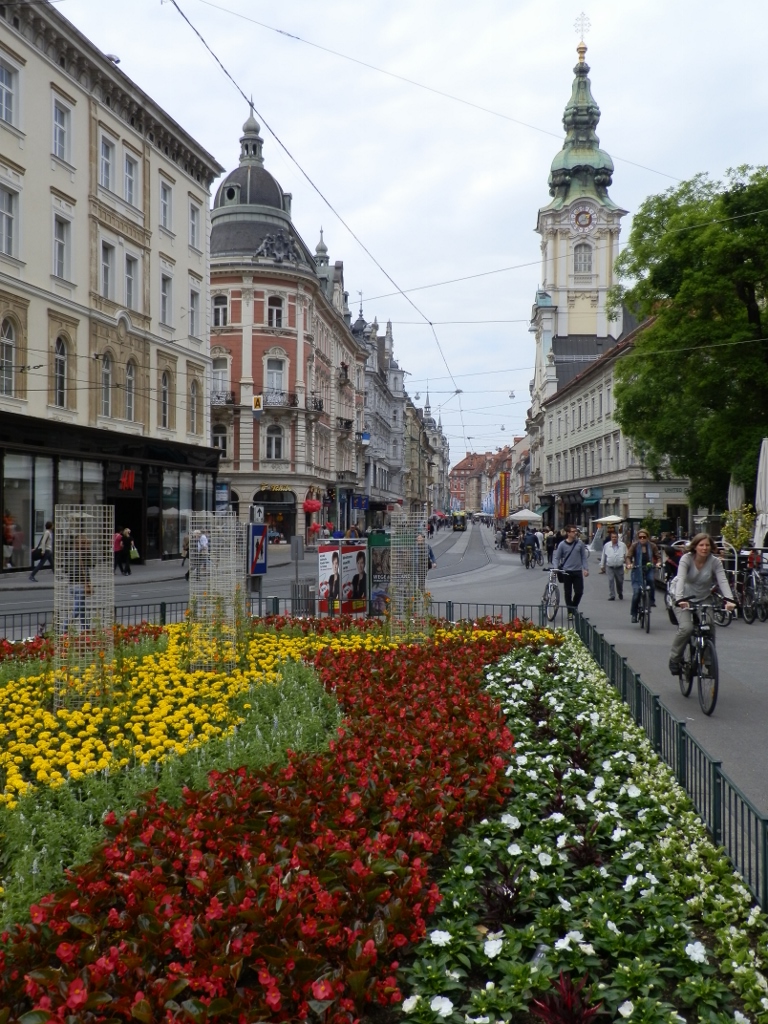
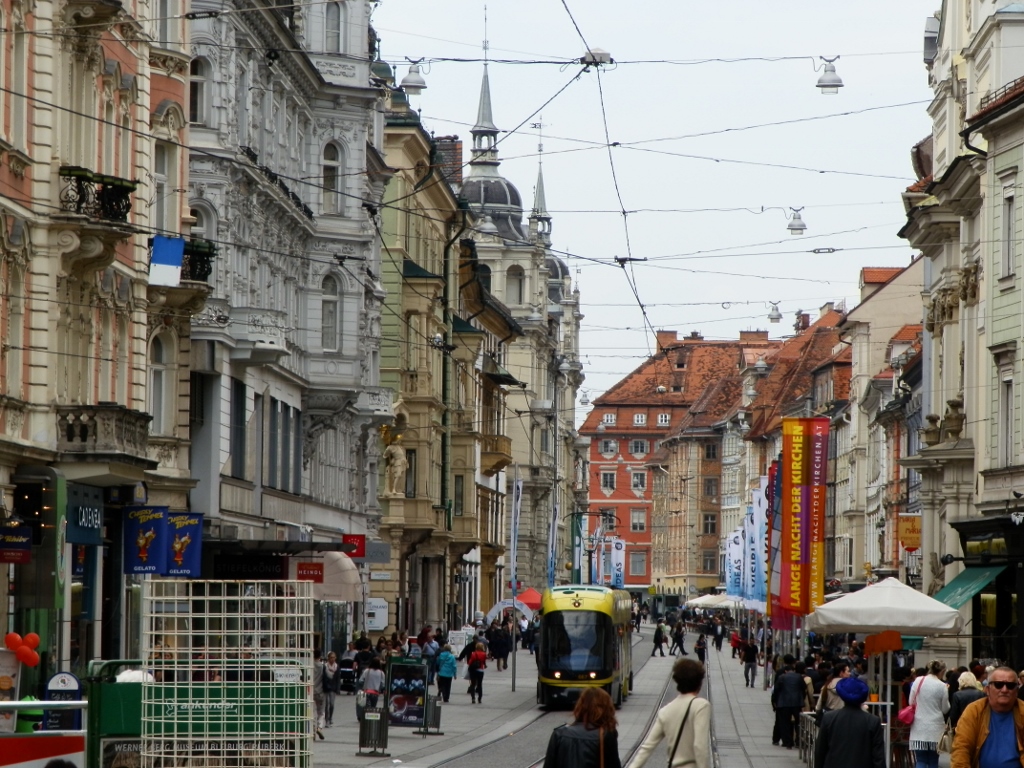
From here, I followed some smaller streets back to the Main Square, or Hauptplatz, but primarily to focus on some buildings located on Herrengasse.
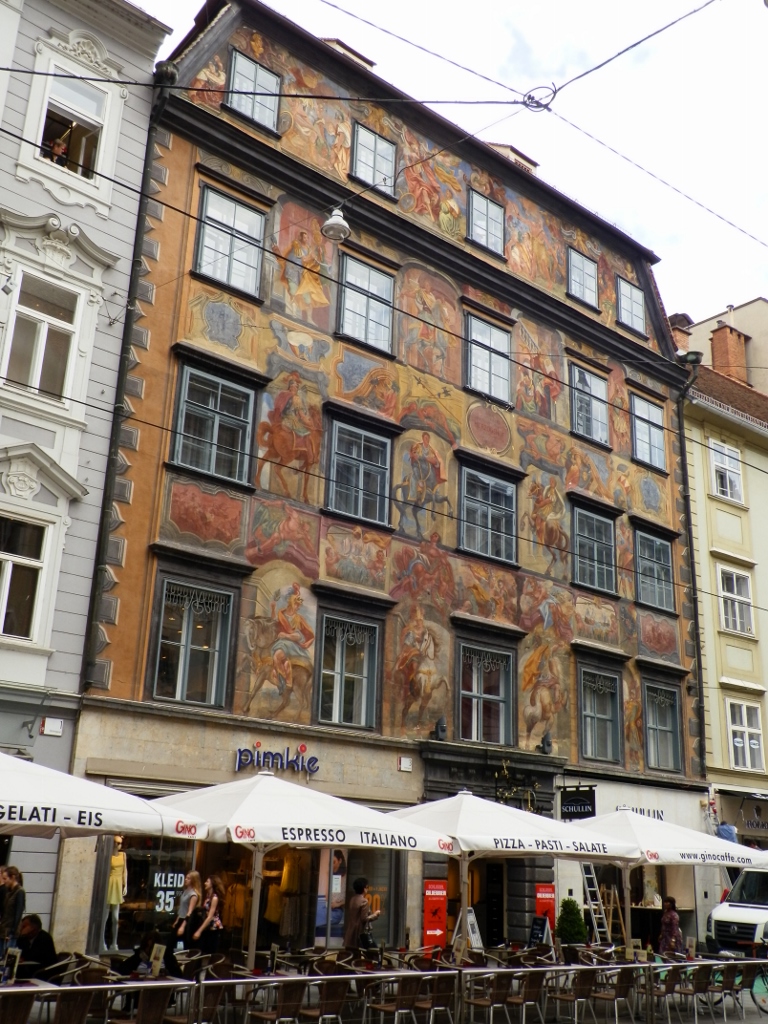
One of these is the Gemaltes Haus, which means “Painted House.” It is a building in the centre of Graz known for its richly painted façade. The paintings depict historical scenes, mythological motifs, and architectural illusions. The building itself was constructed in the 15th and 16th centuries, but the painting was done during the 17th and 18th centuries.
 Graz, a detail
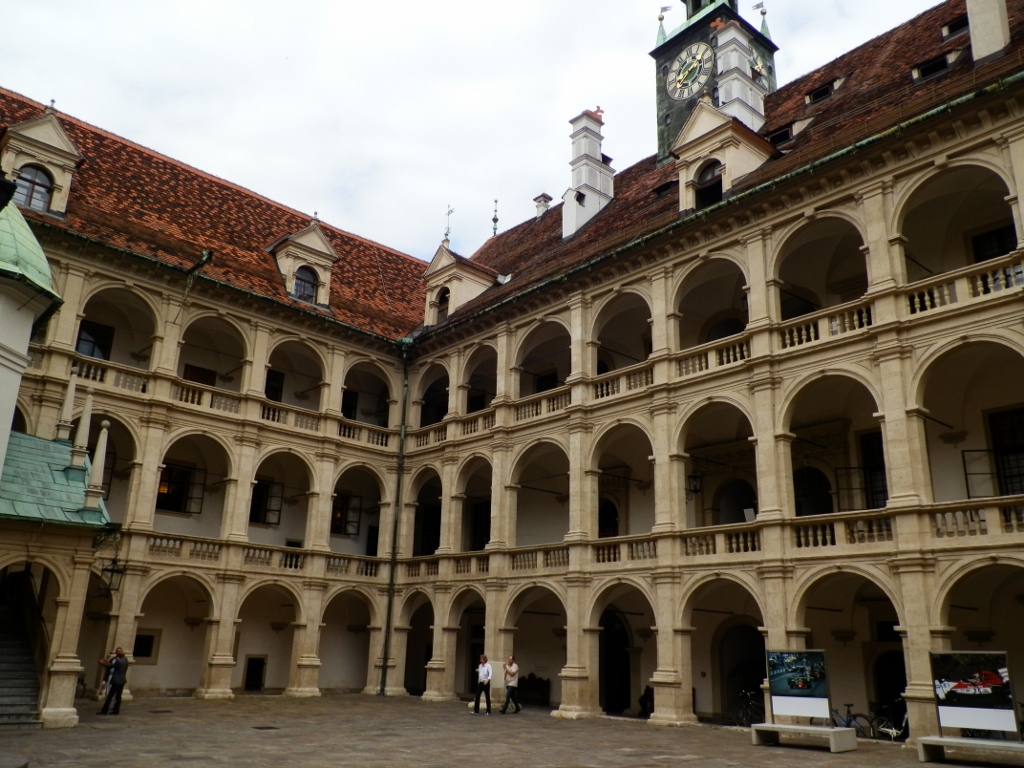
On the opposite side of the street, just a few dozen metres away, is the Graz Province House, or Grazer Landhaus, as it was originally the seat of the provincial government of Styria.
It is a historic building, constructed between 1557 and 1565, and represents one of the finest examples of Renaissance architecture in Austria. Its interior courtyard, with a beautiful arcaded gallery decorated with columns and reliefs, is particularly striking, reflecting Renaissance elegance.
 Graz, a detail
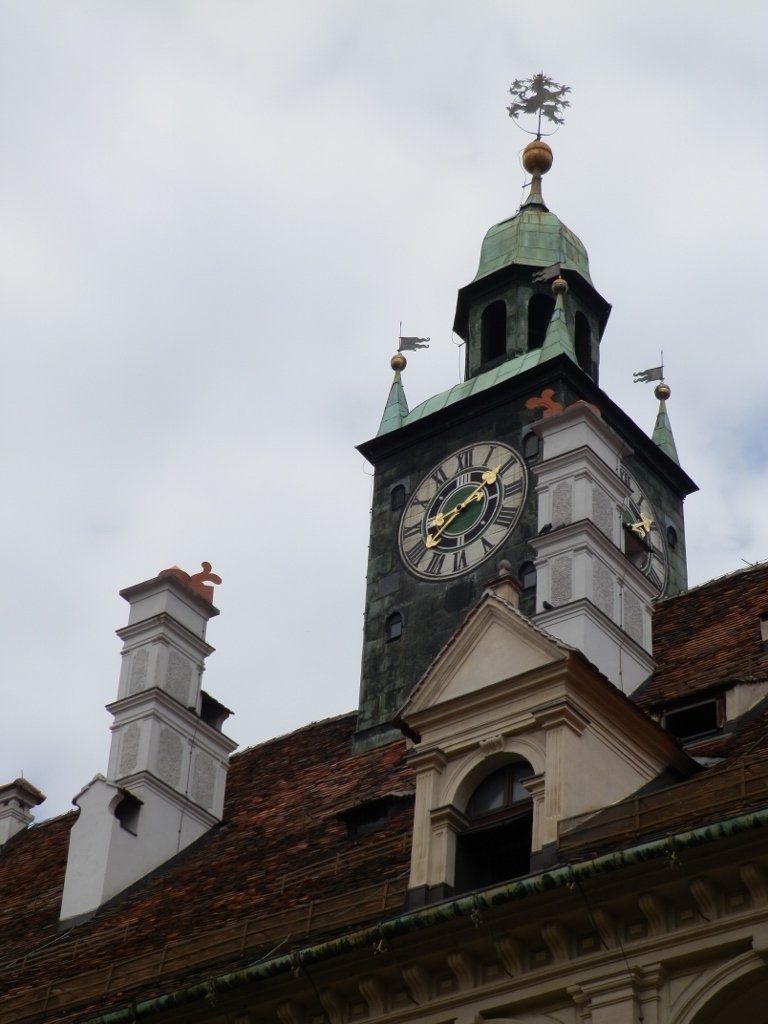
On the roof facing the street, there is also a tower with a clock, but this part was added at the end of the 18th century.
 Graz, a detail
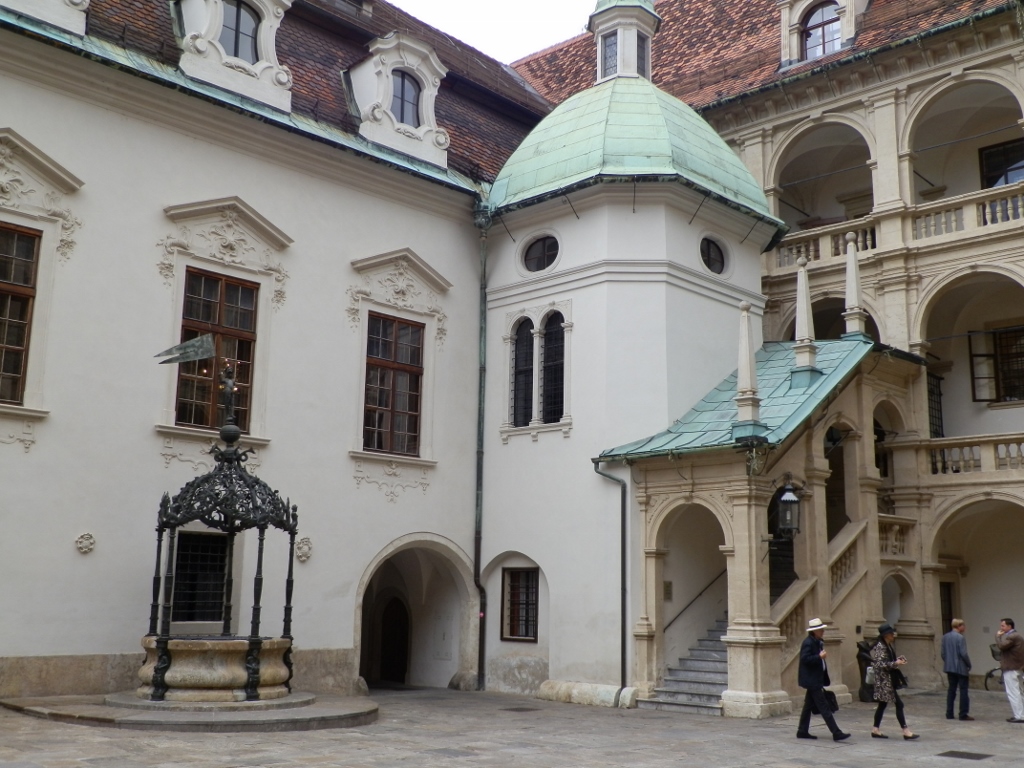
However, the interior courtyard of the Landhaus is far more interesting, as it represents an excellent example of Renaissance architecture.
 Graz, a detail
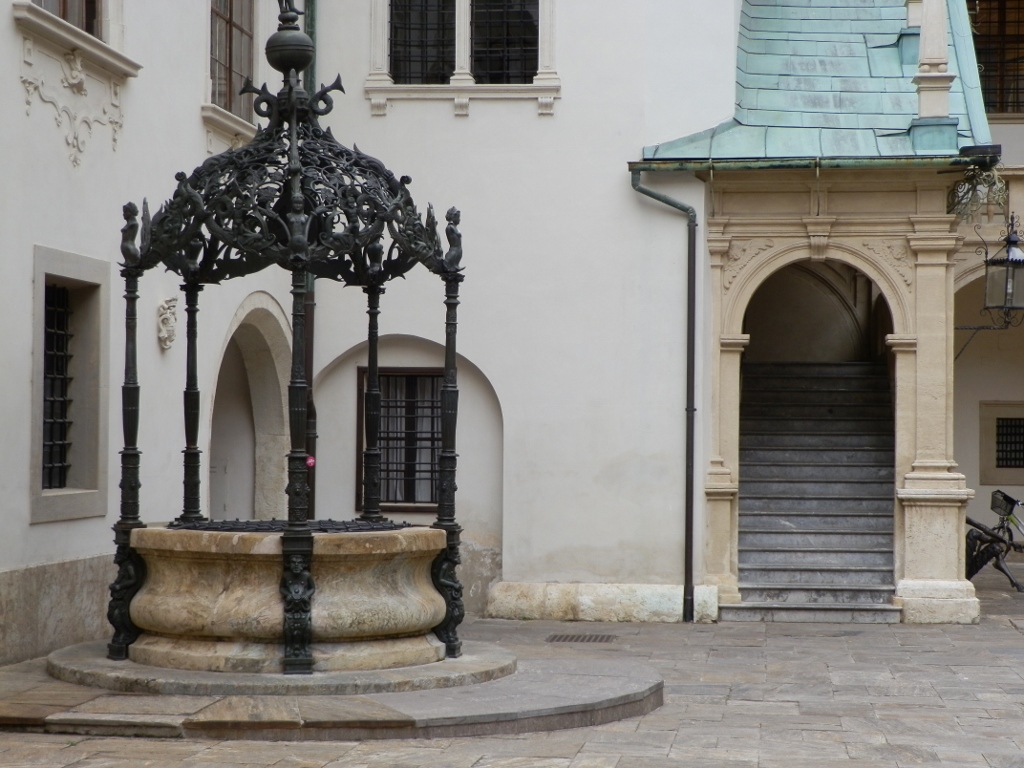
There, among other things, you can see a decorative well with a metal structure featuring ornamental columns and motifs typical of the late Renaissance.
 Graz, a detail
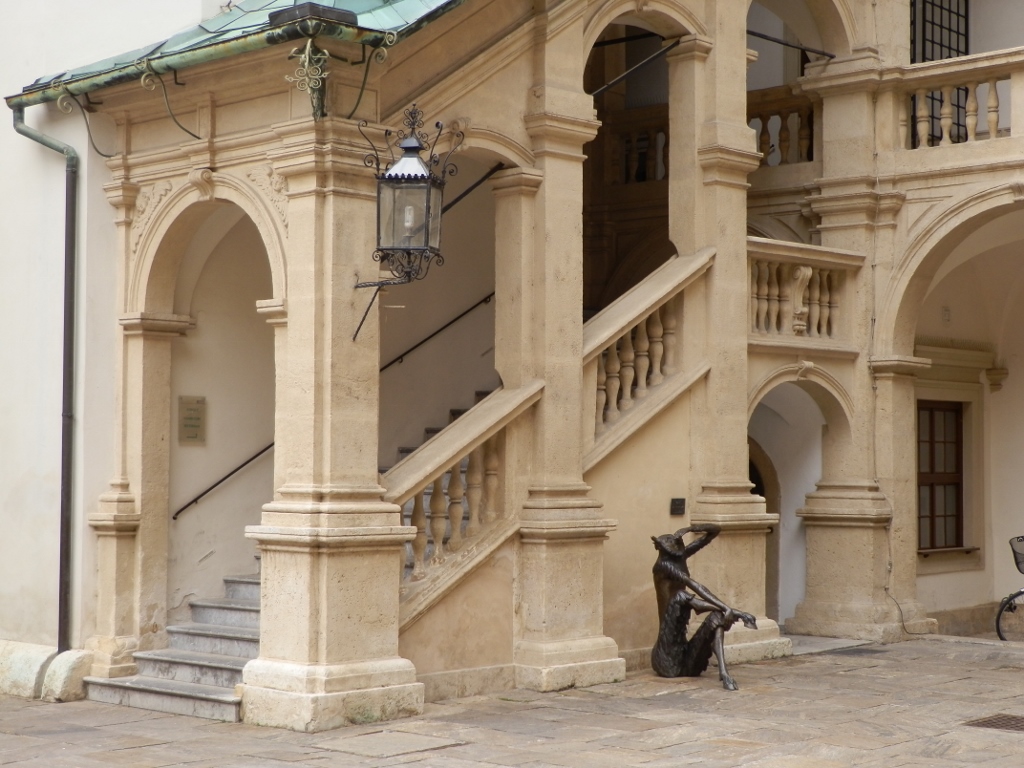
In addition, a covered staircase leads from the courtyard to the first floor, which is decorative in itself, but it also features the sculpture “Faun with a Broad View.” It depicts the mythological creature, the faun, positioned as if it is “looking” across the courtyard. By the way, the sculpture is entirely contemporary, dating from 2010.
 Graz, a detail
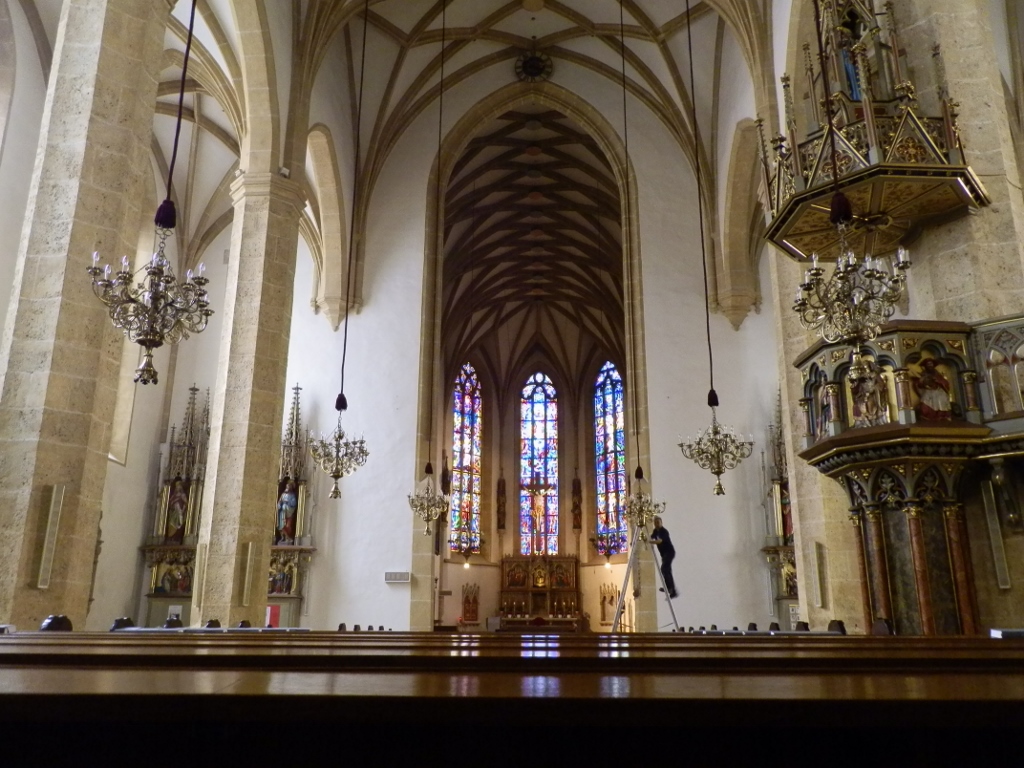
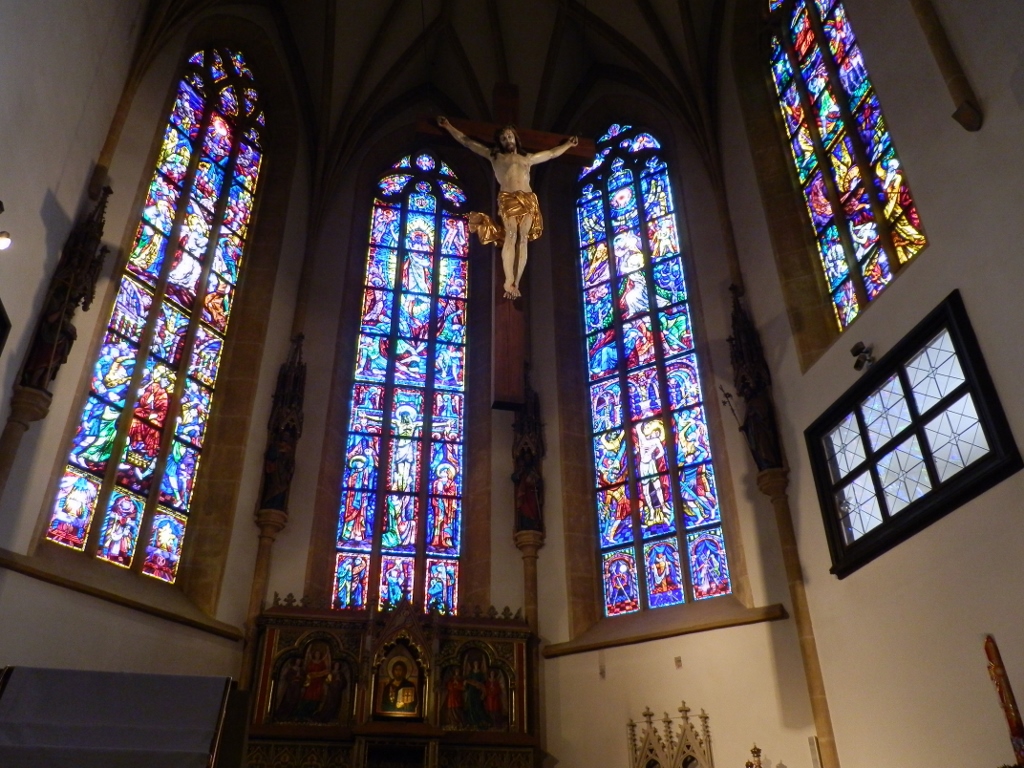
Further along the same street, Herrengasse, is the City Parish Church of the Holy Blood. Its name comes from the fact that the church houses a relic of the Holy Blood, that is, the blood of Jesus Christ (usually a small piece of cloth soaked in Jesus’ blood). The church was originally built in the 15th century, but it underwent numerous modifications and additions during the 17th and 18th centuries.
 Graz, a detail
 Graz, a detail
After leaving this church, I took one more look down Herrengasse, then went for lunch and a short rest, and afterwards headed towards the City Park.
 Graz, a detail
 Graz, a detail