My dear high school friend, Željko, who has been living in London for years, decided to celebrate his round-number birthday back in 2015 in Vienna. He really loves his birthdays (we’re similar in that) and it’s especially important to him to celebrate such milestone birthdays in some special place he loves (that’s where we differ; I always prefer celebrating my birthday at home).
So the decision was made for him to celebrate his May birthday in Vienna, since he loves that city so much, while the main event was supposed to be a formal dinner for his friends at an exceptionally beautiful restaurant.
Besides loving to celebrate a birthday with my dear friend when I know it means a lot to him, I also really liked the idea that already in November 2014 (when we were making plans) I could say that on a certain date in May the following year I had a dinner invitation in Vienna. It sounds pretty good, especially if someone wants to show off, which absolutely wasn’t my intention, but I’m aware of how it can come across.
However, when I started looking at hotel room prices, I almost fainted. The celebration was scheduled during the Eurovision Song Contest and because of that, the prices had skyrocketed. So yes, I do love celebrating a birthday with my dear friend, but not if it’s going to cost me an arm and a leg. I told Željko that I would have to skip the celebration this time, but then he suggested that I could share a rented flat with a couple of his friends from England. I had already met one of them before, so that was perfectly fine with me – on the condition that I would have my own room and that I wouldn’t have to deal with renting the flat myself (at that time, I still wasn’t very experienced with renting flats when travelling).
Everything turned out that way, so I was able to buy a plane ticket to Vienna in good time with complete peace of mind. In the meantime, however, I realised that it would actually be quite pointless to go to Vienna for just a few days if I was already buying a plane ticket. That’s how I came up with the idea to spend a full week travelling, including both weekends – three days in Graz, one day in Semmering, and four days in Vienna.
Here is a map showing exactly where I went.
The trip started off quite nicely, so one Saturday early in the morning I flew from Belgrade to Vienna. I immediately made my way to the train station in Mödling, where I was supposed to catch a train to Graz. It was a completely unremarkable train station where I bought my ticket from one machine and grabbed refreshments from another. I had to wait a bit for the train, but it was actually perfect – I had enough time to calmly check which platform I needed and head there without any stress.
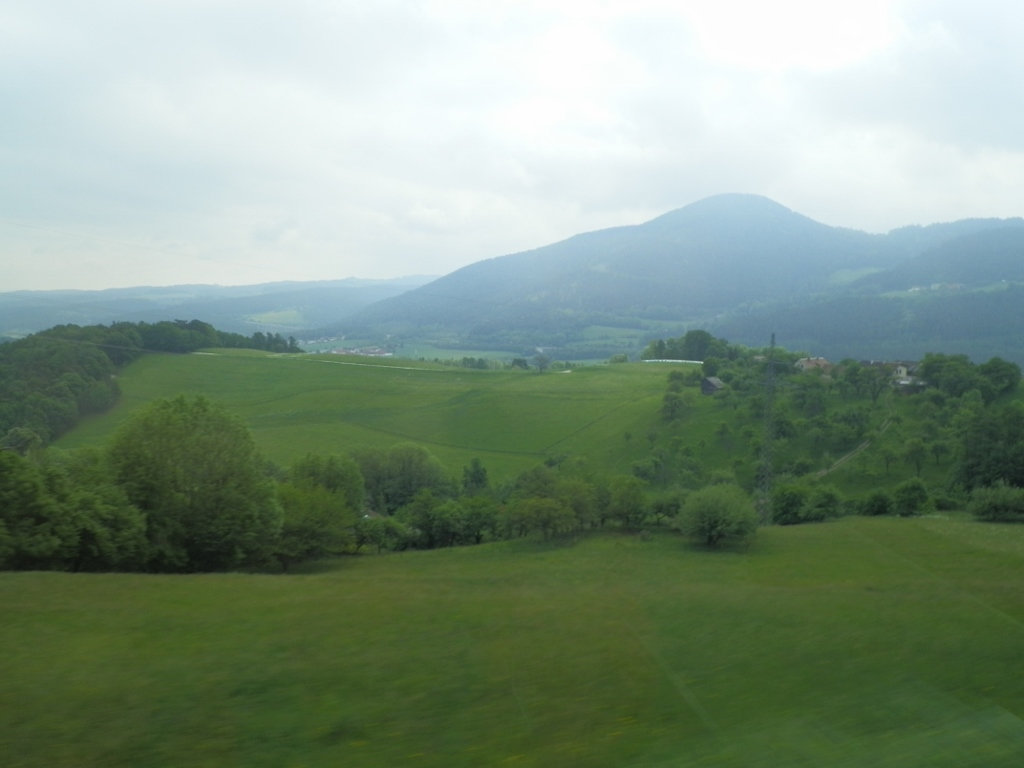
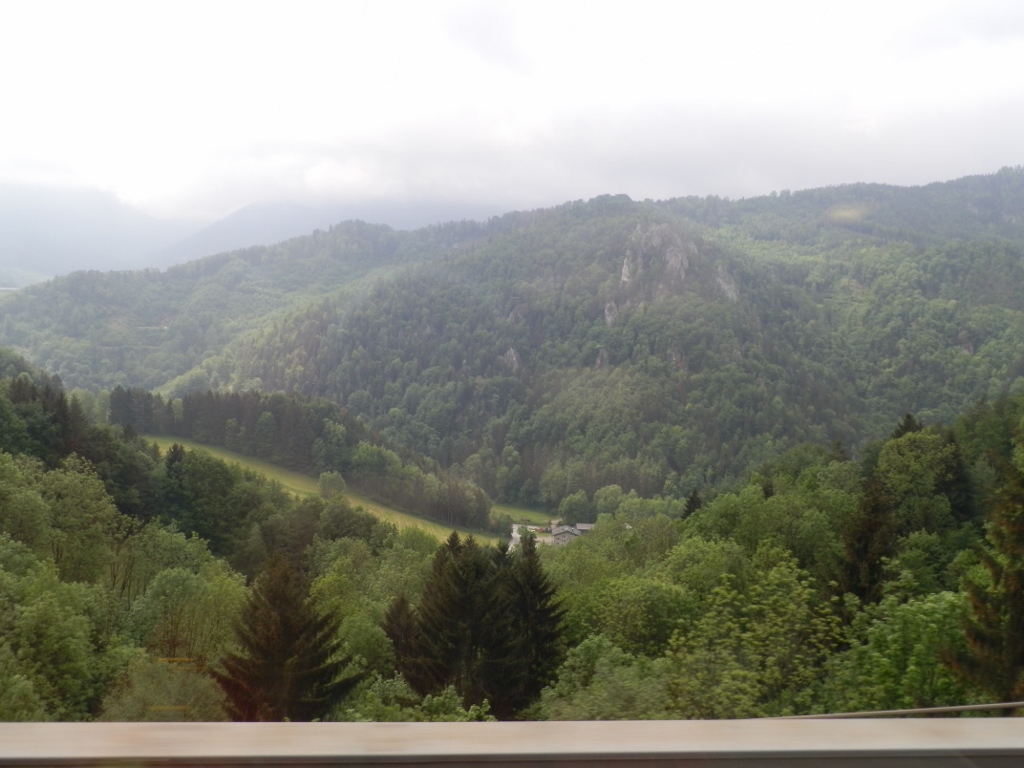
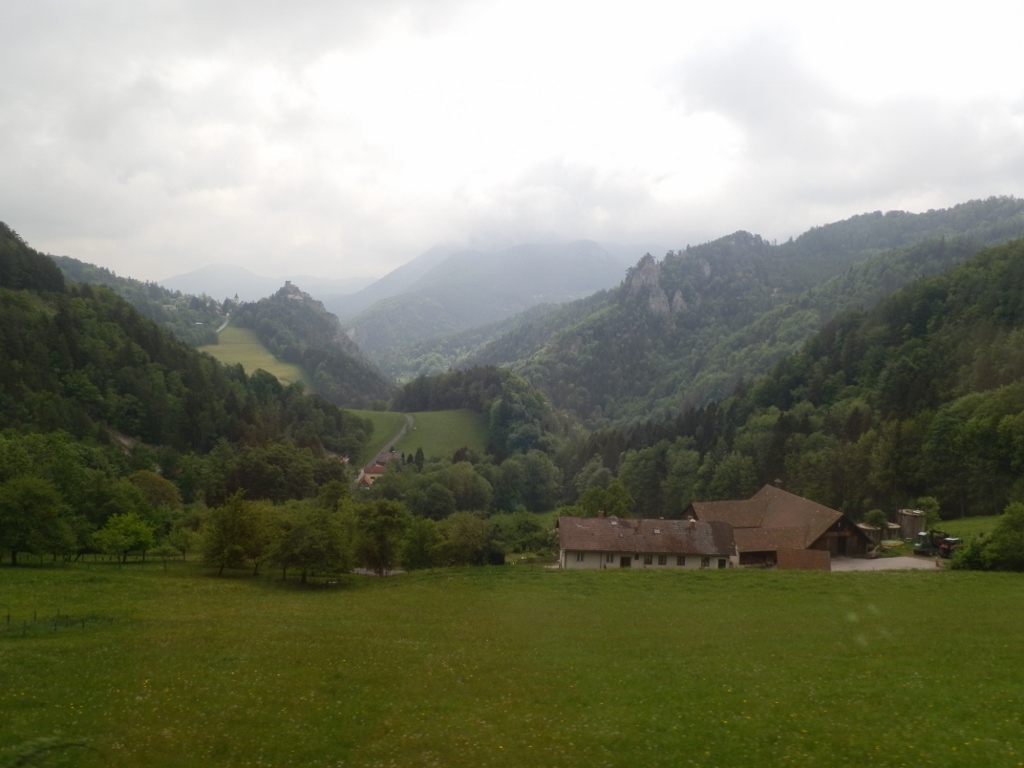
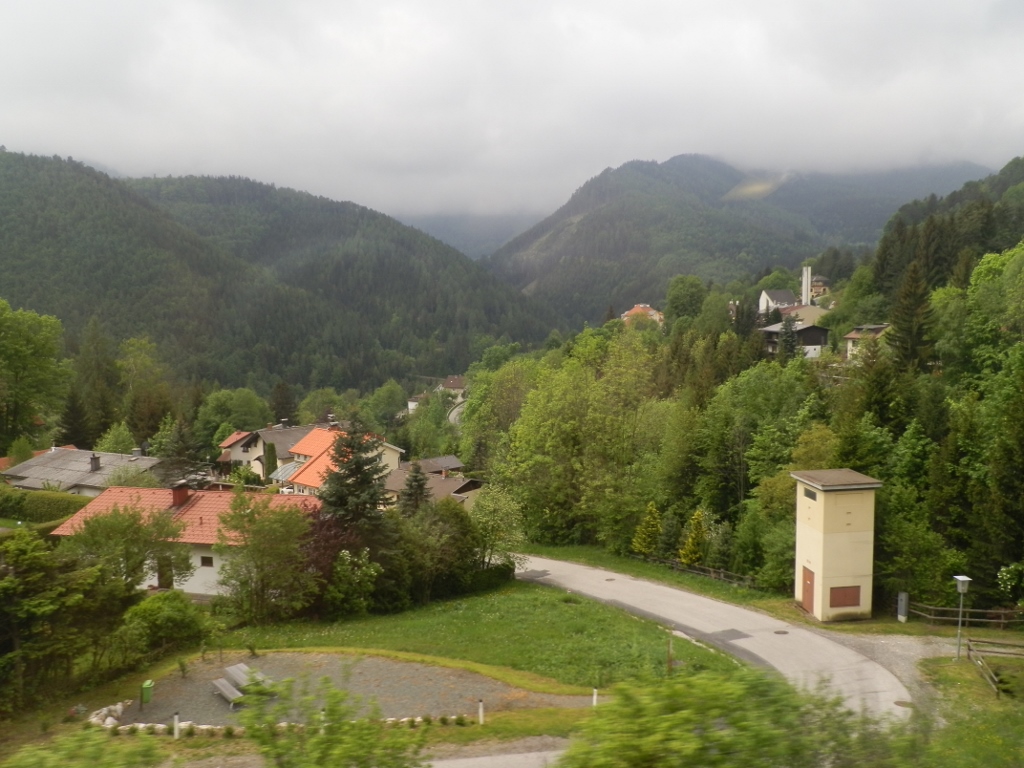
The journey itself, which lasted a little over two and a half hours, passed without any events, but I enjoyed it, especially as I watched the beautiful scenery through the window as the train went by.
 From Mödling to Graz
 From Mödling to Graz
 From Mödling to Graz
 From Mödling to Graz
After arriving in Graz, I checked into a hotel I had booked through an agency (that’s how I used to do things at the time) and I was delighted that the hotel was very close to the train station, which suited me better because of my luggage.
However, I still arrived “too early,” so my room wasn’t ready. I left my things at the reception and headed out for a walk towards the city centre.
Staying near the train station meant I was almost 1.5 km away from the centre, which is called the Old Town or Altstadt. Although I could have taken a tram, I actually enjoyed walking.
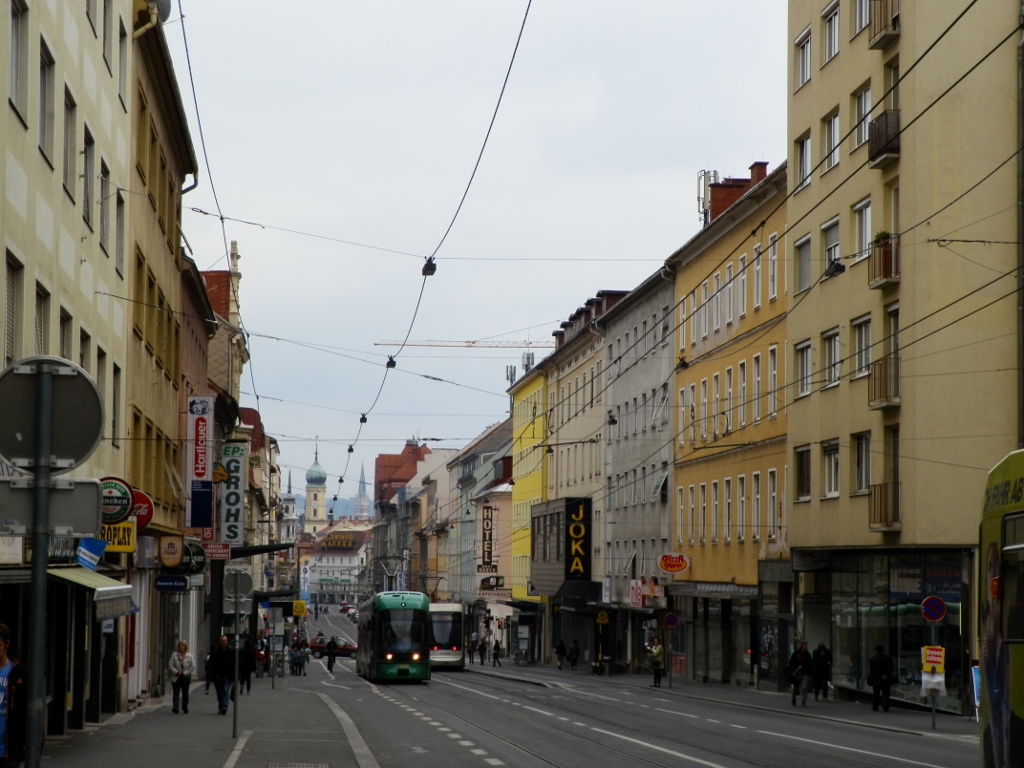 Graz, a detail
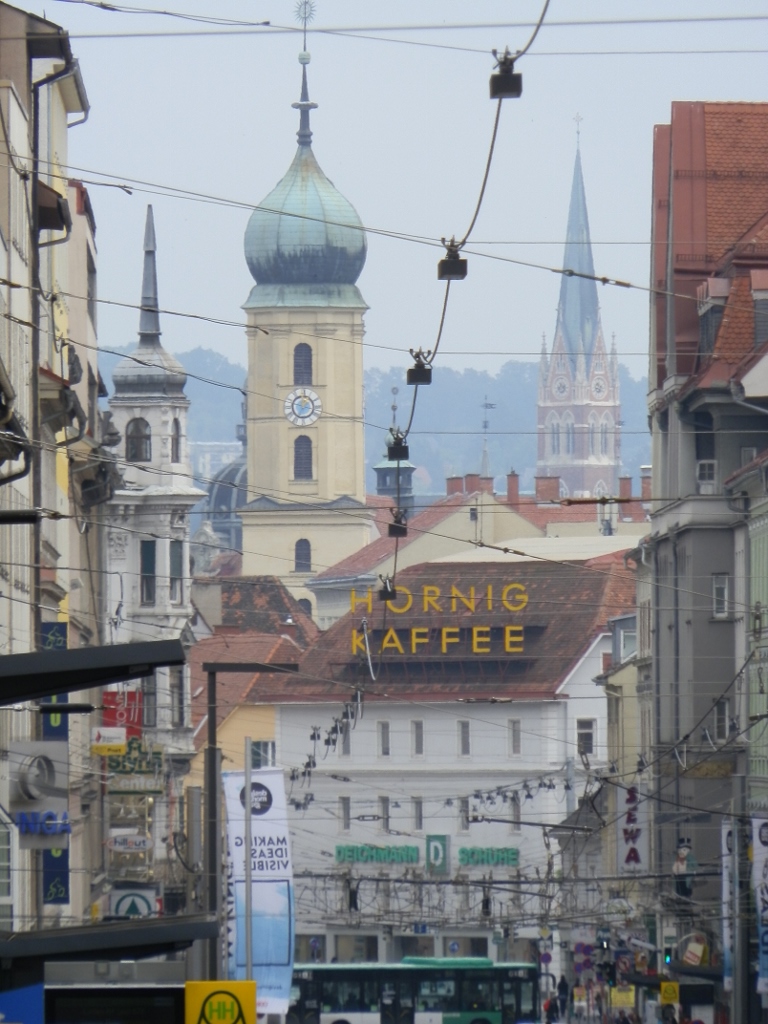 Graz, a detail
That’s how I reached the Mur River, which flows through the city. On the other bank stood the Franciscan Church, which is part of the Old Town.
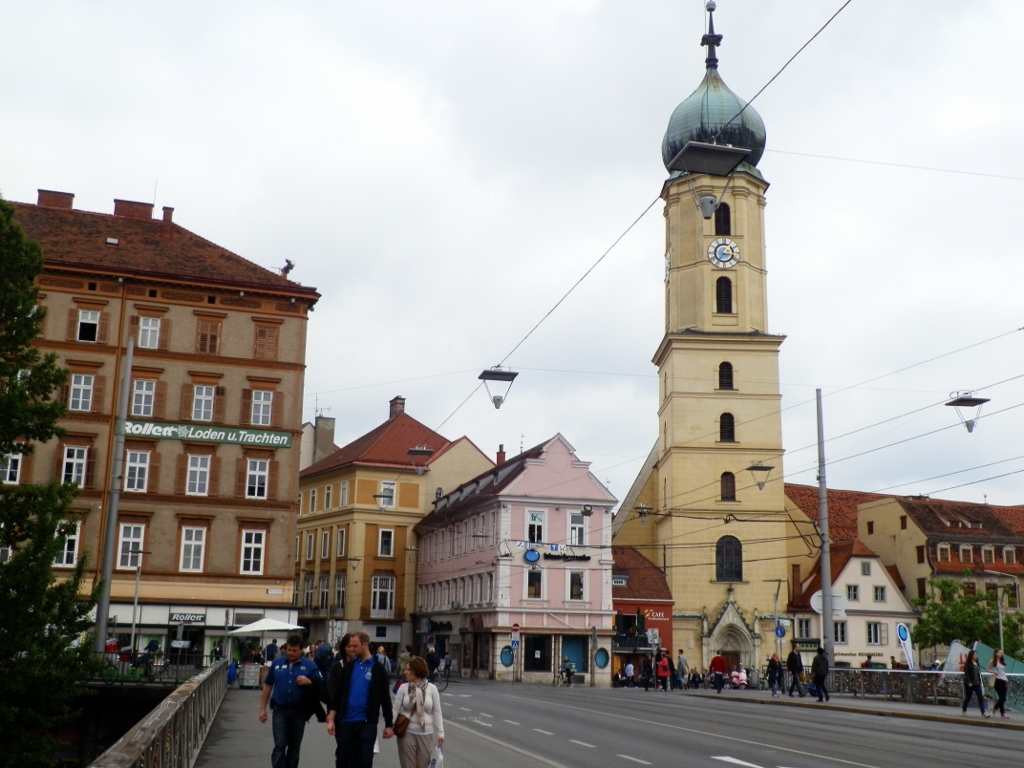 Graz, a detail
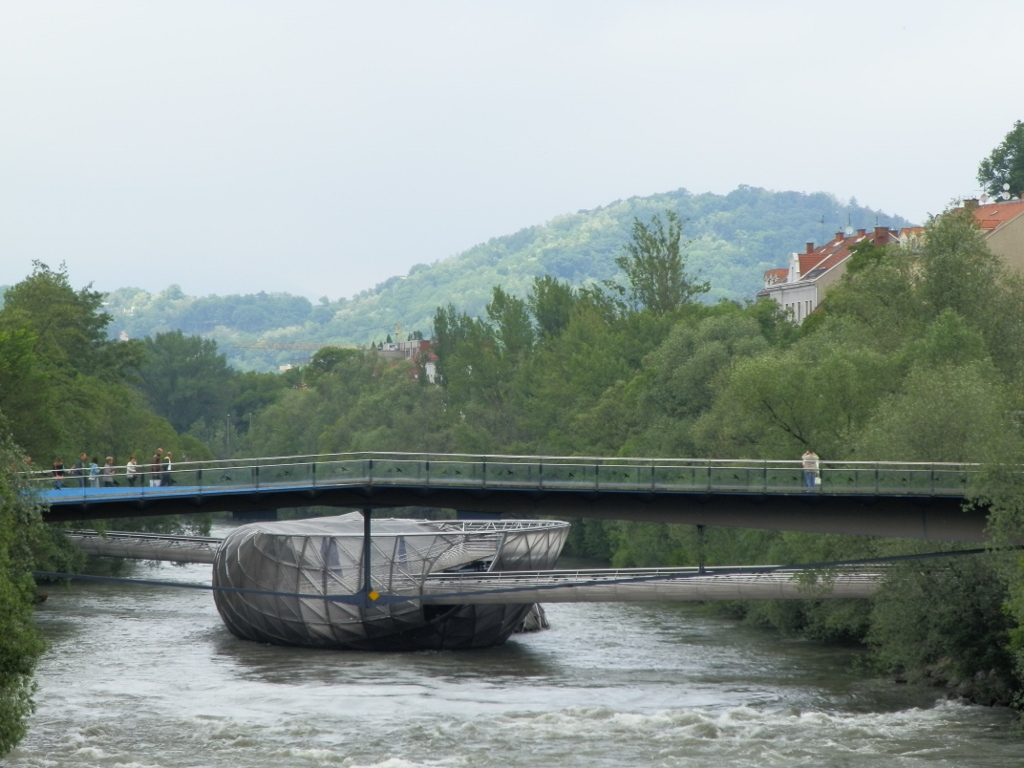
On the same side of the river is the Schlossberg hill and in the middle of the river there is also a modern artificial island, Murinsel, which also serves as a bridge for crossing from one bank to the other.
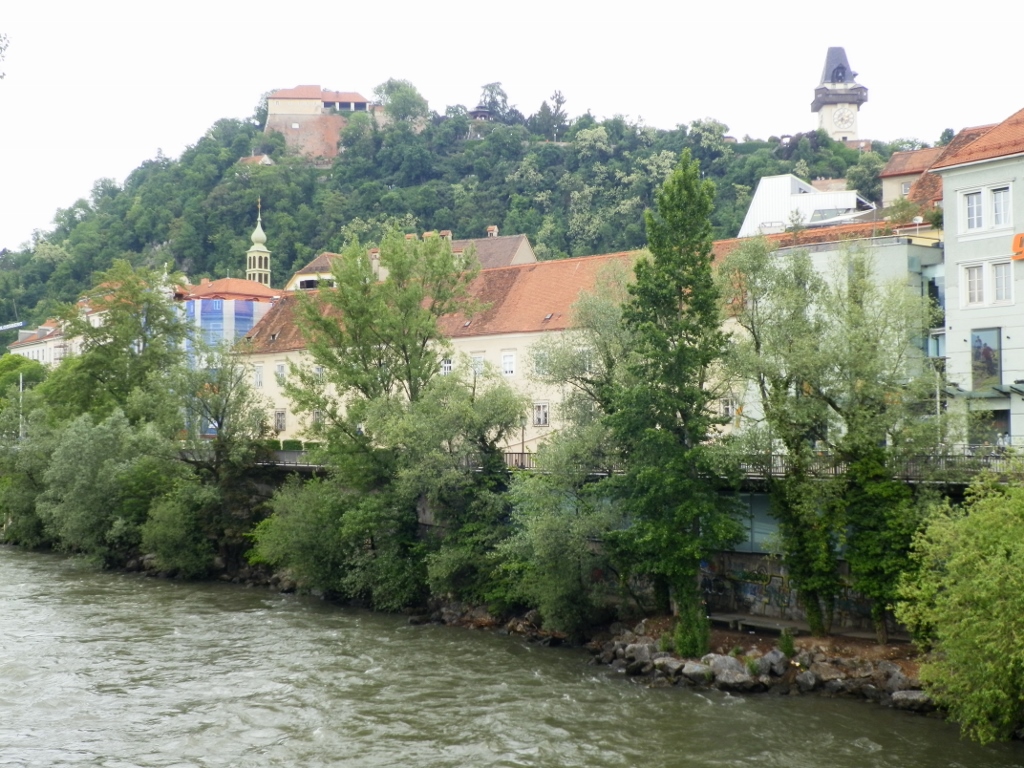 Graz, a detail
 Graz, a detail
Since I knew I would have plenty of time for sightseeing, I was just getting a general impression of the city and its landmarks and points of interest, viewing them from the outside for now.
 Graz, a detail
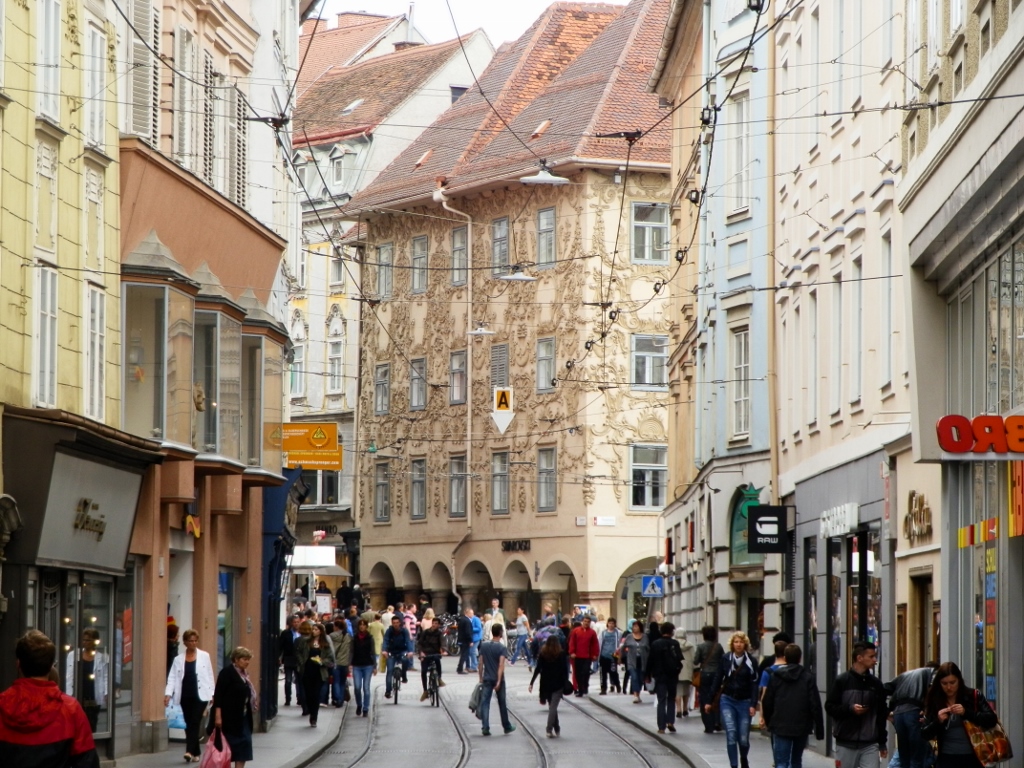
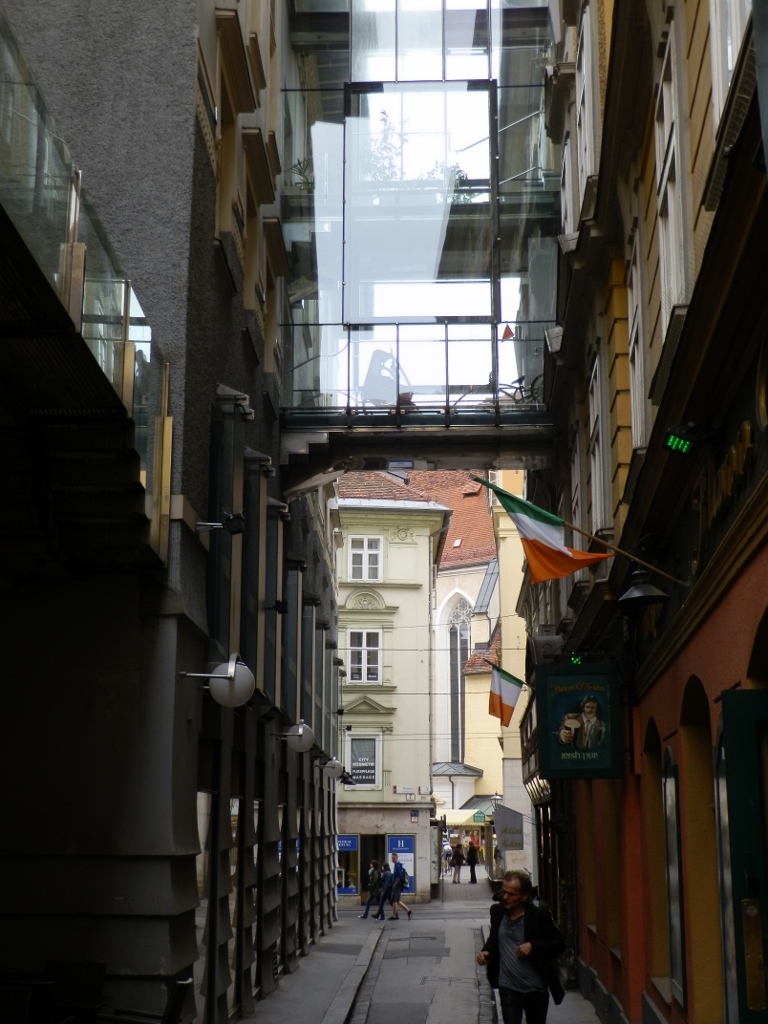
My impression was that the city is trying to keep up with the times and the changes they bring, especially in architecture. After that modern island-bridge, even in the old town you can see numerous modernist details.
 Graz, a detail
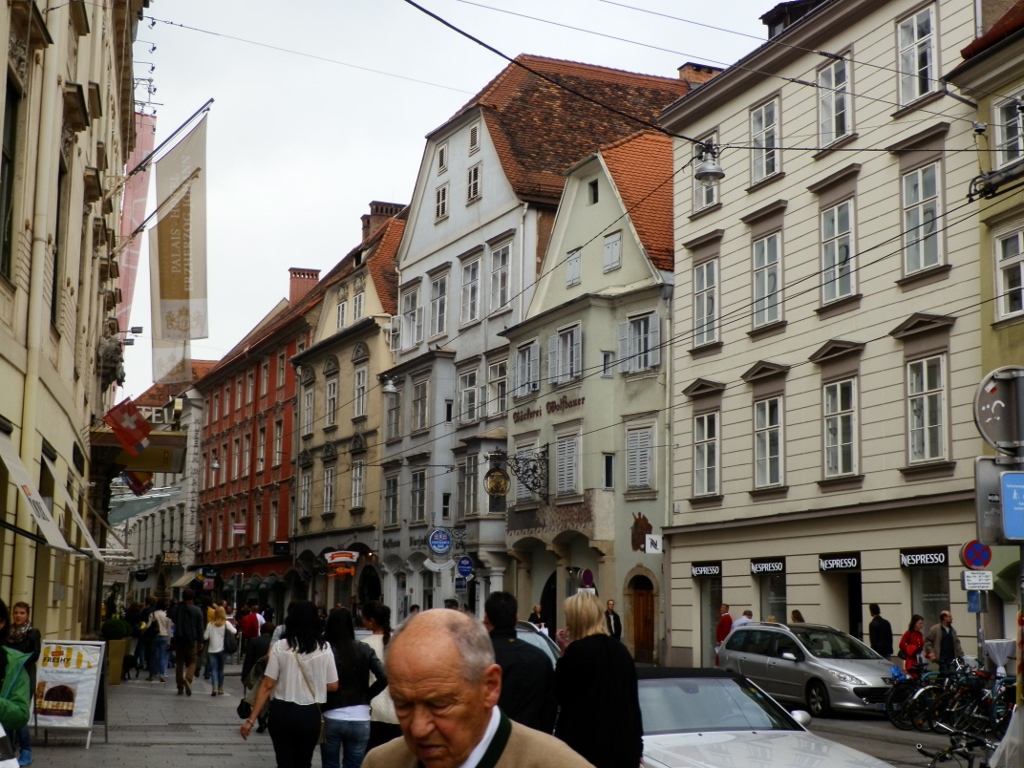
Nevertheless, my conclusion was that Graz is an exceptionally beautiful city, especially that old centre. I walked around casually, just looking at things from the outside. I even thought about going to a museum right away, but it turned out that the next day was some international museum day, so all of them would be completely free. Of course, I postponed visiting museums until the following day.
 Graz, a detail
 Graz, a detail
For the time being, I sat in a café and had a coffee to wake myself up a bit more, and afterwards I walked again around the city centre for a little while.
 Graz, a detail
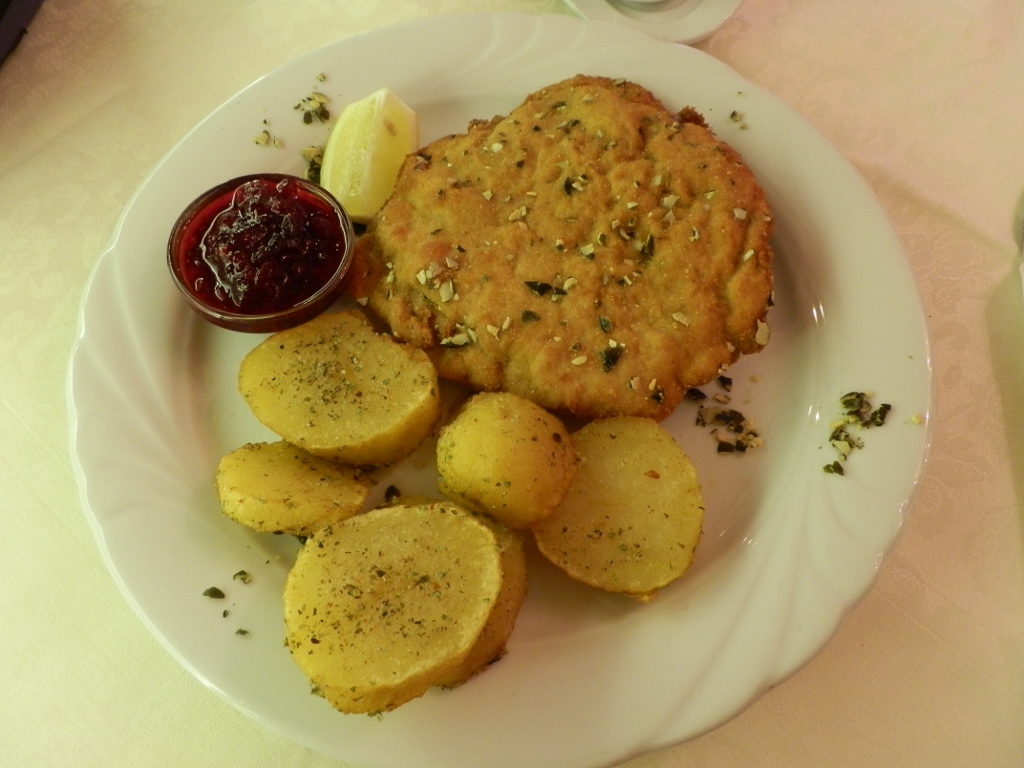
At some point, I got hungry, so I went for lunch, which was fairly standard.
 Graz, a detail
In Serbia, we don’t really have a distinct national cuisine. There are some dishes, either general or regional, that could perhaps be considered traditional, but in reality, our cuisine is a big mix of different influences – primarily Turkish, Greek, Hungarian, Austrian and Central European. In recent decades, Italy, especially with its pasta and pizzas, has also claimed a place in the tastes of the average Serbian, and from what I can see, in recent years the influence of America and Britain (!) has increased in the form of cheesecakes and muffins.
However, the backbone of traditionally popular food consists of dishes from areas directly south and north of Serbia, just as conquerors from those directions came and left a lasting impact through their food.
What I want to say is that breaded meat, like the one shown in the previous photo, isn’t exactly an “exotic” novelty for me. My favourite dish, which my mother made better than anyone in the world (and I know how to make it the same way), is Parisian-style schnitzel, made from pork coated in flour and eggs. But when it comes to Austria, the absolute star is the Wiener schnitzel, which must be made from veal, and in addition to flour and eggs, breadcrumbs are also mandatory.
So, here’s what it looks like when I make Wiener schnitzel, while the recipe follows:
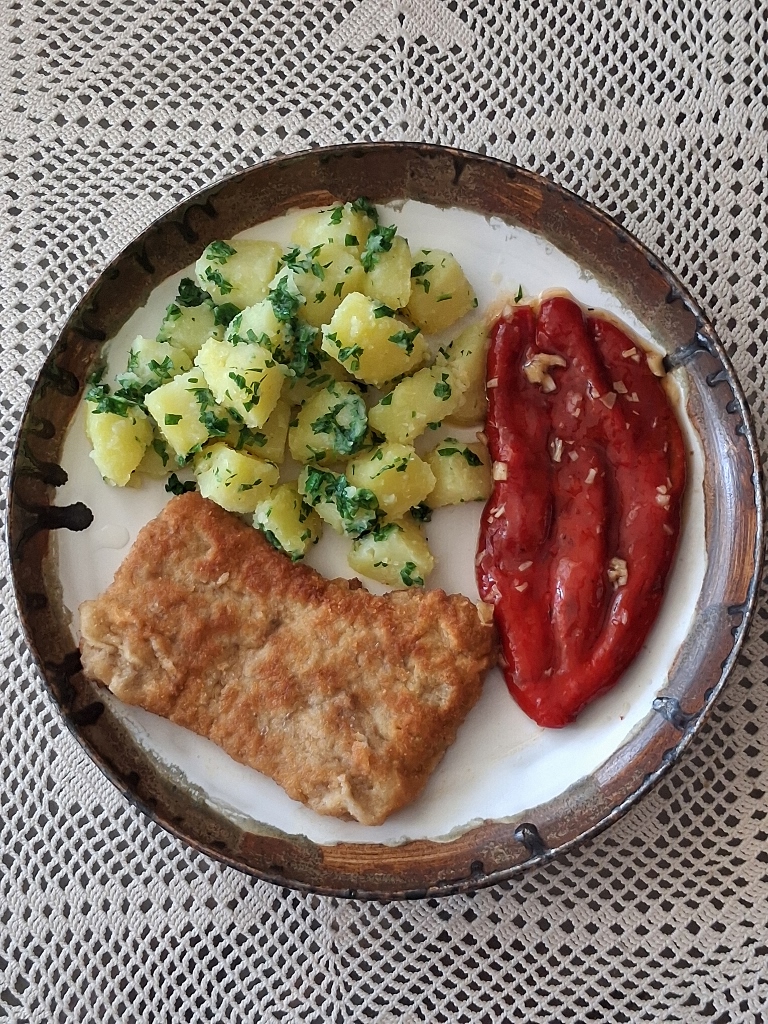 Wiener Schnitzel served on a plate I have made myself
WIENER SCHNITZEL
- 200 g veal cutlets
- 50 g flour
- a little salt to taste
- 1 egg
- 50 g breadcrumbs
The cutlets must be pounded with a meat mallet. On the one hand, they should be quite thin (less than 1 cm), while on the other, this process softens the meat.
Add salt to the flour and beat the eggs. Place the flour in one dish, the eggs in another, and the breadcrumbs in a third. Coat the meat on both sides in this order – first in flour, then in eggs, and finally in breadcrumbs.
Wiener schnitzels are fried in deep lard! That’s what tradition dictates. When the schnitzels have a nice colour on both sides, place them briefly on a paper towel to drain excess fat and when serving they are usually drizzled with fresh lemon juice.
After the lunch on the first day in Graz, I decided to return to the hotel to check into my room and rest a bit, since I had gotten up very early. Later, I went back to the city centre, taking the same route. On the one hand, it was the shortest way, and on the other, I didn’t mind walking it again.
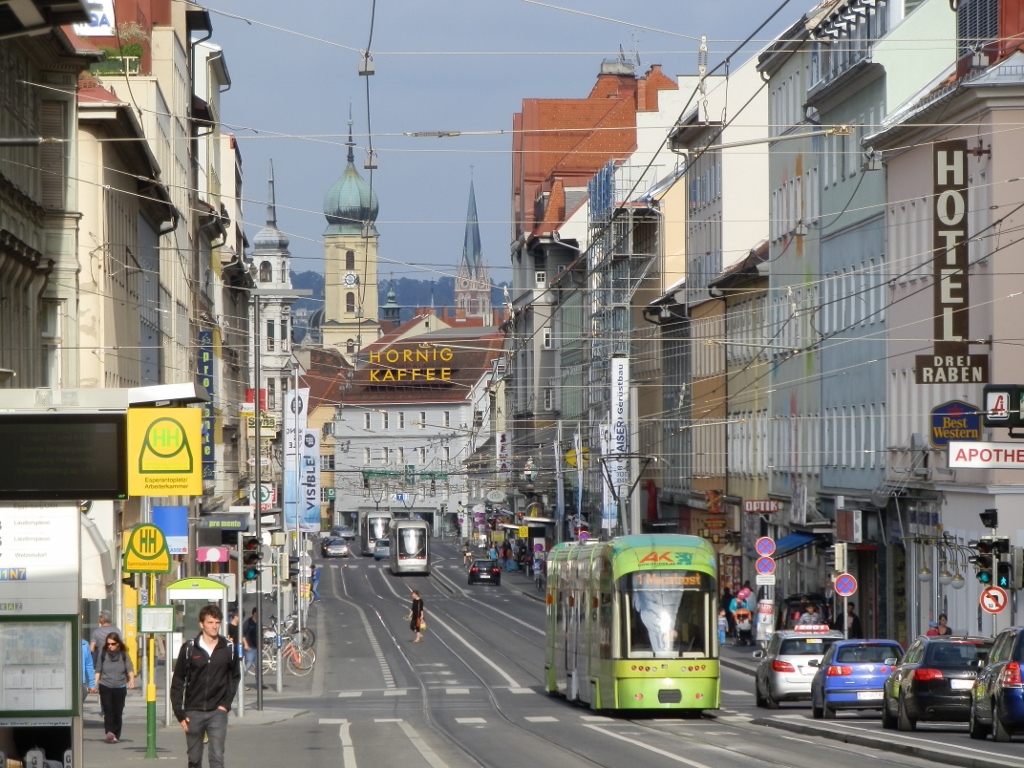 Graz, a detail
Near the Mur, I entered the courtyard of the Minorite Monastery. This is a Franciscan order that has been present in Graz since the 13th century, while the current complex was shaped in the early 17th century.
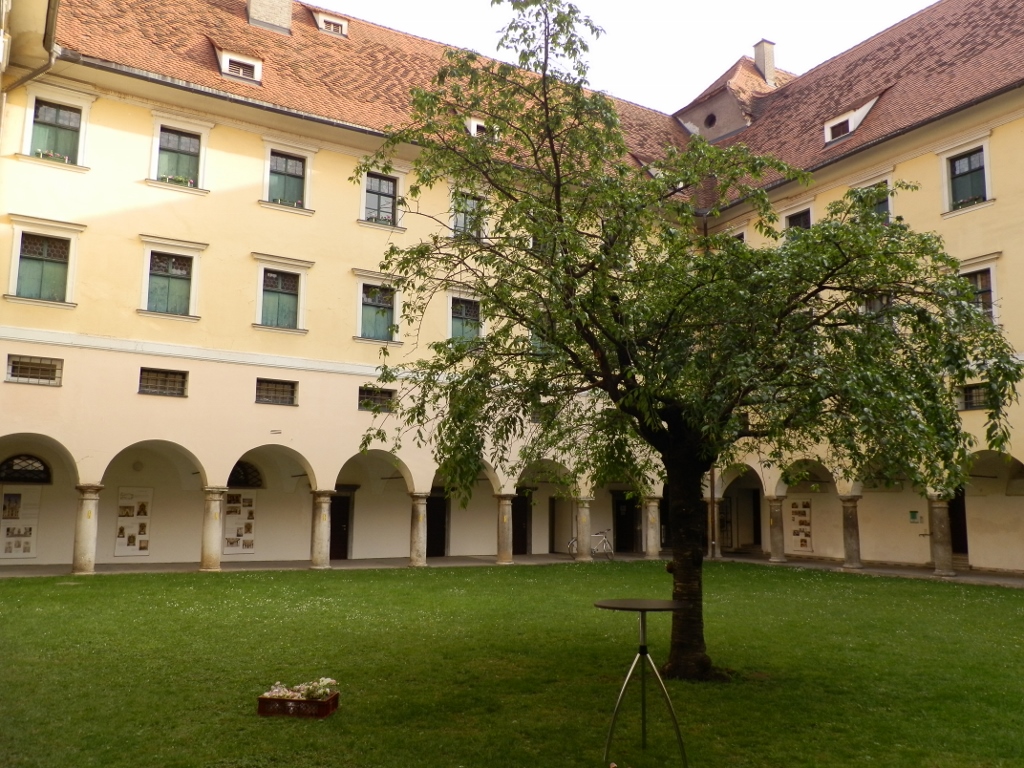 Graz, a detail
So, here I wasn’t doing any detailed sightseeing, but was just trying to get a general impression. That’s how I took a photo of a part of a street and at the end, a glimpse of the contemporary art museum Kunsthaus Graz. The museum opened in 2003 and its architecture is extremely modern, making for an interesting contrast in the predominantly traditional Central European architectural environment.
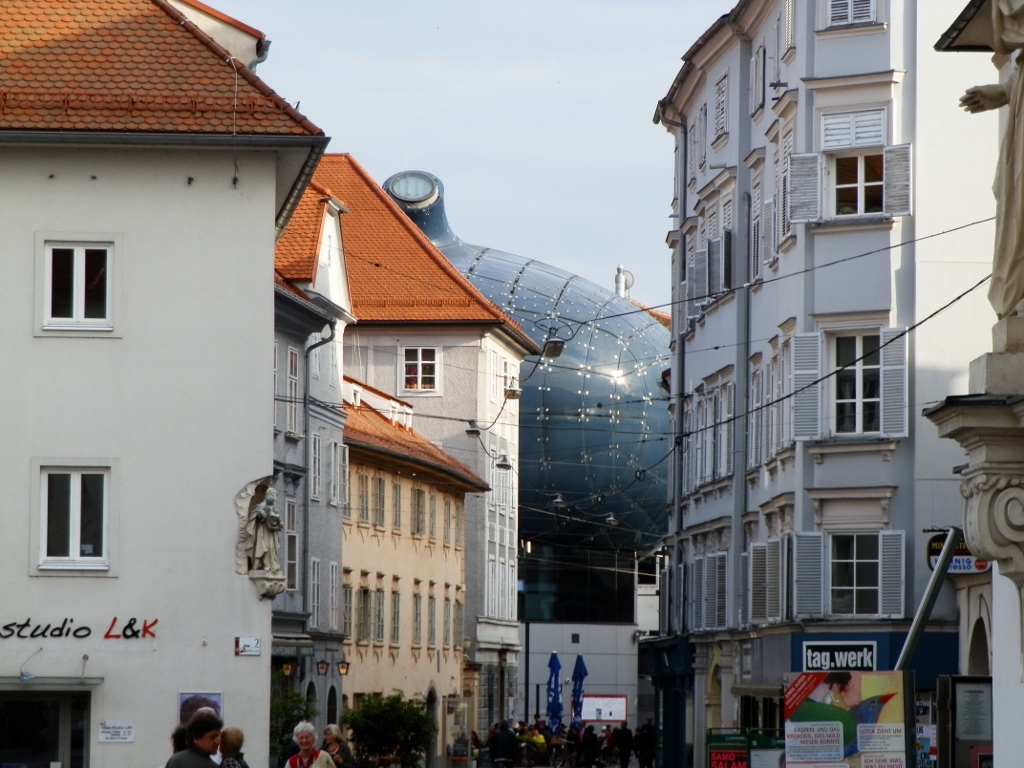 Graz, a detail
For now, I was mainly interested in crossing to the other bank of the Mur, where the Schlossberg is located.
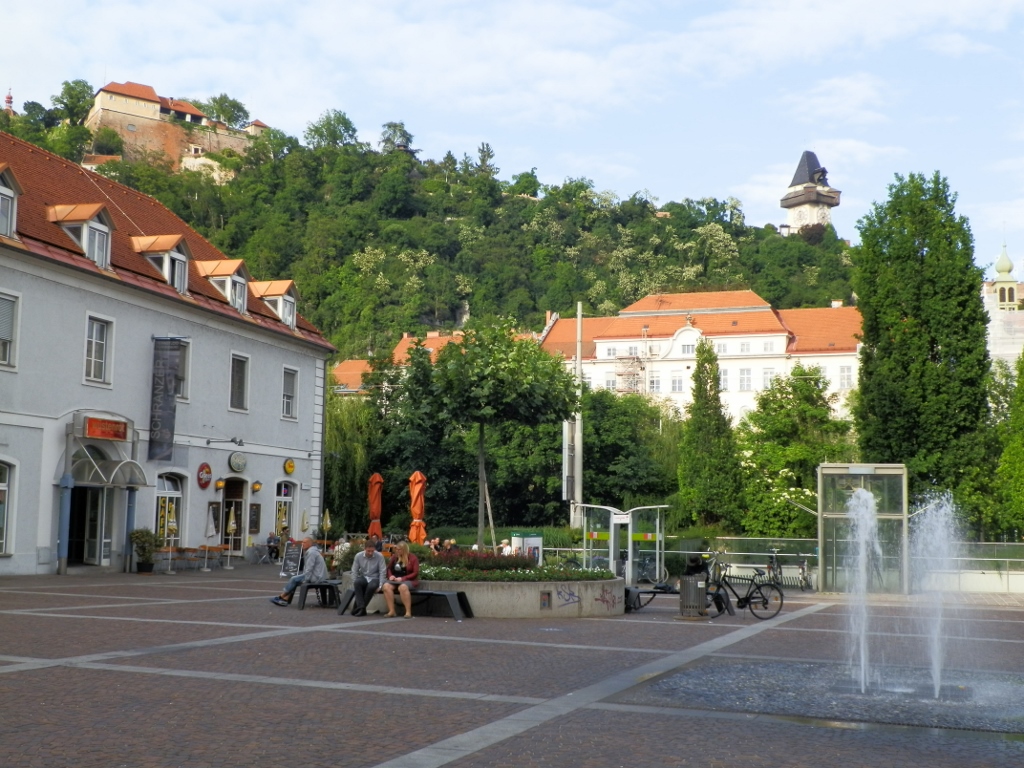 Graz, a detail
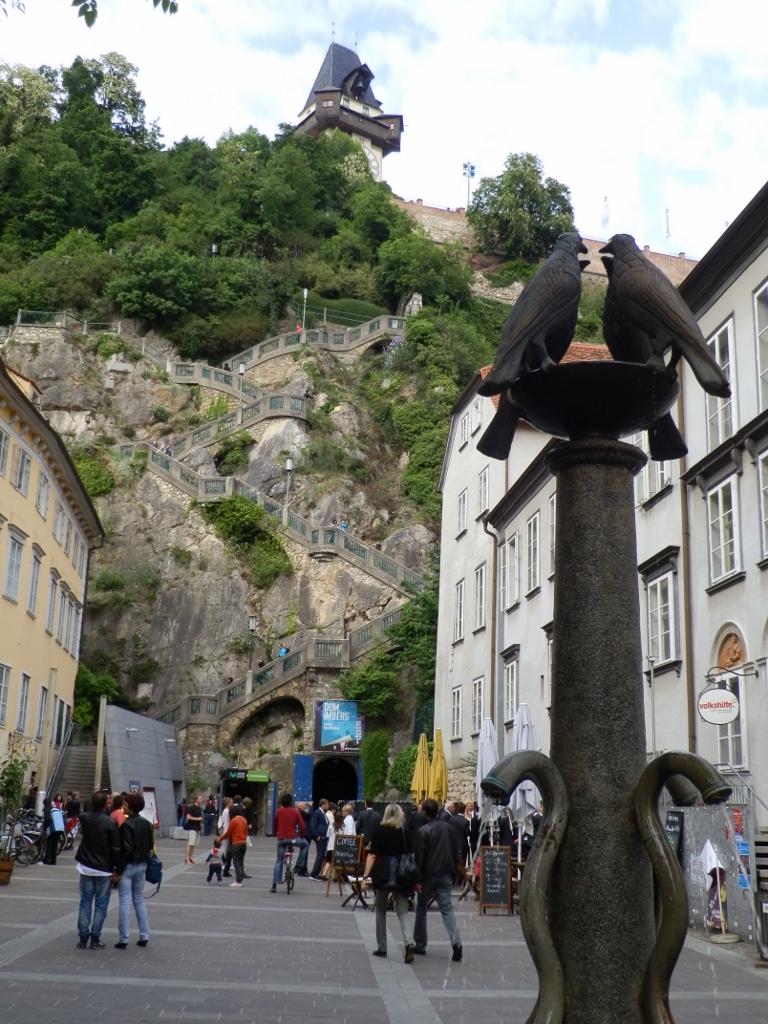
I’ve already mentioned that this is a hill right in the centre of Graz, which dominates the city’s panorama and is one of its most famous landmarks. There used to be a fortress at its top, but it was mostly demolished in the early 19th century.
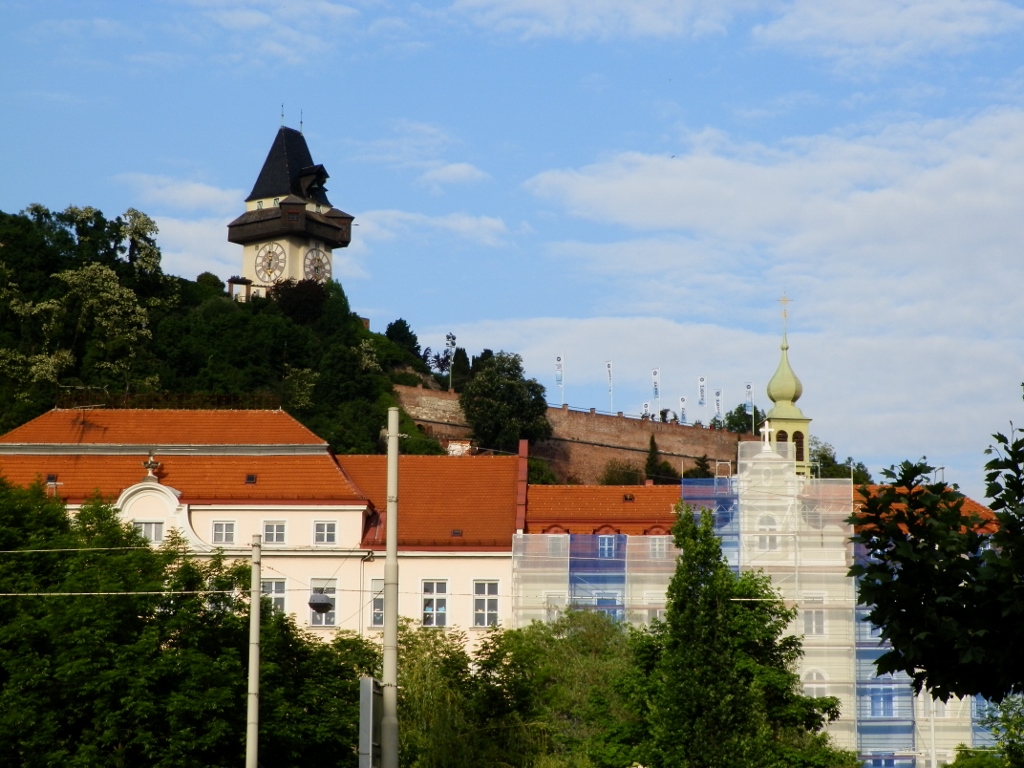 Graz, a detail
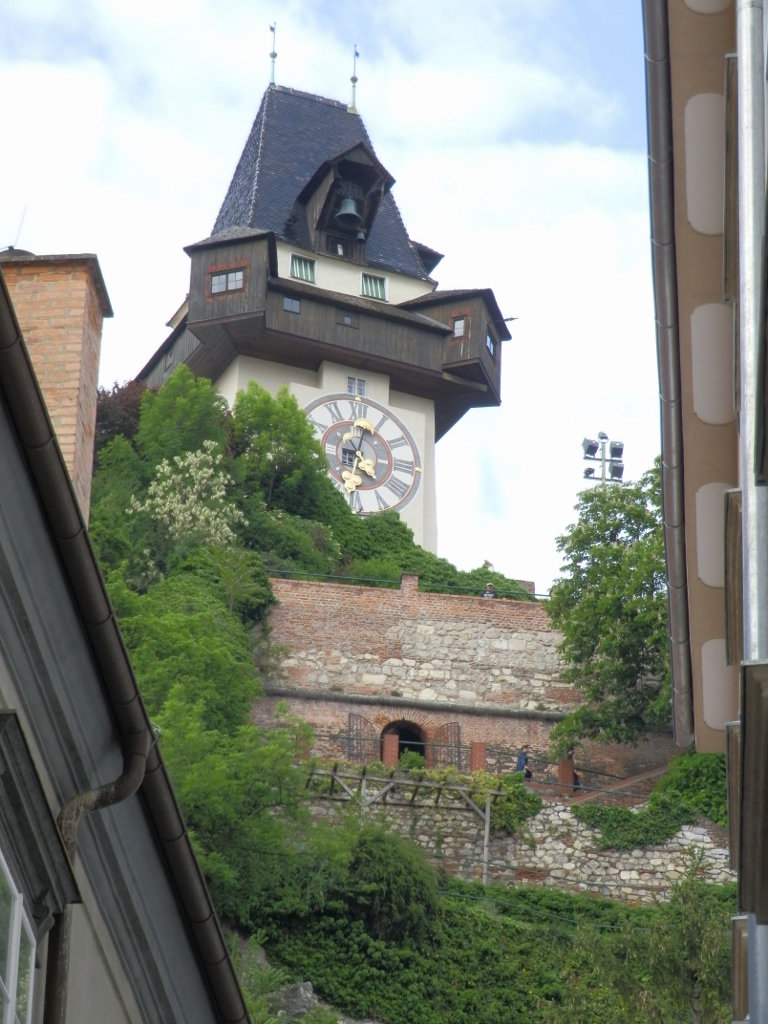
Today, the most prominent symbol of the hill is the Clock Tower, with its distinctive clock whose hands are different compared to the usual practice.
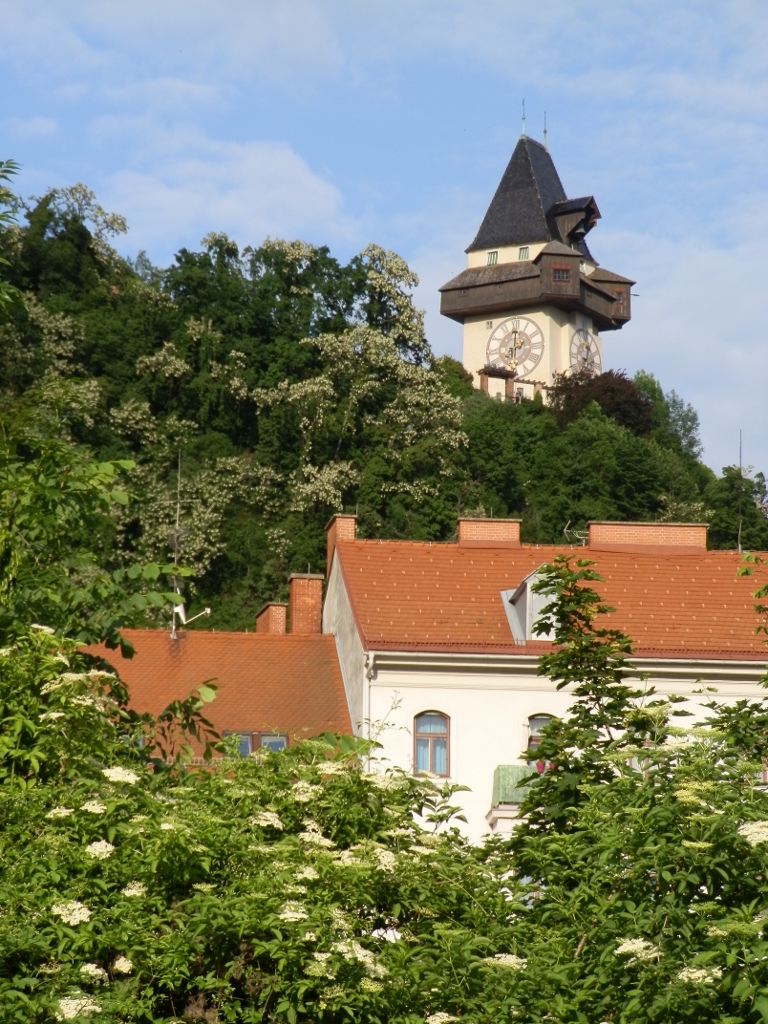 Graz, a detail
When I say the hands are “different,” I mean that the longer hand shows the hours, while the shorter hand shows the minutes. The reason for this is historical. Originally, the clock had only an hour hand so that the time could be seen from a distance, while the minute hand was added later and made smaller so as not to overshadow its “older” counterpart.
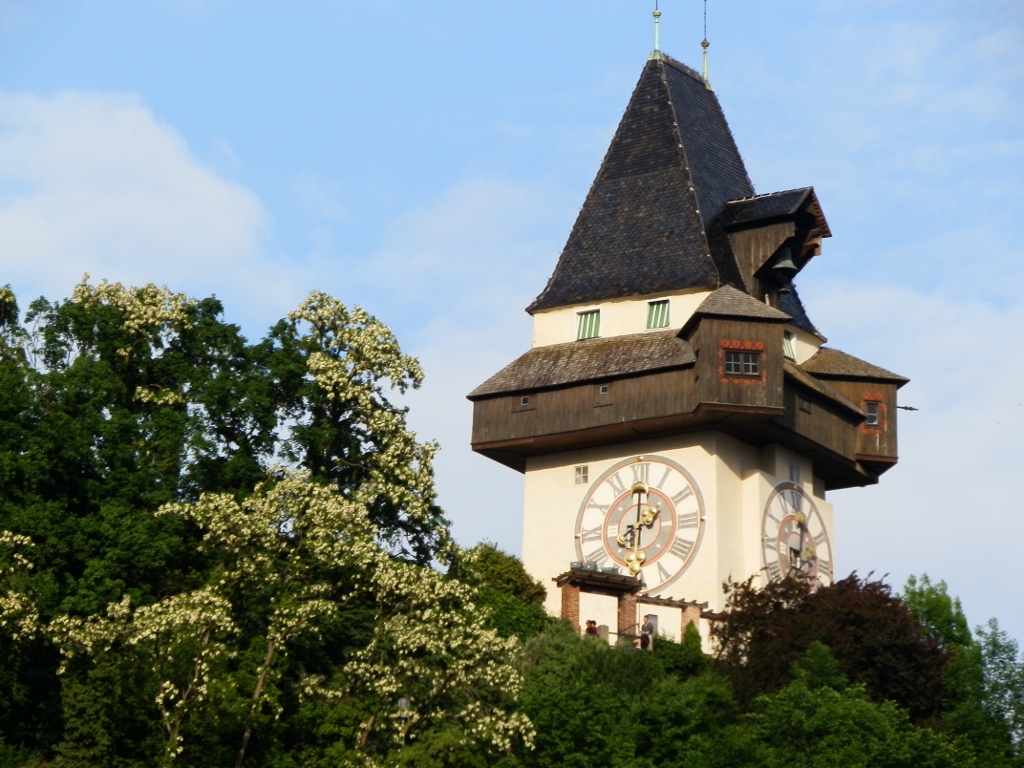 Graz, a detail
You can reach the top on foot, by funicular, or by a lift inside the hill. Today, the Schlossberg is a popular promenade and place offering a view of the Old Town.
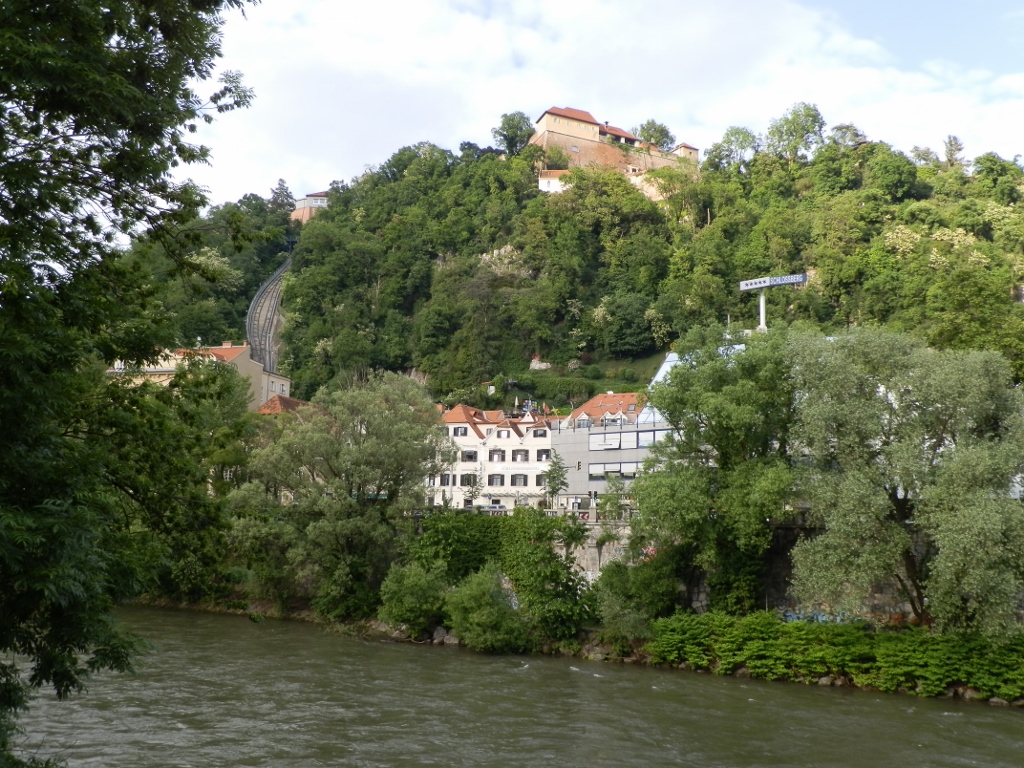 Graz, a detail
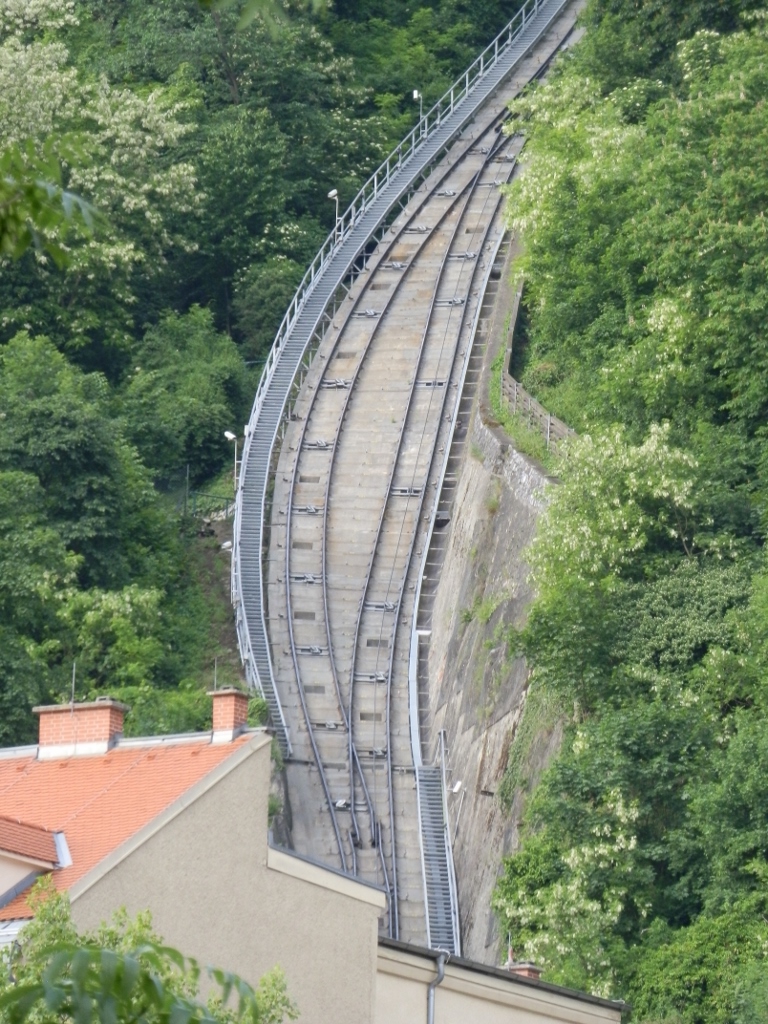 Graz, a detail
One of the most striking modern attractions in Graz is the Murinsel, an artificial island on the Mur River that also serves as a bridge, and I wanted to cross to the other bank right here.
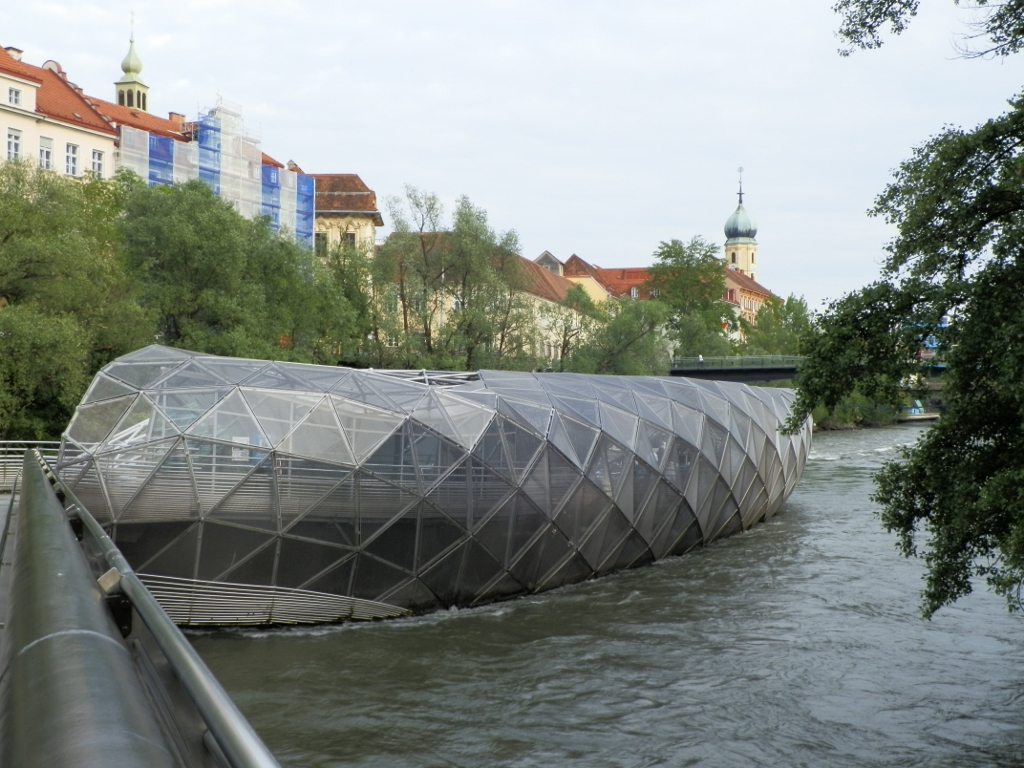 Graz, a detail
Graz was named the European Capital of Culture in 2003 and on that occasion several very modern, I would even say avant-garde, buildings were erected. The Murinsel is one of them. Its structure resembles a shell or a floating bubble made of steel and glass, and inside it there is a small amphitheatre and a café.
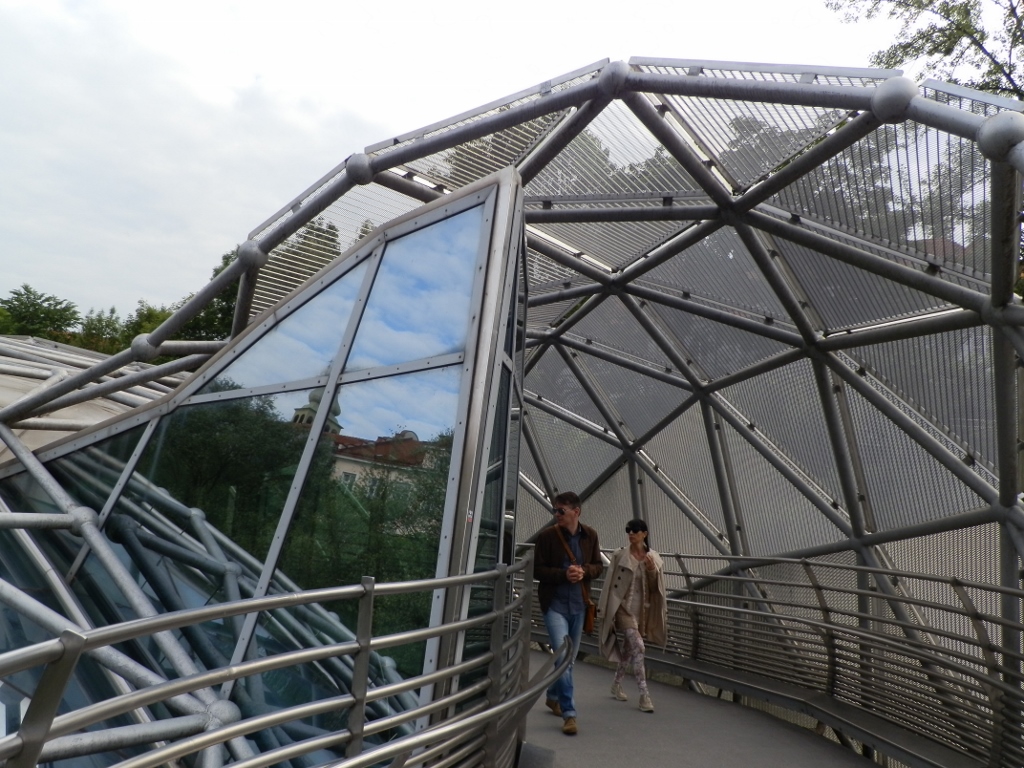 Graz, a detail
On the other bank, I reached a square from where I had a good view of the Schlossberg and its details.
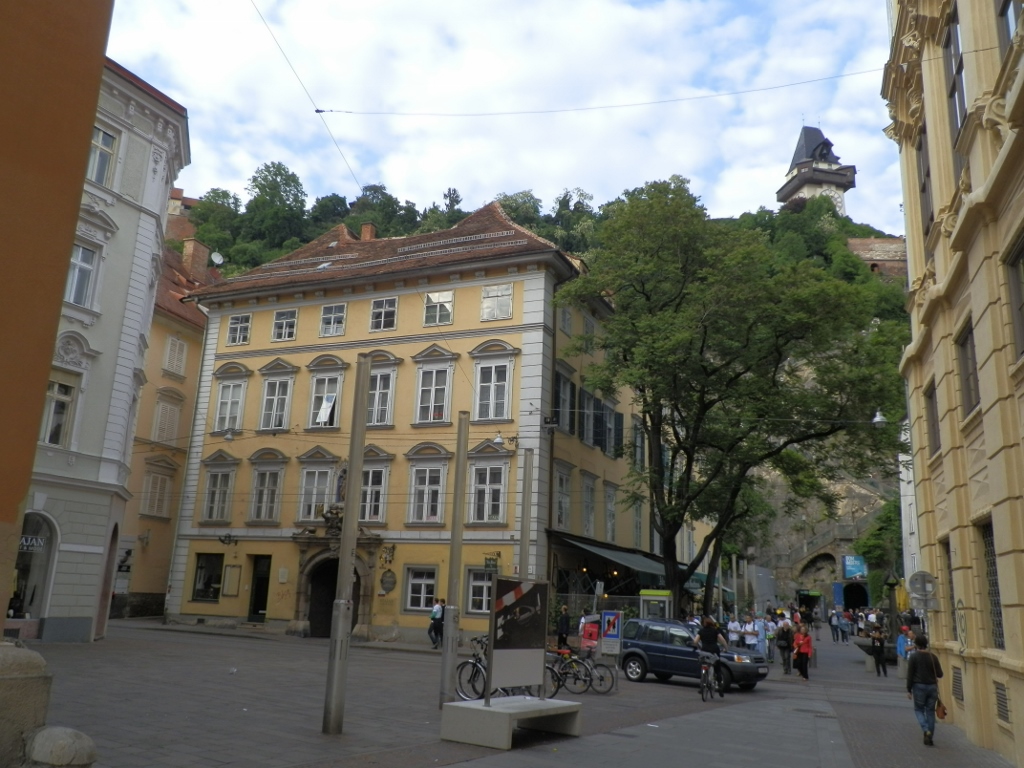 Graz, a detail
 Graz, a detail
 Graz, a detail
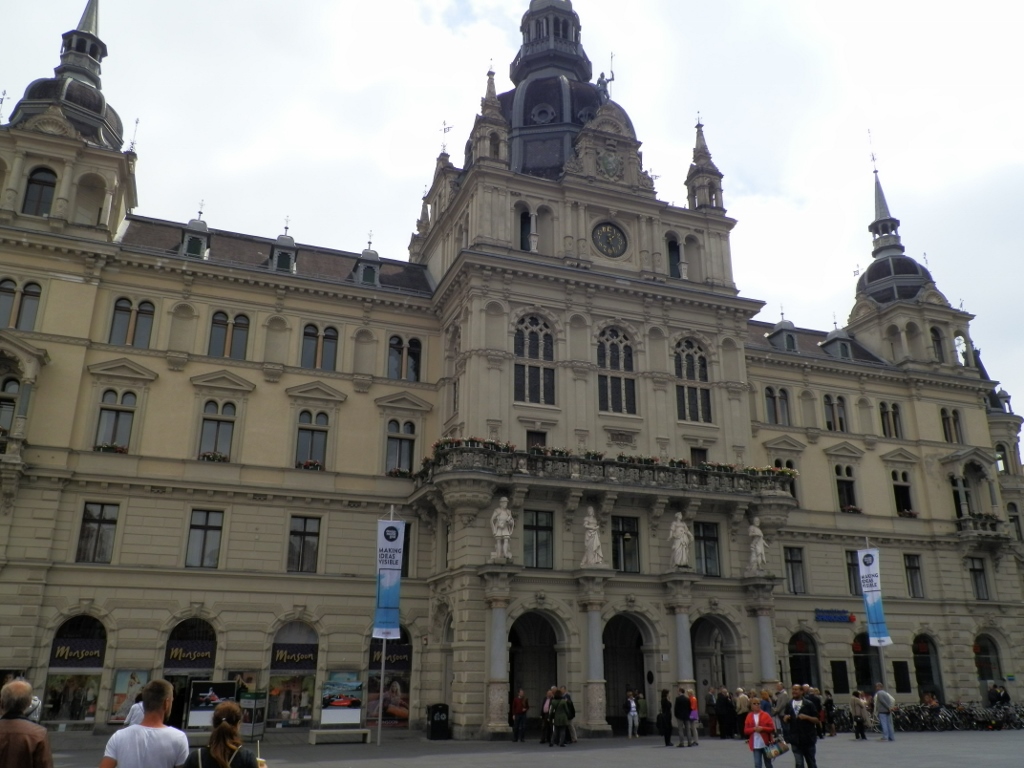
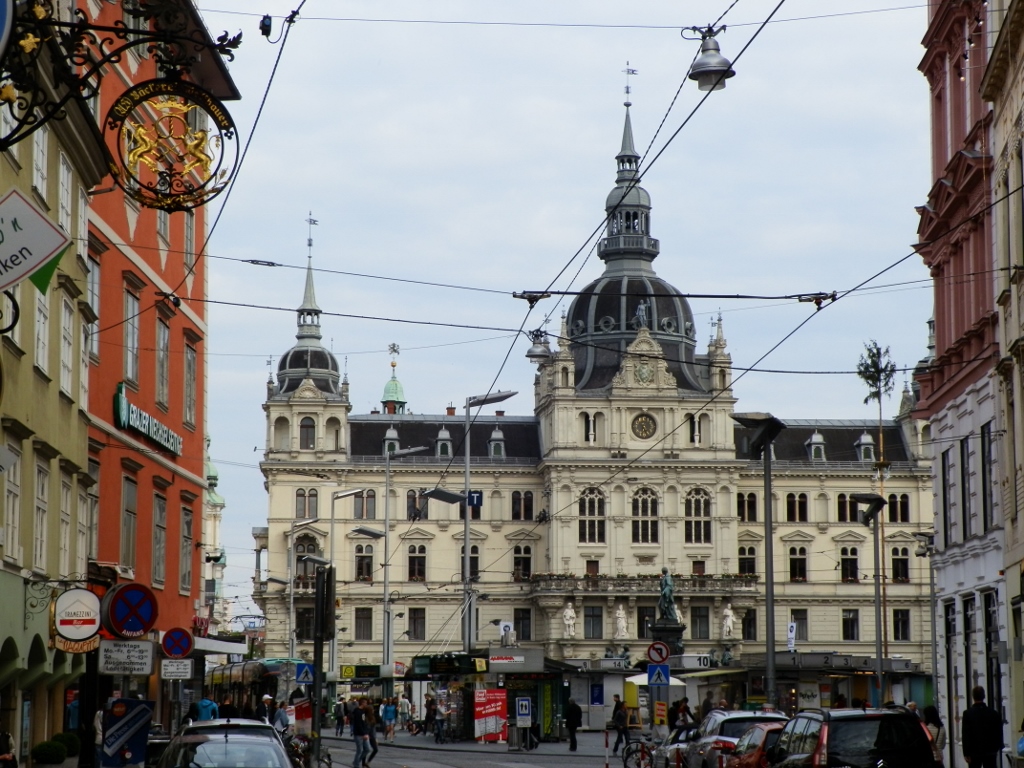
Then I continued to the nearby centre of the Old Town, which is the Main Square, where the impressive City Hall building from the late 19th century is located, serving as the seat of the city administration.
 Graz, a detail
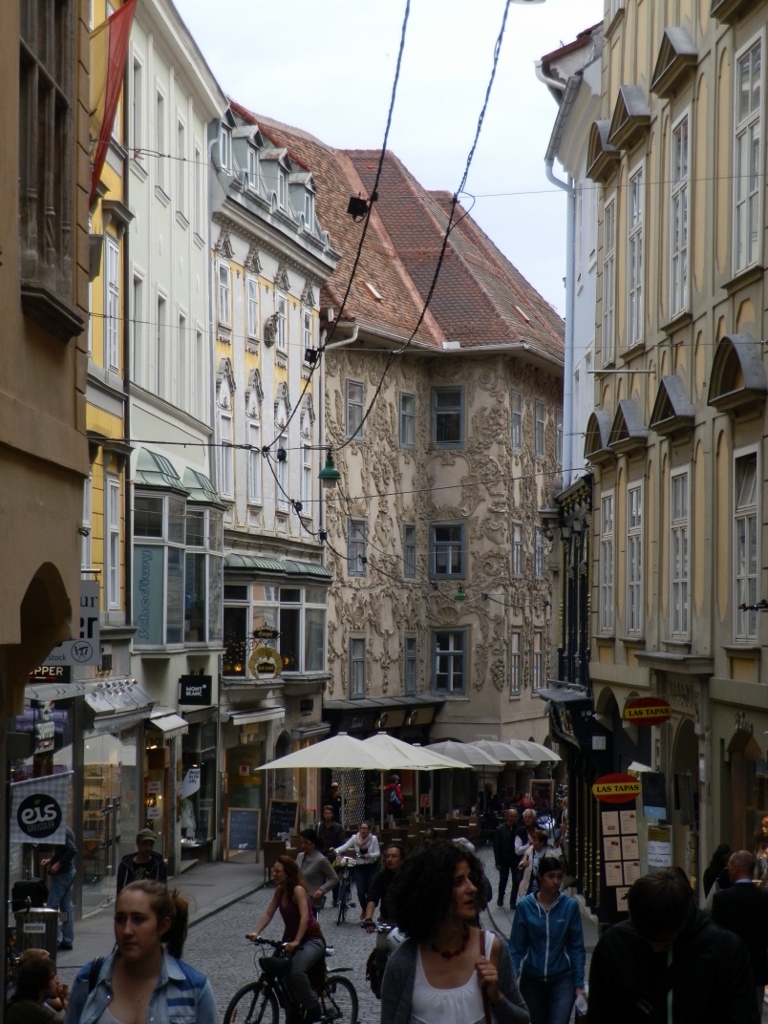
From here, I wandered a bit into the streets of the Old Town, walking around, sightseeing, taking photos, and feeling very content and relaxed. Then I sat down to have a beer and rest a little.
 Graz, a detail
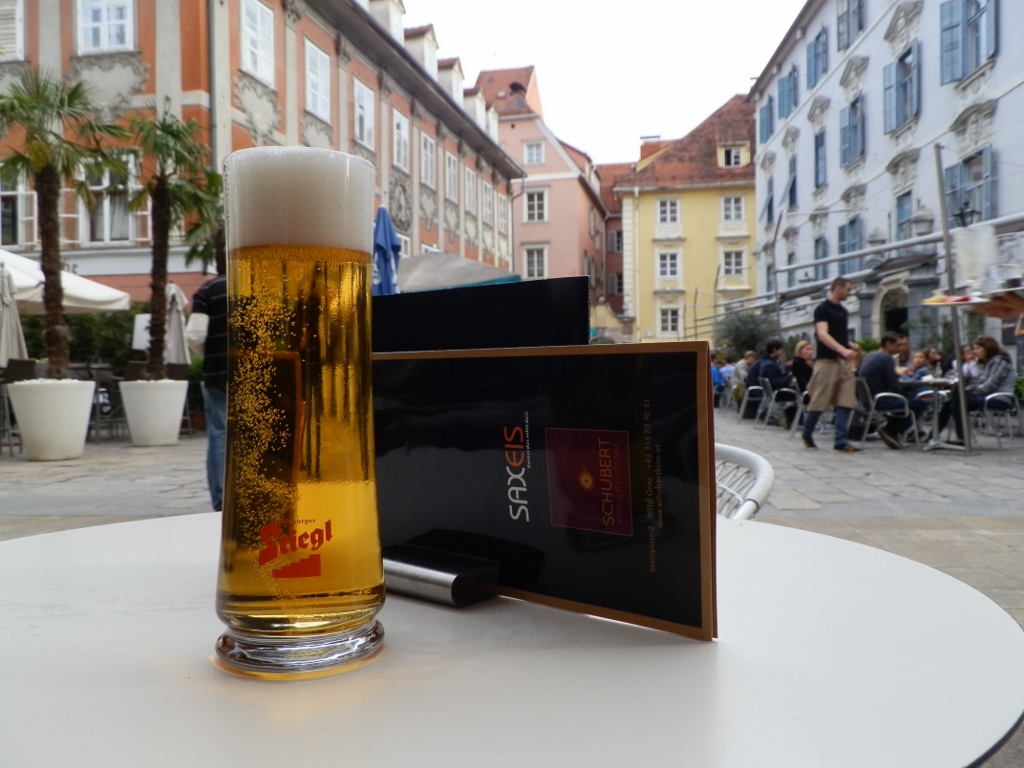 Graz, a detail
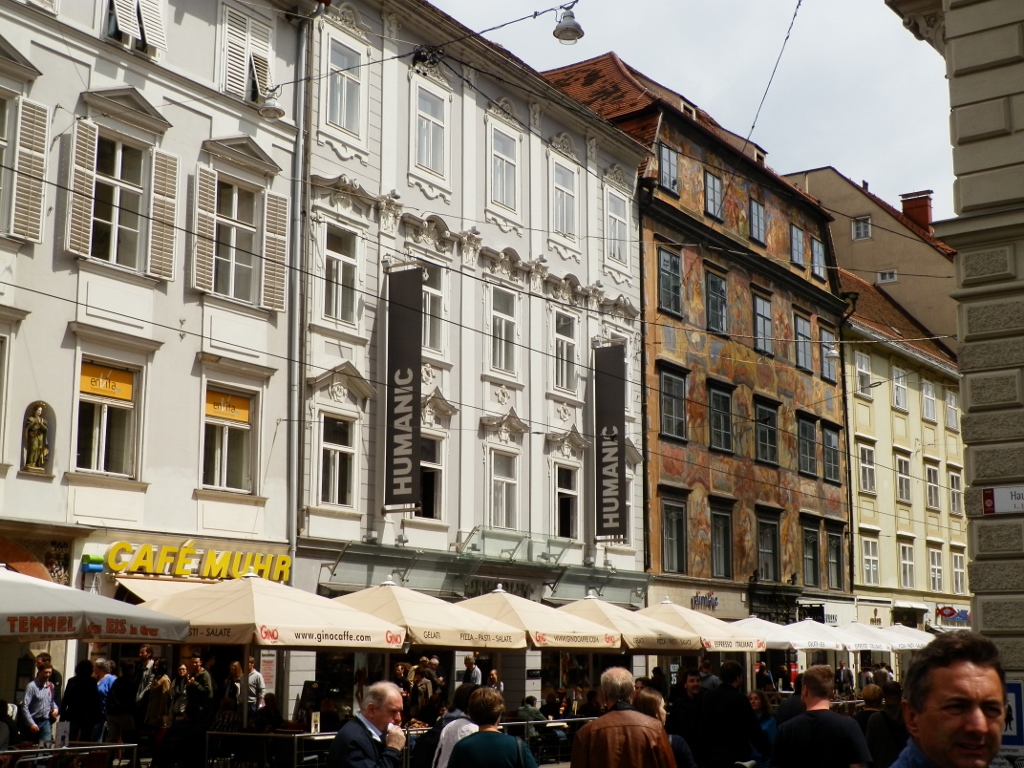
After this pleasant break, I continued walking through the Old Town of Graz. This historic city centre, together with the nearby Eggenberg Palace, is recognised as a cultural property on the UNESCO World Heritage List. The reason is that it is considered a harmonious blend of architectural styles and artistic movements that developed one after another across Central Europe, and even parts of the continent along the Mediterranean, from the Middle Ages to the 18th century. Here, these styles are combined with influences from the Habsburg dynasty, as well as the cultural and artistic impact of the leading aristocratic families.
The Old Town of Graz occupies a relatively small area, but walking through it is extremely pleasant, precisely because of the picturesque details that can be seen here.
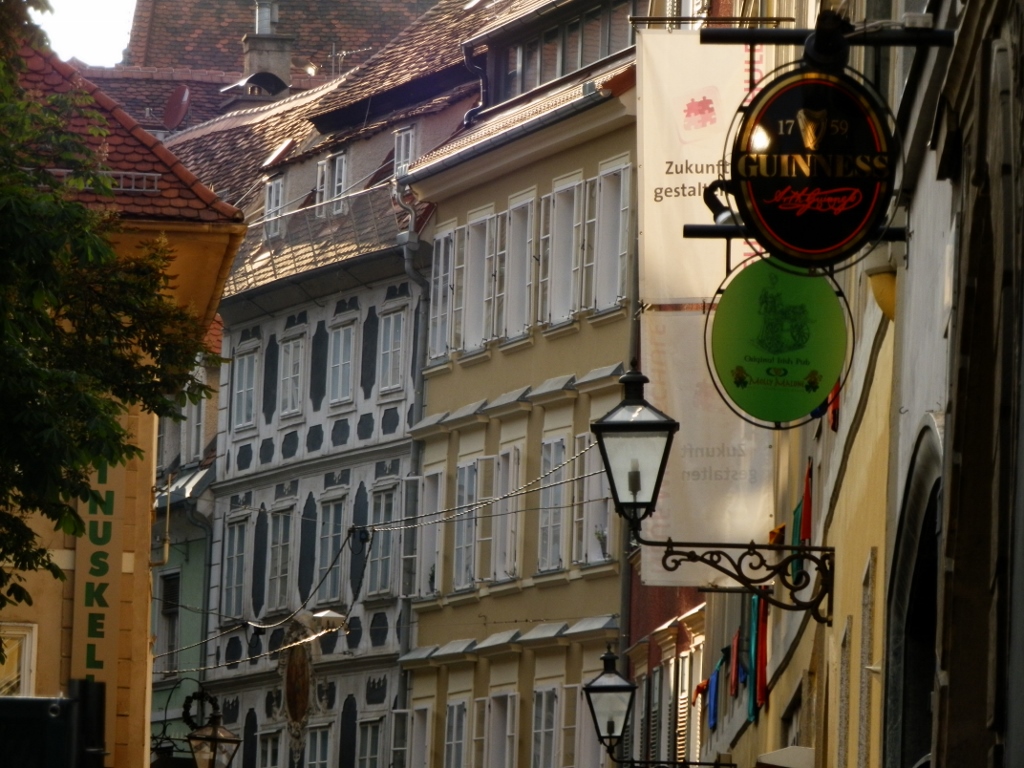 Graz, a detail
That’s how I came to a small square – the Glockenspielplatz.
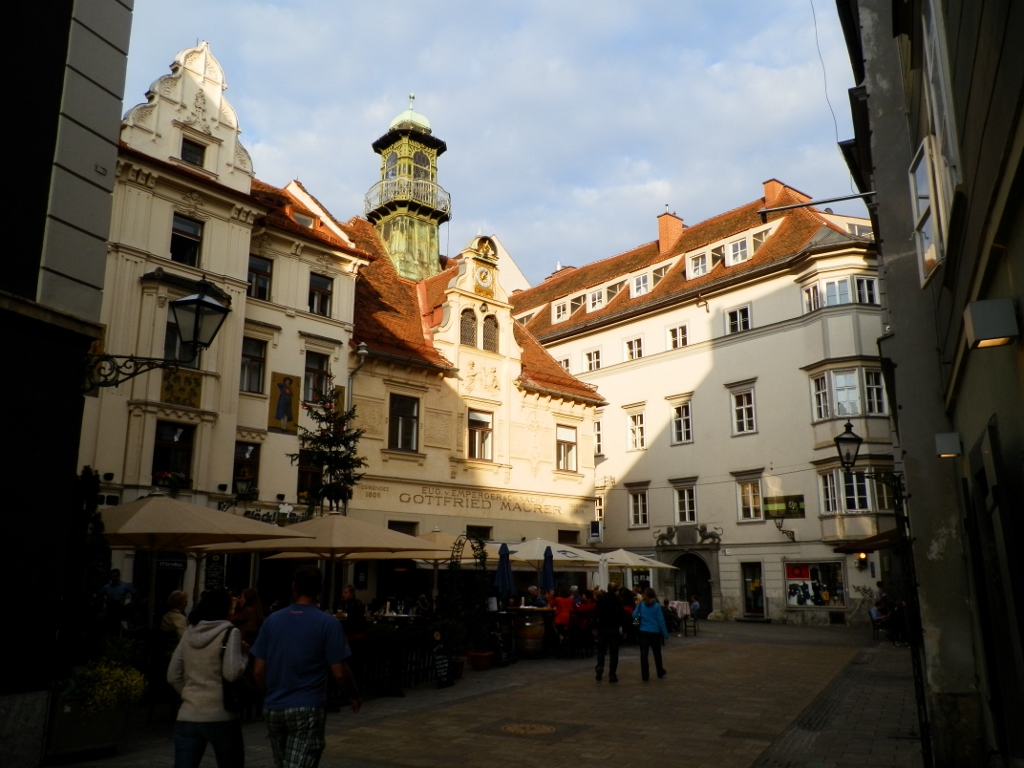 Graz, a detail
In the square, there are several historic houses with beautifully decorated façades. These façades reflect the wealth and prestige of the city’s citizens in past centuries.
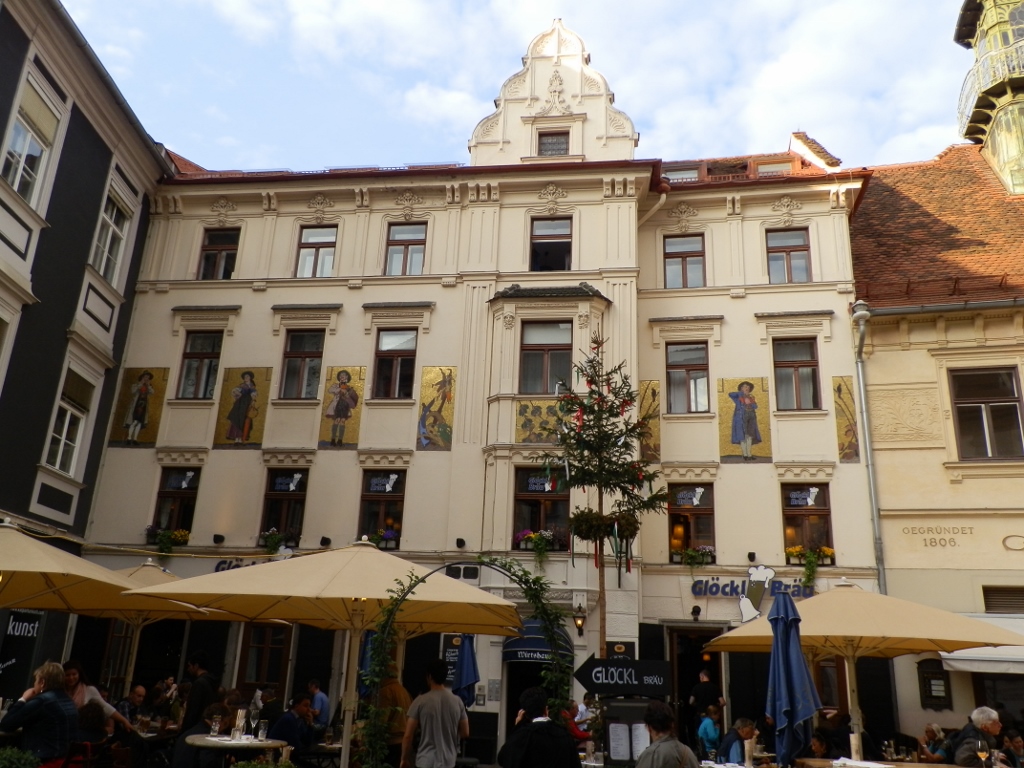 Graz, a detail
In terms of appearance and significance, the building that stands out the most is named after the square – the Glockenspielhaus. It was built in the early 20th century and is famous for its carillon, which is a musical percussion instrument consisting of at least 23 cast bells. Carillons are typically found in church or city bell towers. Here, in the case of the Glockenspielhaus, the carillon plays melodies several times a day and at those moments, windows above the façade open to reveal wooden figures of a man and a woman in traditional Styrian costume, rotating in the rhythm of the music.
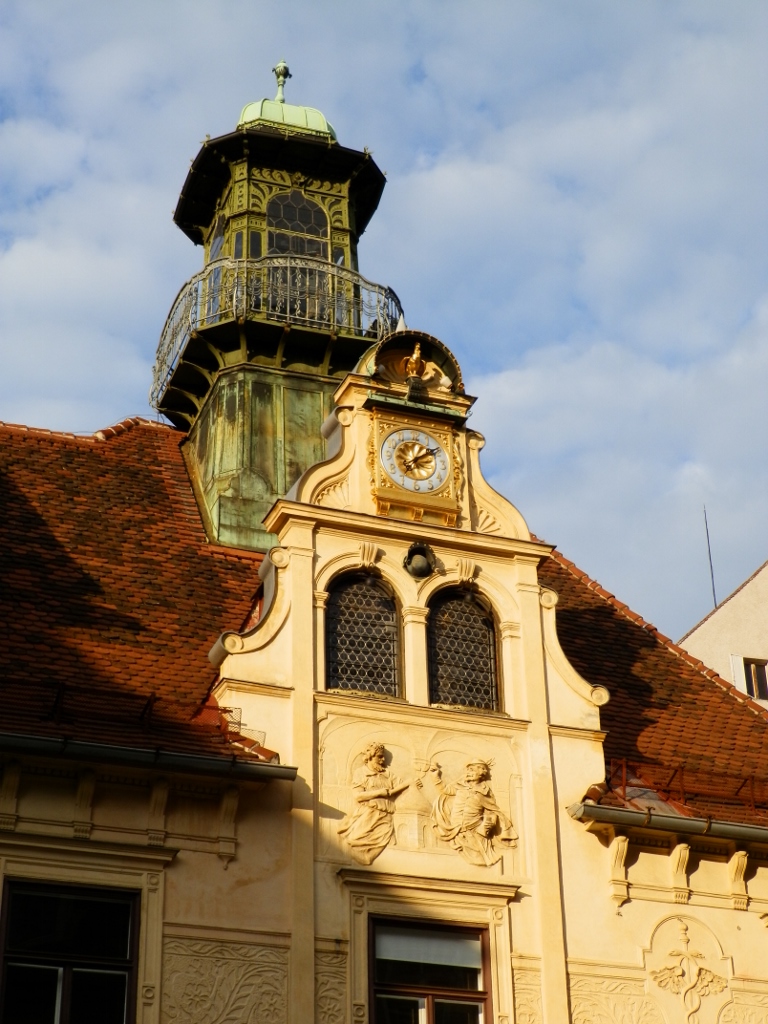 Graz, a detail
I arrived here at a time when the entire carillon system was silent, but the view towards the top of the building inspired me to keep looking up, as many picturesque details could be seen that way.
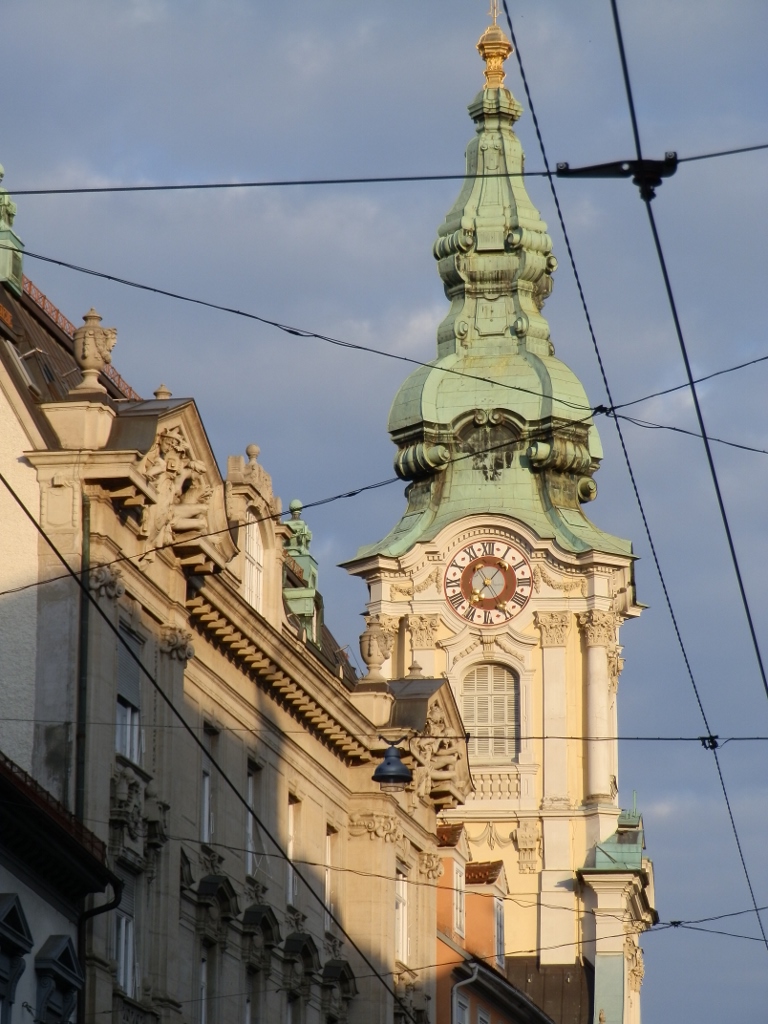 Graz, a detail
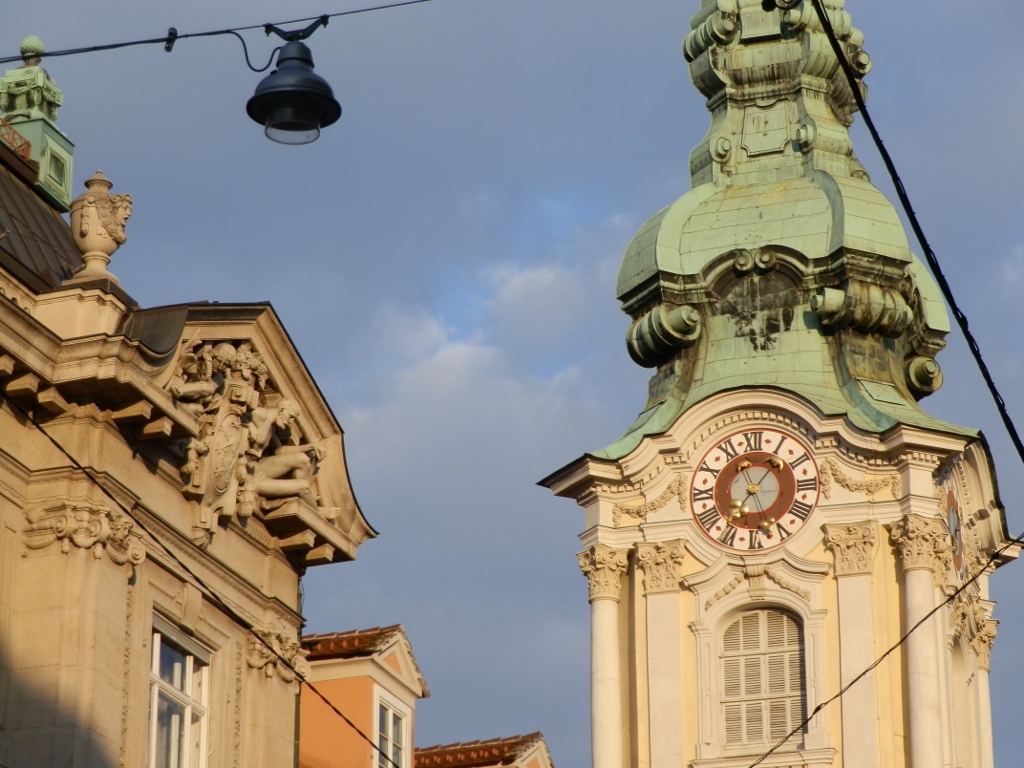 Graz, a detail
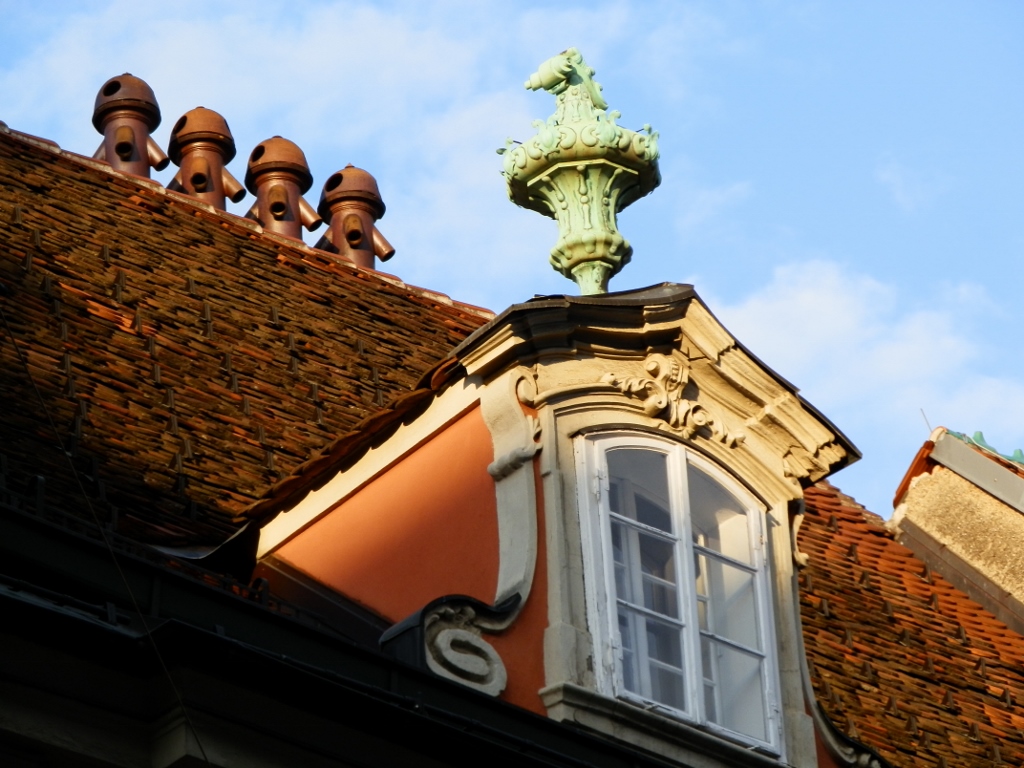 Graz, a detail
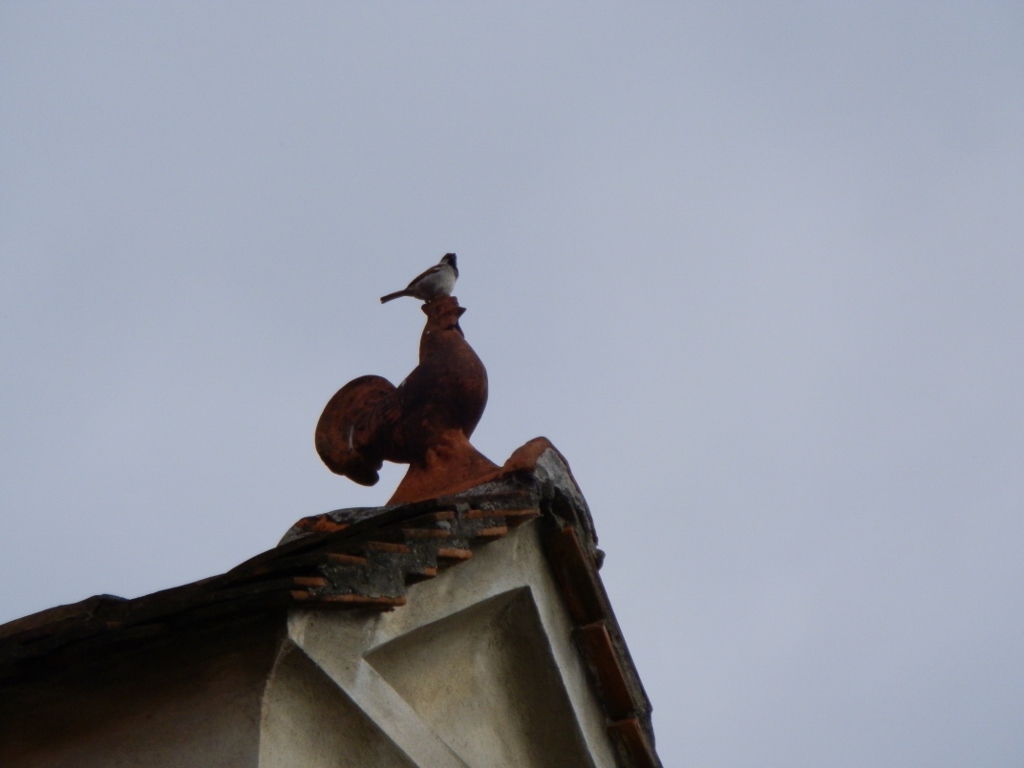 Graz, a detail
As the day drew to a close and there weren’t many clouds in the west, the colours of the setting sun further highlighted the picturesque façades of what I would call a typical Central European city.
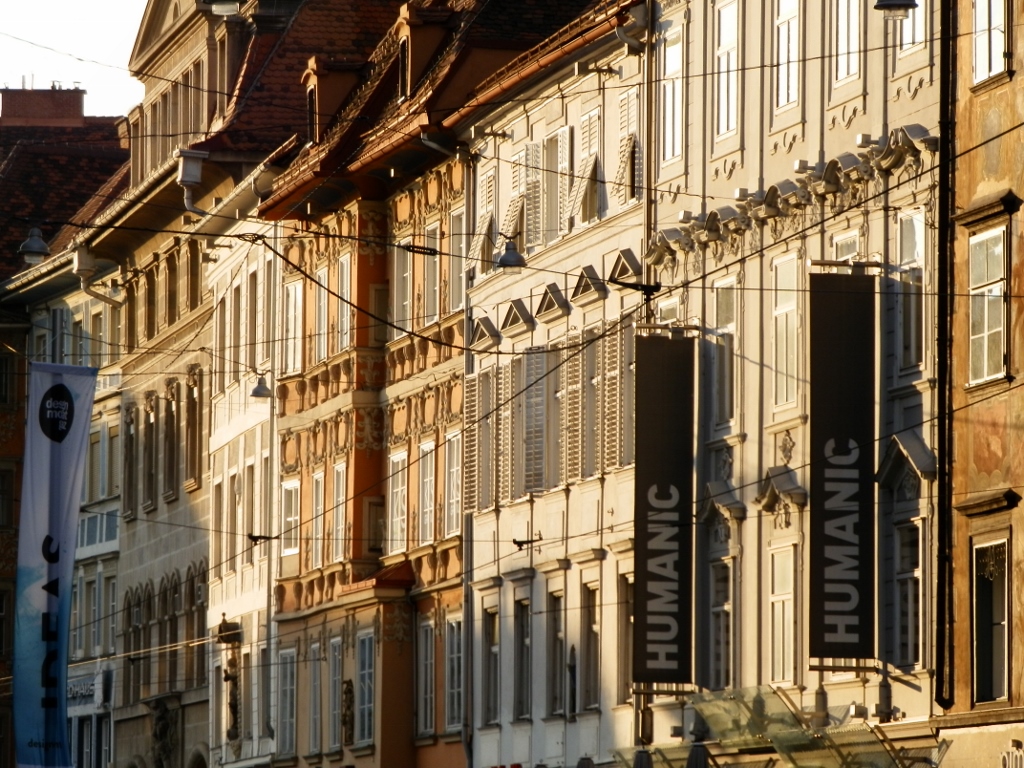 Graz, a detail
I now began slowly making my way back to my hotel, starting by crossing the Mur from the Old Town via a bridge, and once again I took photos of the interesting scenes visible from there.
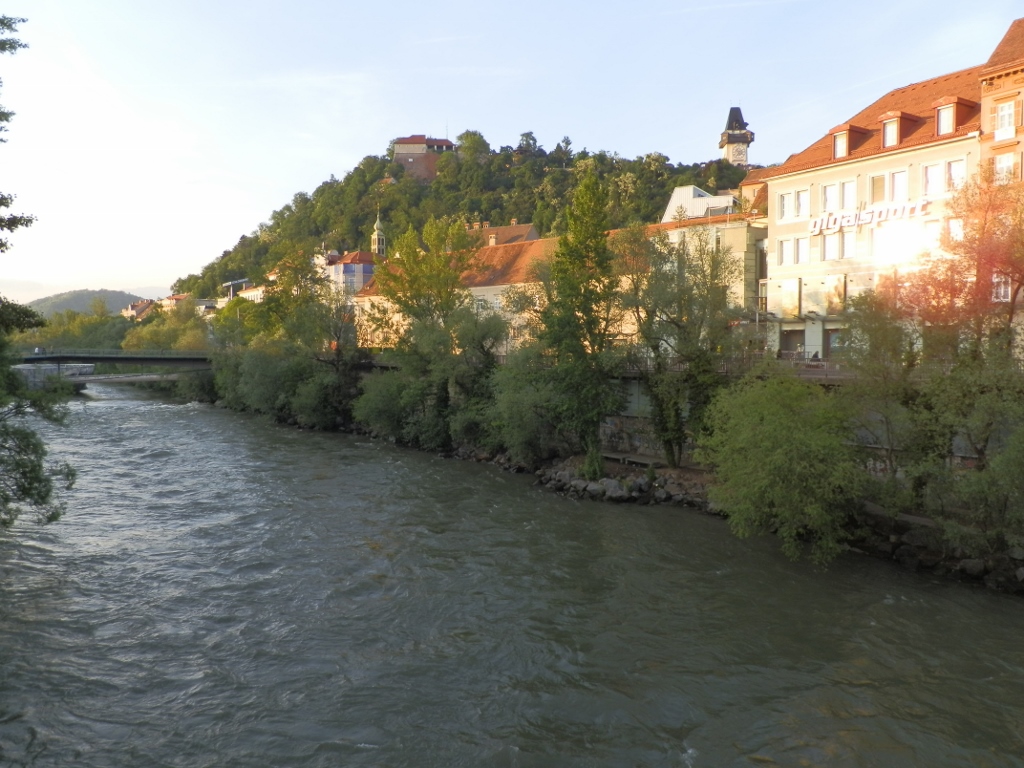 Graz, a detail
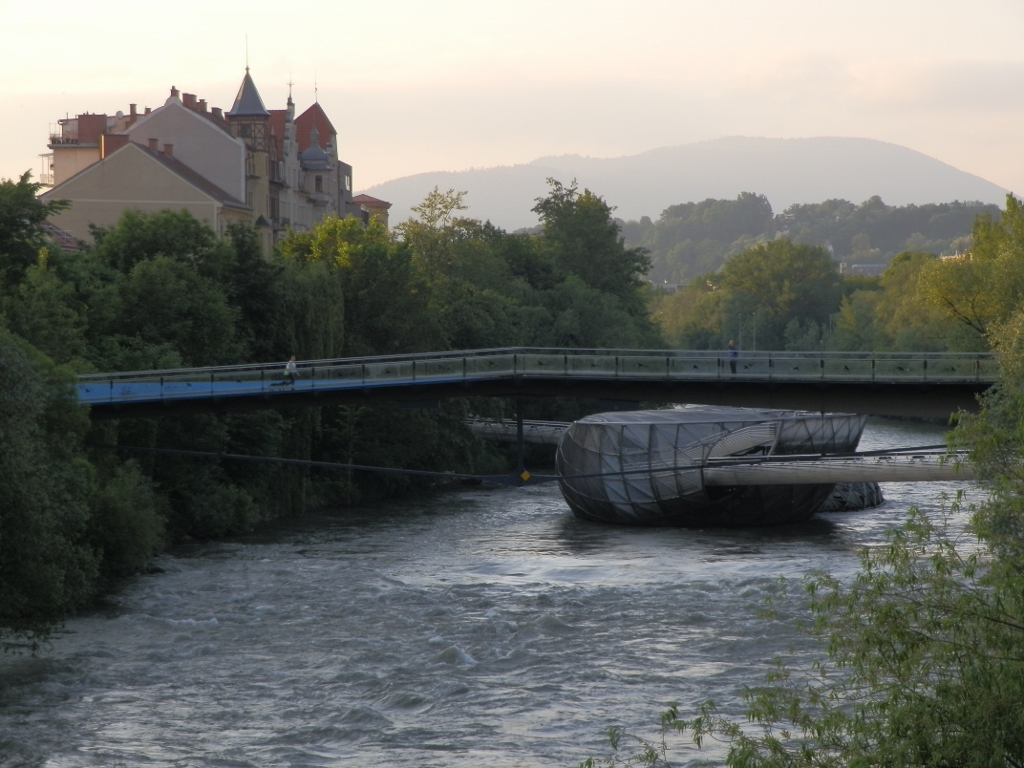 Graz, a detail
Then I passed by the previously mentioned contemporary art museum, Kunsthaus Graz, which I planned to visit the next day, while for now I continued along the main street leading towards the train station (and my hotel).
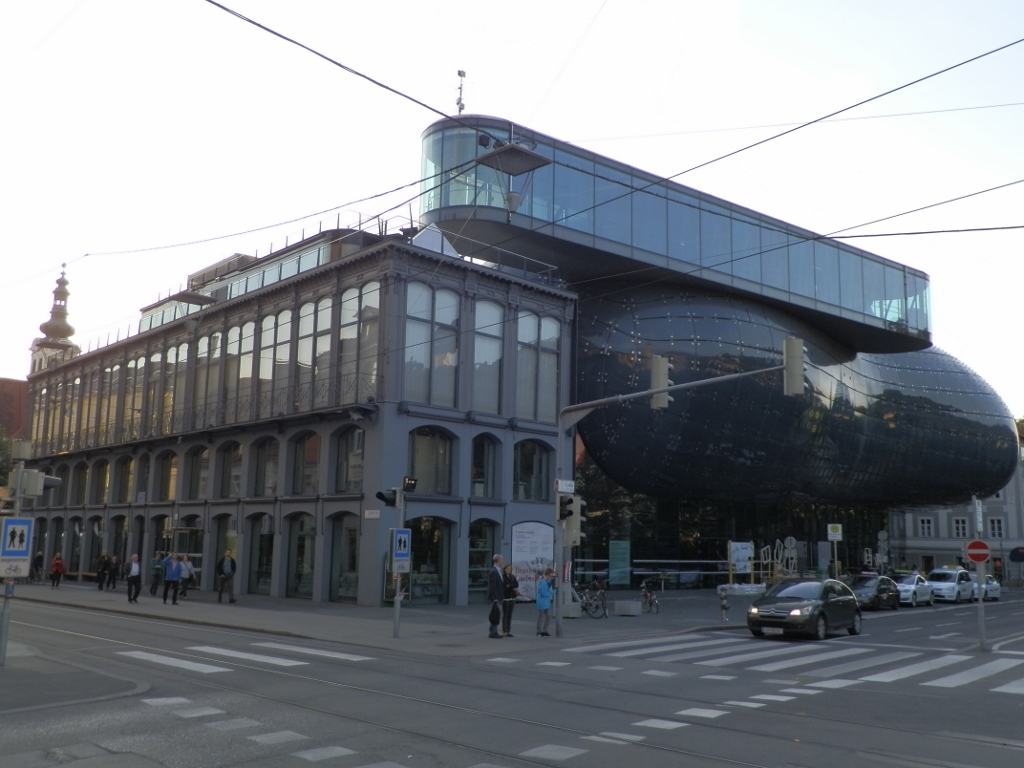 Graz, a detail
From time to time, I looked around and took photos, and then I finally reached the train station.
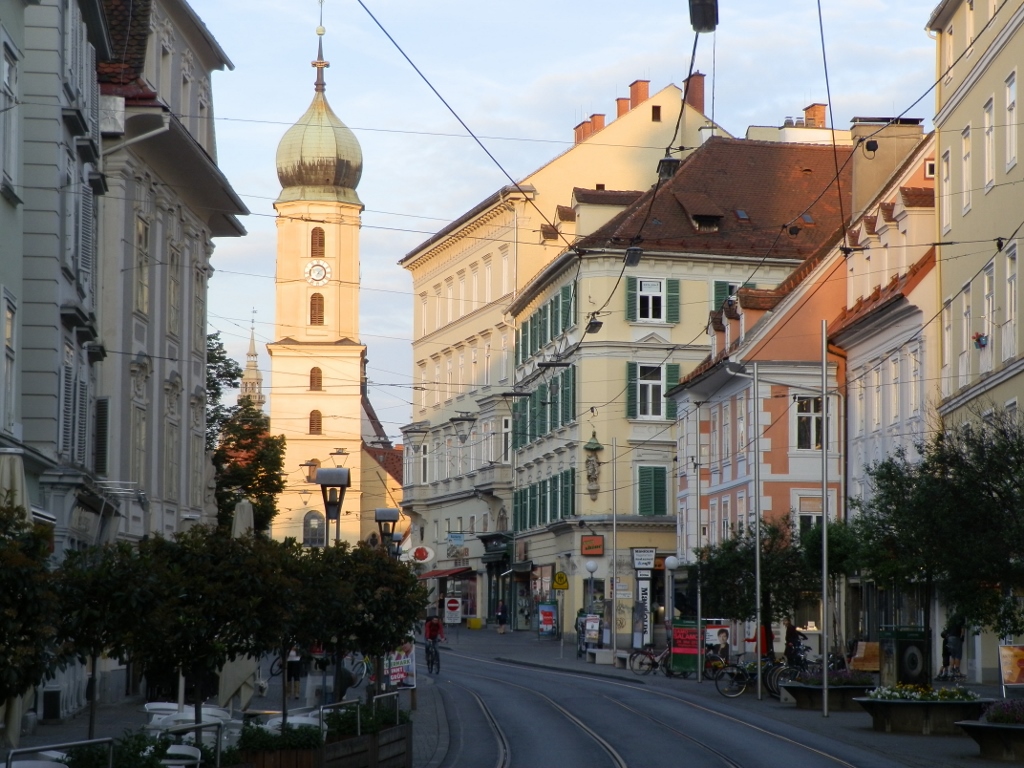 Graz, a detail
Namely, since my hotel didn’t provide breakfast, it was important for me to buy a few small items to help me wake up easily in the morning. Since it was already the weekend evening, the city’s shops were closed, but there was a supermarket open at the station, which was exactly what I needed.
In the end, I was extremely tired, so I went to bed fairly early. It was important for me to get a good rest.