Although I had problems with back pain and my right leg as a result of bending down suddenly while carrying a large backpack, all of that was now much less severe than the previous afternoon, so I continued with my leisurely walk around Lecce and the exploring of this exceptionally beautiful city in southern Italy.
As a reminder, here’s a map showing all the places I visited during my stay in the Apulia region and its surroundings in September 2024.
I have already mentioned in the previous part of the story about this trip that Lecce is known as the "Florence of the South" or the "Baroque Florence" because of the large number of beautiful buildings constructed in the Baroque style. Some of these buildings are better-known, such as churches or palaces, but for many others, it’s not easy to find an official name (if one even exists). This doesn't mean that these lesser-known buildings are necessarily less beautiful and visually appealing, or that they aren't beautifully decorated.
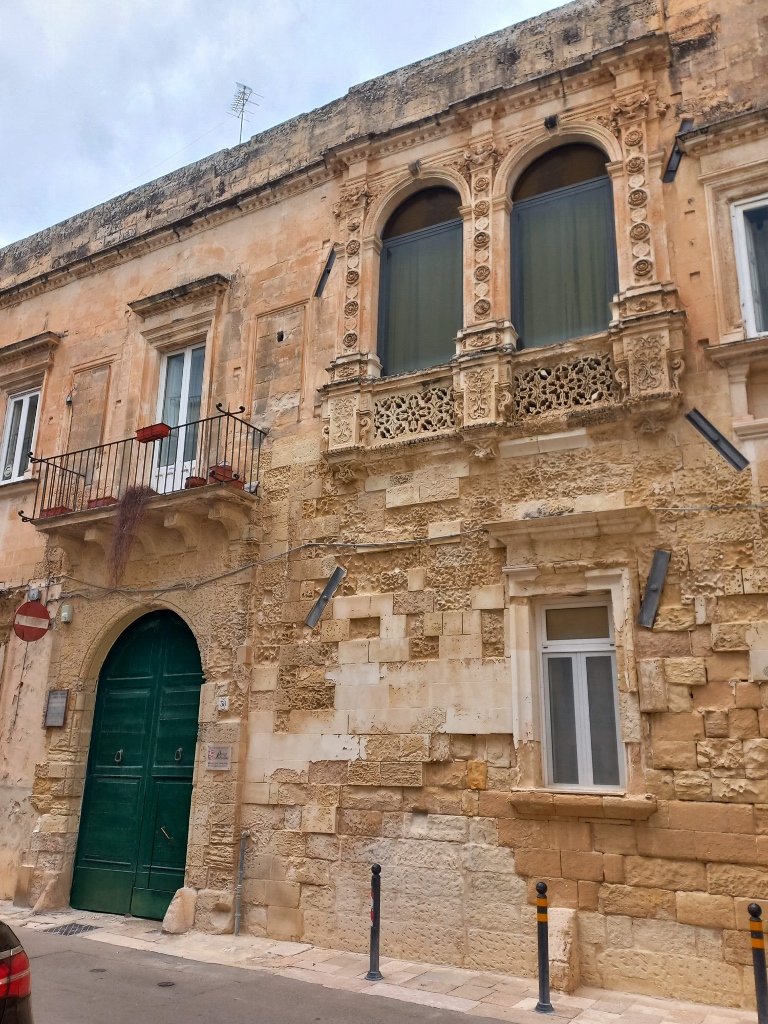 Lecce, a detail
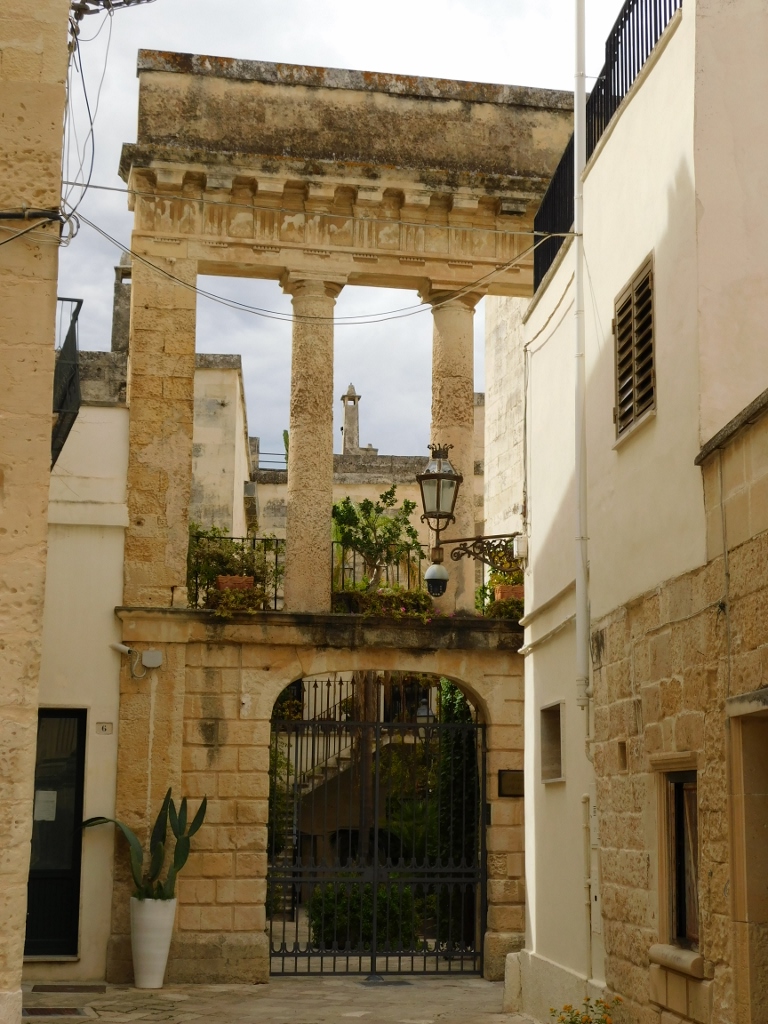 Lecce, a detail
However, the backbone of my sightseeing were churches, such as the Church of Santa Maria della Provvidenza, which was built in the early 18th century. It was once connected to a monastery, but the monastery was demolished in the first half of the 19th century.
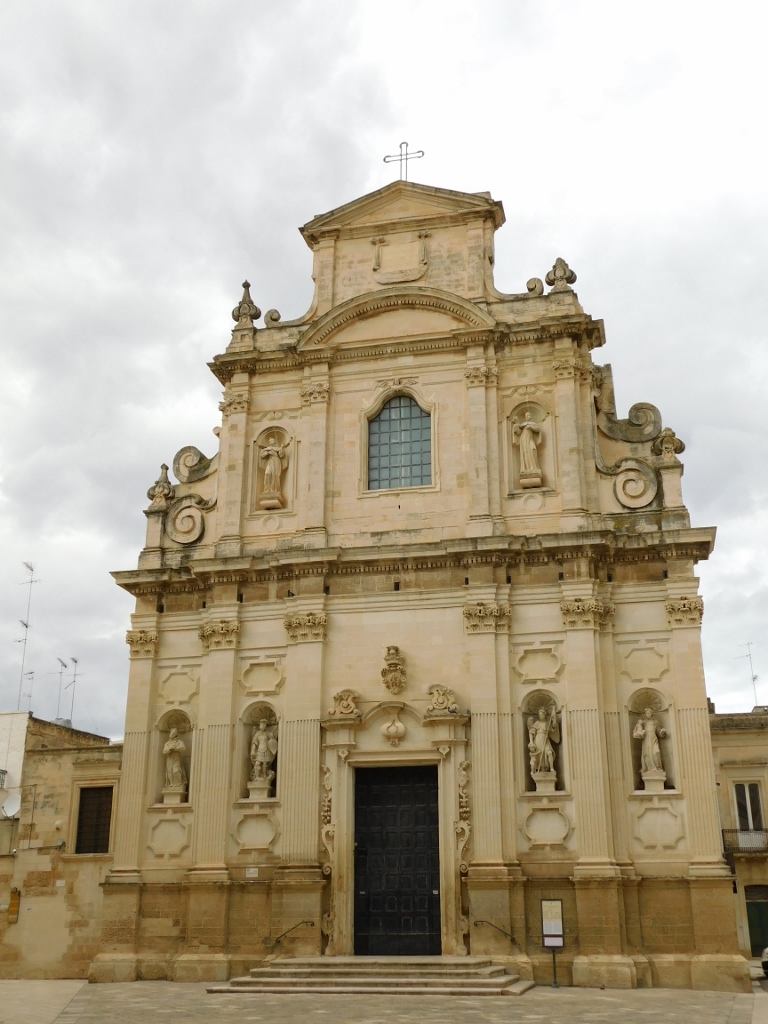 Lecce, a detail
I continued my walk, but now mostly in the direction of the square where the cathedral is located.
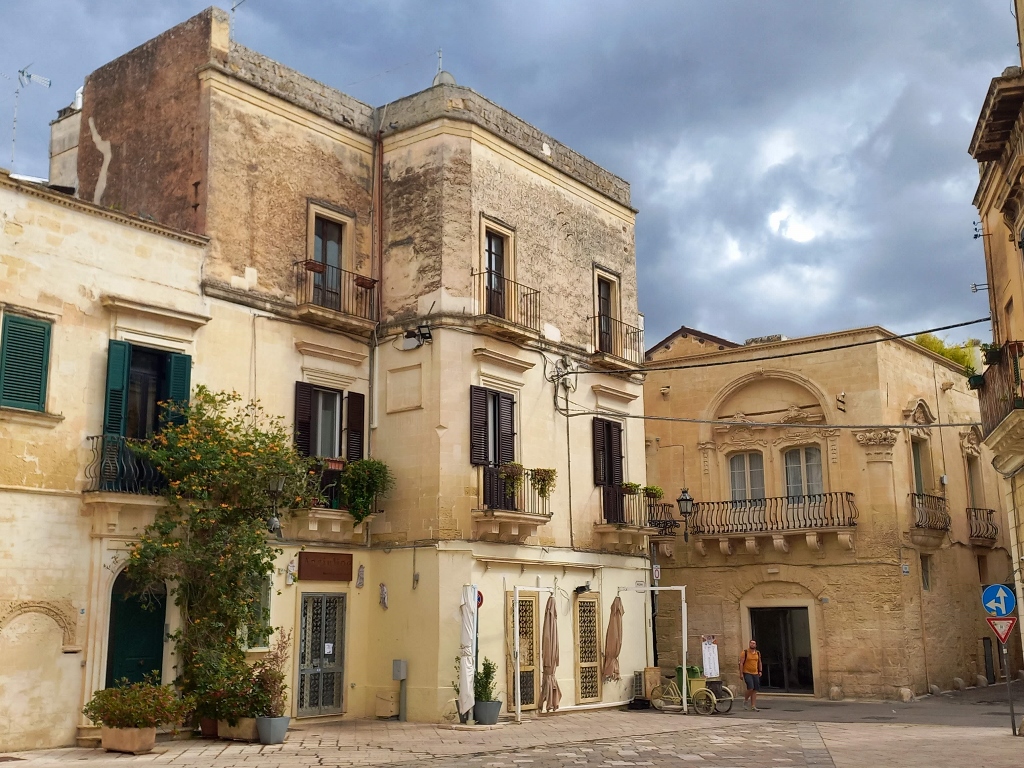 Lecce, a detail
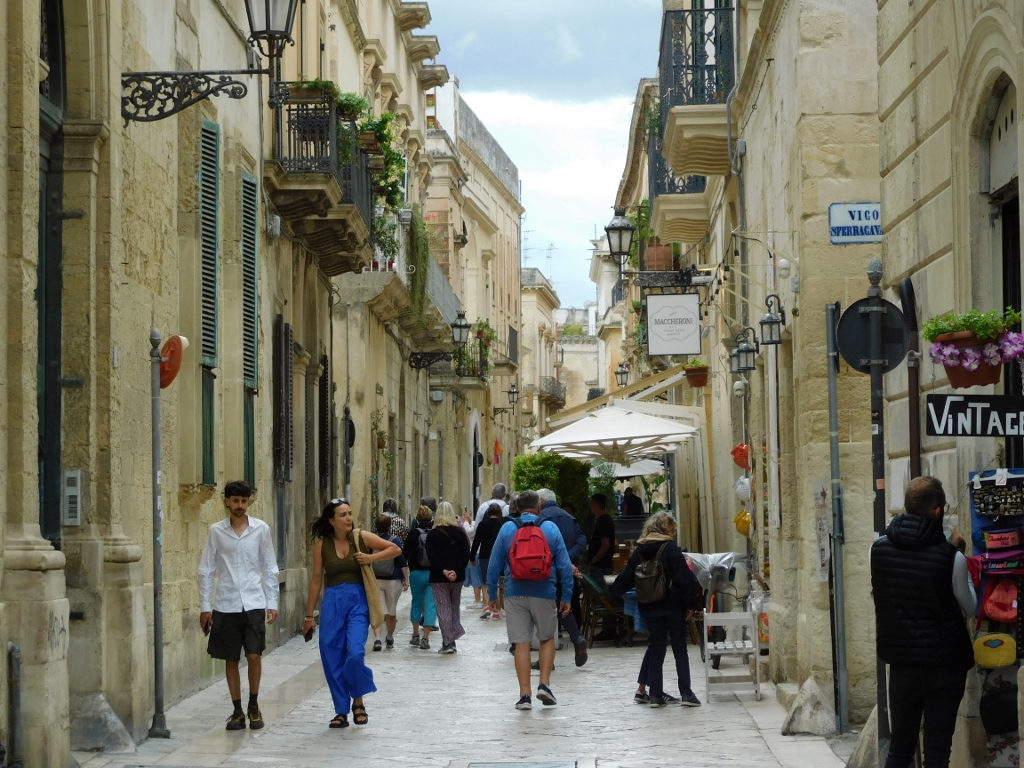 Lecce, a detail
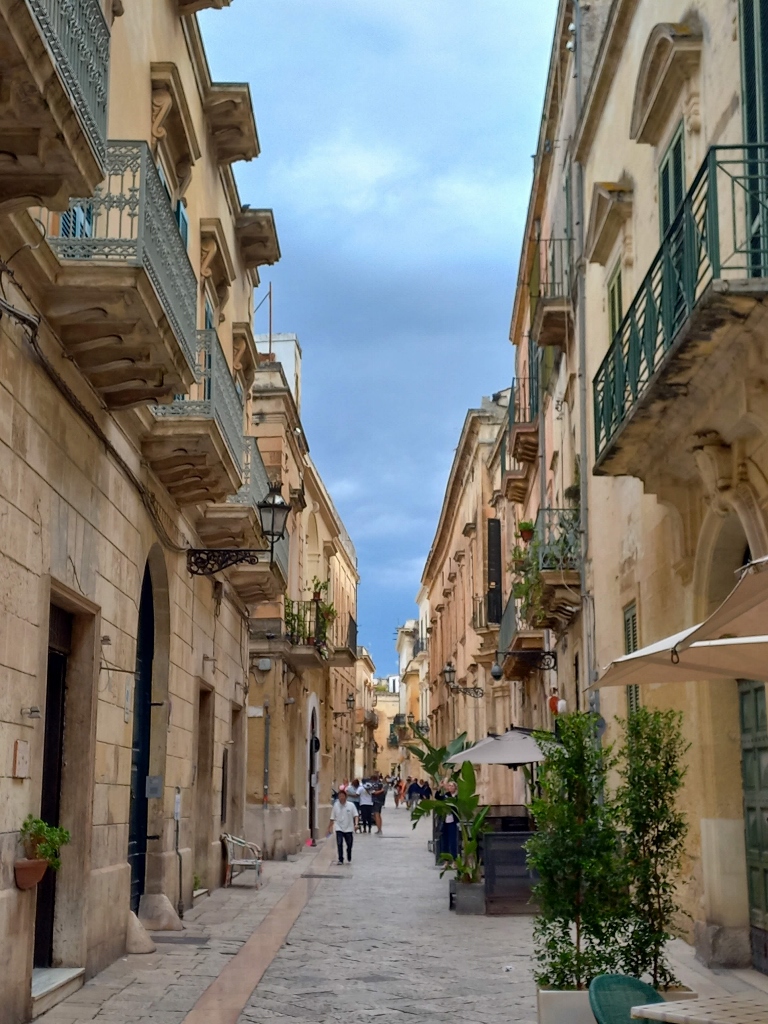 Lecce, a detail
Namely, as I have mentioned earlier, in order to do something related to sightseeing while saving my legs and back a bit, I decided to take a ride on the tourist train. These rides depart from the square where the cathedral is located.
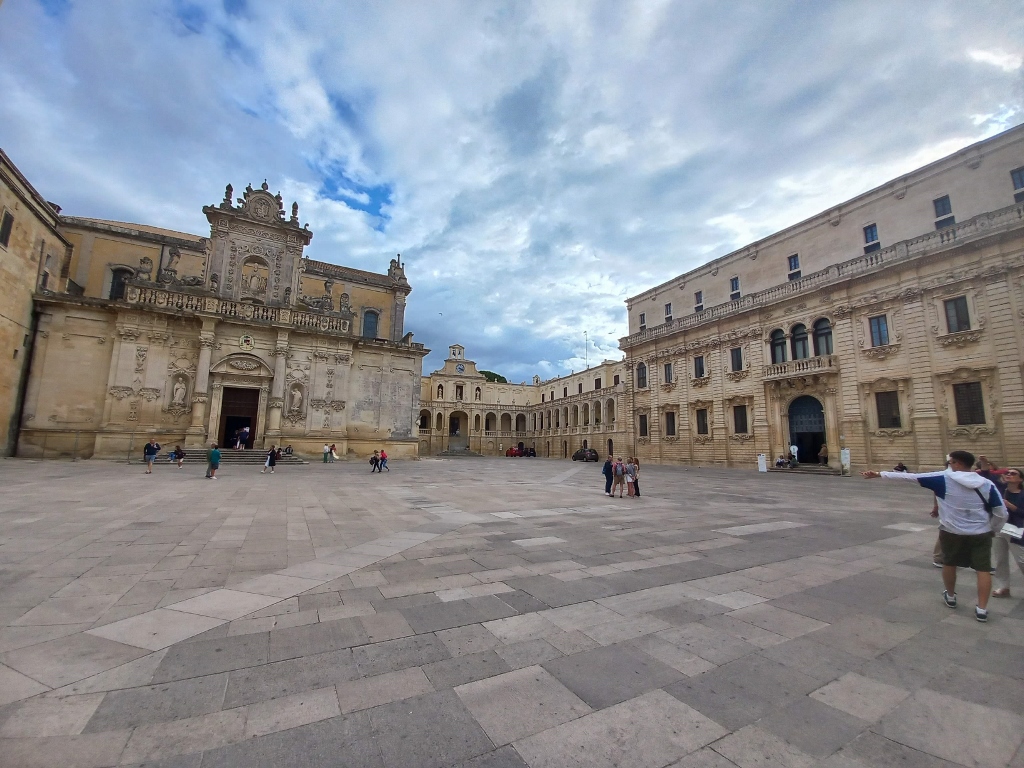 Lecce, a detail
Since I didn't take a photo of the Bishop’s Palace in the morning, I did so now.
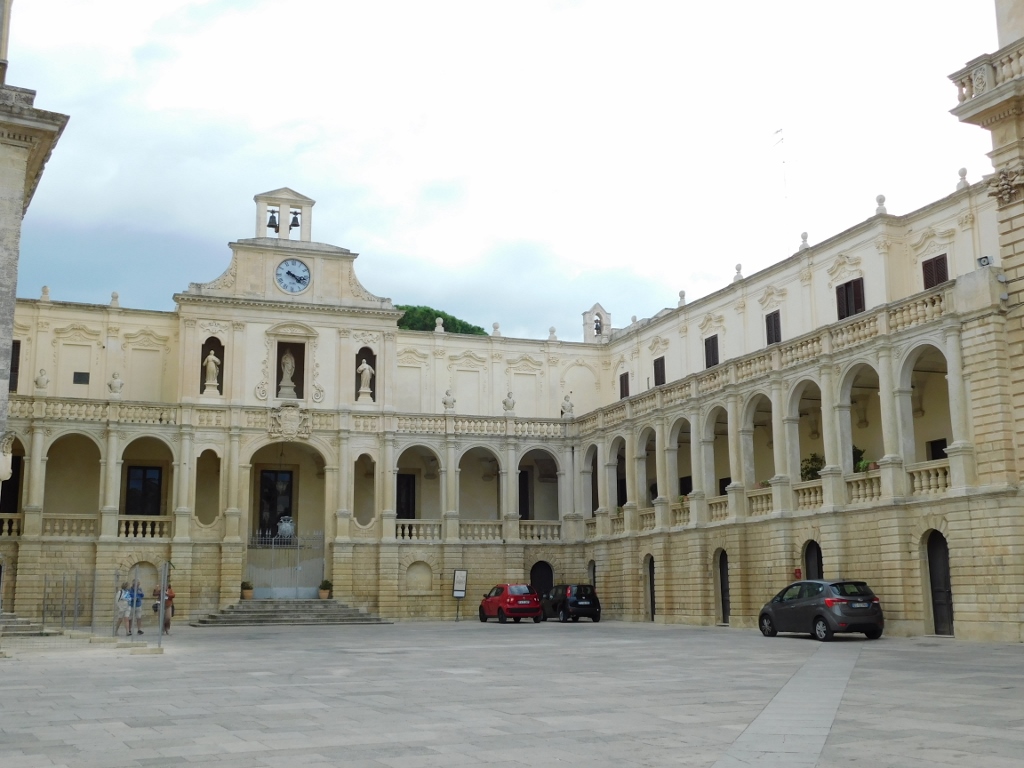 Lecce, a detail
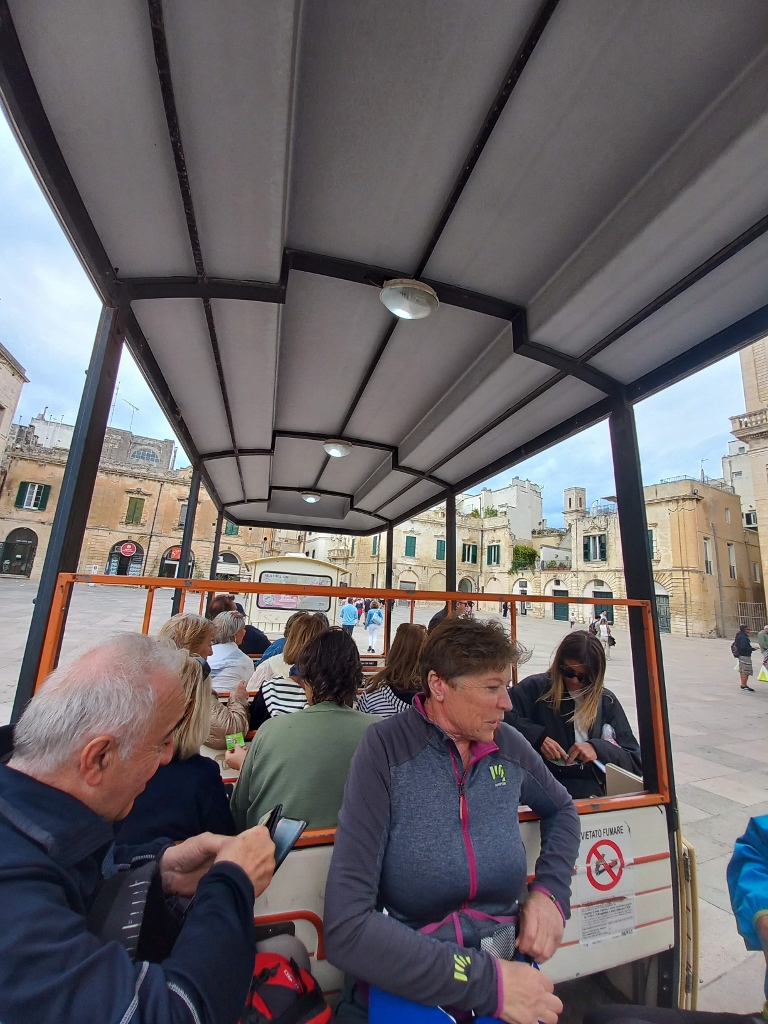
Soon, the tourist train arrived and passengers were able to board.
 Lecce, a detail
I must admit, I both liked and didn't like this ride. On the one hand, it was nice not to have to move while still being able to sightsee, but on the other hand, I realistically couldn't see much because the stops at the landmarks were either too short or my viewing angle wasn't good enough. Additionally, the commentary I could listen to through the headphones was in Italian. I speak Italian relatively well, but if the content is specific (like history, art history, religion, etc.), it still poses a challenge for me.
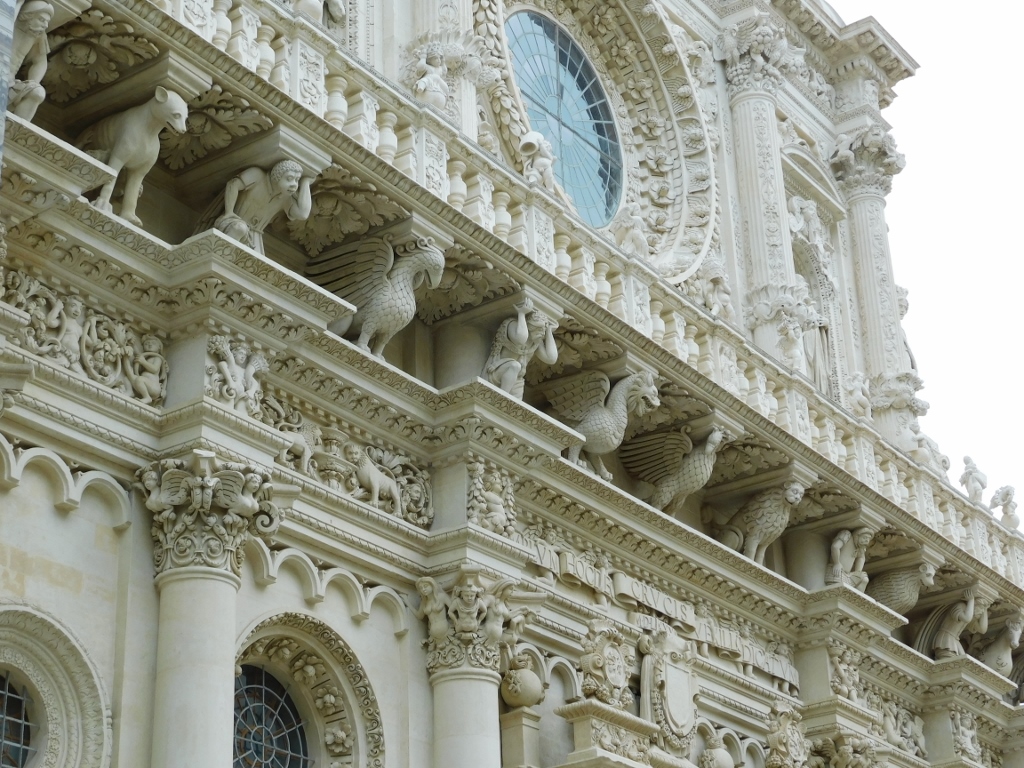
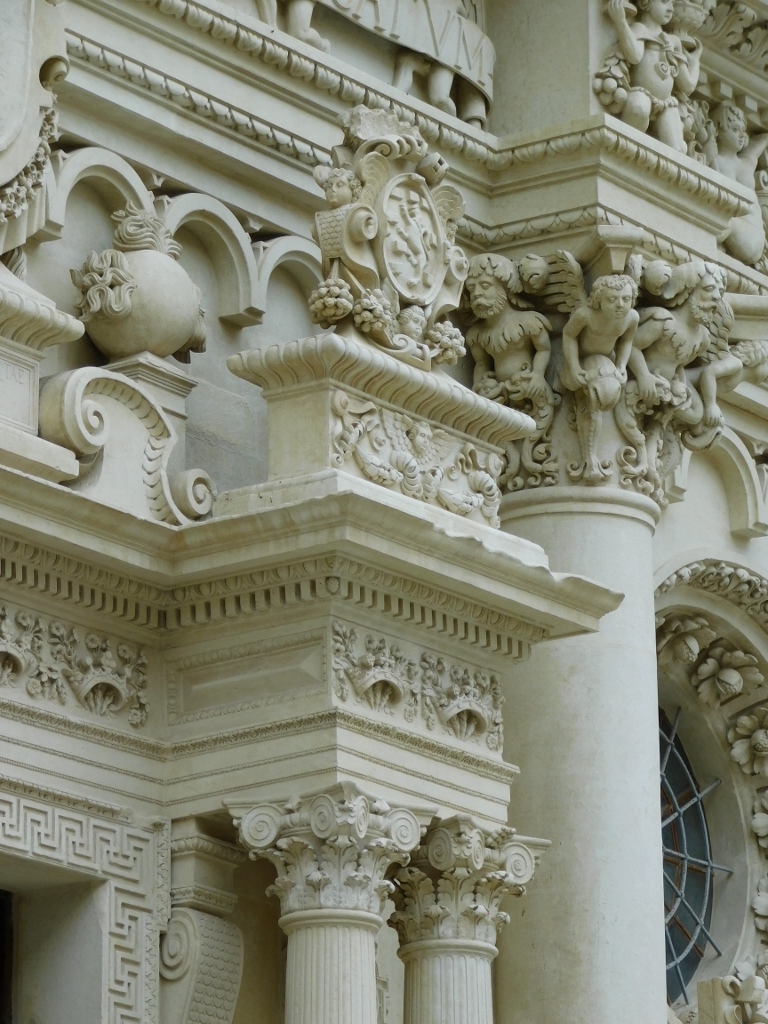
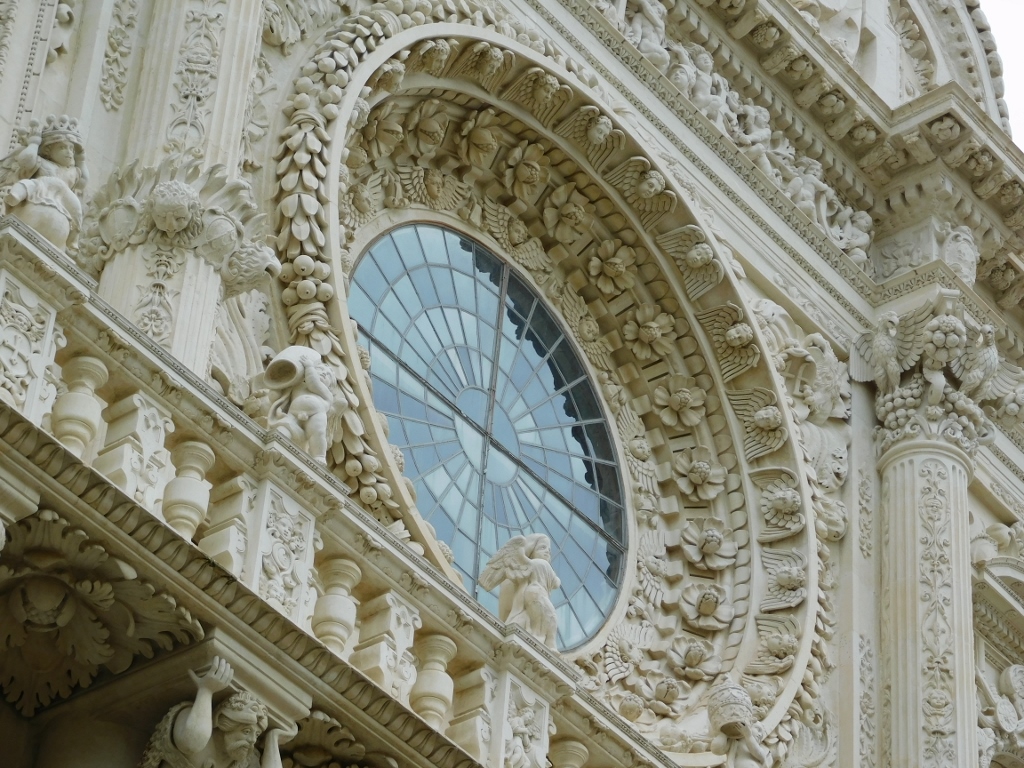
I made the most of my time at the Church of Santa Croce, where we stopped long enough for me to take some good shots of the incredibly richly decorated façade that adorns this church, which I have already written about in the previous part of my travelogue.
 Basilica Santa Croce, a detail
 Basilica Santa Croce, a detail
 Basilica Santa Croce, a detail
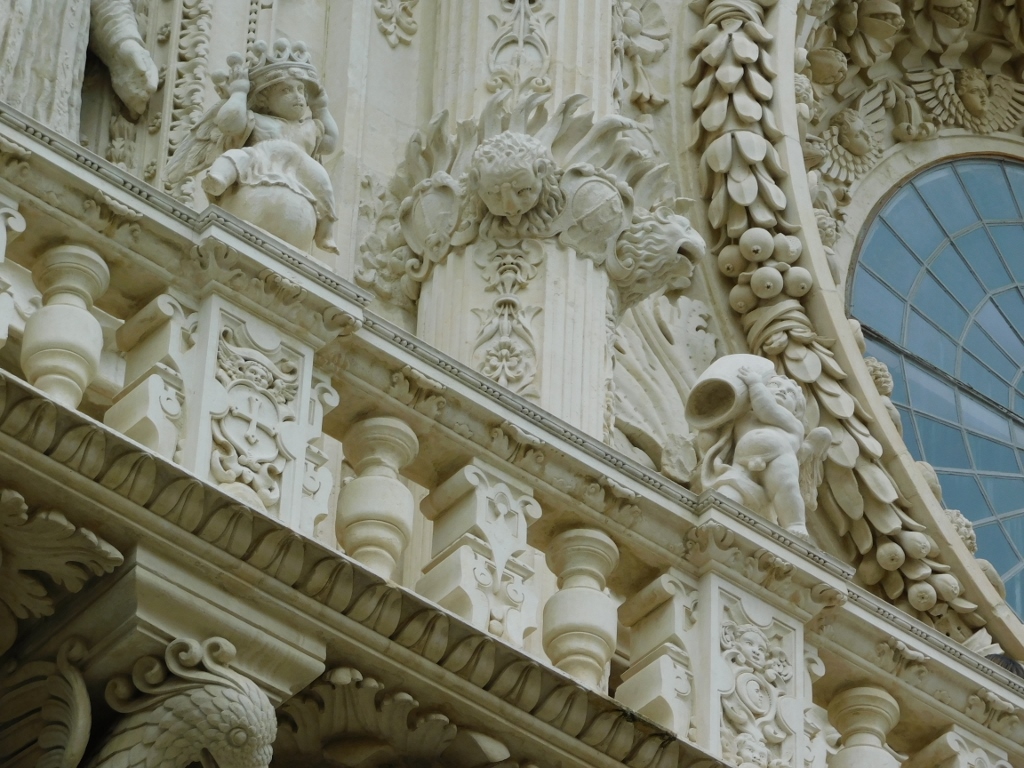 Basilica Santa Croce, a detail
I also managed to take a nice shot of one of the three gates that lead into the historic centre of Lecce. This one is called Porta Rudiae and it was built in 1703 on the site of an earlier gate that collapsed at the end of the 17th century. The gate is richly decorated, while at the top there is a statue of Saint Orontius, the patron saint of Lecce.
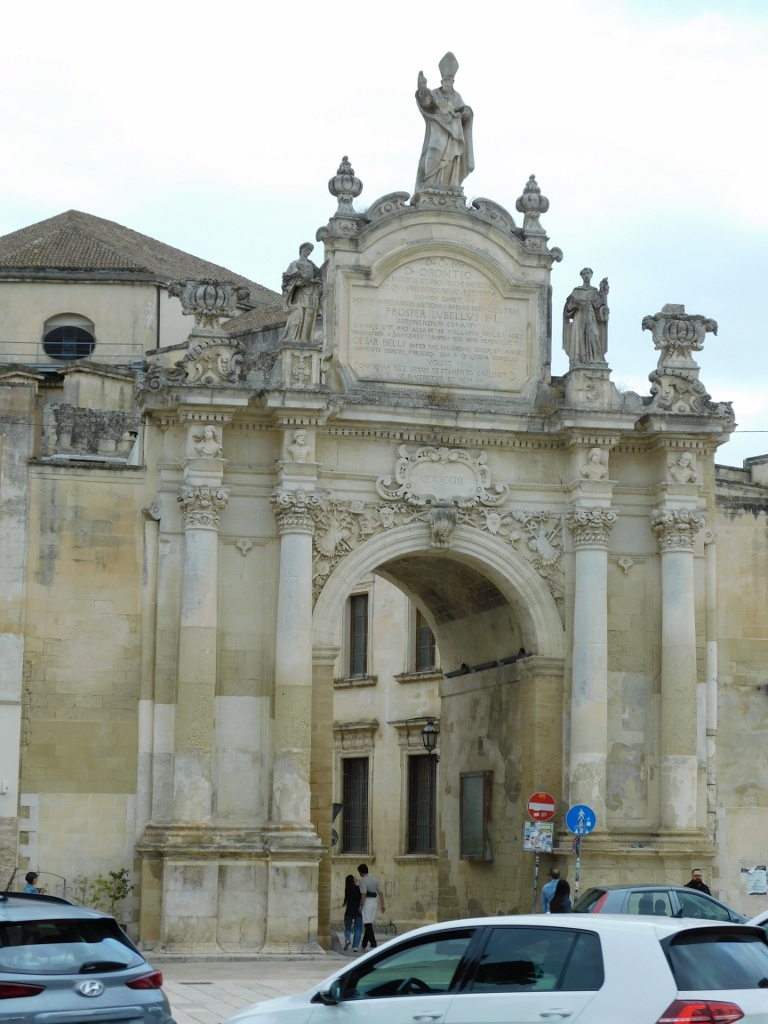 Lecce, a detail
The end of the sightseeing tour of the historic centre of Lecce with the tour guide was near a large park in the city centre, so from there, I quickly and easily made my way to Piazza Sant'Oronzo. I had already been there earlier, but now I went to see the remains of the Roman amphitheatre. The amphitheatre was built in the 2nd century and could hold around 25,000 spectators. Today, it is only partially excavated, as much of it is covered by the modern city, but it’s interesting to view the amphitheatre from the level of the square.
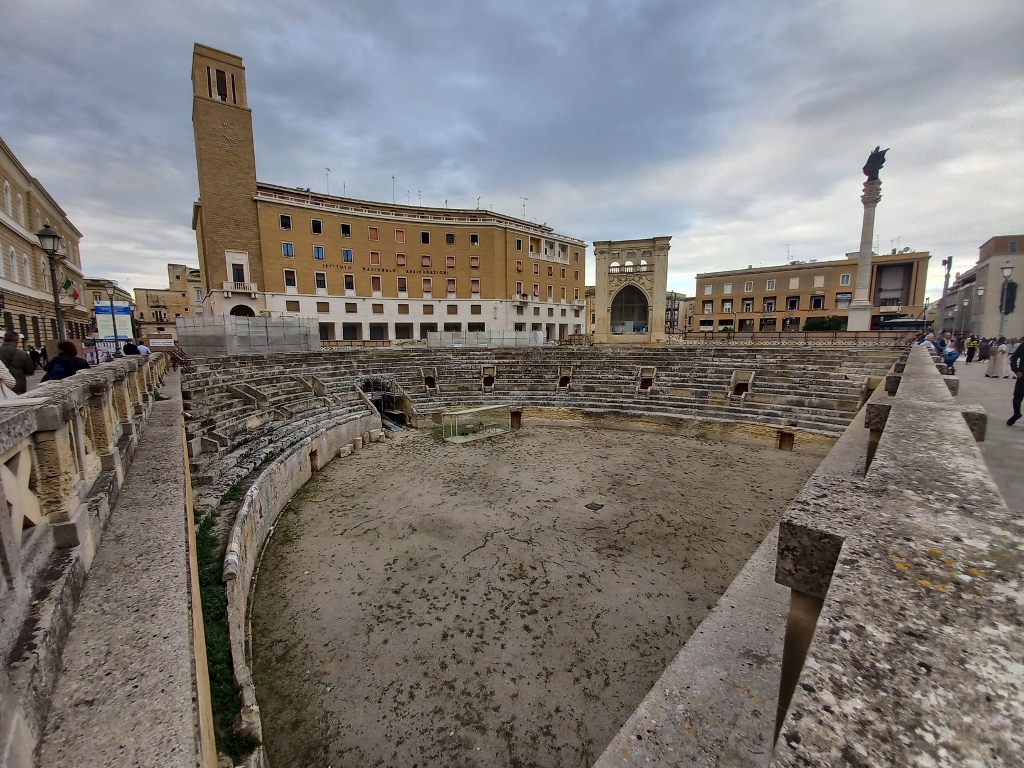 Lecce, a detail
While walking here, I got inspired to have an ice-cream. I thought it was a good sign (regarding my back and leg pain), as it seemed like things were getting back to normal. Of course, in order to fully recover, I needed to return home, and I can say right away that I spent the rest of the trip dealing with varying degrees of discomfort. However, in the end, I managed to do and see everything I had planned.
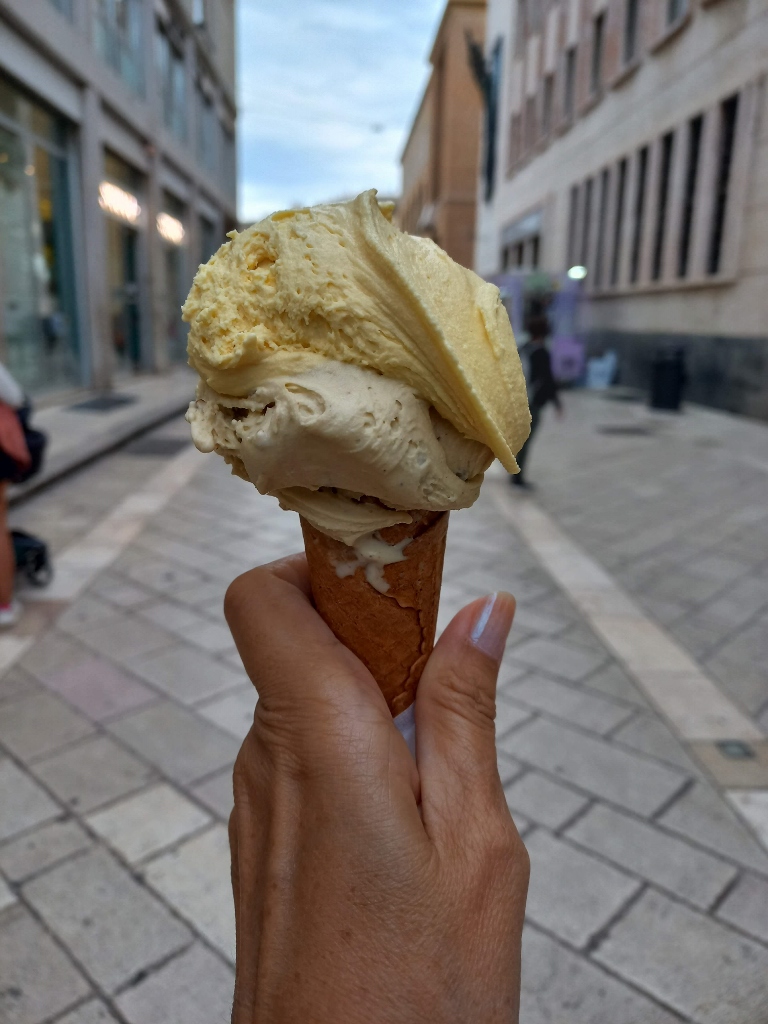 Lecce, a detail
By now, it was already later in the afternoon, so I slowly headed back to the room. On the way, I took a few more photos and that was it, at least as far as Lecce was concerned.
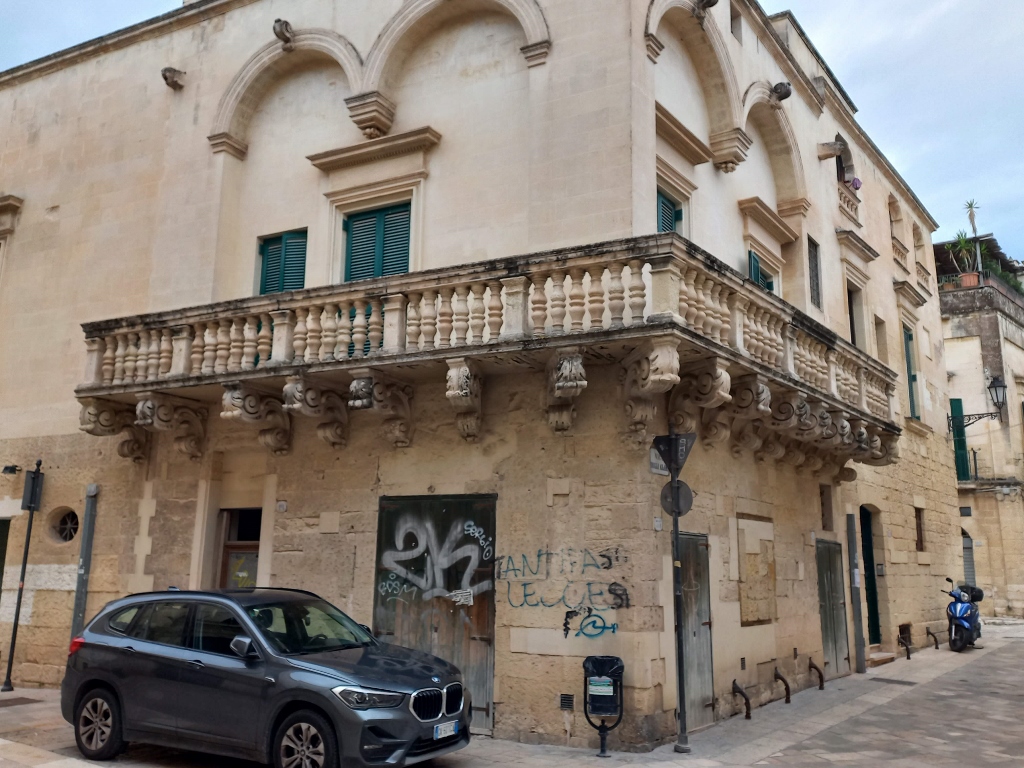 Lecce, a detail
I also needed to pack, as I was heading to my next destination the following day, and I wanted to do everything slowly and carefully in order to avoid creating any bigger problems. That’s exactly what I did, and the next morning after breakfast, I put my large backpack on my back, my small backpack in front of me, and I headed towards the intercity coach station.
I had decided that my next destination, where I had booked a very comfortable room for two days, would be the town of Maglie. It was still within the Salento Peninsula, which is better known as the "heel" of Italy's "boot."
From what I saw online, there was a direct coach connection between Lecce and Maglie, which suited me perfectly, especially since the coach stop was very close to the room I had been staying in during my time in Lecce. By the way, for reasons unknown to me, the coach takes half the time compared to the train.
I went there and started waiting for the coach. At the stop, there was a sign that clearly showed the arrival time. However, the coach didn’t come and the time kept passing. There were two Argentinians at the stop as well and they were also waiting for the same coach, so we started chatting. Then, I looked more closely at the information board and only then noticed that this coach line only operated during the season, i.e., for a couple of summer months, and that by mid-September, it had already been discontinued. The internet still showed that the coach passed and stopped there, but now it had been updated with a new time, one hour later.
I didn’t like that at all, but there was nothing that could be done, at least as far as the coach was concerned. Together with the two Argentinians, I started doing more research online and the conclusion was that we needed to go to the train station and take the train from there – me to Maglie, and they to Otranto.
We didn’t see any taxis, so we waited for the city bus and took it relatively close to the train station, where we then had to continue on foot. Although I was constantly worried about carrying the large backpack and the condition of my back, I simply didn’t have a choice. Fortunately, everything went well – I bought my train ticket, soon boarded, and started heading where I wanted to go, just a little later and more complicated than planned.
Although the distance between Lecce and Maglie is only about 30 km, the train takes about an hour to cover that distance. But I wasn’t in a rush, so I calmly observed the landscapes we were passing through. I found it interesting to see stone buildings that I wasn’t exactly sure what they were used for, but I assumed, since they were located in agricultural areas, that they were or still are used to house people who work in the fields.
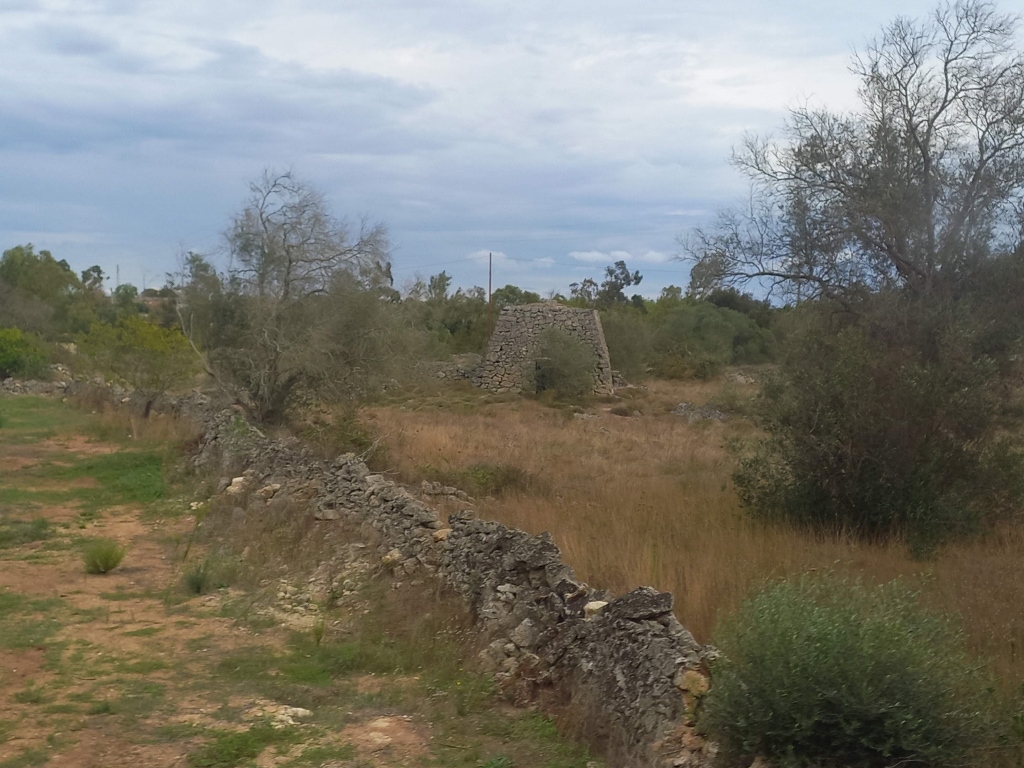 Salento peninsula, a detail
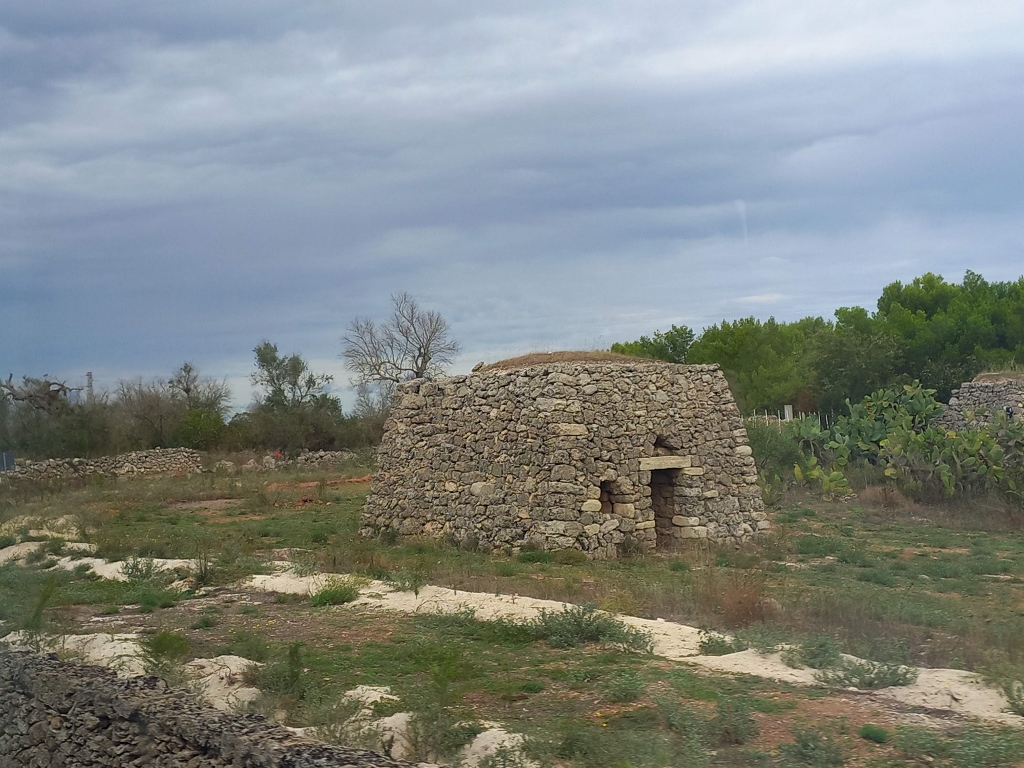 Salento peninsula, a detail
Seeing the stone fences between the plots of land again, I couldn’t help but think about how hard-working the people here are – no matter where the stone comes from, it must be carried to the desired location and then arranged. That can’t be an easy task.
Upon arriving at the train station in the town of Maglie, I first checked the train schedule, as I had plans for an excursion later that day. Then, I made my way to the room I had booked. On the way, I passed by a few notable places in this small town.
The first was a column called Colonna della Madonna delle Grazie, which was erected between 1684 and 1687 at the site that is now at the centre of a small roundabout.
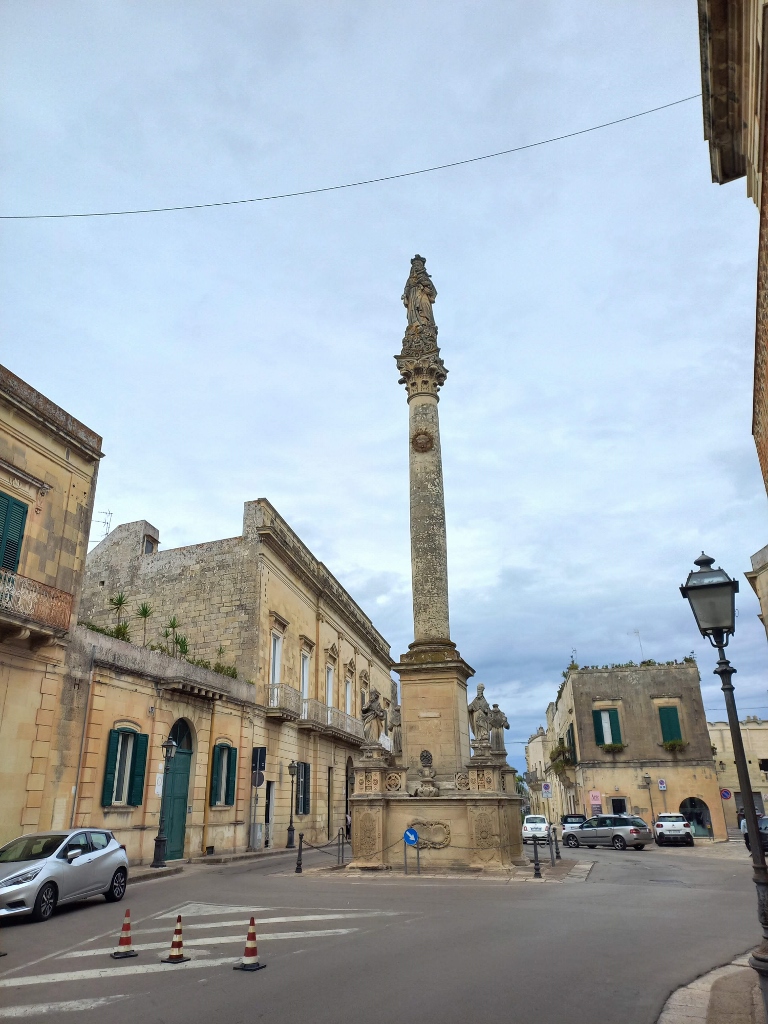 Maglie, a detail
Although there is a church of the same name quite close to this column, I took a photo of a different church, specifically the Cathedral of Maglie. I decided to visit it later.
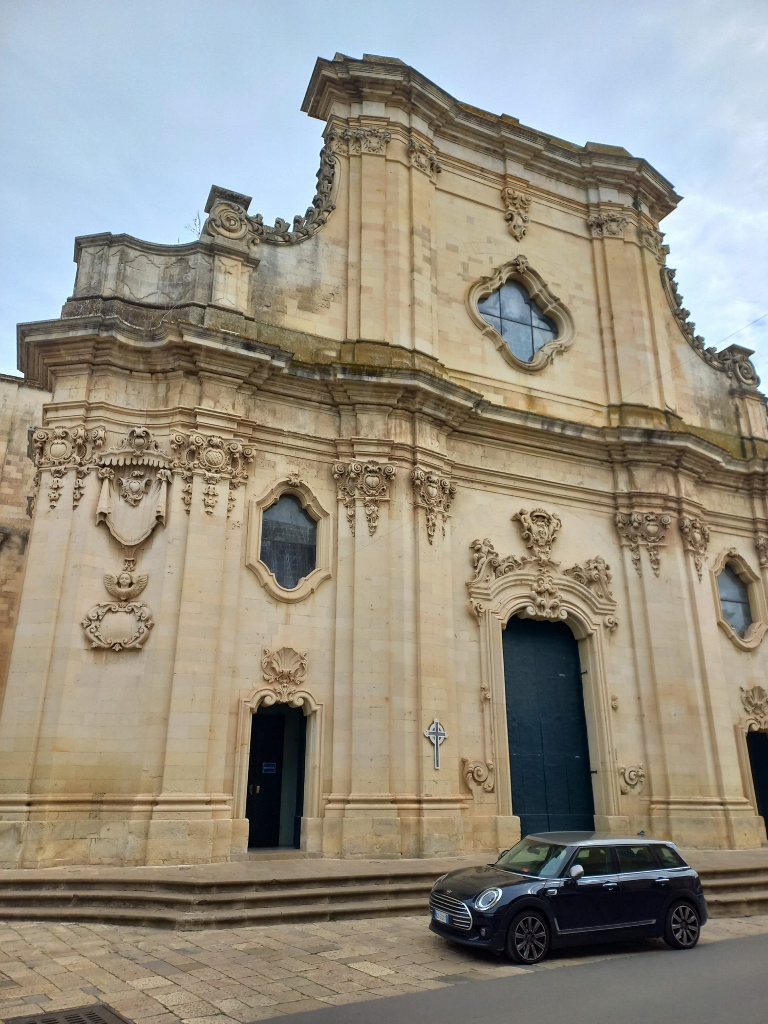 Maglie, a detail
After I had left my things in the room, I took a walk to the centre of this small town because I needed to grab something to eat. Along the way, I took some photos of details, such as the bell tower of the cathedral and a square. There, I found a place where I could sit, but since it wasn’t a proper restaurant, more of a bar, the food had to be somewhat improvised.
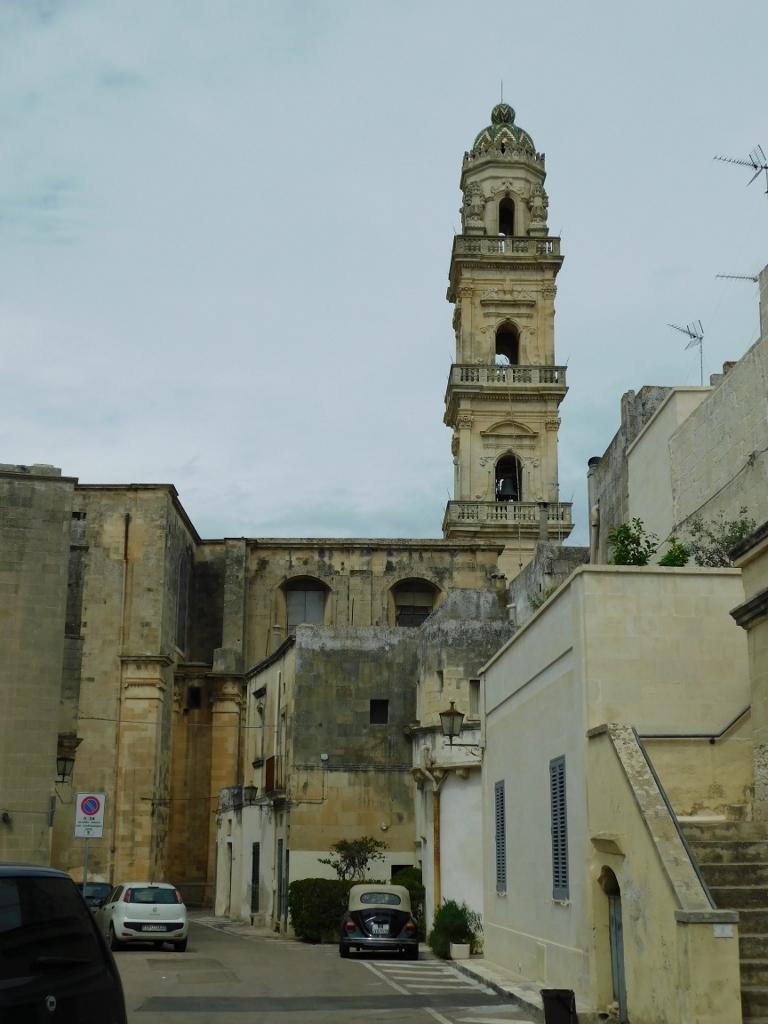 Maglie, a detail
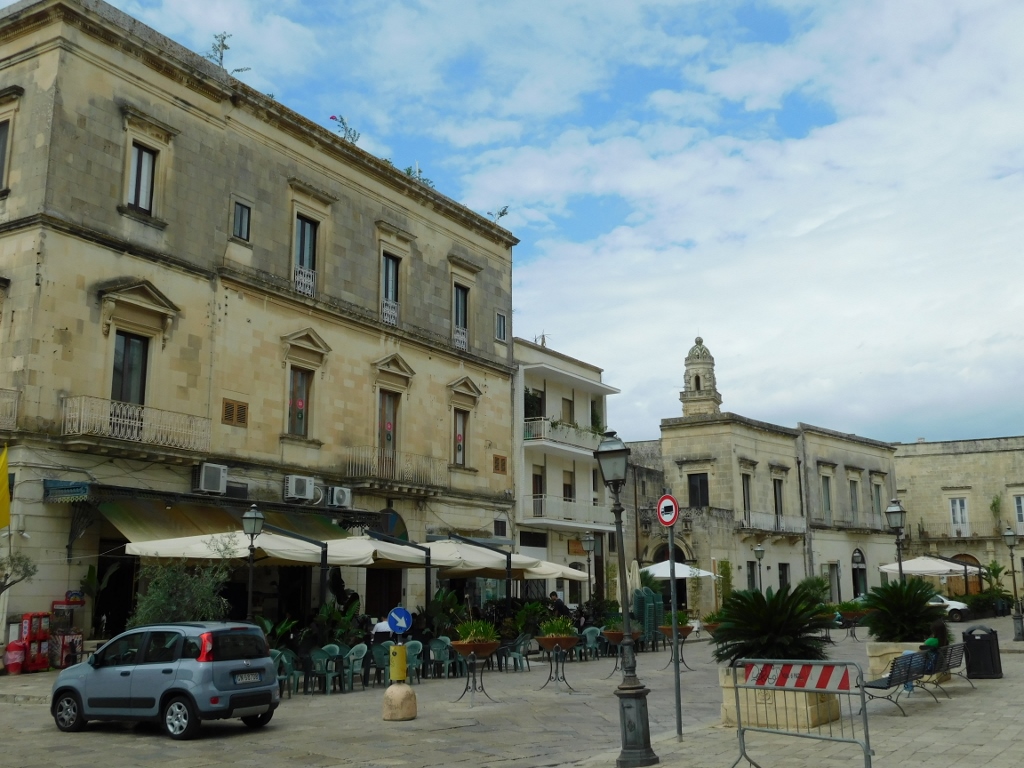 Maglie, a detail
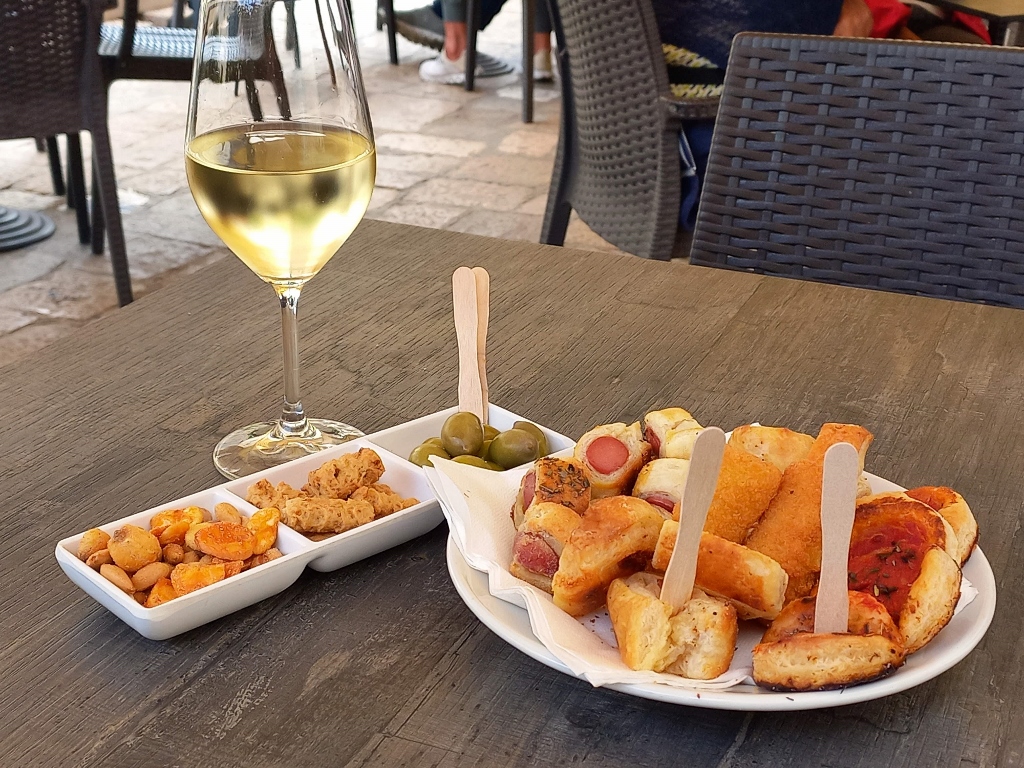 Maglie, a detail
After a pleasant break, I headed back to the train station, following practically the same route I had taken to get to the room and the centre. I passed by the cathedral again, as well as the Church of Santa Maria delle Grazie, which is located near the column Colonna della Madonna delle Grazie.
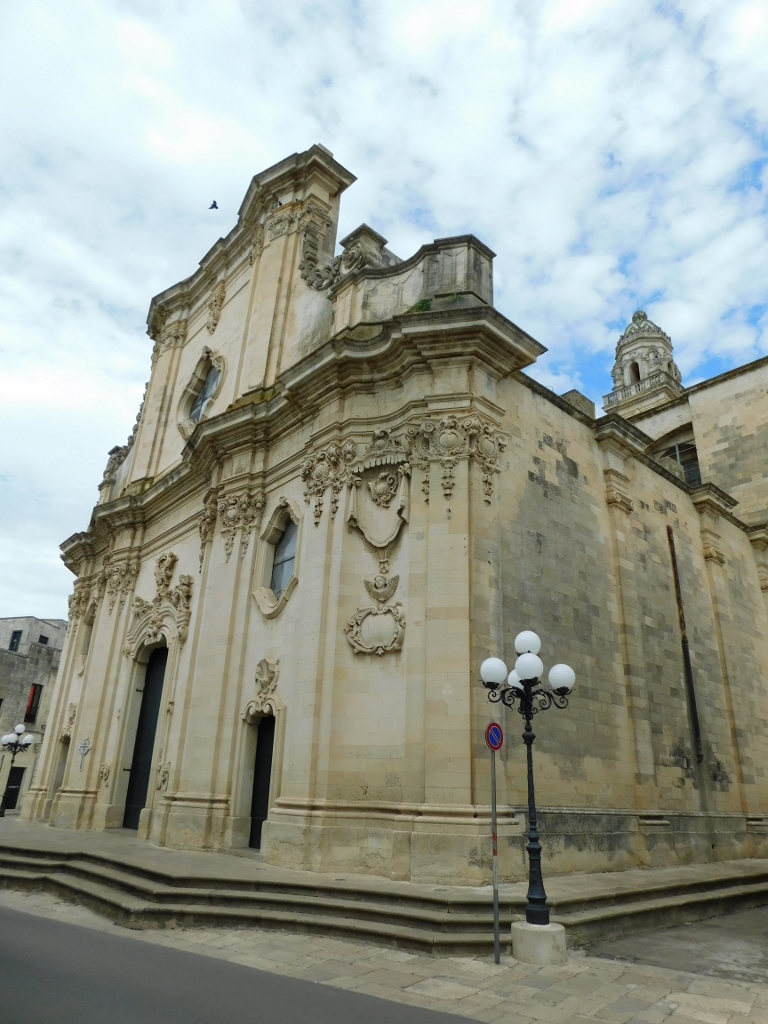 Maglie, a detail
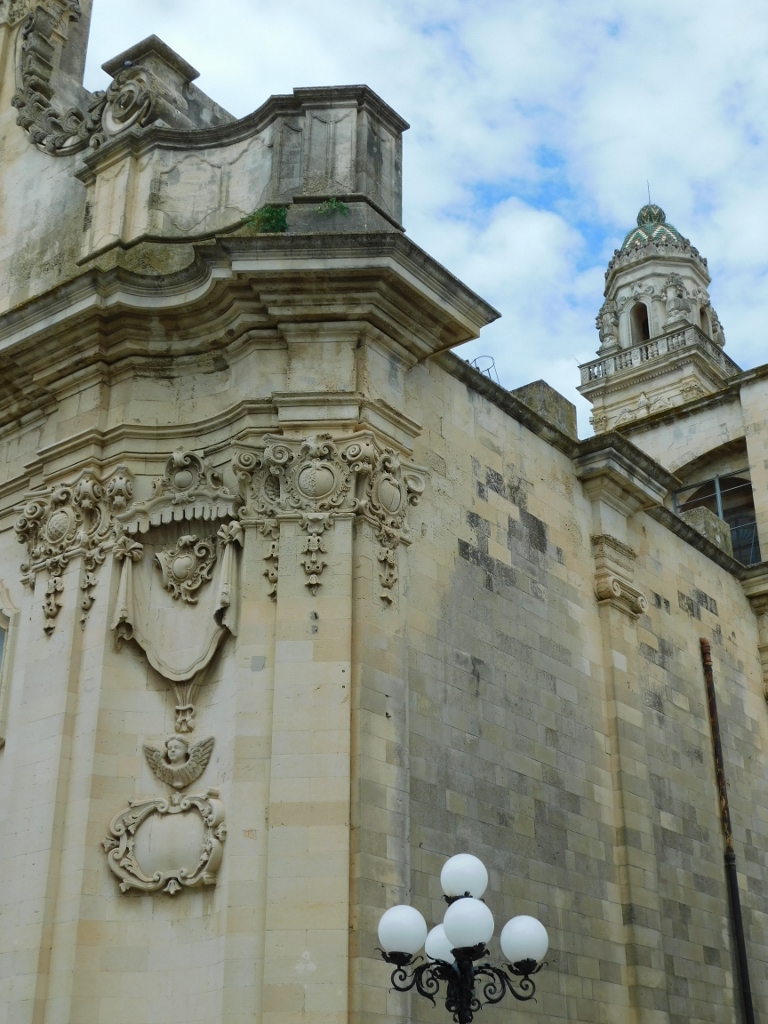 Maglie, a detail
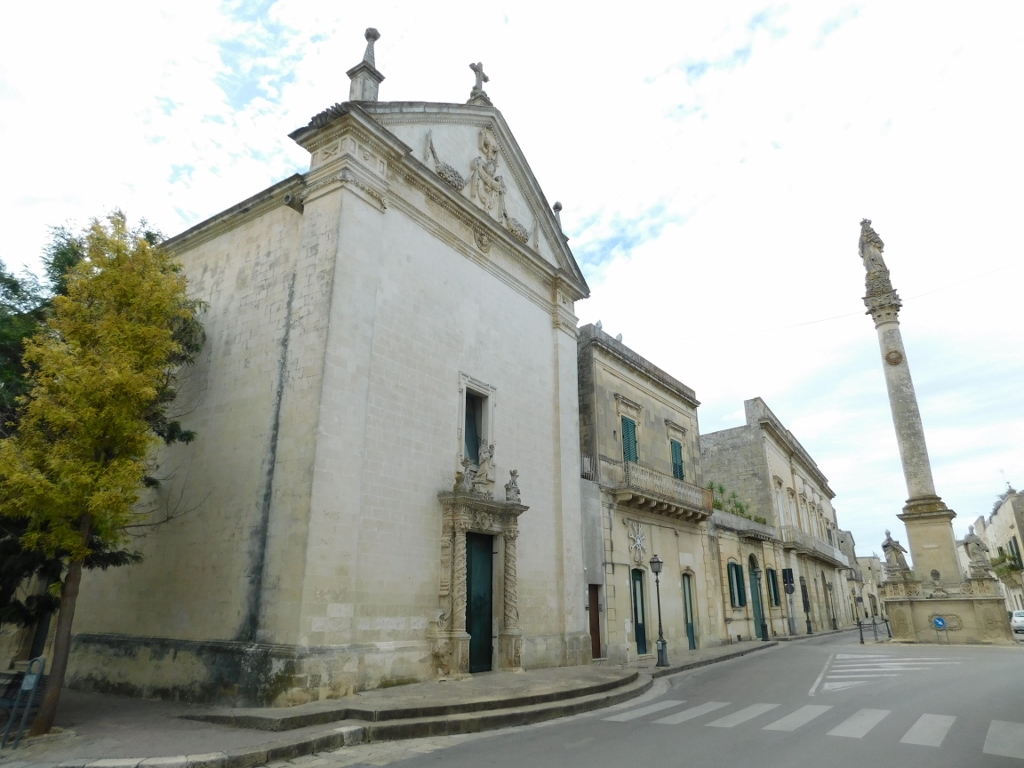 Maglie, a detail
I was now heading on an "excursion" to Otranto, a coastal town where the Adriatic and Ionian seas, both parts of the Mediterranean, meet. It is precisely because of Otranto that the strait between the two seas is called the Strait of Otranto, a wide waterway that connects the two seas and simultaneously separates the Apennine and Balkan peninsulas.
Just like when travelling from Lecce to Maglie, where the train takes twice as long as the bus, the same applies between Maglie and Otranto. The distance is only about 20 km, but the train takes around an hour, partly because it doesn’t go directly and stops at several places. Of course, here in the far south of Italy there are no high-speed trains.
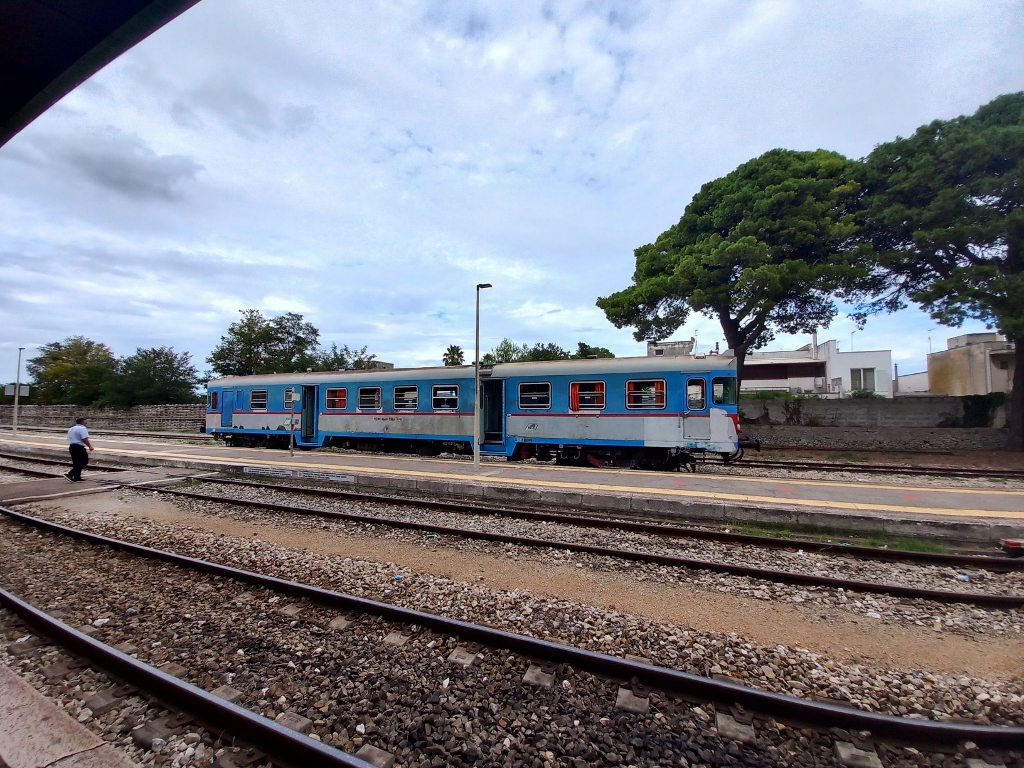 Maglie, a detail
From the train, one can see numerous fertile agricultural estates in this part of the Salento Peninsula.
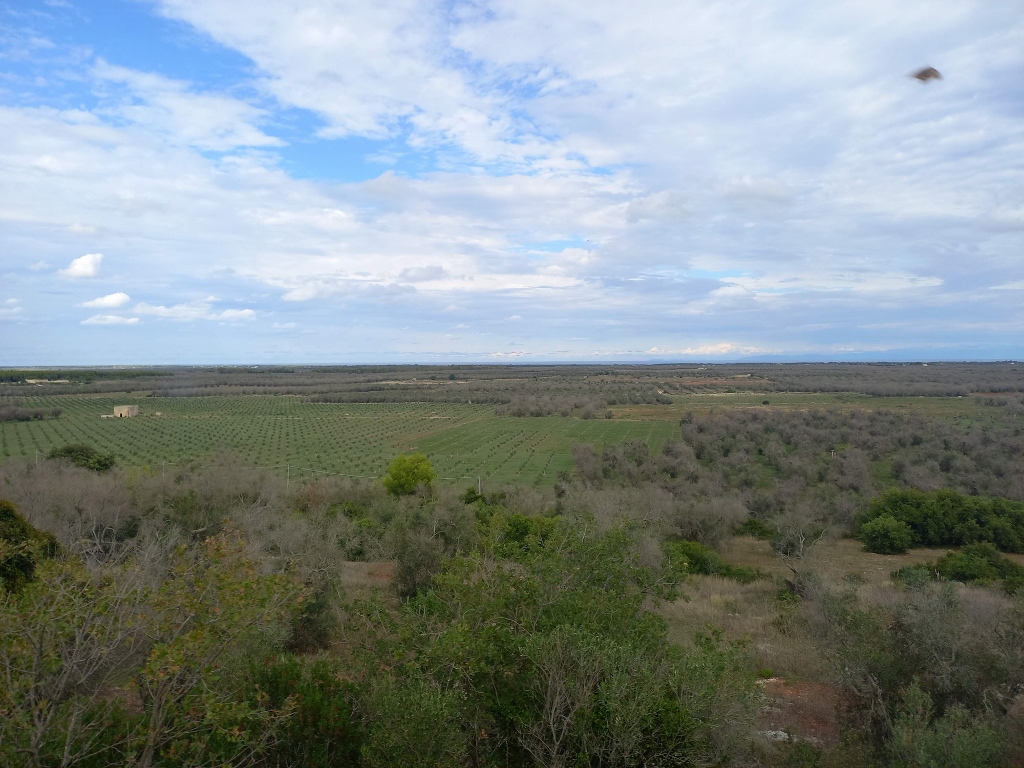 Salento peninsula, a detail
Upon arriving in Otranto, it's clear that the railway line ends there.
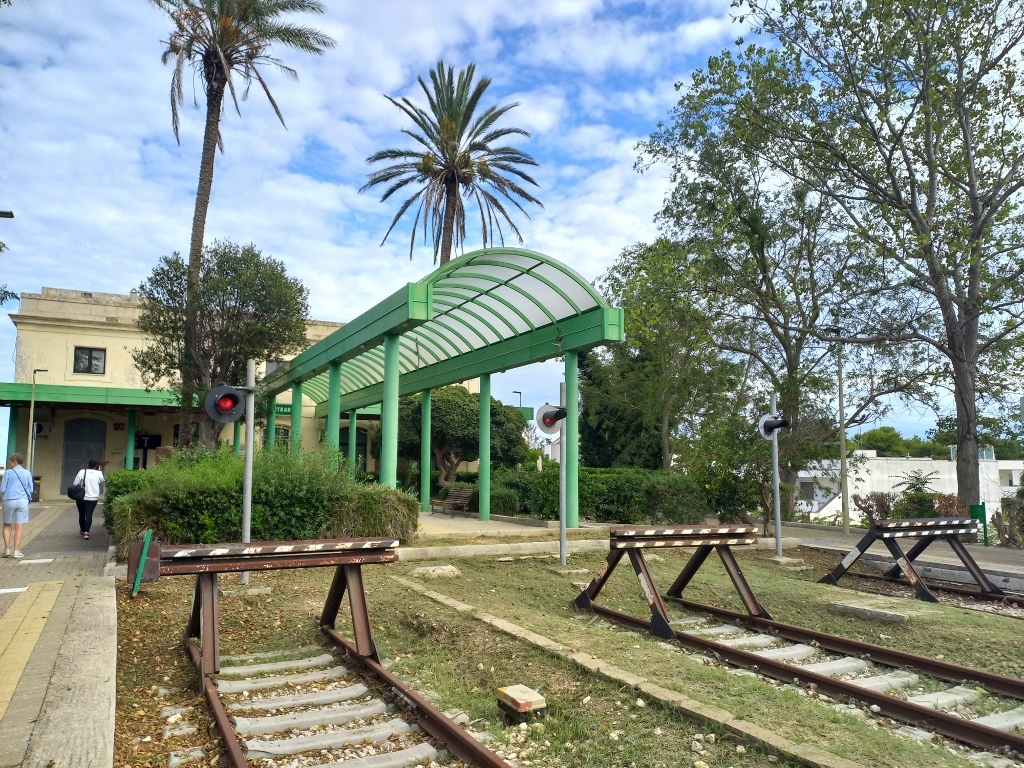 Otranto, a detail
Getting from the train station to the coast takes about 10-15 minutes on foot, although it seemed to me that it was a bit more, probably because I was moving slowly, aware of the sensations in my back, spine and leg (although I constantly felt discomfort, the pain didn’t worsen).
At one point, I even came across a nice unofficial viewpoint (a spot next to the street). You couldn’t see much from there (I couldn’t get a good view of the historic centre of the town), but I was still glad to have this open space between the spot where I was photographing and some parts of Otranto.
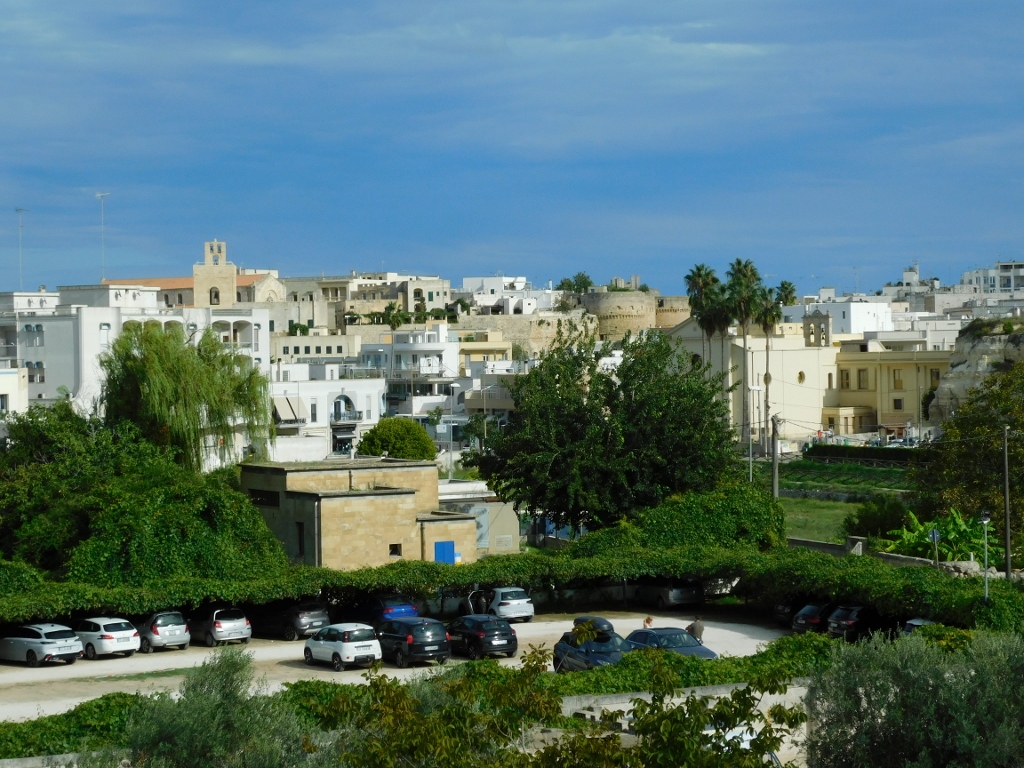 Otranto, a detail
Soon, I arrived at the beach. It was a bit cooler that day because a chilly wind was blowing, but apart from that, it was quite clear that the summer season was completely over.
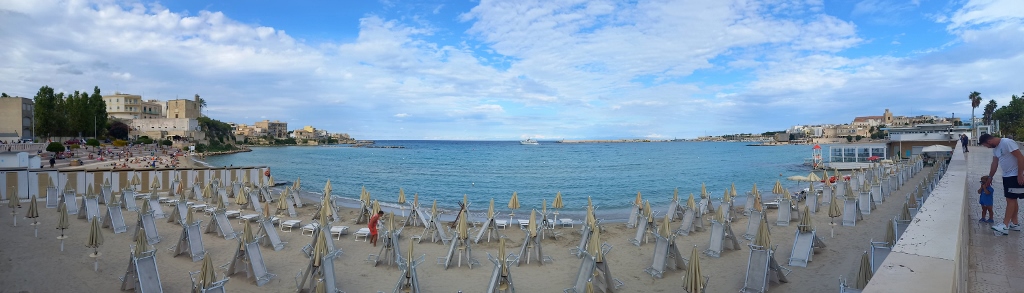 Otranto, a detail
I continued along the wide promenade by the sea, which gave me the opportunity to photograph the promenade itself, as well as a great view of the exit from the port in Otranto and further toward the Strait of Otranto.
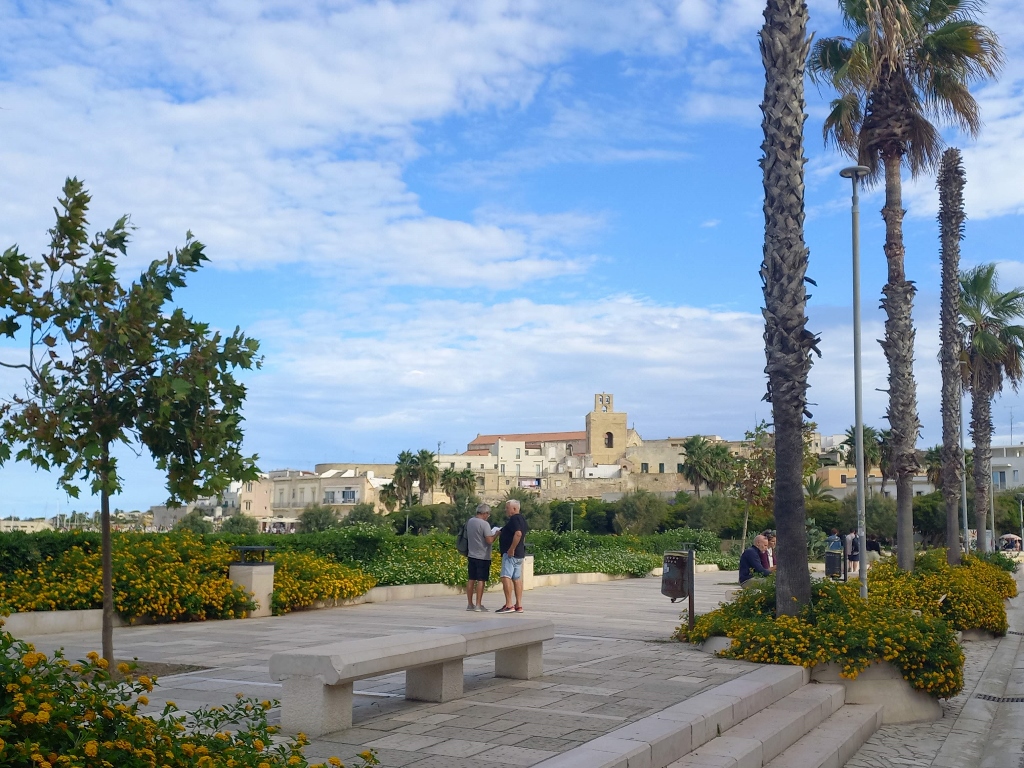 Otranto, a detail
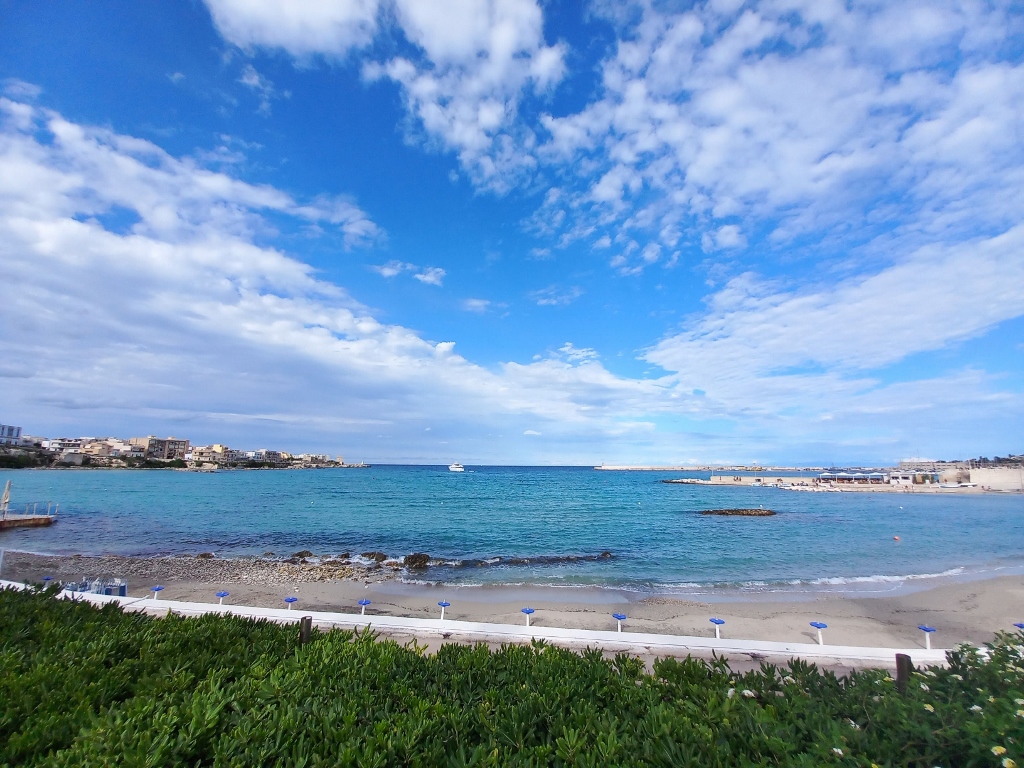 Otranto, a detail
And so I arrived at the historic centre, which is surrounded by defensive walls.
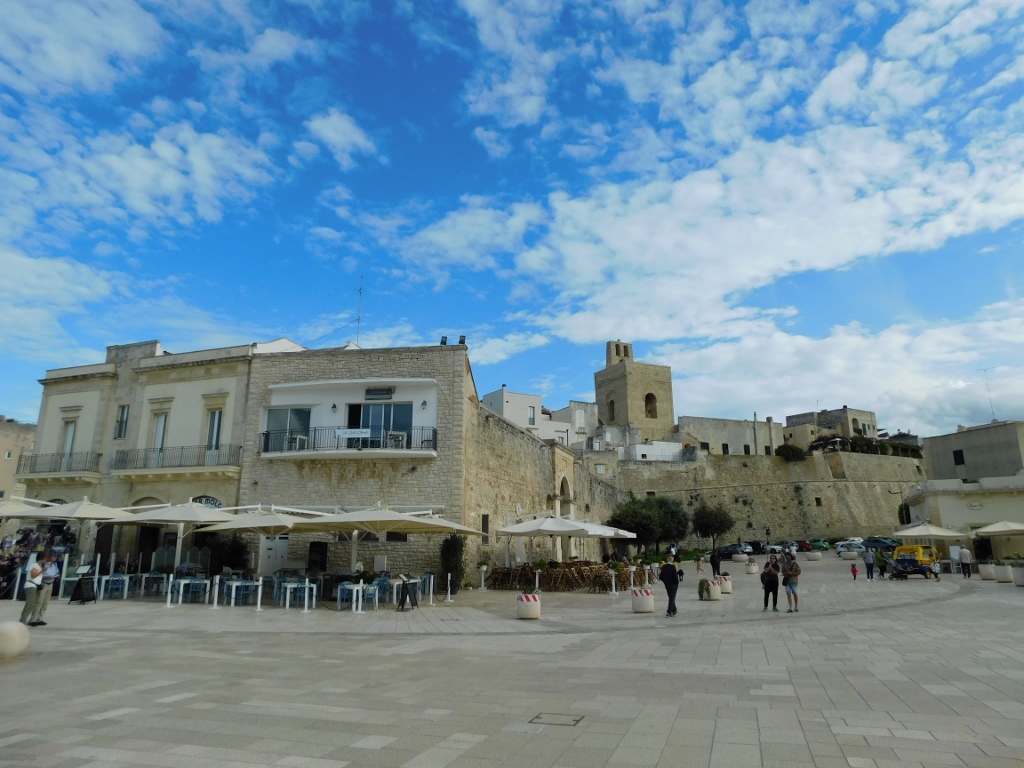 Otranto, a detail
Although I paid attention to some details that can be seen here and took photos of them, I first sat down to have a coffee and a soft drink in order to wake up a little bit, because I think my blood pressure must have dropped and I was feeling quite sleepy.
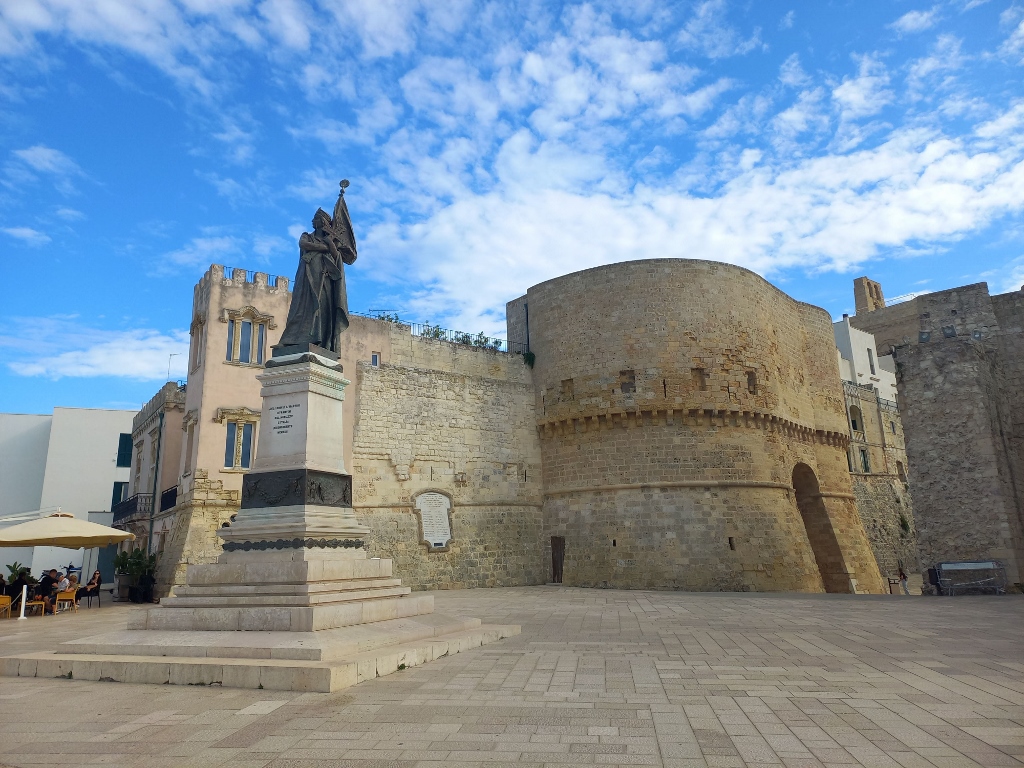 Otranto, a detail
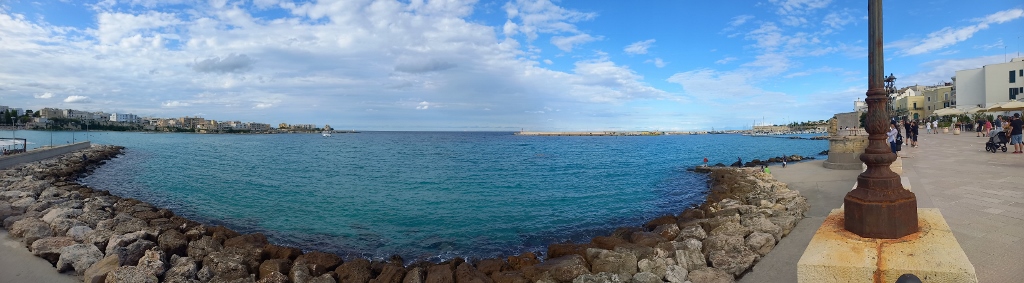 Otranto, a detail
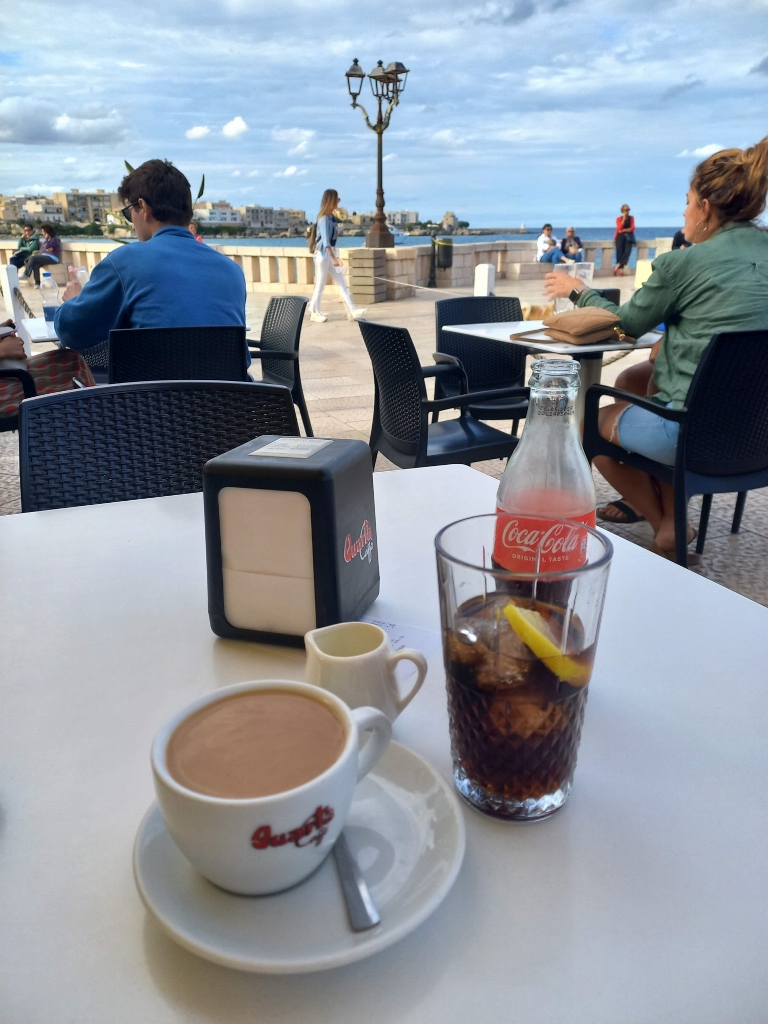 Break in Otranto
I definitely felt better after that, although... if someone had offered me a bed and some peace, I would have gladly taken a nap. Instead, with a scarf on my head and my jacket buttoned up against the cold wind that was blowing, I set off for a leisurely walk around Otranto.
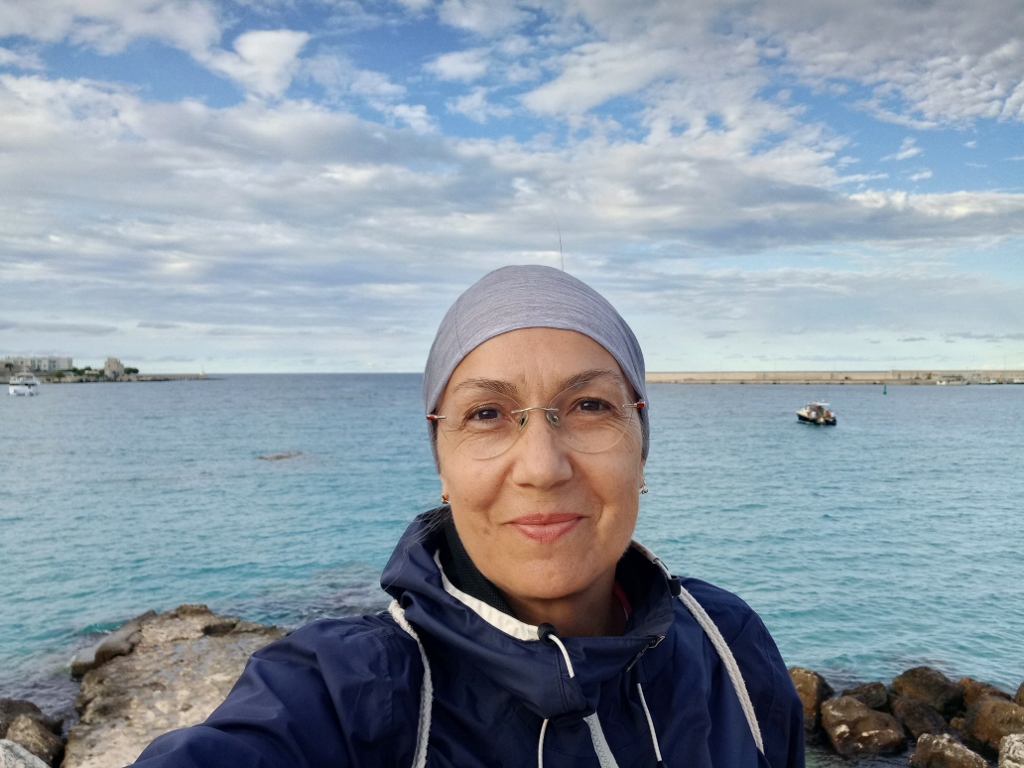 Selfie in Otranto
Otranto is part of a group of Italian towns and villages known as I Borghi più belli d'Italia ("The most beautiful villages of Italy"). I must admit that by the end of my time in Otranto, I was extremely content and I truly loved this place. I couldn’t pinpoint any one particular thing that stood out, but it somehow felt like this place had everything it needed to have.
To begin with, there is the history that dates back to the ancient Greeks, who had their settlement here. Of course, later on, the Romans arrived, while after them, various rulers and conquerors came and went, including the Byzantines, Normans, Ottomans, and more.
The historic centre of the town is surrounded by ramparts and one of the entrances is through a gate called Torre Alfonsina (Alfonso's Tower).
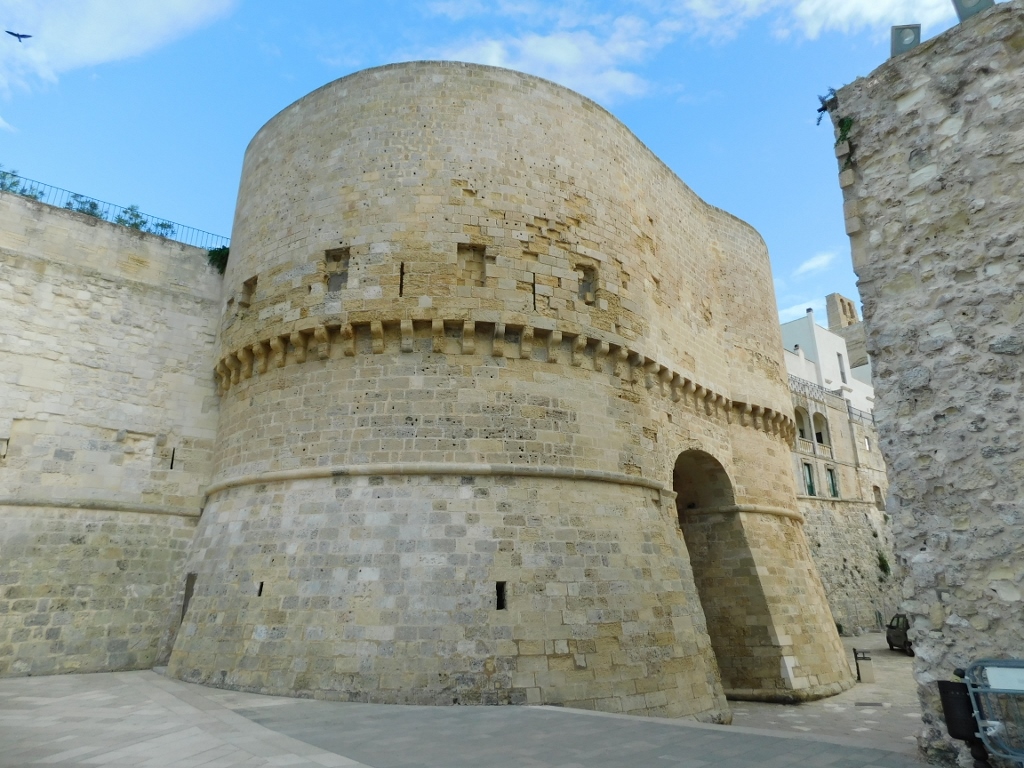 Otranto, a detail
That’s how I entered the streets of the historic centre of Otranto, but not all of the buildings here are old or "historical."
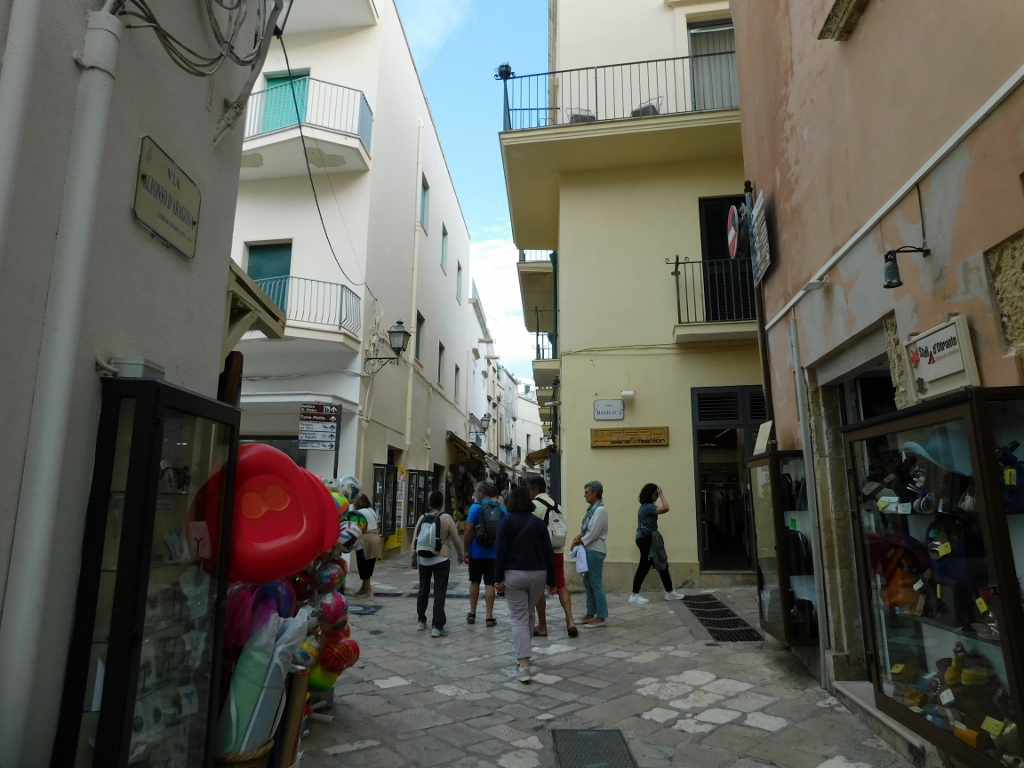 Otranto, a detail
However, one of the buildings I soon came across is both old and significant. It is the Cathedral of Otranto, which was consecrated in 1088.
Since the cathedral was built on a slope, the crypt can be accessed directly from the street. I happened to find that entrance first, so I began my tour of the cathedral from there.
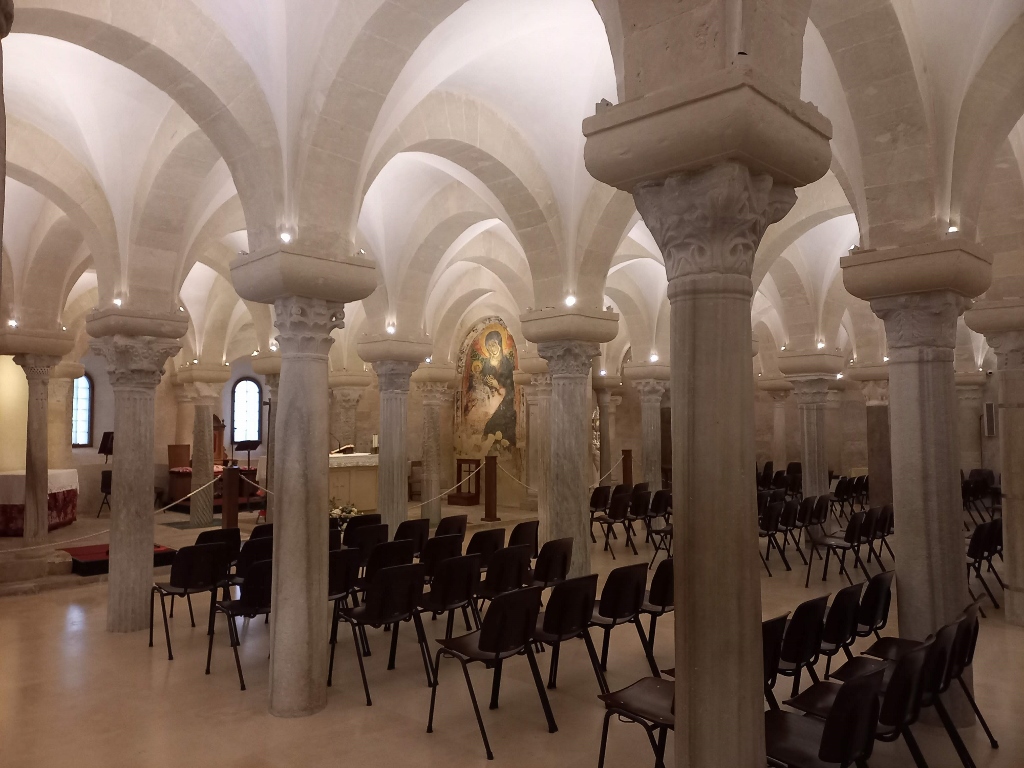 Otranto Cathedral, a detail
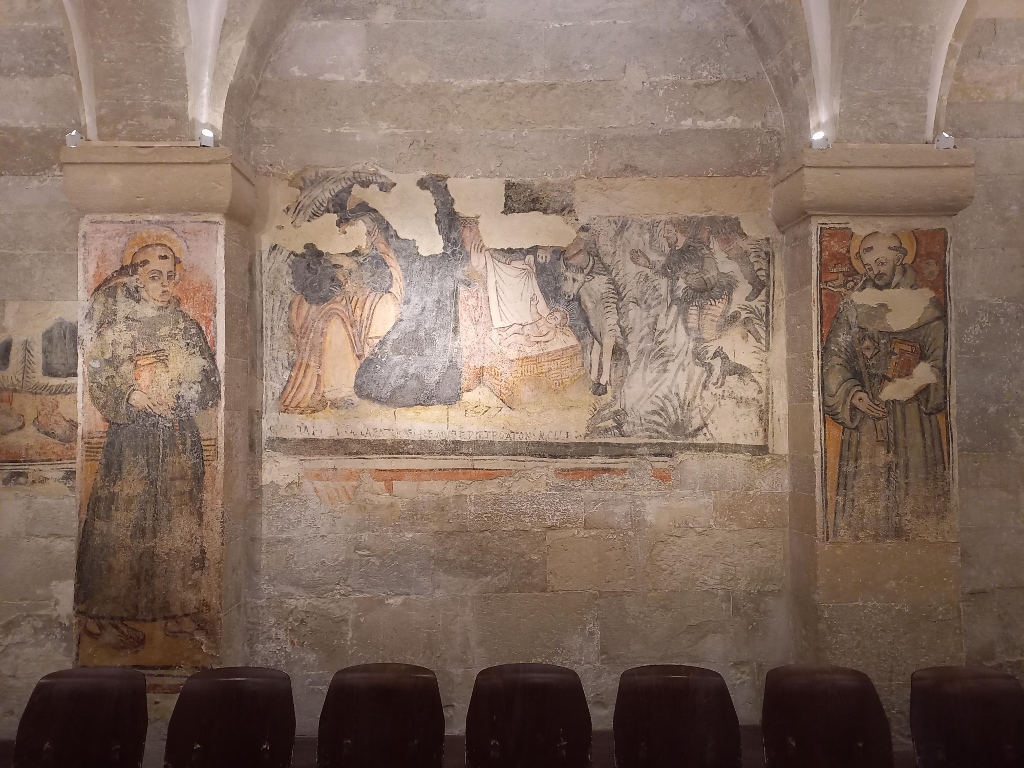
In the crypt, you can see numerous columns, as well as remnants of frescoes from the Middle Ages (up to the 16th century).
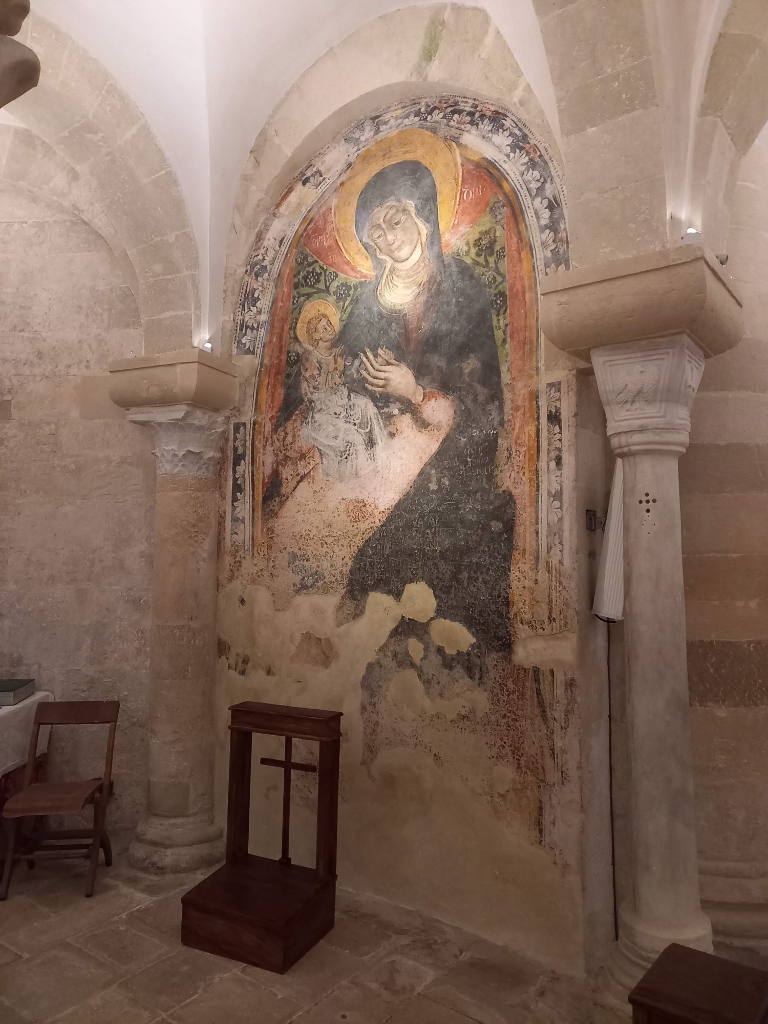 Otranto Cathedral, a detail
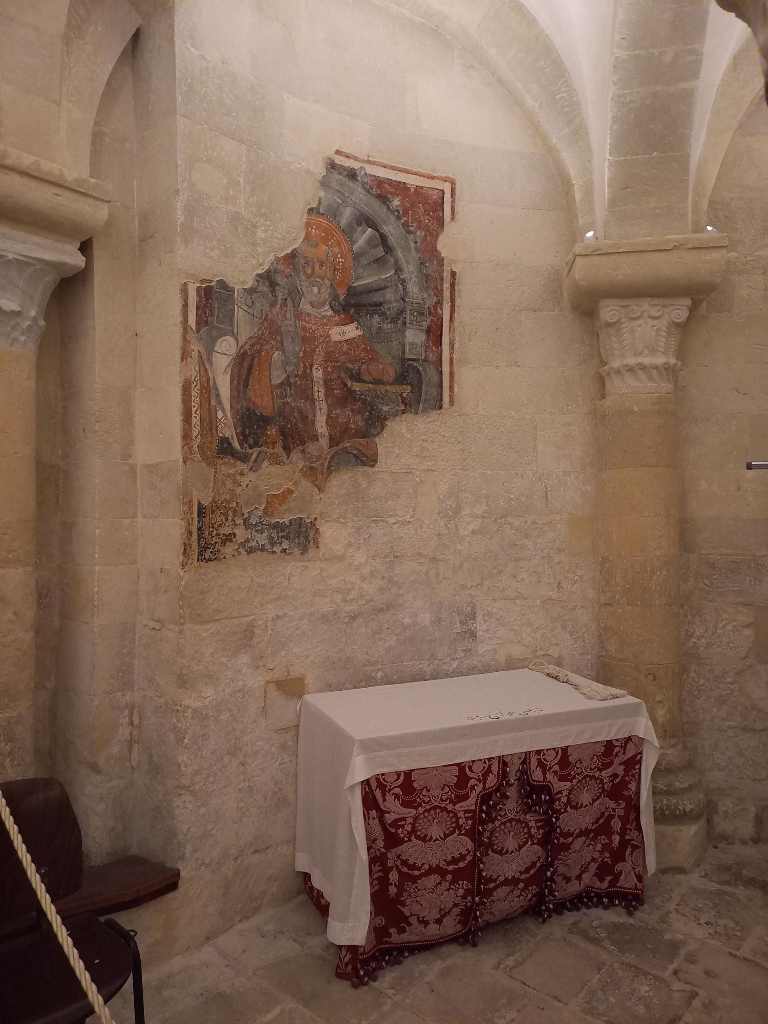 Otranto Cathedral, a detail
 Otranto Cathedral, a detail
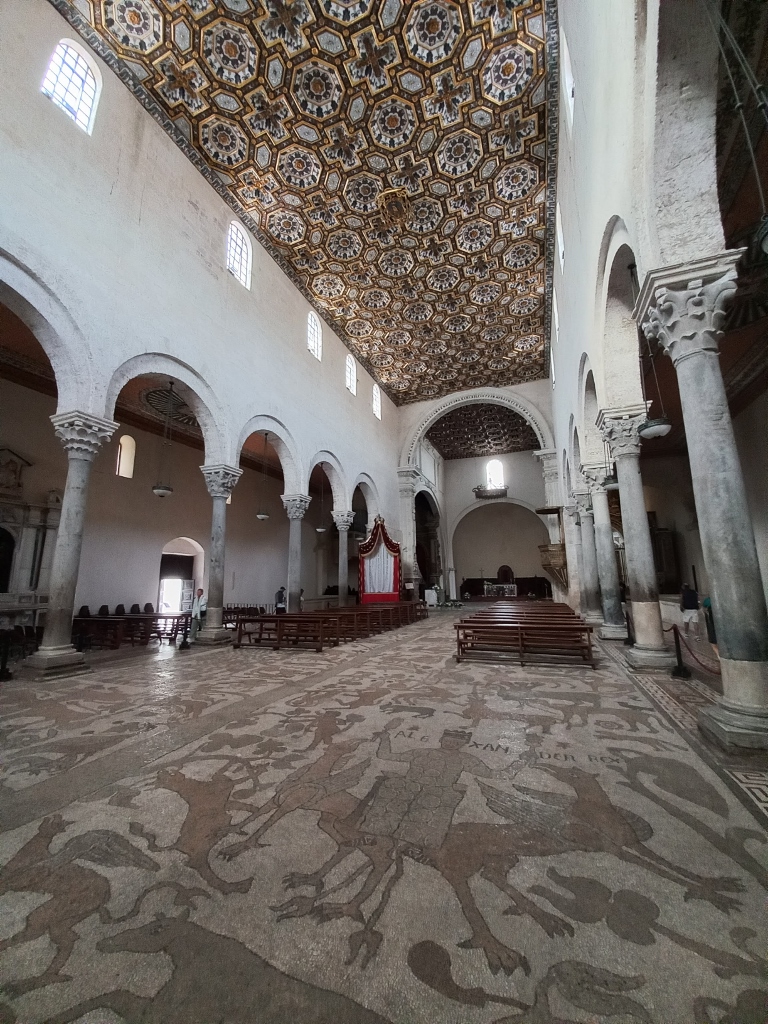
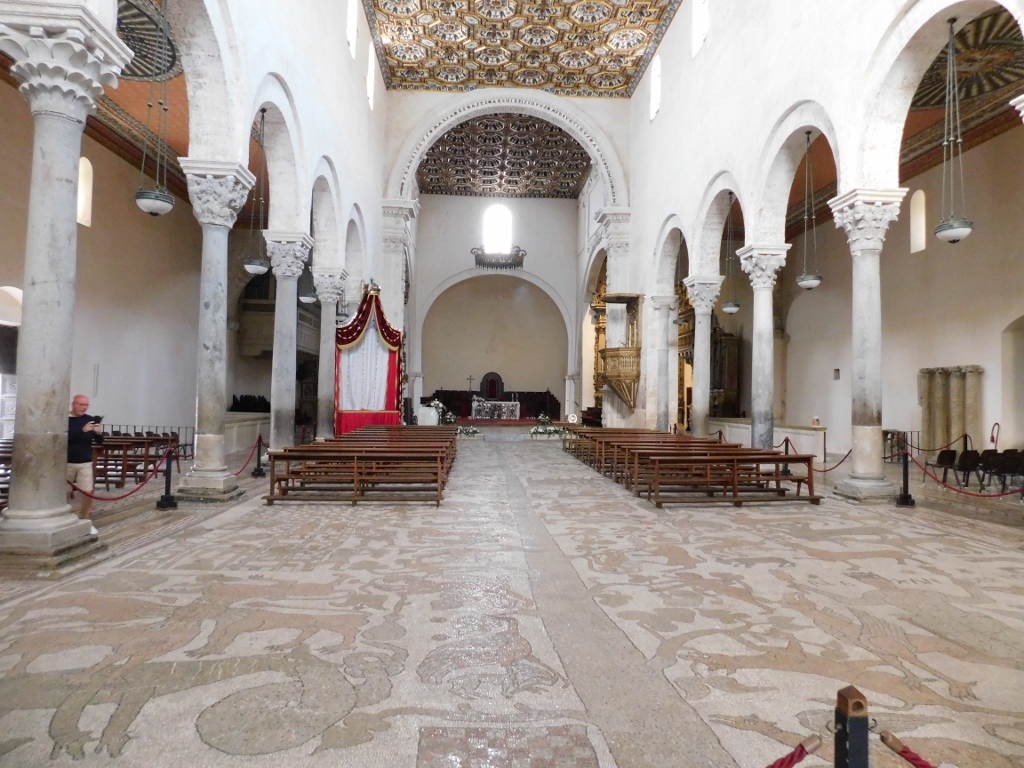
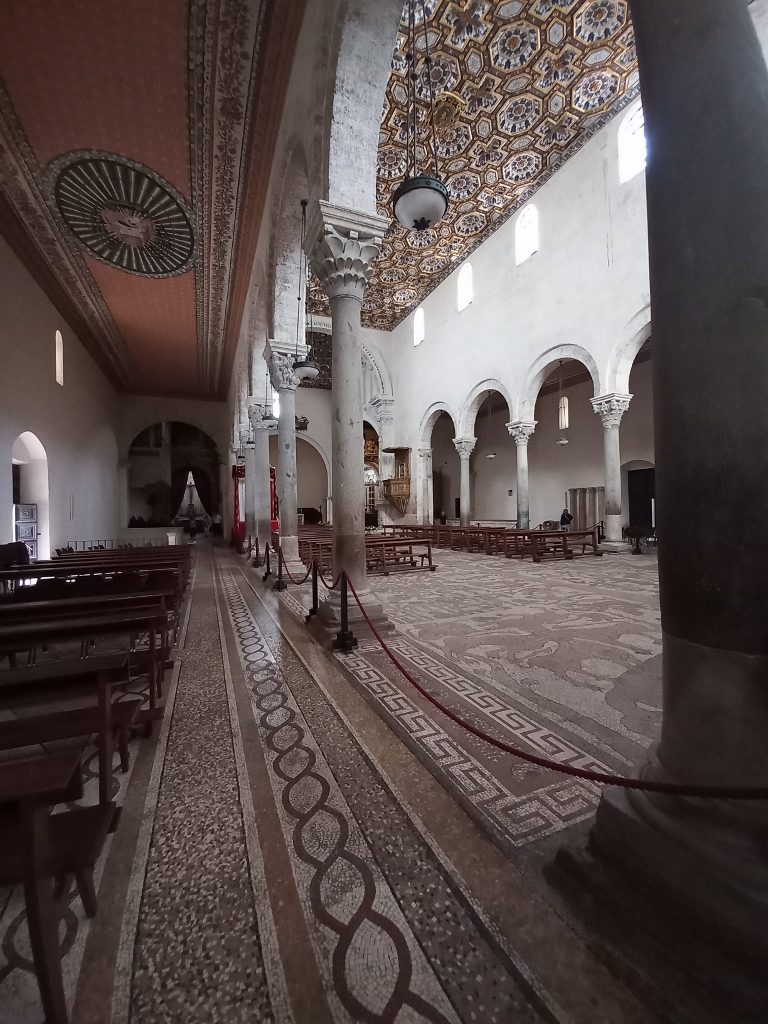
I climbed from the crypt into the space of the cathedral, which was built as a three-aisled structure, with an apse at the eastern end. The length of the cathedral is 54 m, while the width is 25 m.
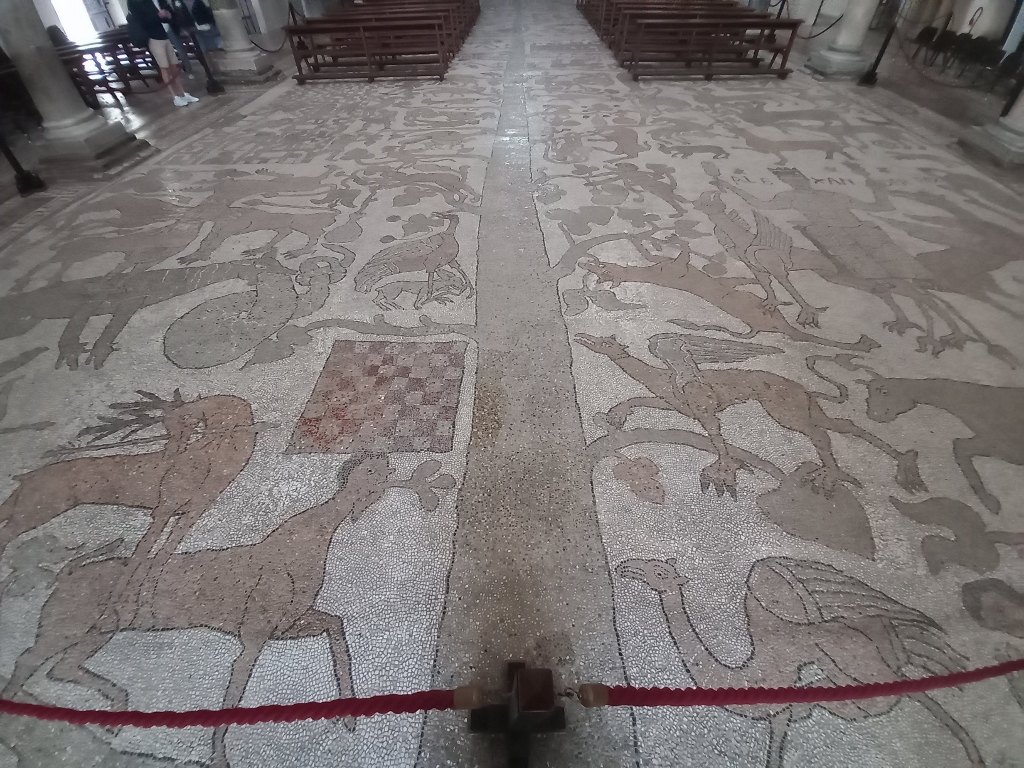
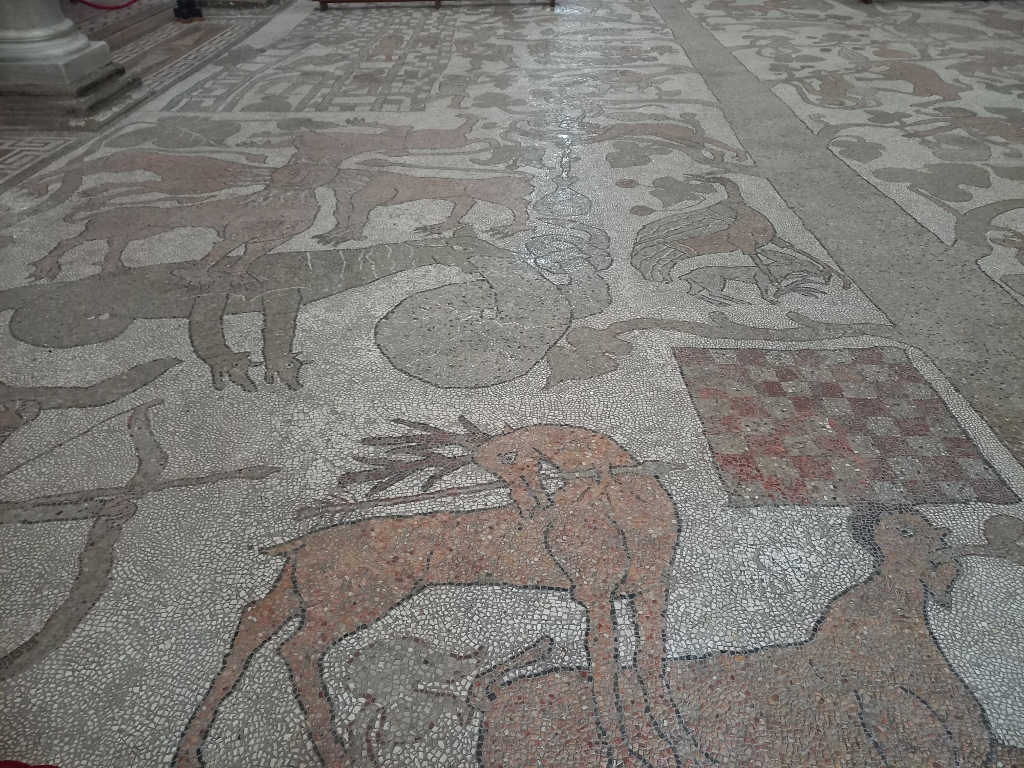
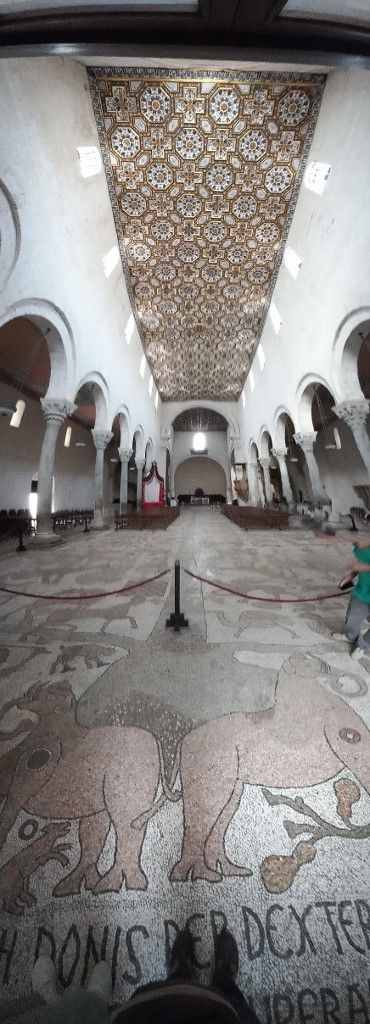
The cathedral is most famous for its floor mosaic from the second half of the 12th century, which covers the entire central nave, the presbytery and the apse, as well as the transept.
 Otranto Cathedral, a detail
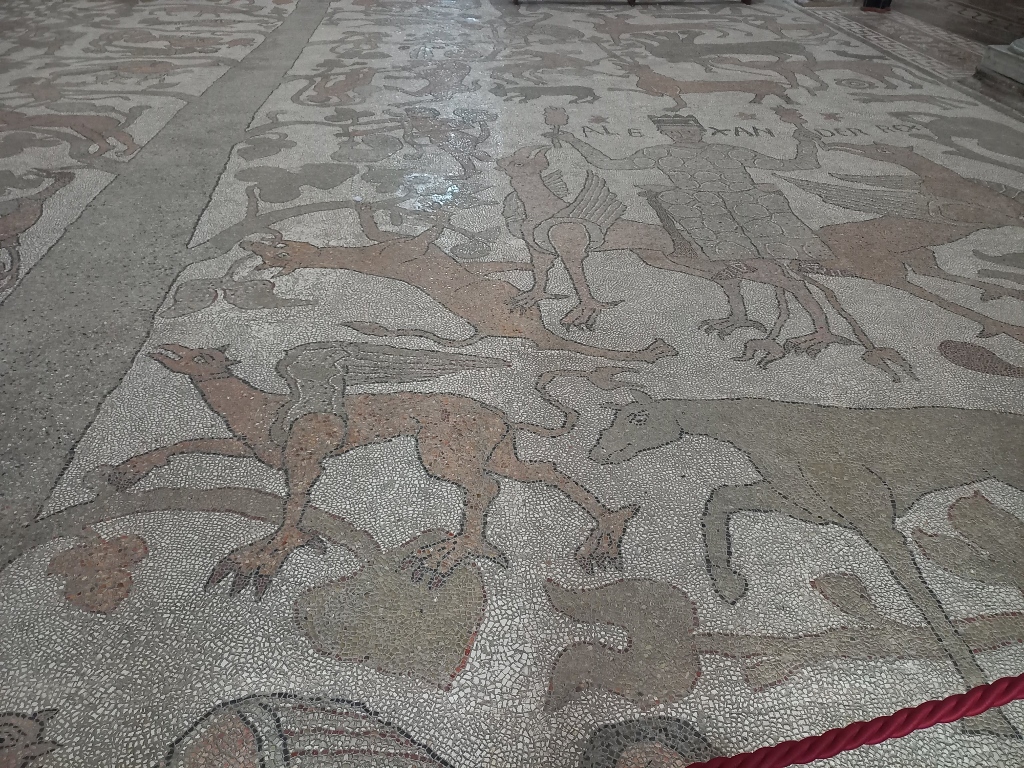
In the previous image, a part of the floor mosaic depicting Alexander the Great is clearly visible, as part of illustrating various scenes from the Alexander Romance, a medieval novel about the imagined adventures of Alexander the Great. Here, the king is shown being carried by two griffins, as he, among other things, wanted to see the world from great heights, that is, from the air.
Here is another photograph showing the mosaic of Alexander the Great.
 Otranto Cathedral, a detail
The mosaic also depicts wild beasts and various scenes from the Old Testament, all arranged along the Tree of Life.
 Otranto Cathedral, a detail
 Otranto Cathedral, a detail
 Otranto Cathedral, a detail
When I got the chance and there was no one in front of me, I managed to take a vertical panorama so that this space could be seen better. At the same time, the black, white and gilded wooden ceiling from the 16th century is clearly visible as well.
 Otranto Cathedral, a detail
I walked a little more around the cathedral and then I went outside in order to get a better view of it from the side of the front façade.
 Otranto Cathedral, a detail
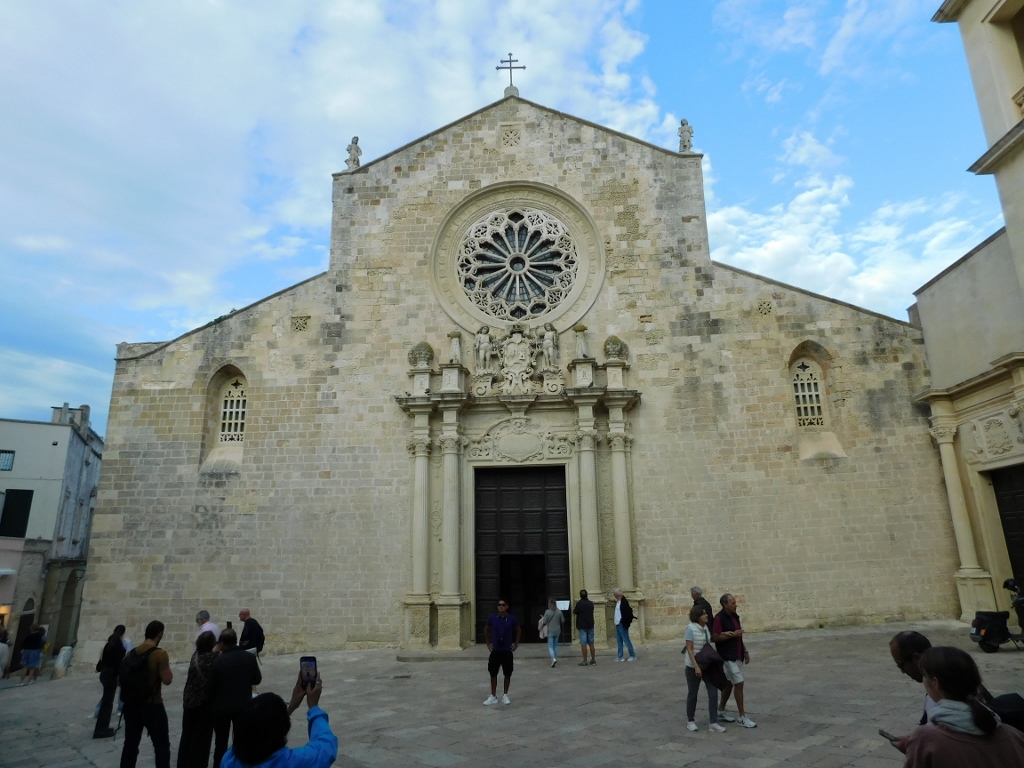 Otranto Cathedral
Throughout its history, the cathedral's façade has been renovated or restored several times, during which various changes were made – such as the addition of a rose window after 1480, when the Ottomans ravaged the city. Later, a baroque portal was created, while windows were added to the left and right sides of the front façade.
After visiting the cathedral, I continued with my casual walk around the historic centre of Otranto and first headed to a nearby viewpoint.
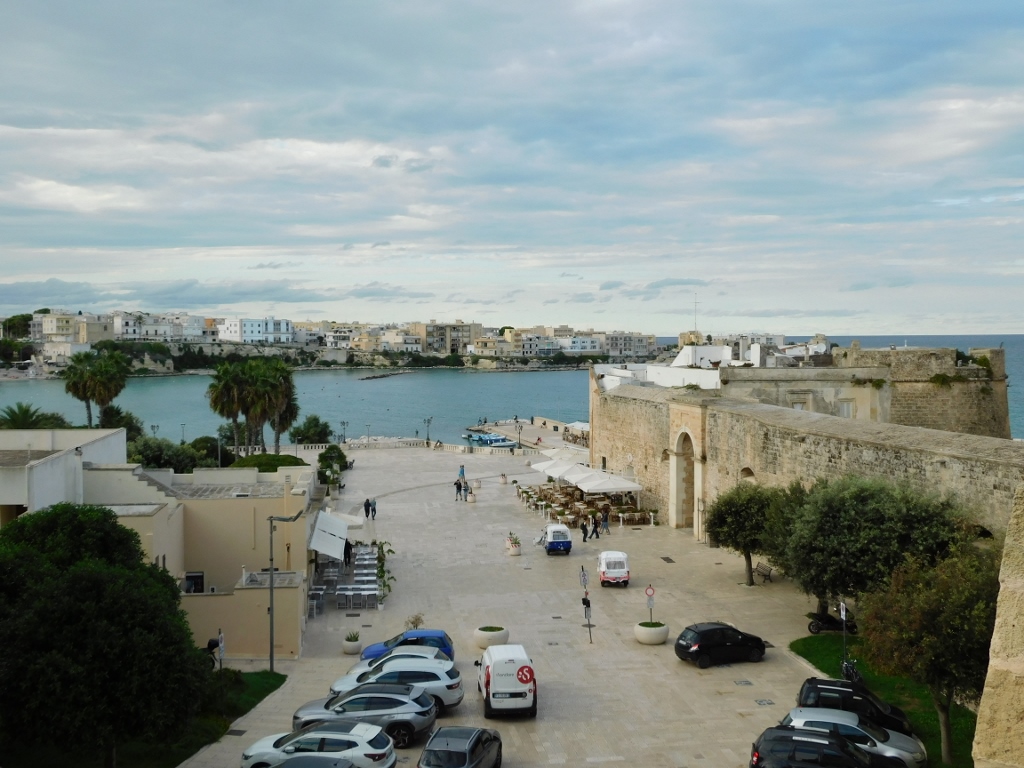 Otranto, a detail
Soon, I went to the opposite end of the historic centre, where the Aragonese Castle is located.
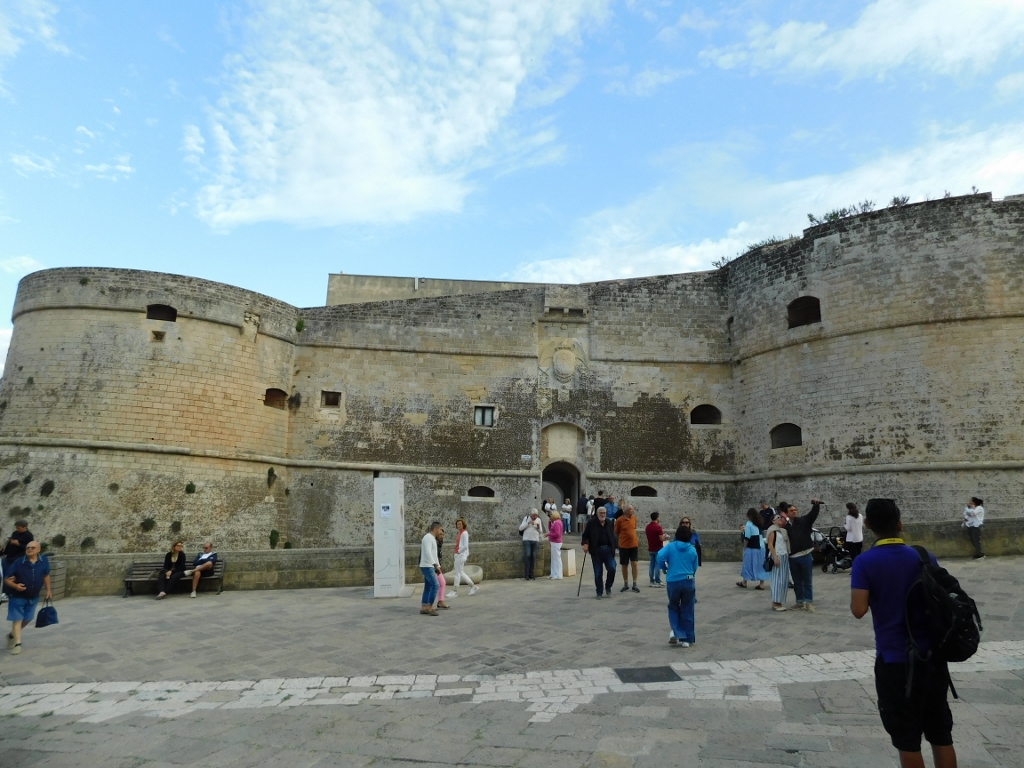 Otranto, a detail
Still, I first walked to the top of the bastion called Torre Mata. From there, there is a very beautiful view of the harbour in Otranto.
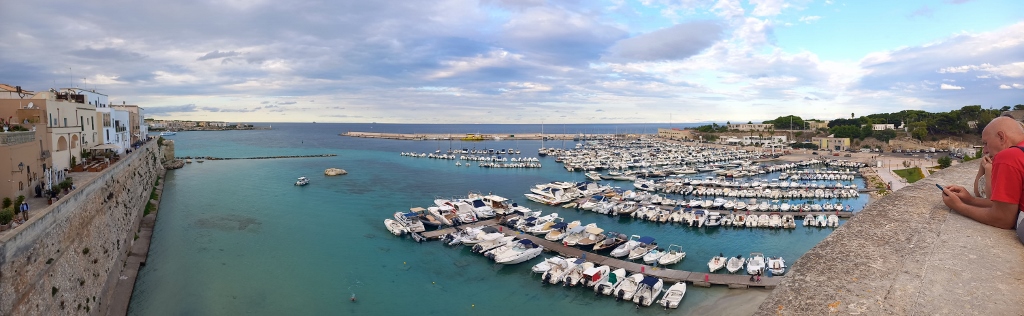 Otranto, a detail
After a short stop at the top of this bastion, I returned to the Aragonese Castle, but with no intention of visiting it.
 Otranto, a detail
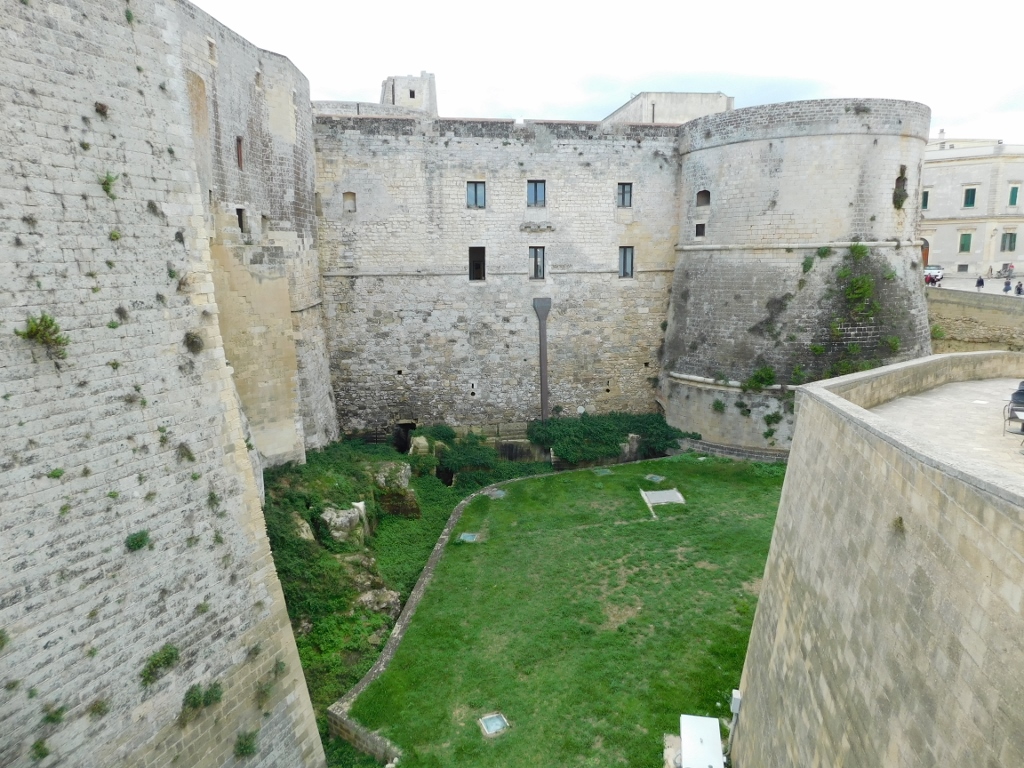
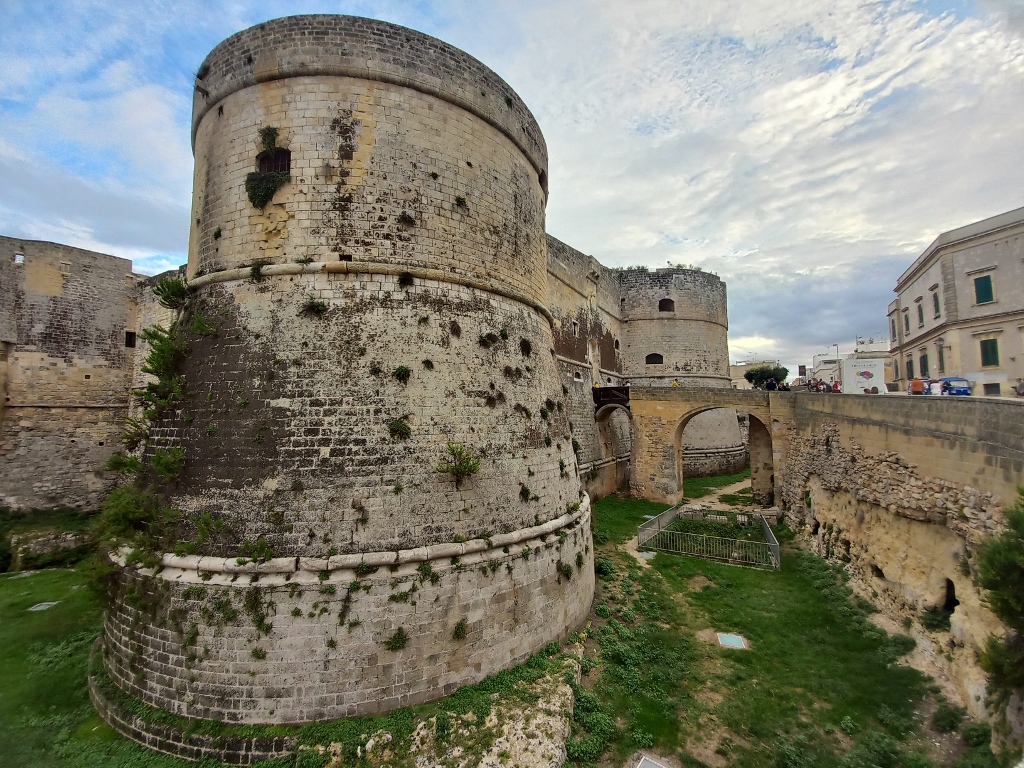
It was enough for me to just look at some details. The structure is an irregularly shaped fortress surrounded on all sides by a deep moat. Although the first fortification existed here as early as the 11th century, it took its current form at the end of the 15th century. However, in the 19th century, when there was no longer a need for a defensive fortification, the moat was filled in and many changes were made. But gradually, in the second half of the 20th century, it was restored to its earlier form.
 Otranto, a detail
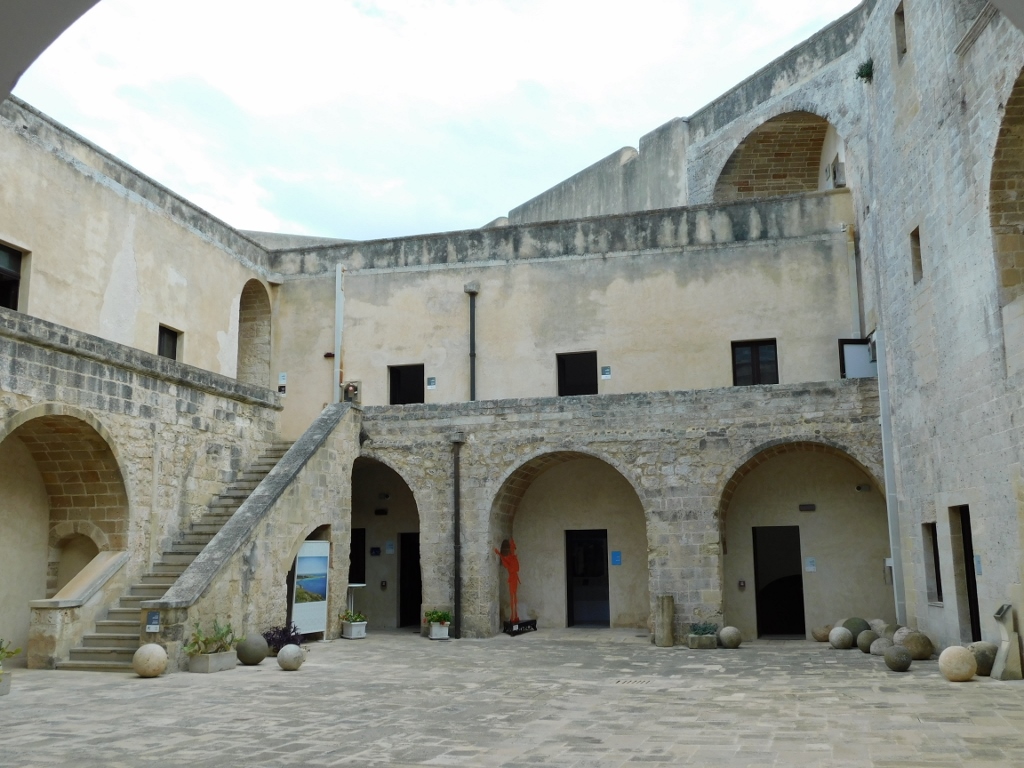
Today, there are exhibitions here related to the history of Otranto.
 Otranto, a detail
I just peeked in briefly and then I slowly headed first towards the coast and the sea, and then further on to the train station. Sometime later, I returned to the town of Maglie.