On the way to Blace in June 2026, about 10 km after leaving Kruševac, I turned left and 3 km farther on is Naupare Monastery, a cultural property of great importance.
The monastery complex includes a church dedicated to the Mother of God. It was built in the 1370s and belongs to the Morava-style architectural school. In a charter issued by Prince Lazar in 1382, the monastery is mentioned as a metochion of Drenča Monastery, located about 35 km to the west, near Aleksandrovac.
Although historical sources suggest that the monastery was founded by the monk Dorotej, formerly a local nobleman during the reign of Prince Lazar, there is also a local legend. According to the tradition, while Prince Lazar was still alive, the young Stefan Lazarević, his son and heir, wished to establish his own endowment. As stone was being quarried from Mount Jastrebac for the construction of the Lazarica Church, Stefan is said to have selected the finest blocks and used them to build the church at Naupare.
In line with that, the monastery hosts the Assembly Days of Despot Stefan Lazarević. Right at the entrance, I noticed a chapel with a spring-fed fountain dedicated to Saint Despot Stefan the Tall (Stefan Lazarević). The chapel-fountain allows worshippers to offer a prayer upon entering the monastery and to get water from the spring.
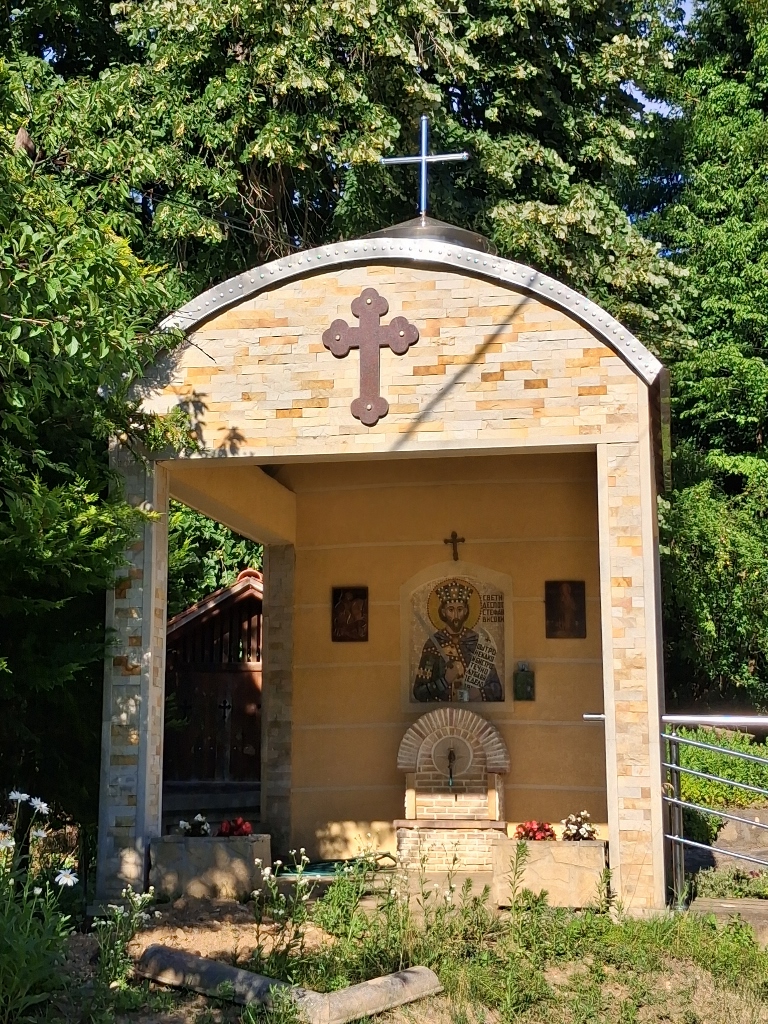 Naupare Monastery, a detail
By the way, Constantine the Philosopher, a contemporary of the Despot and the author of The Hagiography of Despot Stefan Lazarević, describes Stefan as a man of remarkable appearance – tall, strong and well-proportioned, whose presence left a powerful impression on those around him. Based on this account, historians believe that Stefan was probably unusually tall for his time. Over the years, he came to be known by the epithet "the Tall" (Visoki), not only because of his physical stature, but also as a mark of the respect extended to him by his contemporaries and by later tradition in recognition of his exalted status as a ruler and a knight. It is worth remembering that Stefan was one of the most renowned knights of his time (https://www.svudapodji.com/en/fotresses-2024-1/).
As I entered the courtyard of this active female monastery, the first thing I noticed was that it is home to hardworking people who cultivate the monastery's land.
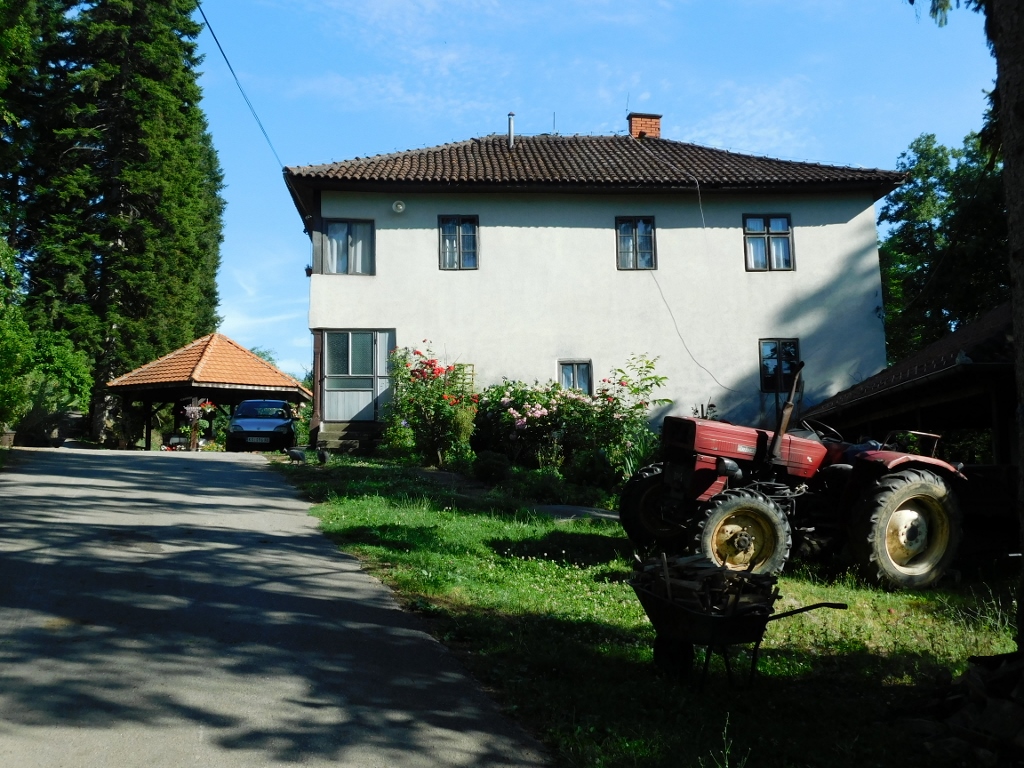 Naupare Monastery, a detail
There is also an absolutely charming pergola, surrounded by a garden overflowing with flowers.
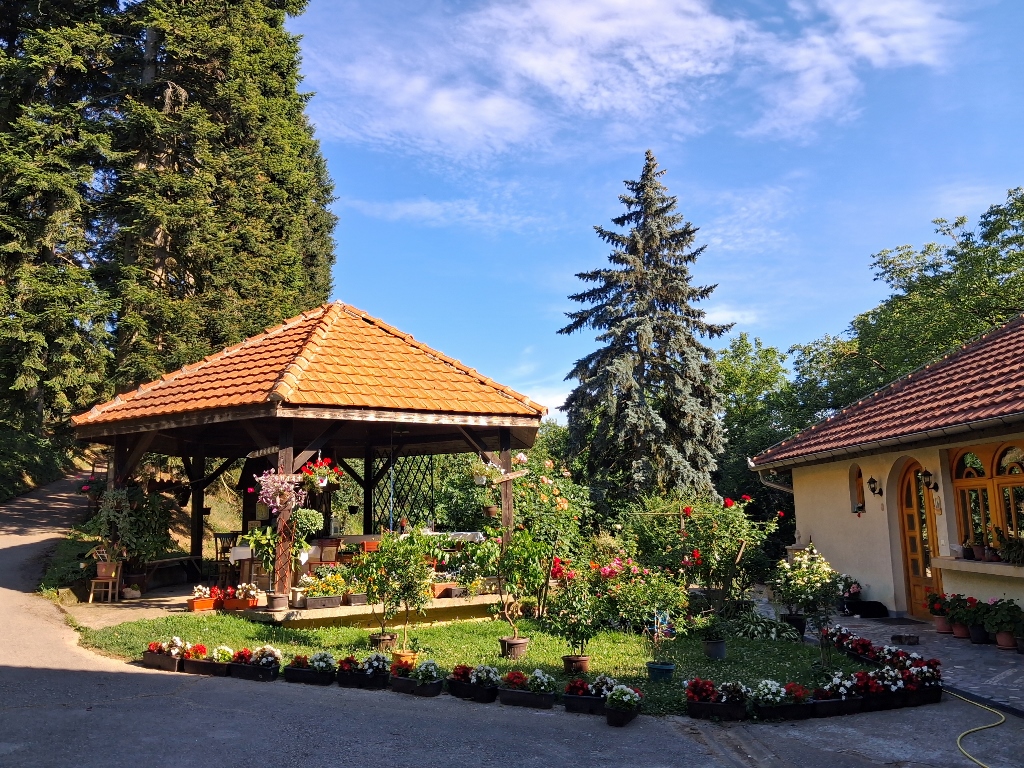 Naupare Monastery, a detail
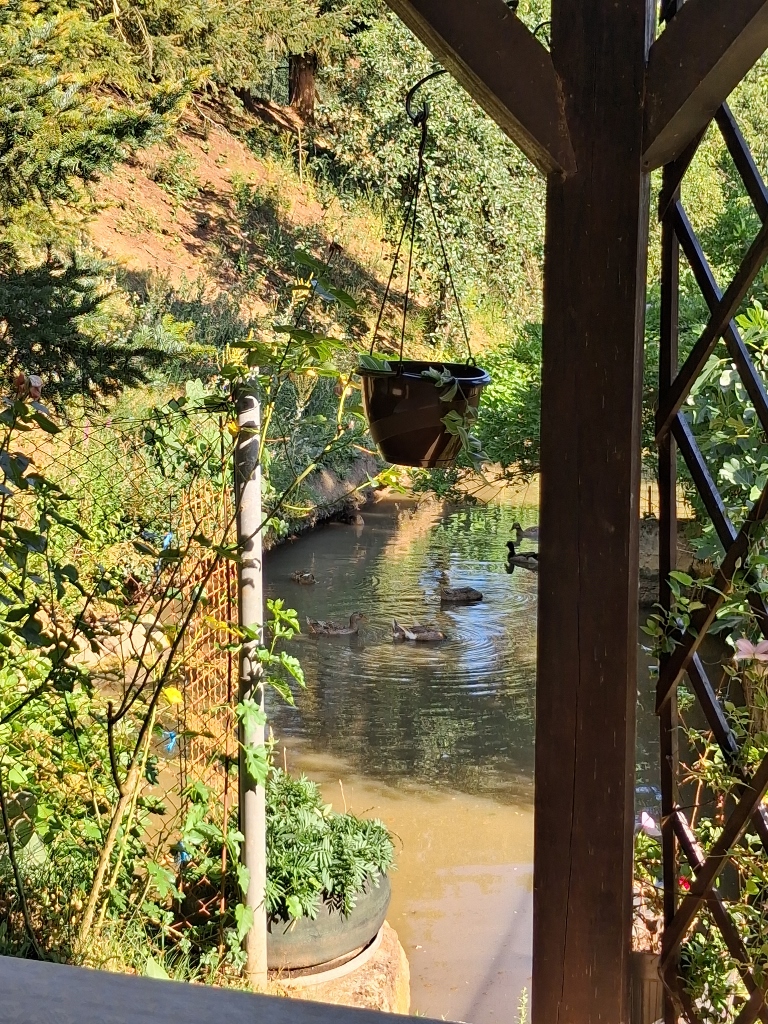
On the table inside the pergola, I found a pitcher of water, juices, glasses, and sugar cubes in a decorative glass jar, yet there was no one around. So, after taking photos of the refreshment table and the ducks swimming in the nearby pond, I continued along the path towards the church.
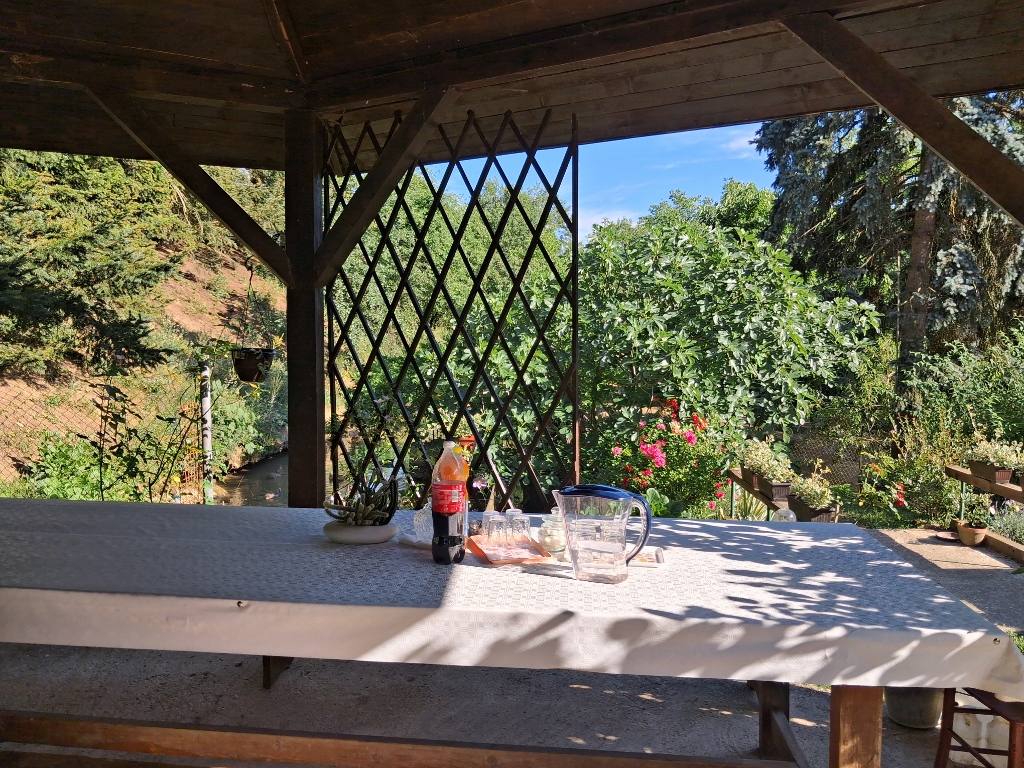 Naupare Monastery, a detail
 Naupare Monastery, a detail
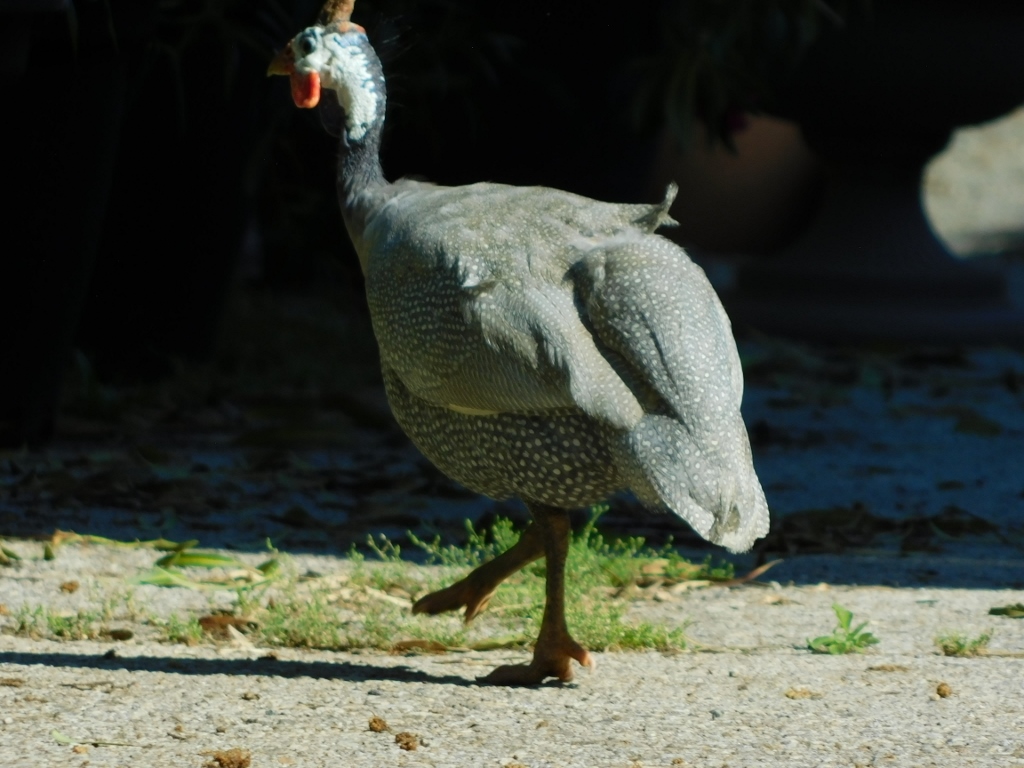
Along the way, I also spotted a guinea fowl wandering around the monastery courtyard.
 Naupare Monastery, a detail
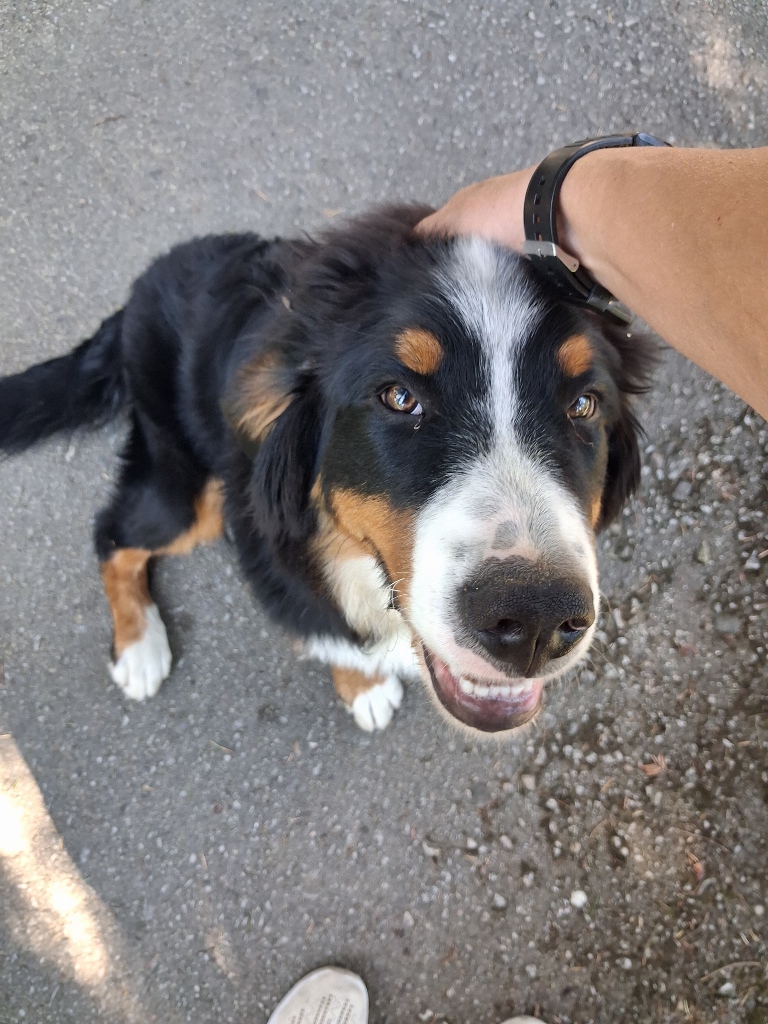
As I walked up the path, I heard someone following me. When I turned around, I saw an absolutely beautiful dog. I usually don't approach unfamiliar dogs, but this one came up to me and started weaving around my legs. It was immediately clear that he was a gentle, affectionate soul, so I even gave him a few strokes. His fur was incredibly soft and he was simply adorable.
 Naupare Monastery, a detail
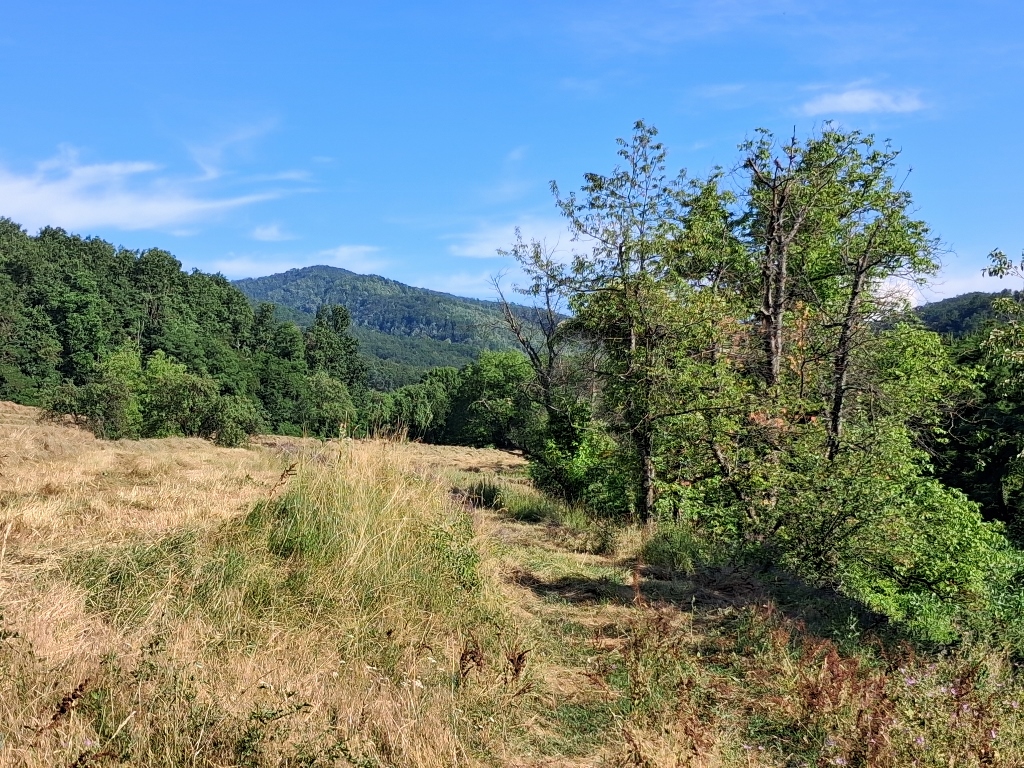
I also took a photo of the northern slopes of Mount Jastrebac, whose highest peak rises to 1,491 m above sea level.
 Naupare Monastery, a detail
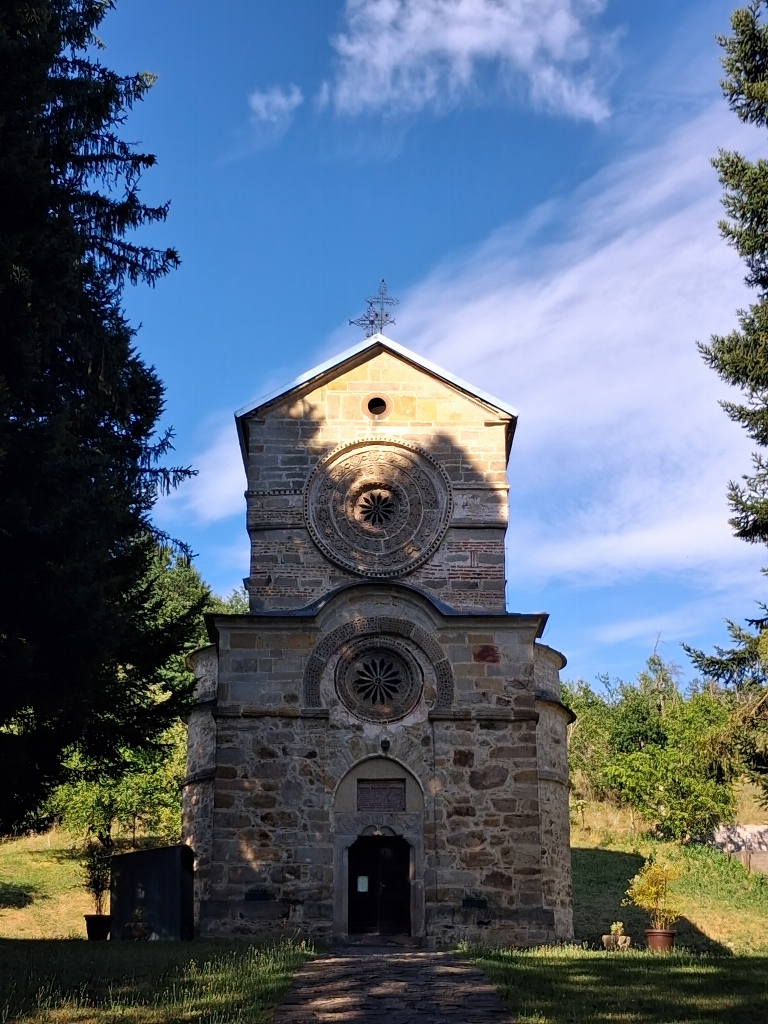
And then I saw the church.
 Naupare Monastery, a detail
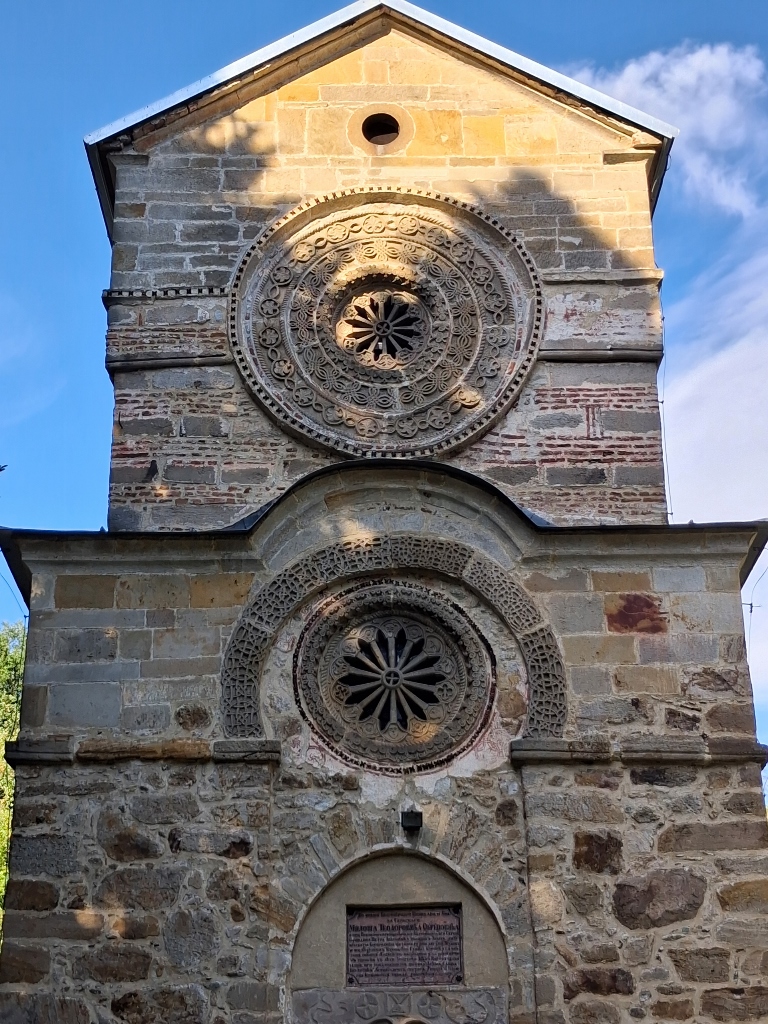
The church was built in the Morava style, with a compacted cross-in-square plan and a dome above the central section. Its stone rosettes on the western façade are of particular artistic value and are considered among the finest examples of decorative stonework of the Morava school.
 Naupare Monastery, a detail
After the Ottoman conquest of Kruševac in 1454, the monastery suffered severe damage. During the following centuries, it was neglected and remained without a roof, causing most of the frescoes to be lost. Only small fragments of the original fresco paintings have survived, discovered during conservation works at the end of the 20th century.
According to historical records, in 1805, Karađorđe (1762–1817), the leader of the First Serbian Uprising (1804–1813), received Holy Communion at Naupare Monastery together with his rebels before their military campaigns.
A major restoration of the church was carried out in 1835 during the reign of Prince Miloš Obrenović, while restoration works continued throughout the 20th century.
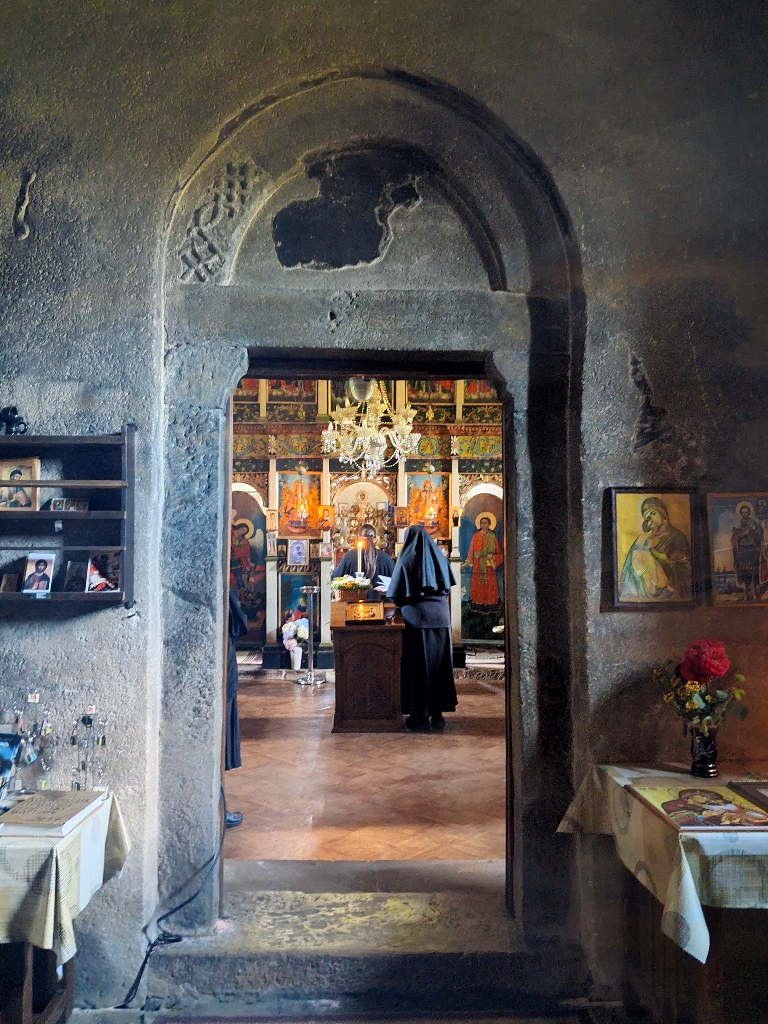
While I was standing there, looking around and taking photographs, two people arrived and entered the church. I followed them inside and then, in the narthex, I realised that a liturgy was taking place.
 Naupare Monastery, a detail
I stopped in the narthex and then decided to wait, hoping that after the service I would be able to take a closer look at the naos. I did not want to enter the naos because I felt that I had come here almost as a tourist, with a camera hanging around my neck, and I believed that I should not in any way disturb the people who had come for a much more serious purpose.
And so, I stood there, observing what was happening, but essentially waiting for the service to finish. Before long, I realised that the liturgy had started shortly before my arrival and I was also aware that it would continue for some time. I felt uncomfortable leaving at that point, as I did not want to disturb either the priests (there were two of them), the nuns, or the people attending the service.
Since I am not really used to standing for long periods, at one point I placed my hands behind my back to make it a little easier. The main priest noticed me and, without interrupting what he was reading at that moment, discreetly looked at me, pointed to his own hands and back, and then moved his index finger from side to side. I understood what he meant and immediately brought my hands back down by my sides. There is always something new to learn.
At one point, a young woman came from the naos into the narthex. She was not a nun and she quietly told me to move into the naos, which I did. The priest then joined her in the narthex and the two of them closed the door. I was a little confused and at first thought that I definitely could not leave now, but then I realised that he was hearing her confession in the narthex. After that young woman, who returned to the naos a little later, several more people went individually into the narthex.
Although the service lasted almost an hour and a half, it eventually came to an end. The kind priest approached me after noticing the camera around my neck and he then told me how he had been interested in photography when he was young and what camera he had owned.
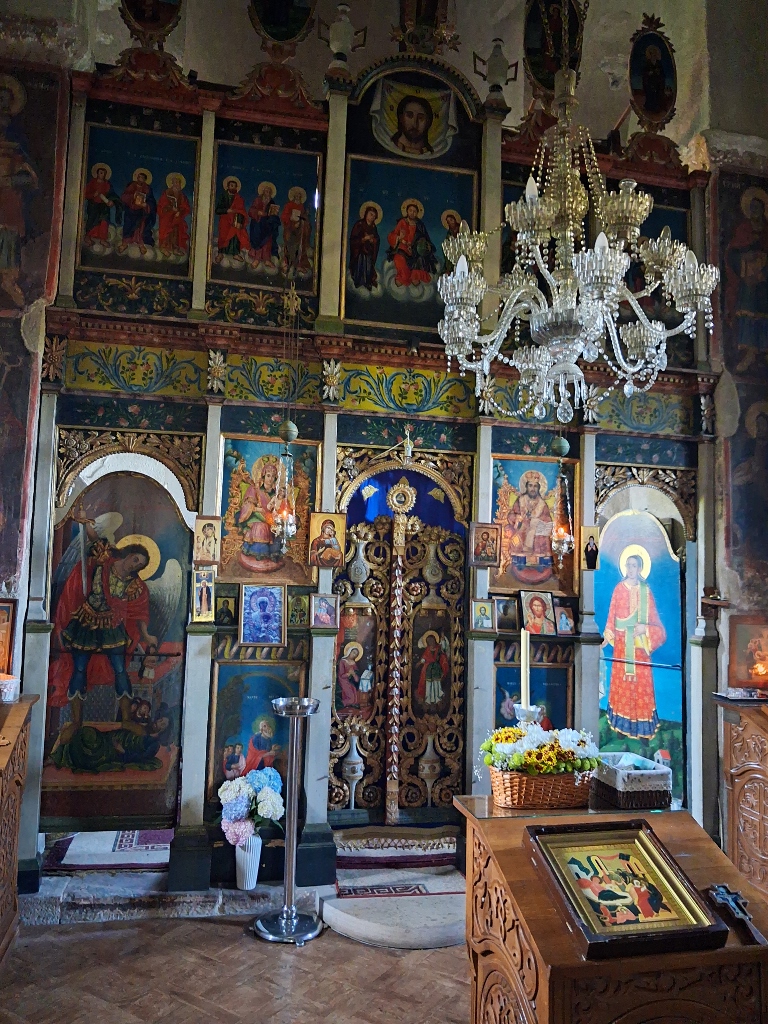
I stayed a little longer in the naos, observing its various details, and then I left the church.
 Naupare Monastery, a detail
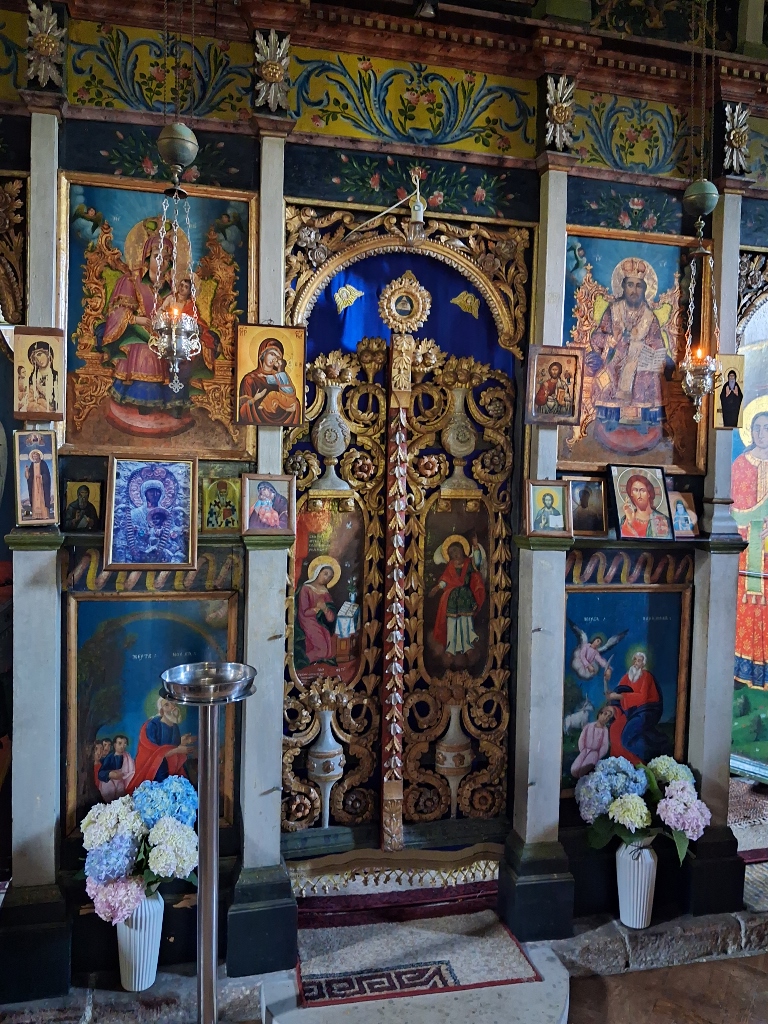 Naupare Monastery, a detail
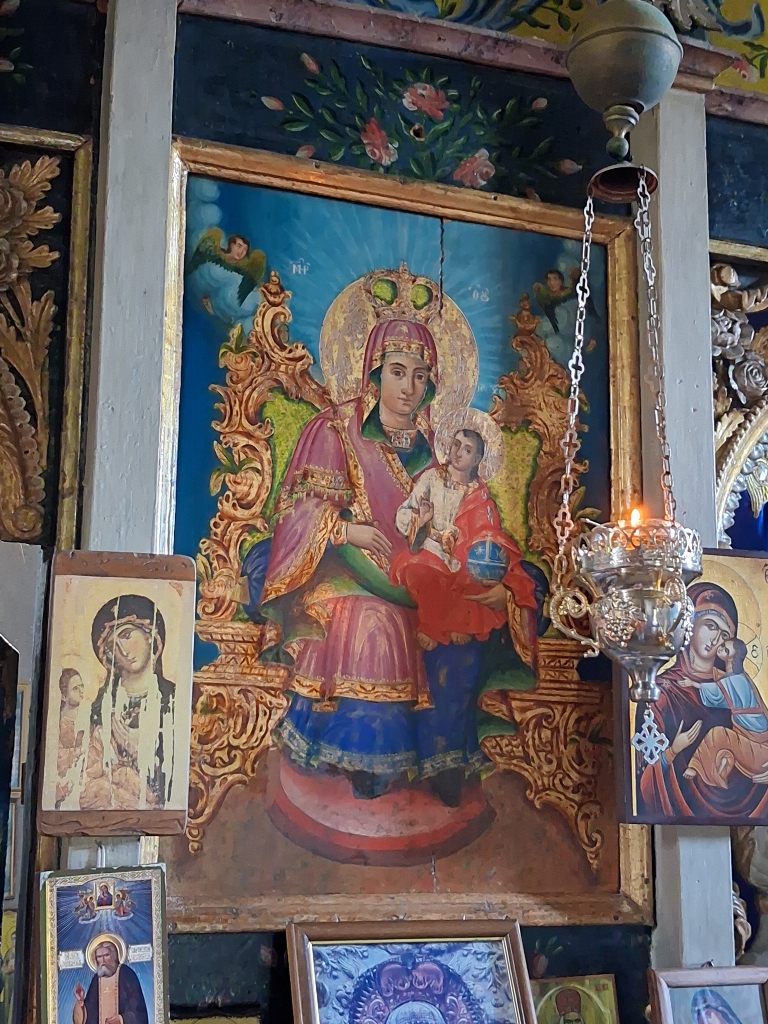 Naupare Monastery, a detail
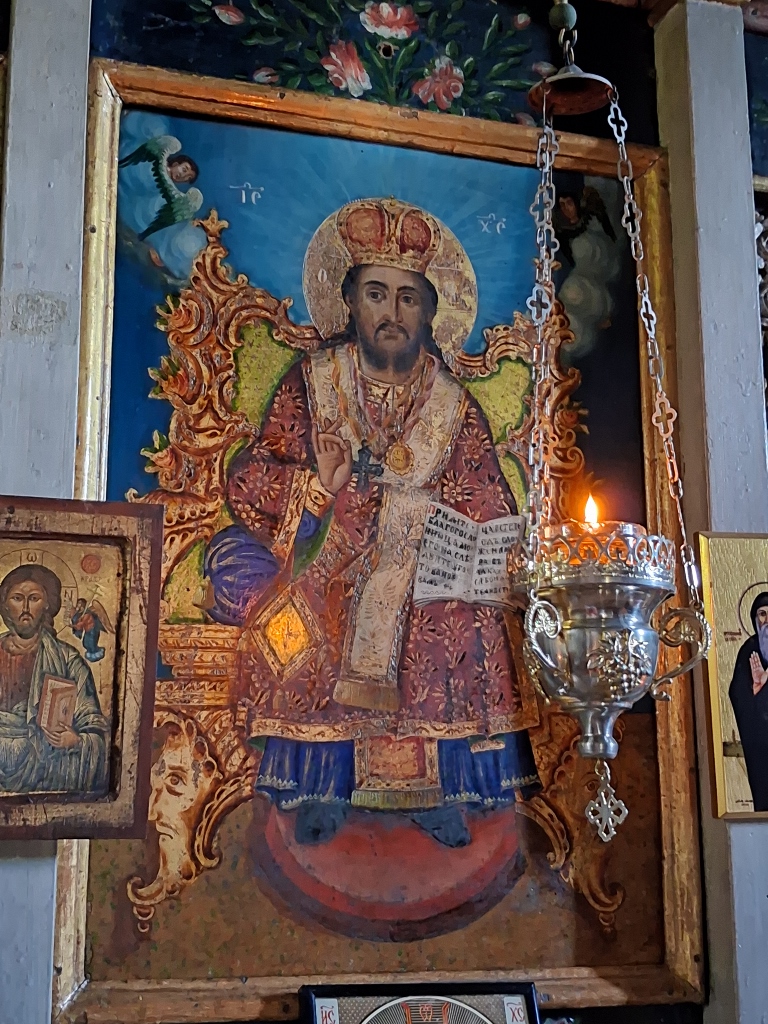 Naupare Monastery, a detail
After leaving the church, I asked one of the nuns whether I could buy some honey, because I had seen a notice near the flower-filled pergola saying that the monastery had honey for sale, but I had not seen any there. She said that the younger priest would bring me some honey and that I should wait in the pergola.
First, however, I walked a little uphill so that I could take photos of the church, including its extraordinary decoration, from another angle as well.
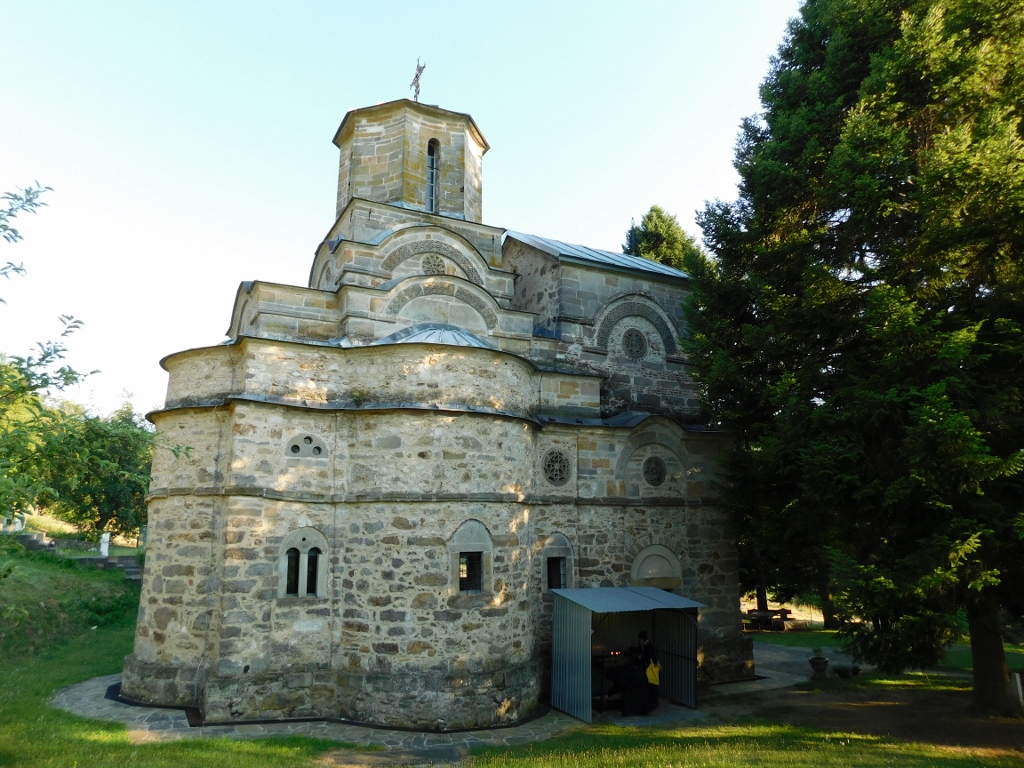 Naupare Monastery, a detail
From here, it was clearly visible that the church has a trefoil/triconch plan, a dome above the central section, as well as a bell tower above the narthex.
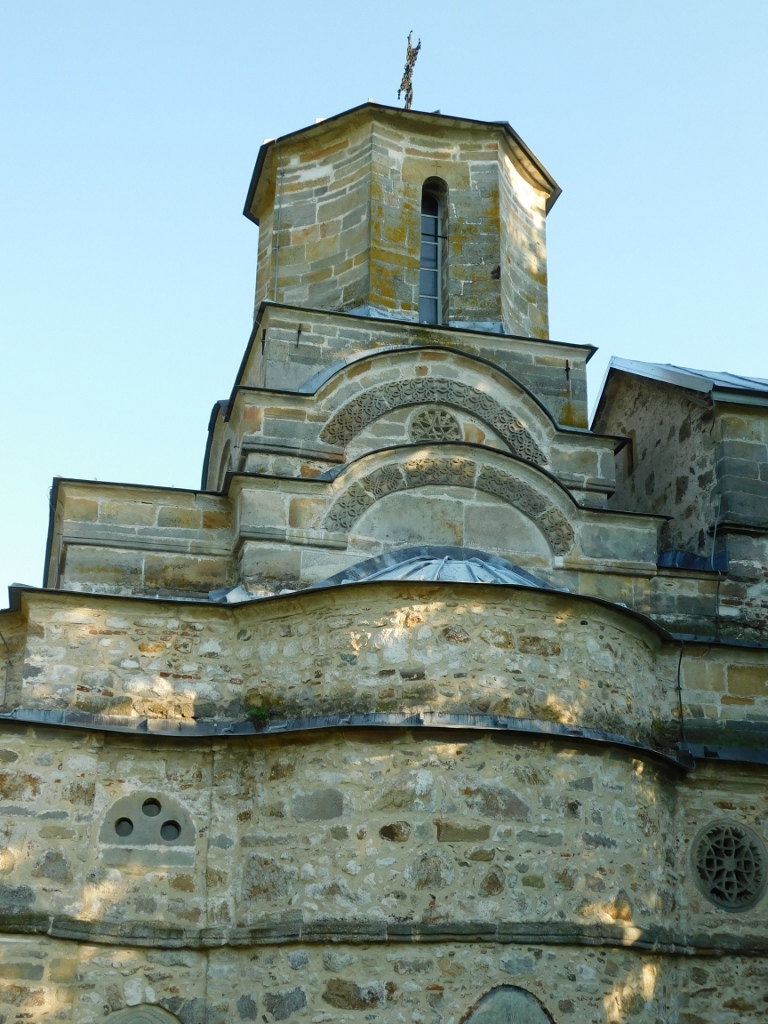 Naupare Monastery, a detail
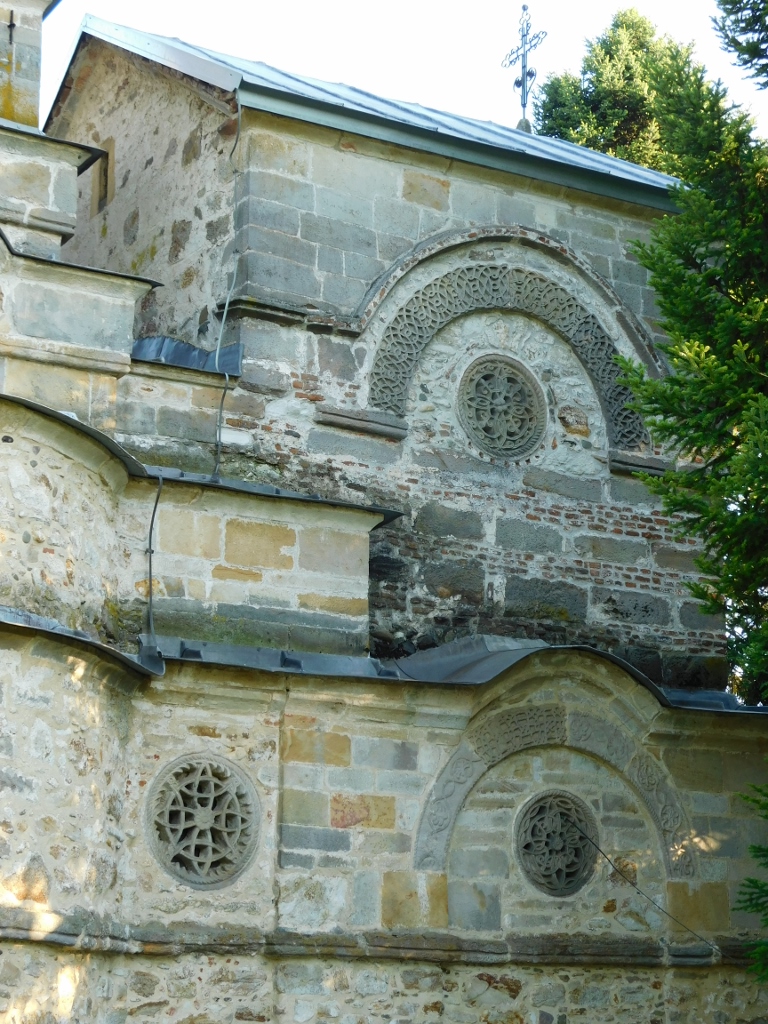 Naupare Monastery, a detail
Although the stone decorative elements arranged in the highest section of the church are very beautiful, the rosette on the western façade stands out in particular. Because of this, I took a photo of the church façade once more and then I went back down to the pergola.
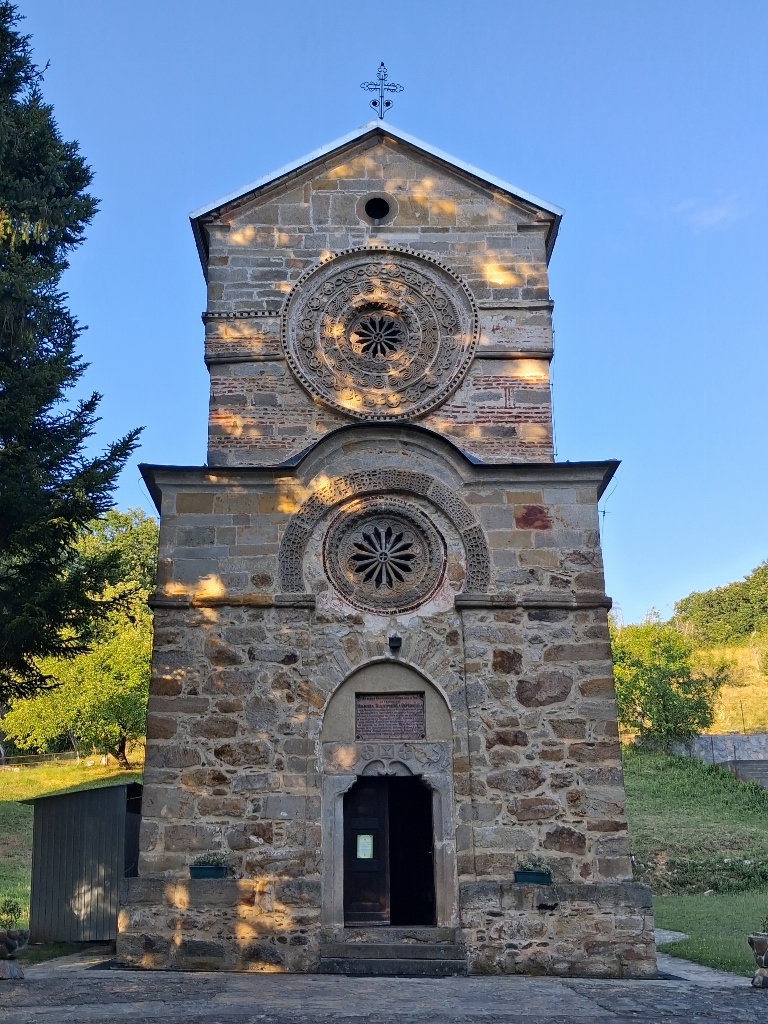 Naupare Monastery, a detail
In the pergola, a few people who had previously attended the liturgy were already sitting there, along with the older priest who invited me to join them. I gladly accepted the invitation, drank some of the spring water from the pitcher and sat there for a while until my honey arrived. In the end, I said goodbye to everyone and went back to my car.
My intention was to drive directly to Blace, but I could not resist stopping briefly in the village of Naupare to take photos of some new houses from my car. I have to admit that they looked exceptionally luxurious for a small village in the middle of Serbia. I assume that their owners are Serbian “guest workers” (Gastarbeiter) abroad, since I know it is quite common for them to build large and luxurious houses in the area they come from or the place they like to return to (see: https://www.svudapodji.com/en/banja-koviljaca-2/).
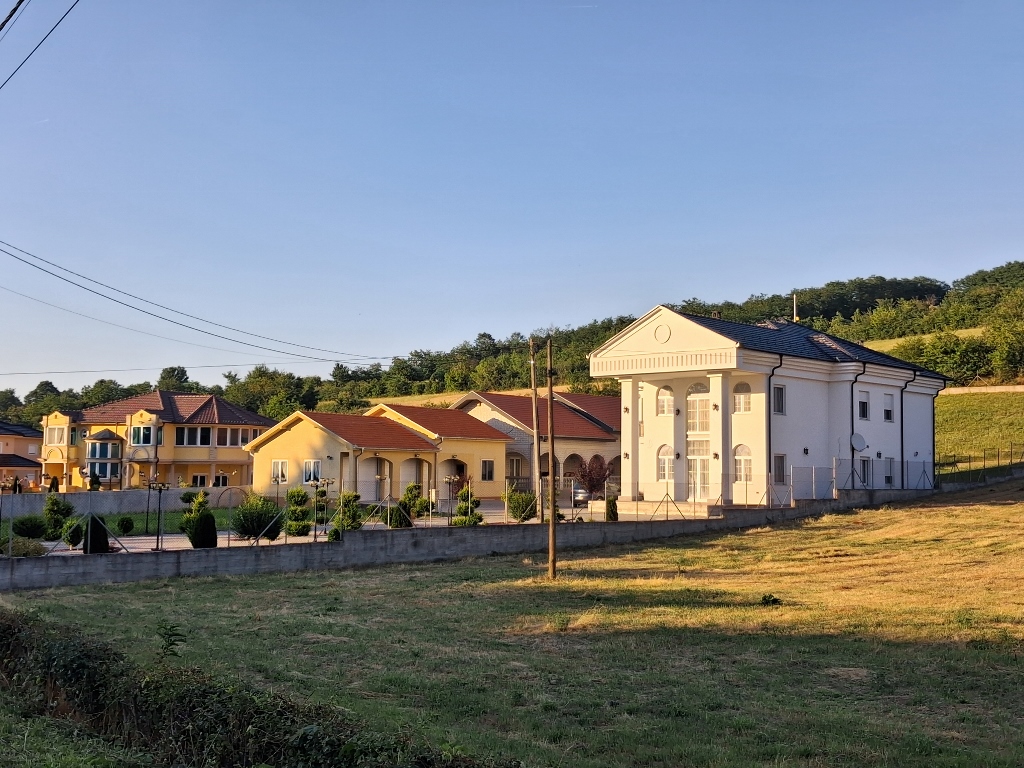 Naupare, a detail
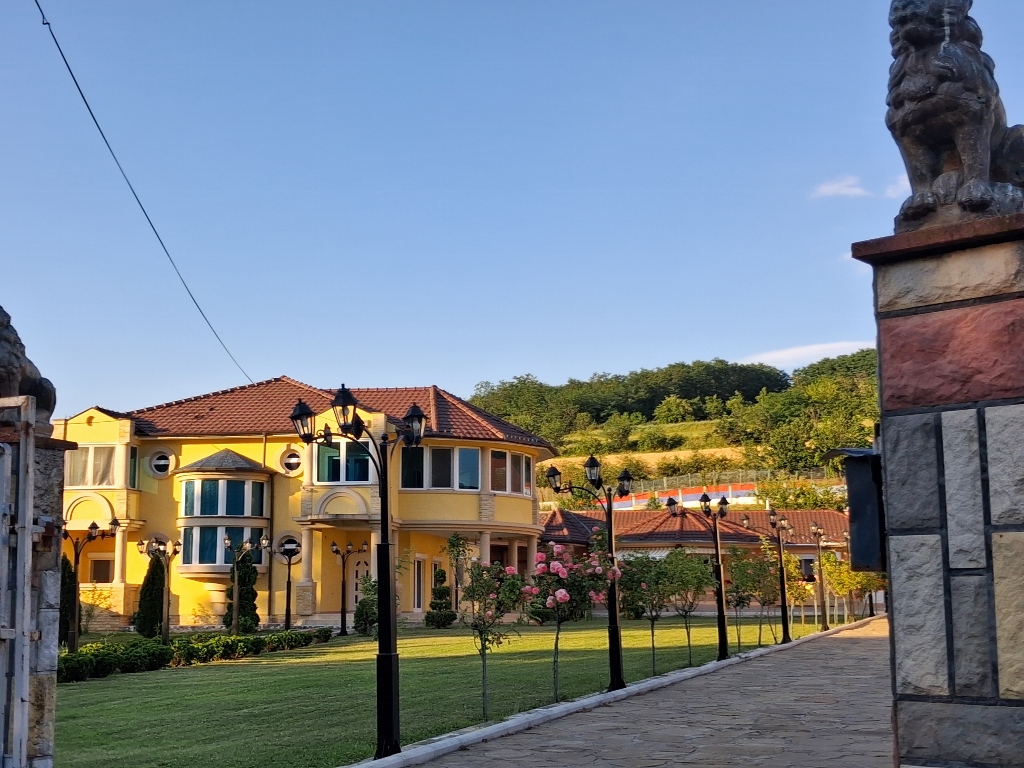 Naupare, a detail
Soon, I reached the main road and continued southwards. The sun was already quite low, but it was still daylight, so I enjoyed the beauty of the landscapes I was driving through, although I did not stop. There were not many vehicles on the road and over time I have perfected the art of taking photographs with my mobile phone without looking at it. I position the phone in the desired direction and, without looking at it but keeping my eyes on the road ahead, I take various photos while slightly moving the phone. Afterwards, I check whether any of them turned out well. At home, I adjust the image if necessary in order to achieve a level horizon.
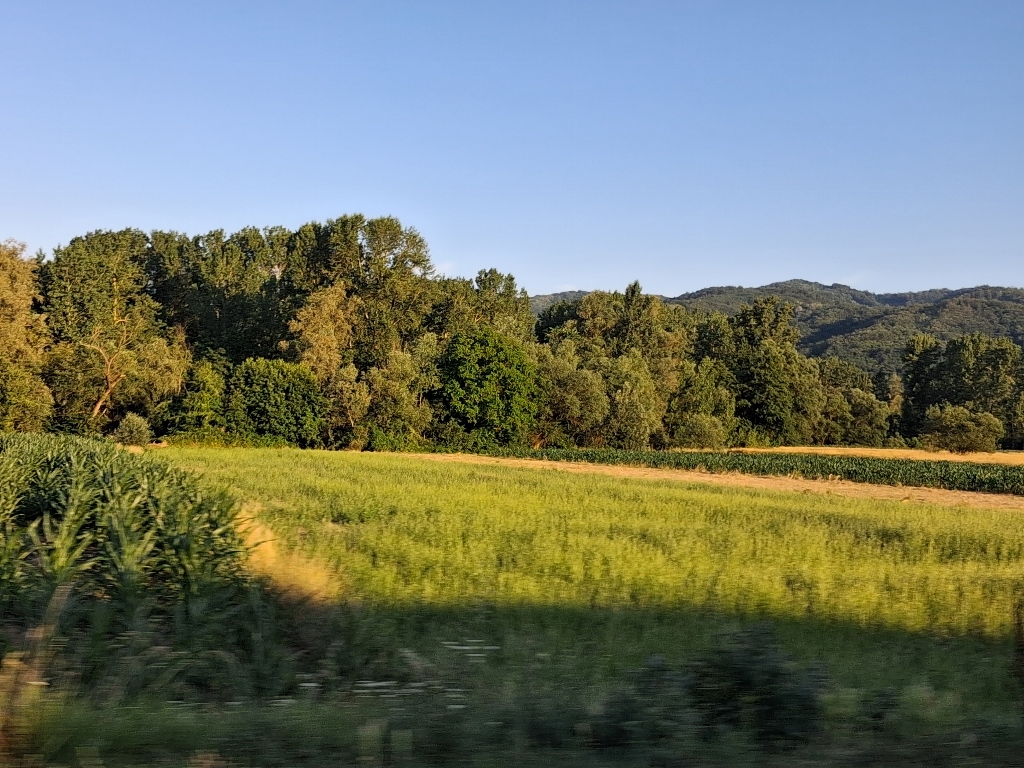 On the road from Naupare to Blace
Because of the position of the sun, as well as my own position in the car, I took photographs solely in the direction of Jastrebac mountain.
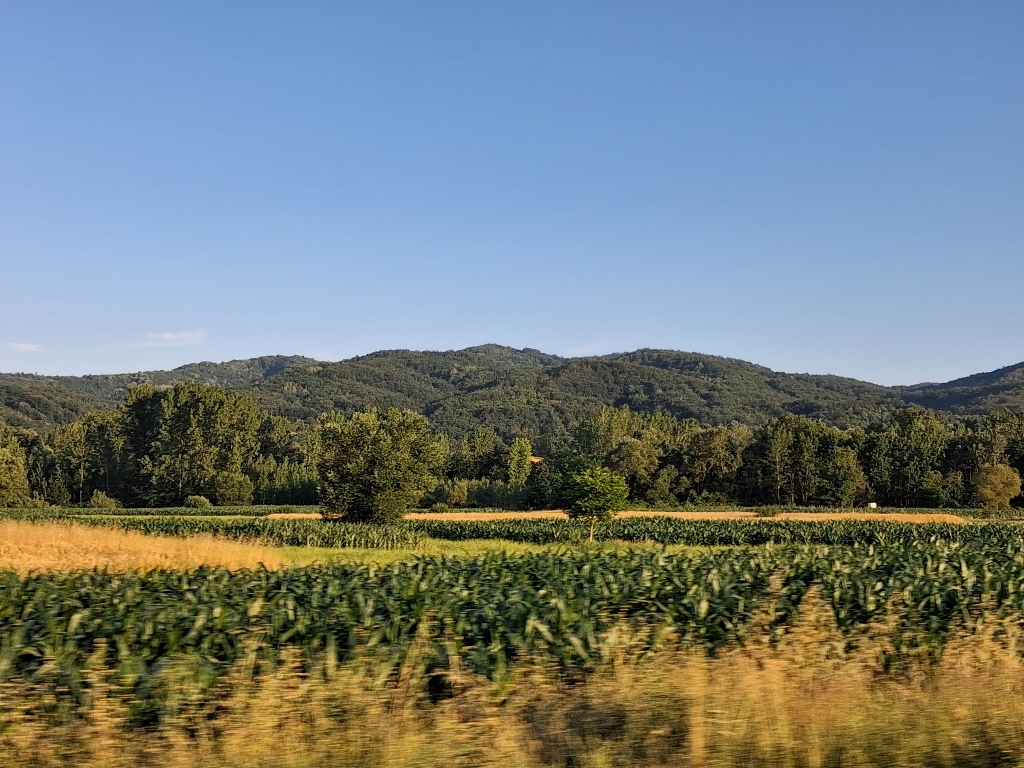 On the road from Naupare to Blace
I eventually reached the reservoir Ćelije, which is located about 20–25 km south of Kruševac, in the valley of the Rasina River, between the slopes of Jastrebac and Kopaonik mountains. The artificial lake was created by damming the Rasina River through the construction of a dam near the village of Ćelije, after which the reservoir was named. The dam was completed in 1972, while the reservoir was fully filled in 1979.
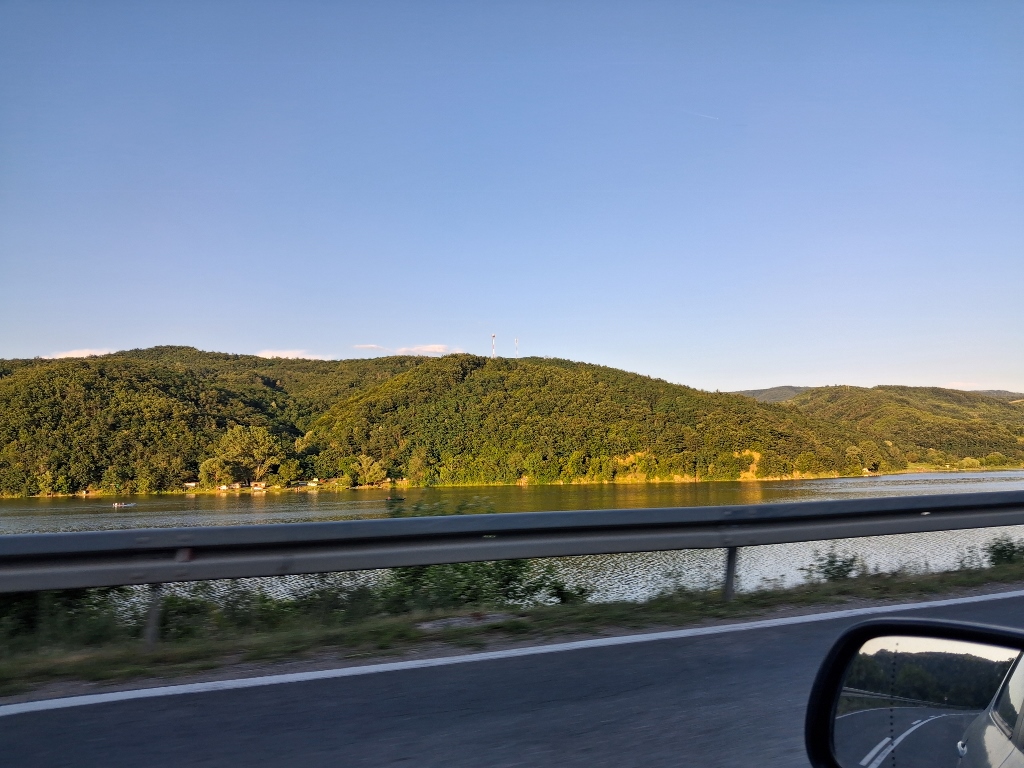 On the road from Naupare to Blace
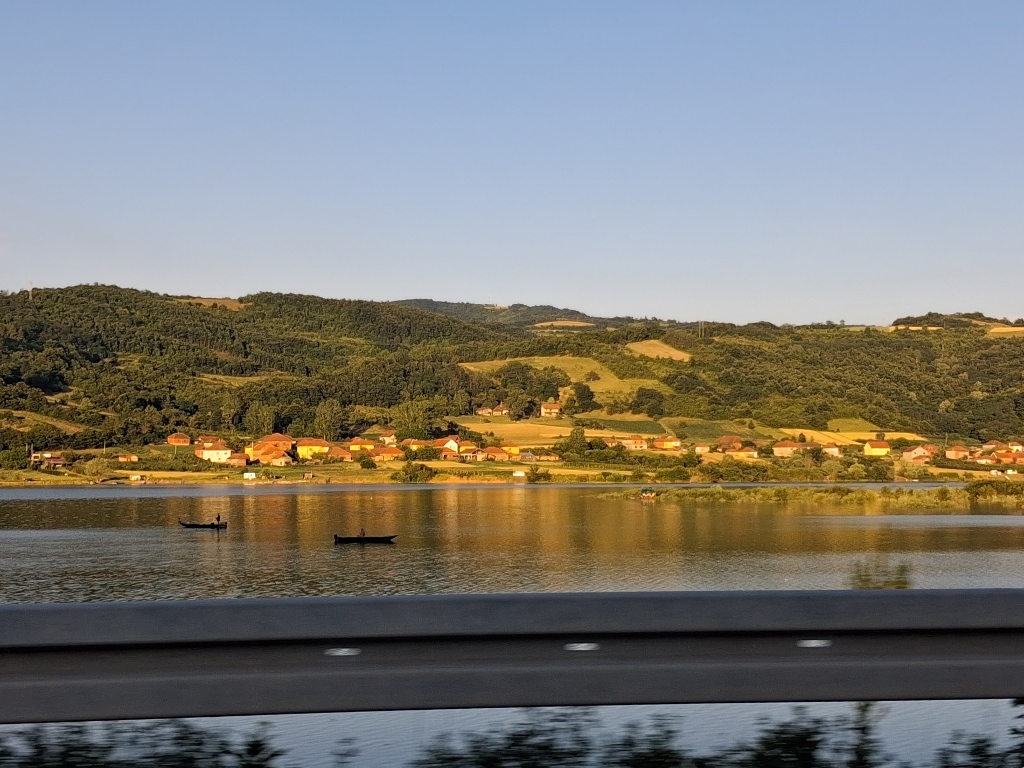 On the road from Naupare to Blace
I will say a little more about the reservoir when I talk about my return journey, because that was when I also took a break near it. For now, I took a few more photos of the slopes of Jastrebac and then I reached an important crossroads where the road to Blace goes left, while the road to Brus goes right.
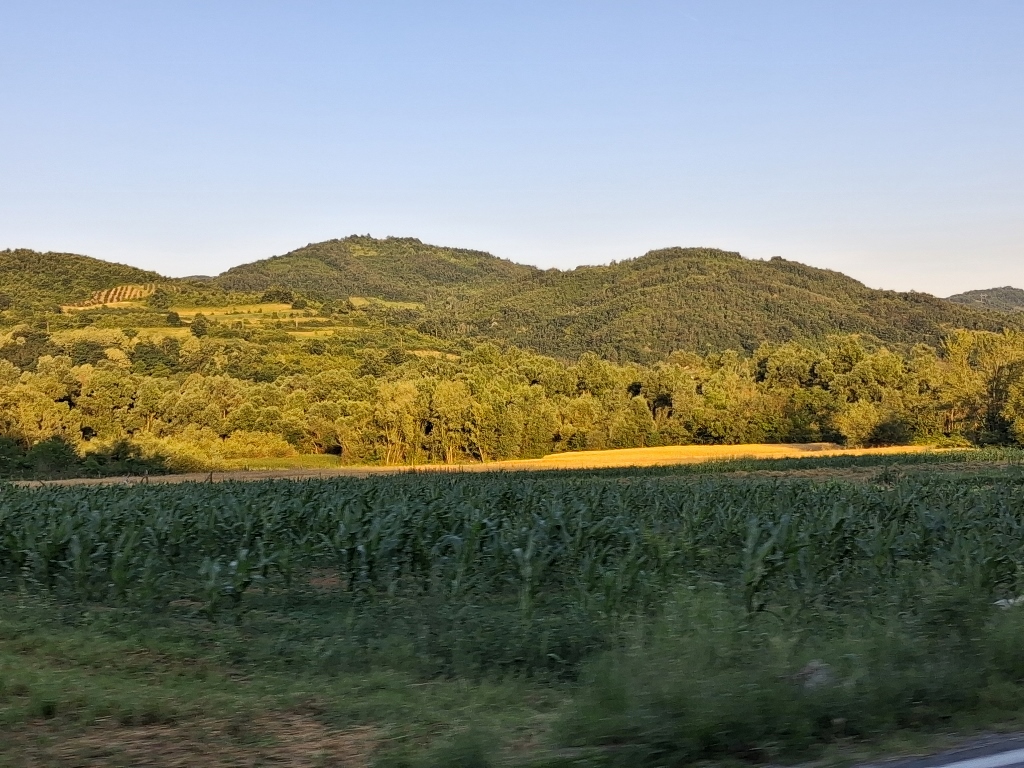 On the road from Naupare to Blace
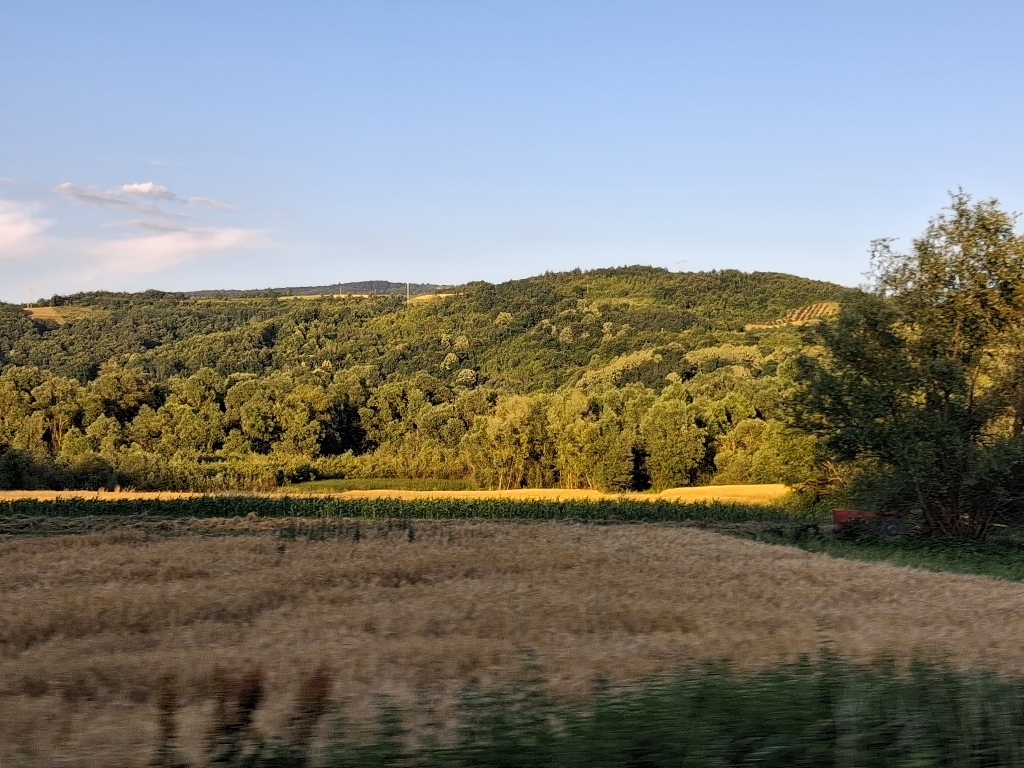 On the road from Naupare to Blace
Soon I arrived in Blace and at my comparatively "new" friend Tanja’s place. It was a warm and heartfelt reunion and the two of us immediately started talking as if we had known each other for a hundred years. It was a real pleasure.
The following day, Sonja and Jasna arrived, while every morning began in the same way – a spontaneous early wake-up, followed by neighbours Nada and Suza coming over for coffee. Then the pleasant women’s chatter would begin on the divine terrace, which was the main gathering place.
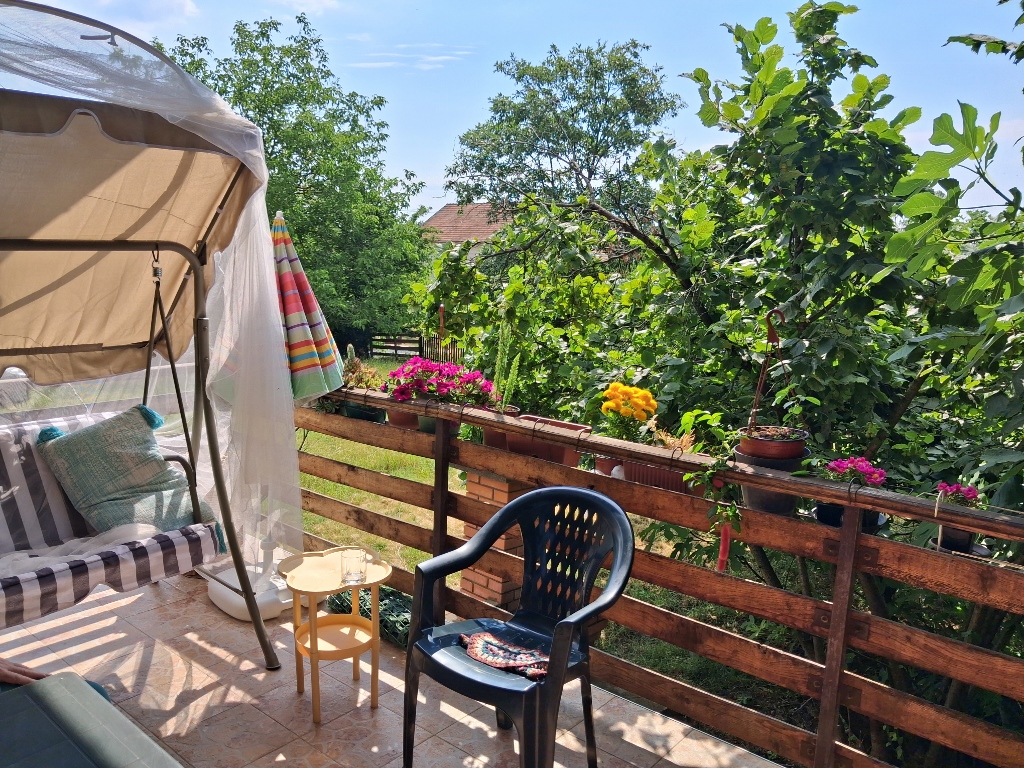 Blace, a detail
After some time, Nada and Suza had to leave us because they had their regular obligations, but throughout the day we were regularly visited by other “guests” – Tanja’s neighbours, friends and relatives. They are all wonderful people and spending time with them gave my stay in Blace a special charm. I was particularly fond of Đorđe, or as we jokingly called him Georges in French, and I am especially grateful to him for the bottle of plum brandy he gave me as a gift in the end.
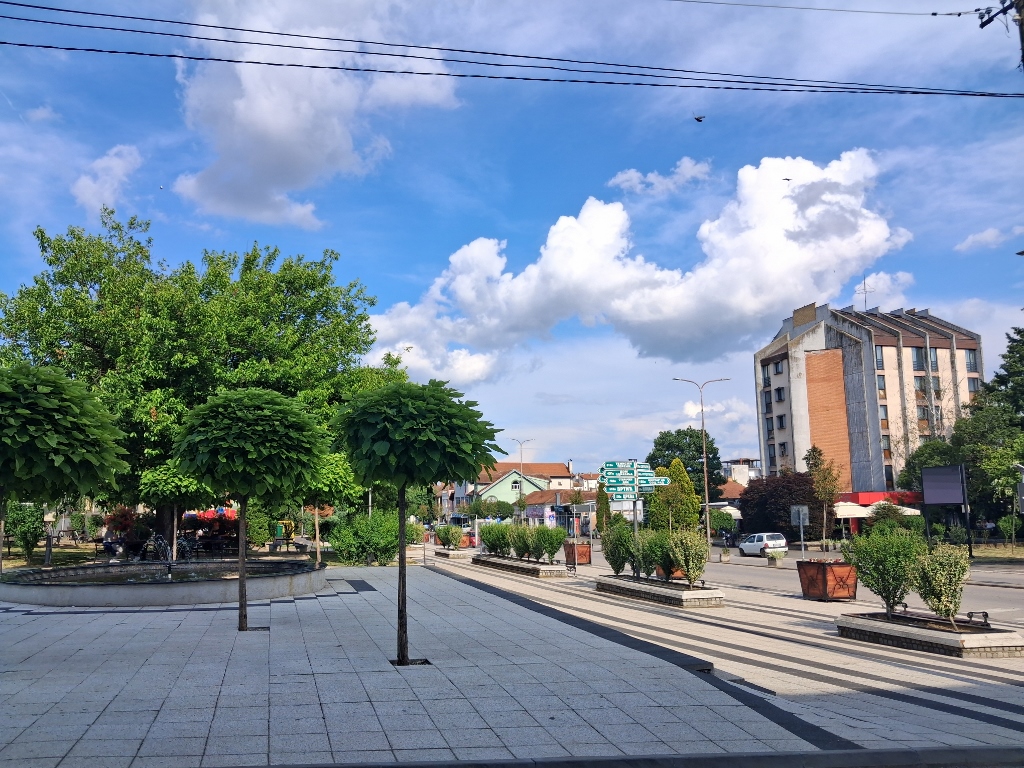
Since I am mentioning plums and brandy, it should be noted that this small town in the Toplica District is best known precisely for plum production. The entire area is among the most important plum-growing regions of Serbia and a large part of the population is involved in cultivating different varieties. Every year, at the end of August, the “Days of the Plum” festival is held – an economic and tourism event that brings together producers of fruit, brandy, honey and traditional products.
 Blace
Blace
What Blace is also known for, besides the wonderful people who live there and the very beautiful nature, is the natural monument “Prebreza,” located in the village of the same name, about 10 km from Blace. It is a paleontological site and one of the most significant sites of its kind in Serbia.
Namely, since 1947, when a local boy accidentally discovered fossilised bones, there is a site near this small village where fossils of giraffes, antelopes, and ancient proboscideans, relatives of today’s elephants, as well as hyenas, giant tortoises, and numerous other bird and mammal species have been discovered. These fossils are more than ten million years old, dating from the Miocene period. At that time, the climate was considerably warmer than it is today, so the area of present-day Toplica District resembled a savanna much more than the landscape we see today.
Over time, the Prebreza site became well known among experts and due to its exceptional scientific value, the area was protected as a natural monument of great importance. Research indicates that it still hides many undiscovered fossils.
Unfortunately, I did not stop at this site on my return journey. On the one hand, I had other plans, and on the other, from what I had read, the site is not particularly developed, so I am not sure whether it would have been worthwhile to come there simply to search around.
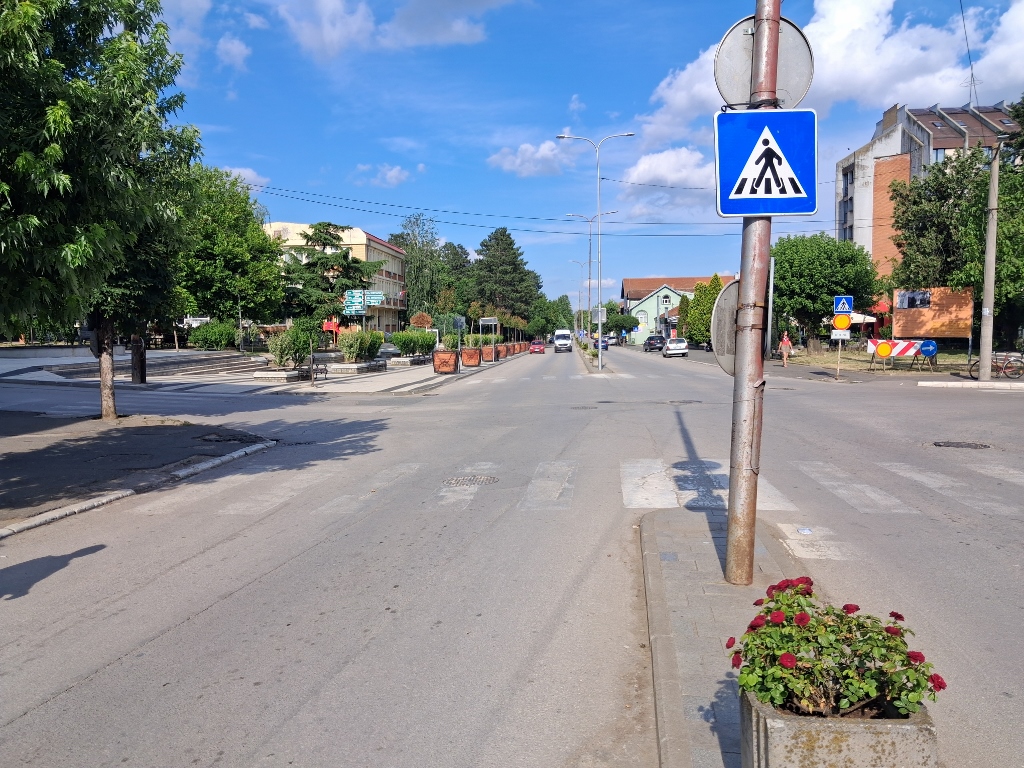
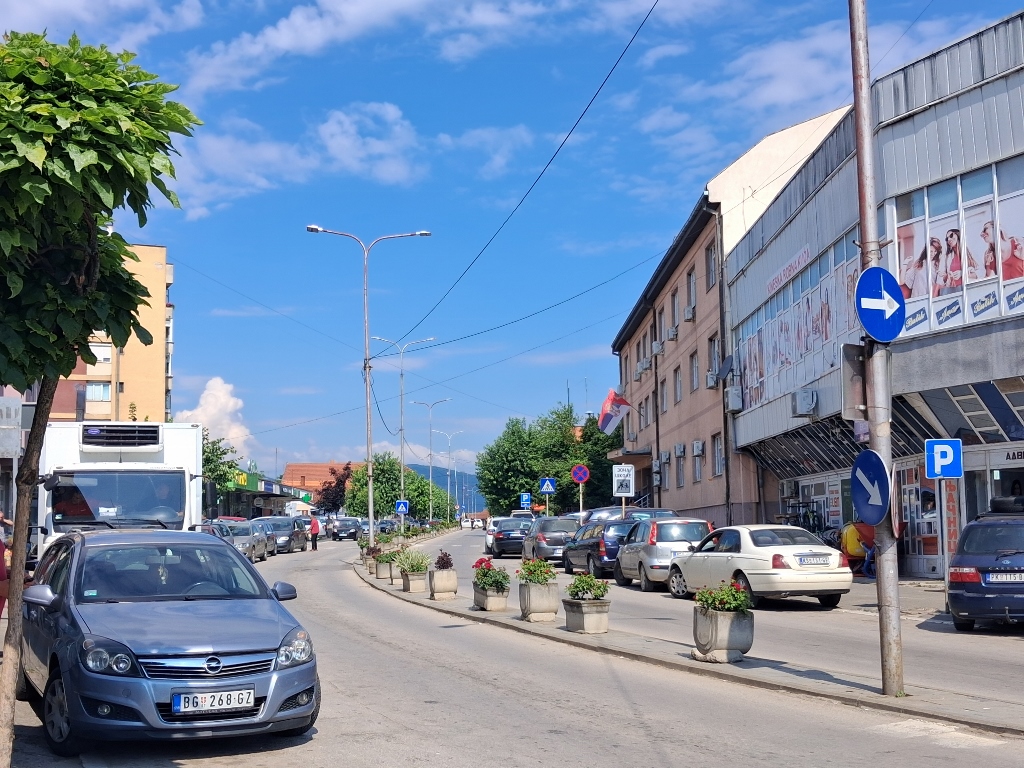
By the way, whenever needed, Tanja and I would drive down from her family home on the hill to the very centre of town when we went shopping.
 Blace
Blace
 Blace
Blace
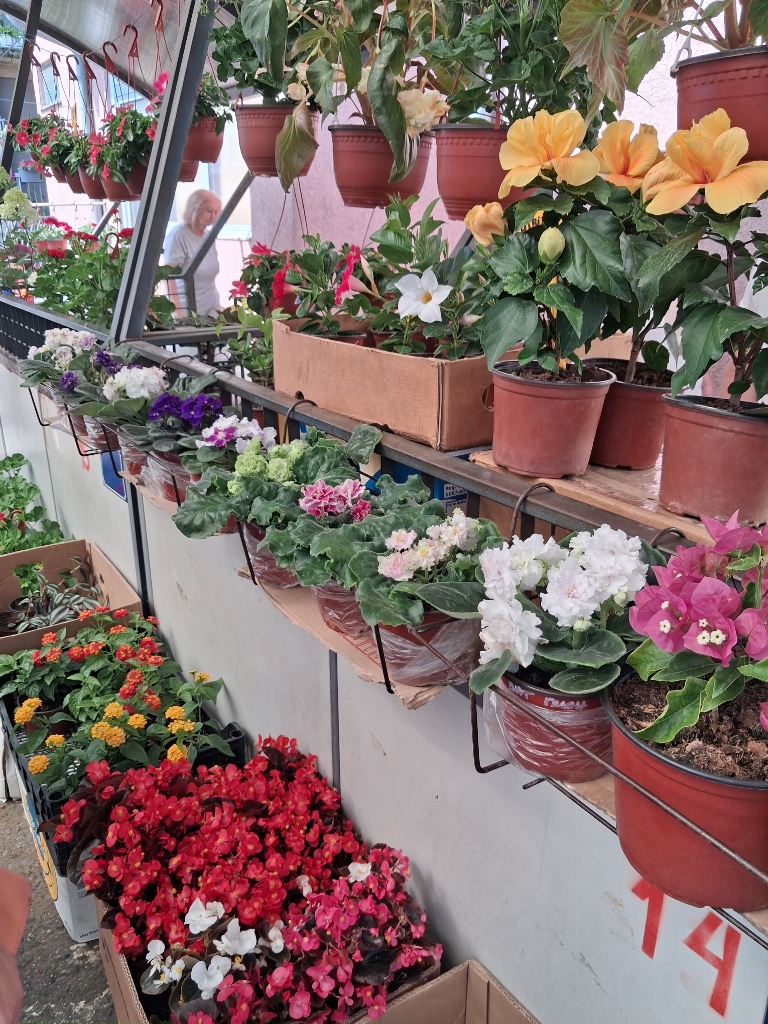
One day we also went to the farmers’ market, where I was, among other things, delighted by the flowers grown and sold by an exceptionally kind local producer. No market in the world would be ashamed to have flowers like these among its offerings. Of course, I bought a few pots that I later took home.
 Blace, a detail
The day after Sonja and Jasna arrived, the four of us were ready to go on a wonderful excursion. We first headed towards the slopes and forests of Jastrebac, because our first destination was Ajdanovac Monastery, the church of which is dedicated to Saint George. The monastery is located northeast of Blace, about 13.5 km away.
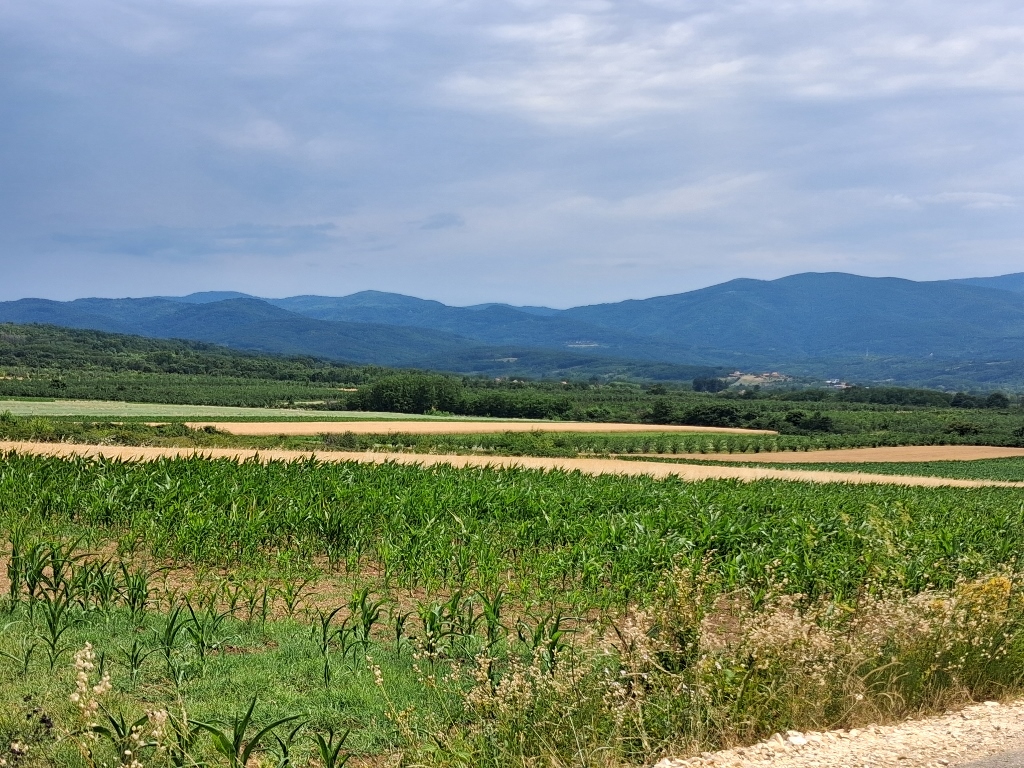 Surroundings of Blace
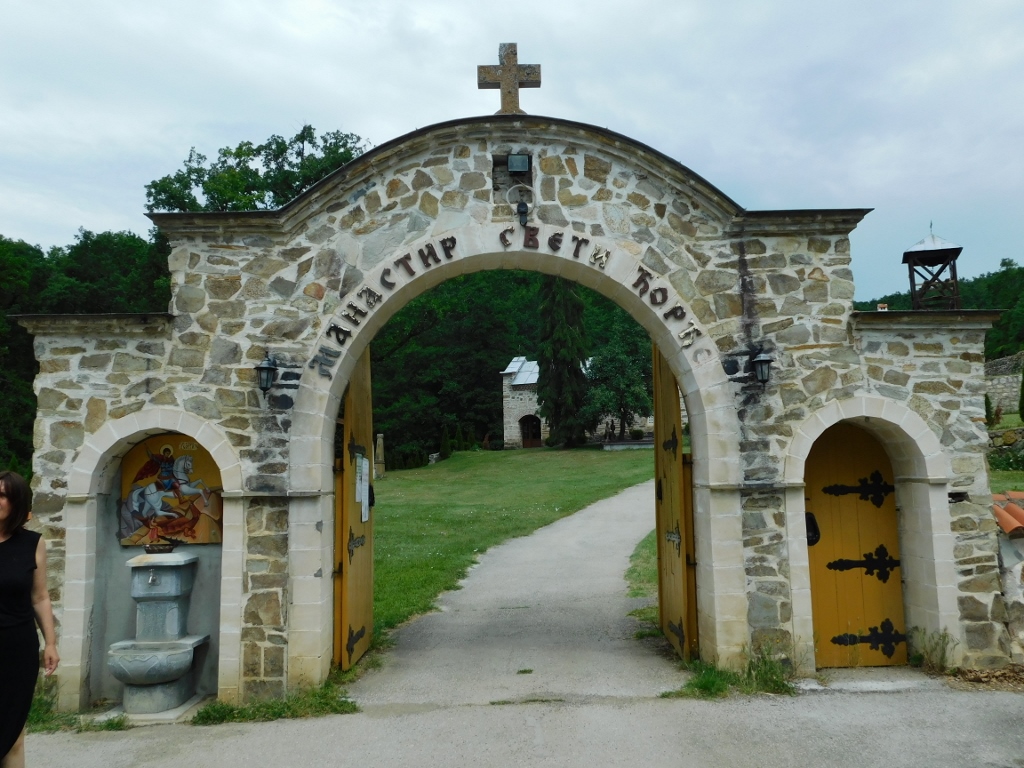 Ajdanovac Monastery
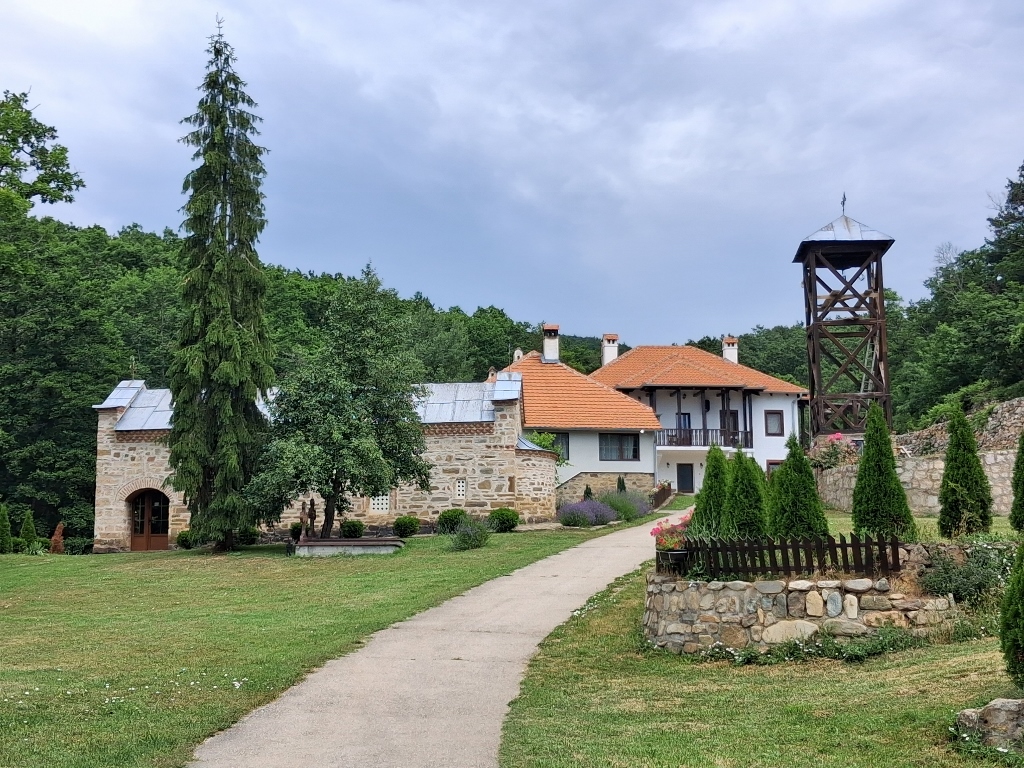 Ajdanovac Monastery
Upon entering the monastery courtyard, we headed towards the church, but along the way I also took a photo of some old tombstones.
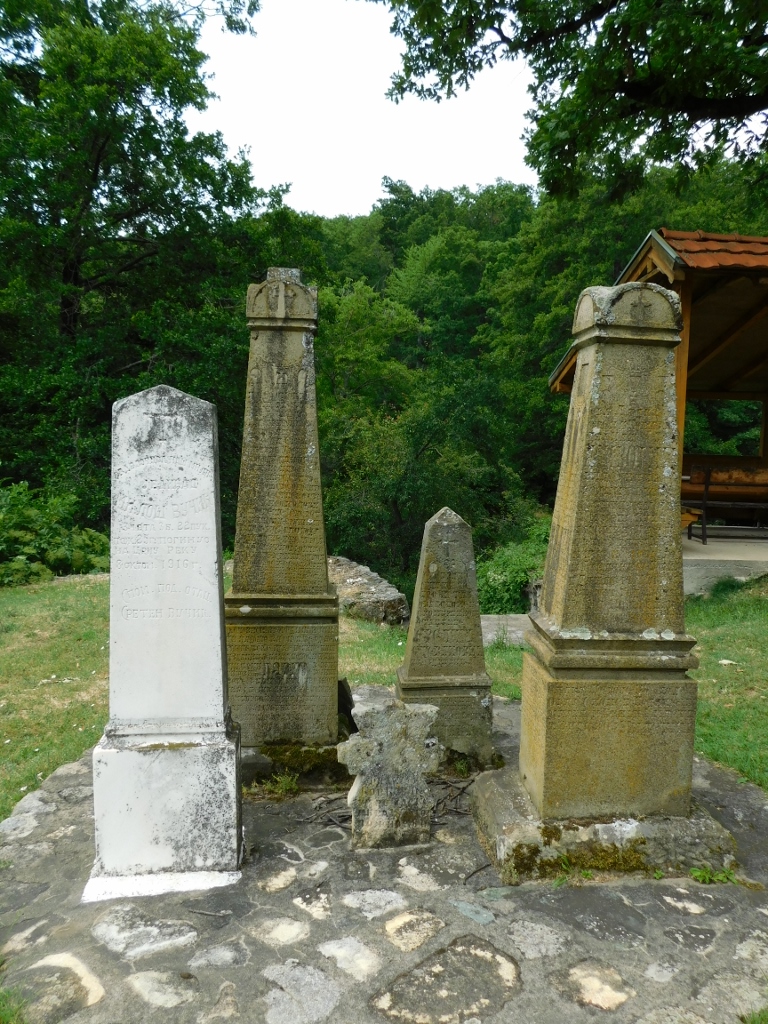 Ajdanovac Monastery, a detail
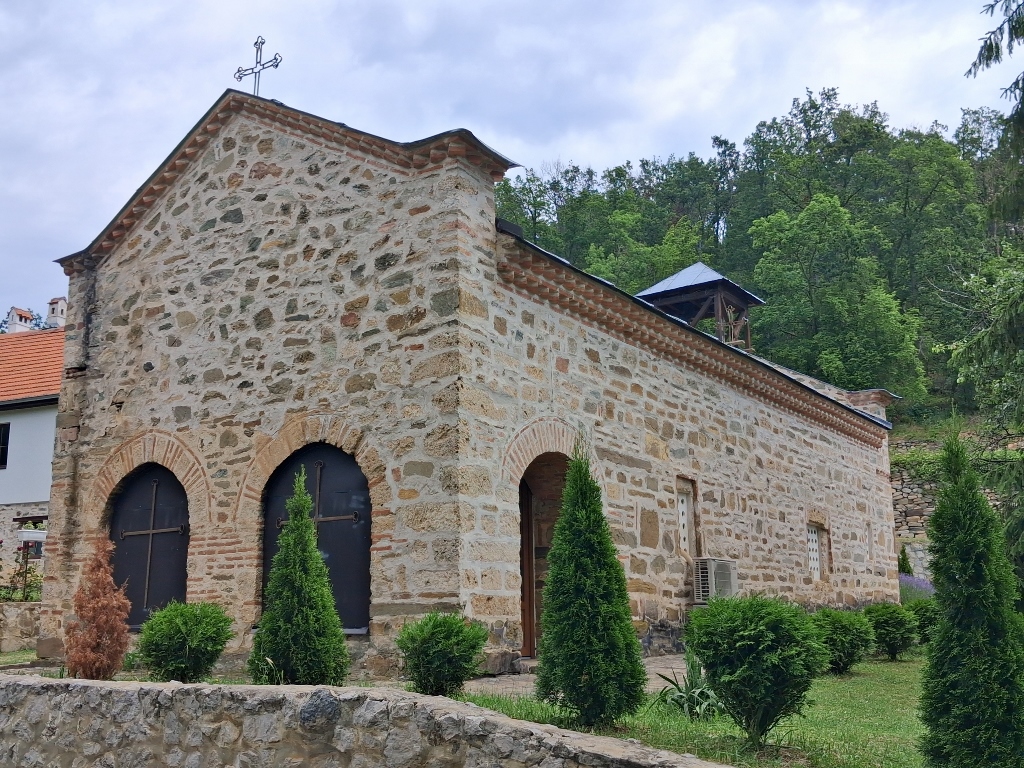
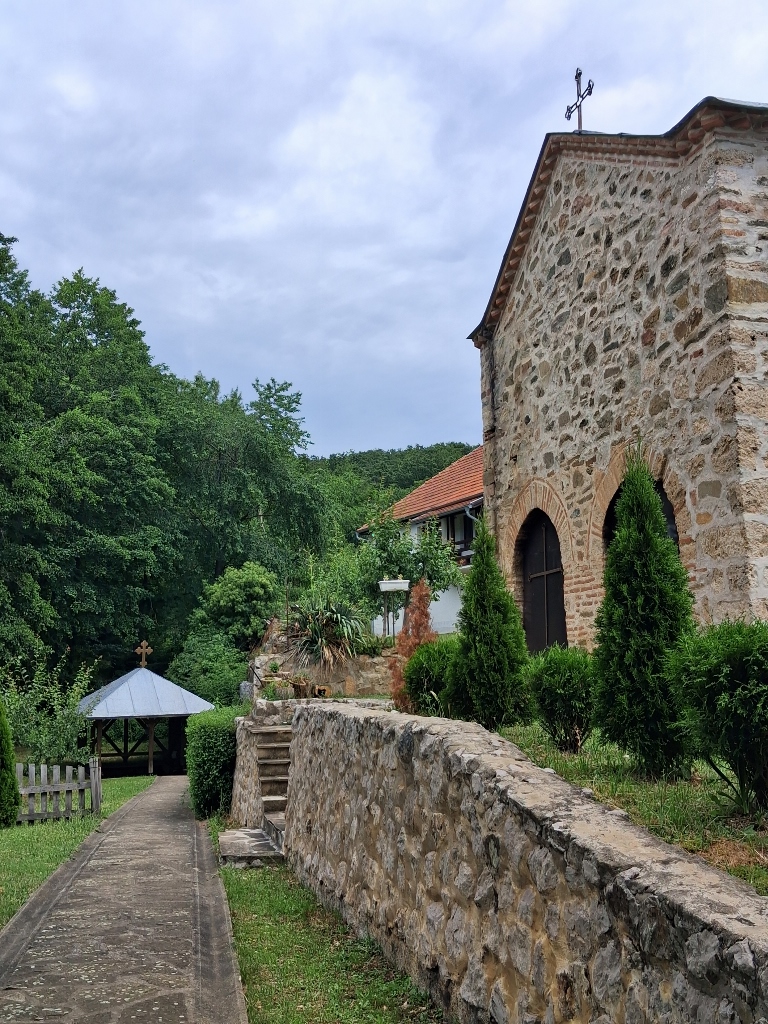
Then we followed the path that runs below the church, so I first observed it from there, but I actually continued along the trail in order to reach the spring.
 Ajdanovac Monastery, a detail
 Ajdanovac Monastery, a detail
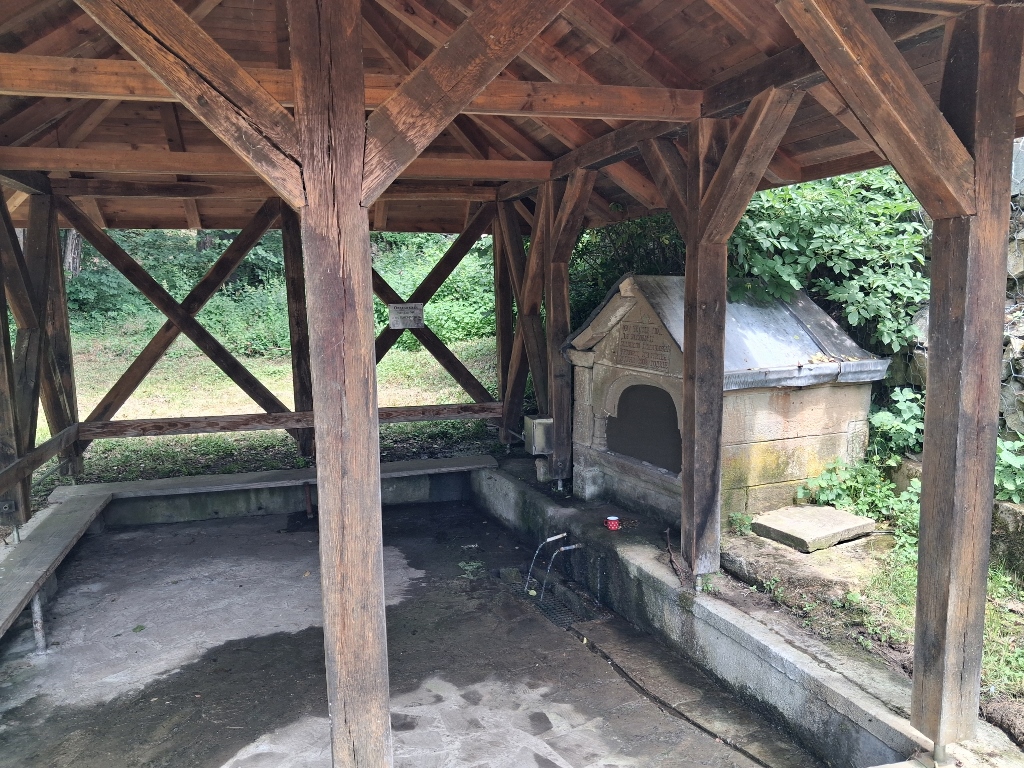
The memorial fountain at the spring was built in 1908 by a merchant from Niš, Mijailo J. Živković, and it is still fully functional today. There is even a notice stating that the water can be used for the treatment of certain health problems.
 Ajdanovac Monastery, a detail
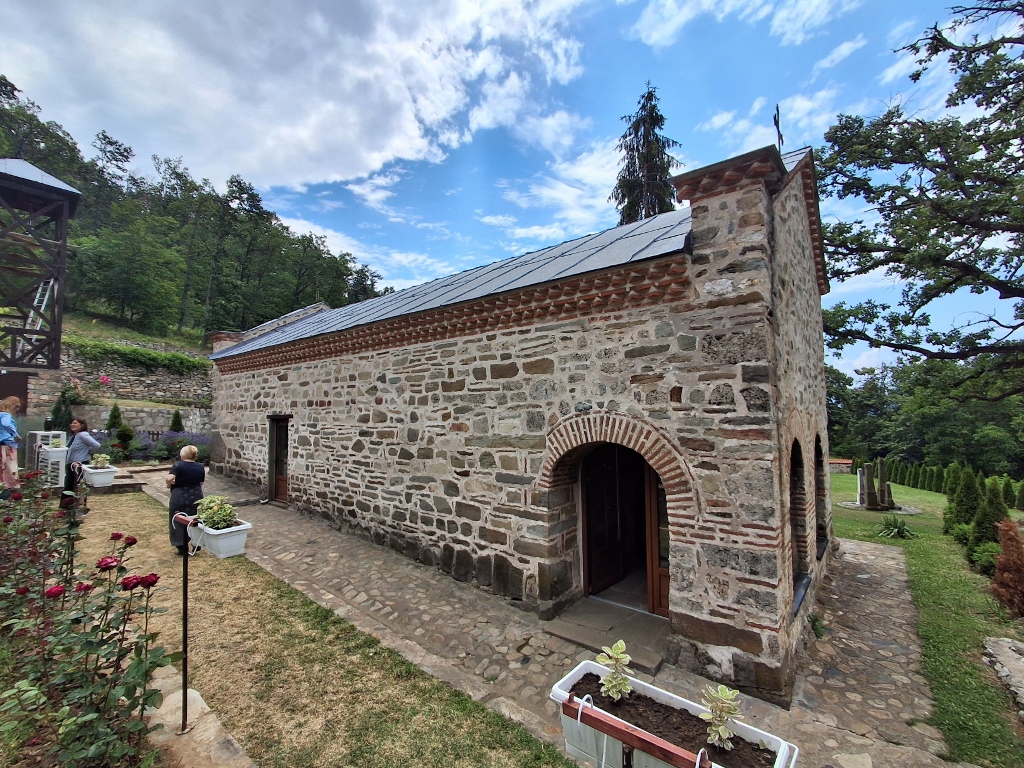
Then I returned to the church and took a closer look at it.
 Ajdanovac Monastery, a detail
The church was built as a rather modest and simple structure, and based on its architectural features and frescoes, it is believed to have been built at the end of the 15th century, most likely around 1485, shortly after the final Ottoman conquest of these lands.
It is a single-nave building with a semicircular altar apse on the eastern side and a gabled roof. It was constructed of rough stone and brick, without the lavish exterior decoration characteristic of earlier monuments of the Morava-style architectural school. Nevertheless, elements of the medieval Serbian architectural tradition can be recognised in its design, while an inscription from the end of the 15th century states that the monastery was a metochion of Naupare Monastery near Kruševac, indicating its connection with an important spiritual centre of Moravian Serbia.
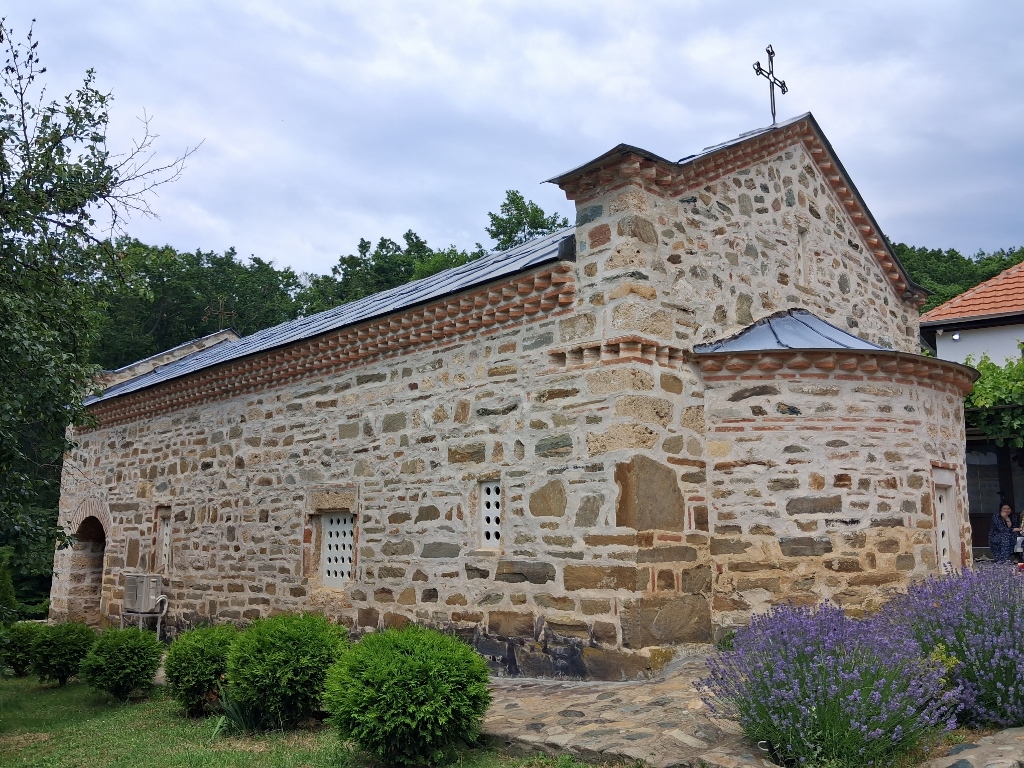 Ajdanovac Monastery, a detail
The church was frescoed in 1492 (incidentally, the same year that Columbus discovered America), but the frescoes have survived only in fragments. However, photography was not allowed inside, so there are no illustrations.
Therefore, I focused more on examining the church from the outside.
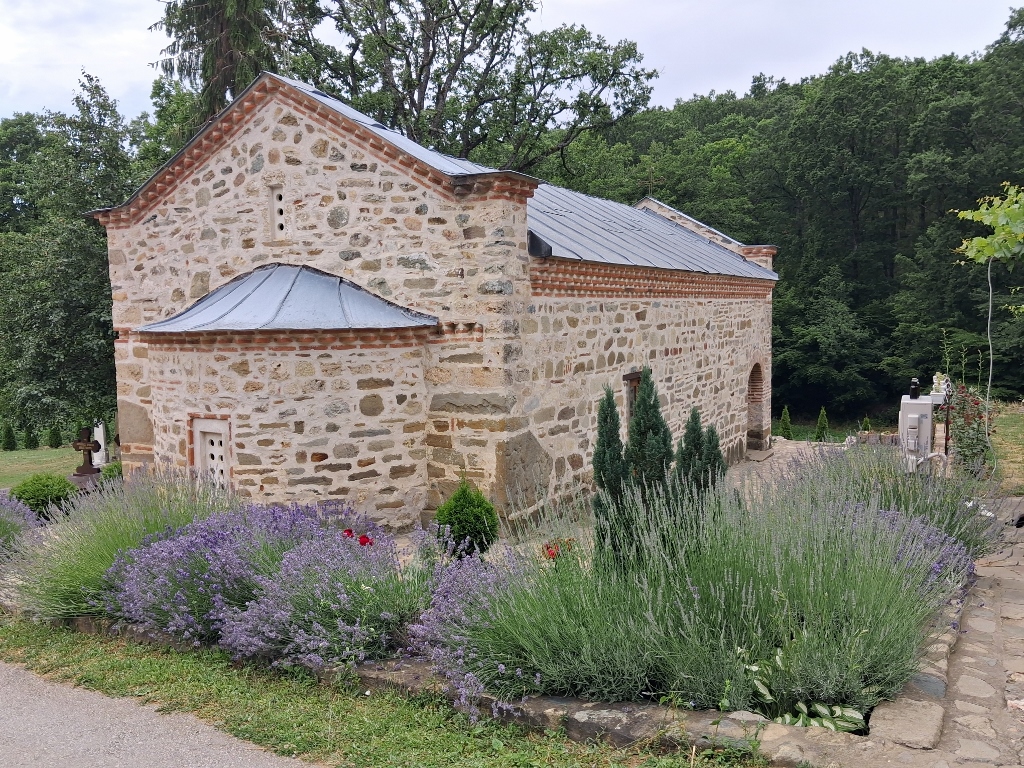 Ajdanovac Monastery, a detail
Ajdanovac Monastery is classified as an immovable cultural property of great importance and today it is home to a small male monastic community.
The courtyard is beautifully maintained and since it was June, everything was in full bloom, while bees and bumblebees in large numbers enjoyed the lush lavender bushes.
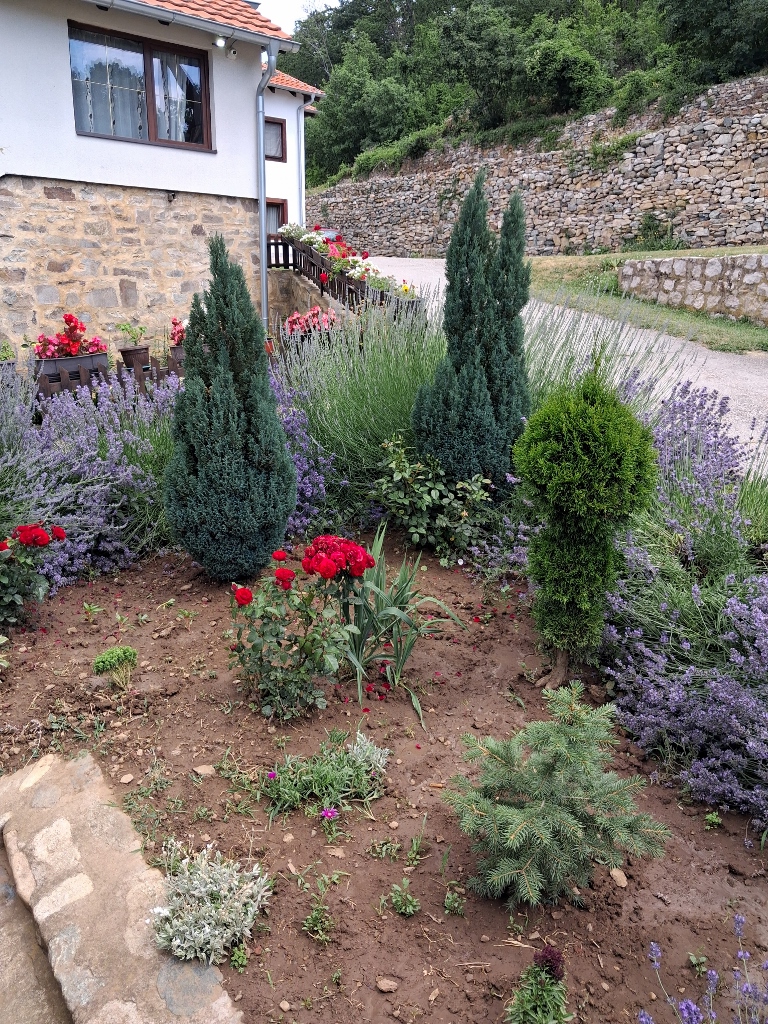 Ajdanovac Monastery, a detail
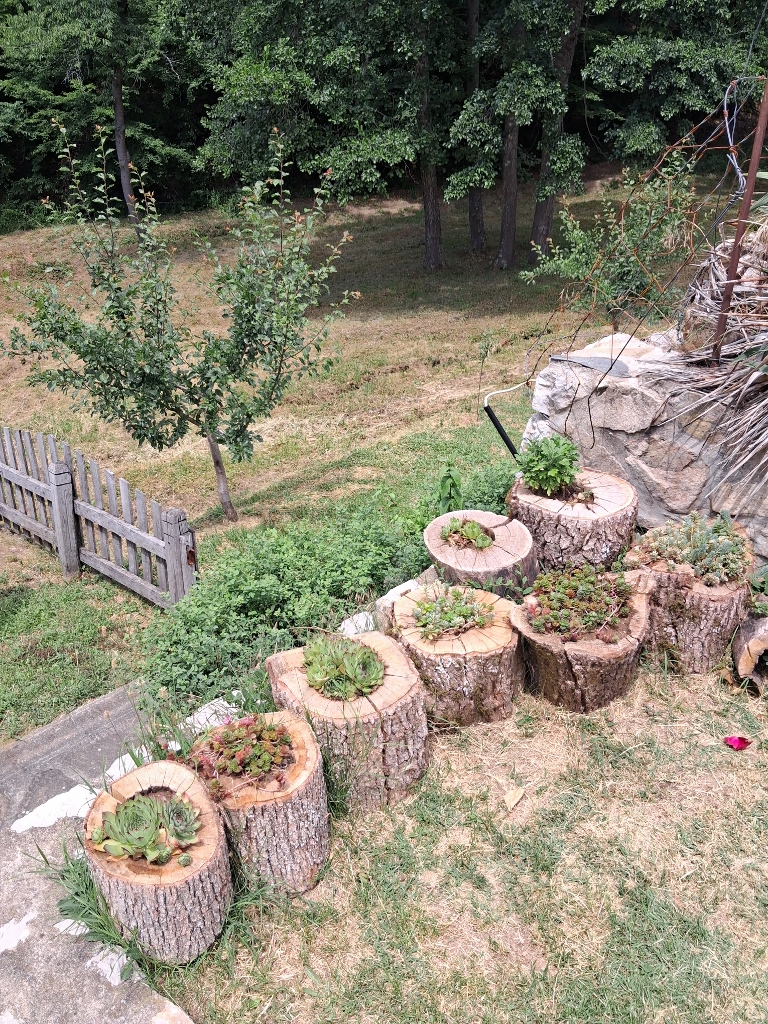 Ajdanovac Monastery, a detail
There were also a large number of cats in the courtyard and somehow, while commenting on the cats, we started talking with a couple of monks. One of them was particularly talkative, so we found some common topics and the whole conversation was extremely pleasant.
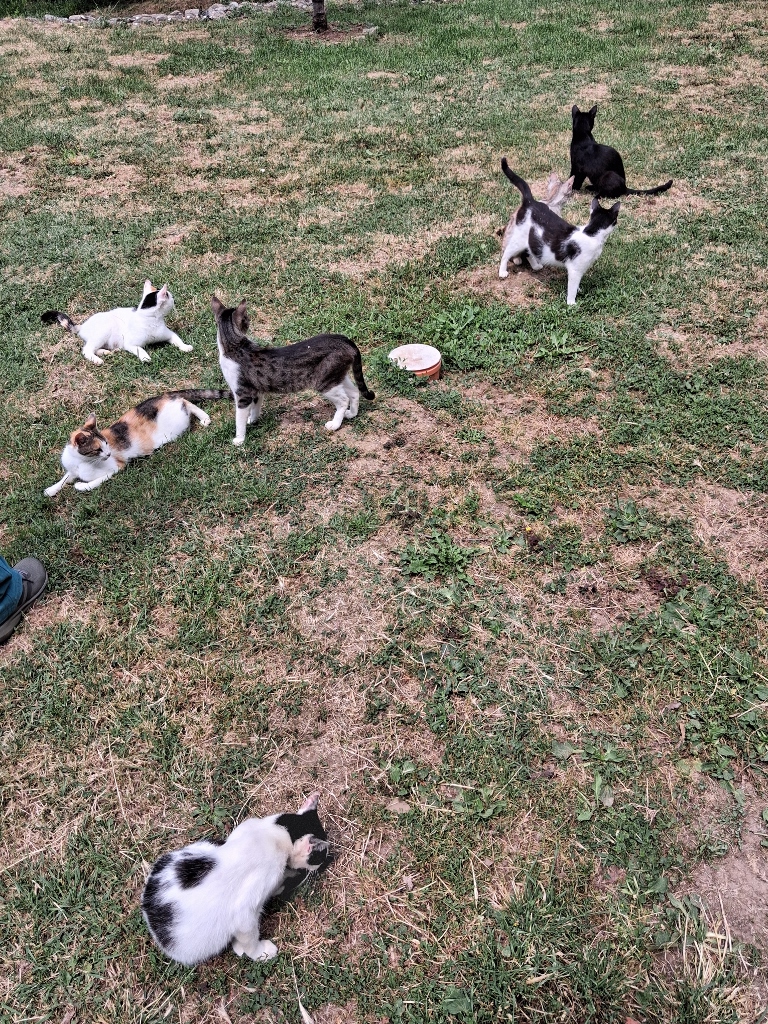 Ajdanovac Monastery, a detail
Then one of my friends wanted to speak with the priest or the hegumen, so it was soon arranged and we were all invited for coffee as well.
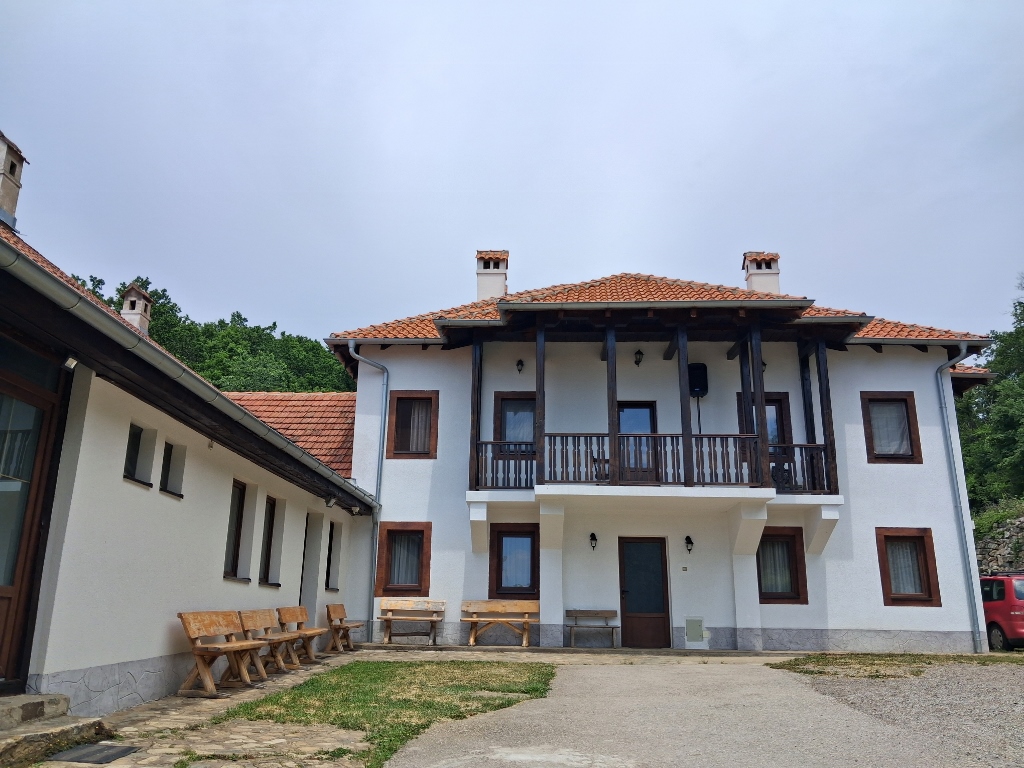 Ajdanovac Monastery, a detail
Father Atanasije, the hegumen of the monastery, was an exceptionally interesting and, if I may say so, entertaining conversationalist. However, after a while, I felt the need to leave my friend to continue talking with him. Before that, I also photographed the refectory where we had our coffee and then I went to watch the cats.
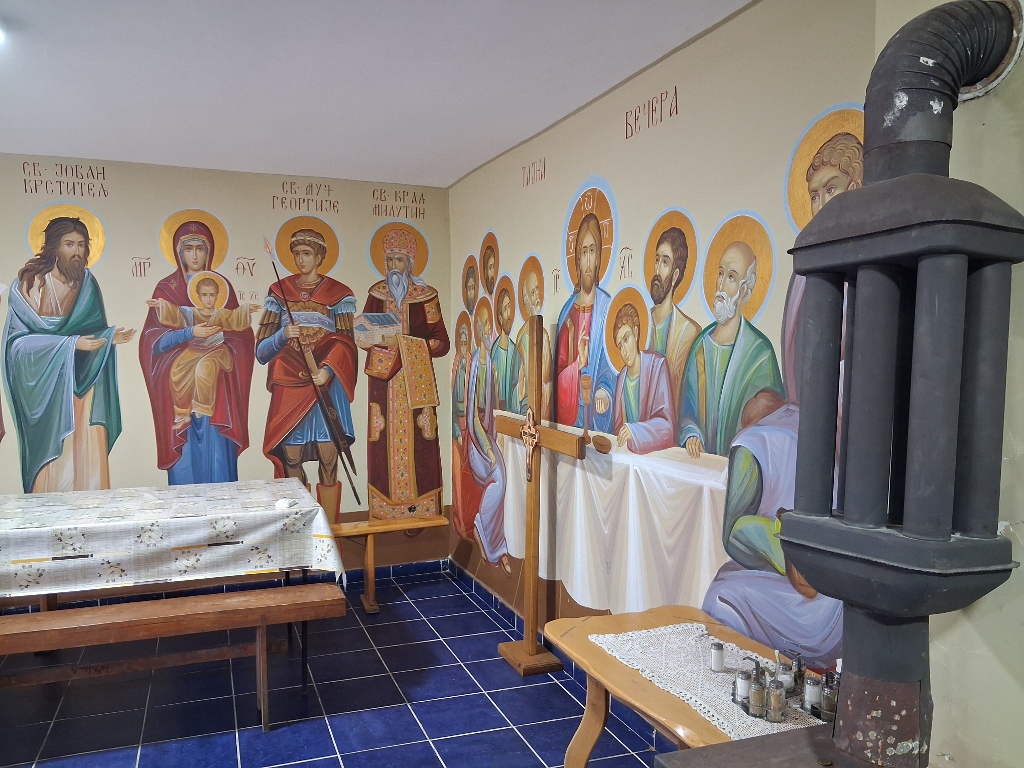 Ajdanovac Monastery, a detail
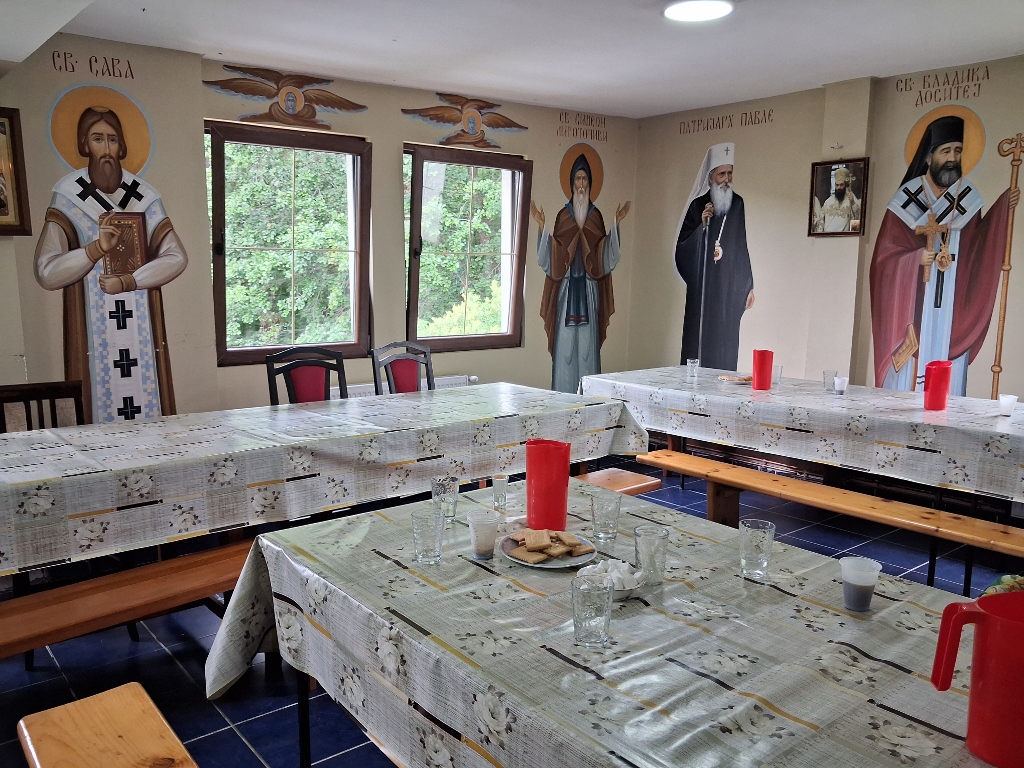 Ajdanovac Monastery, a detail
After some time, the four of us gathered together again, said goodbye to our hosts, went back to the car and then set off about 60 km south. Our next destination was Đavolja varoš (Devil’s Town).