While touring Palermo with a woman I had been on vacation with in Sicily in 2012, we also reached the coast, but we didn’t stay there long and instead headed back into the city.
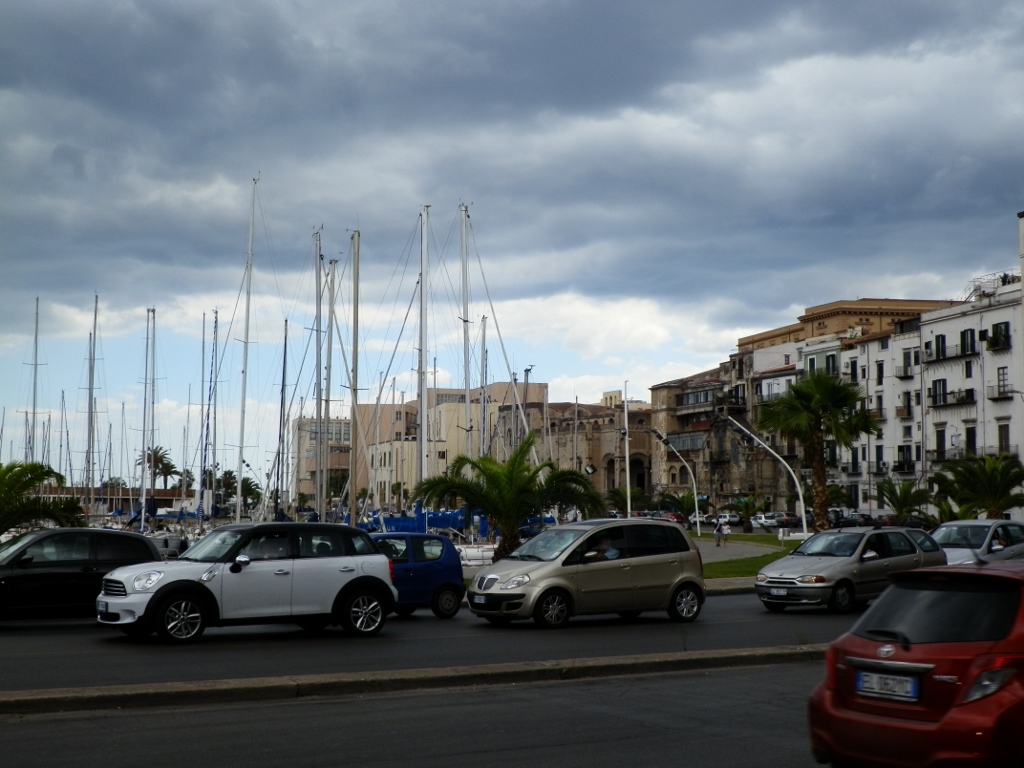 Palermo, a detail
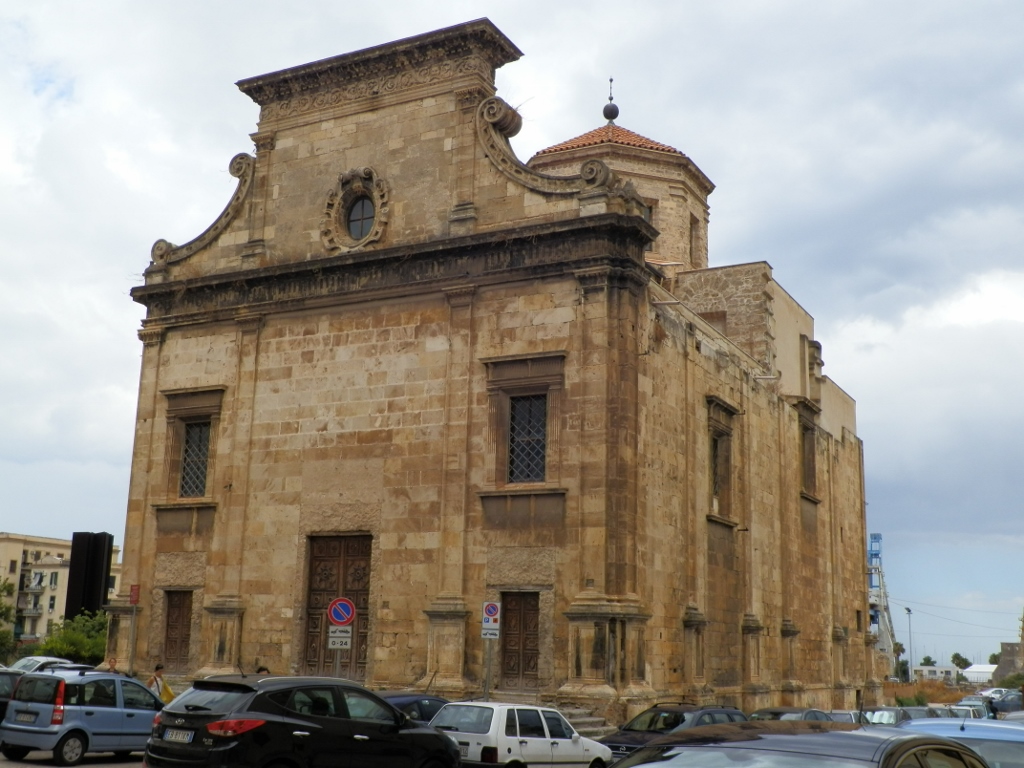
That’s how we also came to the Church of San Giorgio dei Genovesi. It is a Renaissance church from the 16th century, built by the community of Genoese merchants as a symbol of their power and influence. The church has a simple façade and an octagonal dome. The interior is richly decorated, but the church was closed when I passed by, so I only photographed it from the outside.
 Palermo, a detail
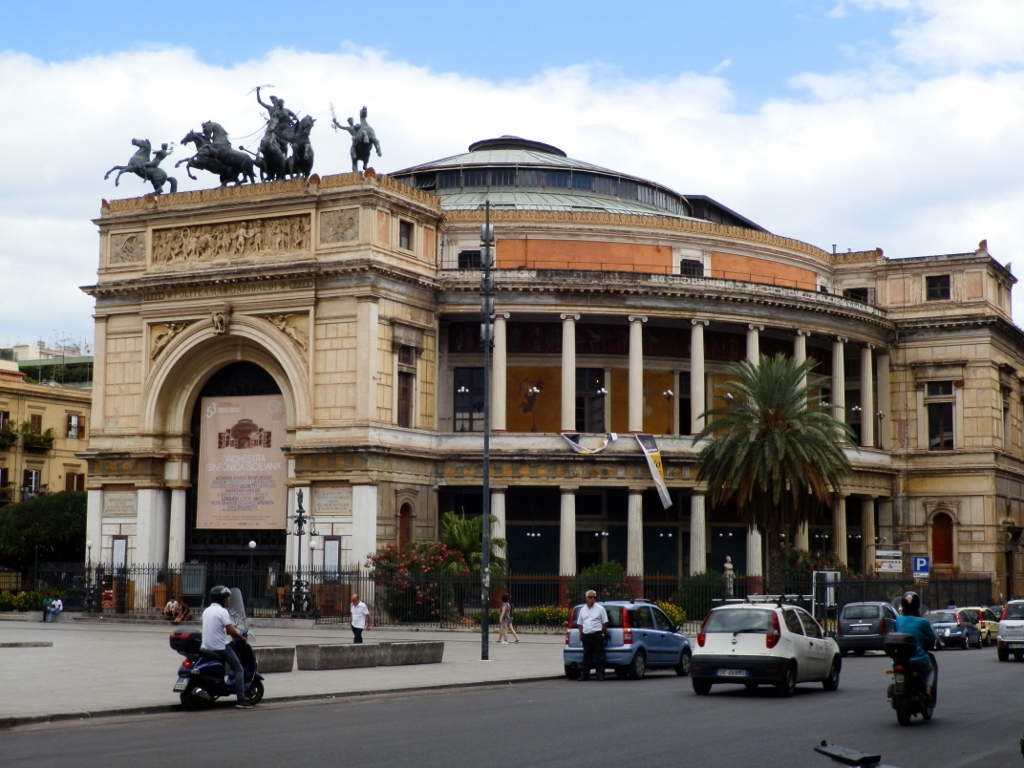
We then continued on to the Politeama Garibaldi Theatre, which was built in the neoclassical style at the end of the 19th century and is recognisable for its monumental triumphal arch facing the spacious square in front of the theatre. At the top of the triumphal arch is Apollo in a quadriga, symbolising the triumph of art and cultural elevation. Apollo, the god of art and light, emphasises the cultural function of the theatre, while the quadriga represents strength, dynamism and the victory of artistic creation.
 Palermo, a detail
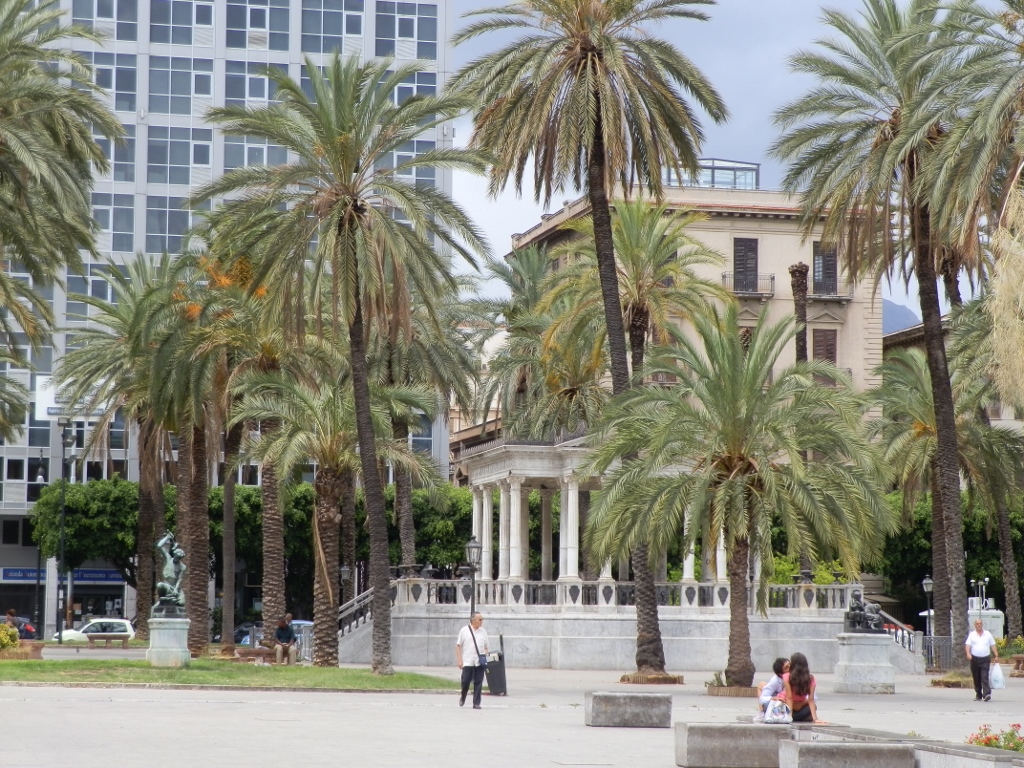
In front of the theatre is Piazza Ruggero Settimo, which continues into another square. This is Piazza Castelnuovo, where, among other things, there is also a pretty music pavilion.
 Palermo, a detail
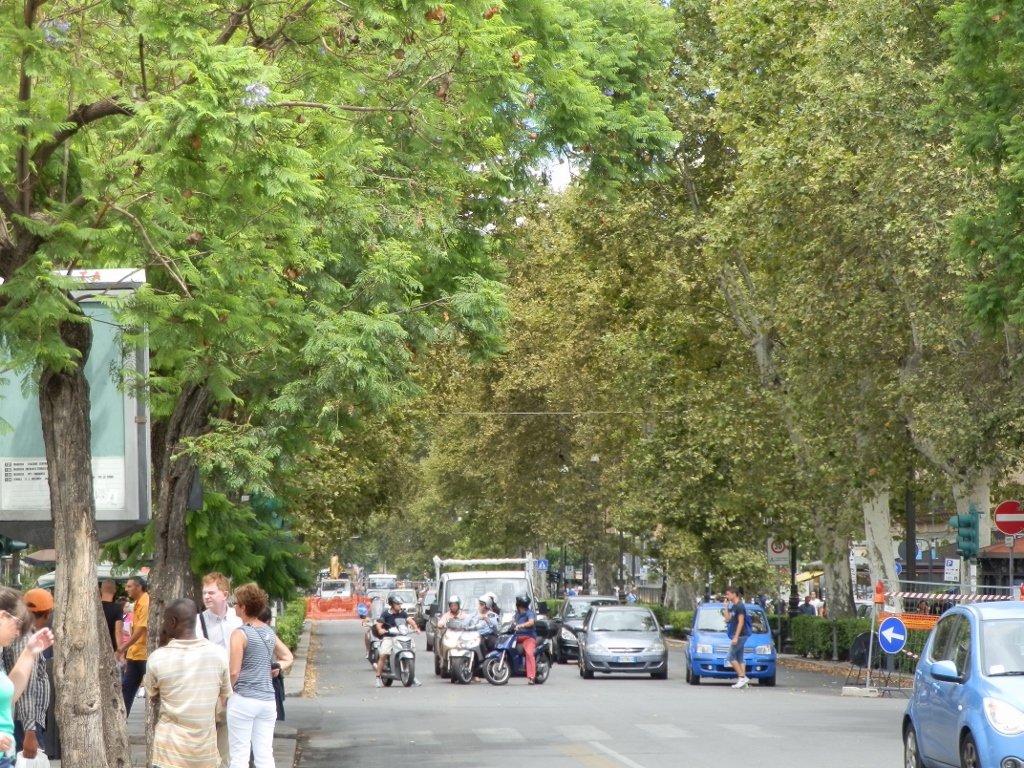
From here we slowly started heading back towards the historic centre of Palermo, but I also took a photo of a wide avenue lined with tall trees, just to show that not only palm trees grow here.
 Palermo, a detail
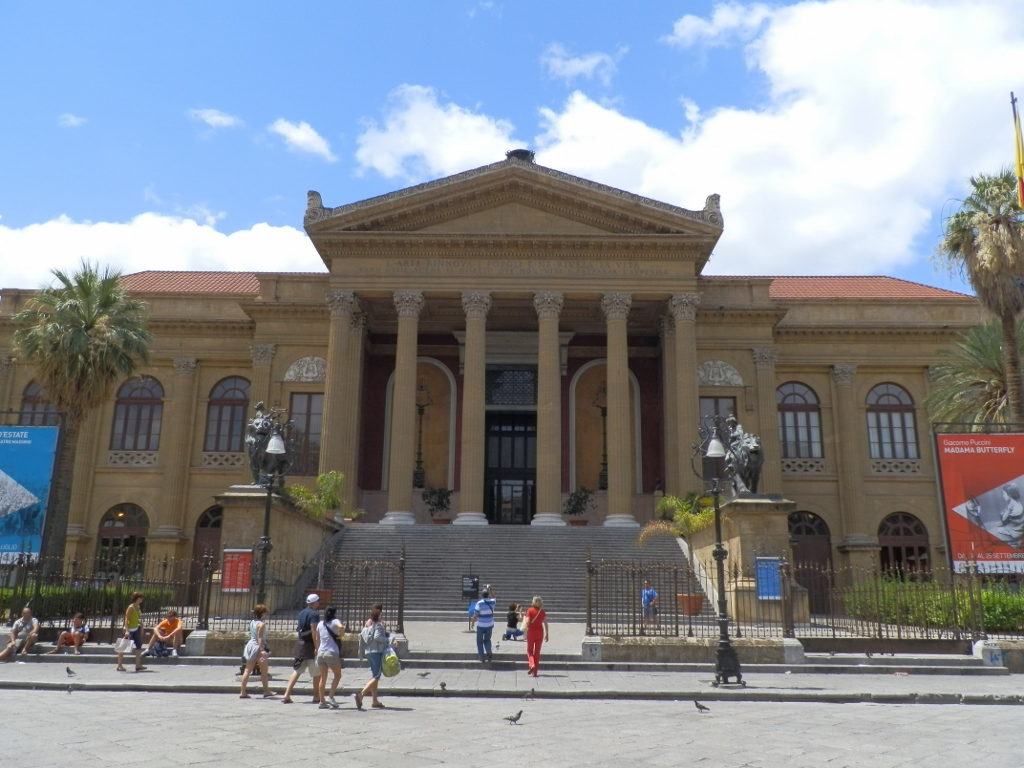
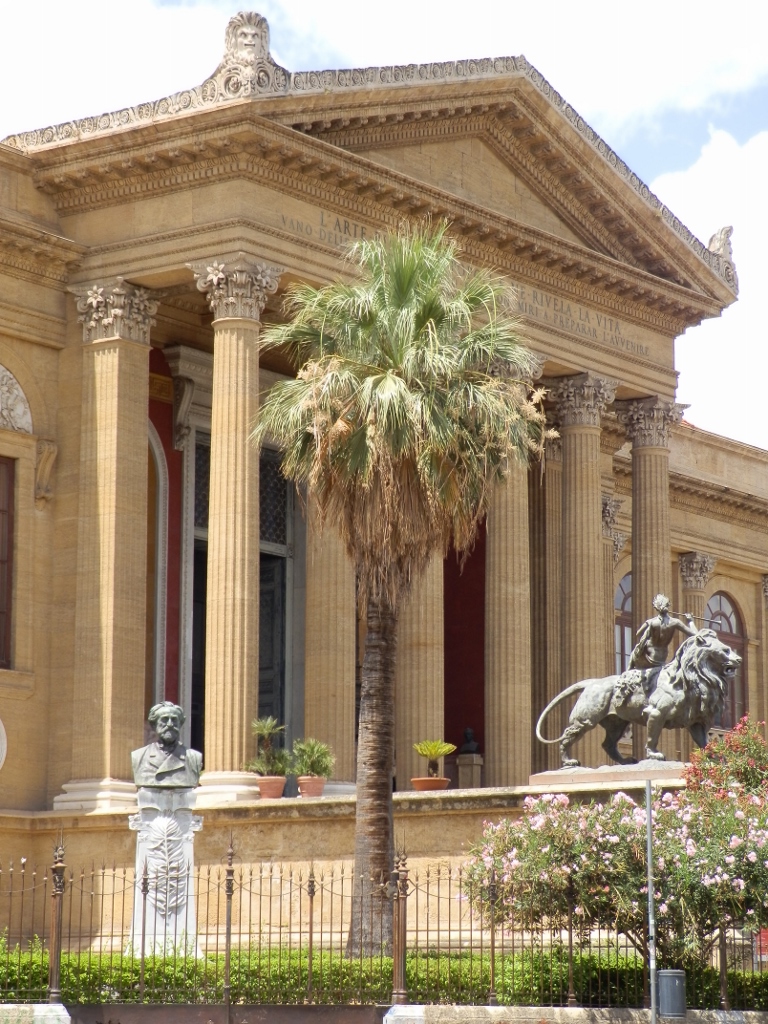
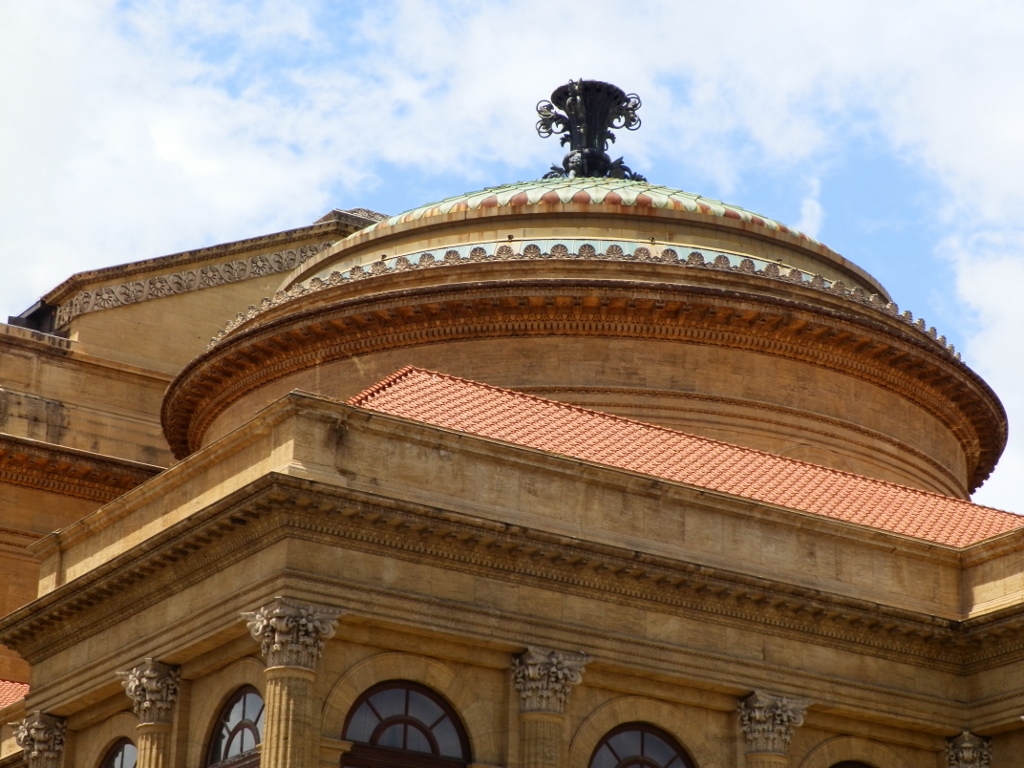
Soon we came to the Teatro Massimo in Palermo, which was built in the neoclassical style, with construction beginning in 1875.
 Palermo, a detail
While the Politeama Garibaldi Theatre was, from its very conception and name, intended for various types of art (“politeama” meaning “theatre for many arts”), the Teatro Massimo, or Great Theatre, is the largest opera house in Italy and the third largest in all of Europe, after the Opéra Garnier in Paris and the Vienna State Opera. That said, in addition to opera, ballets, concerts and other musical events are also held here, as the theatre is known for its exceptional acoustics. The theatre opened in 1897 and although it was closed for as long as 23 years during the 20th century due to major restorations and technical issues, it reopened to the public in 1997.
Interestingly, the Teatro Massimo in Palermo gained “worldwide fame” thanks to its appearance in the film “The Godfather Part III.” One famous scene from the film was shot on the steps of this building.
 Palermo, a detail
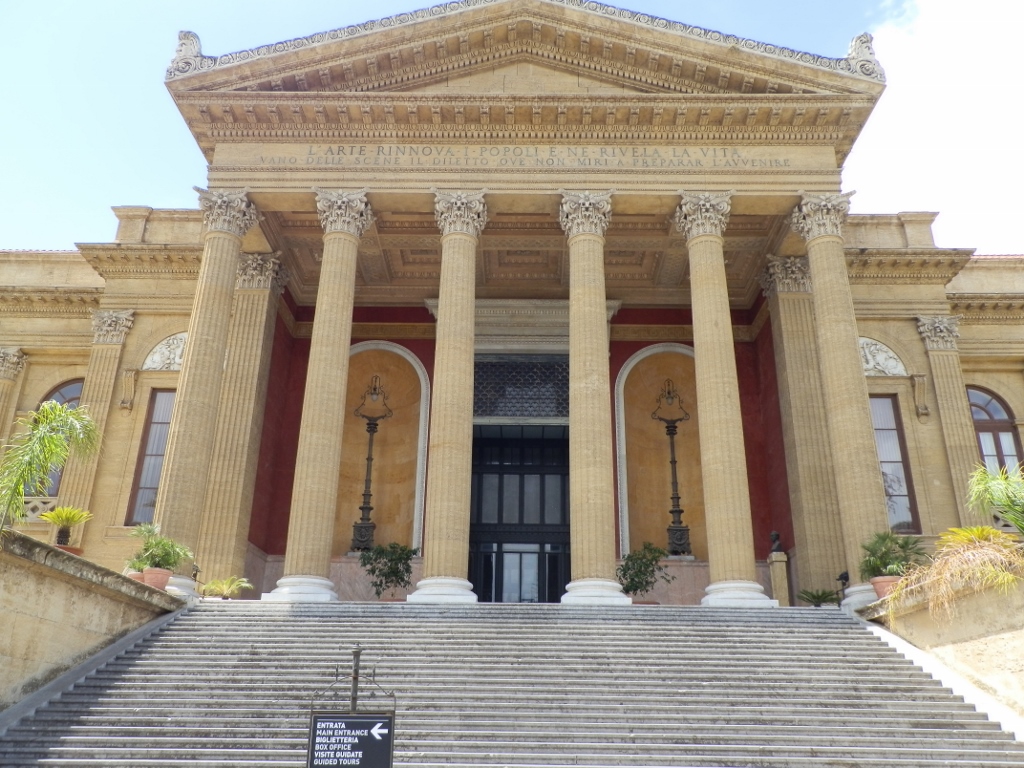
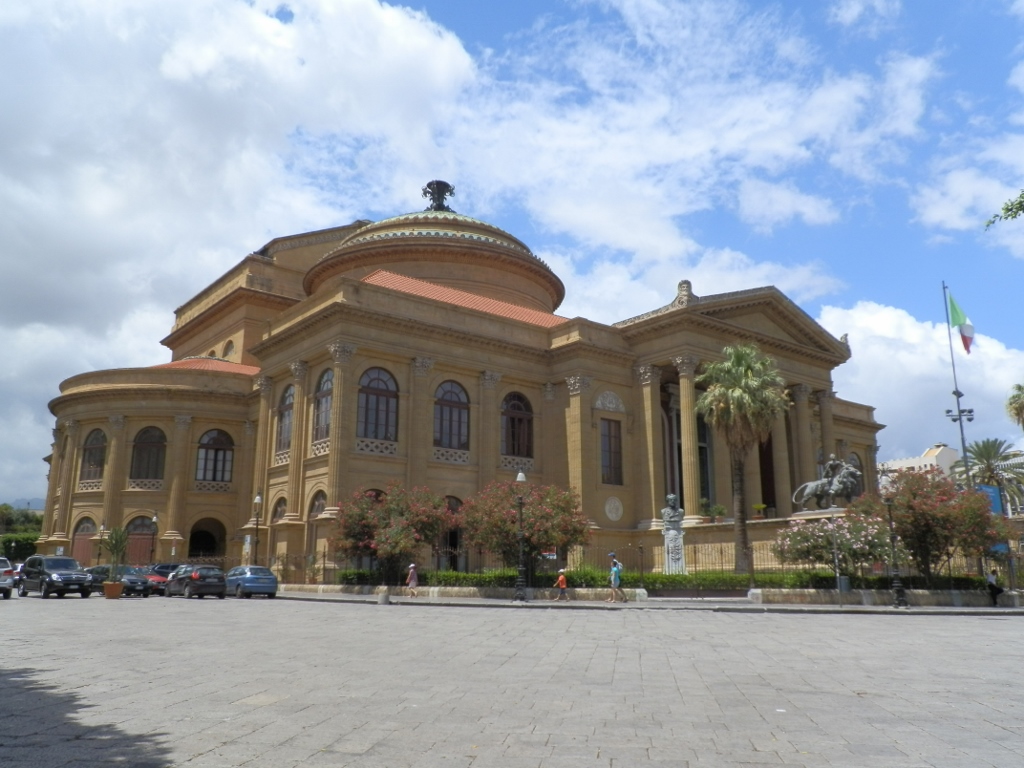
At the time of my visit, there were no dramatic events, real or fictional, so I simply strolled casually around the theatre building and photographed some beautiful details.
 Palermo, a detail
 Palermo, a detail
 Palermo, a detail
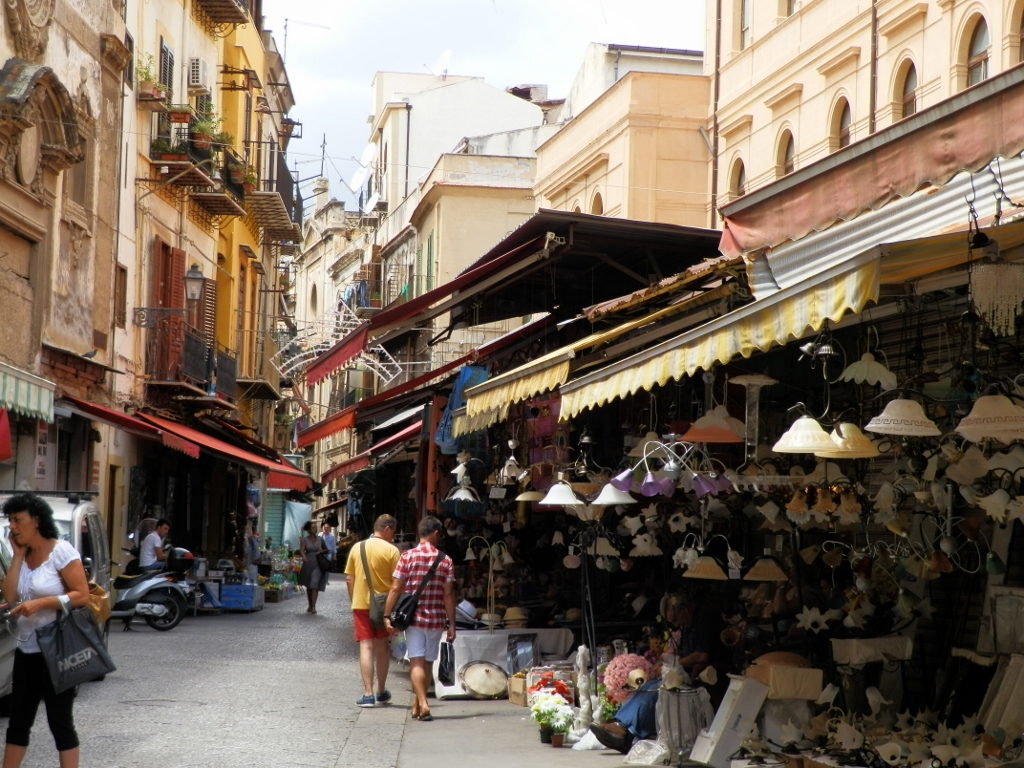
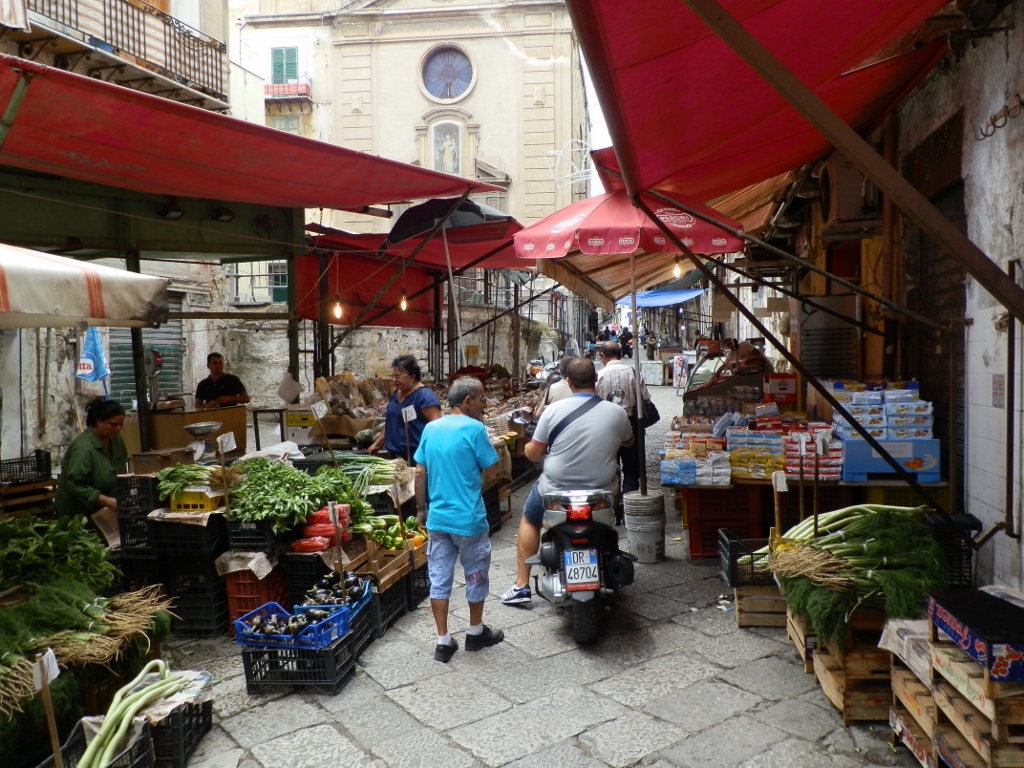
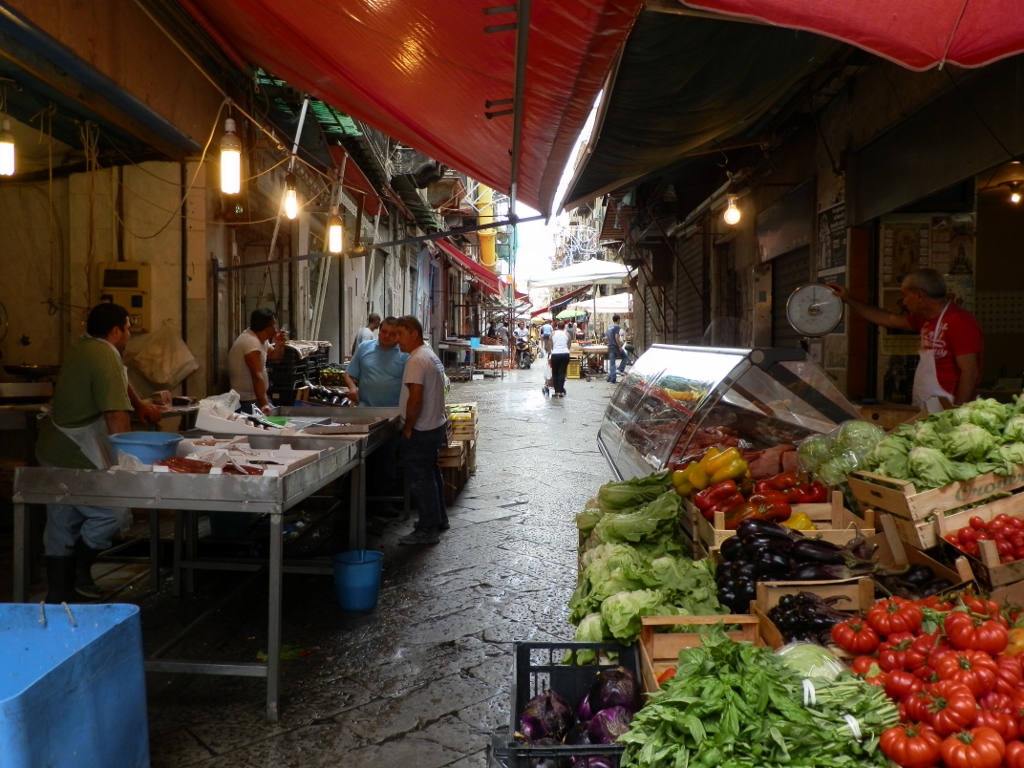
Continuing our walk towards the historic centre, we once again came across a market, so we passed through it. As before, the scenes there were picturesque and interesting.
 Palermo, a detail
 Palermo, a detail
 Palermo, a detail
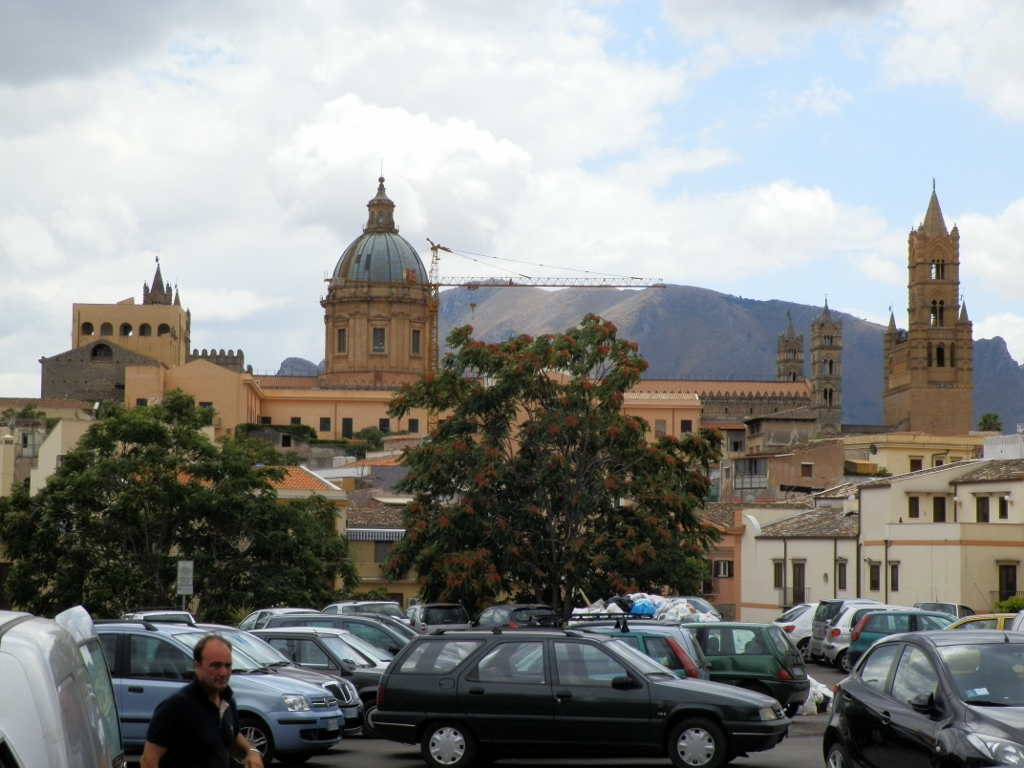
Along the way, not far off, we also saw the Palermo Cathedral, which was our next destination.
 Palermo, a detail
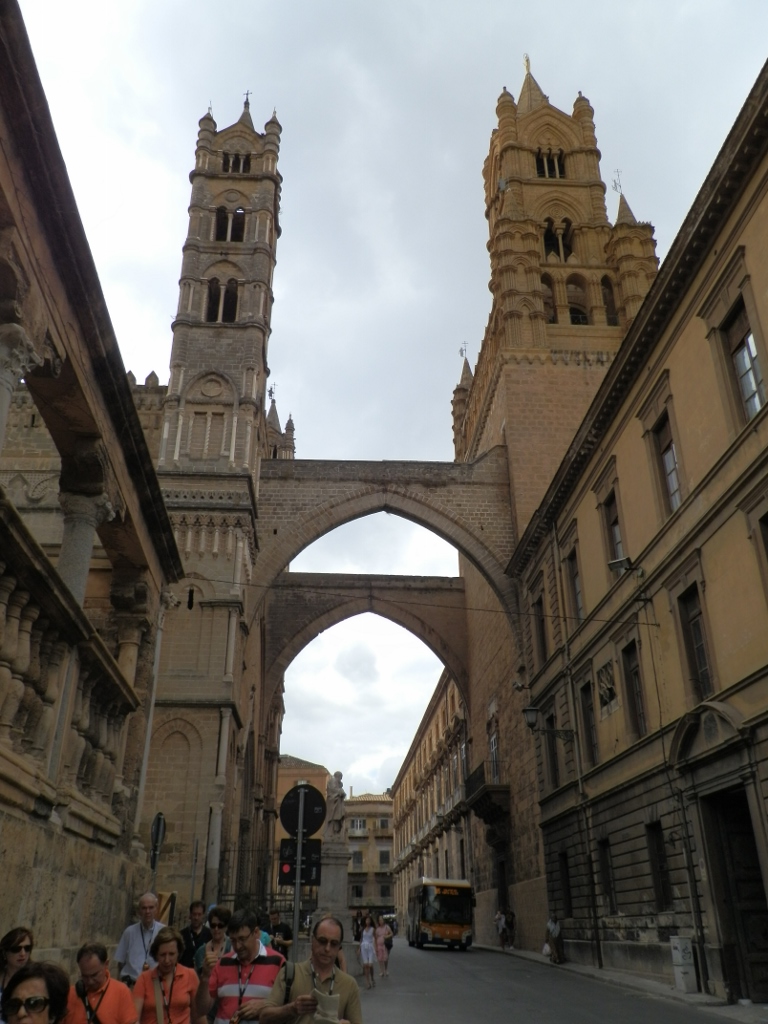
That’s how we arrived at the cathedral, but from the back, where we passed along a street above which there are two arches. These are essentially pedestrian bridges connecting the cathedral and the Archbishop’s Palace. Of course, these passages were not meant for tourists; they served as private routes between the cathedral and the archbishop’s residence, allowing church dignitaries to move from one building to the other without stepping onto the street.
 Palermo, a detail
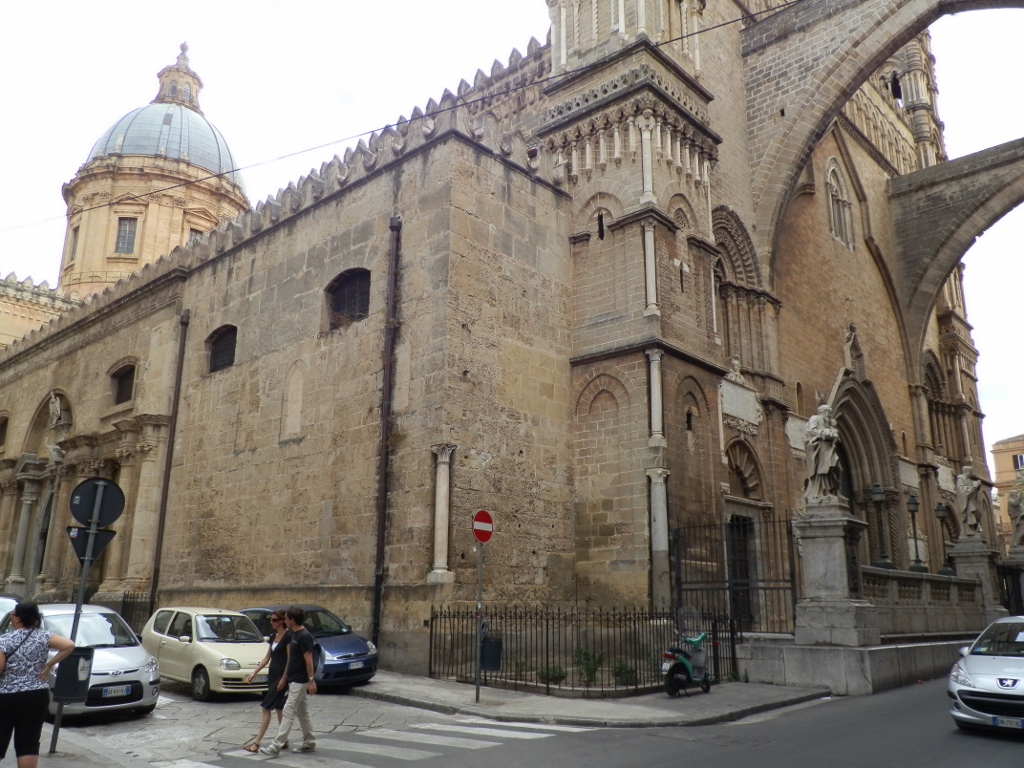
When one continues further along this street, the frontal entrance of the cathedral can be seen, though it was not in use when I was there.
 Palermo, a detail
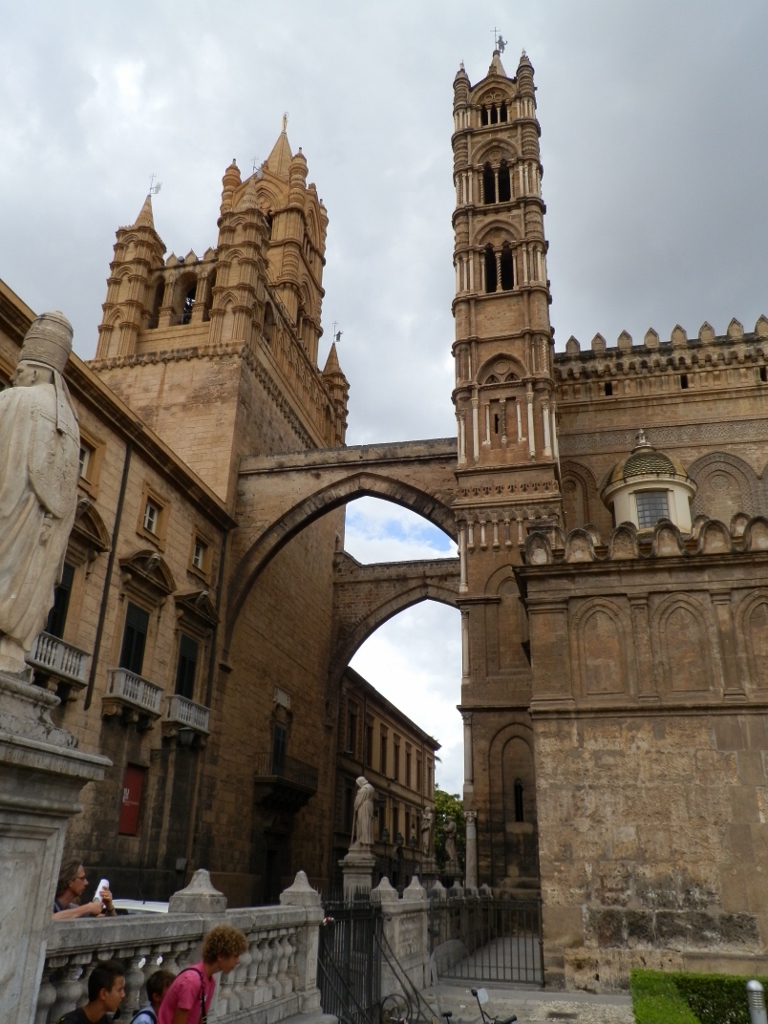 Palermo, a detail
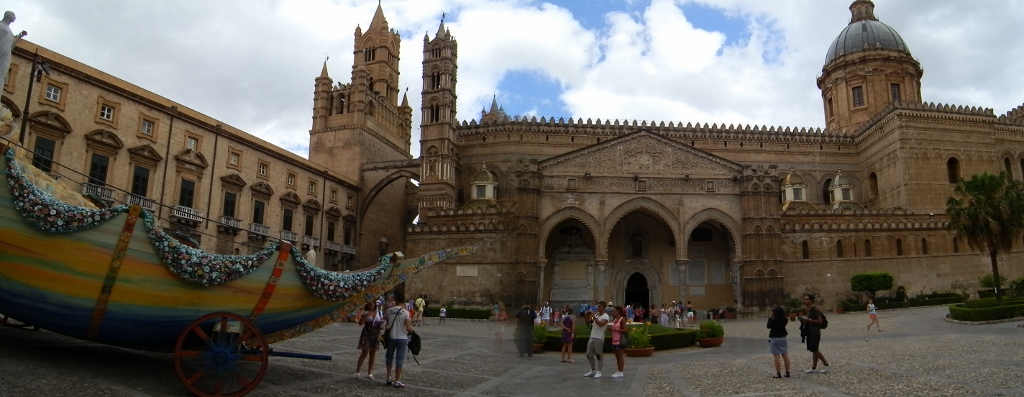
But once you enter the cathedral courtyard, the extremely impressive main entrance becomes visible.
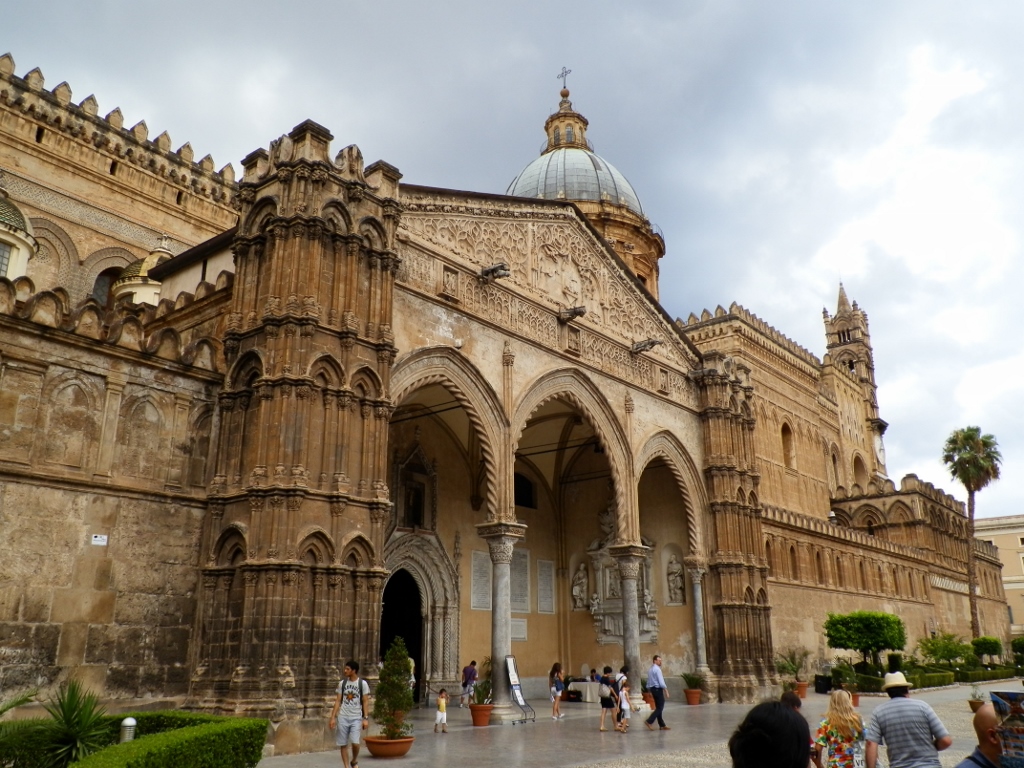 Palermo, a detail
The Palermo Cathedral is part of the group of sites known as Arab-Norman Palermo and the Cathedral Churches of Cefalù and Monreale. In Palermo itself, this designation includes, besides the cathedral, two palaces, three churches and one bridge. In 2012, I wasn’t particularly focused on seeking out UNESCO World Heritage sites, so I didn’t make an effort to visit all of these buildings. Hmm?! Perhaps I should return to Palermo?
Until I decide whether I’ll go back to Sicily, it’s worth noting that these sites date from the period of the Norman Kingdom of Sicily (1130–1194), of which Palermo was the capital. Although the Kingdom of Sicily lasted until 1816, the Norman period ended in 1194 with a change of dynasty.
Before that, the Arabs ruled Sicily until 1091, when the island was taken over by the Normans, though at that time only as a county. The territory was officially declared a kingdom in 1130.
On the other hand, the Byzantines had “inherited” territories in southern Italy from the Romans and remained there until 1071, when the Normans finally conquered Bari (in Apulia, on the Adriatic coast).
The World Heritage designation applies only to buildings constructed during a specific period in the 12th century and these sites represent an outstanding example of socio-cultural syncretism between Western, Islamic and Byzantine cultures, as the influences of local peoples and religions remained strong even after the Norman conquest described above.
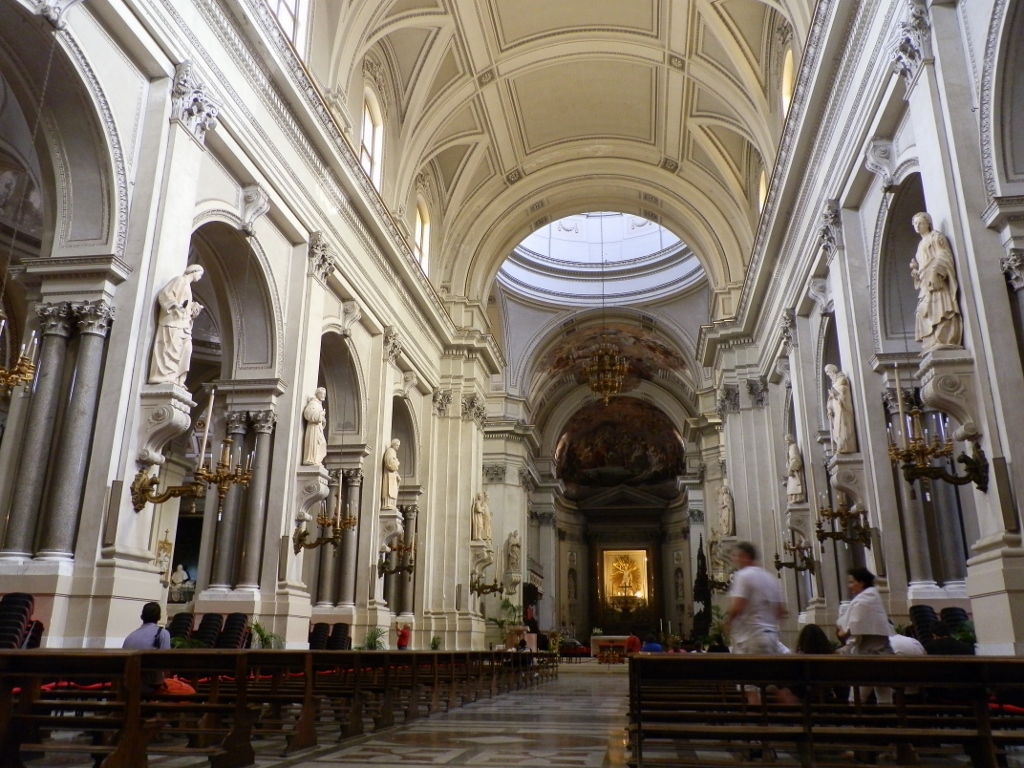
But, let me return the story of the Palermo Cathedral that is dedicated to the Dormition of Virgin Mary. The cathedral was built in 1185 on the site of an earlier church and a former mosque. Over the following centuries, the cathedral was repeatedly renovated and expanded, so today its architecture reflects a blend of different styles, yet the building is undeniably magnificent. On the southern side, there is a portico designed in the Gothic-Catalan style, while during the 18th century, the interior was redesigned according to neoclassical principles.
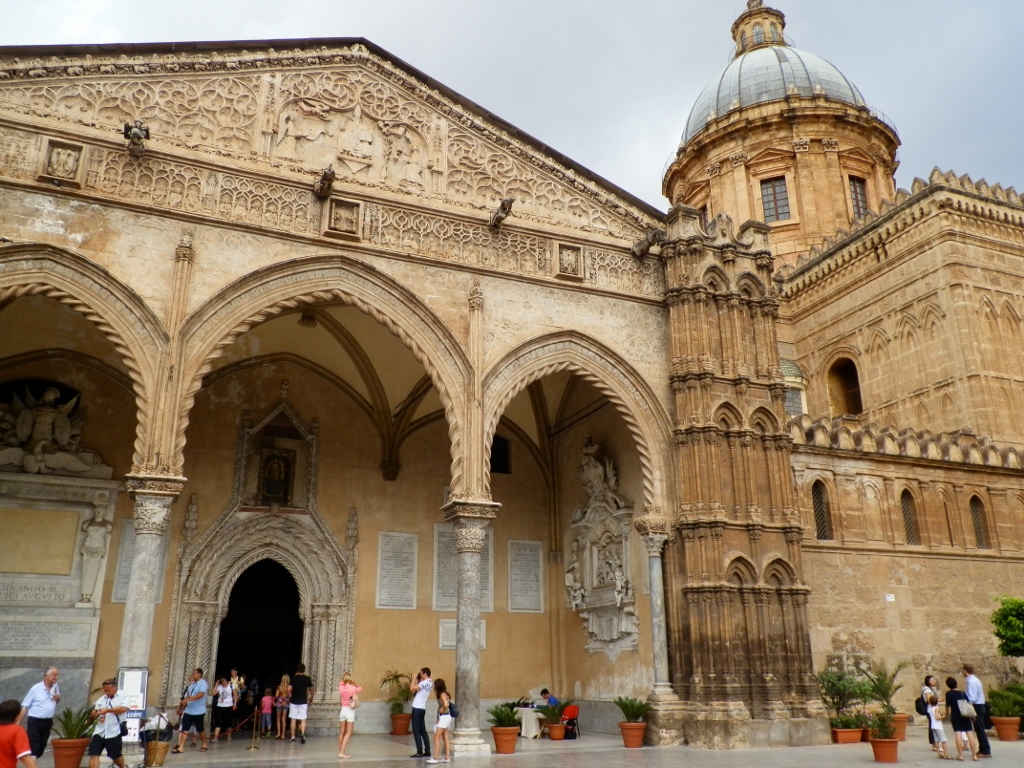 Palermo, a detail
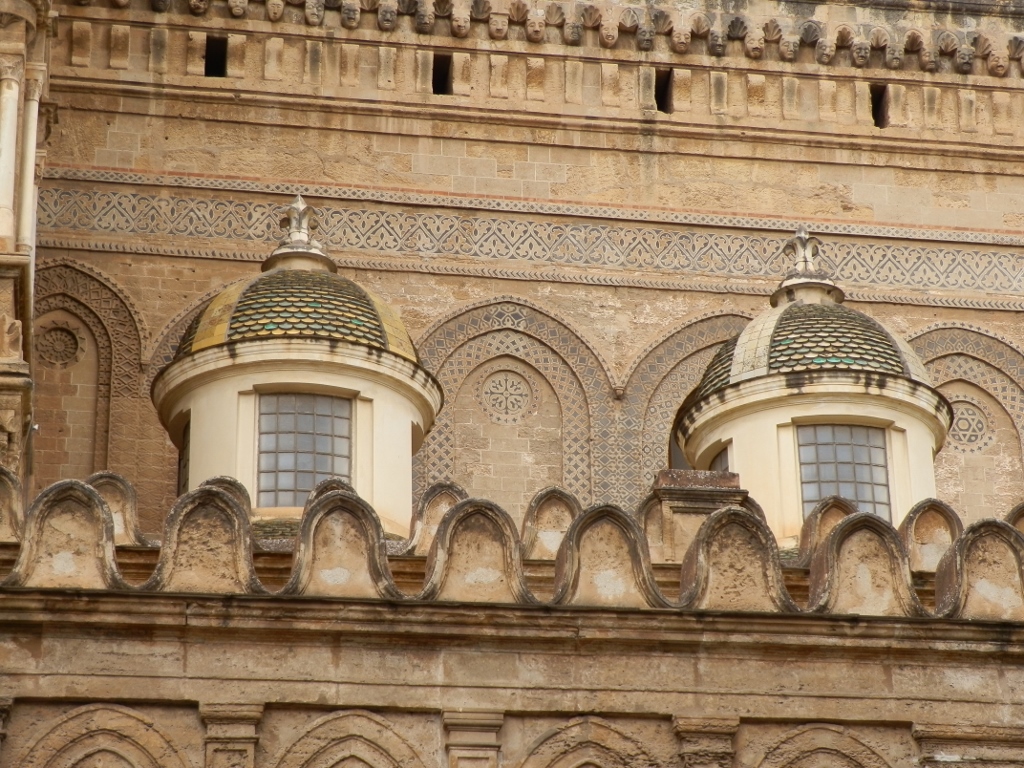 Palermo, a detail
 Palermo, a detail
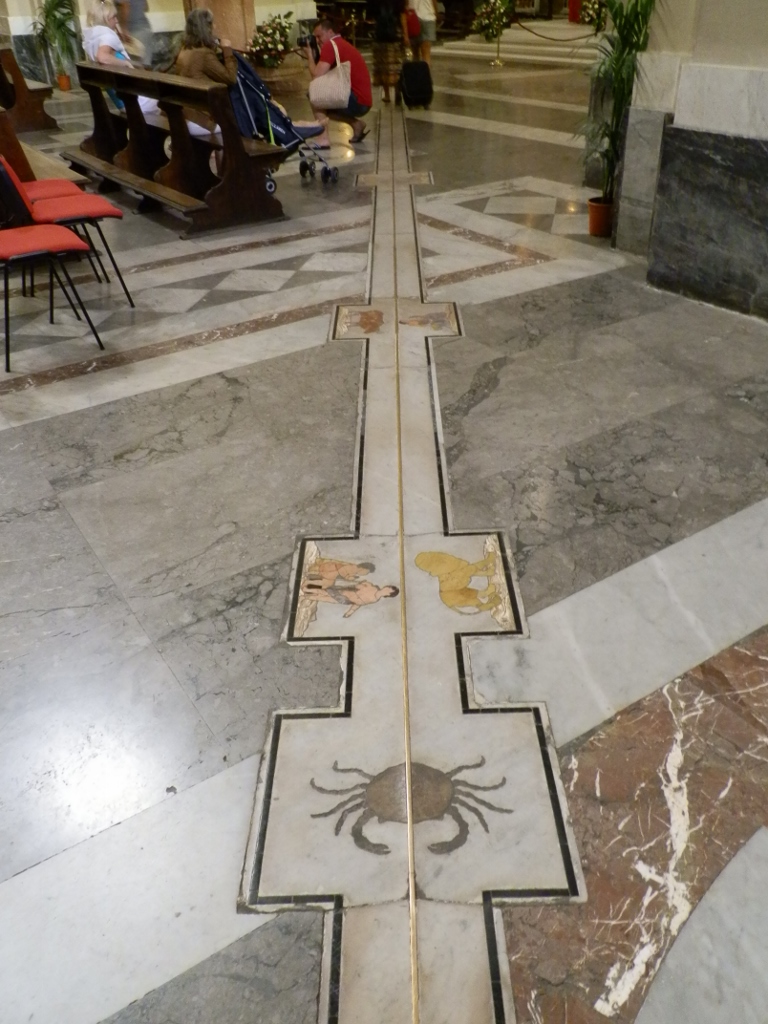
Although the interior houses a crypt with numerous sarcophagi, as well as the tombs of the Norman kings, and the Chapel of St. Rosalia, Palermo’s patron saint, where her relics are kept, I somehow focused on the meridian line I noticed on the cathedral floor.
 Palermo, a detail
The line was installed in 1801 and at noon a beam of sunlight enters through a small opening in the upper part of the cathedral, falling precisely on the line on the floor. The spot where the light falls changes throughout the year, following the Sun’s apparent movement.
Along the line, the signs of the Zodiac are marked, because during the year the Sun “passes through” those constellations. When the sunlight touches a particular sign, it indicates the period of the year in which the Sun is in that zodiacal constellation. In this way, it was possible to determine the time of year very precisely.
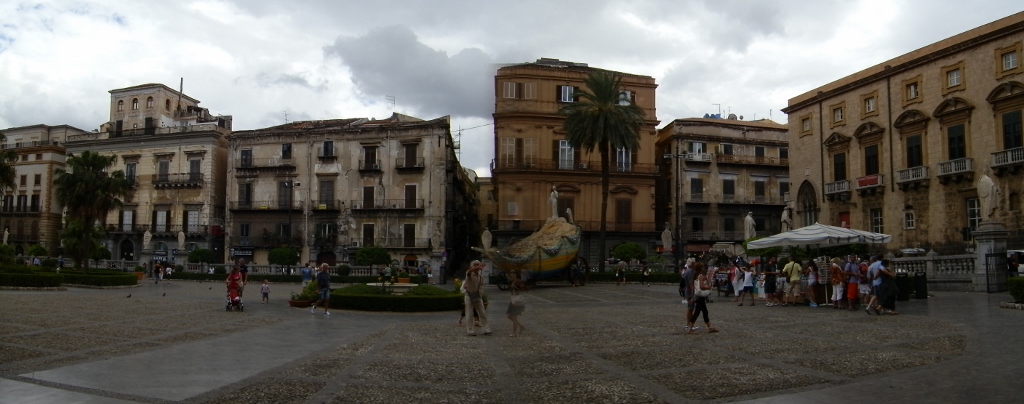
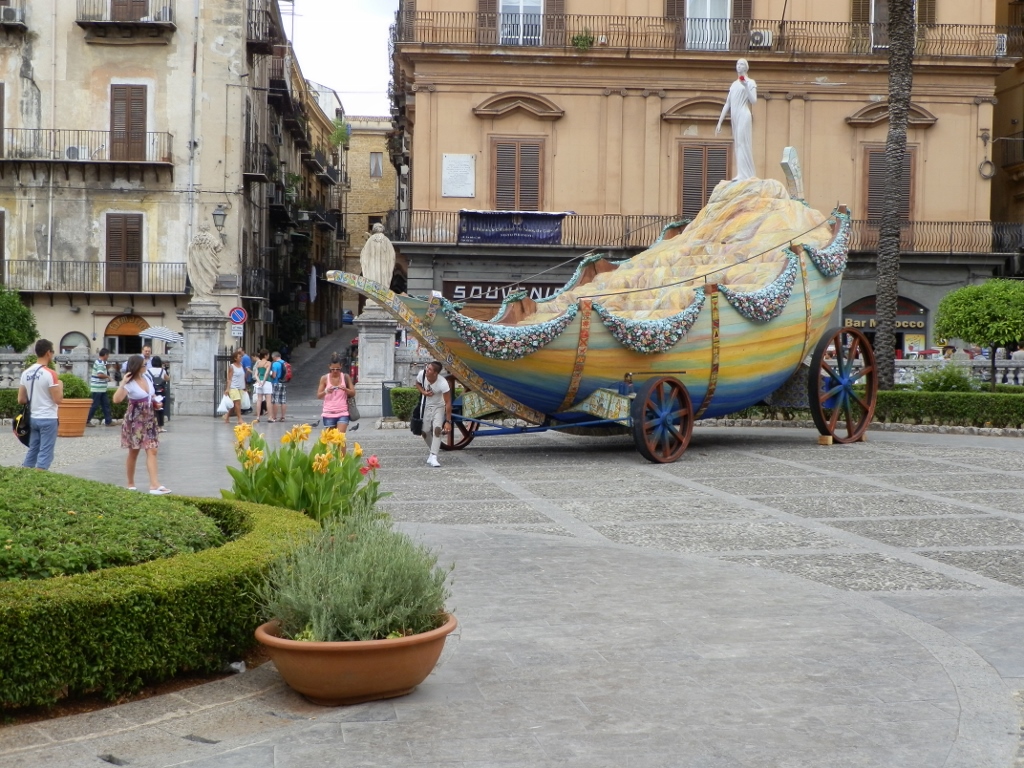
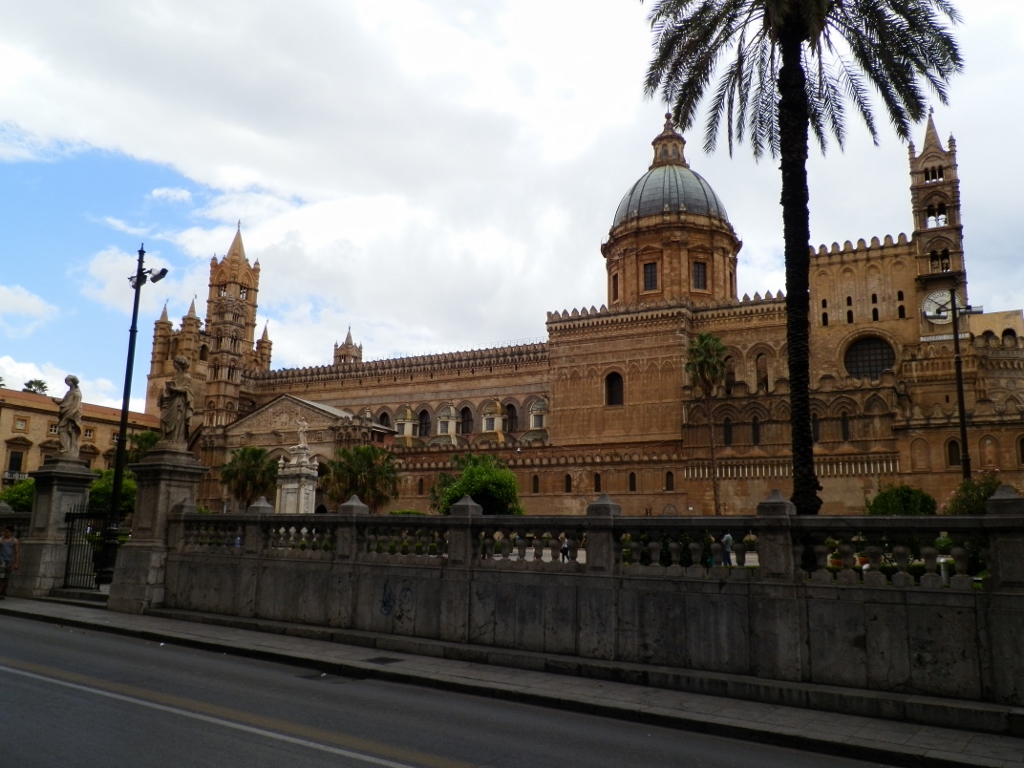
After visiting the cathedral, we stepped out onto the square in front, where I photographed both the square and the cathedral itself.
 Palermo, a detail
 Palermo, a detail
 Palermo, a detail
 Palermo, a detail
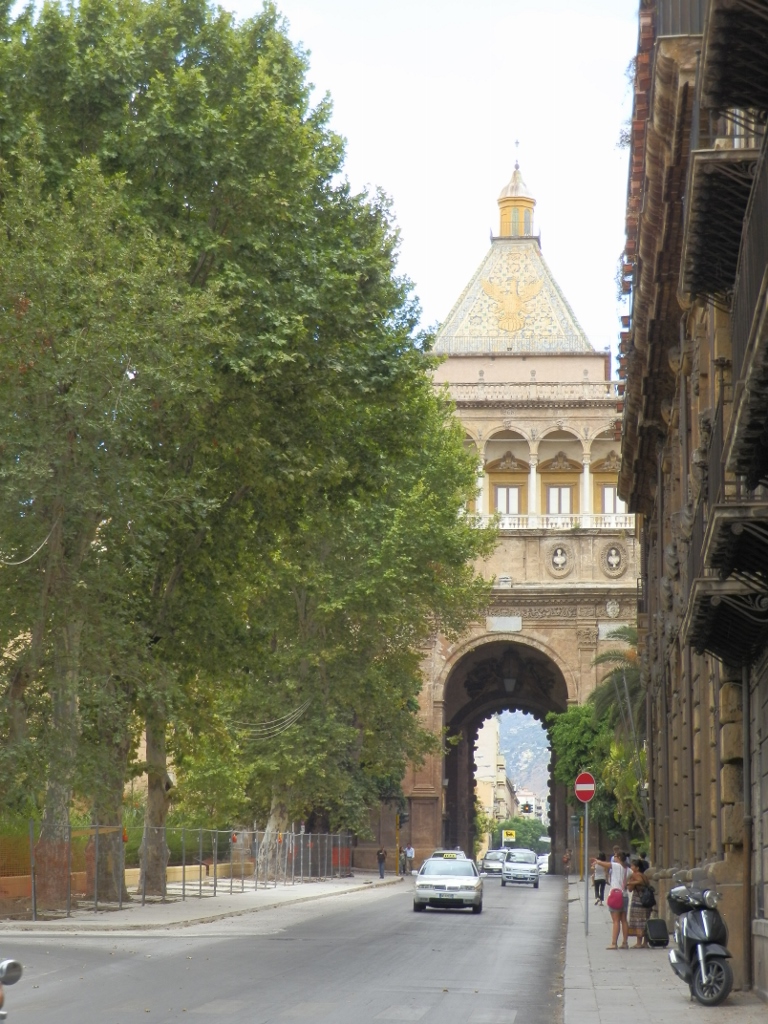
Afterwards, we took a slightly longer walk, but without visiting any notable buildings. At the end of the street we had started on, the New Gate, or Porta Nuova, came into view. This is a monumental city gate originally built in the 15th century, though it acquired its current appearance at the end of the 16th century.
 Palermo, a detail
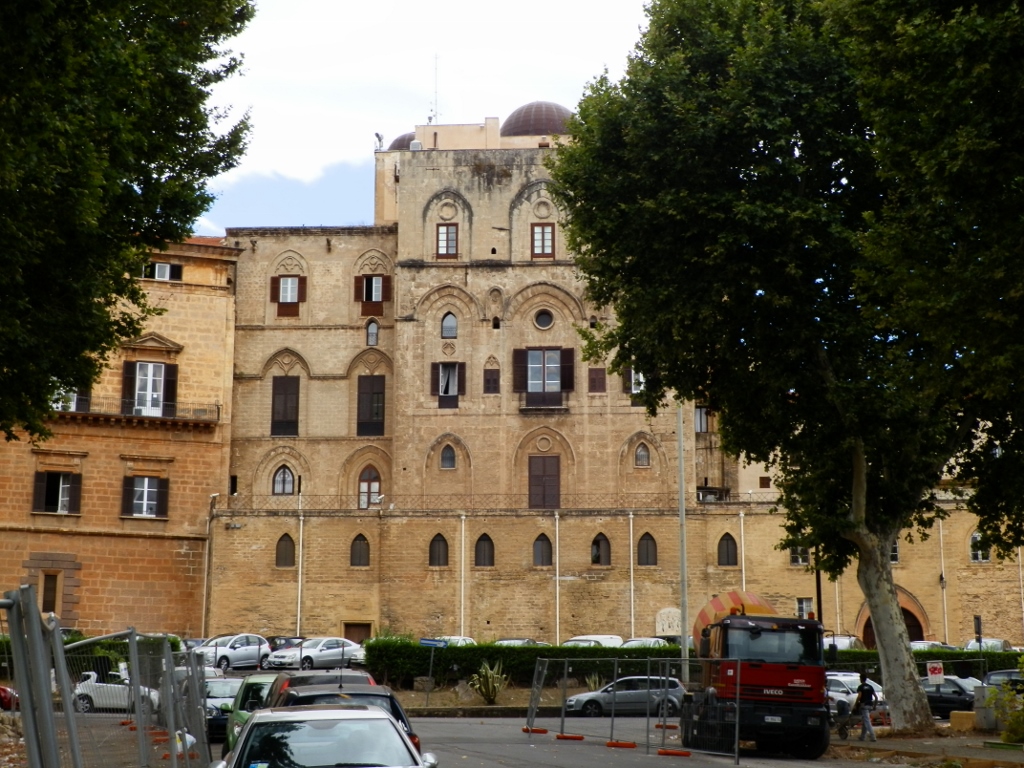
We then walked through a city park and from there I photographed, from a distance, parts of the Royal Palace, or Norman Palace, which was originally built in the 9th century as an Arab fortress, but in the 12th century the Norman rulers transformed it into a lavish royal palace. It is also the oldest royal residence in Europe.
 Palermo, a detail
Within the palace is the famous Palatine Chapel (Cappella Palatina), built in 1140. By the way, both the palace and the chapel are part of the group of cultural sites inscribed on the UNESCO World Heritage List. The chapel itself is a masterpiece of Arab-Norman art, featuring golden Byzantine mosaics, Islamic wooden ceilings and a Western basilica layout. I did not see it in 2012 and the more I think about it, the more I feel I really should return to Sicily.
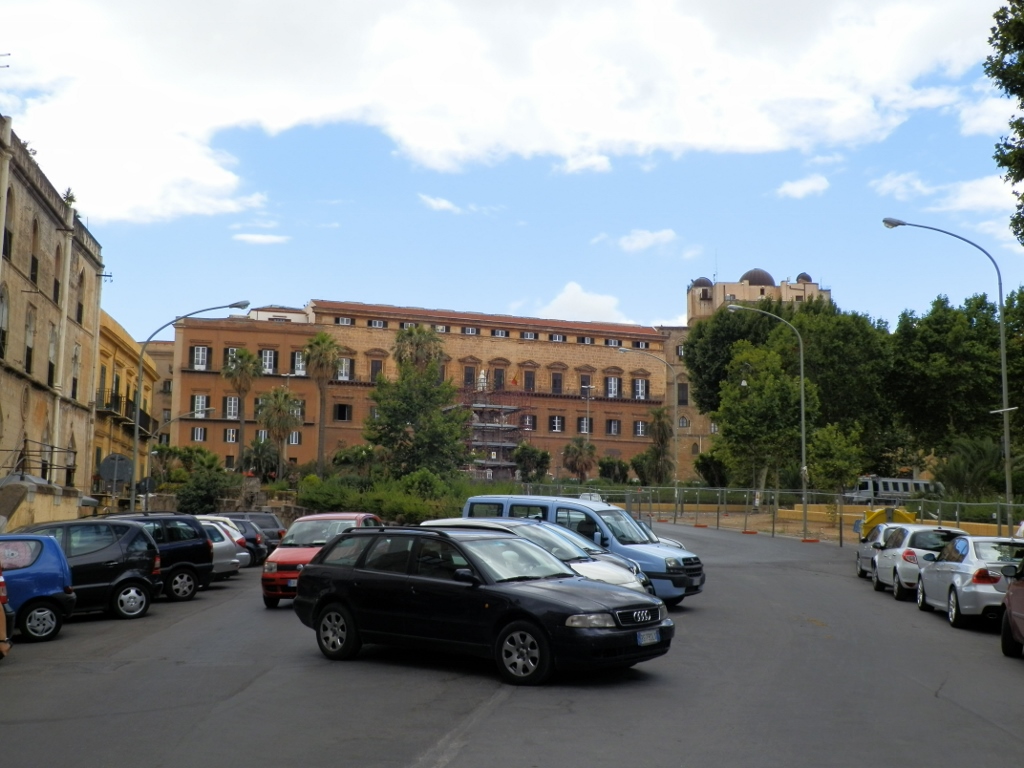 Palermo, a detail
Continuing our walk through Palermo, we passed by a building housing a gallery. I was drawn to its architecture and the attractive appearance of the inner courtyard, but even when the façades are not fully restored, very beautiful details can still be seen, clearly showing the richness of Palermo’s history and its wealthy inhabitants.
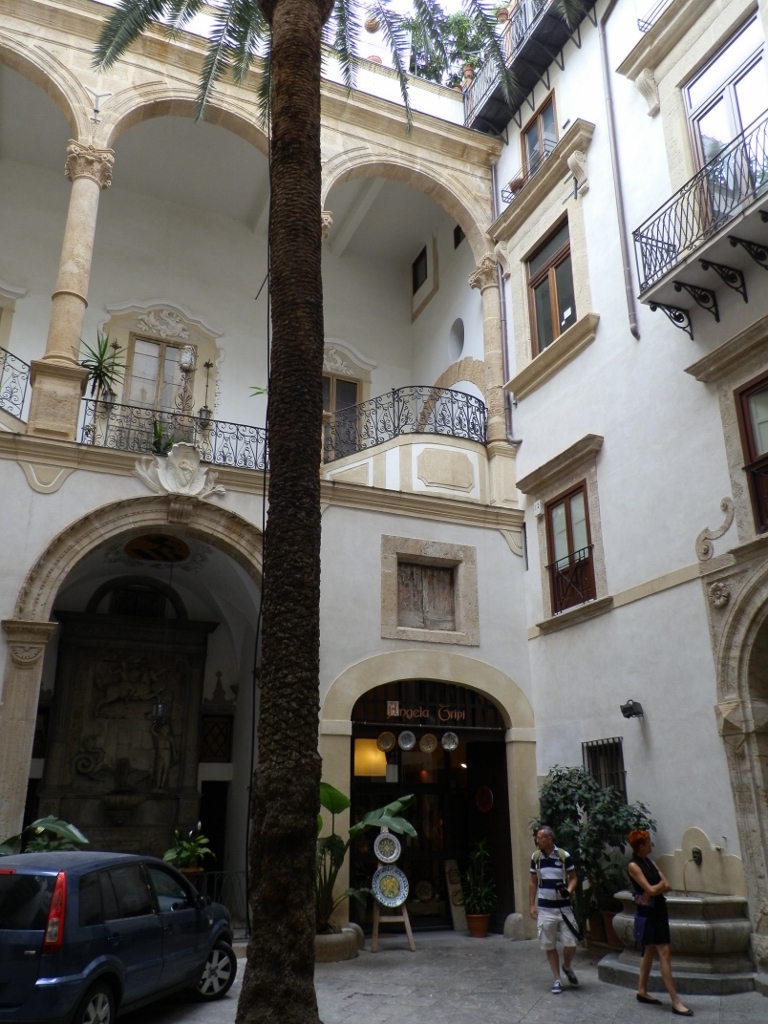 Palermo, a detail
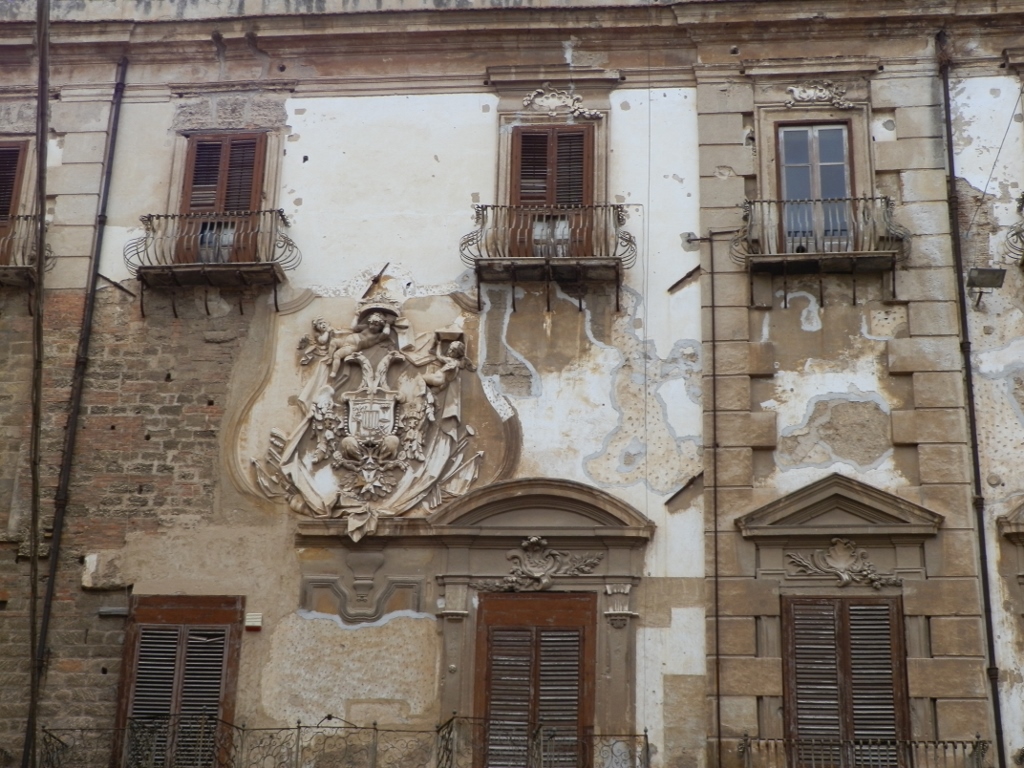 Palermo, a detail
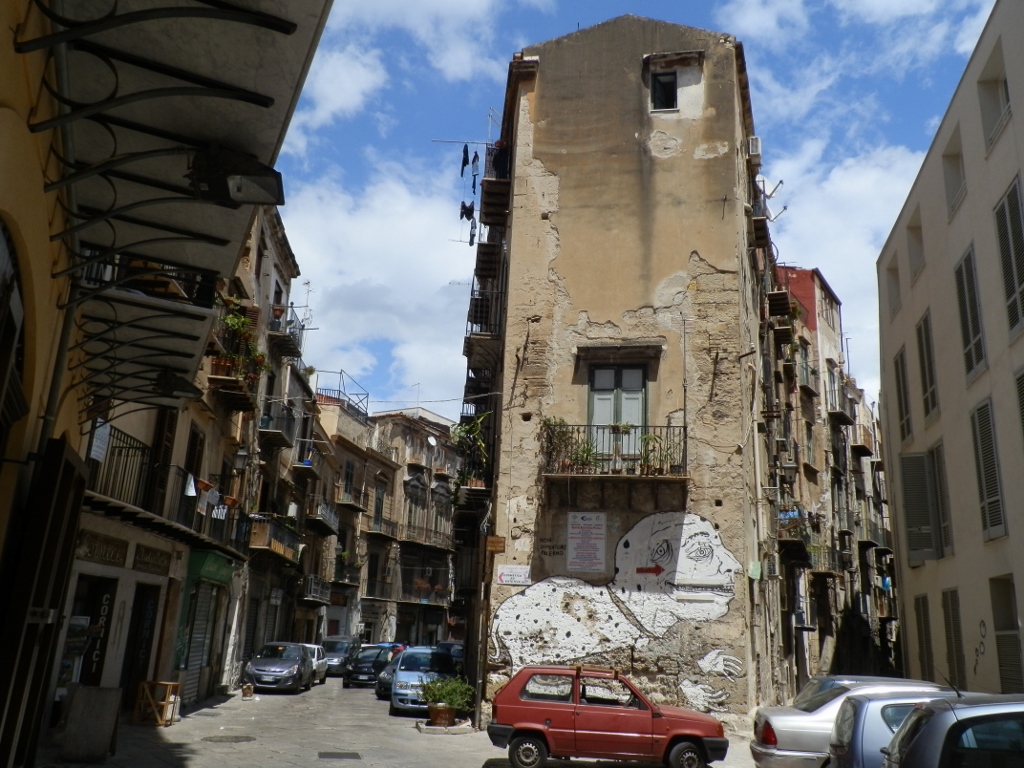
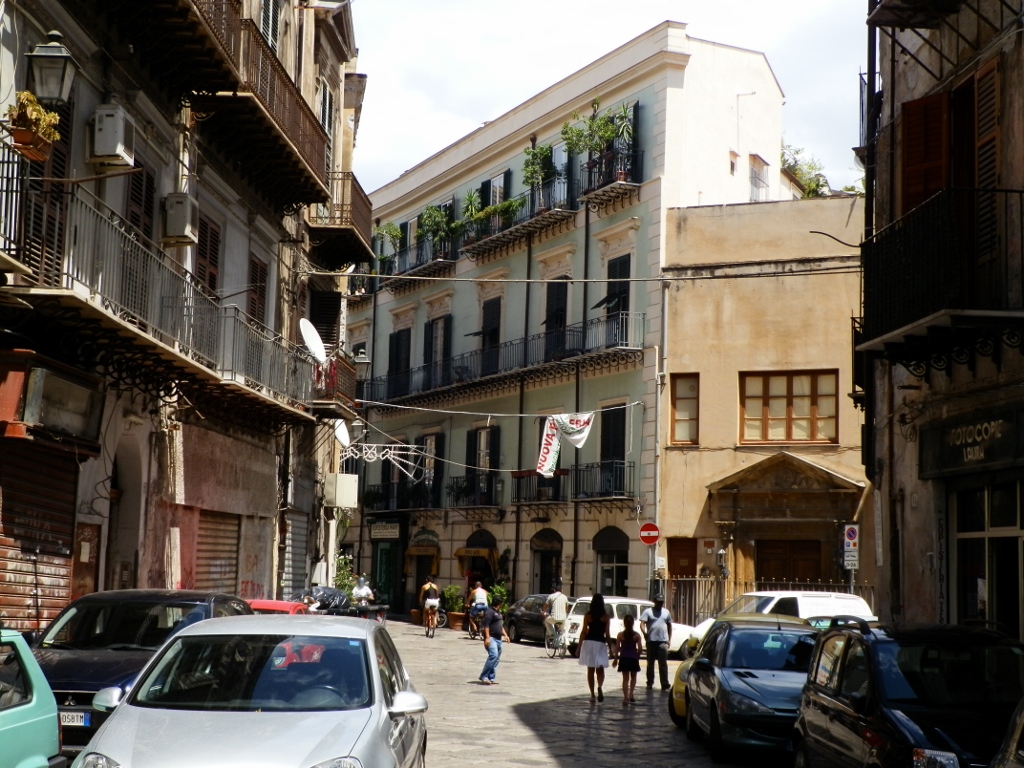
Palermo continues to be a very beautiful city today and I don’t mean only the “polished” and well-maintained buildings that once belonged to the wealthy. Ordinary streets and buildings have their own appeal, which isn’t necessarily tied to formal beauty. After all, a city isn’t made up only of grand, richly decorated buildings, that would make it a cold museum, but also of its people, with all their habits, customs, histories and the reasons behind their particular way of life.
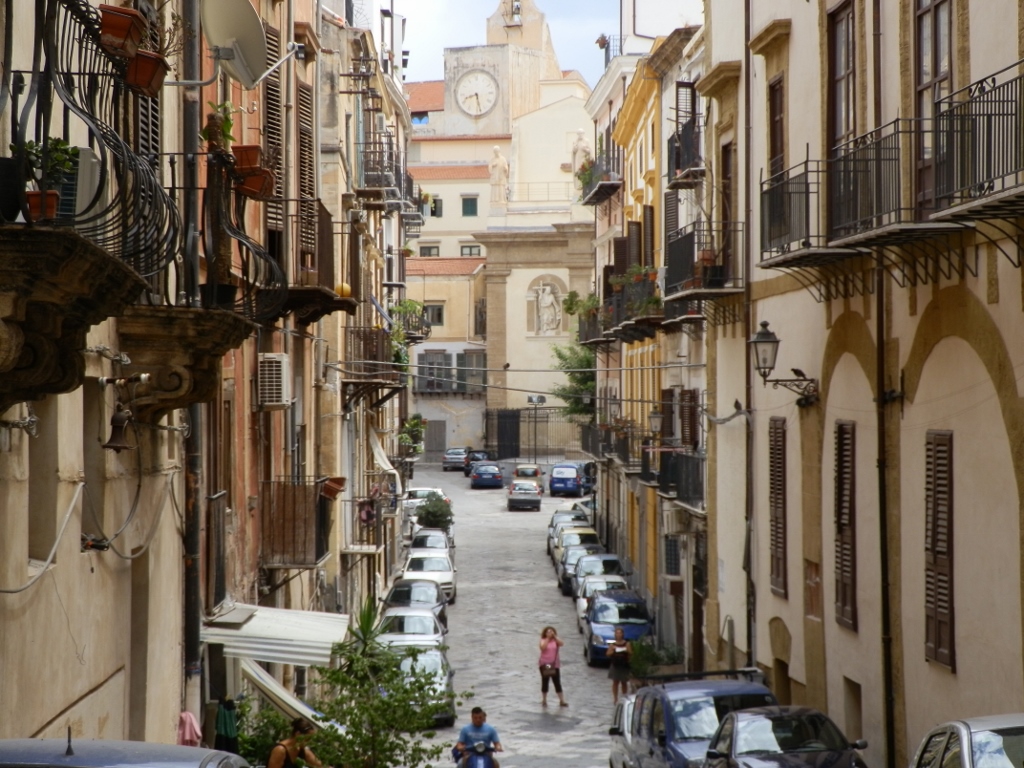 Palermo, a detail
 Palermo, a detail
 Palermo, a detail
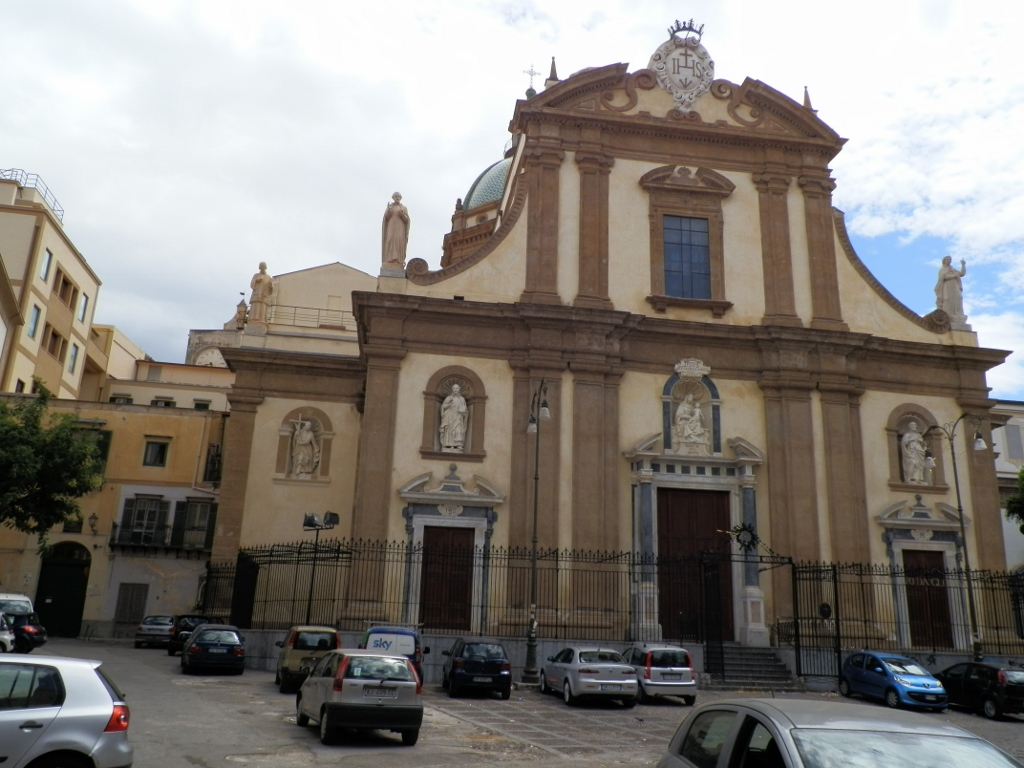
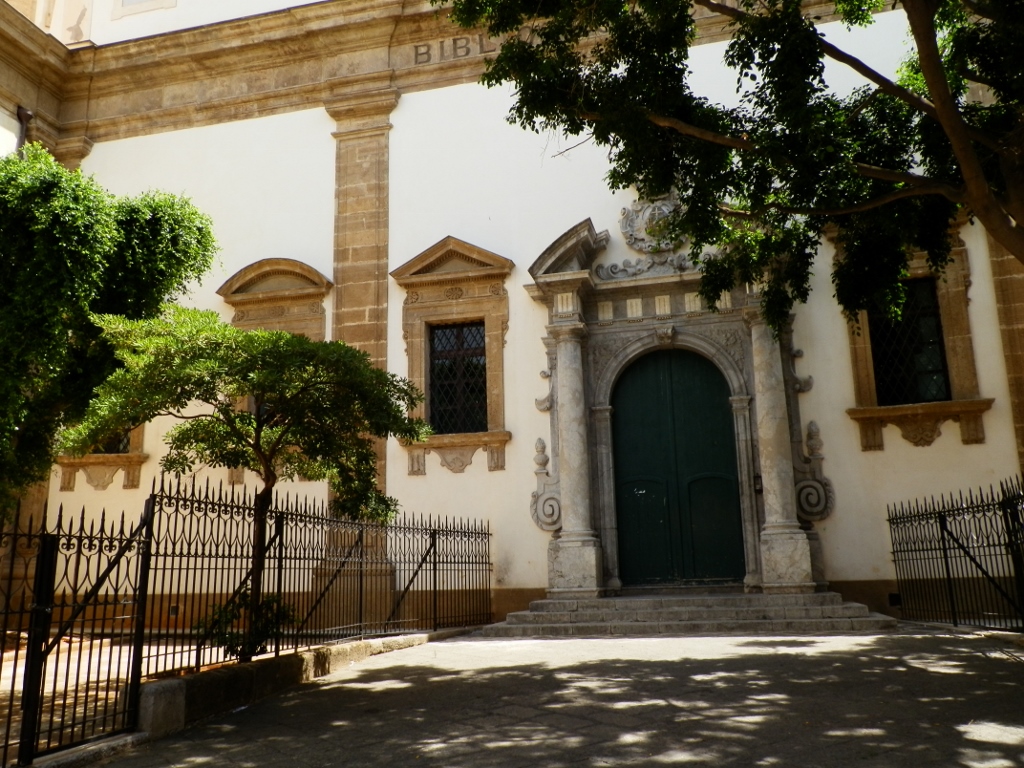
We then arrived at the Baroque Church of Jesus, built at the end of the 16th century for the Jesuit order. At that time, the Jesuits were a very powerful and influential order, but in 1773 they fell out of favour and the order was suppressed, only to be restored in 1814.
 Palermo, a detail
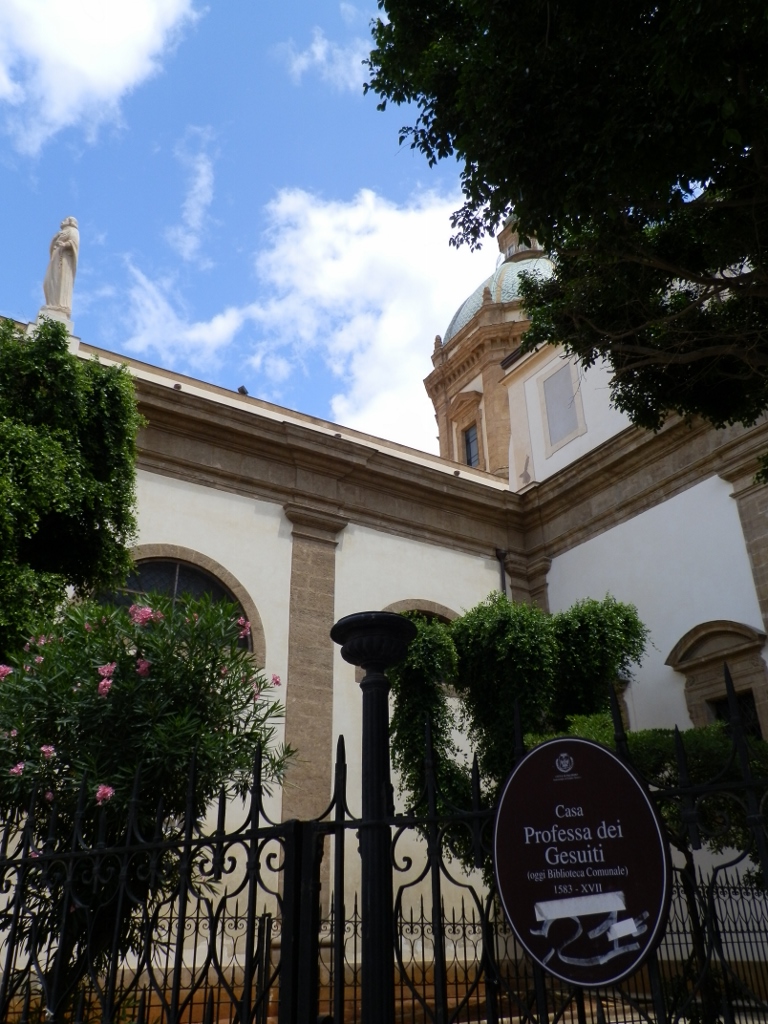
As one continues further, the side of the church and its dome come into view, while adjoining it is the Jesuit College Library.
 Palermo, a detail
The Jesuit order was considered one of the most educated within the Catholic Church and they placed great importance on education. Their students were often top-level intellectuals on a European scale. However, the Jesuits did not limit themselves to Europe; they also established schools and missions in the Americas, Asia and Africa.
 Palermo, a detail
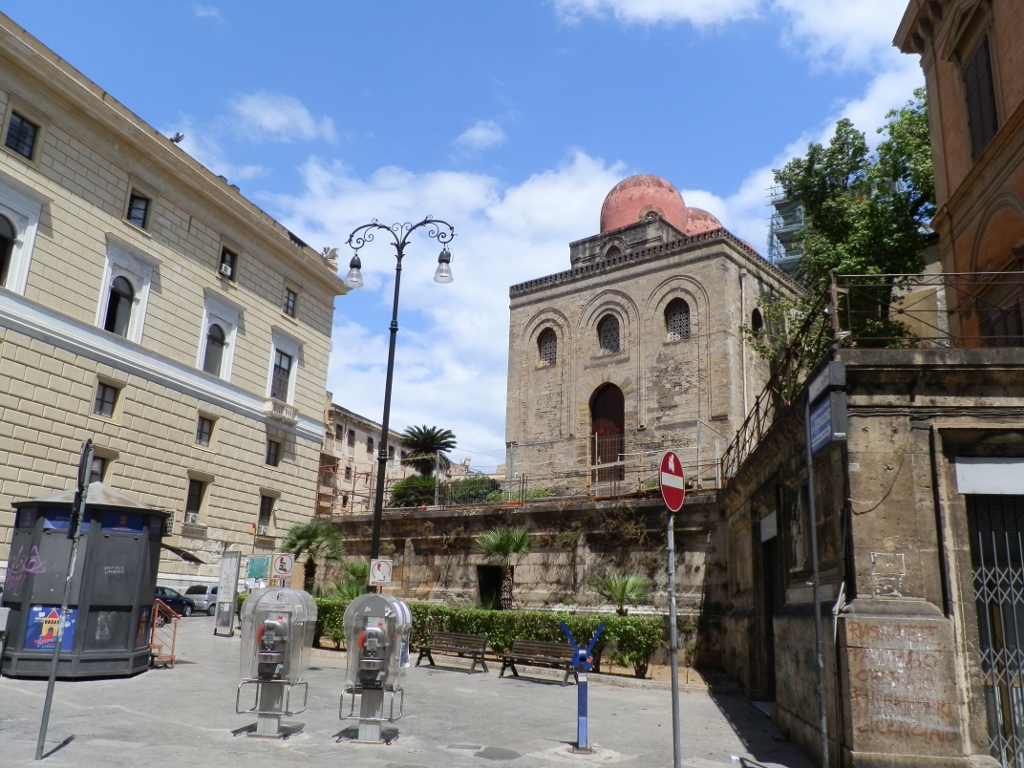
Just a few minutes’ walk further, we reached another building that is part of the Arab-Norman Palermo group of cultural sites: the Church of Saint Cataldo. By the way, Saint Cataldo was an Irish Christian priest and missionary from the 7th century who worked in Italy.
 Palermo, a detail
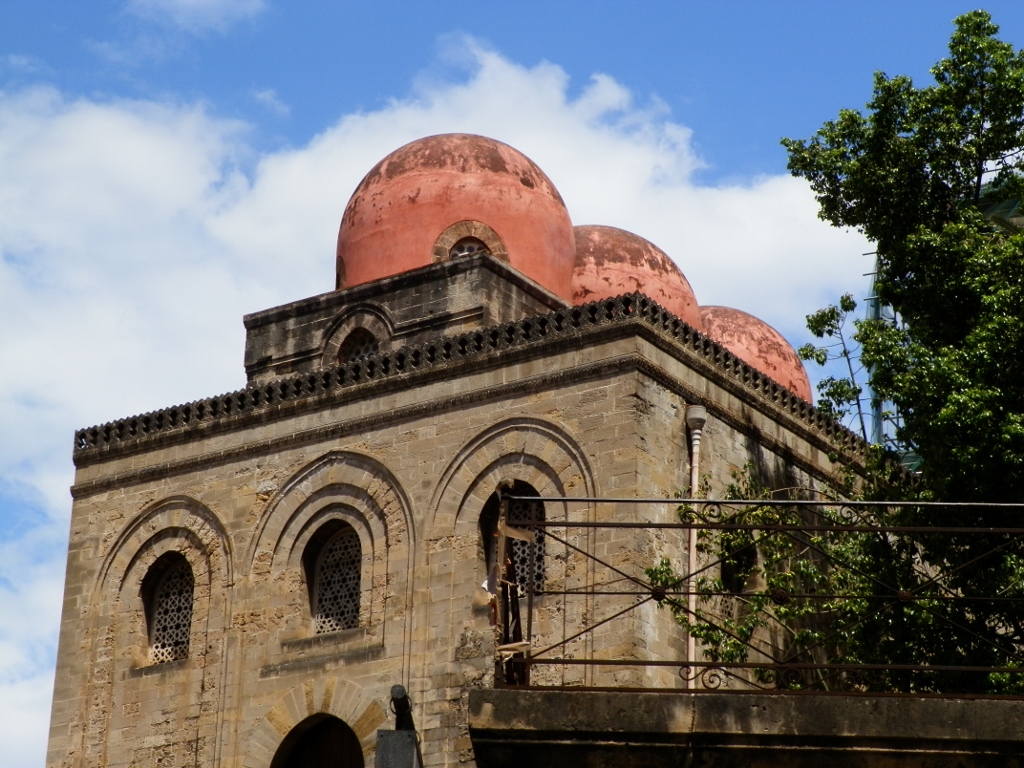
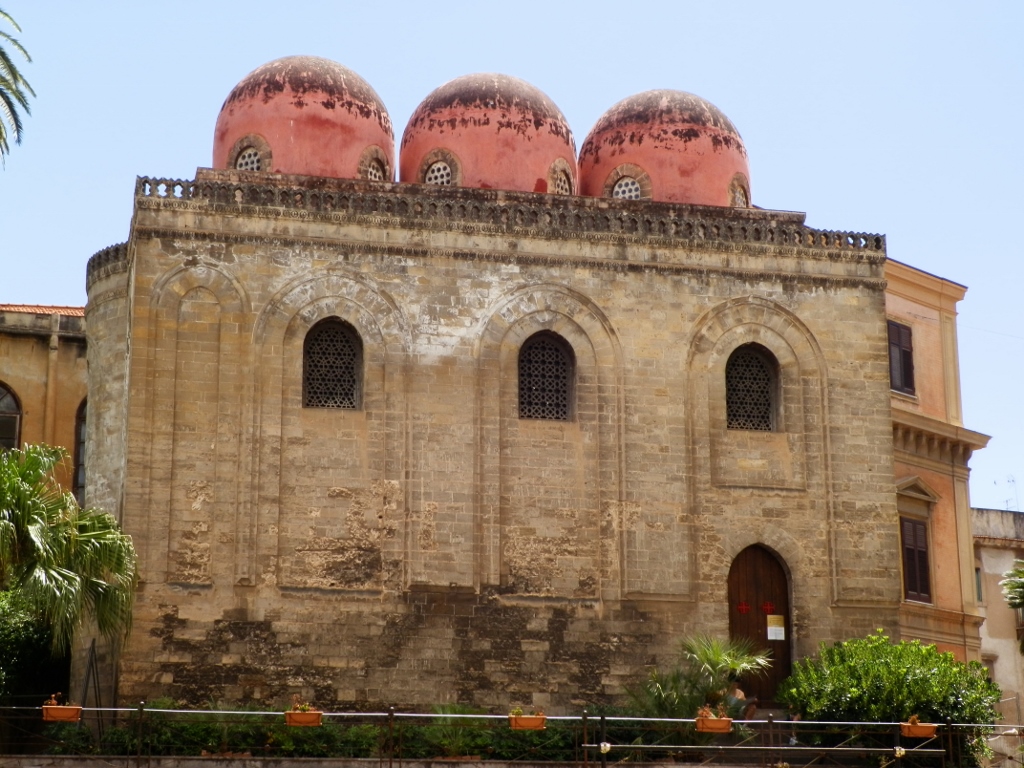
The Church of Saint Cataldo was built in the mid-12th century and is an outstanding example of Arab-Norman architecture, combining a Western basilica structure with characteristic Islamic red domes and decorative motifs.
 Palermo, a detail
 Palermo, a detail
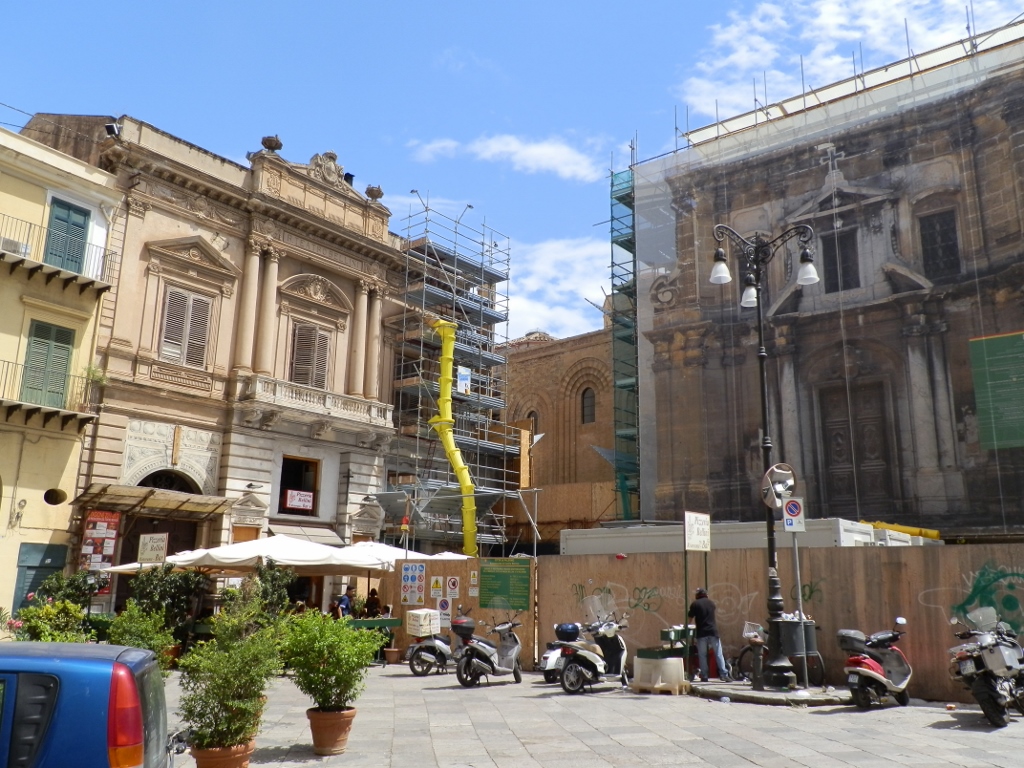
The interior is relatively simple, but some of the original elements can still be seen. Even so, this is yet another reason to return to Palermo, as is a visit to the neighbouring church, which is also on the World Heritage List and was undergoing restoration in 2012 during my visit. In the next photograph, it can be seen on the right-hand side.
 Palermo, a detail
This is the Church of St. Mary of the Admiral, the construction of which began in 1143. Its name comes from the fact that it was built for an admiral who was an important political and military advisor in the kingdom. The church is renowned for its rich Byzantine mosaics, especially in the apse, but it also contains numerous Western and Islamic elements, which is typical of the Arab-Norman style in Palermo.
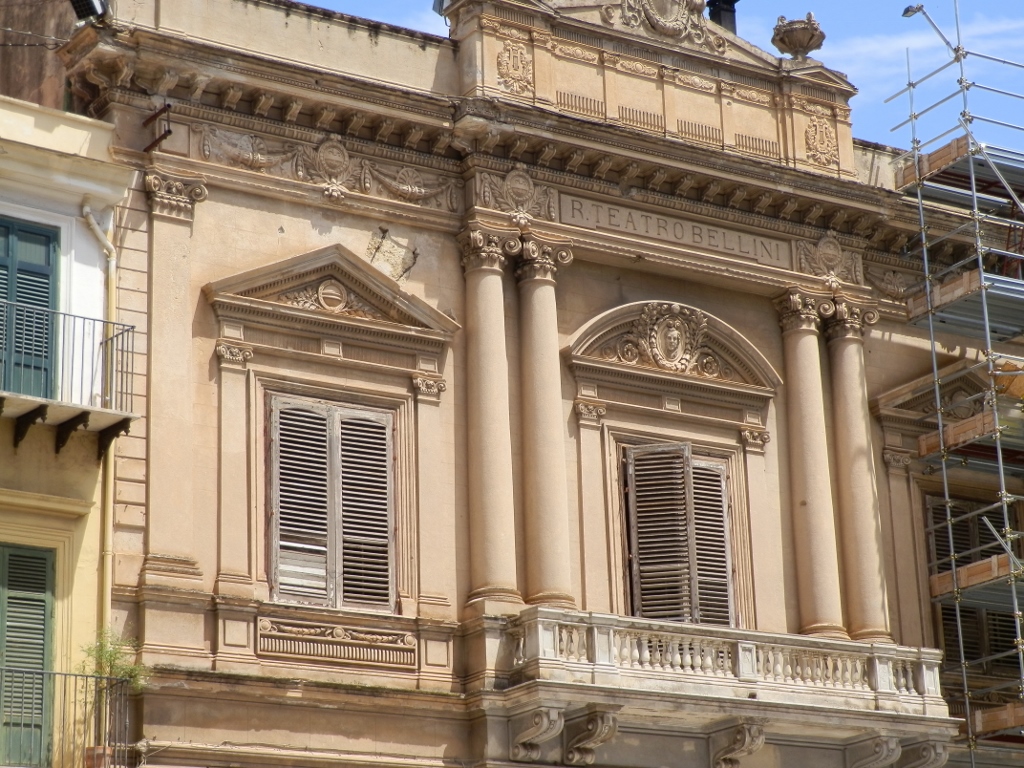
In the previous photograph, on the left-hand side, it is also possible to see the Bellini Theatre. The origins of this theatre date back to the 17th century, but it was reconstructed and modernised in the 19th century.
 Palermo, a detail
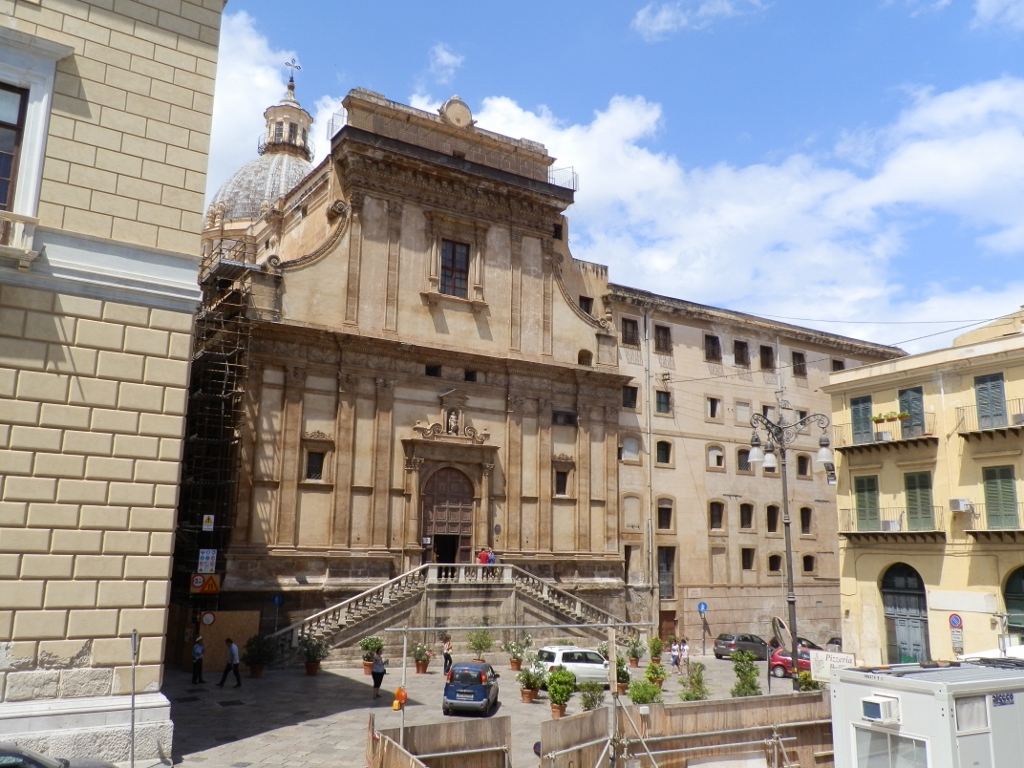
Opposite the Church of St. Mary of the Admiral is the Church and Monastery of Saint Catherine of Alexandria. The church was built in the 16th century, while the monastery belongs to the nuns of Saint Catherine, a female monastic order within the Catholic Church dedicated to Saint Catherine of Alexandria. Over the centuries, the nuns have been known for educating young women, leading a spiritual life and preserving cultural heritage.
 Palermo, a detail
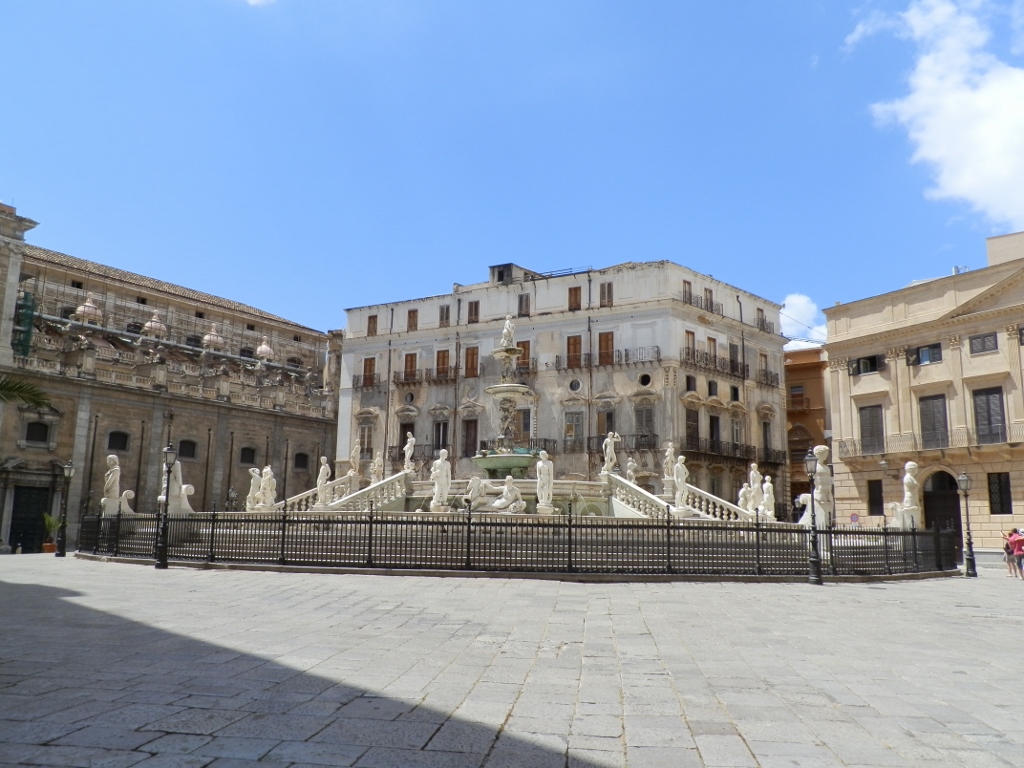
To the left of this church, there is a street leading to the spacious Piazza Pretoria, where the eponymous fountain, the Praetorian Fountain, is located.
 Palermo, a detail
The Praetorian Fountain was created in the mid-16th century, but – in Florence! However, the owner fell into debt and sold the fountain to the city of Palermo and thus it was delivered here in 1574. Some parts were damaged or even missing, so the fountain had to be restored. In any case, the lavish sculptures adorning the fountain depict mythological figures, gods, heroes and animal motifs.
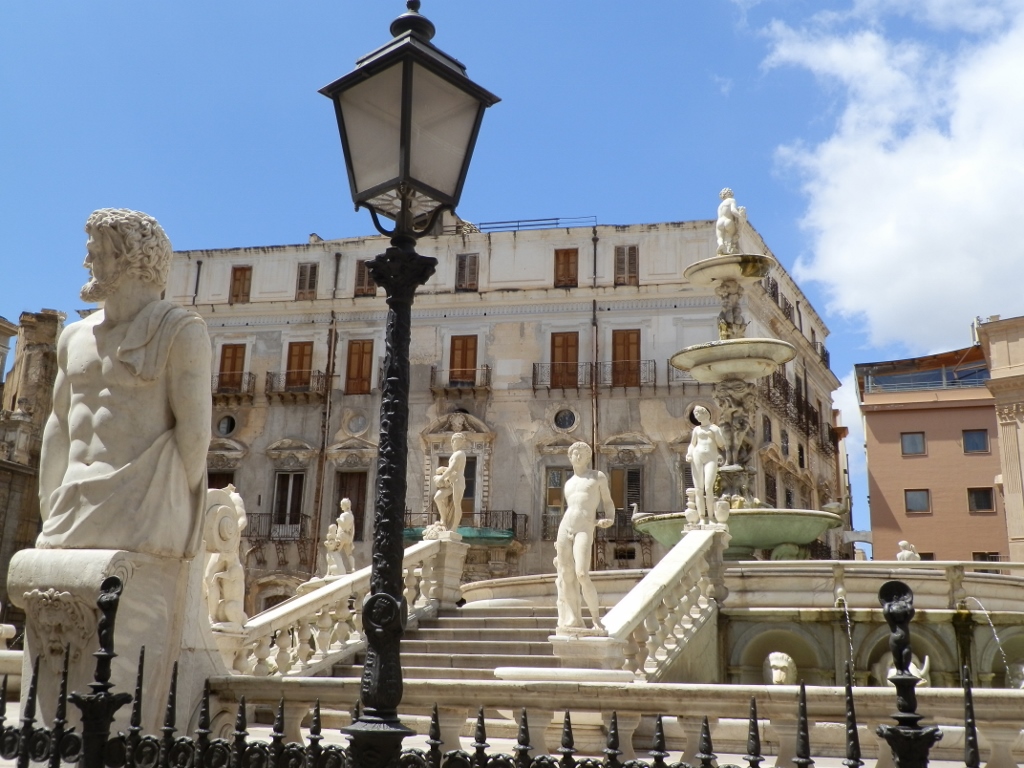 Palermo, a detail
However, the problems with missing or damaged parts were not the only issue and the story didn’t end there. The installation of this fountain caused a major scandal because all the figures, gods, nymphs, heroes and allegories, were depicted completely nude. In the 16th century, Palermo was a deeply religious and conservative city, so the public considered that such explicit sculptures placed in the middle of a commercial and administrative district undermined the morality and virtue of its citizens. For this reason, the locals nicknamed it the “Fountain of Shame.” The Renaissance Tuscan ideals were clearly only beginning to spread to southern Italy.
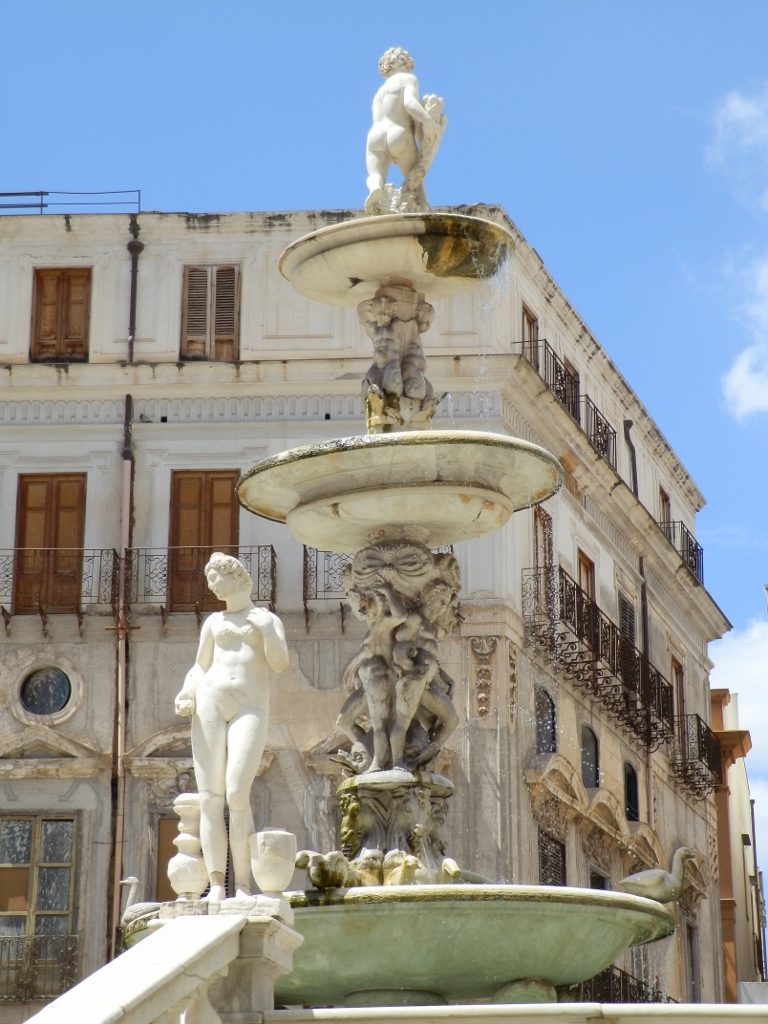 Palermo, a detail
From here, we headed roughly in the direction of the train station, but along the way I continued photographing some interesting and picturesque parts of Palermo.
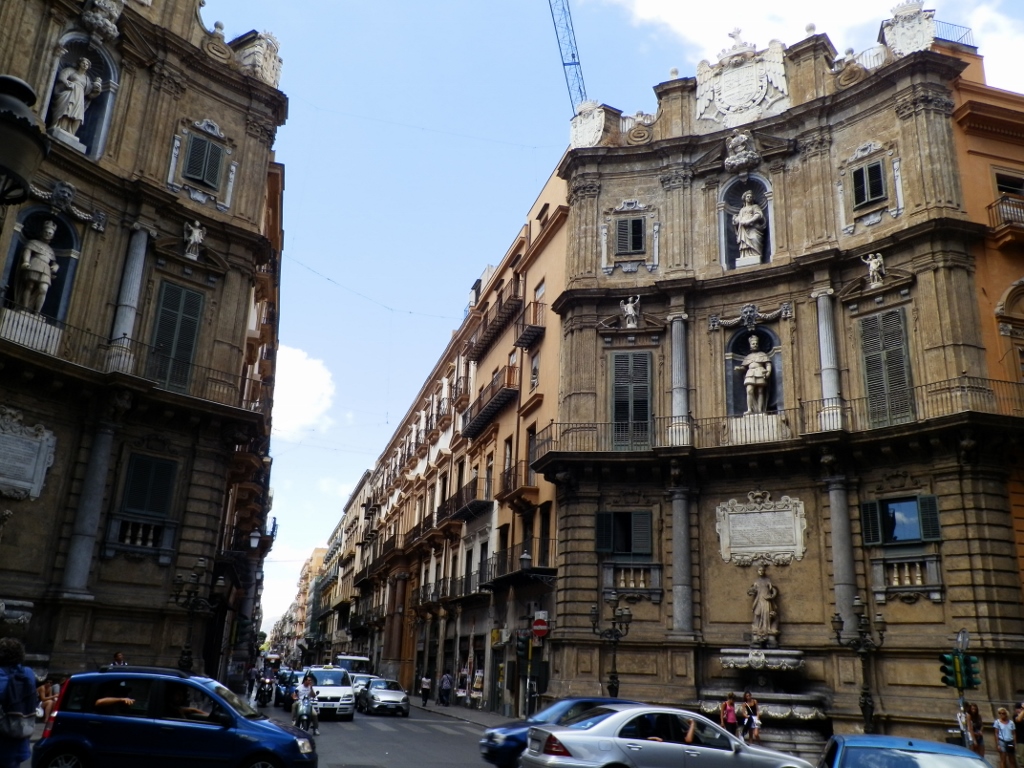 Palermo, a detail
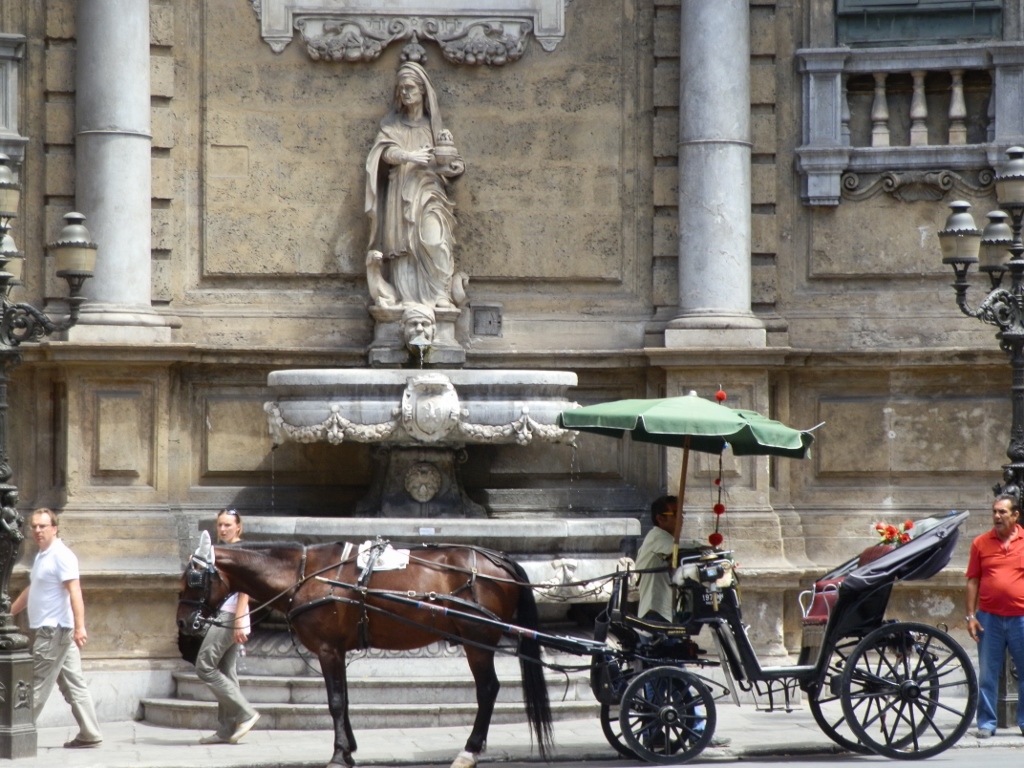 Palermo, a detail
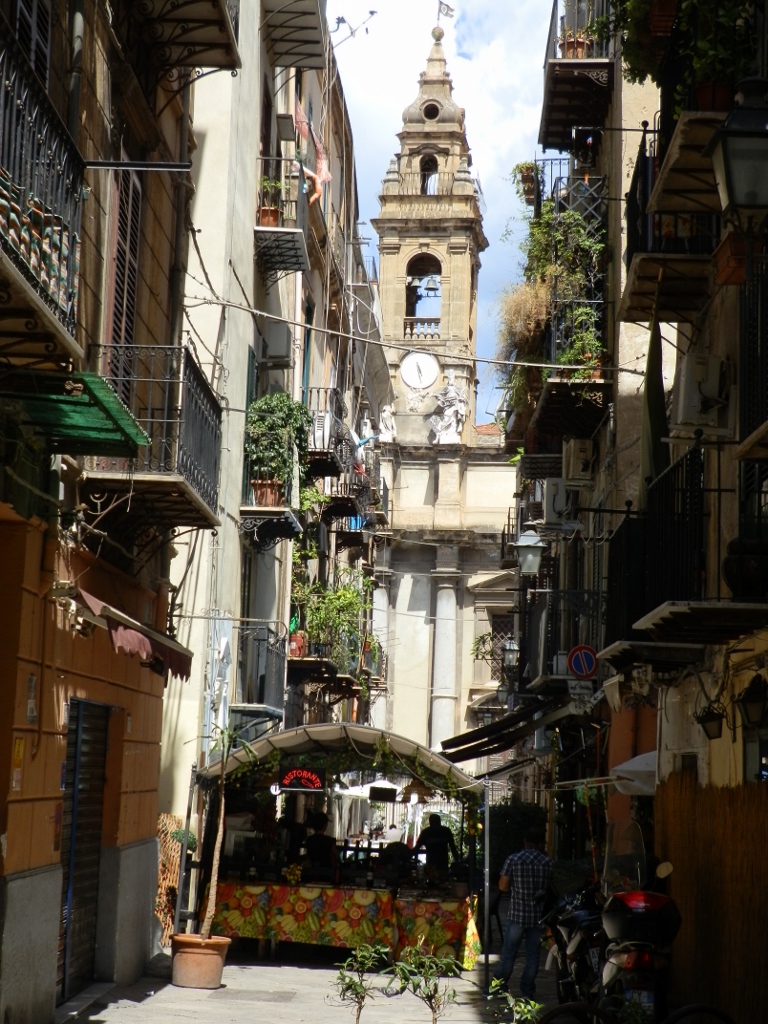 Palermo, a detail
Before returning to Cefalù, my travel companion and I went for lunch.
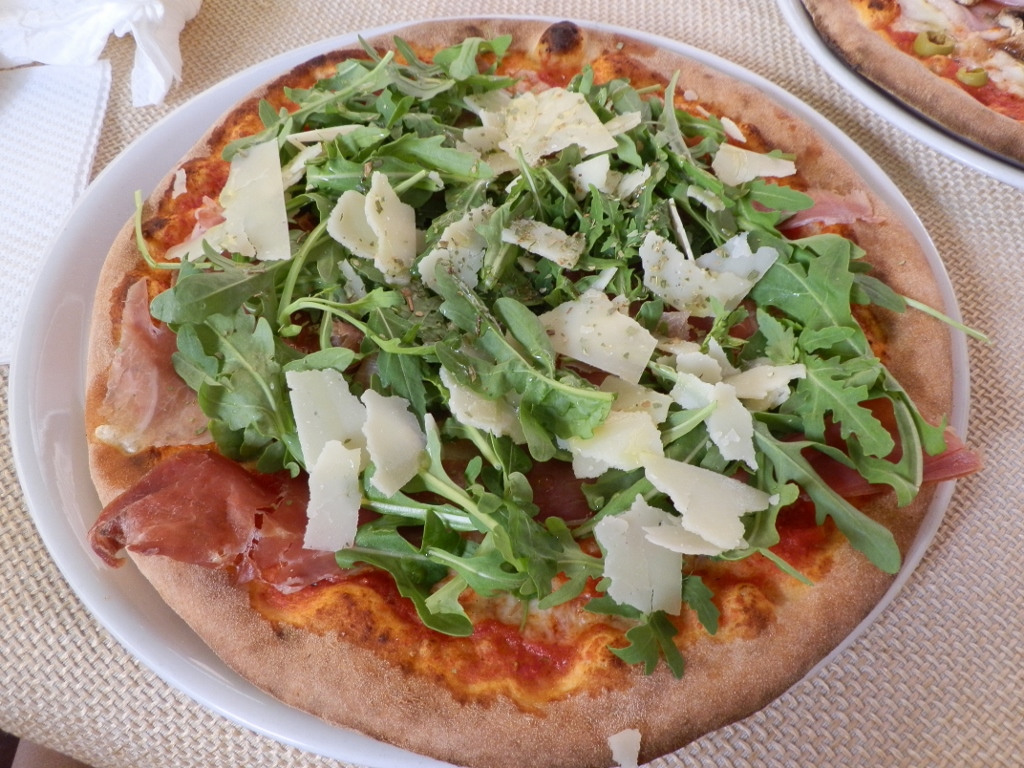 Lunch in Palermo
As I’ve mentioned several times before when it comes to food in Italy, I often like to eat pizza there because I can’t make it well at home. On the other hand, I can quite nicely make one of the famous Sicilian specialties: arancini. These are fried rice balls filled with various fillings, such as meat and peas, cheese and ham, and so on.
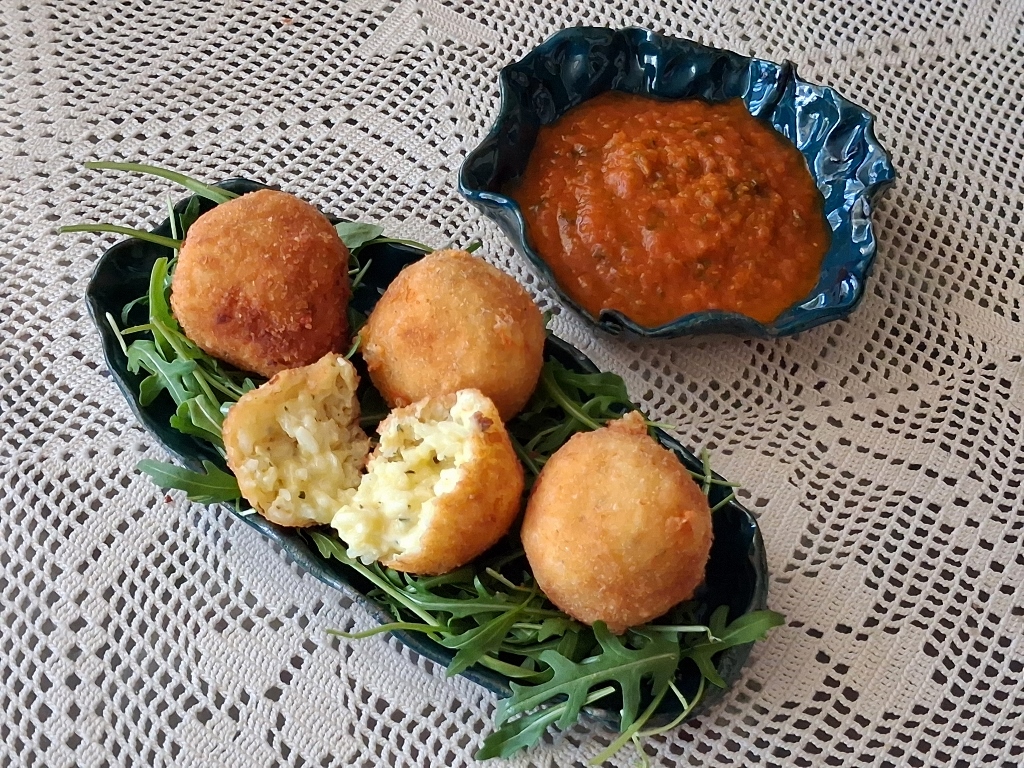 Arancini served in a dish I have made myself
ARANCINI
- 15 g butter
- 1 clove of garlic
- half a small onion
- 150 g medium-grain rice
- 60 ml white wine
- 260 ml chicken stock
- 100 ml milk
- a pinch of salt
- half of 1 egg (you first beat it a little and then use half)
- 50 g grated Mozzarella cheese
- 40 g grated hard cheese that melts well
- a little chopped parsley or other fragrant herbs (basil, oregano, thyme, etc.)
- flour for breading
- salt and pepper to taste
- 1 egg
- breadcrumbs for breading
In a pot with a good lid, melt the butter and lightly sauté the garlic and onion. Add the rice and fry everything together over medium heat for a minute or two. Pour in the white wine. When the wine evaporates, add the chicken stock, milk and a little salt (not too much, since the stock is already salty). Stir well. Once it starts to cook, reduce the heat to the lowest setting, cover and let the rice cook very gently.
When the rice has cooled, add half of the beaten egg, the cheeses and the fragrant herbs. Mix everything well and let it rest; it can even sit overnight, then form it into balls.
First, roll the balls in flour seasoned with salt and pepper, then dip them in the beaten egg and finally coat them in breadcrumbs. Fry them in medium-deep oil, turning them frequently so they achieve a nice dark-golden colour on all sides. Remove from the oil and place first on a paper towel to drain any excess oil.