After I had finished with my visit to the Holy Monastery of Daphni, very content about it, I got into the car and began driving along the southern perimeter of Athens, wanting to visit a couple of more interesting places located on the Attica Peninsula.
Although I didn't venture into the centre of the big city, even while driving through the streets and roads of smaller towns that could probably be considered suburbs or the outskirts of Athens, I realised how happy I am that I don't live in a huge city. There are indeed very large cities in the world that are impressive because of their history, culture, style, monuments, museums, etc., and they are certainly wonderful to visit, but living in them... No, thank you, that's not for me.
At one point, I encountered some traffic jam, but it wasn't too bad. Still, it was a bit unpleasant, especially considering the past two weeks when I often felt like I was the only one on the road and could even occasionally stop in my lane to take photos of something beautiful without bothering anyone at all. That’s the perfect balance.
All in all, after a while, I arrived at my desired destination, which was the town of Vouliagmeni in the Attica region, more specifically, I arrived at the small Vouliagmeni Lake in the southern part of the town. This little lake should not be confused with the larger lake of the same name in the Corinthia region, which I visited the day before, and about which I have already written.
As for the town itself, it is actually a suburb of Athens and it got its name from the lake, not the other way around. This elegant suburb is located right on the coast and has several beautiful beaches. From what I’ve read, real estate here is among the most expensive in the Balkans.
That didn’t interest me in the least, so I just drove through the urban part and made my way to the small lake, where I found a spacious parking lot situated on a hill by the lake. This was actually quite good because from there, I had a nice view.
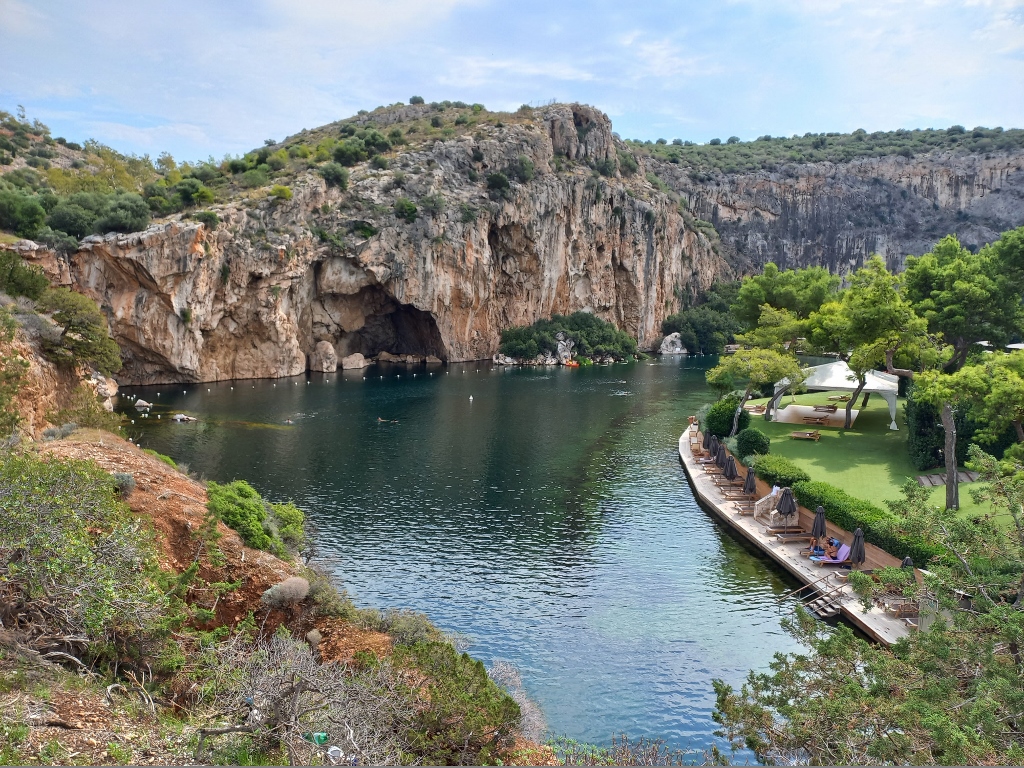 Lake Vouliagmeni in Attica region
It is a salty lake that is replenished by thermal waters rising from a depth of 50 to 100 m, as well as by freshwater from a spring at a depth of 17 m. It is also connected to the sea through an underground cave. There used to be a large cave here, but when it collapsed in an earthquake about 2,000 years ago, a lake was formed, 260 m long and 145 m wide.
The water in the lake has a high mineral and microelement content, so it's said to be good for treating certain health problems, but in order to bathe here, you need to pay an entrance fee. You can get to a restaurant for free, but not to the lake and the beach. Admittedly, I think people come here to swim not so much for the potential spa benefits, but because the bathing area around the lake is more like a kind of "exclusive" club, which makes it attractive to some.
I was interested in taking photos of the lake, but I was also ready for a break, so I sat down in the restaurant and ordered ice cream and coffee. It was a nice little pause, but besides the refreshment, I also enjoyed the location of the table on the restaurant terrace, which allowed me to take a photo or two to illustrate the place.
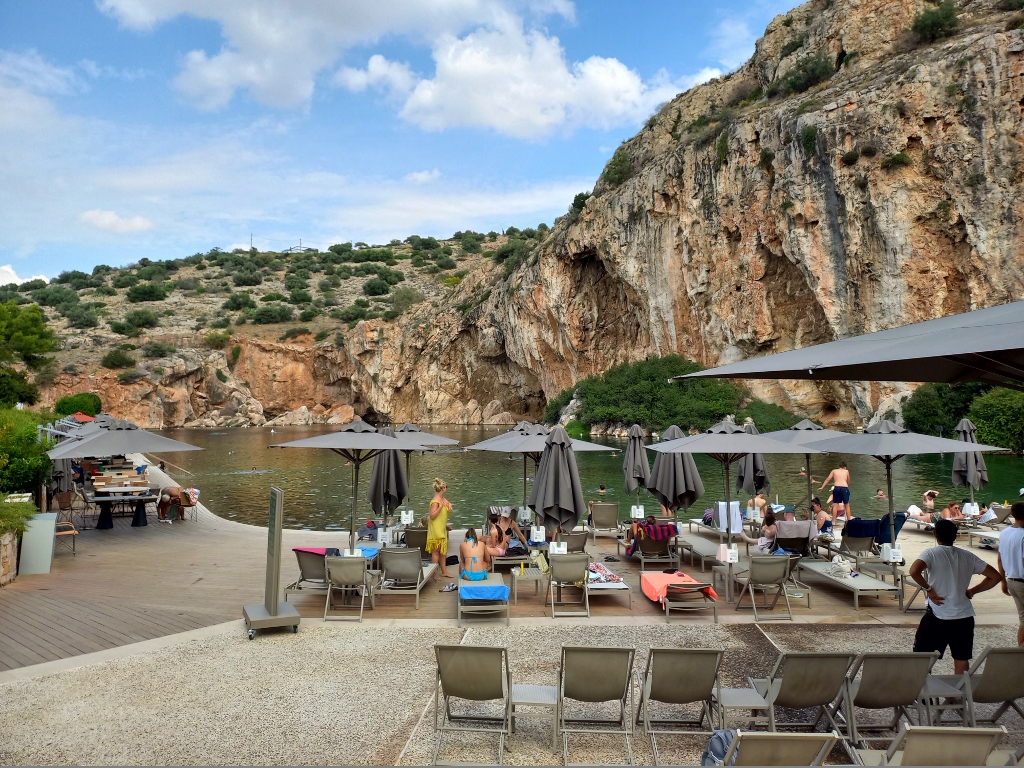 Lake Vouliagmeni in Attica region
After I had had the nice coffee and ice cream, I went to the entrance where you pay for access to the lake and I asked if it was allowed to pass through just to take photos of the lake. It wasn’t. So, I had to get creative and I also made use of my height as I walked past a green hedge.
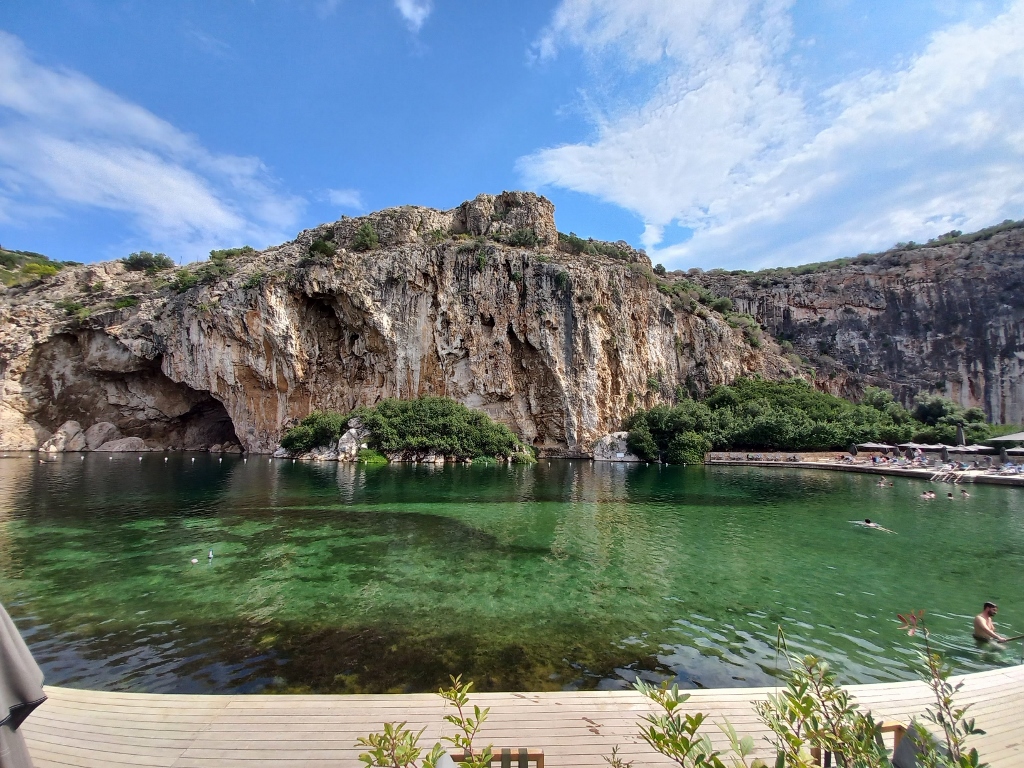 Lake Vouliagmeni in Attica region
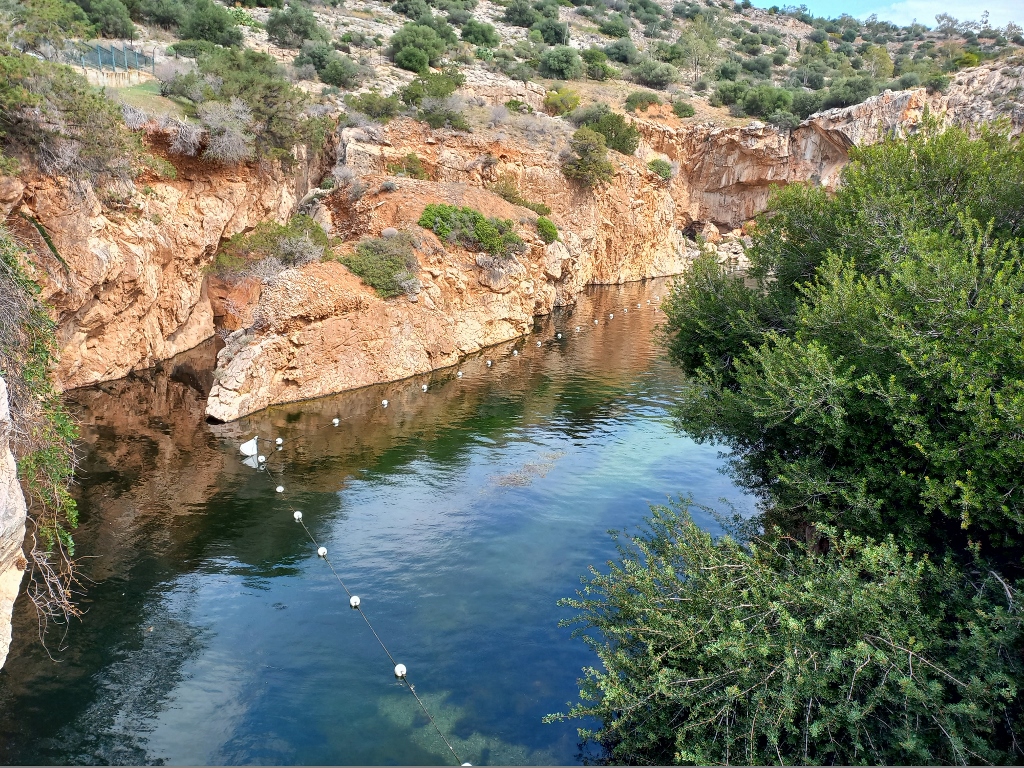 Lake Vouliagmeni in Attica region
And then I went back to the parking lot and climbed a bit higher to get an even better view of the lake and its surroundings. I understand that uncontrolled access to the lake for everyone would quickly lead to its destruction, but I must admit that I wasn’t too fond of the excessive commercialisation of a natural wonder.
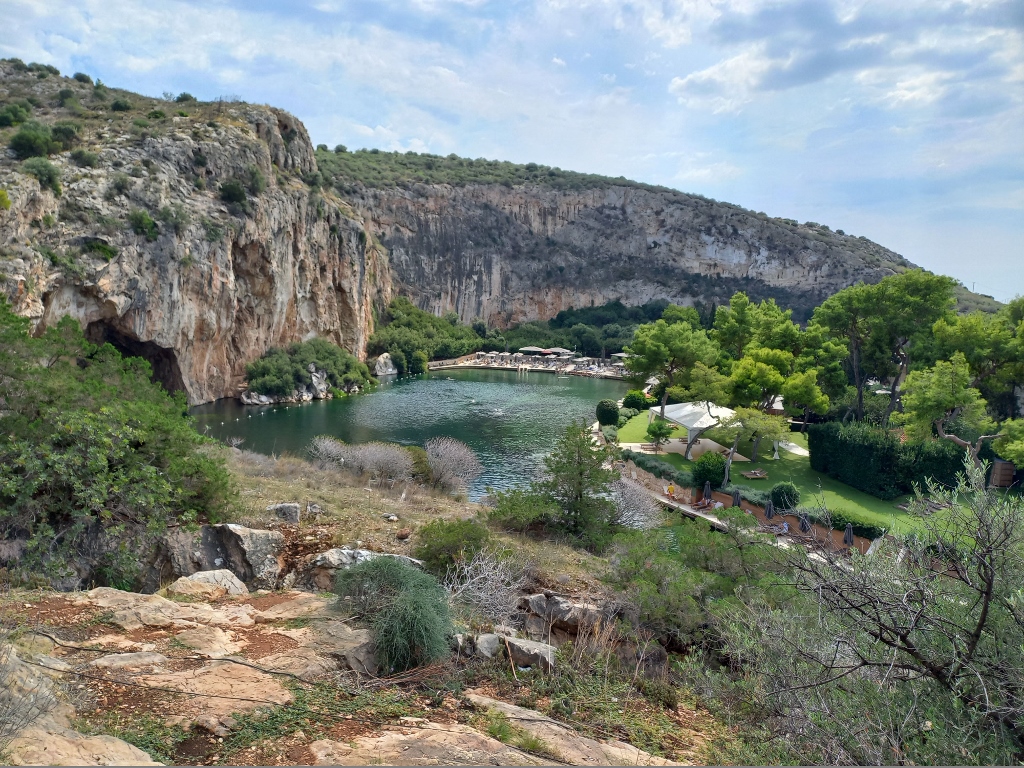 Lake Vouliagmeni in Attica region
Now I got back in the car and continued further south through Attica until I reached the southernmost point of the large peninsula, which is actually a small promontory claimed to be the southernmost point of continental Europe – Cape Sounion. Of course, that’s not the real reason I came here, but rather the fact that this is where the Archaeological Site of Sounion is located.
 View at Cape Sounion
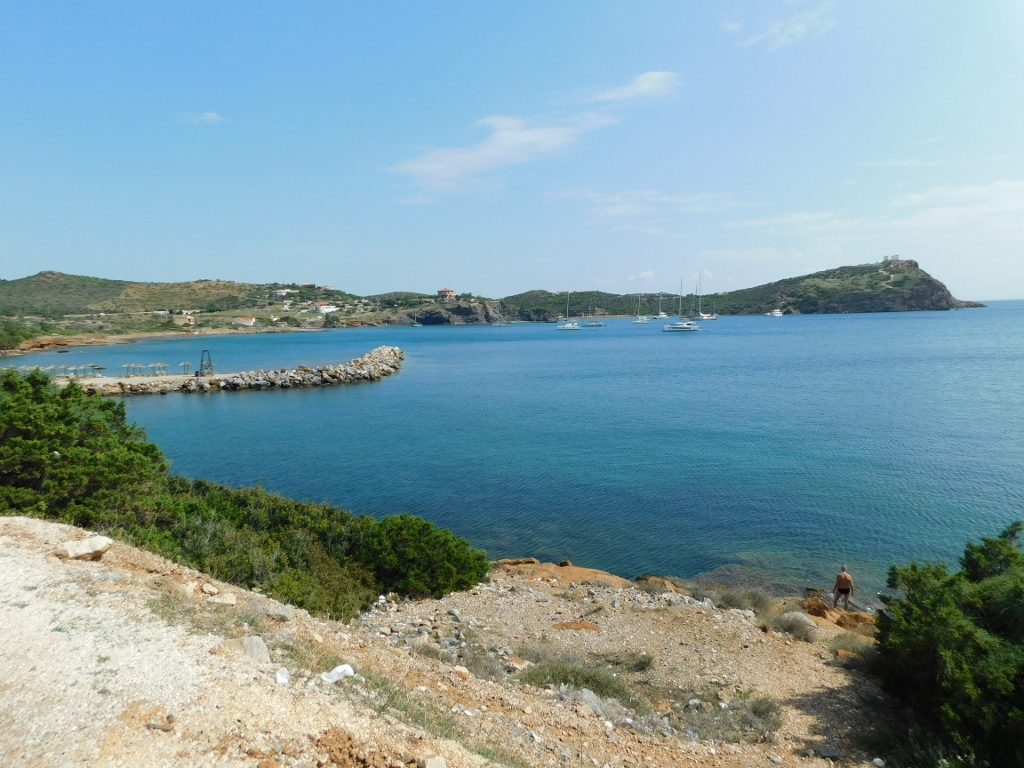 View at Cape Sounion
It is a rather isolated site with the remains of a sanctuary in the form of various ruins, but the main structure around which everything revolves is the Temple to Poseidon, the god of the sea, from which numerous columns can still be seen today.
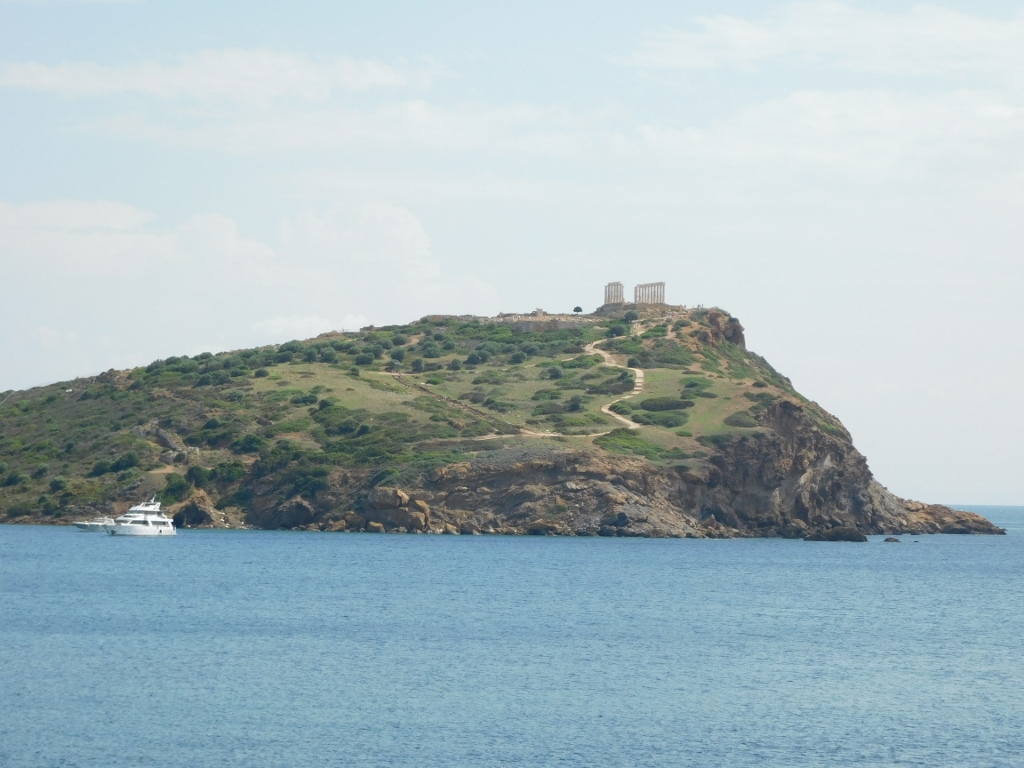 View at Cape Sounion and the archaeological site
As the fate would have it, I was here with my friend Vesna when I first stayed in Athens many years ago. I don’t really remember how the two of us got here, though I know we didn’t come with the group we were staying with in Athens. I think we used some form of public transport, but now, having arrived by car, I can’t for the life of me figure out how we managed it back then.
Here’s a brief reminder of that visit and what has stayed in my memory is the sensation that it was quite a desolate place, as if the two of us were almost alone there.
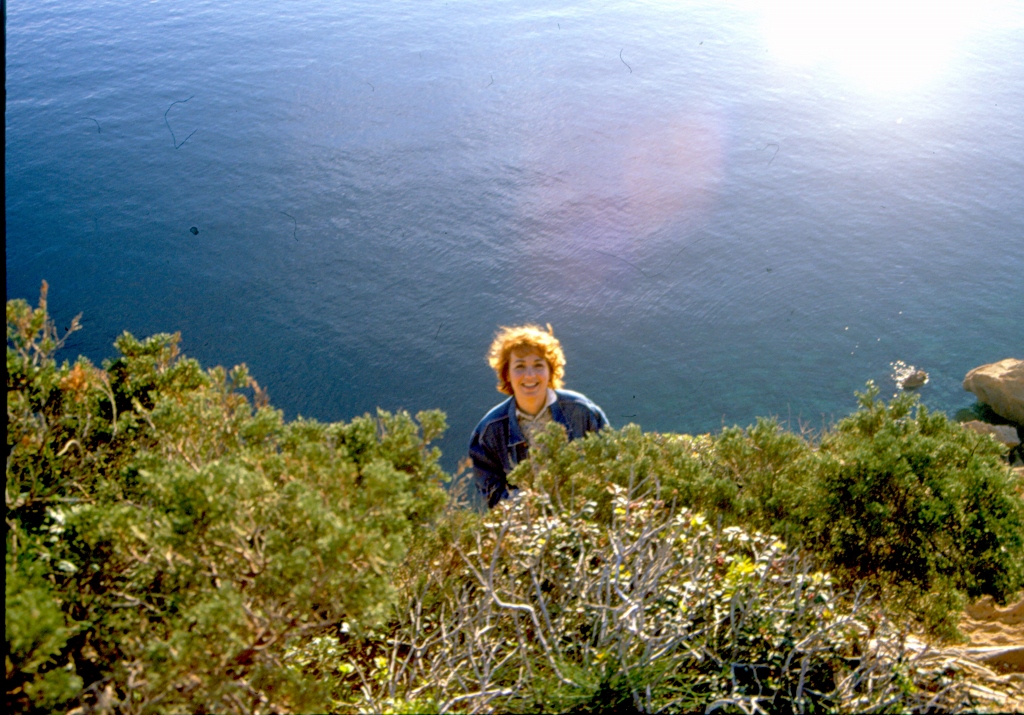 At Cape Sounion many years ago
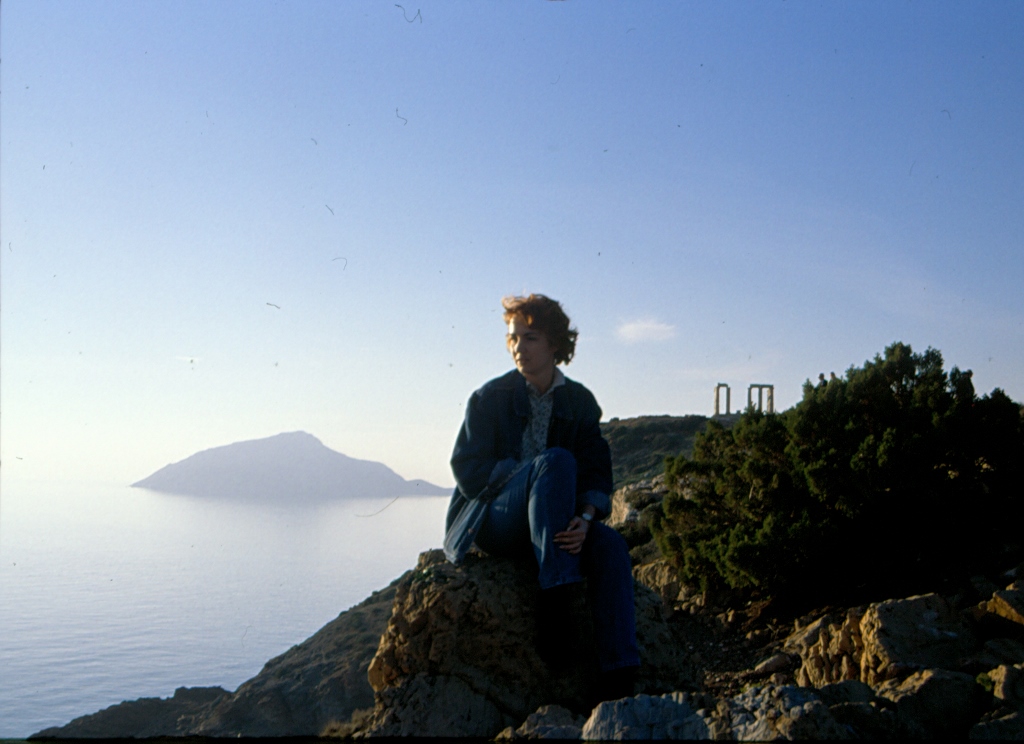 At Cape Sounion many years ago
The situation is quite different now. In addition to the archaeological site, there is also a larger restaurant for tourists and there were many of them – it was clear that large coaches with groups keep arriving, as well as quite a few cars with individual visitors. I barely found a place to park, but it didn’t seem like there was a big crowd around the actual temple itself (there were more people in the restaurant).
From the parking lot, a path leads toward the site.
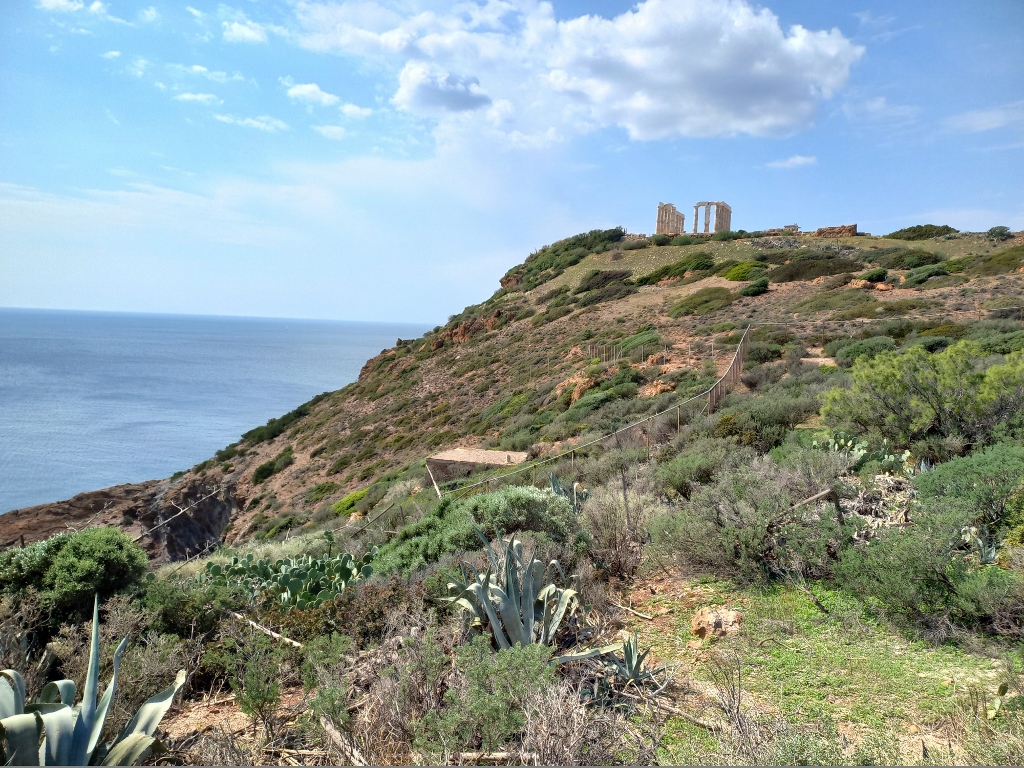 Temple to Poseidon at Cape Sounion
Since the site is at the top of a hill, I was also interested in taking pictures from there of the part of Attica to the north of the cape, as well as the area from where the smaller promontory, where Cape Sounion is located, begins (which is behind me in the next photo).
In the photo below, on the right-hand side (on the opposite side of the road in relation to the parking lot), you can see the modest remains of another significant sanctuary. It is dedicated to Athena, the goddess of wisdom and the protector of the city-state itself. I must admit, I didn’t go all the way there.
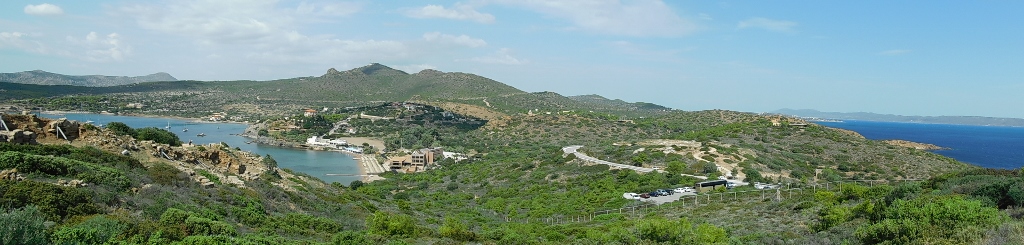 View at Attica from Cape Sounion
This time, I didn’t go all the way to the end of the cape itself; I had been there during my first visit and you can see it in the photo from the past where the temple is visible in the distance. This time, I headed directly to the main site, which isn’t very large, but it is located in one of the most impressive spots.
All in all, I climbed to the top of the hill that rises above the sea and this is truly a uniquely beautiful place. I’m sure the ancient Greeks didn’t know it was the southernmost point of continental Europe, nor do I think they cared about that, but they certainly had a very strong sense of beauty and harmony. They also had a deep understanding of symbolism, because this location is absolutely fitting for a temple dedicated to such a powerful god as Poseidon.
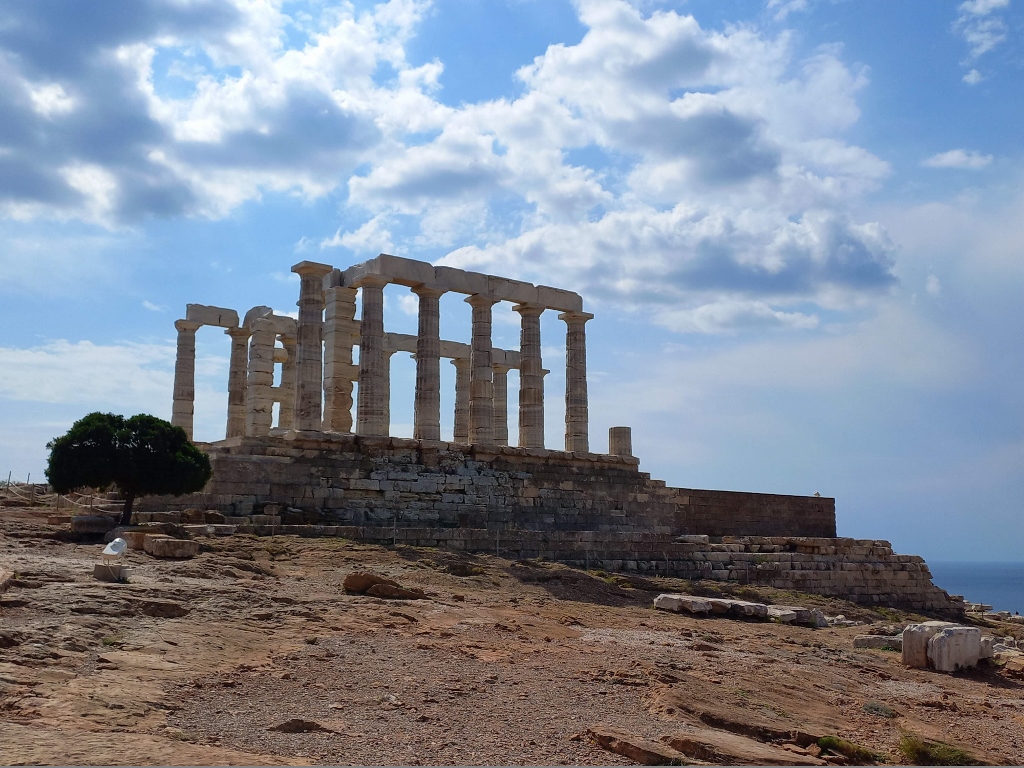 Temple to Poseidon at Cape Sounion
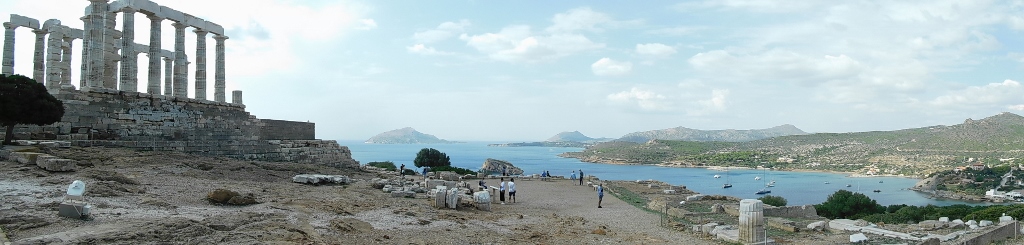 Archaeological Site of Sounion
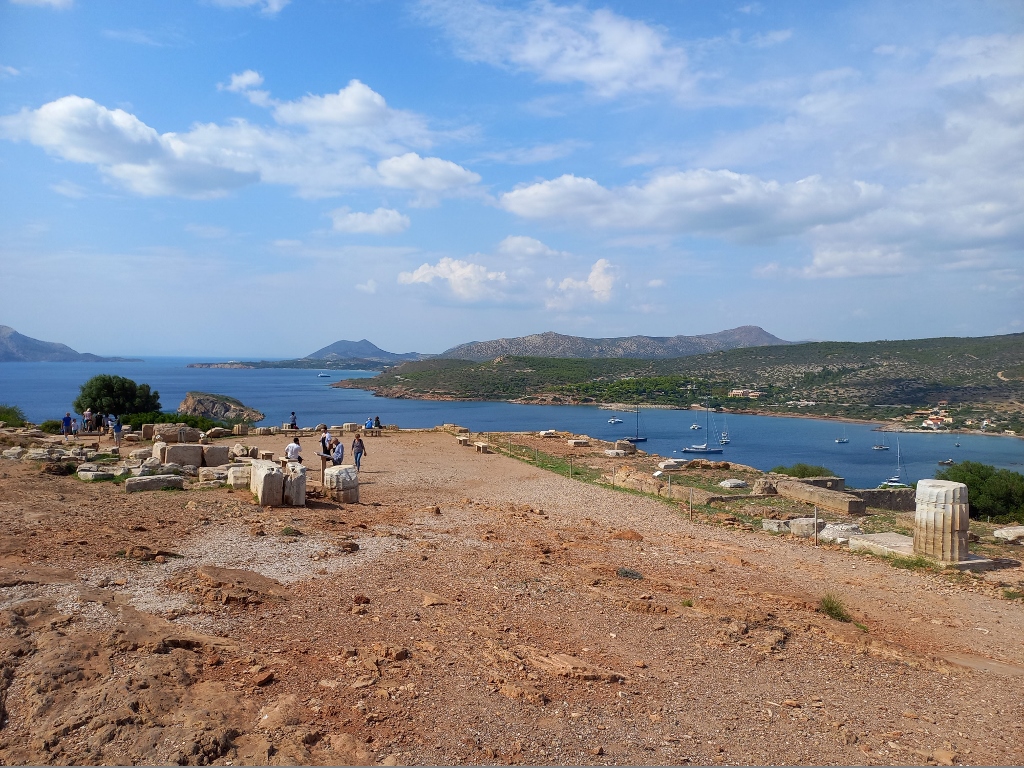 Archaeological Site of Sounion
On a relatively flat plateau, about 60 m above sea level, between 444 and 440 BCE, by order of Pericles, a Doric temple was built dedicated to Poseidon. The temple was made of marble and replaced an older sanctuary that had been destroyed during the Second Persian War. The temple is 31.12 m long and 13.47 m wide.
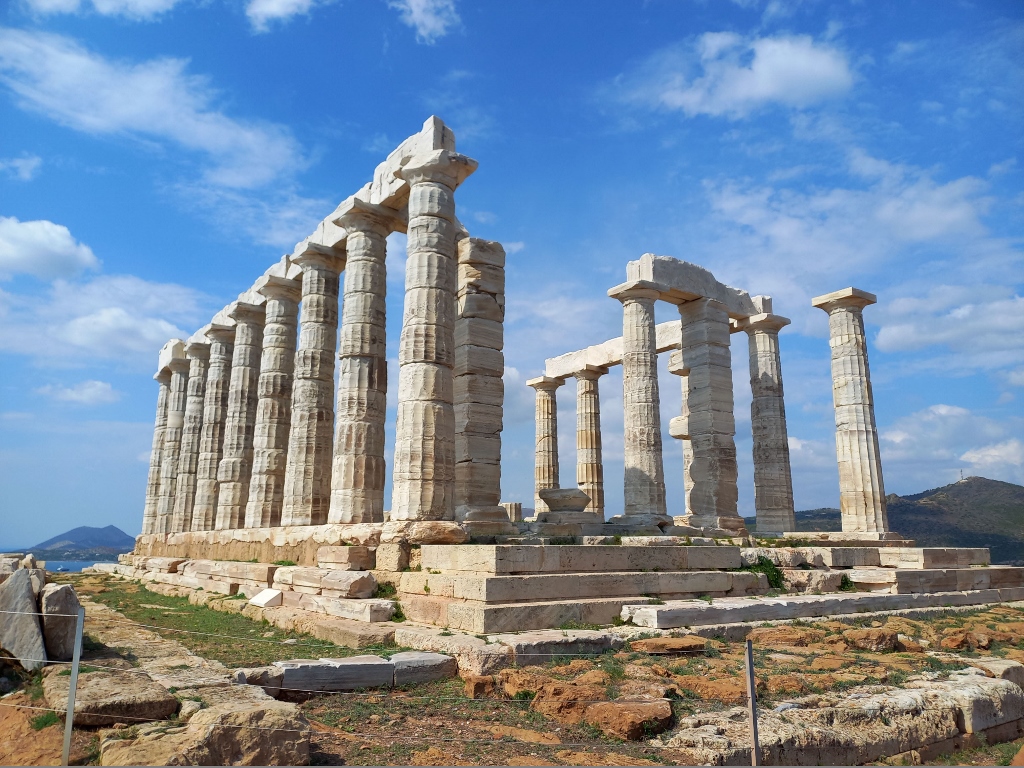 Temple to Poseidon at Cape Sounion
To this day, 16 columns have survived from the original 34 (6 x 13) that used to support the architrave, and they are 6.10 m tall. At the base, the columns have a diameter of 1 m, tapering to 0.79 m at the top.
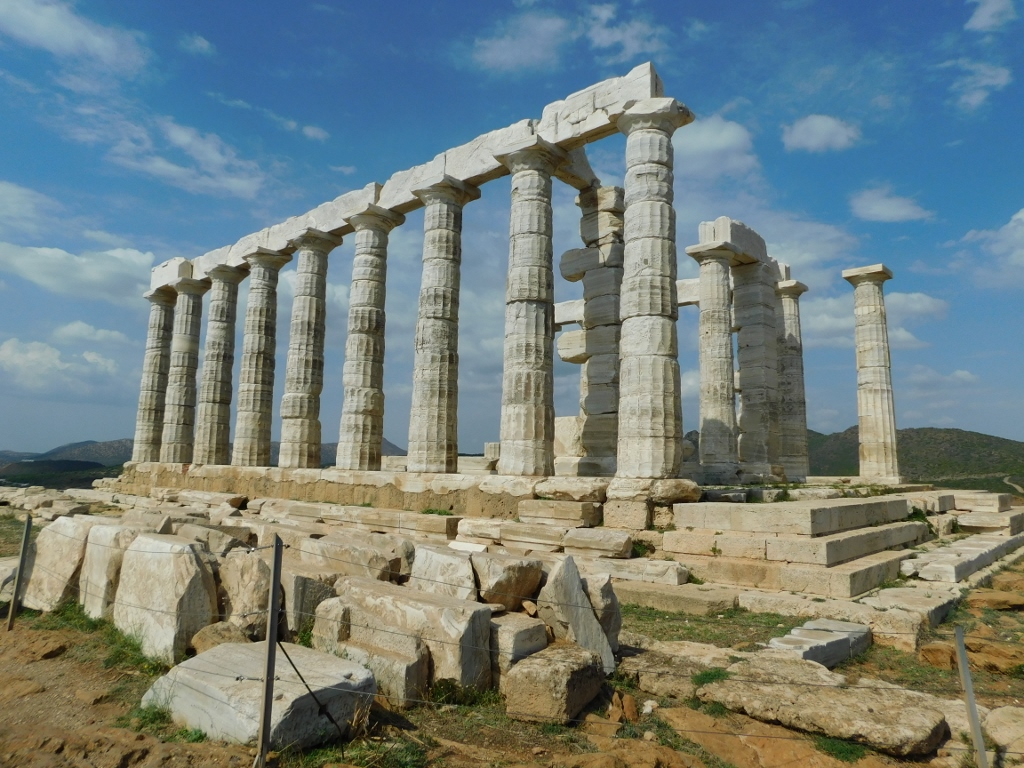 Temple to Poseidon at Cape Sounion
After the decline of the ancient Greek civilisation, the temple was abandoned for centuries and left to the ravages of time. It was not restored until the 19th century, when more serious research and excavations began.
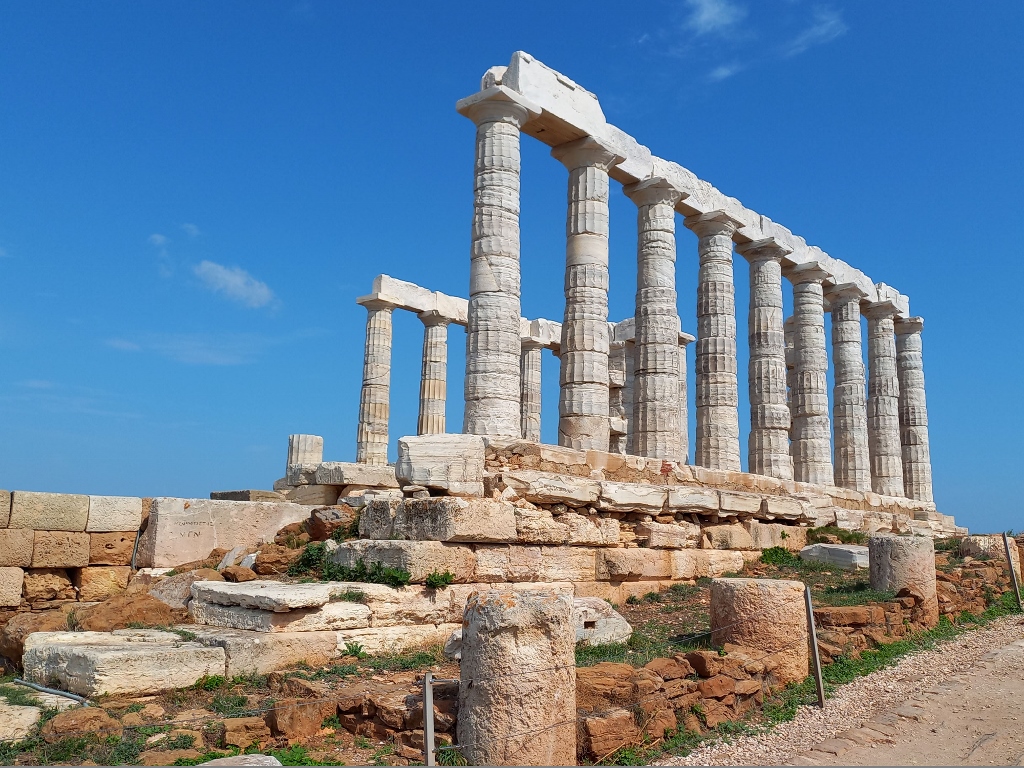 Temple to Poseidon at Cape Sounion
From the path that runs along the southern side of the temple, there is a spectacular view of the Aegean Sea, which further highlights the meaningful symbolism of the temple dedicated to the god of the sea.
 View at the Aegean Sean from the direction of the Temple to Poseidon at Cape Sounion
On the other hand, aside from their sense of harmony and symbolism, the Athenians who built this temple were by no means naïve – the location is an ideal strategic point from which both the navigation of the Aegean Sea and the western passage toward the Saronic Gulf, where the port of Piraeus is located, can be controlled. Piraeus was the main port of Athens in ancient times, just as it is today. Additionally, the site provided a commanding view of the eastern parts of Attica, where the silver mines of Lavrio were located nearby, enabling Athens in the 5th century BCE to become a strong and powerful state.
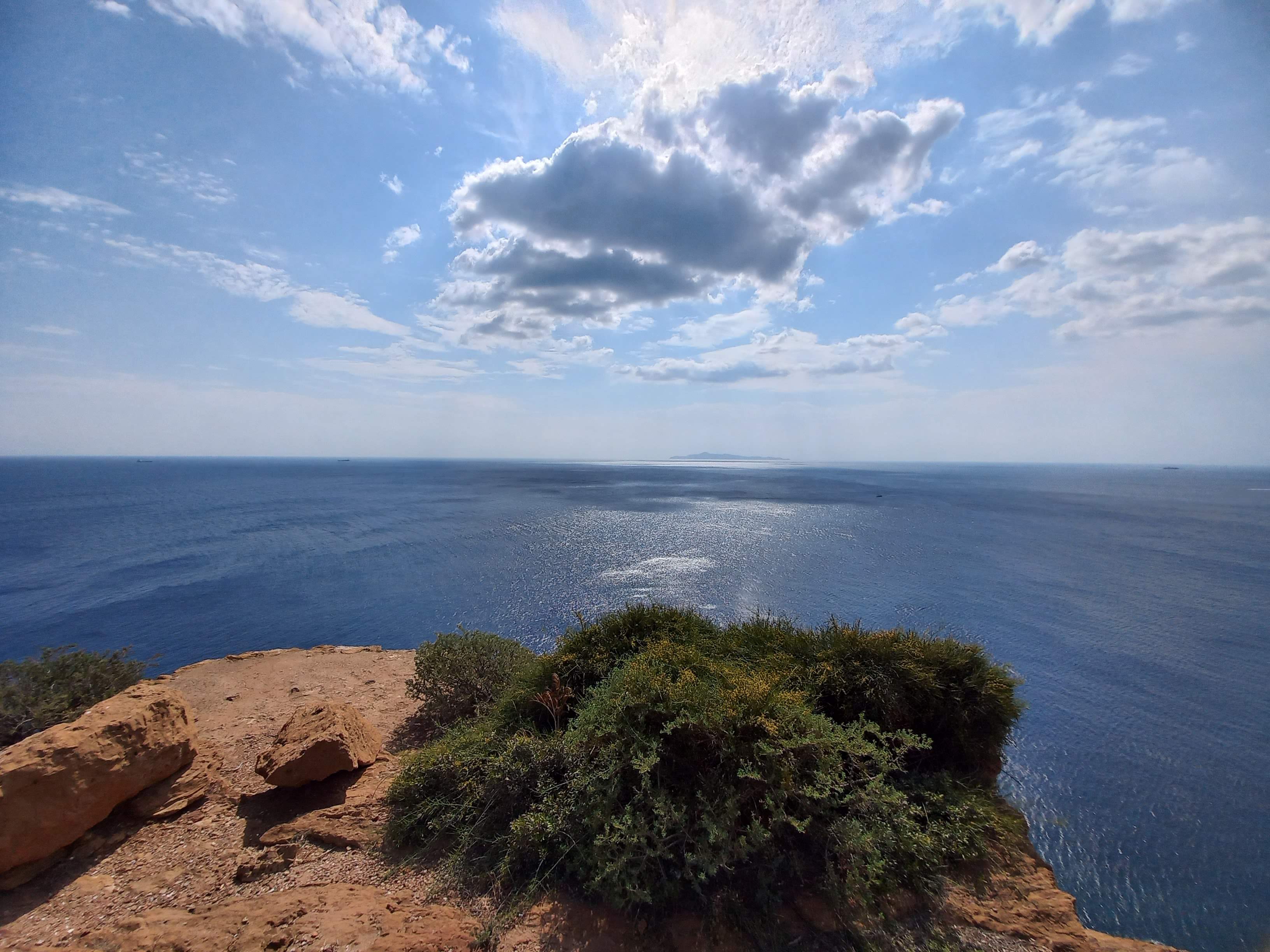 View at the Aegean Sean from the direction of the Temple to Poseidon at Cape Sounion
I think this would be a great place to sit and meditate for a while, but that wasn't part of my plans this time, so I continued walking around the Temple to Poseidon.
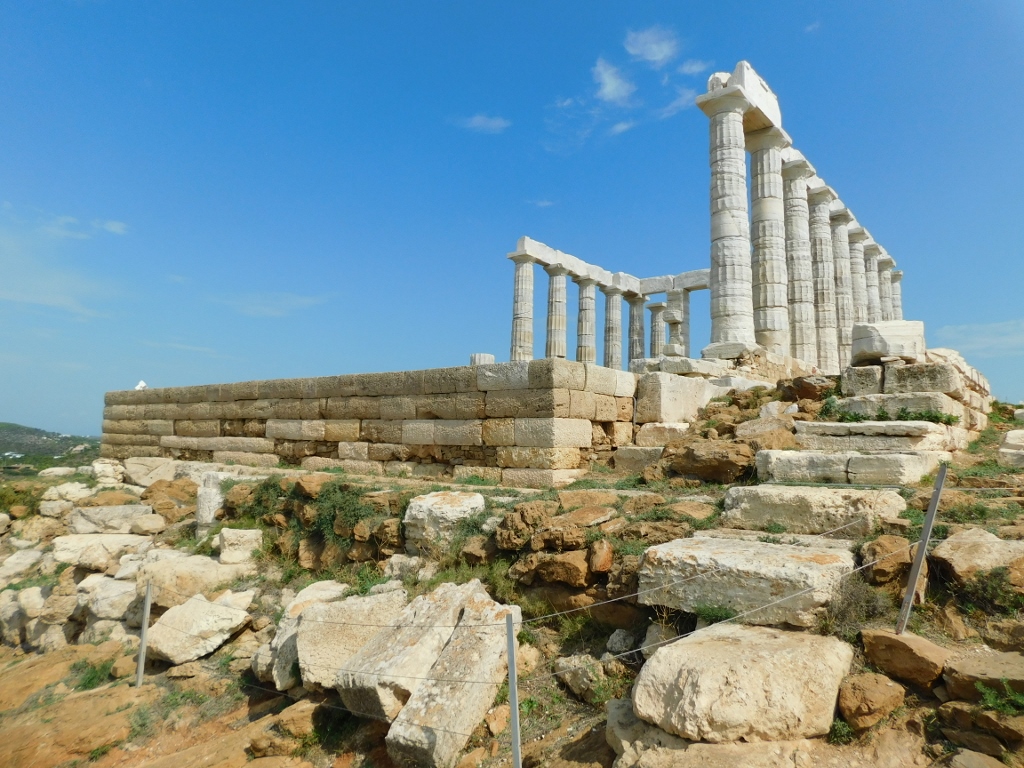 Temple to Poseidon at Cape Sounion
In the next photo, you can clearly see how the platform on which the temple is built has varying heights in order to create a level base for the structure itself.
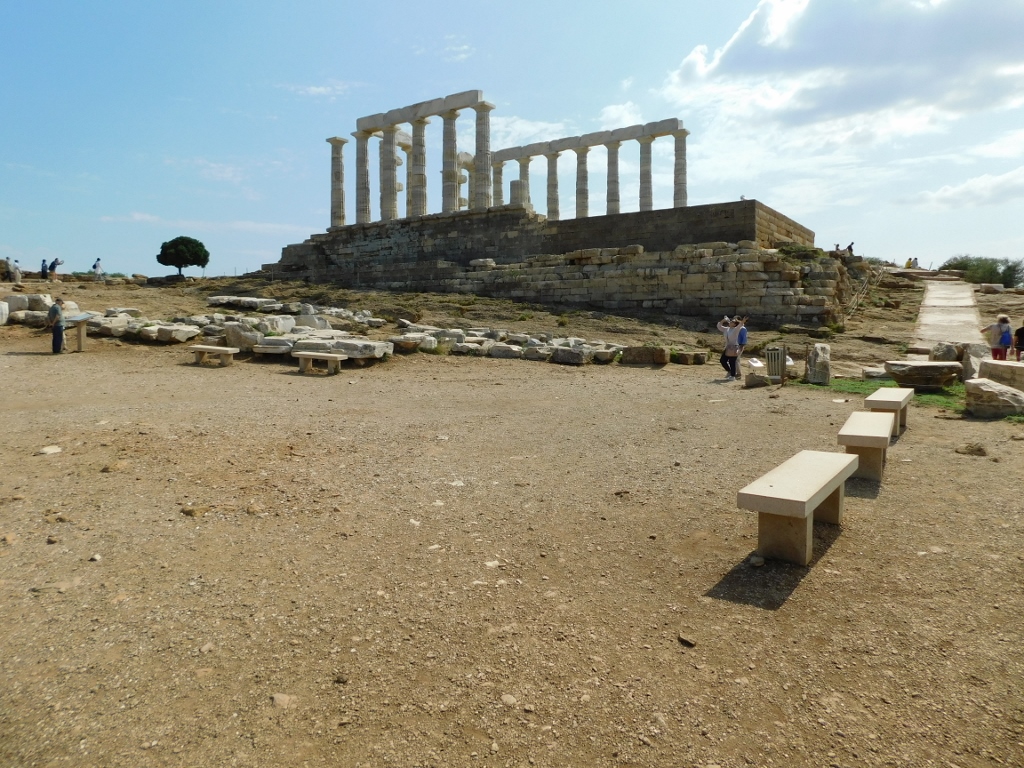 Temple to Poseidon at Cape Sounion
In addition to this temple, there are other excavations at the site, but mostly in the form of foundations or ruined wall sections, and so on. People who are experts can clearly identify the different structures that once existed here, but that goes beyond both the level of my knowledge and my interests.
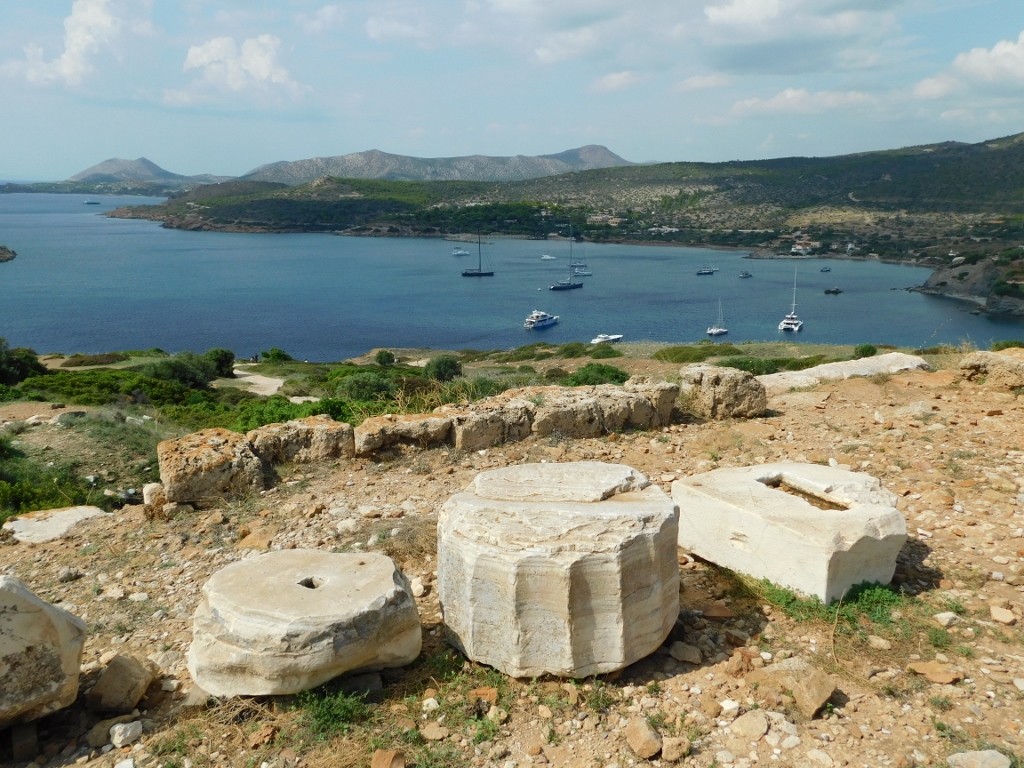 Archaeological Site of Sounion, a detail
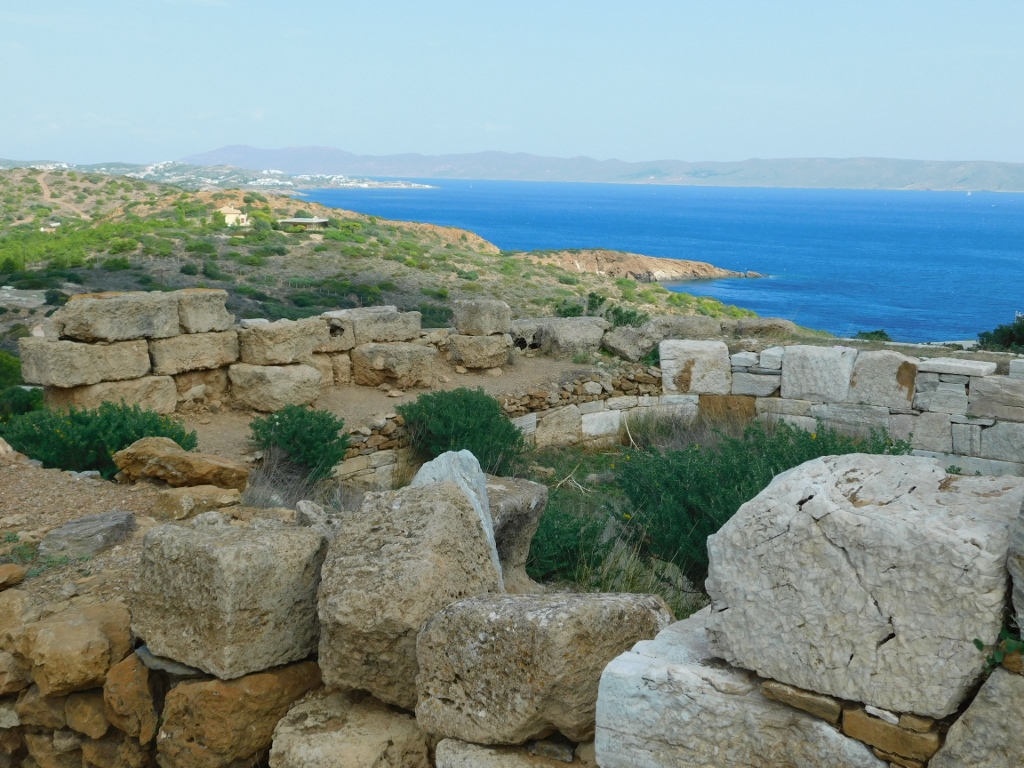 Archaeological Site of Sounion, a detail
By this point, I was starting to get a little hungry and since this was my last day in Greece on this trip, I decided to go for some fish or something similar, in other words, something from the sea.
The previous evening, in Loutraki, I had an almost unpleasant surprise when none of the three seafood restaurants recommended by the extremely friendly young man at the hotel reception where I was staying were open. I didn't want any pre-prepared frozen seafood, since I can eat that at home, so in the end, I had souvlaki. In the meantime, I did some research online and found a seafood restaurant on the eastern coast of Attica that seemed promising.
So, I drove there and settled in comfortably. And it was indeed a good seafood restaurant. They had what I originally wanted to eat (fish), but it was too large a portion for me, so I decided to mix things up a bit and ordered a combination of Greek and Italian food. Specifically, penne rigate with shrimp and zucchini.
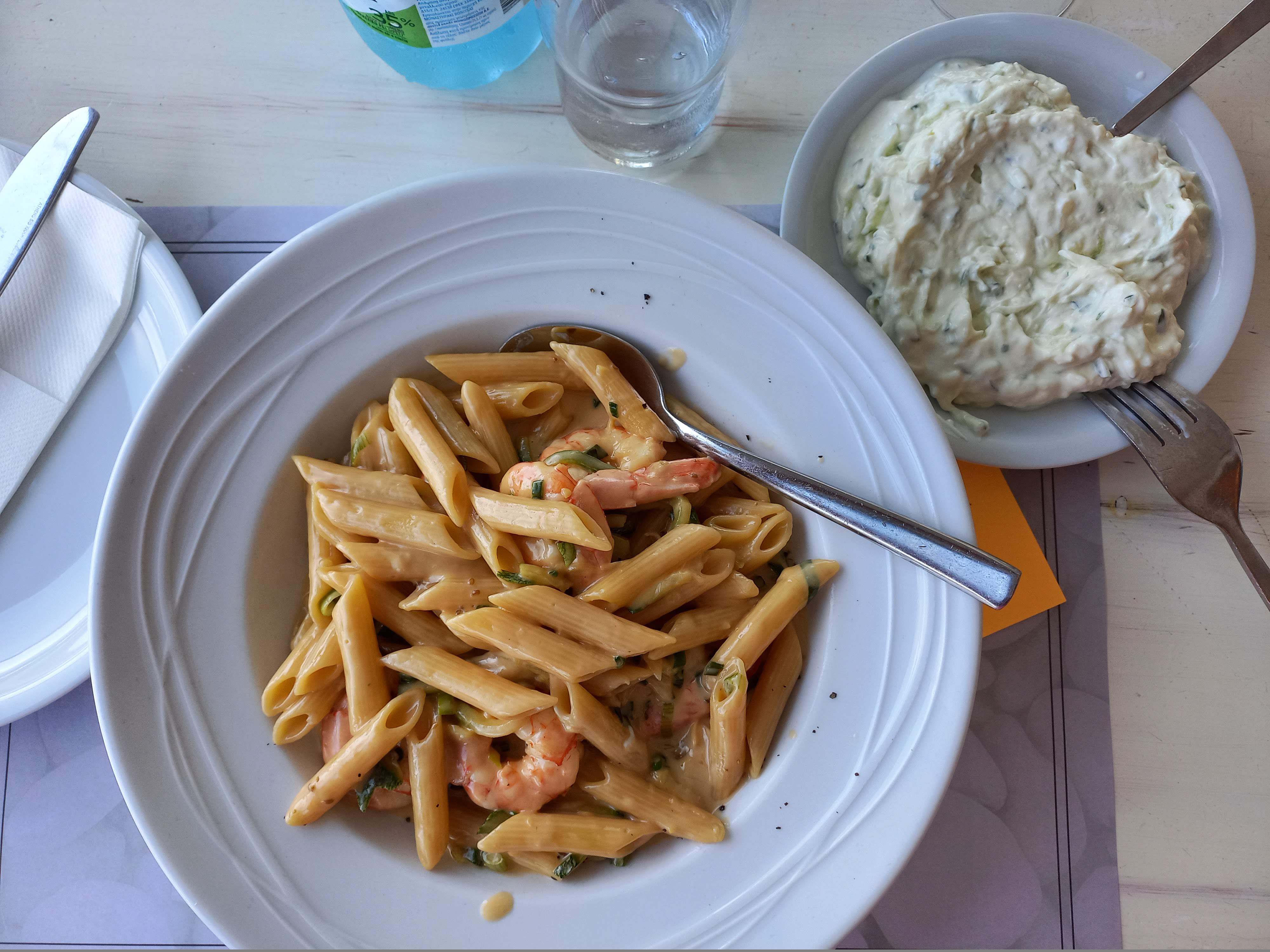 Lunch at Attica peninsula
My decision was somewhat influenced by a moment I could describe as a "nostalgia for youth," because this dish reminded me of the black spaghetti (made with cuttlefish ink) with shrimp and zucchini that I had in a restaurant right on the Grand Canal in Venice. That was during a spectacularly fun and fascinating weekend I spent in Venice many, many years ago. During that weekend, I was always in the right place at the right time, meeting the right people. For instance, I watched A Fish Called Wanda at a private screening as part of the Venice Film Festival, and while eating the aforementioned spaghetti as a starter, I could watch the Regata Storica from the terrace of that hotel, with the impressive Santa Maria della Salute church rising on the other side of the Grand Canal. Everything was quite decent, but I was young, charming and I wore a miniskirt at a time when the mini was coming back into fashion. And, of course, I was in Italy. Yes, yes... Those were different times and it was a very fun weekend indeed.
But to return to Greece and September 2023... I’m no longer young, I don’t think I even have any miniskirts left in my wardrobe and yet I was perfectly content enjoying a nice lunch in that restaurant by the sea. Admittedly, the wind was quite strong, but I solved that by eating inside the restaurant, but right next to the wide-open windows. That way, I got the best of both worlds.
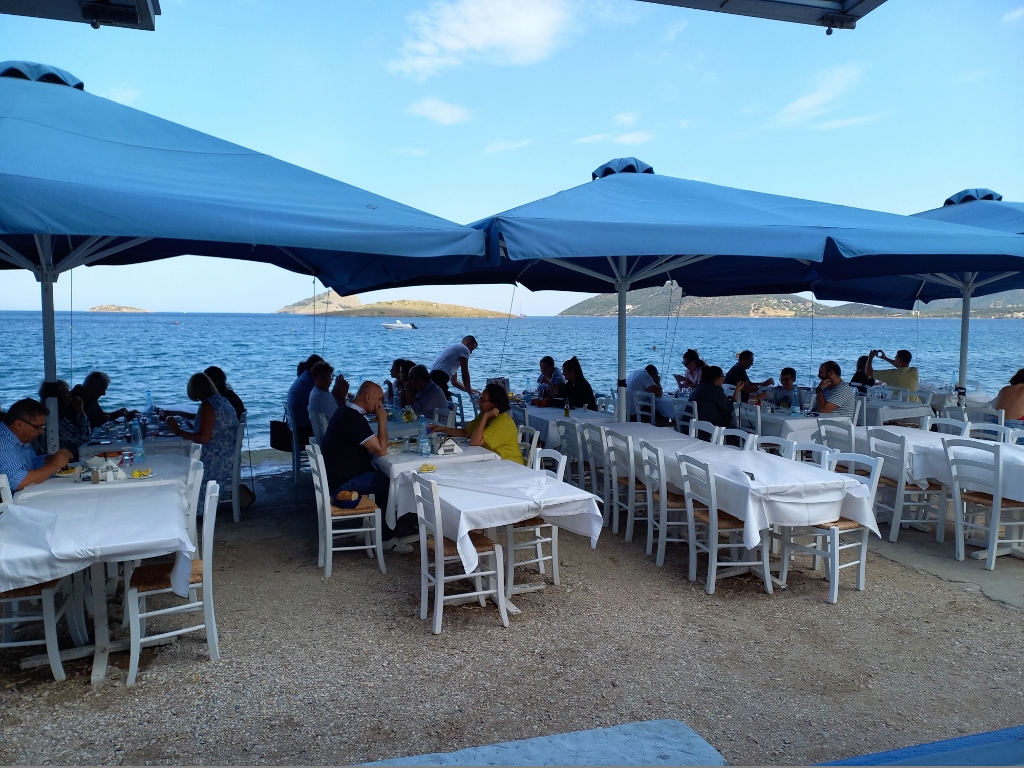 Fish restaurant on a sea shore
While I was sitting in the restaurant, I decided to check the hours of the next archaeological site I planned to visit. It was the Archaeological Site of Brauron, located in the village of Vravrona on the eastern coast of Attica. However, as it turned out, the site closes quite early, at 3:30 PM. In other words, it was already too late. I thought about perhaps driving over there and seeing it from the outside, from the level of the fence, but in the end, I decided to file this under my famous "always leave something for the next time."
On the other hand, as I was driving along the roads on the eastern coast of Attica, I got the impression that it’s a truly beautiful area, so I wouldn't mind coming back here again.
However, on this occasion, my explorations of the Peloponnese and parts of Attica in the autumn of 2023 unexpectedly, spontaneously and somewhat suddenly came to an end. I spent the night in accommodation near the airport because I had an early morning flight to Belgrade, plus I also needed to return the car I had rented for this trip.
I did everything just right and as the plane approached Belgrade, where numerous obligations were already waiting for me, I found it difficult to focus on my memories from this trip. Not because they weren’t striking, but because it was such a vast multitude of completely different experiences and images that I had a hard time imagining which one was the most impressive. When I tried, my mind became overwhelmed with a mix of images, all competing for a place in my memory. And it's hard – because the Peloponnese is such a vast area with an unusually rich history, a large number of magnificent archaeological and historical sites, and diverse nature that takes your breath away, whether you love the sea or the mountains.
And even though I've been there a couple of times already, I hope it won’t be long before I somehow return again.
Finally, here is a map as a reminder of this trip and the places I visited during it: