In the morning, I woke up relatively early and actually slept quite well, except that I was occasionally woken up by my own cough that just wouldn't go away. I quickly got dressed and went out to the lawn that belonged to the "hotel," which was practically on the banks of the Amazon. There I came across a multitude of different bird species. Some were on the lawn, some in the treetops, some in flocks or pairs, and some alone. Some were smaller, some larger, while I was thrilled!
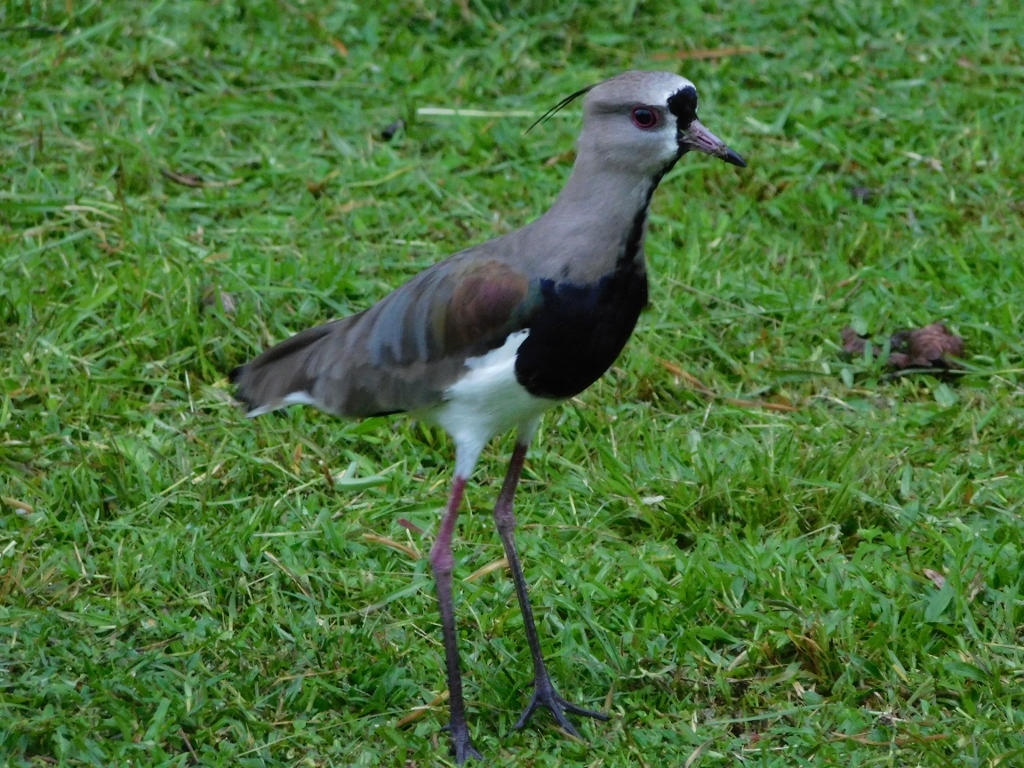 Southern lapwing (Vanellus chilensis)
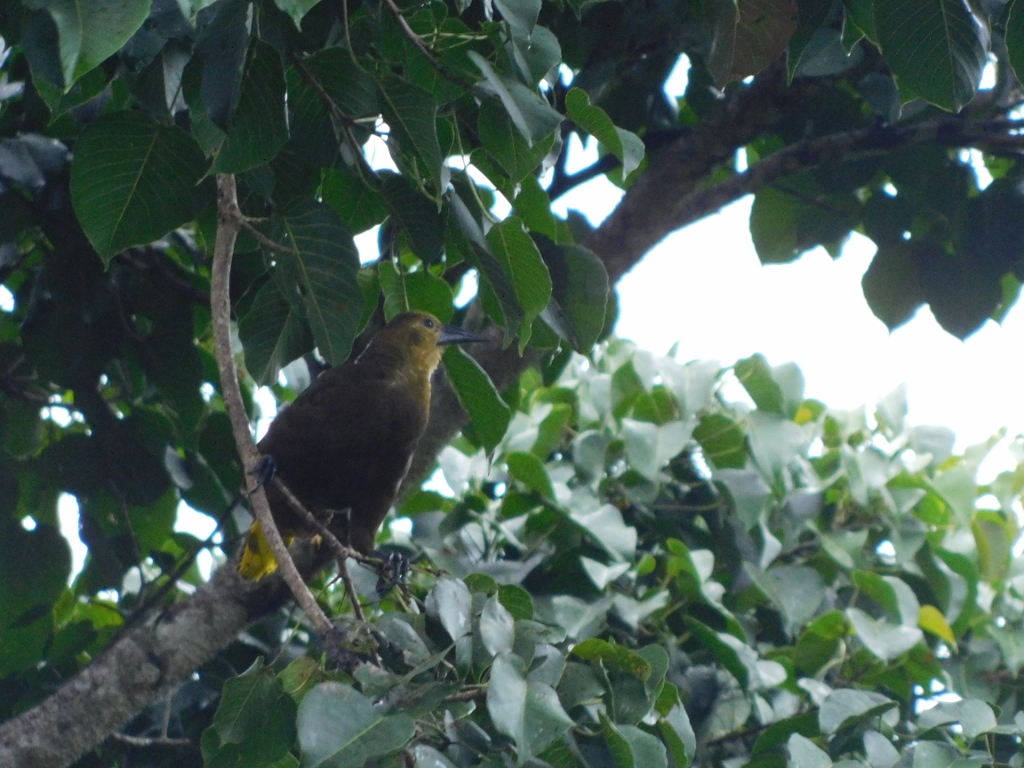 Russet-backed oropendola (Psarocolius angustifrons)
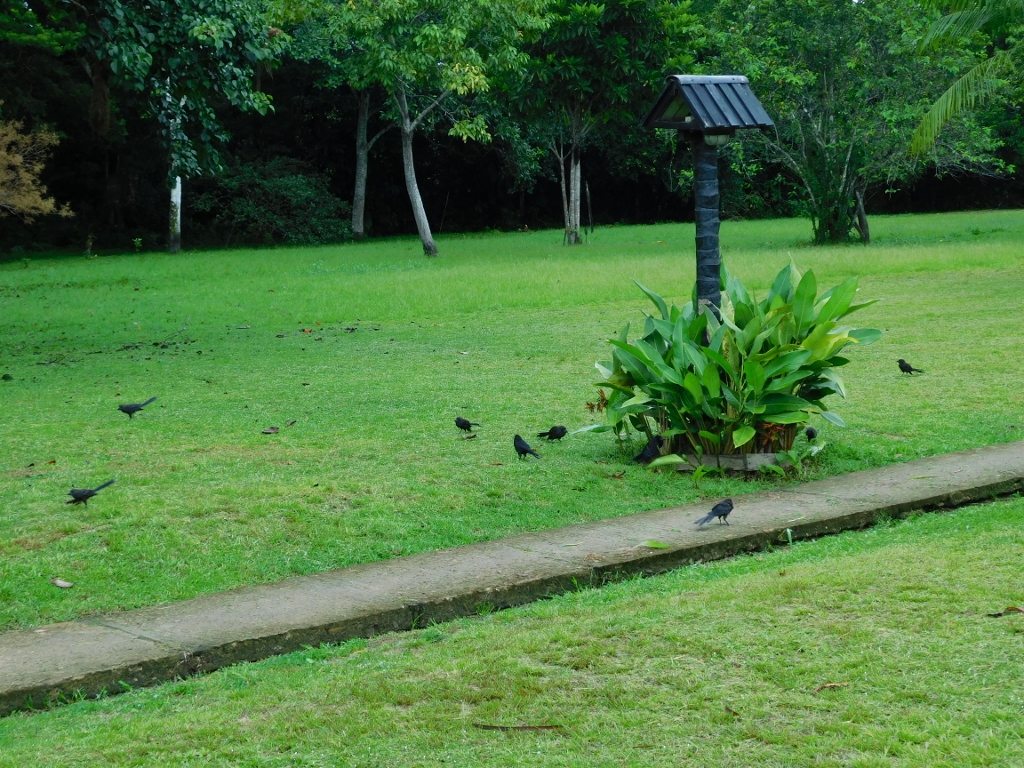 Group of smooth-nilled ani (Crotophaga ani)
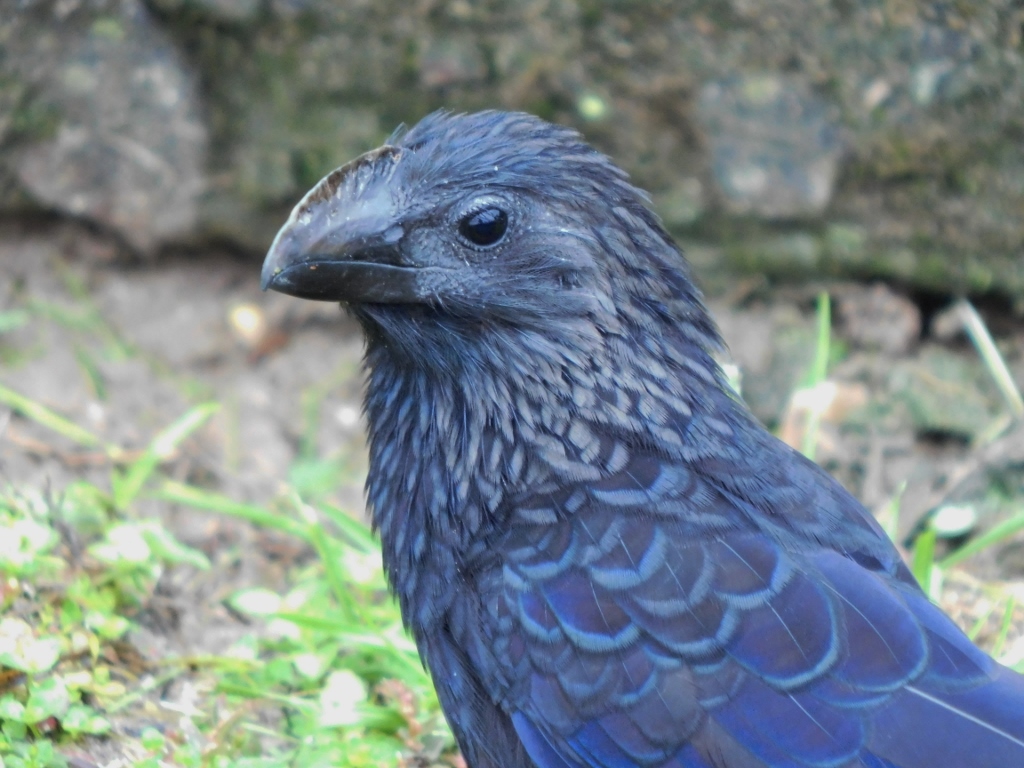 Smooth-nilled ani (Crotophaga ani)
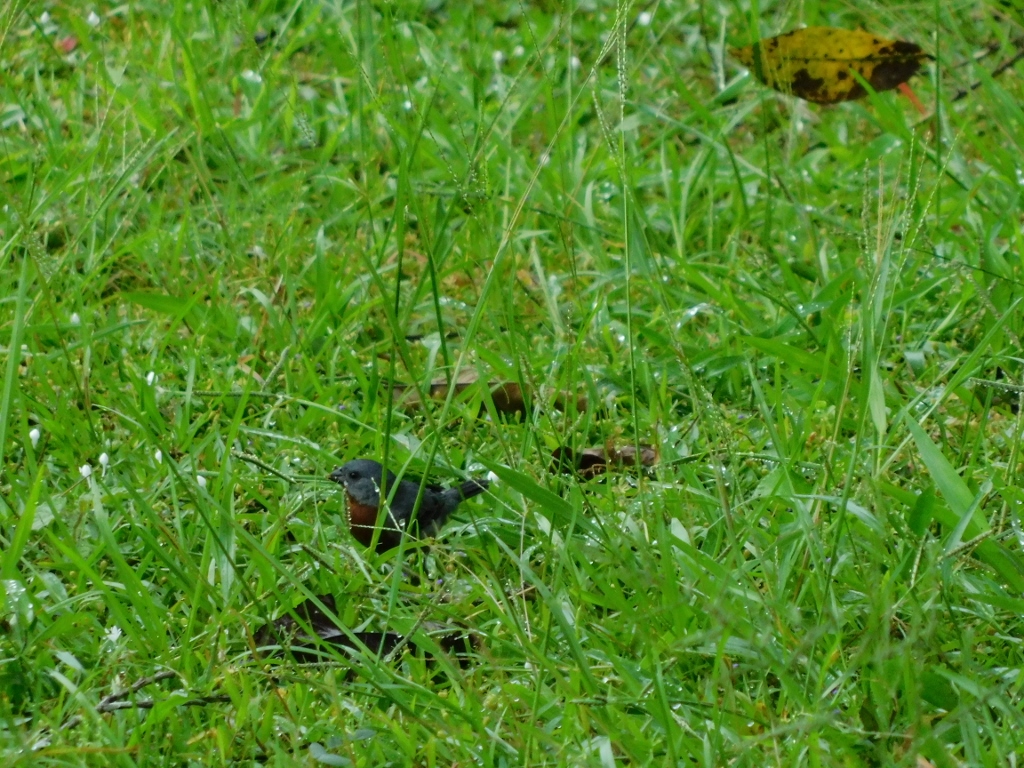 Chestnut-bellied Seedeater, male (Sporophila castaneiventris)
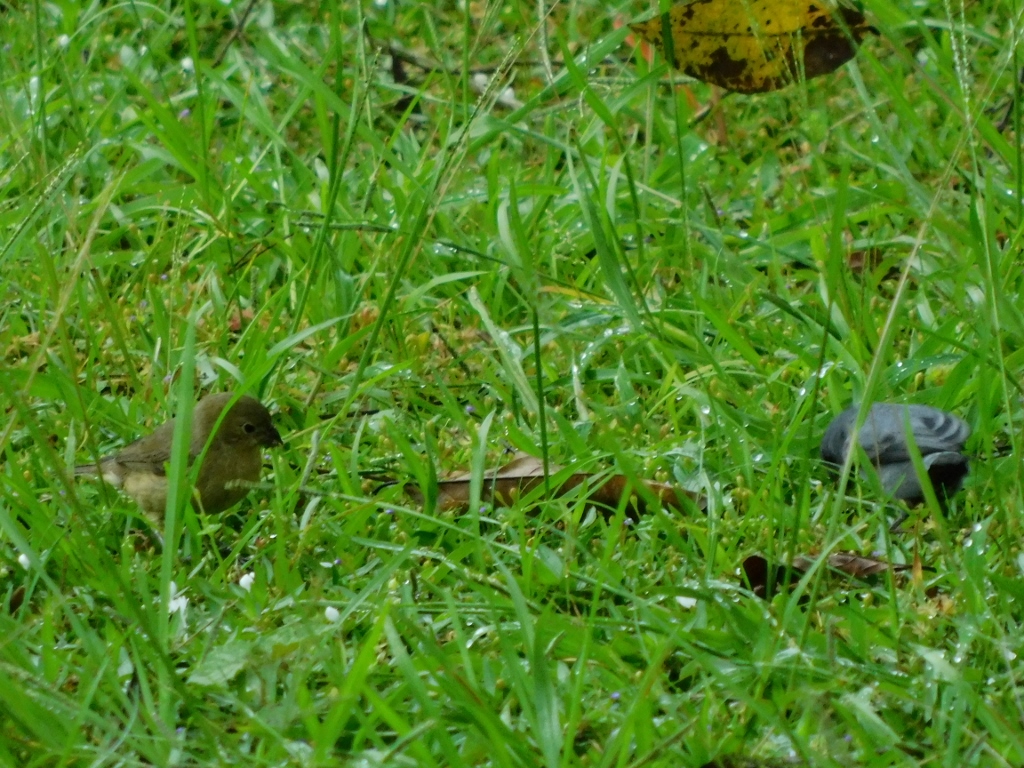 Chestnut-bellied Seedeater, female to the left and male to the right (Sporophila castaneiventris)
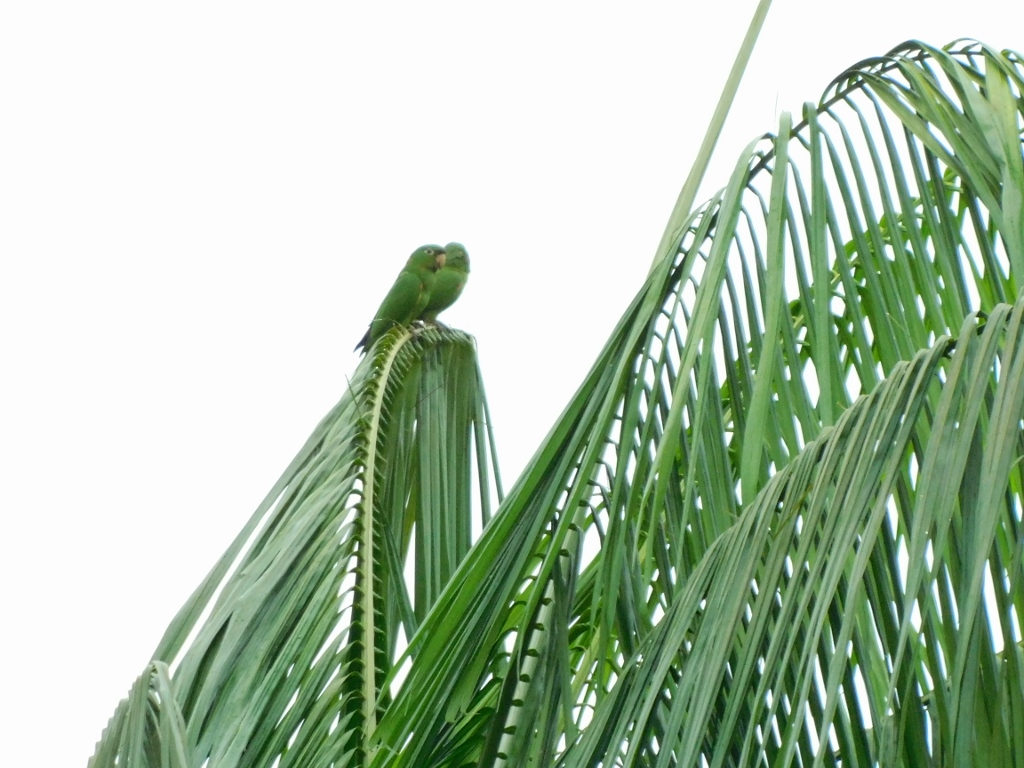 White-eyed parakeet (Psittacara leucophthalmus)
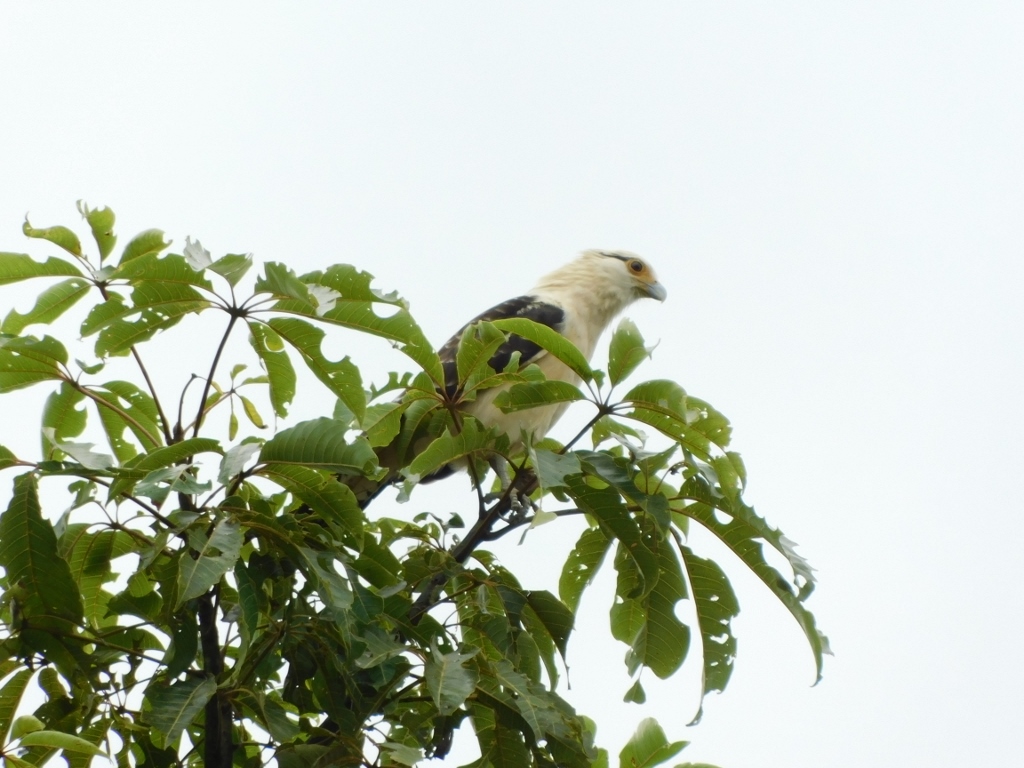 Yellow-headed caracara (Milvago chimachima)
Then I reached the river and there everything seemed calm and peaceful.
 The Amazon early in the morning
However, as is often the case, things can be deceiving at first glance. And thus, at some point I noticed a neotropic cormorant (Phalacrocorax brasilianus) that would occasionally disappear beneath the water's surface, indicating it was hunting fish. So, while everything appeared calm on the outside, there was a life-and-death struggle happening in the water. Quite literally.
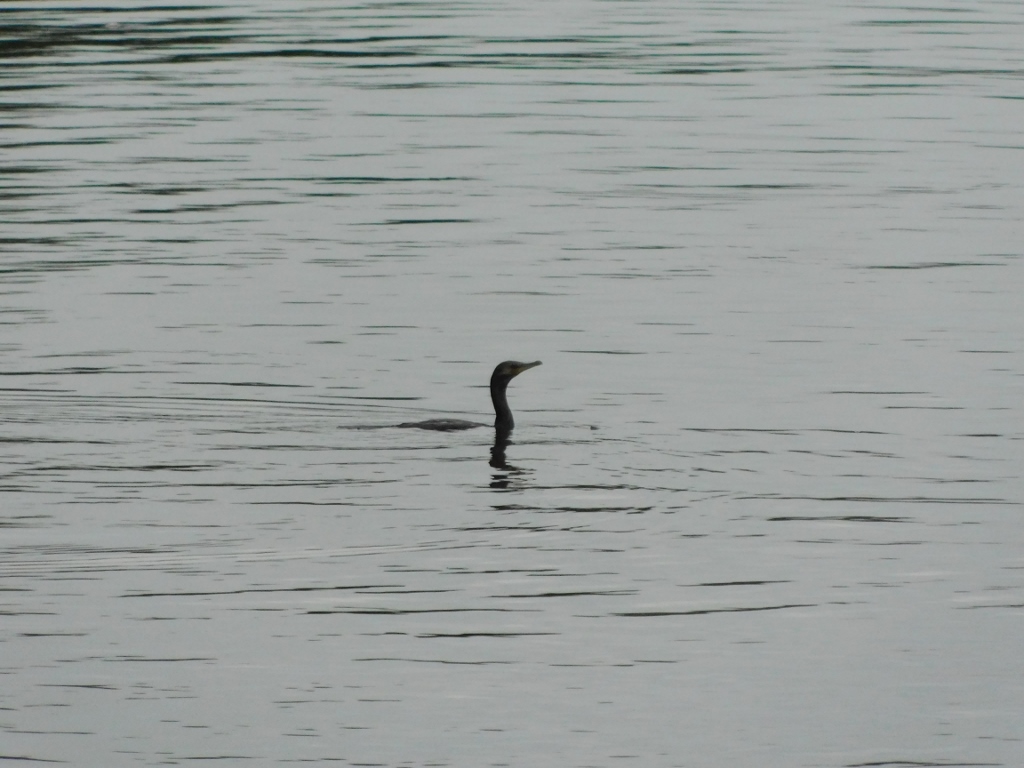 Neotropic cormorant
After enjoying the peaceful start of the day and photographing the birds, I went for breakfast. There, on a tree near the terrace, I saw another beautiful bird species – the red-capped cardinal (Paroaria gularis).
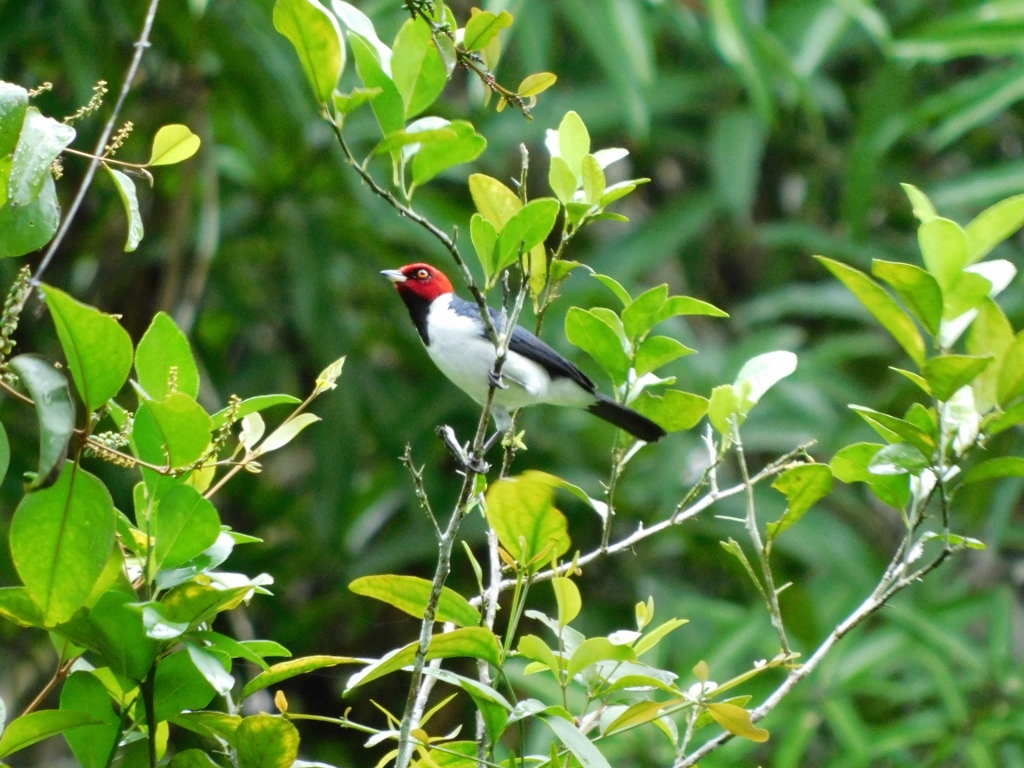 Red-capped cardinal
After breakfast, I went to get my Wellington boots along with the incredibly nice people I arrived with from Leticia to Puerto Nariño the previous day. It turned out we were staying at the same accommodation and got along well, even wanting to go on the same excursions. There was Jessica from England, Giacomo, an Italian living in Paris, and Felipe, a Colombian living in the Netherlands. They were all considerably younger than me, but I didn't feel the age difference much because we joked around a lot and had pleasant chats.
As for the Wellington boots, they are absolutely essential for walking in the Amazon rainforest. No other footwear would do. This would become evident later in some photos.
So, each of us chose the appropriate size, as local hotels and guesthouses typically rent out Wellington boots since visitors usually don't have them. Although, the previous day, I did see a few people on the same speedboat from Leticia that I took who had brought their own knee-high rubber boots.
As I’ve mentioned earlier, Puerto Nariño is located at the entrance to a tributary of the Amazon that can be seen as an extended mouth of a smaller river, the Loretoyaco. Our accommodation was about 2 km upstream from Puerto Nariño and this stretch of waterway is connected to the Loretoyaco River mouth and a few "lakes" that I visited that afternoon. I'll write more about that later on.
For now, with our boots on, we headed to a small wooden boat that took us for the excursion. First, we headed downstream towards Puerto Nariño and the main flow of the Amazon.
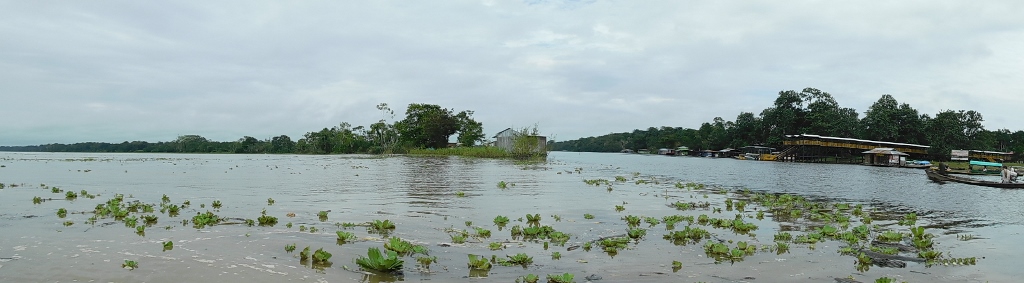 The main flow of the Amazon is to the left and in the middle, where the floating vegetation is, while to on the right-hand side the water is different and this is the branch that leads to the mouth of the Loretoyaco and the “lakes”; the pier in Puerto Nariño is further to the right
I was delighted once again to sail on the Amazon.
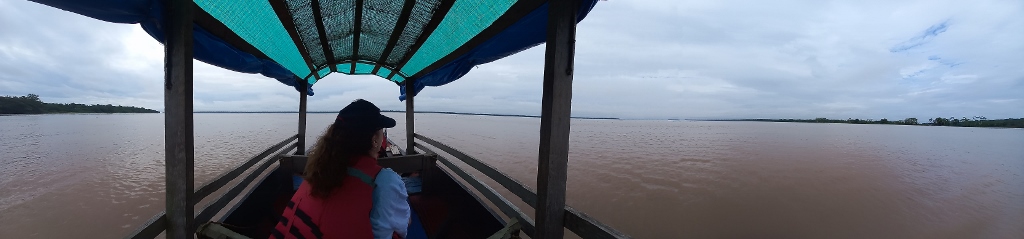 Sailing the Amazon
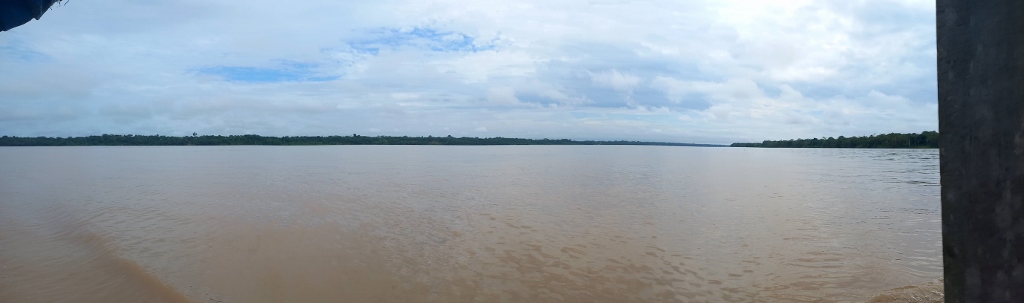 The Amazon
Soon we approached the other, right bank of the Amazon and there was – Peru.
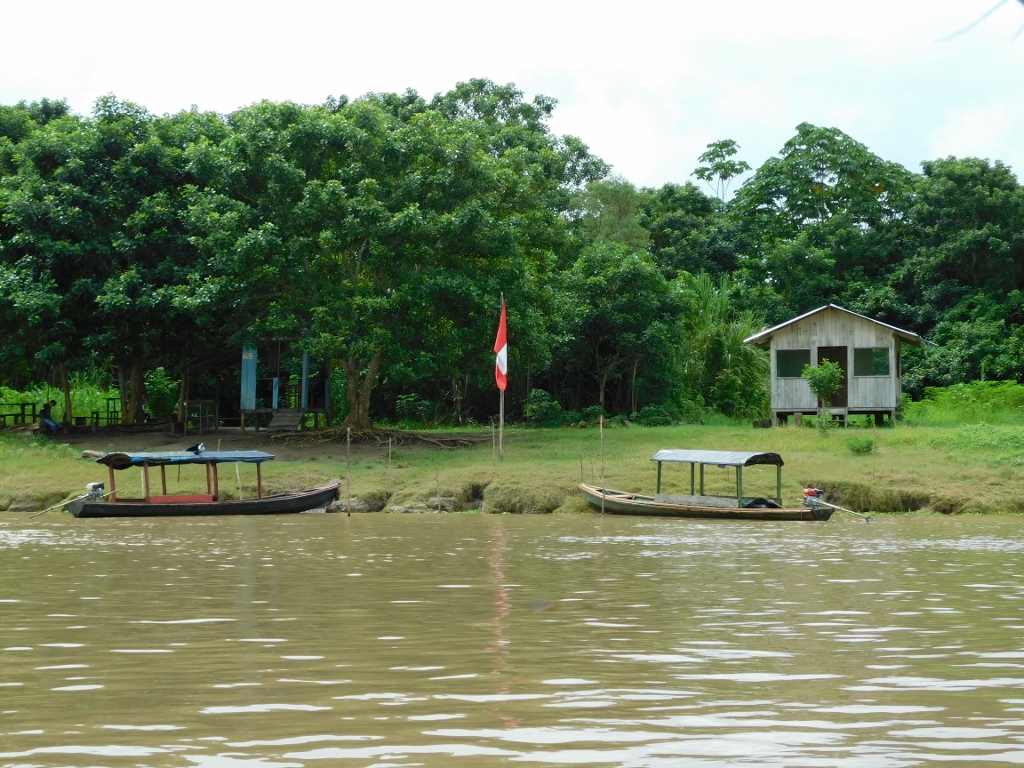 Arriving in Peru
Namely, this morning, we went on an excursion, a walk through the rainforest and a visit to a local settlement, specifically in Peru. Technically speaking, I still didn’t reach "mainland" Peru; instead, we went to an island called Cacao, but... The Amazonia is intertwined with rivers, watercourses and water expanses they call lakes here, so every piece of land can easily be seen as an island. In any case, we visited a village named San Antonia de Cacao.
After disembarking, we met up with a local guide and soon set off on a walk. Initially, we followed a trail through the forest.
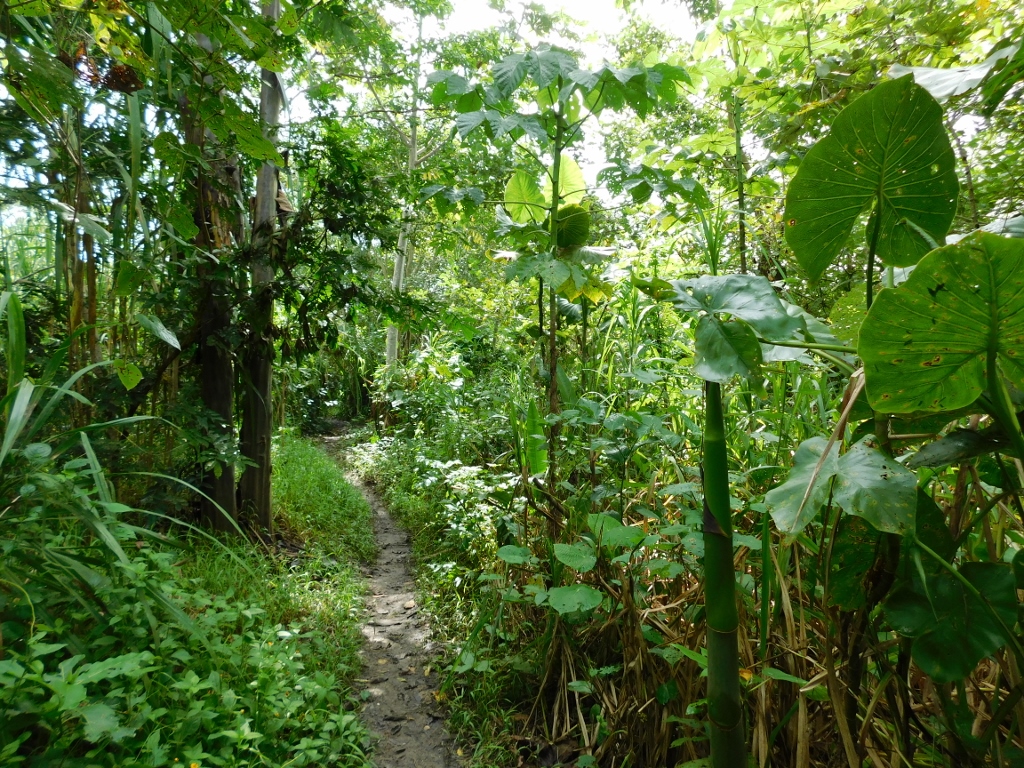 Forest trail on the island of Cacao
The guide occasionally stopped to draw our attention to interesting details, such as a termite nest on a tree, which he opened slightly to show us its inhabitants.
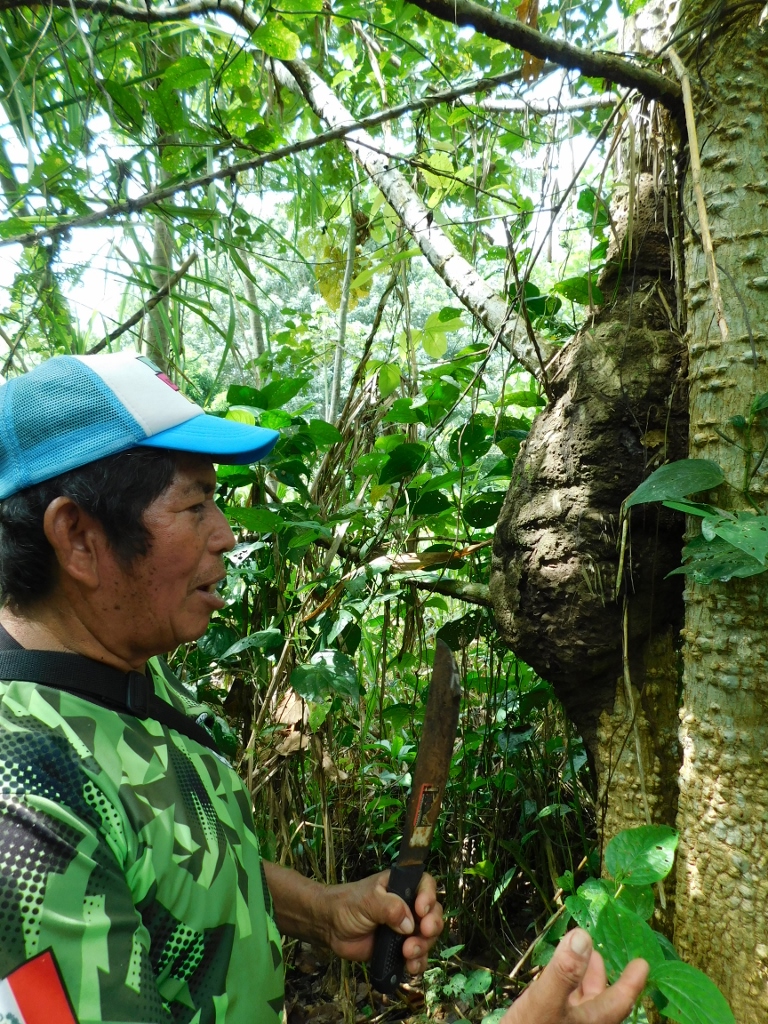 Termite nest on a tree
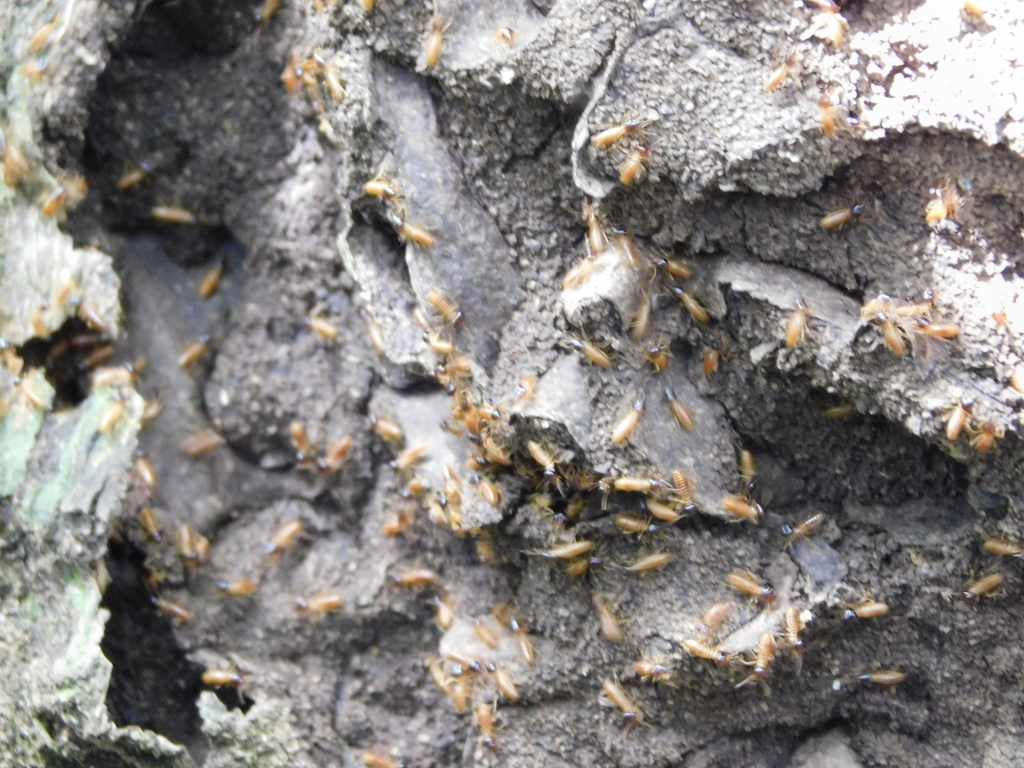 Termites
Very soon, the trail lost its path-look and we found ourselves navigating through relatively dense vegetation that had various forms and shapes.
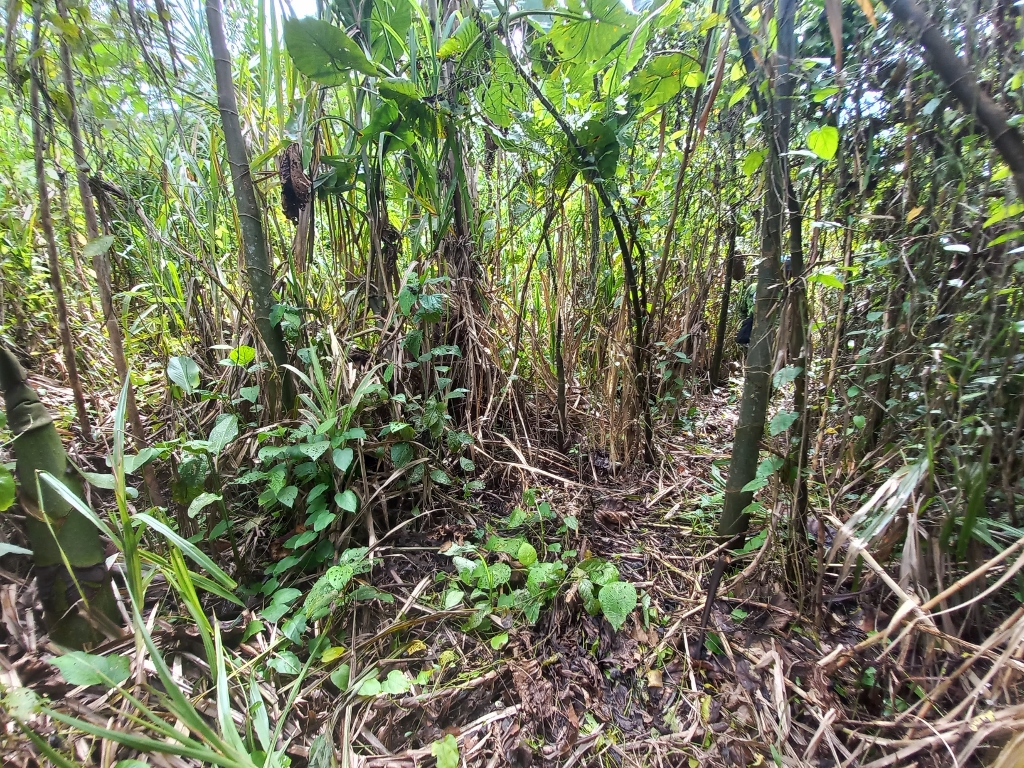 Walking around the island of Cacao
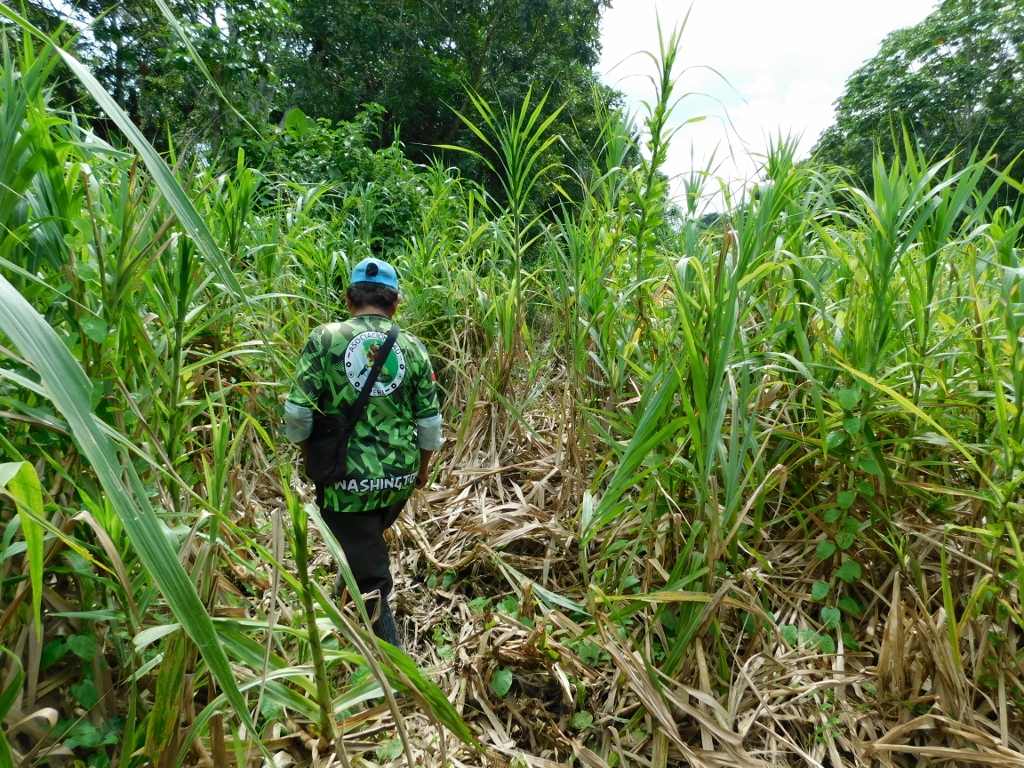 Walking around the island of Cacao
Here, our guide told us that there was a resident capybara that was quite accustomed to human presence. He even tried calling it, but unfortunately, we didn't manage to see it.
However, soon we arrived at a small pond where an impressive giant waterlily (Victoria amazonica) was growing.
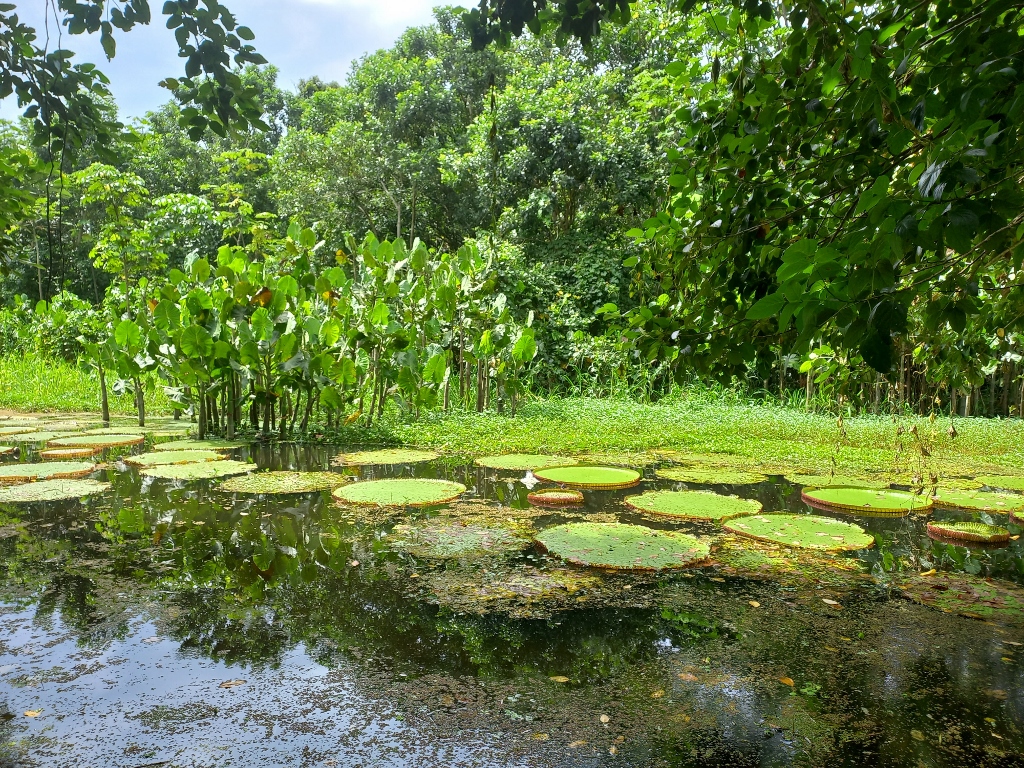 Giant waterlily
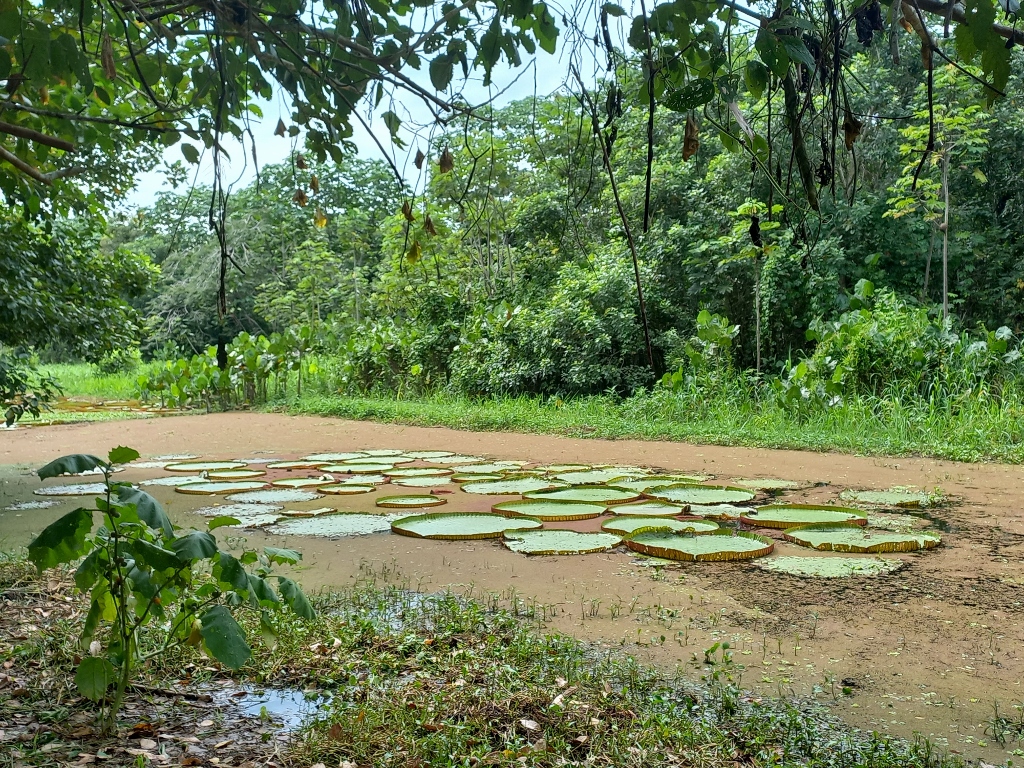 Giant waterlily
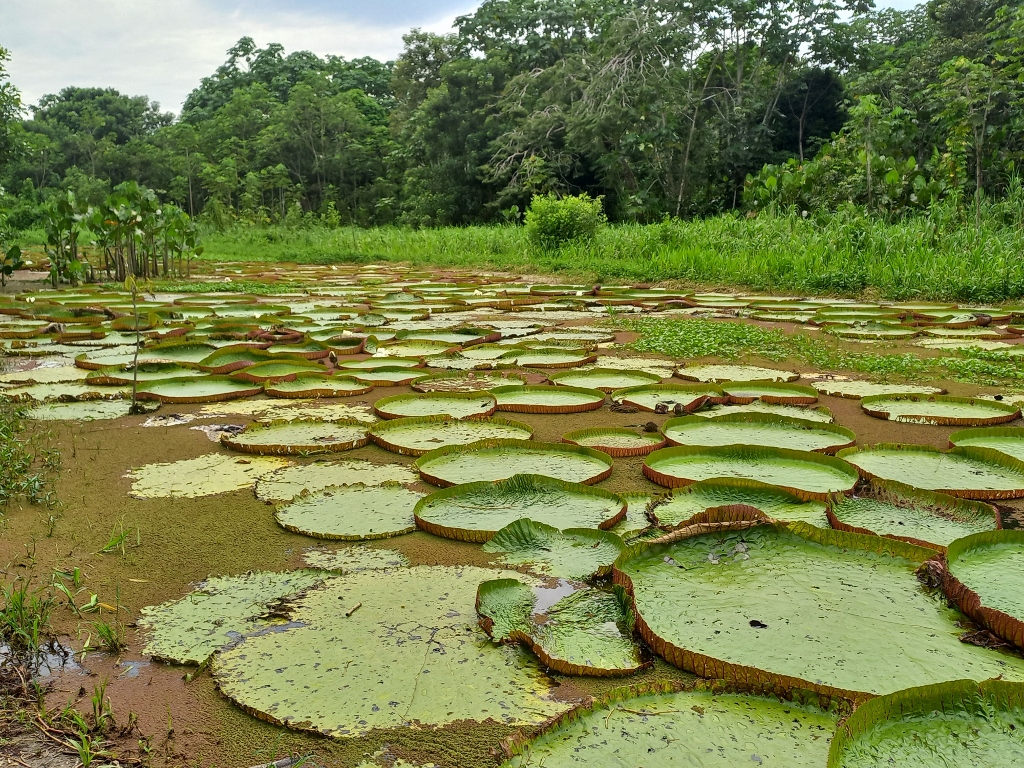 Giant waterlily
This is the second largest species of waterlily in the family Nymphaeaceae. It naturally grows in Guyana and the Amazon Basin. Its enormous leaves can reach up to 3 meters in diameter and are very strong and resilient, capable of floating even under heavy weight. However, it didn't occur to me to test if one of the leaves could support my weight; I simply reached out my hand to gauge the scale, although the leaves here weren't at their maximum diameter.
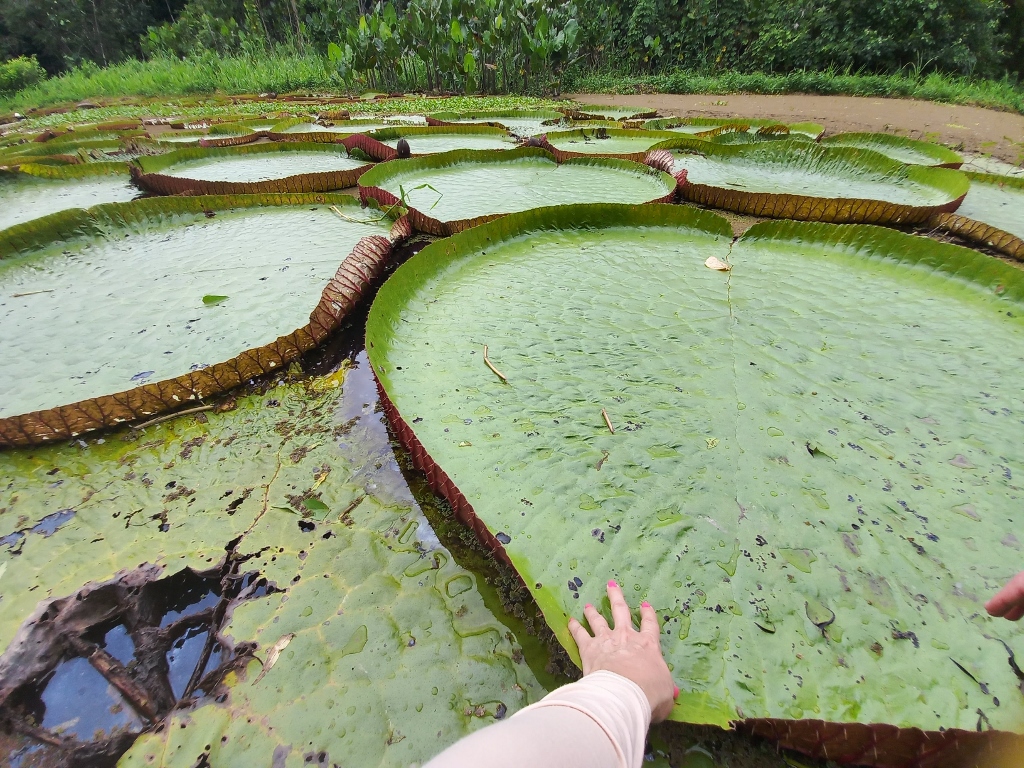 Giant waterlily
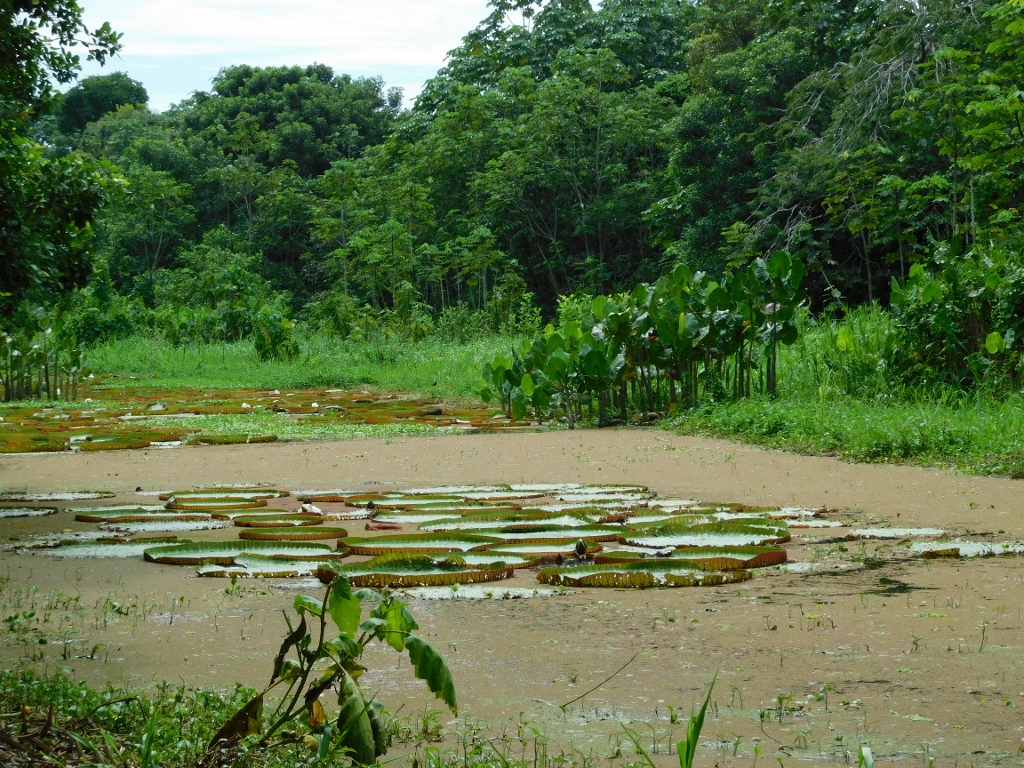 Giant waterlily
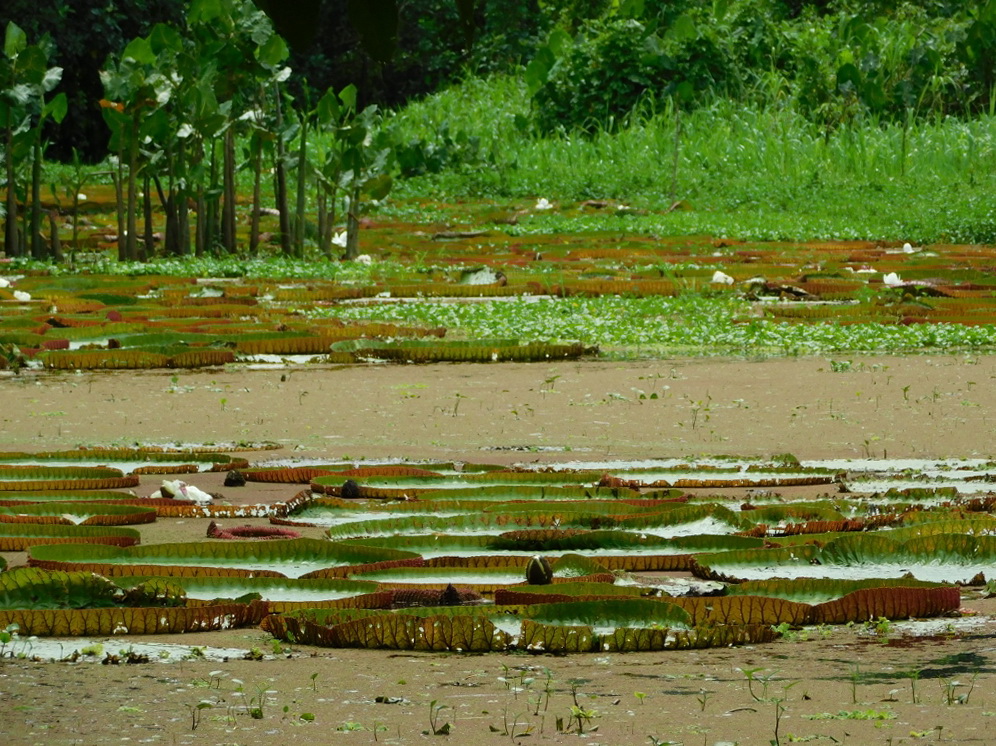 Giant waterlily
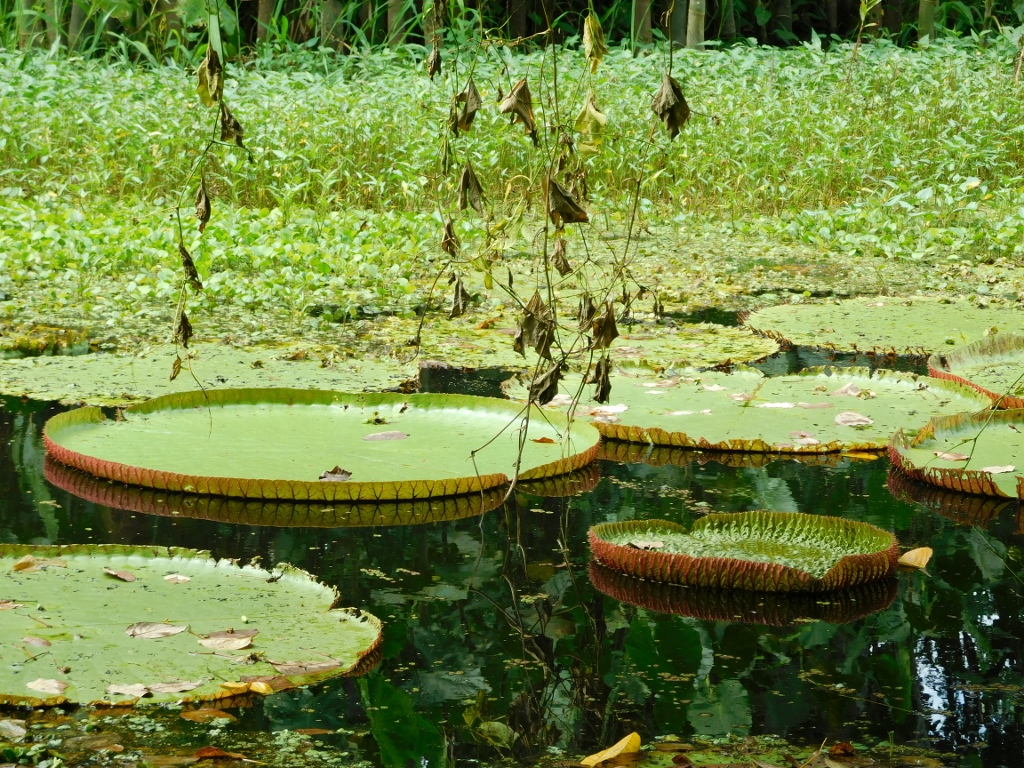 Giant waterlily
As I've read, the flowers of the giant waterlily are white when they first open and then they turn pink on the second night. Like the leaves, the flowers are also large and can reach a diameter of about 40 cm. During this visit, I didn't see any pink flowers, but the white flowers were truly beautiful.
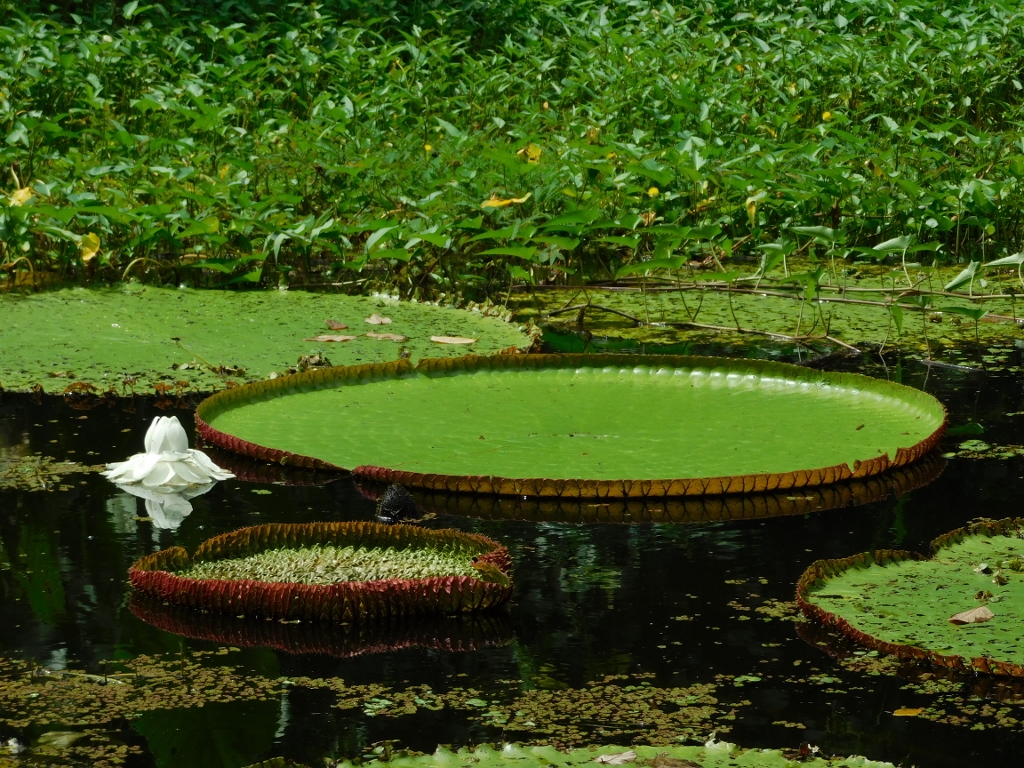 Giant waterlily
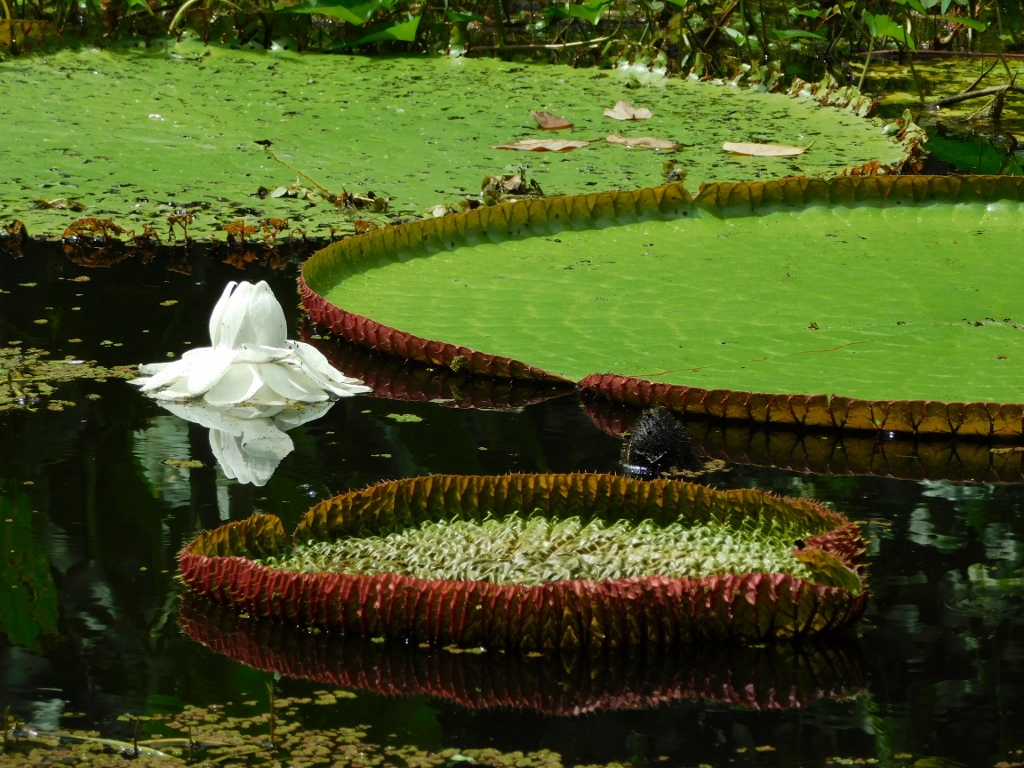 Giant waterlily
However, here beside the pond, there were other interesting details as well. For instance, there was a twig insect belonging to the order Phasmatodea. The picture is a bit blurry, but the insect is still quite visible.
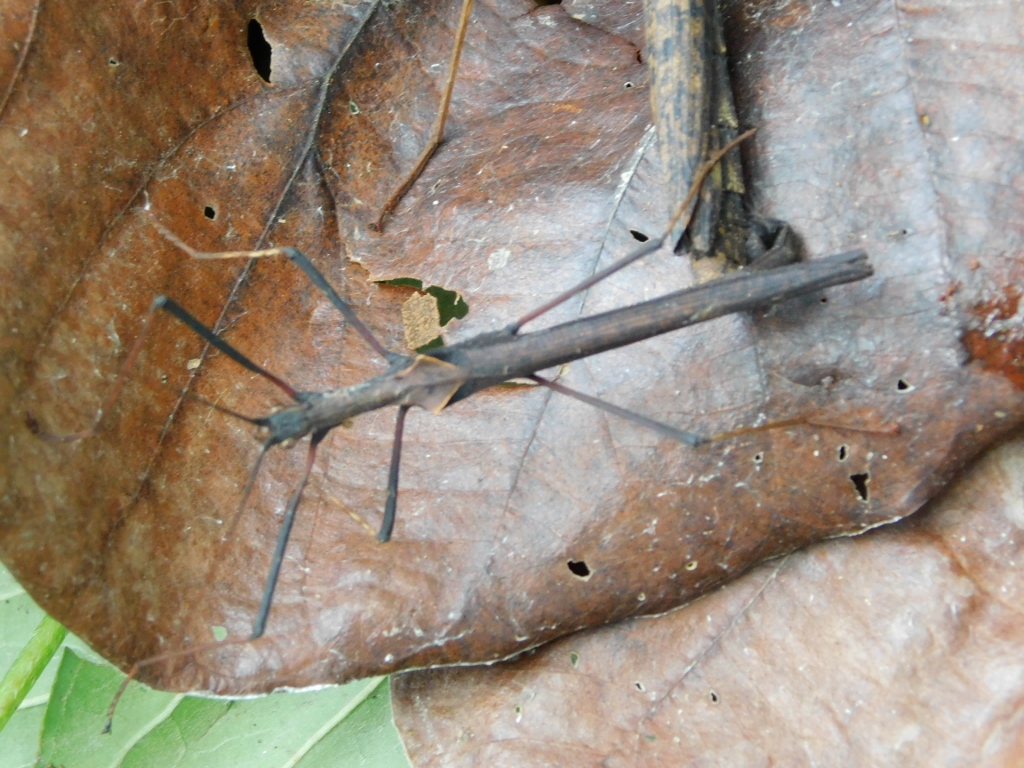 Twig insect
Next to the pond, we also saw a plant called naranjilla, in Colombia known as "lulo" (Solanum quitoense).
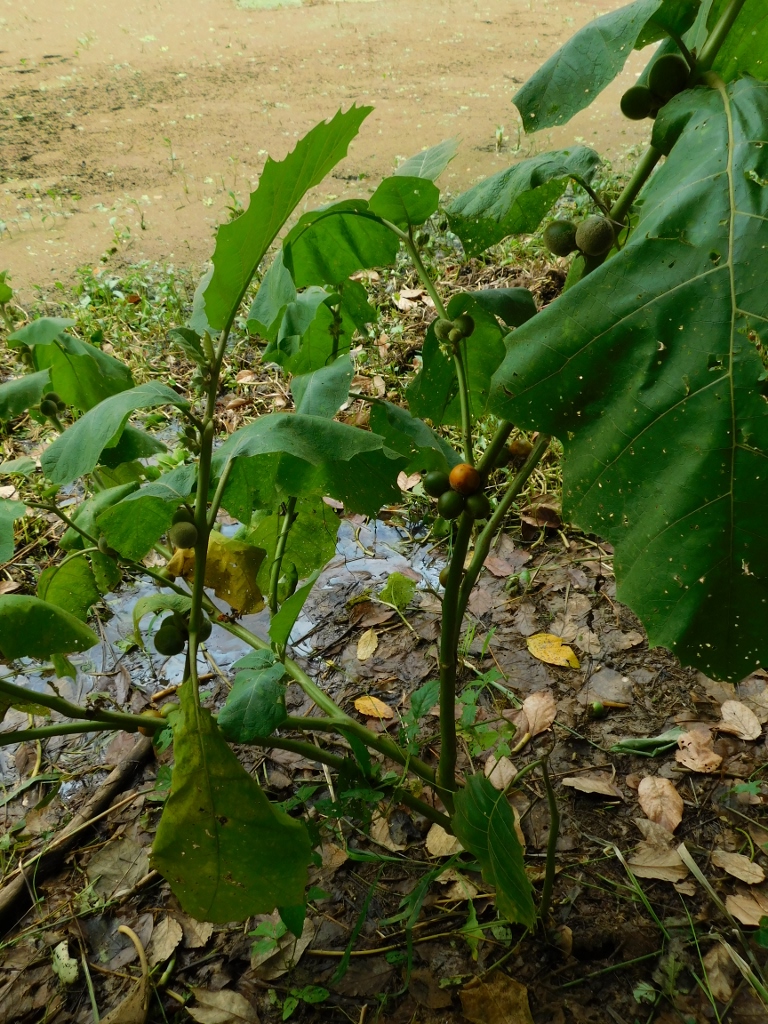 Naranjilla or lulo
When ripe, the fruits of this plant can be eaten directly or used in order to make juices.
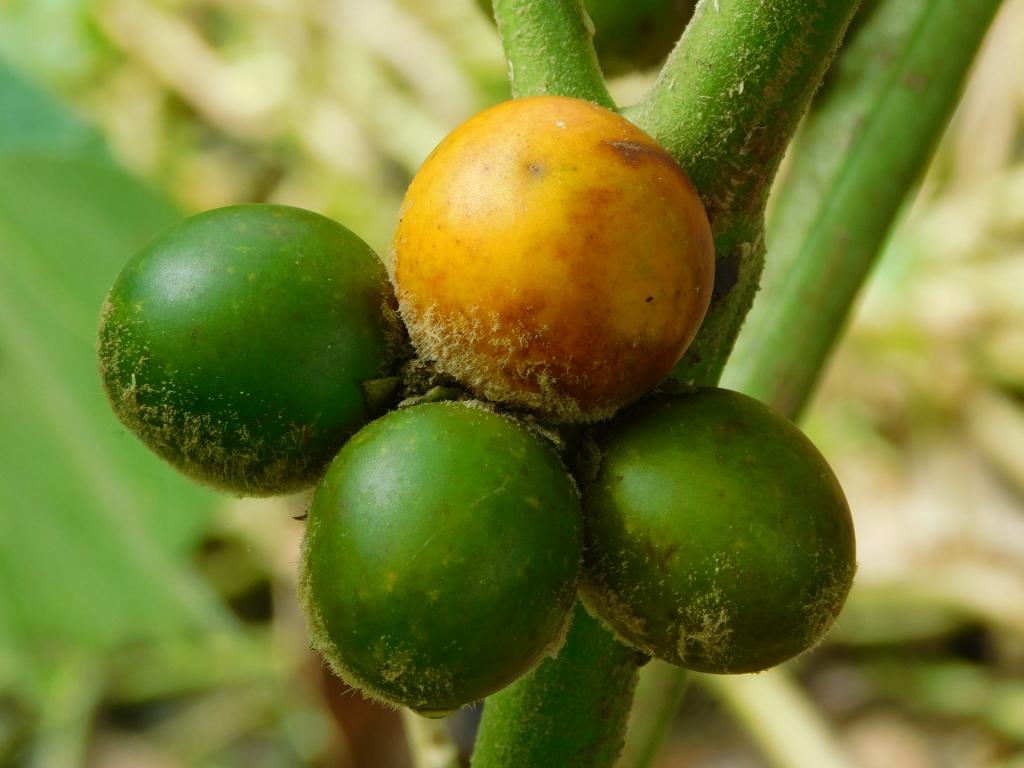 Naranjilla or lulo fruits
Still, I found it interesting here to continue capturing images of the leaves of the giant waterlily, as they competed for their spot under the sun.
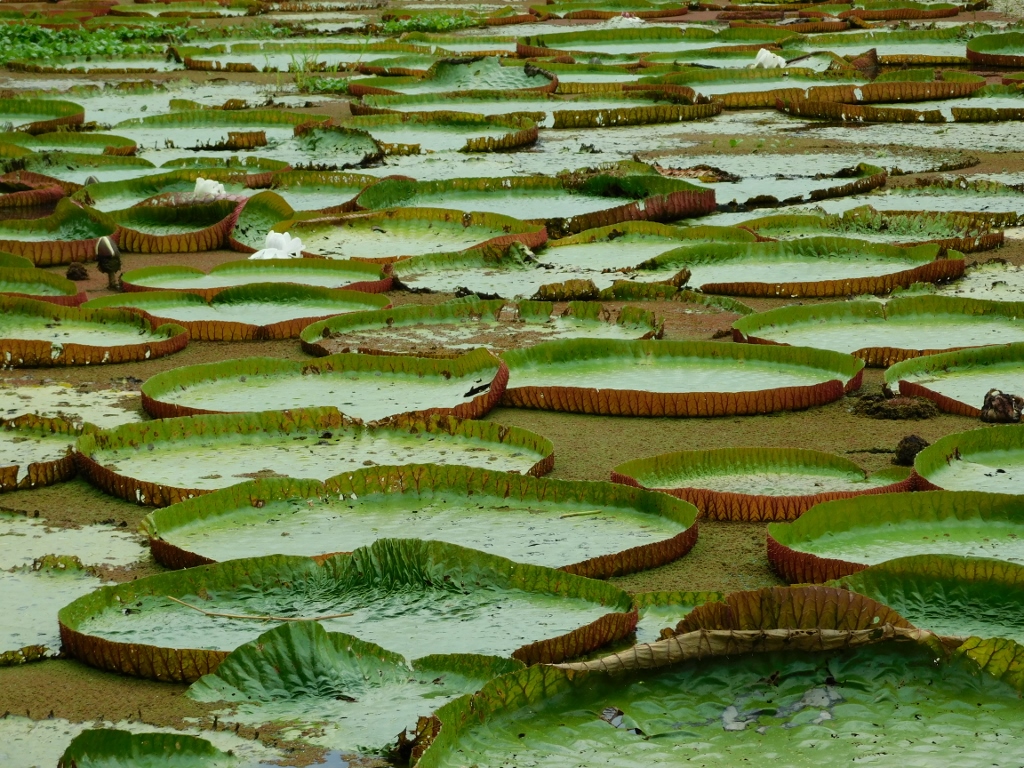 Giant waterlily
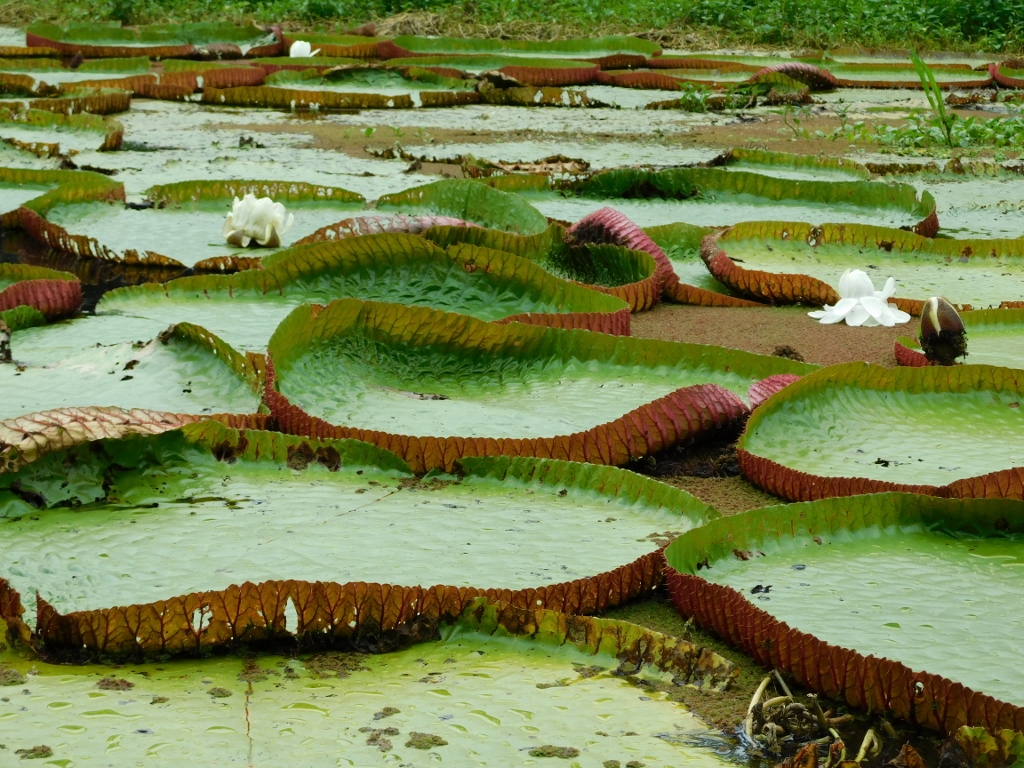 Giant waterlily
After the short break by the pond, we continued further into the rainforest. It wasn't always easy and I was very glad that I had chosen to wear those Wellington boots. As I’ve mentioned before, the boots are absolutely essential for walking in the Amazonia.
In addition, visitors must prepare for rather uncomfortable conditions – it was hot and the humidity was overwhelming. This is evident from the fact that I was covered in sweat and even my glasses were fogged up.
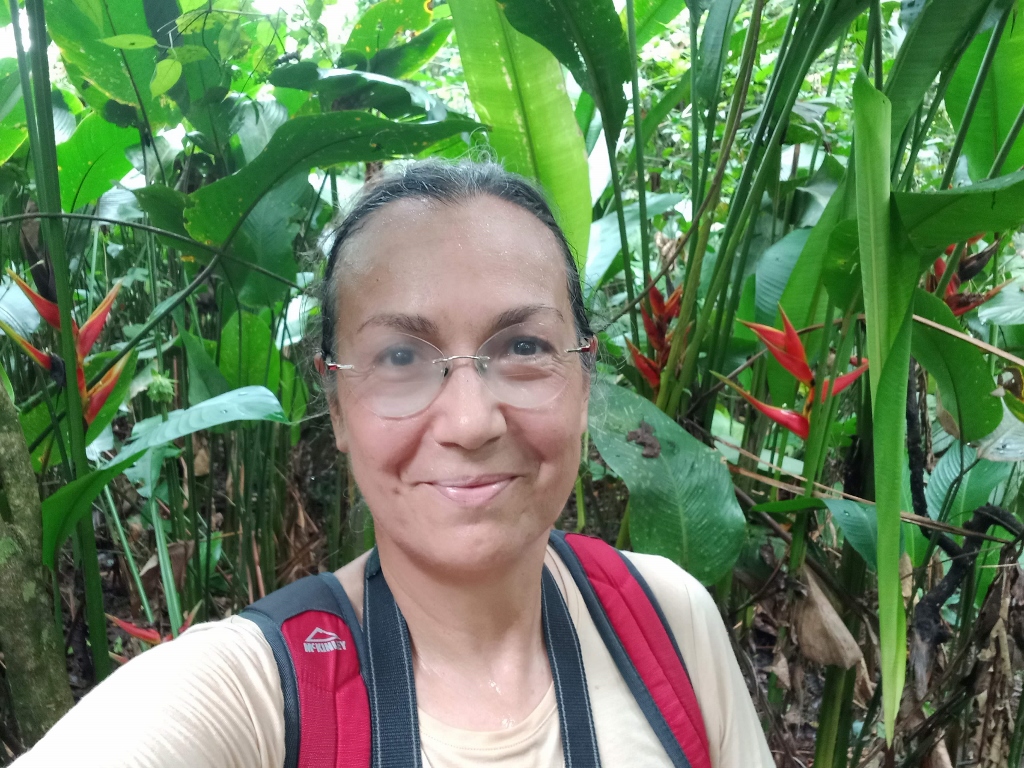 Casual stroll in Amazonia
In the background of the previous photograph, you can see specimens of a plant from the genus Heliconia, which includes around 200 species, all of which are tropical. Collectively, they are known as heliconias.
But they weren't the only interesting things we saw along the way. There were also tiny mushrooms and some birds.
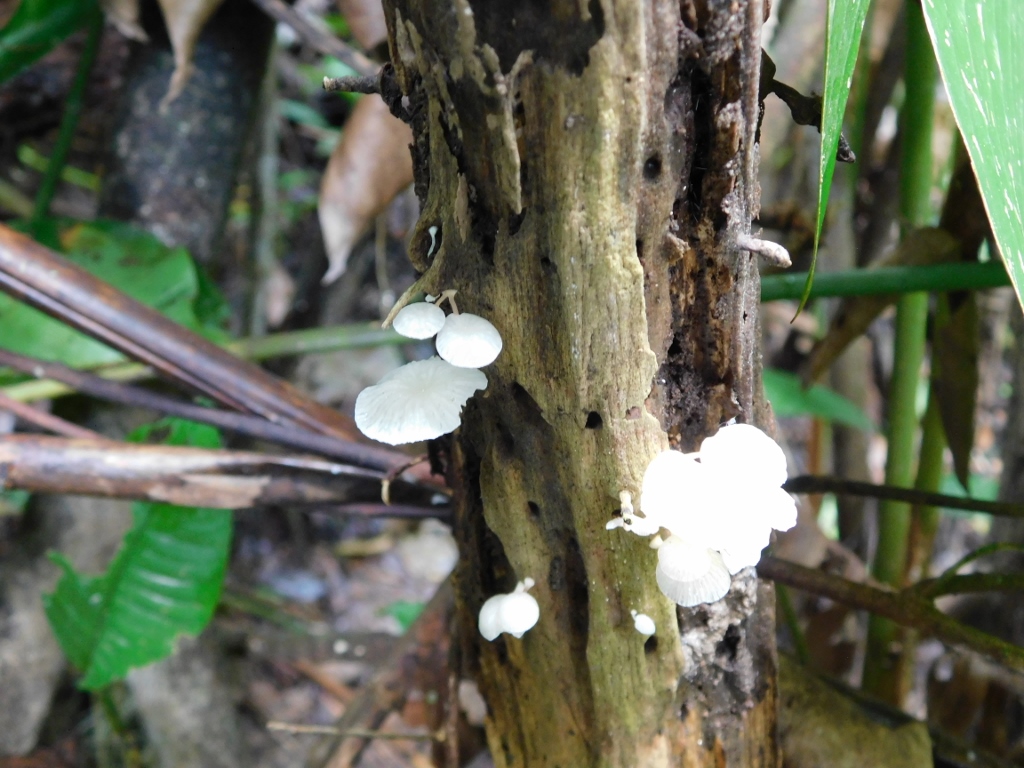 Snowy white mushrooms in Amazonia
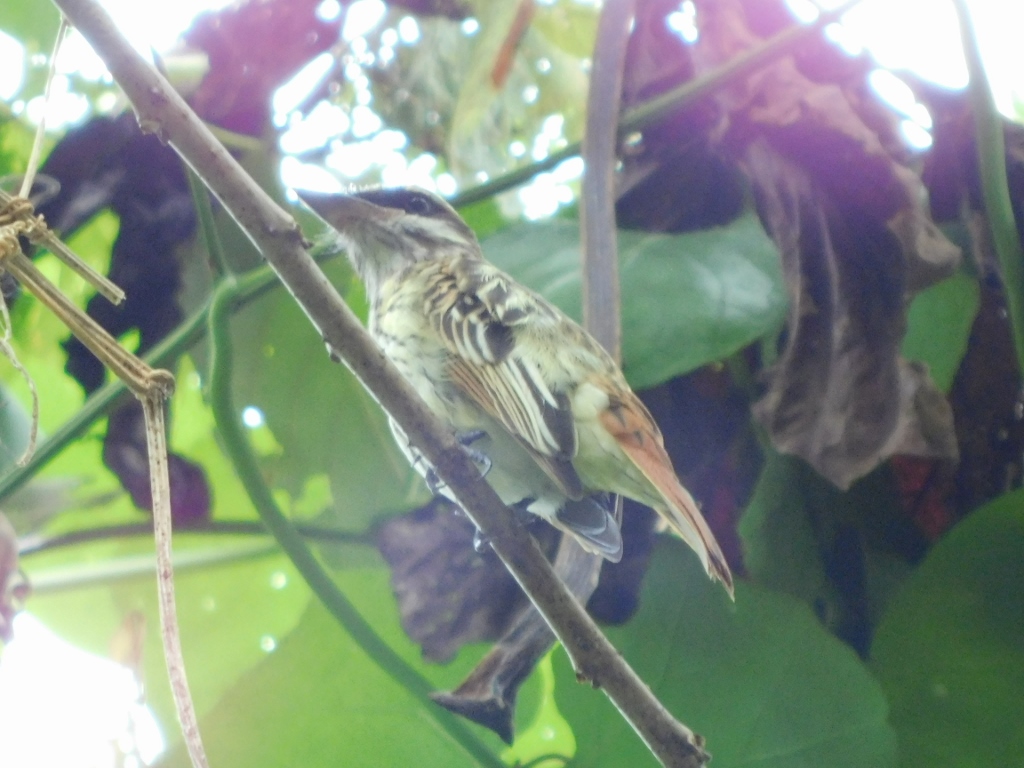 Streaked flycatcher (Myiodynastes maculatus)
In this area, however, perhaps the most interesting were the leafcutter ants from the Atta genus.
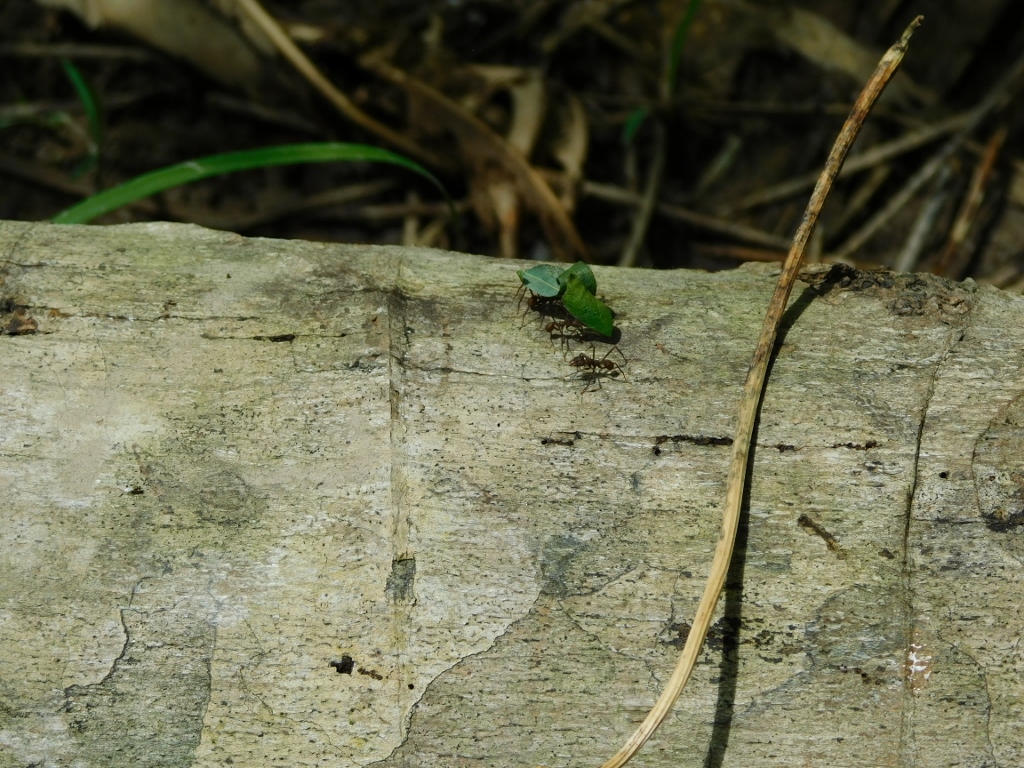 Tiny ants and large pieces of leaves
But, they are even more interesting when seen in a video format.
Not far from there, we spotted another termite nest on a tree, while here you could clearly see their tunnels which they build either on the ground or along tree trunks. The tunnels visible in the next photograph lead to their nest.
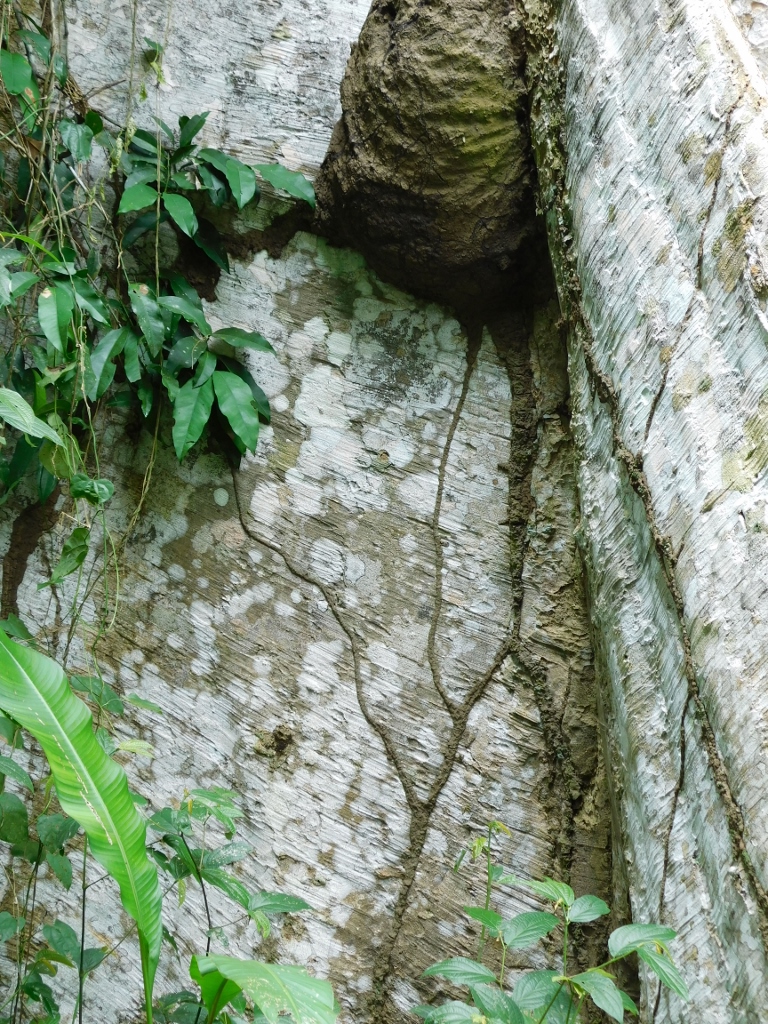 Termite nest on a tree
Since I'm mentioning trees, here are two interesting species. One is the kapok tree (Ceiba pentandra), also known as the silk-cotton tree. I have mentioned this tree several times in my travelogues because it's always impressive. Among other things, it can grow up to about 73 meters in height, with a trunk diameter reaching up to 3 meters and it also has impressive buttress roots. On this occasion, I took a picture near these buttress roots and these photos give an idea of the size of an average kapok tree.
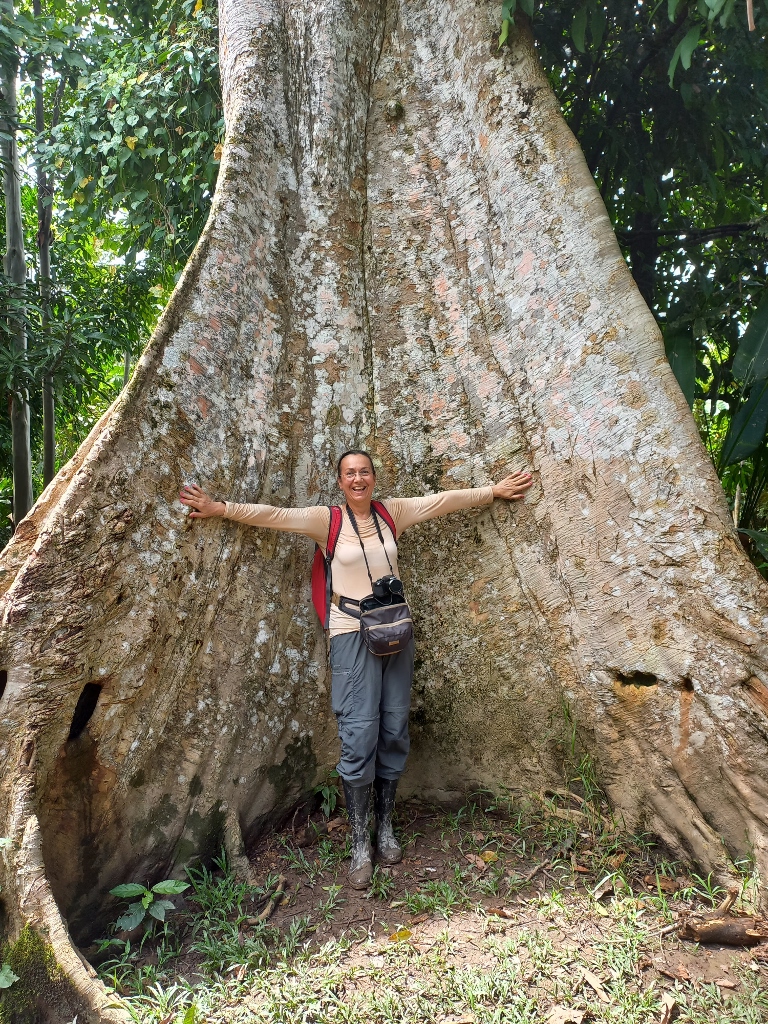 Striking a pose with a kapok tree
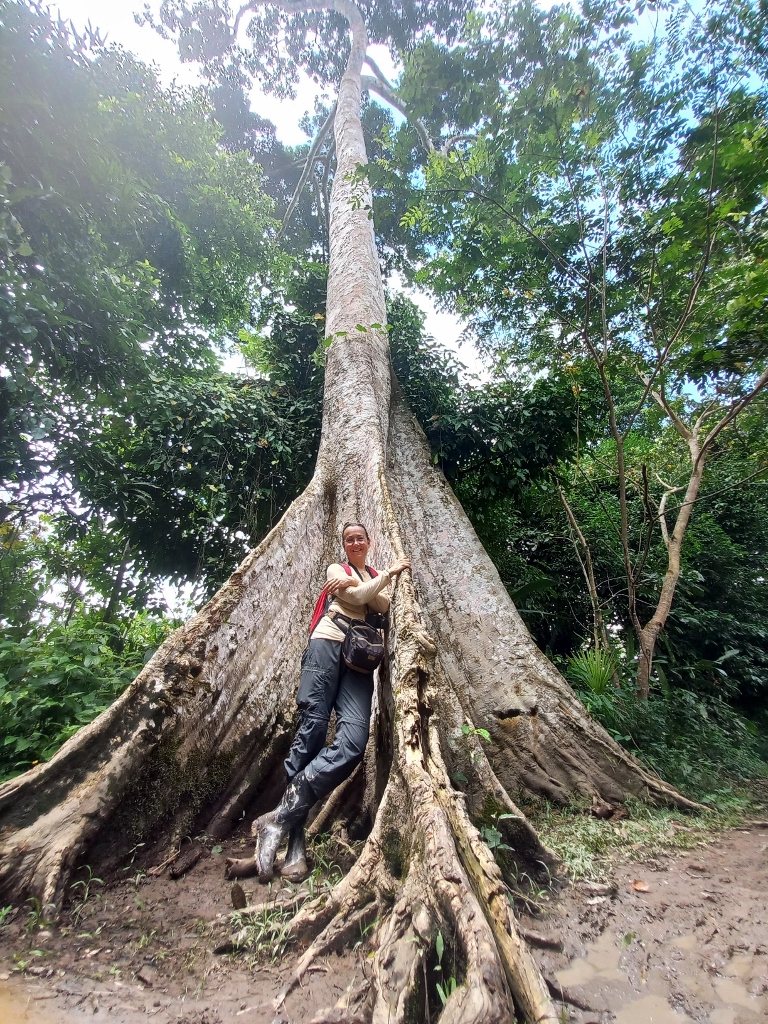 Striking a pose with a kapok tree
As oppose to the kapok tree, which naturally grows on several continents, here I saw an interesting tree that is endemic to the Amazon rainforest called capirona (Calycophyllum spruceanum).
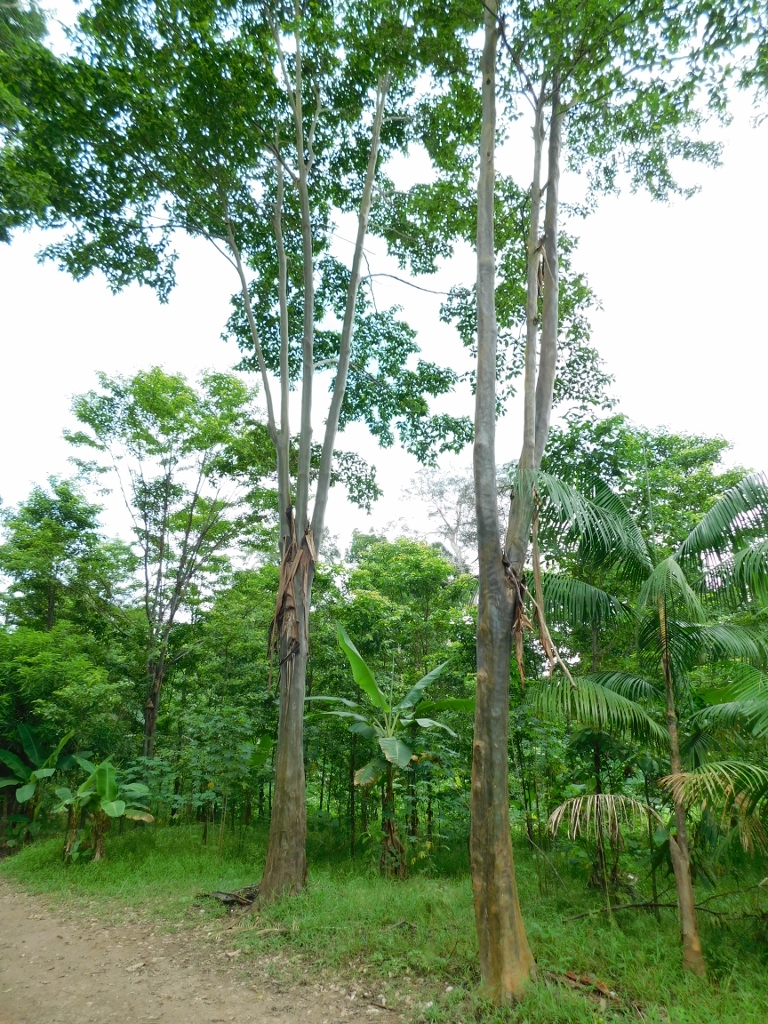 Capirona trees
It, too, can grow quite tall, up to 30 meters, but one of its main features is its glossy green bark. On the other hand, the tree regularly sheds its bark to rid itself of lichens, fungi and other pests. Typically, once or twice a year, it completely sheds its outer bark layer to reveal new growth underneath. Additionally, the tree grows very quickly and is considered mature enough for harvesting for industrial purposes already when it’s eight years old.
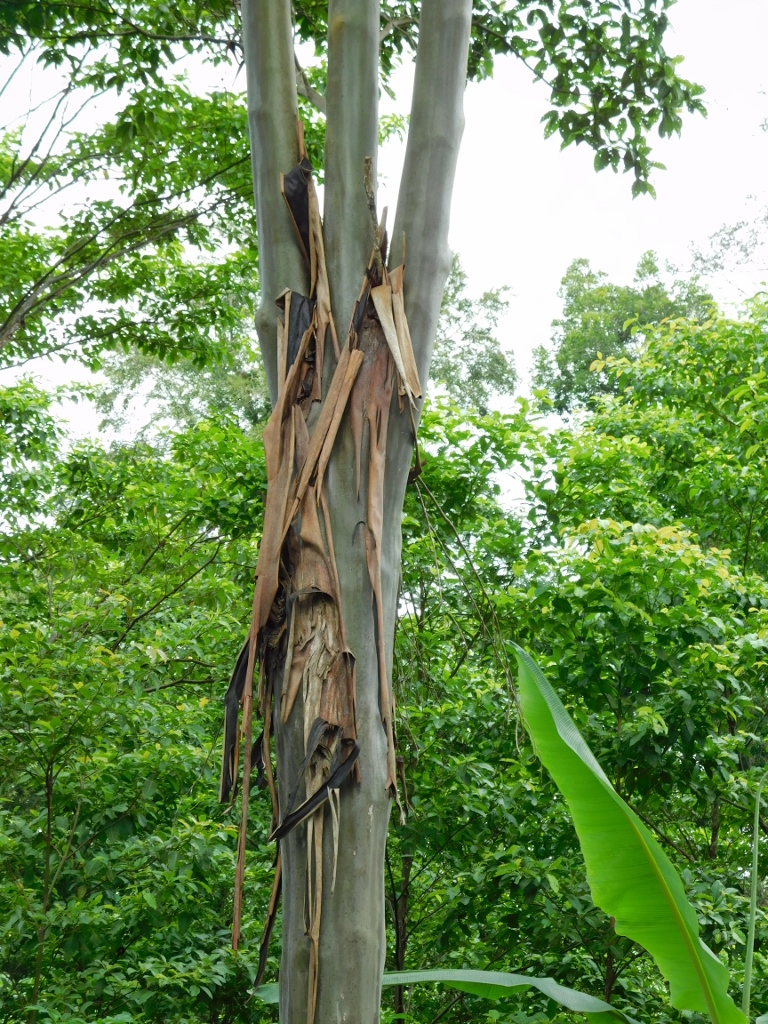 Capirona
Near these trees, we had already left behind the muddy parts and were now moving along a wide trail in search of an important inhabitant of this area.
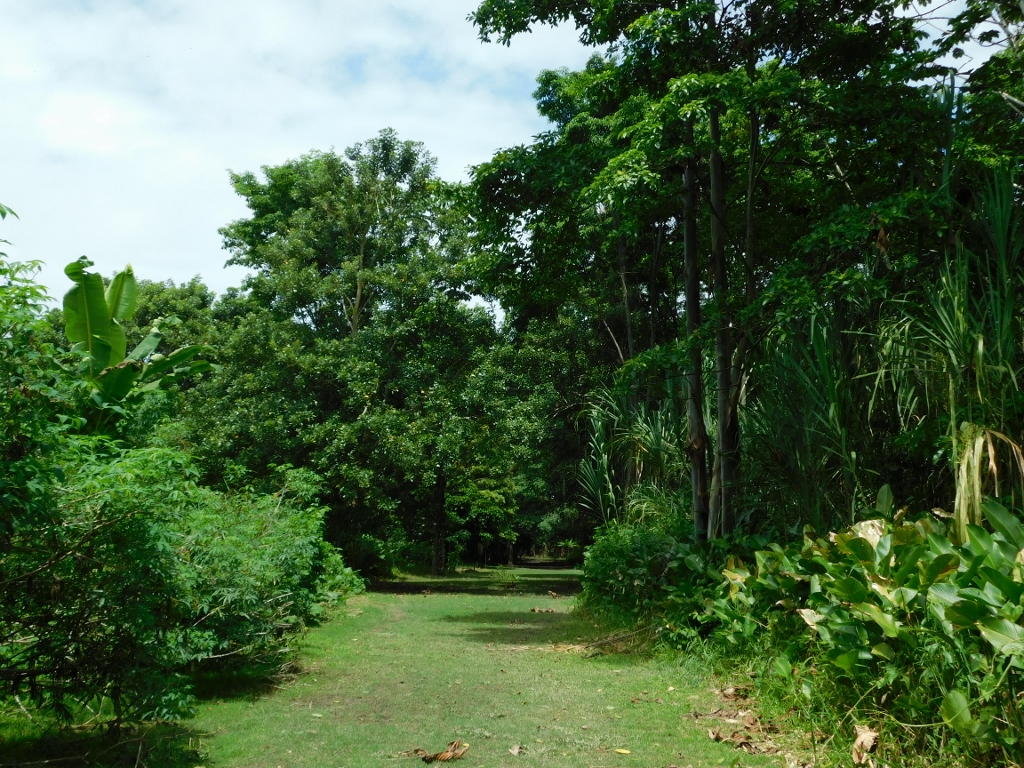 Trail on the island of Cacao
We were searching for the brown-throated sloth (Bradypus variegatus). Imagining finding them was easier said than done because they are not easy to spot. However, our guide knew where these sloths typically reside, so he took us to 3-4 spots, but initially, it was quite discouraging.
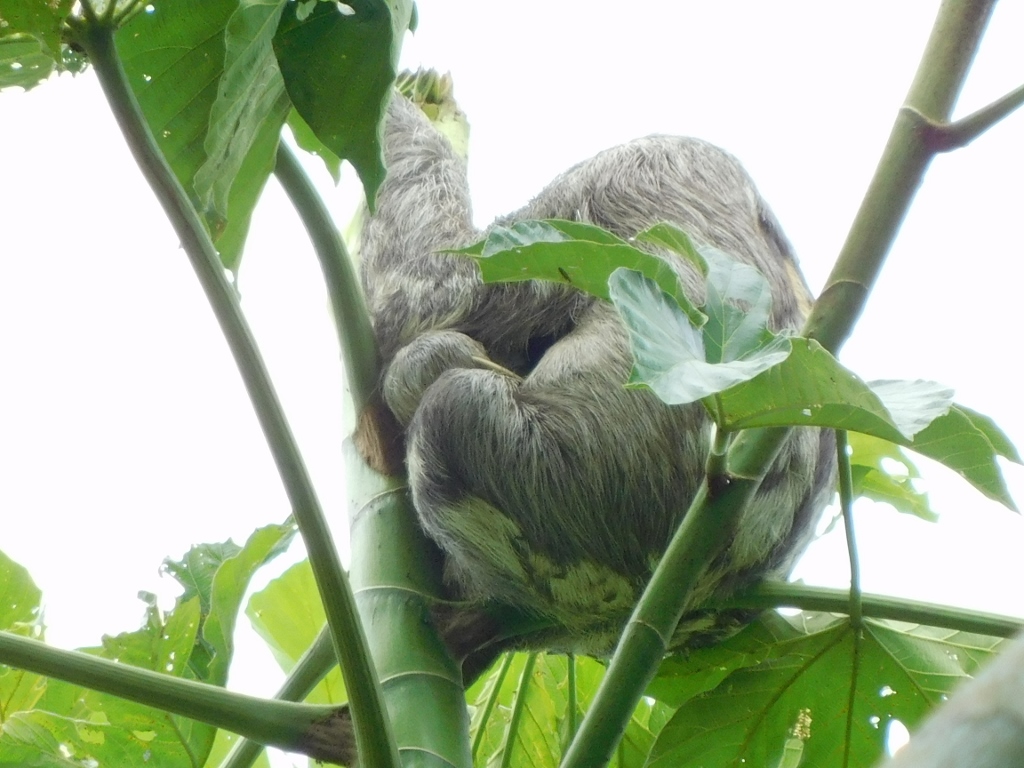 Brown-throated sloth
I managed to capture a photo of one of them where you could see its three toes, or rather three claws, on each foot. This was repeated with another sloth. However, they were unwilling to look at us and mostly showed us their backsides.
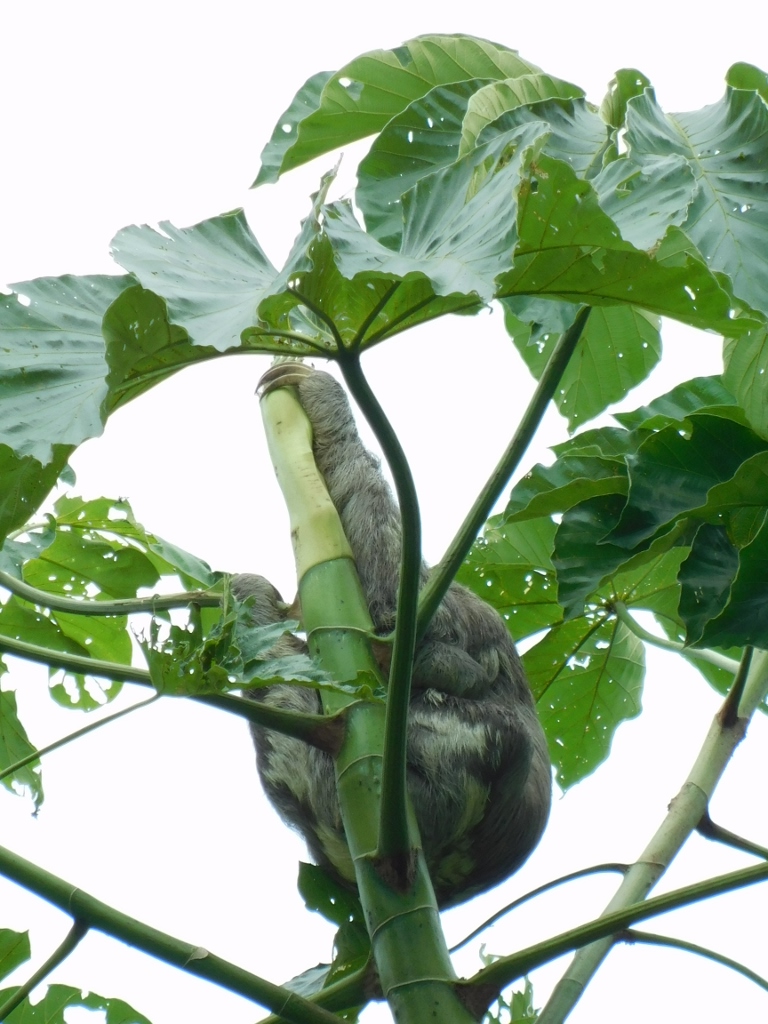 Brown-throated sloth
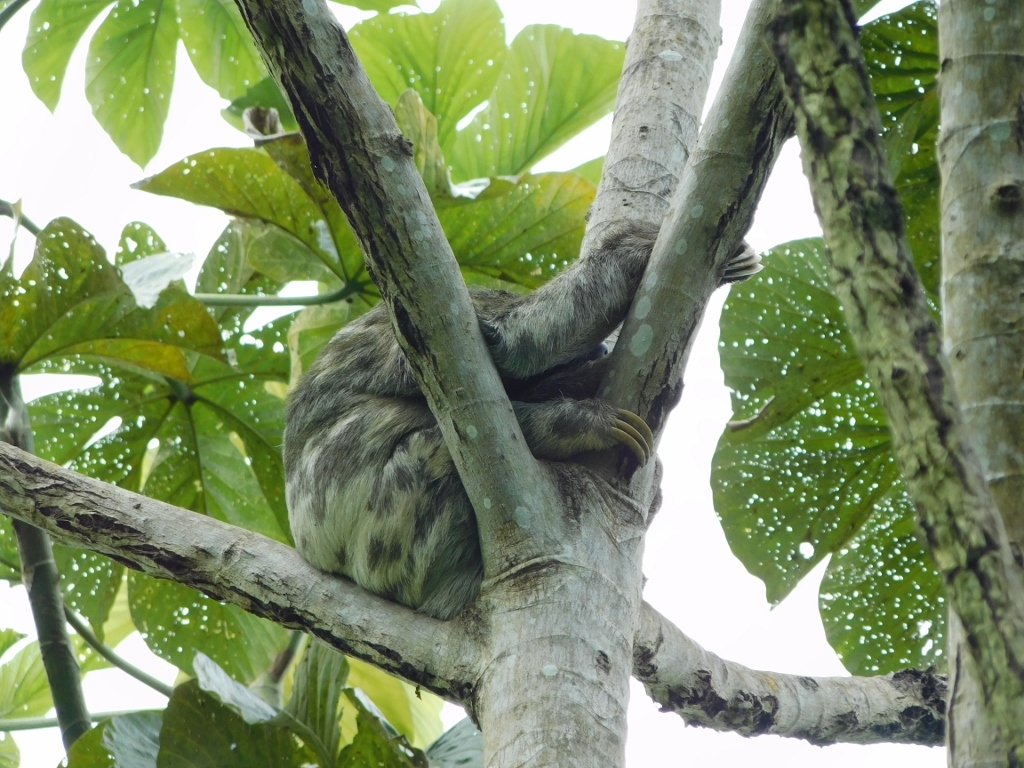 Brown-throated sloth
Then the situation improved in my favour a bit, as I even managed to capture one of them eating.
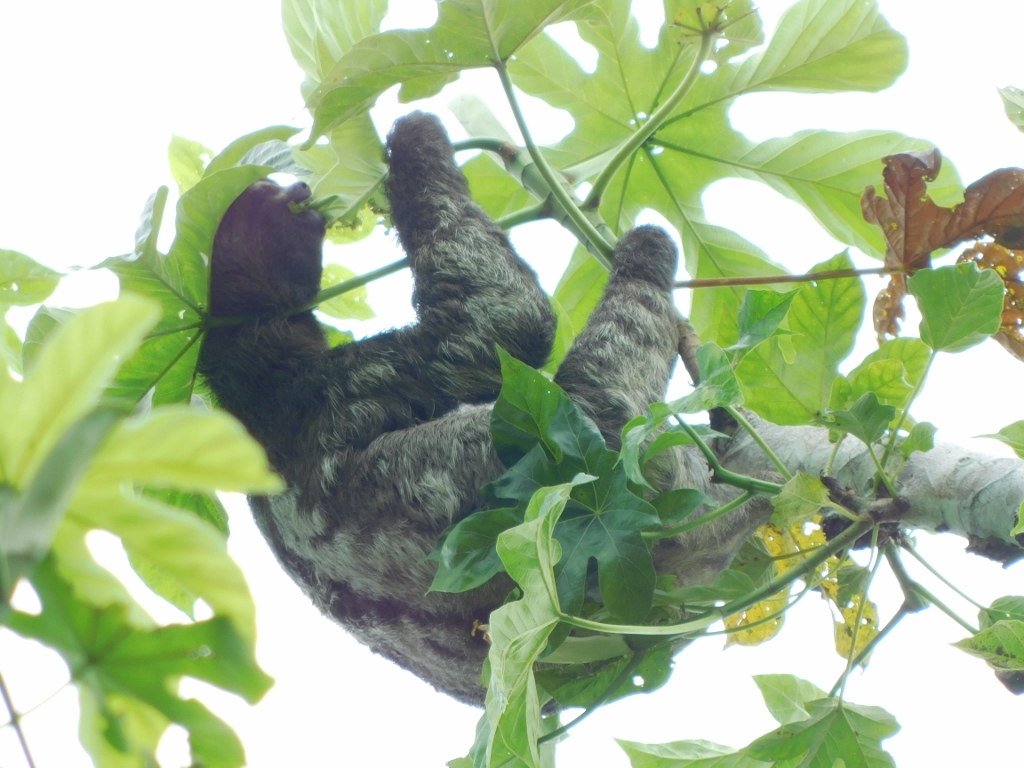 Brown-throated sloth
Eventually, probably thanks to the effort and patience I invested in trying to capture them, I received a reward in the shape of a sloth turning towards me. Moreover, I managed to capture it both with my photo camera and the video camera, with the video version giving me an added bonus.
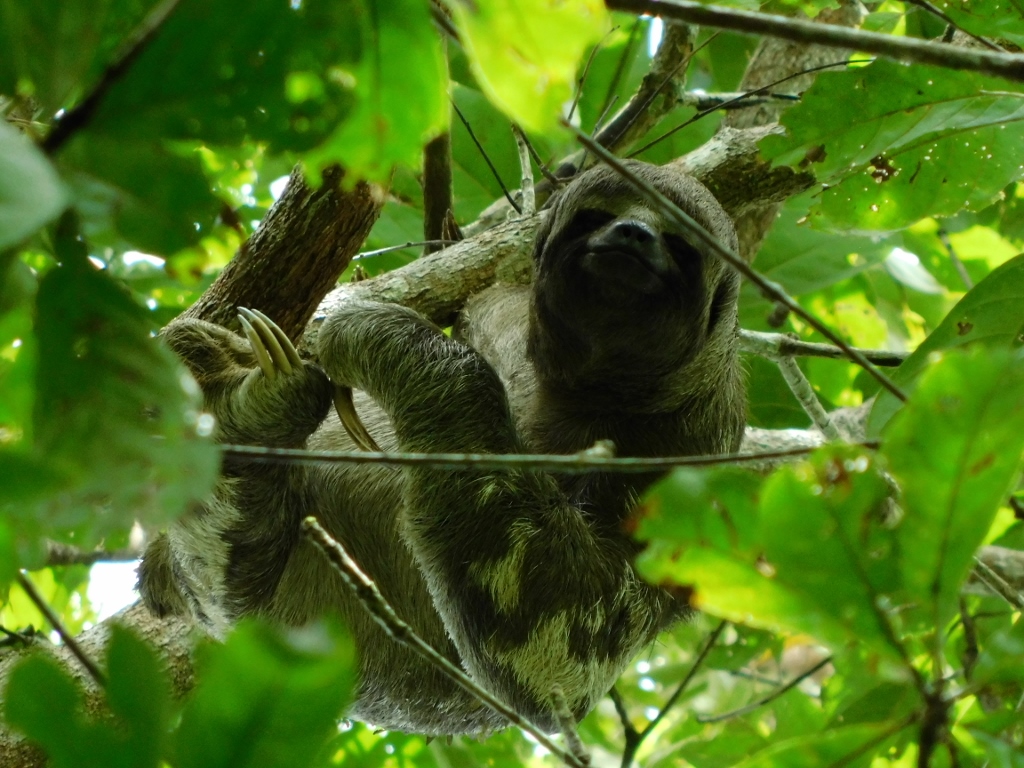 Brown-throated sloth
In the video, you can hear some saw or whatever, indicating we were near a human settlement. However, we took a slightly roundabout route to get there and along the way we also saw a wooden bridge that we later used to return from the direction of San Antonio.
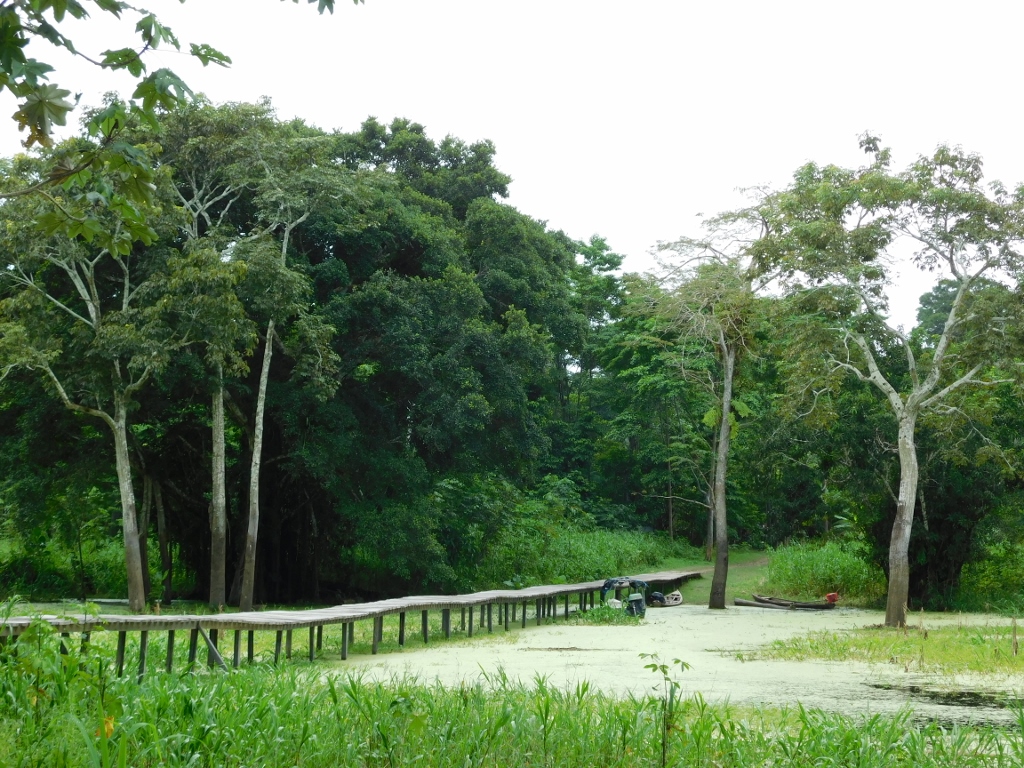 Near the village of San Antonio on the island of Cacao
San Antonio de Cacao is a small settlement on Cacao Island and the plan was for us to have lunch there. The village is often highlighted as an indigenous community, but it has many modern elements, making it almost irrelevant whether true indigenous people live there or if someone moved there from Lima last year. To visit "true" indigenous communities, one must venture deeper into the rainforest and there are multi-day trekking excursions that facilitate such experiences. Setting aside whether I would want to trek through the mud I saw here, endure the heat and sweat as much as I did, I have no desire to visit these people who live far from "civilization." Without seeing them, I feel deep respect for them and don't consider them an attraction for tourists to visit, as if they were a zoo. Let these people continue to live in peace, in the way they choose, are accustomed to and are comfortable with, without curious visitors.
In any case, San Antonio de Cacao is not the kind of "indigenous community" one might expect in that sense.
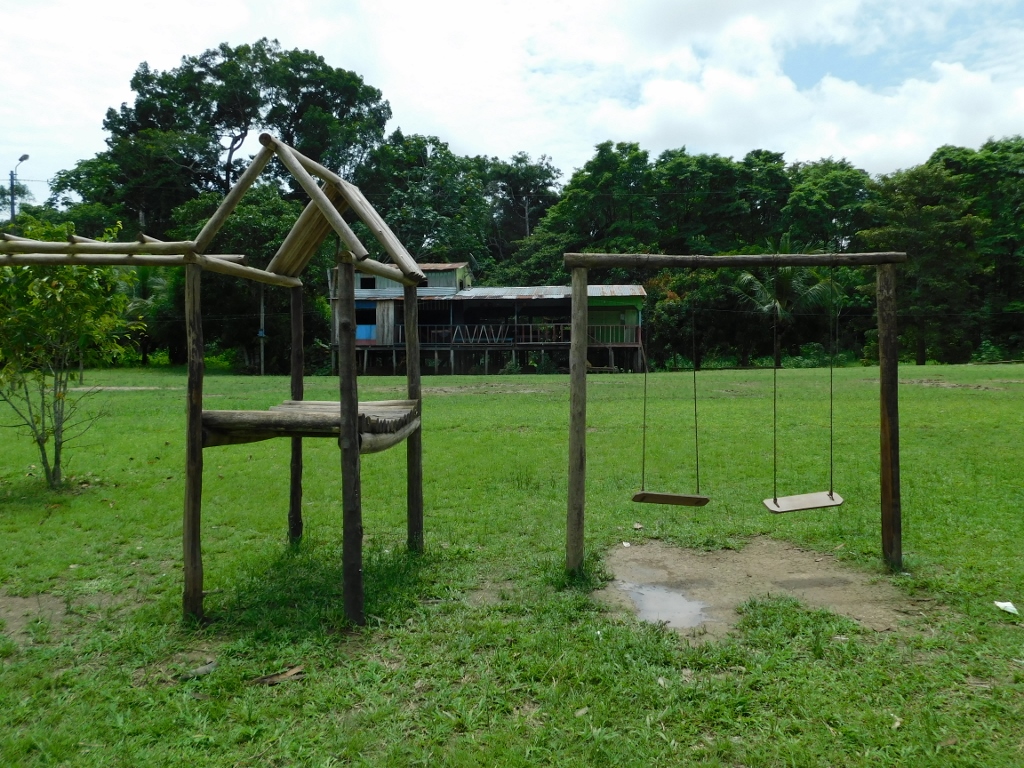 San Antonio de Cacao, a detail
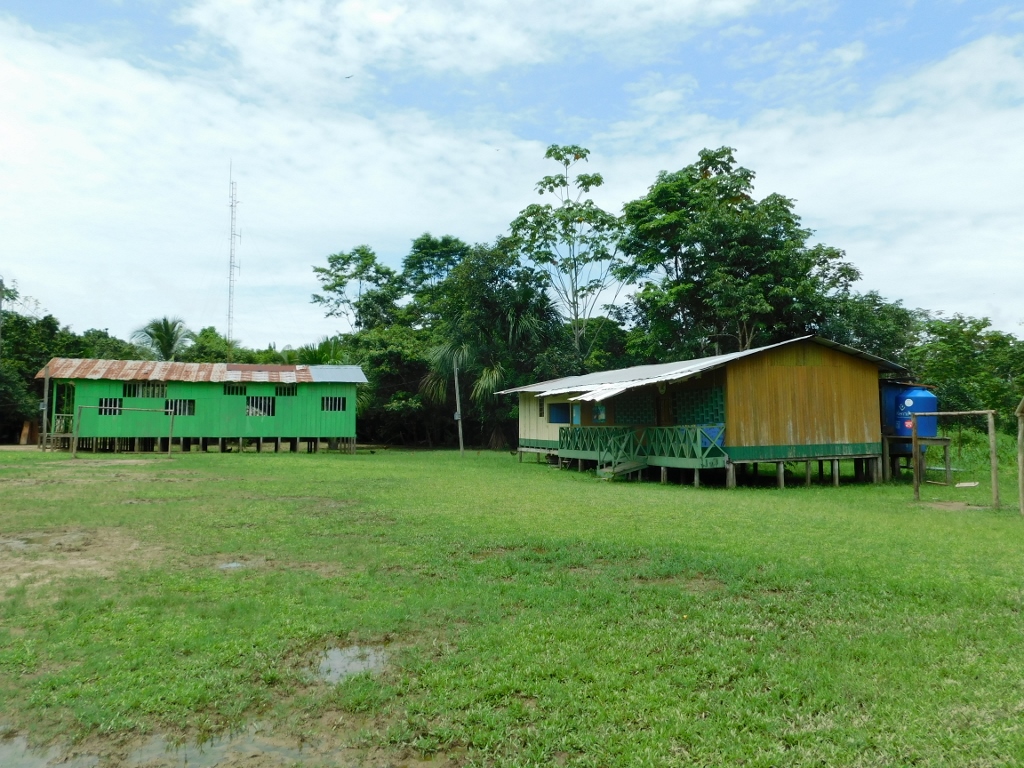 San Antonio de Cacao, a detail
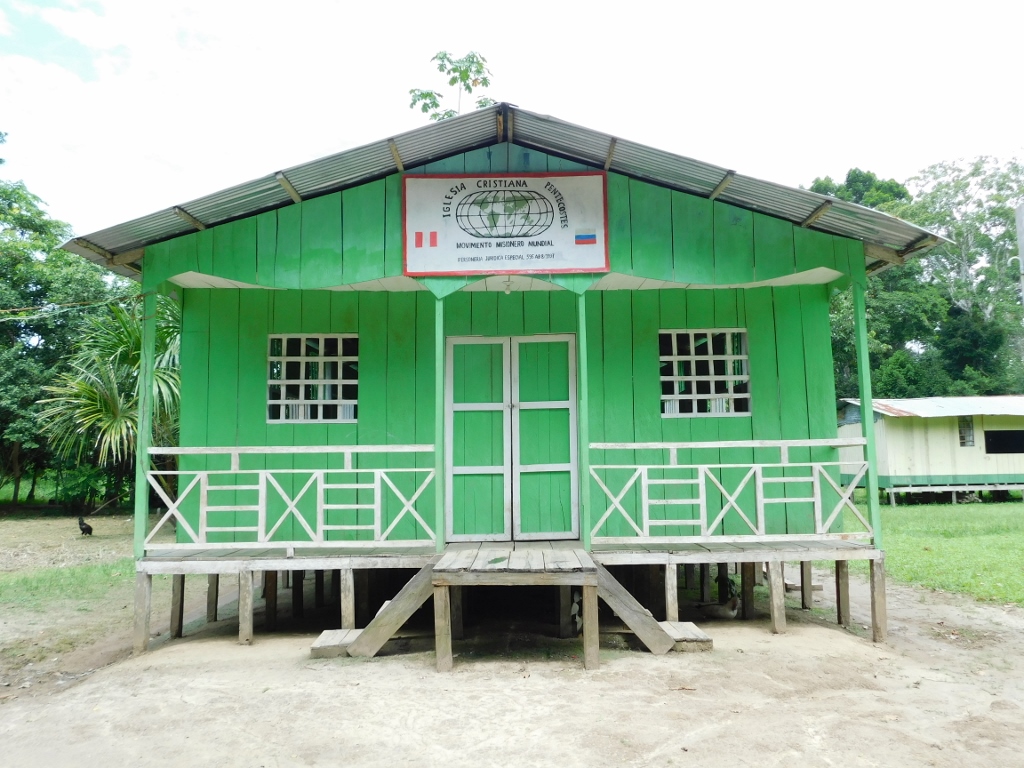 San Antonio de Cacao, a detail
In the previous photo, there is a church, while in the case of the photo below, one should note the streetlights.
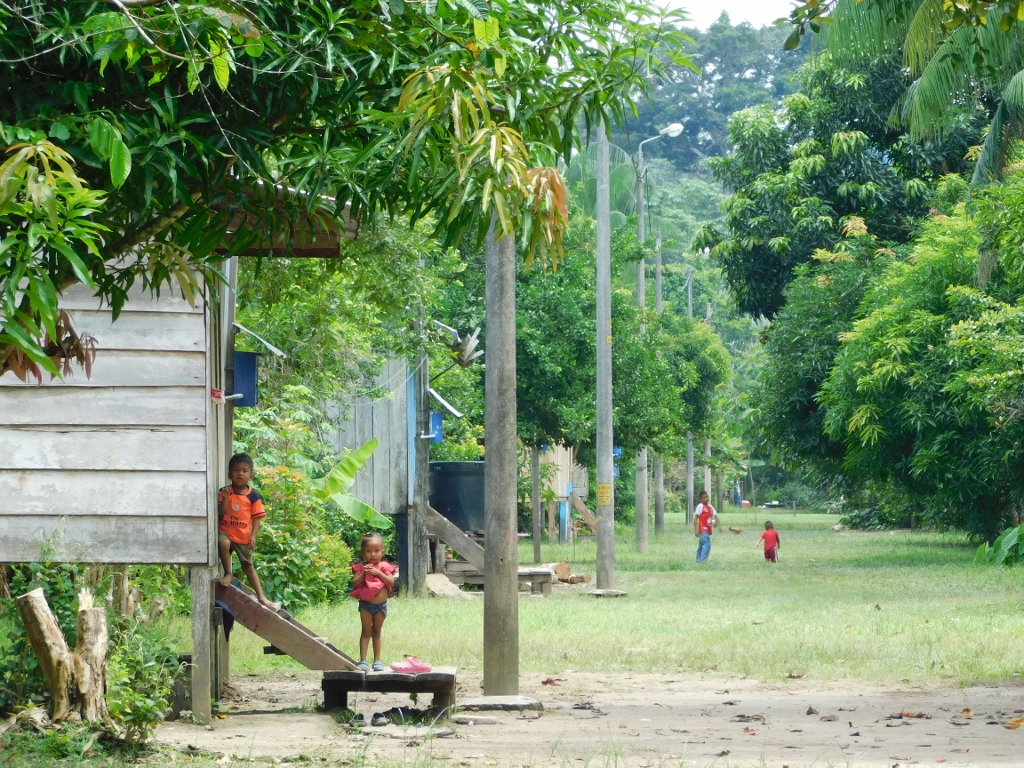 San Antonio de Cacao, a detail
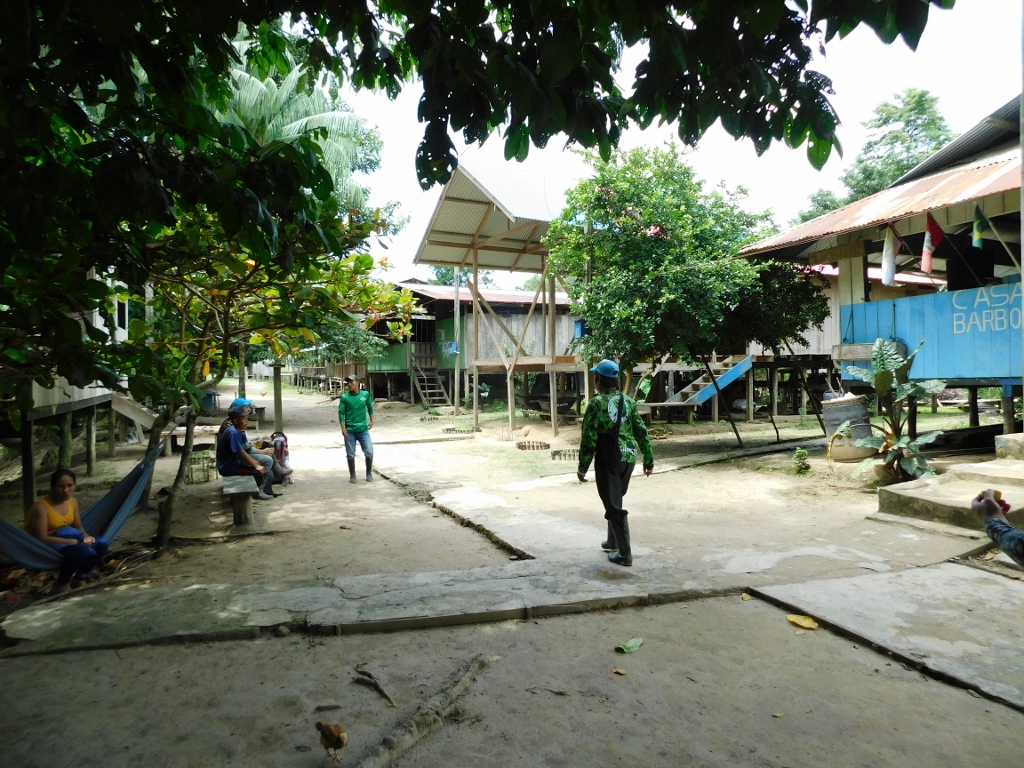 San Antonio de Cacao, a detail
When we arrived in the centre, I bought a real Peruvian beer there. Though, it was a bit too much for me in the end, at least it was cold.
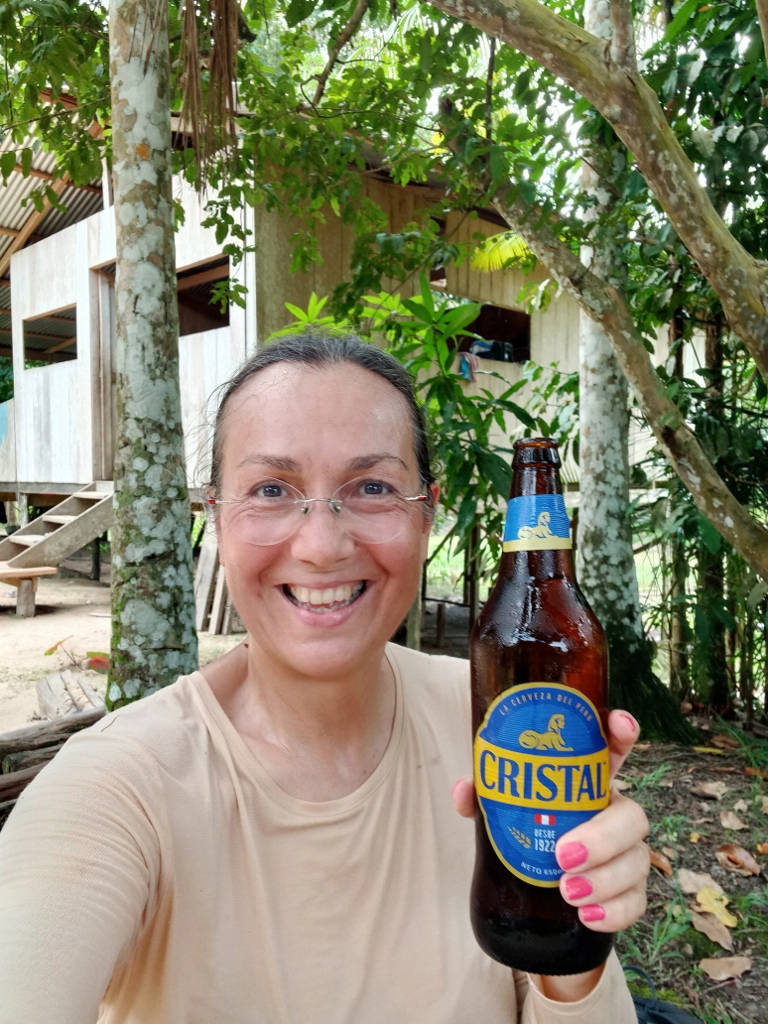 Peruvian beer in San Antonio de Cacao
Then we were taken to a local restaurant where lunch was planned. First, I walked around the restaurant a bit.
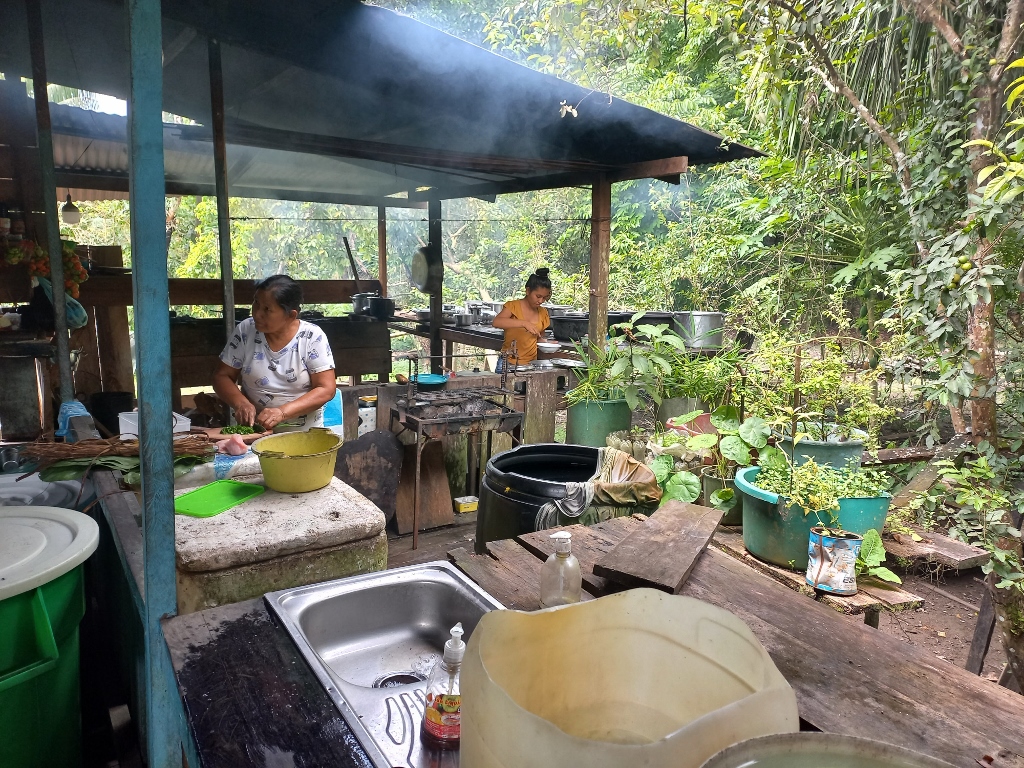 Restaurant in San Antonio de Cacao
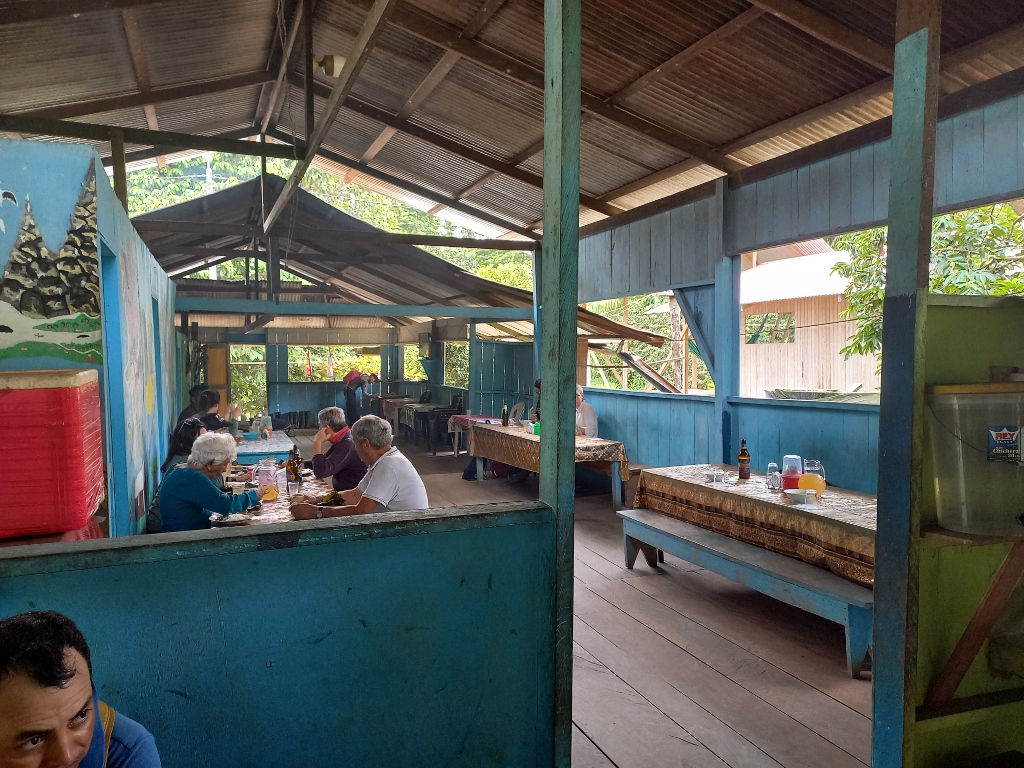 Restaurant in San Antonio de Cacao
Just to mention, here you're required to take off those muddy boots, hence the floor looks so clean, as seen in the previous photograph.
The lunch was a standard tourist fare – soup, tamales and river fish with sides. I didn't capture the river fish, but everything else can be seen in the following pictures.
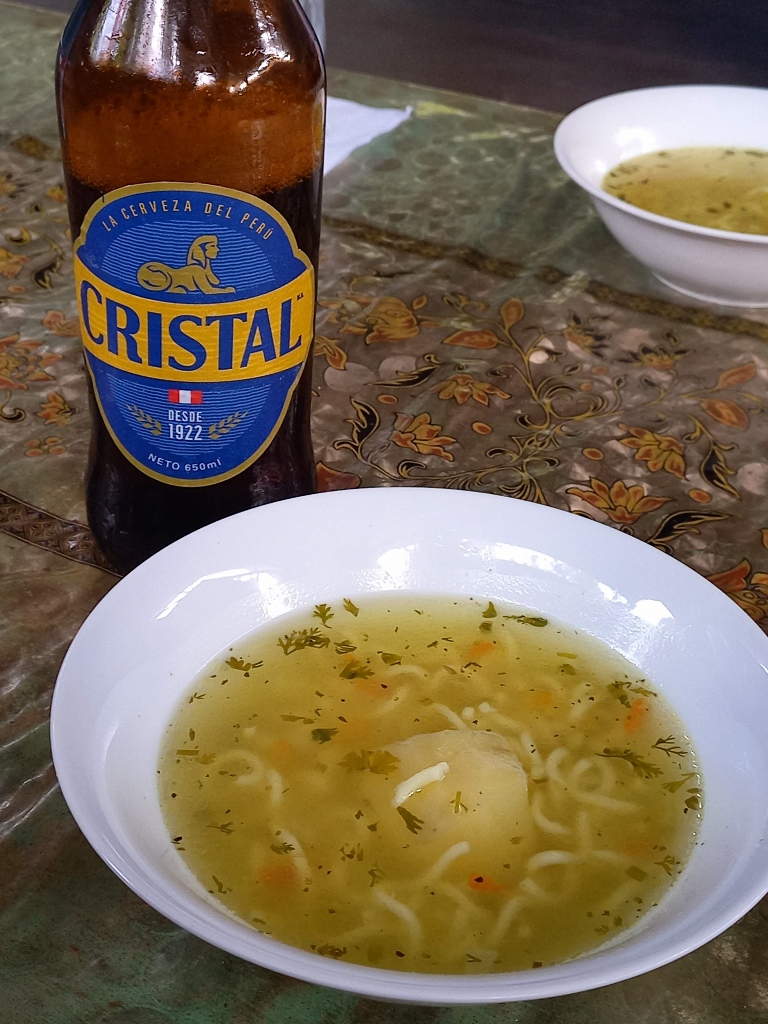 Lunch in San Antonio de Cacao
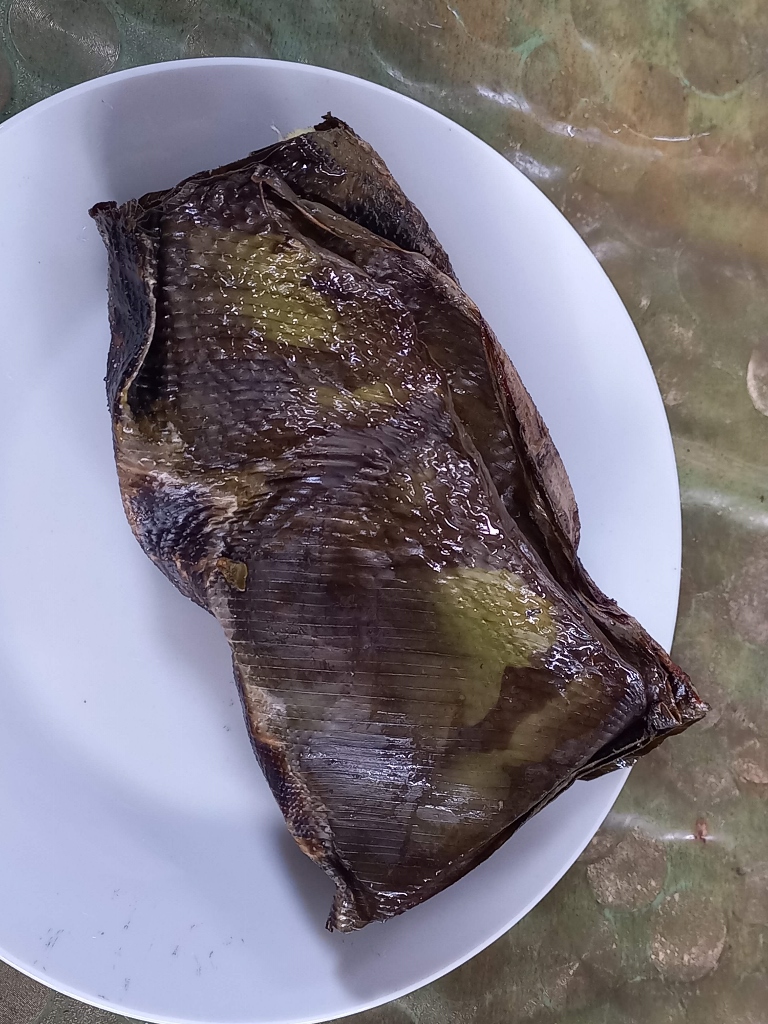 Lunch in San Antonio de Cacao
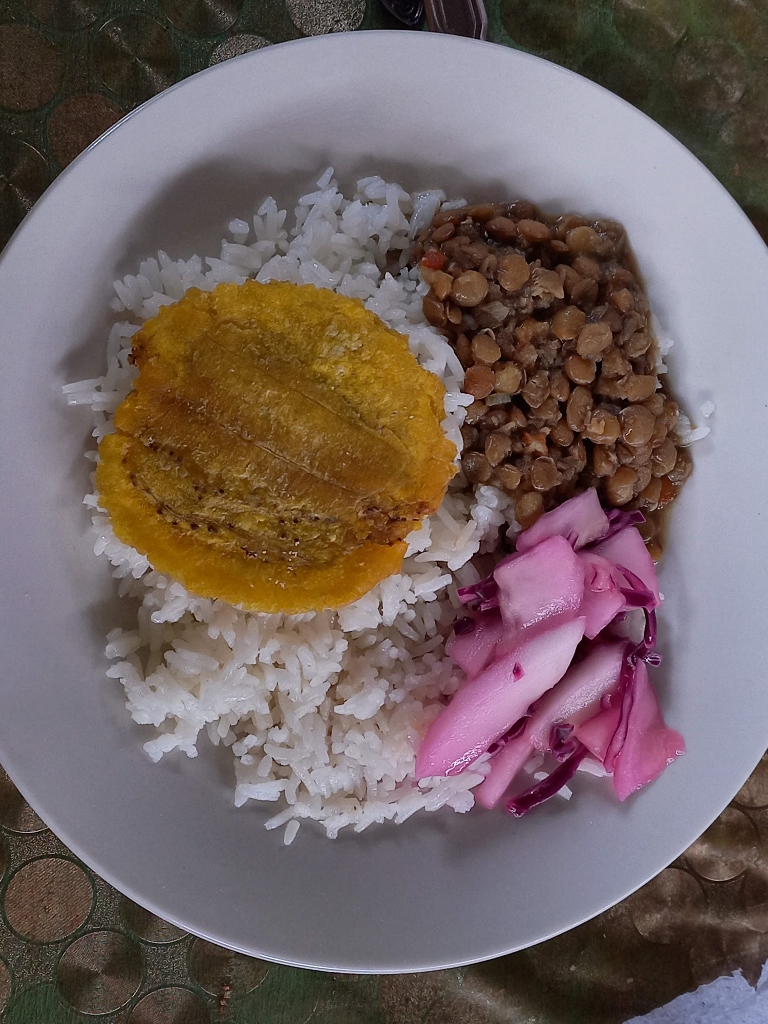 Lunch in San Antonio de Cacao
Afterwards, we took a short stroll around the village and then began our walk back towards the Amazon shore.
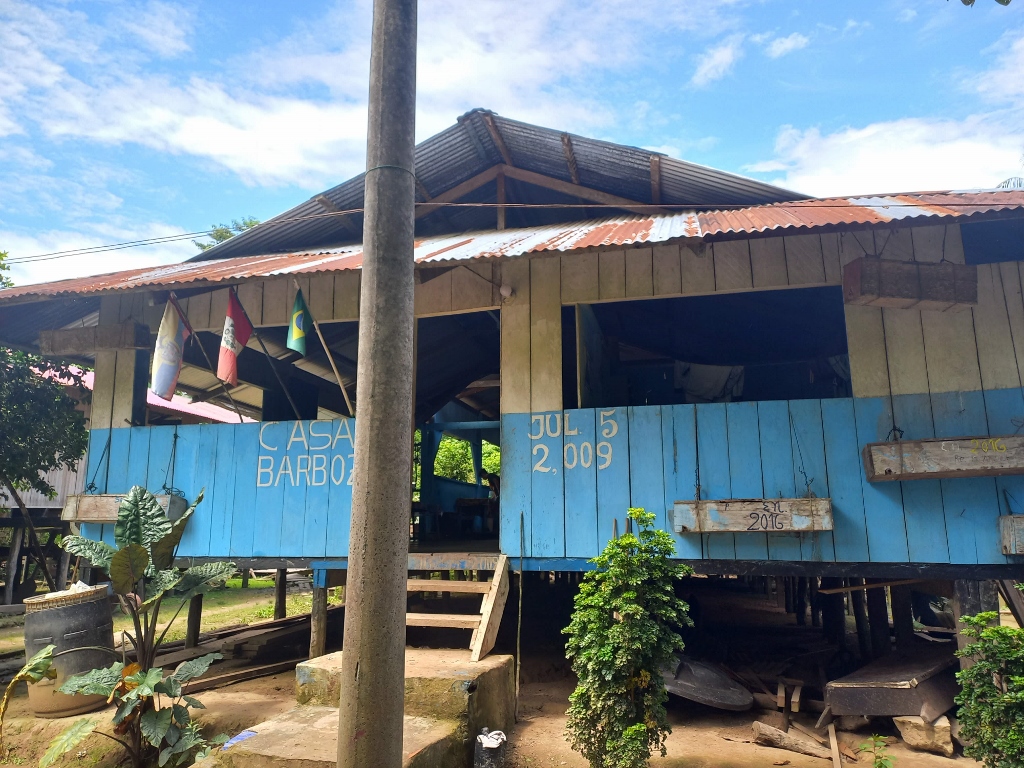 San Antonio de Cacao, a detail
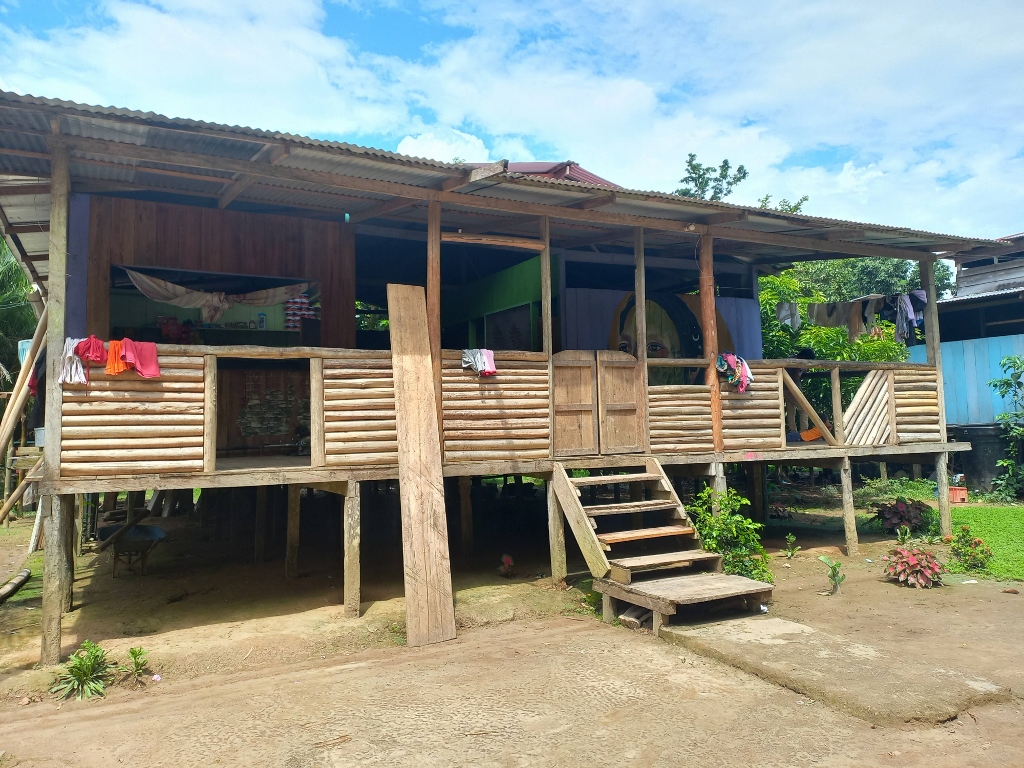 San Antonio de Cacao, a detail
While we were still in the village, I spotted a very interesting resident – the exotic flame-tailed pondhawk (Erythemis peruviana).
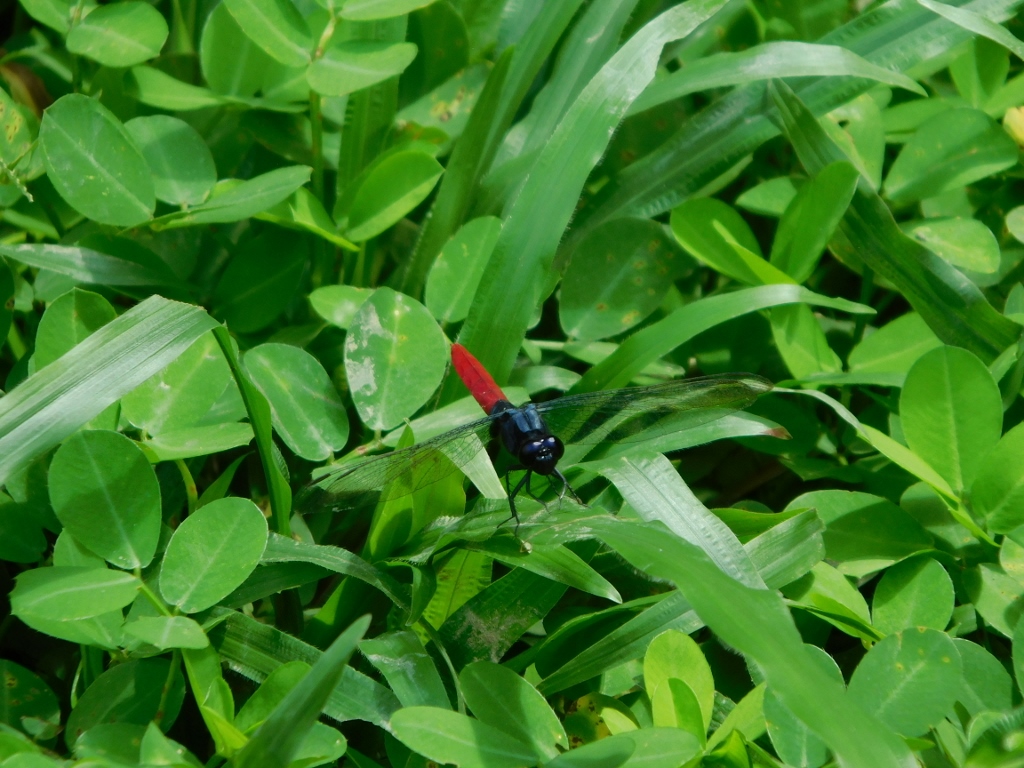 Flame-tailed pondhawk
And so we reached the wooden bridge, crossed it and continued along some wider paths towards the boat that awaited us. With a bit of luck, I managed to capture another beautiful bird here, a species I had already seen that morning on the Colombian side. Obviously, these birds are quite abundant along the Amazon.
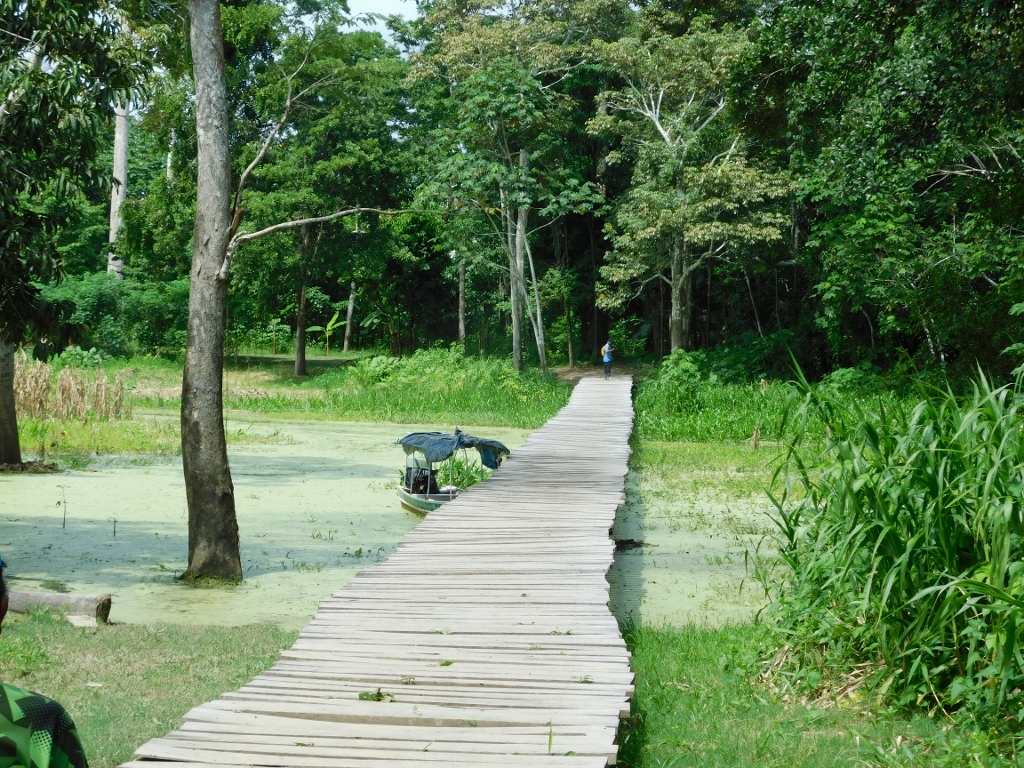 Bridge near the village of San Antonio de Cacao
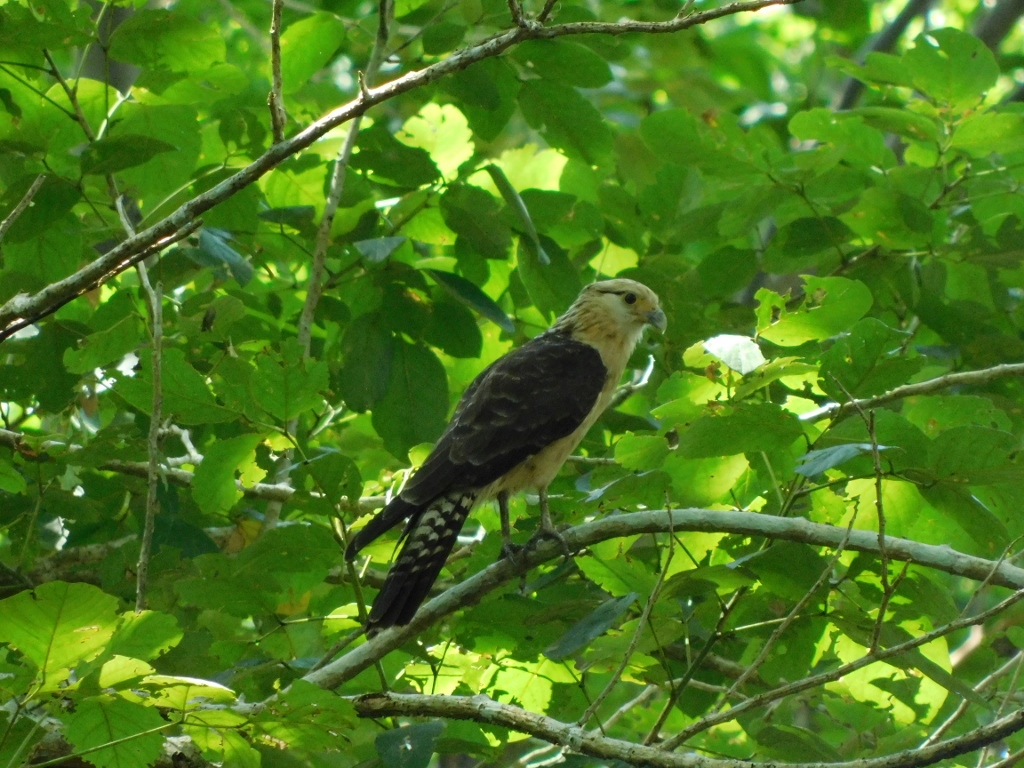 Yellow-headed caracara (Milvago chimachima)
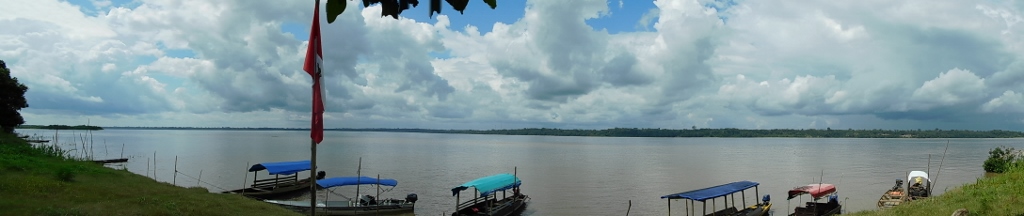 Docking station on the island of Cacao, Peru
I was extremely pleased, happy and relaxed. My time in the Amazonia was going very well; I didn't even feel the lingering effects of the cold that had been bothering me and it seemed like I was coughing less. I was still primarily thrilled with the idea of cruising the Amazon.
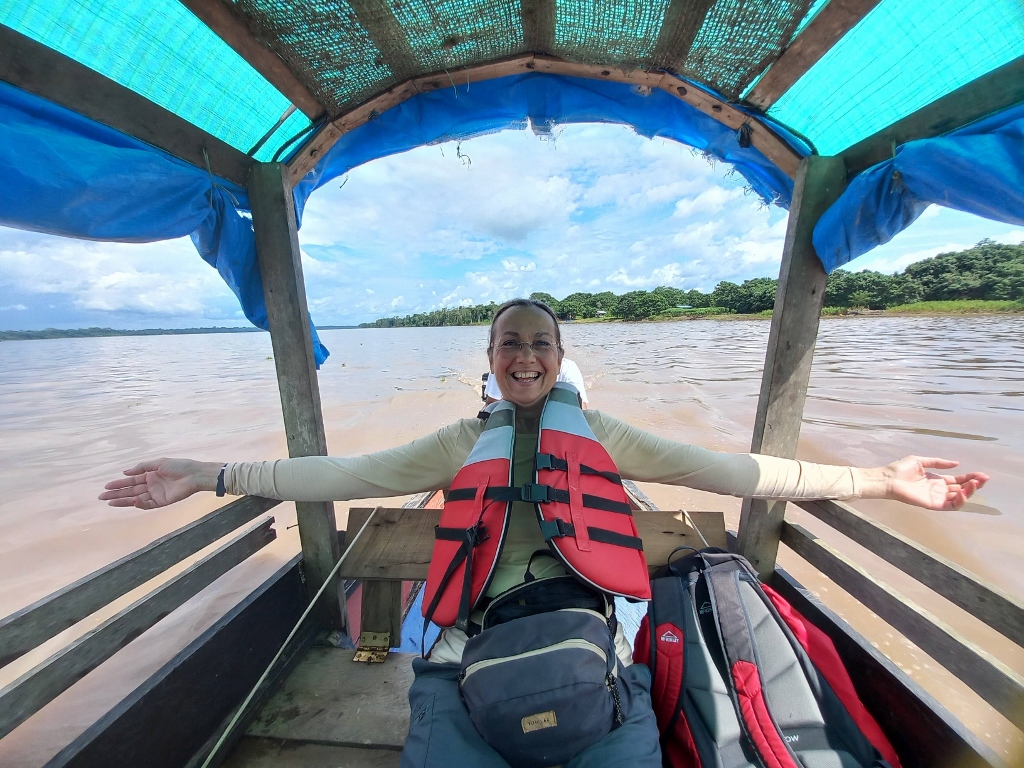 In a boat on the Amazon
And the mighty Amazon, in its full glory, was on display. The relatively calm waters of this great river now looked like mirrors and the extraordinary impression was not spoiled even when the muddy water of the river was clearly visible.
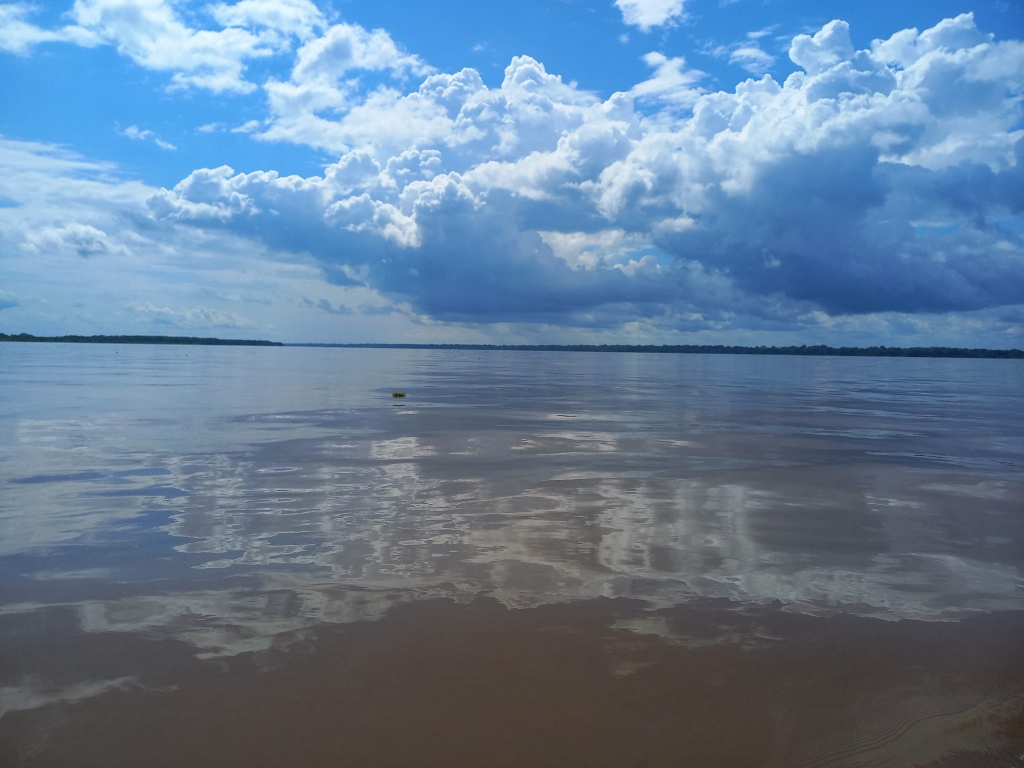 The Amazon
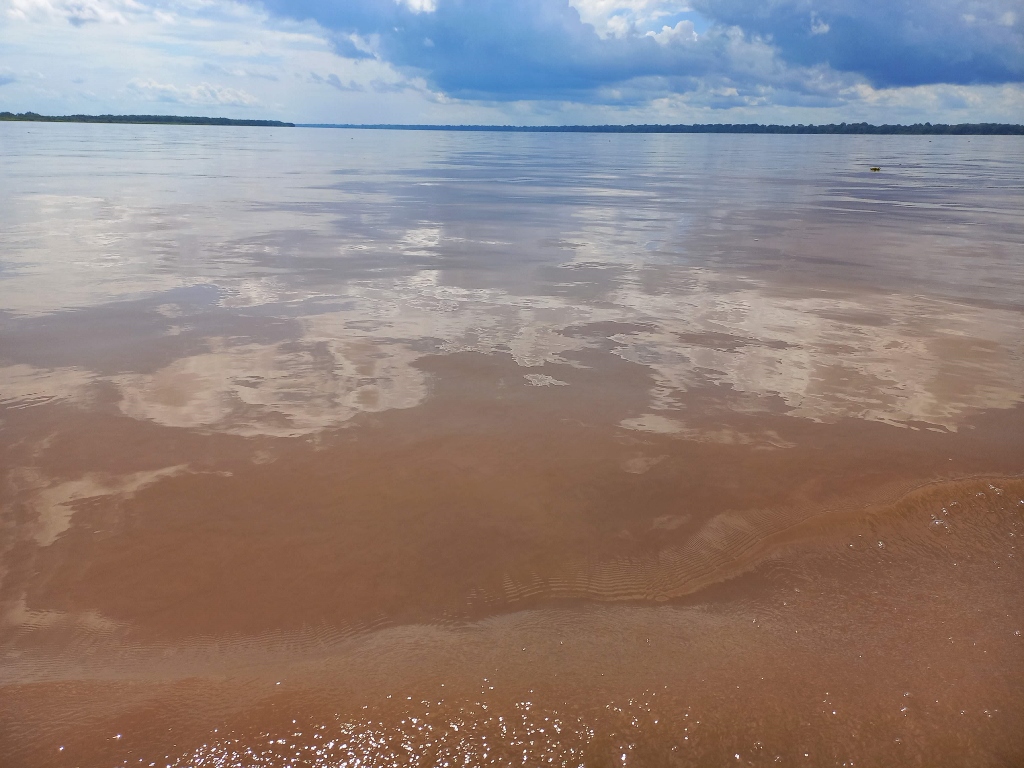 The Amazon
Here is a video that shows how truly big this river is.
At one point, the young man driving the boat turned off the engine and with a lot of patience, we managed to see river dolphins swimming near us.
Meanwhile, the clouds kept moving, so one part of the shore was bathed in sunlight and we returned to our accommodation in dry weather.
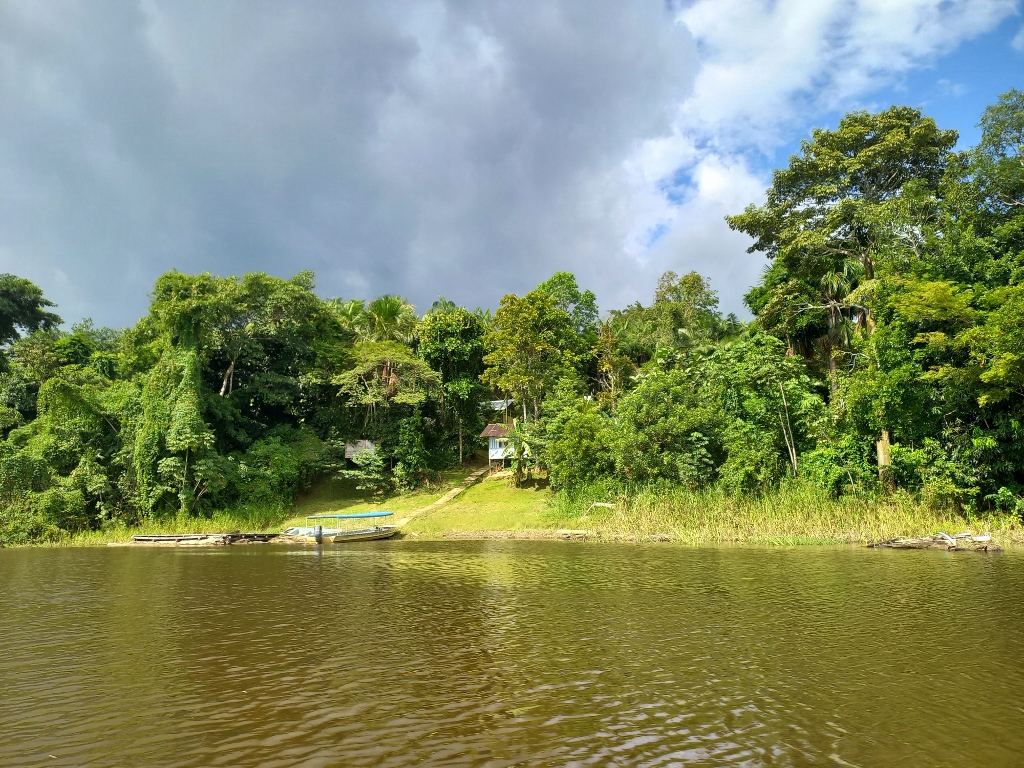 Bank of the Amazon
However, the dry weather didn't last long and soon it started to rain. This raised concerns about our afternoon excursion, but there was nothing we could do about it, so I relaxed and calmly watched and filmed the falling rain.
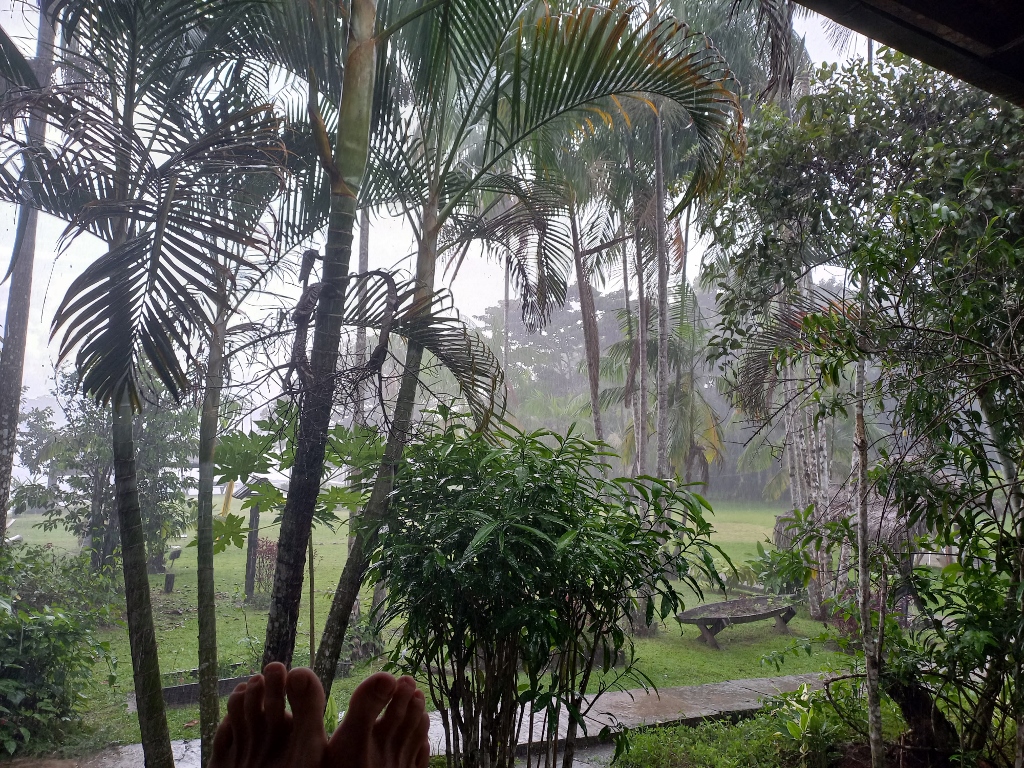 Rain in the Amazon rainforest
The impression is even stronger when you can see and hear (!) the video footage.
Since I couldn't capture the rain hitting the surface of the river well in the video, here's a photo that shows how hard it was raining.
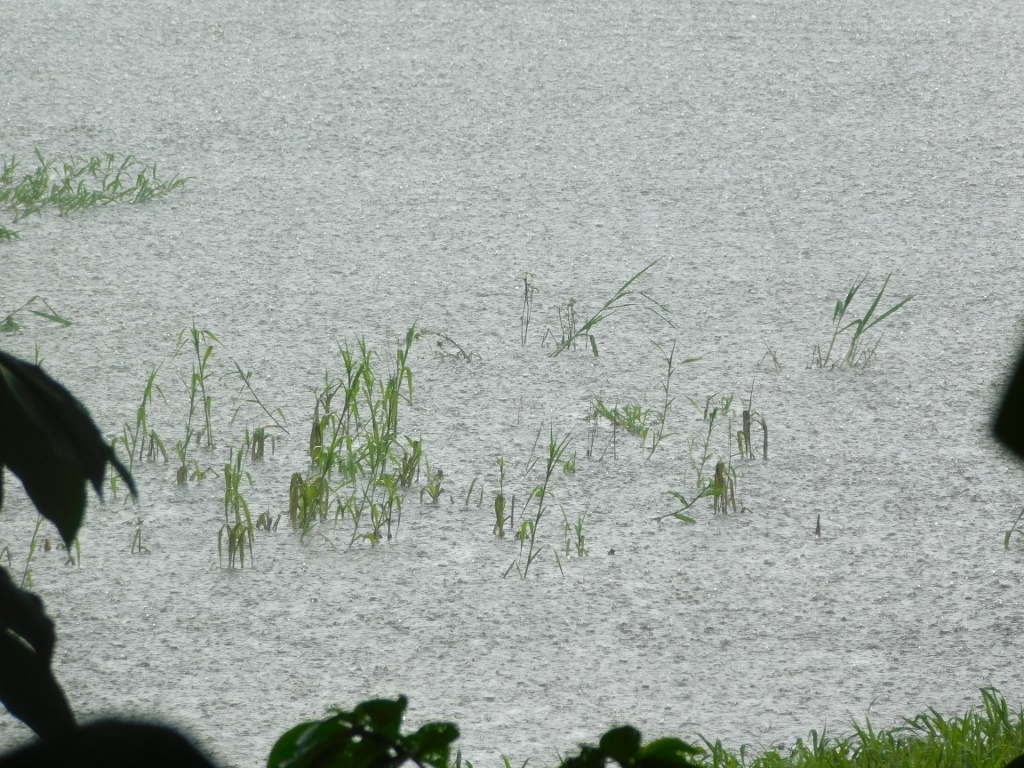 Rain in the Amazon rainforest
When the rain subsided a bit, someone spotted a very interesting small animal in a tree nearby, eating some fruit. It was challenging to capture it because the animal kept moving, but it stayed in the area long enough for me to take several photos. It was a black-mantled tamarin (Leontocebus nigricollis).
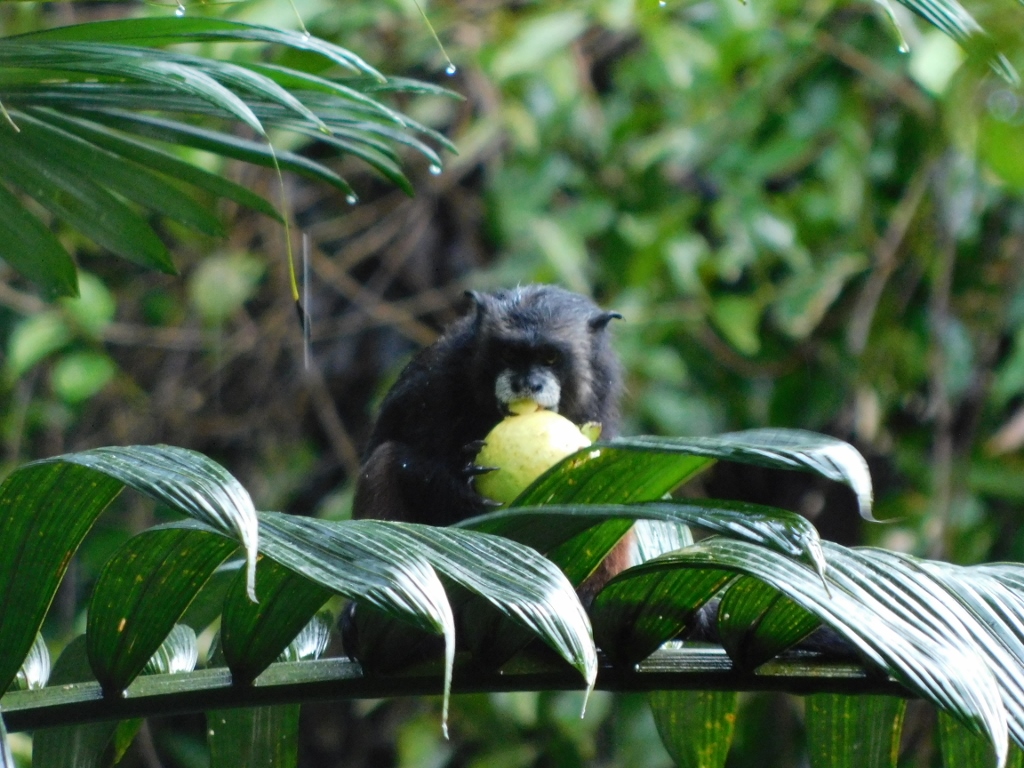 Black-mantled tamarin
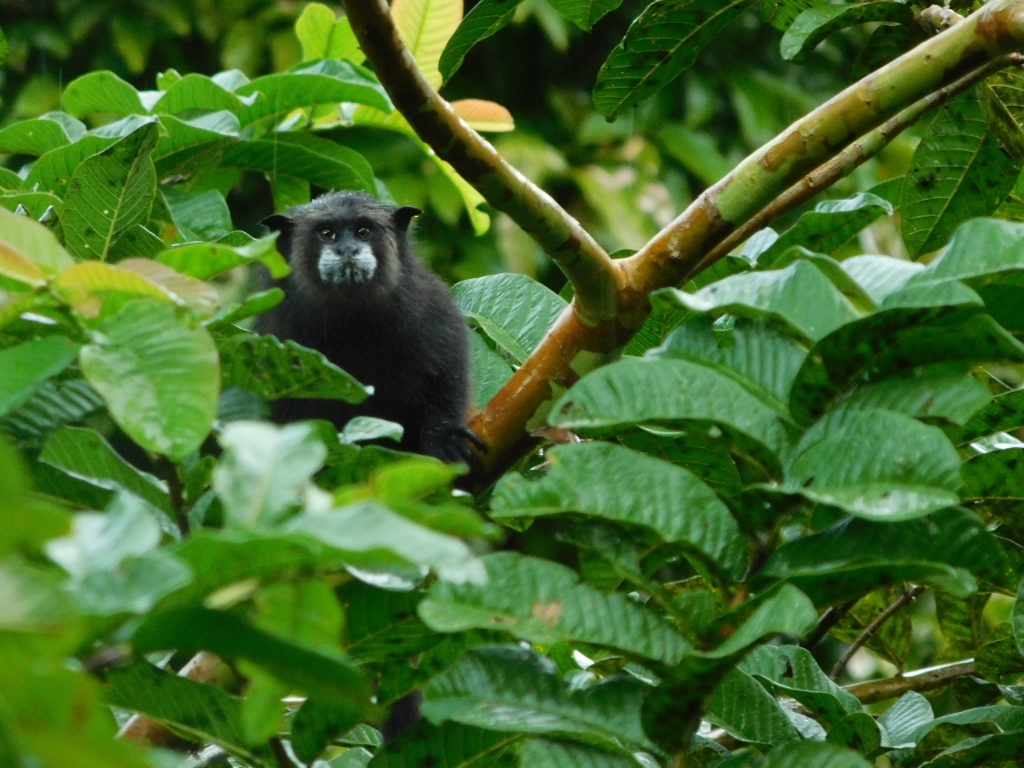 Black-mantled tamarin
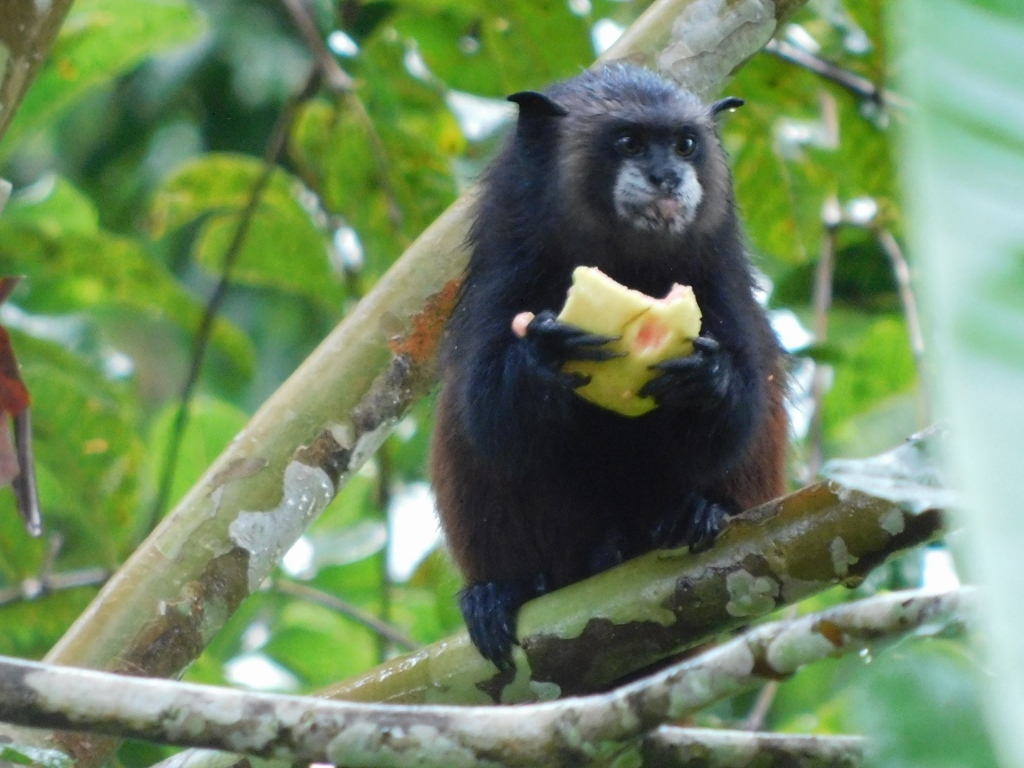 Black-mantled tamarin
Soon, the rain completely stopped and we had enough time to go on our excursion. It was one of the most magical experiences of my life.