With an area of about 5.5 million square kilometres, the Amazonia or the Amazon rainforest is an enormous region in South America (covering 40% of the continent) that practically encompasses almost the entire Amazon River basin, which is over 7 million square kilometres and is the largest river basin in the world. The territory of this area is divided among 9 countries: Brazil (60%), Colombia, Venezuela, Guyana, Suriname, French Guiana, Peru, Ecuador and Bolivia. Less than 10% of the Amazon forest belongs to Colombia, while the capital of the Amazonas province is Leticia, where I arrived by plane from Bogota in the second half of January 2024.
Here is also the map that shows all the places I visited during this journey.
Leticia was founded in 1867 by a Peruvian captain, but later this area became a subject of dispute between Peru and Colombia, leading to an armed conflict (1932-1933). The dispute was finally resolved in 1934 when Leticia was ceded to Colombia.
Today, this is a peaceful region and Leticia is situated at a tri-border area where the state borders of Colombia, Brazil and Peru meet. Moreover, visitors do not need visas to visit these three places, although it is advisable to carry a passport just in case.
I didn't have time to "hop over" to Brazil, specifically to the town of Tabatinga, which is connected to Leticia by a bridge, allowing access by taxi or tuk-tuk. Instead, I whimsically decided to cross from the left bank of the Amazon (Colombia) to the right bank (Peru) for a couple of hours to have lunch there. Actually, I didn't quite make it to the right bank of the Amazon; I headed towards Santa Rosa Island, which belongs to Peru.
Since no one else was interested in going to Santa Rosa at that time, I was alone in the boat, excluding the boatman, of course. Initially, I sat in the middle of the boat, but later I moved to the bow.
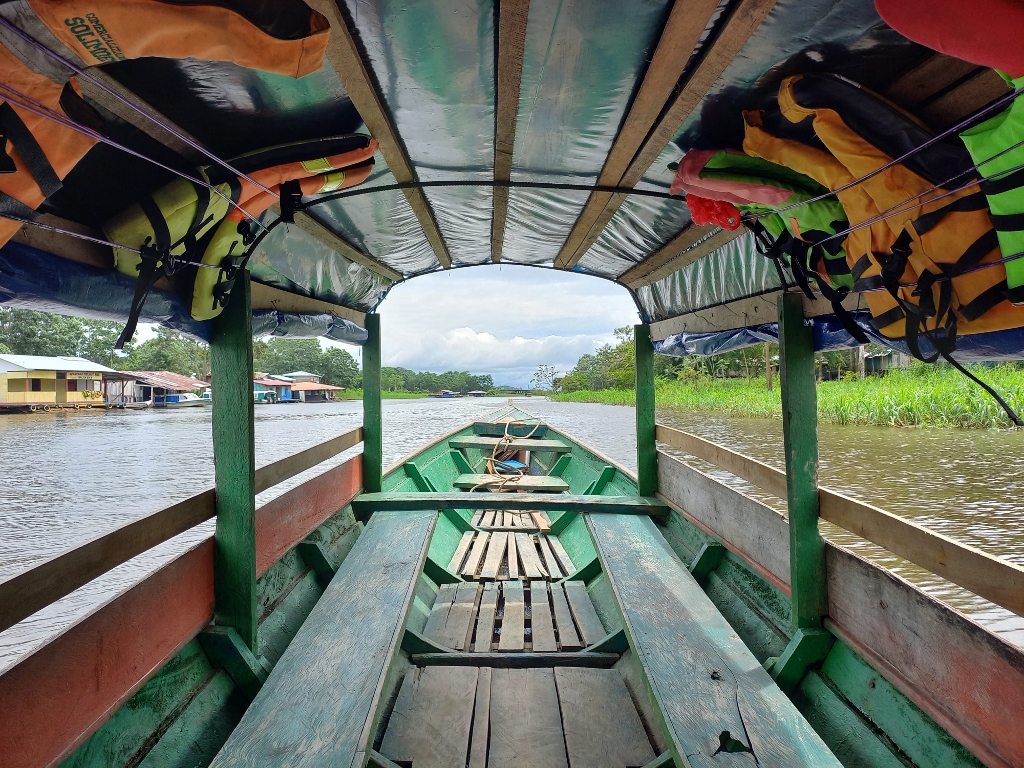 Boat going to Peru
First, we navigated by a branch of the river and then we reached the main course of the Amazon. I was delighted!
 The Amazon at Leticia, Colombia; Peru is on the other side
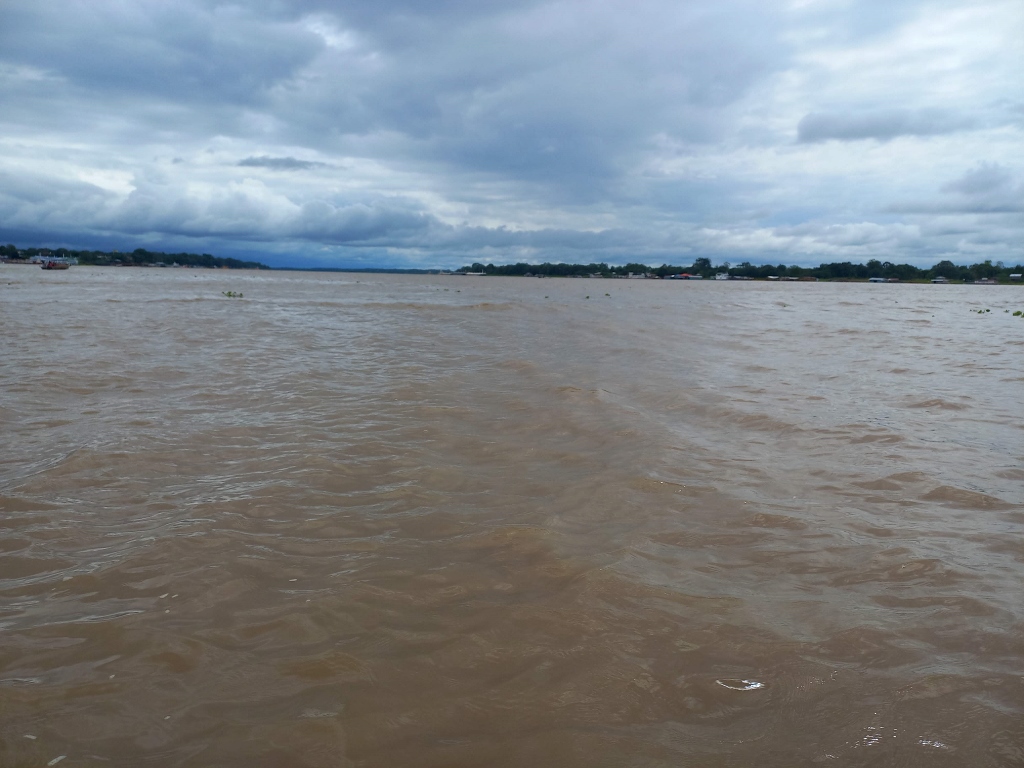 The Amazon downstream from Leticia, Colombia; Brazil is to the left and Peru is to the right
When I arrived on the Peruvian side, there was a pontoon and many boats, so we had to manoeuvre carefully, but soon I managed to disembark successfully.
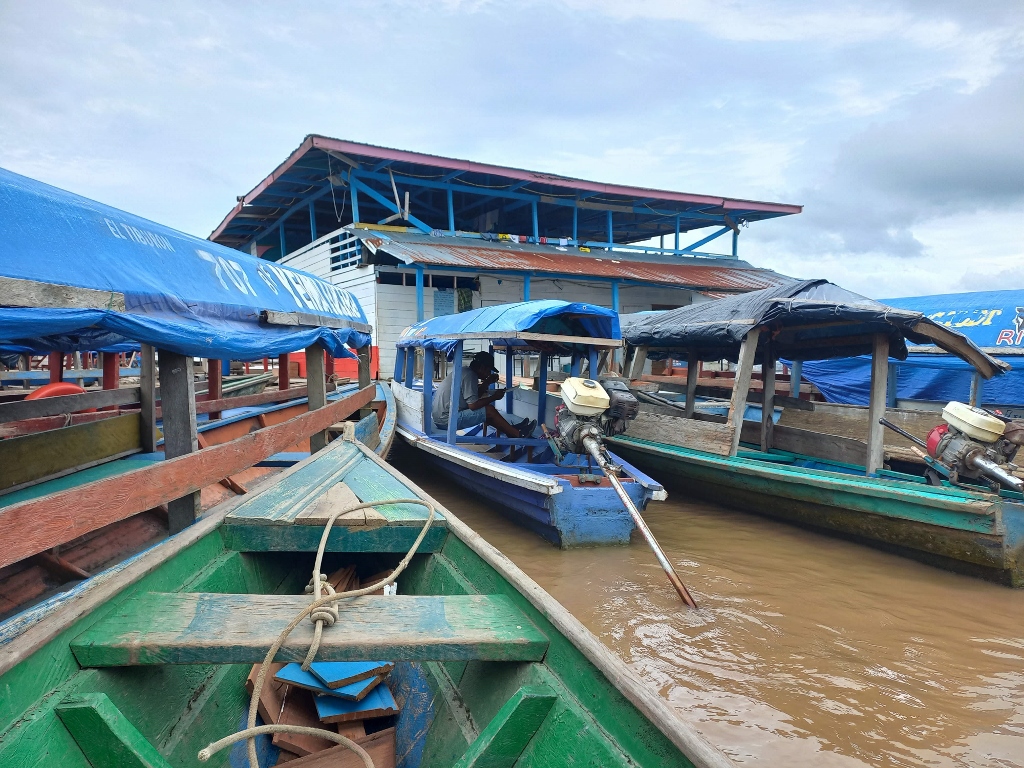 Arriving at the Amazon island of Santa Rosa in Peru
Here is what it all looked like in a video version:
From there, I could now see the left bank of the Amazon where the border between Colombia and Brazil is located, and there, a serious rainstorm was brewing.
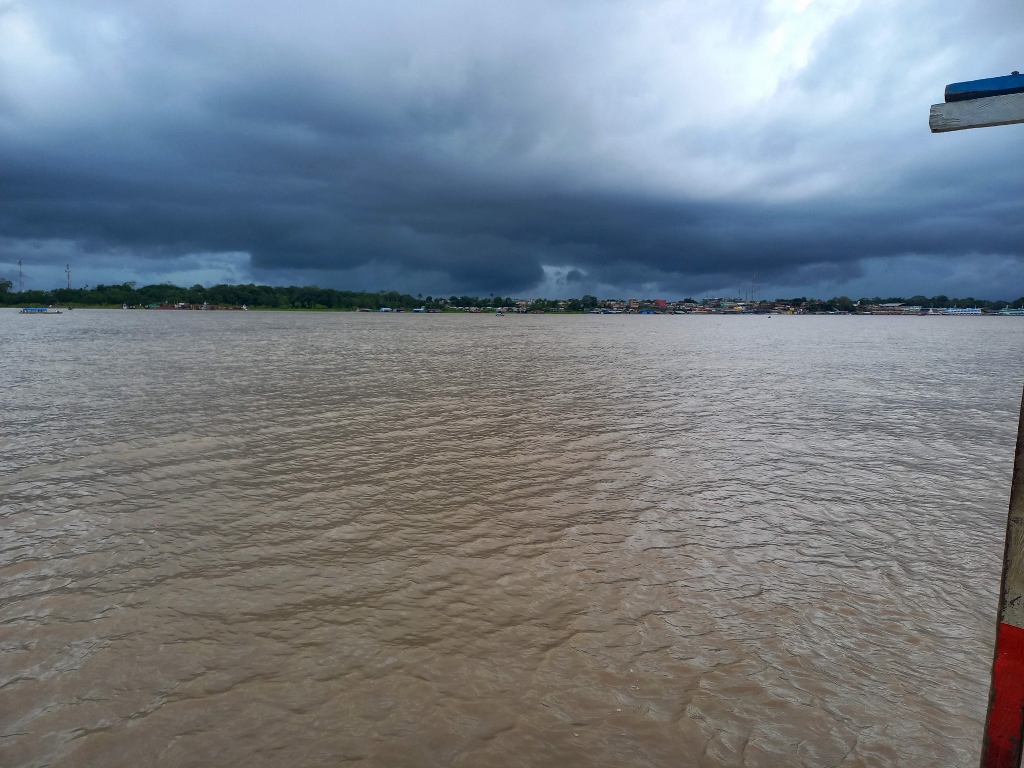 The Amazon during a rainy season
It was dry for now on the Peruvian side, so I walked towards a restaurant known for its ceviche. I really love ceviche and although it can be found in various South American countries, it is officially a traditional Peruvian dish recognised even by the UNESCO. So, since I was already in Peru, eating ceviche was a must. Along the way, I enjoyed taking photos of details from the settlement on Santa Rosa Island. First, there's a slight incline and then it's all flat terrain.
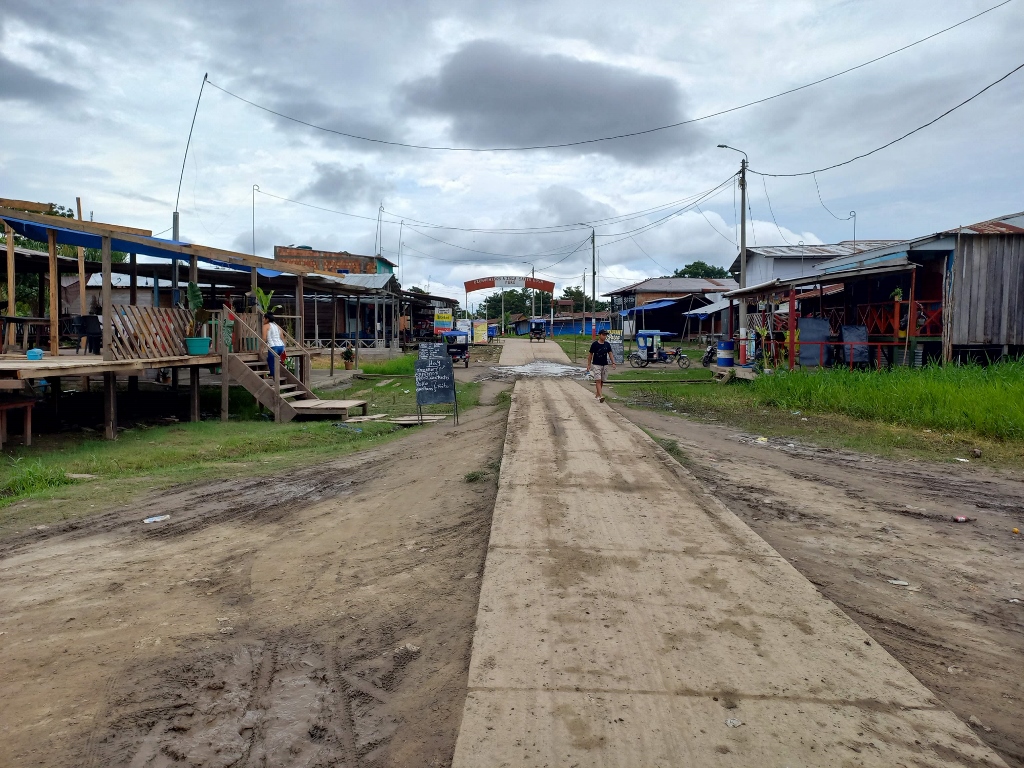 Settlement on the Peruvian island of Santa Rosa, a detail
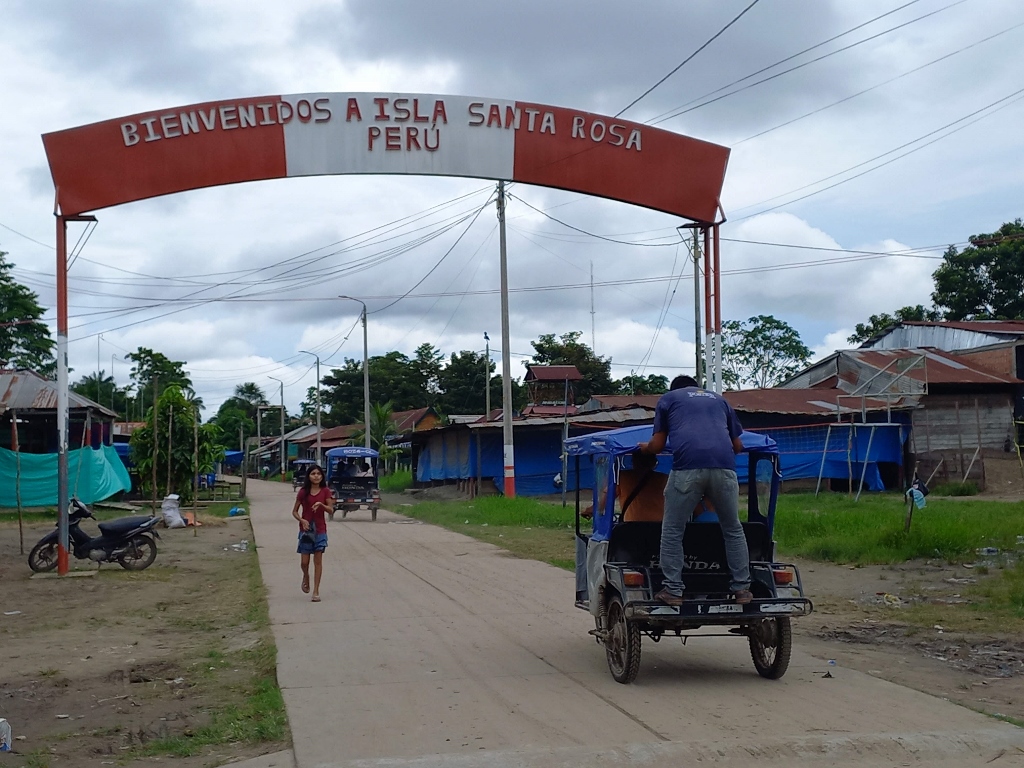 Settlement on the Peruvian island of Santa Rosa, a detail
In the previous picture, they warmly welcome you to the island, but that was not the only sign I saw here. In the next picture, which is blurry but the sign is top-notch, it says: "Discoteque Thousand Loves; Welcome to the island of love Santa Rosa." Hmm.... I wondered if I was missing something here since I was just taking a stroll and having ceviche.
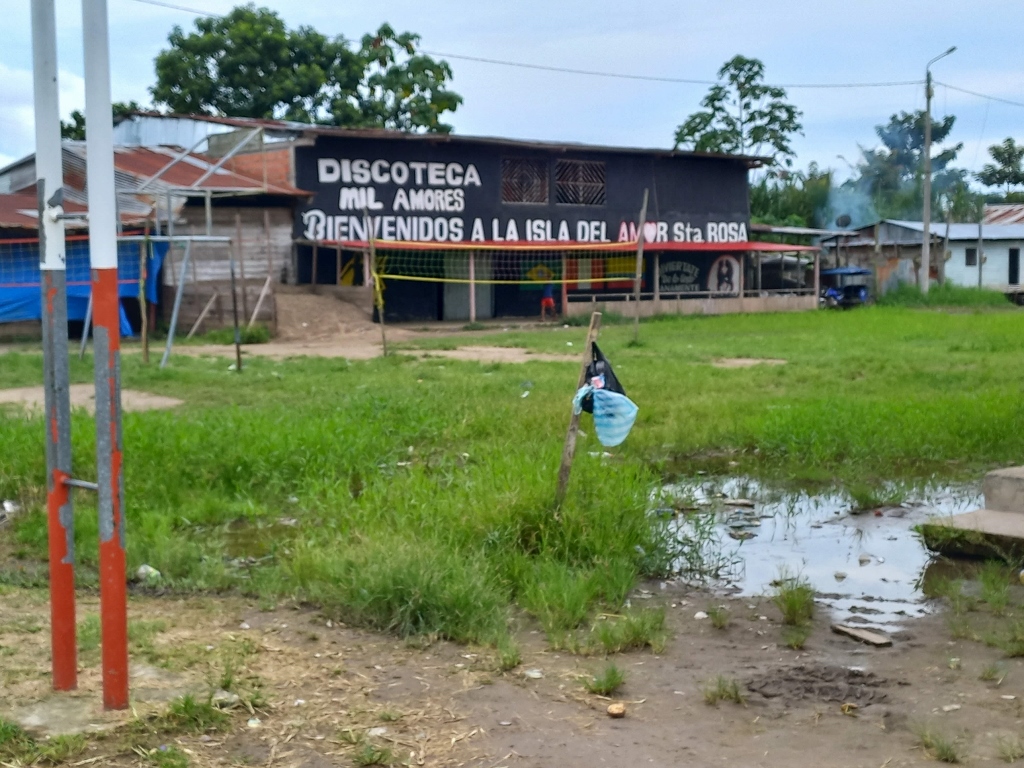 Settlement on the Peruvian island of Santa Rosa, a detail
Here, I also saw numerous American black vultures (Coragyps atratus). One of them was standing near a house where two girls were playing in a hammock.
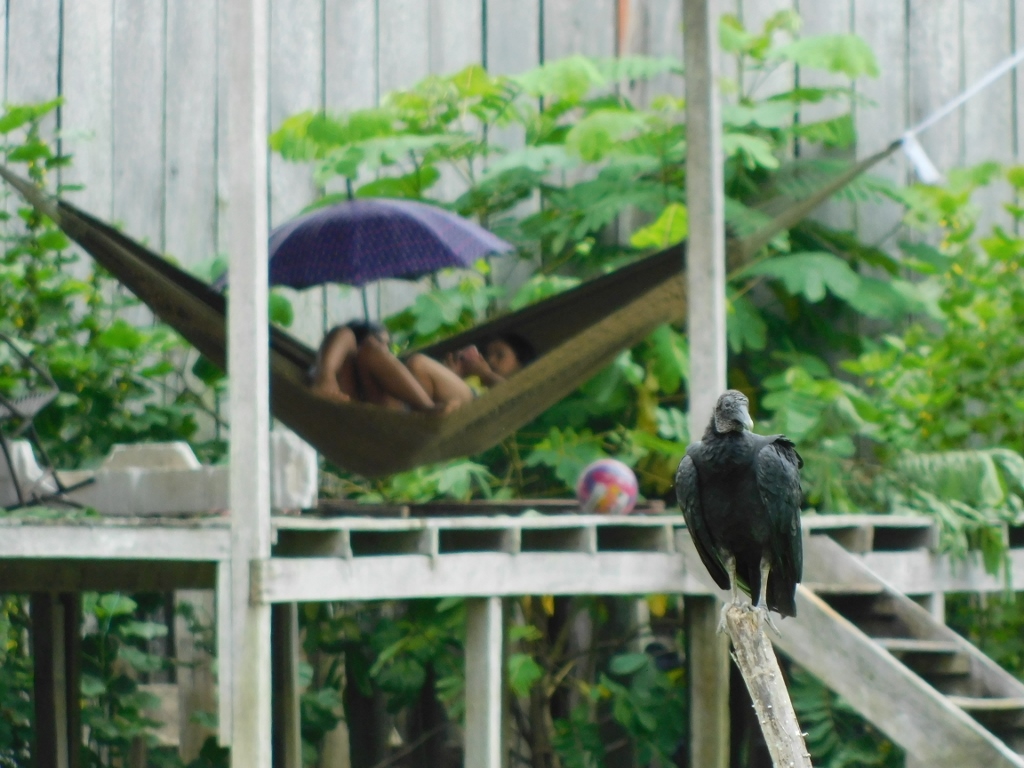 American black vulture and girls in a hammock
Continuing further through the settlement on Santa Rosa Island, I passed by numerous houses that were closer to the river and built on the gentle slope descending from the island's centre toward the shore.
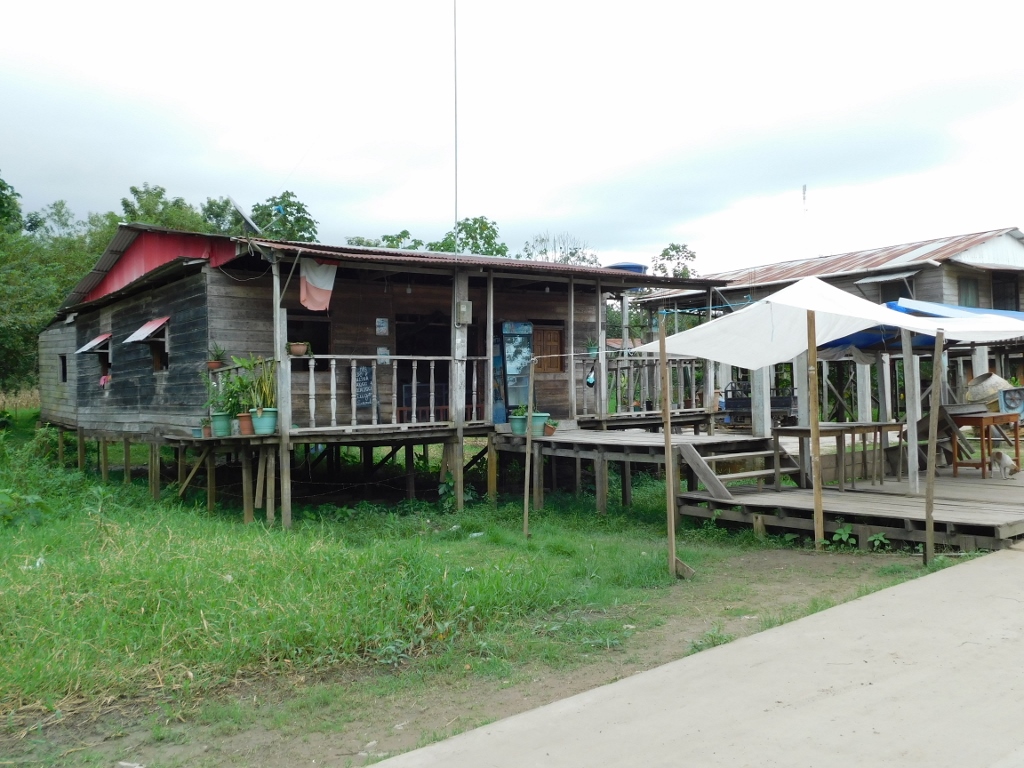 Settlement on the Peruvian island of Santa Rosa, a detail
I have mentioned earlier that the Amazon experiences significant annual fluctuations in water levels depending on the season, ranging from 4 to as much as 15 metres, averaging around 9 metres. By the way, although it is occasionally mentioned that the Amazon is the longest river in the world when considering its tributaries, that distinction actually belongs to the Nile in Africa, with the Amazon coming second. However, what undeniably makes the Amazon number one in the world is its water discharge. Due to the heavy rainfall in the region, the Amazon consistently delivers vast amounts of water to the Atlantic Ocean. In fact, the Amazon alone accounts for about 20% of the total freshwater discharge into the seas and oceans worldwide.
During the rainy season, when water levels rise and it takes time for such massive volumes to flow to the Atlantic Ocean, the river overflows and floods surrounding areas. This is precisely why houses closer to the river are built on stilts – to withstand these seasonal floods.
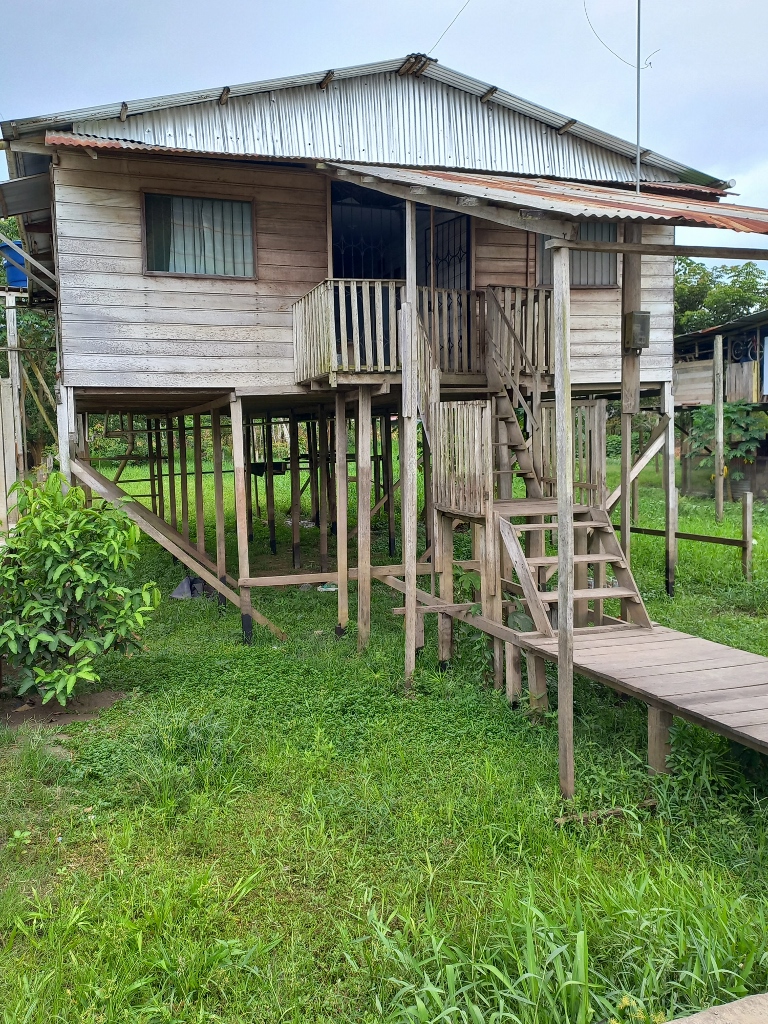 Settlement on the Peruvian island of Santa Rosa, a detail
However, through the centre of the settlement on Santa Rosa Island, which is evidently high enough above the flood levels, there is a street lined with houses that have proper ground-level foundations, without stilts.
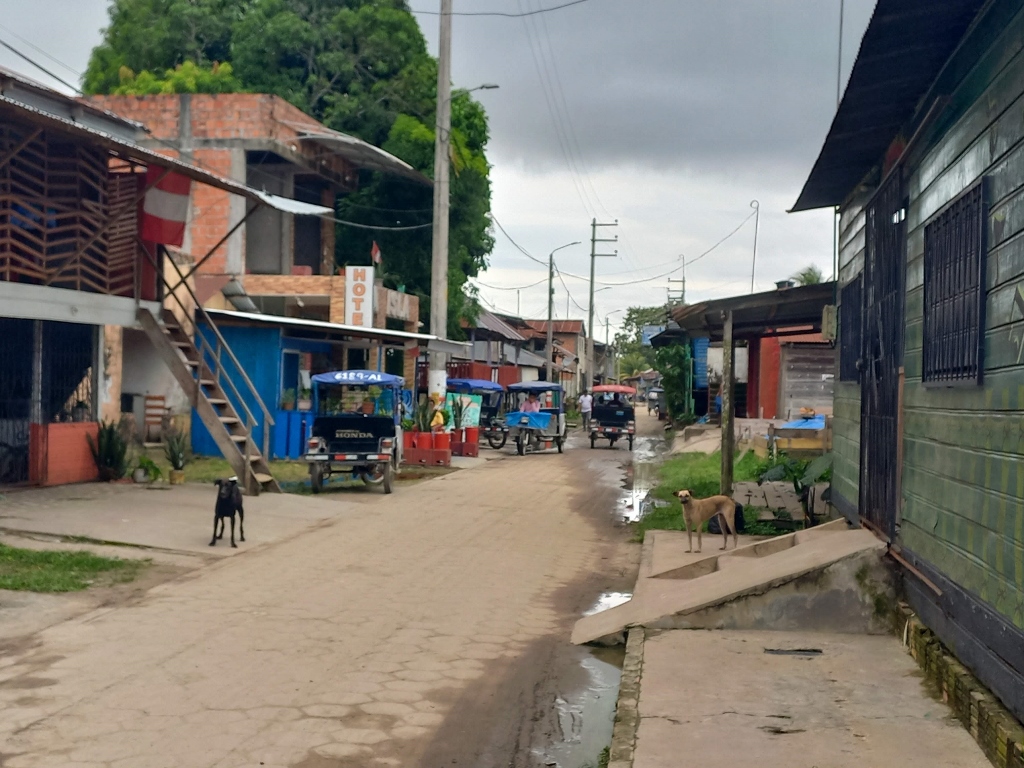 Settlement on the Peruvian island of Santa Rosa, a detail
Admittedly, when you look at the area beyond the main street towards the river, you can see wooden houses on stilts again. Perhaps this is also conditioned by the financial situation of the owners.
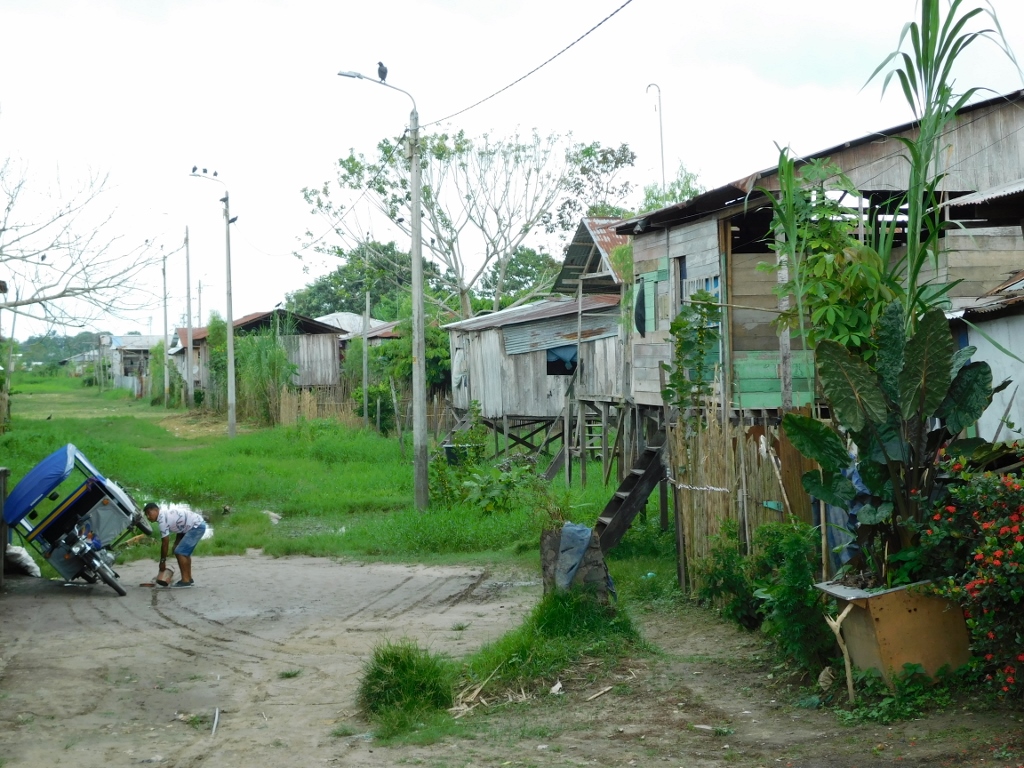 Settlement on the Peruvian island of Santa Rosa, a detail
All in all, I continued along the main street towards the restaurant.
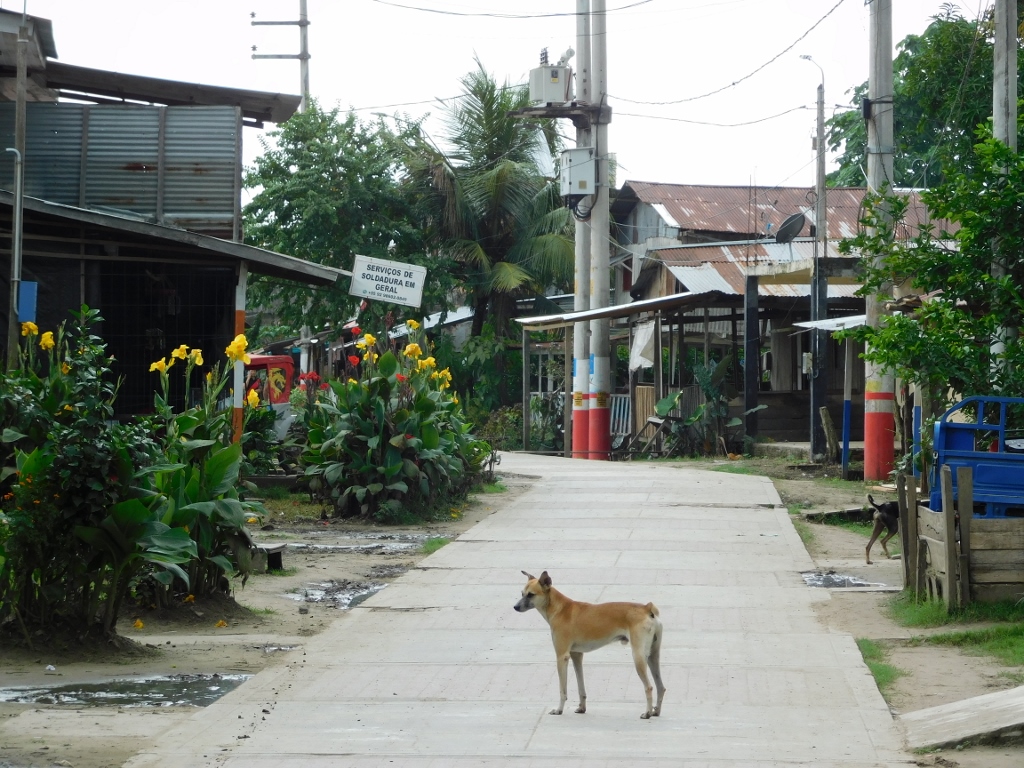 Settlement on the Peruvian island of Santa Rosa, a detail
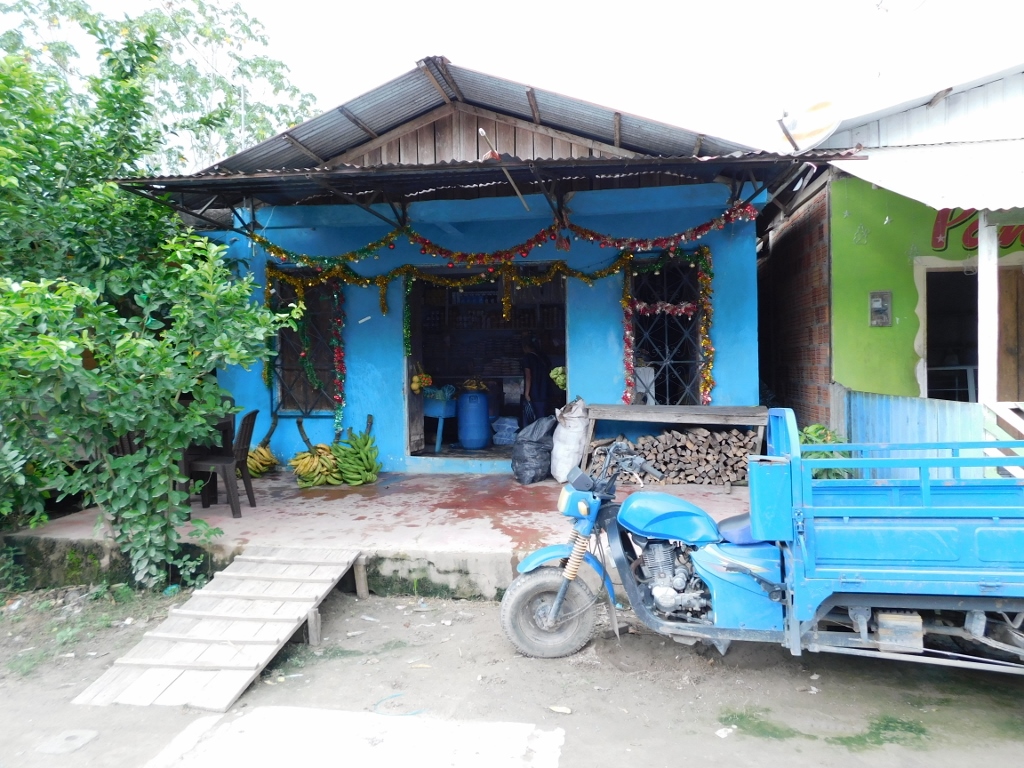 Settlement on the Peruvian island of Santa Rosa, a detail
I noticed that there were quite a few "churches" or at least "houses of God" here. In both Colombia and Peru, the vast majority of the population belongs to Christian churches (87% and approximately 94%, respectively), predominantly the Catholic Church. However, the ones I saw here belong to other denominations.
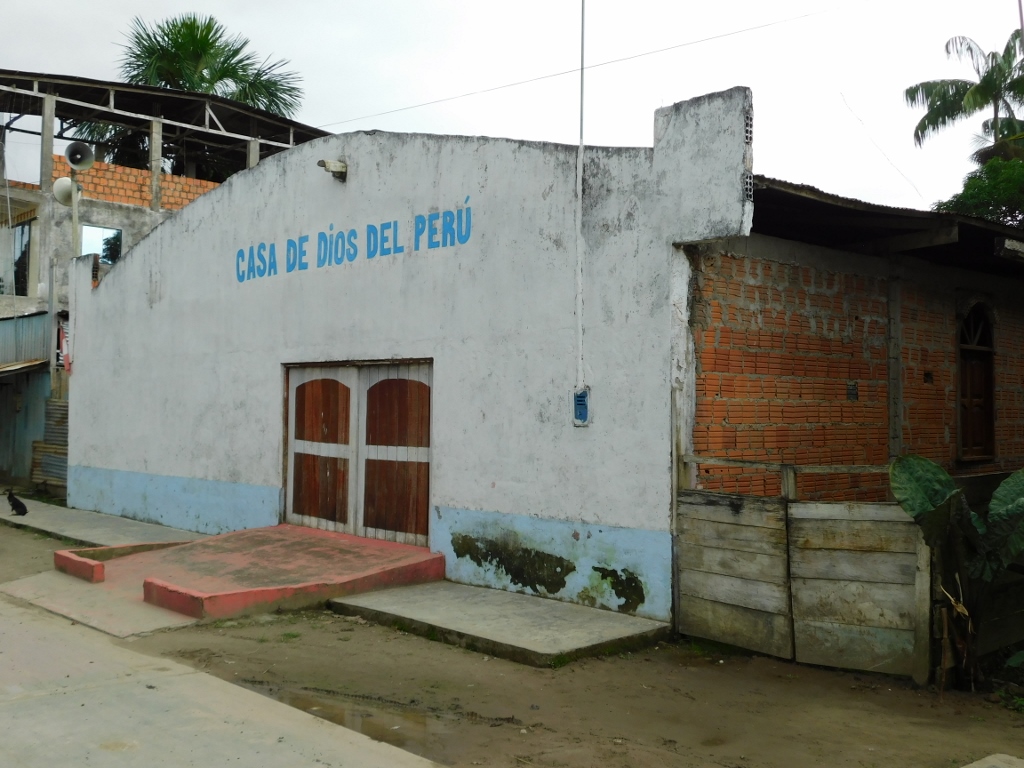 Settlement on the Peruvian island of Santa Rosa, a detail
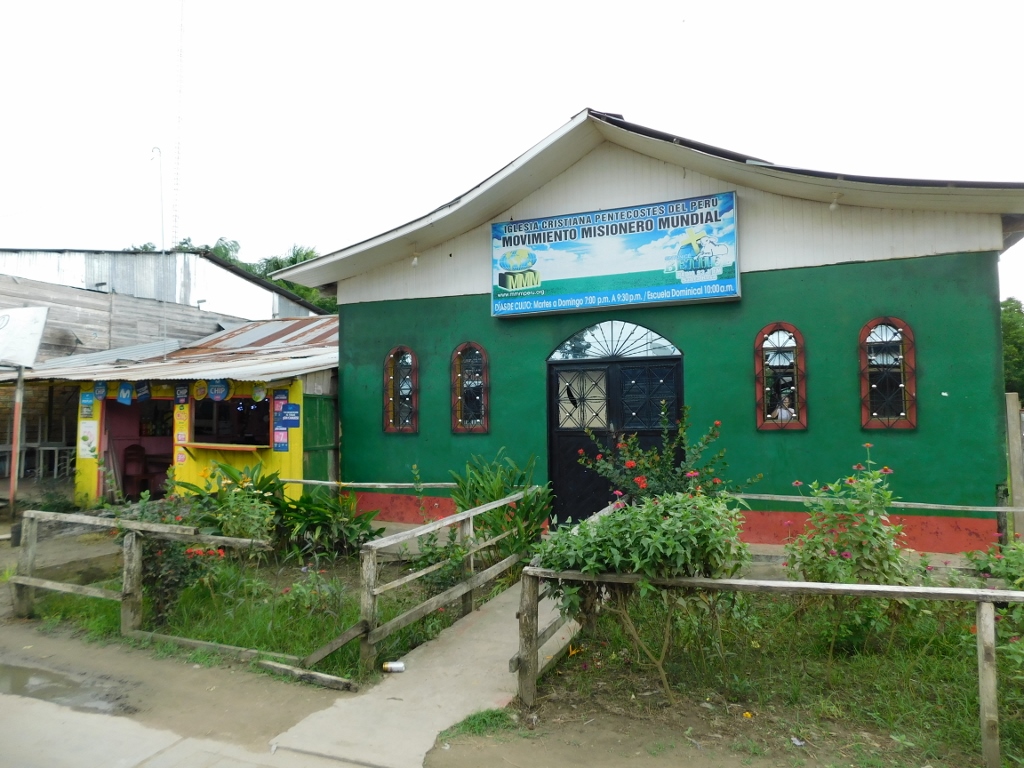 Settlement on the Peruvian island of Santa Rosa, a detail
At some point I came across a fresh barbecue set up in front of a house. I didn't eat anything there, just took some photos.
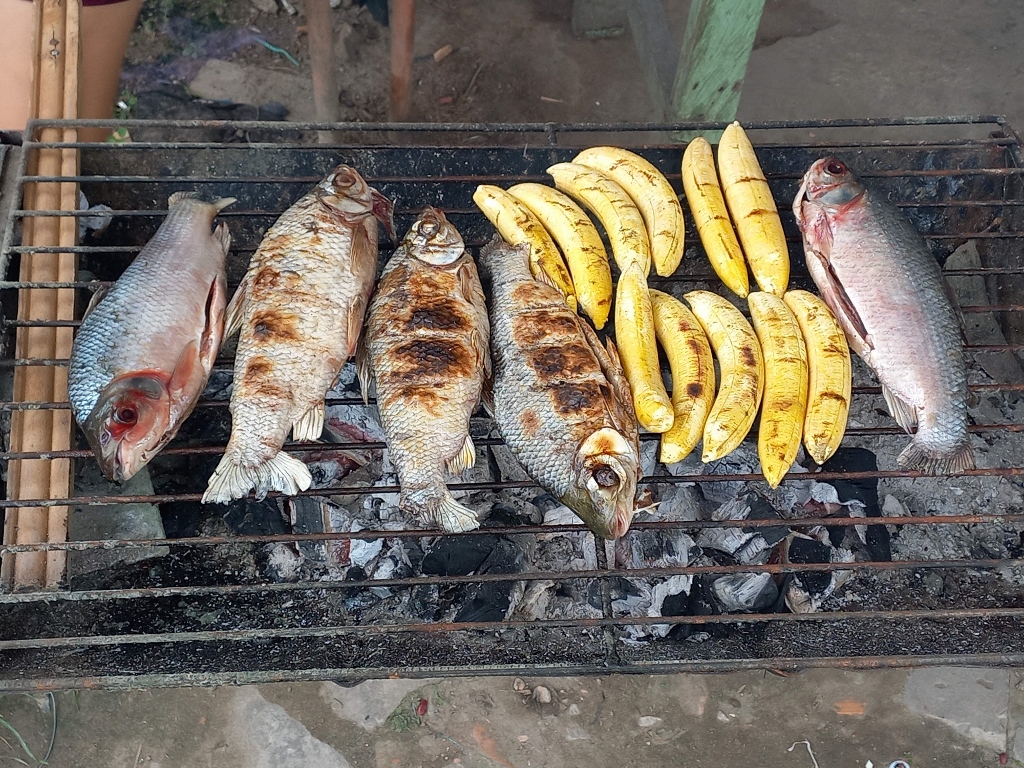 Settlement on the Peruvian island of Santa Rosa, a detail
Soon, I arrived at the restaurant and settled down on the spacious terrace.
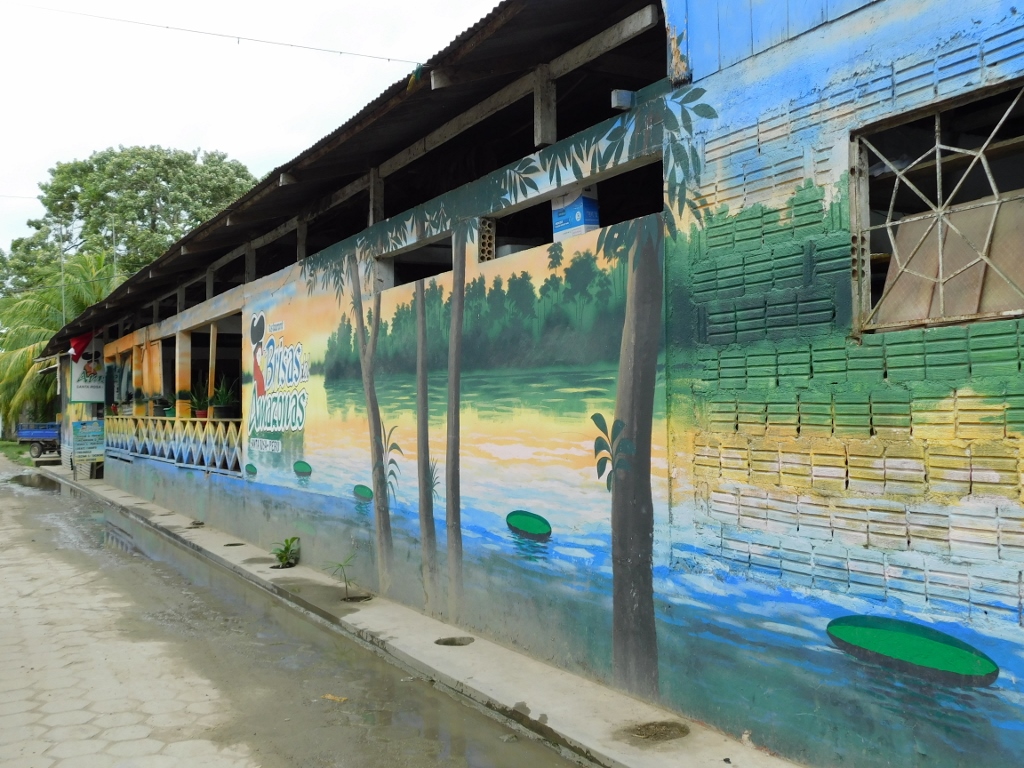 Restaurant on the Peruvian island of Santa Rosa with good ceviche
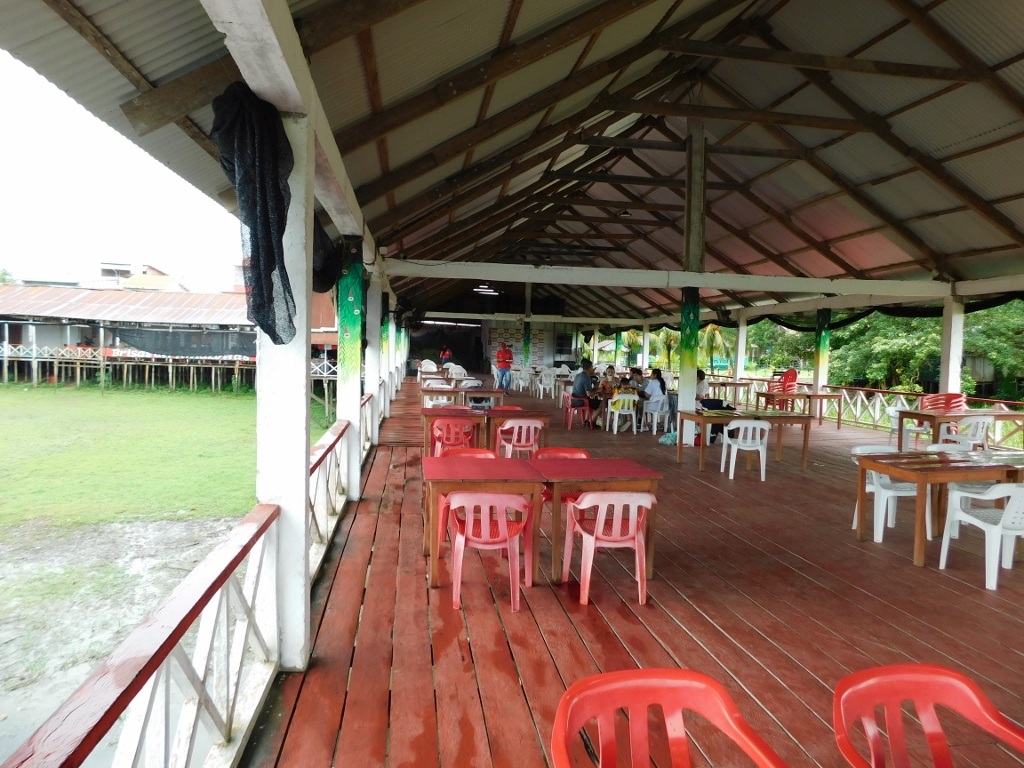 Restaurant on the Peruvian island of Santa Rosa with good ceviche
When people talk about arriving in Leticia and the surrounding Amazon region, they often mention the high humidity combined with high temperatures. However, this afternoon, rain began to fall and there was also a strong wind. In line with the prevailing climate information, I was wearing only a thin shirt. The wind, combined with the lingering effects of a cold or whatever I had, was really uncomfortable and I regretted not bringing my windbreaker, which I had left in the room. At that point, there was nothing I could do except move to another table, as the wind was blowing rain onto the terrace and I certainly didn't want to get soaked.
I contented myself with watching a whole flock of American black vultures perched on a nearby tree, waiting for the rain to pass.
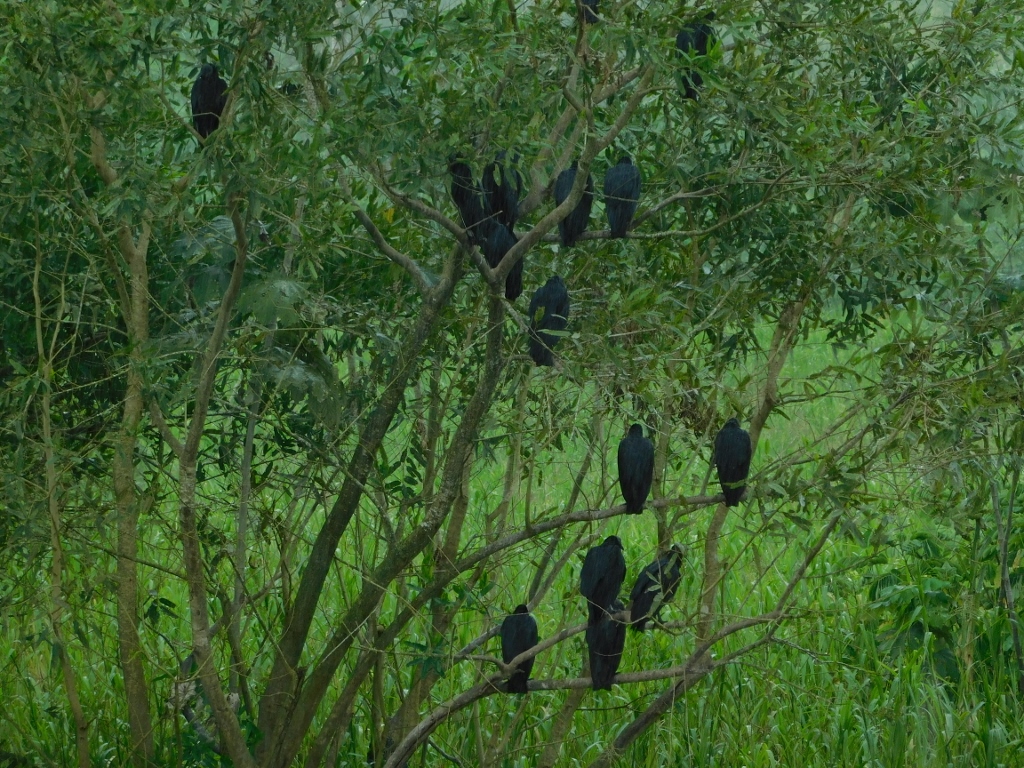 American black vultures during rain
Meanwhile, I ordered myself a nice Peruvian beer to comfort me.
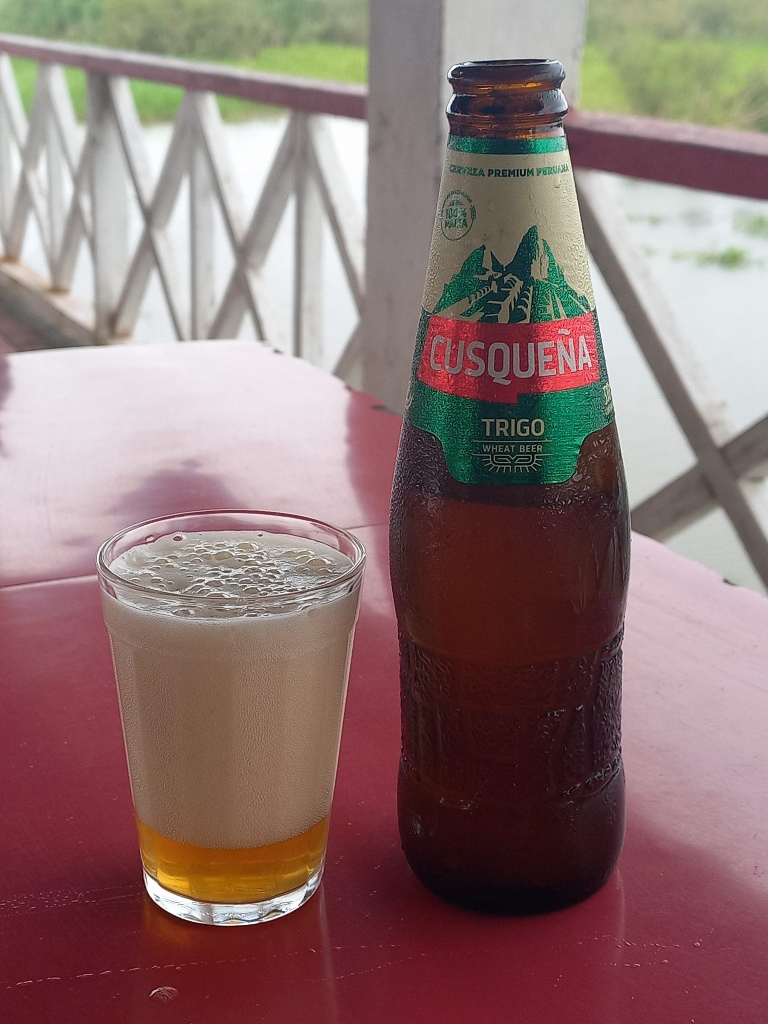 Cusco is far away, but a beer from Cusco is right there on the table
Here is also a short video that illustrates all of this better, including the rain:
The video recording also shows a parrot perched on the railing near the neighbouring table. In fact, there were two of them belonging to two different species and they would occasionally fly off only to circle around and return. This gave me the opportunity to capture them on camera. In the next photo, on the left is the festive parrot (Amazona festiva), while on the right is the red-bellied macaw (Orthopsittaca manilatus).
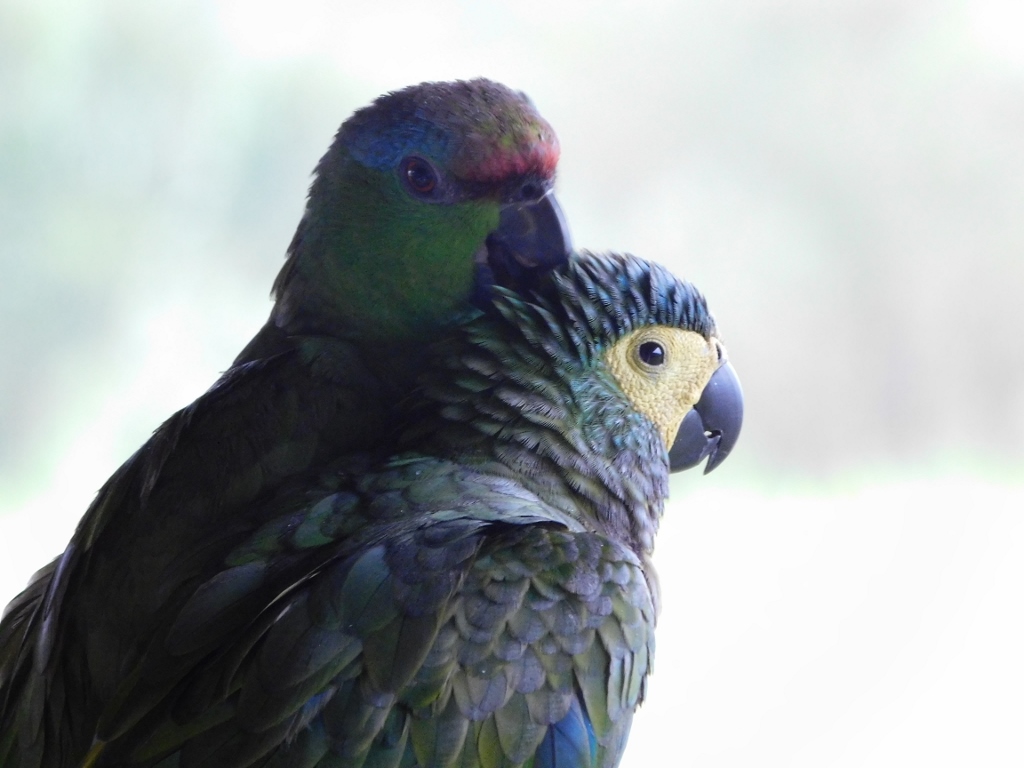 Festive parrot and red-bellied macaw
Although they seemed to enjoy each other's company, they would occasionally separate, allowing me to photograph each one individually before they gathered again in the same spot.
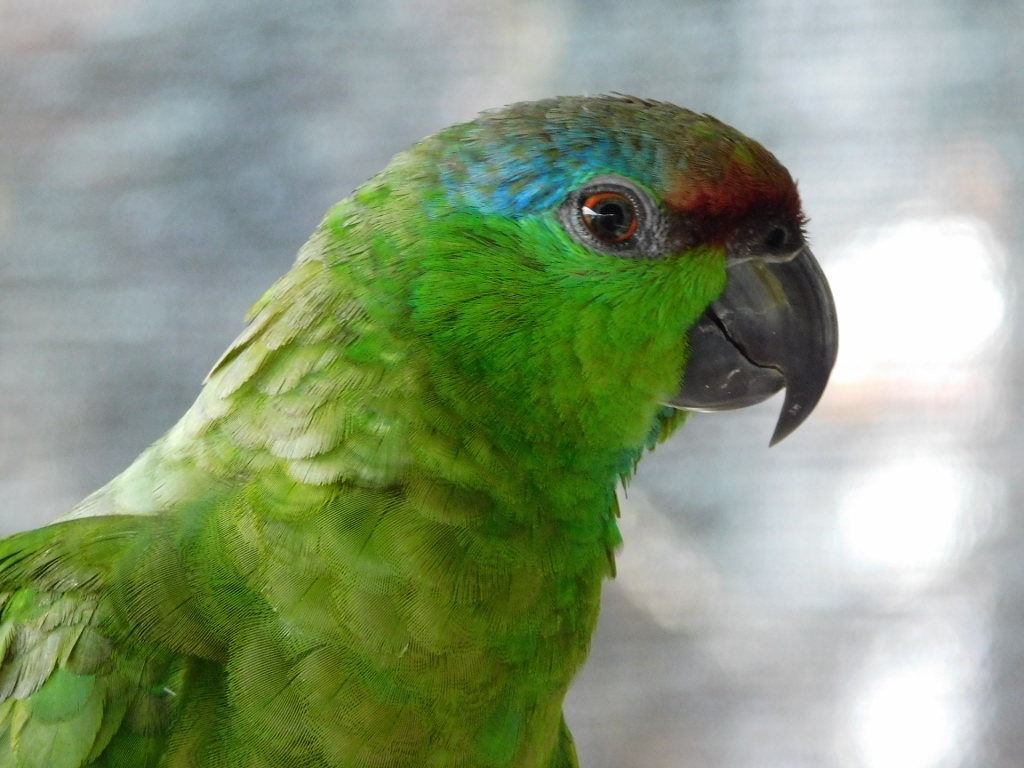 Festive parrot
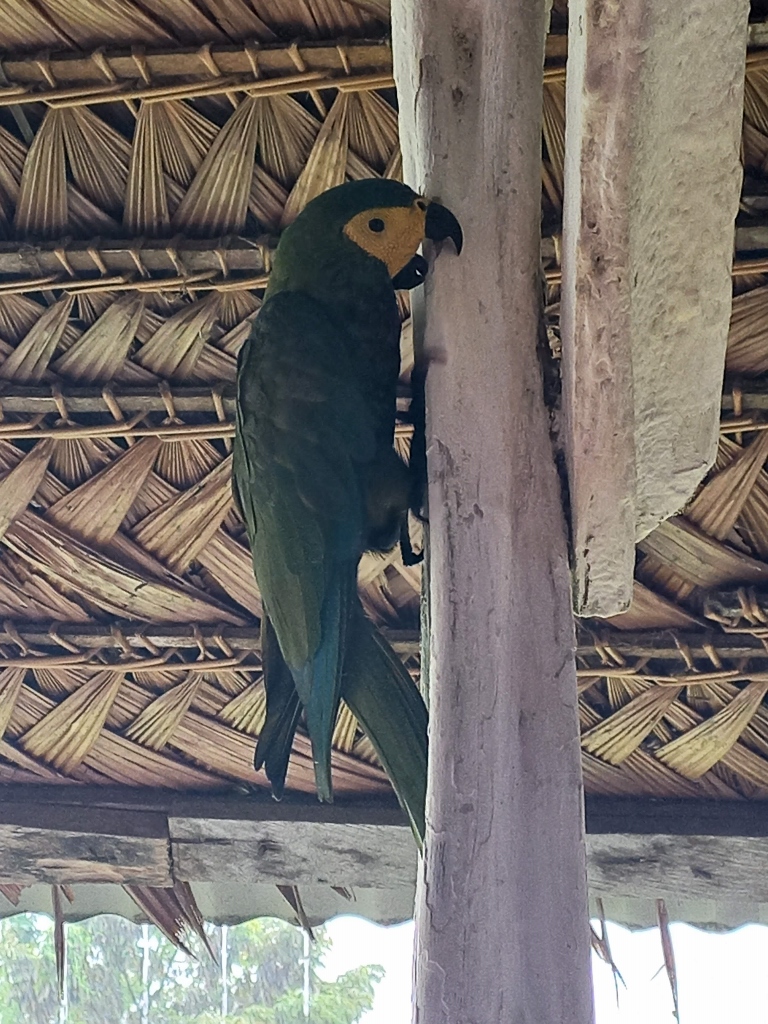 Red-bellied macaw
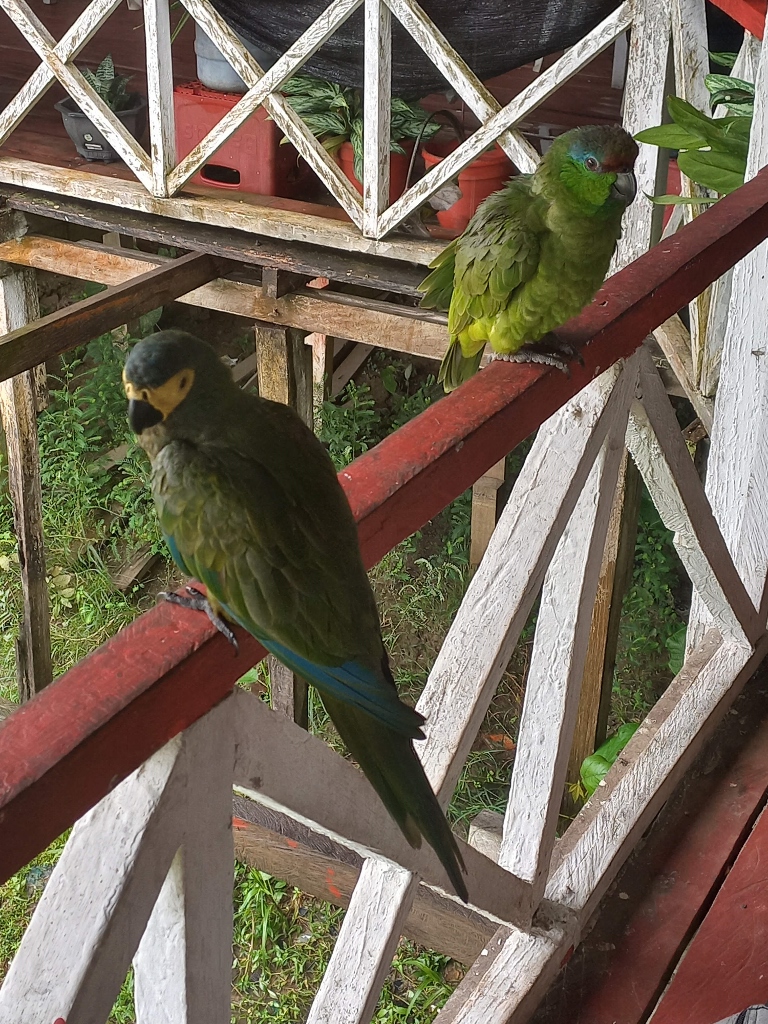 Red-bellied macaw and festive parrot
In the meantime, my ceviche arrived – a special version that included various sea creatures and wonderful local vegetables. Despite being far from the Pacific, this restaurant is renowned and everyone highly recommends their ceviche. I was confident that all the ingredients were fresh, as traditional ceviche is made with fresh sea fish and seafood. Back in the day and in Belgrade, I once made ceviche with freshwater fish and surprisingly it turned out quite well. Everyone who tried it survived successfully, and it is absolutely essential for the fish to be as fresh and healthy as possible, as ceviche involves no cooking at all. The fish and seafood pieces are "cooked" in fresh lime juice (or lemon juice in my version).
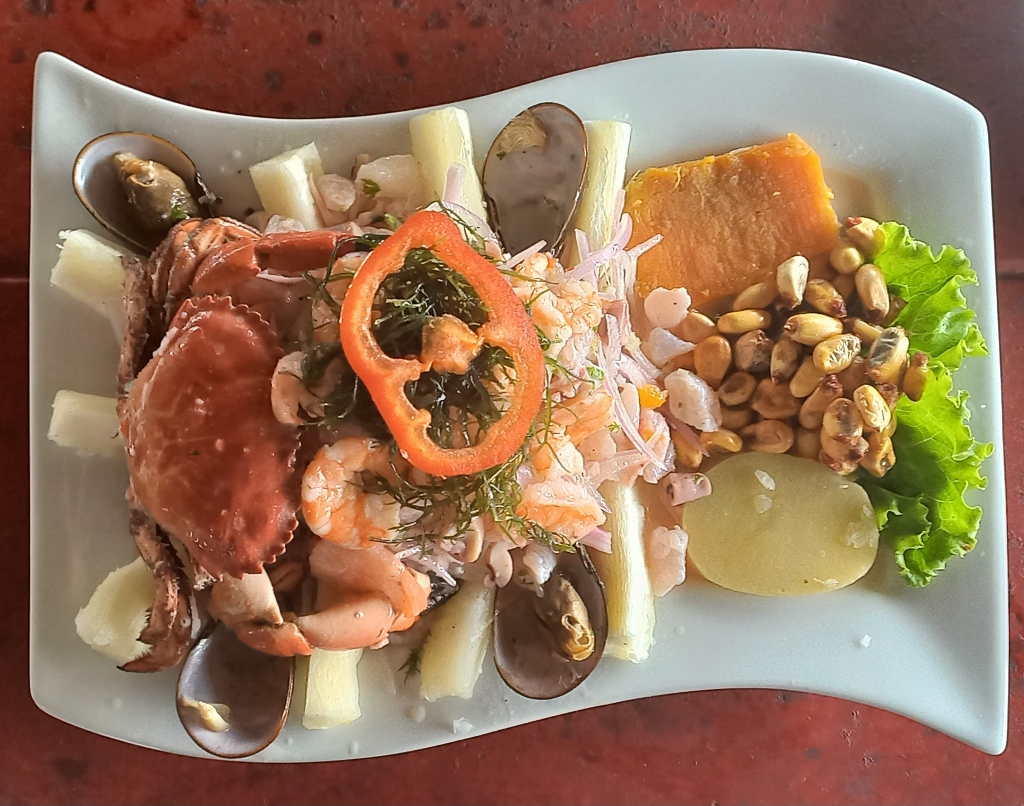 Pacific ceviche in the middle of the Amazon basin
Meanwhile, the weather calmed down, the wind stopped blowing and the rain almost completely subsided. It was a clear sign that the American black vultures needed to dry their feathers a bit.
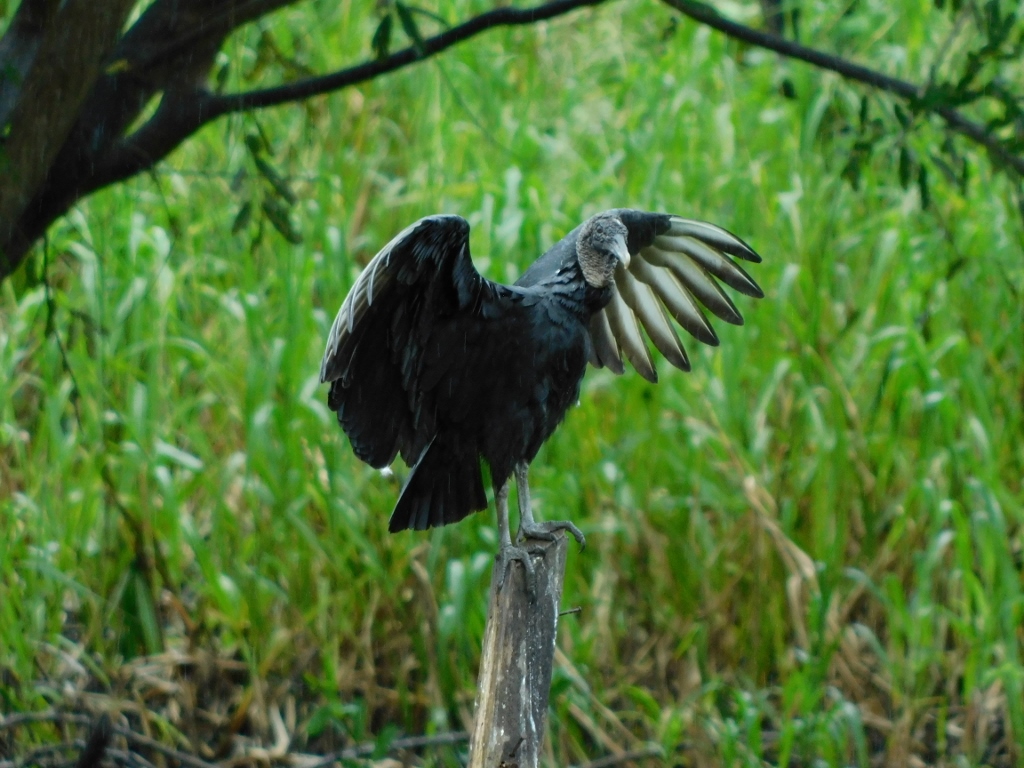 American black vulture drying its feathers
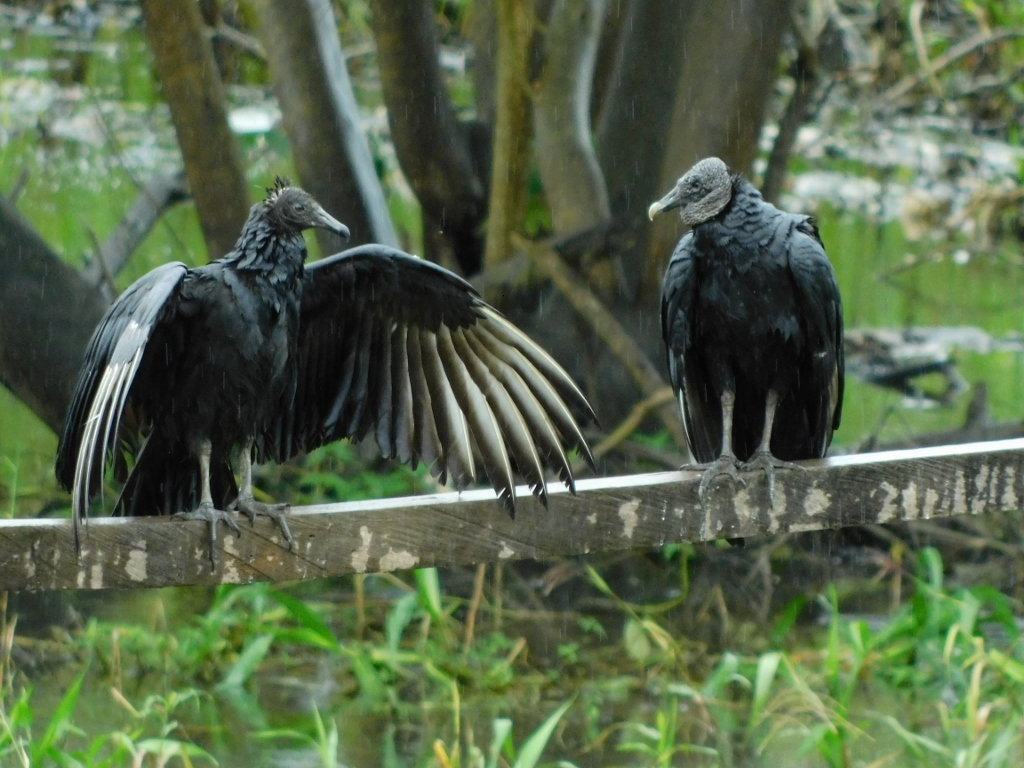 American black vultures drying their feathers
As for me, I was pleased with the lunch, with a full stomach and balanced body temperature, so I took a leisurely stroll on the terrace, capturing footage of the various bird species abundant in the area.
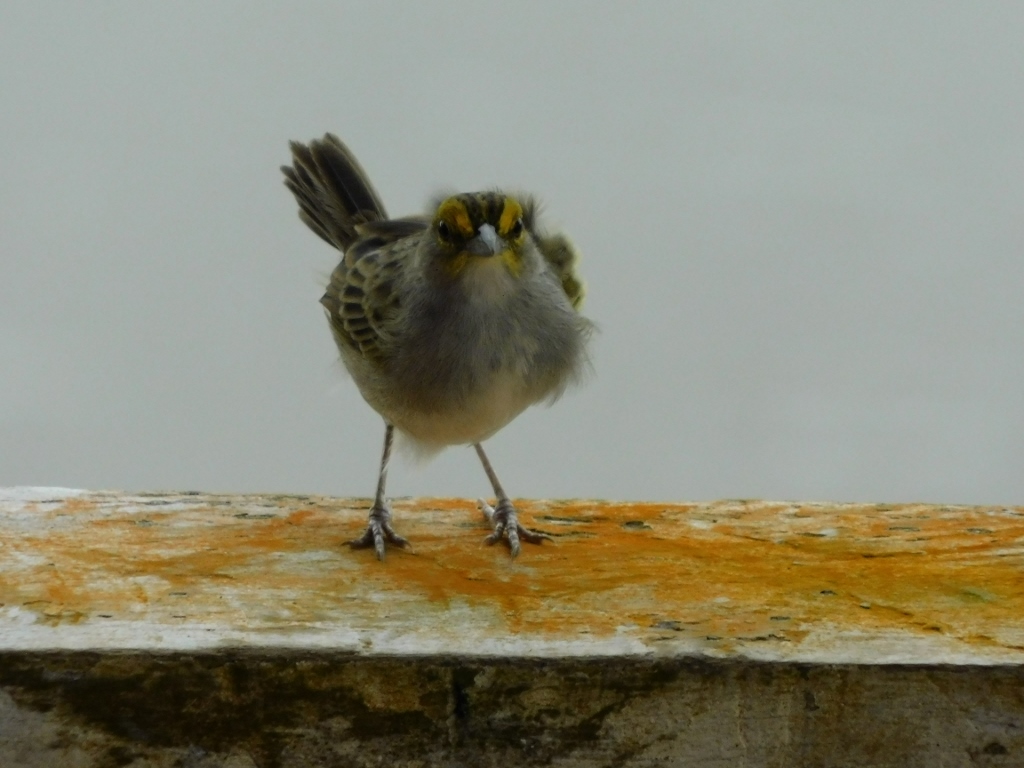 Yellow-browed sparrow (Ammodramus aurifrons)
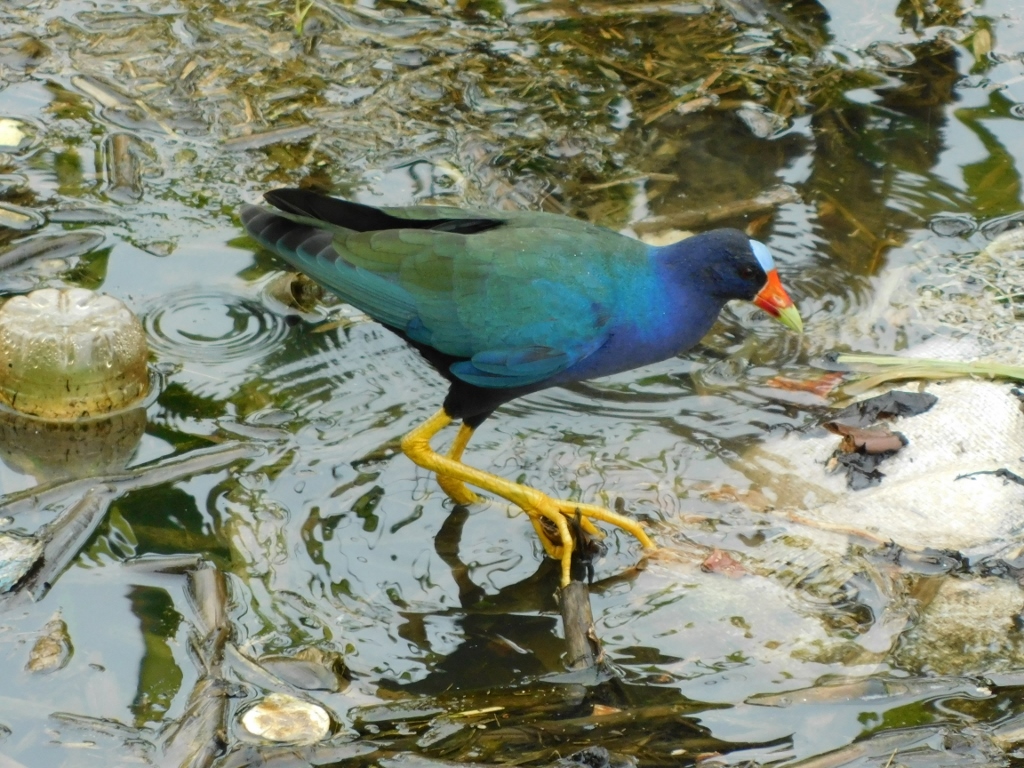 Purple gallinule (Porphyrio martinica)
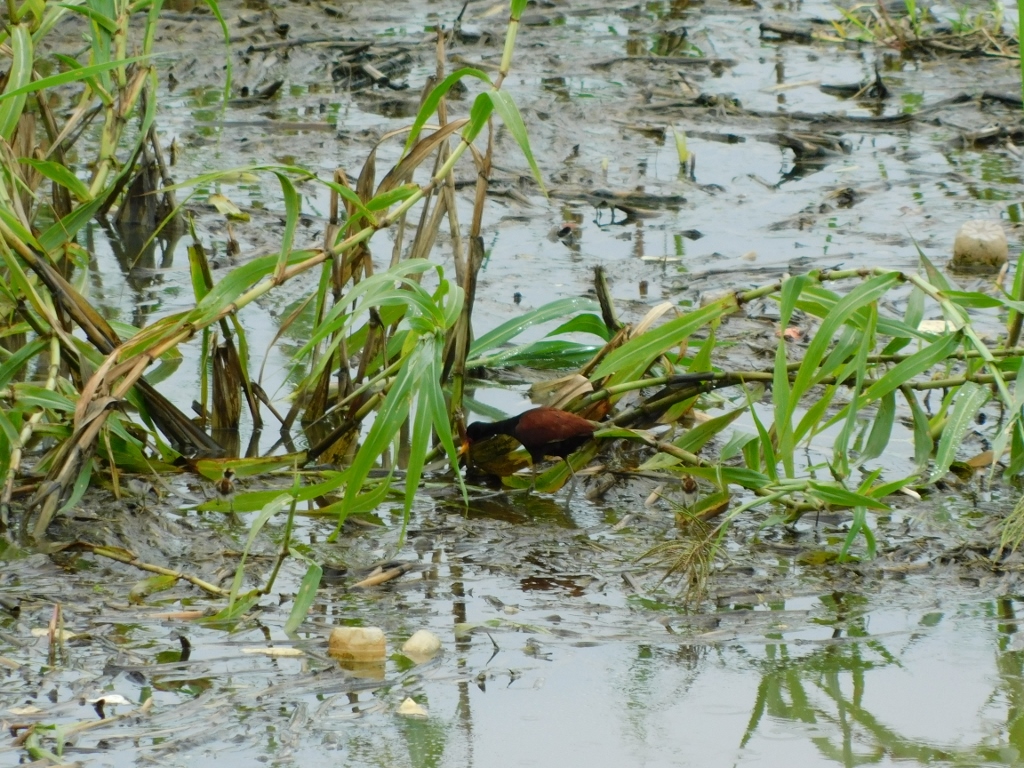 Wattled jacana (Jacana jacana)
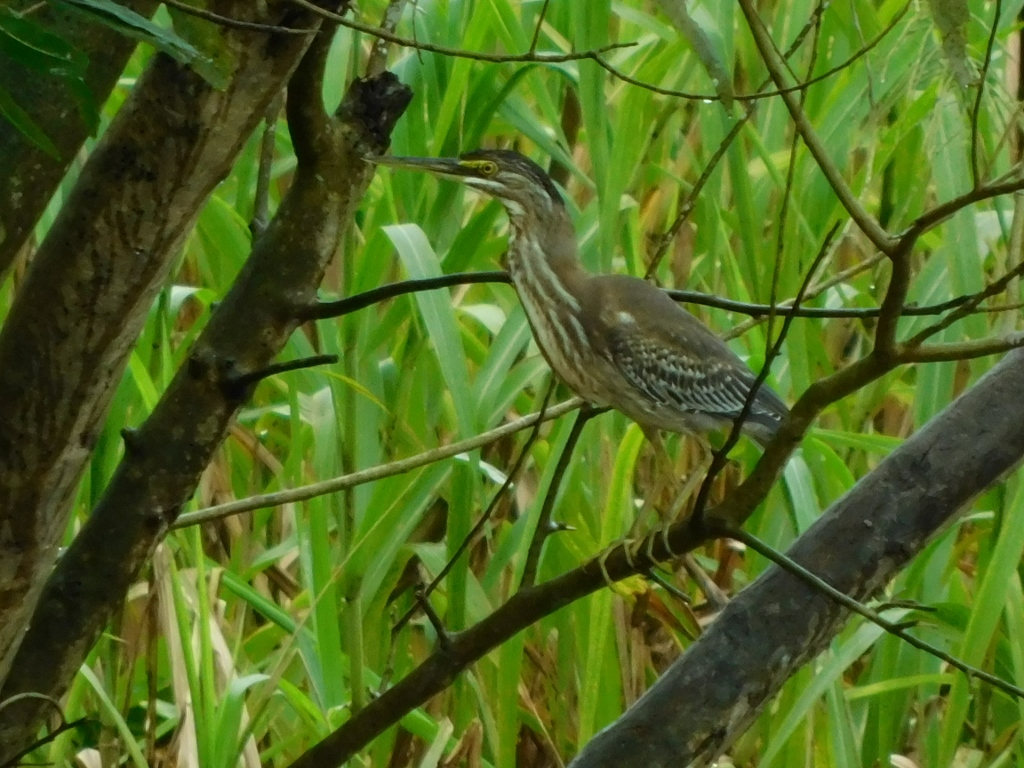 Striated heron, juvenile (Butorides striata)
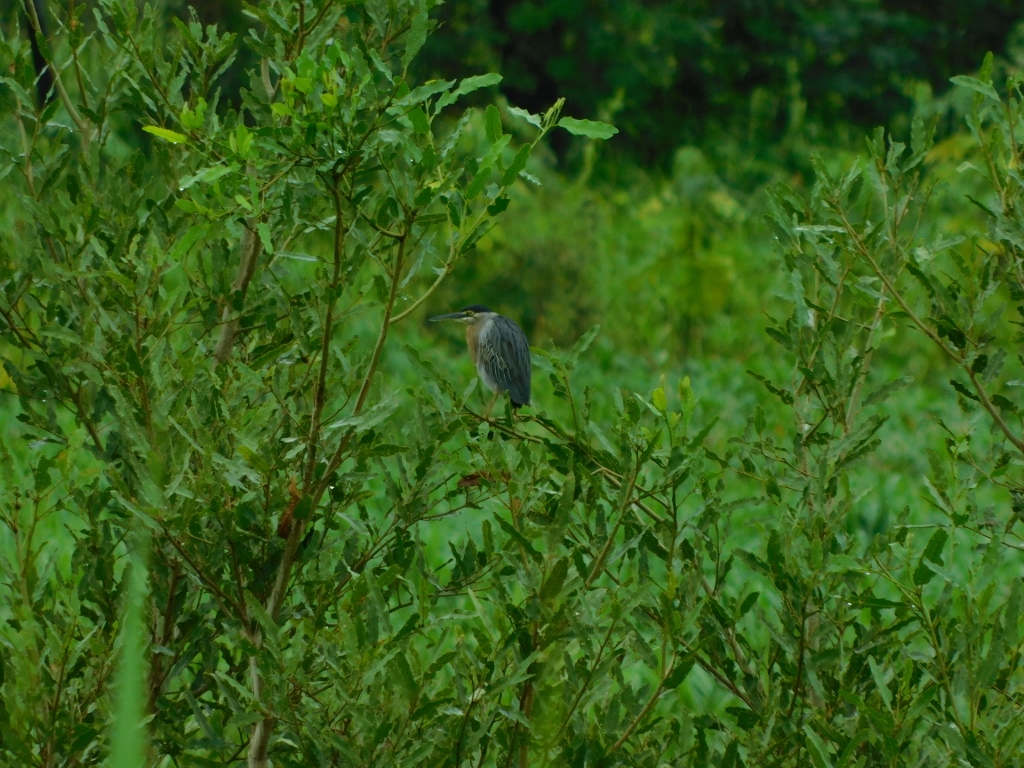 Striated heron, adult (Butorides striata)
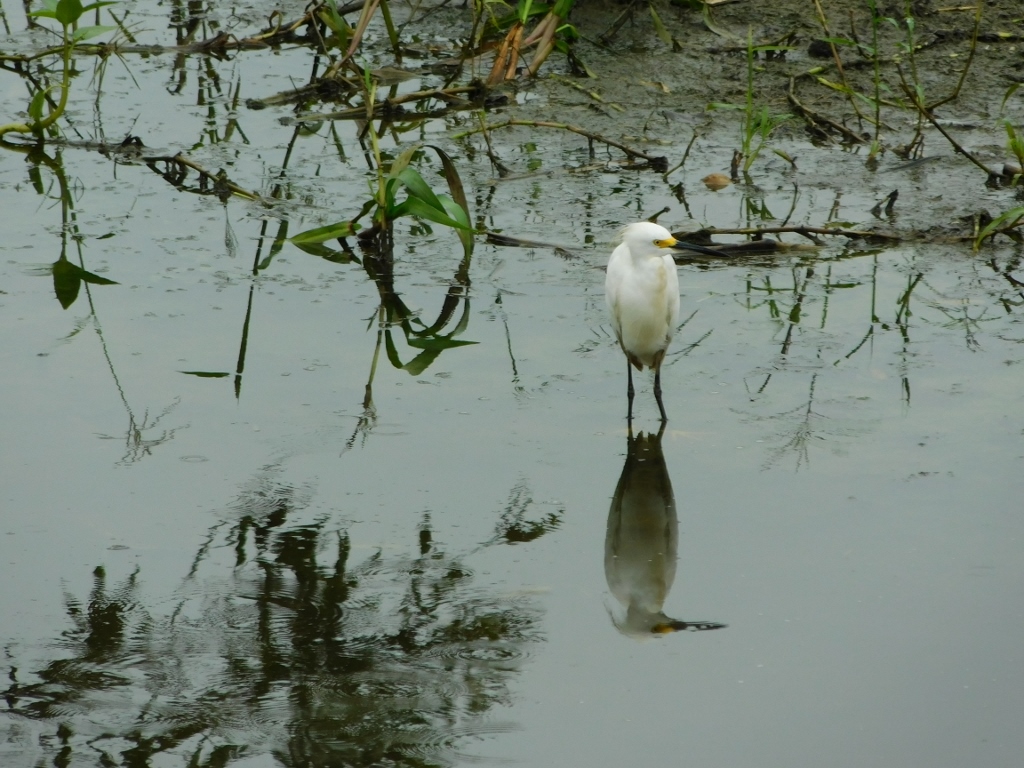 Snowy egret (Egretta thula)
Once the rain completely stopped and I had finished eating and paid the bill, I started walking back towards the dock. I chose to walk again and I didn't regret it – I found the sights along the way very interesting.
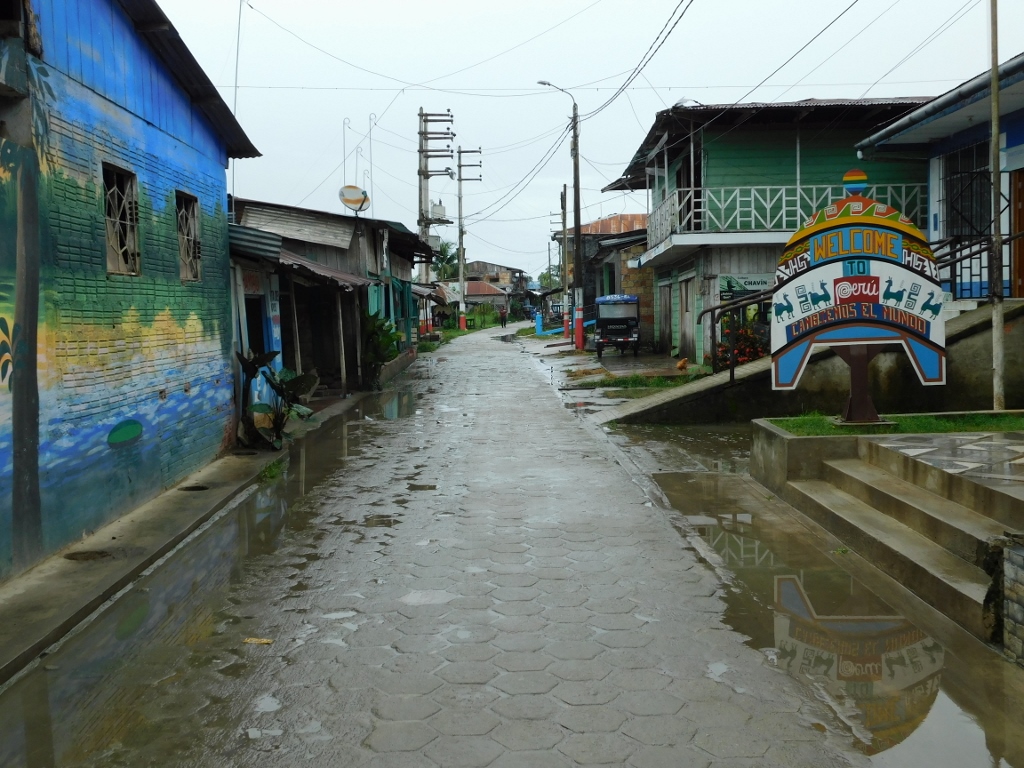 Settlement on the Peruvian island of Santa Rosa, a detail
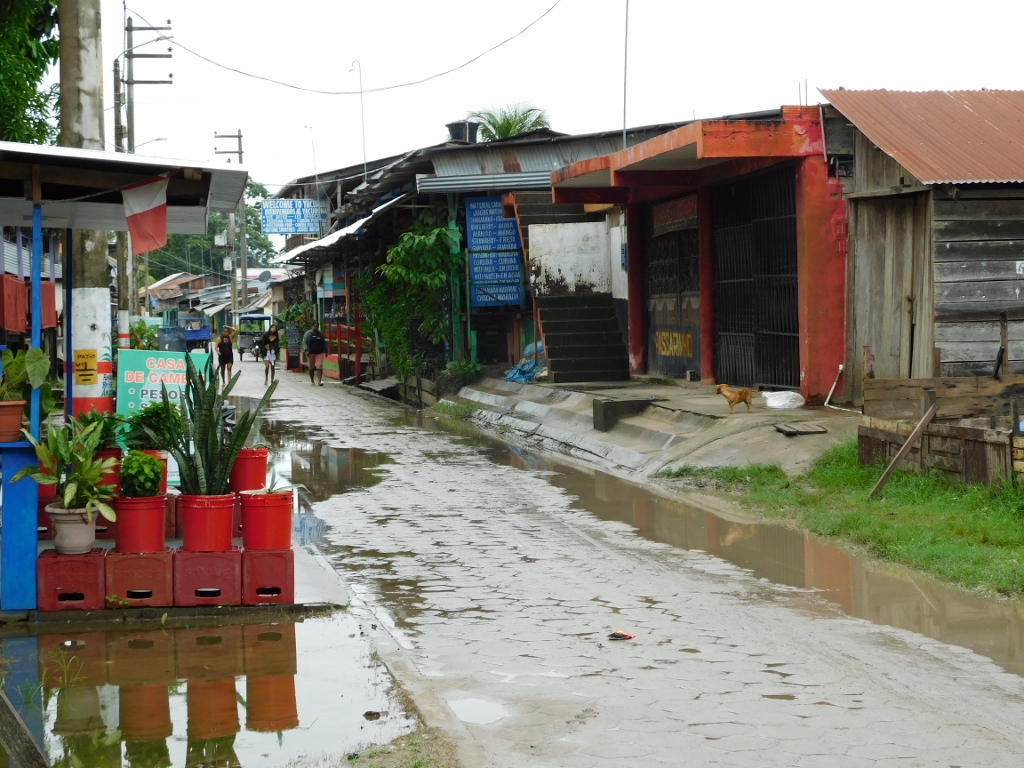 Settlement on the Peruvian island of Santa Rosa, a detail
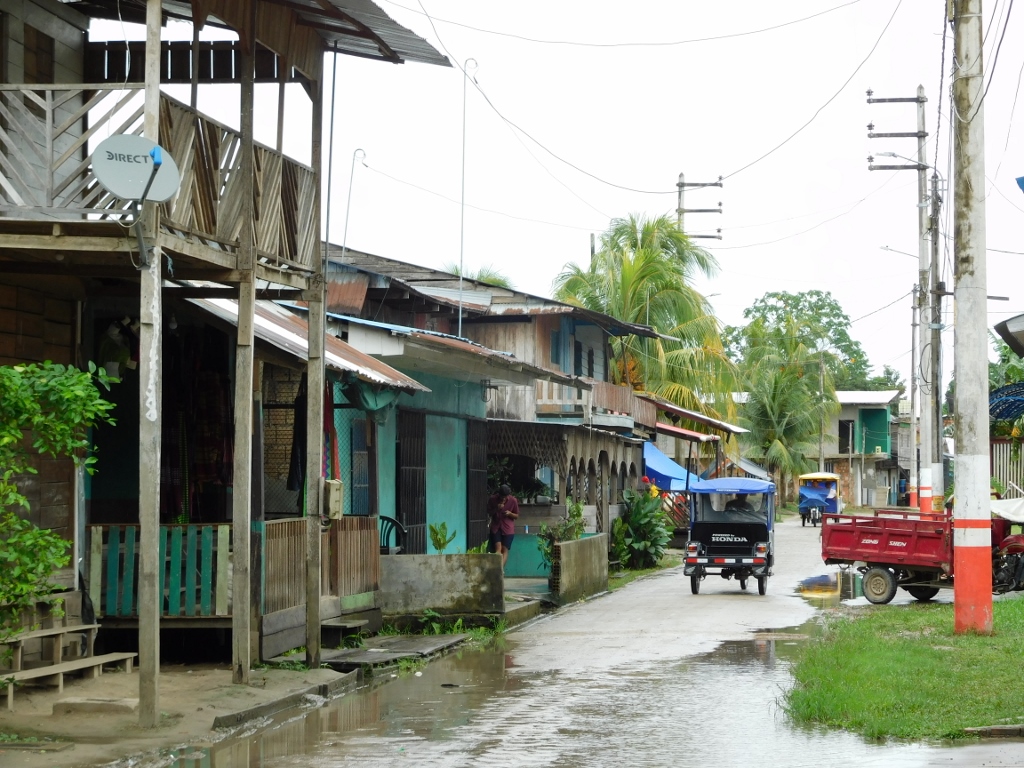 Settlement on the Peruvian island of Santa Rosa, a detail
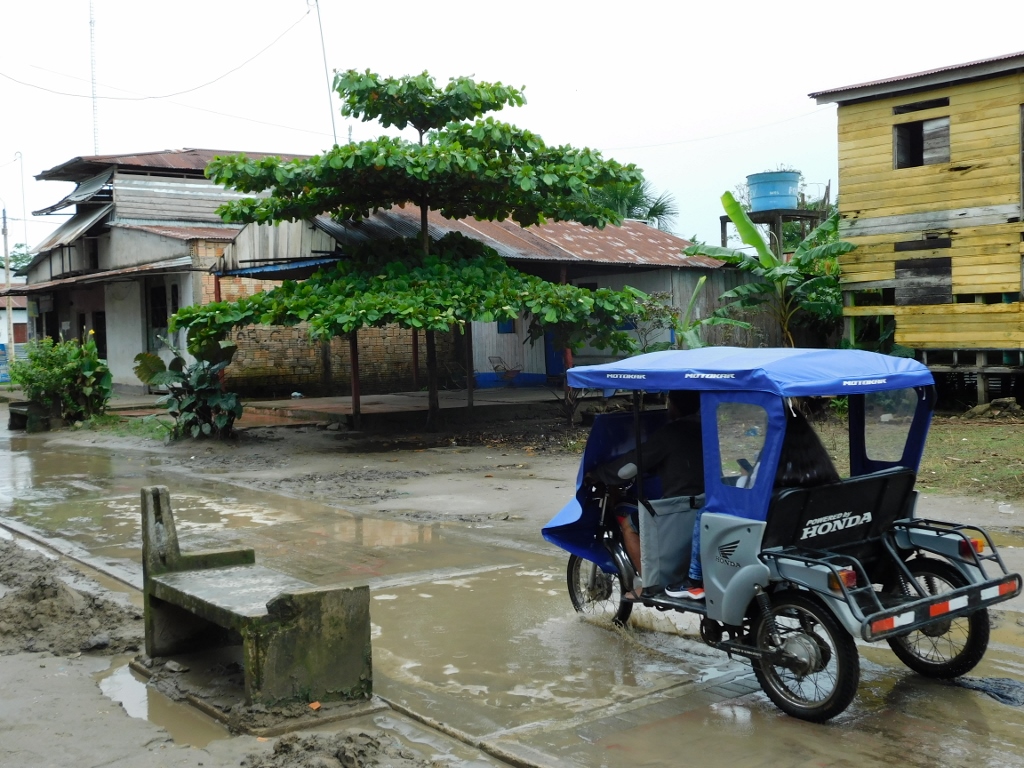 Settlement on the Peruvian island of Santa Rosa, a detail
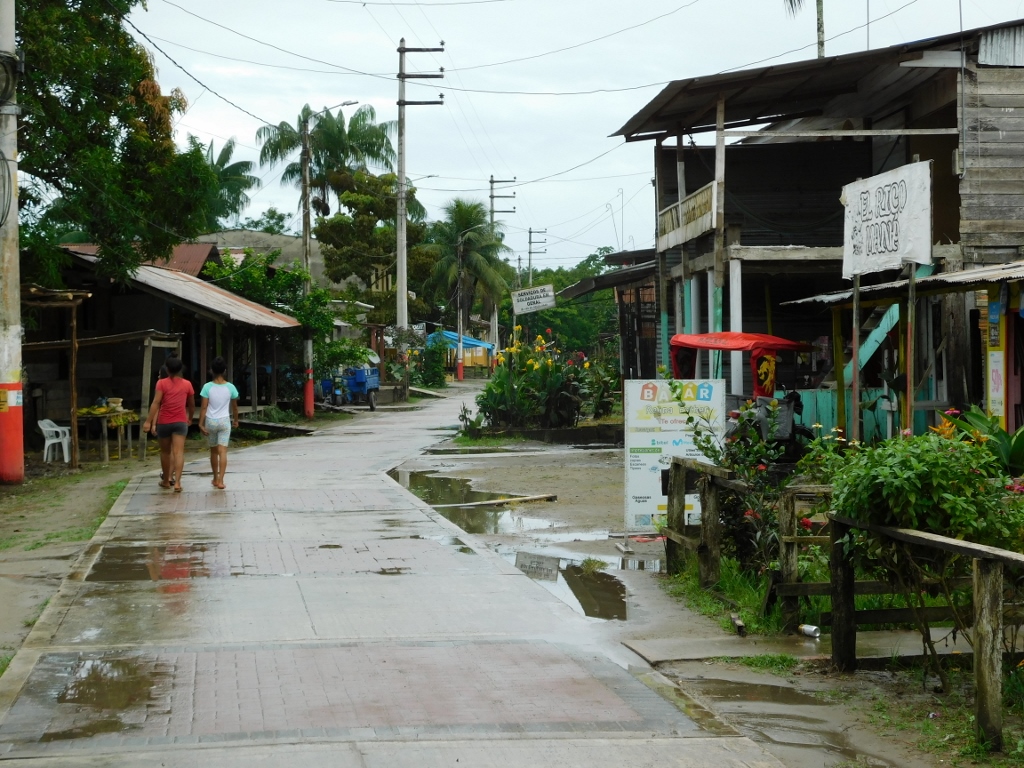 Settlement on the Peruvian island of Santa Rosa, a detail
I saw and took photos of a couple of birds again. One was a "new" bird species for me, while the other was one I had already seen but found it very interesting now with its feather drying behaviour.
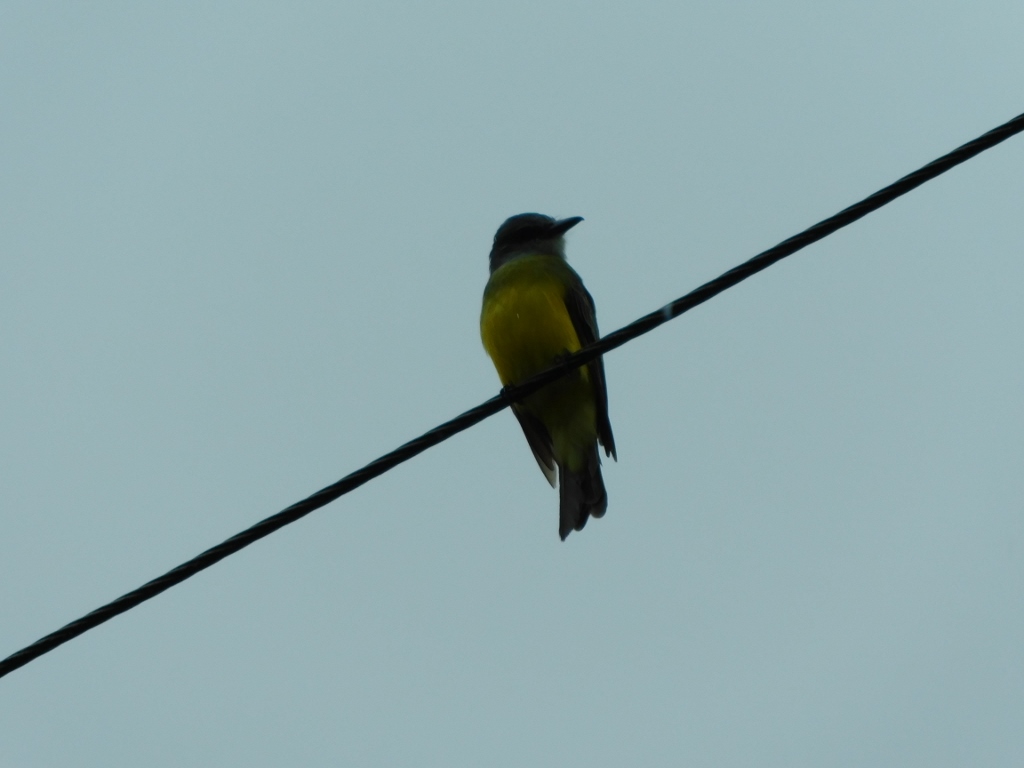 Tropical Kingbird (Tyrannus melancholicus)
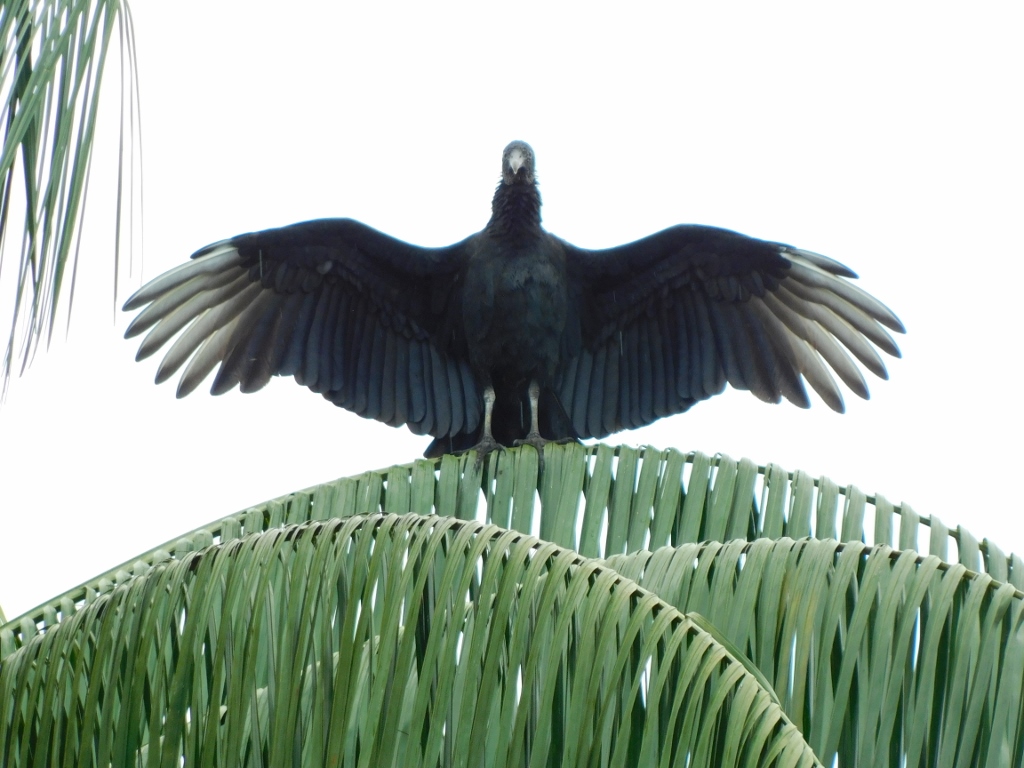 American black vulture drying its feathers
Soon, I was back in a boat heading towards Leticia. I was very content with this excursion and extremely happy to navigate along the Amazon – it felt like stepping into a dream of mine.
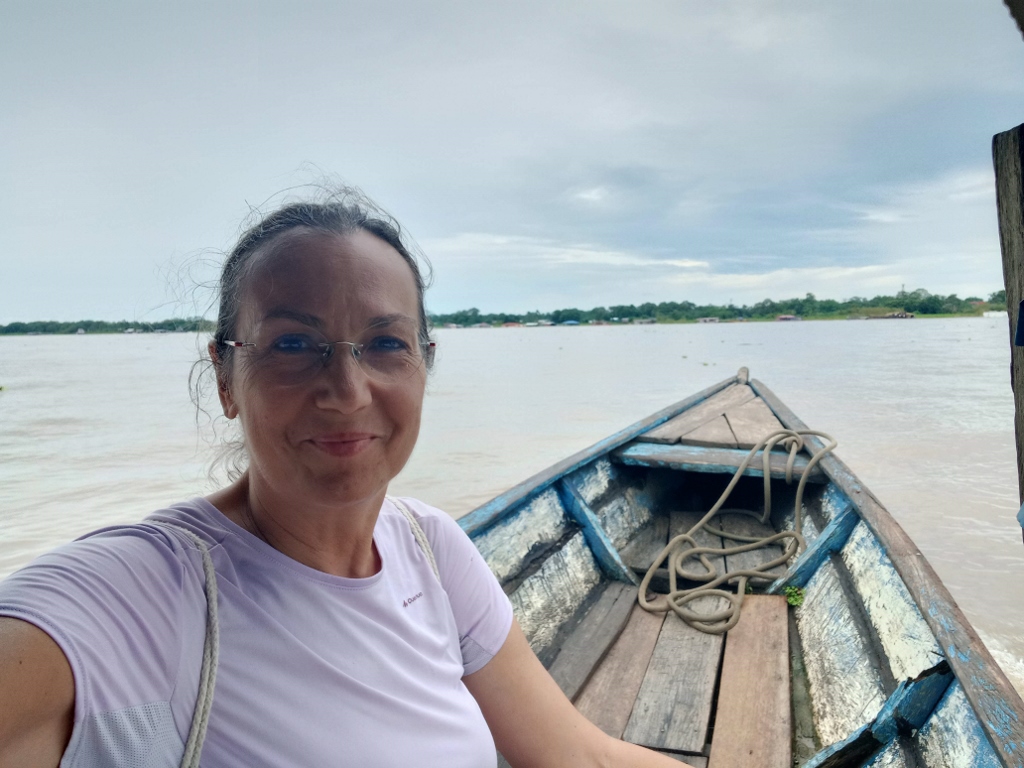 On a boat to Leticia
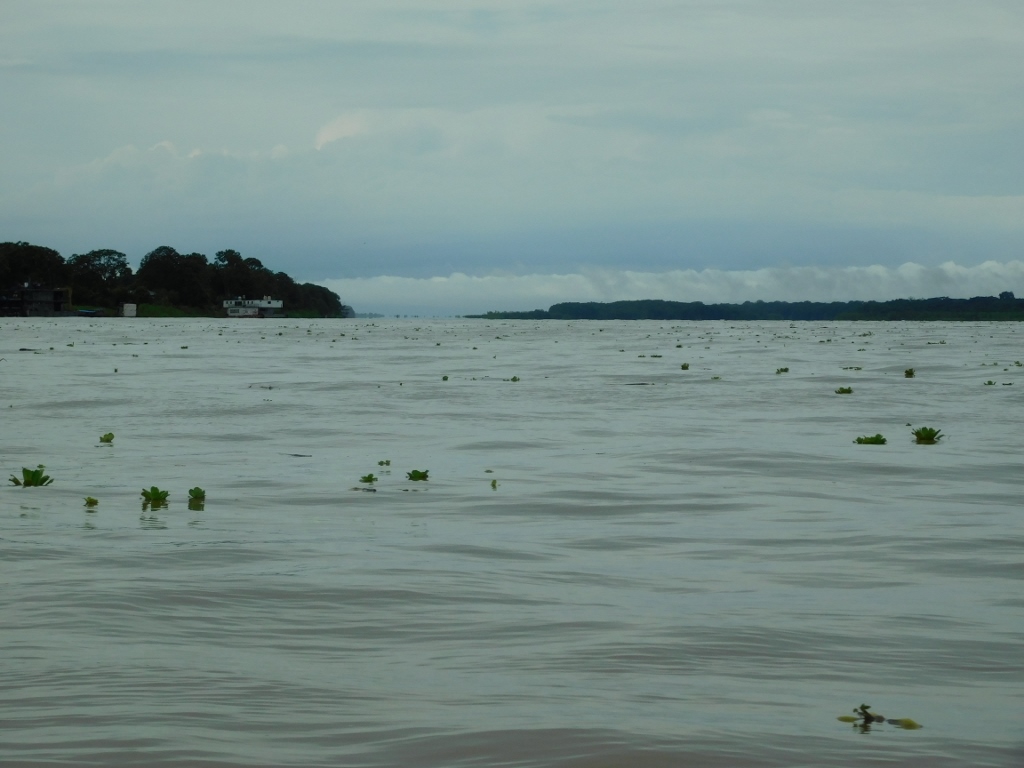 The Amazon
Here is also a video that may seem similar, but is still distinct from the previous one.
Towards the end of the video recording, you can see a whole flock of American black vultures gathered near the river. I was completely amazed by how many of these birds there are in this area.
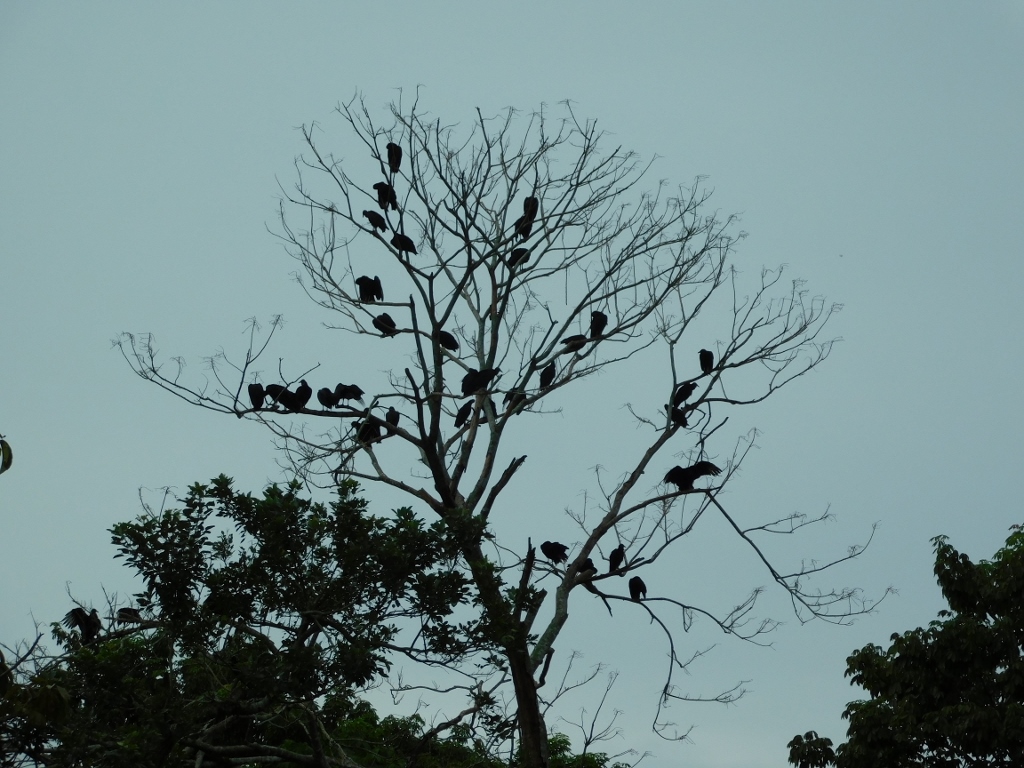 American black vultures
However, when it comes to Leticia, probably no bird species is more impressive in terms of abundance than the canary-winged parakeet (Brotogeris versicolurus). To see them, all you need to do is go to Santander Park (Parque Santander) towards the end of the day. That's where I headed, walking through the town's streets.
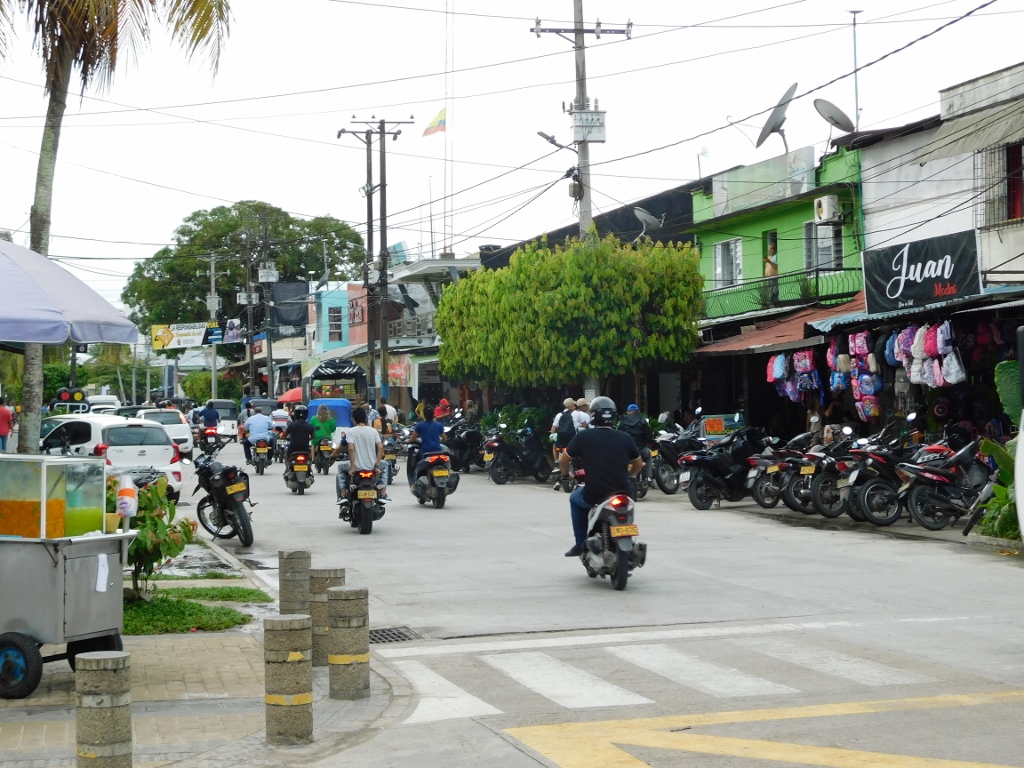 Leticia
Namely, at the end of each day, just before sunset (around 5:30 pm), a large number of these canary-winged parakeets gather in the central city park. Upon arriving at the park, I first took a stroll and photographed details related to the park itself, including the bell tower of the main church where visitors often climb to get a bird's-eye view of the park, the parakeets and the sunset.
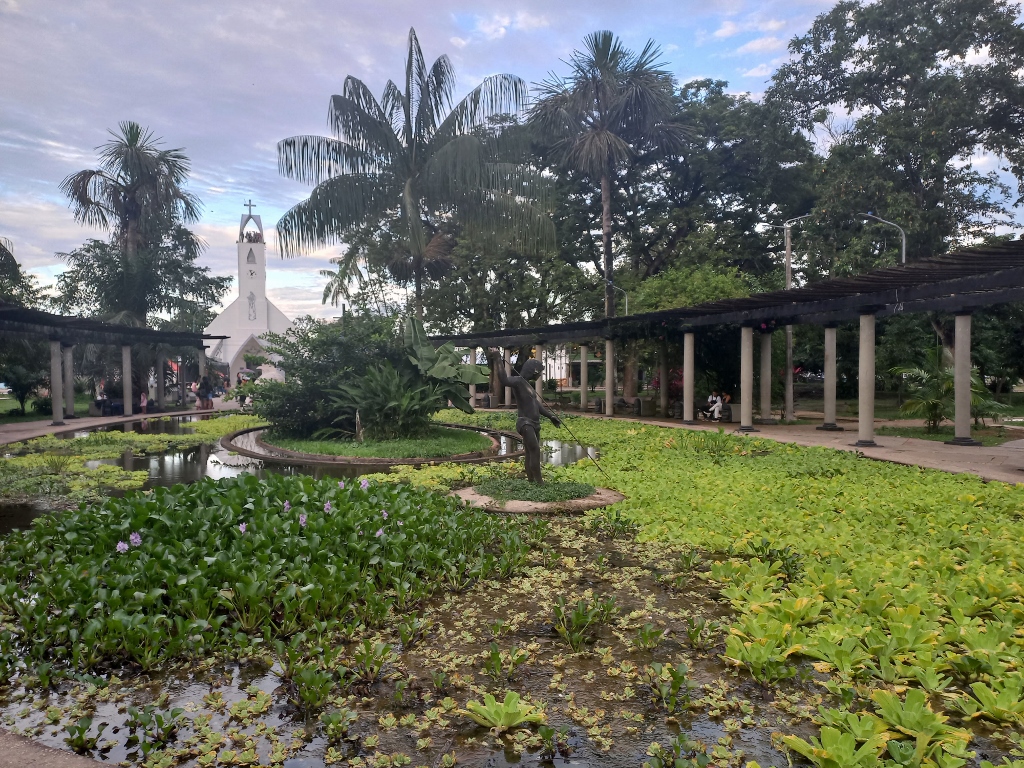 Santander Park
There are also a couple of small ponds in the park, one of which features impressive water lilies.
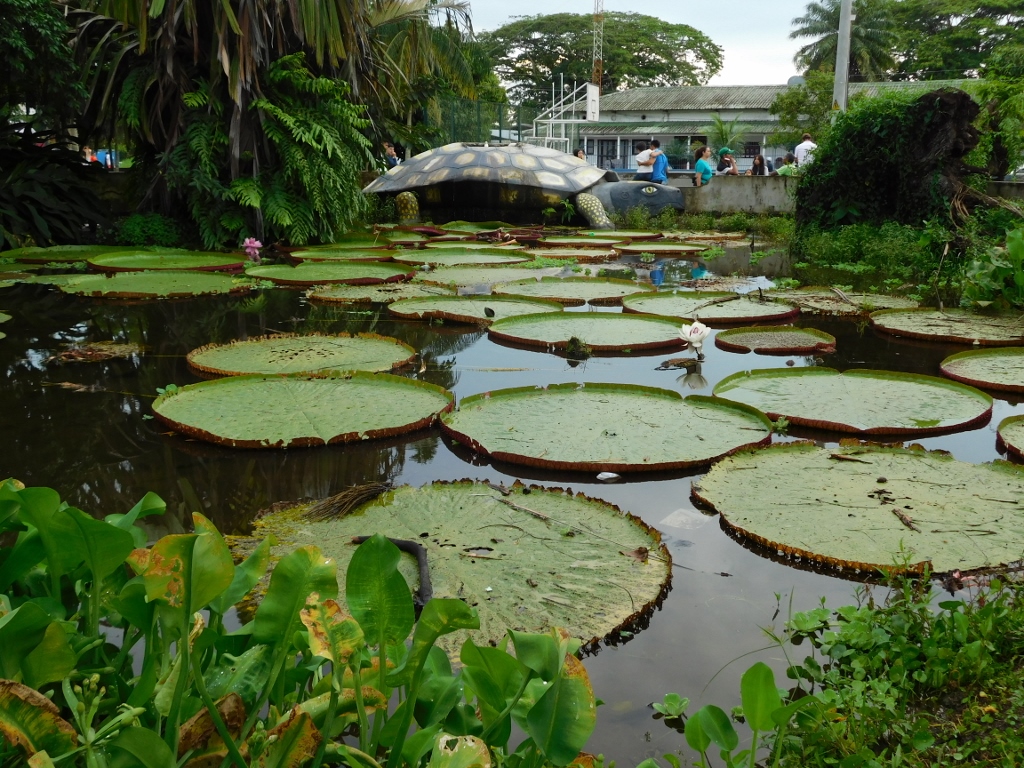 Santander Park
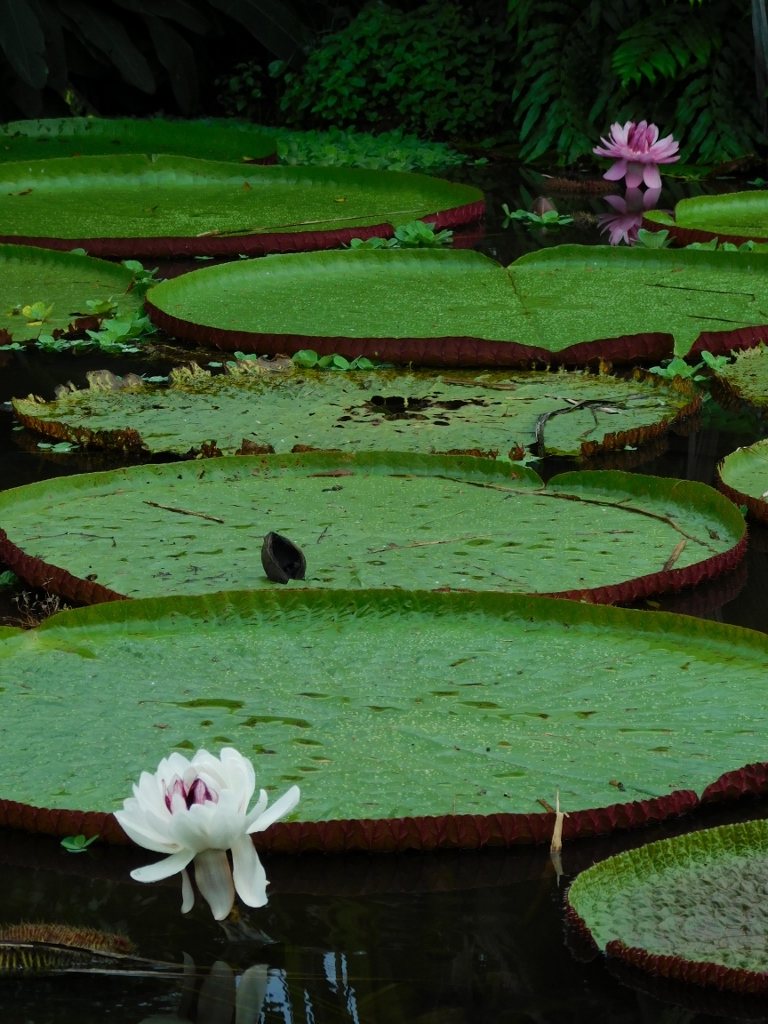 Santander Park, a detail
As I was doing all this, I was accompanied by the incredible noise created by the canary-winged parakeets. Here is a video where you can hear all of this:
Since it was the end of the day with less light, while the sky was brighter compared to the tree canopies and the parakeets I could see, the photos didn't turn out quite well. Nevertheless, you can still see what these parakeets look like up-close.
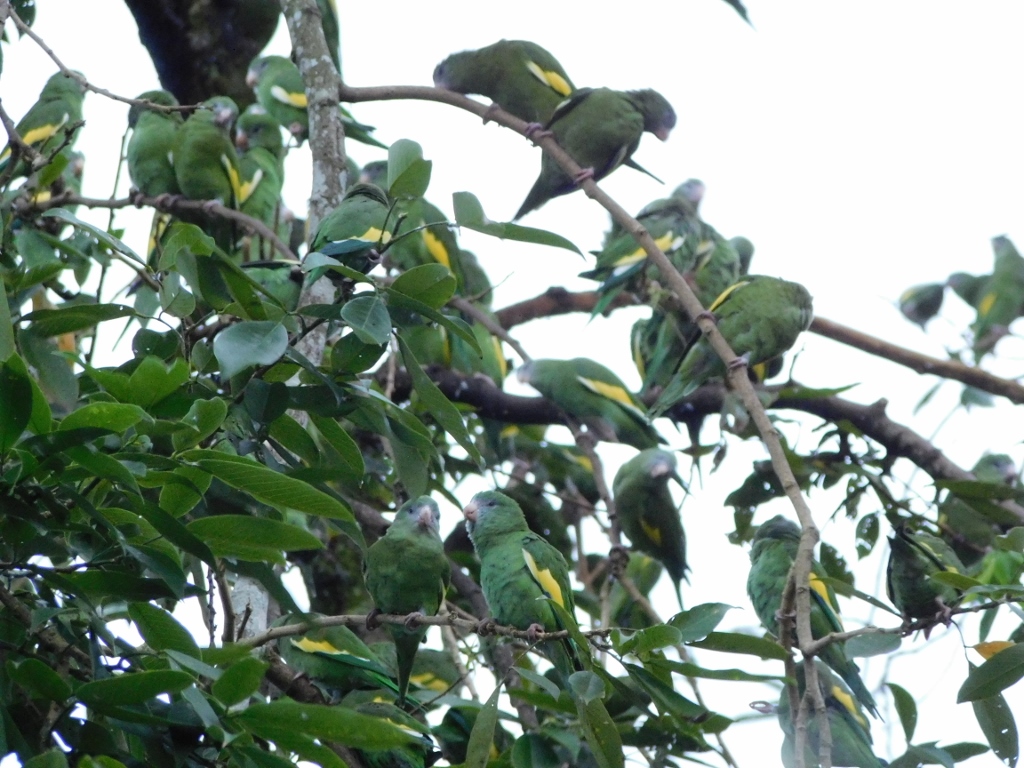 Canary-winged parakeets
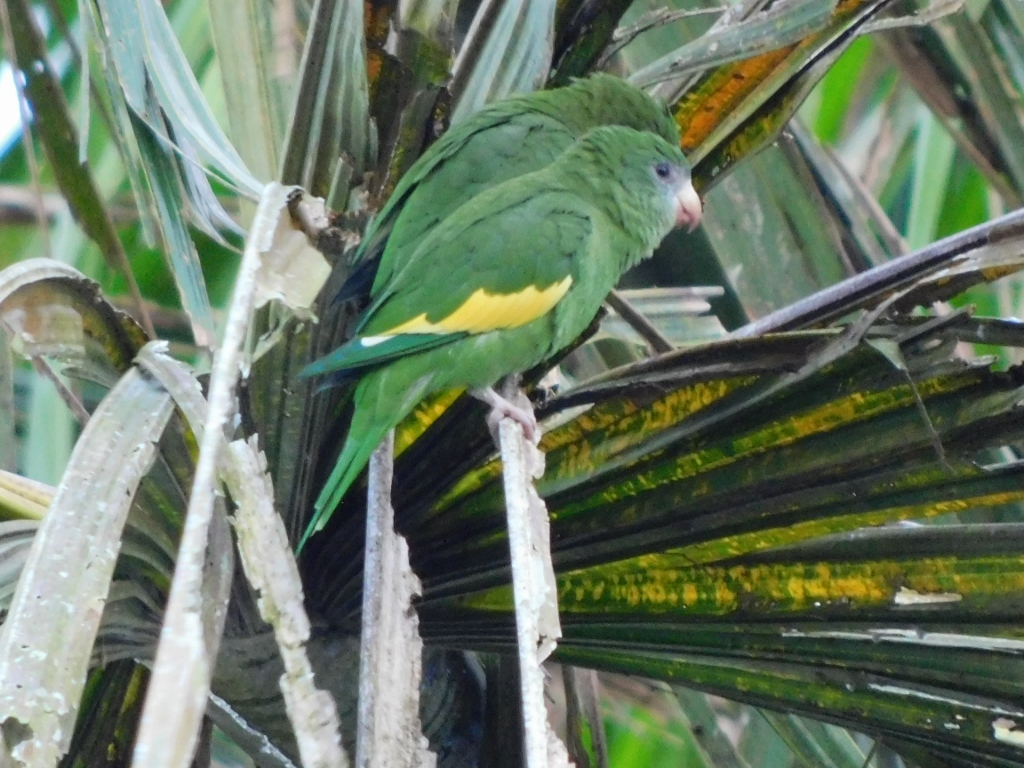 Canary-winged parakeets
Later, I took a stroll around Leticia and then went to have a juice made from a fruit that grows in the Amazon called cupuaçu (Theobroma grandiflorum), known as copoazu in Spanish-speaking regions. The juice was very tasty.
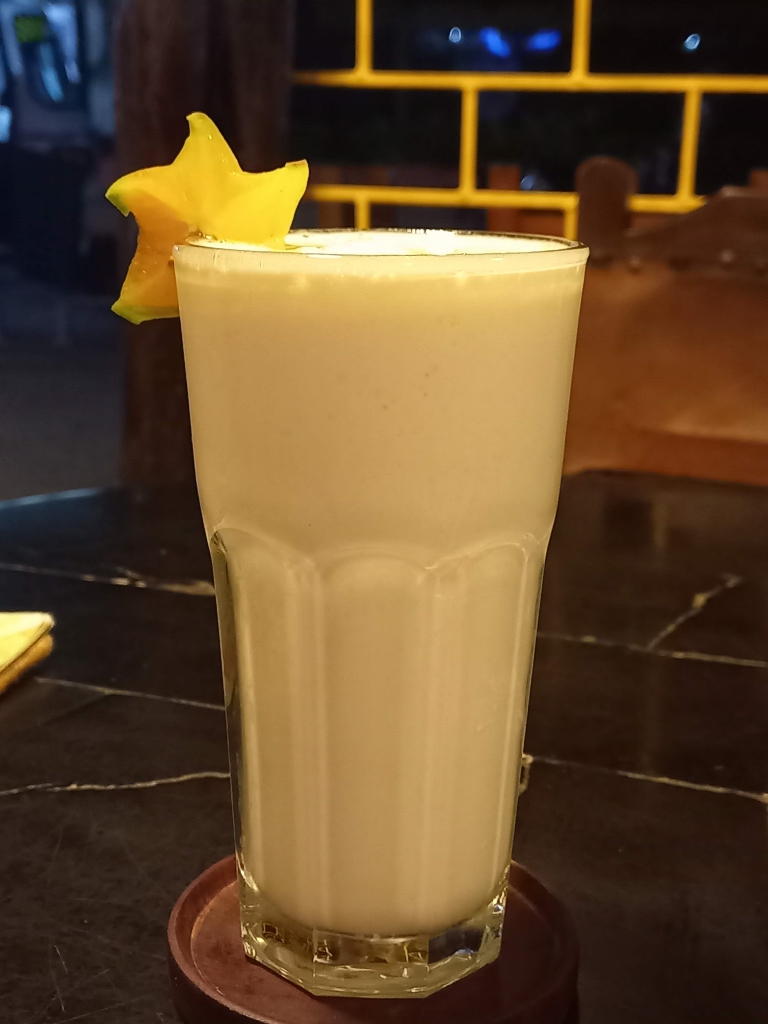 Cupuaçu juice
Afterwards, I took a leisurely walk around Leticia, which is considered a safe place. Later on, I went to bed. The next day, I had plans for another adventure.