As I mentioned at the end of the previous sequel of the story about my trip through the Italian region of Apulia (or Puglia, as the Italians call it) in mid-September 2024, after a lovely and long lunch break (and some wine), I set out for a leisurely walk, first around the edge of the historic centre of the town of Ostuni and then I ventured into its narrow and picturesque streets.
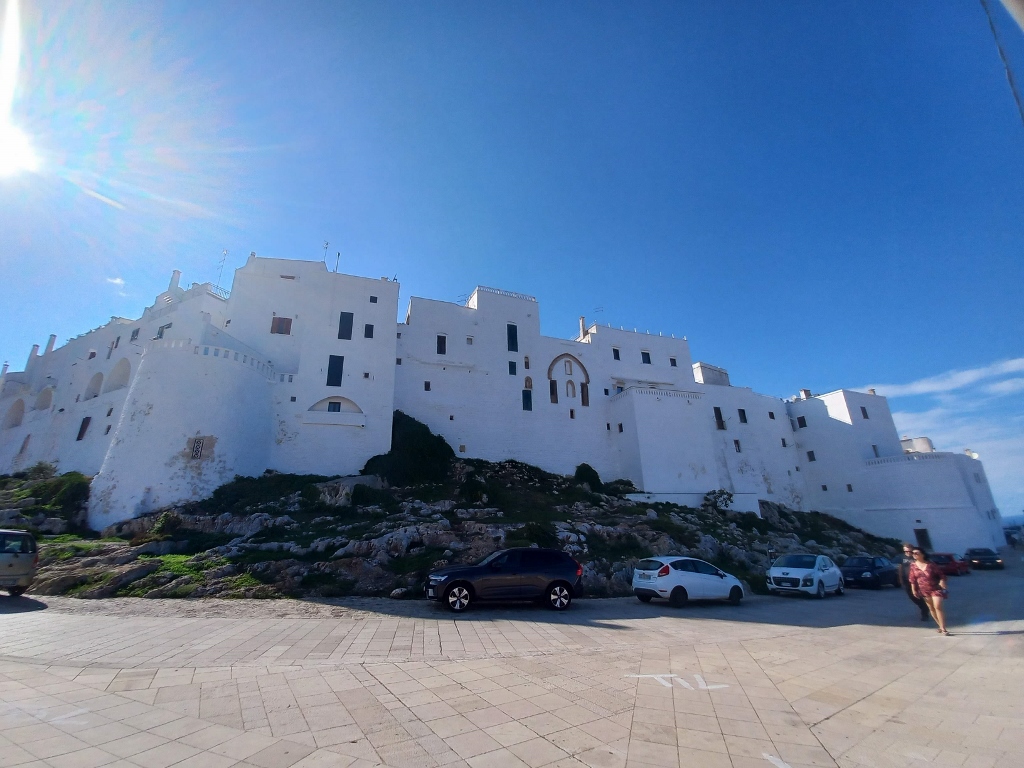 Ostuni
Ostuni is also known as the "White City" due to the presence of numerous whitewashed buildings. This mainly refers to the historic centre of the city, which is built on top of a hill near the Adriatic Sea.
After I took some pictures of the city from the outside, I headed towards the centre through its narrow streets, which were more like passageways and staircases.
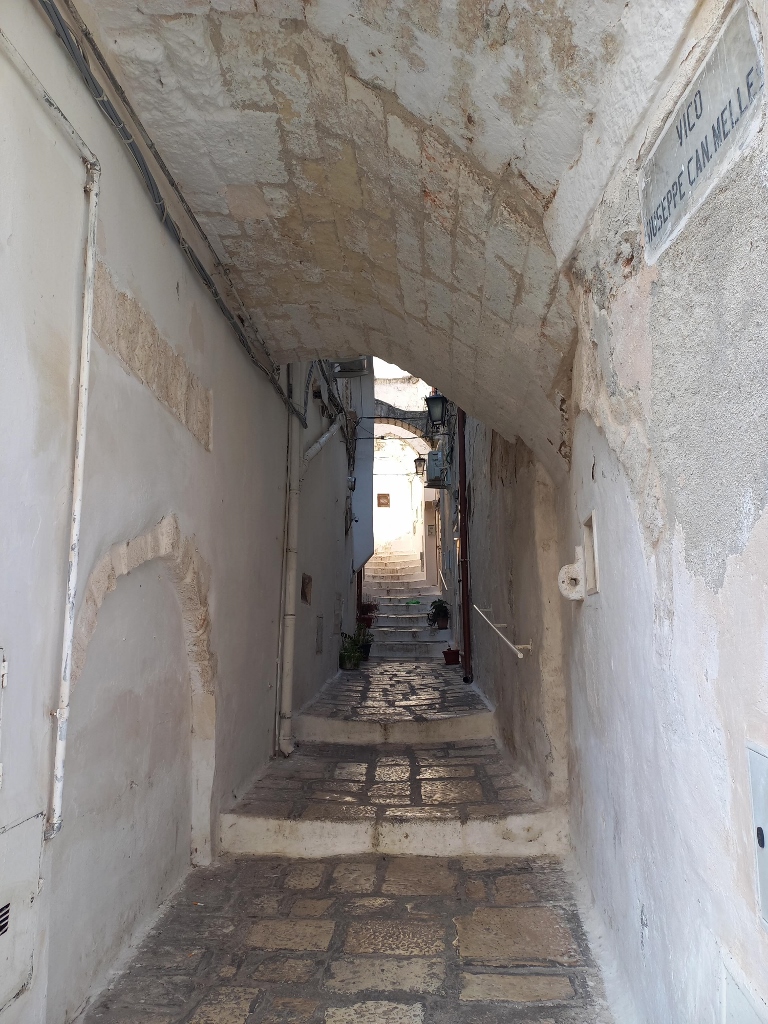 Ostuni, a detail
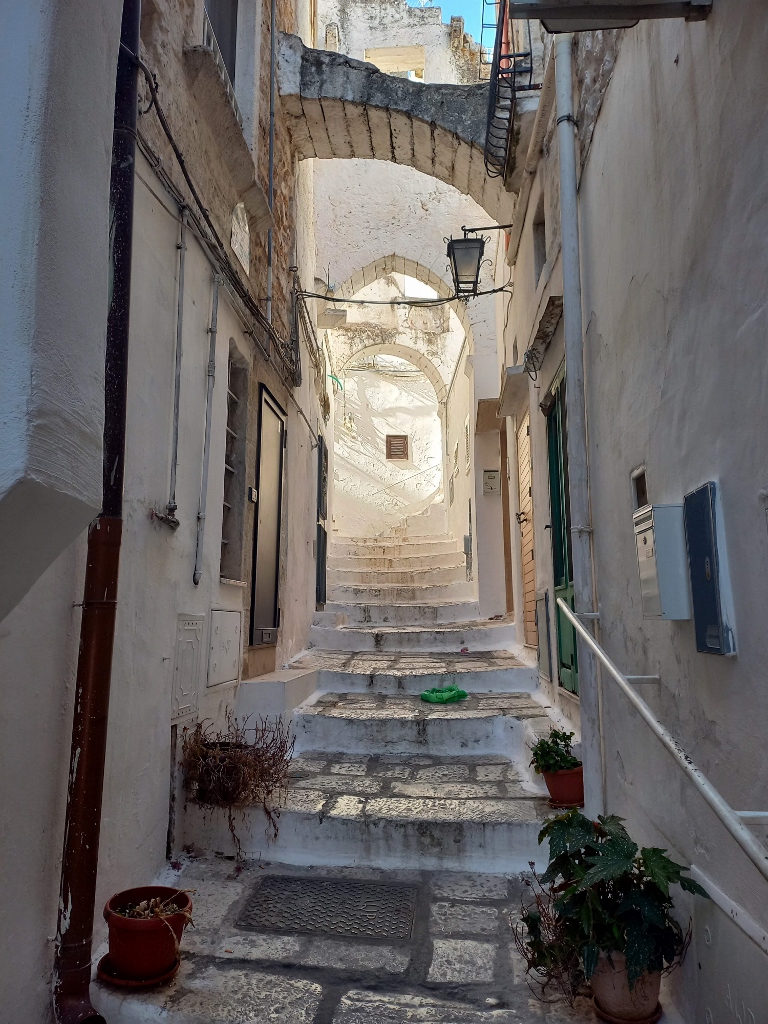 Ostuni, a detail
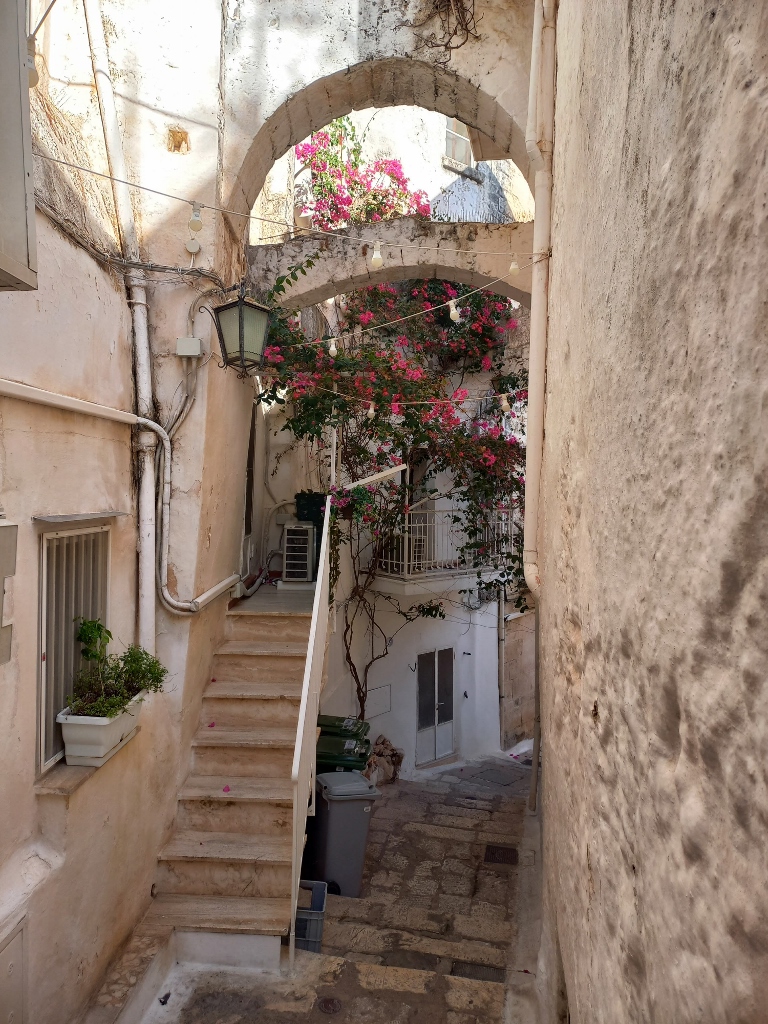 Ostuni, a detail
This is how I arrived at the Church of Saint Vitus the Martyr (Chiesa di San Vito martire), also known as Santa Maria Maddalena de' Pazzi.
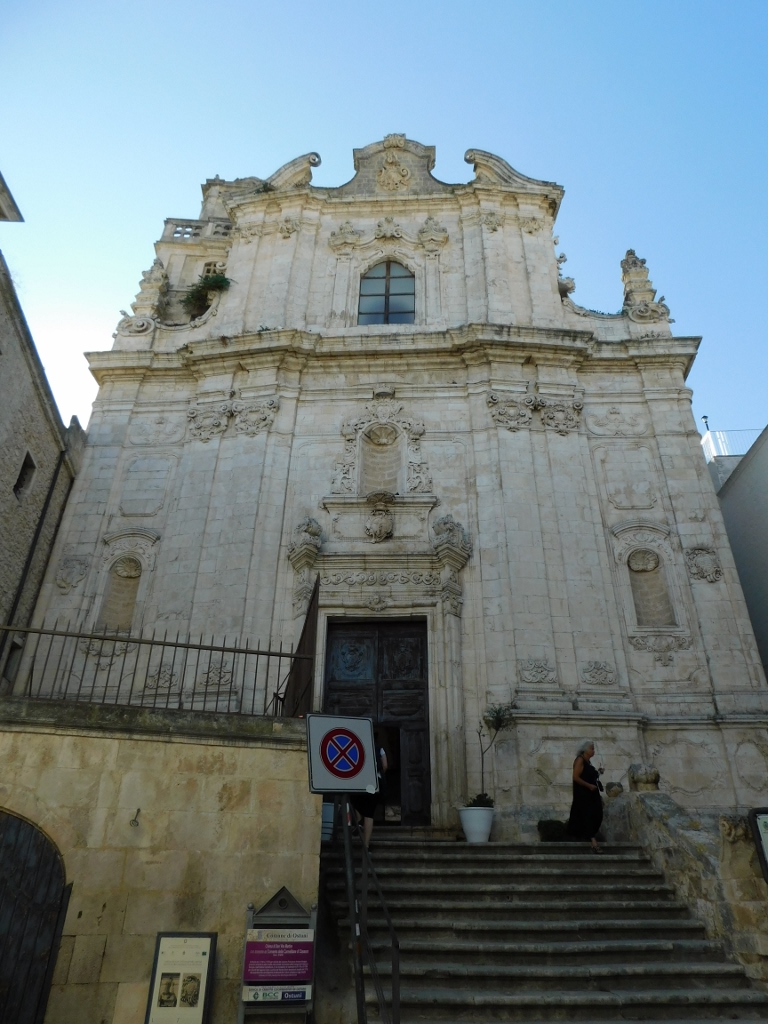 Church of Saint Vitus the Martyr
The church was built between 1750 and 1754 on the ruins of a previous medieval church. Although, as I’ve read, it has a beautiful interior, today it serves as a venue for conferences and cultural events, and some archaeological finds can be seen there, including the skeleton of a woman with a foetus from the Palaeolithic. However, I wanted to continue walking, so I didn’t linger here.
Just a few dozen metres away is the Ostuni Cathedral, which is dedicated to the Assumption of the Virgin Mary. When I reached the cathedral, it was clear that a wedding ceremony had just concluded, while a photo session was taking place on the stairs in front of the main entrance. So, I had to wait for a while, but then it was possible to enter the cathedral without disturbing anyone.
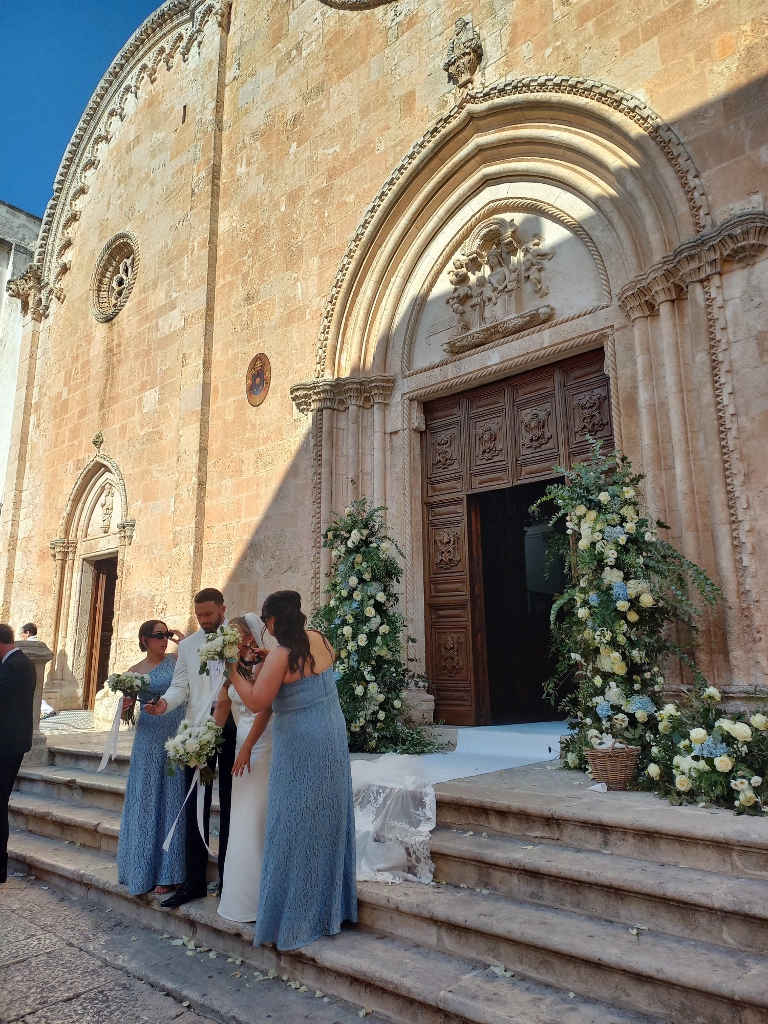 Ostuni, a detail
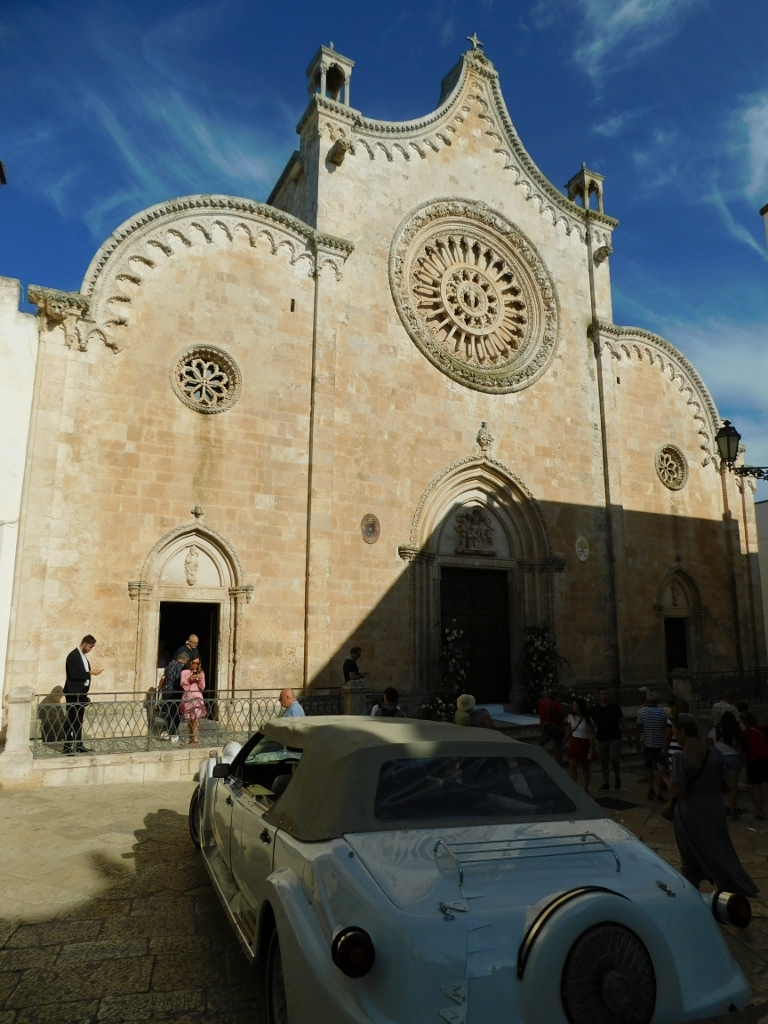 Ostuni Cathedral
The church was built between 1437 and 1495. Although it may appear modest at first glance, the facade actually features a number of beautiful decorations, with the central rose window standing out in particular.
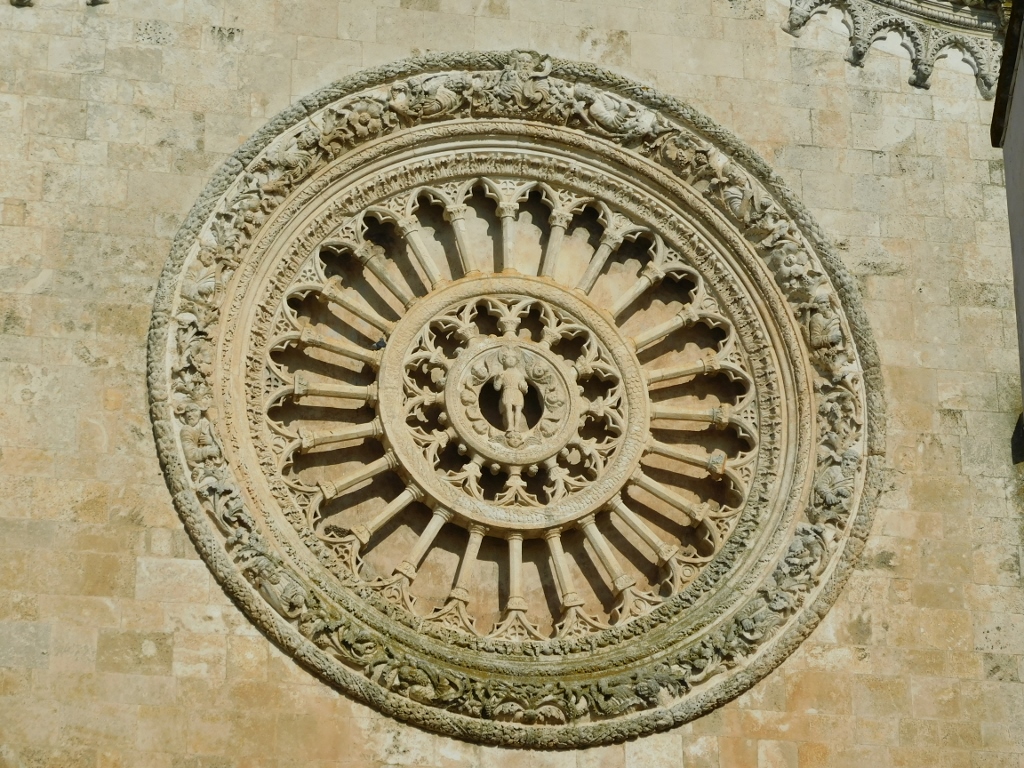 Ostuni Cathedral, a detail
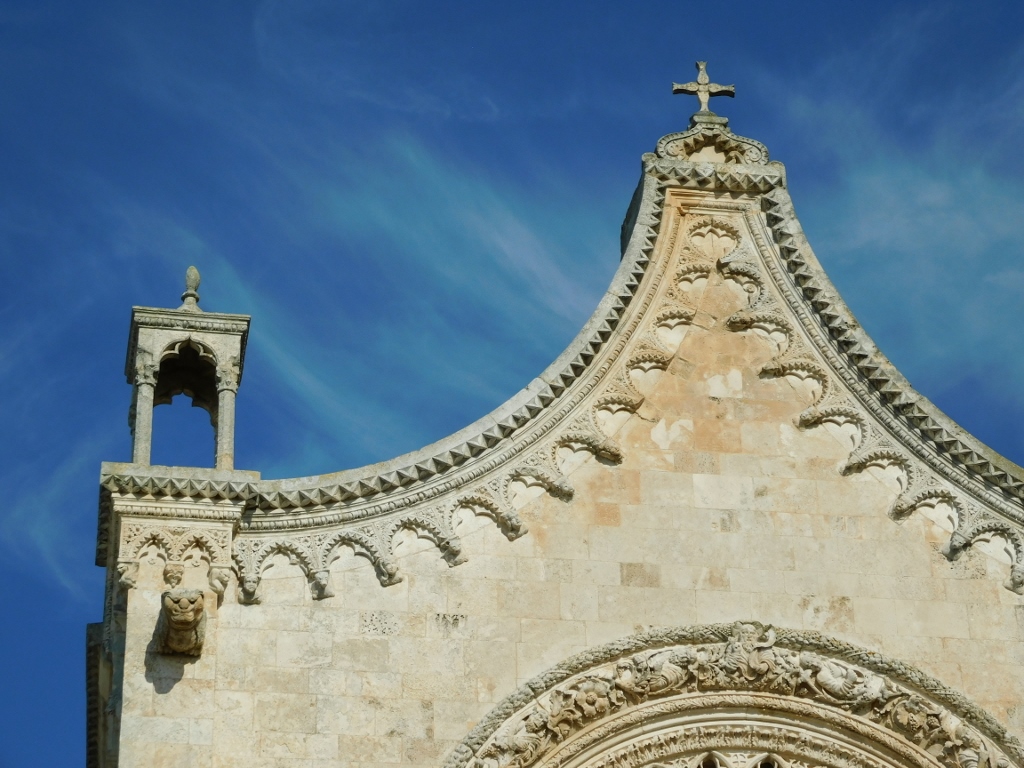 Ostuni Cathedral, a detail
The interior of the cathedral was renovated during the Baroque period and there, too, one can notice many beautiful and interesting details.
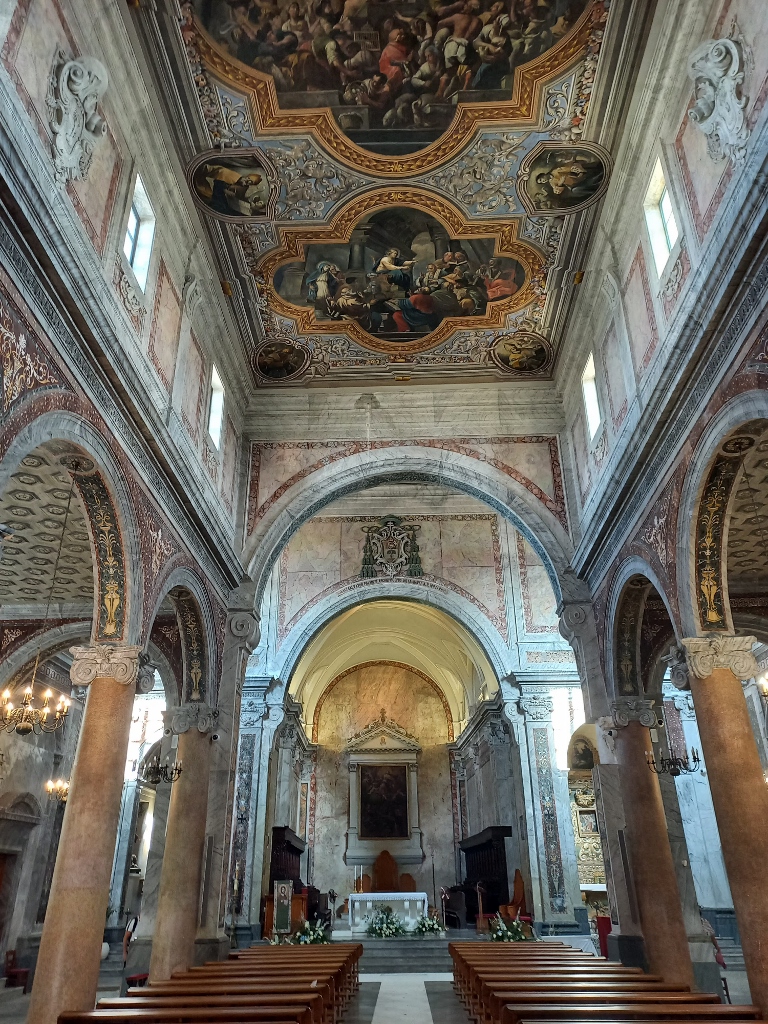 Ostuni Cathedral, a detail
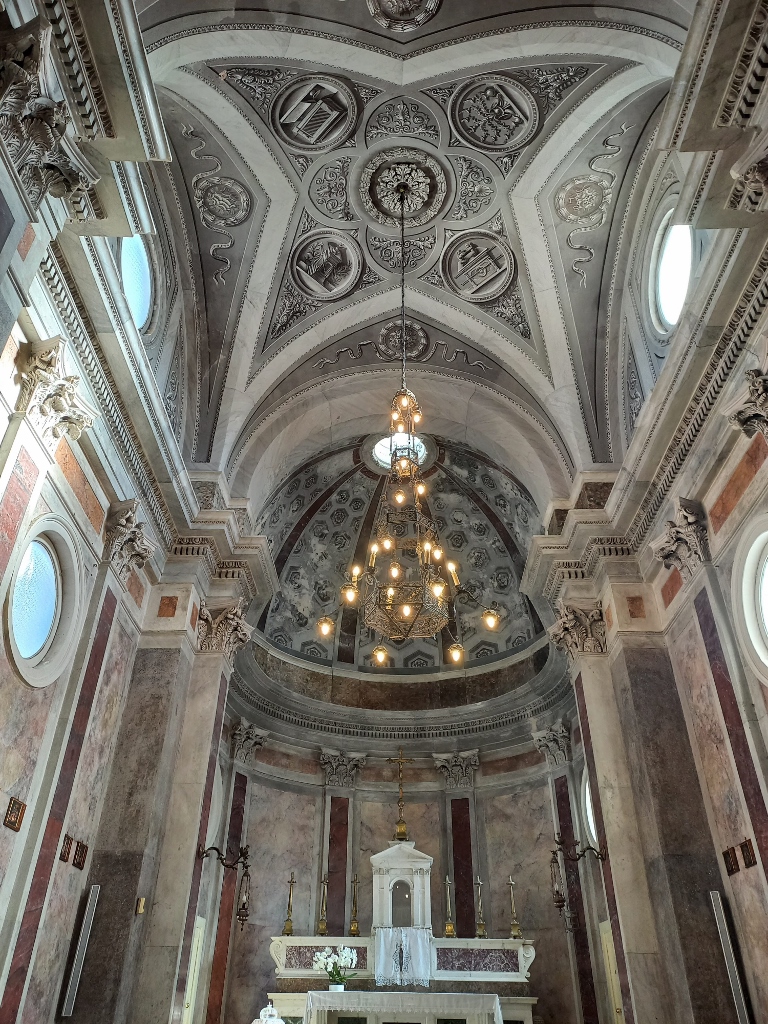 Ostuni Cathedral, a detail
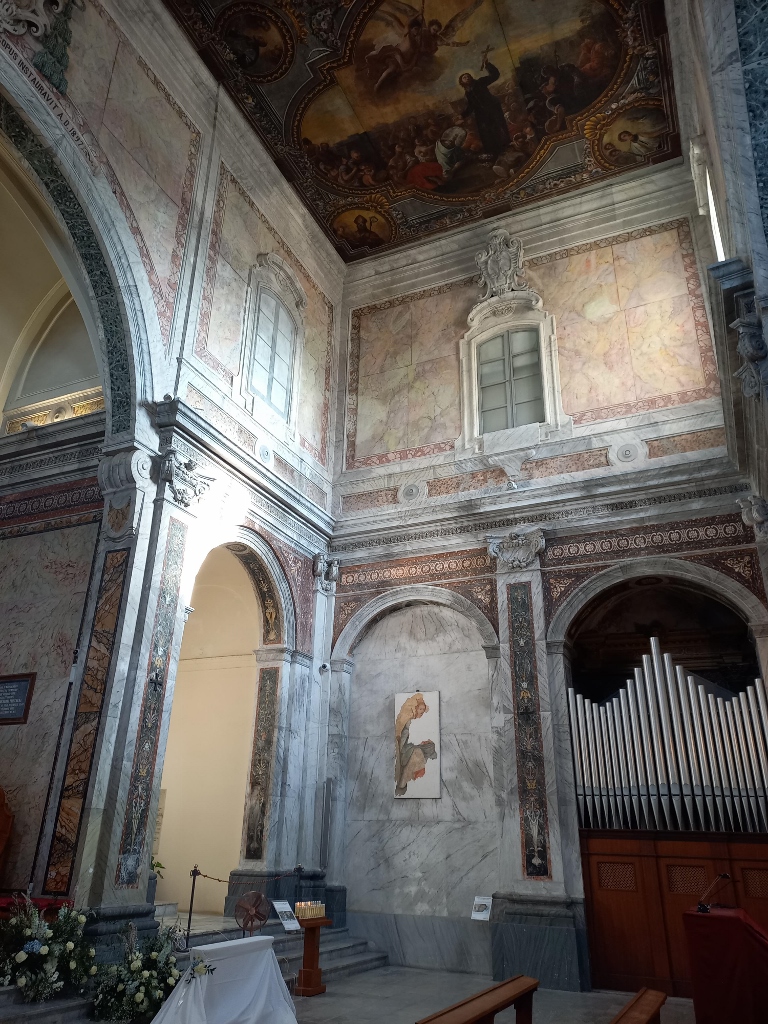 Ostuni Cathedral, a detail
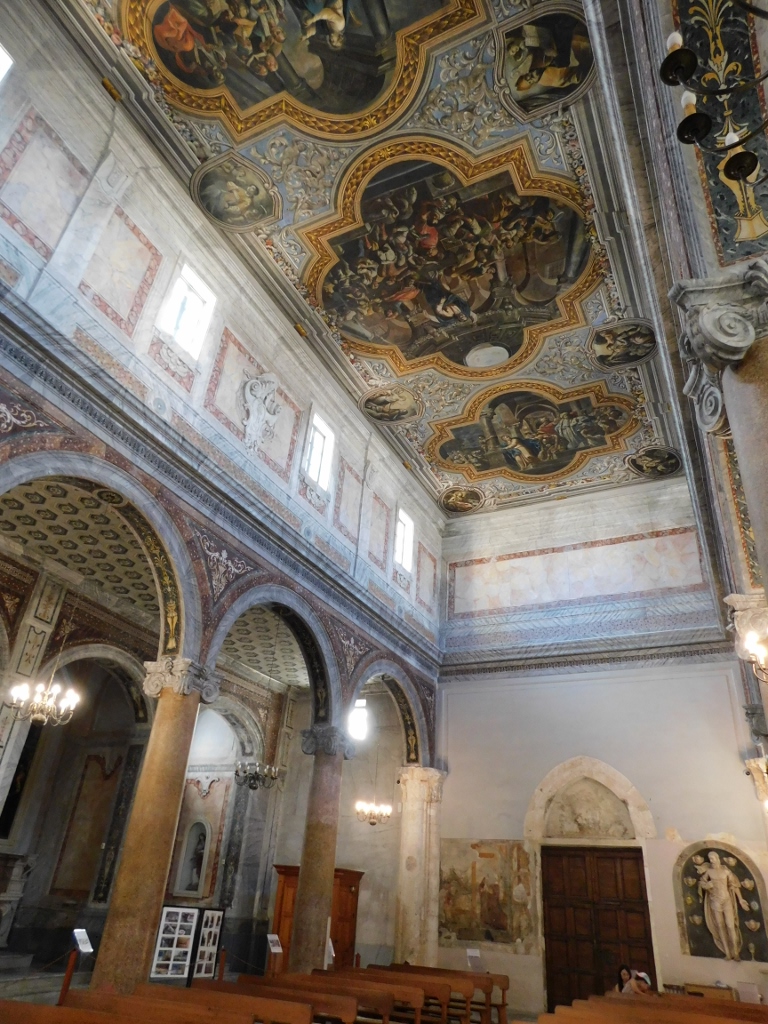 Ostuni Cathedral, a detail
Across from the entrance to the cathedral is the Bishop’s Palace, which was originally built around 1560, but was significantly renovated in 1750.
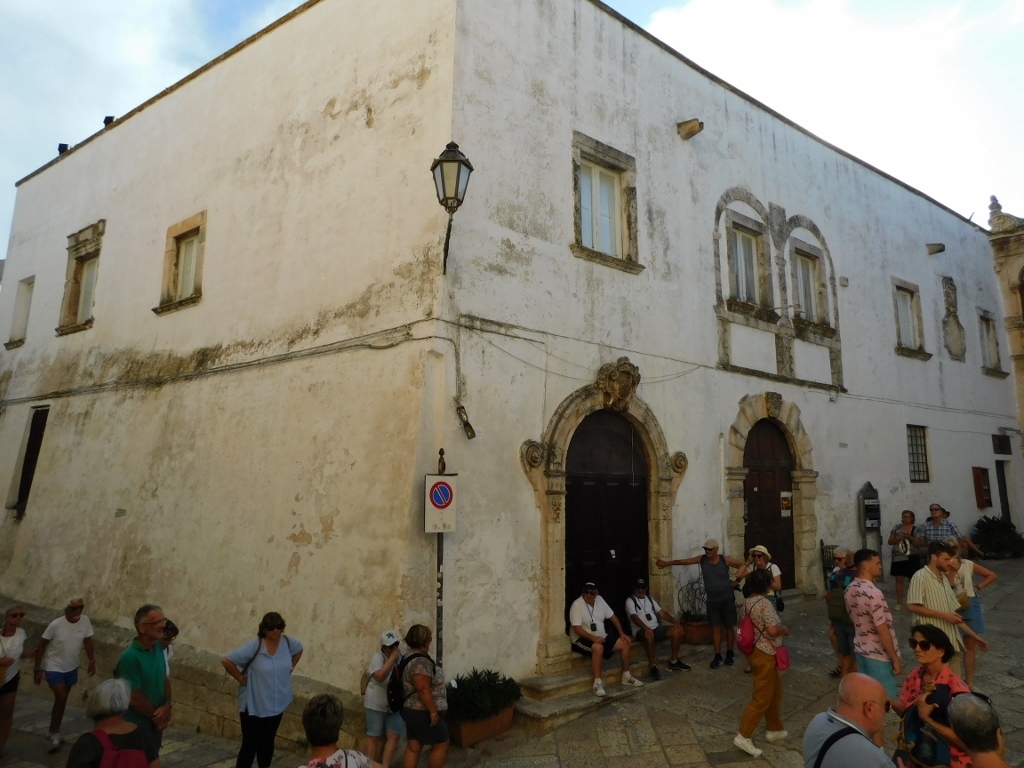 Bishop’s Palace
It is connected to the neighbouring seminary by a very beautiful arch that is named after the bishop who is credited with its construction in the first half of the 18th century.
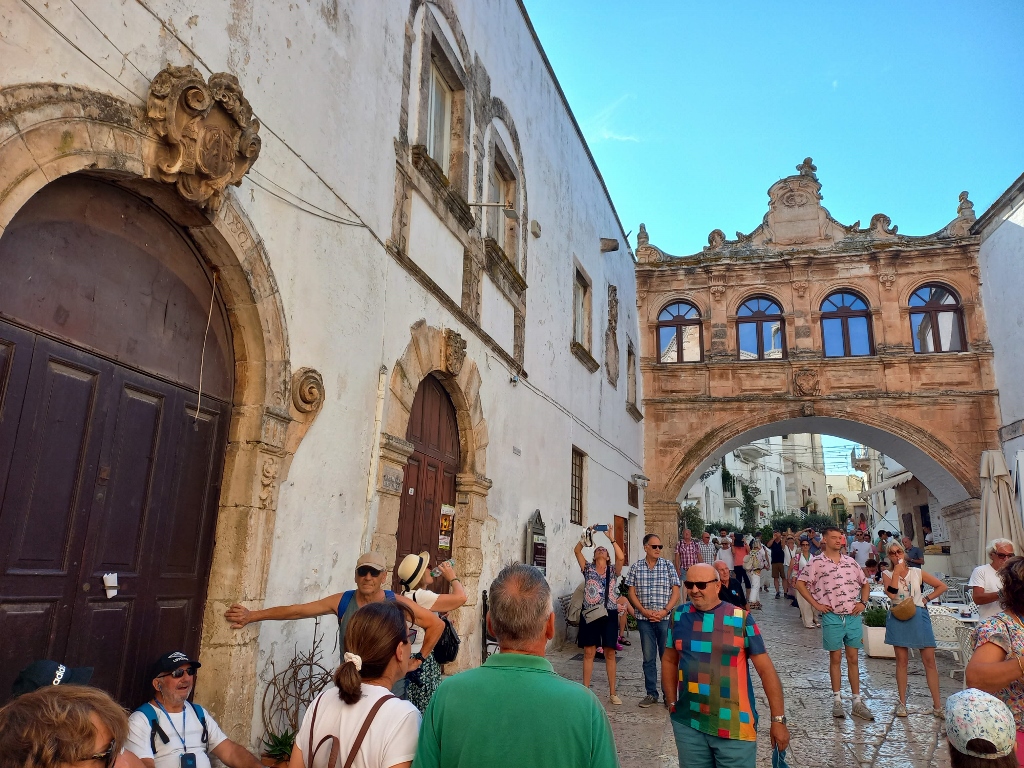 Ostuni, a detail
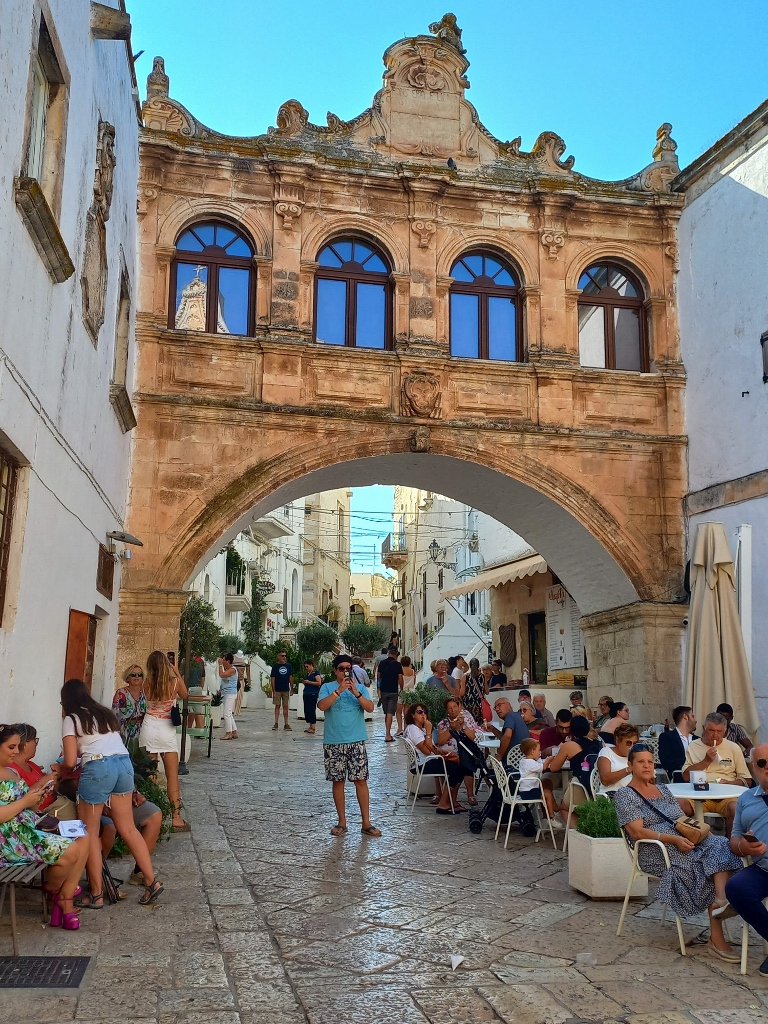 Scoppa Arch
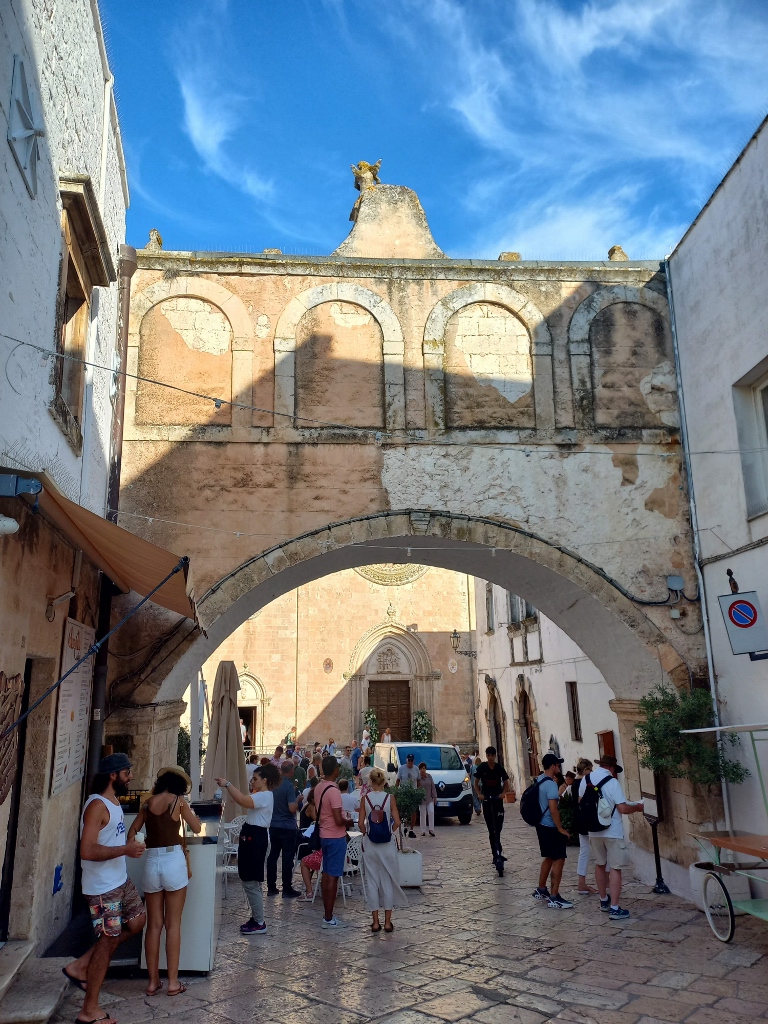 Scoppa Arch from the back
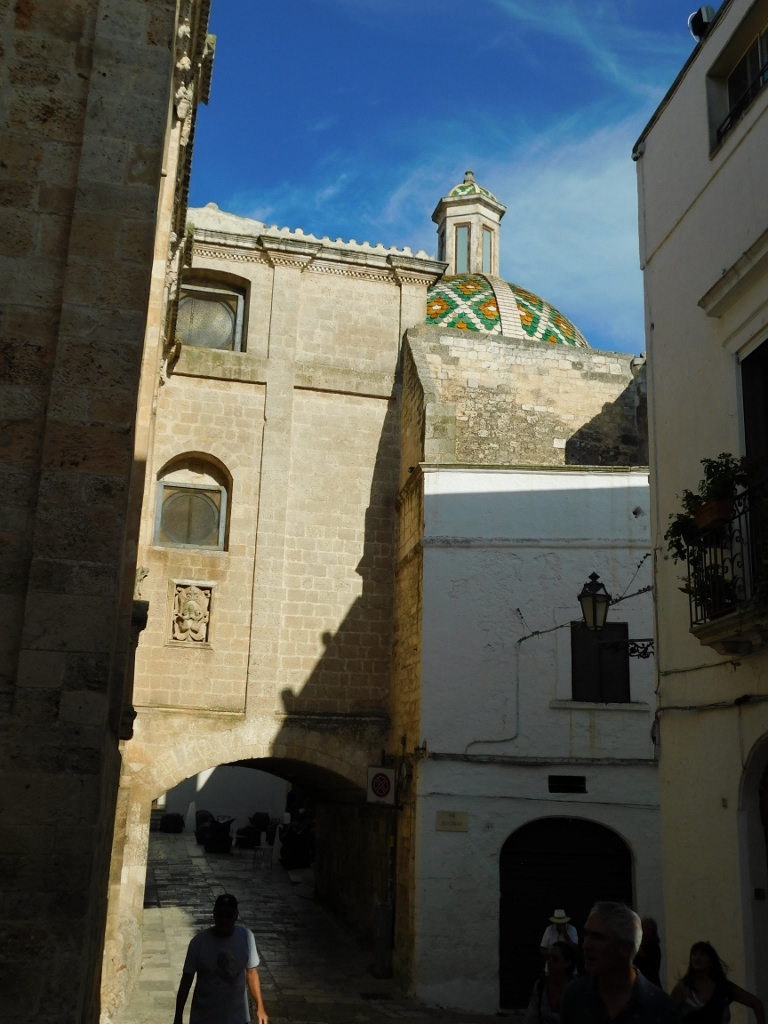
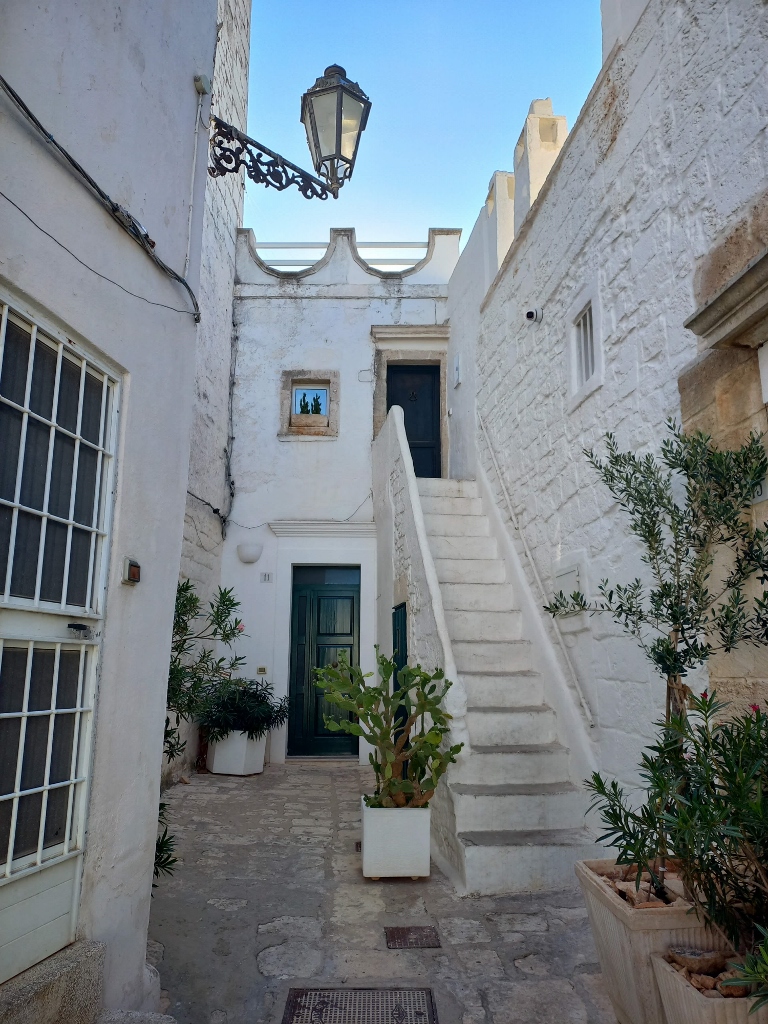
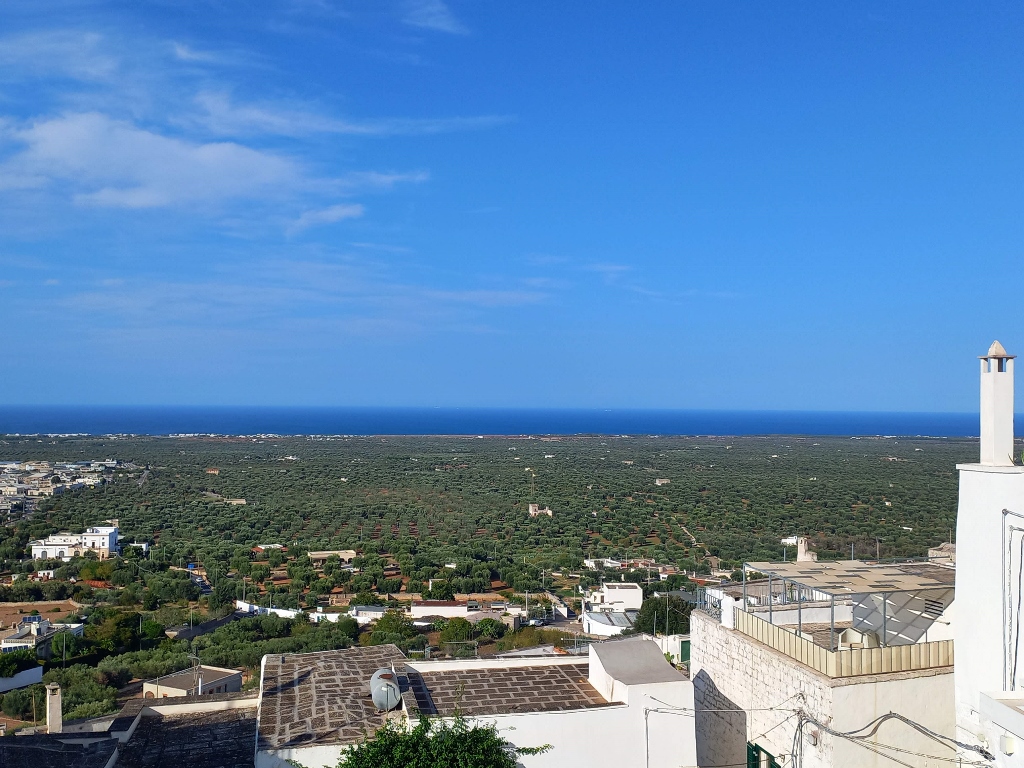
The historic centre of Ostuni, with its narrow streets, staircases and doorways, is exceptionally picturesque and I now set off on a relaxed and leisurely walk through this part of the city. Along the way, I came to a spot that offered a very beautiful view of the coastline and the Adriatic Sea.
 Ostuni, a detail
 Ostuni, a detail
 Ostuni, a detail
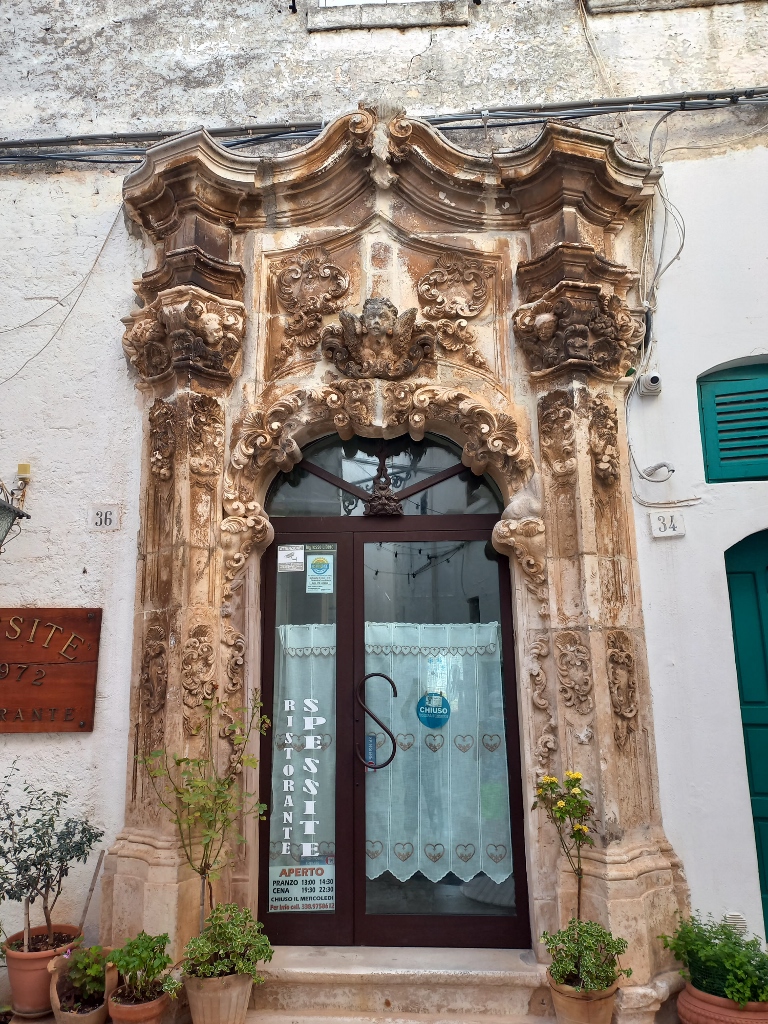 Ostuni, a detail
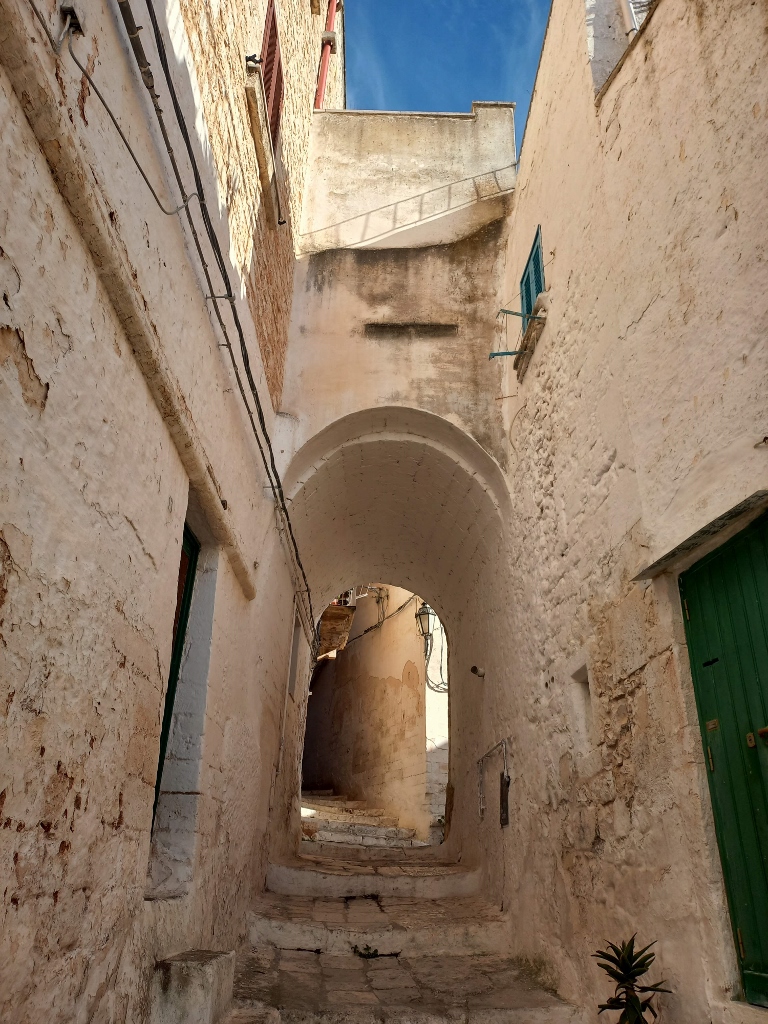 Ostuni, a detail
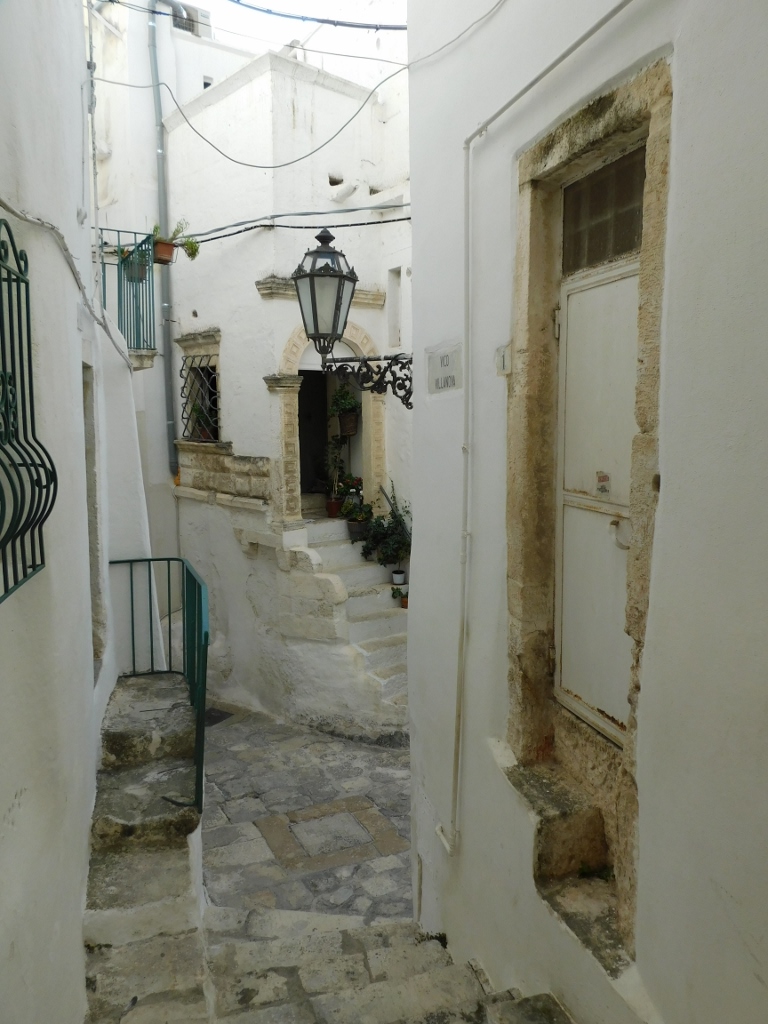 Ostuni, a detail
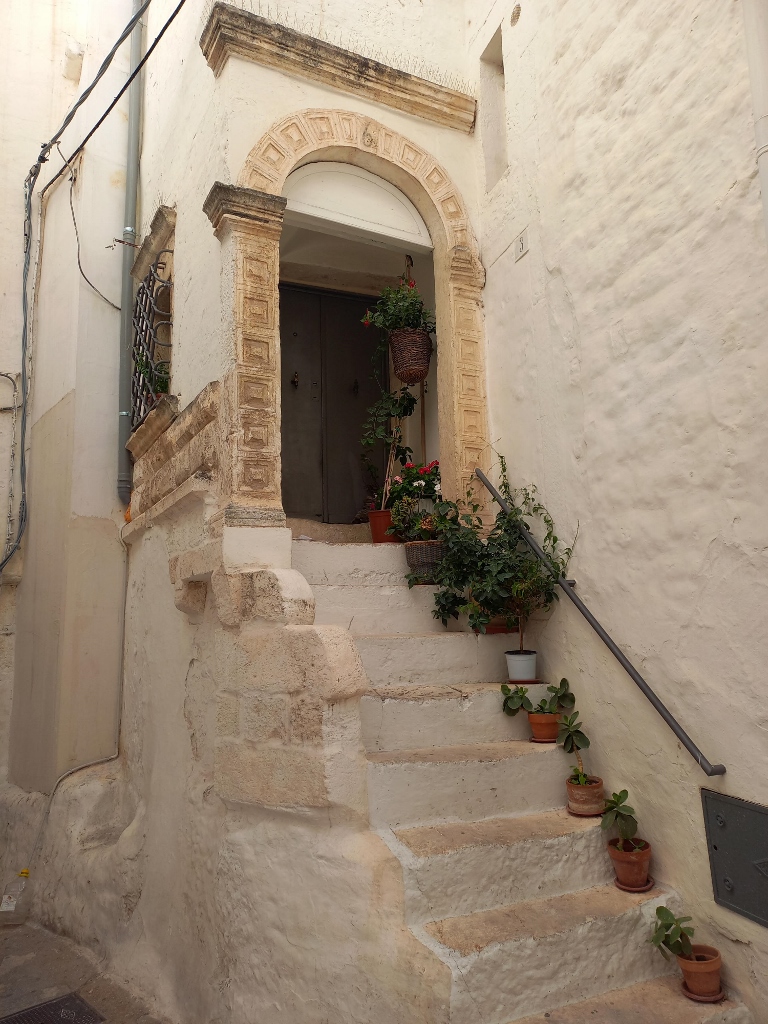 Ostuni, a detail
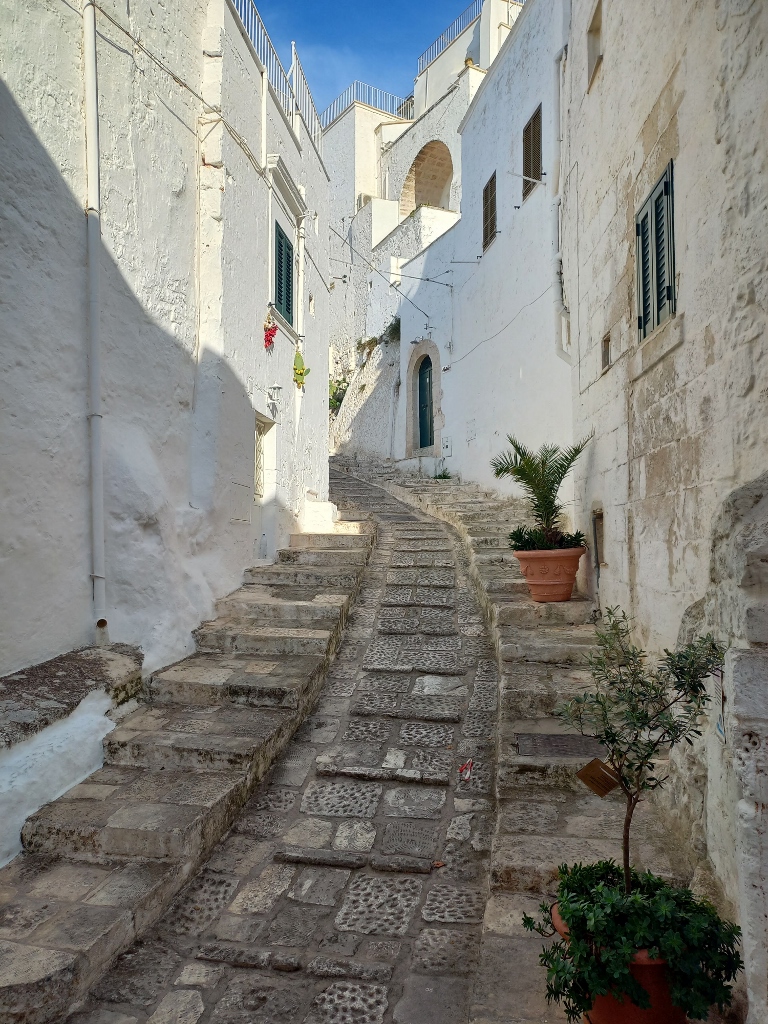 Ostuni, a detail
At one point, I decided to go to the supermarket because I needed to buy a few things that would make my stay in the rented flat more comfortable. Once I finished that, I returned to the street where the flat was located. The day was already coming to an end, so I retreated to my accommodation, as I was also making plans for the coming days, so I didn’t go out anymore.
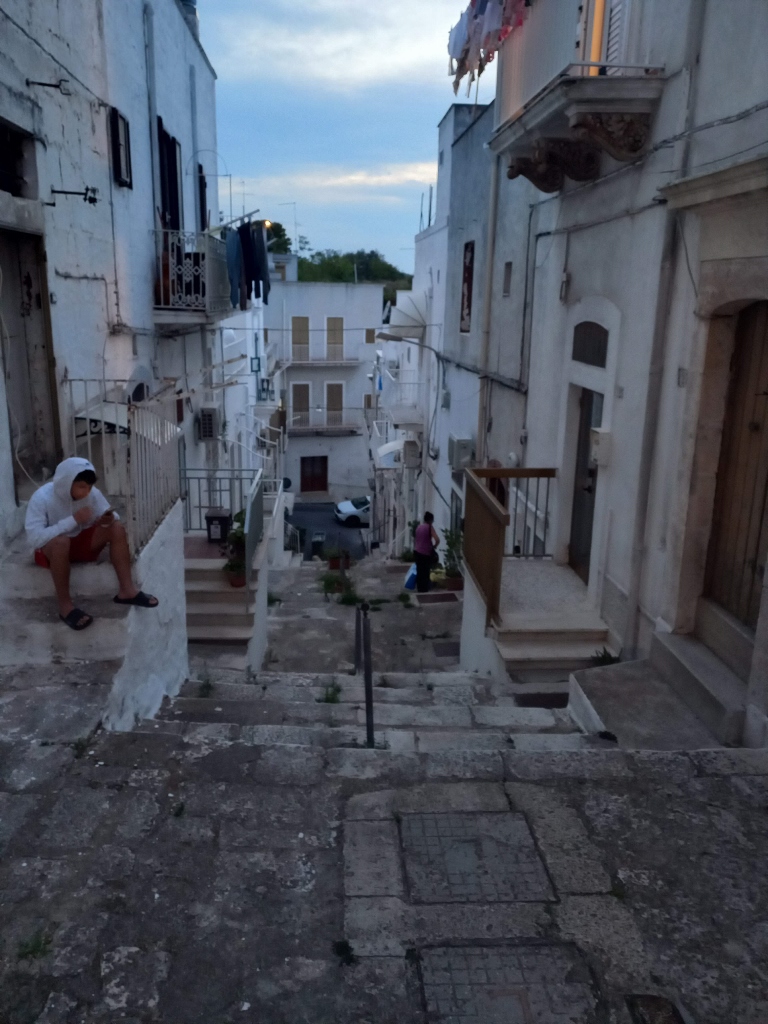 Ostuni, a detail
The next day, I planned to visit the town of Monopoli on the Adriatic coast, as it had been recommended to me. I was even told that the place was more beautiful than Polignano a Mare. I’ll say right away that this wasn’t my impression in the end, but I was certainly happy I made this "half-day trip."
It all started though with me walking in Ostuni to a remarkable spot, a point offering a wonderful view of the historic centre of this "White City."
Along the way, I also passed through a relatively large city park, where I noticed a tree that I found very beautiful and interesting.
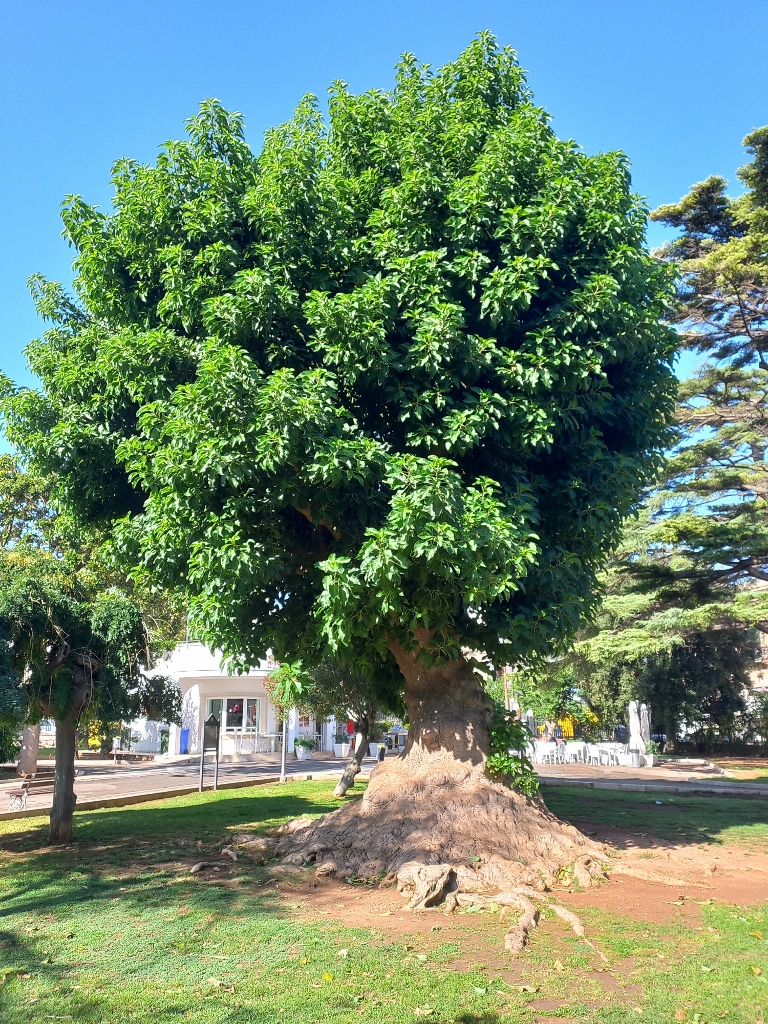 Ostuni, a detail
But besides that, while passing through parts of Ostuni that don't belong to the historic centre, I could conclude that they were also quite interesting and picturesque.
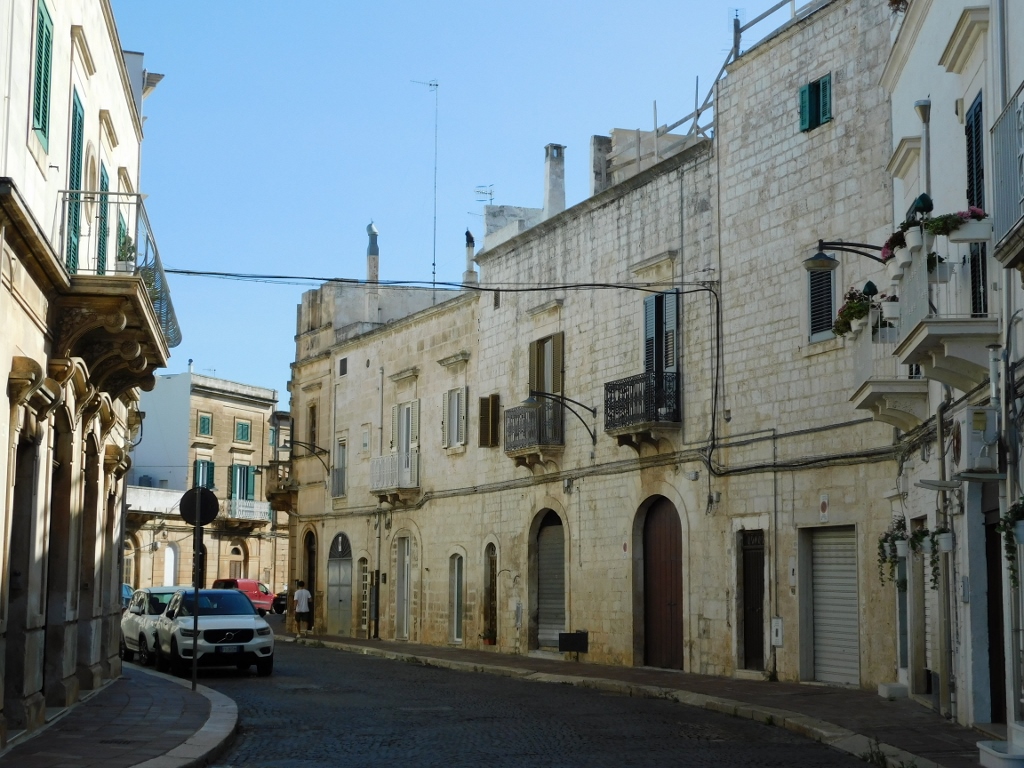 Ostuni, a detail
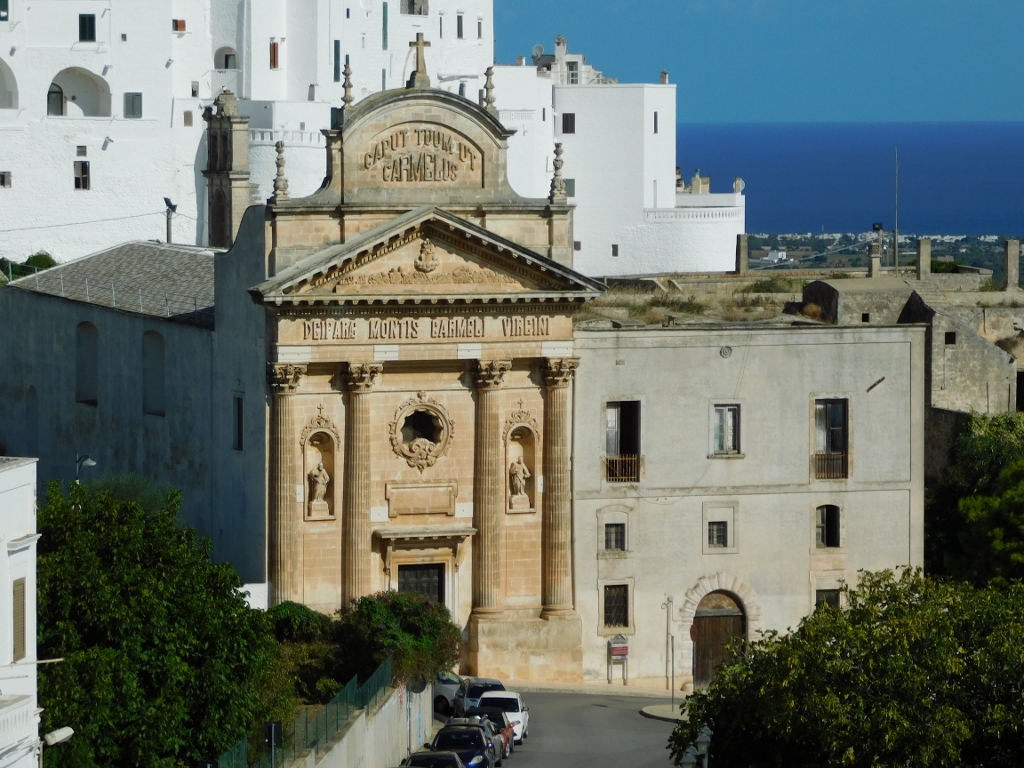
The viewpoint I was heading to is located on a terrace square called Piazzetta Martiri delle Foibe, which is about 700 m from the main square that leads into the historic centre of the city. I think it’s best to visit here in the morning, due to the position of the sun in relation to the historic centre – that’s when the whiteness of Ostuni stands out the most. Additionally, the coastline and the Adriatic Sea are also clearly visible from here.
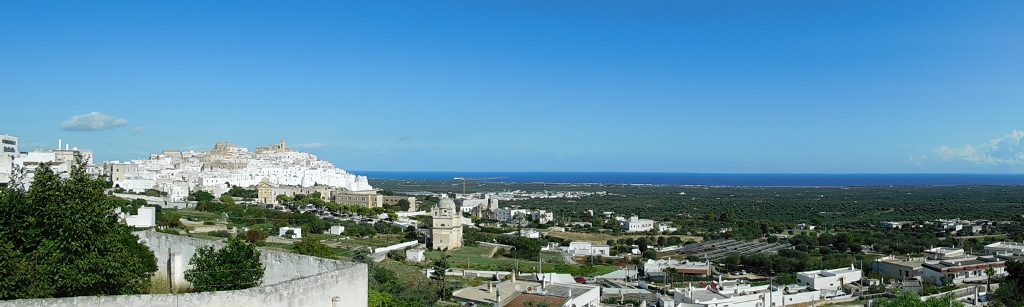 Ostuni
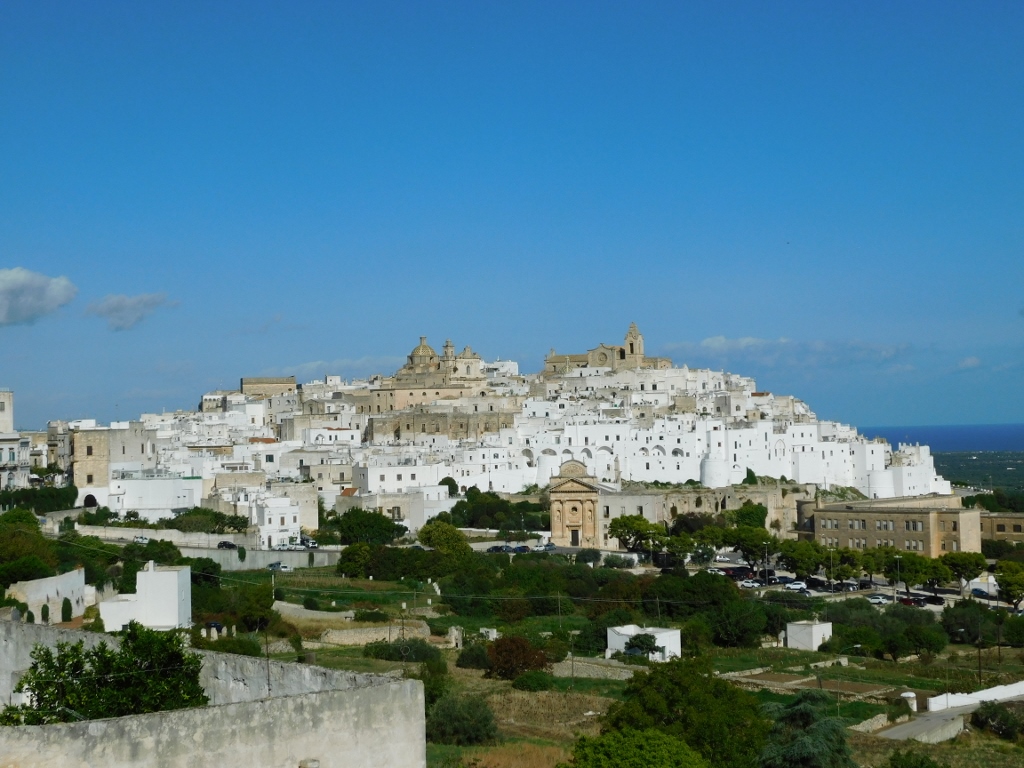 Ostuni
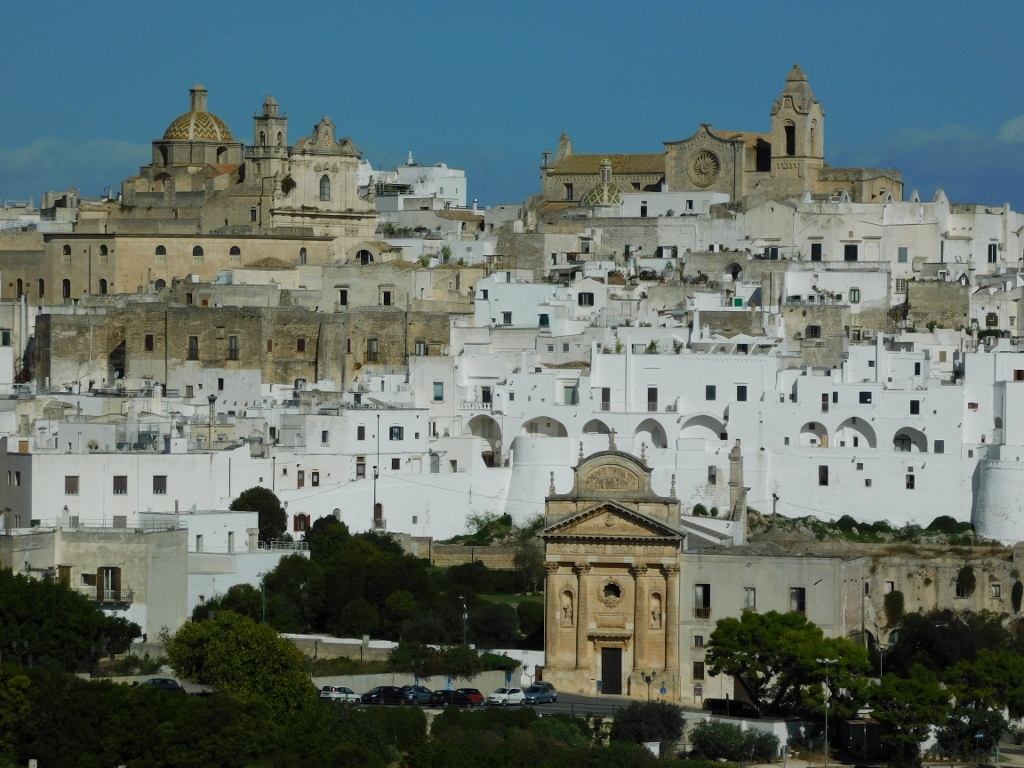 Ostuni
After I took a few shots, I began heading back toward the city centre. Along the way, I stopped again at a few spots to capture the White City and some of its details from a different angle.
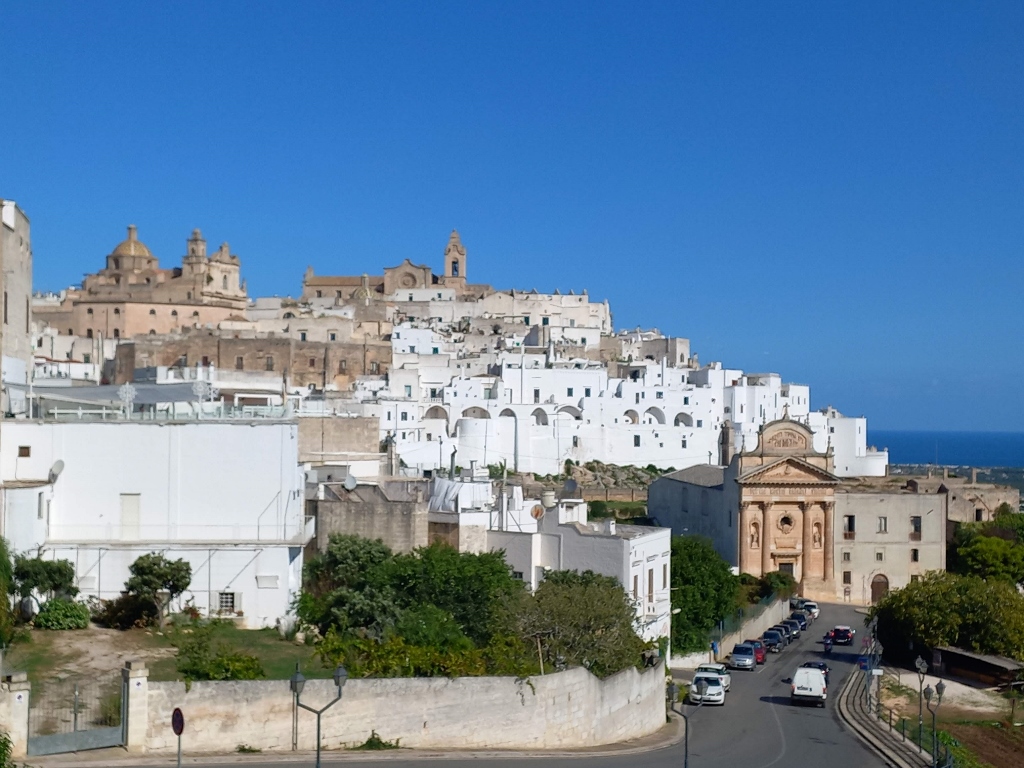 Ostuni
 Ostuni, a detail
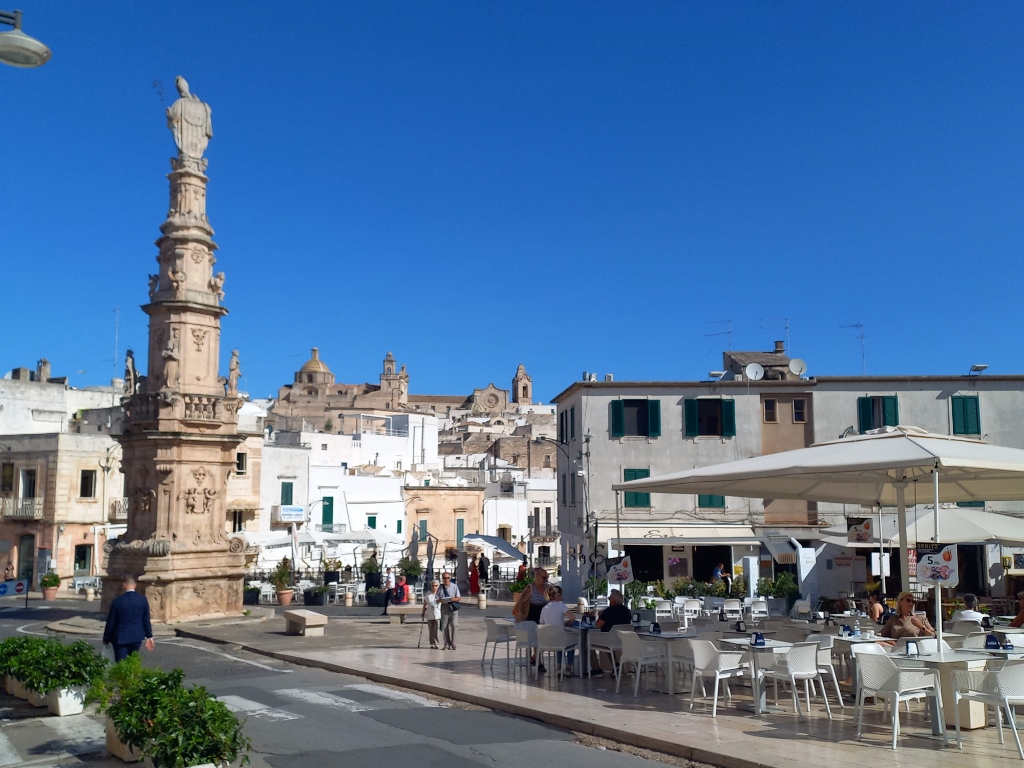
When I reached the main square, I first took a few photos and then sat down to enjoy a nice coffee at a spot where I had a lovely view of the historic centre.
 Ostuni, a detail
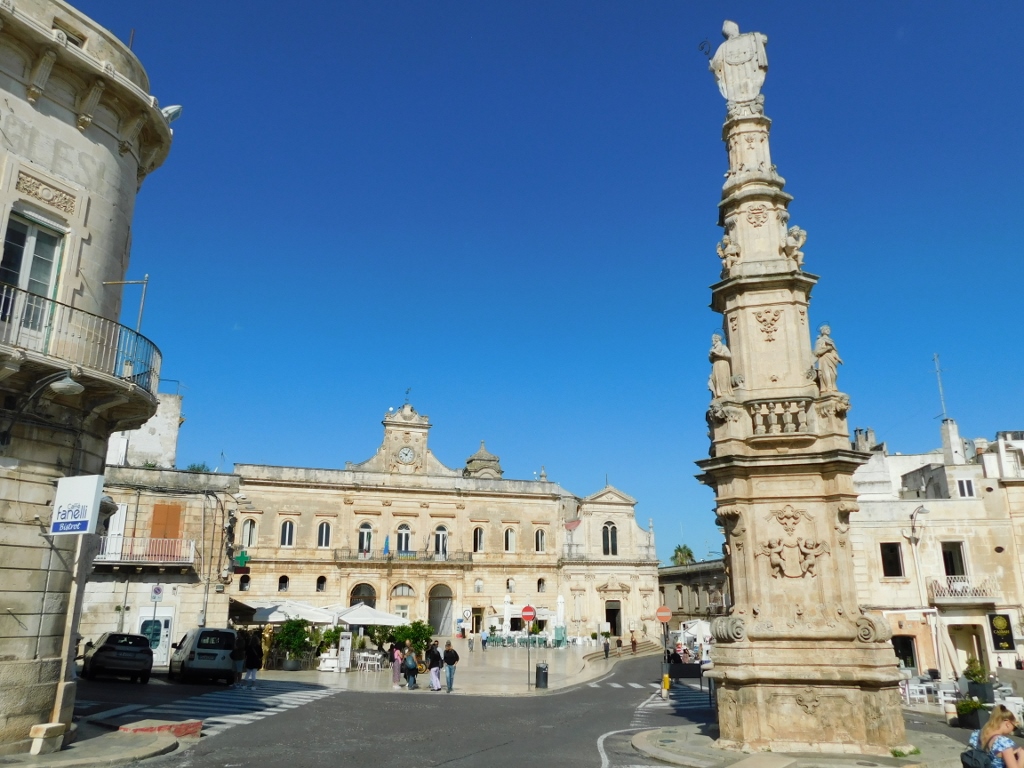
Afterwards, I got moving again, but only briefly continued towards Liberty Square (Piazza della Libertà), because there is a church there that was open at the time and I wanted to visit it.
 Ostuni, a detail
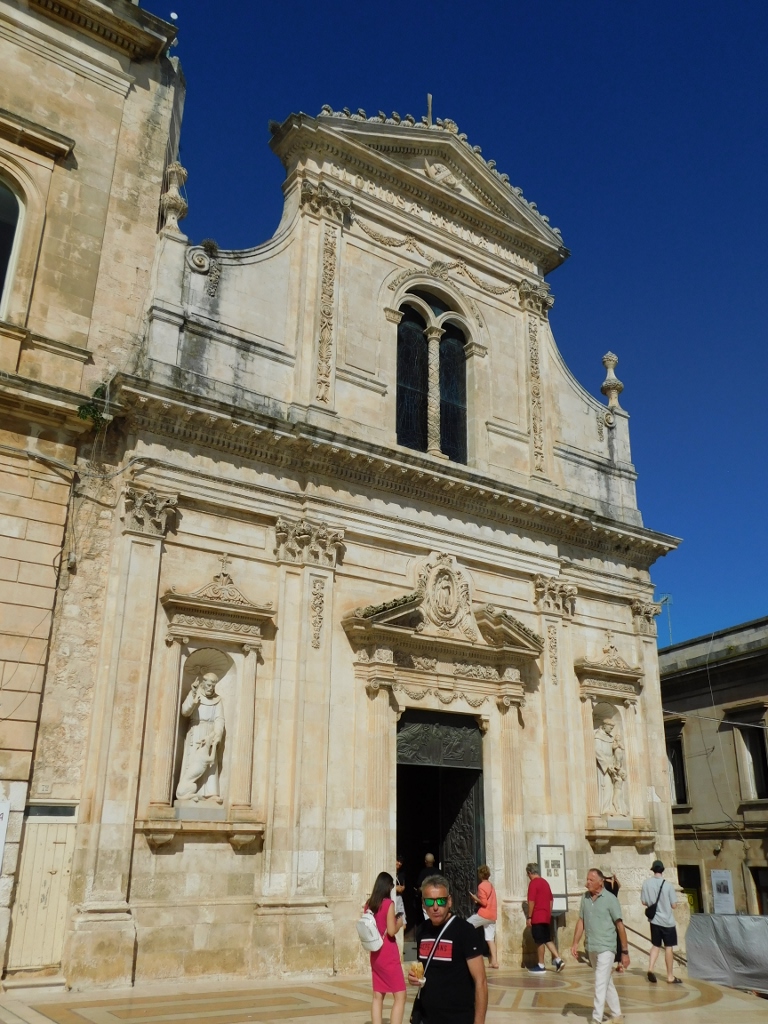
It was the Church of St. Francis of Assisi (Chiesa di San Francesco d'Assisi).
 Church of St. Francis of Assisi
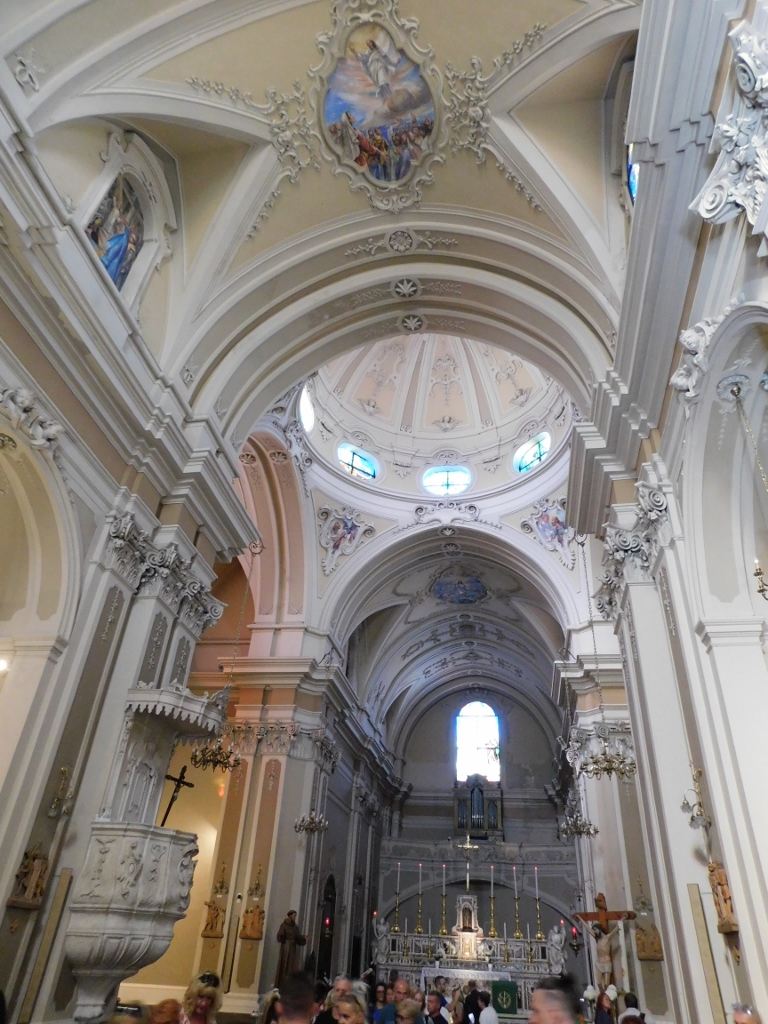
The church was built in 1304, but it has since been renovated and expanded several times. Specifically, its facade was redesigned in 1883, while the bronze doors were made more recently, in 1985.
The interior consists of a single nave and the decoration dates back to the 18th century.
 Church of St. Francis of Assisi
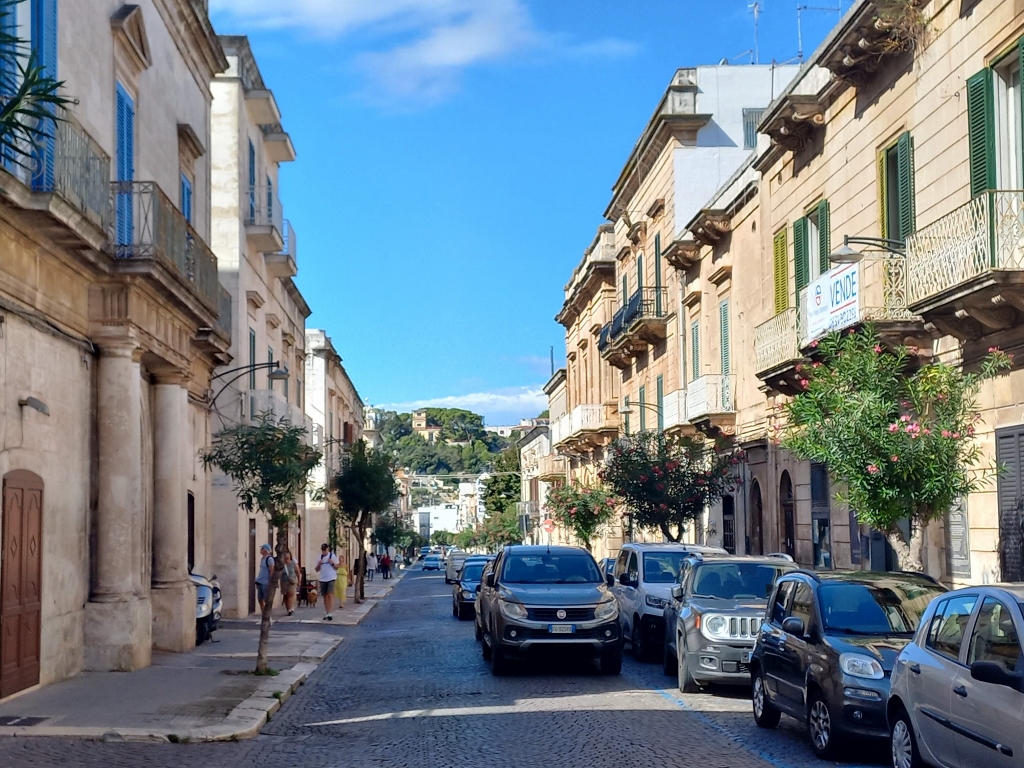
Although I wasn't in any rush, after this I did move on, leisurely heading towards the spacious parking lot for tourist coaches, Tenente Specchia, where city buses that go to and from the Ostuni train station, about 4 km away, also stop.
 Ostuni, a detail
The day was very beautiful, sunny and pleasantly warm, so I headed to the town of Monopoli on the coast, which had been recommended to me as a very lovely place (it is about 40 km from Ostuni). Since the whole trip had been characterised by fairly relaxed and leisurely sightseeing, I felt it was perfectly fine to take a ride through southern Italy to visit a place about which I had no prior information.
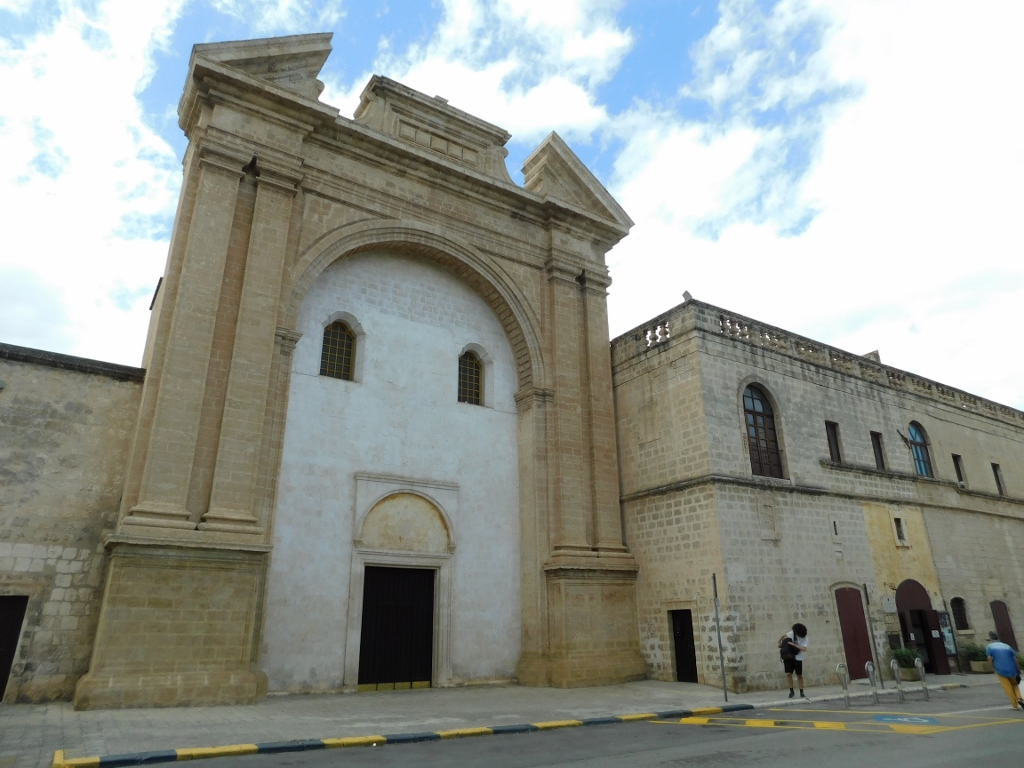
So, from the train station, I walked towards the historic centre, passing by the Church of Saint Anthony of Padua (Parrocchia Sant'Antonio di Padova), but without the intention of stopping there.
 Monopoli, a detail
I did, however, have a serious intention to stop somewhere for an early lunch and I soon did just that. I must admit, on this occasion, I made a very good choice, and in the end, I was both full and content.
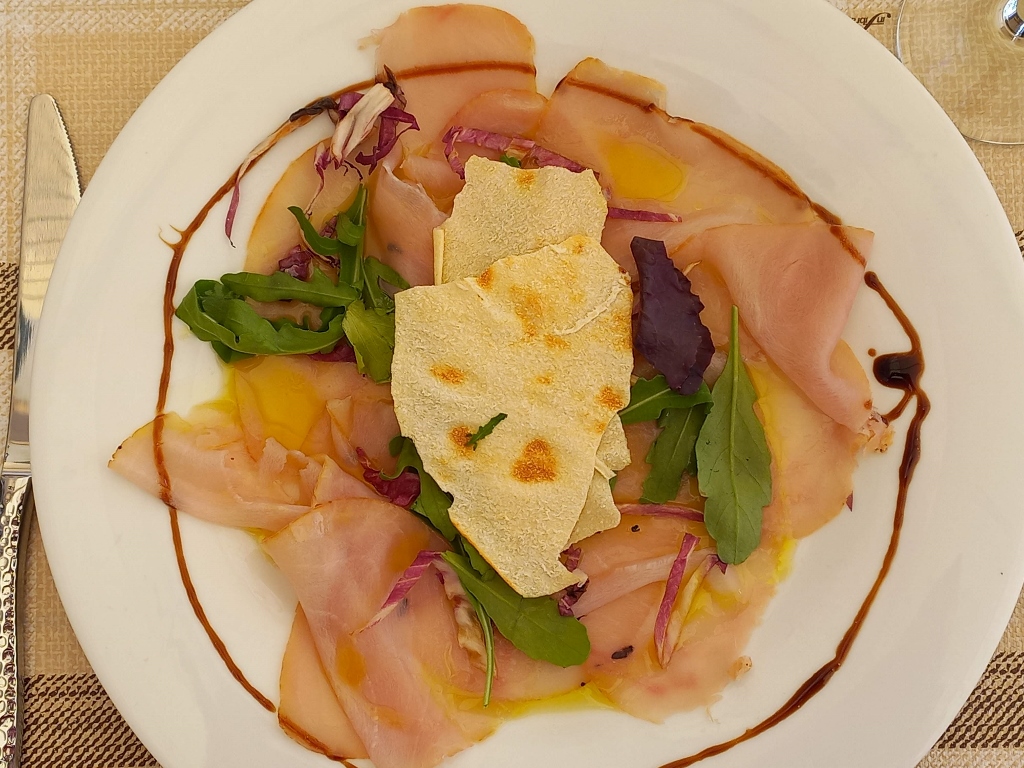 Swordfish Carpaccio marinated in lemon oil
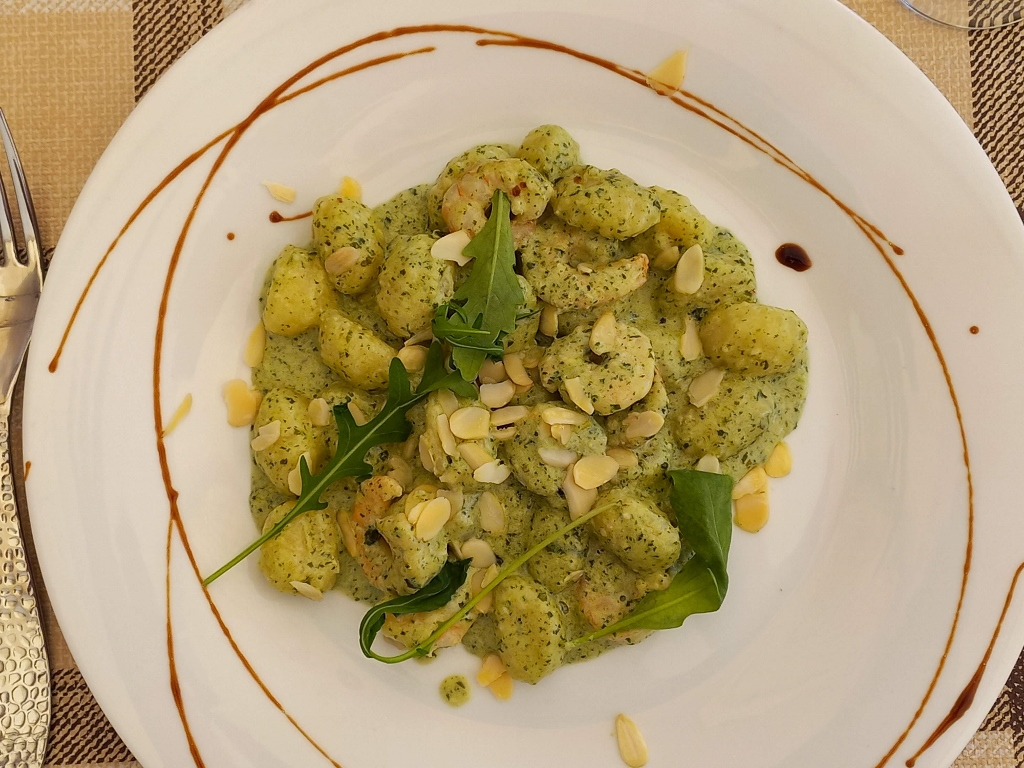 Gnocchi with prawns, rocket pesto and almonds, with extra virgin olive oil and cheese
Meanwhile, I decided not to go directly to the historic centre of Monopoli, but rather to take the newer streets of the town, wandering a bit around, so I could approach the historic centre from the southern side and start my visit from there.
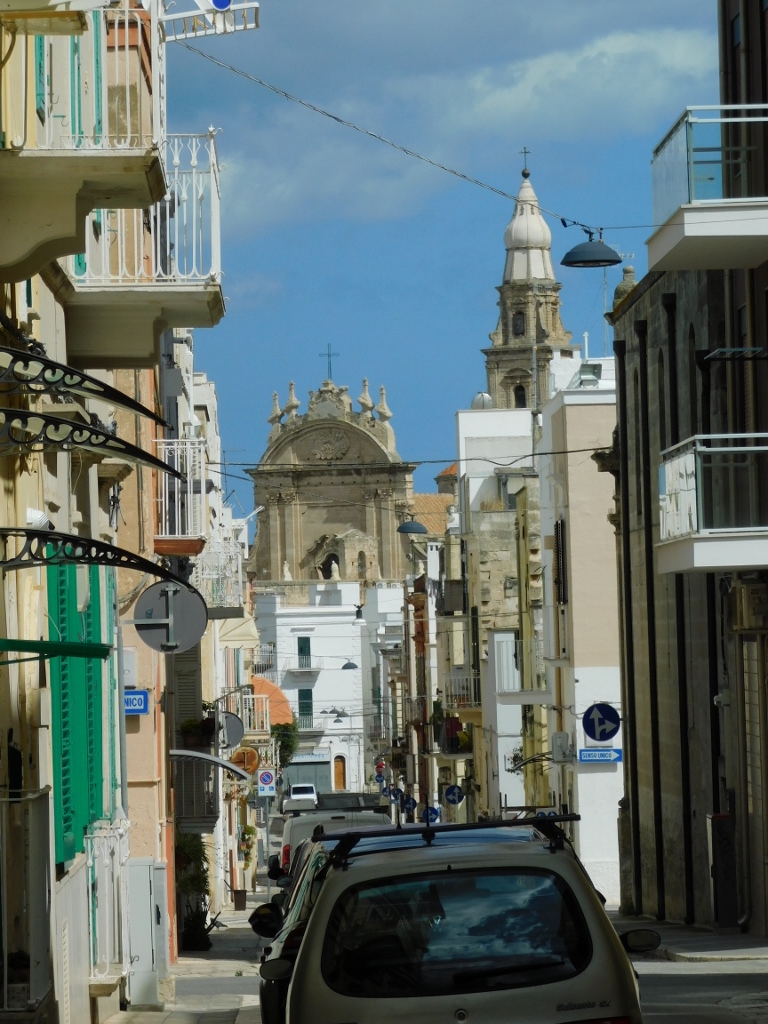 Monopoli, a detail
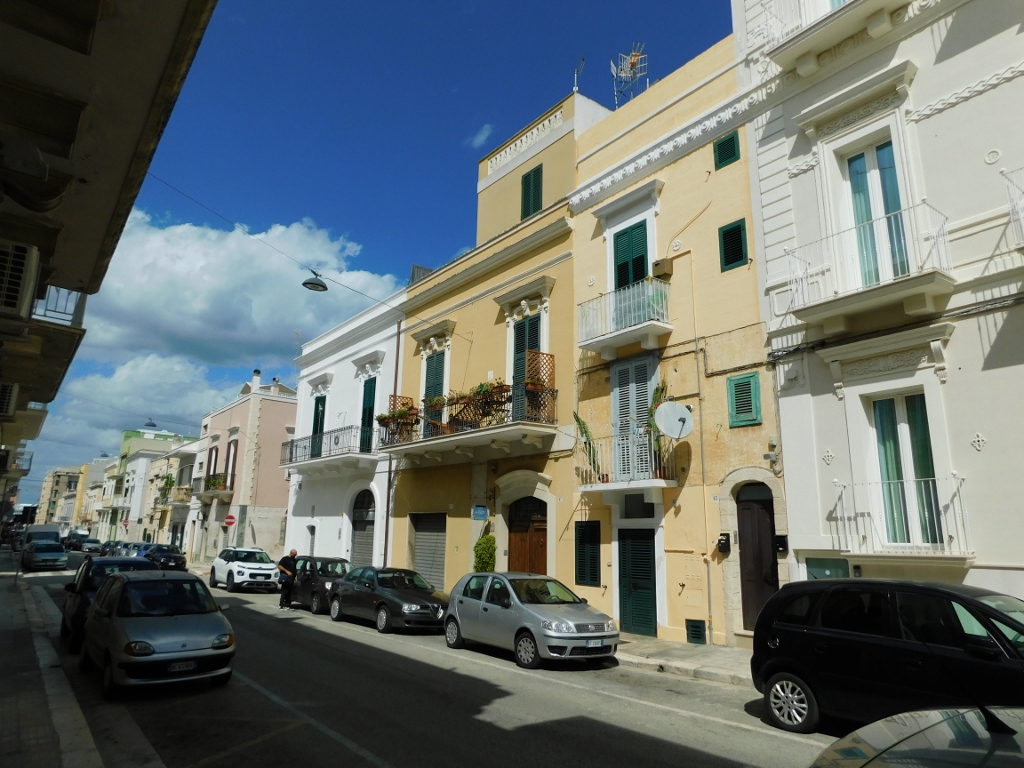 Monopoli, a detail
By doing this, not only was I able to see the Monopoli Cathedral, but I also got to see a part of the open-air Armoury Museum.
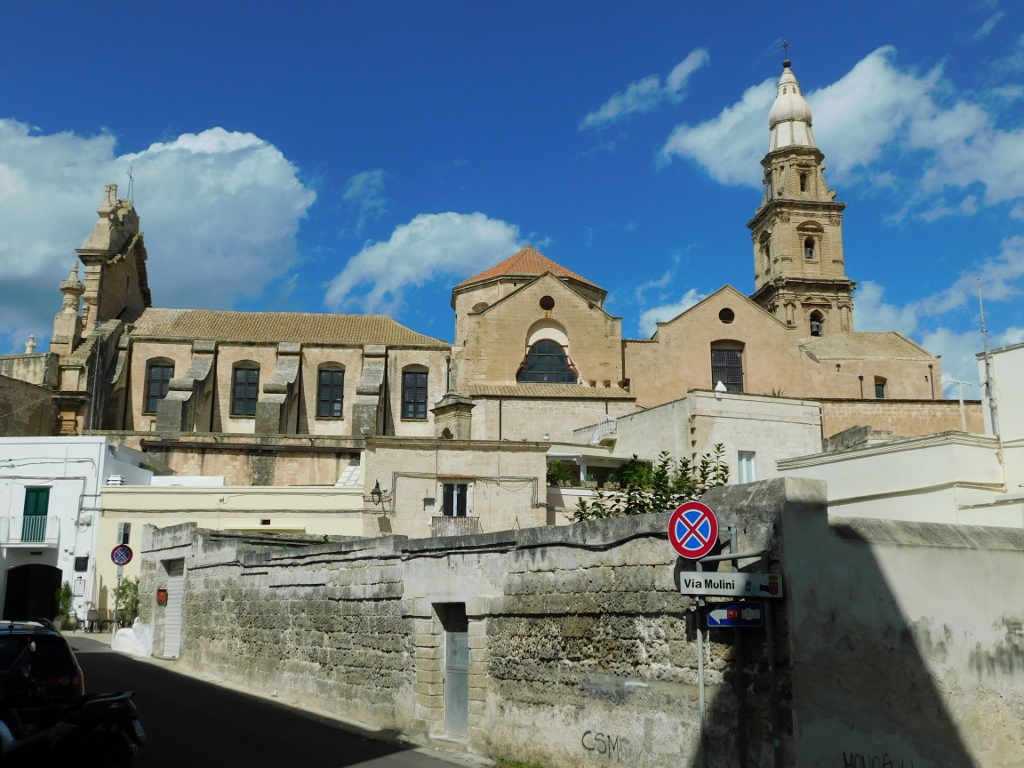 Monopoli, a detail
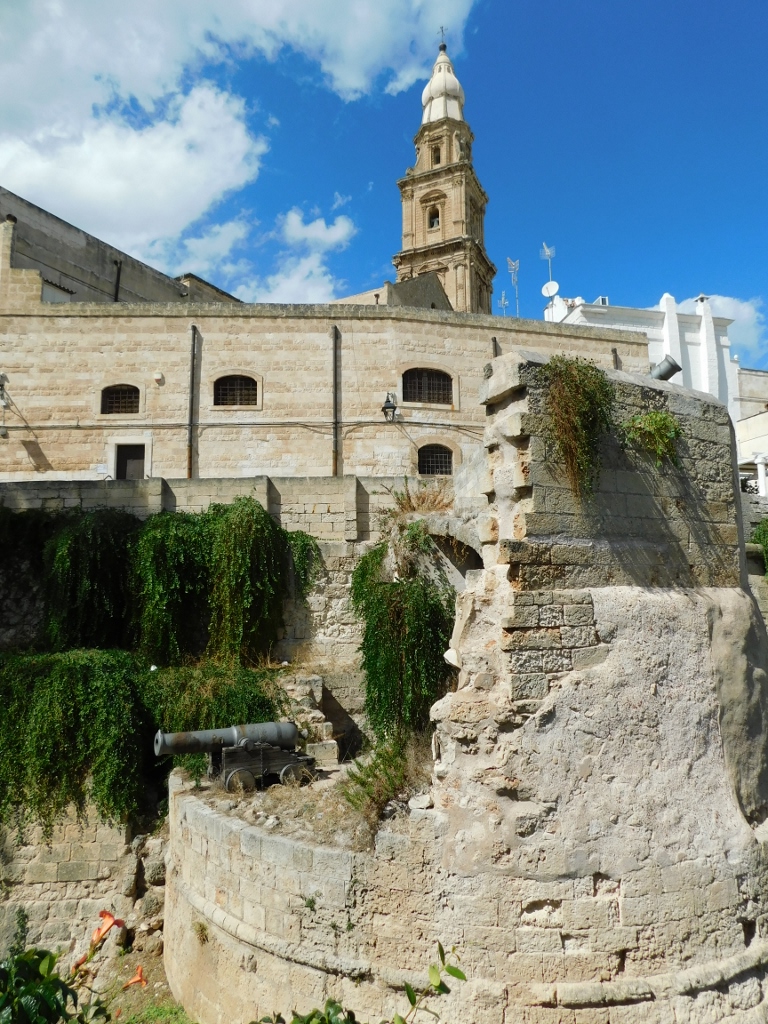 Monopoli, a detail
In this way, I also reached the beach Cala Porta Vecchia, which can be said to be right in the middle of the old town.
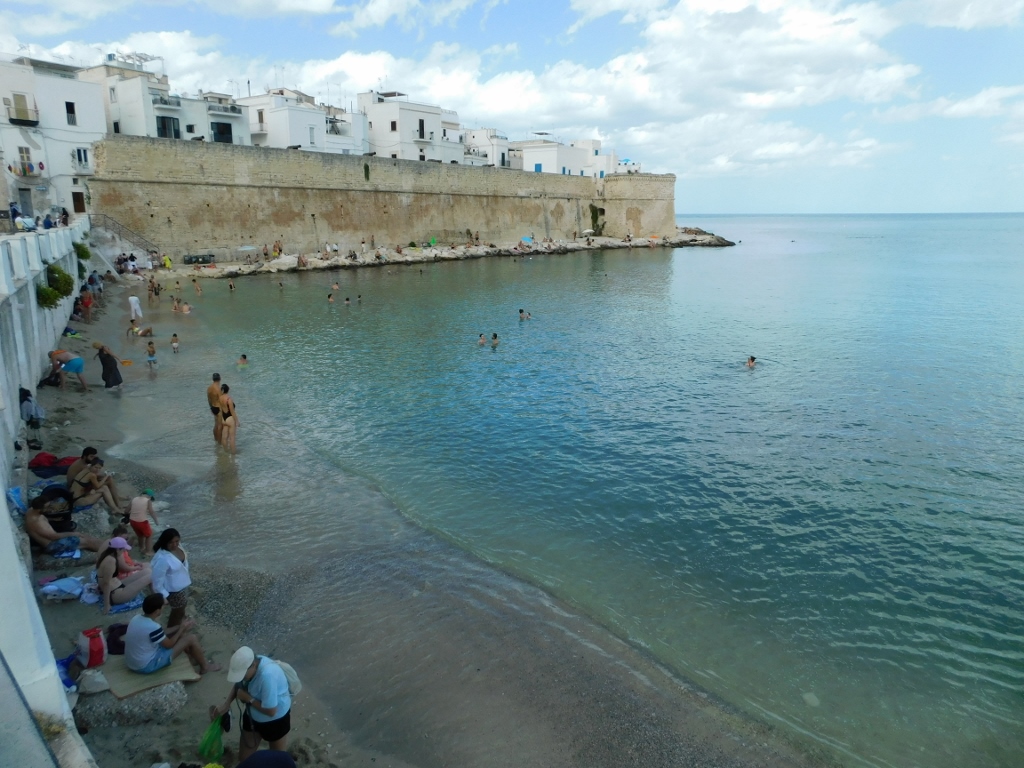 Monopoli, a detail
The beach was quite nice, but not exactly inspiring. So, I just took a photo of it from another angle and dipped my feet in the water.
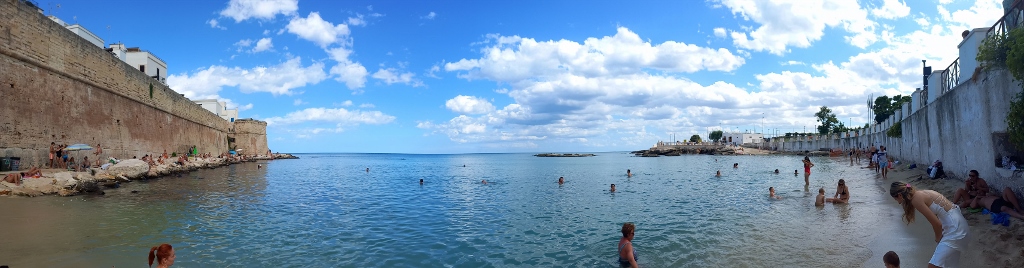 Monopoli, a detail
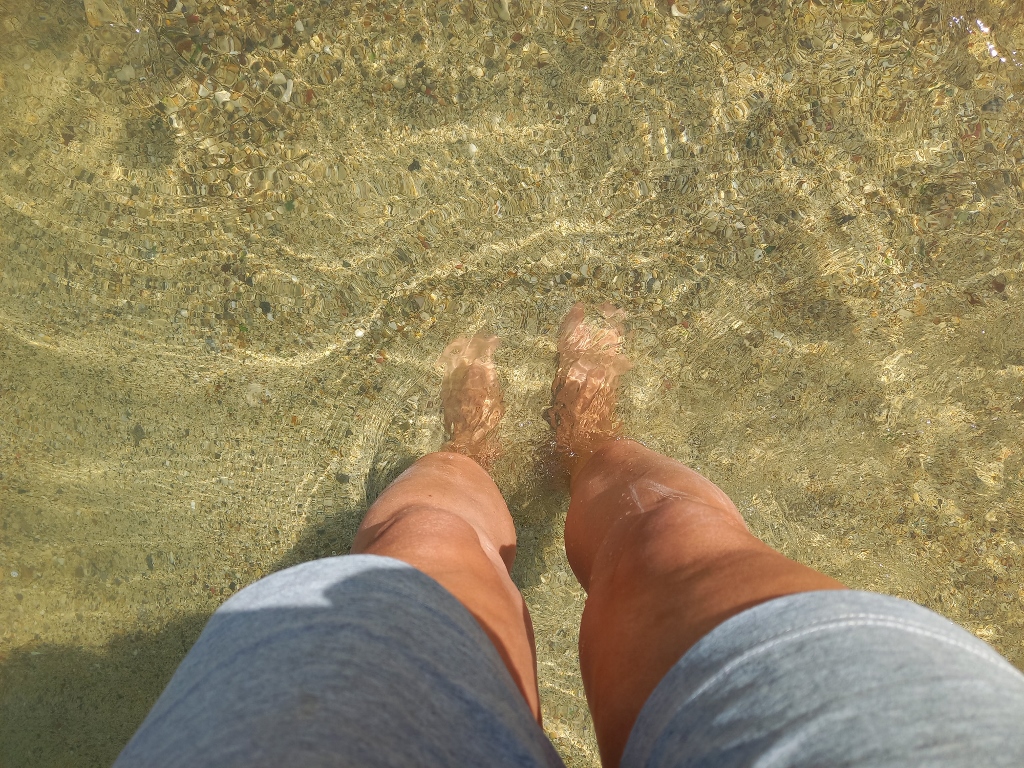 Monopoli, a detail
Then, I started to walk around the town a bit. At one point, I saw a building that was constructed in the same way as the one where I had rented the flat in Ostuni. I found this especially interesting because of my friend, who is an architect, so I mentioned it to her. Specifically, I noticed that many buildings were designed in a way where you enter the front room, which clearly has a door, but also a window or windows. This room tends to be relatively long, and from there, in the flat where I stayed, you enter the bedroom, which actually has no windows at all, and the only source of natural light comes through the door connecting the two rooms. This is quite visible in the next photo: the white building on the right-hand side of the picture has both a door and windows on the front, but when viewed from the side, there is practically nothing. Anyone interested can easily imagine that the only natural light inside comes from the front facade.
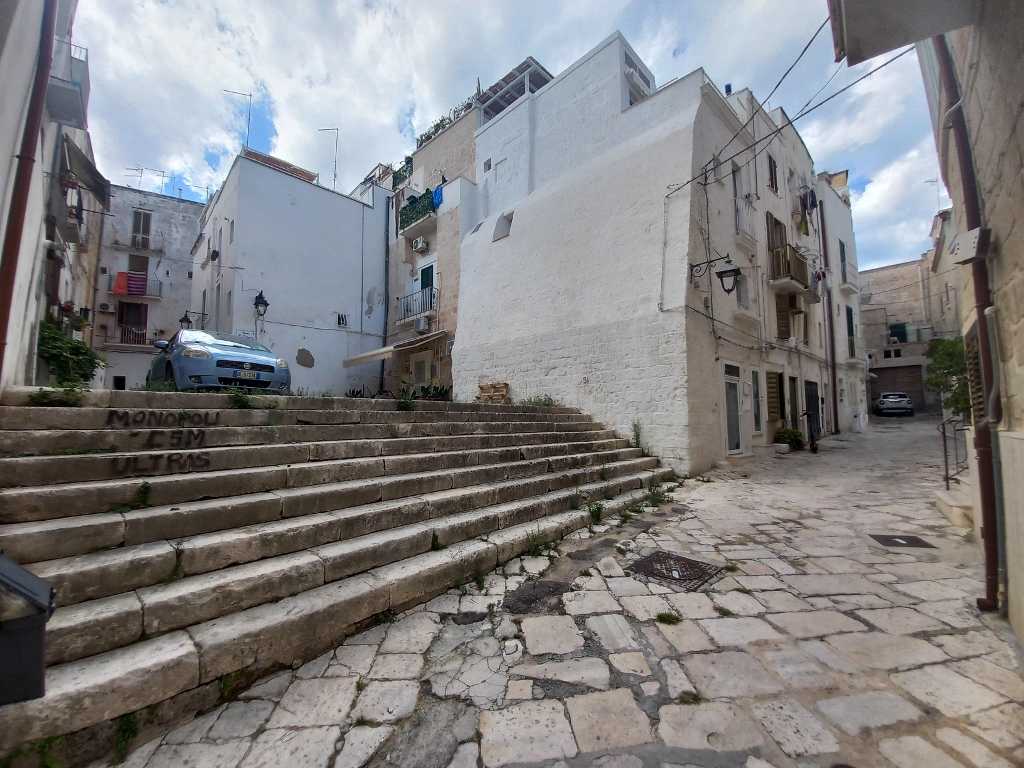 Monopoli, a detail
I suppose the reason for this type of construction is either that the buildings were built right next to each other, leaving no space for side openings or to reduce the impact of heat during the summer or strong winds during the winter.
Well, these are the kinds of things I think about when I travel. But in the case of Monopoli, there were plenty of truly interesting and beautiful buildings that didn't prompt any theories on my part.
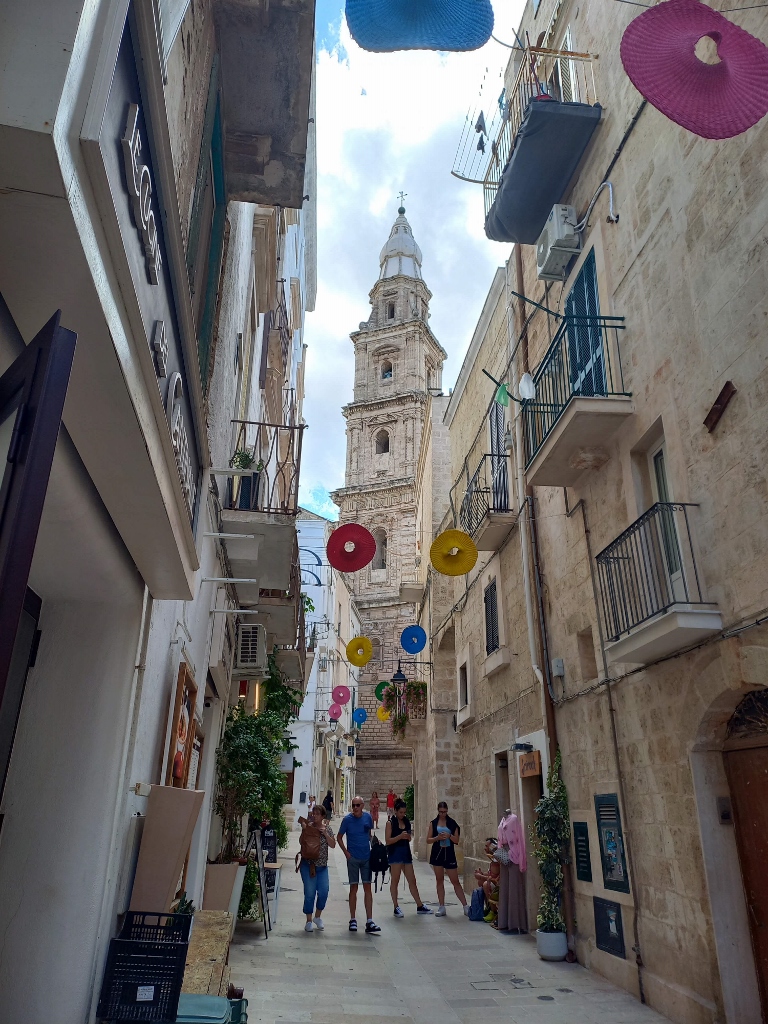 Monopoli, a detail
On my way to the cathedral, I also passed by the Church of Santa Maria del Suffragio from the 17th century. The street where this church is located is quite narrow, so I could only photograph it from the side.
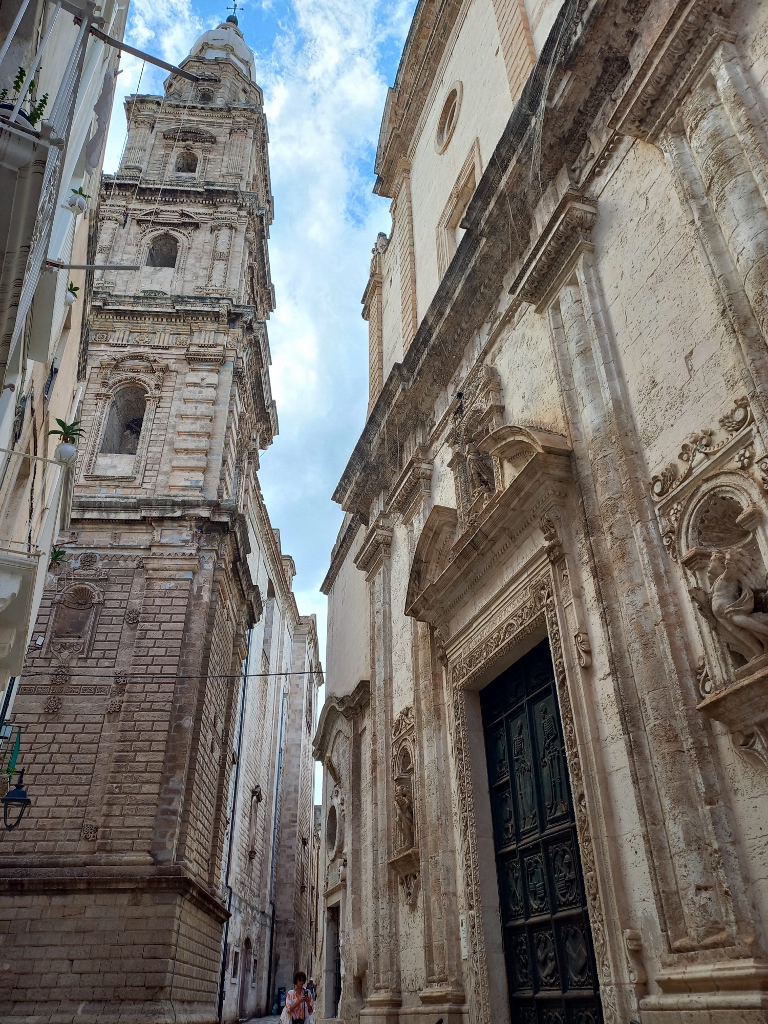 Monopoli, a detail
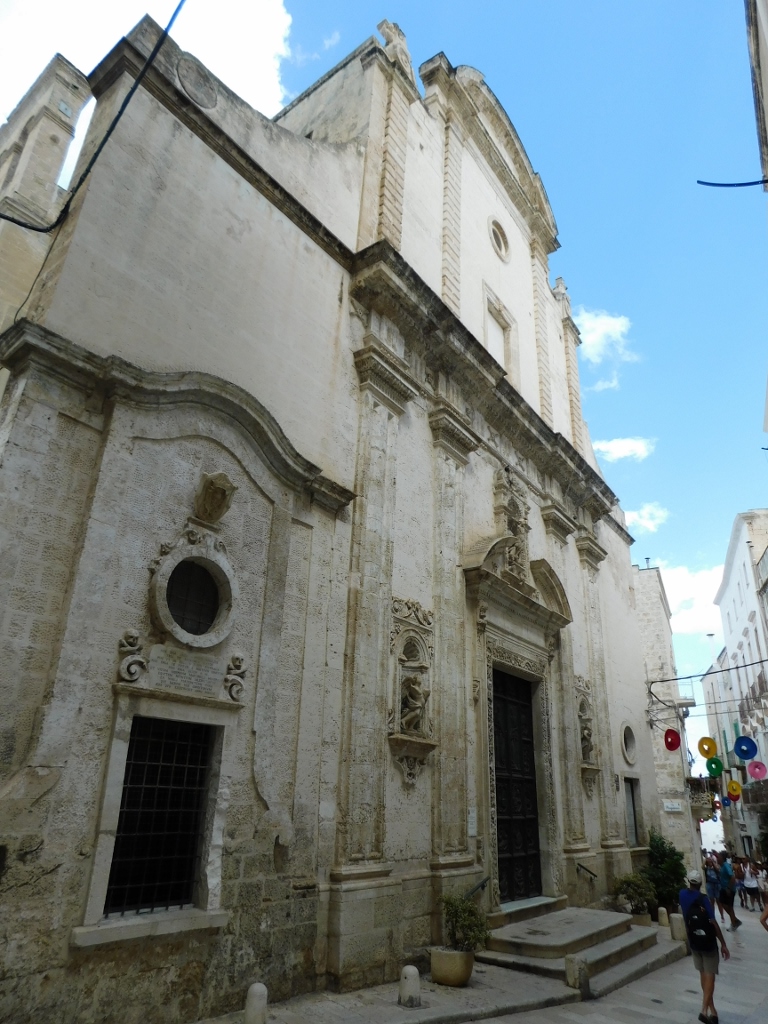 Monopoli, a detail
Soon, I reached the cathedral, which is officially called Basilica Cattedrale della Madonna della Madia.
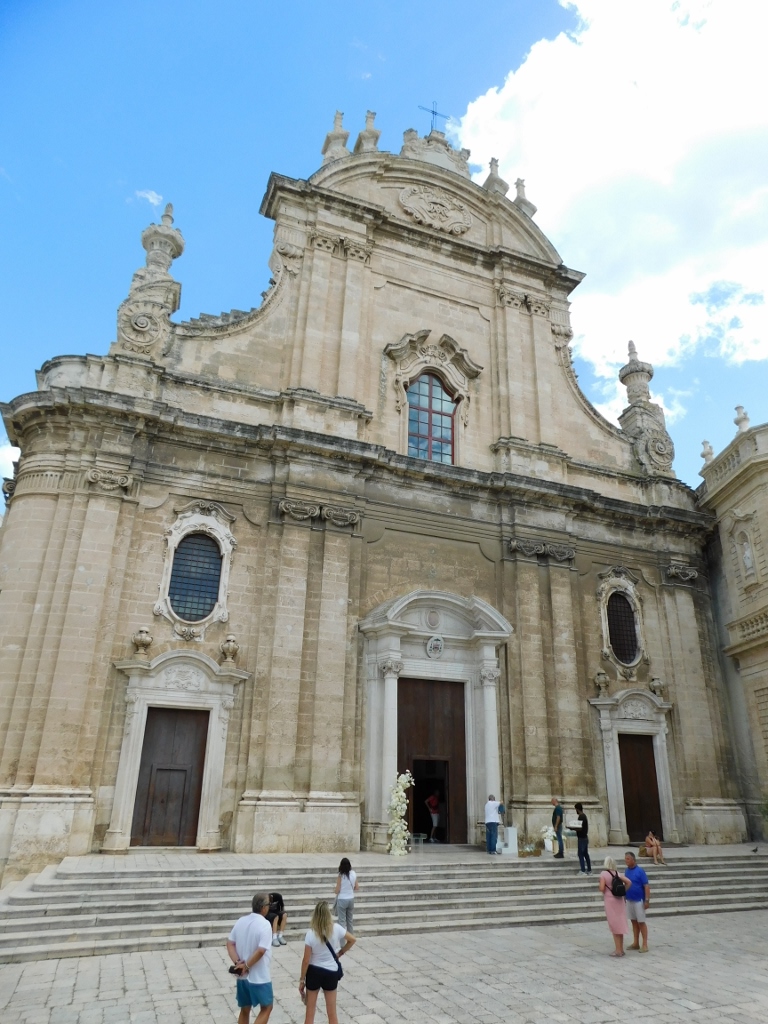 Monopoli Cathedral
The construction of the original church began in 1107, but between 1742 and 1770, it was entirely replaced by a new church built in the Baroque style. The interior decoration features the use of multicoloured marble, while the miraculous icon of the Madonna della Madia, which, according to legend, emerged from the sea in 1117, is located at the centre of the presbytery.
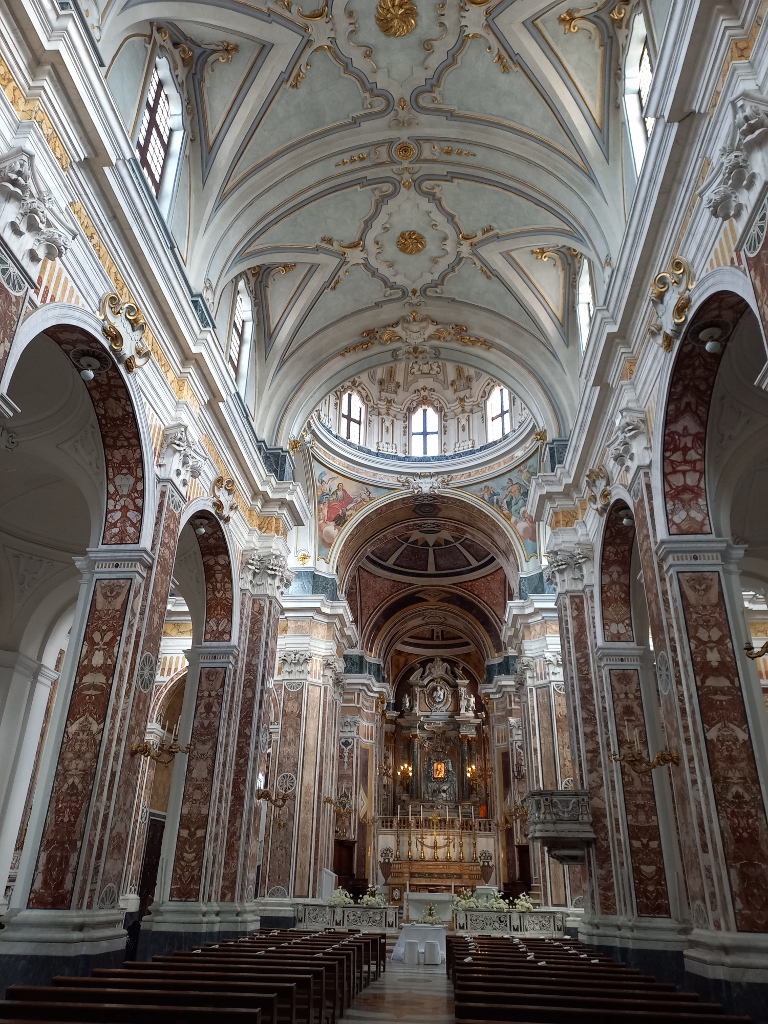 Monopoli Cathedral, a detail
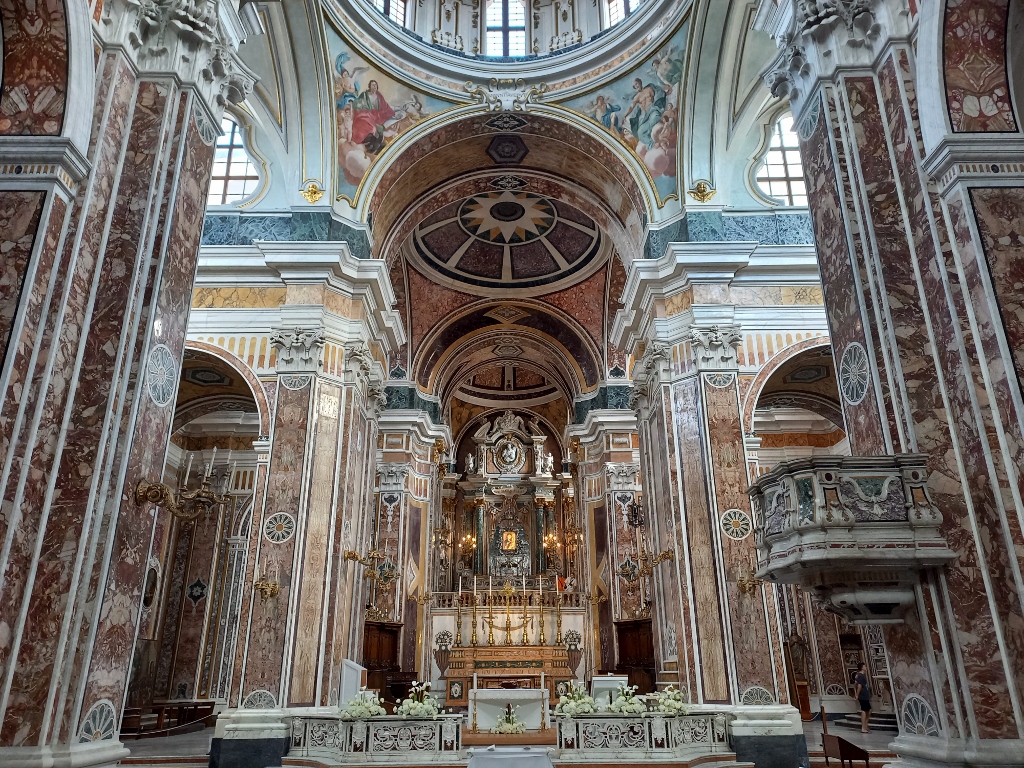 Monopoli Cathedral, a detail
Continuing my walk through the historic centre of Monopoli, I was able to enjoy numerous picturesque houses, as well as various churches.
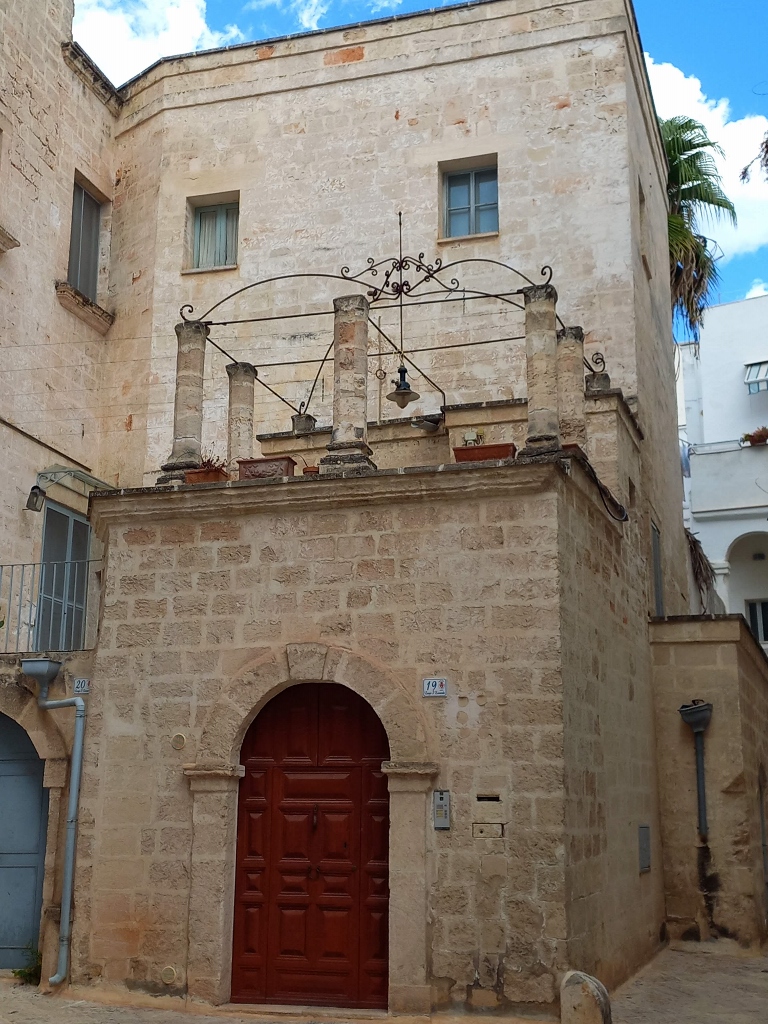 Monopoli, a detail
Some of the churches still serve exclusively religious functions, while others have adapted to modern times. For example, the Church of Saint Leonard (Chiesa San Leonardo) from the 18th century, a part of which has been converted into a museum.
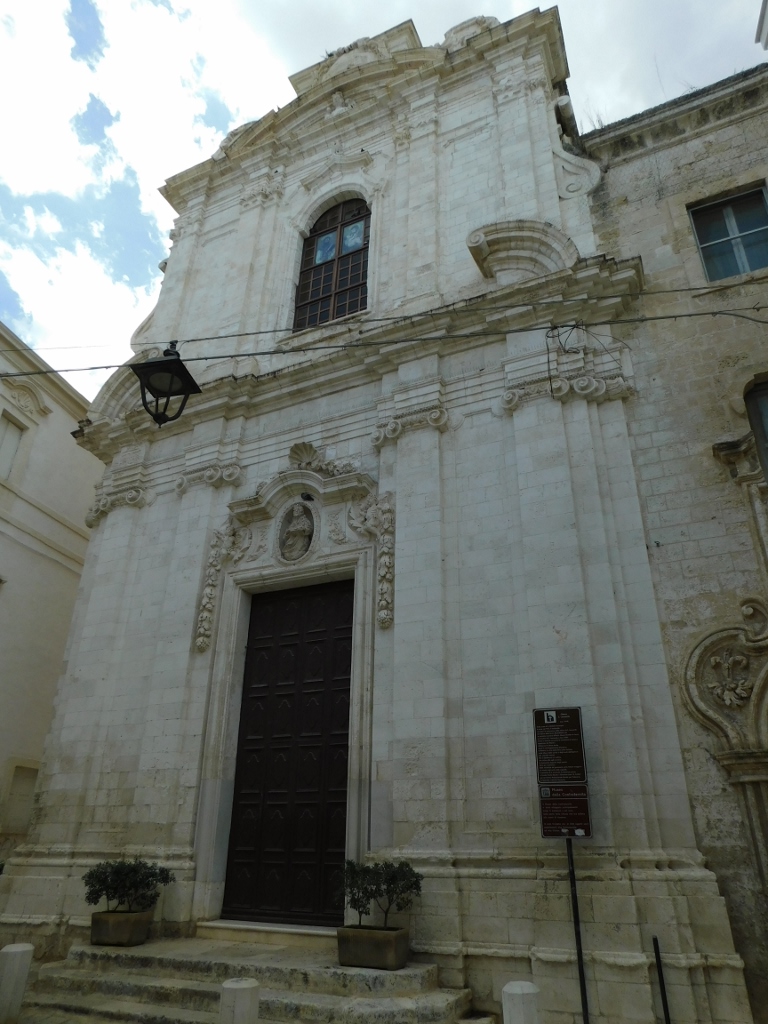 Monopoli, a detail
I also took a stroll to a square called Piazza Palmieri. The square is interesting because it features the 18th-century Church of St. Teresa (Chiesa di Santa Teresa), a beautiful fountain, and the Palmieri Palace (Palazzo Palmieri), also from the 18th century.
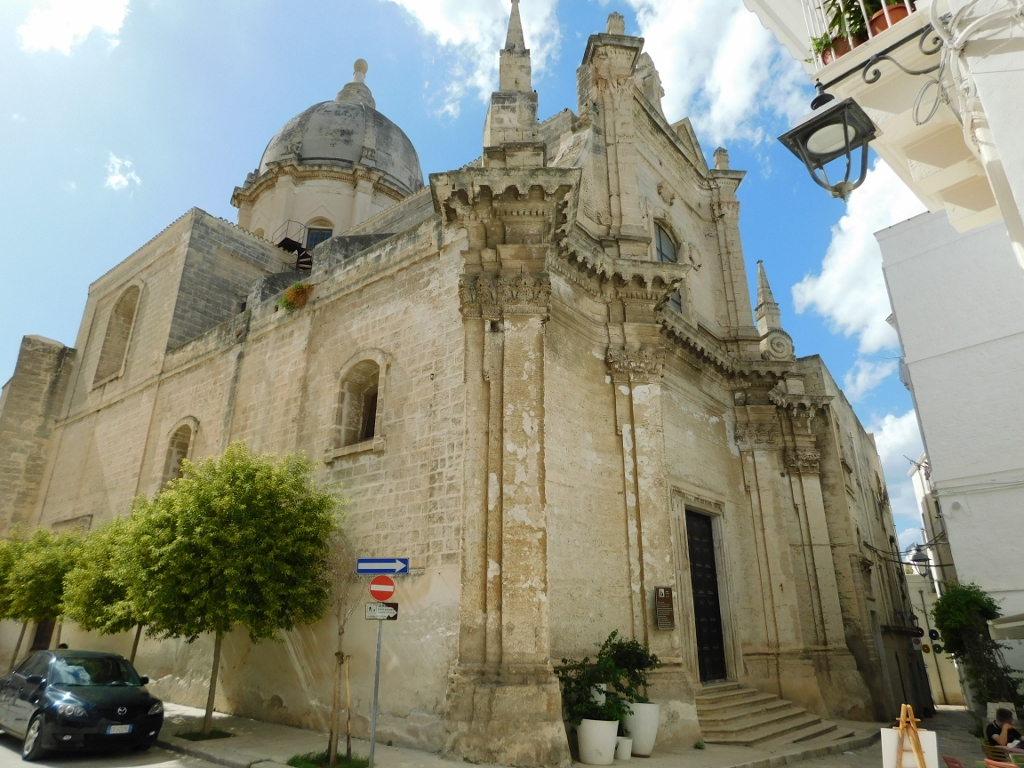 Monopoli, a detail
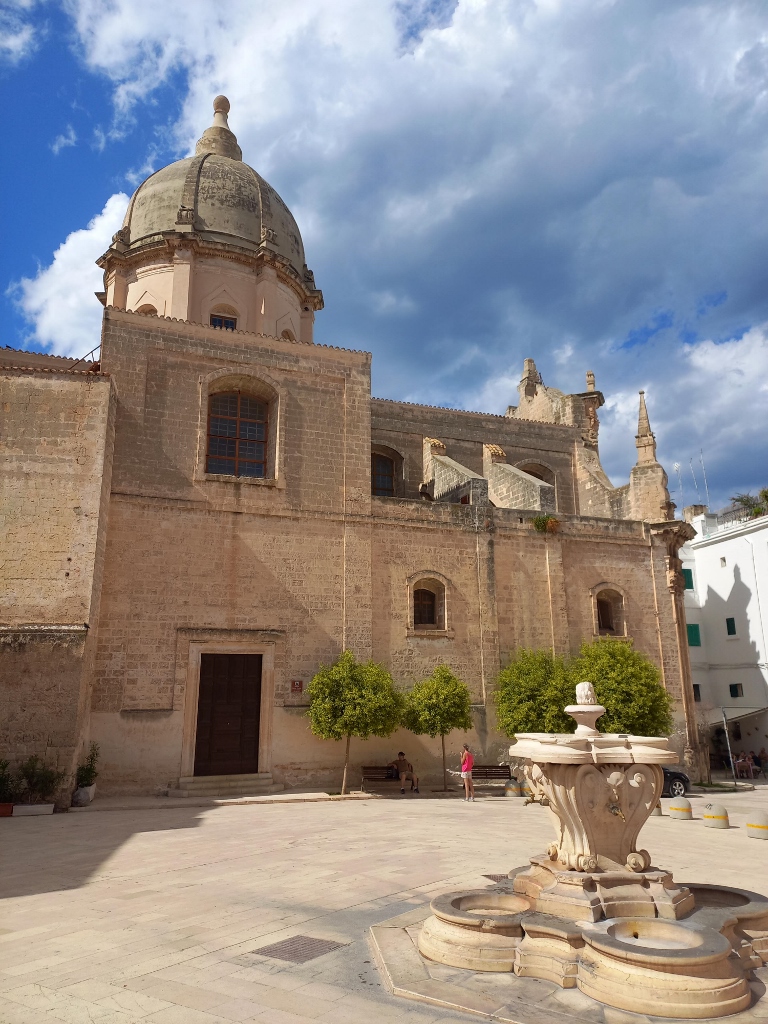 Monopoli, a detail
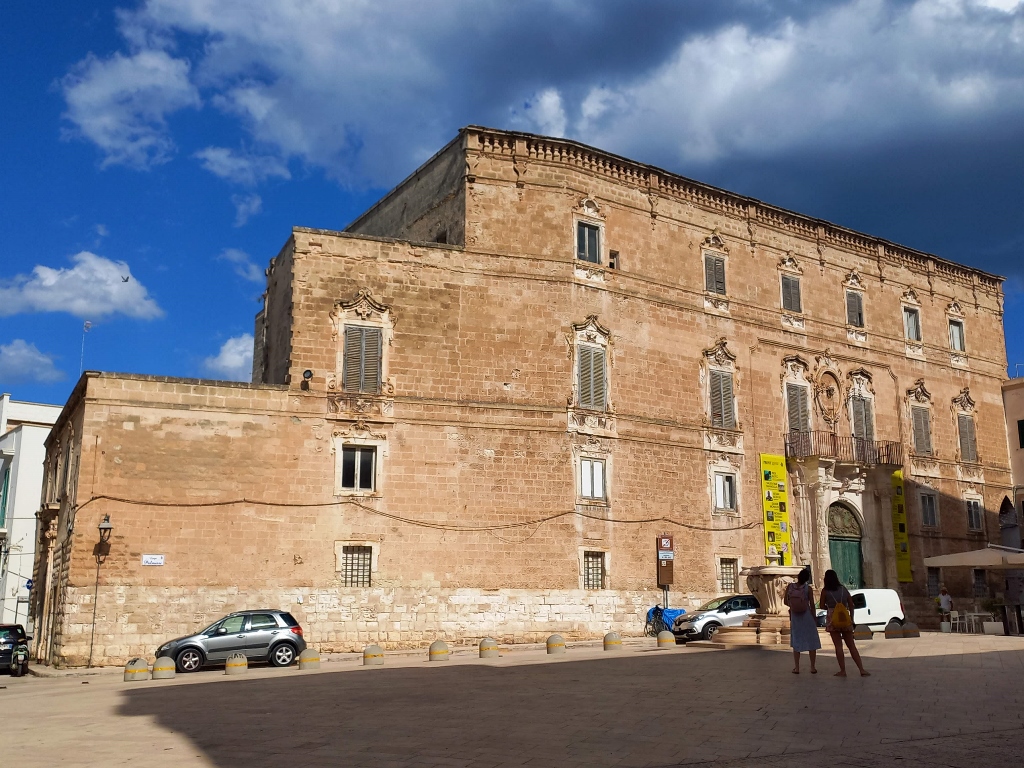 Monopoli, a detail
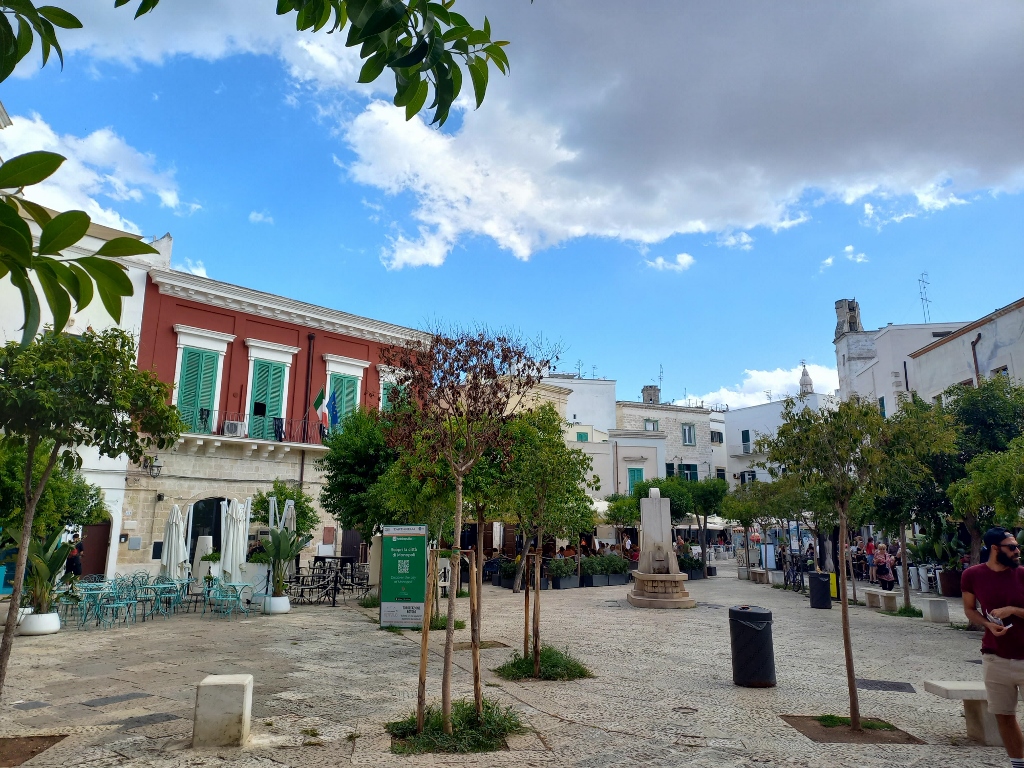
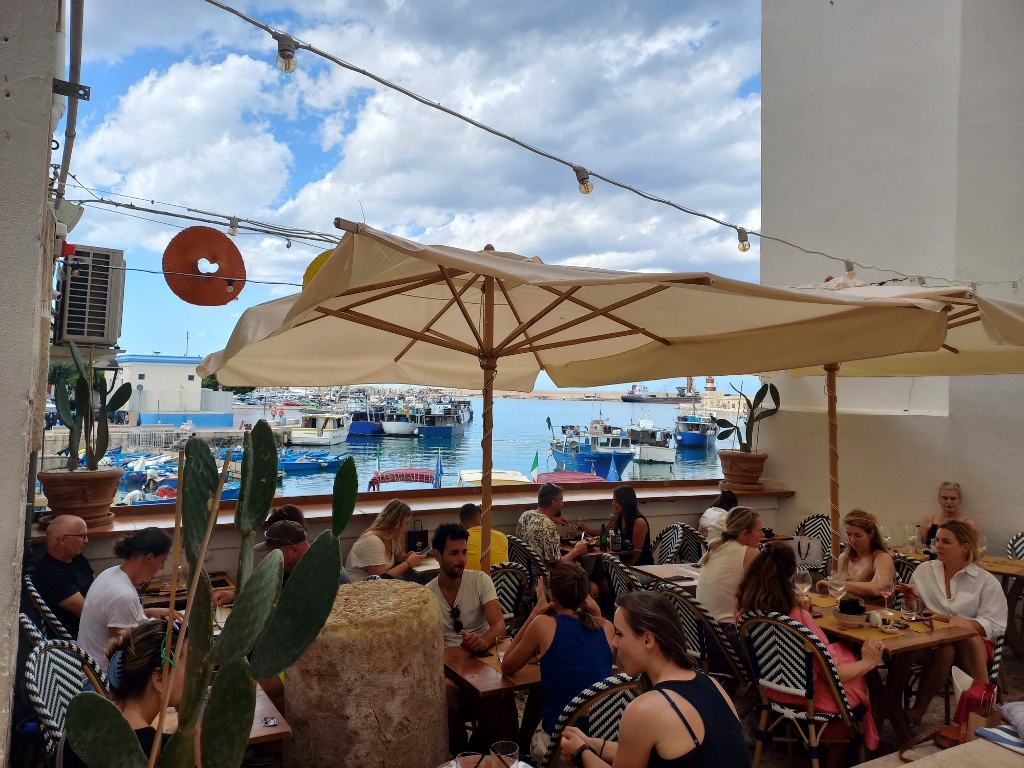
Now, I began walking through some streets, heading towards the picturesque Old Port (Porto Vecchio).
 Monopoli, a detail
 Monopoli, a detail
 Monopoli, a detail
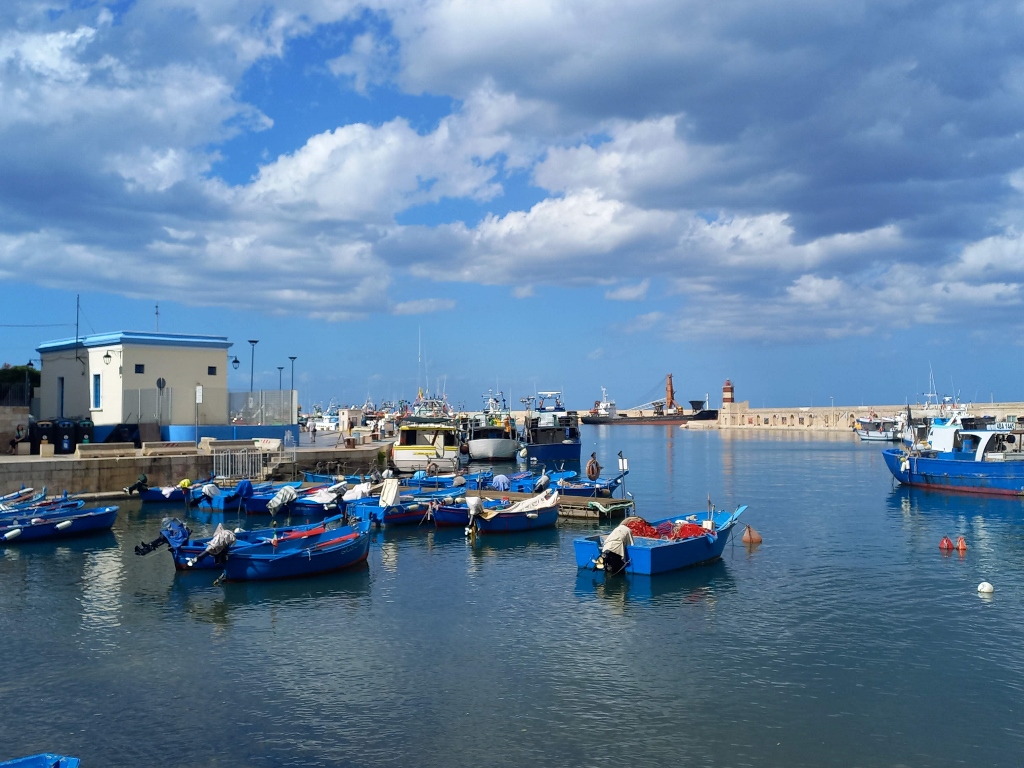
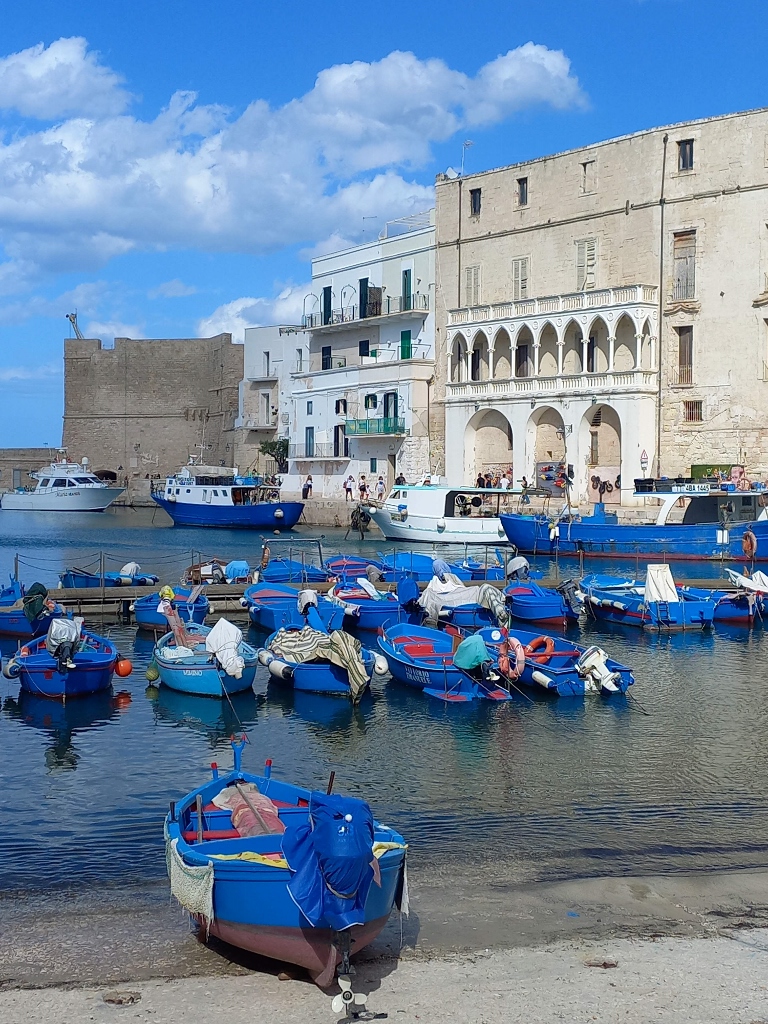
The Old Port isn't large, but I found it interesting for photography, as there were some unique angles and details to capture.
 Monopoli, a detail
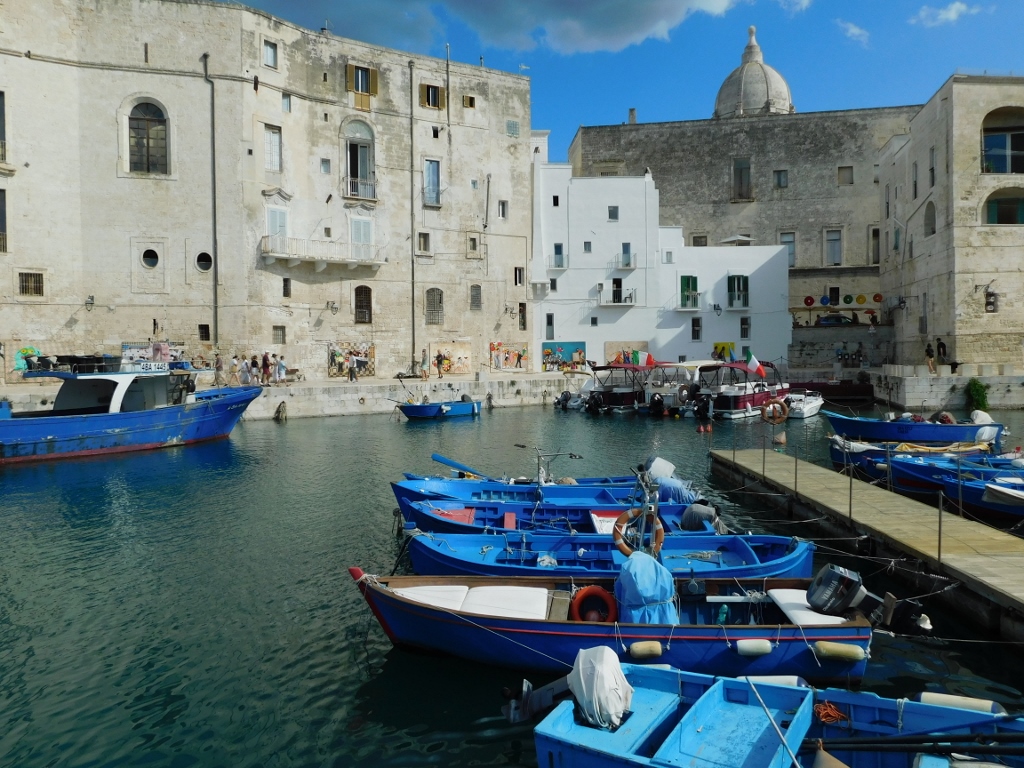 Monopoli, a detail
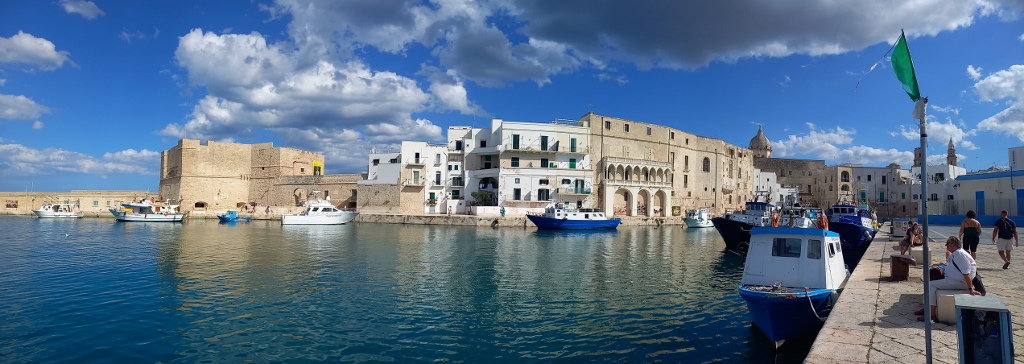 Monopoli, a detail
In the previous photo, on the left, you can see the Castle of Charles V (Castello Carlo V), with a pentagonal ground plan, the construction of which was completed in 1525. It is located on a promontory that was once separate from the town, while for a time, it was used as a prison. Today, it is a venue for exhibitions and cultural events.
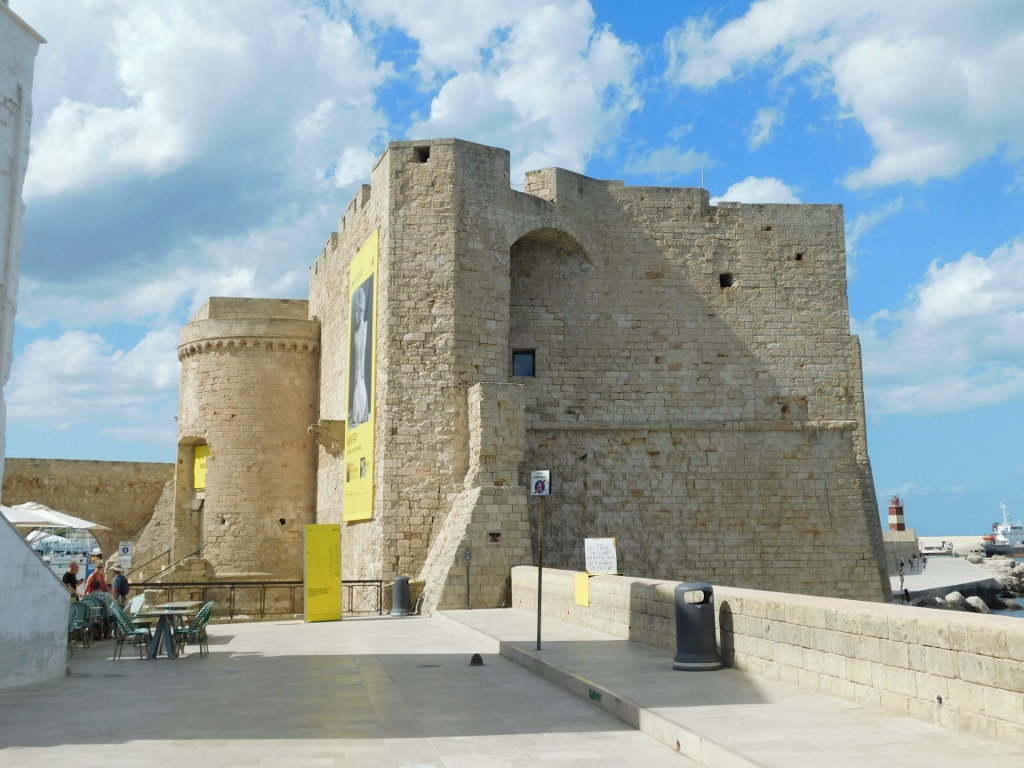 Monopoli, a detail
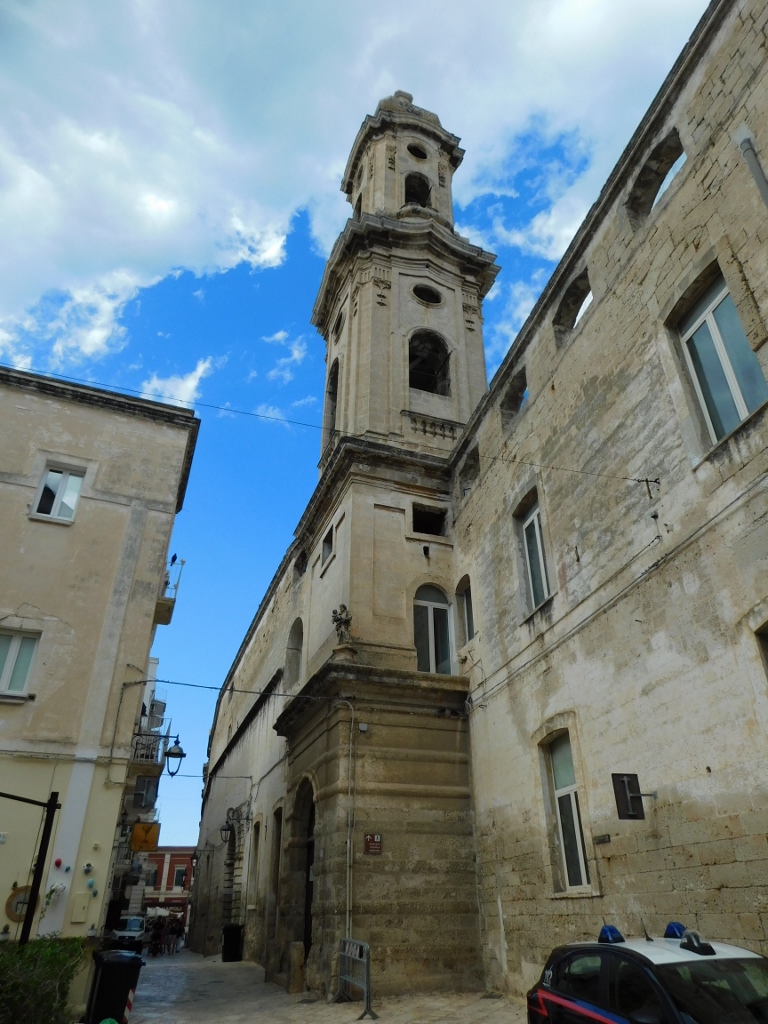
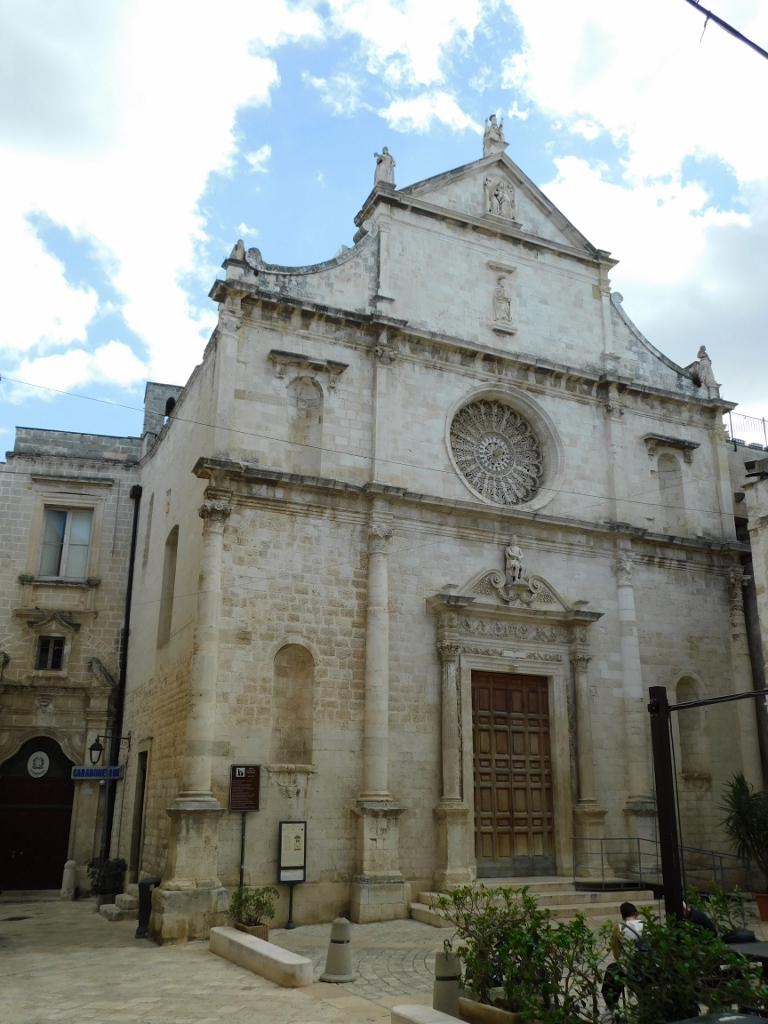
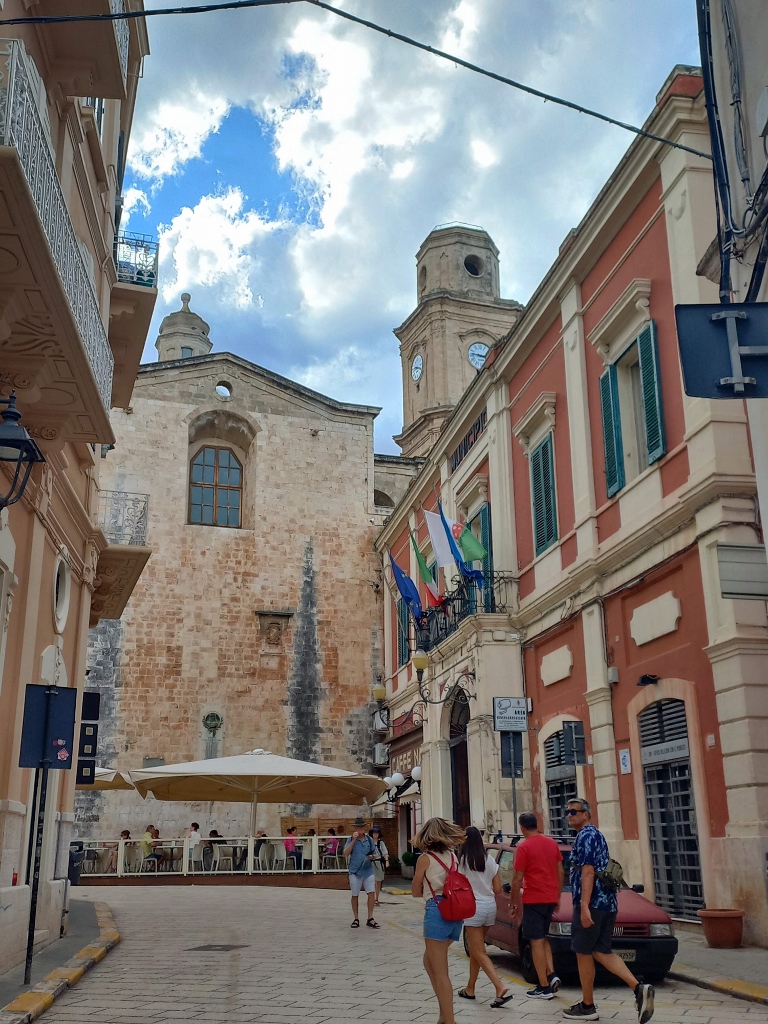
Now I leisurely made my way back to the train station, but along the way, I passed through other parts of the historic centre, where I once again photographed interesting details and buildings. These were mostly churches and former monasteries, but everything was truly pleasant to look at.
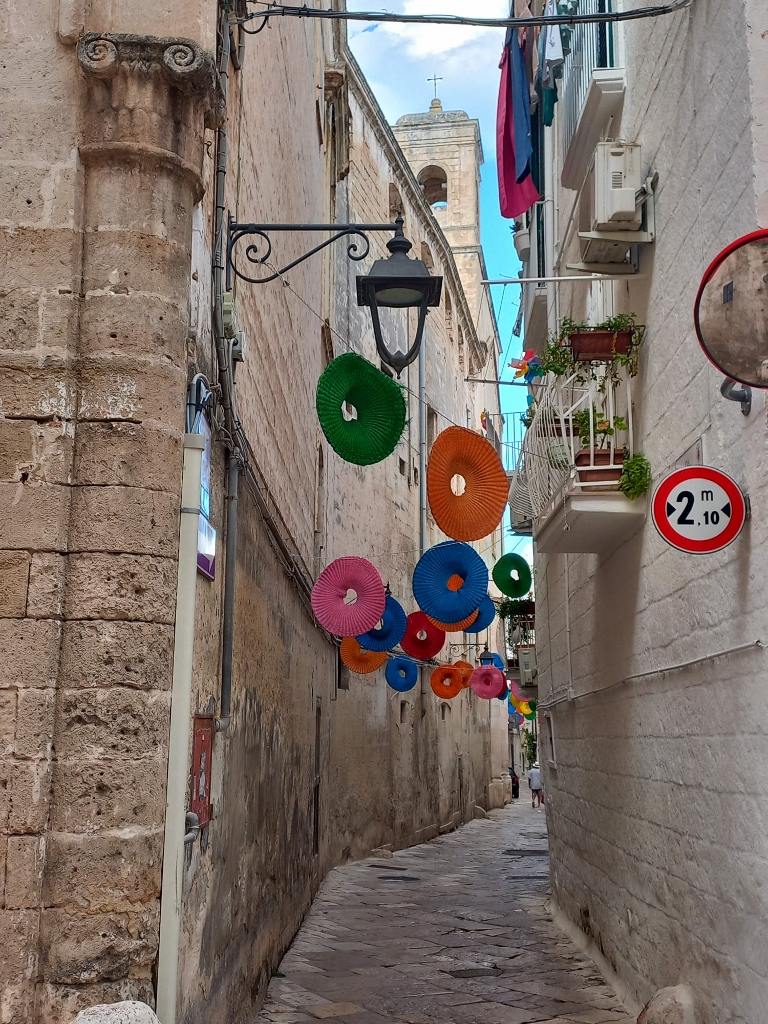 Monopoli, a detail
 Monopoli, a detail
 Monopoli, a detail
 Monopoli, a detail
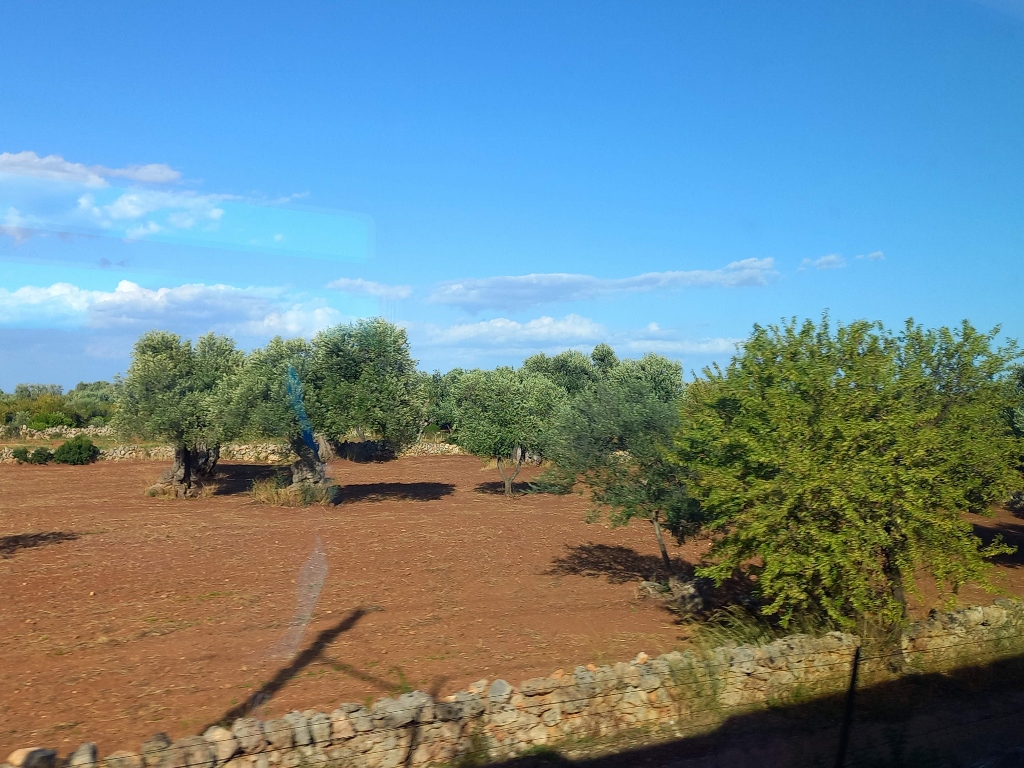
On my way back to the train station serving the town of Ostuni, I was able to enjoy the landscapes through the train window. Olive groves were often visible along the way.
 Monopoli, a detail
I had previously mentioned that the Ostuni train station is not actually in the town itself, but about 4 km away. However, there are buses that solve this issue. When I returned to the town, it was still day, so I headed toward the centre.
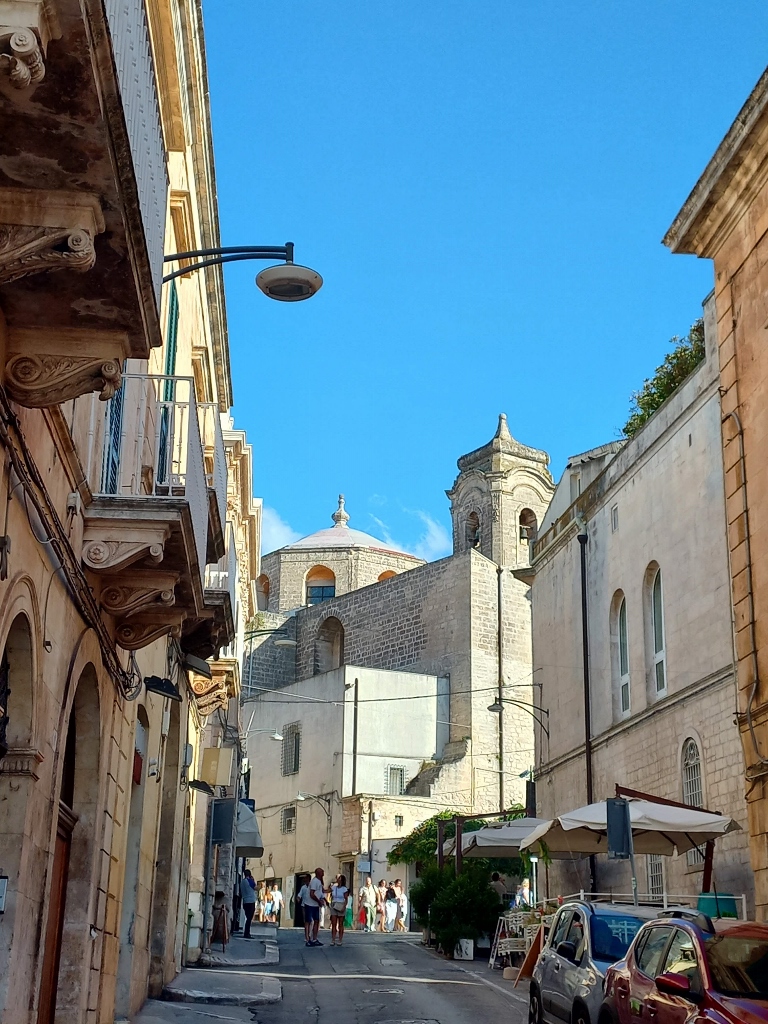 Ostuni, a detail
I again stumbled upon a wedding, but this time the guests were heading somewhere. It seemed to me that Ostuni is particularly popular as a wedding destination.
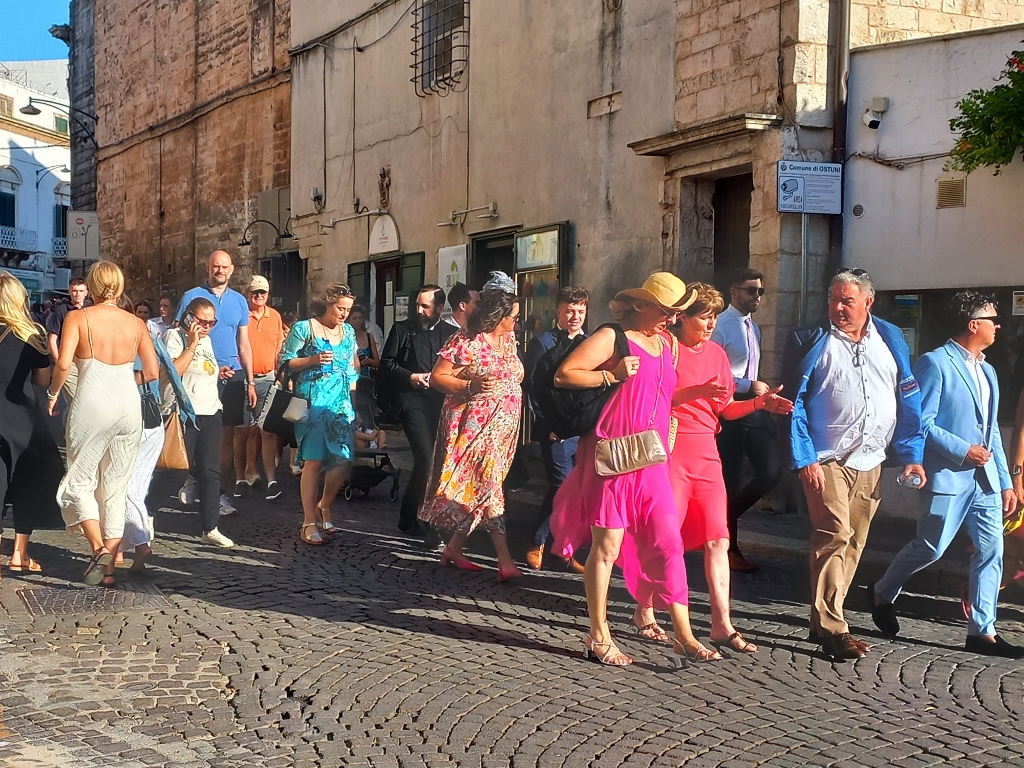 Ostuni, a detail
I first went to have a coffee and it was just what I needed. It felt quite good.
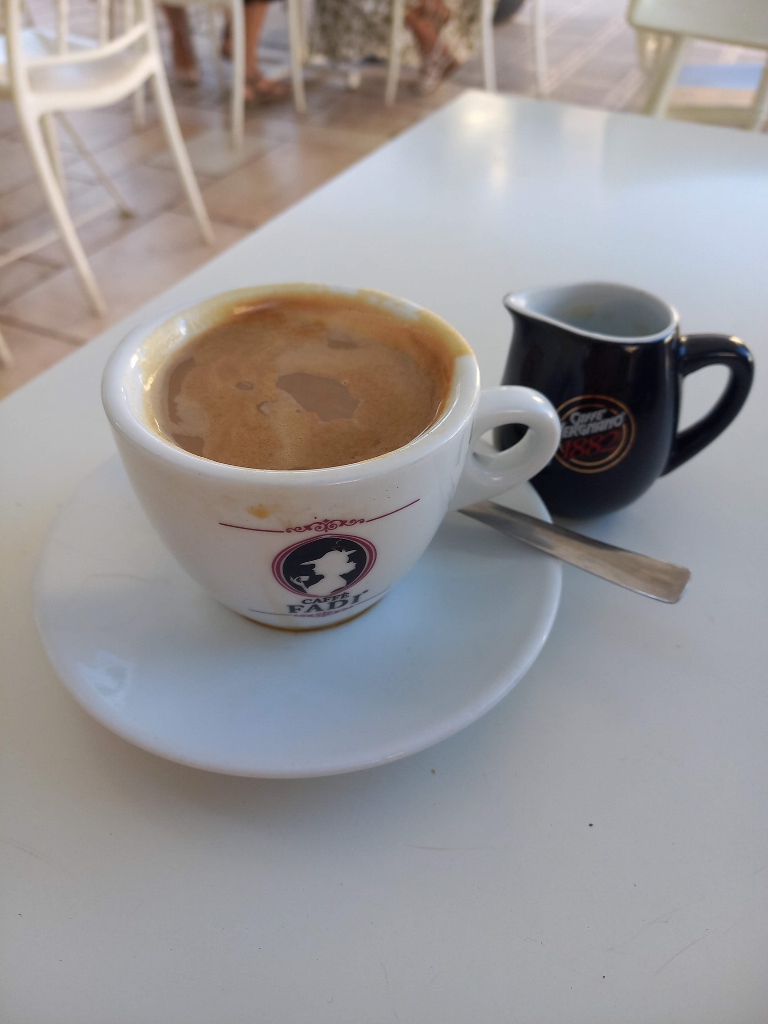 Ostuni, a detail
Since I had no obligations for the rest of the day, I completely relaxed and enjoyed myself. The only thing I did at some point was move to another café, still in the centre of Ostuni, where the sun was shining a little longer. There, I ordered a cocktail. Dolce far’ niente!
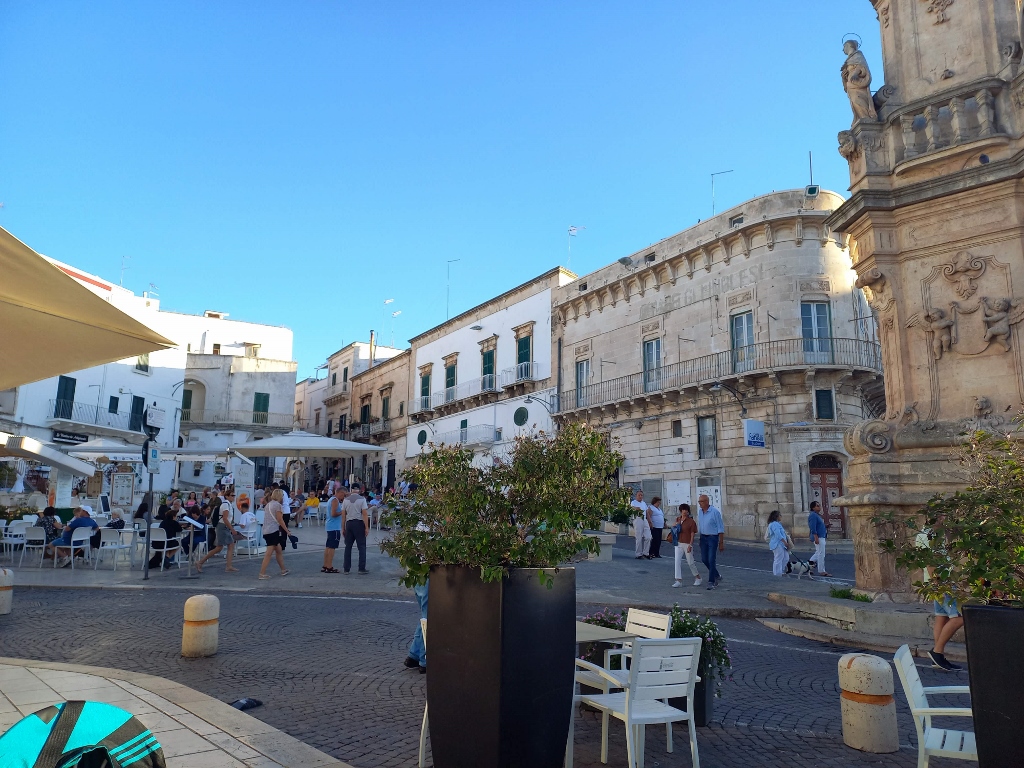 Ostuni, a detail
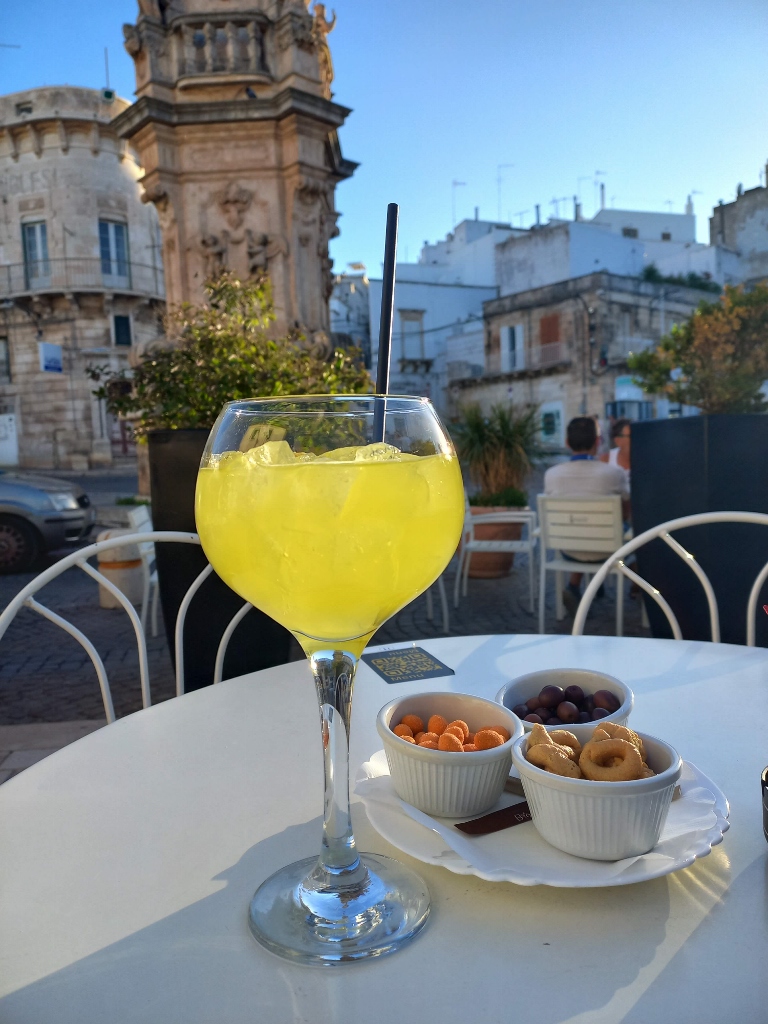 Ostuni, a detail
When the last rays of the sun stopped reaching the main square and its surroundings, I slowly started heading towards the flat I had rented, but through some relatively side streets. I found it interesting to observe parts of the town that weren't touristy.
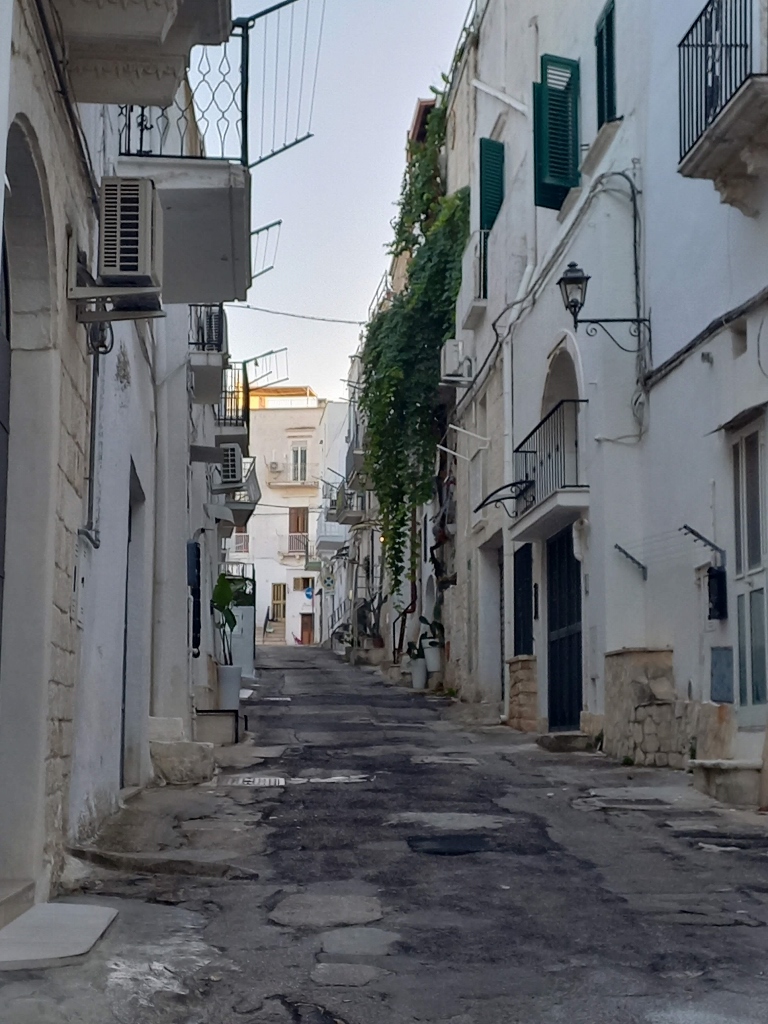 Ostuni, a detail
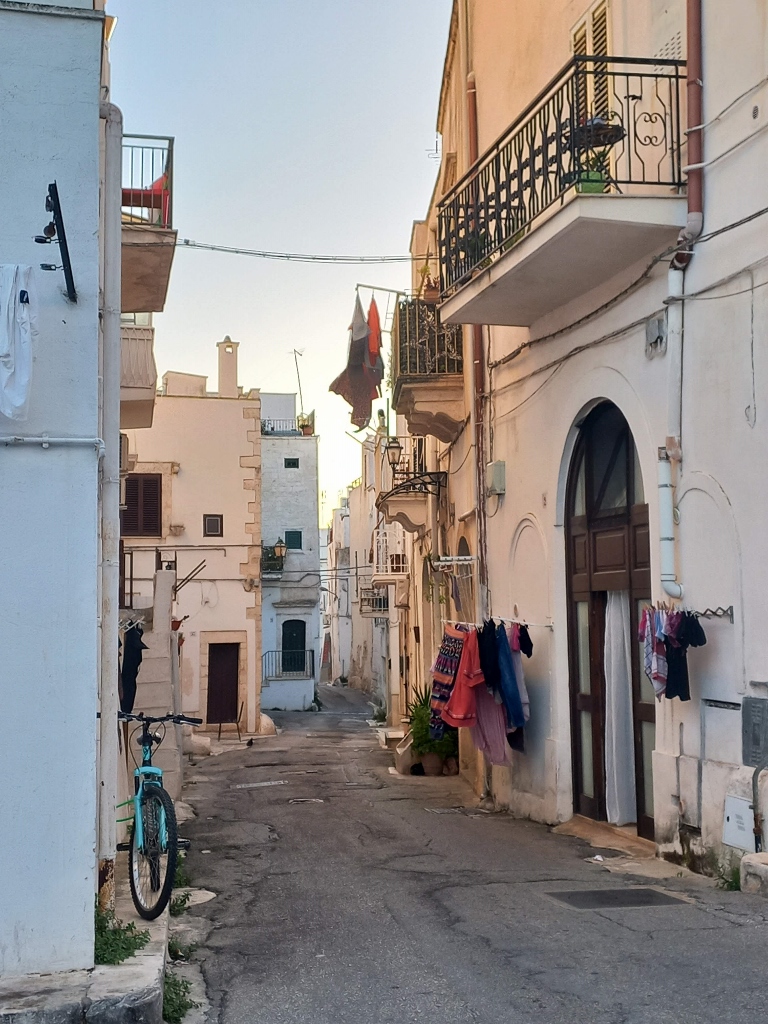 Ostuni, a detail
I was once again aware of the specific form of residential units, where the front facades had openings, but it was quite clear that these were the only openings through which natural light could enter the interior space.
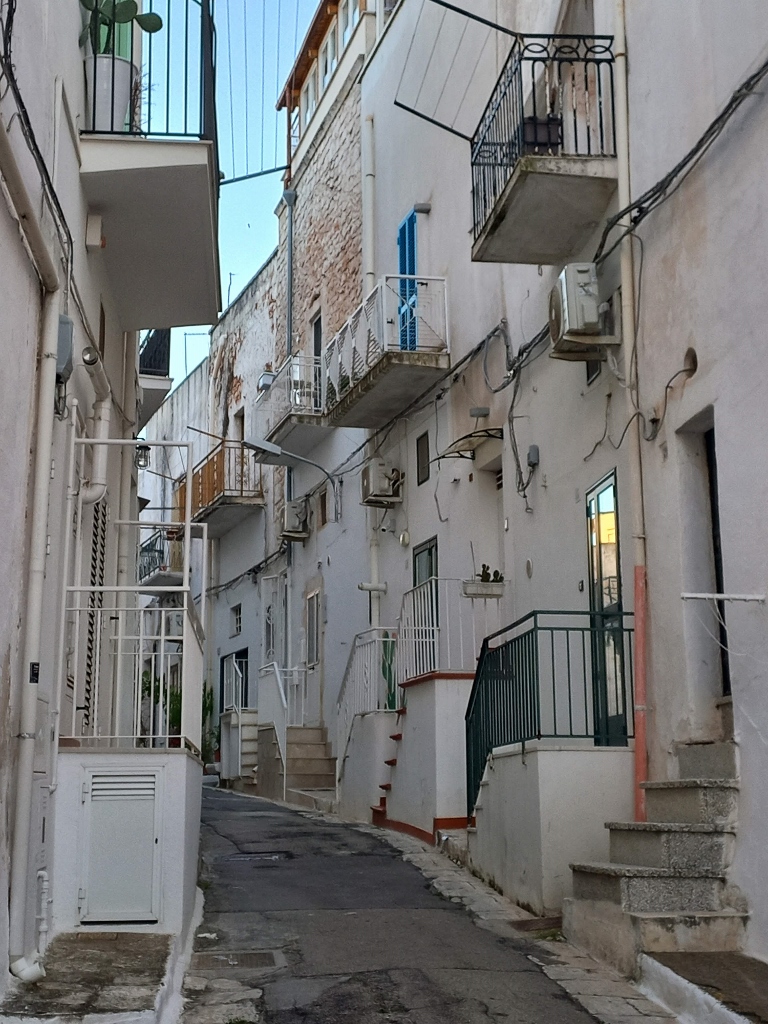 Ostuni, a detail
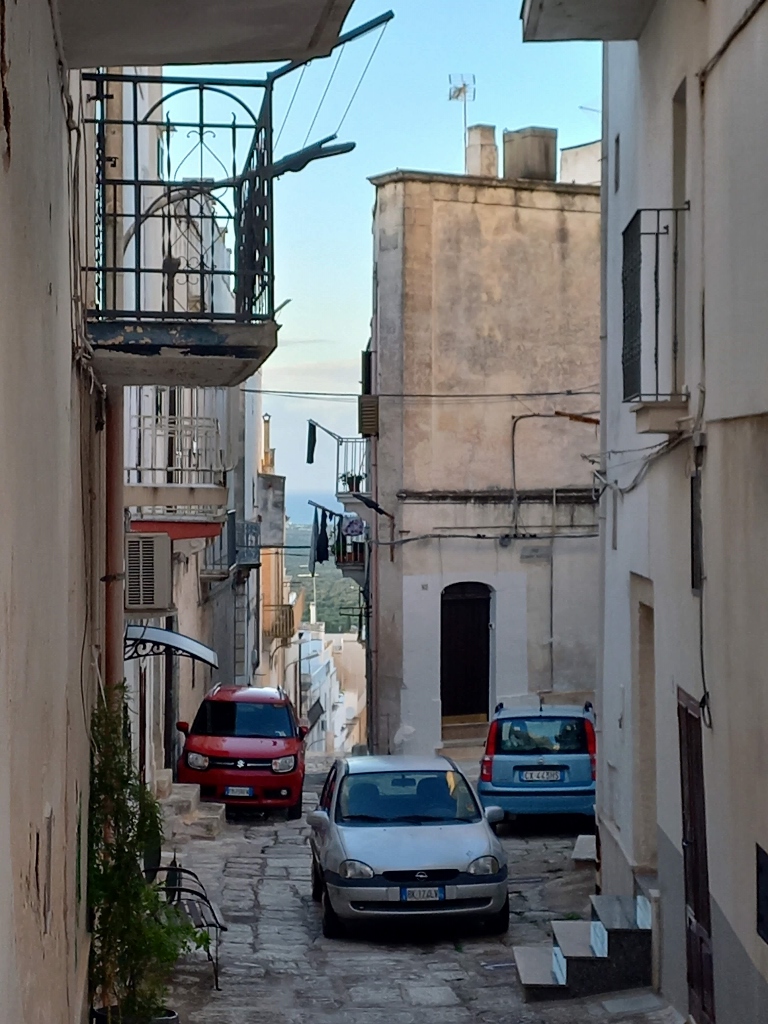
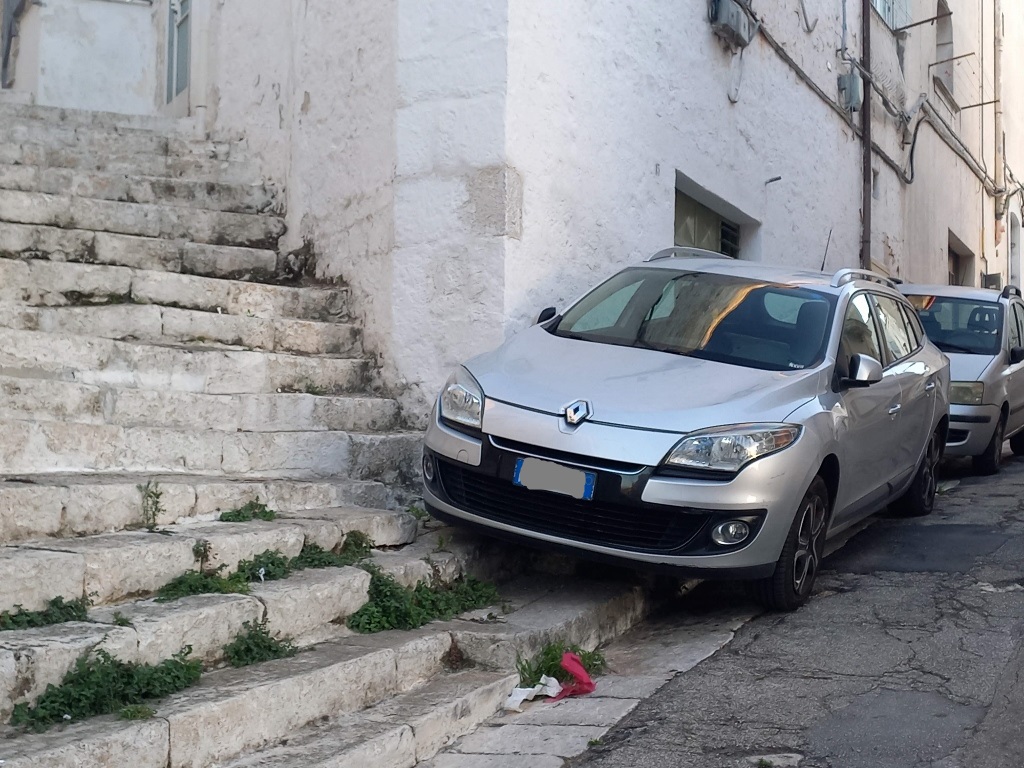
What I found particularly interesting, considering the narrow streets, was the skill of the local drivers.
 Ostuni, a detail
Not only did they manage to pass each other in those narrow streets or turn corners, but they also succeeded in parking their cars in completely unbelievable spots, with exceptional skill and a keen sense of space and stairs.
 Ostuni, a detail
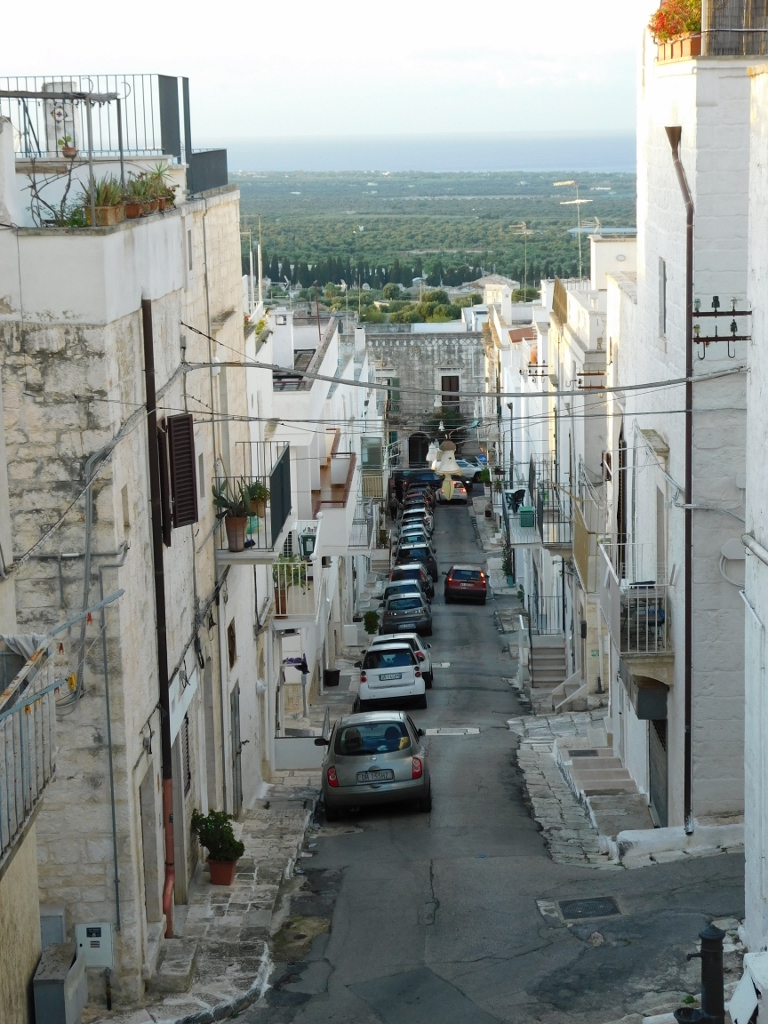
In the distance, I could also see the Adriatic Sea.
 Ostuni, a detail
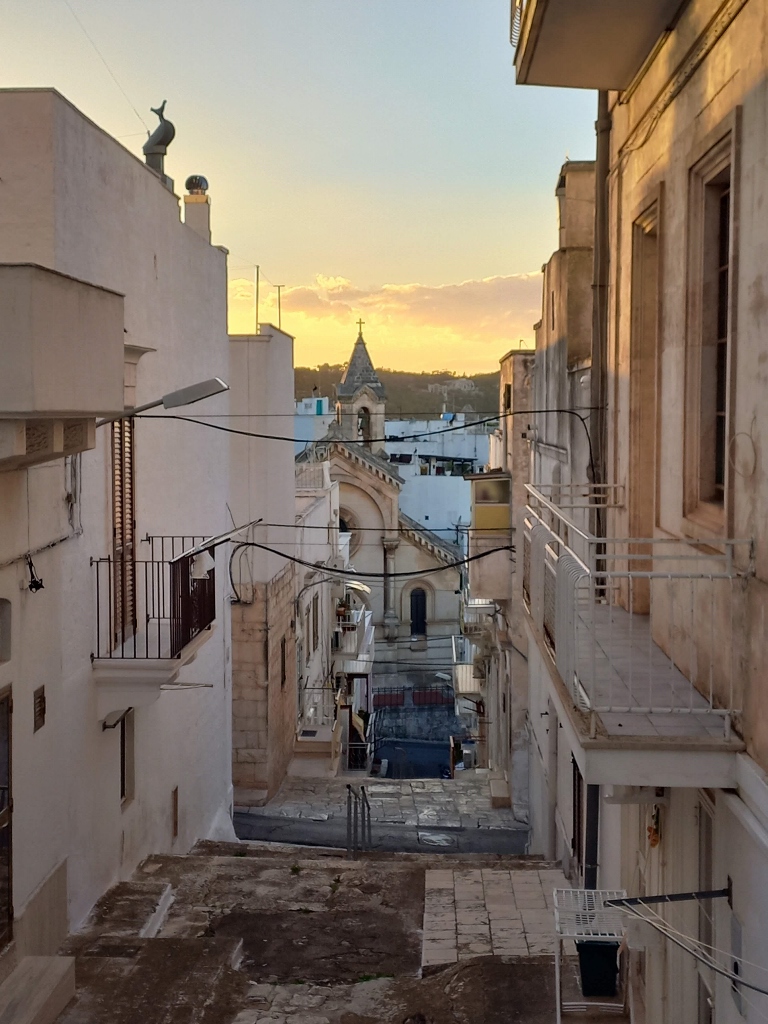
And as the day was coming to an end, the colours were really beautiful, adding a special charm to this lovely town and its buildings.
 Ostuni, a detail