Walking through the city of Matera in the Basilicata region of southern Italy in September 2024, I came across the Sasso Caveoso district. I have already mentioned that Matera is home to a UNESCO World Heritage cultural property called ‘Sassi di Matera’ or ‘Stones of Matera.’ These are structures, mostly dwellings, but also churches and monasteries, which were made within caves and rocks – either by utilising and possibly expanding natural caves or by carving out desired spaces in the local limestone that is particularly easy to work with. It is also very important that the wide entrances to the caves were walled up.
In addition to the Sasso Caveoso district, another urban area of Matera contains such structures. It is Sasso Barisano. Between these two districts is a part of the city called Cività.
Now, from the plateau in front of the Church of San Pietro Caveoso, which I wrote about in the previous sequel, I began to climb the neighbouring barren rock, Monterrone, where again there were various interesting structures. In the next picture, you can see how the cave entrances were walled up, leaving appropriate openings for doors and windows.
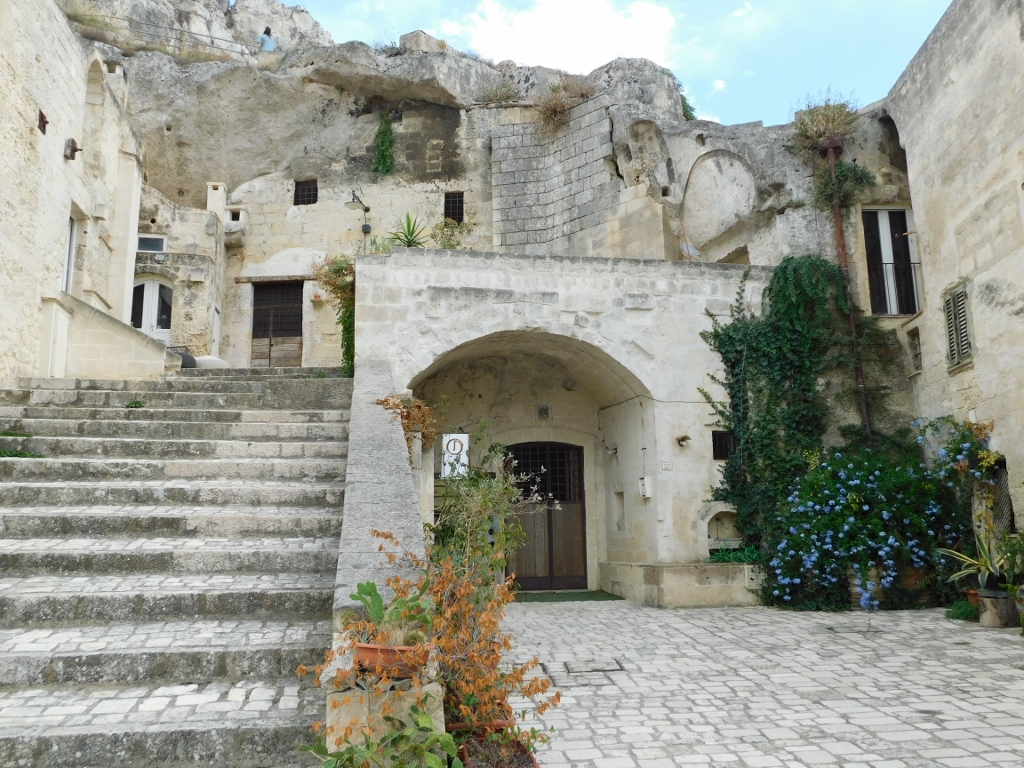 Matera, a detail
As I climbed, I occasionally took breaks, during which I would look around and take pictures of the surroundings.
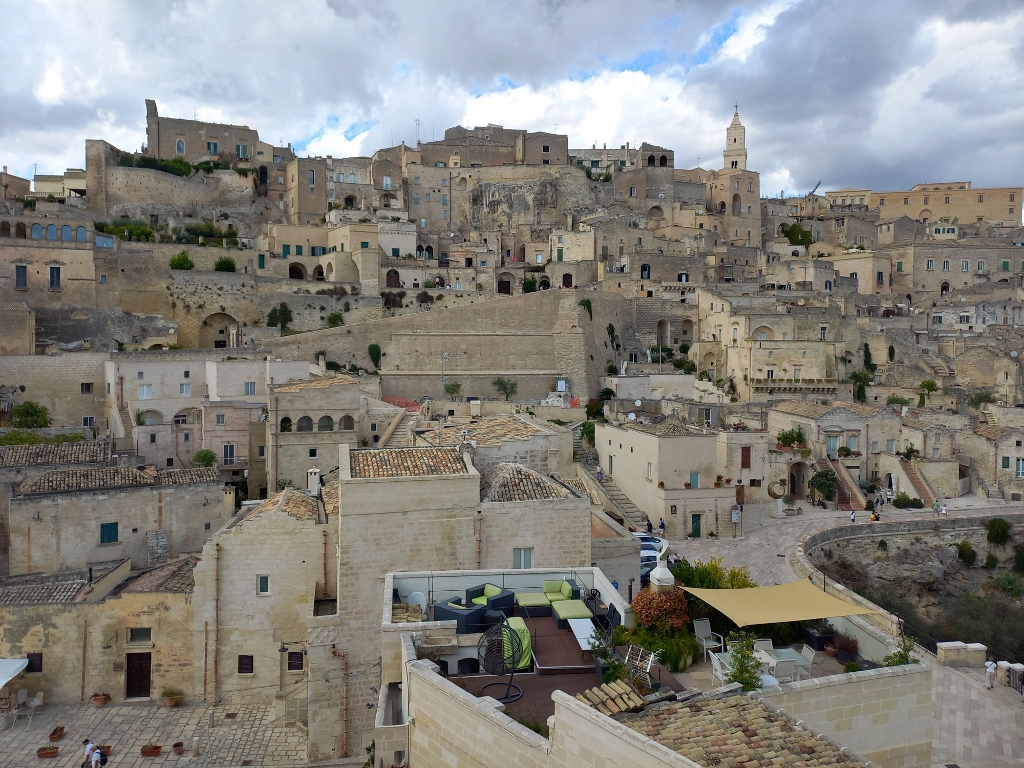 Matera, a detail
I was also fascinated by the rooftops, which I could see clearly from this height.
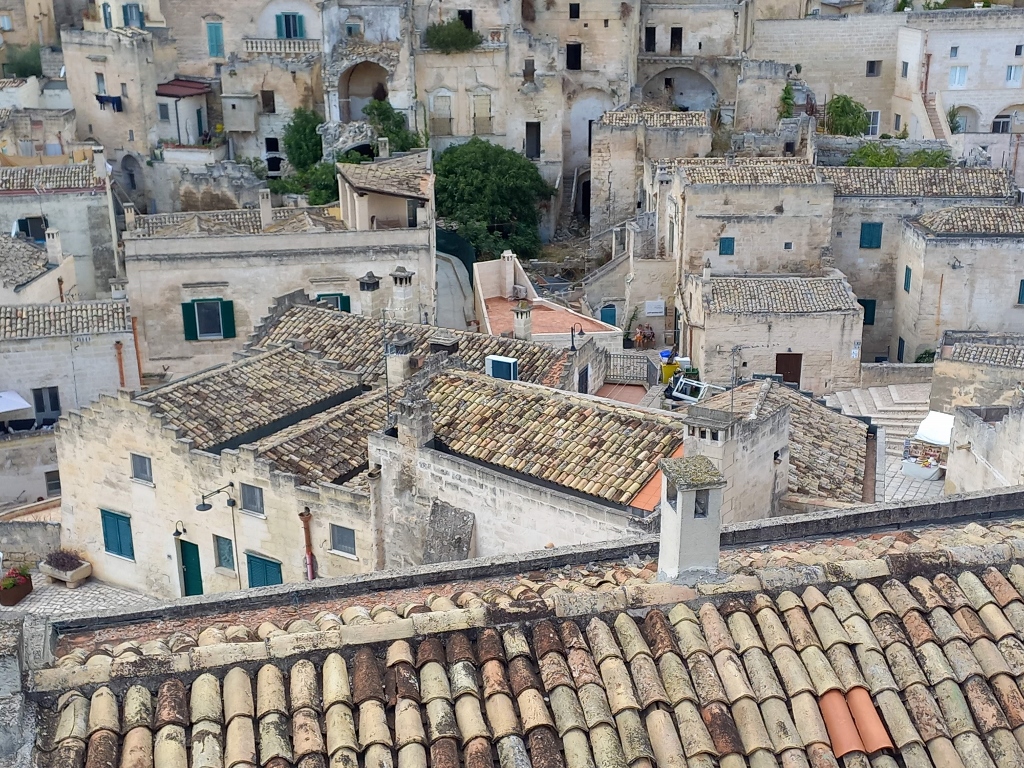 Matera, a detail
But, the view of some parts of Matera and the gorge of the Gravina river was still incredibly impressive and inspiring.
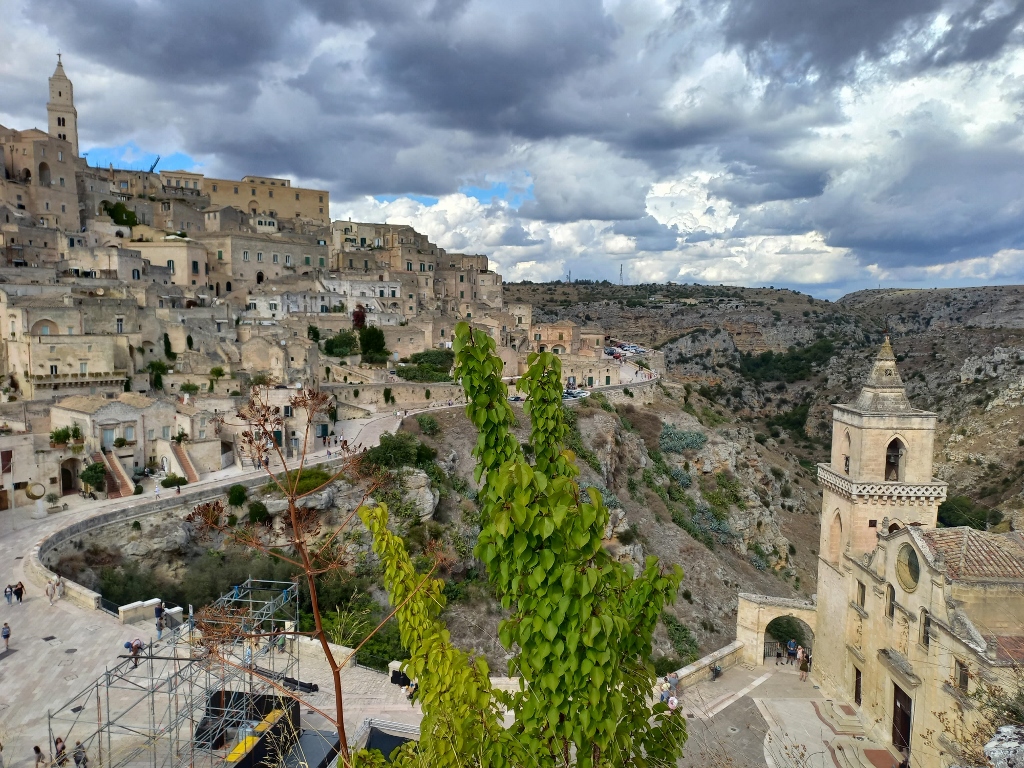 Matera, a detail
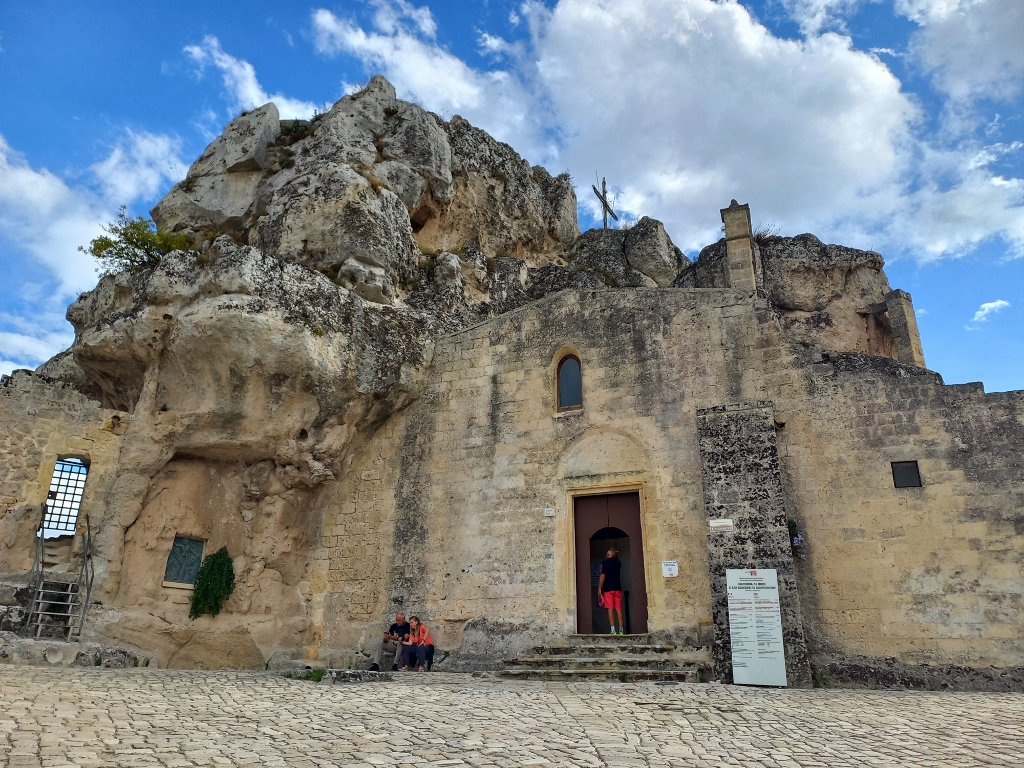
At the top of Monterrone, this bare rock that resembles a stone hill, there is also a church carved into the rock. It is the Church of Santa Maria di Idris.
 Matera, a detail
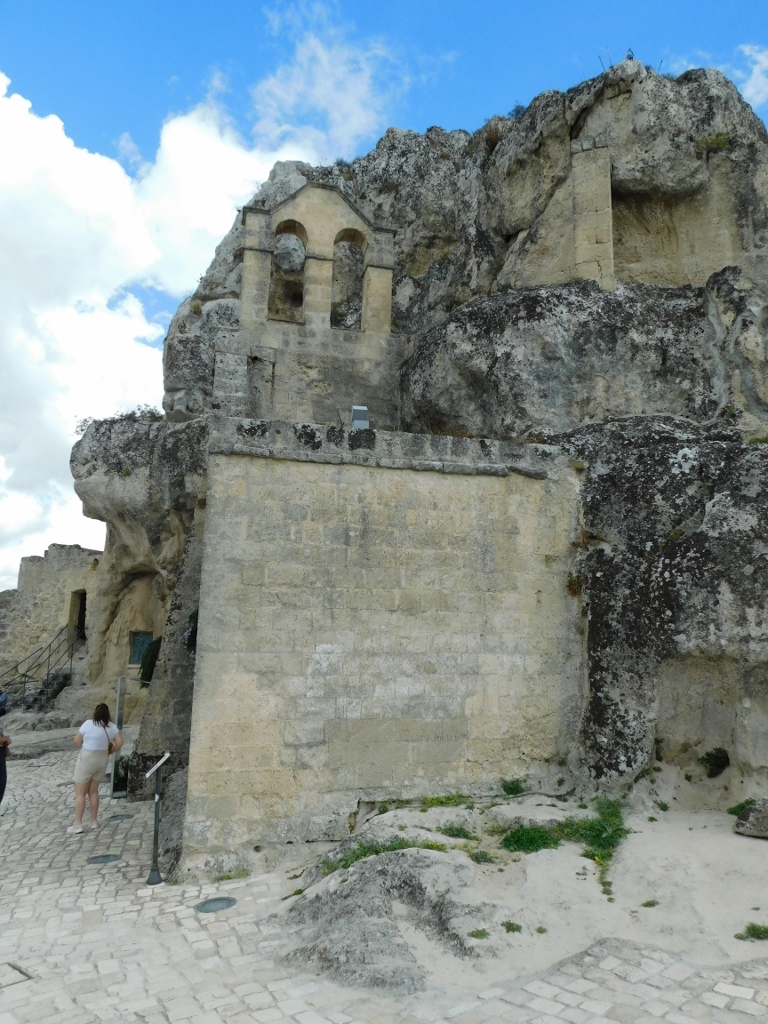
As it can be seen in the photo, the front part of the church is walled up, while on the right-hand side, there is a smaller belfry.
 Matera, a detail
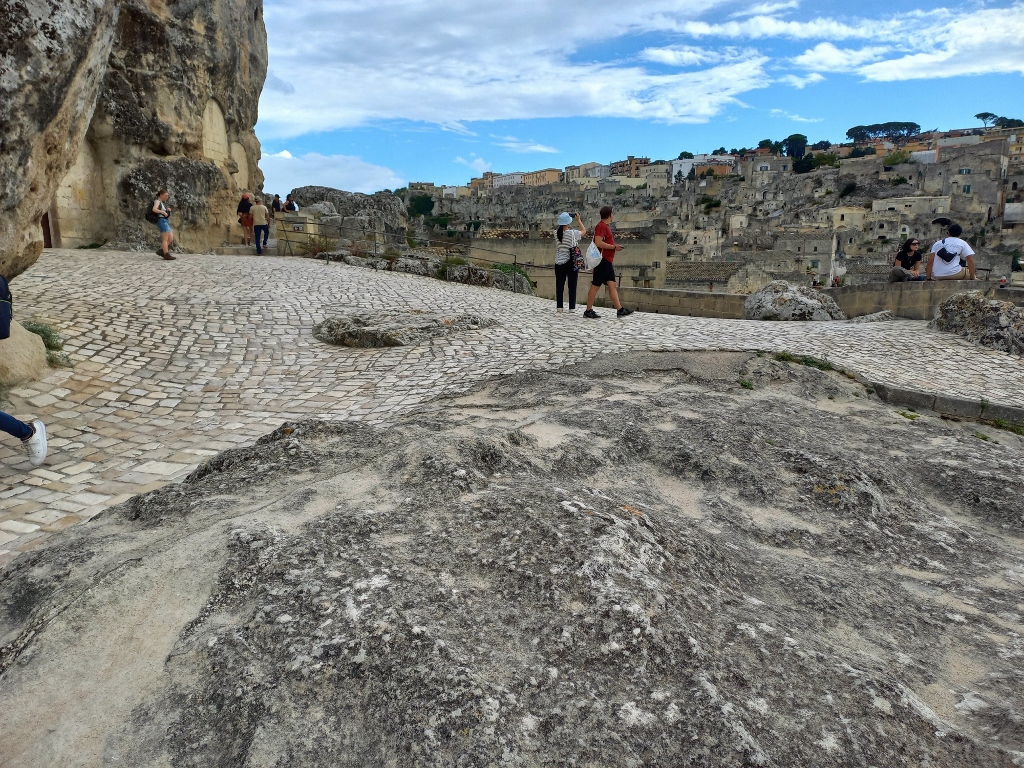
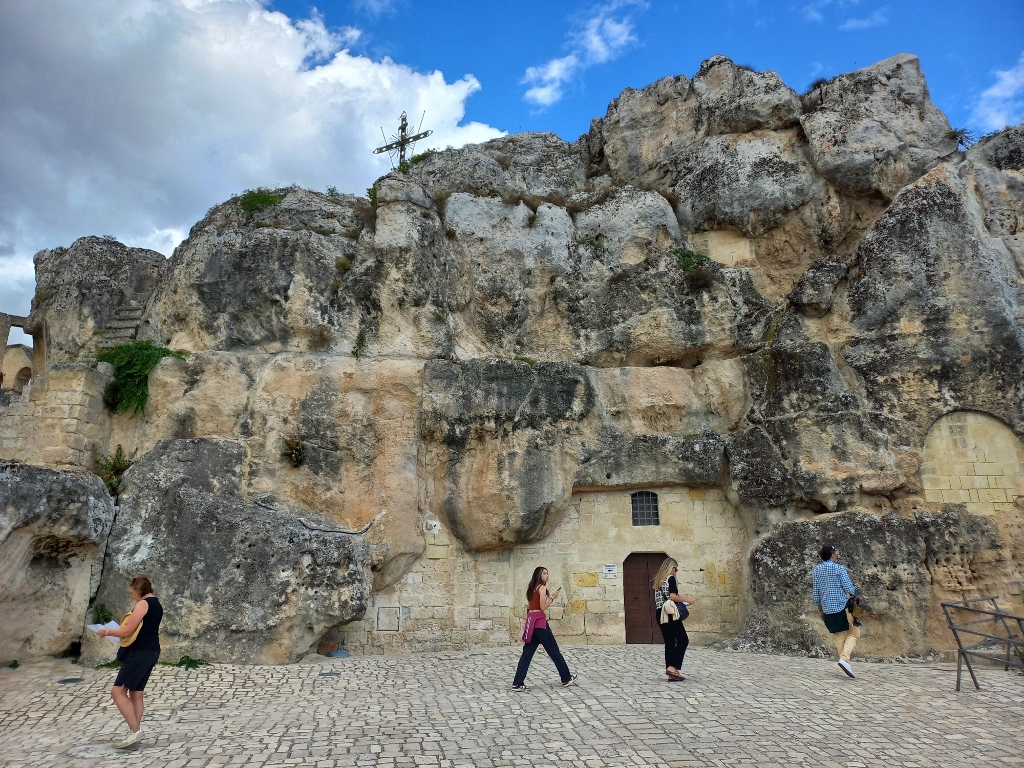
The entrance to the church requires a fee, but that didn’t bother me; what did was the fact that photography was prohibited inside. So, I continued on. Walking across the plateau surrounding the church, I found it interesting to see how this plateau was created through human intervention between the rocks.
 Matera, a detail
 Matera, a detail
I also had a good view of the Sasso Caveoso district, which I actually visited the least during my time in Matera.
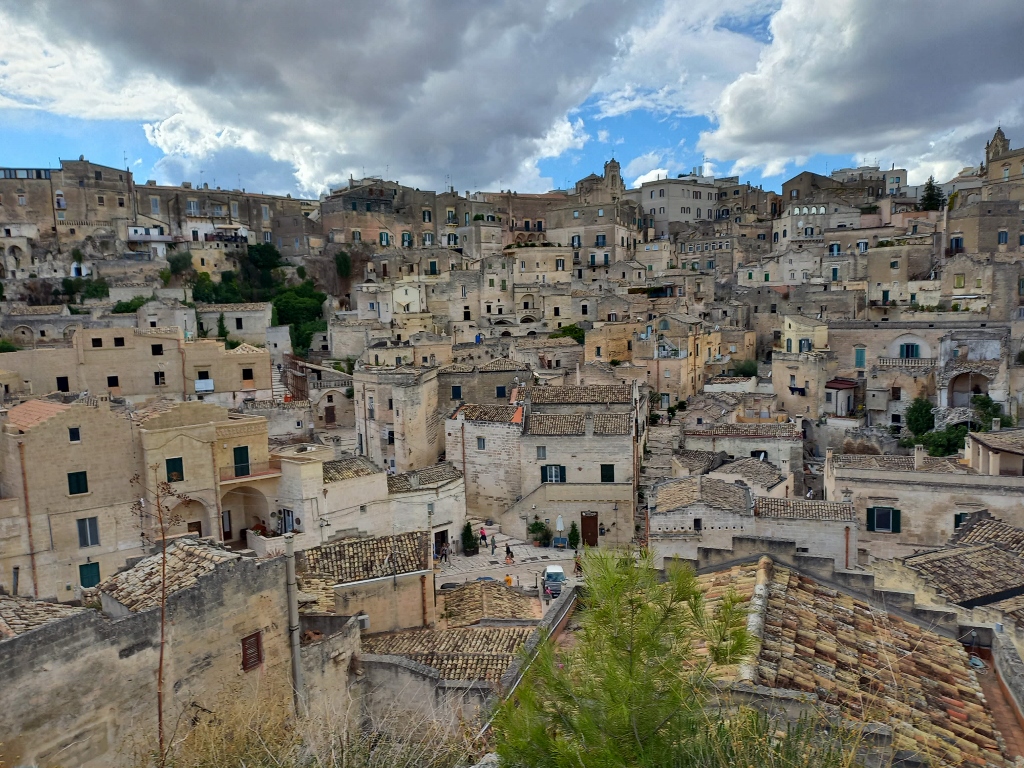 Matera, a detail
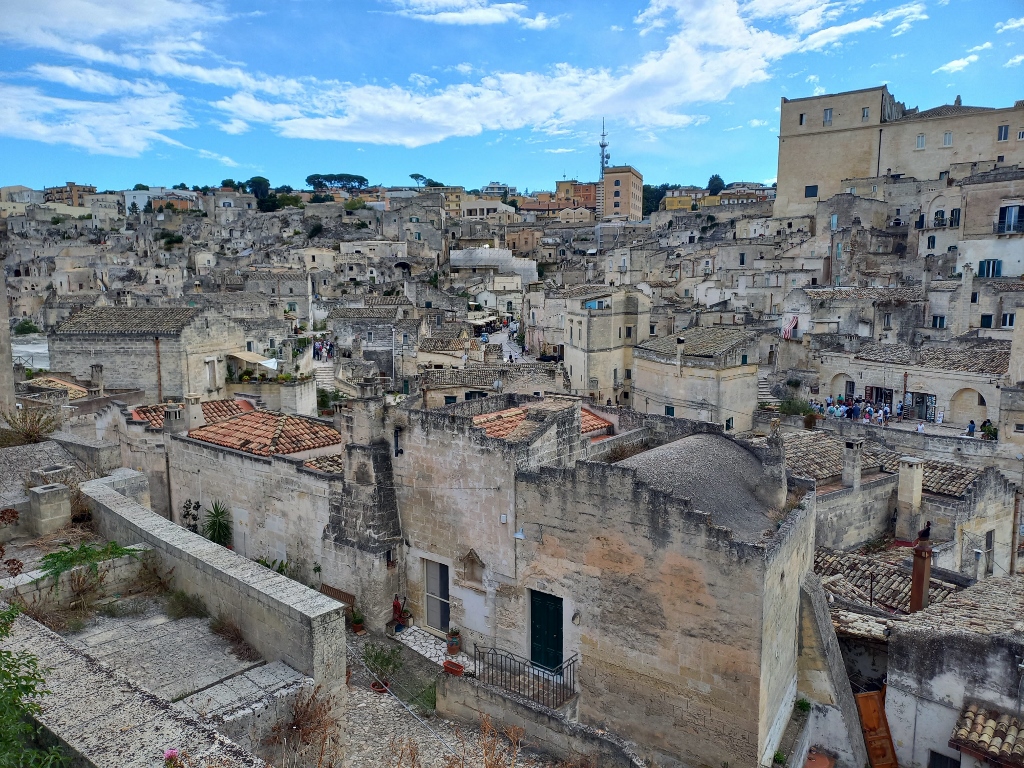 Matera, a detail
Across that plateau, I reached its end, where there is a narrow passage leading to another terrace that offers a nice view of the gorge. However, by now, I was starting to get a bit tired of photographing the same scenery, so I turned around and headed back the way I came. I had planned to walk a bit more in this part of the city, but I thought it was best to return to the main street, so I wouldn't get lost in the narrow, winding alleys.
My decision to turn back coincided with some great events in the sky, so I had exceptionally good lighting and atmospheric effects. At this point, I didn’t mind photographing the same views or similar details.
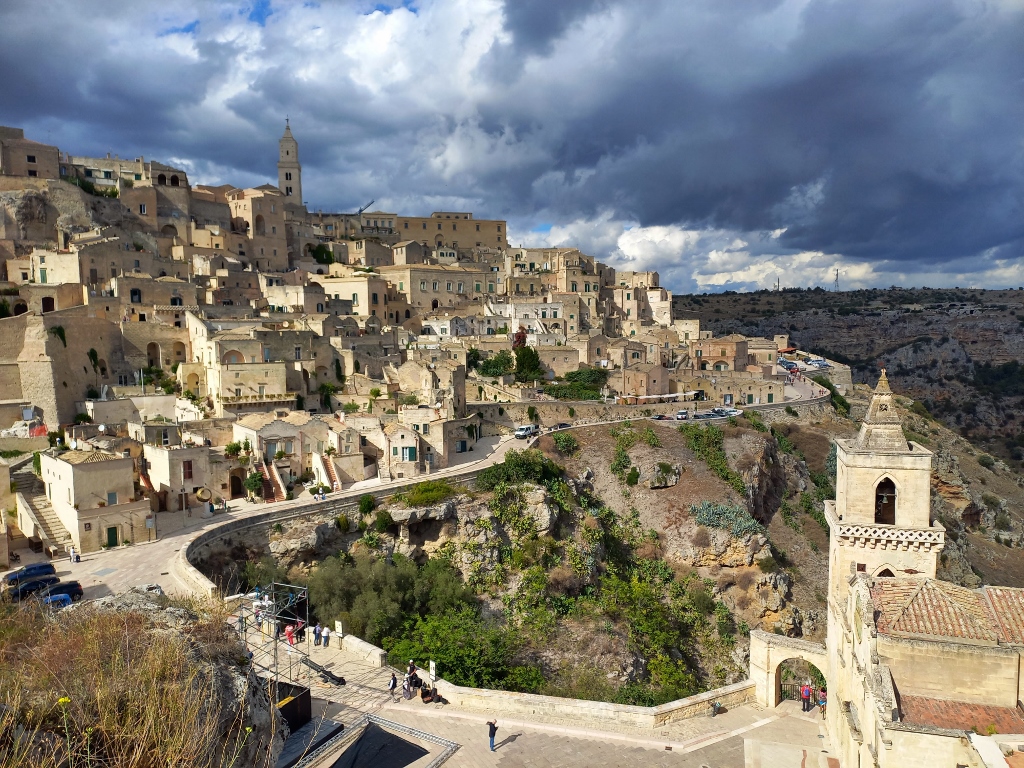 Matera, a detail
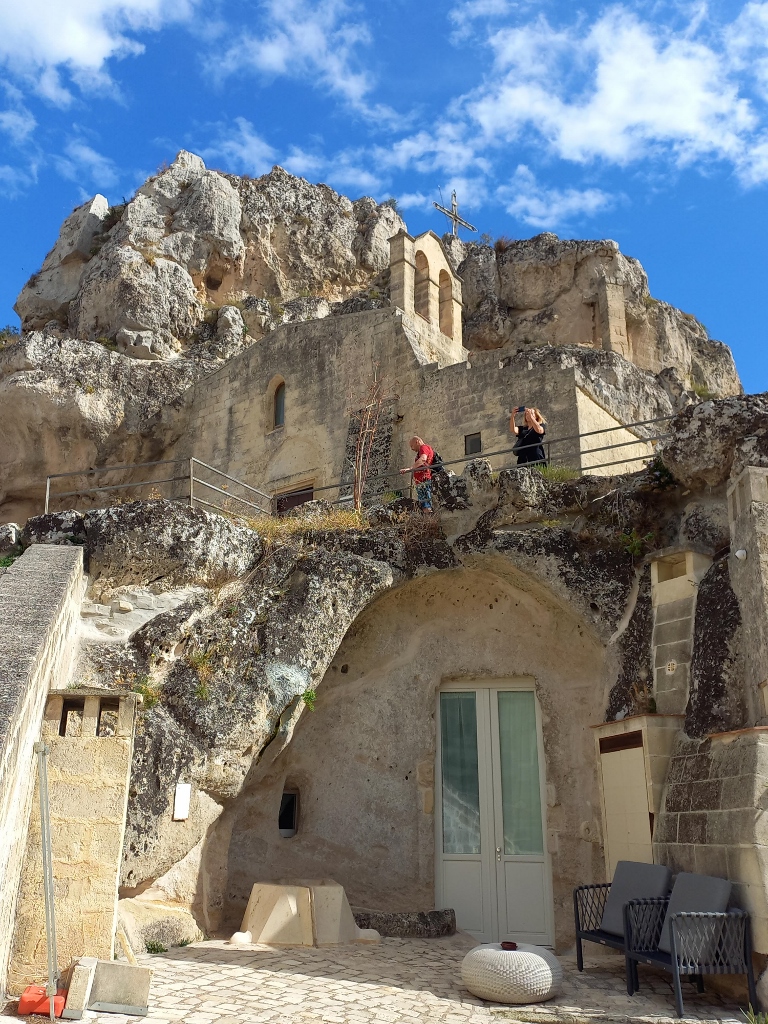 Matera, a detail
I also stopped at an ice-cream parlour in this part of the city to treat myself to a nice and delicious ice-cream. I took a short break there and then I went to a few more interesting spots within the Sasso Caveoso district.
I climbed up to another plateau, but this one was larger and very unique. However, I dealt with it a bit later.
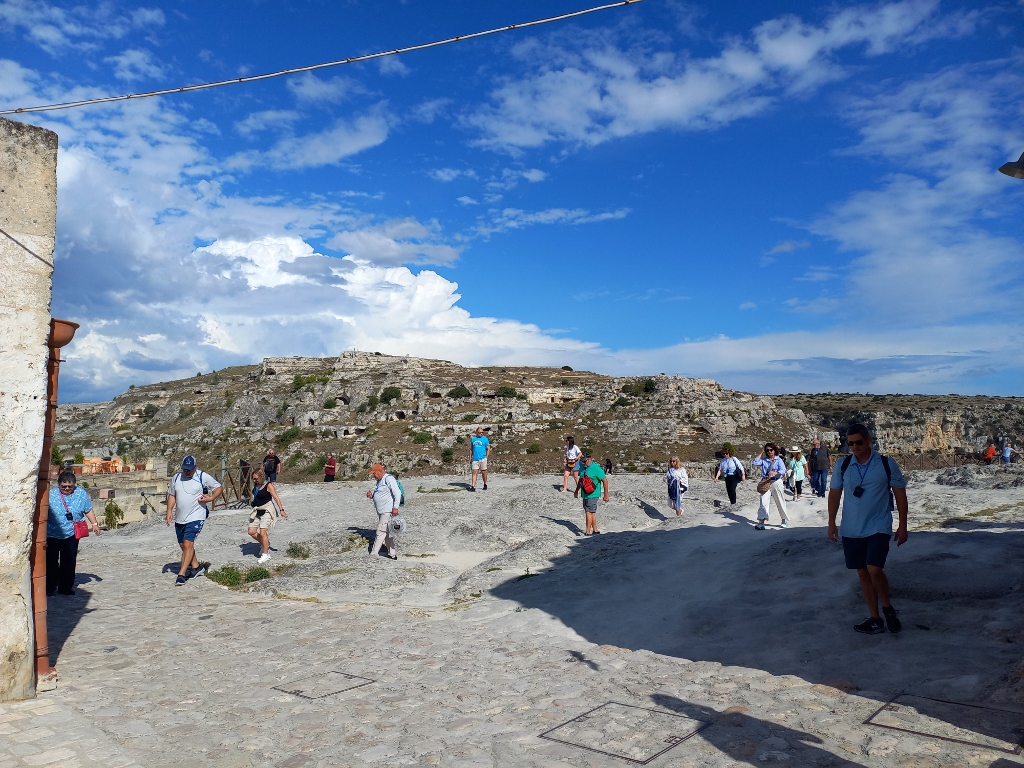 Matera, a detail
For now, I enjoyed the absolutely beautiful view of the stone hill Monterrone, which is almost perfectly visible from here.
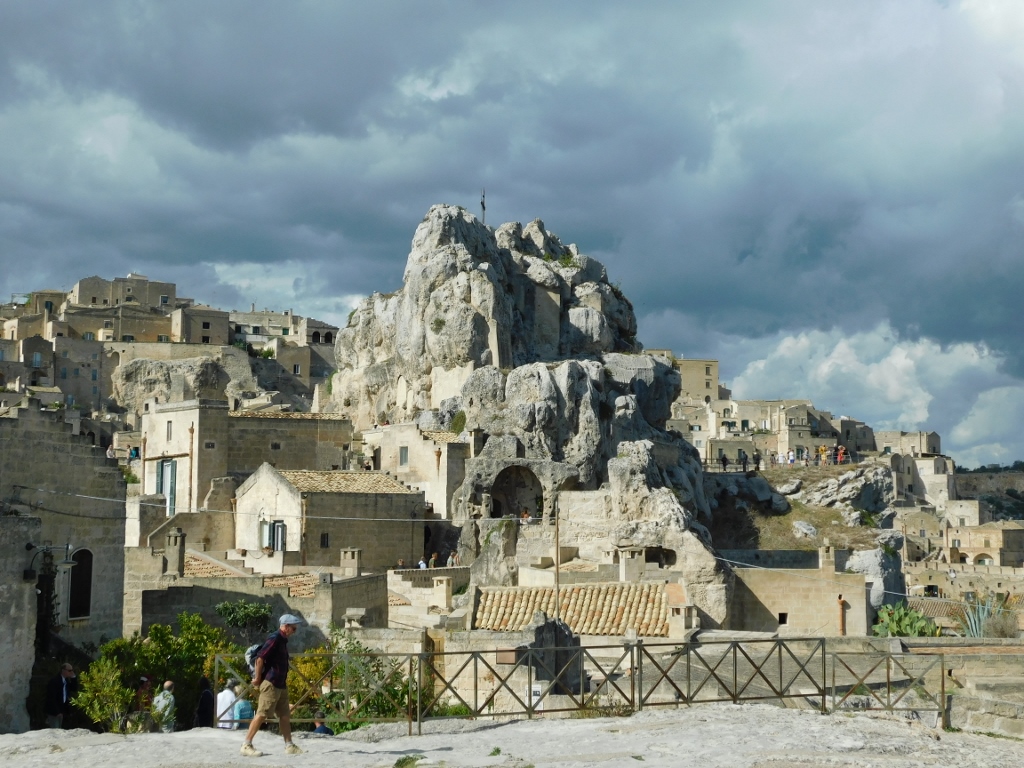 Matera, a detail
Almost enchanted, I simply walked around the plateau, looking for the best spot from which I could view Matera and Monterrone.
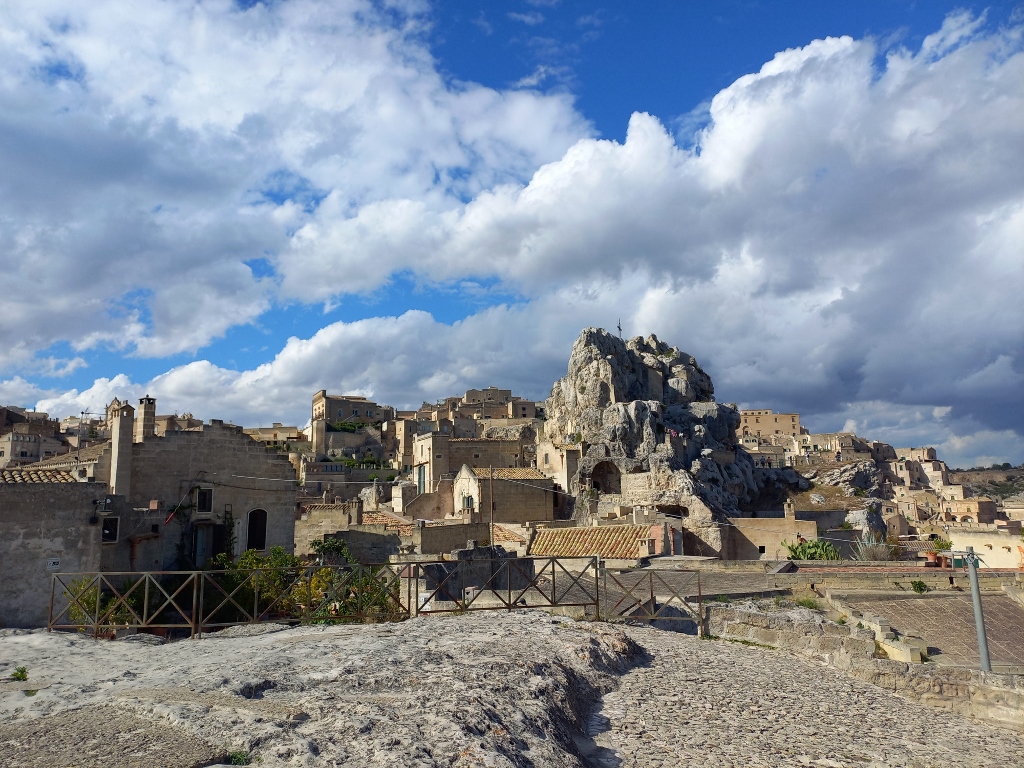 Matera, a detail
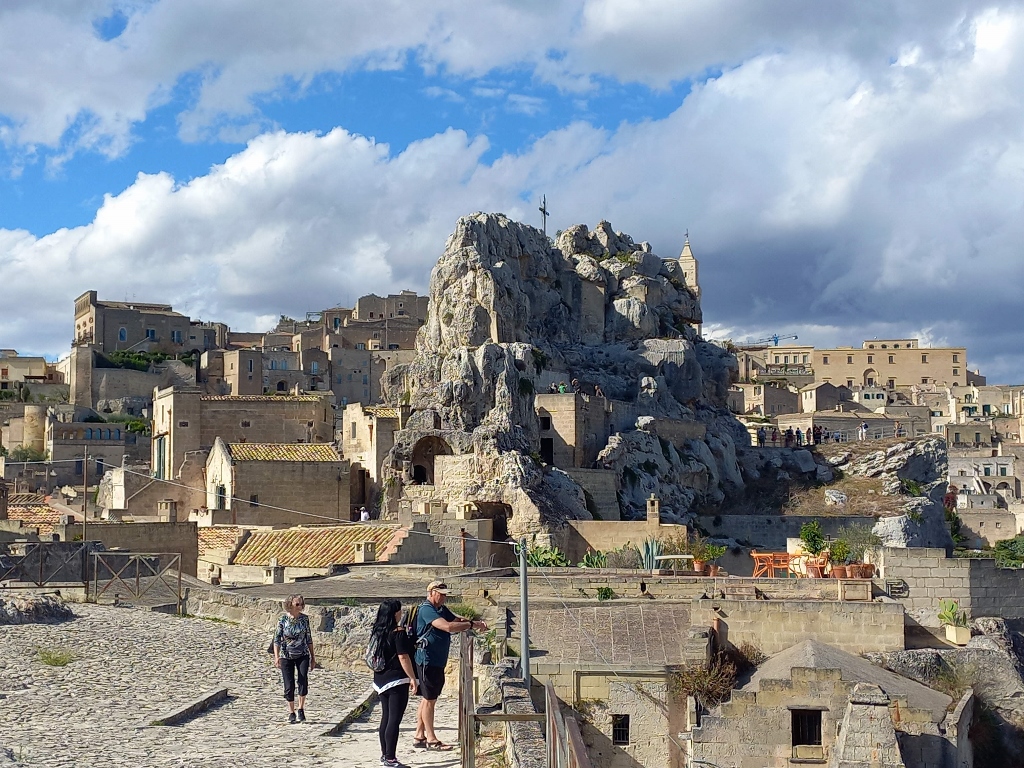 Matera, a detail
And then I took a narrow path down to a lower street and another church carved into the rock. This time, it was the Church of Santa Lucia alle Malve.
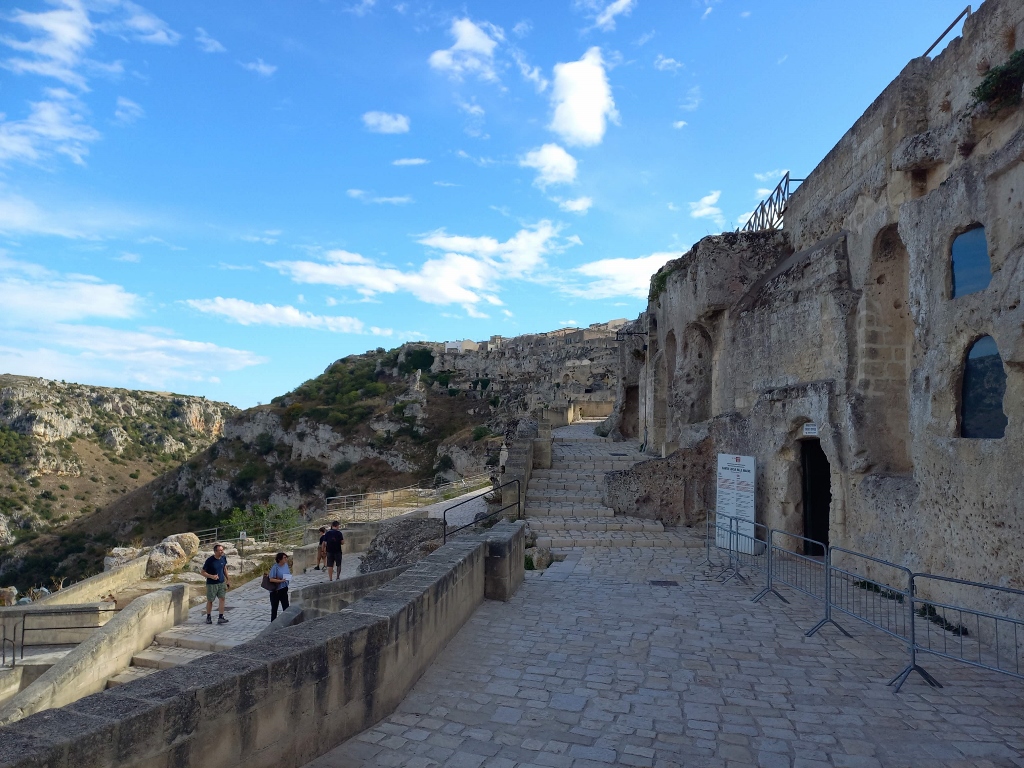 Matera, a detail
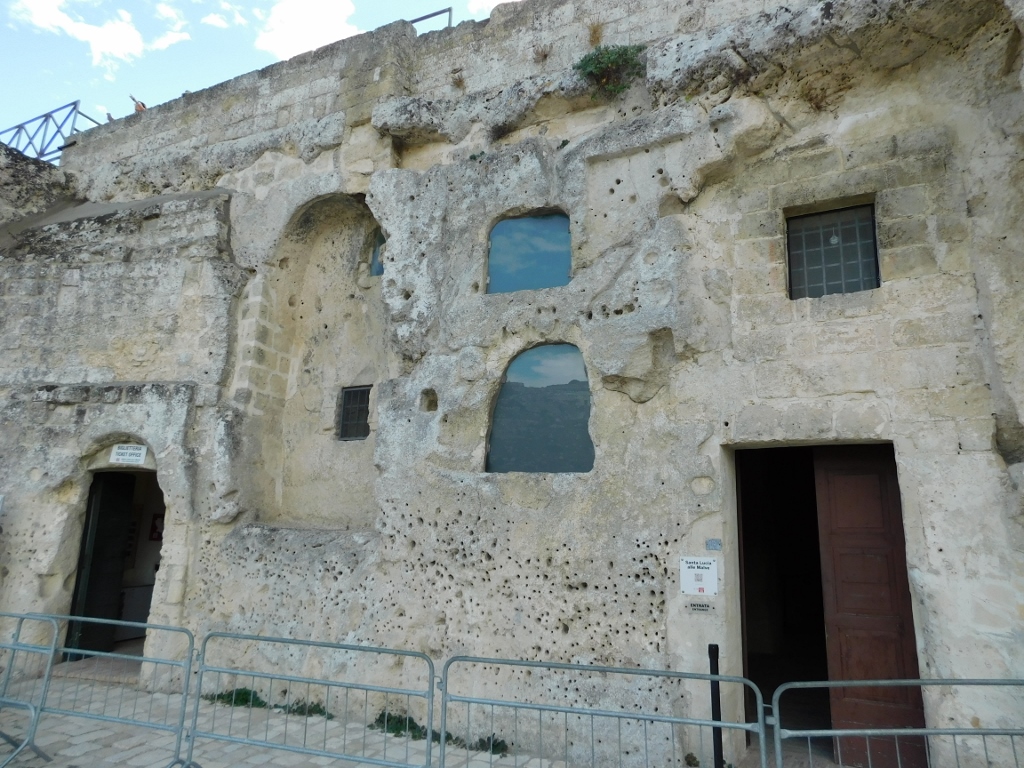 Matera, a detail
The situation here was the same as with the previous church – you can enter (with a ticket), but photography is not allowed. Well... I took advantage of the good position to capture parts of the Sasso Caveoso district, as well as the gorge of the Gravina river.
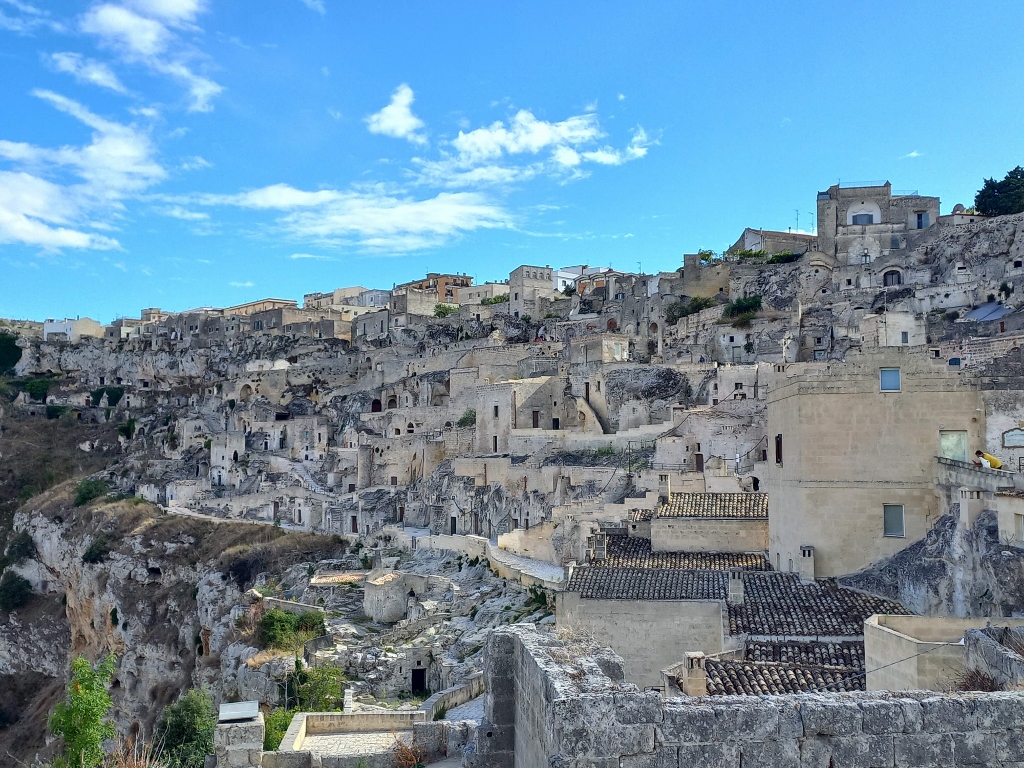 Matera, a detail
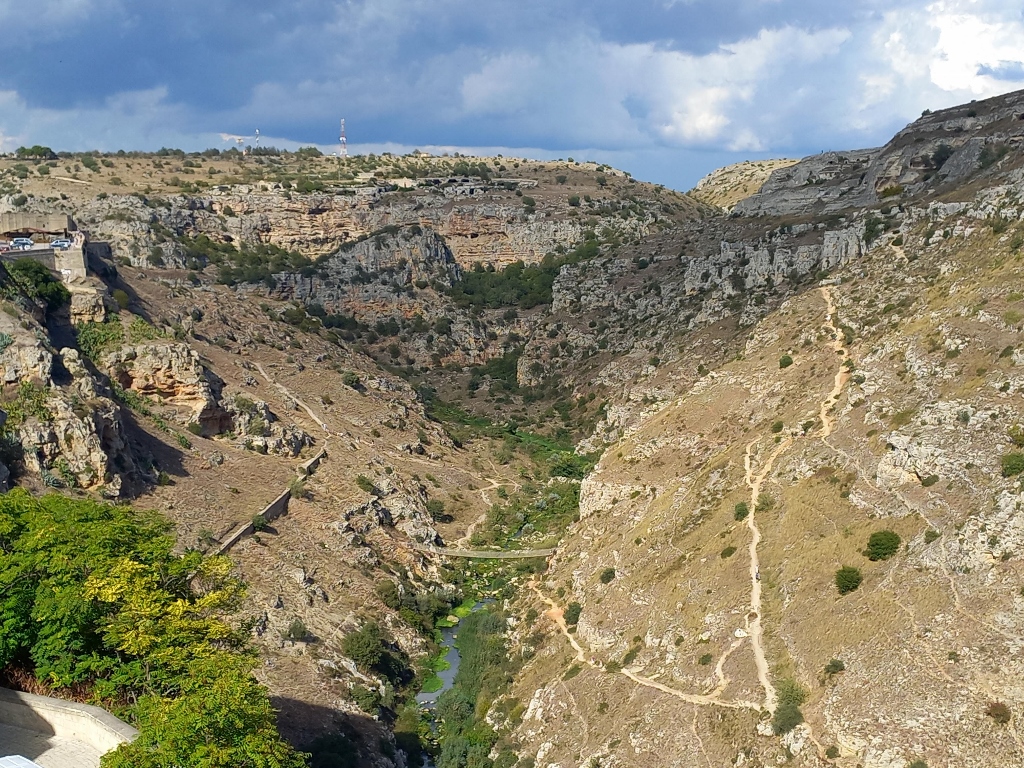 The Gravina river gorge
Now I returned to that large plateau, where the remains of a medieval cemetery are actually located. Everything here took place within the rocks, so the graves were "dug" into the stones. The finds, including human remains and grave goods, that were discovered here have been moved to the Domenico Ridola National Archaeological Museum, while the graves themselves have been, in a sense, "walled up."
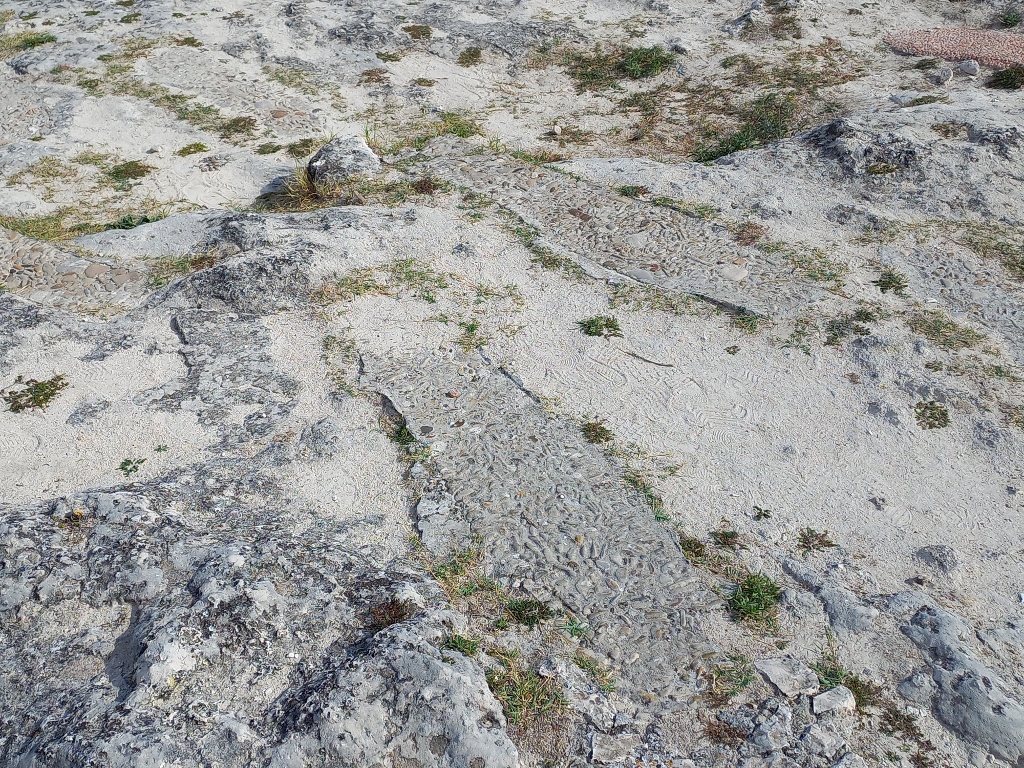 Matera, a detail
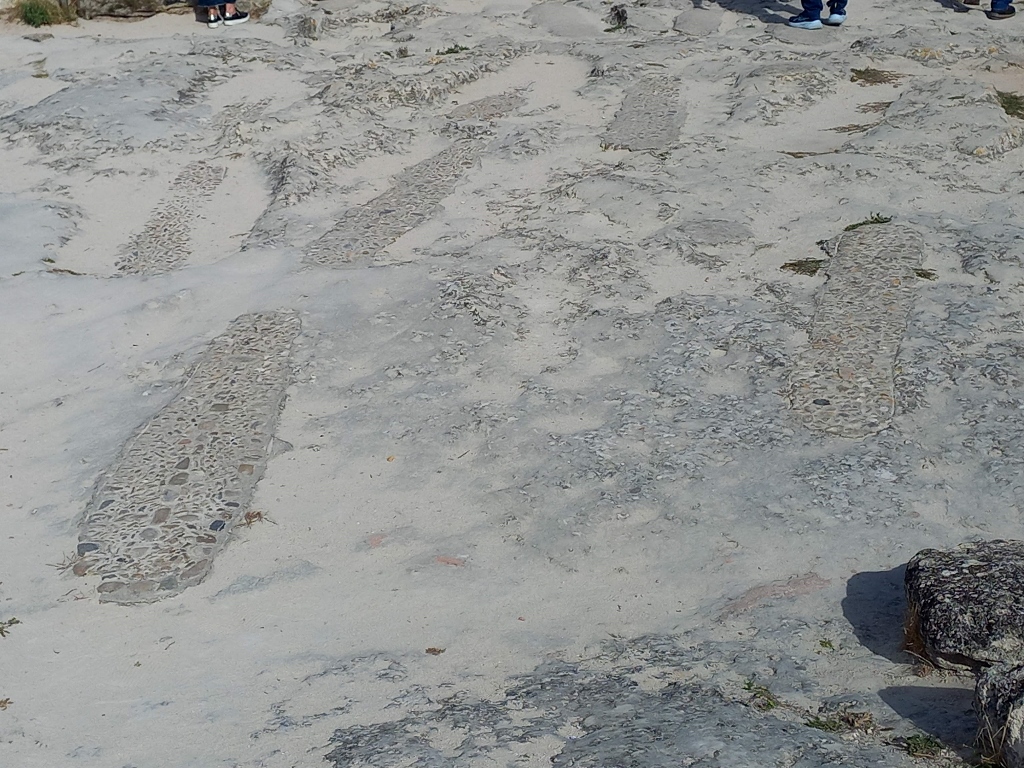 Matera, a detail
After a short stop at the plateau, I returned to the main street and then decided to take my own route towards the cathedral, which is located at the top of the hill and the Cività district. Although the historic centre of Matera is not particularly large, the numerous winding streets can make distances deceptive. Additionally, I had taken a pain killer for the sciatica that I had some problems with, but I still felt discomfort in my back and right leg, so I didn't want to walk more than absolutely necessary.
I had already mentioned the water cisterns that were made in Matera in the same way as the buildings – by carving them into the rock. In the Sasso Caveoso district, there is a large underground cistern with a whole system of micro-tunnels and smaller reservoirs where rainwater was filtered and used to fill a large cistern, which is more than 15 m deep and entirely carved into the stone.
However, I only passed by the entrance to this cistern and continued walking slowly uphill. There were interesting details and views along the way, and I still had quite a bit of climbing ahead of me. Or maybe it just seemed like a lot.
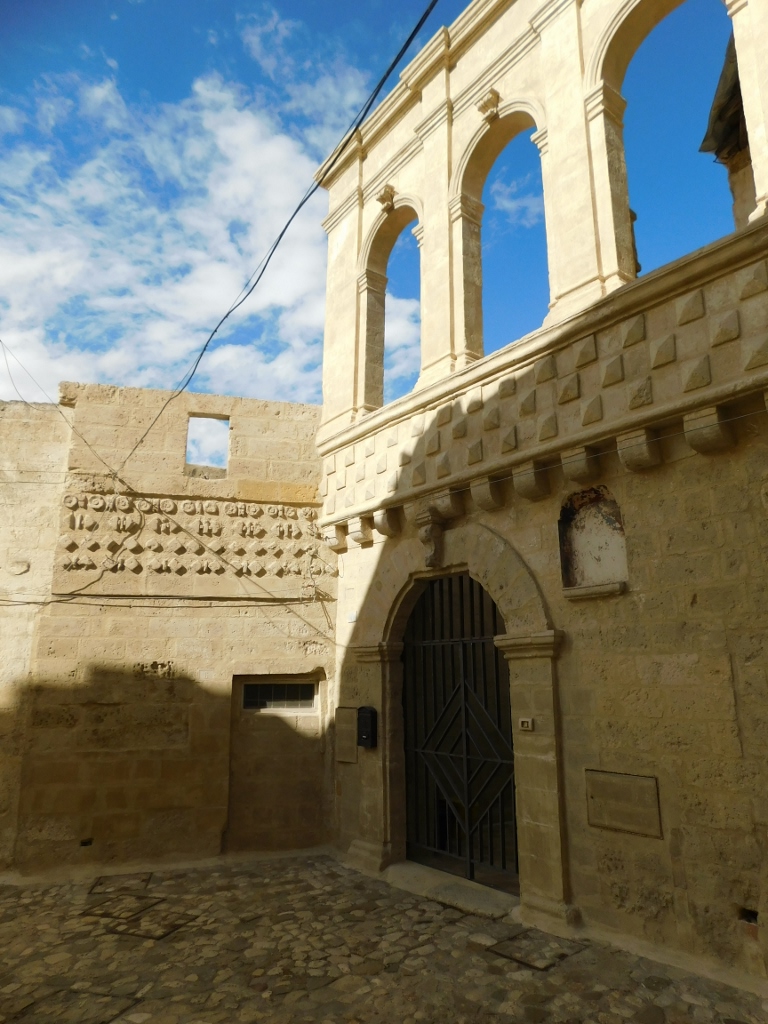 Matera, a detail
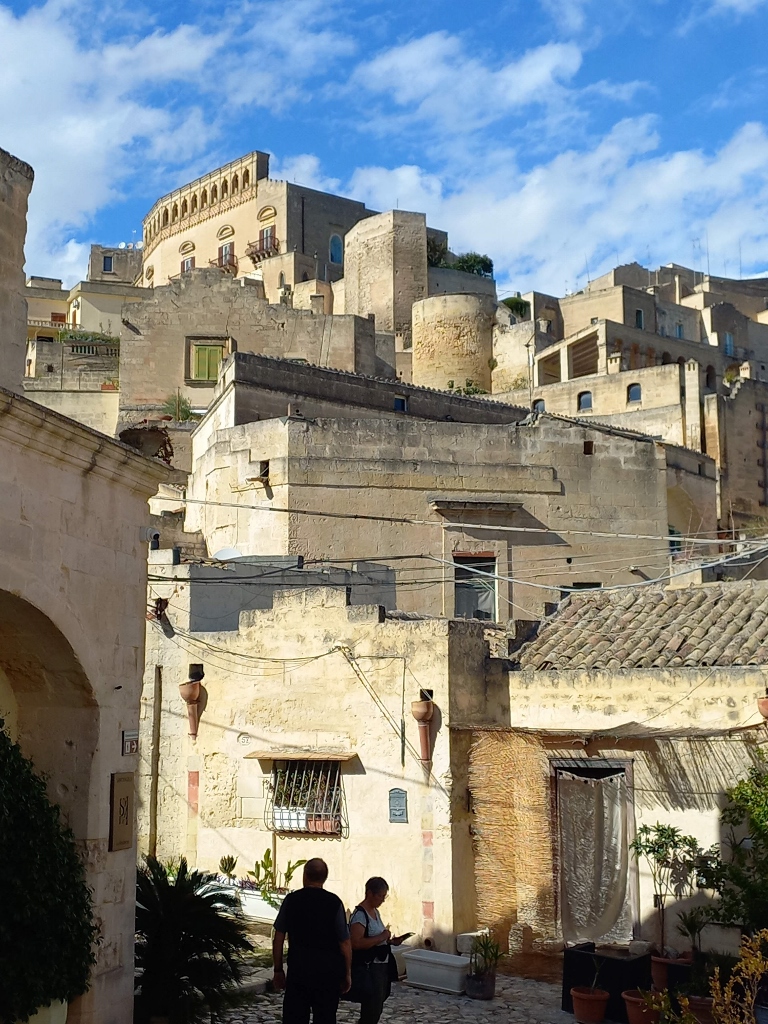 Matera, a detail
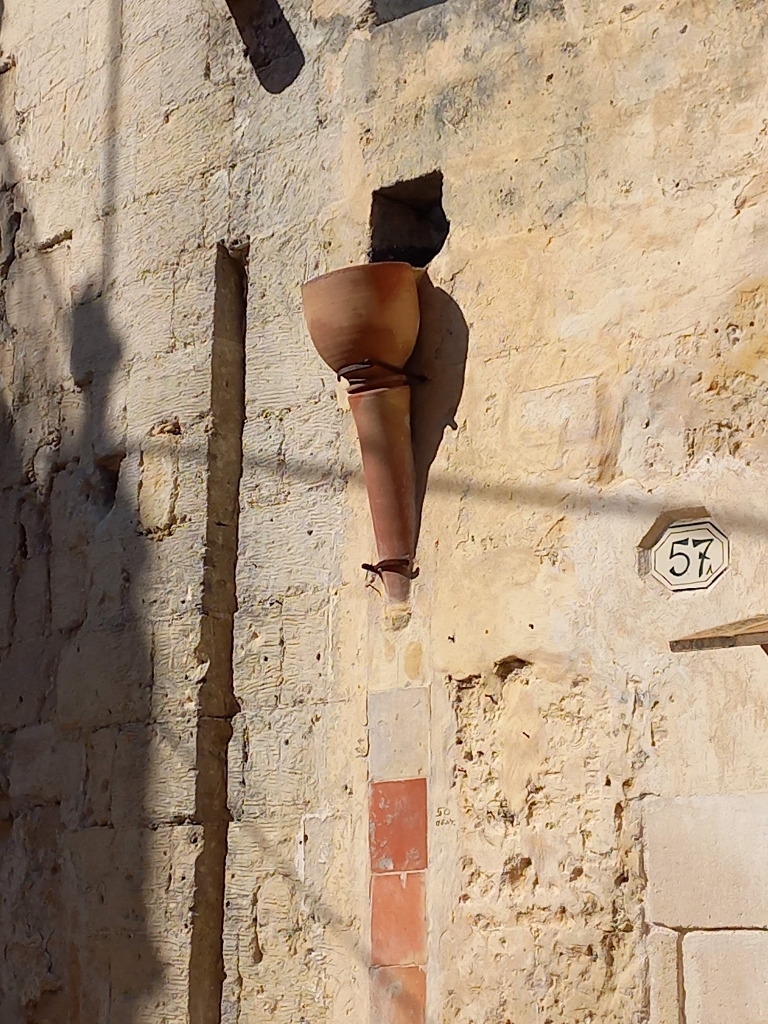 Matera, a detail
From a few spots, I had a wonderful view of the places I had already visited, so I once again captured the stone hill Monterrone with the Church of Santa Maria di Idris, while the bell tower of the Church of San Pietro Caveoso was also visible.
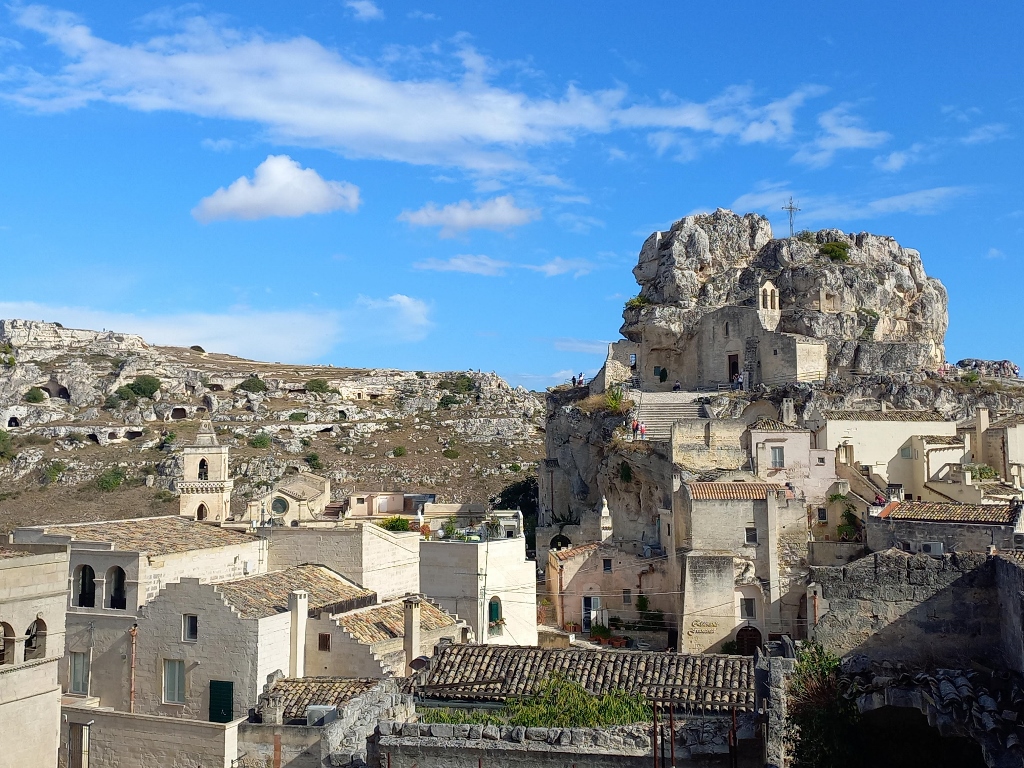 Matera, a detail
As I moved a little further, from another spot, I had an even better view. In the next picture, you can clearly see the Church of San Pietro Caveoso, Monterrone, as well as the Sasso Caveoso district.
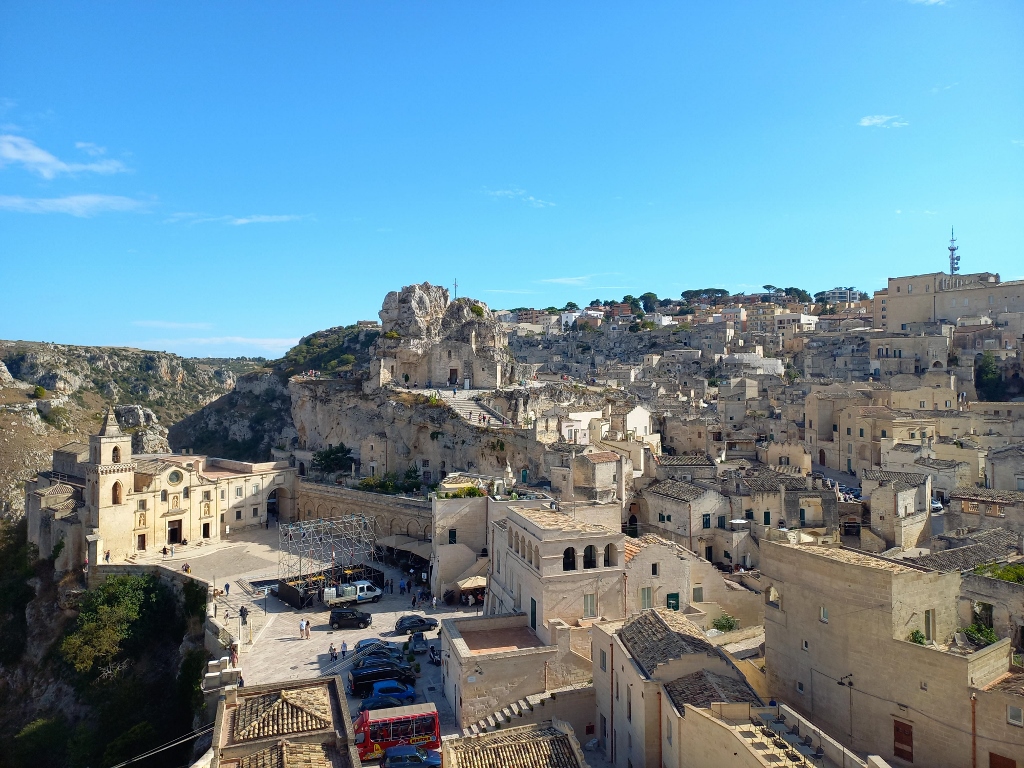 Matera, a detail
I also individually captured some particularly interesting details.
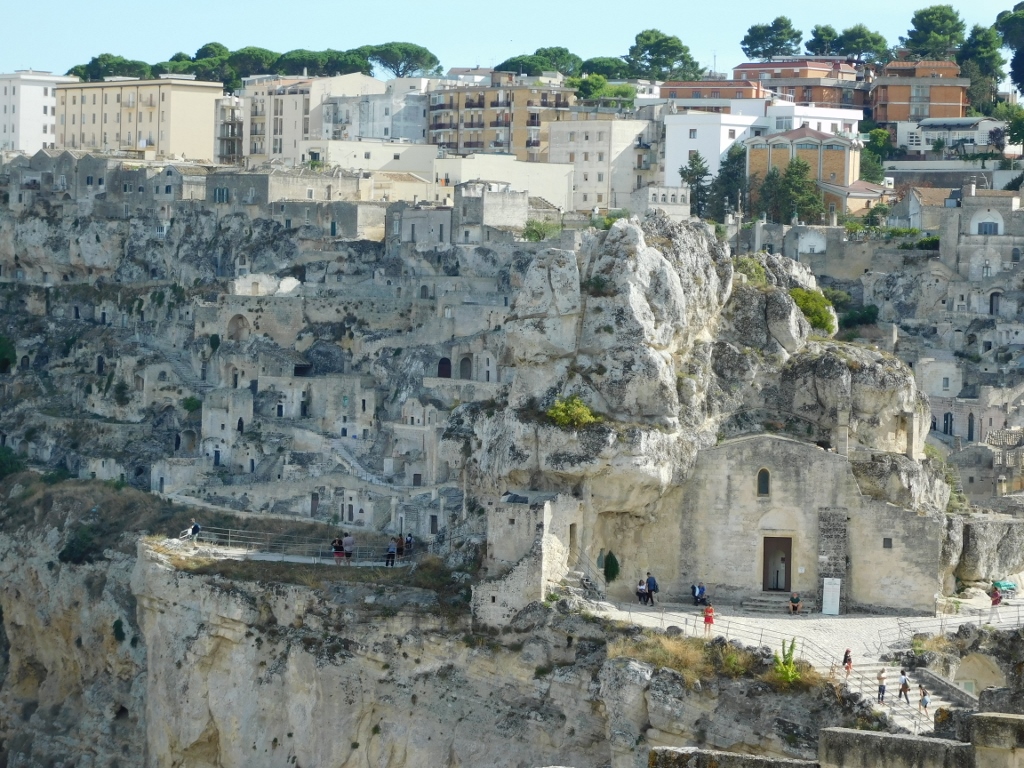 Matera, a detail
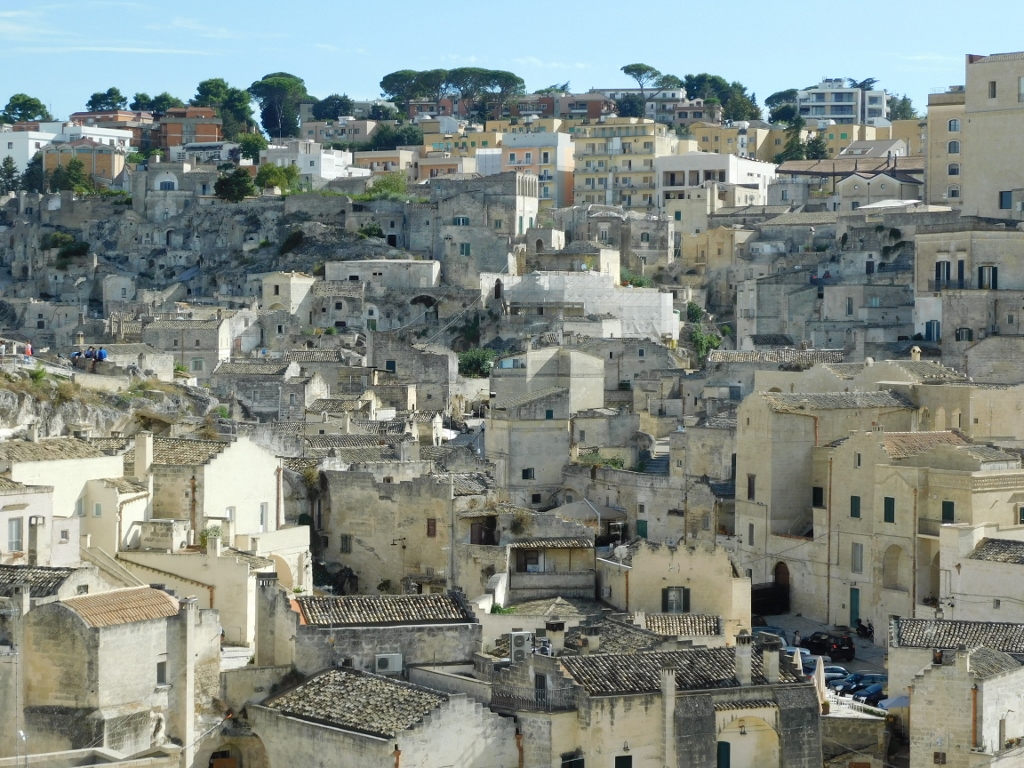 Matera, a detail
But, I also captured parts on the other side of the Gravina river gorge, where some visitors were walking along the ridge, while others had descended to see the caves that exist there, which certainly serve as a good example of the places where people in this region have been living since ancient times.
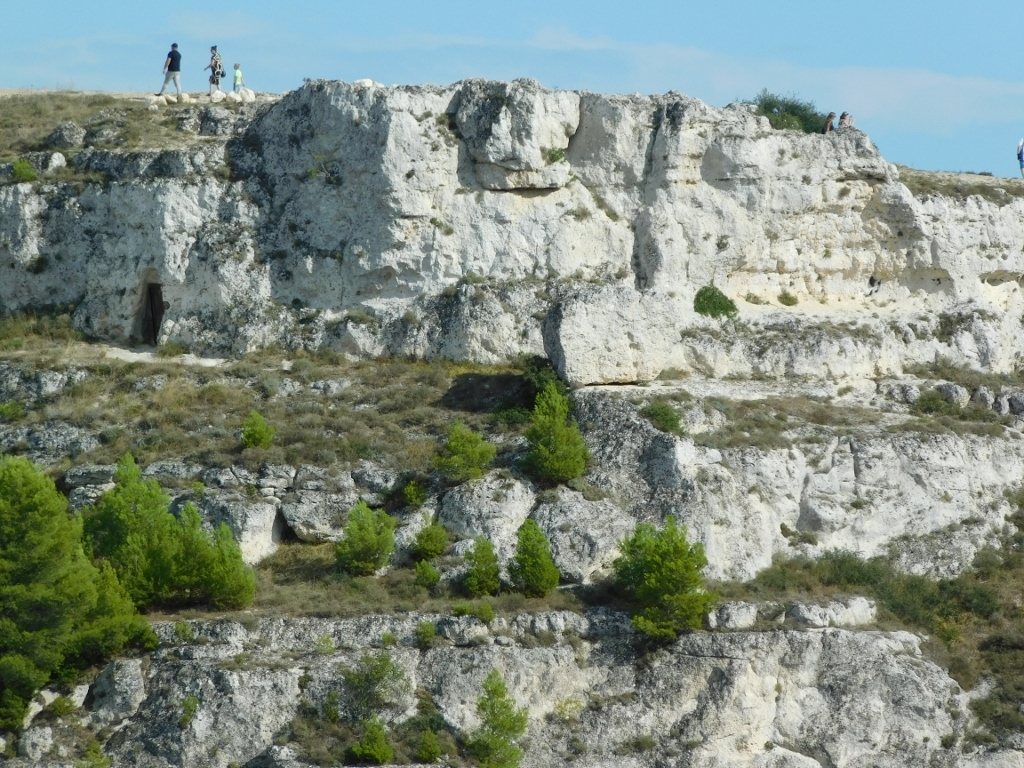 Matera, a detail
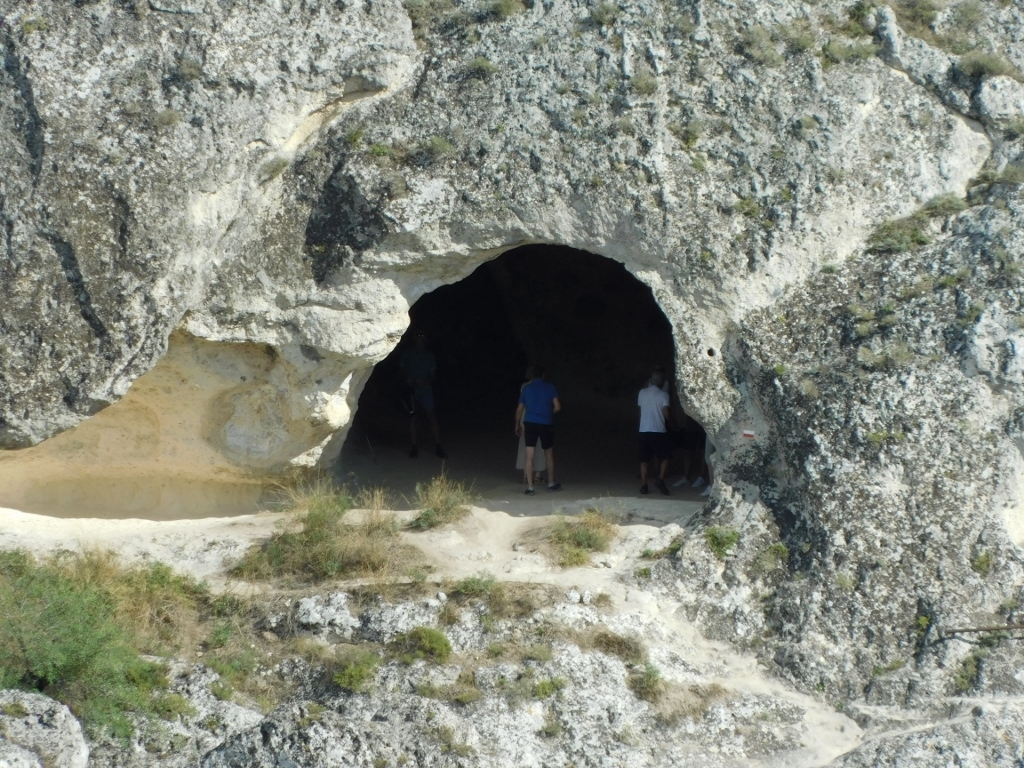 Matera, a detail
The route I was taking towards the square where the cathedral is located led me to some stairs, so I continued up, but I took some photos along the way.
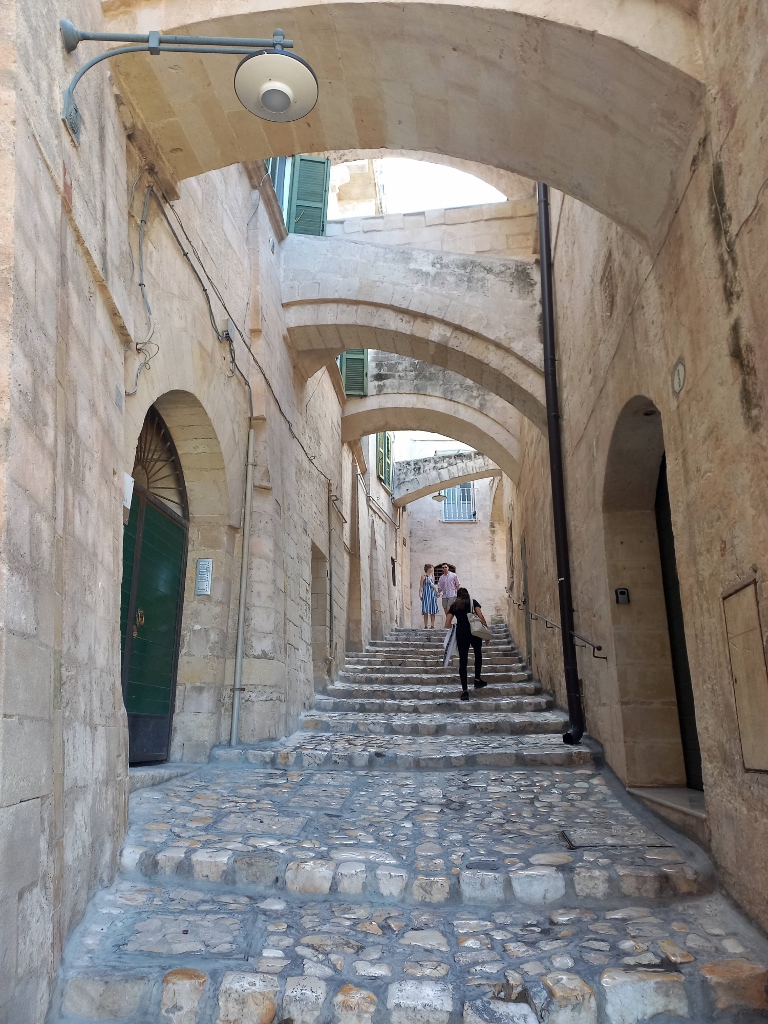 Matera, a detail
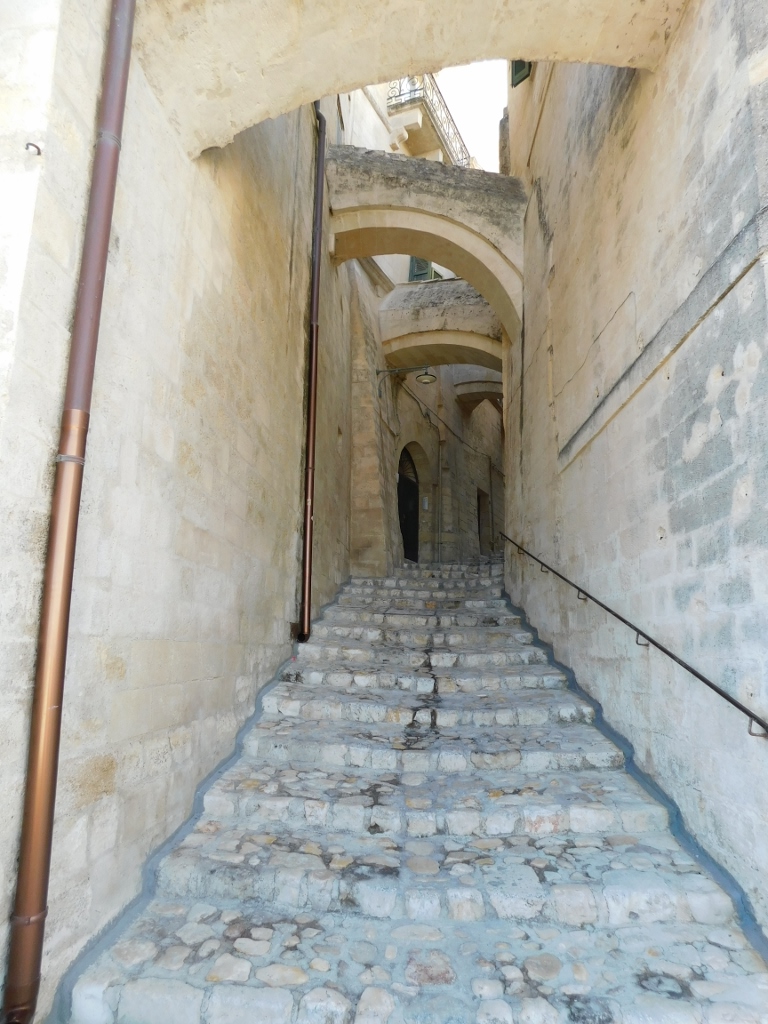 Matera, a detail
And so, I finally reached the very top of the hill in the Cività district, where the cathedral in Matera is located. By the way, Cività is practically the elevation between the two main districts with stone/cave buildings – Sasso Barisano and Sasso Caveoso.
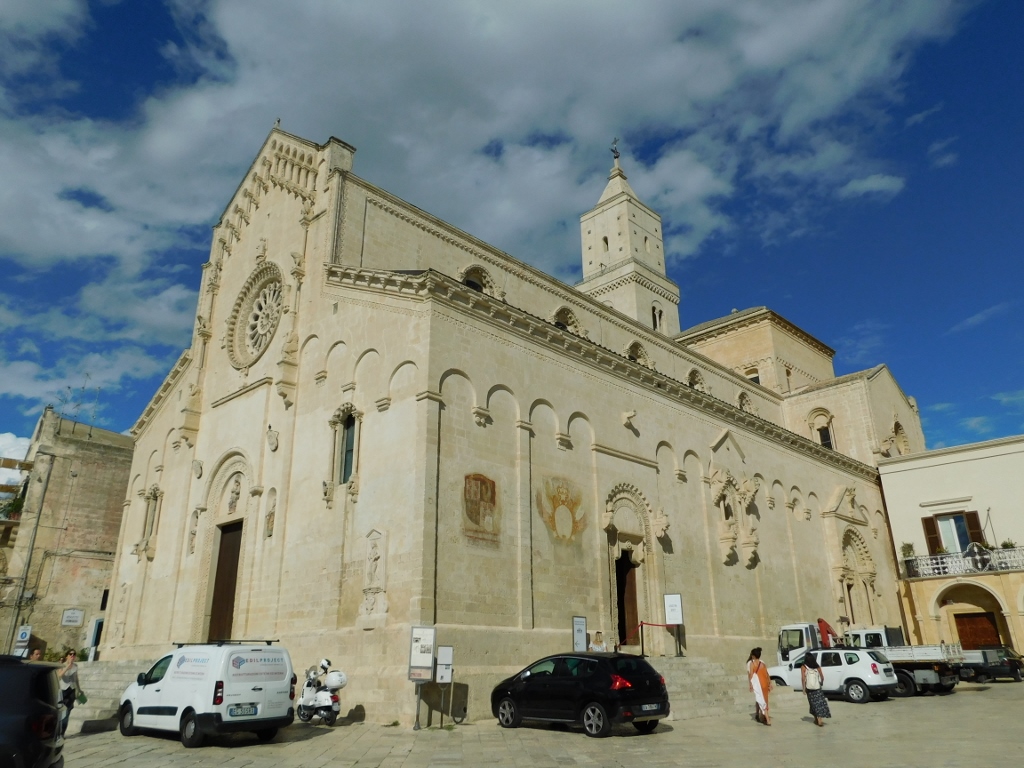 Matera, a detail
All the walking, along with the beautiful sunny and warm day, made me thirsty. Since I knew I would be going downhill from here later, I decided to be a little mischievous and ordered a cocktail, with the perfect view to enjoy it.
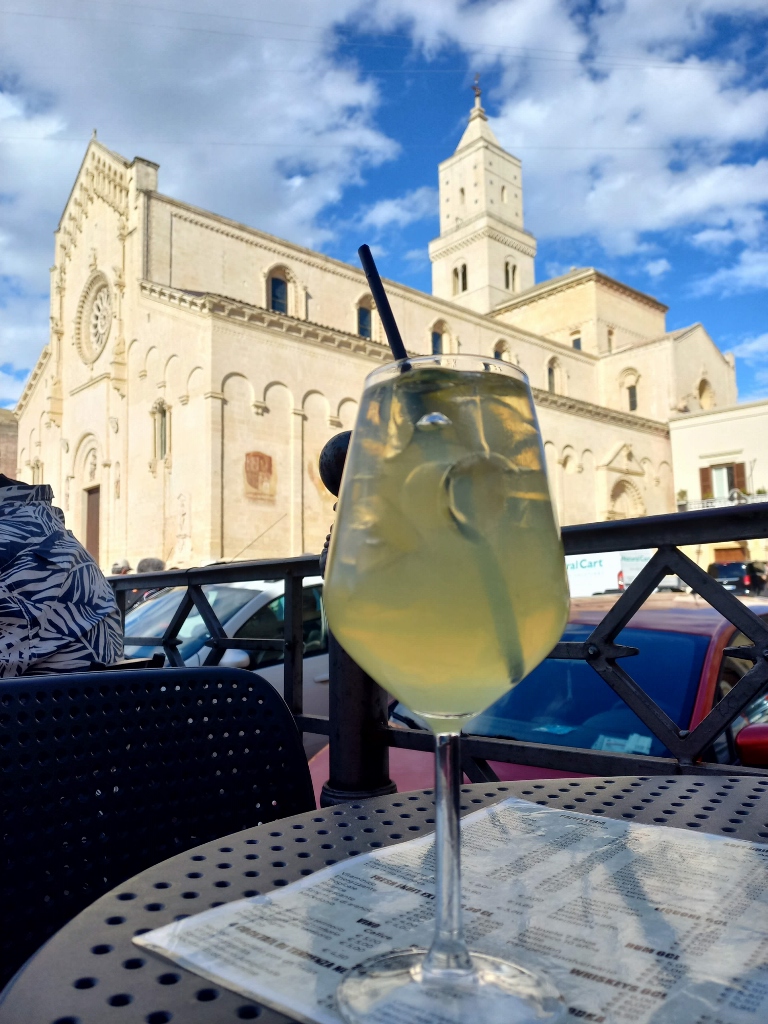 Matera, a detail
As for the cathedral, it was built in the 13th century in the Apulian Romanesque style. The front façade, which is divided into three parts, features a prominent rose window, along with the main doorway. However, on the southern side, in addition to the elegant blind arcades, there are two side doorways that, it seems to me, are even more richly decorated than the main one. A part of the cathedral is also the tall bell tower with a square plan.
In addition to the changes in the foundation of the original church over time, the entire interior decoration was restored in the 18th century. However, I didn’t visit the interior, partly because of the cocktail, as my head was a little dizzy, so I decided to begin my descent from the top of Cività.
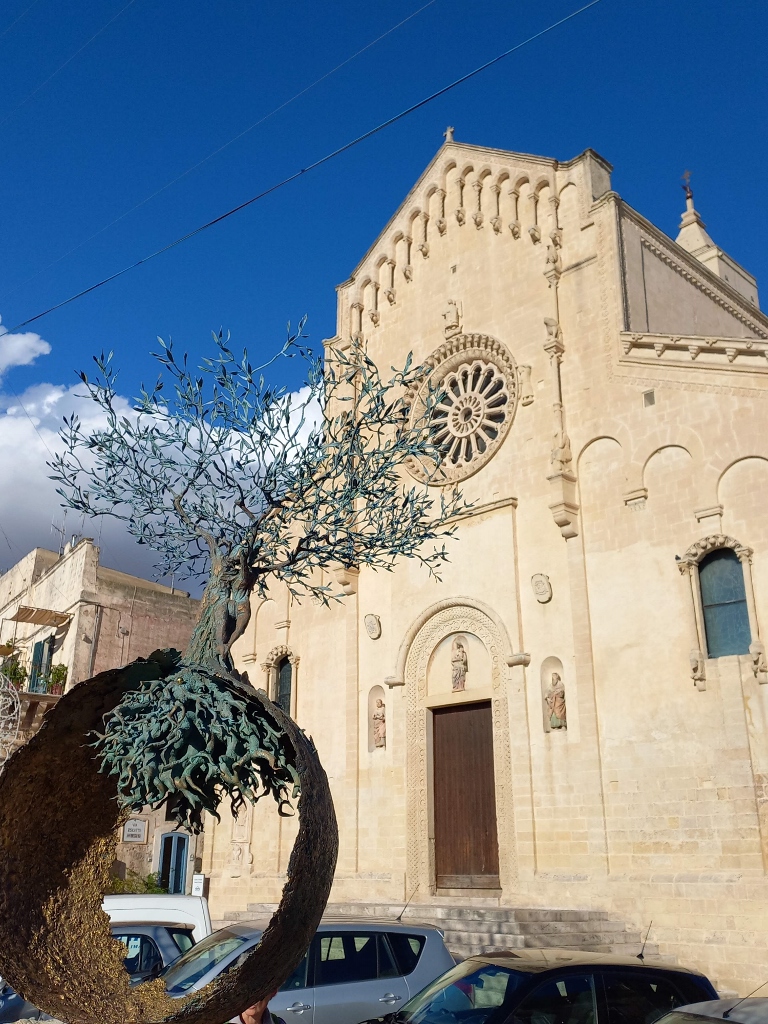 Matera, a detail
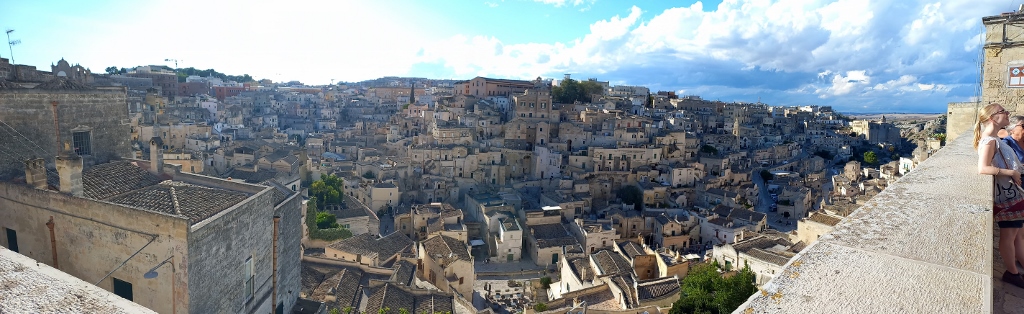
On the other hand, in front of the cathedral, there is a beautiful plateau/terrace with an outstanding view of Matera. That is something you can't miss, no matter how your head feels.
 Matera, a detail
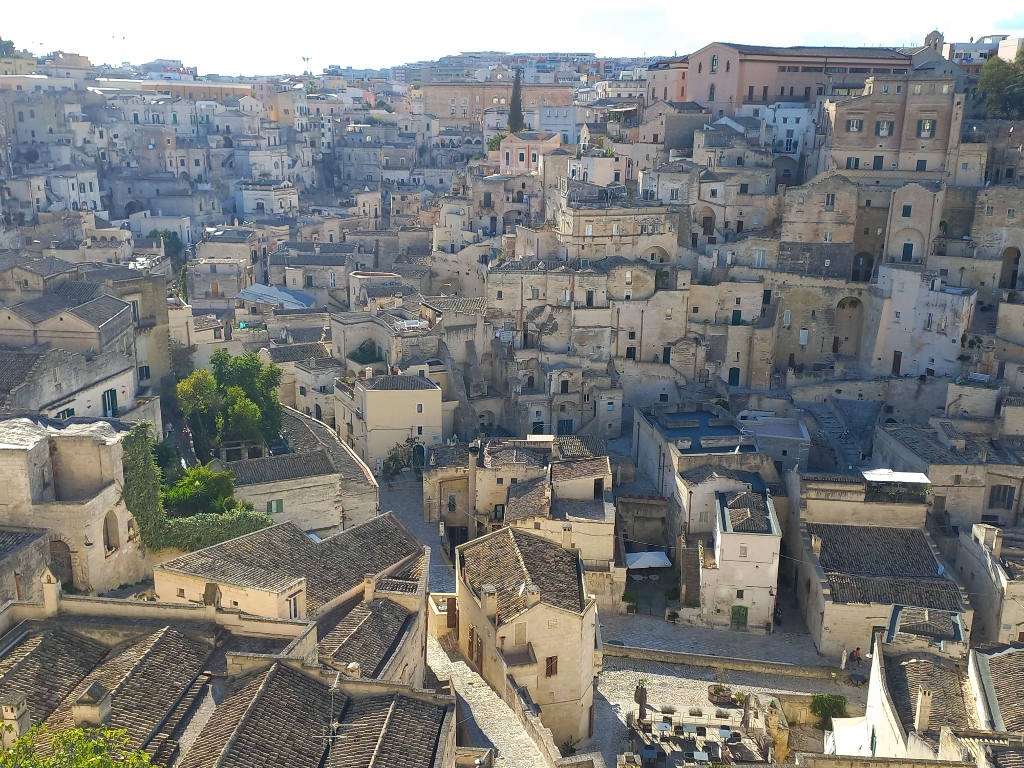
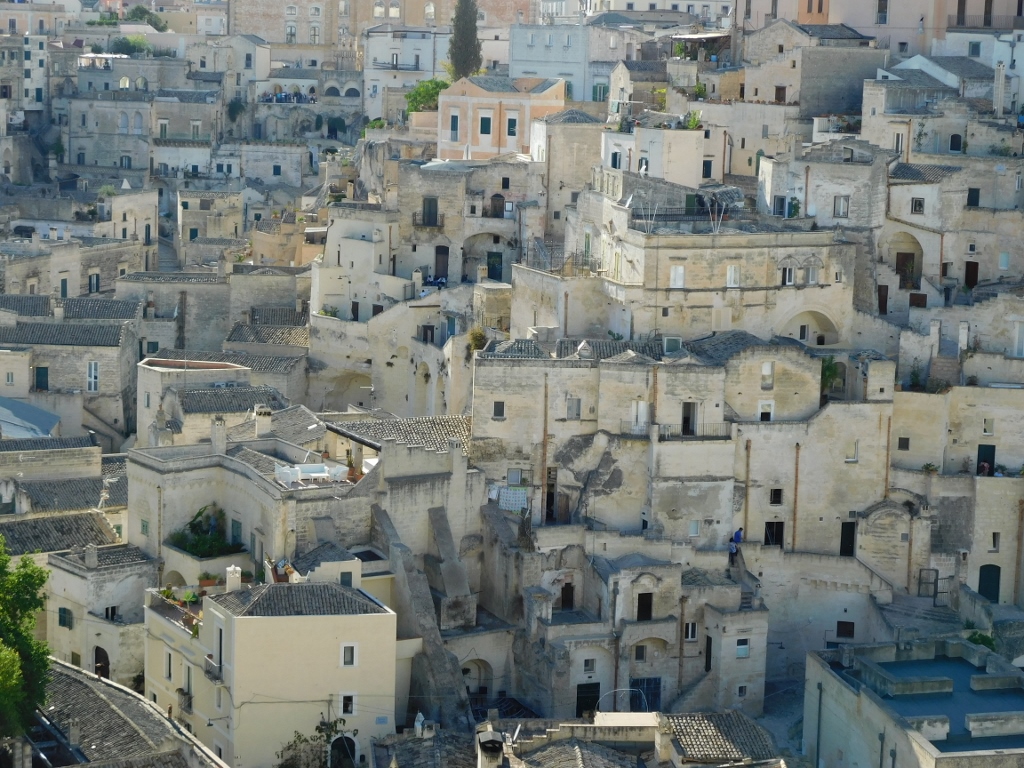
The view mainly encompasses the district called Sasso Barisano, which I have already mentioned and through which I first passed during my visit to Matera.
 Matera, a detail
If you take a closer look at the previous photo, you can spot the terrace near Piazza Vittorio Veneto, from which I admired the view towards the cathedral. Now, I was simply facing the opposite direction.
 Matera, a detail
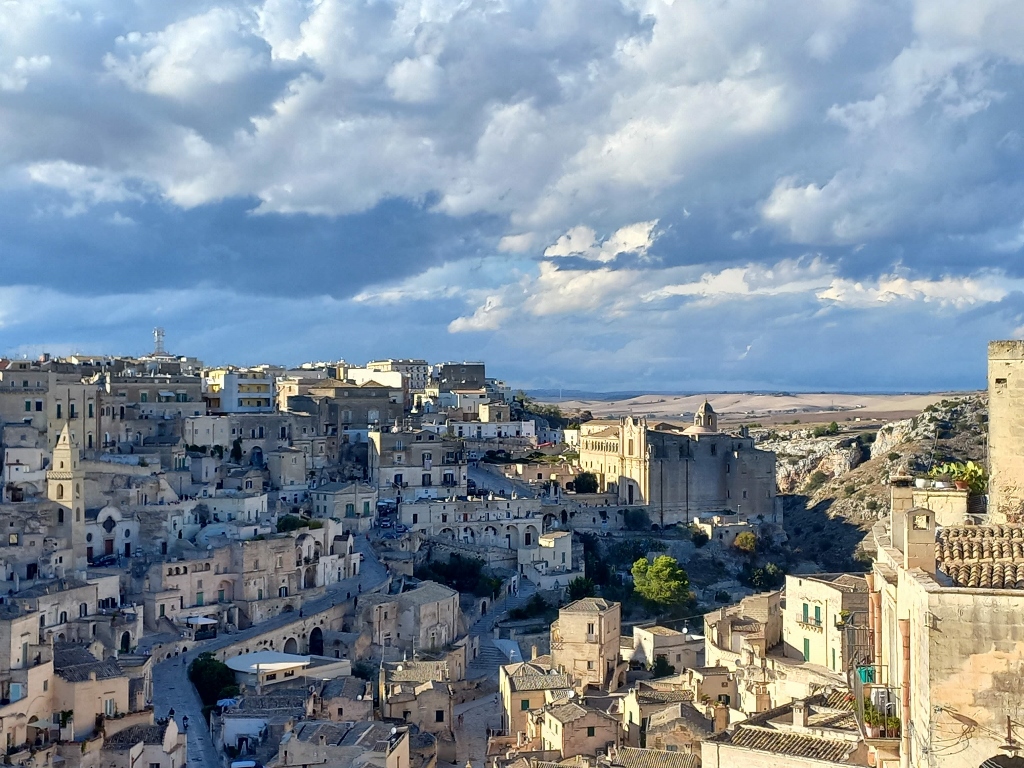
And the view towards the Sant'Agostino complex and the gorge, enriched by the sky's events, was spectacular.
 Matera, a detail
Now I was ready to return to the place where I started my tour of the Sassi di Matera or Stones of Matera, which was Piazza Vittorio Veneto.
Although it would have been nice to continue walking and exploring, I had to settle for the view from a staircase that led into the Sasso Caveoso district, while I took another passage, practically a street that directly connects the cathedral with the square that was my goal at this time.
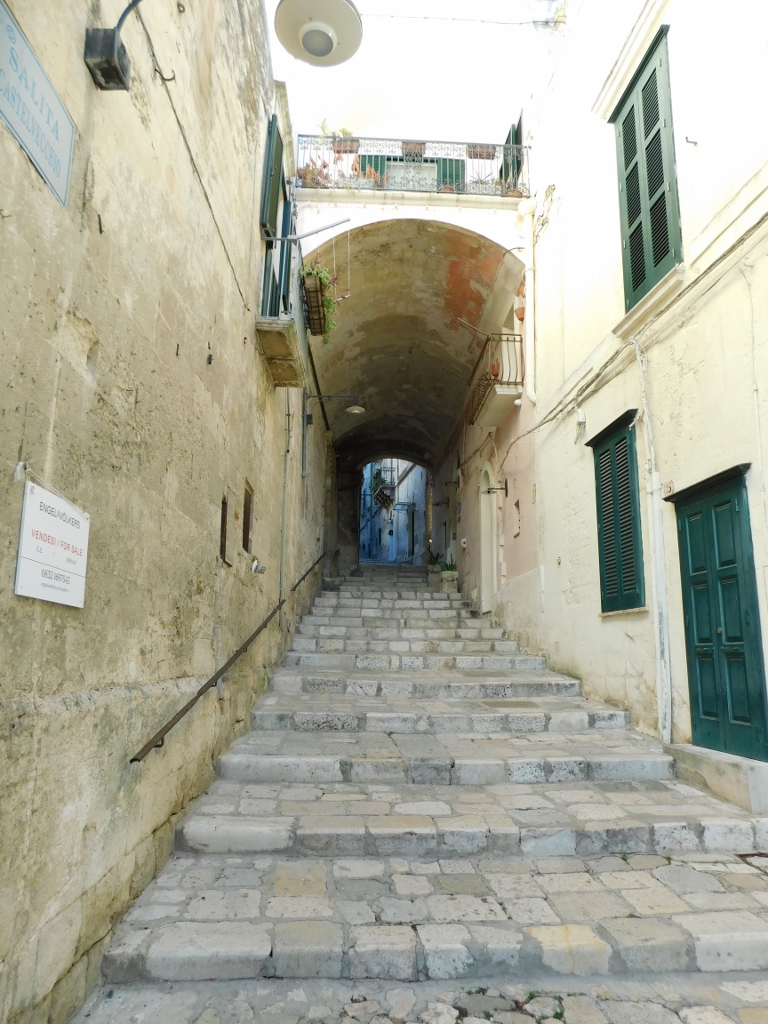 Matera, a detail
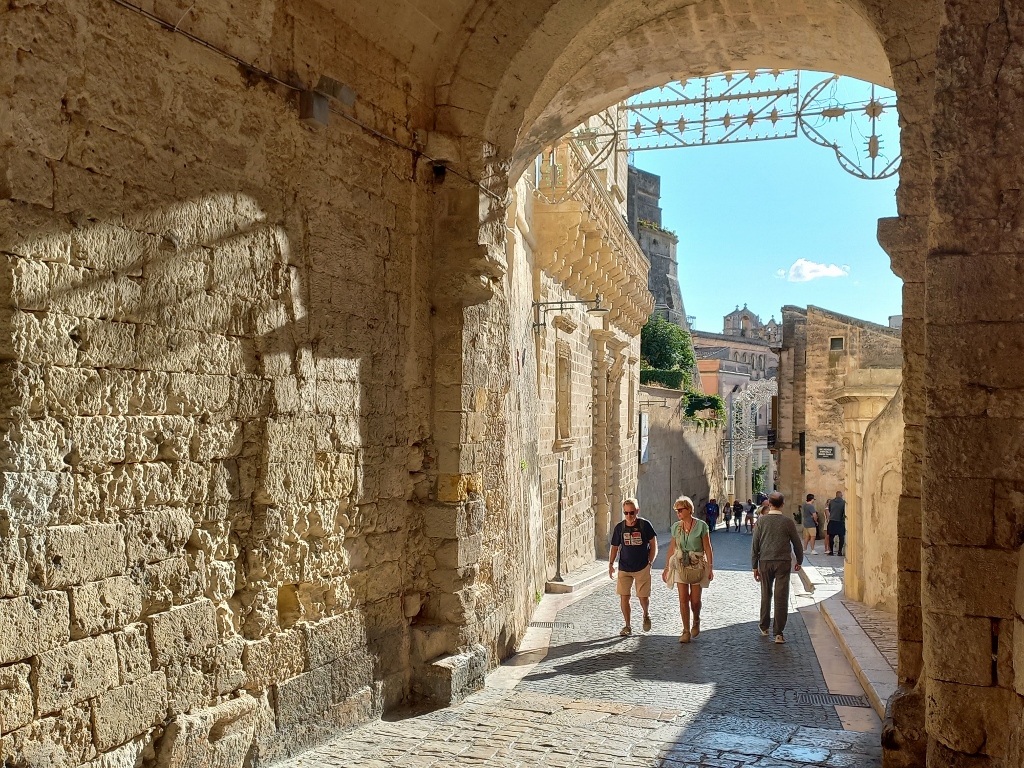 Matera, a detail
That street was also interesting. On one side, there are several spots offering a wonderful view of some parts of Matera, and I truly enjoyed the scenery.
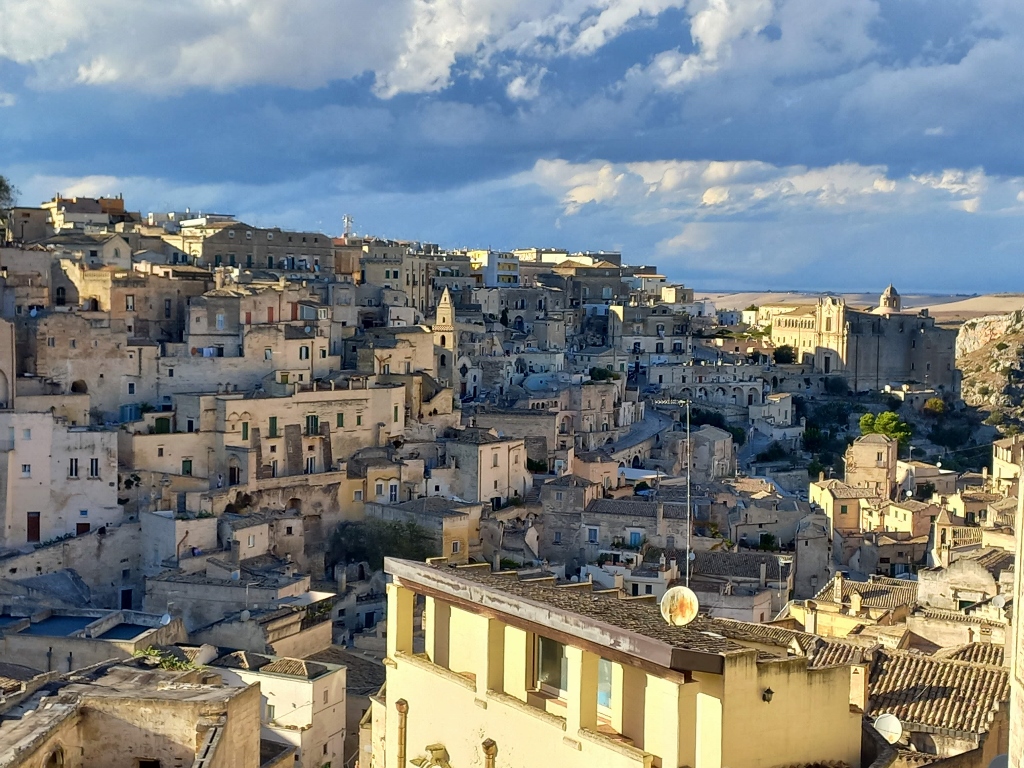 Matera, a detail
On the other side of the street, where I was passing through, there were also beautiful sights and buildings.
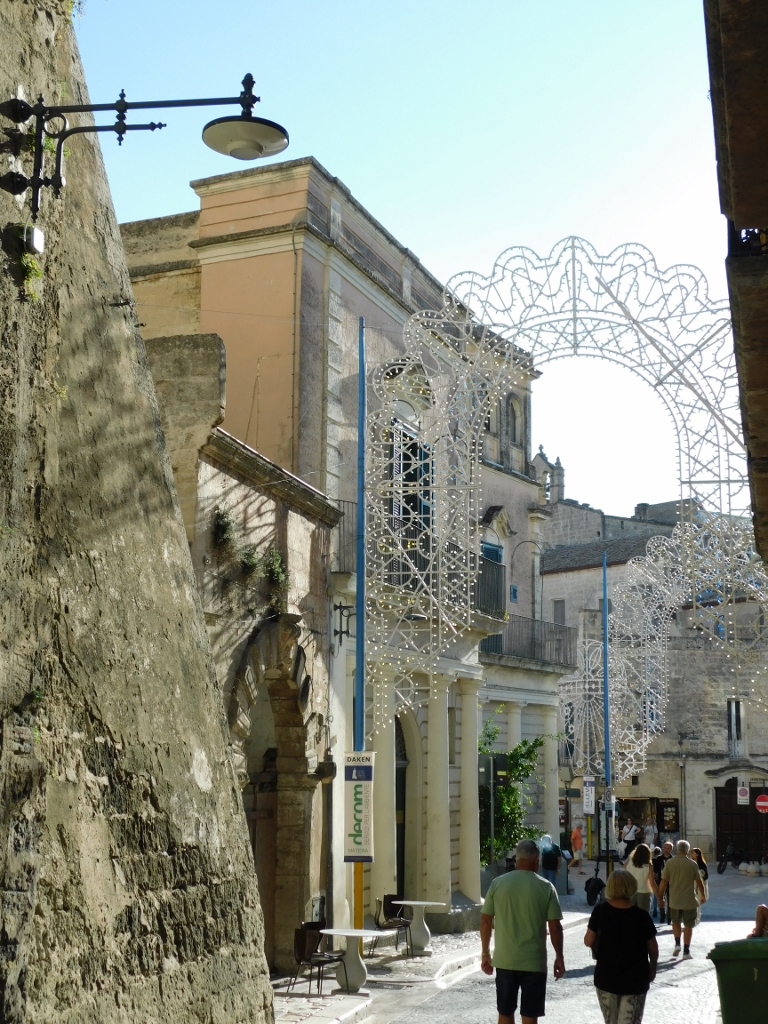 Matera, a detail
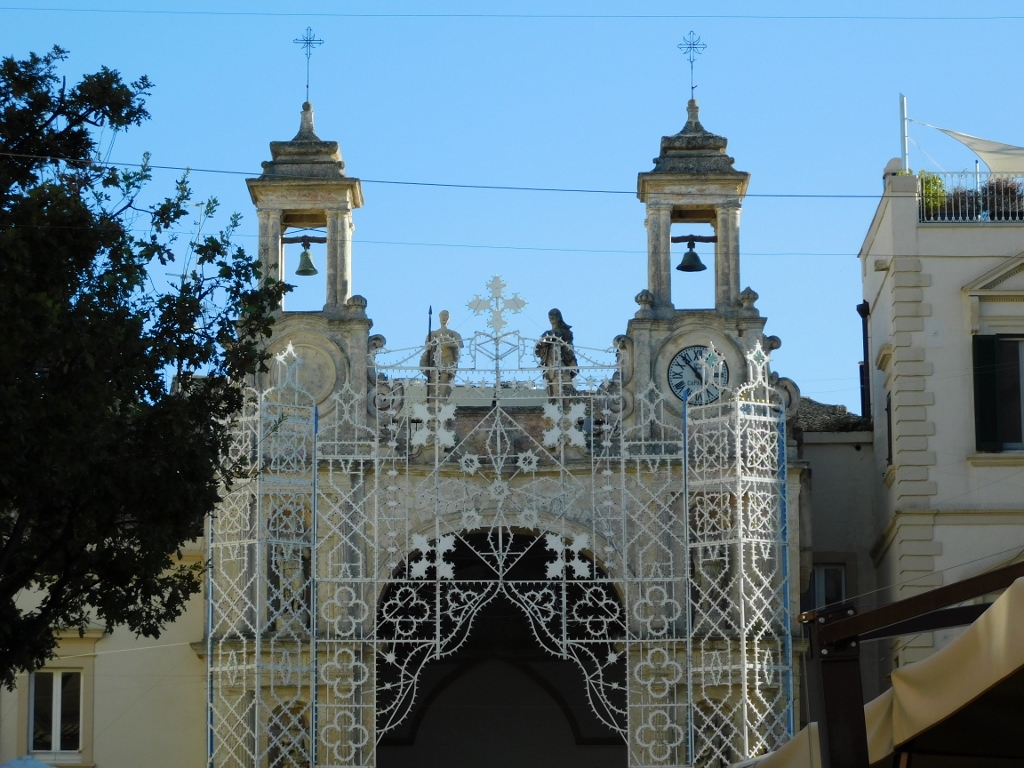 Matera, a detail
In the previous photo, you can see a part of the building from 1779 called Palazzo del Sedile, located on the square of the same name. It is the centre of cultural and administrative life in Matera. However, I didn’t get closer to it; instead, I decided to briefly descend the stairs through an arched passage directly across from the beginning of Piazza del Sedile.
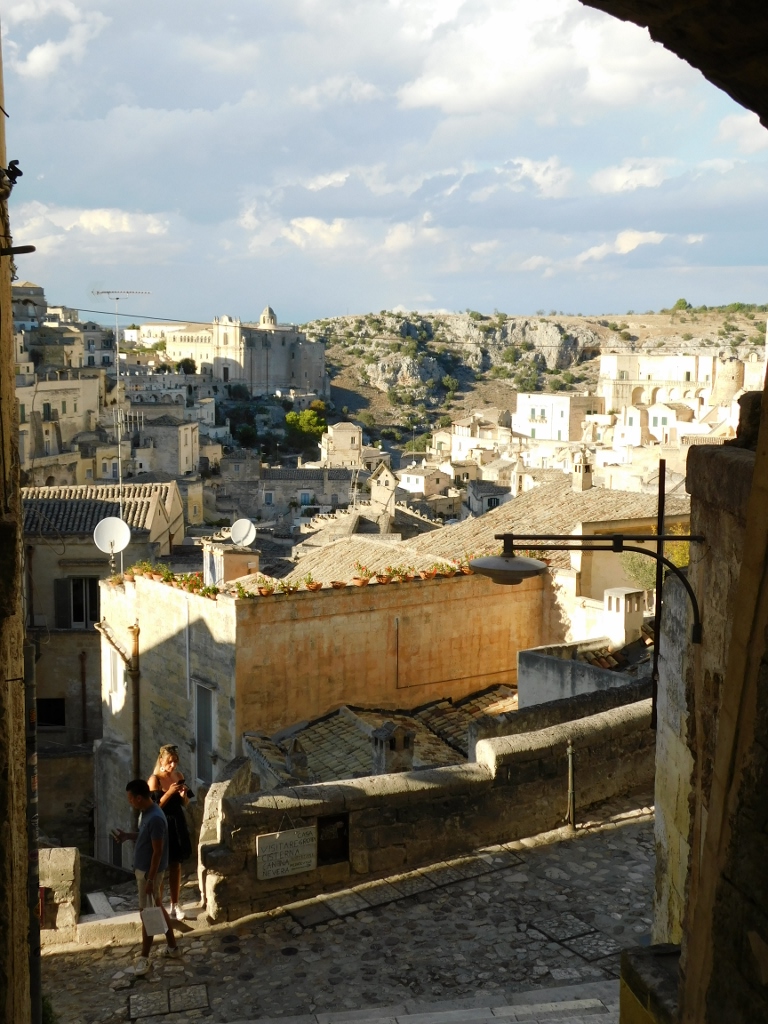 Matera, a detail
These stairs led me to another spot where I once again enjoyed a beautiful view, this time with the cathedral as the main focus.
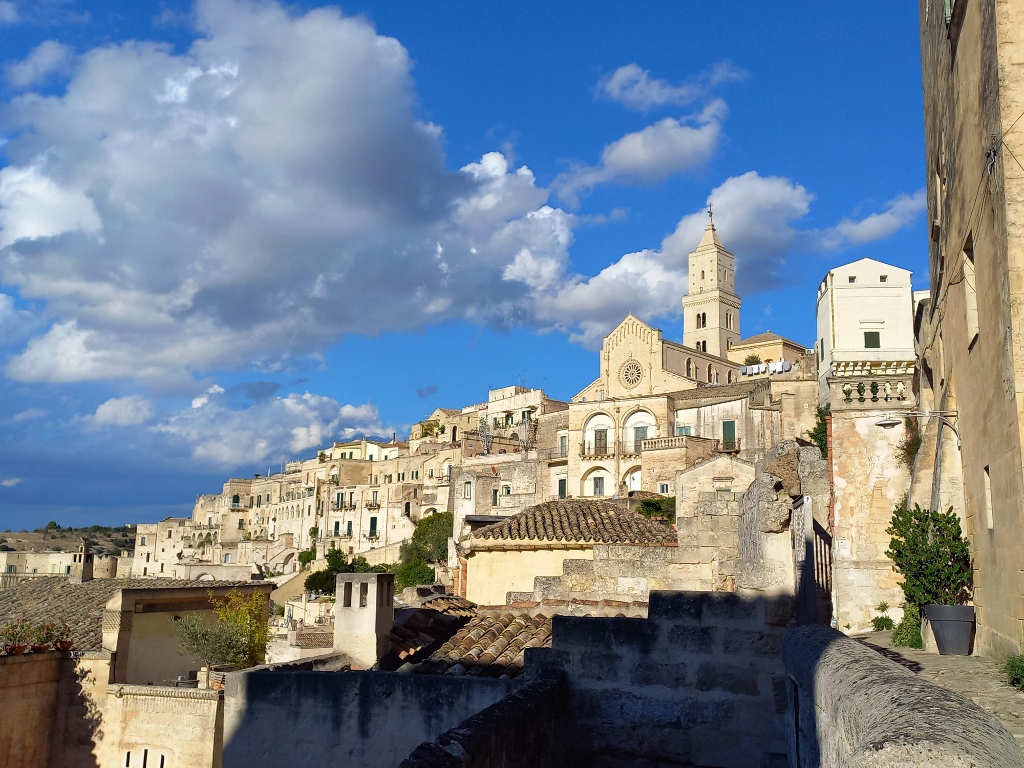 Matera, a detail
And this was where I finished my sightseeing. I was already tired, and my back and right leg were causing me problems due to the previously mentioned sciatica. Painkillers can only alleviate the discomfort for a limited period of time.
In any case, I soon descended to Piazza Vittorio Veneto, where I had to return to that terrace with the viewpoint. The cathedral now seemed far away.
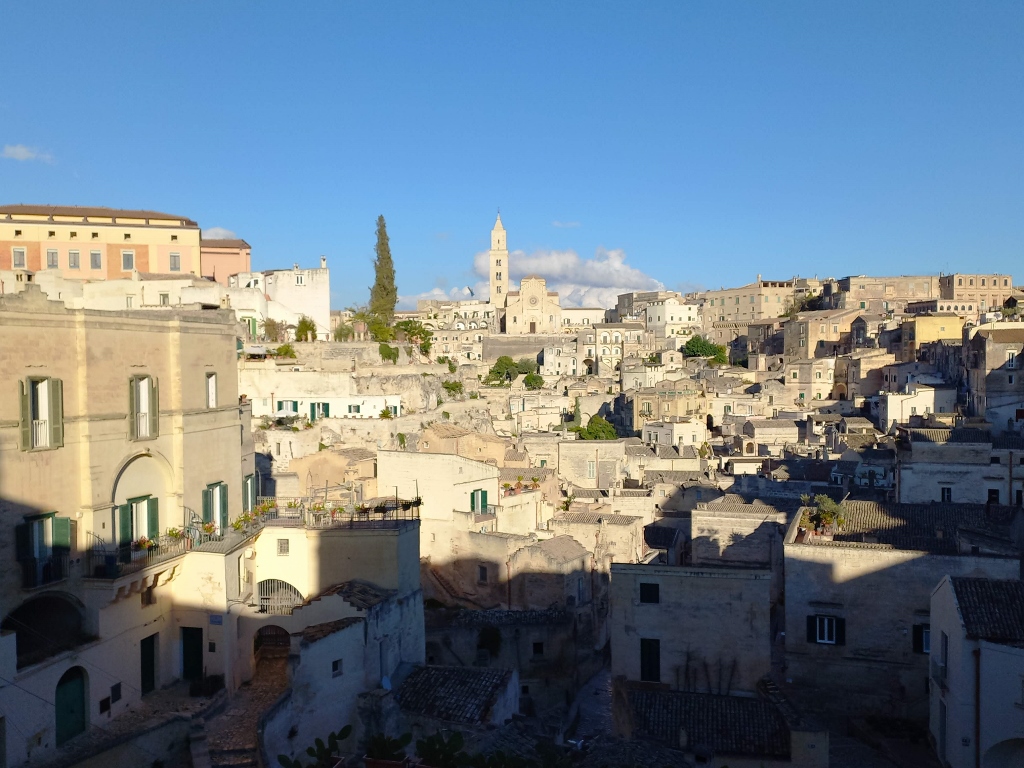 Matera
Then, I walked around the area of the square a bit more and captured some details, including the street that led to the room I had rented during my stay in Matera. I was in a very good mood and satisfied with what I had seen, despite the fatigue and pain, so everything seemed incredibly beautiful to me.
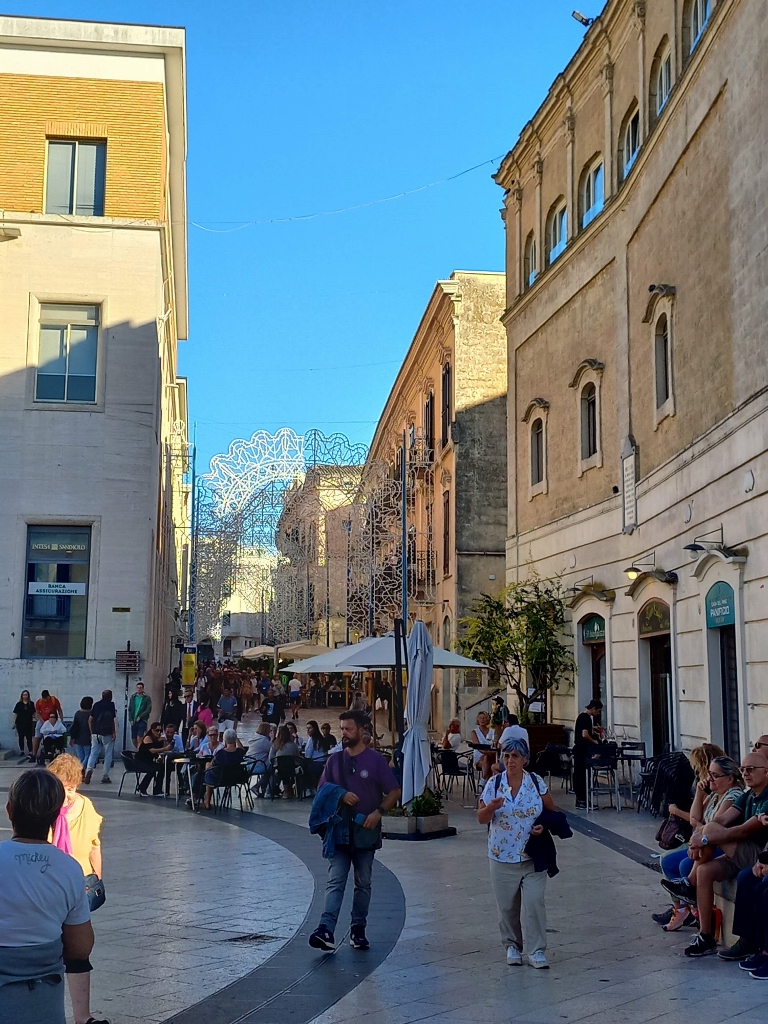 Matera, a detail
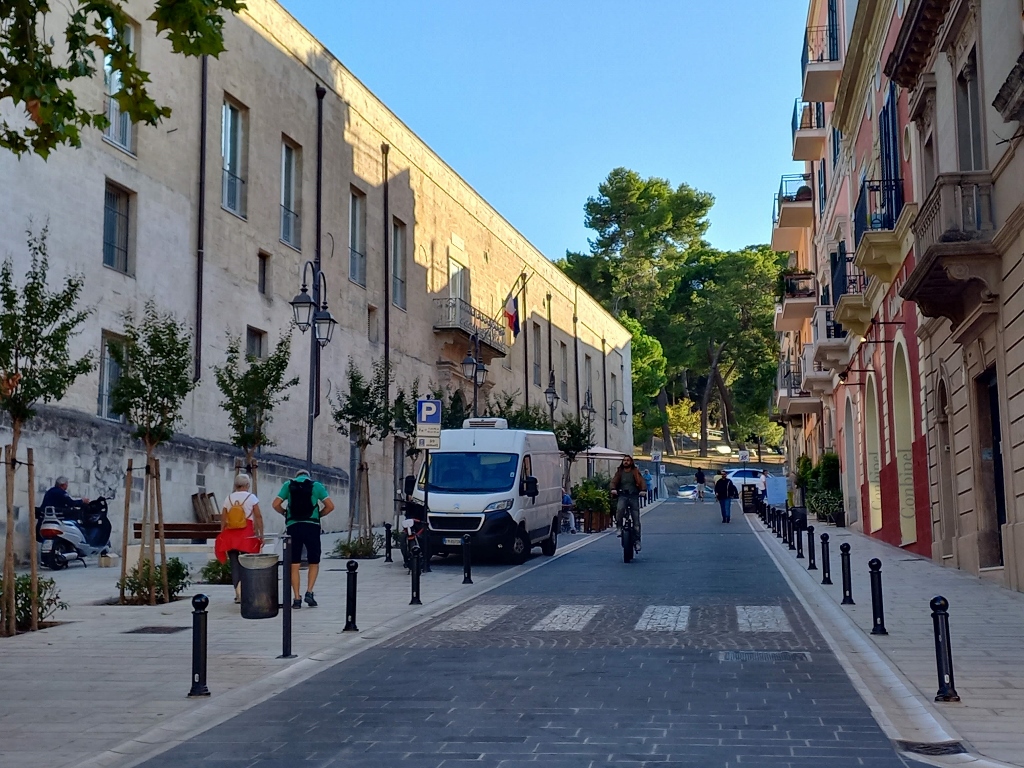 Matera, a detail
I decided to have dinner at a simple restaurant, more like a shop with a few tables arranged outside, all located in Piazza Ascanio Persio with the market in central Matera. My plan was to have burrata (a traditional cheese made in Apulia that I really love), but all the burrata delivered that day had already been sold. The exceptionally kind saleswoman recommended a cheese combination for me and I also ordered a glass of white wine.
While she poured the white wine for me, that kind saleswoman even posed for a photo.
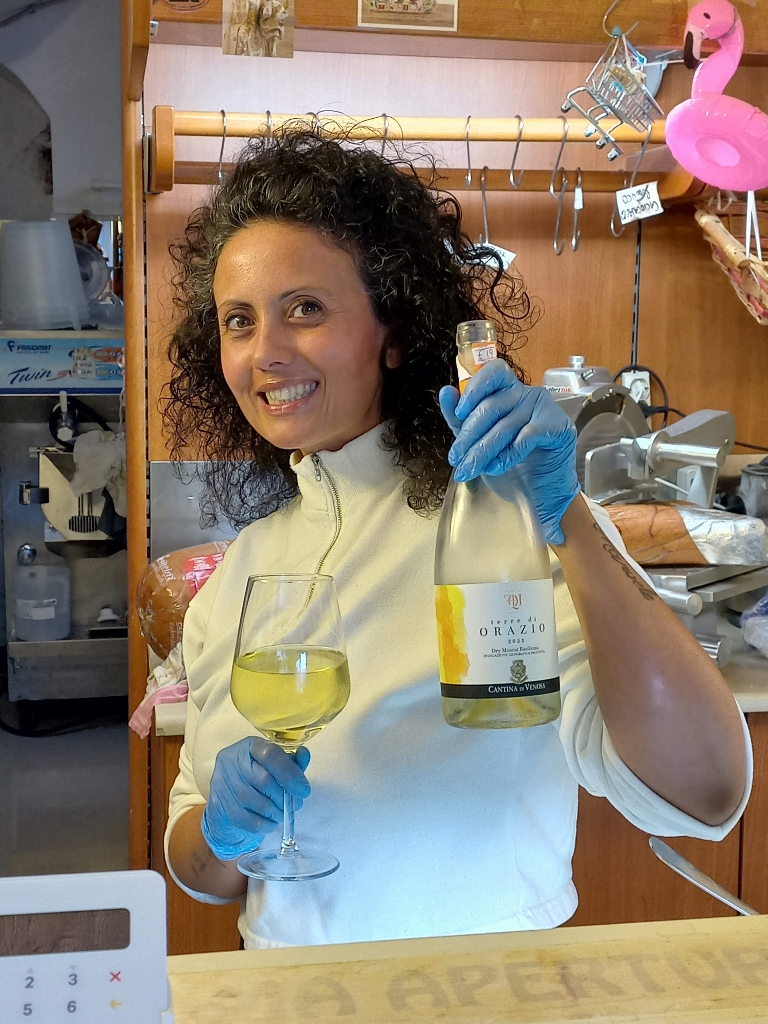 Detail from Matera
I sat down and began sipping my wine, and soon the food arrived. For me, as a cheese lover, it was almost like being in heaven, although I still missed the burrata.
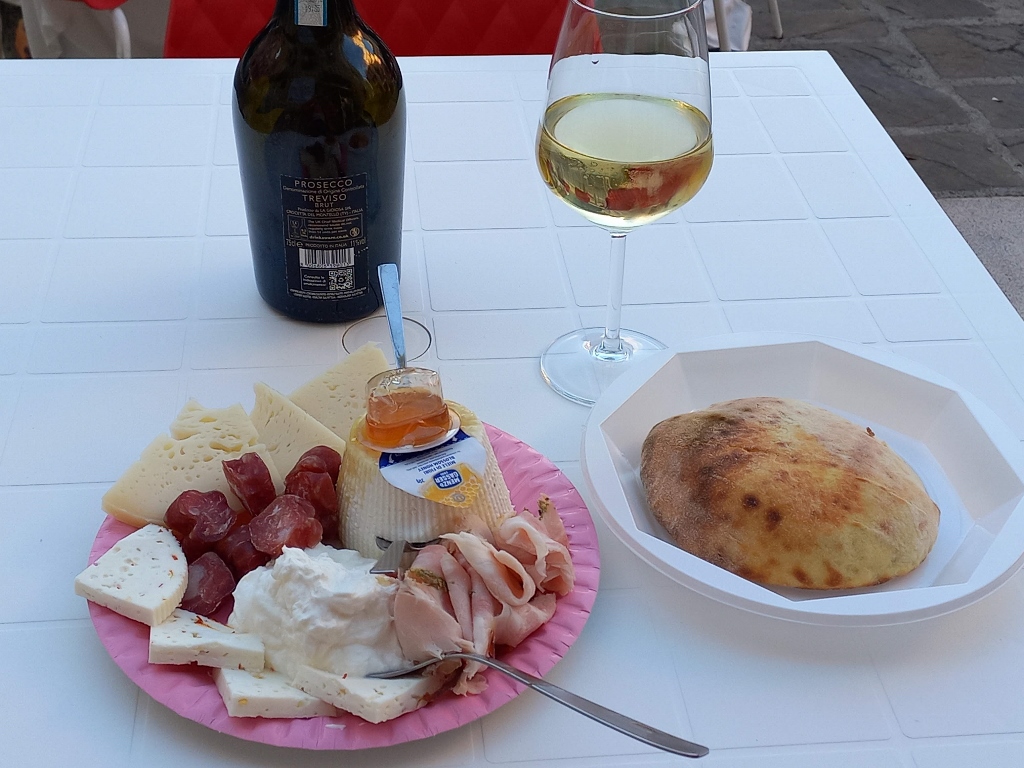 Dinner in Matera
Later, I returned to my room and packed my things slowly, as the next day I would continue my journey, heading back to the Apulia region. Here’s a map showing all the places I visited during these two weeks of September 2024 that I spent in Italy.
The next day, I wasn't in a particular rush, but I still had to keep an eye on the time since my plan was to return to Bari the same way I came to Matera – by train. I already knew which train I needed, meaning what time I should leave, but I arrived at the Matera Centrale station a little earlier because I needed to buy my ticket first.
However, there was a surprise waiting for me at the station. It was closed. I was a bit confused and then I saw a few other people standing there, so I started talking to them. It turned out that there was a strike that day and the local trains weren’t running.
Although I had the entire day to get to the small town of Trani on the Adriatic coast, which is about 100 km from Matera when travelling through Bari, this was quite an unpleasant surprise. Together with the other people who were stuck like me, I started considering other options. There is also an intercity coach and we hoped that maybe it was running, but, as we heard, the coach station was quite far from the train station, and I wasn’t too fond of the idea of walking there with a large backpack and sciatica, uncertain whether I’d be able to get to Bari that way.
In the end, a good solution was found, although I can’t quite remember who managed to organise it. A taxi driver with a minibus appeared and a few of us agreed to get to Bari that way. Of course, it cost a bit more than a train ticket, but beggars can't be choosers.
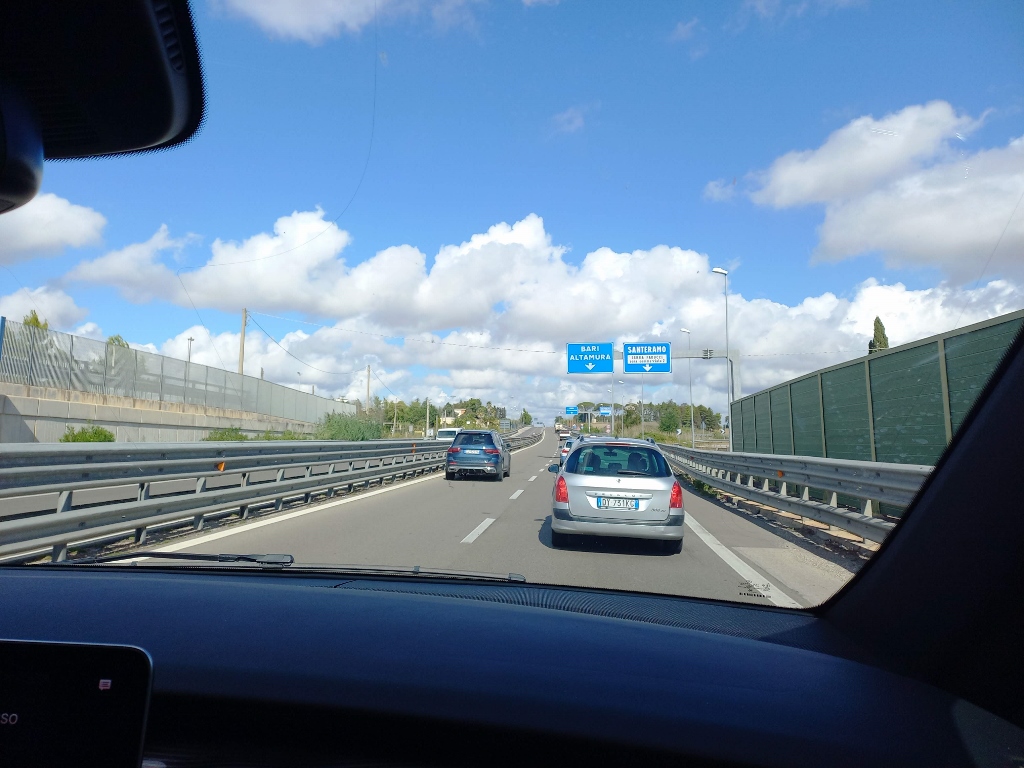 Unplanned way to transfer from Matera to Bari
At the station in Bari, I realised that the trains on the line I was interested in were actually running, so I decided to do something completely crazy.
Since the trains between Bari and Trani were operating, I didn’t need to worry about getting there, which gave me a "surplus of free time," as I couldn’t check into the room I rented in Trani until 3 pm anyway.
Some people may remember my story about the new jacket I forgot at a restaurant in Maglie that I really liked. On the other hand, it wasn’t particularly expensive and I bought it at a store that belongs to a chain selling sportswear. Since there’s a store like that in Bari, a pretty crazy idea came to my mind, but I love my crazy ideas. I decided to leave my backpacks at the luggage storage at Bari’s train station and take the city bus to the store to buy a new jacket. It was decided – and done.
Admittedly, that store was in the far suburbs of Bari and the bus ride took about an hour one way, but I had free time to kill, and in any case, I didn’t want to go sightseeing because I wanted to spare my back. Whether I sat at Bari's train station or in a city bus, well, it seemed like the same thing.
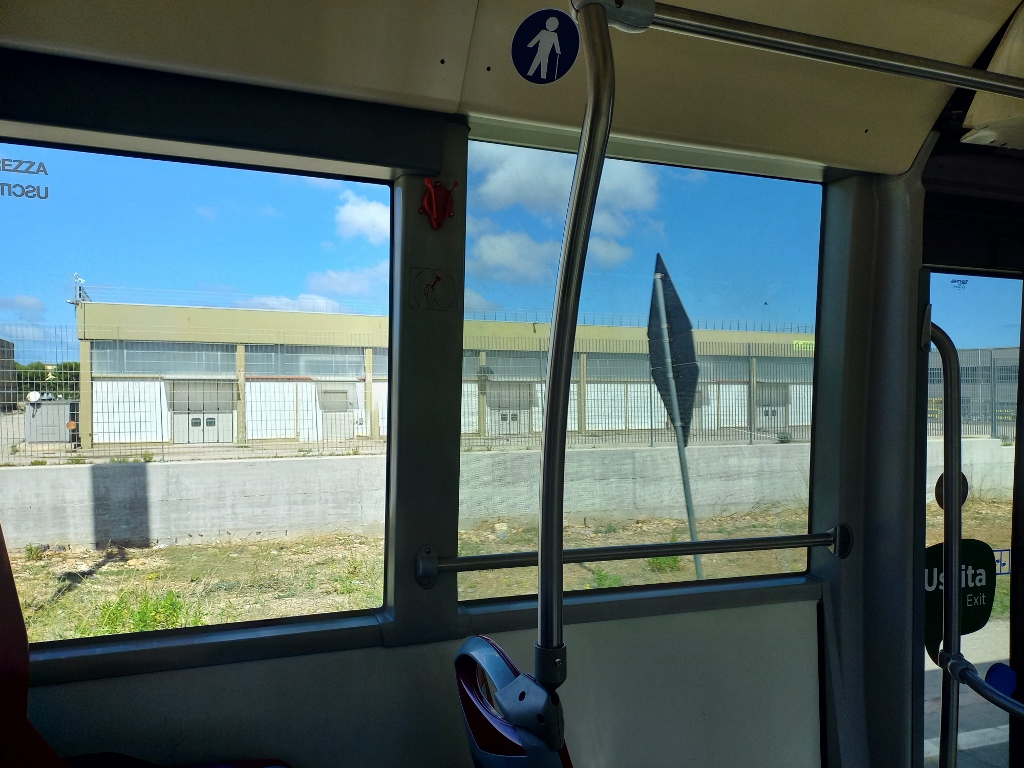 In the city bus in Bari
On the other hand, how many people do you know who went on a tour of some industrial zone in Bari? Probably very few.
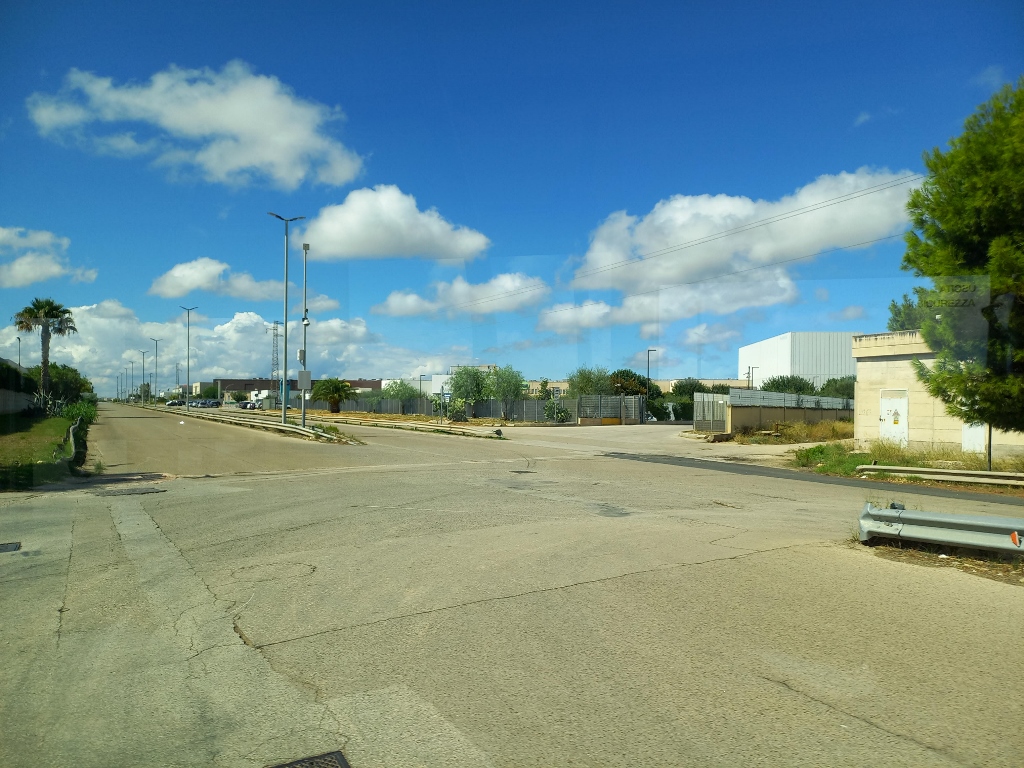 Bari, a detail
So, the jacket was soon purchased and I returned to the Bari train station completely content, bought my ticket to Trani, grabbed my backpacks, and soon arrived at my next destination.